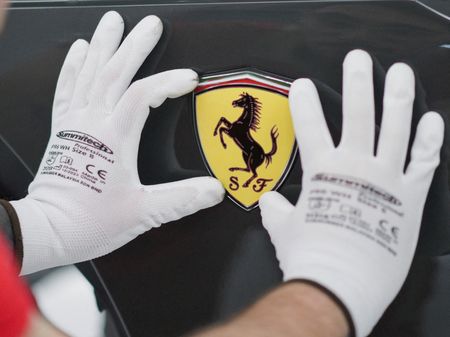

While competing sports car manufacturers hesitate on their electric vehicle strategies, Ferrari is making a bold move forward by introducing its inaugural all-electric automobile on Monday, wagering that it can maintain driver appeal without the signature rumble of a traditional engine.
The Italian automaker’s four-door electric model, called the Luce — which translates to ‘light’ in Italian — will reach maximum speeds of 310 kph (193 mph) and carry a price point exceeding €500,000 ($586,000).
The development of the Luce involved collaboration with LoveFrom, the design studio of former Apple designer Jony Ive. Industry sources characterize the vehicle as substantial in size with styling that departs from Ferrari’s traditional aesthetic.
“It’s a risk and a bit of a bet,” said Phil Dunne, a managing director at consultancy Grant Thornton Stax. “But it’s a good thing to do because they are leading the way.”
The highly anticipated Luce will be revealed Monday in Rome, representing the culmination of extensive preparation spanning from early hybrid Formula One technology over ten years ago to road vehicles introduced since 2019.
The company announced last year that initial customer deliveries will commence in October.
Under CEO Benedetto Vigna’s leadership, Ferrari has made substantial investments in electric technology, including constructing a new “e-building” at the company’s famous Maranello, Italy facility.
The Luce debuts during a period of uncertainty surrounding electric sports vehicles.
Reuters previously reported that Ferrari has postponed its second electric model plans until at least 2028 because of insufficient demand. Additionally, Italian competitor Lamborghini scrapped its 2030 electric vehicle launch due to limited customer enthusiasm.
Felipe Munoz from Car Industry Analysis explained that Ferrari doesn’t anticipate the Luce becoming a high-volume seller, but views it as making a strategic statement while Chinese competitors dominate innovative EV development.
Chinese manufacturer BYD has created the Yangwang U9, an electric supercar capable of jumping and dancing movements.
“You might not need to have an EV supercar right now. But electrification is here for the long run, and Ferrari needs to make a move — it must define what luxury electrification looks like before someone else does,” Munoz said.
Ferrari faces the challenge of maintaining its brand essence while adopting completely new technology, as established high-performance manufacturers grapple with battery constraints including weight issues and the absence of sustained power delivery and emotional connection found in gasoline engines.
During Ferrari’s October technology preview for the Luce, the company revealed a custom-engineered audio system designed to enhance powertrain vibrations, creating a unique electric Ferrari acoustic experience rather than artificial engine sounds.
“The three things everybody always associates with Ferrari are how it looks, how it sounds, and how it feels,” said Grant Thornton Stax’s Dunne, adding that going electric means “they have to get those right in a different way”.
Ferrari has reduced its electrification ambitions. The company now targets fully electric vehicles comprising 20% of its model range by 2030, decreased from its original 40% objective. The manufacturer will continue producing hybrid and conventional internal combustion engine vehicles.
The Luce may enable Ferrari to attract younger affluent customers who show greater EV acceptance, while elevated gasoline costs related to the Iran conflict enhance electric vehicle attractiveness.
CEO Vigna announced in February that Ferrari planned to begin Luce pre-orders in March following “very positive” early customer responses.
Although not all Ferrari enthusiasts will embrace the change, the company expects younger buyers to show interest while traditional ultra-wealthy customers will still desire a Ferrari EV for their collection.
“It certainly won’t appeal to all of Ferrari’s customer base,” Dunne said. “But it will appeal to some.”
($1 = 0.8540 euros)