A labor organization representing Samsung Electronics workers outside the semiconductor business has petitioned a South Korean court to halt an ongoing compensation vote, according to reports from Newsis on Tuesday.
The labor group includes approximately 13,000 employees from the smartphones, television and home appliances divisions, the news agency reported.
The non-chip union pursued legal action after being informed it could not participate in the ballot by unionized workers in the semiconductor division, Newsis reported, quoting a union representative.
Approximately 57,000 Samsung employees started casting ballots on Friday regarding a compensation package that would provide substantial bonuses for memory chip workers to prevent a planned 18-day work stoppage.
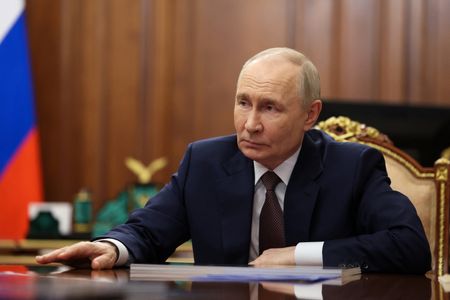
The Russian leader has authorized financial relief for military recruits joining the Ukraine conflict and their families, according to an announcement from Moscow late Monday, as part of ongoing efforts to strengthen military forces in the prolonged war.
Those who enter into military service agreements with Russia’s defense ministry starting May 1, along with their spouses, will have debts up to 10 million roubles ($139,700) forgiven if legal collection proceedings were active prior to that date, according to the official decree published on Moscow’s government website.
Military service agreements for what Russia terms its ‘special military operation’ — Moscow’s designation for its February 2022 invasion and occupation of Ukraine — must span at least one year, officials stated.
The debt forgiveness amount equals roughly the cost of a 35 square meter studio apartment in Moscow, based on Cian real estate data.
This financial incentive joins other support programs for Russian military personnel, including substantial payments and preferential university admission policies, as Moscow works to expand its military capacity while U.S.-led peace negotiations remain stalled.
Both nations blame each other for escalating tensions, with Ukraine preparing to deploy additional forces to northern territories in response to suspected Russian plans for renewed offensive operations.
The Russian leader also signed additional legislation Monday permanently extending state land rental agreements for those participating in the Ukraine conflict, according to government officials.
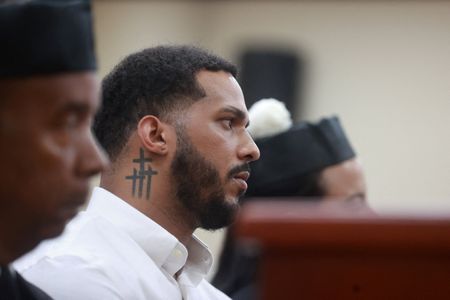
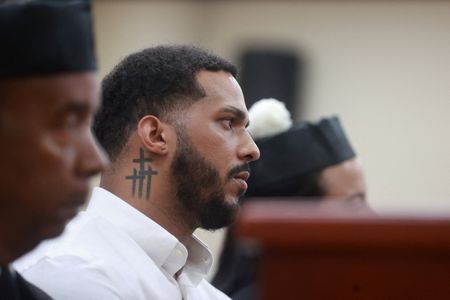
A Dominican Republic court handed down a suspended sentence Monday to Tampa Bay Rays shortstop Wander Franco for sexually abusing a minor, allowing the former All-Star to avoid prison time.
Judge Jose Ramon Nunez cited “particular circumstances” as the reason for the lenient ruling in the case, which was prosecuted in the Caribbean country where the alleged crimes occurred.
The court also convicted the victim’s mother on charges of trafficking the minor to Franco and attempting to extort money from him.
Franco, who earned All-Star honors with the Tampa Bay Rays in 2023, had previously been convicted in June 2025, but that decision was reversed and a new trial was ordered.
Speaking to reporters outside the courthouse, Franco appealed to his supporters, saying “to please continue supporting me and trust God, that soon, through God’s faith, we are heading up again.”
The alleged abuse occurred over approximately four months starting in December 2022, when Franco was 21 years old and the victim was 14.
The Dominican-born player became a star with the Tampa Bay Rays and earned All-Star recognition in 2023.
Franco inked a $182 million deal with the Rays in 2021 and was considered among baseball’s most promising young players before the accusations surfaced publicly in August 2023.
Franco remains on unpaid leave, with the Rays stating he has not reported to the team in Florida.
In a statement Monday, the Rays indicated they respect the legal proceedings and the court’s ruling, adding they will continue collaborating with Major League Baseball’s abuse policy organization. The team did not specify whether they plan to continue their relationship with Franco.
The decision may be challenged on appeal, and the complete legal reasoning has not been made public. Franco’s legal representative said they would review the full details before deciding on future actions.
Financial markets are generating significant excitement over the anticipated June launch of Elon Musk’s space exploration company SpaceX on public exchanges, though a comprehensive review reveals that most major stock debuts in recent years have disappointed investors who purchased shares at launch.
A comprehensive review of the 50 largest public offerings by valuation over the past five years demonstrates that investors would have achieved better results purchasing an S&P 500 index fund approximately 75% of the time. This data highlights the challenge of identifying good deals among companies whose market values have frequently skyrocketed well before their public trading begins.
An investor purchasing each of the public offerings examined would have gained an average of 27% through May 21. This performance falls short of the S&P 500’s average 53% increase over the same timeframes. The review assumes buyers could acquire shares at the initial offering price — frequently impossible for individual investors — or alternatively purchase the broad-market index.
Past performance for investors purchasing during the chaotic first trading day shows even poorer results, the review demonstrated.
“It’s difficult to make money unless you’re in the early stages of these things and buying these things before the IPO,” said Dennis Dick, a proprietary trader at Triple D Trading.
The rocket manufacturer’s market debut is anticipated to precede offerings from OpenAI and Anthropic, capitalizing on investor appetite for artificial intelligence companies that has pushed U.S. markets to new records.
Planning to trade under the symbol ‘SPCX’, the space company submitted its prospectus Wednesday, with potential share sales beginning as soon as June 11. Company founder Elon Musk is offering some shares to individual investors through Robinhood, SoFi and additional trading platforms that would provide access at reduced prices.
The aerospace firm is reportedly seeking a $1.75 trillion market value that would surpass all previous Wall Street public listings, though the analysis demonstrates that such records provide no assurance investors will profit.
University of Florida professor Jay Ritter, who researches public offerings, explained that while most stock debuts underperform the S&P 500 long-term, companies with exceptionally high valuations measured by price-to-sales ratios typically perform worst.
At a $1.75 trillion valuation, the space company’s price-to-sales ratio would reach nearly 100, compared to artificial intelligence leader Nvidia’s price-to-sales ratio of 24. The rocket manufacturer reported losses of nearly $5 billion last year.
“Every one of these companies where investors are willing to pay a very high price-to-sales ratio has a compelling story for why the future potentially can be really bright,” Ritter said. “But, you know, stuff could go wrong.”
Among the public offerings studied, artificial intelligence chip designers Astera Labs and Arm Holdings have delivered the strongest performance. Astera has climbed over 700% since its 2024 debut, while Arm has risen approximately 400% since its 2023 launch. Both performances exceeded the S&P 500.
Cerebras Systems, another AI chip designer, jumped 52% from its May 14 offering price; it has declined around 27% from its first trading day peak.
Among the most significant letdowns recently, Chinese ride-sharing company Didi Global was removed from the New York Stock Exchange in 2022 following its heavily demanded offering the previous year. Currently trading over-the-counter, Didi Global shares have fallen approximately 74% from their $14 offering price.
Electric vehicle manufacturer Rivian Automotive has dropped 82% since its 2021 debut that temporarily made it the second-most valuable U.S. automaker. The company continues losing money on every vehicle produced and burns roughly $1 billion in cash quarterly.
Design software company Figma’s shares nearly quadrupled during their first trading session last July. However, with investors concerned that generative AI could make Figma’s technology commonplace, its stock has declined 35% from the $33 offering price.
Even the most popular offerings can disappoint. Chinese e-commerce giant Alibaba, excluded from this analysis, maintains the record for largest U.S. public offering by valuation. Promoted as the “Amazon of China,” its shares have doubled since its 2014 Wall Street debut, while the S&P 500 has returned over 300% during the same period.
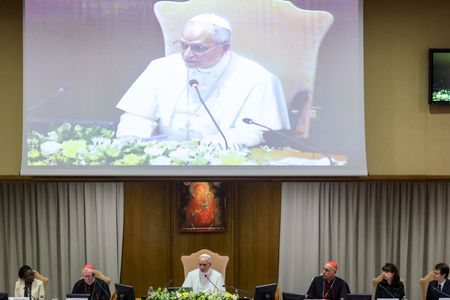
Pope Leo has established a Vatican research team focused on artificial intelligence, marking the latest example of religious leadership engaging with emerging technology. The Vatican revealed this month it created the internal research group as preparations continue for Leo’s inaugural encyclical. The upcoming papal letter is anticipated to stress the importance of ethical AI development that puts human dignity and peace first. In a historic decision, the Pope has asked Anthropic co-founder Chris Olah to participate in the encyclical’s announcement. Technology executives have been building relationships with religious and faith community leaders in recent months.
The United Nations has voiced serious concerns regarding new Taliban legislation in Afghanistan addressing marital separation that contains child marriage elements. The law’s most disputed sections include language suggesting that a pubescent girl’s silence may constitute marriage consent. Additional provisions address the separation of married girls who have reached puberty, suggesting child marriage acceptance. Taliban officials dispute these claims, asserting their decree aligns with Islamic principles and maintaining that Afghanistan prohibits forced marriages of girls.
Warsaw officials have recorded the city’s initial same-sex marriage registration, following court decisions requiring Poland to acknowledge gay unions performed internationally. Last autumn, the European Union’s top court mandated the nation recognize same-sex marriages conducted in fellow EU member states despite Polish law currently prohibiting such unions. In March, Poland’s Supreme Administrative Court referenced that decision when directing officials to acknowledge two Polish men’s German marriage. Prime Minister Donald Tusk has pledged to legalize gay marriage in Poland but encounters resistance from his governing coalition partners.
The House has turned down legislation creating a new Smithsonian American Women’s History Museum on the National Mall due to transgender disagreements. Democrats chose to abandon the widely supported measure after Republicans insisted the women’s museum exclude displays about men identifying as women. Republican amendments to the legislation also grant President Trump final authority over the building’s placement. The Democratic Women’s Caucus spearheaded efforts to defeat the bill without transgender inclusion. The Democratic decision leaves the museum proposal’s future uncertain.
US Secretary of State Marco Rubio issued official congratulations Monday to King Abdullah II and Jordan’s citizens as the kingdom marked eight decades of independence, highlighting Jordan’s important contribution to Middle East peace and security.
In a statement released to commemorate Jordan’s National Day on May 25, Rubio declared: “On behalf of the United States of America, I extend my best wishes and congratulations to His Majesty King Abdullah II and the Jordanian people on the 80th anniversary of Jordan’s Independence.”
The secretary of state emphasized that the relationship between Washington and Amman stems from “our shared commitment to a peaceful, prosperous, and secure Middle East.”
“We deeply value Jordan’s critical role in advancing our shared priorities for the region,” he stated.
Rubio also voiced America’s commitment to maintaining the ongoing partnership between the nations.
“As you celebrate Jordan’s National Day, the United States wishes the people of Jordan lasting prosperity under the leadership of His Majesty King Abdullah II, and we look forward to continuing our steadfast, decades-long partnership,” Rubio declared.
An additional statement released under Rubio’s authority noted that the United States “deeply value[s] the pivotal role Jordan plays in advancing our shared priorities in the region” and confirmed Washington’s dedication to preserving its enduring alliance with the kingdom.
Each year on May 25, Jordan celebrates its independence day, marking when the British Mandate concluded and the Hashemite Kingdom of Jordan was founded in 1946.
After World War I ended, the region came under British control. An agreement reached during King Abdullah I’s reign terminated the mandate in March 1946, and the Jordanian Legislative Council officially proclaimed independence on May 25 of that same year.
The milestone is celebrated as a national holiday throughout Jordan featuring government ceremonies, military parades, cultural events, concerts, and public celebrations.
Traditional festivities include gatherings with Hashemite royal family members, government leaders, and international diplomats, alongside fireworks, flag ceremonies, and community events in locations such as Amman.
A traffic collision has resulted in the complete closure of North DuPont Highway (Route 13) at Lepore Road, according to transportation officials.
The roadway remains blocked in both directions as emergency responders work at the crash site. Drivers traveling through the area should anticipate major delays and consider using alternative routes.
No additional details about the circumstances of the accident or potential injuries have been released at this time.
Israeli military officials confirmed Monday the death of Sgt. Nehorai Leizer, a 19-year-old soldier from Eilat, following a drone attack on Israeli forces conducting operations in southern Lebanon. The explosive device also left another service member from his unit with serious injuries.
According to military sources, Leizer was assigned to the 601st Combat Engineering Battalion within the “Iron Tracks” Brigade (401). The injured soldier was transported to a medical facility for treatment, with his family receiving notification of the incident.
Military officials stated that the attack happened when an explosive-laden drone targeted the location where Israeli troops were positioned during their southern Lebanon mission.
This announcement follows Sunday’s funeral for Staff Sgt. Noam Hamburger, a 23-year-old from Atlit who died during military operations in northern Israel.
Military reports indicate Hamburger was fatally injured when an explosive drone from Lebanese territory hit a position near the Lebanon border where Israeli forces were stationed within Israeli boundaries. The same attack left one soldier with severe wounds and caused minor injuries to a noncommissioned officer.
Hamburger had been serving as a technology and maintenance specialist in Battalion 9 of the “Iron Tracks” Brigade (401) and was scheduled to finish his military duty in just one month.
His funeral drew hundreds of mourners, with local residents from the Hof HaCarmel Regional Council lining the streets with Israeli flags as the funeral convoy proceeded to the burial site.
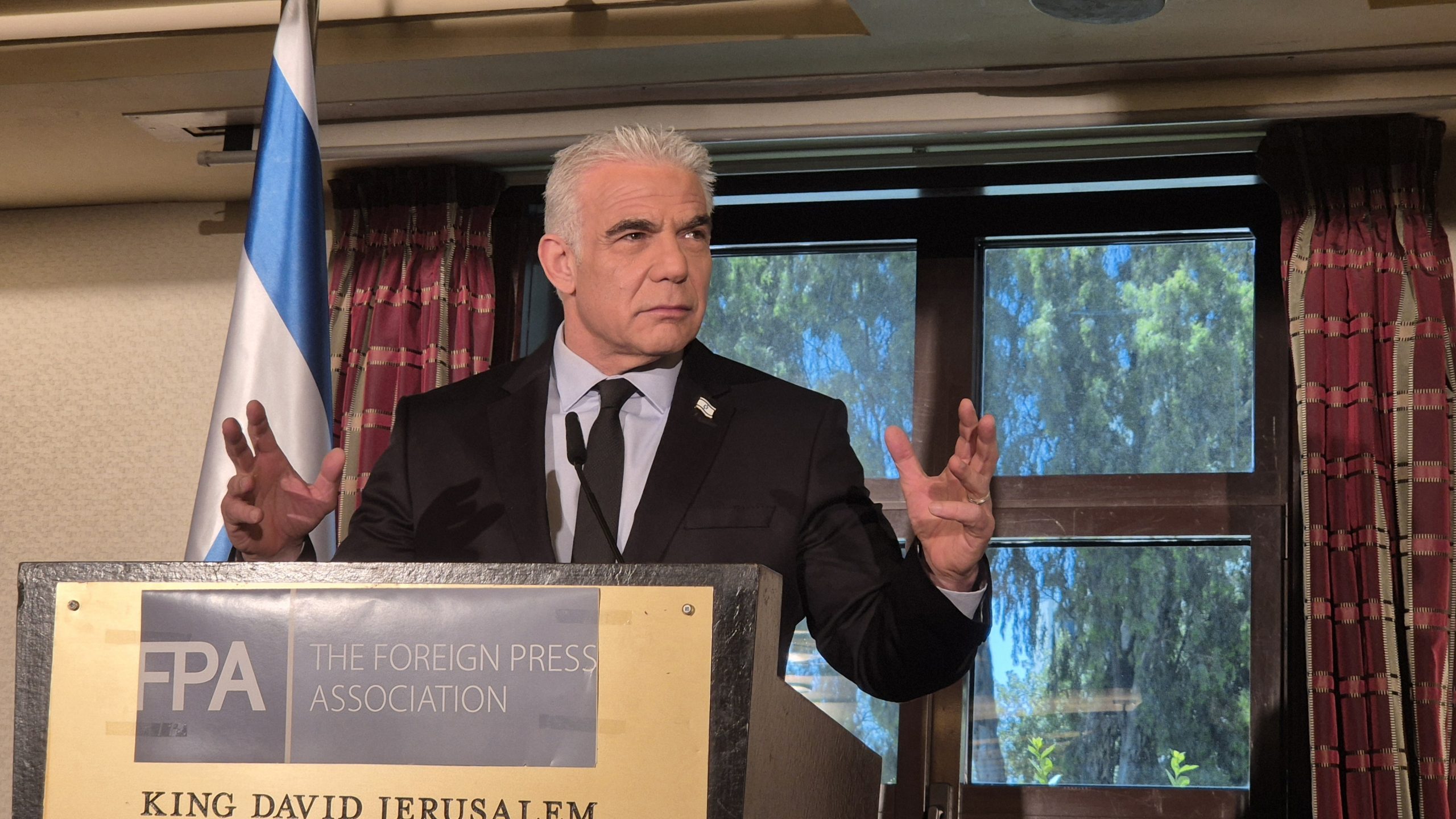
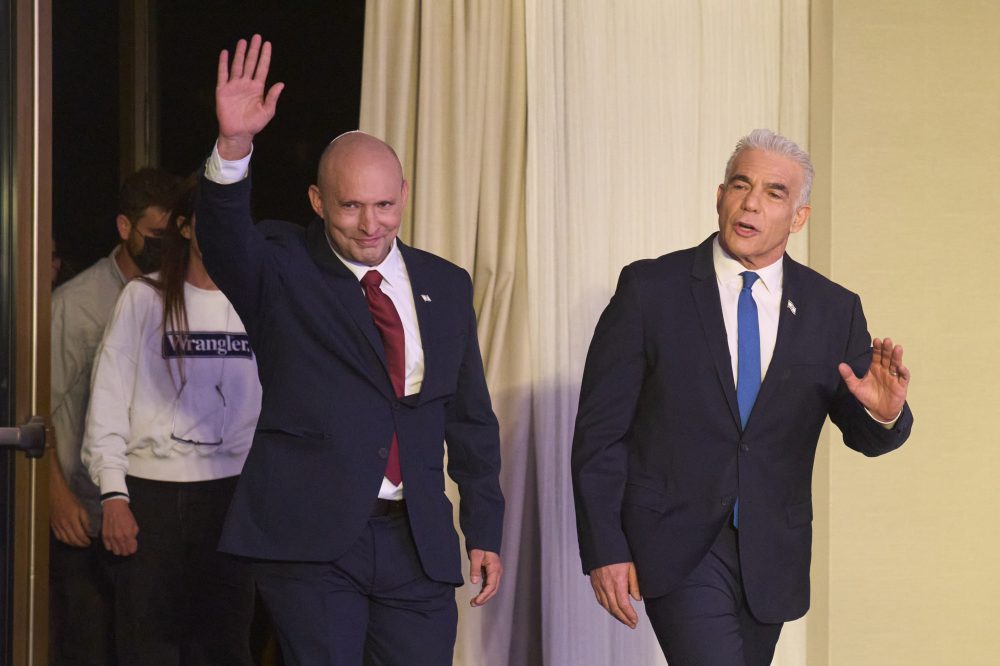
Israeli opposition leader Yair Lapid delivered sharp criticism of settler violence during a Foreign Press Association briefing, declaring without hesitation that “Settler terror is terror” when questioned about extremist actions in the West Bank.
During the press conference, Lapid addressed foreign policy matters involving Iran, Gaza and the West Bank, but made headlines when he outlined potential leadership arrangements for a future government headed by Naftali Bennett.
“I assume that the ideal government for most Israelis will be Naftali Bennett as prime minister, and former IDF chief Gadi Eisenkot as defense minister, and former finance minister Avigdor Lieberman as finance minister, and myself as foreign minister,” Lapid stated. “Again, this will be subject, I assume, to political results, but this is what we’re trying to do.”
Lapid characterized this potential partnership as “a union between the center and the liberal right” while indicating that additional political groups might still join the coalition. He expressed hope that Eisenkot would formally participate, saying “he will eventually.”
When pressed about whether settler violence constitutes terrorism, Lapid responded immediately and forcefully. “I never thought that in my lifetime we would talk about Jewish terrorism,” he declared. “But this is Jewish terror.”
The opposition leader argued that radical settler actions in the West Bank create both security risks and diplomatic problems for Israel. “These people are the greatest gift anti-Semites around the world could ask for,” Lapid explained. “It allows anti-Semites on both the right and the left to claim that this is Zionism and these are the values of the State of Israel. It is not.”
Lapid also targeted National Security Minister Itamar Ben-Gvir regarding treatment of Gaza flotilla activists, describing the situation as “a national disgrace” and emphasizing that “democracy comes with a price,” which includes “upholding international law.”
International relations emerged as a major focus when The Media Line questioned what Israel’s Foreign Ministry had accomplished recently and what changes he would implement. “You’re asking what the Foreign Ministry has done right in the last three and a half years?” Lapid responded. “Nothing.”
He blamed the current administration for damaging Israel’s bipartisan support in the United States, mismanaging European relationships, and choosing public confrontation over diplomatic engagement. “Part of foreign relations is dealing with these issues, not calling everybody an anti-Semite,” Lapid stated. “There are enough anti-Semites. We don’t have to create new ones.”
To illustrate his point, he referenced Israel’s decision to withdraw its ambassador from Ireland during a diplomatic disagreement, while Ireland kept its diplomatic presence in Israel. “So now if you’re an Israeli in Ireland, you have no one to talk to if you lost your passport,” Lapid observed. “But if you’re an Irish man or woman in Israel who lost his passport, you have an ambassador to talk to. This doesn’t make any sense.”
Lapid also expressed concern that Israel’s Washington influence had declined substantially despite the close ties between Netanyahu and US President Donald Trump. “In Washington, the Israeli government is actually at an all-time low in its ability to influence decisions in Washington,” Lapid warned. “Israel is not a vassal state and we are not a protectorate.”
Despite his harsh assessment of current diplomatic efforts, Lapid maintained tough positions on Iran and security matters. He supported Israel’s right to take military action against Iran when needed and expressed concerns about developing agreements between Washington and Tehran that could threaten Israeli interests.
“There will be no two-state solution in the coming years,” Lapid declared later during the session, explaining that Israelis have lost confidence that a Palestinian state could avoid becoming “another failing terror state on our border.”
However, he indicated that a Bennett-led administration would pursue a cautious approach in the West Bank, avoiding major policy shifts. The government would implement neither annexation nor significant diplomatic efforts toward Palestinian statehood in the immediate future. “We will make sure that nothing will happen that is irreversible,” Lapid promised.
The head of Australia’s domestic intelligence agency testified that anti-Jewish sentiment had become commonplace and went unaddressed prior to a deadly incident at Bondi Beach that claimed 15 lives during a Hanukkah gathering last December.
Michael Burgess, who serves as director-general of security for the Australian Security Intelligence Organisation, delivered these statements while appearing before the Royal Commission on Antisemitism and Social Cohesion, a panel established to examine circumstances that led to the Bondi incident.
“There is no doubt that the war in the Middle East invoked a range of emotions in Australia,” Burgess told the commission. “Some of those violent aspects … and those behaviors, including antisemitism that, in our view, were left unchecked, were therefore normalized and gave more permission for violence … and Jewish Australians were on the receiving end.”
The intelligence leader explained that anti-Jewish hostility grew more severe starting in late 2024, evolving from harassment and intimidation into physical assaults aimed at Jewish individuals and organizations.
“From late 2024,” he said, antisemitism escalated from “threatening, intimidating behavior to direct targeting of people, businesses, and places of worship.”
Burgess pointed to destructive acts and fire-bombing incidents against residences, educational facilities, houses of worship, and automobiles in the period leading up to the Bondi incident.
According to Burgess, the intelligence organization also concluded that Iran’s Islamic Revolutionary Guards Corps orchestrated strikes against a kosher dining establishment in Sydney and Melbourne’s Adass Israel Synagogue.
“They use their network of proxies and agents to do their bidding, and that is to bring harm to Jewish people wherever they are in the world,” he said.
The security official revealed that his agency elevated Australia’s national terrorism alert status to “probable” in August 2024 following an assessment that terrorist incidents had become more likely.
The alert level had been previously reduced in November 2022 from “probable” to “possible,” which Burgess characterized as the second-lowest designation on the nation’s five-level threat system.
He explained that the prior reduction came after the collapse of the Islamic State group in the Middle East and a decrease in foreign fighter recruitment efforts.
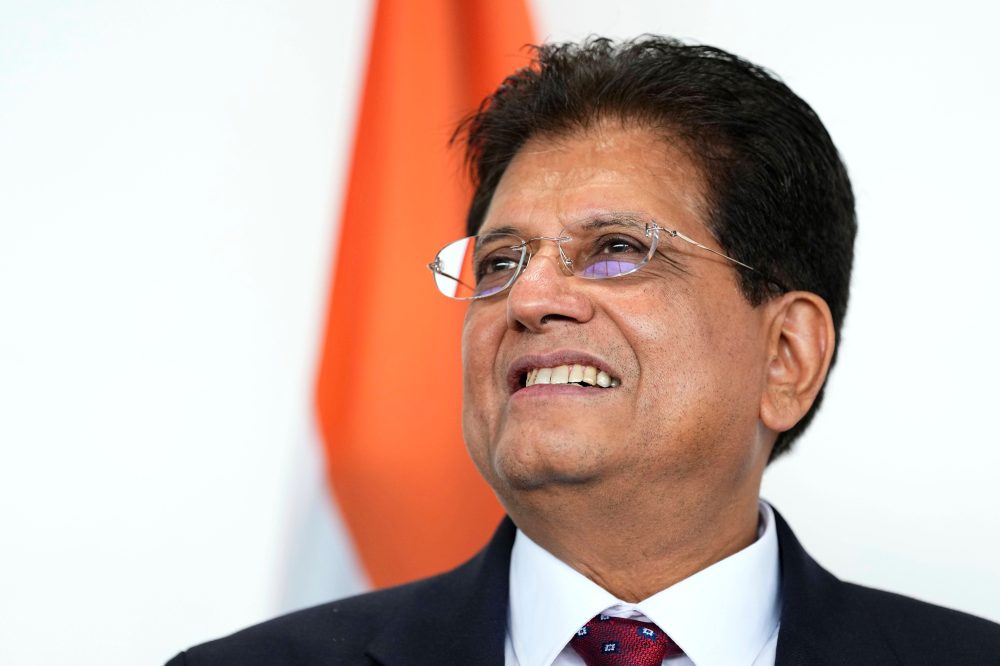
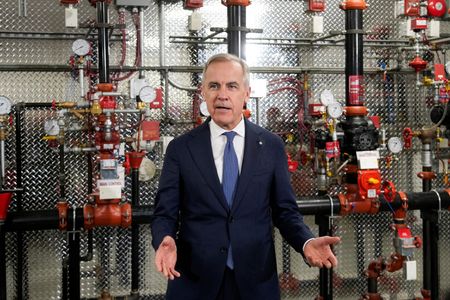
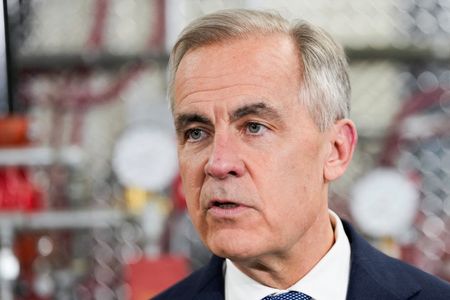
OTTAWA, Ontario — A recent diplomatic visit by Canadian Prime Minister Mark Carney to India has helped establish a pathway for completely resetting relations between the two nations, according to India’s trade minister speaking on Monday. The diplomatic relationship had deteriorated under Carney’s predecessor following the 2023 death of a Sikh activist on Canadian soil.
India’s Commerce and Industry Minister Piyush Goyal made these statements during his visit to Canada, where he held discussions with Canada’s International Trade Minister Maninder Sidhu.
Goyal arrived with more than 100 senior business leaders representing India’s mining, energy, automotive and aerospace industries, forming what New Delhi describes as its largest business delegation ever sent to Canada.
“This is a partnership that is being reset very, very rapidly,” Goyal stated on Monday.
According to Goyal, Carney’s late February visit — marking the first time a Canadian prime minister had traveled to India in eight years — “completely changed the way Canada and India looked at each other.”
“It has set in motion the pathway to a complete overhaul of this relationship, setting new agendas, new goals,” he explained.
Trade negotiations between the two countries began in 2010 but were suspended by Ottawa in 2023 when Canadian officials claimed India played a role in the death of Canadian Sikh activist Hareep Singh Nijjar, who was killed near Vancouver in June of that year.
New Delhi strongly rejected these claims and criticized former Canadian Prime Minister Justin Trudeau’s administration for providing refuge to Sikh extremists associated with the Khalistan movement. This movement seeks to establish an independent Sikh nation and is prohibited in India.
Prior to his meeting with Sidhu, Goyal expressed that both nations are eager to finalize a free-trade agreement within this year.
During Carney’s India trip, he held talks with Indian Prime Minister Narendra Modi, and the countries executed multiple agreements — including a 2.6 billion Canadian dollar ($1.9 billion) contract to provide approximately 22 million pounds of uranium to India for nuclear power production.
A Canadian trade delegation traveled to New Delhi earlier this month for negotiations, and another Indian delegation plans to visit Canada later this year to advance discussions.
Goyal also mentioned that both countries aim to increase their trade volume threefold to $50 billion by 2030.
While in Ottawa, Goyal held meetings with Carney and Foreign Affairs Minister Anita Anand. His itinerary also includes discussions with chief executives from major corporations, startups and pension funds.
Vina Nadjibulla, vice president of research and strategy at the Asia Pacific Foundation of Canada, noted that both nations seek to broaden their partnerships and decrease reliance on the United States, which some allies increasingly view as unpredictable.
India has recently completed trade agreements with the European Union, the United Kingdom and New Zealand.
“India is now pivoting to Europe as well as to other Western economies like Australia and Canada to be able to meet its needs for capital, technology and innovation,” Nadjibulla said.
Tampa Bay Rays shortstop Wander Franco has received a judicial pardon in the Dominican Republic despite being found guilty of sexually abusing a minor, avoiding any prison time.
A Dominican Republic judge determined Monday that Franco was both a perpetrator and a victim in his case, following his initial conviction in June 2025. Franco had been sentenced to two years of suspended prison time for an unlawful relationship with a 14-year-old girl in his home country.
Following an appeal by Franco’s legal team, a new trial was ordered. A three-judge panel reviewed the case and on Monday found Franco guilty while also determining he was victimized through extortion by the minor’s mother.
“In this case, the court has considered not only the conduct regarding an anomalous or abnormal relationship between the defendant and a minor, but also that the defendant in this specific case is also a victim,” Judge Jose Ramon Nunez said, per Listin Diario. “A victim of rapacious human behavior, which forgets principles and values and, once the problem arises, tries to profit from it at the expense of the very dignity of the one who should have been protected.”
Investigators discovered Franco made two payments exceeding $100,000 to the victim’s mother, reportedly to permit the relationship to persist for approximately two months beginning in 2022.
The victim’s mother received another conviction for trafficking and was sentenced to 10 years in prison for money laundering and additional charges.
Regarding Franco’s professional baseball future, the conviction remains on his record and he continues on Major League Baseball’s restricted list. Franco may face suspension under the league’s Joint Domestic Violence, Sexual Assault and Child Abuse Policy.
“We are aware of today’s verdict in the Wander Franco trial and will conclude our investigation at the appropriate time,” MLB said in a statement to multiple outlets.
Franco remains under contract with the Rays, who signed him to an 11-year, $182 million extension in 2021. He receives no pay while on the restricted list.
“The Tampa Bay Rays are aware of today’s ruling in the Dominican Republic involving Wander Franco,” the team said in a statement to the Tampa Bay Times. “We respect the legal process and the decision issued by the court. This is a serious matter, and our thoughts remain with those affected by the case.
“The Rays will continue to cooperate fully with Major League Baseball as it completes its review under the league’s Joint Domestic Violence, Sexual Assault and Child Abuse Policy. Out of respect for the legal process and all parties involved, we will have no further comment at this time.”
Franco, now 25, hasn’t appeared in an MLB game since Aug. 12, 2023. He was selected as an All-Star that season during his third year in the majors, posting a .282 career batting average with 30 home runs and 130 RBIs across 265 games.
Japan has dropped another spot in global creditor standings, now ranking third worldwide after being overtaken by China, according to Tuesday’s announcement from the country’s Finance Ministry.
The nation’s combined external assets held by government entities, corporations, and private citizens climbed 4.4% compared to the previous year, reaching 561.75 trillion yen, equivalent to $3.53 trillion.
This represents the eighth consecutive year of asset expansion, fueled by Japanese corporations’ aggressive international investment strategies, cross-border mergers and acquisitions, plus increased valuations of foreign securities owned by Japanese residents.
Despite this record-breaking asset growth, Japan’s global standing has continued to slide. The country previously lost its decades-long top position to Germany just one year ago, ending a 34-year reign as the world’s leading creditor nation.
Ministry statistics, compiled using International Monetary Fund data, show Germany maintaining its leading position with net external assets worth 675.5 trillion yen, while China now holds second place at 636.3 trillion yen.
Officials noted that both Germany and China have strengthened their creditor positions through consistent annual trade surpluses.
Japan’s asset growth has been partially offset by a substantial increase in external liabilities. The robust performance of Japanese equity markets resulted in a 62.2 trillion yen upward revaluation of Japanese securities owned by foreign investors.
The current exchange rate stands at $1 equals 158.9800 yen.
Taiwan’s military forces responded to China’s second major military exercise near the island within a seven-day period, deploying naval vessels and fighter aircraft for monitoring operations.
Beijing has intensified military pressure on Taiwan through expanded naval and air operations in the region, prompting heightened vigilance from Taiwanese officials following recent discussions about Taiwan between President Xi Jinping and U.S. President Donald Trump in Beijing.
Beijing considers the democratically-run island part of its sovereign territory and conducts near-daily military operations with naval vessels and aircraft in the area. Taiwan’s leadership disputes China’s territorial assertions.
Taiwan’s defense ministry reported Monday evening that surveillance detected 21 Chinese military aircraft, including J-16 fighter jets and unmanned vehicles, conducting operations around the island’s perimeter alongside naval vessels in what officials termed a “joint combat readiness patrol.”
Beijing’s defense ministry has not yet provided comment regarding the military activities.
Taiwanese defense officials released three photographs captured by their personnel – including an image from an F-16 aircraft showing two Chinese fighters following a Y-20 refueling plane, a photo of the Chinese naval vessel Yinchuan, and documentation of a Taiwanese naval crew member observing the vessel with field glasses.
Beijing conducted a comparable “readiness patrol” the previous Tuesday, one day prior to Taiwan President Lai Ching-te commemorating his second anniversary in office. Chinese leadership regards Lai as a “separatist” and has rejected his repeated diplomatic overtures.
During the weekend, Taiwan reported that its coast guard encountered a Chinese coast guard vessel near the Taiwan-administered Pratas Islands, which hold strategic importance at the northern edge of the South China Sea.
On Saturday, Taiwan’s National Security Council Secretary-General Joseph Wu used social media to highlight what he described as 100 Chinese vessels currently positioned in the first island chain, an area extending from Japan through Taiwan to the Philippines.
Australian officials announced Tuesday that seven women and 12 children with connections to the Islamic State have arranged to depart a Syrian refugee camp and return to Australia, marking the second such group to make this journey within the month.
Home Affairs Minister Tony Burke emphasized that the government is providing no assistance with their travel arrangements and warned that anyone who has broken laws “can expect to face the full force of the law.”
“These are people who have made the horrific choice to join a dangerous terrorist organisation and to place their children in an unspeakable situation,” Burke stated.
While Burke did not specify an arrival date for this second group, and his office has not yet provided additional details, the Australian Broadcasting Corporation reported the group departed a northeastern Syrian camp last Thursday and may arrive within days.
Earlier this month, four women and nine children returned to Australia following more than seven years in Syrian detention facilities. Authorities subsequently charged two of the women with slavery-related crimes, while a third faced terrorism charges, including allegations of joining the Islamic State.
The upcoming arrivals have sparked opposition criticism, with detractors arguing the center-left government has failed to prevent these repatriations. Government officials countered that there are “very serious limits” on their ability to block Australian citizens from re-entering their home country.
Officials stated that law enforcement and intelligence services have spent over ten years preparing for such returns and have established monitoring protocols for arriving individuals.
During the period from 2012 to 2016, several Australian women traveled to Syria to reunite with husbands who were reportedly ISIS members. After the caliphate’s fall in 2019, many ended up in detention camps.
This January, the United States initiated the relocation of detained ISIS members from Syria following the breakdown of the Kurdish-led Syrian Democratic Forces, which had been overseeing approximately twelve facilities housing fighters and associated civilians, including foreign nationals.
Mexico’s President Claudia Sheinbaum announced Monday that Iran’s national soccer team will establish their base in Mexico and make daily trips to the United States for their World Cup matches, following Washington’s decision not to accommodate the squad during the tournament.
According to Sheinbaum, FIFA contacted her administration after American officials indicated they preferred Iran not remain in the country for the duration of the June 11-July 19 competition, despite Iran being slated to compete in three Group G games on US soil.
“We have no reason to deny them the possibility of staying in Mexico,” Sheinbaum stated during her daily press briefing.
Iran’s schedule includes matches against New Zealand in Los Angeles on June 15, Belgium in Los Angeles on June 21, and Egypt in Seattle on June 26.
Neither the White House nor the State Department provided immediate responses to requests for comment.
In March, U.S. President Donald Trump stated that while Iran was welcome to participate in the World Cup, he felt it wasn’t suitable for Iran’s team to remain in the United States “for their own life and safety.”
On Saturday, Mehdi Taj, who leads Iran’s football federation, announced the team’s headquarters would relocate from Arizona to Tijuana, the Mexican border city, for the duration of the tournament. FIFA validated this change on Monday.
Taj explained that this relocation would help prevent visa complications and enable direct Iran Air flights to Mexico.
Iran’s World Cup participation has faced examination since late February, when the United States participated alongside Israel in strikes against Iran, sparking a conflict that created uncertainty about whether Tehran would deploy its team to compete in one of the host nations.
In March, Taj revealed Iran was discussing with FIFA the possibility of relocating its group matches to Mexico for security reasons, with Sheinbaum indicating Mexico’s willingness to host them. FIFA maintained the original schedule.
This situation sparked broader questions about Iran’s tournament participation. In April, Trump’s envoy for global partnerships, Paolo Zampolli, proposed Italy as Iran’s replacement, which drew dismissive reactions from Italian officials and FIFA.
Iran secured its fourth straight World Cup berth by finishing first in its group during the third round of Asian qualifying last year.
As the World Cup approaches, Charlotte FC defender Tim Ream is focused on earning a spot on the U.S. Men’s National Team roster while recognizing the tournament’s broader significance for American soccer.
The Major League Soccer player understands that the upcoming competition carries weight beyond individual performance, as the team’s success could help cultivate interest in soccer among a new wave of American supporters.
Ream, who plays for the Charlotte-based MLS franchise, is working toward what would be his second World Cup appearance with the national team. The defender sees the tournament as a crucial opportunity for both personal achievement and the sport’s development in the United States.
Argentine soccer superstar Lionel Messi is nursing a hamstring injury with less than three weeks remaining until the World Cup kicks off, his club Inter Miami announced Monday following his early exit from what was expected to be his last match before the international tournament.
The 38-year-old star was substituted out of Sunday’s high-scoring 6-4 Major League Soccer win against the Philadelphia Union during the 73rd minute after he grabbed the back of his leg following a free kick attempt.
“After undergoing further medical tests this Monday, the initial diagnosis indicates an overload associated with muscle fatigue in his left hamstring,” Inter Miami said in a statement.
“The timeline for his return to physical activity will depend on his clinical and functional progress.”
Inter Miami’s head coach Guillermo Hoyos minimized concerns following the game, suggesting Messi looked tired after competing on what he described as a “heavy” playing surface.
The Major League Soccer season is now on break for the World Cup tournament, scheduled to take place across the United States, Canada and Mexico from June 11 through July 19.
Argentina’s national team coach Lionel Scaloni has named the eight-time Ballon d’Or recipient to a preliminary 55-player roster released this month, with the title-defending squad set to face Algeria in Kansas City on June 16 for their tournament opener.
Messi served as captain when Argentina claimed their third World Cup championship in Qatar during 2022 and is anticipated to once again lead the national team in what may mark his sixth World Cup appearance.
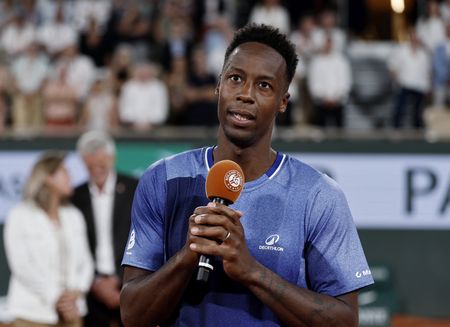
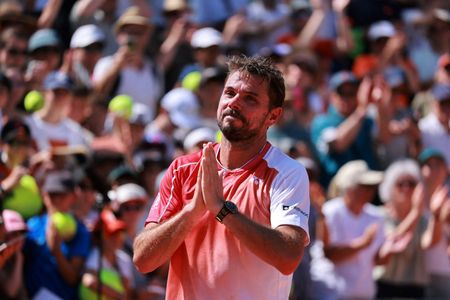
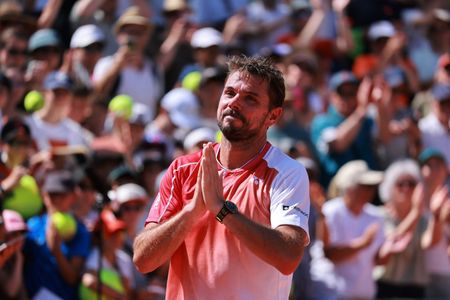
PARIS – Tennis veteran Gael Monfils played his final match at the French Open on Monday, falling to fellow Frenchman Hugo Gaston in a five-set first-round encounter that ended 6-2 6-3 3-6 2-6 6-0. The 39-year-old received an emotional send-off from fans who celebrated his two decades of entertaining tennis at Roland Garros.
The match came just hours after veteran player Stan Wawrinka also concluded his French Open career. Monfils battled through the contest on Court Philippe Chatrier, giving supporters the extended match they hoped to witness despite struggling to reach his peak performance level.
Following a video tribute highlighting his memorable moments and special bond with Paris crowds, Monfils addressed the audience with heartfelt remarks.
“Here we are, I love you all so much. I’ll try to be quick and to the point,” Monfils told the crowd after watching the tribute presentation.
The emotional farewell included gratitude to his family members, including his parents and wife, fellow professional player Elina Svitolina, along with his coaching team and the French Tennis Federation. He then turned his attention to the fans who supported him throughout his career.
“I’d like to thank you all,” he continued. “Every year I come to play at the French Open, I get goosebumps. Every time, I say to myself ‘this is magical’. I’ve created something powerful, unique, exceptional.”
“I’m going to miss you. This tournament is fabulous, it’s magical. Roland Garros, I love you, I owe you everything.”
The match itself provided drama as Monfils, who plans to retire when this season concludes, dropped the opening set before attempting a comeback in the second. Though fans erupted when he showed signs of mounting a challenge, Gaston quickly regained control to take a two-set advantage.
Spectators hoping for a dramatic finish got their wish as Monfils secured a crucial break to lead 5-3 and claim the third set. He then dominated the fourth set to force a deciding fifth set, but Gaston composed himself to win the final set without dropping a game.
Gaston expressed mixed emotions after defeating his countryman in such a significant moment.
“There are a lot of emotions,” Gaston reflected. “There is joy but mostly sadness, I’m so sorry for you, Gael. I want to congratulate you, thank you for all you have done for us, the young players, and for your incredible career.”
“You’re a French legend, a legend of our sport.”
The ceremony continued with video messages from tennis stars including Rafa Nadal, Novak Djokovic, Gilles Simon, Richard Gasquet, Jo-Wilfried Tsonga and Wawrinka, bringing smiles to Monfils’ face as his Roland Garros career officially came to an end.
The Los Angeles Dodgers welcomed back versatile player Enrique Hernandez on Monday night as he returned from the 60-day injured list to face the Colorado Rockies in his first game of the season.
The 34-year-old utility player has bounced back from left elbow surgery and will take the field at third base while batting in the ninth position.
Hernandez went under the knife in November following elbow problems that sidelined him for two months during the 2025 campaign. He inked a one-year deal valued at $4.5 million in February to rejoin the Dodgers organization.
The surgical procedure also kept Hernandez from representing Puerto Rico during the World Baseball Classic in March.
His return comes at an opportune moment as third baseman Max Muncy continues to battle right wrist discomfort after taking a pitch from Milwaukee Brewers left-hander Aaron Ashby on Friday. Muncy has been absent from the starting lineup for three consecutive days, though he participated in outfield throwing exercises before Monday’s contest.
To make room for Hernandez on the roster, the Dodgers placed utility man Santiago Espinal on waivers for assignment.
The 31-year-old Espinal compiled a .220 batting average with one home run and four RBIs across 26 appearances this season. The former 2022 All-Star selection for Toronto posted a .260 career batting mark with 31 homers through 604 games spanning time with the Blue Jays (2020-23), Cincinnati Reds (2024-25) and Dodgers.
Last season, Hernandez managed a .203 batting average alongside 10 home runs and 35 RBIs in 92 contests. Throughout his 12-year major league career, including nine seasons with the Dodgers across two different periods, Hernandez maintains a .236 career batting average with 130 home runs and 470 RBIs over 1,275 games.
Hernandez has built his reputation on delivering in high-pressure postseason moments. He has connected for 16 home runs with 42 RBIs across 103 career playoff contests while contributing to the Dodgers’ World Series championships in 2020, 2024 and 2025.
During his time with the Boston Red Sox in 2021, Hernandez launched five home runs in the postseason as the team advanced to the American League Championship Series before losing to the Houston Astros.
LAS VEGAS (AP) — Right when Colorado welcomed back their reigning Norris Trophy recipient Cale Makar, the Avalanche may now be facing the loss of Hart Trophy candidate Nathan MacKinnon.
At minimum, they’ll have a severely restricted MacKinnon, which described his condition after a puck struck his right knee during Sunday evening’s 5-3 defeat to the Vegas Golden Knights.
This series has been challenging for the Avalanche, with the Presidents’ Trophy champions now trailing 3-0 in the Western Conference Final. Facing potential elimination on Tuesday evening, coach Jared Bednar expressed willingness to utilize MacKinnon however possible.
“For him to be able to come back out, get some work done late in the second period and intermission and be able to come out and even help us on the power play and empty-net situations, if that’s all he can do, we’ll take it,” Bednar said. “It’s better than anything else, in my opinion, we can put on the ice.”
While that statement might draw considerable discussion within the Avalanche dressing room, the Golden Knights currently command Colorado’s complete attention.
Although the Avalanche may have entered the series as favorites — the league’s top regular season team facing one so eager to reach the playoffs they dismissed their coach with eight contests left — circumstances have changed dramatically.
The statistical reality is overwhelming.
This marks the 50th occasion in conference finals or league semifinals where a series has reached 3-0. Every one of the previous 49 teams holding that lead advanced to the Stanley Cup Final, with 47 completing the series within six games.
Just four teams have overcome 3-0 series deficits in any playoff round. Los Angeles in 2014 became the latest team to achieve this feat when they eliminated San Jose in their opening-round matchup.
Additionally, there’s the notorious Presidents’ Trophy curse. Chicago in 2013 represented the last franchise to capture both that award and the Stanley Cup during the same campaign. Colorado already experienced the challenge of achieving this double, earning the Presidents’ Trophy during the 2021 COVID-shortened season before falling in six games during the second round… to the Golden Knights.
“There’s going to be a sense of urgency, but it’s got to be smart urgency,” defenseman Josh Manson said. “It’s got to be desperation. It’s got to be our best style of play the whole night. You’ve got to maintain that sense of do or die, while playing up to the edge. That’s what makes it so difficult.
“The margin of error is so thin now, and you’ve got to be able to balance that for at least 12 periods.”
Colorado needs exactly that many periods minimum to achieve something no other team has managed this late in playoff competition. They must perform like the squad that appeared to be the NHL’s finest for six months and during the initial two playoff rounds when they posted an 8-1 record.
“We know where we’re at,” wing Martin Necas said. “We know it doesn’t happen very often, but we still feel confident in this group. It’s not like we’ve been outplayed every game and their team is better than ours. We had a lot of stretches this season where we won four in a row. So we just focus on the next game and take it home and anything can happen.”
Bringing the series back to Denver for Game 5 would represent progress.
“Our team’s played with more intensity and more desperation as the series (has) gone on,” Bednar said. “Hasn’t worked out for us yet. I think with the hill to climb, it’s definitely a tough one. It just doesn’t happen very often, and we’re certainly understanding of that, but I think we have a lot of pride and a lot of character in our room that displayed that time over time throughout the course of the year,
“This will be our most difficult challenge, but I believe that we will show up and we will be ready to play.”
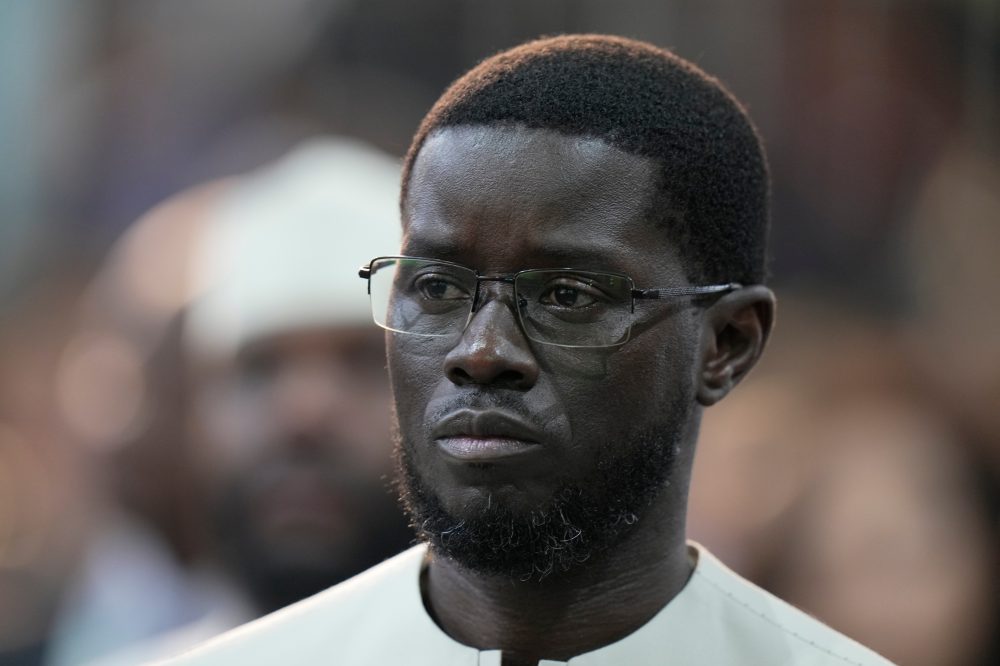
DAKAR, Senegal — A former banking executive has been chosen to lead Senegal’s government after the country’s president dismissed his previous prime minister last week amid mounting political tensions and economic difficulties.
President Bassirou Diomaye Faye announced through a televised statement on Monday his selection of Ahmadou Al Aminou Lo to serve as the nation’s new head of government, taking over from Ousmane Sonko.
The dismissal of Sonko occurred on Friday following several months of growing friction between the former prime minister and the president. This action led to the complete dissolution of the government as all ministers submitted their resignations.
Lo brings extensive financial experience to his new role, having previously worked as an executive with the Central Bank of West African States where he helped develop monetary and economic strategies across the region. He also held positions as state minister to the president and secretary-general under Sonko’s administration.
The relationship between Faye and Sonko had deteriorated over recent months due to disagreements on major policy decisions, particularly regarding discussions with the International Monetary Fund about potential loan arrangements. In May, Faye publicly stated that Sonko’s continued employment depended on his job performance.
Both leaders previously worked together within the political party Pastef, which stands for Patriotes Africains du Sénégal pour le Travail, l’Éthique et la Fraternité in French.
The party gained control following the March 2024 parliamentary elections after campaigning against the incumbent Alliance pour la République party, amid widespread concerns that former President Macky Sall might exploit a 2016 constitutional amendment to extend his time in office.
Due to a defamation conviction confirmed by Senegal’s highest court and subsequent rejection by the Constitutional Court, Sonko was prohibited from seeking the presidency. Faye stepped in as the party’s candidate and later named Sonko as prime minister after winning the election.
Brazilian authorities announced Monday they are dedicating 3.1 billion reais ($617.5 million) to support sustainable economic development in the Amazon rainforest region. The funding represents an expansion of a federal initiative called Eco Invest that officials unveiled during last year’s COP30 climate summit.
Officials say the money will support companies focused on sustainable tourism, infrastructure improvements throughout the Amazon, and expansion of what they call the “bioeconomy” — economic activities using natural resources while protecting the forest.
The financing structure involves the National Treasury providing loans to banks at a 1% annual interest rate. Banks must then generate at least four times that amount through private investment, with international investors providing a minimum of 60%. The program has secured 140 billion reais ($28 billion) in combined public and private funding to date.
Monday’s announcement included the National Treasury’s allocation of 3.1 billion reais ($617.5 million) and commitments from eight banks for an additional 10.1 billion reais ($2 billion) through the latest Eco Invest auction, according to the Ministry of Environment.
Carina Pimenta, the national secretary for the bioeconomy at the Ministry of the Environment and Climate Change, explained the funding could assist cooperatives that produce Amazon goods like acai and Brazil nuts, along with tourism facilities in protected areas.
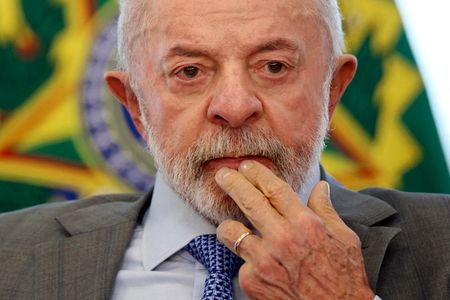
The Amazon rainforest, which is the planet’s largest, serves a vital function in global climate regulation. Brazil contains over 60% of the forest, with much of it located in some of the nation’s most economically disadvantaged states. Regional projects typically involve high costs and significant investor risks, prompting the administration of President Luiz Inácio Lula da Silva to create the Eco Invest program in 2024 to minimize those risks through guarantees.
João Paulo Capobianco, Brazil’s environment minister, stated that Eco Invest advances Brazil’s goal of achieving net-zero carbon emissions by 2050 through financial incentives for Amazon economic activities that don’t depend on deforestation. Although agricultural expansion has historically driven deforestation, Capobianco noted Brazil has decreased forest loss while maintaining productivity since 2023.
The funding announcement follows a challenging week for Brazil’s environmental policies.
Last week, the lower house — predominantly conservative and supportive of agricultural business interests — passed expedited legislation that undermines environmental crime enforcement efforts, including measures that restrict action against illegal deforestation based only on satellite data.
This enforcement approach has been fundamental to Brazil’s environmental protection strategy and, according to Brazil’s natural resources agency known as IBAMA, contributed to approximately 50% reduction in Amazon deforestation since 2023.
The legislation requires Senate approval and the president’s signature, but has generated worry among environmental advocates.
“By weakening oversight tools, territorial protection and environmental governance, the measures reduce the Brazilian state’s ability to prevent, control and respond to the economic, social and climate impacts of climate change,” Climate Observatory, a network of environmental nongovernmental associations, said in a statement Monday.
Capobianco acknowledged that such congressional actions might create uncertainty about Brazil’s environmental commitments, but emphasized the country remains dedicated to meeting its climate goals.
“We will show that Brazil remains on a path of controlling and reducing deforestation,” he said.
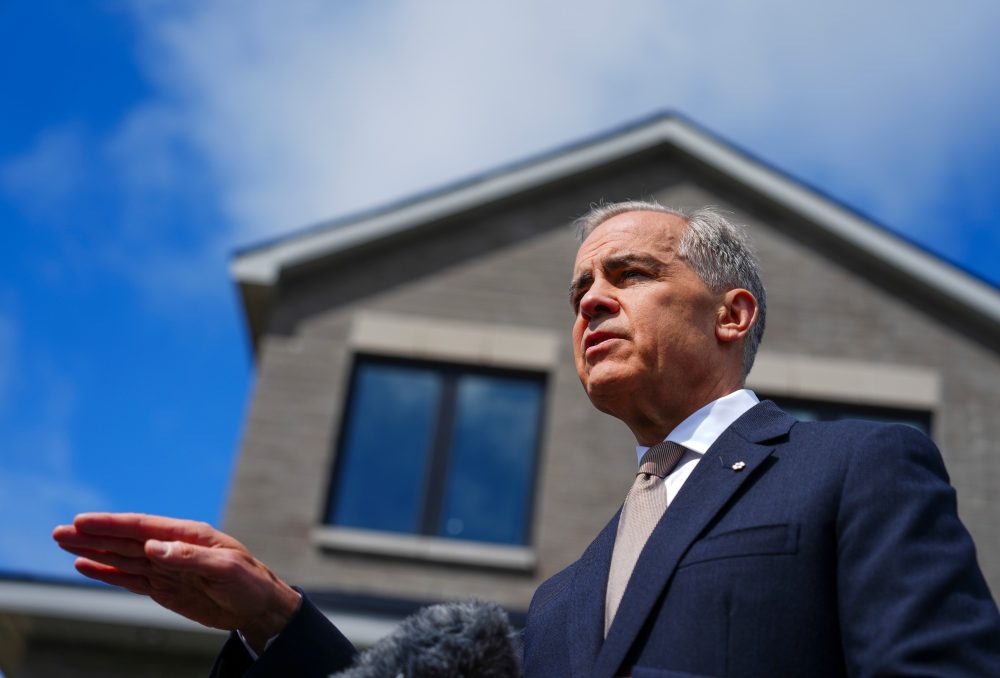
TORONTO (AP) — Canada’s Prime Minister Mark Carney drew comparisons Monday between an upcoming Alberta independence vote and Britain’s Brexit decision, describing the provincial referendum as a potentially “dangerous bluff.”
Alberta Premier Danielle Smith announced last week that residents will vote October 19th on whether the oil-rich province should remain part of Canada or pursue constitutional measures toward holding a binding separation referendum.
Drawing from his Brexit experience as Bank of England governor in 2016, Carney helped steer the central bank through Britain’s European Union departure process.
“I saw firsthand what happened in the United Kingdom when the view was, ‘Vote for this, it’ll be soft and then we’ll negotiate, etc.,’ Carney said. “They’re still 10 years later trying to undo what people didn’t think they were voting for, but what they ended up having.”
The referendum proposal wasn’t part of Smith’s party platform during their most recent provincial election campaign.
Carney expressed concern that the vote undermines his efforts to bring investment into Canada, questioning its democratic legitimacy.
“Is it the democratic will of Albertans? Did they vote for this in the last provincial election? No, they didn’t. It wasn’t on the ballot paper,” Carney said.
Smith has publicly stated her preference for Alberta to stay within Canada. Observers have noted similarities between her position and former British Prime Minister David Cameron’s approach to Brexit — using the referendum to manage internal party divisions while personally opposing separation.
Carney is currently working to develop a new oil pipeline connecting Alberta to Canada’s Pacific coastline. Alberta residents have historically criticized Ottawa for insufficient efforts to connect the province’s substantial oil resources with Asian markets.
“We have to be very careful about this. There’s a very strong positive case for Canada, a strong Alberta in a united Canada,” Carney said. “I look forward to making that case with many, many other Albertans and Canadians over the course of the next 150 days.”
In response to Carney’s Monday remarks, Smith maintained that separation decisions belong exclusively to Alberta residents.
“Albertans’ frustrations have been fueled by the last 10 years of disastrous policies from Ottawa under … Justin Trudeau,” Smith said in a statement from her office, referencing the previous prime minister.
“I would also remind all Canadians that we should not dismiss the legitimate grievances of Albertans. Instead, we should focus on addressing these issues, restoring hope in Canada, and demonstrating that our country can work and is working.”
Canadian Prime Minister Mark Carney strongly criticized Israel’s treatment of detained activists during a conversation with Israeli President Isaac Herzog on Monday, according to a statement from Carney’s office.
Carney described the handling of civilians aboard a Gaza-bound aid flotilla as “appalling” and characterized the Gaza situation as “catastrophic” during the diplomatic exchange.
“The Prime Minister reiterated that the appalling treatment of civilians, including Canadian citizens, aboard the Gaza-bound flotilla was unacceptable, and he called for an independent investigation,” the official statement read.
The Canadian leader also restated his country’s stance against unauthorized Israeli settlement growth, violence by settlers in the West Bank, and attacks on Palestinian civilians, according to the statement.
While Carney had previously criticized Israel’s flotilla response last week, Monday’s comprehensive rebuke demonstrates the growing tension between Israel and some of its traditional allies.
Israeli embassy officials in Ottawa could not be reached for immediate response.
Flotilla organizers report that activists faced mistreatment during detention, with several requiring hospital care for injuries and at least 15 alleging sexual violence, including rape. Israel’s prison service has rejected these claims.
Israel’s ambassador to Canada recently told the Globe and Mail that diplomatic relations between the two nations had reached their lowest point in history.
In a related development, Canadian Foreign Minister Anita Anand revealed she spoke with Israeli counterpart Gideon Saar on Monday, informing him that Ottawa would share evidence of Canadian citizens’ mistreatment aboard the flotilla.
“I raised that denying Canadian citizens access to consular services while they were detained violates the Vienna Convention and must never happen again,” Anand wrote on social media platform X.
Saar responded by claiming the activists were motivated by Hamas and criticized Canada’s handling of antisemitic incidents.
“I also highlighted the horrific antisemitic wave in Canada — an average of 19 incidents a day. The Canadian government must take steps against antisemitic incitement and attacks,” Saar posted on X.
Professional golfer Wyndham Clark has decided to skip this week’s Charles Schwab Challenge tournament after capturing victory at the CJ Cup Byron Nelson on Sunday, joining Brooks Koepka in withdrawing from the event.
Clark delivered a spectacular final-round performance, shooting 11-under-par 60 to secure a total score of 30 under par for the tournament. His winning total came within one stroke of matching Scottie Scheffler’s record-tying performance from the previous year.
The victory represents Clark’s fourth career PGA Tour triumph and his first win since capturing the 2024 AT&T Pebble Beach Pro-Am earlier this season.
Clark’s impressive performance significantly improved his standing in professional golf rankings, moving him up from 75th to 44th position in the Official World Golf Ranking. His FedEx Cup position also saw a dramatic jump from 82nd place to 34th.
Lanto Griffin has been called up from the alternate list to fill Clark’s vacant spot in the Charles Schwab Challenge field at Colonial Country Club. The tournament marks the second consecutive week of competition in the Dallas-Fort Worth Metroplex area.
Koepka made his withdrawal decision on Sunday following a tied-for-14th finish at the Byron Nelson tournament.
The international soccer governing body FIFA announced Monday that Iran has officially moved its World Cup preparation facility from an American location to Mexico due to Middle East conflict concerns and security issues.
The Iranian national soccer team had initially chosen a training facility in Tucson, Arizona, as their primary base for World Cup preparations, but decided to relocate following joint military operations by the United States and Israel against Iran that began in late February.
FIFA released its complete roster of team training locations on Monday, showing Iran will now use Centro Xoloitzcuintle in Tijuana as their base of operations.
Iran’s scheduled group matches remain unchanged at this time. The team is placed in Group G and will face New Zealand in Los Angeles on June 15, followed by Belgium on June 21 in the same city, and conclude group play against Egypt in Seattle on June 26.
The proximity of Tijuana to the U.S.-Mexico border near San Diego may assist with visa complications when the team must cross into the United States, according to Mehdi Taj, president of the Iran Football Federation.
Taj first revealed the training camp relocation on Saturday before FIFA provided official confirmation.
“All team base camps for the countries participating in the World Cup must be approved FIFA,” Taj said in a statement. “Fortunately, following the requests we submitted and the meetings we held with FIFA and World Cup officials in Istanbul, as well as the webinar meeting we had yesterday in the Tehran with the respected FIFA secretary general, our request to change the team’s base from the United States to Mexico was approved.”
Iranian representatives indicated earlier this month that their athletes and coaching staff had not yet obtained United States visas.
The World Cup tournament, jointly hosted by the United States, Canada and Mexico, is scheduled from June 11 through July 19.
Professional golfer Tyrrell Hatton from England will skip this week’s LIV Golf Korea tournament after he and his wife Emily celebrated the arrival of their first baby last week, according to an announcement from his LIV Golf team on Monday.
Taking Hatton’s place on the Legion XIII roster will be 33-year-old German golfer Max Rottluff, who will be making his first appearance in LIV Golf competition.
The 34-year-old Hatton plans to rejoin competition next week when he competes in LIV Golf Andalucia at Real Club Valderrama located in Sotogrande, Spain.
Currently experiencing one of his strongest competitive periods, Hatton has achieved four top-10 results across 10 tournament appearances, highlighted by a third-place tie at The Masters tournament in April. This Masters performance represents his best showing in any major championship event.
For this week’s competition, Jon Rahm’s Legion XIII squad will consist of Rahm himself along with Tom McKibbin, Caleb Surratt and Rottluff.
Toronto manager John Schneider announced Monday that the team’s ace pitcher Dylan Cease will be sidelined on the 15-day injured list after suffering a left hamstring strain.
The 30-year-old right-handed pitcher exited Sunday’s matchup with the visiting Pittsburgh Pirates during the fifth inning after experiencing what the organization described as “mild left hamstring discomfort.”
During the game, Cease was observed shaking his left leg while pitching, prompting Schneider and head athletic trainer Jose Ministral to visit the mound to evaluate the eight-year veteran. Cease managed to get Spencer Horwitz out before Mason Fluharty took over pitching duties.
“It doesn’t look too terrible, knock on wood,” Schneider told reporters Monday. “Just trying to be smart and not have it get worse. Don’t know the exact timeline yet … hoping it’s a minimal stay.”
During his abbreviated outing, Cease allowed two runs on four hits while recording eight strikeouts and issuing one walk over 4 2/3 innings. This marked just the second occasion in 11 starts this season where he was unable to pitch at least five complete innings.
In other injury news, Blue Jays star first baseman Vladimir Guerrero was scratched from Monday’s starting lineup against the Miami Marlins due to elbow discomfort.
Guerrero sustained the injury when he was struck by a pitch on his right elbow during Sunday’s contest against the Pirates.
Schneider classified Guerrero’s condition as day-to-day.
“See how he feels as the day goes on,” Schneider explained to the media. “But didn’t want to push it with him, just in talking to him last night and today.”
Guerrero has struggled offensively this season, managing only three home runs across 53 games. The five-time All-Star is currently hitting .287 with 22 RBIs.
After signing a seven-year, $210 million deal with the Blue Jays in December, Cease has established himself as one of baseball’s most reliable starting pitchers. Over the past five seasons, he joins just three other starters – fellow Blue Jays Kevin Gausman, Patrick Corbin and Jose Berrios – in making 30 or more starts each year.
This injury represents the first time in Cease’s major league career that he will be placed on the injured list due to a physical condition.
Cease played the previous two seasons with the San Diego Padres, where he threw the franchise’s second no-hitter in 2024 while posting a 14-11 record with a 3.47 ERA across 33 starts. He recorded 224 strikeouts and earned fourth place in National League Cy Young voting.
His first five big league campaigns were spent with the Chicago White Sox. He finished as the American League Cy Young runner-up in 2022 after going 14-8 with a 2.20 ERA and a career-best 227 strikeouts in 32 starts.
Cease has achieved 200 or more strikeouts in five consecutive seasons and holds a career record of 68-61 with a 3.83 ERA over 199 starts.
The 10th anniversary of the Jerusalem Prayer Breakfast has brought renewed focus to concerns about growing antisemitism worldwide, according to the organization’s global director Albert Veksler.
In discussing the current climate, Veksler expressed deep concern that hatred toward Jewish people has reached alarming levels of acceptance in society. He warned that many people now view violence against Jews as something that can be justified or understood.
During his remarks, Veksler shifted between discussing international concerns, including Iran and hopes for freedom among its citizens, while emphasizing the urgent need for moral courage from Christian communities in supporting Jewish people facing increased threats.
According to Veksler, who oversees the Jerusalem Prayer Breakfast organization, the intersection of faith and political realities has become impossible to separate in today’s world. He stressed that spiritual and political concerns now exist in the same space, requiring immediate attention and action.
A Milwaukee Brewers pitcher made baseball history Monday night by delivering an unprecedented number of triple-digit fastballs during his team’s 5-1 victory over the St. Louis Cardinals.
Jacob Misiorowski launched 57 fastballs clocking 100 mph or higher, shattering the previous mark of 47 set by Cincinnati’s Hunter Greene in a September 2022 matchup against St. Louis. The feat represents the most high-velocity pitches recorded in any single contest since official pitch tracking technology was implemented in 2008.
The 24-year-old hurler struck out 12 batters to equal his personal best while improving his season record to 5-2. During his seven-inning performance, Misiorowski surrendered just two hits and one walk, lowering his earned run average to 1.83.
Of his 96 total pitches, 40 registered at 101 mph, while 22 reached 102 mph. Nine of his offerings hit at least 103 mph, with his fastest clocking 103.4 mph on three separate occasions.
Misiorowski tied another record held by Greene from that same 2022 contest by recording nine strikeouts on pitches exceeding 100 mph.
After walking JJ Wetherholt on a 3-2 inside pitch to start the game, the Cardinals managed just one baserunner until Pedro Pagés blooped a single leading off the sixth inning. St. Louis scored their lone run later that inning, ending Misiorowski’s streak of 29 1/3 consecutive scoreless innings.
The franchise record for consecutive scoreless innings belongs to Teddy Higuera, who threw 32 straight shutout frames in 1987. Misiorowski entered Monday’s contest having blanked opponents across his previous four starts.
Israeli warplanes conducted bombing missions against Hezbollah positions throughout Lebanon, including targets in the eastern Bekaa Valley region, on Monday evening after Israeli Prime Minister Benjamin Netanyahu promised to escalate military operations against the Lebanese militant organization.
The prime minister’s pledge followed recent weeks of Hezbollah deploying fiber optic drones against Israeli military personnel in southern Lebanon and northern Israel – the same type of weaponry that has been extensively utilized during the conflict in Ukraine.
“We will hit them. It’s true that they are shooting drones at us, fiber optic drones. We have a special team working on that and we will solve that too,” Netanyahu said in a video posted on social media. “What this requires of us now is to increase the blows, to increase the intensity. We will smite them hip and thigh.”
Following Netanyahu’s social media statement, some civilians began evacuating Beirut’s southern neighborhoods where Hezbollah maintains a significant presence, according to Lebanon’s state-run National News Agency. The same agency reported multiple bombing runs targeted the eastern community of Mashghara in the Bekaa area Monday evening.
Hezbollah announced it conducted eight separate operations during the day, including launching a drone strike against Israeli soldiers stationed in Misgav Am in northern Israel.
These daily exchanges of fire between both forces have continued even with a U.S.-brokered ceasefire that took effect on April 17.
A U.S. State Department official reported Monday that Hezbollah has disregarded multiple calls to cease attacking Israel, including a recent ultimatum. The official, who lacked authorization to speak publicly and requested anonymity, stated that Israel cannot be expected to passively endure assaults on its military personnel and citizens.
The official revealed that since the ceasefire began, Hezbollah has launched more than a thousand drones and over 700 rockets in an effort to disrupt ongoing diplomatic discussions between Lebanon and Israel, describing “the status quo is untenable.”
Lebanon and Israel initiated their first face-to-face negotiations in over thirty years last month through meetings conducted in Washington. Military representatives from both Lebanese and Israeli forces are scheduled to reconvene Friday at the Pentagon to review the ceasefire agreement. Both Israel and the United States are working toward Hezbollah’s disarmament.
The State Department official explained that the direct diplomatic engagement between Lebanon and Israel, along with the possibility of substantial U.S. assistance to Lebanon, poses a challenge to the Iran-supported Hezbollah and undermines its anti-Israel resistance messaging.
“A successful ceasefire led by the government of Lebanon would strip Hezbollah of their power and their narrative,” the official said.
Earlier Monday, an Israeli bombing attack on the southern community of Kfar Rumman resulted in four deaths and three injuries, the Lebanese NNA documented. Additional Israeli drone operations in southern areas – including an attack on a roadway near Kfar Rumman’s municipal center – caused three more fatalities.
Israeli military officials confirmed striking more than 70 Hezbollah infrastructure locations throughout Monday.
The current Israel-Hezbollah conflict started March 2, when Hezbollah launched rockets toward northern Israel, occurring two days following the commencement of U.S. and Israeli operations against Iran.
Lebanese Health Ministry data shows more than 3,000 people have died in Lebanon during the recent hostilities. Additionally, 22 Israeli soldiers and one defense contractor have been killed in or around southern Lebanon, while two civilians have died in northern Israel, according to Netanyahu’s office.
Scorching temperatures at the French Open are creating unprecedented conditions at Roland Garros, with players and spectators struggling with the extreme heat
PARIS (AP) — Competitors at the French Open report they haven’t faced such sweltering conditions at Roland Garros since the 2024 Paris Olympics, which took place during the summer months of July and August. The mercury has climbed to 33 degrees Celsius (91 degrees Fahrenheit) during the tournament’s first two days, well above typical late May temperatures in Paris. Weather forecasts predict these scorching conditions will persist throughout the opening week. Beyond creating discomfort for spectators and athletes, the oppressive heat has accelerated court conditions. Russian-born Australian competitor Daria Kasatkina noted, “I don’t remember the last time it was so hot at Roland Garros.”
Western Conference basketball finals stand even at 2-2 as Spurs and Thunder prepare for decisive Game 5
Victor Wembanyama appears unfazed by high-pressure situations. On December 28, 2024, during a chilly, wet morning in New York, Wembanyama had free time before the San Antonio Spurs’ charter departure to Minnesota. He used social media to invite people to meet him at Washington Square Park for chess matches. That morning brought four games with an even split: two victories, two defeats. Now, the Spurs face Oklahoma City in a different type of strategic battle — the Western Conference finals, with Game 5 scheduled for Tuesday at the Thunder’s home venue. The current tally mirrors that New York morning: two victories, two defeats for each side.
Mexican leader expresses support for hosting Iran’s World Cup squad after venue change from United States
MEXICO CITY (AP) — Mexican President Claudia Sheinbaum expressed comfort with her nation serving as host for Iran’s World Cup team following the relocation of their training facility from the United States to Mexico for the summer soccer tournament. While the Iranian squad will continue playing their matches on U.S. soil, their preparation base has shifted to Tijuana, Mexico, located just south of San Diego, California. FIFA officially announced this change on Monday. This development unfolds amid ongoing conflict in Iran. During a press briefing, Sheinbaum revealed that a FIFA official informed her that the United States preferred not to have the Iranian soccer team spending extended time on American soil outside of competition.
Indianapolis 500 champion Felix Rosenqvist embraces hectic post-victory schedule
INDIANAPOLIS (AP) — The reality of Felix Rosenqvist’s Indianapolis 500 triumph began settling in rapidly. Following his ceremonial milk consumption and the traditional celebratory dousing, the victor of the most closely contested race in Indy 500 history commenced his champion obligations. He dedicated two hours to media interviews while still in his racing suit before proceeding to additional photography sessions. A brief celebration followed before early morning television appearances, more photo opportunities, and Monday evening’s traditional post-race banquet where his prize money will be revealed. Despite another race approaching in Detroit next weekend, the 34-year-old Swedish driver had no complaints. Instead, he focused on enjoying the rewards of his victory.
Spire Motorsports celebrates growth following second victory but maintains higher aspirations
CONCORD, N.C. (AP) — Daniel Suarez’s unexpected triumph at the Coca-Cola 600 delivered Spire Motorsports their second win of the season, equaling the success of racing powerhouse Hendrick Motorsports. However, Suarez emphasized the team’s continued hunger for more achievements. He commended the organizational framework established by team owner Jeff Dickerson and crew chief Ryan Sparks. Spire, previously viewed as a smaller NASCAR operation, is reshaping industry perceptions. Dickerson has set goals of placing two vehicles in the playoffs and securing three race victories this season, while Suarez believes the team has yet to maximize its capabilities.
UCLA secures top NCAA baseball tournament position, leading offensive powerhouse Georgia Tech
OMAHA, Neb. (AP) — UCLA has claimed the top national seed position for the NCAA baseball tournament following their commanding season-long performance. The tournament commences Friday with 16 double-elimination regional competitions. Regional champions progress to eight best-of-three super regional matchups, with those winners advancing to the College World Series in Omaha, Nebraska, starting June 12. The Bruins dominated both the Big Ten regular season and tournament championships. Their 51 victories represent the highest win total entering regionals since Tennessee’s 53 wins in 2022. Atlantic Coast Conference champion Georgia Tech earned the second seed, followed by Georgia, Auburn, North Carolina, Texas, Alabama, and Florida.
Milwaukee pitcher establishes new benchmark with 57 triple-digit fastballs in single contest
MILWAUKEE (AP) — Milwaukee’s Jacob Misiorowski delivered 57 pitches reaching at least 100 mph — establishing a new single-game record since pitch monitoring began in 2008 — while recording 12 strikeouts to equal his career best Monday against the St. Louis Cardinals. The prior mark for 100-mph pitches in one game was 47, set by Cincinnati’s Hunter Greene against St. Louis on September 17, 2022. The 24-year-old right-handed pitcher hit 101 mph on 40 of his 96 total pitches. He reached 102 mph on 22 deliveries and achieved at least 103 mph nine times, with his peak velocity measuring 103.4 mph.
Messi adds to growing list of star player injury worries before major tournament
A mounting number of injuries to soccer’s elite performers are emerging before next month’s World Cup competition. Lionel Messi has been added to a concerning list that previously included Lamine Yamal. While Kylian Mbappé and Mohamed Salah have recovered from their injuries before the tournament co-hosted by the United States, Canada, and Mexico, attention now turns to Messi. The Argentine superstar exited the field after grabbing his left hamstring during an Inter Miami Major League Soccer match on Sunday. Spain’s Yamal missed Barcelona’s season finale due to a muscle injury in his left leg. Other players definitively ruled out include France’s Hugo Ekitike and Brazilian stars Rodrygo and Éder Militão.
Atlanta Dream maintains perfect start with remarkable comeback ability in WNBA standings
The Atlanta Dream has demonstrated exceptional comeback capability by overcoming 15-point deficits twice this season, including Sunday’s victory against Phoenix. According to ESPN, no other WNBA franchise has accomplished this feat. The Dream tops the WNBA standings with a 4-1 record and remains the sole team with only one loss. Coach Karl Smesko credits challenging competition with strengthening the team’s resolve. Atlanta achieved the top position in power rankings for the first time this season. Los Angeles’ Kelsey Plum received recognition as the AP player of the week.
Extended games create unique tactical opportunities, though star players rarely determine outcomes
The automatic runner rule has made extra innings one of the remaining situations where managers readily employ intentional walks, a tactic that had been declining in popularity. From 1974 to 2019, before the automatic runner implementation, intentional walks occurred every 140 plate appearances overall but every 27 in extra innings. Since 2020, intentional walks happen every 335 plate appearances in regular play, yet in extra innings, they occur every 16.7 plate appearances. Extra-inning intentional walks have actually become more frequent than in previous eras.
HAVANA, May 25 – Cuban officials on Monday made public the full roster of inmates who were freed during a prisoner release program in April, which took place while the island nation engaged in complex diplomatic talks with the United States.
In April, Cuba announced plans to release more than 2,000 inmates from its correctional facilities, marking the second prisoner amnesty declared by the communist-led administration this year.
Prior to Monday’s announcement, officials had not disclosed the names of those who benefited from the release program.
Iranian news agencies reported Monday that multiple explosions were detected in coastal regions of Iran near the strategically vital Strait of Hormuz, though officials have not determined what caused the blasts.
According to Tasnim news agency, three separate explosions were detected in the port city of Bandar Abbas. Meanwhile, Fars news agency reported that comparable explosive sounds were registered near the towns of Sirik and Jask, both located close to the crucial maritime passage.
Iranian authorities have not yet provided an explanation for the source of the explosions in the area.
Canadian national team captain Alphonso Davies is expected to sit out his country’s World Cup opening match next month due to injury, though he should see action later in the tournament, according to head coach Jesse Marsch’s announcement on Monday.
The captain sustained a hamstring injury on May 6 while playing for Bayern Munich in the Champions League semi-final second leg. When questioned about whether this injury would prevent Davies from participating in Canada’s World Cup kickoff match against Bosnia and Herzegovina on June 12 in Toronto, Marsch provided an update.
“I think Alphonso will play in the World Cup,” Marsch stated during a press conference at Canada’s training facility in Charlotte, North Carolina, before discussing the captain’s availability for the tournament opener. “No, I don’t think he’ll be ready quite on June 12 … but we’ll see.”
While Davies was included among the 32 players selected for Canada’s training camp roster announced earlier Monday, Marsch confirmed the player would not participate in the Charlotte sessions. Instead, Davies will rejoin his teammates just before their June 1 exhibition match against Uzbekistan in Edmonton.
This latest injury adds to a series of physical setbacks that have prevented Davies from representing his country for an entire year of international competition.
The quick left back sustained an ACL injury while competing for Canada in March 2025. After returning to action with Bayern Munich in December, he experienced a torn muscle fiber in his right hamstring during February, followed by another hamstring strain in March that forced him to miss two Canadian friendly matches.
The official World Cup squad announcement is scheduled for 7 p.m. ET (2300 GMT) this Friday.
Following their tournament opener, Canada’s schedule includes matches in Vancouver against Qatar on June 18 and Switzerland on June 24.
A California court has ordered San Diego Padres star Fernando Tatis Jr. to pay approximately $3.74 million to Big League Advance following a legal battle over a financial agreement the baseball player signed as a teenager.
The dispute stems from a contract Tatis entered into with Big League Advance (BLA) in 2017, when he was just 18 years old. Under the terms of that agreement, the company provided Tatis with $2 million upfront in exchange for 10 percent of his future major league baseball earnings. At the time, Tatis had spoken positively about the arrangement, noting that the immediate funding enabled him to employ a personal trainer and make other career-enhancing investments.
The legal trouble began when Tatis ceased making his required payments in 2024, leading BLA to initiate arbitration proceedings to recover the money they claimed was due. In response, Tatis filed a lawsuit against the company in June 2025, arguing that BLA had enticed him into what essentially constituted an illegal lending arrangement.
The lawsuit stated: “Defendants have built a business model that preys on young, financially unsophisticated athletes, offering lump-sum advances in exchange for significant portions of their future earnings.”
An arbitrator ruled in favor of BLA last fall, determining that Tatis owed the full $3.74 million amount that had accumulated since he stopped making payments. Tatis then sought relief from the San Diego County circuit court, but California state judge Judy S. Bae ruled on Friday that his petition was filed too late to be valid.
Judge Bae determined that Tatis had forfeited his right to judicial review because his petition should have been submitted before the arbitration process commenced. However, Tatis’ legal team indicated they plan to challenge this decision.
“The court made significant findings against BLA, and the only thing they prevailed on was timeliness of the challenge,” attorney Mitts explained to Front Office Sports, referencing the judge’s determination that BLA could be classified as a lender and that California law applies to the case. “That is something which we are very likely to appeal, and we feel strongly we have a very good chance.”
The financial stakes are substantial for Tatis, who signed a massive 14-year, $340 million contract with the Padres in 2021 when he was considered one of baseball’s most promising young talents. Based on that contract, his total obligation to BLA under their original agreement would amount to $34 million.
Now 27 years old, Tatis has established himself as one of baseball’s premier players, earning three All-Star selections, two Gold Glove awards, a Platinum Glove award, and two Silver Slugger honors. Throughout his seven-season career with San Diego, spanning 722 games, he has maintained a .275 batting average while hitting 152 home runs, driving in 409 runs, and stealing 136 bases. His career was interrupted in 2022 when he missed the entire season due to a combination of a wrist injury and an 80-game suspension for using a prohibited substance.
Delaware State Police are looking into a deadly collision that happened Saturday night in Harrington.
According to investigators, the incident took place on May 23, 2026, around 9:57 p.m. when a Nissan Altima was heading west on Sandbox Road near McCauley Pond Road. Initial findings show the vehicle was unable to make it through a moderate turn in the road, causing the driver to lose control and spin off the pavement. The car’s back right section collided with a large tree.
A 34-year-old Lincoln man who was driving without proper seat belt restraints died at the crash site. Authorities are not releasing his identity while they work to inform his relatives.
Traffic on the roadway was shut down for about three and a half hours as officials examined and cleaned up the crash scene.
The Delaware State Police Troop 3 Collision Reconstruction Unit continues to examine the case. Officials are requesting anyone who saw the incident or has relevant details to reach out to Master Corporal W. Booth at (302) 698-8451. Tips can also be submitted through private messages to the Delaware State Police Facebook page or by contacting Delaware Crime Stoppers at (800) 847-3333.
Anyone who has been affected by crime or sudden loss and requires support can contact the Delaware State Police Victim Services Unit and Delaware Victim Center, which provides assistance around the clock at 1-800-VICTIM-1 (1-800-842-8461). The Victim Services Unit can also be reached via email at [email protected].
Proposed border barrier construction in West Texas’s Big Bend region has sparked unexpected opposition from both sides of the political aisle. While the Trump administration appears to be reconsidering plans for physical barriers in certain sections of the area – including protected national and state parkland – officials continue pushing forward with more than 170 miles of border fencing planned across agricultural areas and small border towns. This region experiences some of the state’s lowest rates of illegal border crossings, and area residents argue that constructing physical barriers makes little sense in terrain where steep canyon walls and harsh landscape already create natural obstacles. The planned construction would slice through what experts consider the state’s oldest continuously farmed agricultural land, would separate a local rancher from her family’s burial ground, and would disrupt the operations of cattle ranchers located upstream in the area.
A grassroots initiative is taking shape across Connecticut as volunteers dedicate their time to revitalizing forgotten burial sites that have been left to deteriorate over time.
These dedicated individuals, who call themselves ‘cemetery citizens,’ are focusing their efforts on providing care and attention to abandoned graveyards that have suffered from years of neglect.
The volunteer-driven effort aims to restore these overlooked burial grounds, many of which serve marginalized communities whose final resting places have been forgotten by time and circumstance.
Through their restoration work, these volunteers are breathing new life into spaces that hold significant historical and cultural value for their communities.
Public debate has erupted in Dallas after city officials decided to paint over a whale-themed conservation mural to create space for FIFA World Cup promotional artwork. The environmental mural was replaced in preparation for the international soccer tournament scheduled to begin next month.
The decision to cover the conservation-focused artwork with World Cup promotional material has sparked disagreement among residents and observers about the city’s priorities in public art choices.
When Darrell Barber entered sixth grade as the newest student at his school, he quickly found himself facing harassment from bullies. However, his difficult situation took a positive turn when Marcus, a student in eighth grade, decided to intervene and became Barber’s defender.
The protective actions of the older student proved to be a pivotal moment that would have a lasting impact on Barber’s life trajectory.
With the nation’s 250th birthday on the horizon, enthusiasm for historical war reenactments is experiencing significant growth – and this rising popularity extends well beyond spectators to those eager to take part as costumed performers.
CBS and Paramount have retreated from copyright enforcement efforts aimed at restricting the spread of Stephen Colbert’s guest stint on a Michigan cable access program. The former “Late Show” host wrapped up his final episode on Friday.
Following his departure from his hosting duties at “The Late Show,” Colbert made an appearance on a local cable access program in Monroe, Michigan. The appearance quickly gained widespread attention online.
The media companies had initially moved to challenge the distribution of content featuring Colbert’s cable access show appearance on copyright grounds, but have since stepped back from those legal efforts.
Italian tennis professional Matteo Berrettini described himself as having a “psycho” mindset when it comes to battling back from injuries after defeating Marton Fucsovics 6-7(2) 7-5 6-1 6-2 on Monday at the French Open, his first time competing in the tournament since 2021.
The player, who previously held the world number six ranking, has faced ongoing health challenges that caused him to miss eight of the last 18 Grand Slam tournaments since finishing second to Novak Djokovic at Wimbledon five years ago.
Now ranked 105th globally while fellow Italian Jannik Sinner holds the top spot and carries his country’s major tournament expectations, the 30-year-old athlete explained that physical setbacks have been a constant throughout his tennis journey.
“When injuries come, you’re always negative and you don’t want to stop, and you think ‘I could have done this’ or ‘I could have done that’ but I look in the mirror and I’m so proud of my career and what I’ve achieved,” Berrettini shared with media members.
“Those who know me since I was a kid know I’ve been getting injured since I was 12, basically. It’s a part of who I am. If I have a big serve, big forehand, I also have this issue.
“I also have a resilient mind and always work hard to come back … I like to compete. I like to put myself in situations where most people would struggle … I’m a little bit psycho.
“I like to compete. I like to have fun with it. I like to win as many matches as possible. It’s been five years since I played Paris. It feels good to be here talking about a win.”
Berrettini will face Arthur Rinderknech in Roland Garros’ second round and is already anticipating Wimbledon’s start next month, though he may require a wild card entry to compete at the All England Club.
“My agent is here. I don’t know if he’s going to ask for a wild card, but I don’t think they’re going to give me one,” the Italian player said.
“We’ll see. If I get in, I get in. Otherwise, I’ll play the qualifiers. I know the level that I have. I know that I’ve been in worse situations in terms of rankings. Of course, Wimbledon is one of my favourite tournaments.
“Last year I was seeded in Wimbledon and I couldn’t really compete the way I wanted to. So it’s more important the way I’m competing than what I’m competing for.”
Evangelist Franklin Graham is traveling to Spain this weekend to deliver gospel messages in the country’s capital city. Graham is set to speak on both Saturday and Sunday in Madrid as part of a special outreach event.
According to the Billy Graham Evangelistic Association, “The Festival de la Esperanza is an opportunity to share the love of Jesus Christ with people across Madrid who are searching for purpose and meaning in life. The free event will feature a message of hope from Franklin Graham and music from Christian artists.” Local churches throughout the Madrid area are working together to organize the festival.
New research from the Barna Group, a Christian research organization, reveals that believers across the United States are rapidly adopting artificial intelligence technology. The study indicates that significant majorities of Christians express willingness to rely on AI assistance when making decisions about their finances and healthcare. According to the findings, approximately half of all believers surveyed would also consider using artificial intelligence tools to support their spiritual development. However, the research highlights a notable contrast in attitudes among religious leadership, with significantly fewer pastors expressing comfort with incorporating AI technology for spiritual purposes.
The White House has announced that the president will undergo what officials describe as a standard yearly physical examination, coming seven months after his previous visit to Walter Reed medical facility.
Administration officials are highlighting the president’s “excellent health” as ongoing discussions continue regarding the medical realities facing the oldest person ever to be inaugurated as president.
The upcoming medical evaluation is being characterized by the White House as part of routine annual health monitoring procedures.
The Vatican has announced that Pope Leo has formed an internal artificial intelligence research team as part of his continued focus on emerging technology concerns. This month’s announcement comes as the Pope prepares to issue his inaugural encyclical, which is anticipated to stress the importance of ethical AI development that puts human dignity and peace at the forefront. In a historic decision, the pontiff has asked Anthropic co-founder Chris Olah to participate in the encyclical’s unveiling. Recent months have seen increased collaboration between technology executives and religious leaders.
The United Nations has voiced serious concerns regarding new marriage separation legislation from Afghanistan’s Taliban leadership that contains child marriage allowances. The most disputed element of the law states that when a girl who has reached puberty remains silent, this can be viewed as marriage consent. Another section addresses the separation of married girls who have reached puberty, suggesting child marriage acceptance. Taliban officials dispute these claims, asserting the law aligns with Islamic principles and maintaining that Afghanistan has already prohibited forced marriage of girls.
Poland has recorded its first same-sex marriage registration in Warsaw, following court decisions requiring recognition of gay unions performed in other countries. The European Union’s top court ruled last autumn that Poland must acknowledge same-sex marriages conducted in fellow EU nations, despite current Polish law prohibiting such unions. Poland’s Supreme Administrative Court referenced this decision in March when directing officials to recognize a German marriage between two Polish men. Prime Minister Donald Tusk has pledged to legalize gay marriage in Poland, though he encounters resistance from members of his governing alliance.
The House has voted down plans for a new Smithsonian American Women’s History Museum on the National Mall due to disagreements over transgender representation. Democrats chose to abandon the widely supported proposal after Republicans insisted on excluding exhibits about men living as women from the women’s museum. Republican modifications to the legislation also grant President Trump authority over the building’s location. The Democratic Women’s Caucus spearheaded efforts to defeat the bill without transgender inclusion. This Democratic decision has left the proposed museum’s future uncertain.
Advocacy groups supporting LGBT rights have withdrawn their court challenge against Idaho legislation governing bathroom access in public educational facilities. The legal action sought to strike down the law that prohibits males from entering female restrooms within the state’s public school system. The legislation extends beyond bathrooms to include protections for locker rooms, shower facilities, and overnight student accommodations across all grade levels from kindergarten through high school. Multiple states across the nation are enacting comparable restrictions, with many also implementing prohibitions on males participating in female athletic competitions at both public school and university levels.
A California policy designed to address transgender athlete participation in high school sports is facing widespread criticism from families across the spectrum. Under the current system, when male competitors participate in female events, dual first-place awards are given if a male athlete finishes ahead of female competitors.
This dual-winner approach was implemented during this month’s California Interscholastic Federation state track and field meet, resulting in multiple instances where both male and female athletes shared the top spot on the awards platform. However, the compromise solution has failed to satisfy families involved, with parents from both sides of the competition expressing dissatisfaction and calling for policy revisions.
Hospital officials in Gaza report that an Israeli airstrike on Monday resulted in the deaths of a Palestinian woman and a young girl in the southern region of the territory.
According to the Kuwait field hospital that treated the victims, the attack targeted a temporary shelter housing a displaced family in Muwasi, located on Khan Younis’ western edge. Medical staff confirmed that another young girl sustained injuries in the incident.
Israeli military officials acknowledged conducting a strike against what they described as a militant target, though they provided no additional information about the operation.
These deaths add to the ongoing casualties among Palestinians in the territory following an October ceasefire agreement that sought to end more than two years of conflict between Israel and the Palestinian militant Hamas group controlling Gaza. Despite the reduction in major combat operations, the fragile truce continues to experience nearly continuous Israeli military action.
Since the ceasefire began, Israeli military operations including repeated aerial bombardments and regular gunfire targeting Palestinians in proximity to military-controlled areas have resulted in over 880 Palestinian deaths, according to Gaza’s Health Ministry.
While the ministry operates under Hamas leadership, United Nations agencies and independent experts generally consider its casualty reporting credible. However, the ministry does not distinguish between civilian and militant fatalities in its counts.
Palestinian militants have conducted armed attacks against Israeli forces, with Israel justifying its military responses as necessary to address ceasefire violations or protect its personnel from threats. Israeli military casualties since the truce began total four soldiers.
WASHINGTON (AP) — The nation’s most talented young spellers are gathering this week for the 98th Scripps National Spelling Bee, carrying forward a tradition that has lasted more than a century. The competition spans three days, starting Tuesday and wrapping up Thursday evening.
The inaugural competition took place in 1925, when the Louisville Courier-Journal extended invitations to other newspapers to organize local spelling contests and send their winners to the nation’s capital. Following many years at a convention facility in suburban Maryland, this year’s event returns to Washington at Constitution Hall, located just a few blocks from the White House.
A notable update for this year includes the addition of ESPN NFL analyst and recent “Celebrity Jeopardy!” champion Mina Kimes as the competition’s television host.
While this marks the 98th spelling bee, the champion will actually be the 111th winner due to interruptions during World War II from 1943 to 1945 and the COVID-19 pandemic in 2020. Multiple ties over the years, including an eight-way tie in 2019, have also contributed to the higher winner count.
Indian heritage contestants have dominated recent competitions, claiming 30 of the last 36 championships, including last year’s victor, Faizan Zaki.
Scripps, the Cincinnati-based media company, will broadcast and stream the competition across its various channels and platforms.
Tuesday’s preliminary rounds will be available on Scripps Sports Network and spellingbee.com from 8 a.m. to 3 p.m. EDT.
Wednesday’s quarterfinals stream on Scripps Sports Network and spellingbee.com from 8 a.m. to 1 p.m., followed by semifinals from 2:30 p.m. to 6:30 p.m. on the same platforms. ION will air tape-delayed semifinals from 8 p.m. to 10 p.m.
Thursday’s finals will air on ION from 8 p.m. to 10 p.m. Both semifinals and finals will also be available on additional Scripps-owned channels and services: ION Plus, Bounce, Grit, Laff, The Spot, Bounce XL, Grit Xtra, Laff More, Scripps News and Scripps Sports Network.
Participants earn their spots by succeeding in regional competitions organized by sponsors nationwide. Eligibility requires spellers to be no older than 15 and not have progressed beyond eighth grade.
Competitors must navigate two preliminary rounds featuring words from a pre-distributed list. These include one spelling challenge and one multiple-choice vocabulary test.
Successful preliminary round participants take a written spelling and vocabulary examination, with approximately the top 100 scorers moving to quarterfinals. All test words and subsequent round words come from the Merriam-Webster Unabridged dictionary.
During quarterfinals and semifinals, contestants face elimination through oral spelling and vocabulary challenges at the microphone.
Roughly a dozen spellers reach the finals. When two contestants remain, Scripps may employ a lightning-round tiebreaker called a “spell-off” to crown the winner.
This year’s competition features 247 spellers from all 50 states, the District of Columbia, three U.S. territories and five additional countries: The Bahamas, Canada, Ghana, Nigeria and the United Arab Emirates.
Sarv Dharavane of Dunwoody, Georgia, returns as the highest-finishing competitor from 2025, having placed third last year as an 11-year-old fifth-grader. Even with a loss this year, he maintains two more years of eligibility.
Additional notable competitors include:
— Shrey Parikh, a 14-year-old eighth-grader from Rancho Cucamonga, California, who placed third in 2024. He has excelled in recent competitions, capturing victories at the South Asian Spelling Bee, the SpellPundit National Spelling Bee and the Words of Wisdom Spelling Bee.
— Oliver Halkett, a 14-year-old eighth-grader from Los Angeles who tied for seventh place last year.
— Esha Marupudi, a 14-year-old eighth-grader from Chandler, Arizona, who also tied for seventh place last year.
The champion receives a custom trophy and more than $50,000 in cash and prizes. Prize distribution includes:
— First place: $52,500 in cash, reference works from Encyclopedia Britannica and Merriam-Webster, a custom trophy and commemorative medal, and $1,000 in flight credits from Delta Air Lines.
The Portland Timbers announced Monday they have terminated head coach Phil Neville’s contract by mutual agreement, with the team currently sitting in 13th place in the Western Conference as they enter the World Cup break.
The coach from England led the team to a disappointing 4-8-2 start this season and compiled a 27-31-24 overall record since taking over before the 2024 campaign.
“We are appreciative of Phil’s commitment and efforts during his time with the Portland Timbers,” said Timbers general manager Ned Grabavoy in a statement. “This offseason we had pointed discussions about the areas we needed to build on and improve. Ultimately, we have not seen the progress we’ve needed to, and, most importantly, results have fallen well short of expectations.”
The team is scheduled to resume play in July with 20 matches left in the regular season.
During Neville’s inaugural season in Portland, the club set a franchise record with 65 goals scored and earned their first playoff berth since 2021. The team also qualified for the postseason last year.
“To my staff, thank you for your incredible loyalty and hard work,” Neville stated in a release. “And to the most incredible bunch of players: thank you for the effort, the good times, the good results, the bad results, and all the laughs we shared together. I realize we are in a results business, and the results haven’t been to the expectation of this football club.”
The 49-year-old Neville previously played for Manchester United (1994-2005) and Everton (2005-13) in the English Premier League, earning 59 caps for England’s national team. His coaching experience includes leading England’s women’s national team (2018-21) and Inter Miami (2021-23).
The NCAA announced Monday that UCLA has earned the top overall seed for the 2026 NCAA Division I Baseball Championship, with the Southeastern Conference placing a dozen teams in the 64-team tournament field.
Regional play gets underway Friday across 16 different locations, with each site being hosted by the tournament’s top 16 seeded programs.
The Bruins compiled an impressive 51-6 record throughout the regular season, capturing both the Big Ten Conference title and the conference tournament championship.
Following UCLA in the seeding are Georgia Tech (48-9) at number two, then Georgia (46-12), Auburn (38-19), North Carolina (45-11-1), Texas (40-13), Alabama (37-19), Florida (39-19), Southern Mississippi (44-15), Florida State (38-17), Oregon (40-16), Texas A&M (39-14), Nebraska (42-15), Mississippi State (40-17), Kansas (42-16), and West Virginia (39-14).
The Southeastern Conference’s dominance is evident not just in total representation with 12 teams, but also in holding five of the tournament’s top eight seeds.
Each regional location will conduct four-team round-robin competition to determine 16 Super Regional participants, who will then advance to compete at eight separate venues. Super Regional action is set to commence June 5.
The Men’s College World Series, featuring eight teams, opens June 12 in Omaha, Nebraska.
Last year’s champion LSU failed to qualify for the 64-team bracket after completing the regular season with a 30-28 record.
Regional matchups and participating teams, listed by seeding at each location:
At UCLA (51-6): Virginia Tech (30-24), Cal Poly (36-22), Saint Mary’s (CA) (34-25)
At Georgia Tech (48-9): Oklahoma (32-21), The Citadel (35-24), UIC (27-27-1)
At Georgia (46-12): Boston College (36-21), Liberty (41-19), LIU (30-20)
At Auburn (38-19): UCF (31-21), NC State (32-22) Milwaukee (25-31)
At North Carolina (45-11-1): Tennessee (38-20), East Carolina (36-22-1), VCU (37-23)
At Texas (40-13) UC Santa Barbara (38-18), Tarleton State (37-19), Holy Cross (25-28)
At Alabama (37-19): Oklahoma St. (37-20), USC Upstate (33-28), Alabama St. (34-21)
At Florida (39-19): Miami (FL) (38-18), Troy (32-29), Rider (33-18)
At Southern Miss. (44-15): Virginia (36-21), Jacksonville St. (46-13), Little Rock (36-26)
At Florida St. (38-17): Coastal Carolina (37-21), NIU (35-17), St. John’s (33-24)
At Oregon (40-16): Oregon St. (43-12), Washington St. (30-26), Yale (30-13-1)
At Texas A&M (39-14): Southern California (43-15), Texas St. (36-24), Lamar (34-25)
At Nebraska (42-15): Ole Miss (36-21), Arizona St. (37-19), South Dakota St. (24-31)
At Mississippi St. (40-17): Cincinnati (37-20), Louisiana (39-23), Lipscomb (29-24)
At Kansas (42-16): Arkansas (39-20), Missouri St. (34-19), Northeastern (38-20),
At West Virginia (39-14): Wake Forest (38-19), Kentucky (31-21), Binghamton (31-20)
Russia’s Foreign Minister Sergei Lavrov contacted U.S. Secretary of State Marco Rubio by phone on Monday to inform him of Moscow’s plan to target military-connected locations in Kyiv, according to an announcement from Russia’s Foreign Ministry.
The ministry released a statement indicating that Lavrov explained the action to Rubio as a response “in response to the continuing terrorist attacks by the Kyiv regime against the peaceful population and civilian sites on Russian territory.”
According to the statement, Russian military forces “are starting systematic strikes on facilities located in Kyiv that are used for the needs of the Armed Forces of Ukraine, as well as on centres where the corresponding decisions are being made.”
Prime Minister Giorgia Meloni’s right-wing coalition secured a surprising victory in Venice’s mayoral race on Monday, according to election projections, maintaining their grip on Italy’s most high-profile city in nationwide local elections.
The electoral contest took place across more than 600 Italian municipalities, marking the government’s first major political test following a significant loss in a justice referendum this past March – a defeat that represented Meloni’s biggest political setback since assuming office in 2022.
Venice, which has remained under right-wing leadership for ten years, appeared headed for a political shift based on recent polling data that indicated the center-left held a commanding position. The city recently faced diplomatic tensions regarding Russia’s participation in the Biennale Art Festival.
Despite the polling predictions, center-right candidate Simone Venturini captured approximately 51% of voter support, latest projections indicated, significantly outpacing his primary challenger who received 39%. This margin eliminated the need for a runoff election that occurs when no candidate reaches the 50% threshold.
Polling firm Youtrend declared Venturini the winner, stating his substantial lead made the election outcome certain.
Giovanni Donzelli, a high-ranking member of Meloni’s Brothers of Italy party, commented on the victory: “(Opposition) turned up in Venice convinced they could push the narrative that Meloni was finished, that the centre-right was in crisis. Then Italians went to the polls and those expectations ran up against reality.”
These local elections represent some of the final contests before national elections scheduled for next year, with political analysts viewing the two major coalitions as evenly matched in a competition that will determine the country’s political direction through 2027.
In other election results, Vincenzo De Luca secured his fifth consecutive term in Salerno, located near the Amalfi Coast in southern Campania, after previously completing a decade as regional governor within a center-left alliance.
The Sicilian city of Messina saw former Mayor Federico Basile, who operates independently of the major coalitions, win another term. Meanwhile, the center-right achieved significant gains in Reggio Calabria, displacing leftist leadership that had controlled the city since 2014.
MADRID – Health officials in Spain confirmed Monday that a Spanish citizen quarantined at a Madrid military hospital has contracted hantavirus after being evacuated from a cruise ship earlier this month.
This represents the second confirmed infection among 14 Spanish citizens who were brought to the Spanish island of Tenerife from the luxury vessel MV Hondius. The ship was transporting approximately 150 passengers and crew members from 23 nations when health authorities first notified the World Health Organization about a cluster of serious respiratory infections on May 2.
Following the positive test result, the infected individual was transferred to an isolation ward at Gómez Ulla Hospital, according to the Health Ministry’s announcement on X. Officials emphasized that discovering this case among individuals already under quarantine “does not modify the risk situation” for the general public.
Ukrainian President Volodymyr Zelenskiy announced Monday that his country has encountered significant obstacles in discussions with America about boosting missile defense manufacturing capabilities.
“Unfortunately, there has been no progress for a long time with America regarding the expansion of anti-ballistic missile production,” he stated during his evening video address.
“We are trying to accelerate this work in Europe, the production of our own anti-ballistic systems on the continent in sufficient quantities.”
The Ukrainian leader emphasized that his nation continues diplomatic discussions with America about potential assistance, noting that American leadership remains crucial to Ukraine’s defense efforts.
Zelenskiy expressed appreciation to French President Emmanuel Macron for his contributions to developing defense systems and highlighted Europe’s significant role in providing financial support for Ukraine’s weapons procurement.
“Europe is helping us financially. But the leadership of the United States is also very much needed. Today it is very, very important to say this,” he remarked.
While acknowledging gratitude for American technical knowledge, Zelenskiy stressed the importance of achieving tangible outcomes. “Very important that there are results. The same applies to diplomacy. We expect new diplomatic measures with representatives of the President of the United States of America.”
American-led diplomatic efforts to reach a resolution in the conflict between Ukraine and Russia, which has persisted for more than four years, have encountered delays as attention has shifted toward the war with Iran. Last week, Zelenskiy indicated he anticipated fresh American proposals for advancing peace negotiations.
PHNOM PENH, Cambodia (AP) — A new military draft law in Cambodia is now active, establishing prison terms as long as five years for individuals who dodge mandatory service, according to the country’s Prime Minister Hun Manet, who announced the development Monday.
Senate president Hun Sen signed the legislation Saturday while serving as interim head of state as King Norodom Sihamoni receives treatment in China for prostate cancer.
The push for updated conscription rules came after deadly border clashes with Thailand that erupted on two occasions last year, killing roughly 100 individuals and forcing hundreds of thousands from their homes.
The updated legislation features eight chapters and 20 articles, taking the place of a 2006 law that was never put into practice and had become obsolete. Under the new rules, Cambodian males between 18 and 25 must complete two years of military duty, while females can volunteer for service. Those called to serve have 30 days to report after notification or face charges for avoiding service, unless they have legitimate reasons for absence.
Punishment for dodging service depends on whether the nation is experiencing peace or conflict.
In times of peace, violators could receive six months to two years behind bars plus fines between $250 and $1,000. If the country faces war or foreign invasion, sentences jump to two to five years in prison with fines from $1,000 to $2,500.
The law provides exceptions for monks, priests, disabled individuals and people with specialized expertise in science and technology. Following completion of mandatory service, citizens join reserve units until reaching age 45.
Speaking to legislators earlier this month, Hun Manet characterized the law as a framework for shaping young Cambodians’ thinking to develop love for their homeland, build patriotic feelings and create readiness to serve militarily in defense of the nation.
PARIS, May 25 – Four-time French Open winner Iga Swiatek advanced smoothly into the second round with an easy win on Monday, while another beloved champion at Roland Garros could not extend his tournament run as Stan Wawrinka played his final match in Paris.
French favorite Gael Monfils, who like Wawrinka plans to retire at season’s end, hopes to continue his tournament when he faces fellow Frenchman Hugo Gaston during the evening session on Court Philippe Chatrier.
Swiatek has struggled to find her best form on tour in recent months, but returning to Paris’s clay courts provided the ideal setting to regain her timing with a 6-1 6-2 victory over Australia’s Emerson Jones.
“I’m really happy with the way I played,” said the Polish player, who seeks her seventh Grand Slam championship. “It was a solid match from the beginning to the end. I technically knew how to play, so I just did it, and it was a good day, for sure.”
While Swiatek played during cooler conditions, Paris Olympics gold medalist Zheng Qinwen battled the intense heat and fell 6-4 6-0 to Polish qualifier Maja Chwalinska.
Zheng has shown uneven results following elbow surgery last year and explained to media that Chwalinska’s high-bouncing shots disrupted her game plan on the smaller court seven.
“She has a good game on clay and the court was really small when she played high balls to me,” said Zheng, whose ranking will fall from world number 56 to outside the top 100. “I couldn’t go more back like on the big courts. That also makes a difference … honestly, the conditions were tough for me. The weather has been really hot.”
HUGE SCARE
Recent Rome champion Elina Svitolina also faced difficult conditions during the afternoon but managed to overcome a major challenge, defeating Anna Bondar 3-6 6-1 7-6 (10-3) before her husband Monfils represents the veteran players later in the day.
Wawrinka, another member of the veteran group at age 41, battled hard in a 6-3 3-6 6-3 6-4 loss to Dutch lucky loser Jesper de Jong before receiving recognition from supporters on Court Simonne Mathieu and tennis legends in a video tribute.
“I’m always surprised to receive so much love and so much support from other players or from the fans or from tournaments in general,” the 2015 champion told reporters. “I’ve been on tour for more than 20 years. When I was young, my dream was to be a professional player, to be in the top 100, to have the opportunity to play those tournaments.”
“I never expected to achieve so much in the tennis, but I never put any limit on my career. I always wanted more. I always walk out to get more, push myself, push my own limits, and try to find my own way to get there.”
“I’m happy and proud of what I achieved all these years. Today it was really tough. It’s never easy to say goodbye to something you love so much and you dedicate your life to.”
As Wawrinka concluded his Paris story, Spain’s Rafael Jodar started his with a dominant 6-1 6-0 6-4 victory over Aleksandar Kovacevic in his Roland Garros main draw debut, supporting the rising expectations surrounding him.
In other matches, world number two Elena Rybakina dispatched Veronika Erjavec easily with a 6-2 6-2 win for her tour-leading 31st victory this season, while Matteo Berrettini defeated Marton Fucsovics 6-7(2) 7-5 6-1 6-2 in his first Roland Garros appearance since 2021.
Former finalist Jasmine Paolini, Daria Kasatkina, Anastasia Potapova and Amanda Anisimova all secured straightforward wins to advance to the next round.
The European Union is preparing to impose a substantial fine on Alphabet’s Google totaling hundreds of millions of euros as part of an ongoing antitrust probe, according to a report from Germany’s Handelsblatt newspaper citing commission sources.
The ruling is approaching finalization and is anticipated to be formally revealed prior to the summer recess, the publication stated, noting this would represent the largest penalty ever levied under the EU’s recently implemented Digital Markets Act.
The probe, which formally began in March 2025, centers on allegations that Google gives preferential treatment to its own services within search results and aims to guarantee that the globe’s leading internet search platform adheres to regional regulations.
Neither the European Commission nor Google provided immediate responses when contacted for comment.
Previously this month, the European Commission indicated it had granted Google additional time to address regulatory concerns following an earlier company proposal that was deemed insufficient.
Iran’s president has directed the restoration of global internet connectivity following an almost three-month restriction period, according to state media outlets reporting Monday.
The directive was confirmed by the head of public relations at Iran’s Communications Ministry, though details about the timeline and implementation process remain unclear.
According to internet monitoring group NetBlocks, Iranian citizens have been largely cut off from worldwide web access for 87 days as of Monday. Only a small number of residents with costly and sophisticated VPN technology have been able to bypass the restrictions.
The initial internet shutdown began January 8 in response to widespread anti-government demonstrations across the country. Service had started returning to normal in February before officials implemented another blackout on February 28, coinciding with military strikes by U.S. and Israeli forces against Iran.
Even during typical periods, Iranian internet access faces significant limitations through website censorship. Government officials have increasingly shifted toward using a domestic intranet system to deliver online services without depending on global internet infrastructure, particularly for educational institutions currently operating with digital learning programs.
The Los Angeles Lakers have made their first front office move of the offseason, bringing aboard Rohan Ramadas from the New Orleans Pelicans to serve in one of two newly established assistant general manager roles, according to multiple reports released Monday.
Ramadas previously held the position of vice president of basketball operations and strategy with the Pelicans, where he had earlier worked as director of analytics.
Lakers president of basketball operations and general manager Rob Pelinka announced earlier this month that the organization intended to bring on two assistant GMs, with one position concentrating on scouting responsibilities and the other on analytics work.
An alumnus of Southern California, Ramadas brings experience from the aerospace sector along with his background in analytics.
The hiring of Ramadas marks the beginning of what’s anticipated to be an active offseason for the organization. Star player LeBron James has entered unrestricted free agency and is reportedly weighing options to remain with the team, join another franchise, or retire following a record 23 NBA seasons.
Guard Austin Reaves, who had a strong season, holds a player option in his current deal amid speculation he may enter free agency. Veterans Marcus Smart and Deandre Ayton also possess player options, while Rui Hachimura has become a free agent.
The Lakers compiled a 53-29 record during the 2025-26 regular season while managing injuries to James, Reaves and Luka Doncic. The team earned the No. 4 seed in the Western Conference playoffs but saw their season end in the second round against the Oklahoma City Thunder.
Doncic remained sidelined throughout the postseason due to a hamstring injury.
The United States and Iran are reportedly negotiating an agreement that would lead to the reopening of the Strait of Hormuz approximately one month following a peace deal between the two nations, according to a report published Monday by the Nikkei newspaper citing a Middle East diplomatic source.
Under the proposed arrangement, Iran would spend a 30-day period removing mines from the strategic waterway after reaching an agreement, the report states. Once this process is completed, vessels from all nations would regain the ability to travel through the strait without restrictions or safety concerns, and Iran would cease charging transit fees, according to Nikkei.
The publication also reported that the ceasefire established in early April would receive a 60-day extension, during which time negotiations regarding Iran’s nuclear program would take place throughout the two-month period.
Motorists are being advised to find alternate routes as Cool Spring Road has been shut down between Fisher Road and Forest Road following a traffic collision.
The road closure is currently in effect as emergency crews work at the scene of the accident. Drivers should expect delays and plan accordingly by using different routes to reach their destinations.
No additional details about the incident have been released at this time. The duration of the road closure has not been announced.
While defending champion Carlos Alcaraz sits out this year’s French Open, another emerging Spanish tennis talent has stepped into the spotlight at Roland Garros.
Nineteen-year-old Rafael Jodar made an impressive debut on Monday, overwhelming Aleksandar Kovacevic with a commanding 6-1, 6-0, 6-4 victory in his first-round match. The young player demonstrated the same ruthless approach on clay courts that made his idol, record 14-time champion Nadal, legendary at the tournament.
Following an outstanding clay court season leading up to tennis’s second major championship, Jodar lived up to expectations in his 94-minute Roland Garros main draw debut.
“I think I did things well from the start and I’m super happy to get my first win in Paris,” Jodar shared with reporters after the match.
“First matches are always difficult in the tournament. So I had to serve very well. I tried to play my game during the first two sets, and even when the things got a little bit trickier in the third set and I had to face break points, I played well.”
“When you’re playing a five-sets match, everything can go up and down. You just have to face it the best way possible.”
The energetic and aggressive player’s meteoric rise has been remarkable. Just over a year ago, Jodar held the 903rd position in world rankings. Last month, he broke into the top 50 after capturing his maiden ATP championship in Morocco, followed by a semifinal appearance at the Barcelona Open. He continued his strong form with consecutive quarterfinal showings in Madrid and Rome.
These achievements propelled him to 29th in global rankings, though Jodar remains cautious about setting unrealistic goals for himself.
“I still have to learn a lot of things in the tour,” he explained. “It’s just my first year and I’m experiencing a lot of things in this past few months.”
“But these experiences are really helping me to develop as a player, I think as a person, because I’m learning a lot when I’m playing the tournaments and when I’m preparing for the matches.”
“It’s good to have that feeling to be able to compete in the French Open and in all these tournaments. I’m very grateful to be part of this tournament.”
Jodar’s tennis journey began at age six with coaching at the Club de Tenis Chamartin. He chose to pursue collegiate tennis in America during 2024-25, attending the University of Virginia. His accelerated development led him to turn professional at the beginning of 2026, but his time in the United States provided important life lessons.
“I learned a lot of things … maybe to be more mature,” Jodar reflected. “I think that living there alone, it was great to develop and to do things by myself.”
“Sure, there were coaches and players on my team that were helping me to try to get used to the new culture and to the new things in the U.S., but it was a new chapter, new culture for me, actually a new life.”
“I think the way I approached those months were really helpful for me, and I think I matured a lot in those months in college.”
Jodar’s French Open journey continues with his next match against Australia’s James Duckworth.
Victor Wembanyama acts as though he’s experienced this situation previously.
On December 28, 2024, during a chilly and wet morning in New York, Wembanyama found himself with free time before the San Antonio Spurs’ charter departure to Minnesota that afternoon. He decided to share a social media post inviting people to meet him at Washington Square Park for chess games.
That morning’s chess session resulted in an even split: two victories, two defeats.
Now, the Spurs and Oklahoma City find themselves engaged in a different type of chess game — the Western Conference finals, with Game 5 scheduled for Tuesday evening at the Thunder’s home venue. The current tally mirrors that New York morning: two victories, two defeats.
Both Spurs coach Mitch Johnson and Thunder coach Mark Daigneault have compared this series’ strategic exchanges to chess, where mental strategy proves equally crucial to physical execution. Wembanyama, who frequently carries his personal chess set while traveling, recognizes this comparison.
“There’s definitely similarities, as in any strategy game,” Wembanyama said after San Antonio’s series-tying 103-82 romp on Sunday night. “It’s fun. It’s very fun. In the playoffs at some point, especially when a series drags on, everybody knows the other team almost by heart. … I would say the coaches hold a lot of this load of the chess match, the coaching staff, all the strategy, it’s a lot.”
Neither team can claim “checkmate” at this stage: San Antonio captured Game 1, Oklahoma City secured Games 2 and 3, while the Spurs claimed Game 4. The aggregate statistics reveal remarkable balance: the Spurs hold a 446-442 scoring advantage, San Antonio shoots 43%, while Oklahoma City connects at 42%. Though individual contests haven’t always been tight — the Thunder’s 15-point Game 3 victory, the Spurs’ 21-point Game 4 triumph — the overall series remains exceptionally competitive.
“The series is 2-2 and basically zero-zero and it’s first to two games now,” Thunder guard and two-time reigning NBA MVP Shai Gilgeous-Alexander said. “I mean, it’s not at the front of our mind, but it is a fact and it is the reality of where we are.”
The even split through four games between these organizations should come as no surprise. These franchises previously clashed in the 2012 and 2014 West championship series — both reaching 2-2 deadlocks after four contests, with the Thunder ultimately prevailing in 2012 and the Spurs claiming victory in 2014.
This marks the seventh occasion when teams with at least 62 regular season victories have faced each other in playoff competition. Among the previous six matchups, three reached 2-2 ties entering Game 5.
In those instances — Chicago-Utah in the 1997 finals, Boston-Los Angeles Lakers in the 1985 finals and Lakers-Milwaukee in the 1972 West finals — the Game 5 victor also captured Game 6 to claim the series.
“Nothing from (Sunday) will carry over in Game 5,” Daigneault said. “That’s a blank slate. We have the same exact opportunity that they do to go get that game. So, we’ve got to win the gaps between the game right now. We’ve got to get recovered, get ourselves mentally back to zero, learn the lessons from (Game 5) that we can apply forward and get ourselves ready to go.”
Spurs president — and former coach — Gregg Popovich clearly maintains familiarity with the locker room layout.
Following San Antonio’s Game 3 loss, Popovich made an unexpected locker room visit after the contest. The entire Spurs roster was present, along with all coaches, general manager Brian Wright, athletic trainers and additional staff.
Popovich stepped away from coaching duties after suffering a stroke in 2024. While his voice volume has diminished from previous levels, his messages continue to carry significant weight throughout the organization when he chooses to speak.
“Pop’s been around throughout the course of the season, but that was the first time he walked into the locker room and was like, ‘Nah, that’s BS. That’s not how we play basketball,’” Spurs guard De’Aaron Fox said in a televised postgame interview on NBC. “And obviously, he had some choice words for it, but that was the first time all season that he came into the locker room right after a game and told us how he felt. And everybody felt that.”
The Spurs faced one-point deficits on three early Game 4 occasions, the final instance at 8-7. San Antonio responded with 16 consecutive points to establish command and maintain control throughout.
Perhaps Popovich excels at chess as well.
“When you get into these series, we spoke pregame about the chess match and you can get into a little bit of a whirlwind in terms of, ‘Do I adjust and counter?’ or ‘Do I just want to do it better?’” Johnson said. “And both answers are right.”
BUNIA, Congo (AP) — Healthcare workers battling a deadly Ebola outbreak in eastern Congo are confronting two serious threats: a dangerous virus strain without treatment options and violent attacks from distrustful community members.
Vanny Birungi, who volunteers with the Red Cross in the region, regularly encounters hostility while educating residents about the epidemic. She has been struck with rocks and subjected to verbal harassment in Bunia, the city at the center of the health crisis as suspected infections approach 1,000 cases.
“We continue to tell them that the disease is out there. Some accept, and others don’t,” Birungi said Monday while speaking with community groups in a working-class area under intense heat.
Medical responders face particular danger in this unstable area where local residents have endured years of violence from armed militias that have caused thousands of deaths and mass displacement in recent times.
Building confidence proves difficult among the traumatized community members who remain suspicious of strangers, including those working urgently to stop the rapidly expanding outbreak that health officials say went undetected for weeks. Disease monitoring capabilities have been weakened due to funding reductions from the U.S. and other donors.
“These people should stop bothering us. They just want to get rich. Let’s not forget that Ebola is a white man’s invention,” said Pierre Basola, a 56-year-old Bunia resident, who added: “Stop talking to me anyway.”
Medical facilities have suffered three separate attacks within the past week. On Sunday, hostile young men invaded a hospital caring for Ebola patients, compelling staff to evacuate patients while gunshots echoed nearby.
On Saturday, community members burned down a treatment tent operated by Doctors Without Borders in Mongbwalu that housed suspected and confirmed cases, causing more than a dozen potentially infected individuals to escape. On Thursday, relatives destroyed a facility in Rwampara after being prevented from collecting the remains of a man believed to have died from Ebola.
Community frustration grows as disease prevention protocols prevent families from performing traditional burial ceremonies for loved ones who die from an illness characterized by rapid onset, vomiting and bleeding.
The deadly virus transmits through direct contact with bodily fluids from infected or deceased patients, including perspiration, blood, waste or vomit. Medical professionals say healthcare workers and family caregivers face the greatest infection risk.
“Trust is almost as important as the health response, because if you get this massive distrust in the communities, they’re not going to go to the health centers,” said Heather Kerr, country director for the International Rescue Committee in Congo.
Regional warfare creates additional obstacles. Traveling from Bunia, the capital of Ituri province, to Mongbwalu requires aid organizations to navigate potential violence in an area located more than 1,000 kilometers (620 miles) from Congo’s capital, Kinshasa.
The epidemic now includes over 900 suspected cases and more than 220 suspected fatalities, according to World Health Organization director general Tedros Adhanom Ghebreyesus, who spoke Monday.
“We are now playing catch-up with a very fast-moving epidemic,” he said.
Mado Nditamba, a 70-year-old Bunia resident, reported witnessing students fleeing from aid workers.
“The last time Ebola came, it was not on the scale that we see today,” Nditamba said. “But this epidemic today is worse. We go to the doctors in the hospitals, but they also die. That’s what worries us. We don’t know what to do and we leave everything to God.”
Congo has experienced 17 Ebola outbreaks, and the WHO maintains the nation has response capabilities. However, initial testing during this outbreak focused on a more common Ebola variant, resulting in lost time. Health experts continue working to establish when this outbreak started.
Limited testing facilities exist for this Bundibugyo strain in a region where medical clinics rely on generators and a key airport serving humanitarian operations has remained under rebel control for more than a year.
Ground-level health workers have informed the AP they lack adequate preparation and protection. An undetermined number of responders have contracted the infection, with some fatalities reported.
A Congolese physician died Sunday in Rwampara, according to Rubens Dhedgia, who coordinates the regional Ebola response. In nearby Uganda, where a smaller number of cases has emerged after Congolese citizens crossed the border, at least three medical workers have been infected.
Most concerning, the International Federation of Red Cross and Red Crescent Societies reports three volunteers died in Mongbwalu after potentially handling bodies on March 27 during non-Ebola related duties.
If verified, this would substantially move back the outbreak timeline from the first confirmed death in late April in Bunia.
While at least one funeral director prepared coffins for sale along a Bunia roadway, health officials noted persistent disbelief among some regional residents who question the virus’s existence.
Action Aid, another international humanitarian organization involved in the response, documented significant skepticism and limited understanding among residents surveyed in mid-May in Ituri province shortly after the outbreak announcement.
“The only way to go, as far as this particular virus is concerned, is community engagement,” said Yakubu Mohammed Saani, country director for Action Aid in Congo.
Methods for improving community relations quickly remain unclear. Both the WHO and Africa Centers for Disease Control and Prevention suspect the outbreak exceeds currently reported case numbers.
The son of golf legend Tiger Woods struggled to repeat his championship performance at this year’s Team TaylorMade Invitational in Belleair, Florida. Charlie Woods concluded the American Junior Golf Association tournament in a tie for 28th position, finishing at 4-over par across the three-day competition.
The 17-year-old golfer carded a final-round score of 73, which was 3-over par on Sunday. Luke Ringkamp from Palm Desert, California claimed victory in the event, posting an impressive 13-under par total after shooting a 64 in his final round at Pelican Golf Club.
Charlie Woods, who has made his college commitment to Florida State, captured last year’s tournament title with a commanding 15-under par performance at Streamsong Golf Resort in Bowling Green, Florida.
Korean Golf Club revealed on Monday that Danny Lee will transition to a wild-card position for what remains of the LIV Golf season.
Doyeob Mun, who currently leads the KPGA Tour Genesis points standings, will take Lee’s place in the roster for no fewer than the upcoming two tournaments, which includes this week’s competition in South Korea.
“We are excited for Doyeob to join the KGC family,” Korean GC shared Monday on X, noting that Mun will be formally presented during a team press conference on Tuesday.
The 34-year-old Mun participates in competitions on both the KPGA Tour and Asian Tour circuits.
This week’s LIV Golf Korea tournament kicks off Thursday at Asiad Country Club in Busan.
Korean GC’s remaining roster includes captain Byeong Hun An, along with Younghan Song and Minkyu Kim. The squad sits at the bottom of the 13-team LIV Golf standings.
The 35-year-old Lee captured the 2015 Greenbrier Classic during his PGA Tour career and claimed victory at the LIV Golf Tucson tournament in 2023, achieving the win in only his second event after joining the circuit. This season, Lee’s top performance across seven LIV Golf tournaments was a T32 finish at Adelaide in February.
Professional golfer Tiger Woods ended a nearly two-month social media silence Monday with a Memorial Day tribute honoring his deceased father, Earl, and military veterans.
Woods shared on X that his father served as a Special Forces operator, completing two tours in Vietnam during his 20-year military career. “To all those like my father, we all say thank you for your sacrifices. Without them we wouldn’t have the greatest country on Earth,” Woods posted.
The Monday tribute marked Woods’ first social media activity since March 31, when he announced his decision to step back from professional golf to concentrate on his health and pursue a “lasting recovery.”
Woods’ father Earl served as a lieutenant colonel in the U.S. Army before his death in 2006 at 74 years old.
The 50-year-old golfer traveled back to Switzerland on Sunday, likely to continue rehabilitation efforts that started after his March 27 misdemeanor DUI arrest following a rollover accident near his Florida residence. Woods had spent approximately 10 days in Florida.
The champion golfer, who has claimed 15 major championships during his 82 PGA Tour wins, is reportedly receiving “intense” psychological care to address what sources describe as painkiller dependency issues.
Veteran baseball player Chris Taylor, who earned All-Star honors and captured two World Series titles during his time with the Los Angeles Dodgers, has officially called an end to his 12-season professional career.
The 35-year-old athlete initially filed his retirement documents on Friday, but appeared to reconsider his decision on Saturday before ultimately making his final choice on Sunday.
“Clearing up any confusion, I’ve officially decided to retire from the game I’ve dedicated my entire life towards,” Taylor wrote in an Instagram post on Sunday. “I’m beyond grateful to all of my coaches and teammates, and the organizations who allowed me to live out my childhood dream. I’ll forever cherish the memories along the way and most of all, the friendships that will last a lifetime. Thank you to the loyal fans who have supported me through my success and stuck with me through the struggles.”
The retirement announcement came after Taylor suffered a fractured left forearm last Wednesday when struck by a pitch during a game for Triple-A Salt Lake, which is affiliated with the Los Angeles Angels. During this season, he recorded a .255 batting average along with 15 RBIs across 32 games for the team.
Taylor spent the majority of his career with the Dodgers from 2016 through 2025. He earned his All-Star selection in 2021 and claimed World Series titles in both 2020 and 2024.
His standout postseason performance came in 2017 when Taylor earned MVP honors for the National League Championship Series, posting a .316 batting average with two home runs and three RBIs as the Dodgers defeated the Chicago Cubs 4-1 in the series.
Throughout his career, Taylor compiled a .248 batting average and .746 OPS, along with 110 home runs and 443 RBIs over 1,123 games with the Seattle Mariners (2014-16), Dodgers and Angels (2025). In postseason play, he maintained a .247 average with nine homers and 26 RBIs across 80 games.
As a versatile defender, Taylor logged 448 career starts in the outfield, complemented by 241 starts at shortstop, 127 at second base and 51 at third base.
Canada’s Prime Minister issued a stern warning Monday about Alberta’s upcoming referendum on potentially leaving the country, describing the non-binding vote as potentially becoming “a dangerous bluff.”
The western oil-producing province announced last week its intention to hold a non-binding referendum this October asking residents whether they want Alberta to stay part of Canada.
Drawing from his experience during Britain’s exit from the European Union, the Prime Minister referenced the ongoing complications from that 2016 decision. “I saw firsthand what happened in the United Kingdom … They’re still 10 years later trying to undo what people didn’t think they were voting for, but what they ended up having,” he stated.
October’s ballot will ask Albertans if their province should continue as part of Canada or if officials should begin constitutional procedures needed for a future binding independence vote.
“Is it helpful to ask these fundamental questions? No, it’s not helpful, of course it’s not,” the Prime Minister told reporters. “Is it the democratic will of Albertans? Did they vote for this in the last provincial election? No, they didn’t.”
Alberta’s right-of-center United Conservative Party made no mention of separation during their successful 2023 provincial campaign.
A new Angus Reid survey released Monday shows 60% of Alberta residents would choose to remain in Canada, with 67% opposing a binding independence referendum if one were eventually scheduled.
Separation supporters cite frustration with environmental policies from the Prime Minister’s predecessor, which they claim damaged Alberta’s oil and gas sector. The current Prime Minister has reversed several of those environmental measures since assuming office in March 2025.
Having served as governor of the Bank of England during Brexit, the Prime Minister cautioned against arguments that supporting a non-binding vote would improve Alberta’s negotiating position with Ottawa.
“This is an observation from experience. In these separation issues, it’s often advanced that, ‘Vote for this, and it’s a free option, vote for this, and we will strengthen our hand in future negotiation.’ That is a very dangerous bluff,” he explained.
This October vote would represent the first instance in Canadian history where a province other than Quebec has presented separation as a public question.
The referendum is anticipated to create divisions both within Alberta and across Canada, as the Prime Minister works to maintain national unity while addressing U.S. trade tariffs and upcoming negotiations for the U.S.-Mexico-Canada trade agreement.
Extreme temperatures are gripping Europe during an unusual May heat wave that’s breaking long-standing records, including new highs set in the United Kingdom on Monday, while government officials issue safety alerts following fatalities at recreational sporting events in France.
Marina Ferrari, the French sports minister, expressed sympathy for the family of a participant who died Sunday during a running event in Paris. According to Le Parisien newspaper, the 53-year-old man went into cardiac arrest while running in the capital’s 20th arrondissement, and emergency responders could not save him.
While officials have not confirmed whether the runner’s death was connected to the heat, Ferrari indicated there may be a correlation.
“The events that occurred today (Sunday) during running races are a reminder that practicing sports in extreme heat requires absolute vigilance,” Ferrari said in an X post. “My thoughts are with the family and loved ones of the runner who died in Paris, as well as with the people who were treated by emergency services.”
Meanwhile, in Lyon, a southeastern French city, local news outlet Actu Lyon reported Monday that a woman died from heat stroke during a separate athletic competition, also occurring on Sunday.
Meteo France, the country’s weather monitoring agency, confirmed that temperatures are setting new May records, climbing above 30 C (86 F) across much of France with forecasts showing the heat continuing through the week.
Britain established a new May temperature record on Monday following the declaration of a heat wave across multiple regions of the country.
People and visitors flocked to coastal areas and parks while seeking shade during the holiday as temperatures reached 33.5 C (92.3 F) at London’s Heathrow Airport, surpassing the previous May record of 32.8 C (91.4 F) established in 1922 and equaled in 1944.
The U.K. Health Security Agency has announced its first amber health warning of the year, cautioning about increased mortality risks, especially among elderly populations, during peak heat periods.
Climate scientists note that extreme weather events are becoming more common as global warming intensifies. Researchers warn that unprecedented and dangerous weather patterns that can occur during unexpected seasons and in atypical locations are exposing more populations to risk.
President Donald Trump announced Monday that future negotiations with Iran must be tied to expanding membership in the Abraham Accords, the diplomatic framework for normalizing relationships with Israel that his first administration established.
Through a social media message, Trump indicated that discussions are moving forward positively but emphasized that any final deal depends on broader participation in the peace agreements initially created in 2020.
The president identified Saudi Arabia and Qatar as nations that should join right away, with Pakistan, Turkey, Egypt and Jordan following suit. The original signatories, Bahrain and the United Arab Emirates, became founding members in 2020.
Trump stated that “after all the work done by the United States to try and pull this very complex puzzle together, it should be mandatory that all of these Countries, at a minimum, simultaneously, sign onto the Abraham Accords.”
The president revealed he discussed the Abraham Accords strategy with other leaders during weekend negotiations on Saturday.
While Trump indicated he might allow “one or two” nations to opt out, he expects most to participate willingly. Egypt and Jordan maintain existing diplomatic recognition of Israel through established peace agreements.
The timeline and structure for completing any Iranian agreement remains uncertain, as does how Abraham Accords participation would influence such negotiations. Trump hinted that Iran itself might eventually become a signatory if discussions succeed.
The accords represent a collection of diplomatic, economic and security partnerships developed through American mediation during Trump’s initial presidency, starting with Israel, the United Arab Emirates and Bahrain, then expanding to include Sudan, Morocco, and most recently, Kazakhstan.
The agreements were designed to foster regional cooperation across the Middle East and North Africa, with the administration positioning them as stepping stones toward comprehensive Israeli diplomatic relations.
Armed groups carried out two devastating attacks in Nigeria’s Kwara state over the weekend, resulting in three deaths and the kidnapping of 25 people, according to local authorities.
The first assault occurred around 2 a.m. Sunday morning in Yashikira, located in the Baruten local government area close to Nigeria’s northwestern border. Police described the incident as a well-planned coordinated strike.
Armed attackers targeted the police divisional headquarters, but officers successfully fought off the assault, according to a statement from the Kwara State Police Command. However, during the same operation, the gunmen torched portions of the Emir of Yashikira’s palace and kidnapped 10 local residents before fleeing to parts unknown.
Police Commissioner Ojo Adekimi announced that security forces have initiated a comprehensive search operation combining military personnel, forest guards and local vigilantes. The mission focuses on combing through nearby wooded areas and suspected criminal hideouts to free the hostages and capture the perpetrators.
In a separate incident, authorities confirmed another attack occurred late Friday in the Ekiti local government area. Gunmen opened fire on worshippers conducting an overnight prayer vigil at Ori-Oke Ajaiye, killing three people and taking 15 others captive.
A local pastor reported the Friday night assault, stating the attackers invaded the religious gathering around 8:30 p.m., firing randomly before forcing victims to leave with them.
Law enforcement officials said they have deployed specialized tactical units, including drone operators and mobile force specialists, to conduct rescue missions and pursue the attackers.
Kwara state, situated in Nigeria’s north-central area, has increasingly experienced violence from armed criminal organizations locally known as bandits in recent years. These groups typically operate throughout forested border territories and frequently engage in kidnapping schemes to collect ransom payments.
A remarkable second-round performance of 61 strokes earned Japanese golfer Ryuichi Oiwa his first major championship appearance, securing a berth in next month’s U.S. Open alongside two fellow countrymen.
The 28-year-old completed the two-day qualifying tournament in Hino, Japan, with a total score of 12-under 128, edging out Kaito Onishi by one shot and Taihei Sato by two strokes to claim the top qualifying position.
Two additional Japanese players, Riki Kawamoto and Taichi Nabetani, who placed fourth and fifth respectively, will serve as first and second alternates for the major championship scheduled for June 18-21 at Shinnecock Hills Golf Club in Southampton, N.Y.
Currently ranked 378th globally, Oiwa competes primarily on the Japan Tour and will be making his debut appearance in a Grand Slam event.
His qualifying campaign began with a 3-under 67 at Hino Golf Club’s King Course, a round that featured five birdies but was marred by a double-bogey on the par-4 14th hole. His spectacular follow-up round included nine birdies without a single bogey, highlighted by three consecutive birdies on holes 15 through 17.
Onishi, age 27 and ranked 811th worldwide, has appeared in 32 PGA Tour events and currently plays on the Korn Ferry Tour, where he captured the UNC Health Championship tournament in 2024.
The 27-year-old reached 11-under par with rounds of 64 and 65, bouncing back from a double-bogey on the par-4 13th hole in his final round by recording birdies on the 14th, 16th, and 17th holes.
Sato, 32, holds the 424th position in world rankings and recently earned his inaugural Japan Tour victory at the Fortinet Players Cup in 2025.
The 32-year-old completed qualifying at 10-under par with rounds of 66 and 64, including an eventful opening nine holes that featured two bogeys, three birdies, and an eagle.
Emergency responders battling a dangerous chemical tank situation in southern California announced Monday that they have successfully eliminated the threat of explosion after working through the night.
The crisis began Thursday when a container holding highly combustible methyl methacrylate started experiencing dangerous temperature increases at the GKN Aerospace plant located in Garden Grove, a community housing approximately 172,000 residents about 20 miles south of Los Angeles.
The situation escalated by Saturday, prompting California Governor Gavin Newsom to issue an emergency declaration while authorities ordered evacuations affecting tens of thousands of local residents. Officials warned the container could potentially burst and release as much as 7,000 gallons of poisonous chemicals, or detonate and threaten additional storage tanks nearby.
Emergency crews found reason for optimism when a fracture developed in the container during the weekend, which helped reduce internal pressure and allowed temperatures to drop somewhat.
“That is incredibly positive news,” Craig Covey, a division chief at the Orange County Fire Authority, said in a video statement.
A controversial Turkish appeals court decision has removed opposition leader Ozgur Ozel from his leadership role, creating a significant political upheaval that has disrupted financial markets and may extend President Tayyip Erdogan’s 23-year tenure in power.
The May 21 court decision represents the latest development in an ongoing government offensive targeting the opposition Republican People’s Party (CHP), which has resulted in the arrest or imprisonment of hundreds of party members and multiple mayors.
Opposition Response and Street Protests
The CHP has denounced the appeals court decision as a “judicial coup,” with Ozel pledging to challenge the ruling through legal channels.
Following a police action involving tear gas that forced him from party headquarters on May 24, Ozel proceeded to parliament and declared that the CHP would now be “on the streets, in the squares, marching towards power.”
Other opposition groups have also criticized the decision as undemocratic, though Erdogan ally Devlet Bahceli suggested courts should avoid interfering in party internal affairs.
The pro-Kurdish DEM, which holds the third-largest parliamentary presence, condemned the ruling and called the police action at CHP headquarters a “disgrace to democracy.”
Justice Minister Akin Gurlek defended the court’s action, stating it showed democracy’s self-correcting mechanisms and rule of law were working properly, a position supported by a spokesperson for Erdogan’s ruling AK Party (AKP).
The European Union expressed concerns about rule of law, judicial independence and democratic pluralism in Turkey, an EU membership candidate, emphasizing that opposition parties must operate freely without facing repression.
Political analysts consider the ruling a critical test of the democratic-autocratic balance in NATO member Turkey and believe it could extend Erdogan’s time in office.
The political crisis caused market turbulence, weakening the lira and other Turkish investments and forcing the central bank to sell billions in foreign reserves, though markets recovered the following day.
Central Political Figures
Ozel assumed the CHP chairmanship through a party congress in 2023, succeeding Kemal Kilicdaroglu. He has organized anti-Erdogan demonstrations since the detention of Erdogan’s primary political opponent, Istanbul Mayor Ekrem Imamoglu.
The court ruling has restored Kilicdaroglu to CHP leadership. The controversial figure headed the party for 13 years and lost his leadership position after his 2023 presidential election loss to Erdogan.
Imamoglu was imprisoned in March 2025 facing corruption and additional charges including espionage and terrorism, all of which he firmly denies. His university credentials were also invalidated, making him ineligible under Turkish law to seek the presidency.
Erdogan has reached his constitutional term limits and can only seek reelection if an early election occurs or the constitution is modified. He currently lacks the required 360 members in the 600-seat parliament needed for a referendum. The next presidential election is scheduled for 2028.
Timeline of Government Actions
The crackdown began on October 31, 2024, when Ahmet Ozer, the CHP mayor of Istanbul’s Esenyurt district, was imprisoned pending trial over suspected connections to the banned Kurdistan Workers Party (PKK) militant organization, before his release on November 12, 2025 with proceedings still ongoing.
Hundreds of party members and elected officials have faced detention since 2024 on corruption and other allegations, which the CHP rejects. Imamoglu’s March 2025 arrest triggered significant market decline and Turkey’s biggest demonstrations in ten years.
The CHP, fellow opposition parties, rights organizations and some European officials characterize the crackdown as a politically motivated effort to silence opposition under Erdogan’s increasingly authoritarian governance. Government officials reject these claims, maintaining Turkey’s judicial system operates independently.
Imamoglu, whose legal proceedings continue, confronts additional allegations of espionage and insulting chief prosecutor Gurlek, whom Erdogan appointed as justice minister earlier this year.
Gurlek has previously sought a prison term exceeding 2,000 years for Imamoglu, claiming he directed an extensive corruption scheme that cost the government billions of lira, allegations the Istanbul mayor categorically denies.
Swiss tennis veteran Stan Wawrinka concluded his French Open career Monday with a heartfelt farewell at Roland Garros, falling to Dutch competitor Jesper de Jong 6-3, 3-6, 6-3, 6-4 in what marked his final appearance at the prestigious tournament.
The 41-year-old athlete, who captured his first major championship at the 2014 Australian Open before claiming victories at Roland Garros and the U.S. Open in following seasons, plans to conclude his professional tennis career before the year ends.
While Wawrinka thrilled supporters with a strong showing to the third round in Melbourne this year, his Paris farewell was cut short when De Jong, who entered the main draw as a lucky loser, dominated the opening set and maintained composure to secure victory despite a temporary setback.
“Thank you all. It’s hard, I don’t want to say goodbye to you here,” Wawrinka said, before thanking tournament director Amelie Mauresmo and French Tennis Federation chief Gilles Moretton.
“It’s thanks to tournaments like this one that I dreamed of becoming a tennis player. I grew up with the goal of competing here one day.
“It was an amazing experience to be able to share this moment here on court. Well done to Jesper for the match.”
Spectators at Court Simonne Mathieu called out Wawrinka’s name throughout the match, celebrating his powerful shots and exploding with enthusiasm when the Swiss player evened the match at one set each. However, De Jong quickly regained control.
The 25-year-old, ranked 106th globally, only reached the main tournament after Frenchman Arthur Fils withdrew due to injury. He claimed the third set following an intense early battle and sealed the victory in a closely contested fourth set.
“It’s not about me today,” the 25-year-old De Jong said in a brief on-court interview.
“A funny story about Stan, he played my coach when I was a ball kid. I don’t want to say he’s old. But it’s all about Stan today, especially the way he fought.”
Following a brief video montage displayed on the stadium’s large screen, a visibly moved Wawrinka praised the crowd for making his final Paris appearance memorable.
“Three hours of emotion, three hours of battle thanks to you, thanks to the support you’ve given me all these years,” Wawrinka added.
“I wanted to keep going, to go as far as possible until I was 41 to experience emotions like today. I’ve been lucky enough to experience them for a very long time. You never want to say goodbye when you’re passionate about something.
“I know it was the end; I gave everything for this sport, and I know it’s the right choice. I would have loved to be back here, in front of you but unfortunately this was my last match at Roland Garros.”
A second commemorative presentation followed, featuring tributes from Roger Federer, Rafa Nadal, Novak Djokovic, Carlos Alcaraz, Jannik Sinner and Gael Monfils honoring Wawrinka’s distinguished career.
Ukrainian tennis player Elina Svitolina faced a challenging opening match at the French Open on Monday, needing three grueling sets to defeat Anna Bondar 3-6 6-1 7-6 (10-8) and advance to the second round.
The seventh-seeded Svitolina struggled early on the Suzanne Lenglen Court, dropping the first set after failing to maintain momentum following an early service break. This marked the second encounter between the two players in just one month, with Bondar having previously defeated the Ukrainian in straight sets at the Madrid Open.
While Svitolina dominated the second set 6-1, the match proved far more challenging than the score indicated. The 31-year-old found herself in trouble again during the final set, trailing 3-1 before fighting back to break serve and take a 4-3 lead.
Drama continued as Svitolina served for the match at 5-4, only to lose her serve without winning a single point. She dropped eight consecutive points and suddenly faced a 6-5 deficit. However, she managed to hold serve and force a super tiebreak, where Bondar ultimately faltered.
“Definitely the support of you guys has been unbelievable, this kind of battle is never easy. It was an amazing match, I’m pleased with my performance,” said the Rome champion following her victory. “A first round like this puts you right on track. Mental strength took me over the line, as well as my physical condition.”
This marks Svitolina’s fourth straight three-set match, highlighting her recent pattern of hard-fought victories. The Ukrainian was scheduled to watch from the Philippe Chatrier Court stands later Monday as her husband, Gael Monfils, begins his final French Open campaign against fellow Frenchman Hugo Gaston.
“I will tell him to enjoy it. He always brings the best show,” she commented about her husband’s upcoming match.
For more than a century, Catholic pontiffs have issued influential documents calling on world leaders to tackle the most pressing social challenges of their eras, with many of the Church’s 1.4 billion members knowing these texts by their brief Latin titles.
Pope Leo XIII’s “Rerum Novarum” in 1891 demanded improved working conditions during the Industrial Revolution. John XXIII’s “Pacem in Terris” in 1963 called for nuclear arms reduction during Cold War tensions. Francis’s “Laudato Si’” in 2015 demanded urgent climate action.
Now Pope Leo XIV has joined this historical tradition, releasing an urgent document Monday called “Magnifica Humanitas” (Magnificent Humanity) that calls on world governments to regulate artificial intelligence development more strictly.
“Like other popes before him, Pope Leo is responding to one of the most pressing social issues of his time,” John Thavis, a longtime Vatican correspondent who covered three papacies, told Reuters.
“Clearly (Leo) wants to help shape the debate over technology and AI, by emphasizing the moral and ethical arguments that centre the human person,” said Thavis.
One year into his leadership, Leo officially signed the AI document on May 15, marking exactly 135 years since his predecessor published “Rerum Novarum,” deliberately connecting his newest social justice appeal to the papal text many consider the first of its kind.
Anna Rowlands, a British academic and Church adviser, explained at Monday’s Vatican presentation that for over a century, pontiffs have warned the world “will not be saved by the market.”
“Today, Pope Leo cautions that we will not be ‘saved’ by AI,” she said.
These papal letters represent one of the most authoritative forms of instruction a pope can give to Church members worldwide.
Pontiffs select encyclical subjects deliberately to showcase their papacy’s main concerns, since these texts can extend hundreds of pages and require years of preparation.
The late Pope Francis, who served for 12 years, wrote just four such documents during his tenure.
Leo, who has taken a more aggressive stance recently and drawn criticism from U.S. President Donald Trump after condemning the Iran war, cautioned in his text that AI spreads false information, encourages conflict and might push the world toward endless warfare.
During Monday’s Vatican presentation, he also voiced alarm that certain autonomous weapon systems have progressed “practically beyond any human reach to govern them.”
Papal documents calling for global action show varying degrees of success in creating real change.
“Pacem in Terris,” released months following the 1962 Cuban missile crisis, receives credit from some historians for providing moral support to talks between then-U.S. President John F. Kennedy and Soviet leader Nikita Khrushchev that resulted in the Partial Nuclear Test Ban Treaty.
Francis, whose “Laudato Si’” became the first papal document to support scientific agreement that greenhouse gases warm Earth’s atmosphere, often expressed disappointment that governments weren’t doing enough to address climate change.
Thavis explained that determining whether a papal encyclical will create lasting change is initially difficult, as these lengthy documents need time for worldwide audiences to absorb them.
“Their ideas tend to surface gradually in the public square, in the media and in grassroots activism,” he said. “I suspect this encyclical will act as a landmark reference point in the ongoing debate over artificial intelligence.”
The text is now accessible on the Vatican website in multiple languages and will be printed as a booklet for reading and discussion groups.
Chris Olah, a co-founder of Anthropic, one of the world’s leading AI companies, participated in Monday’s Vatican launch event for Leo’s document and expressed gratitude to the pope for tackling issues created by this disruptive new technology.
He noted that companies like his encounter significant commercial pressures and require external oversight.
Leo demanded in his document strong international rules to monitor AI development and argued that AI data ownership shouldn’t remain exclusively with private companies.
Brazilian President Luiz Inacio Lula da Silva has begun preventive radiation therapy following a diagnosis of early-stage skin cancer, according to his medical team and presidential office announced Monday.
The 80-year-old leftist leader underwent surgery on April 24 to remove a basal cell lesion.
Medical staff at the Sirio-Libanes Hospital released a statement saying they “decided to proceed with complementary treatment with preventive, superficial radiotherapy on the scalp.” The doctors noted that the president will continue his normal daily responsibilities without any limitations.
A presidential spokesperson confirmed to Reuters that the “small” lesion was identified as early-stage cancer. The president will complete 15 radiotherapy treatments designed to prevent additional lesions from developing.
The president is anticipated to seek a fourth non-consecutive term in the October election and currently holds a lead over right-wing opponent Flavio Bolsonaro in multiple polling surveys for a possible second-round runoff.
As Brazil’s oldest serving president, he has faced several health challenges, including emergency surgical procedures in 2024 to address and prevent brain bleeding. In 2011, the president received treatment for throat cancer.
Turkey’s pro-Kurdish DEM Party on Monday criticized a court decision that removed leadership of the country’s main opposition party, describing a police raid that forced leaders from their headquarters as shameful for democratic principles.
Security forces deployed tear gas and stormed the Republican People’s Party headquarters in Ankara on Sunday, removing ousted leader Ozgur Ozel. His party has characterized the court decision as an attack on democracy and promised to challenge it.
The DEM Party, which holds the third-largest number of seats in parliament, joined other opposition groups in denouncing the appeals court decision as undemocratic.
After meeting with Ozel at parliament, DEM Party co-chair Tuncer Bakirhan described the police actions as “shameful and unacceptable,” stating the security forces’ response represented “a disgrace to democracy and a scandal for the rule of law.”
“The fate of political parties should not be determined by courts; it should be determined by their members and the choices of their voters,” Bakirhan added.
The DEM Party ranks as the third-largest parliamentary group, trailing the Republican People’s Party and President Tayyip Erdogan’s ruling AK Party.
The party has worked to broker peace negotiations between Turkish authorities and the banned Kurdistan Workers’ Party, a conflict that has claimed over 40,000 lives since 1984.
However, the DEM has criticized government management of peace efforts, demanding more substantial democratic reforms. The party has expressed concern that the crackdown on opposition forces undermines public confidence in the peace process.
Thursday’s court ruling removed Ozel by invalidating results from the 2023 party congress where he won leadership, citing procedural violations, and restored former leader Kemal Kilicdaroglu, who lost to Erdogan in that year’s presidential race.
The Republican People’s Party accused the court of functioning as an extension of the governing party.
Following his departure from party headquarters Sunday, Ozel organized a demonstration march to the national parliament, declaring to assembled supporters that the legislature would serve as their temporary base “until this struggle frees the party from occupation.”
Omer Celik, spokesman for Erdogan’s AK Party, dismissed criticism of the court ruling Monday.
“Today’s events simply involve the judiciary investigating and reaching a conclusion regarding certain allegations that emerged as a result of internal conflicts and struggles within the CHP,” Celik said.
This controversy unfolds during an extraordinary legal campaign targeting the Republican People’s Party, which polls similarly to Erdogan’s conservative, Islamic-oriented AK Party.
Since 2024, hundreds of party members and elected officials, including Istanbul mayor Ekrem Imamoglu who serves as the party’s expected presidential nominee, have been arrested on corruption allegations the party disputes.
Turkey’s next nationwide election is scheduled for 2028, though it would require earlier scheduling if Erdogan, now 72 and facing constitutional term restrictions, seeks another candidacy.
Bolivian President Rodrigo Paz announced Monday that he will reduce his own salary along with his cabinet members’ compensation by 50% as the South American nation grapples with mounting civil disorder and calls for his ouster.
During remarks at a gathering in Sucre, Bolivia’s constitutional capital, Paz characterized the salary reductions as evidence of his administration’s “commitment to the country.”
The wage cuts follow nearly four weeks of ongoing political turmoil and civil demonstrations across Bolivia. The unrest has disrupted supply chains throughout La Paz and El Alto, creating critical shortages of essential items including food, fuel and medical supplies that have impacted retail outlets, healthcare facilities and fuel stations.
Demonstrators are demanding that Paz’s moderate administration reverse budget-cutting policies and tackle escalating costs of living.
Paz, who assumed the presidency in November after inheriting significant economic challenges, has maintained that reducing government spending and cutting fuel subsidies are essential steps to restore fiscal stability.
After a stretch of unsettled weather featuring showers, thunderstorms, and periods of heavy rain, a gradual return to drier and more seasonable conditions is expected across Delmarva and the Mid-Atlantic through the second half of the week.
A cold front moving south of the region Tuesday will help push the more humid and stormy pattern away from the area, although the boundary is expected to linger nearby. Because of its close proximity, scattered showers may still develop at times Tuesday, especially across southern New Jersey and portions of the Delmarva Peninsula.
Temperatures Tuesday will remain fairly mild with afternoon highs generally reaching the mid 70s to low 80s inland, while communities closer to the Atlantic coast experience cooler conditions due to onshore flow and marine influences.
Another cold front is forecast to slide southward through the region on Wednesday. However, this secondary front appears moisture-starved and is not expected to produce widespread rainfall. A stray shower cannot be ruled out, particularly across Delmarva where lingering moisture near the stalled frontal boundary to the south could spark a few additional afternoon showers.
Despite the slight shower chances, temperatures Wednesday will trend a bit warmer with highs climbing into the upper 70s to middle 80s away from the coast. Shore communities will once again stay cooler due to persistent easterly winds off the Atlantic Ocean.
The overall weather pattern becomes much more favorable heading into Thursday and Friday as high pressure builds into the region from the north and west. This will allow for increasing sunshine, lower humidity levels, and more comfortable late May conditions across the Mid-Atlantic.
High temperatures both Thursday and Friday are expected to settle into the 70s region-wide, providing a refreshing change following the recent active and humid weather pattern.
By the end-of-week stretch should offer some of the most pleasant weather the region has experienced in recent days, with lower rain chances and more stable atmospheric conditions expected heading into next weekend.
A traffic accident has resulted in the closure of the left lane on northbound Interstate 495 at Philadelphia Pike, according to transportation officials.
The crash is causing delays for drivers traveling north on the interstate. Motorists are advised to use caution in the area and allow extra travel time.
Authorities have not released information about the cause of the collision or whether anyone was injured. The duration of the lane closure has not been announced.
During Monday’s extended battle between Washington and New York, the Nationals quickly decided to put Juan Soto on base intentionally when extra innings began in the 10th. The Mets responded by doing the same to James Wood in their half of the inning. When Soto stepped up to the plate again in the 12th, Washington initially pitched to him before eventually walking him intentionally after the count reached 2-0.
This tactical chess match wasn’t unexpected. The automatic runner rule that places a runner on second base to start extra innings has created one of the few situations where managers still readily use intentional walks – a tactic that had been losing popularity.
Major League Baseball saw just 753 intentional walks during the 2019 season, marking the lowest total since 1961 when fewer teams and games existed.
The trend has continued downward from that point. The 2023 season produced only 474 intentional walks, while last year saw 556. Similar to how analytics-focused strategists discourage sacrifice bunts due to wasted outs, putting additional runners on base is viewed as dangerous.
However, extra innings present a different strategic landscape. With first base empty at the start of each inning and the potential for setting up double-play opportunities, there’s minimal risk in walking strong hitters intentionally if the game remains tied in the bottom half.
Between 1974 and 2019, before the automatic runner rule existed, intentional walks occurred once every 140 plate appearances. During extra innings specifically, that frequency increased to once every 26.7 plate appearances.
Following the 2020 rule implementation, intentional walks now happen once every 335 plate appearances in regular situations. But in extra innings, they occur once every 16.7 plate appearances. Extra-inning intentional walks have become more frequent than in previous eras.
While some baseball fans appreciate the added strategic elements, others find it disappointing to see elite players like Soto prevented from hitting. The major league leaders in extra-inning RBIs since 2020 include:
1. Eugénio Suarez, 22
2. Josh Naylor, 21
3. Alec Bohm, 20
4. Adolis García, 20
5. Daulton Varsho, 18
Meanwhile, the players receiving the most extra-inning intentional walks are:
1. José Ramírez, 25
2. Aaron Judge, 19
3. Juan Soto, 16
4. Shohei Ohtani, 15
5. Bryce Harper, 15
Despite the two intentional walks issued to Soto, the Mets prevailed on Monday with a 10-run explosion in the 12th inning, winning 16-7. Carson Benge contributed two hits and three RBIs during that decisive frame. Benge currently leads MLB with six extra-inning RBIs this season.
In other baseball action, Reid Detmers of the Los Angeles Angels delivered a dominant performance Sunday night, recording 14 strikeouts across eight innings while allowing just one hit. Jake Burger’s second-inning home run was the sole blemish on Detmers’ otherwise perfect outing.
The Angels defeated the Texas Rangers 2-1 when a ninth-inning throwing error by Justin Foscue decided the contest.
Tuesday night brought dramatic late-inning action as the Arizona Diamondbacks trailed San Francisco by two runs entering the bottom of the ninth with two outs and a runner on base. Adrian Del Castillo delivered an RBI single, Ryan Waldschmidt reached on catcher’s interference, and Ketel Marte capped the comeback with a three-run homer for a 5-3 victory. San Francisco’s win probability had reached 95.4% according to Baseball Savant.
The Diamondbacks have capitalized on a favorable schedule stretch, posting an 8-2 record against the Giants and Rockies over their past 10 contests.
Israel’s opposition leader Yair Lapid condemned on Monday the potential agreement under discussion between the United States and Iran, stating it accomplishes none of Israel’s objectives for the conflict while criticizing Prime Minister Benjamin Netanyahu for his inability to secure more favorable terms.
Speaking to reporters in Jerusalem, Lapid, who leads an alliance working to remove Netanyahu from office in upcoming elections this year, described the specifics of the potential agreement as “troubling.”
“The deal is bad for Israel, bad for the region, bad for the citizens of Iran,” Lapid stated.
The conflict began February 28 with Israel and the United States declaring their intention to dismantle Iran’s ballistic missile capabilities, halt its backing of proxy militant organizations throughout the region, and eliminate Iran’s capacity to develop nuclear weapons. Both Netanyahu and President Donald Trump also expressed hopes of creating circumstances that would lead to the overthrow of Iran’s current government.
Regional officials report that the current agreement under consideration would require Iran to surrender its stockpile of highly enriched uranium and reopen the crucial Strait of Hormuz. In return, the U.S. would end its blockade of Iranian ports and remove sanctions against the country. Critical aspects of Iran’s nuclear program would be addressed through negotiations over a 60-day timeframe. Whether the agreement will tackle Iran’s missile capabilities or its backing of regional militant organizations remains uncertain.
While Lapid thanked Trump for initiating the conflict alongside Israel, he faulted Netanyahu for permitting Washington to pursue negotiations with minimal coordination with Israeli leadership.
“The Israeli government is at an all-time low in its ability to influence decisions in Washington,” he stated, referencing Trump’s recent comment that “Netanyahu will do whatever I want him to do.”
The leader of the centrist “Yesh Atid” party, Lapid held the position of prime minister temporarily in 2022 through a power-sharing arrangement with Naftali Bennett, who heads a smaller conservative party. Their coalition administration brought Netanyahu’s 12-year tenure to an end.
The two politicians have again combined their parties into a unified faction under Bennett’s leadership as they work to defeat Netanyahu in elections scheduled by late October.
Since Netanyahu’s return to office in late 2022, Lapid has served as Israel’s opposition leader, while Bennett stepped away from political activities. Their partnership seeks to consolidate a divided opposition largely united by their mutual opposition to Netanyahu.
Among the dwindling number of Israeli political figures who advocate for Palestinian independence, Lapid indicated this matter would not be prioritized by the next administration. He cited inappropriate conditions following the devastating impact of the Hamas attacks on October 7, 2023, and subsequent conflicts.
“There will be no two-state solution in the coming years, because Israelis now understand this will become just another failing terrorist state on our borders,” Lapid explained, adding that the Palestinian Authority lacks the capability to effectively stop attacks against Israel.
However, Lapid indicated he would resist unilateral actions that would eliminate the possibility of a future Palestinian state and had secured commitments from Bennett, a former West Bank settlement leader, that Israel would not pursue annexation of the occupied territory.
Lapid also dismissed the possibility of working with Arab parties to create a coalition capable of removing Netanyahu from power.
Polling data suggests Bennett and Lapid may be unable to establish a governing majority without support from Arab legislators, similar to their previous administration. They challenged a long-standing convention in 2021 by including Mansour Abbas, who leads a small Arab faction, in Israel’s governing coalition – marking the first and only occurrence in the nation’s history.
Lapid characterized his earlier collaboration with Abbas as “the right government for the moment,” but emphasized that Israel faces vastly different circumstances after almost three years of warfare, and he and Bennett will not form a coalition with Abbas’ party in the upcoming elections.
BEIJING (AP) — While tens of thousands of protesters clashed with police in his home country over the weekend, Serbian President Aleksandar Vucic was in Beijing on Monday strengthening his nation’s relationship with China through high-level diplomatic meetings.
Vucic met with Chinese President Xi Jinping, and the two leaders oversaw the execution of more than 20 cooperation deals spanning politics, trade, technology and education sectors, according to Chinese state broadcaster CCTV. During their discussions, Xi emphasized that both nations should enhance their exchanges and collaborative efforts to elevate their comprehensive strategic partnership.
“China supports Serbia in persisting on a development path that suits its own national conditions, and is willing to strengthen exchanges of governance experience with Serbia,” CCTV quoted Xi as saying.
Xi also highlighted the importance of expanding collaboration in artificial intelligence, digital economy and green energy sectors to create new opportunities for growth.
A joint statement issued by Chinese official news agency Xinhua outlined both countries’ position that human rights issues should not be used for political purposes, while emphasizing their commitment to sovereign equality, multilateralism and adherence to international legal frameworks.
According to CCTV, Vucic expressed Serbia’s strong commitment to building relations with China and pledged unwavering support for China’s core interests. Xi presented him with a “friendship medal,” Xinhua reported.
The Serbian leader launched his five-day state visit to China on Sunday while confronting significant political challenges at home. Violence broke out between protest groups and riot police following Saturday’s massive anti-government demonstration that drew tens of thousands of opposition supporters to the Serbian capital of Belgrade.
Vucic has attempted to suppress the widespread demonstrations that have challenged his authoritarian governance in the Balkan nation. However, Saturday’s large turnout indicated that public opposition remains strong more than a year after protests initially began demanding accountability for a fatal train station collapse in November 2024.
The disaster has become a catalyst for widespread frustration with Serbia’s leadership and has sparked increasing public calls for transparency in the corruption-riddled country, which has implemented a rapid succession of major infrastructure developments, primarily through Chinese contractors.
While Serbia officially pursues European Union membership, the country has cultivated relationships with Russia and China. In an opinion piece Vucic published in the South China Morning Post newspaper on Sunday, he argued that European discussions about China are “too often clouded by suspicion and strategic anxiety.”
“I understand that every major political community must guard its future, but I believe Europe should approach China not with fear and suspicion but with confidence and a serious, open-eyed willingness to cooperate,” he wrote.
Texas Republican voters will cast ballots Tuesday in a high-stakes Senate primary runoff that has drawn national attention as the latest test of former President Trump’s influence within the GOP.
The runoff features U.S. Sen. John Cornyn, who led the initial March 3 primary, facing off against state Attorney General Ken Paxton, who finished second but secured Trump’s backing on May 19.
Beyond the Senate race, voters will also decide primary runoffs in over a dozen congressional districts, along with state races for lieutenant governor, attorney general and other offices.
Cornyn, seeking his fifth term, was forced into Tuesday’s one-on-one contest after two GOP rivals prevented him from securing a majority in the initial primary. The matchup gives Trump another chance to remove incumbents he considers insufficiently supportive of his leadership and policies.
The outcome will determine who faces Democratic state Rep. James Talarico in November’s general election, as Democrats express growing confidence about their prospects in the traditionally red state while working to regain Senate control.
Trump’s endorsement of Paxton noted that Cornyn “was not supportive of me when times were tough,” though the former president’s statement was less harsh than his recent criticisms of Republican incumbents in other states. Cornyn had been critical of Trump before the president’s 2024 campaign launch.
Geographic voting patterns from the March primary suggest Trump’s strongest counties could prove decisive. While many counties where Trump won 80% or more of the 2024 vote are rural with small populations, they collectively represented about one-fifth of GOP primary voters. Paxton outperformed Cornyn 45% to 40% in these areas, while Cornyn did better statewide elsewhere.
In counties where Trump received 50% to 80% support, Cornyn earned roughly 42% of votes, narrowly beating Paxton by one percentage point. Republican primary voters in the 12 counties carried by Democrat Kamala Harris in 2024 favored Cornyn 44% to 40%. These Harris counties accounted for 25% of total primary votes, exceeding the share from Trump’s strongest areas.
Historical data shows only two Texas U.S. senators have lost primaries in the past century.
Congressional redistricting in 2025, conducted at Trump’s encouragement to help Republicans maintain House control, created several notable primary runoffs. Democratic U.S. Reps. Christian Menefee and Al Green will compete in the redrawn 18th Congressional District, while Democratic U.S. Rep. Julie Johnson faces former Democratic U.S. Rep. Colin Allred in the new 33rd Congressional District.
Polling locations close at 7 p.m. local time across the state. Most polls operate on Central time and close at 8 p.m. ET, while western Texas polls on Mountain time close at 9 p.m. ET.
The Associated Press will report vote totals and call winners in Republican primary runoffs for U.S. Senate, U.S. House, railroad commissioner, Court of Criminal Appeals, and state legislative seats, plus Democratic primary runoffs for U.S. House, lieutenant governor, attorney general, state Board of Education and state House races.
Voting rules allow residents who skipped the March 3 primary to participate in either party’s runoff. Those who voted in a party primary may only vote in that same party’s runoff, while non-partisan primary voters can choose either party’s runoff.
Texas had nearly 19 million registered voters as of the March primary, when approximately 2.2 million Republican and 2.3 million Democratic ballots were cast.
The 2022 Republican primary for Texas Attorney General drew about 1.9 million voters initially, dropping to roughly 932,000 for the runoff. Early voting comprised about 63% of March’s Republican primary total.
As of Thursday, approximately 621,000 Republican and 262,000 Democratic primary ballots had already been submitted for Tuesday’s election.
Counties typically release complete or nearly complete early and absentee voting results in their first update before reporting Election Day totals.
March’s Senate primary results began at 8 p.m. ET when most polls closed, reaching 75% counted by 11:39 p.m. ET and continuing until about 5:58 a.m. ET with roughly 98% tabulated.
The Associated Press declares winners only when no possible scenario allows trailing candidates to overcome their deficit. For uncalled races, the AP continues covering developments like candidate concessions while clearly noting no winner has been declared.
Texas mandates automatic recounts solely for tie votes. Losing candidates may request and fund recounts when margins fall below 10% of the winner’s total. The AP may call races subject to potential recounts if leads appear too large for recounts or legal challenges to alter outcomes.
Tuesday’s results will leave 161 days until the 2026 midterm elections.
BRUSSELS, May 25 – Officials forced residents to leave their homes Monday after a textile warehouse caught fire in Turbize, Belgium, creating what the local mayor described as a substantial explosion threat from gas canisters stored in the facility.
The town council instructed other residents throughout Turbize to remain indoors with all windows and doors shut tight because of dangerous smoke from the blaze, according to information posted on the municipality’s website.
“Right now, we are evacuating everybody in the street, as there is a significant risk of explosion for the nearby houses because of the gas canisters inside the building,” mayor Samuel d’Orazio told local radio station RTBF.
The mayor explained that officials were conducting tests to determine the toxicity levels of the dense black smoke rising from the fire.
The safety warning to secure homes extended throughout a wide region west of Brussels as dangerous fumes continued spreading across the surrounding area.
Medical professionals working to contain Congo’s Ebola crisis are confronting a dangerous new challenge as violent incidents target treatment facilities, causing infected patients to escape into surrounding communities.
Three separate assaults have taken place in Ituri province, where initial cases emerged, including two weekend incidents at one hospital that resulted in more than 24 patients fleeing the facility.
These violent episodes echo the widespread targeting of medical centers during Congo’s 2018-2020 Ebola crisis in the eastern region, which resulted in over 25 healthcare worker fatalities.
Previous attacks involved community members angry about burial restrictions or those believing the disease was fabricated. The sudden arrival of resources and personnel in regions long overlooked during years of warfare and humanitarian disasters has created local skepticism about true intentions behind the heightened attention.
Dr Richard Lokodu, who leads the Mongbwalu General Referral Hospital that experienced attacks on both Saturday and Sunday, indicated similar patterns are emerging now.
“There is denial of the disease within the population, with some members wanting to claim the bodies of suspected and/or confirmed cases,” he said.
The World Health Organization has classified this outbreak of the uncommon Bundibugyo strain as the third-largest recorded and declared it a public health emergency of international concern.
WHO chief Tedros Adhanom Ghebreyesus reported Sunday that more than 900 suspected cases have occurred during this outbreak, with 101 laboratory-confirmed infections.
On Monday, Tedros announced 220 suspected fatalities in the current crisis and noted that delayed case identification has left response teams “playing catch-up”.
At Mongbwalu General Referral Hospital in the town where numerous cases have emerged, 18 Ebola patients escaped Saturday after “unidentified individuals” set fire to isolation tents established by medical charity Medecins Sans Frontieres, according to Lokodu.
Laboratory testing of four escapees has returned three negative and one positive result, he reported.
“So we have one confirmed case of Ebola that continues to circulate in the community and evade the response,” Lokodu said.
Sunday brought four separate assault waves by youth organized by family members of a deceased Christian religious leader who died from Ebola, he explained.
Seven additional patients escaped while Congolese law enforcement and military forces intervened to restore calm, he said.
A critically ill suspected Ebola patient experiencing hemorrhaging died during the second assault while attempting to leave his bed, Lokodu reported.
Those conducting the attacks demanded release of deceased Ebola victims for burial purposes, according to Lokodu.
Ebola victims remain extremely contagious after death, and improper burials where family members contact bodies without adequate protective gear represent a primary transmission source.
Healthcare workers encountered several mob attacks during West Africa’s 2013-2016 outbreak, the largest recorded, with some accusers claiming medical staff were spreading the disease.
However, such incidents dramatically increased during eastern Congo’s 2018-2020 outbreak in a region characterized by widespread violence and distrust toward official institutions.
Beyond spontaneous community anger, research revealed many attacks were conducted by armed groups seeking to exploit the outbreak for political and economic advantage.
The present outbreak reportedly began in Ituri before expanding to North and South Kivu provinces, including territories controlled by Rwanda-backed M23 rebels, and crossing into neighboring Uganda.
Monday brought two additional confirmed Ebola cases in Uganda, raising that country’s total to seven infections.
Federal prosecutors have once more petitioned a court to remove a legal barrier blocking President Donald Trump’s ballroom construction project, citing Saturday’s White House shooting as evidence of pressing security needs.
In court documents submitted Sunday spanning five pages, the Justice Department argued the weekend incident demonstrates the urgent requirement for “top level, state of the art security at the White House, including the ballroom,” describing the project as essential for national security purposes. The filing also requests dismissal of the entire legal challenge to the construction.
This marks the second time the DOJ has sought to have a federal judge dismiss the ballroom lawsuit, previously making a similar request following a thwarted attack during the White House Correspondents’ Association dinner in April.
The legal challenge originates from the National Trust for Historic Preservation, a congressionally chartered nonprofit organization. The group indicated it would continue pursuing its lawsuit despite the Justice Department’s April request to abandon the case following that month’s security incident.
According to the Secret Service, the individual who opened fire at a White House checkpoint Saturday was struck by officers and later died at a hospital Saturday evening.
Agricultural workers throughout Sudan report they must significantly reduce summer planting due to escalating global fuel and fertilizer prices connected to the Iran conflict, further threatening food production in a nation where ongoing warfare has created severe hunger.
Eight agricultural workers from various regions of Sudan, along with industry specialists, informed Reuters that rising fuel and fertilizer costs would worsen challenges created by civil warfare, affecting essential domestic crops including sorghum and millet, plus export products like sesame.
Sudan faces particular vulnerability to consequences from the Iran crisis because it depends on the Gulf region for more than half its fertilizer requirements, based on U.N. data, while warfare between the Sudanese army and the paramilitary Rapid Support Forces has made it completely reliant on fuel imports.
The nation already stands at the center of an emerging global food crisis during a period of declining aid funding. Approximately 19.5 million people, representing more than 40% of the population, experience crisis-level hunger, with certain areas facing famine risk, according to a U.N.-supported monitoring group.
Sudan’s farming capabilities have attracted Gulf investors, but the industry has suffered from decades of poor management and conflict. Roughly two-thirds of residents depend on agriculture for income.
The regional warfare has added “salt to the wound,” stated Sadig Elamin, the U.N. Food and Agriculture Organization’s senior food security analyst in Sudan, cautioning that total production might decline by “not less than 40%.”
Continued disruption threatens to worsen hunger “well beyond the current food crisis,” the U.N.’s humanitarian office reported this month.
Following more than three years of warfare in Sudan, the army controls central and eastern areas, while the RSF has strengthened its hold on western Darfur. Both forces battle over the extensive Kordofan region between them, essential for agriculture.
For agricultural workers in southern Omdurman’s Jamuia scheme, this planting period should have shown promise, after the RSF, accused of destroying irrigation channels and water equipment, was forced from the area near capital Khartoum one year ago.
Currently, however, farmers confront fertilizer costs increased 67% from the previous year and fuel prices — including diesel for irrigation equipment — that have more than doubled, based on national assessments.
“At that price we don’t make a profit, you spend your whole profit on the diesel,” stated one farmer, Bashir Ismail.
Just 500 of 10,000 total feddans (4,200 hectares) have been planted approximately halfway through the planting period, reported Omar al-Ebeid, secretary for the scheme’s farmers’ committee.
Meanwhile, farmers express frustration that the army-aligned government, with its budget reduced to support the war effort, has not assisted them.
“The RSF left in February of last year. Nothing has been fixed since then,” said Mohamed Balla, head of a farmers’ collective in the Gezira scheme, which generated around half the nation’s sorghum and wheat before the country’s conflict.
While fuel and fertilizer costs have increased dramatically, prices for harvested crops have remained unchanged.
National grain production, which had already declined by 25% from pre-war levels, according to the FAO, could drop further.
“Two sacks of wheat buy you one sack of urea. So we won’t grow it again,” Balla stated.
Sudan’s government-supported Agricultural Bank should help fund farmers but has been impacted by the conflict like other financial institutions. It has set agricultural input prices too high and product prices too low, Balla and others report, forcing farmers into debt.
The bank’s head informed Reuters it would work to “alleviate the burden” on Sudanese farmers by providing inputs with better terms over extended periods.
The Agriculture Ministry’s director for agricultural production, Fatma Yousif, said the ministry had reached agreement with the bank to establish a new fund to finance as much as feasible.
The ministry was examining ways to support farmers with fuel expenses and was working on restoring irrigation channels, having repaired pumps in multiple locations, she told Reuters.
In Kordofan and Darfur, ongoing lawlessness threatens production of sesame, peanuts, gum arabic, and millet.
“There is no funding for farmers, no machinery for planting and ploughing the land, and no security because the RSF and other gangs loot the crops and demand money at every checkpoint,” said Mohamed Adam, a farmer displaced from West Kordofan state to army-controlled El Obeid in North Kordofan.
An RSF spokesperson did not respond to a request for comment. The group has previously denied targeting civilians and civilian infrastructure.
Three farmers from the region told Reuters that tractors were stolen during raids and farmhands recruited for fighting, while entire communities had been displaced, meaning minimal land has been prepared in rain-fed fields for the coming season.
Khalid Abdellatif, director at CTC Group, one of the country’s largest agricultural suppliers, said transporting supplies to the regions was costly and dangerous, with small-scale subsistence farmers particularly struggling.