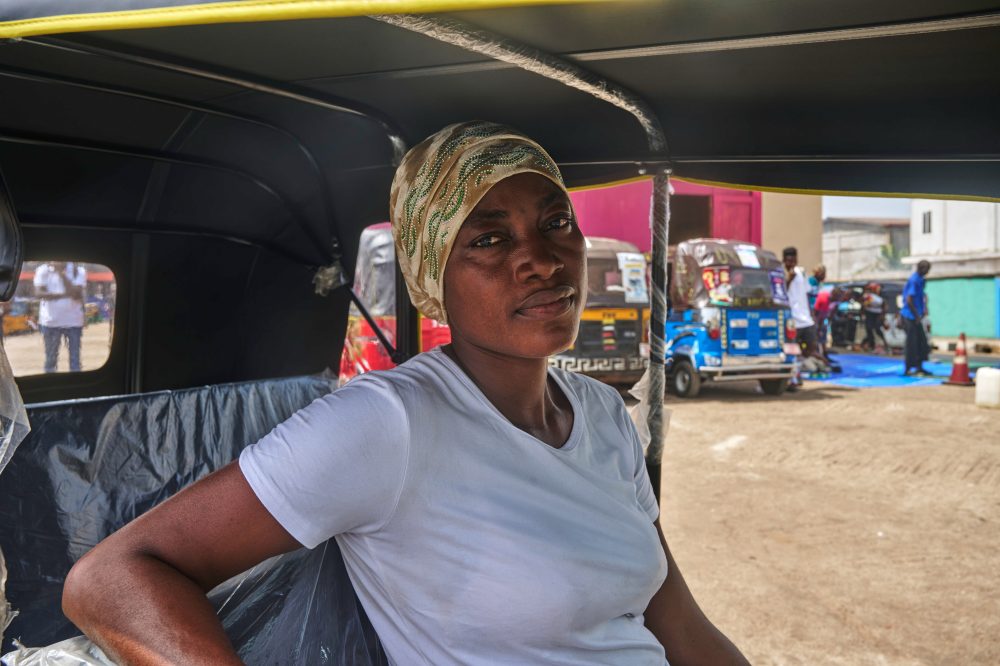

FREETOWN, Sierra Leone — When evening approaches at Freetown’s central transportation hub, Hawa Mansaray parks her three-wheeled motorized taxi and takes time for prayer and rest.
The 27-year-old represents a growing trend of women breaking into Sierra Leone’s traditionally male-controlled commercial driving industry. These motorized rickshaws, called kekeh by locals, serve as vital transportation links throughout the capital city.
“I have done different jobs since I came to Freetown but kekeh has done more for me,” explained the single mother.
These three-wheeled vehicles have gained popularity across Sierra Leone, helping address transportation shortages as the West African nation continues rebuilding from its devastating 1991-2002 civil conflict.
Freetown now houses over 1.5 million residents according to municipal data — triple the population when current infrastructure was originally designed. Transit systems haven’t expanded to match this growth, creating opportunities for motorcycle taxis and auto-rickshaws.
While these vehicles may appear unstable, operate at slow speeds, and offer limited protection due to their open design, passengers choose them for their availability, airflow, and relative comfort.
The increasing number of people earning income through rickshaw driving has transformed these vehicles into symbols of female capability.
However, women continue facing perception challenges in the city, where they’re “seen as people not adequate to do certain types of jobs,” explained Marfoh Mariama Samai, who advocates for women’s rights with Plan International Sierra Leone.
“So when a young woman ventures into a certain type of job, they are stigmatized,” Samai noted regarding female drivers.
Sierra Leone ranks among Africa’s lowest countries for financial service accessibility, creating additional obstacles for women and rural communities recovering from economic difficulties.
This situation forces many women into small-scale trading that provides little security and increases dependence on male partners, Samai observed.
“When the man gives you the money, he makes all the decisions,” she described regarding patriarchal structures still present throughout parts of Sierra Leone. “More young women should be encouraged to get into the transport sector.”
Mansaray understands financial dependency challenges personally. Born during the height of Sierra Leone’s civil war in Kailahun District where fighting began, she left school at elementary level.
After separating from her spouse, she operated small enterprises to support herself and her child.
Driving rickshaws wasn’t her original career plan, but she became interested and paid for training after observing other women succeeding in the field.
Mansaray currently works with a company requiring daily payments of 350 leones ($14), while earning approximately 175 leones ($7) daily — sufficient for family needs and considered substantial income locally.
“I will advise my fellow women who aren’t employed to come into the game,” she recommended.
Alimatu Kamara, another female rickshaw operator, shares similar experiences with Mansaray. She remained jobless for years before entering this business.
The work has proven rewarding, Kamara reported, though she faces ongoing challenges including hostile behavior from male passengers — a frequent concern among female drivers along with nighttime safety issues.
“Some women can panic,” she acknowledged. “It takes mind and determination to continue.”
Despite obstacles, she intends to expand operations by acquiring additional rickshaws.
“We can’t just sit, waiting for office jobs. With jobs like kekeh, you can even make more money,” Kamara stated.
The Sierra Leone Kekeh Riders Union counts over 1,000 registered members in western Freetown, with approximately 20 being women — a figure district chairman Mustapha Thoronka says has grown.
Thoronka supports initiatives to train and help female drivers, including loan advocacy efforts.
“Whatever men can do, women can do better,” Thoronka declared, hoping the business enables women to “support themselves and their families without relying on men.”
Thoronka encourages greater government assistance, noting the capital-intensive nature makes female participation more challenging.
Mariama Barrie, a regular passenger, prefers female drivers.
“They are more careful than the men,” she observed. For her, increasing female participation in the kekeh industry sends messages especially “to women who sit and wait to be spoon fed.”
“If you know how to ride, take kekeh … rather than sitting and waiting for handouts,” she advised.