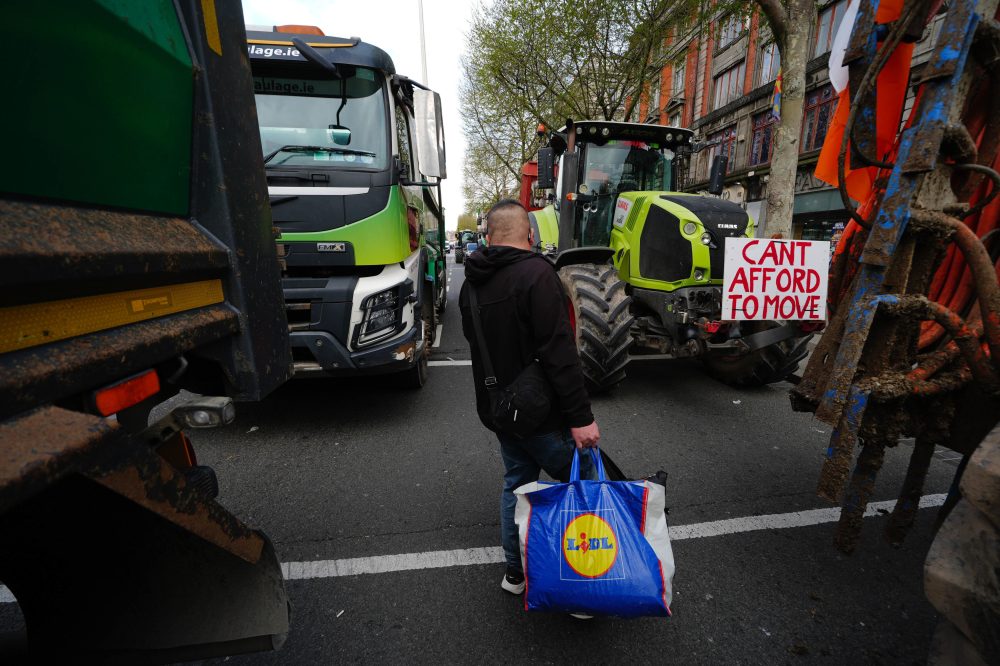

Demonstrations against rising fuel costs have created widespread shortages across Ireland, with protesters entering their fifth consecutive day of blocking the nation’s primary oil refinery and distribution centers.
The ongoing blockades have resulted in major highway closures, including Dublin’s main ring road and six additional primary routes, as demonstrators use trucks and tractors to obstruct traffic flow.
According to Kevin McPartlan, chief executive of Fuels for Ireland, over 500 of the country’s 1,500 gas stations have completely run out of fuel, with that figure expected to rise significantly if the blockades continue.
Law enforcement authorities have placed all officers on alert for potential weekend deployment, while military personnel remain ready to assist in clearing blocked roadways. Government leaders are scheduled to resume negotiations on Saturday in an effort to end the standoff.
The demonstrations, which started on Tuesday, have gained momentum through social media as anger over fuel price increases continues to spread.
Officials expressed confusion about the protesters’ demands, noting that fuel price spikes are occurring worldwide due to Middle East conflicts that have limited oil exports, despite government measures already implemented to address cost concerns.
Speaking to national broadcaster RTE on Friday, Prime Minister Micheál Martin warned that Ireland risked losing oil supply entirely during a global shortage. “It is unconscionable, it’s illogical, it is difficult to comprehend,” Martin stated.
The demonstrators include truck drivers, agricultural workers, taxi operators, and bus drivers who are demanding government-imposed fuel price limits or reductions in excise and carbon taxes.
Two weeks prior, officials had already enacted several cost-relief measures, including temporary excise tax reductions on motor fuels, expanded diesel fuel rebates for commercial operators, and extended assistance programs for low-income heating costs.
However, these price reductions were quickly negated as global fuel costs continued climbing.
The protests initially began with slow-moving vehicle convoys that restricted access to Dublin’s busiest areas and blocked fuel distribution centers serving half the nation. Some demonstrators have remained overnight in their vehicles, demanding direct government dialogue.
Justice Minister Jim O’Callaghan suggested on Thursday that external forces may be influencing the protesters to pursue separate agendas or “really want to damage our country.”