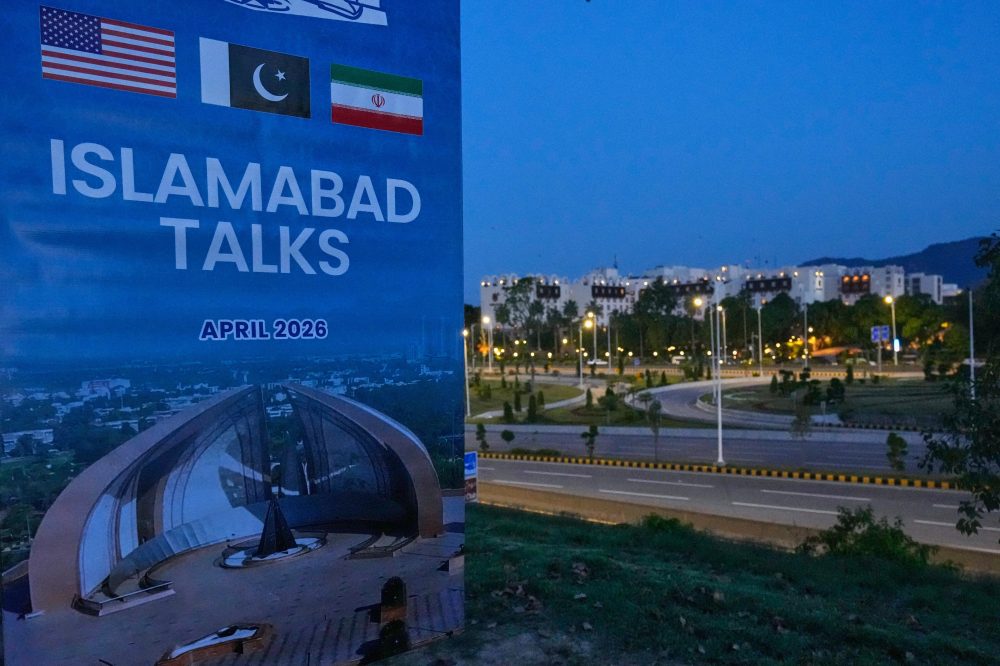

JERUSALEM (AP) — Diplomatic negotiations between the United States and Iran concluded without agreement early Sunday morning in Islamabad, Pakistan, sparking concerns about the future when the current two-week ceasefire ends on April 22.
Following the conclusion of discussions in Pakistan’s capital city, representatives from both nations pointed fingers at each other for the breakdown in negotiations.
Officials provided no indication whether diplomatic efforts would continue, while President Donald Trump issued fresh warnings directed at Iran.
While this diplomatic failure doesn’t guarantee a return to warfare, it demonstrates how firmly positioned both nations remain following an indecisive 40-day conflict that caused significant destruction in Iran, created regional instability, and disrupted worldwide economic markets.
Diplomatic representatives will now head back to their home countries to reassess their strategies moving forward.
Here’s an examination of the current situation:
Following the February 28 launch of military action by the U.S. and Israel, officials committed to dismantling Iran’s nuclear and missile capabilities along with its backing of armed proxy organizations throughout the region.
American negotiators have put forward a 15-point proposal that reportedly contains these identical requirements. Though the U.S. plan remains classified, Pakistani government sources informed The Associated Press that it includes provisions for reopening the Strait of Hormuz, the crucial shipping channel that handles twenty percent of global oil transport. Iran’s blockade of this waterway caused petroleum prices to surge and international markets to drop significantly.
Iranian officials have responded with their own 10-point proposal. Their plan demands Iranian authority over the strait, cessation of military operations, protection of their proxy forces including Lebanon’s influential Hezbollah organization, and financial compensation for war-related damages.
Both parties seemed to maintain their original ceasefire positions throughout 21 hours of direct negotiations.
Vice President JD Vance, who headed the U.S. negotiating team, stated that Iran refused to provide guarantees against pursuing nuclear weapons development.
While Iran has consistently rejected accusations of weapons development, the nation continues demanding a civilian nuclear program featuring uranium enrichment — a critical component in weapons production. Security analysts note that Iran’s current enriched uranium reserves require only minor technical advancement to reach weapons-grade levels.
“We need to see an affirmative commitment that they will not seek a nuclear weapon and they will not seek the tools that would enable them to quickly achieve a nuclear weapon,” Vance said.
Iran’s lead negotiator, Parliament Speaker Mohammad Bagher Qalibaf, stated the U.S. must determine “whether it can gain our trust or not.”
While Qalibaf avoided addressing central disagreements in his online statements, other Iranian representatives indicated that Strait of Hormuz control remains a major obstacle.
Mohammad Reza Aref, Iran’s first vice president, declared in an online post that strait control represents part of the “rights of the people.”
Pakistani Foreign Minister Ishaq Dar announced his nation’s intention to help arrange additional dialogue between Iran and the U.S. in upcoming days. Neither country responded immediately to this offer.
A significant barrier appears to be both sides’ belief that they achieved victory and possess advantageous timing.
Vance characterized the negotiation failure as “bad news for Iran much more than it’s bad for the United States of America.”
Trump announced Sunday through social media that U.S. Naval forces would establish a blockade controlling all Strait of Hormuz traffic.
Qalibaf declared Iran would continue “striving to securing the achievements” from the conflict.
Danny Citrinowicz, a senior analyst with the Institute for National Security Studies, an Israeli research organization, expressed pessimism about these opposing viewpoints. Writing on X, he described Iran’s victory perception as “not the mindset of a regime preparing to compromise.”
“This gap between American expectations and Iranian self-perception now lies at the heart of a growing strategic deadlock,” he said.
Ali Vaez, Iran project director at the International Crisis Group research institute, said the Islamabad discussions highlight significant differences but doesn’t anticipate immediate breakdown.
“The likelier scenario is not immediate war, but a volatile period of pressure, signaling, and last-minute attempts to prevent a wider conflagration,” he said. “The path forward, if there is one, lies in a limited, reciprocal deal that buys time and lowers the temperature.”