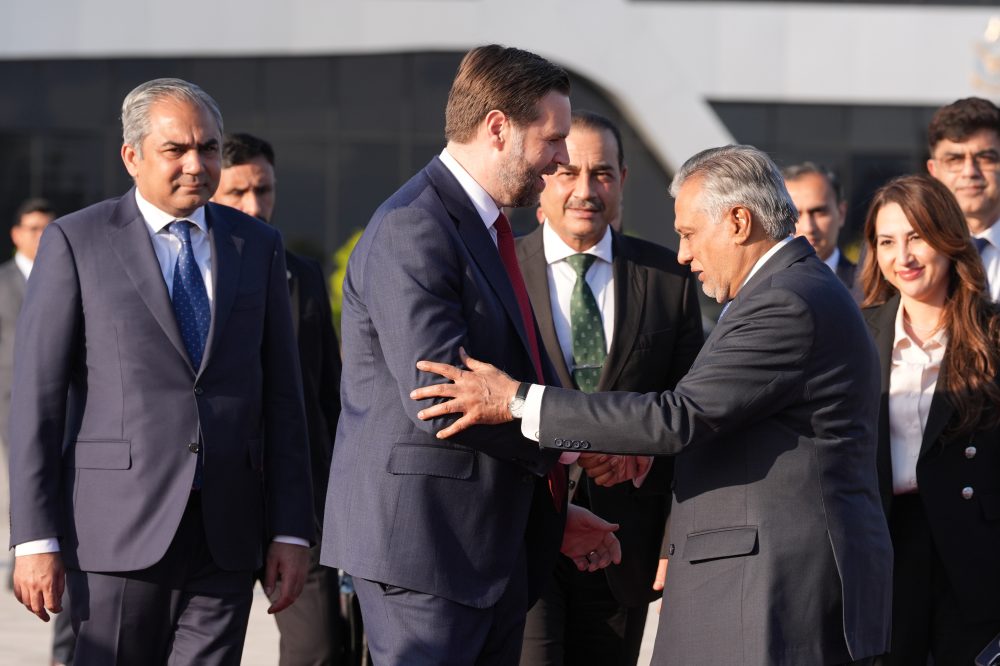

Vice President JD Vance departed Pakistan early Sunday morning following the breakdown of intensive diplomatic discussions with Iranian officials that failed to produce a peace agreement. The negotiations collapsed when Tehran would not agree to Washington’s demands regarding nuclear weapons development.
The marathon diplomatic session lasted 21 hours before concluding without success, according to Vance, who maintained regular contact with President Donald Trump and other administration officials throughout the process.
“But the simple fact is that we need to see an affirmative commitment that they will not seek a nuclear weapon, and they will not seek the tools that would enable them to quickly achieve a nuclear weapon,” Vance explained to members of the press. “That is the core goal of the president of the United States. And that’s what we’ve tried to achieve through these negotiations.”
The ongoing conflict, now in its seventh week, has resulted in thousands of casualties and caused significant disruption to international markets.
Vance headed the American diplomatic team while Iran’s delegation was led by Parliament Speaker Mohammad Bagher Qalibaf. The discussions focused on implementing a ceasefire that has faced challenges due to fundamental disagreements and Israel’s ongoing military operations against Hezbollah forces in Lebanon, which receive support from Iran.
Pakistan’s Foreign Minister Ishaq Dar urged both nations to honor their ceasefire obligations following the unsuccessful conclusion of the historic direct negotiations.
“It is imperative that the parties continue to uphold their commitment to ceasefire,” Dar stated.
Dar emphasized that Pakistan would maintain its role as mediator and work to facilitate continued dialogue between the United States and Iran in the coming period.
A traveling correspondent reported that Vance boarded his official aircraft at 7:08 a.m. local time in Islamabad, preparing to leave Pakistan after Iran’s refusal to abandon its nuclear weapons ambitions.
The conflict began in late February, and both countries had agreed to a two-week pause in hostilities on April 7 to allow for these diplomatic efforts.