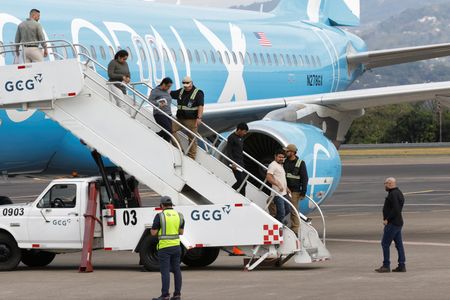

Costa Rica has begun implementing a controversial new arrangement with the United States by accepting its first group of migrants who were deported from America but are not Costa Rican nationals.
The Central American nation welcomed 25 individuals on Saturday representing eight different countries, according to Costa Rica’s General Directorate of Migration and Foreigners. The deportees came from Albania, Cameroon, China, Guatemala, Honduras, India, Kenya and Morocco.
“Upon entering the country, the migrants will receive primary care from the Professional Migration Police, with the cooperation of the International Organization for Migration (IOM),” Costa Rican officials announced in a statement.
The arrangement, finalized in March, allows Costa Rica to receive as many as 25 individuals weekly. In exchange, the United States provides monetary assistance while the International Organization for Migration supplies meals and housing for the migrants’ first week in the country.
This initiative represents part of President Donald Trump’s expanded mass deportation strategy, which includes sending immigrants to nations other than their birth countries. Trump’s administration argues these third-country removals are essential for dealing with individuals whose home nations won’t take them back.
However, the policy has drawn sharp criticism from Democratic lawmakers and human rights organizations who argue it abandons migrants in unfamiliar territories where they may not understand the local language or have family connections.
A February analysis by Senate Foreign Relations Committee Democrats revealed these international deportation partnerships are extremely expensive for American taxpayers, sometimes exceeding $1 million per individual removed, while delivering minimal results.