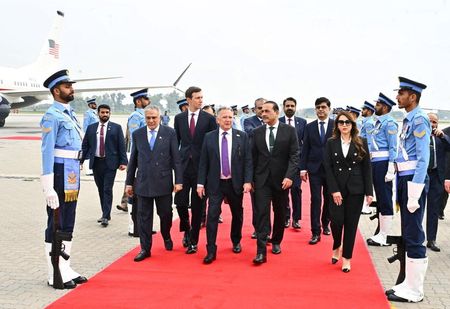

A high-ranking Iranian official announced Saturday that the United States has committed to releasing frozen Iranian assets stored in Qatari banks and other international financial institutions, describing this development as evidence of Washington’s commitment to productive negotiations currently taking place in Islamabad.
The official, who requested anonymity given the delicate nature of ongoing discussions, explained to Reuters that releasing these frozen funds was “directly linked to ensuring safe passage through the Strait of Hormuz,” which represents a central topic in current diplomatic talks.
While the senior official did not specify the total amount Washington agreed to release, a separate Iranian source indicated the United States had committed to unfreezing $6 billion in Iranian funds currently held by Qatar.
Neither the United States nor Qatar’s Foreign Ministry provided immediate responses regarding any asset release agreements.
Background on Frozen Assets
The $6 billion in question was initially blocked in 2018 and was scheduled for release in 2023 through a prisoner exchange arrangement between the US and Iran. However, President Joe Biden’s administration re-froze these funds after Hamas, an Iranian-backed organization, launched attacks against Israel on October 7, 2023.
At that time, American officials stated Iran would be unable to access these resources indefinitely, emphasizing that Washington maintained full authority to permanently freeze the account.
These assets originated from Iranian petroleum sales to South Korea and became inaccessible when stored in South Korean financial institutions after President Donald Trump restored sanctions against Iran in 2018 during his initial presidency, simultaneously abandoning the international nuclear agreement with Tehran.
Through a September 2023 prisoner exchange facilitated by Doha, these funds were moved to Qatari bank accounts. This arrangement resulted in the freedom of five American citizens held in Iran, while the US released five Iranian nationals and agreed to unfreeze the assets.
American officials emphasized at that time that the money could only be used for humanitarian purposes, requiring distribution through approved suppliers for food, medical supplies, medical equipment, and agricultural products sent to Iran under US Treasury Department supervision.