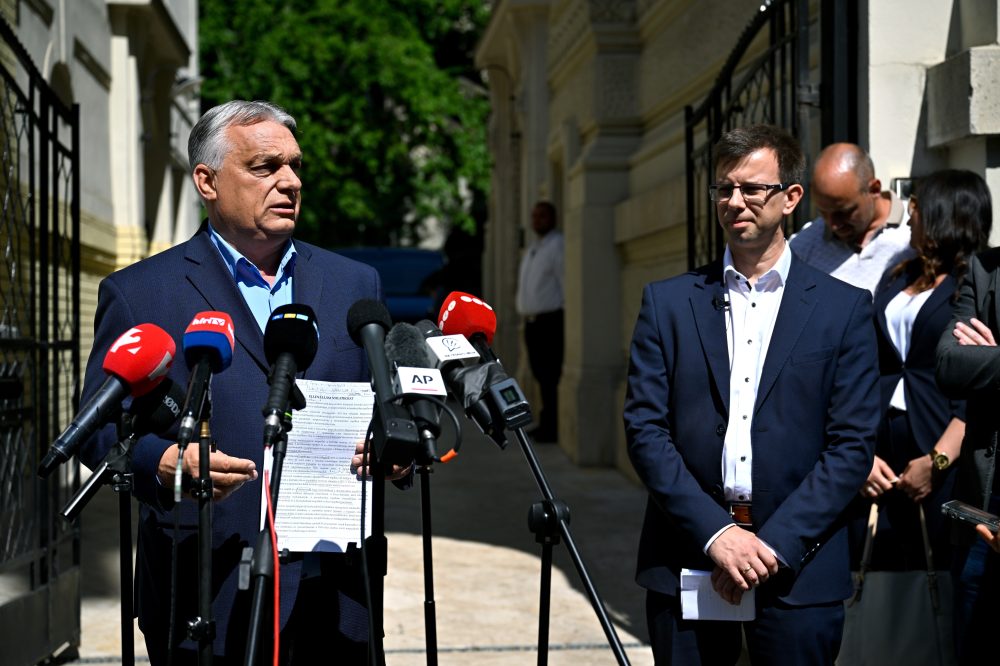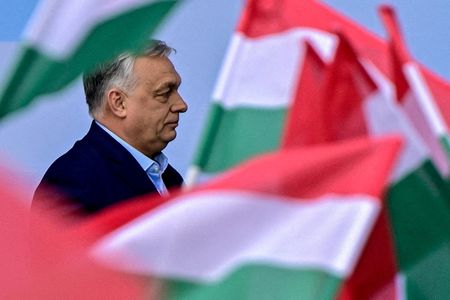

BUDAPEST, April 12 – Viktor Orban, Hungary’s Prime Minister and a major critic of European Union assistance to Ukraine against Russia’s invasion, was removed from office Sunday following 16 years of rule as Hungarian citizens cast ballots in unprecedented numbers for a pro-European direction led by center-right challenger Peter Magyar.
The 62-year-old Orban had received support from U.S. President Donald Trump and several prominent European conservative figures, but initial vote tallies indicated his nationalist Fidesz party was defeated by Magyar’s pro-EU Tisza party amid Hungary’s economic decline.
Once a passionate anti-Communist activist during the Cold War era, Orban served as the European Union’s most tenured leader and represented a patriotic symbol for his followers, though domestic and international critics have charged him with steering Hungary toward authoritarian rule.
Born in 1963 in a rural community west of Budapest, Orban pursued legal studies, spent time studying political philosophy at Oxford, and even competed as a semi-professional soccer player before assuming the role of prime minister initially in 1998 at age 35.
During Orban’s leadership, Hungary became a NATO member, though he was voted out in 2002. Following eight years as opposition leader, he secured a decisive electoral triumph in 2010, which allowed him to restructure Hungary’s constitution and enact significant legislation designed to establish an “illiberal democracy.”
His concentration of executive authority, new restrictions on non-governmental organizations and press freedoms, plus the undermining of judicial independence created conflicts with the European Union regarding democratic principles, resulting in the suspension of billions of euros in Hungarian funding.
However, Orban’s political fortunes collapsed Sunday evening as initial vote counts showed Magyar heading toward a parliamentary supermajority, positioning his center-right movement to reverse all of Orban’s disputed policy changes.
“What tonight’s election result means for the fate of our country and nation and what the deeper or higher meaning of all this is, remains unclear. We do not know it yet. Time will tell,” Orban told supporters, conceding defeat.
“But however it has turned out, we will keep serving our country and the Hungarian nation from opposition.”
Throughout Europe’s 2015 migration crisis, Orban positioned himself as the protector of Hungary’s national character and Christian values, rejecting EU requirements for accepting asylum seekers, primarily Muslims from the Middle East and other regions. His administration has progressively implemented measures to limit LGBTQ+ rights.
His strict immigration stance and initiatives to boost Hungary’s falling birth rates garnered approval from other conservative figures, including Trump.
Orban, who also achieved decisive electoral victories in 2014, 2018 and 2022, had obtained endorsements this election cycle from Italy’s Prime Minister Giorgia Meloni, Marine Le Pen of France’s National Rally, and Alice Weidel of the Alternative for Germany.
Trump also backed Orban, stating that U.S.-Hungary diplomatic relations have achieved “new heights” through their leadership following years of tension under Democratic administrations in Washington.
Orban has preserved strong relationships with Russia, an important energy provider, and China, whose companies are constructing significant electric vehicle and battery manufacturing facilities in the landlocked central European nation.
He attempted to present the election as a decision between “war or peace,” implying Tisza wanted to involve Hungary in the conflict occurring in neighboring Ukraine, which the party firmly rejects.
“For peace, Fidesz is the safe choice,” Orban declared during campaign events in February. He has repeatedly disagreed with Ukraine’s President Volodymyr Zelenskiy and angered Hungary’s EU allies by obstructing a 90 billion euro assistance package for Kyiv.
However, polling data revealed Hungarian voters were more focused on internal matters like healthcare and the economy, which has remained stagnant for three years.
Hungary faced the EU’s most severe inflation crisis following Russia’s February 2022 invasion of Ukraine, which pushed food costs near EU average levels, while Hungarian salaries remain the third-lowest among the 27-member union.
Despite generous family-support programs, including affordable loans and tax advantages, Orban appears to have lost backing from younger voters as he moved further right politically.
Pre-election surveys indicated young voters were especially motivated for change, with Orban alternating between attempting to attract this crucial group and dismissing their opposition to his leadership as a “phony rebellion.”
“I know young people like to turn against their parents and this can cause political problems,” said Orban, a father of five and a grandfather.
Despite participating in numerous campaign events and maintaining constant interviews and social media activity, he offered a rare insight late last year into the exhaustion the campaign may have caused after so many years in leadership.
“When I was a soldier (doing military service), they told us a soldier cannot be cold, he can only perceive the cold,” he said. “I am the same. I am not tired. It is just that my strength is running out.”