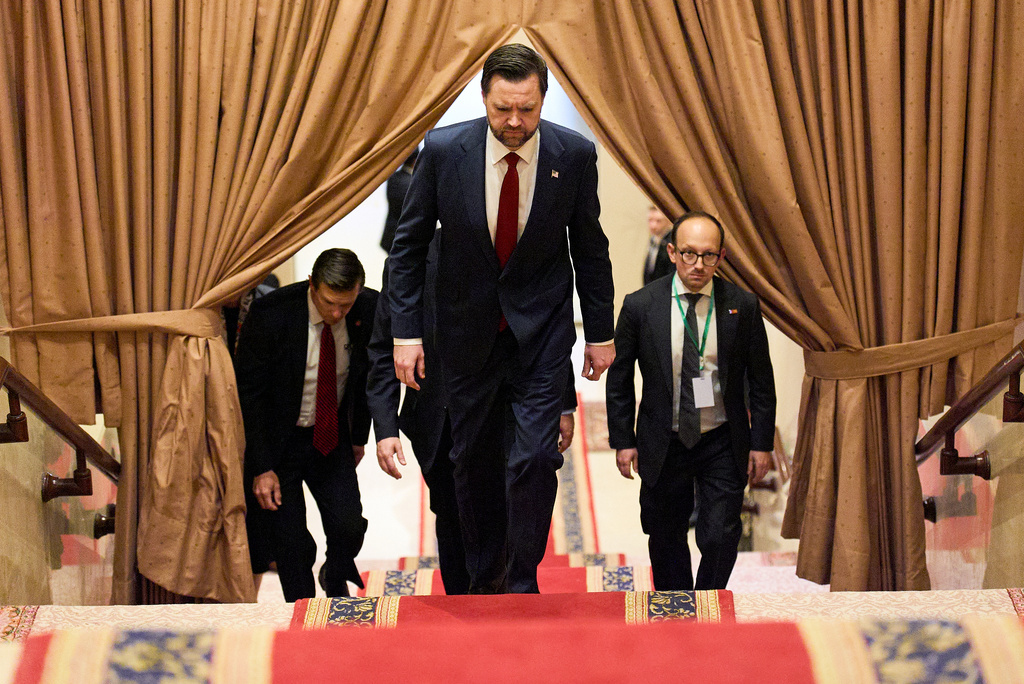

ISLAMABAD (AP) — Vice President JD Vance announced early Sunday that marathon diplomatic negotiations with Iran collapsed after Iranian officials rejected U.S. demands to abandon nuclear weapon development programs.
The intensive diplomatic session lasted 21 hours before concluding without agreement, with Vance maintaining regular contact with President Donald Trump and other administration officials throughout the process.
“But the simple fact is that we need to see an affirmative commitment that they will not seek a nuclear weapon, and they will not seek the tools that would enable them to quickly achieve a nuclear weapon,” Vance told reporters. “That is the core goal of the president of the United States. And that’s what we’ve tried to achieve through these negotiations.”
During the extended talks, Vance maintained frequent communication with Trump, speaking with the president “a half dozen times, a dozen times, over the past 21 hours” while also coordinating with Secretary of State Marco Rubio, Treasury Secretary Scott Bessent and Adm. Brad Cooper, who leads United States Central Command.
“We were constantly in communication with the team because we were negotiating in good faith,” Vance explained, addressing media while flanked by special envoy Steve Witkoff and Jared Kushner at a podium with American flags. “And we leave here, and we leave here with a very simple proposal, a method of understanding that is our final and best offer. We’ll see if the Iranians accept it.”
Trump had previously announced a two-week suspension of attacks against Iran. Vance’s statements provided no clarity on future military actions once that timeframe concludes or whether the current ceasefire would continue.
Conflict Reaches Seventh Week
The unprecedented diplomatic effort concluded just days after officials announced a fragile two-week ceasefire, as the ongoing conflict that has claimed thousands of lives and disrupted global markets reached its seventh week. Pakistani officials indicated that discussions between delegation leaders would resume following a recess.
Technical staff from both negotiating teams continue their meetings, according to officials who requested anonymity since they lacked authorization to speak publicly.
In a related development, U.S. military officials reported that two destroyers passed through the Iran-controlled Strait of Hormuz to begin mine-clearing operations, marking the first such transit since hostilities began. Iranian state media disputed this account, claiming their joint military command denied the passage.
“We’re sweeping the strait. Whether we make a deal or not makes no difference to me,” Trump stated to journalists as negotiations continued past 2 a.m. local time in Islamabad. He characterized the talks as “very deep,” while Iranian state television highlighted what it termed “serious” disagreements between the parties.
The American delegation headed by Vance and the Iranian team led by Parliament Speaker Mohammad Bagher Qalibaf worked with Pakistani officials to strengthen the ceasefire, which faces threats from ongoing disputes and Israel’s continued military operations against Iranian-supported Hezbollah forces in Lebanon, where health officials report casualties exceeding 2,000.
These talks represent the most significant direct U.S.-Iran contact since the 1979 Islamic Revolution, surpassing even President Barack Obama’s 2013 phone conversation with newly elected President Hassan Rouhani about Iran’s nuclear activities. Obama’s Secretary of State John Kerry later conducted face-to-face meetings with counterpart Mohammad Javad Zarif during the lengthy negotiations that produced the 2015 Iran nuclear agreement.
The current broader discussions involve Vance and Qalibaf, a former Revolutionary Guard commander known for delivering some of Iran’s most aggressive rhetoric since the current fighting erupted.
Iran Establishes ‘Red Lines’ Including Strike Compensation
Iran’s official news agency reported that the three-way negotiations commenced after Iranian preconditions were satisfied, including reduced Israeli military operations in southern Lebanon.
The Iranian delegation informed state television that they had outlined “red lines” during meetings with Pakistani Prime Minister Shehbaz Sharif, demanding compensation for damages from U.S.-Israeli strikes that initiated the conflict on February 28 and the release of Iran’s frozen financial assets.
U.S. Deploys Forces for Strait Mine-Clearing Operations
Iran’s blockade of the Strait of Hormuz has emerged as its most significant strategic weapon in the conflict. Approximately one-fifth of global oil trade typically flows through this waterway on more than 100 vessels daily. Since the ceasefire began, only 12 ships have been documented making the transit.
Trump announced via social media Saturday that the U.S. had initiated “clearing out” operations in the strait.
“Today, we began the process of establishing a new passage and we will share this safe pathway with the maritime industry soon,” U.S. Central Command leader Adm. Brad Cooper stated later. The military announcement regarding the destroyers added: “Additional U.S. forces, including underwater drones, will join the clearance effort in the coming days.”
Israel-Lebanon Direct Talks Scheduled
Israeli forces continued strikes in Lebanon, maintaining there is no ceasefire agreement there, a position disputed by Iran and Pakistan.
Direct negotiations between Israel and Lebanon are scheduled to commence Tuesday in Washington, according to Lebanese President Joseph Aoun’s office, following Israel’s unexpected decision to authorize talks despite the absence of formal diplomatic relations between the nations.