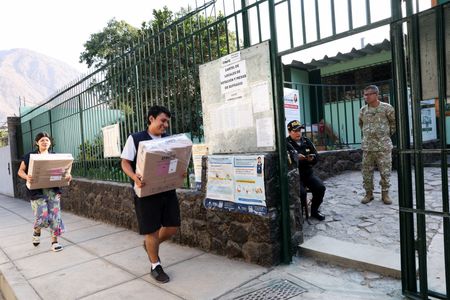

Citizens across Peru headed to voting stations Sunday to select their next president and congressional representatives from a field of more than 30 presidential hopefuls, following years of political instability that has shaken public trust in government institutions.
Election observers predict a runoff vote on June 7, as polling data shows no candidate approaching the 50% support required for an immediate victory. The extended electoral process could extend political uncertainty in the nation that ranks as the globe’s third-biggest copper producer, amid rising criminal activity and growing rivalry between U.S. and Chinese interests in the region.
Polling locations opened at 7 a.m. local time, with approximately 27 million eligible voters expected to participate.
Lima resident Gloria Padilla, who works selling fruit, expressed her uncertainty about the choices. “Peru is a mess, and there’s no candidate worth voting for,” she stated.
The country has experienced leadership from eight different presidents since 2018, creating doubt about whether any incoming administration can complete a full five-year term. This rapid succession has resulted from impeachment proceedings, corruption investigations, and ineffective governing alliances that have stalled government operations.
“People really despise the current Congress,” Atlantic Council analyst Martin Cassinelli observed. “They recognize them as responsible for the political chaos we’ve had over the last ten years,” he continued.
The widespread distrust of political institutions has created space for a diverse array of candidates representing various ideological positions, from experienced politicians to a far-right business owner and a television entertainer.
Conservative candidate Keiko Fujimori stands among the most recognizable names, launching her fourth presidential campaign after advancing to runoff elections in her three previous attempts. The U.S.-educated leader of the influential Popular Force congressional party has positioned herself as someone who can deliver stability and economic security, targeting voters concerned about escalating violent crime. Her campaign remains divisive due to her family’s political history and previous legal challenges.
Ricardo Belmont, a former Lima mayor representing the center-left Civic Works Party, has climbed to second place following a recent surge in voter support. Television comedian Carlos Alvarez follows in third place, running on a platform emphasizing crime reduction. Political experts view both candidates as outsiders who have gained momentum by connecting with voters’ anti-establishment sentiment.
Right-wing candidate Rafael Lopez Aliaga, a wealthy former Lima mayor holding socially conservative positions, has promoted an ultra-conservative agenda but has experienced varying levels of support throughout the campaign.
Crime and public safety have become the central focus of campaign messaging. Murder rates and extortion incidents have increased in recent years, partly due to drug trafficking operations and unauthorized mining activities. Most prominent candidates have suggested expanding military involvement in domestic security operations.
The election carries significant international implications. Peru’s growing economic ties with China — now its primary trading partner and major investor in mining and infrastructure projects — have generated concern in Washington, which has increased diplomatic and security cooperation leading up to the vote.
The eventual winner will need to work with a divided Congress and a newly restored Senate, potentially making legislative passage difficult and increasing the possibility of future impeachment conflicts.
Voting concludes at 5 p.m. local time, with initial results from the national election authority anticipated shortly afterward.