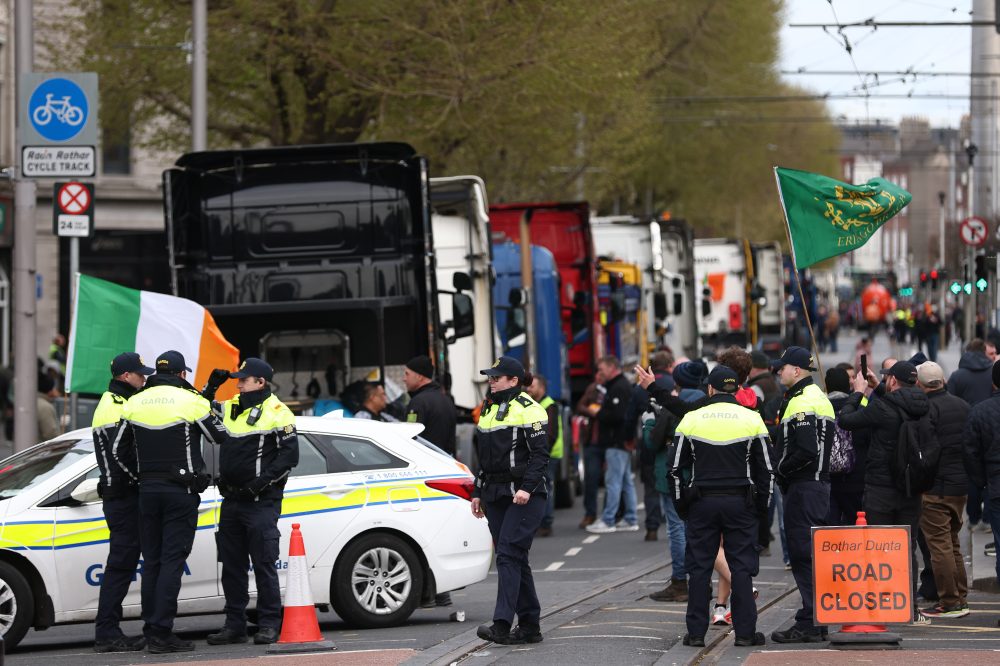

Irish authorities dismantled a demonstration in Dublin’s city center on Sunday, ending a six-day standoff with fuel protesters who had paralyzed much of the nation while government leaders prepared to pass relief measures aimed at stopping the widespread disruptions caused by rising pump prices.
While tractors and trucks departed O’Connell Street in the capital, demonstrations persisted in other areas, including confrontations at Galway docks where law enforcement deployed a military vehicle to dismantle a temporary barricade erected by protesters.
The widespread demonstrations created nationwide havoc as blockades at Ireland’s sole oil refinery and multiple critical fuel depots stopped delivery trucks from reaching gas stations, leaving more than one-third of pumps without fuel. Large, slow-moving vehicle convoys also created massive traffic backups on principal roadways.
Authorities initiated enforcement actions Saturday, deploying pepper spray to disperse demonstrators at the Whitegate refinery in County Cork while promising to clear additional protesters who were threatening essential infrastructure and public safety due to fuel shortages that could hamper emergency response capabilities.
“They are not a legitimate form of protest,” Irish police Commissioner Justin Kelly said on Saturday. “We gave the blockaders fair warning that we were moving to enforcement and they choose to ignore it and continue to hold the country to ransom.”
However, a farmer serving as a spokesperson for the Dublin group expressed frustration that their peaceful demonstration had been “ambushed” by numerous officers during overnight hours.
Christopher Duffy said police threatened to tow their heavy vehicles, so they had to leave.
“These vehicles are very expensive with automatic transmissions and everything, and if they drag them with the engine not on they could wreck them,” Duffy said. “So we have no choice, financially we have to move the vehicles.”
The demonstrations started Tuesday and expanded as information circulated through social media platforms, drawing participation from truckers, farmers, taxi drivers and bus operators demanding assistance such as price limits or tax reductions to lower fuel expenses they claim will force businesses to close.
Government leaders, who had already implemented relief measures for price increases two weeks earlier, expressed confusion about the reasoning behind the protests since the worldwide price surge stems from Middle Eastern conflicts that have limited oil shipments.
Prime Minister Micheál Martin called the move “illogical” and said the country was on the brink of turning tankers away at ports and losing its oil supply.
Officials were anticipated to approve legislation aimed at reducing gasoline and diesel costs, though it remained uncertain whether the measures would be sufficient to stop the protest movement.