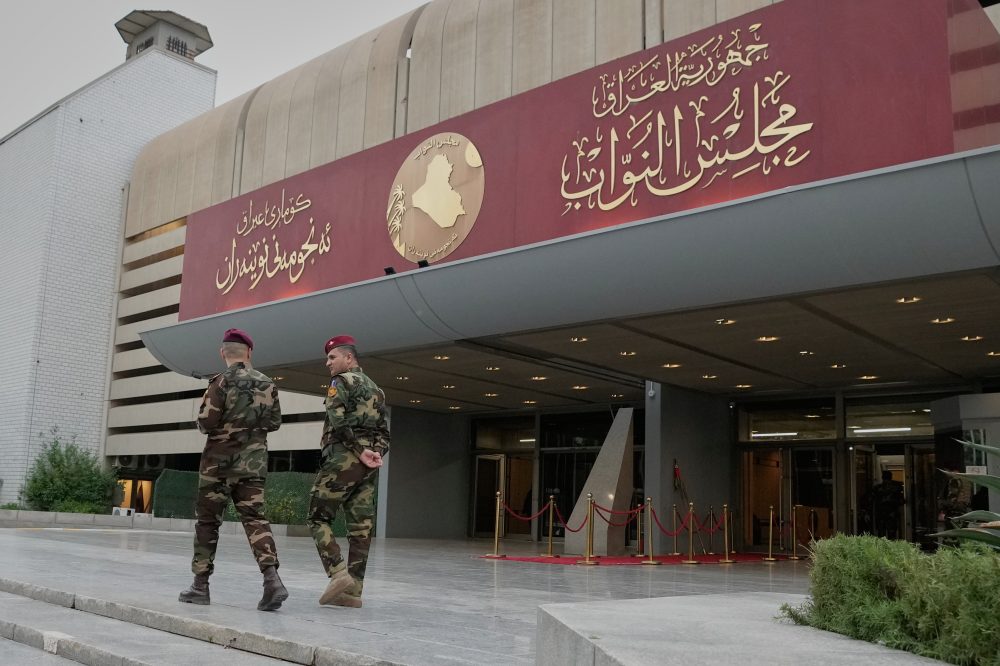

BAGHDAD (AP) — Iraqi lawmakers selected Nizar Amidi, a Kurdish party official, as the nation’s new president on Saturday, ending a prolonged political stalemate that began five months ago when parliamentary elections failed to create a clear governing majority.
The presidential selection takes place while Iraq grapples with severe consequences from the ongoing U.S.-Israeli conflict with Iran. The country has found itself trapped between opposing forces, as Iranian-supported militia groups have targeted American military installations, diplomatic compounds, and vital energy facilities. In response, American and Israeli forces have conducted retaliatory strikes against these militias, resulting in casualties among Iraqi security personnel.
The regional warfare and Iran’s blockade of the Strait of Hormuz have severely disrupted Iraq’s oil shipments, which form the backbone of the nation’s economic system.
Amidi represents the Patriotic Union of Kurdistan party’s political leadership and prevailed over multiple contenders, including current Foreign Minister Fuad Hussein, who had backing from the competing Kurdistan Democratic Party.
Iraq follows an established power-sharing arrangement where Kurdish politicians hold the presidency, Shiite leaders serve as prime minister with greater authority, and Sunni officials occupy the parliamentary speaker role.
The presidential selection occurred more than two months beyond the constitutional requirement, which mandates choosing a president within 30 days following the inaugural session of a newly elected parliament.
An engineer from Dohuk province in northern Iraq, Amidi previously worked as an assistant to former presidents Jalal Talabani and Fouad Massoum.
During Saturday’s initial voting round, no candidate achieved the necessary two-thirds support, though Amidi led significantly among the 16 contenders with 208 votes. Muthanna Amin Nader, representing the Kurdistan Islamic Union bloc, finished second with 17 votes. Parliament then conducted a second round requiring only a simple majority for victory.
The final tally showed Amidi winning with 227 votes compared to Nader’s 15 votes.
Under Iraq’s constitution, the president has 15 days to assign the largest parliamentary group’s nominee to form a government and assume the prime minister position. The leading faction, known as the Shiite Coordination Framework and consisting of pro-Iranian parties, announced in January their intention to nominate former Prime Minister Nouri al-Maliki, despite American opposition.
The coalition must now determine whether to move forward with al-Maliki’s nomination or choose an alternative candidate. Current interim Prime Minister Mohammed Shia al-Sudani had been al-Maliki’s primary competitor for the position before withdrawing to support his candidacy.