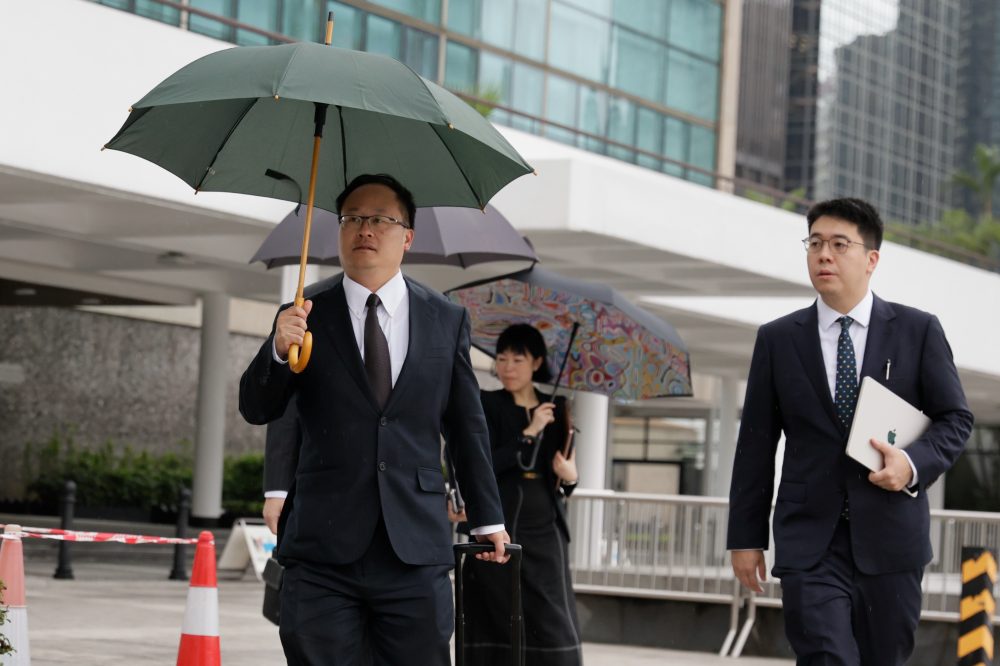

HONG KONG — As an independent investigation into Hong Kong’s most deadly fire in decades drew to a close Friday, attorneys presented arguments that shoddy construction practices and deliberate deception of regulators transformed what started as a small fire into a catastrophic tragedy.
The blaze, which broke out in November, swept through seven buildings at Wang Fuk Court, an apartment complex in the suburban Tai Po district. A total of 168 people lost their lives, and thousands of residents were displaced — many of whom remain in temporary housing.
Victor Dawes, the committee’s lead attorney, told investigators that the use of scaffolding netting that lacked fire-retardant properties was very likely a major reason the flames spread so rapidly. The complex was in the middle of a large renovation project at the time of the fire. Dawes also noted that wooden planks covering staircase windows created thick smoke in the very escape routes residents needed to flee.
Dawes named Will Power Architects Company, a consultancy firm, and Prestige Construction & Engineering Co., the project’s primary contractor, as entities that cut corners on both labor and materials while actively misleading regulators and the building’s homeowners. He described a pattern of improper practices, including falsified inspection compliance records, with certain professionals signing off on documents in a manner he likened to a “rubber stamp.”
Dawes also took aim at the government’s reliance on an honor-based system to monitor the renovation project, saying relevant departments must bear some responsibility for what occurred.
“When faced with dishonest bad actors, the entire system collapsed,” he said.
Several residents broke down in tears during Friday’s hearing.
A day earlier, on Thursday, attorney Jenkin Suen, representing the government, conceded that some weaknesses existed within the system, but argued it would be unfair to characterize government departments as the ones who caused the fire. He said certain contractors and professionals exploited a mechanism meant to protect the public and violated the trust that had been placed in them.
Jeffrey Tam, an attorney representing nine Wang Fuk Court residents, acknowledged that some witnesses came forward despite the emotional toll of the tragedy. However, he noted that others seemed more focused on avoiding blame.
“But we heard some witnesses appear that they just wanted to be shirking responsibility,” Tam said. “So sometimes I also understand why they could not hold back their anger.”
He added that deflecting blame would not help the city uncover the full truth of what happened.
The investigating committee is led by High Court judge David Lok and is expected to release recommendations after examining the fire’s causes, potential systemic failures, and whether current regulations and penalties are adequate. A timeline for when those findings will be made public has not been announced.
The committee’s mandate does not extend to questions of legal liability, which will be handled separately by law enforcement authorities.
Last month, Hong Kong authorities announced charges in June against seven individuals and two companies — including Will Power and Prestige Construction & Engineering Co. — for offenses that include manslaughter and conspiracy to defraud in connection with the fire.