
WASHINGTON — American companies have entered into roughly $60 billion worth of agreements and partnerships with the Iraqi government, including deals designed to develop new pathways for moving oil out of the Persian Gulf region without relying on the Strait of Hormuz.
The agreements were finalized at the U.S. Chamber of Commerce and span multiple sectors beyond energy, including healthcare, communications, and infrastructure development.
How quickly these oil deals can produce workable alternatives to the Strait of Hormuz remains uncertain. The strait currently carries approximately one-fifth of the world’s oil supply. Analysts at Goldman Sachs have noted that constructing pipelines in a single country alone takes at least two and a half years — and the proposed routes would pass through two or more nations.
Iran has made repeated attempts to close the Strait of Hormuz since the U.S.-Iran war began on February 28, sending oil and gas prices swinging dramatically. By Friday afternoon, West Texas crude had climbed nearly 5% to $88 per barrel — up from roughly $67 when the war started. Prices had surged past $110 in early April before pulling back following a temporary truce, only to rise again as fighting resumed.
Thomas Barrack, the U.S. Ambassador to Turkey, said the pipeline agreements would launch a program “that will make the Strait of Hormuz an afterthought.”
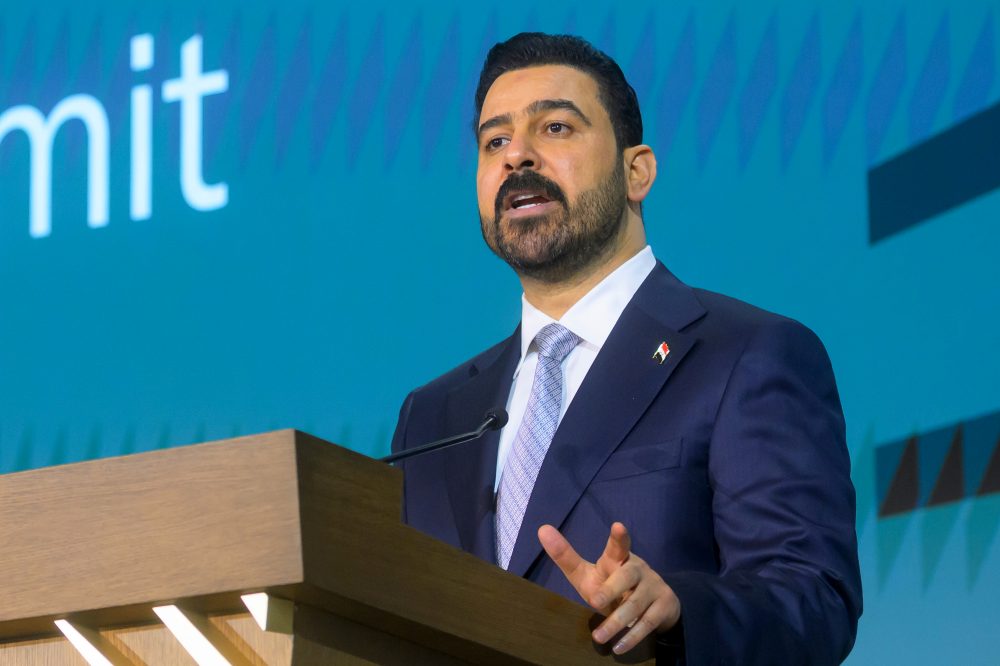
The deal signings came a day after Iraqi Prime Minister Ali Falah al-Zaidi met with Chevron executives in Houston, where he urged the energy company to expand and speed up its investments in Iraq.
Speaking on Friday, al-Zaidi said Iraq is looking for long-term investment and genuine partnerships — not simply companies hired to complete individual projects. He also expressed his government’s dedication to working closely with the U.S. Chamber of Commerce, calling it “the place where economic decisions are made.”
Chevron signed three separate agreements with Iraq on Friday. Jake Spiering, Chevron’s president of corporate business development, explained that two of the deals are focused on increasing oil production, while the third involves “investing in a pipeline that’s going to create another export route out of Iraq to world markets. This is very important for energy security.”
The U.S. State Department also announced its support Friday for a separate agreement between Iraq and Syria to restore and rebuild the Iraq-Syria crude oil pipeline, calling it a priority infrastructure project. “The United States welcomes the engagement of a U.S.-led international consortium to execute the technical and financial aspects of this project,” the department stated.
According to Iraqi officials, the pipeline would run from Basra in southern Iraq to Haditha in western Iraq, then continue to the port of Ceyhan in Turkey and the Syrian coastal port of Baniyas. The pipeline is expected to have the capacity to move around 2 million barrels of oil per day.
In a report released earlier this week, Goldman Sachs analysts estimated that seven pipelines currently under development across the region could collectively carry roughly 60% of the oil now flowing through the Strait of Hormuz by the end of 2028 — approximately 14 million barrels per day. Before the war with Iran began, about 23 million barrels per day were being shipped through the strait.
Since the U.S. and Israel launched military operations against Iran on February 28, Iraq — which hosts both Iran-backed militias and American military bases — has been caught in the middle of the conflict. Syria, by contrast, has largely managed to avoid direct involvement. Syrian officials have positioned their country, which is still recovering from a 14-year civil war, as a stable alternative transit corridor for energy.
With oil exports through the Strait of Hormuz severely disrupted, some shipments have already been rerouted overland through Iraq into Syria, then shipped to European markets via the Baniyas port. A key border crossing between northern Iraq and Syria that had been closed for more than a decade reopened in April, with officials highlighting it as an additional energy export option.
The overland route, however, is slower and more costly than moving oil through the strait. The pipeline project being developed would allow Iraq to export far greater volumes of oil through Syria and Turkey.