
Just before dawn on May 24, 2000, the final columns of Israeli tanks rolled back across the border from Lebanon into Israel, ending an 18-year occupation of the south. Then-Prime Minister Ehud Barak, who gave the order to pull out, described the return of Israeli troops as sending “shivers down his spine.”
By that point, much of the Israeli public had come to see the original invasion — which was launched to drive out Palestinian militants — as a costly strategic blunder, drawing comparisons to the American military’s experience in Vietnam.
Now, 26 years later, Israel has once again taken control of a large portion of southern Lebanon. Polling shows that most Israelis currently back an extended military presence there, but voices like Barak’s — those who lived through the last occupation — are sounding alarms that Israel risks repeating the same mistakes.
“Our very presence will become the only goal,” Barak said in a recent interview, describing what he recalled thinking back in 1985, when he was serving as a general and Israel was shifting from active combat to a long-term deployment in Lebanon. “We will protect our fortresses, we will protect our convoys of supply, the logistics, the patrols, everything,” he said he warned at the time. “But we were not serving Israeli security, we were not serving the state. There was no logic to this in 1985, and there was no logic in 2000, when we pulled out.”
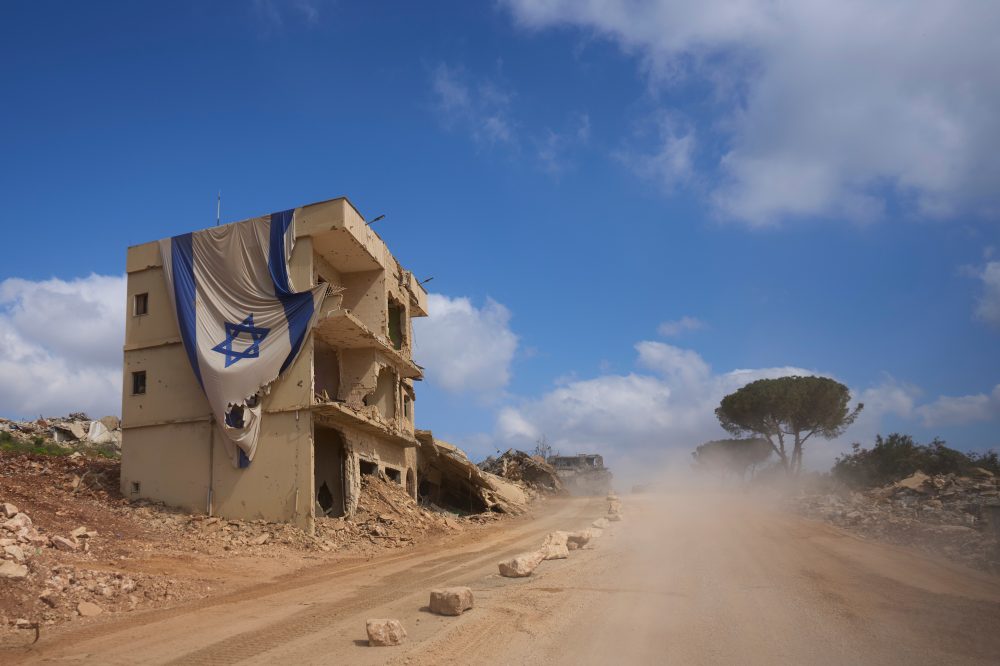
Israel launched a new invasion of Lebanon in March and now holds more than 600 square kilometers — roughly 230 square miles — of territory. The operation began after Hezbollah, the Iranian-backed Lebanese militant group, launched a series of drone and missile attacks in retaliation for the U.S.-Israeli war on Iran.
Last month, Israel reached a framework agreement with the Lebanese government to use at least two areas in southern Lebanon as “pilot zones” for dismantling Hezbollah weapons and infrastructure, with security then handed over to Lebanon’s military. Israeli forces would subsequently redeploy or leave those areas. Hezbollah was not included in the agreement and has pledged to fight it.
In the meantime, Israeli officials have said troops will remain inside a broader “security zone” in Lebanon for as long as Hezbollah holds onto its weapons. Following the October 7, 2023, Hamas attack that triggered the war in Gaza, Israel has also maintained smaller security zones in Gaza and Syria, citing the need to prevent future militant attacks.
“We didn’t ask anyone’s permission to enter Lebanon, and we don’t need anyone’s permission to stay in Lebanon,” Defense Minister Israel Katz said recently, describing it as Israel’s “right and our duty” to protect communities along the northern border.
Barak, who served as the military’s top commander before becoming prime minister, still regards the 2000 withdrawal as one of his greatest accomplishments. He recalls visiting soldiers stationed in Lebanon in the early 1980s, who told him, “We are fighting to remove the threat from Hezbollah so that our children will be safe and won’t have to serve here.” Yet when Barak finally ordered the pullout nearly two decades later, some of those same soldiers’ children were themselves serving in Lebanon.
Barak argued that Israel’s self-declared security zone inside Lebanon failed to deliver meaningful protection during the previous occupation, and he doubts the new zone will fare any better. Even in the 1990s, he noted, basic Katyusha rockets fired by Hezbollah could easily clear the zone and strike northern Israel.
“In order to destroy, totally destroy Hezbollah, you’d have to conquer the whole of Lebanon,” Barak said — a prospect most Israelis view as unrealistic. He also warned that Israel’s continued presence in the south, combined with widespread destruction of villages there, risks driving more Lebanese citizens toward Hezbollah. Israel says the group hides fighters and weapons in those border communities, but Israeli military operations since March have displaced approximately one million Lebanese people.
According to the Lebanese government, about 40% of those displaced have since returned to their homes. More than 4,300 people have been killed since fighting began on March 2. Close to 40 Israeli soldiers have also lost their lives, along with a defense contractor and two civilians in northern Israel.
Hezbollah was established in 1982 partly in response to the Israeli occupation, and waged a brutal guerrilla campaign that included suicide bombings, assassinations, roadside bombs, and ambushes. Israel responded with airstrikes and bombing campaigns, and also supported a local proxy militia — a mostly Christian force called the South Lebanon Army — that patrolled the region and served as a buffer between Israeli troops and Hezbollah. After the 2000 withdrawal, thousands of South Lebanon Army fighters and their families fled into Israel.
The nature of the conflict has shifted significantly since then. Israel is now operating without a local proxy force, instead relying on surveillance and strikes conducted from the air or from elevated positions along ridges and hilltops. Hezbollah, which once depended on guerrilla-style tactics, now deploys high-precision missiles and drones — including fiber-optic guided drones that are difficult to intercept and have inflicted Israeli casualties.
One significant difference from the situation in 2000 is the possibility of a diplomatic resolution, said Orna Mizrahi, a former deputy director of Israel’s National Security Council. She pointed to Lebanese President Joseph Aoun as a potential opening for Israel. Since his election last year, Aoun has publicly criticized Hezbollah and indicated a willingness to negotiate a lasting ceasefire with Israel.
“The military operation needs to complement a diplomatic process,” said Mizrahi, who now works as a senior researcher at the Institute for National Security Studies, an Israeli think tank.
While Hezbollah is unlikely to agree to disarm, Mizrahi said the group has been significantly weakened by its conflicts with Israel. She added that Hezbollah’s primary backer, Iran, is also occupied with withstanding U.S. strikes and fighting over control of the Strait of Hormuz. This has opened a window, she argued, for reshaping the balance of power inside Lebanon by building up the Lebanese government and military. Israel will never fully eliminate Hezbollah, she acknowledged, but while the group is struggling to regroup, Israel could work with international partners to help Lebanon take it on.
By the time Israel pulled out of Lebanon in 2000, the occupation had grown deeply unpopular — largely due to the deaths of more than 1,200 Israeli soldiers during the campaign. In 1997, four mothers of soldiers serving in Lebanon founded a grassroots movement pushing for withdrawal.
Brurya Sharon, now 84 years old and one of those founding members, remembers sending both of her sons to fight in Lebanon. At the time, she felt that the Israeli government and military were sustaining the occupation out of habit, without seriously examining whether it was actually working.
The group, known as the “Four Mothers” movement, has been widely credited as a major force behind Israel’s eventual withdrawal. They deliberately avoided partisan politics, Sharon said, keeping their focus on the lives of soldiers — a concern that crossed political lines.
Today, however, Sharon says the country is so fractured — particularly in the aftermath of the October 7 Hamas attack — that she sees no realistic path for a broad public movement to push for withdrawal from Lebanon. Israelis, still deeply shaken by that attack, are wary of leaving the country’s borders exposed. A recent poll by the Israel Democracy Institute found that more than seven in ten Israelis support a permanent security presence in southern Lebanon.
“I don’t see a sunbeam of hope, I don’t even see a speck of light,” Sharon said.