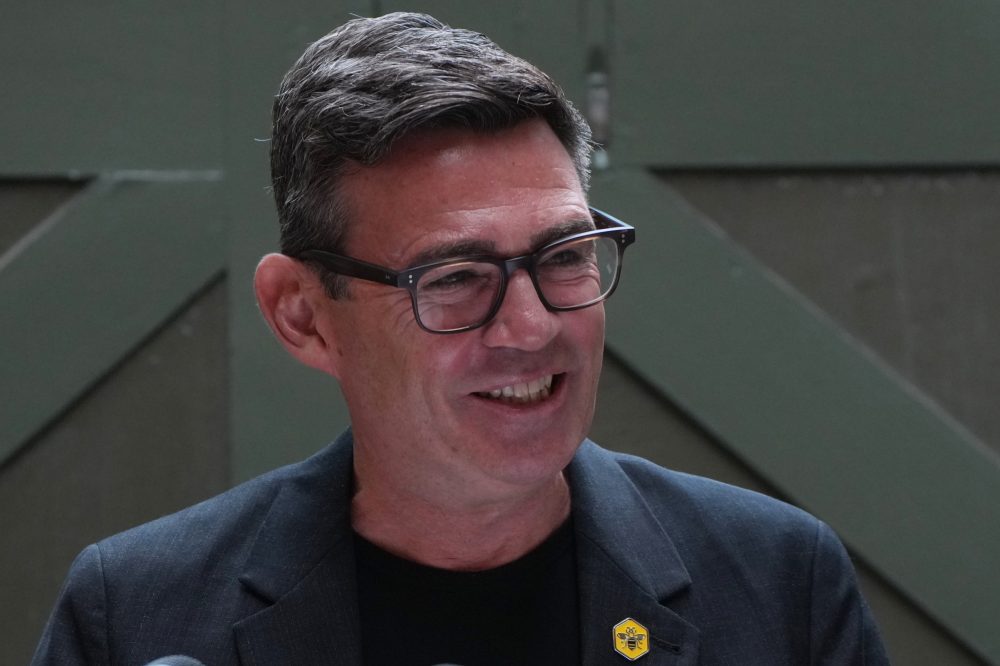

LONDON — Andy Burnham is on the verge of becoming Britain’s next prime minister, with the Labour Party officially announcing Friday that he has won the leadership contest to replace outgoing Prime Minister Keir Starmer.
Burnham ran as the sole candidate in the race to lead the center-left governing party, collecting nominations from 379 of the 403 Labour members of Parliament in the House of Commons as of Thursday evening.
The former mayor of Greater Manchester has been widely expected to take the top job for weeks, though he has shared very little about what his policy agenda will look like. After winning a special election for a parliamentary seat about a month ago, he promised to build a politics “based on unity and hope” and an economy that distributes growth more evenly throughout the country.
Despite his imminent rise to power, Burnham has held no press conferences and granted very few interviews, meaning he will step into 10 Downing Street largely unfamiliar to voters outside of Manchester.
Known as one of Labour’s most effective communicators, Burnham is expected to bring a more easygoing leadership style compared to the more rigid Starmer. However, he inherits a long list of difficult challenges, including a slow-moving economy, a cost-of-living crisis driven by ongoing conflicts in Ukraine and the Middle East, and public services stretched to their limits.
According to his office, Burnham plans to lay out some of his key priorities in his first address as Labour leader on Friday, promising he will have the “courage to fix the big things that politics has neglected.”
He is expected to emphasize economic renewal, greater public ownership of essential industries, and the creation of modern industrial jobs. He will argue that Britain took “a series of wrong turns in the 1980s” when “political power was centralized and economic power privatized” — a reference to the era of Conservative Prime Minister Margaret Thatcher, whose policies of privatization, deindustrialization, and centralization fundamentally reshaped the British economy.
In a video shared on social media late Thursday, Burnham also said he would prioritize improving access to social care for people who need support due to age, illness, or disability — an urgent concern in a nation with a rapidly aging population, and one that has stumped both Labour and Conservative governments for years.
Starmer announced last month that he was stepping down after two years in office marked by missteps and poor judgment calls that damaged his reputation with both his own party and the broader public. Labour has been consistently trailing the anti-immigration party Reform UK in polls, and the party suffered devastating losses in local elections in May, creating pressure on Starmer that ultimately proved too great to withstand.
Starmer will remain in office until Monday, when he will formally submit his resignation to King Charles III. The king will then invite Burnham to form a new government.
Under Britain’s parliamentary system, a governing party can swap out its leader — and therefore the prime minister — without triggering a national election. The next scheduled general election is not required until 2029.
Burnham will be the seventh person to lead the United Kingdom since 2016, reflecting the rapid turnover at the top of British politics in recent years.