
COLOGNE, Germany — In a significant shift for European defense, the leaders of Germany and France revealed Friday that German military forces will take part in a nuclear exercise led by the French military before the year is out.
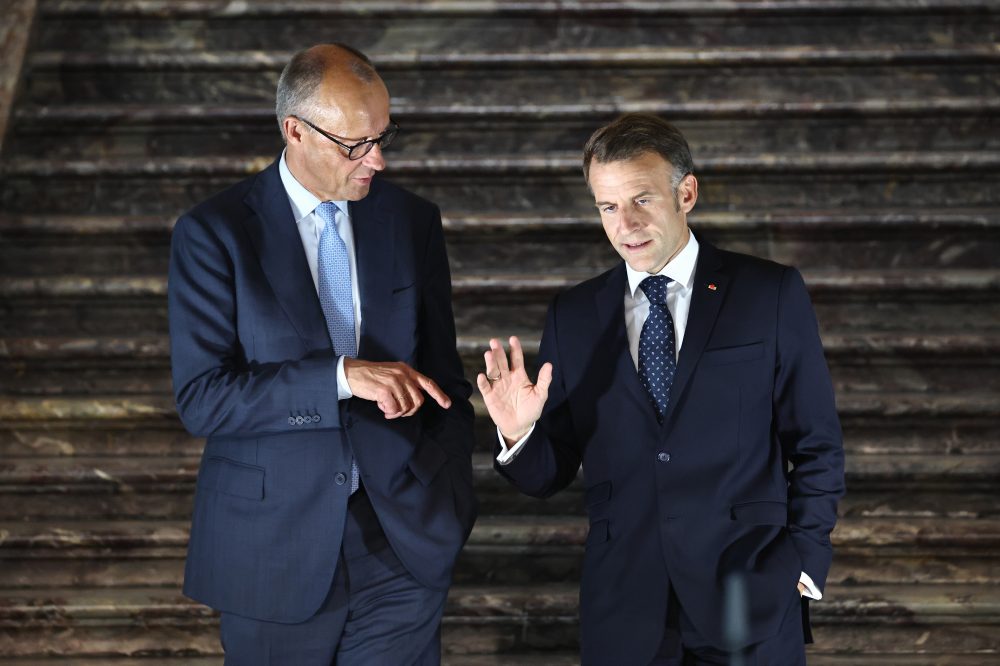
The announcement was made at Norvenich air base, located near Cologne in western Germany, where Chancellor Friedrich Merz spoke following meetings with French President Emmanuel Macron. “We will have German conventional forces participate in a nuclear exercise conducted by the French armed forces before the end of this year,” Merz stated.
The chancellor noted that previous German leaders had turned down similar offers of nuclear cooperation with France, but said “the world we live in today requires new answers.” He emphasized that Germany’s involvement in the exercise will be limited to conventional means for now, adding, “We are proceeding step by step, it may be that this will result in a new doctrine, but it is far too early to say that today.”
Merz also clarified that the cooperation with France “complements” the existing NATO nuclear sharing agreement, to which Germany remains committed. Under that arrangement, U.S. nuclear weapons are stationed on German soil as part of NATO’s deterrent strategy, and German fighter jets are certified to potentially carry those weapons in an emergency.
Macron stressed the importance of advanced deterrence for European collective security, saying “it creates strategic doubt among our adversaries.” He described Germany as having a “vanguard role” in deterrence efforts and warned that “diluting the presence of the nuclear deterrent” is what confuses enemies.
The French president outlined that the cooperation would involve “explaining some aspects of how we operate, sharing certain closely held practices, offering joint exercises, developing joint initiatives and partnerships, and fostering greater … trust among our teams, experts and military personnel.” He did not provide details on specific operational steps, noting that “complete and absolute transparency is not necessarily the most effective strategy when dealing with adversaries on European soil.” Macron also confirmed that Germany would not be expected to contribute financially to the enhanced nuclear deterrence effort.
A symbolic start to the partnership took place Thursday, when French Rafale jets and German Eurofighter jets conducted a joint in-flight refueling exercise. The Rafale aircraft are built to deliver nuclear weapons.
The push for deeper nuclear cooperation stems from an announcement Macron made in early March, when he said France would expand its nuclear arsenal and invited European allies to join in strengthening nuclear deterrence. That call came as doubts grew across Europe about whether the United States would remain a reliable security partner for the continent. France is currently the only nuclear power within the 27-nation European Union, a status that has held since the United Kingdom’s departure from the bloc.
A number of countries have expressed interest in the French initiative, including the United Kingdom, Germany, Poland, the Netherlands, Belgium, Greece, Sweden, Denmark, and Norway.
Germany’s involvement carries particular weight, as the country is currently carrying out a large-scale rearmament plan aimed at building Europe’s most powerful conventional military force by 2039.
The two leaders also used Friday’s meeting to try to strengthen their broader bilateral relationship, which has faced strain after a planned $100 billion joint fighter jet program fell apart in June. That project had been designed to replace both Rafales and Eurofighters operated by Germany and Spain by the year 2040.
Both leaders appear motivated to solidify progress in the months ahead, as Macron nears the end of his presidency and questions mount over whether his eventual successor will continue his push for deeper European cooperation.