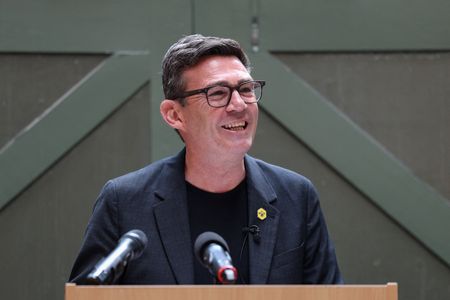

LONDON — Former Greater Manchester mayor Andy Burnham moved to within one step of becoming Britain’s next prime minister on Friday after being chosen to lead the ruling Labour Party.
Since his return to parliament in June, Burnham has laid out a series of policy positions that give a clearer picture of how he might lead the country as it grapples with a cost-of-living crisis, sluggish economic growth, and the challenge of winning back voters.
SHIFTING POWER AWAY FROM LONDON
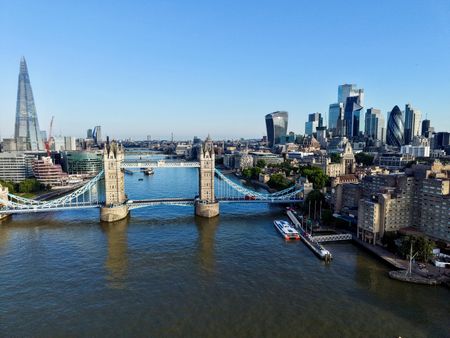
Burnham has vowed to deliver what he calls “the biggest rebalancing of power our country has seen.” His primary target is Whitehall — the London hub of government departments where civil servants help ministers shape and carry out national policy — which he argues has grown too dominant at the expense of Britain’s regions.
“It is time for Whitehall to accept that growth cannot be ordered from the top down. Instead, it can only be nurtured from the bottom up,” he said during a June 29 speech.
While his initial focus is on England, home to 85% of the United Kingdom’s population, he has also called for expanded regional authority in Scotland, Wales, and Northern Ireland — nations that already have semi-autonomous assemblies handling most domestic matters but currently lack the ability to raise taxes or borrow money independently.
Among his pledges is granting regions greater control over economic development, housing, transportation, education, and job training. He has also proposed establishing a “Number 10 North” in Manchester — a northern counterpart to the prime minister’s official London residence and office at Number 10 Downing Street.
This northern hub would drive decentralization efforts and assist regions in reforming key utilities, rebuilding industry, and spurring regeneration to deliver what Burnham calls “good growth” across every part of the country. He has also pledged to give regions more public control over essential services including water, housing, energy, and transportation.
REBUILDING BRITISH INDUSTRY
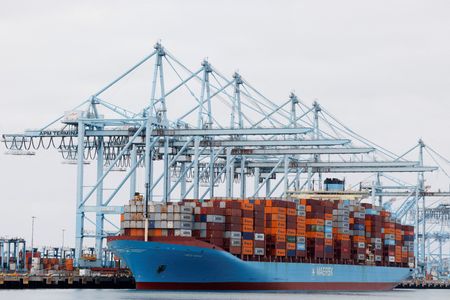
Burnham has expressed a desire to revitalize Britain’s industrial base, pledging support for domestic manufacturing and production in critical sectors including steel, defence, energy, food, and farming.
Defence is a particular area of emphasis. He has committed to strengthening the armed forces, arguing that defence investment should serve as a vehicle for reindustrializing struggling communities across Britain, while also reducing the government’s dependence on foreign suppliers.
EDUCATION AND WORKFORCE TRAINING
Burnham has called for a shift away from the heavy emphasis on university education, instead pushing for greater recognition of technical and vocational qualifications. He has promised to build a system “based on parity between academic and technical” pathways. He has also encouraged businesses to expand apprenticeship opportunities for young people.
HOUSING
On housing, Burnham has pledged that his government would launch “the biggest council house building programme since the post-war period” following 1945, with plans to use vacant public land to keep costs down.
He described the approach as adopting “a national Housing First philosophy, as has been pioneered so successfully in Finland” — a reference to the Nordic country’s model of providing homeless individuals with stable housing rather than temporary shelter, treating a secure home as the foundation for addressing other life challenges.
TAXES AND FISCAL POLICY
Burnham has said he will honor the Labour government’s existing fiscal rules, which require day-to-day spending to be matched by revenues, and has reaffirmed the party’s commitment not to raise taxes on working people.
He has floated several potential tax reforms, including an overhaul of business rates to better support pubs and high street retailers, and has expressed backing for a land-value tax — an annual levy based on the market rental value of land itself, not the buildings on it. Such a tax could potentially lead to the elimination of stamp duty, a tax on home sales, and might also replace council tax, which households currently pay for local services.
SOCIAL CARE
Burnham has signaled that social care is in need of a significant overhaul, though he has not yet detailed specific plans.
FOREIGN POLICY
Burnham has said comparatively less about international affairs, but drew praise from the left wing of the Labour Party when he called on the government to increase pressure on Israel. He has also pledged to maintain Britain’s support for Ukraine in its defense against Russia’s ongoing war, and has committed to deepening ties with European nations, particularly in the areas of defence and security.