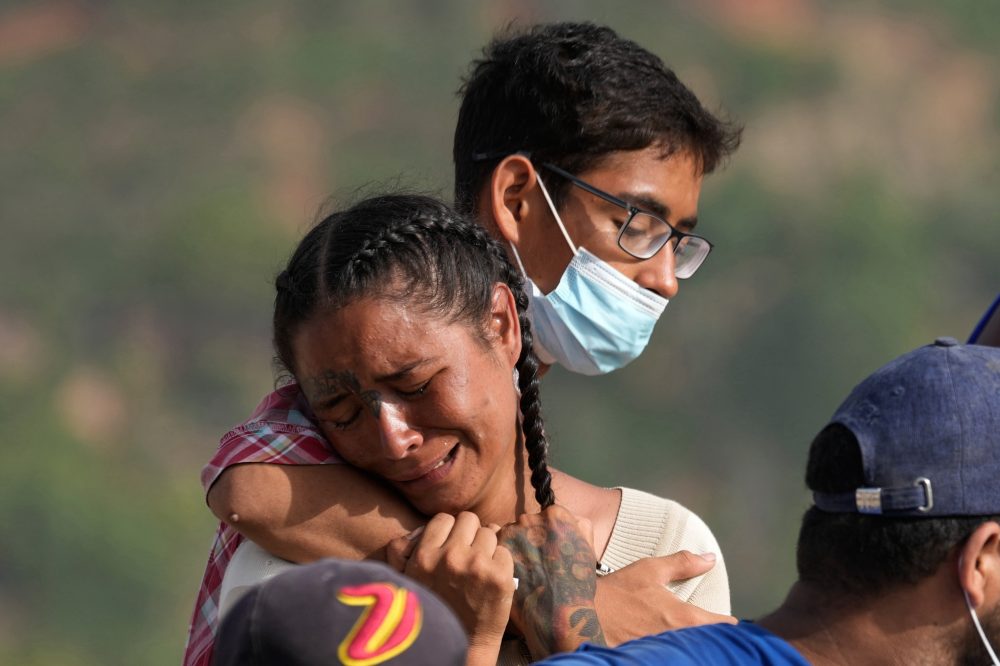

A powerful earthquake measuring 7.3 in magnitude rattled the southern Pacific coast of Mexico on Friday, striking right along the border with Guatemala and sending shockwaves felt as far away as Mexico City and El Salvador. Despite the quake’s strength, no serious damage or deaths were immediately reported in any of the affected countries.
According to the U.S. Geological Survey, the quake’s epicenter was located about 48 kilometers — roughly 30 miles — southwest of Aquiles Serdan, near the Chiapas coastline, at a depth of 15 kilometers, or about 9 miles underground. A smaller earthquake had already struck slightly farther offshore before the main event hit. At least five aftershocks followed, ranging in magnitude from 5.1 to 6.0, the USGS reported.
In Tapachula, the largest city on Mexico’s southern border, residents felt the shaking build gradually before it intensified. Alejandra Mendoza, an administrative worker at a local public hospital, described the experience to The Associated Press: “We were upstairs on the second floor when it started shaking; we thought it would pass, but then it got stronger, so we all went downstairs and evacuated in an orderly manner to the front courtyard.”
In Guatemala City, the earthquake caused widespread alarm, partly due to how long the shaking lasted. With the workday just getting underway during morning rush hour, crowds flooded into the streets and multiple buildings were evacuated. Guatemala’s National Coordinator for Disaster Reduction, known as CONRED, said there was no immediate damage to report, though videos circulating on social media showed landslides, particularly on roads heading westward.
Guatemalan education authorities suspended in-person classes in the departments of San Marcos, Quetzaltenango, Suchitepéquez, and Retalhuleu — all located near the earthquake’s epicenter.
Back in Mexico City, some buildings in certain neighborhoods swayed and creaked during the tremor. However, the city’s earthquake alert system never activated. Officials explained that “the energy radiated by the earthquake during the first few seconds did not exceed the activation thresholds.”
Mexican President Claudia Sheinbaum stated that early reports indicated no damage had occurred. The country’s navy urged people to avoid beaches for at least six hours due to the potential for tsunami activity. The Meteorological Service of Chiapas issued a warning that waves reaching up to 1 meter — about 3.3 feet — could hit the coastlines of both Mexico and Guatemala.
In Suchiate, a town situated along the river marking the border between Mexico and Guatemala, local officials were keeping a close watch on coastal areas for any signs of tsunami activity, according to Mayor Elmer Vázquez Gallardo.
The region has a long history of seismic activity, some of it deadly. Earlier this year, a major earthquake struck southern and central Mexico, claiming two lives. In 2017, a 7.1 magnitude quake killed hundreds of people in Mexico City.