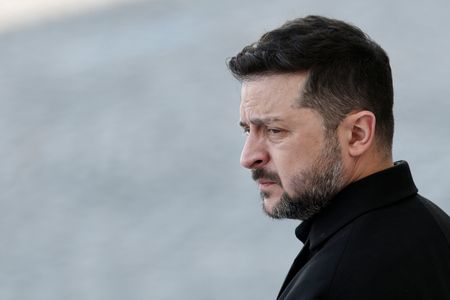

Ukrainian President Volodymyr Zelenskiy moved on Friday to patch up a diplomatic dispute with key ally Poland, stemming from his May decision to name a Ukrainian military unit after World War Two fighters who were responsible for killing Polish civilians.
Zelenskiy convened a high-level meeting of senior government officials focused specifically on the state of relations with Poland. At the meeting, he committed to broadening investigations into killings carried out by the Ukrainian Insurgent Army, known by its Ukrainian acronym UPA, a pro-independence armed group, and pledged to open intelligence archives related to those events.
Zelenskiy emphasized that strengthening ties with Poland was essential, pointing to the significant assistance Poland has provided to Ukraine since Russia launched its full-scale invasion in 2022. Polish President Karol Nawrocki had previously stripped Zelenskiy of Poland’s highest honor in response to the military naming decision.
Following the meeting, Zelenskiy took to social media platform X to share his position. “The priorities are clear: All of us in Europe need good neighbourly, equal, and mutually beneficial relations built on respect,” he wrote. “Poland provided significant support to Ukraine after the start of Russia’s full-scale invasion, and we are grateful to Poland.”
Polish Prime Minister Donald Tusk responded warmly to Zelenskiy’s remarks. “We are ready for a serious and friendly dialogue on the issues that unite us and those that divide us today,” Tusk posted on X.
As part of the diplomatic effort, Zelenskiy announced that officials would unseal archives held by Ukraine’s Security Service and its Foreign Intelligence Service. Those files relate to the mass killings of ethnic Polish civilians in the Volhynia region, located in what is now northwestern Ukraine.
According to historians, UPA forces and allied nationalist groups killed between 70,000 and 100,000 Poles in that region between 1943 and 1945, with the aim of clearing the area of Polish inhabitants ahead of establishing future Ukrainian territory. Thousands of Ukrainians also lost their lives in retaliatory killings during the same period.
Zelenskiy additionally pledged to increase efforts to exhume victims’ remains, broaden historical dialogue, and direct more resources toward a Ukrainian history institute.
Despite these gestures, Ukrainian officials have given no sign that the decision to name the army unit after the UPA will be reversed, maintaining that Ukraine has the sovereign right to determine who it honors as national heroes.
The UPA holds a complicated place in Ukrainian historical memory. Many Ukrainians view the group as heroic for having resisted both Nazi German occupation and Soviet forces, and see it as a symbol of Ukraine’s long struggle for independence from Moscow.