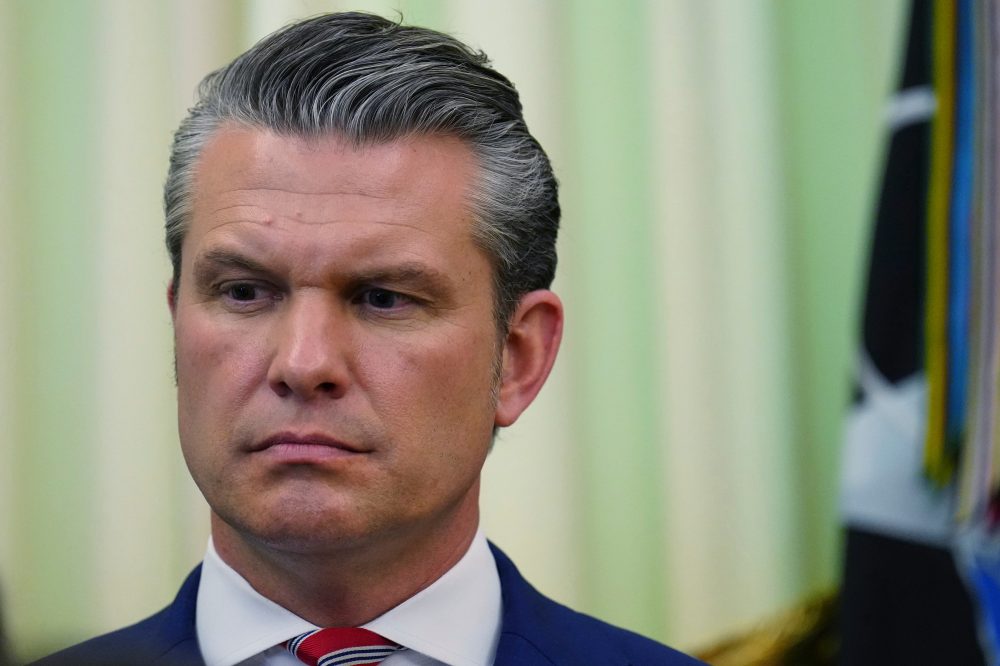

WASHINGTON (AP) — Congressional lawmakers will question Defense Secretary Pete Hegseth on Tuesday regarding the ongoing Iran conflict, with several Republicans joining Democrats in expressing doubts about the war’s duration and absence of formal congressional authorization.
House and Senate defense spending subcommittees have scheduled consecutive hearings to examine the Trump administration’s proposed 2027 military budget, which seeks an unprecedented $1.5 trillion in funding. However, lawmakers are anticipated to focus heavily on the management of a conflict that has reached an apparent deadlock, while rising gasoline prices create political challenges for GOP members ahead of midterm elections.
President Trump continues to deal with economic consequences from Iran’s effective shutdown of the Strait of Hormuz, a crucial maritime route that typically handles one-fifth of global oil transport. American military forces have responded by blocking Iranian harbors, leading to armed exchanges where U.S. personnel have defended against attacks on naval vessels and damaged Iranian oil tankers.
Speaking on Monday, Trump described the current ceasefire as being on “massive life support” and rejected Iran’s most recent diplomatic offer, reiterating his position that Tehran must substantially curtail its nuclear activities.
“I would call it the weakest right now after reading that piece of garbage they sent us,” Trump said.
The Republican commander-in-chief also announced plans to temporarily eliminate the federal gasoline tax to ease the burden of escalating fuel costs on American consumers. He has maintained that these higher expenses are justified to prevent Iranian nuclear weapons development.
Tuesday’s congressional sessions will provide a largely different group of legislators the opportunity to either challenge or support Hegseth alongside Gen. Dan Caine, chairman of the Joint Chiefs of Staff, regarding war strategy and implementation.
Among those participating is Maine’s Sen. Susan Collins, a Republican facing an uncertain reelection campaign this year. Collins sided with Democratic colleagues in a recent attempt to end the hostilities, stating her desire for a clear plan to conclude the military engagement.
Sen. Lisa Murkowski of Alaska, another GOP member serving on the Senate defense appropriations subcommittee, has opposed previous unsuccessful war powers measures while advocating for proper congressional authorization to establish clear objectives and boundaries for the conflict.
Two weeks prior, Hegseth and Caine endured extensive questioning during House and Senate Armed Services committee sessions, which largely reflected predictable partisan positions.
During those earlier appearances, Hegseth claimed the ceasefire had suspended a 60-day congressional approval timeline mandated by the 1973 War Powers Act. The United States and Israel initiated military action on February 28, with the temporary truce beginning April 8.
Democratic lawmakers challenged Hegseth’s interpretation and are likely to raise similar objections Tuesday. However, he can expect support from friendly Republican colleagues, including Senate subcommittee chairman Sen. Mitch McConnell of Kentucky and Sen. Lindsey Graham of South Carolina, who has emerged as Congress’s most vocal advocate for the Iran military operation.
Hegseth and Caine plan to present details of the proposed defense spending package while emphasizing requirements for additional unmanned aircraft, naval vessels, and missile defense capabilities that have been depleted during the ongoing conflict.