
ORVAULT, France (AP) — When darkness descended on the Louisiana immigration detention center where 85-year-old Marie-Thérèse Ross was imprisoned, quiet would settle over the facility. But then the crying would start.
“Children crying, and even babies,” recalled Ross, a French widow whose late husband served in the U.S. military. Her detention last month during the Trump administration’s immigration enforcement efforts generated worldwide attention.
Speaking with The Associated Press on Monday, Ross detailed her 16-day ordeal in federal immigration detention following her April 1 arrest in Alabama for allegedly exceeding her visa limits. She also shared the romantic tale that initially drew her to America. Ross has since been freed and has returned to France.
The detention experience transformed her perspective on politics and America, she explained.
Ross was confined in a dormitory-style space alongside 58 other women, primarily mothers. “Some of them didn’t know where their children were,” she explained. “I think it’s terrible for a woman not to know where her children are.”
Her Alabama arrest happened so rapidly she could barely comprehend the events unfolding. Five individuals identifying themselves as immigration agents pounded on her door and windows at 8 a.m., then handcuffed her and put her in a vehicle, according to Ross. She remained in her bathrobe, slippers and nightclothes.
Two days afterward, she was moved to a Basile, Louisiana facility. She was released later that month and is now recuperating with family in a Nantes suburb in western France. France’s foreign minister publicly demanded her release, stating that U.S. Immigration and Customs Enforcement tactics are “not in line” with French standards.
Ross had come to the U.S. to begin fresh with William B. Ross, a retired American serviceman she had encountered decades before when he served in France during the 1950s while she worked as a NATO secretary. They wed in April 2025.
Following his natural death in January, conflicts arose regarding his estate. An Alabama judge determined that Ross’ stepson, who works for the federal government, allegedly interfered to trigger her immigration detention.
The U.S. Department of Homeland Security stated that Ross had exceeded her 90-day visa when arrested. The AP requested comment from DHS on Tuesday, though the agency had not previously responded to inquiries.
Ross described rigid regulations, constant yelling from officers, and patronizing behavior at the Louisiana detention center.
“The prison was clean, the food was okay, but it was the way they spoke to us,” she told the AP. “The guards could not speak without yelling.”
She characterized the environment as loud. “Everybody was talking loudly so everybody could hear what they were saying, but when silence came, you could hear children crying and even babies crying,” she explained. “There’s babies in this jail.”
Even amid harsh conditions, Ross noted instances of mutual support among inmates. “During the night, if my bed cover slipped away, I felt a small hand putting it back,” she said. “I didn’t know who it was, but they pampered me because I was older than them.”
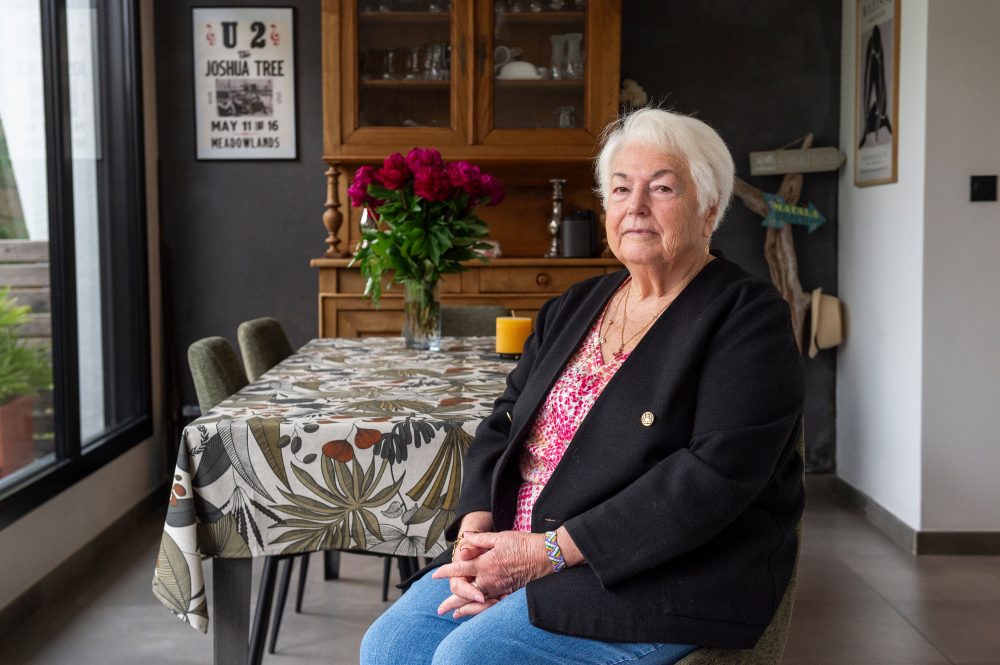
The women nicknamed her “Grandma.” She still wears a handcrafted friendship bracelet another detainee made for her.
Relatives report that Ross continues experiencing memory problems and emotional trauma from her detention. She plans to pursue medical care in France for symptoms resembling post-traumatic stress and is receiving assistance.
Ross said she frequently thinks about the women she encountered in custody, mostly from South America. Many were mothers separated from their children.
Her ordeal altered her perception of the United States and its immigration system, Ross explained. Her husband supported Trump and they regularly watched Fox News together. However, she was stunned to witness firsthand how immigrants are handled within immigration facilities.
She previously viewed the U.S. as a “country of freedom, where people are not arrested based on how they look, and where those who are detained are treated fairly and with respect.” But the women she encountered didn’t deserve imprisonment, she argued. “Their only fault was to be South American.”
While recovering in France, Ross continues thinking about them: “When I left this jail in Louisiana, I told them that if I ever had the chance to speak about them, I would do it, to help them.”