
RIO RANCHO, N.M. (AP) — Rising oil prices caused by global supply disruptions in the Strait of Hormuz have created a morally complex financial boom for New Mexico, a Democratic-leaning state that depends on fossil fuel revenues to support its progressive social programs.
As the nation’s second-largest oil producer after Texas, New Mexico uses income from petroleum taxes, royalties and lease agreements to fund college tuition assistance, universal school meals, health coverage and a newly launched free child care program.
With oil prices climbing due to the Iranian conflict, state coffers are swelling, putting Democratic leaders in an awkward position as they oppose military action while benefiting from the economic consequences.
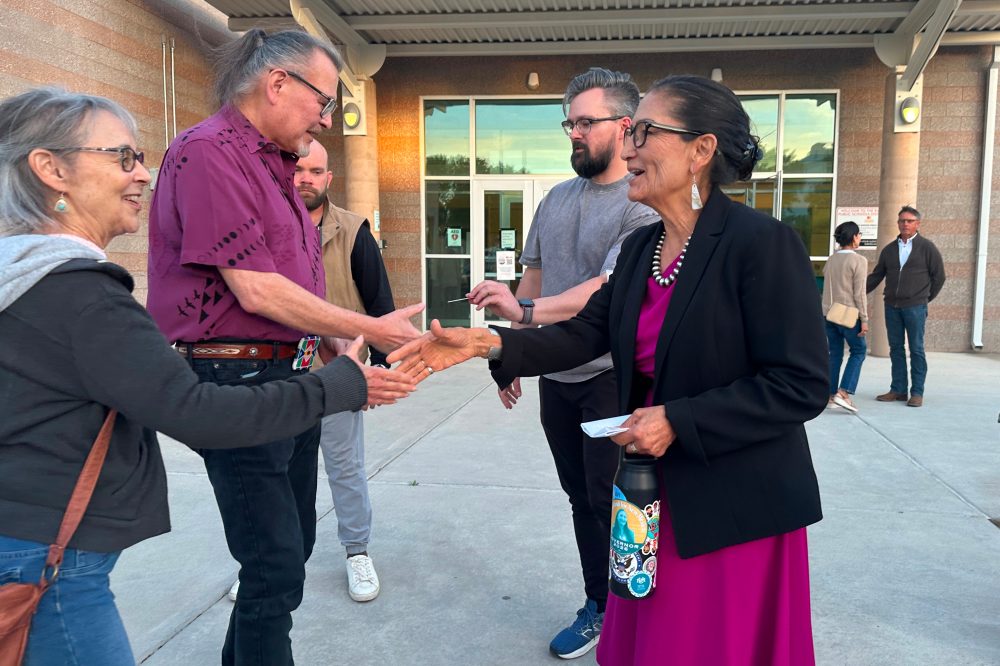
“It’s hard for people to think about, ‘Oh great, we have this windfall,’ and children are getting killed on the other side of the world,” said Deb Haaland, the former U.S. Interior Department secretary running for governor.
Haaland represents one of two Democrats seeking to replace Gov. Michelle Lujan Grisham, who is completing her second term. The former congresswoman and state party chair previously worked to restrict oil and gas development during her tenure in President Joe Biden’s Cabinet.
She proposes channeling money from the current energy surge into expanding New Mexico’s child tax credit and enhancing the refundable working families tax credit, measures that would primarily help lower-income residents.
“We have obligations to try to have a better world overall,” said Haaland, a tribal member of Laguna Pueblo who could become the first female Native American governor in the U.S. “I think we can do that.”
Her Democratic primary opponent, Albuquerque-based District Attorney Sam Bregman, proposes addressing inflation through one-time $500 payments to residents earning under $200,000 annually. He also supports eliminating personal income taxes for residents 65 and older.
“It is the resources of the people that’s generating that revenue,” he said. “We ought to give it back to the people.”
Each $1 change in oil’s average annual price translates to approximately $59 million in state revenue fluctuation.
This means New Mexico anticipates roughly $850 million in additional annual government revenue for the budget year concluding in June, based solely on wartime price increases — representing 12% of annual general fund expenditures, according to the state Legislature’s budget and accountability office.
New Mexico ships much of its heavier crude from the Permian Basin to Texas distribution centers and Gulf Coast refineries. Prices may stay elevated with no clear end to the conflict despite a tentative ceasefire.
In New Mexico, petroleum revenue increases automatically feed into various trust funds created to slowly wean the state off fossil fuel dependence, helping generate investment returns that support Medicaid, early childhood programs, infrastructure development and mental health services expansion.
This approach has eased concerns among many Democrats about oil income dependency, particularly in a state with persistent poverty and the nation’s highest Medicaid participation rate.
“For New Mexico and New Mexicans and especially the progressive left — which sort of controls the state — it’s always something they really don’t want to admit or talk about or get angry about,” said Lonna Atkeson, a political science professor who has analyzed voting behavior in New Mexico and directs the LeRoy Collins Institute at Florida State University. “Like, ‘We should not be funding our stuff with that money.’ I’ve heard those arguments.”
This year’s gubernatorial winner will oversee a state investment council managing approximately $68 billion in state reserves, including funds that help cover K-12 public education expenses.
New Mexico isn’t the only state benefiting financially from the war. In Alaska, officials project an extra $1.05 billion for the current and upcoming fiscal years.
“It really is this small group of energy-reliant states like North Dakota, Alaska, New Mexico and Wyoming that are going be affected most directly,” said Justin Theal, who researches state fiscal trends as a senior officer for The Pew Charitable Trusts. He described the situation as “a double-edged sword.”
“It raises costs for households and businesses which can potentially dampen consumer spending and reduce sales taxes that almost every state relies on as well,” Theal said.
Three Republican gubernatorial candidates are pushing for more aggressive tax cuts while oil revenues remain high.
“Republicans are using the ‘e-word’ — eliminate income taxes,” said Albuquerque-based pollster Brian Sanderoff, president of Research and Polling Inc. A Republican last won election to statewide office in 2016.
Simultaneously, they’re challenging the financial viability of universal childcare.
The initiative faces legal challenge in a lawsuit from cannabis entrepreneur and Republican gubernatorial candidate Duke Rodriguez. He previously served as human service secretary under former Gov. Gary Johnson, a crusader for limited government who unsuccessfully ran for president as a Libertarian.
The lawsuit claims the childcare program was launched in November by Lujan Grisham without proper legislative approval — though supporting legislation was enacted this year. A court has given the administration 30 days to respond.
Discussing the state’s petroleum income, Rodriguez says, “We don’t have a resource problem, what we have is a real results problem. We just spend and spend and spend with no accountability.”
Republican businessman Doug Turner views wartime oil prices as a chance to restructure the state tax system and supports income requirements for childcare benefits. He lost the 2010 Republican primary to then-district attorney Susana Martinez, who went on to serve two terms as governor.
Gregg Hull, a former three-term mayor of Rio Rancho on the outskirts of Albuquerque, wants New Mexico to join states without personal income taxes like Texas and Wyoming. Personal income taxes generate about $2.2 billion annually, covering roughly one-fifth of general fund responsibilities.
Hull said he wants to expand the oil economy by directing budget surpluses toward infrastructure projects in the state’s primary oil-production region.
“This morning, when I was looking at a price of a barrel of oil, I said, ‘Well, that’s not great for consumers, but it’s awesome for New Mexico,’” Hull said.