
President Donald Trump announced Monday his selection of Cameron Hamilton to head the Federal Emergency Management Agency, marking an unexpected return for the ex-Navy SEAL who lost his temporary leadership position last year for supporting the agency’s continued existence.
The nomination signals a shift in the Trump administration’s approach toward FEMA, moving away from earlier discussions about eliminating the disaster response agency that has faced sharp criticism from the president. Hamilton’s selection, particularly given his previous stance against dismantling FEMA, suggests this policy reversal is gaining momentum.
Should the Senate confirm Hamilton, he would serve as Trump’s primary emergency management advisor alongside Homeland Security Secretary Markwayne Mullin, becoming FEMA’s first permanent director during Trump’s second presidency. The agency has cycled through three interim leaders, including Hamilton’s short stint from January through May 2025.
Hamilton would inherit an agency struggling under the aftermath of Kristi Noem’s controversial tenure leading the Department of Homeland Security, FEMA’s parent organization. The emergency management agency has been weakened by widespread employee departures, restrictive operational policies, and a 75-day government shutdown that concluded April 30.
With disaster season approaching rapidly, Hamilton faces the immediate challenge of preparing the agency while implementing the extensive reforms Trump expects, following recommendations from a presidential council released last Friday.
“Now is the opportunity to stabilize FEMA,” said Michael Coen, the agency’s chief of staff in the Obama and Biden administrations.
When Trump initially appointed Hamilton as interim director in January 2025, the choice sparked controversy given his lack of state or local emergency management experience and his previous public criticism of FEMA. The appointment came just days before Trump publicly considered “getting rid” of the agency entirely.
Hamilton’s conflict with DHS leadership emerged when he advocated for maintaining federal disaster assistance to states, tribes, and territories.
“Once the conversation shifted to, ‘Now we’re going to abolish,’ I immediately expressed concern,” he said last September on the “Disaster Tough” podcast with John Scardena, a former FEMA incident management team leader.
DHS officials even administered a polygraph examination to Hamilton, alleging he and other staff leaked confidential meeting information. Though he passed the test, Hamilton recognized his termination was approaching.
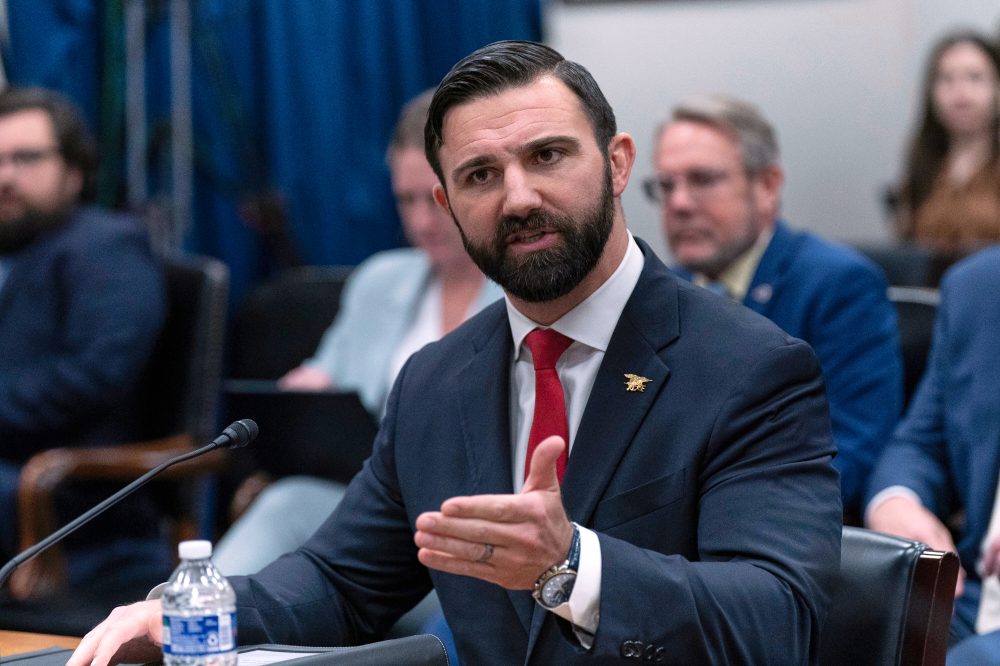
During a May 7 House Appropriations subcommittee hearing, Connecticut Democrat Rep. Rosa DeLauro questioned Hamilton about FEMA’s future.
“I do not believe it is in the best interest of the American people to eliminate the Federal Emergency Management Agency,” he responded. His dismissal came the following day.
Hamilton’s willingness to defend FEMA despite knowing the personal cost earned him credibility among emergency management professionals, according to Scardena, who now leads the consulting firm Doberman Emergency Management Group.
“He won myself over and I think a lot of people by what he did,” Scardena said.
However, several current FEMA staff members, speaking anonymously due to fears of workplace retaliation, expressed concerns to The Associated Press about certain decisions made during Hamilton’s leadership.
In 2024, Hamilton amplified false information on social media platform X regarding FEMA’s Hurricane Helene spending.
Under his temporary leadership, FEMA eliminated door-to-door outreach efforts to connect with disaster survivors and terminated a multi-billion-dollar resilience grant program, later reinstated by court order. The Department of Government Efficiency received access to FEMA’s internal systems containing survivors’ personal data. Staff members faced termination for processing approved reimbursements to New York City for housing undocumented immigrants through FEMA’s Shelter and Services program.
Hamilton has advocated for significant FEMA restructuring, arguing the agency should operate more efficiently, shed responsibilities he considers beyond its scope, and reduce some states’ reliance on federal assistance. A Trump-appointed advisory council recently proposed comprehensive FEMA changes requiring congressional approval.
“I think he’s going to need to rebuild trust across the agency,” said Deanne Criswell, FEMA administrator under former President Joe Biden, adding that she believes Hamilton cares about FEMA and she appreciated his outreach to emergency management directors and former officials during and after his tenure.
Hamilton may encounter Senate confirmation challenges due to his lack of emergency management agency leadership experience, typically considered essential preparation for overseeing an organization with more than 21,000 employees.
Federal statute mandates the FEMA administrator possess “a demonstrated ability in and knowledge of emergency management and homeland security” plus at least five years of “executive leadership and management experience.”
Hamilton’s background includes training as a Navy hospital corpsman followed by a decade serving as a Navy SEAL with SEAL Team Eight. He subsequently worked as a State Department emergency management specialist handling international crisis response before directing emergency medical services at DHS.