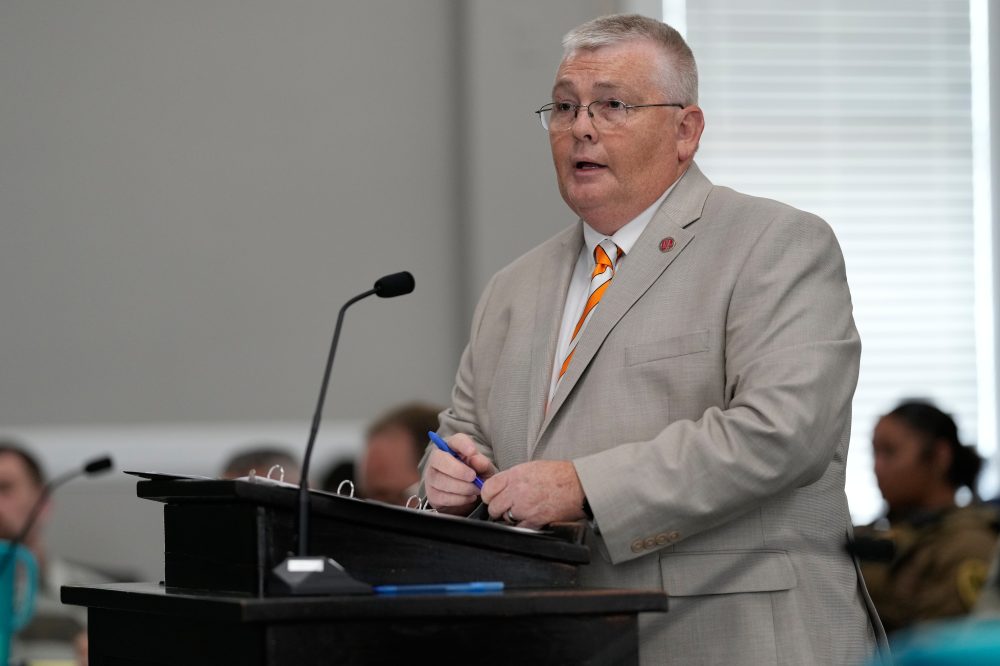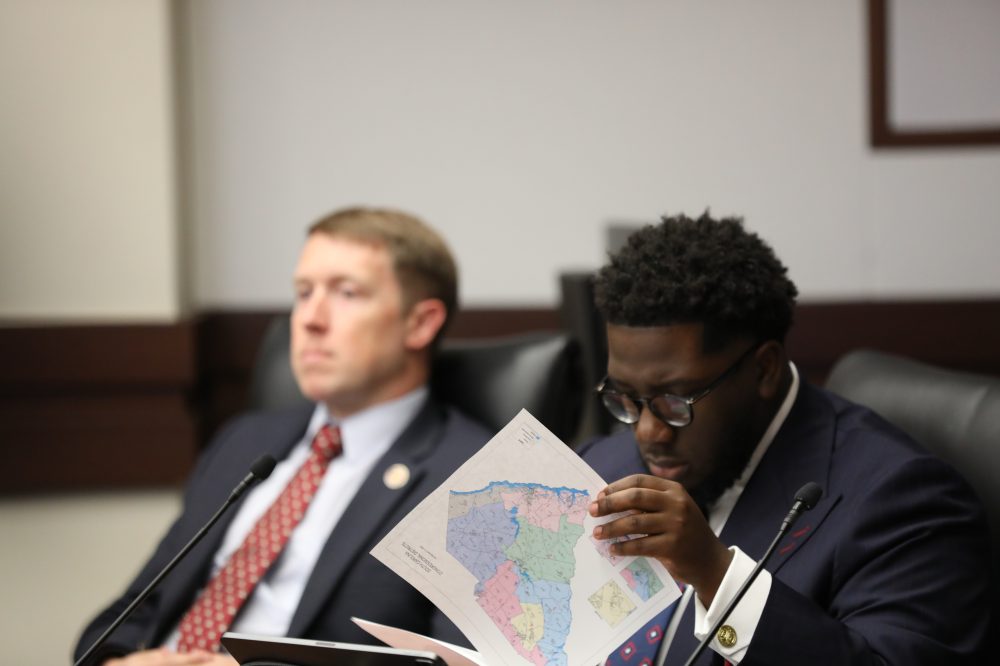

Louisiana state senators gathered Thursday to review a congressional redistricting proposal that would remove a majority-Black district, potentially giving Republicans an opportunity to secure another seat in November’s midterm elections. This comes just two weeks after the U.S. Supreme Court invalidated Louisiana’s current congressional map.
The Supreme Court decision has sparked widespread redistricting activities across Southern states as Republicans work to take advantage of a diminished federal Voting Rights Act. Unlike most voluntary redistricting efforts, Louisiana faces a mandatory requirement to redraw its U.S. House map following the court’s determination that it illegally used racial considerations to create a majority-Black district through gerrymandering.
As Louisiana debates new district boundaries, South Carolina’s governor is intensifying efforts to push lawmakers toward redistricting before the midterms. President Donald Trump has urged multiple Republican-controlled states to restructure House voting districts to benefit their party as they attempt to maintain control of the narrowly divided chamber this November.
Republican strategists believe they could secure up to 15 additional House seats across seven states that have already implemented new voting districts. Democratic leaders estimate they could gain as many as six seats from two different states due to new House district maps. However, these projected outcomes remain uncertain, with ongoing litigation in several states and voters ultimately determining election results.
The Louisiana legislation aims to resolve the Supreme Court ruling by eliminating a district that extends more than 200 miles (321 kilometers) northwest from Baton Rouge to Shreveport, forming a voting area with a Black majority. Democratic U.S. Rep. Cleo Fields currently serves the existing 6th District.
The proposed redistricting plan would reorganize that district to focus on predominantly white communities surrounding Baton Rouge and southern Louisiana.
The revised plan maintains a New Orleans-centered, majority-Black district represented by Democratic U.S. Rep. Troy Carter while incorporating part of Baton Rouge into that area.
Fields, who lives in Baton Rouge, indicated he will wait until maps are completed before deciding on reelection plans. However, he stated he would not run against Carter in a primary race.
The current House map proposal resembles one implemented in 2022 that led to five Republican victories and one Democratic win.
A federal judge invalidated the 2022 map for Voting Rights Act violations. Subsequently, in 2023, the U.S. Supreme Court mandated that Alabama establish a second congressional district with a largely Black population. Following the Alabama decision, Louisiana’s Legislature approved an updated map creating a second majority-Black district used in 2024 elections. That map faced legal challenges, resulting in an April 29 Supreme Court decision that Louisiana’s districts depended excessively on racial factors.
Republican Gov. Jeff Landry has delayed Louisiana’s U.S. House primaries from Saturday to either July 15 or a date the Legislature will determine, allowing time for new district implementation.
South Carolina House leadership expects to address legislation creating a new congressional map Friday after Republican Gov. Henry McMaster convenes a special session. The regular legislative session is set to conclude Thursday, but McMaster’s action would extend proceedings.
The House may need until next week to complete the redistricting legislation, which would also shift congressional primaries to August, according to Republican House Majority Leader Davey Hiott. Current primary elections are scheduled for June 9. Early voting starts May 26, likely establishing the redistricting completion deadline, he noted.
“The redistricting work will be long. It will be boring. It will be confrontational,” Hiott informed reporters.
Should the House approve the proposal, it moves to a more doubtful Senate, where Republican Judiciary Committee Chairman Luke Rankin stated he will “demand the process” without providing specifics. During the previous regular redistricting at the decade’s beginning, Rankin’s committee conducted month-long statewide meetings and invited public map submissions.
Currently, only one of South Carolina’s seven U.S. House seats belongs to a Democrat — longtime U.S. Rep. Jim Clyburn. Some Republicans question whether guaranteeing seven GOP districts is feasible in a state where Democratic presidential candidates have received over 40% of votes in every election this century. Additional concerns exist about conducting two statewide elections within slightly more than two months. South Carolina’s elections leader suggested it might require staff to work around the clock.