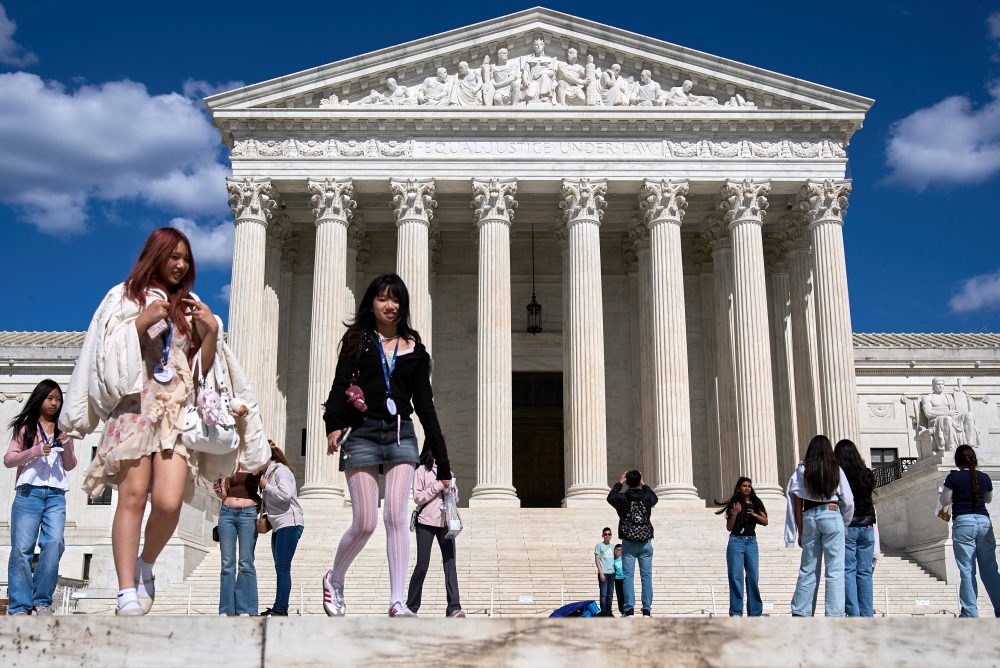

WASHINGTON — In a Monday decision, the nation’s highest court opened the door for Alabama to eliminate one of its two congressional districts where Black voters make up the majority, potentially handing Republicans another House seat as both parties fight for control of the narrowly divided chamber ahead of November’s midterm elections.
The ruling comes after the Supreme Court decided in April to strike down Louisiana’s majority-Black House district, calling it an unconstitutional racial gerrymander and significantly undermining a key section of the federal Voting Rights Act.
Alabama state leaders referenced the Louisiana ruling when asking the Supreme Court to end a judicial mandate requiring the use of a court-ordered House map through the 2030 census. The justices granted that request and instructed a lower court to review the Alabama case considering the Louisiana precedent. This action may allow Alabama to implement a 2023 map created by its Republican-controlled legislature that contains just one district with a Black majority population.
Expecting this court reversal, Alabama lawmakers recently passed legislation permitting the state to cancel results from a May 19 primary in certain congressional districts and conduct a new primary using different district lines. Republican Governor Kay Ivey will determine when to schedule the special primary election, which must take place by August.
In her dissenting opinion to Monday’s brief decision, Justice Sonia Sotomayor noted that the Louisiana case only reversed one basis for the Alabama ruling. While the Voting Rights Act violation may be eliminated, Sotomayor argued that a lower court might still determine Alabama deliberately discriminated against Black voters, violating the 14th Amendment.
Alabama joins multiple states attempting to modify their congressional district maps before November’s elections in a nationwide redistricting fight that Republicans are currently winning.
Congressional districts are normally redrawn every ten years following the census to reflect population shifts. However, former President Donald Trump encouraged Texas Republicans last year to redraw districts in their favor to maintain a slim House majority in the midterms.
California Democrats responded with their own redistricting efforts, and many Republican-controlled states have followed suit. The Supreme Court’s Louisiana decision gave Republicans additional momentum for their redistricting campaigns.
Republicans believe they could secure up to 14 additional seats in November’s elections through new districts created in Texas, Missouri, North Carolina, Ohio, Florida, and Tennessee. Democrats estimate they could gain up to six extra seats from new districts in California and Utah. However, Democrats faced a significant blow when Virginia’s Supreme Court struck down a voter-approved redistricting amendment that might have delivered four more seats for their party.