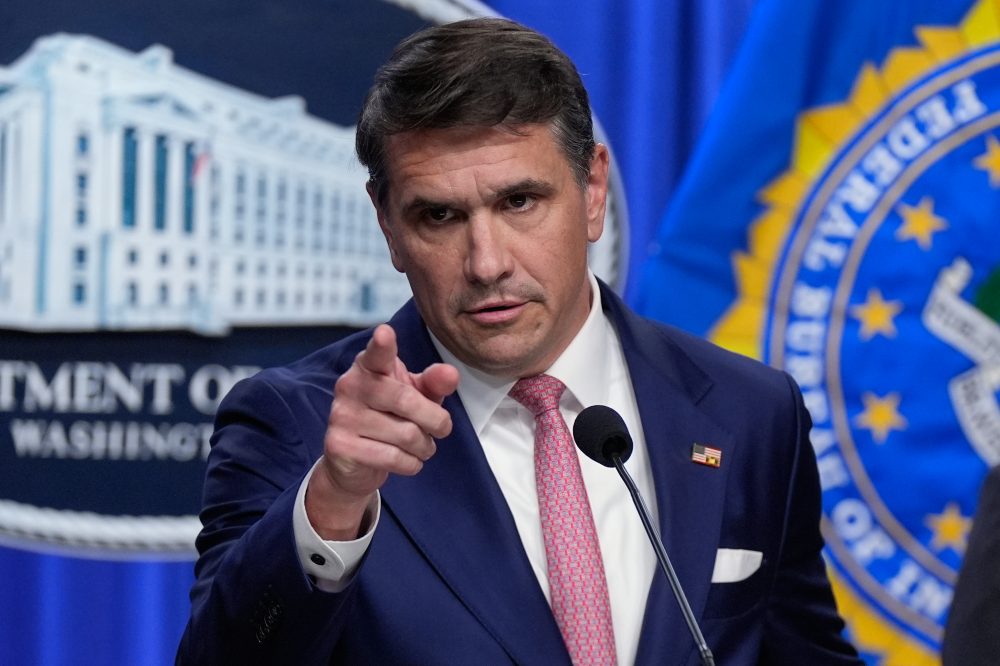

NEW YORK (AP) — Despite a string of electoral victories, Democratic National Committee Chairman Ken Martin finds himself under mounting pressure from within his own party, with officials expressing growing doubts about his leadership less than a year into his tenure.
The party organization is struggling with reluctant major contributors, public criticism from progressive voices over Martin’s failure to publish a promised internal analysis of past election setbacks, and behind-the-scenes conversations among Democratic strategists about potential replacement candidates. However, most insiders believe Martin’s position remains secure heading into the upcoming midterm contests.
Amanda Litman, head of the Democratic-supporting group Run For Something, revealed that senior party strategists have recently contacted her about potentially stepping into Martin’s role. While she turned down the overture, Litman expressed skepticism about the current chairman’s performance.
“I think it’s a really hard job, and also Ken is not doing it very well,” Litman shared with The Associated Press. “I honestly think he’s going to have a hard time rebuilding trust.”
She noted that frustrated Democrats face a significant obstacle: “there’s not really an alternative.”
According to two sources speaking confidentially about internal discussions, the mounting criticism has affected Martin personally, leading to increased suspicion and wariness, even within the party’s Washington headquarters where he chose not to bring in his own staff after assuming leadership.
This internal discord occurs against the backdrop of remarkable Democratic success in elections during Martin’s tenure, which has coincided with Republican Donald Trump’s return to presidential power. Over the past year, Democrats have secured victories in gubernatorial races, special legislative and congressional contests, state supreme court battles, county executive positions, and even sheriff elections.
With less than six months remaining before the 2026 midterm elections, the leadership controversy represents either an unwelcome diversion for a party seeking to challenge Republican control in Washington, or potentially a more serious obstacle that could hamper Democratic chances in November while weakening confidence in the DNC’s role in organizing the next presidential nomination contest.
Martin chose not to provide comments for this report. He has avoided media appearances recently, instead concentrating on strengthening the committee’s financial position and evaluating possible locations for the 2028 presidential convention.
During a recent Denver visit, Martin participated in a well-attended fundraising gathering followed by three private donor meetings while conducting additional fundraising calls with contributors in other cities.
Jaime Harrison, Martin’s predecessor as DNC chair, expressed frustration with party members who are publicly questioning Martin’s leadership. Harrison particularly criticized Democratic operatives from the “Pod Save America” podcast, who challenged Martin in a recent episode about his broken commitment to publish a post-2024 election review.
Even Martin’s supporters acknowledged that the podcast appearance was an uncomfortable moment for the first-term chairman.
“Am I happy with everything that goes on in the party? No. Am I happy with leadership that sometimes you get? No. But do you see me going out at this juncture trying to make that case? This is not the moment for that,” Harrison stated. “We have to be as strong as we possibly can going into November, because we have to win. Once we win, we can fight like hell.”
When asked about Martin’s job security, Harrison responded, “I don’t think so.”
Martin has committed to a comprehensive 50-state funding approach that even his backers privately admit carries significant risks.
Monthly, the DNC distributes $1 million across party organizations in all states and major U.S. territories, while providing an additional $5,000 monthly to nearly two dozen Republican-led states to strengthen party infrastructure.
These investments enjoy widespread support from local party leaders, even as the DNC faces financial difficulties.
According to the most recent federal disclosure, the national party held $22.1 million in cash with $18.4 million in outstanding debt at the end of March. In comparison, the Republican National Committee reported $116.8 million available with no debt obligations.
Despite the criticism, DNC national finance co-chair Chris Lowe explained that the financial gap reflects Martin’s deliberate strategy, outlined during his campaign for chairman and implemented since taking control.
“We made a conscious decision to spend money,” Lowe explained. “His view, and I would agree with this view, is the best way to position ourselves for the presidential (election) in ’28 is not just to amass a bunch of money, it’s to have a history of winning elections all across the country up and down the ballot. And that’s what we’ve done.”
Lowe emphasized that Martin generated more funds during his initial year than any previous chairman in comparable non-presidential years when Democrats lacked White House control. For 2026, he noted, the committee has surpassed its major donor fundraising goals each month.
California DNC member Michael Kapp, a strong Martin supporter, acknowledged he would “love to have big donors come on board” but argued that the committee’s financial balance isn’t the primary concern.
“Republicans can brag about having more money but they’re not spending it, and they’re not winning,” Kapp observed. “At the end of the day the scoreboard matters more than the spreadsheet.”
Beyond fundraising concerns, the controversy surrounding Martin’s leadership stems from his decision not to release the DNC’s internal examination of the 2024 election — referred to within the organization as the “after-action report” — despite previous commitments to publish it immediately upon becoming chairman.
Kapp, like many Martin allies, believes “it’s certainly something that should be made public,” but accepts Martin’s reasoning that releasing the analysis too close to November’s midterm elections would be inappropriate timing.
“I know there are lessons to be learned from that,” he said regarding the report. “I trust Ken. I’ve known the man for 10 years. But at this point, when we’re six, seven months away from the midterms, we need to be focused on the midterms.”
Martin has intensified his outreach to major contributors, despite their apparent hesitation to support the committee. He has acknowledged pressure regarding the analysis in some conversations and suggested modifications might be forthcoming, according to two individuals with direct knowledge of these discussions who were not authorized to discuss them publicly.
As Martin prepares for 2028, when the DNC will be responsible for establishing political infrastructure for the party’s next presidential candidate, some potential presidential contenders are approaching the internal party conflict cautiously.
Kentucky Governor Andy Beshear, anticipated to announce a presidential campaign, avoided directly addressing whether Martin should remain as DNC leader.
“Ken and I work well together. And I say that being somebody who wasn’t originally on board,” Beshear commented. “But he made an effort to reach out to me. And, listen, I want to work with whoever’s there. We need a healthy DNC. We need it to work.”