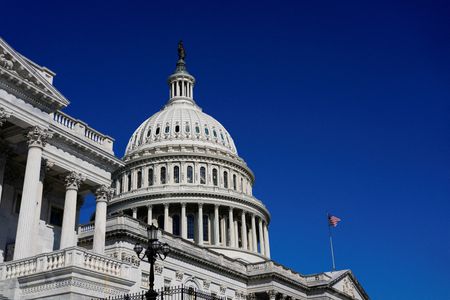
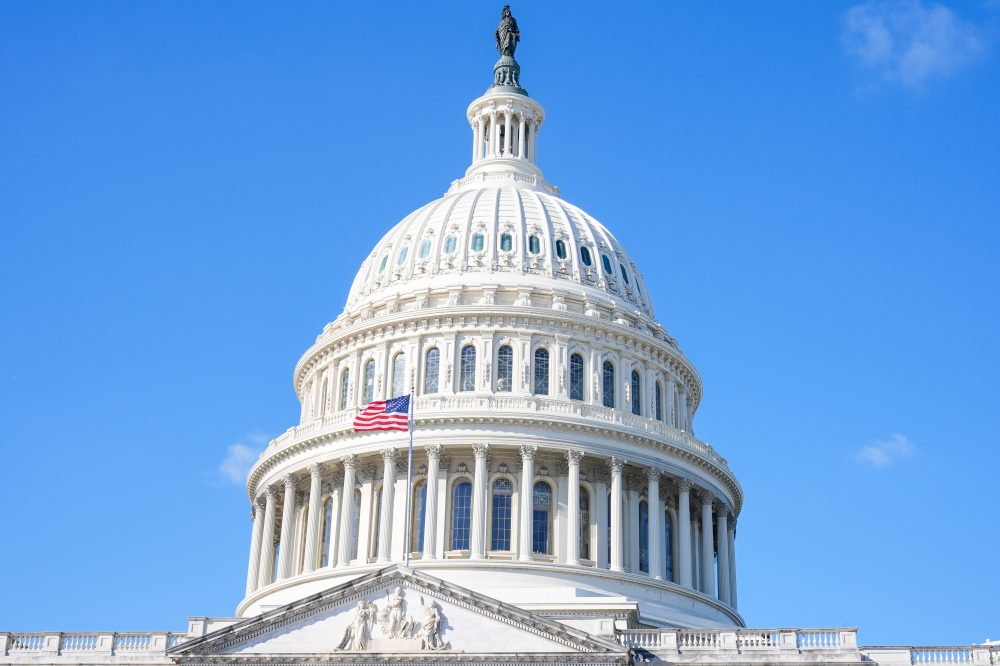
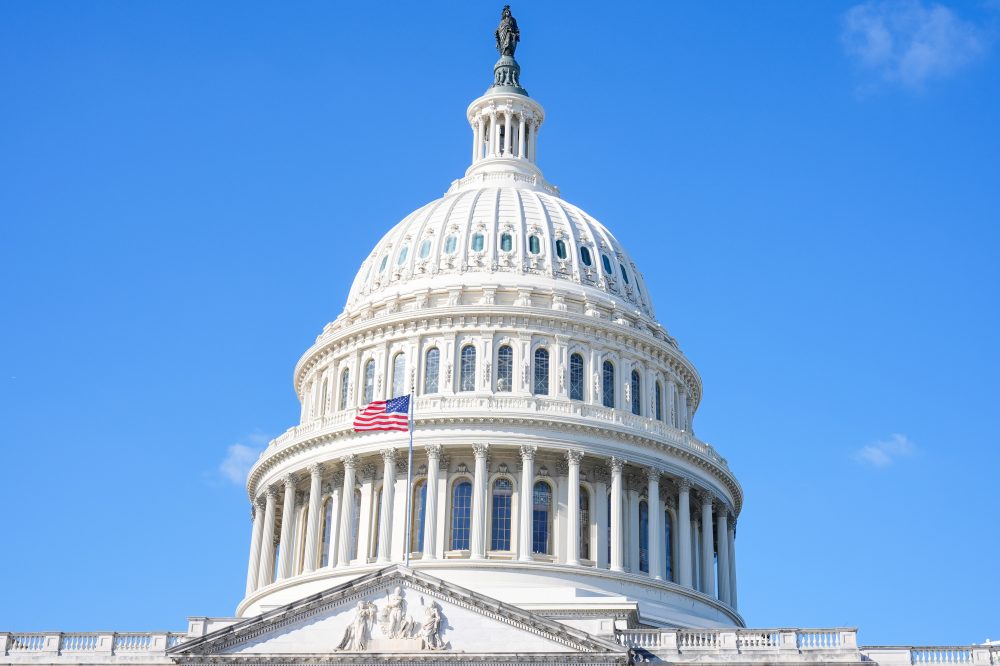
U.S. Capitol Police detained an 18-year-old man Tuesday afternoon after he charged toward the Capitol building while armed with a loaded shotgun, according to Capitol Police Chief Michael Sullivan.
The suspect arrived at the scene shortly after midday in a white Mercedes SUV, parking close to the Capitol before exiting his vehicle and sprinting toward the building that serves as home to Congress, Sullivan explained.
Authorities discovered the young man was outfitted in tactical equipment, including a protective vest and gloves. Officers also found additional gear in his vehicle, including a Kevlar helmet and gas mask.
When confronted by law enforcement officers who commanded him to surrender his firearm, the suspect cooperated and dropped the weapon, Sullivan reported to the media.
Police have not yet determined what motivated the individual’s actions.
This security breach occurred just under three months following a deadly ambush attack near the White House that claimed the life of one National Guard member and left another injured.
The timing is particularly notable as President Donald Trump is scheduled to present his State of the Union speech at the Capitol next week.
“We take the State of the Union very, very seriously, and this doesn’t change our posture. We will be prepared on State of the Union night,” Sullivan said.
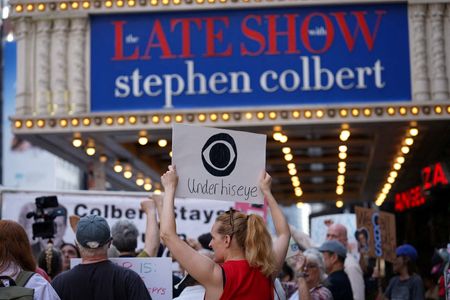
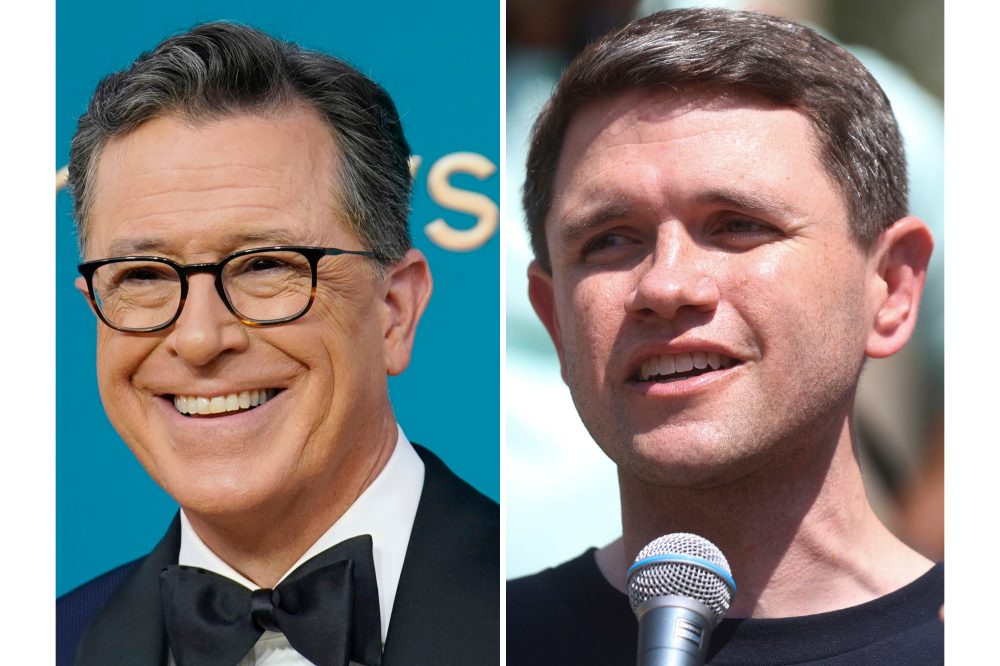
Late-night television host Stephen Colbert disclosed that CBS network attorneys blocked him from broadcasting an interview with Texas Democratic Senate hopeful James Talarico due to concerns over federal broadcasting regulations that could require equal airtime for opposing candidates.
The controversy centers on federal rules mandating that television stations provide equivalent on-air opportunities to all political candidates when one appears on their programming. Colbert discussed the situation during Monday evening’s broadcast and subsequently released the complete interview through online channels.
The Trump administration, working through the Federal Communications Commission that oversees America’s broadcast networks, has been tightening enforcement of these requirements, particularly targeting talk shows like Colbert’s that officials claim may have “partisan purposes.”
“He was supposed to be here, but we were told in no uncertain terms by our network’s lawyers, who called us directly, that we could not have him on the broadcast,” Colbert explained during “The Late Show with Stephen Colbert.”
CBS released a statement Tuesday explaining that Colbert’s program “was provided legal guidance that the broadcast could trigger the FCC equal-time rule for two other candidates” competing in the March 3 Democratic primary, “and presented options for how the equal time for other candidates could be fulfilled.” The network decided “to present the interview through its YouTube channel with on-air promotion on the broadcast rather than potentially providing the equal-time options.”
Talarico, who has been vocal in his opposition to President Donald Trump, shared a brief excerpt of his Colbert conversation on social media platform X, describing it as “the interview Donald Trump didn’t want you to see.”
The regulatory framework stems from the Communications Act of 1934, comprehensive legislation that has governed American broadcasting for nearly nine decades. The law requires stations to provide comparable airtime to competing candidates when one receives coverage, if requested by opponents.
These requirements also extend to paid political advertising, mandating that stations offer equal advertising opportunities to all candidates seeking the same office.
Several exemptions exist within the regulations, including news programs, legitimate interview shows, live event coverage, and documentary programming. However, when candidates appear on entertainment shows or host their own programs, the equal time provisions are triggered.
Importantly, these rules only affect traditional broadcast television and radio, excluding cable networks, streaming platforms, and social media content.
Historically, talk shows have not been subject to equal time requirements, but the current administration has moved to alter this precedent.
The Federal Communications Commission issued updated guidance in January, alerting late-night and daytime talk show hosts about equal time obligations. FCC Chairman Brendan Carr has challenged the talk show exemption, suggesting hosts operate with “partisan purposes.”
“The FCC has not been presented with any evidence that the interview portion of any late night or daytime television talk show program on air presently would qualify for the bona fide news exemption,” the agency’s public notice stated.
The guidance also requires television networks to seek individual program exemptions from the agency.
Colbert emphasized the distinction between broadcast and streaming regulations during his remarks, noting that his nearly quarter-hour interview with Talarico appeared exclusively on his show’s YouTube channel rather than on traditional television.
Chairman Carr, whom Trump selected to head the FCC, has frequently targeted network talk programs, previously suggesting that investigating ABC’s “The View” — whose hosts regularly criticize Trump — over exemption violations might be “worthwhile.”
The FCC did not provide immediate responses to requests for comment Tuesday.
The agency previously enforced the Fairness Doctrine, established in 1949, which required broadcasters to present opposing perspectives on controversial public issues. Unlike equal time rules written into federal law, this was an FCC regulation rather than congressional legislation.
The doctrine focused on topics rather than individual candidates. The Supreme Court validated the rule against First Amendment challenges in 1969, determining that limited broadcast spectrum availability justified government regulation.
The FCC eliminated the Fairness Doctrine in 1987, citing increased spectrum availability, and President Ronald Reagan blocked congressional efforts to make it permanent law.
WASHINGTON — An 18-year-old man was taken into custody by U.S. Capitol Police on Tuesday following a dangerous incident in which he abandoned his vehicle and charged toward the Capitol building while armed with a loaded shotgun.
According to Capitol Police Chief Michael Sullivan, the suspect left a Mercedes SUV parked near the Capitol and sprinted “several hundred yards” toward the building’s west entrance before law enforcement officers stopped him and forced him to the ground.
During a news briefing after the incident, Chief Sullivan revealed that the individual was equipped with tactical gear including a protective vest and gloves. Officers also discovered a Kevlar helmet and gas mask inside his vehicle. Sullivan confirmed the shotgun contained ammunition and the suspect carried extra rounds.
Authorities are still investigating what motivated the attack, including the possibility that members of Congress were intended targets. However, Congress is currently not in session.
Chief Sullivan mentioned that his department has surveillance video of the event but is requesting any additional footage the public may have captured.
“Who knows what would have happened if we wouldn’t have officers standing here?” Sullivan stated, noting that his department had conducted active shooter training exercises in nearly the same location in recent months.
The suspect was previously unknown to law enforcement and Sullivan indicated he is not from the Washington area. The Mercedes SUV was not registered under the young man’s name, and authorities say he maintains multiple residential addresses.
WASHINGTON – The United States Air Force revealed Tuesday that it will implement a fresh color design for its executive transportation fleet, including future Air Force One aircraft, featuring a combination of red, white, gold and dark blue colors.
This updated appearance represents a shift away from the traditional white and dual-tone blue coloring that has been in use since the Kennedy presidency in the 1960s. The new design incorporates aspects of a red, white and blue color scheme that former President Donald Trump had previously suggested, but which was abandoned in 2022 when Air Force officials concluded that darker paint colors might lead to aircraft overheating problems.
President Donald Trump revealed details Tuesday about three significant infrastructure developments planned for construction across Ohio, Texas, and Georgia.
Through a post on his Truth Social platform, Trump outlined the planned facilities: a natural gas power generation plant slated for Ohio, petroleum and natural gas operations in Texas, and a critical minerals processing center in Georgia.
The announcement marks the latest in a series of energy sector investments being promoted by the Trump administration.
New Jersey’s acting attorney general announced Tuesday that she will abandon efforts to revive racketeering charges against influential Democratic figure George E. Norcross III and his co-defendants.
Jennifer Davenport, recently named to the position by newly-elected Governor Mikie Sherrill, made the announcement almost three weeks following an appellate court’s decision to uphold a lower court’s dismissal of the criminal charges. The original indictment had been pursued by Matt Platkin, who held the attorney general position under former Governor Phil Murphy.
“In light of the Appellate Division’s decision, we have concluded that our prosecutorial resources would be best spent on other matters,” the attorney general’s office said in a statement. “Our office remains committed to prioritizing public corruption prosecutions in this time of deepening mistrust in government.”
The criminal charges originated from a June 2024 indictment that Platkin revealed during a press conference where Norcross made the remarkable decision to attend personally, positioning himself directly before the attorney general as the charges were announced.
The indictment alleged that Norcross and five additional defendants operated “an enterprise” dating back to 2012, leveraging their political connections to shape laws that would benefit their personal interests. However, a state judge issued an extensive ruling spanning nearly 100 pages, determining that the prosecution’s claims failed to establish criminal coercion or extortion and were beyond the statute of limitations.
Throughout the legal proceedings, Norcross and his legal team consistently proclaimed his innocence, arguing the charges were driven by political motivations—claims that Platkin has consistently rejected.
Norcross, who held the position of executive chairman at insurance company Conner Strong & Buckelew, has long been recognized as one of New Jersey’s most powerful unelected Democratic figures. His influence extended to serving on the Democratic National Committee until 2021 and previously leading the Camden County Democratic Party.
For nearly two decades, staff at Frederick County’s jail in Maryland have routinely posed two questions to every inmate: Which country holds your citizenship? What is your place of birth?
When responses indicated origins outside the United States, local deputies with specialized federal training would begin investigating potential immigration violations. Frederick County Sheriff Charles Jenkins reports that since 2008, his department has transferred 1,884 individuals to U.S. Immigration and Customs Enforcement custody.
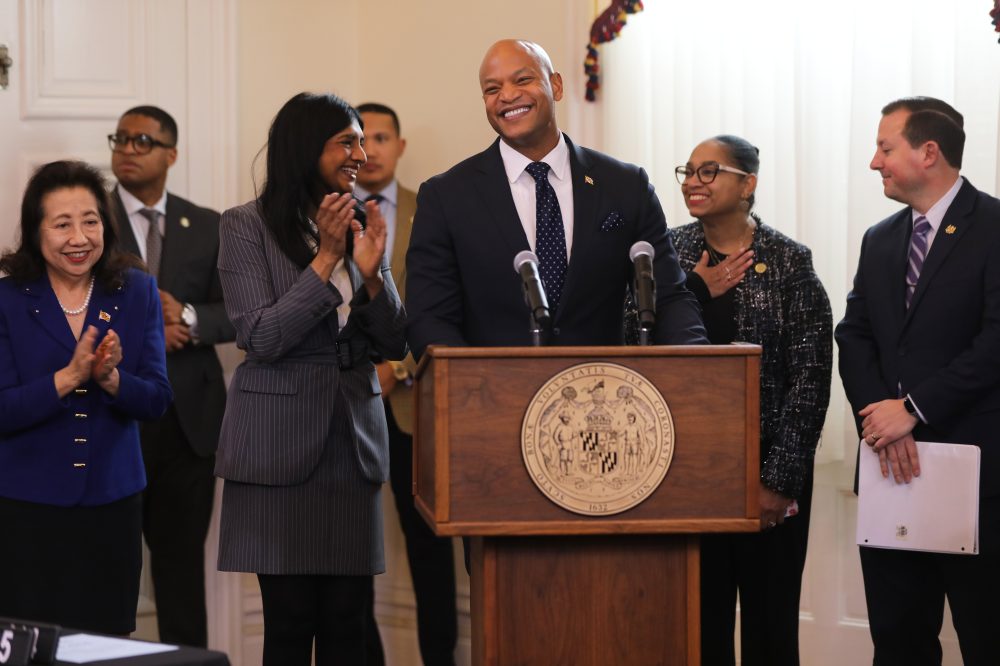
This practice ends immediately following legislation enacted Tuesday by Democratic Governor Wes Moore, which bans immigration enforcement partnerships between local agencies and federal authorities.
Maryland’s new statute demonstrates how Democratic-controlled states are resisting President Donald Trump’s immigration enforcement expansion. A total of ten states, all under Democratic leadership, have implemented statewide restrictions preventing law enforcement from participating in key programs Trump uses for mass deportation efforts.
Similar legislation prohibiting ICE cooperation agreements became law this month in New Mexico and took effect in January in Maine. New York Governor Kathy Hochul supports comparable measures that would prevent local officers from receiving ICE deputization. Virginia Governor Abigail Spanberger recently ended state-level ICE partnerships established by her Republican predecessor, though local sheriff agreements remain intact.
Democratic opposition has intensified as the Trump administration faces growing criticism over large-scale enforcement operations in multiple cities and the deadly shootings of Renee Good and Alex Pretti by federal agents in Minnesota.
“There needs to be accountability for this organization, because right now the Trump-Vance ICE operation is not moving with proper accountability measures,” Moore stated to reporters following the signing ceremony.
Frederick County’s longtime Republican sheriff argues that ending the ICE partnership will require releasing individuals who might subsequently commit additional offenses.
“I’m extremely disappointed with the legislation,” Jenkins said, “because really and truly, it’s going to put the public at risk in a lot of ways.”
After assuming office last year, Trump reinstated a decades-old initiative that provides local officers with training to question and detain suspected undocumented immigrants.
The 287(g) initiative — referencing the 1996 legislation that established it — operated under President Joe Biden’s administration solely for immigrants already in custody on criminal charges. Trump broadened its scope to include local task forces authorized to conduct street arrests, reviving an approach that former President Barack Obama had ended due to racial profiling concerns.
Program participation has surged dramatically, growing from 135 agreements across 20 states before Trump’s presidency to over 1,400 current agreements spanning 41 states and territories. Some local departments maintain multiple agreements covering various immigration enforcement functions.
Approximately 800 agencies hold task force agreements, providing the broadest enforcement authority. As incentive, ICE provides local agencies signing task force agreements with $100,000 for new vehicles. For each trained task force officer, ICE covers salary, benefits and $7,500 in equipment costs.
Four Republican-led states — Arkansas, Florida, Georgia and Texas — mandate local jail participation in the program. These states represent half of all 287(g) agreements nationwide.
The expansion of ICE partnerships coincides with increased federal immigration enforcement funding. A major tax reduction law signed by Trump last year allocates $150 billion for immigration enforcement, including over $46 billion to recruit 10,000 ICE agents and $45 billion for expanded immigrant detention facilities.
Nine Maryland counties led by Republican sheriffs maintain cooperative ICE agreements. These partnerships must cease under the new law, which passed with overwhelming support in the Democratic-controlled General Assembly.
Maryland House Speaker Joseline Peña-Melnyk, who arrived from the Dominican Republic at age 8, described the legislation as reflecting Maryland’s commitment to civil rights.
“We value empathy,” she stated. “We value peoples’ contribution. We value the Constitution. We value and support and protect civil rights.”
However, some Republican sheriffs and legislators warn that prohibiting cooperative agreements may prompt ICE to deploy more federal agents within the state.
“I think what you’ll see is more immigrant enforcement, not less,” said Harford County Sheriff Jeffrey Gahler, whose department has transferred approximately 430 inmates to ICE over nine years. “Our program was the safest way and the best way to identify people” in the U.S. illegally.
The Department of Homeland Security claimed the new law “will make Maryland less safe” and increase federal workload in the state.
“When politicians bar local law enforcement from working with DHS, our law enforcement officers have to have a more visible presence so that we can find and apprehend the criminals let out of jails and back into communities,” the department stated.
An AP-NORC poll indicates approximately 60% of U.S. adults believe Trump has “gone too far” in deploying federal immigration agents to American cities, with political independents showing increasing discomfort with his methods.
“The growing public pushback against Trump’s immigration enforcement – especially in more Democratic-leaning states – has created political pressure and a political opening to pass laws like the one in Maryland,” said Nayna Gupta, policy director at the nonprofit American Immigration Council.
Tuesday saw Virginia’s Senate approve legislation along party lines establishing significant restrictions on proposed 287(g) agreements. The measure still requires House approval.
“I’m seeking to give some comfort to thousands of men, women and children in the Commonwealth who are living in fear that federal agents might send them or their family members to a country they fled, or a country they have never been to,” said Democratic state Senator Saddam Azlan Salim, the bill’s sponsor.
New Mexico lawmakers also referenced intensive immigration enforcement activities in Minnesota when justifying limits on ICE cooperation. The New Mexico legislation prohibits state and local government contracts for ICE detention facilities and eliminates agreements allowing local officers to perform federal immigration duties.
Curry County, located roughly 100 miles southwest of Amarillo, Texas, represents New Mexico’s sole jurisdiction with a 287(g) agreement. Sheriff Michael Brockett explained the arrangement provides secure transfer methods to ICE custody, “rather than federal agents searching for released prisoners on the streets and in neighborhoods of our community.”
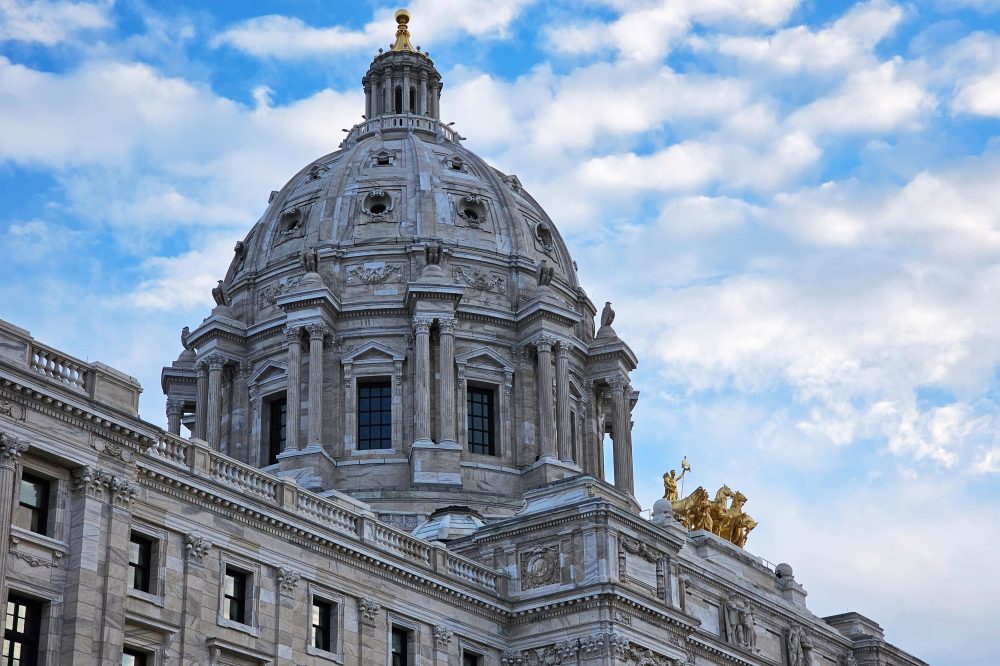
ST. PAUL, Minn. — As Minnesota’s legislative session begins Tuesday, Democratic lawmakers are pushing to limit the authority of federal immigration enforcement agents within state borders, while their Republican counterparts plan to concentrate on eliminating fraud in government-funded programs that President Donald Trump referenced when defending recent immigration operations.
According to White House border czar Tom Homan, over 1,000 federal officers have already departed the Minneapolis-St. Paul region this past weekend, with hundreds more expected to leave soon. However, the political consequences of these enforcement actions will continue to shape discussions at the state capitol throughout the session, which extends into late May.
Passing meaningful legislation may prove challenging given the legislature’s narrow partisan divide. Republicans control the House with a tied chamber and Republican speaker, while Democrats maintain just a single-seat advantage in the Senate. This means any bill requires support from both parties to advance. Adding complexity, this year brings elections for all 201 legislative positions, and House Speaker Lisa Demuth, who is seeking the Republican gubernatorial nomination, hopes to secure Trump’s backing.
“There are definitely going to be priorities on both sides of the aisle. … But when it comes right down to it, we need to have bipartisan votes to move bills through the committees and get the work done for Minnesotans,” Demuth told reporters Monday.
Enhanced security measures are now in place at the capitol following last summer’s tragic assassination of former Democratic House Speaker Melissa Hortman and her spouse. All visitors must now pass through weapons detection screening.
Democratic Governor Tim Walz announced a $10 million assistance package last week to help small businesses that suffered customer and employee losses during the federal enforcement operations, with additional aid proposals potentially forthcoming.
Prior to the session’s start, Democratic legislators in both chambers introduced eleven separate bills designed to address what they view as federal immigration officers’ most problematic actions during the recent surge.
The proposed measures would prohibit federal agents from entering schools, daycare facilities, medical centers, and universities. Additional provisions would ban federal officers from concealing their faces with masks while mandating clearly visible identification. The legislation would also require federal authorities to include state investigators in probes of officer-involved shootings, including the deaths of Renee Good and Alex Pretti. State officials remain excluded from these investigations, with the FBI formally notifying Minnesota Monday that it will not provide information or evidence from the Pretti death investigation.
House Democratic leader Zack Stephenson acknowledged they don’t anticipate backing from Republican leadership but hope individual GOP members might cross party lines.
“What we’ve seen these last six weeks has been so exceptional, so damaging, that I don’t know how you can be human and not respond to it,” Stephenson said. “But even if it’s not that, we also know it’s an election year and voters are watching, and voters will hold people accountable if they don’t stand up to this administration.”
Stephenson recognized that any state-imposed limitations on federal law enforcement would likely face court challenges.
“But some things are worth fighting for,” Stephenson added. “And if we’re not going to fight for this, what are we doing here?”
Republicans show minimal interest in confronting federal authorities and prefer redirecting attention toward anti-fraud efforts.
“Minnesotans want our state and local law enforcement to cooperate with federal immigration enforcement,” said Rep. Harry Niska, the House’s second-ranking Republican.
A primary Republican anti-fraud goal involves establishing an independent Office of Inspector General to investigate and prevent public fund misuse. The Senate approved similar legislation last year with bipartisan support in a 60-7 vote. House Democratic leadership prevented a floor vote at the previous session’s conclusion, but the proposal returns this year.
Republicans also seek greater accountability measures for agencies and officials who allow fraud to occur under their oversight.
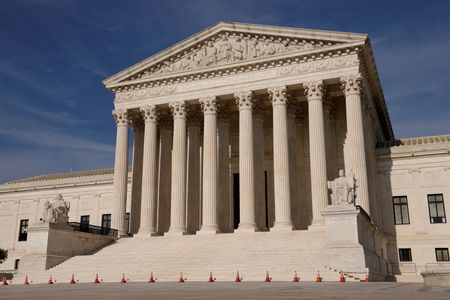
The nation’s highest court revealed Tuesday it has implemented automated technology designed to flag potential ethical conflicts among the nine justices, who maintain the final say on whether to remove themselves from cases.
Developed by the court’s IT department working alongside other staff members, this new system will cross-reference details about attorneys and case participants with information supplied by each justice’s chambers, according to a court representative.
Court officials described these “automated recusal checks” as an addition to current methods justices use when evaluating possible conflicts of interest.
Last year, the Supreme Court established its inaugural formal ethics guidelines governing justice behavior. However, critics highlighted the lack of enforcement tools and the continued practice allowing individual justices to personally determine whether to recuse themselves from cases.
According to the court’s ethical standards, justices must step aside from cases where their “impartiality might reasonably be questioned.”
Supporting this technological upgrade, the court announced enhanced documentation standards for certain legal filings, requiring more comprehensive listings of case participants and applicable stock symbols when appropriate. These updated filing rules become effective March 16.
Gabe Roth from Fix the Court advocacy organization described the announcement as “somewhat positive,” while expressing his broader concerns about justices maintaining stock portfolios during their service.
“The court wrote at the end of the code that it would ‘undertake an examination of best practices’ on judicial ethics, and the use of conflict-check software is a best practice,” Roth said, noting software-based checks have long been used by lower courts.
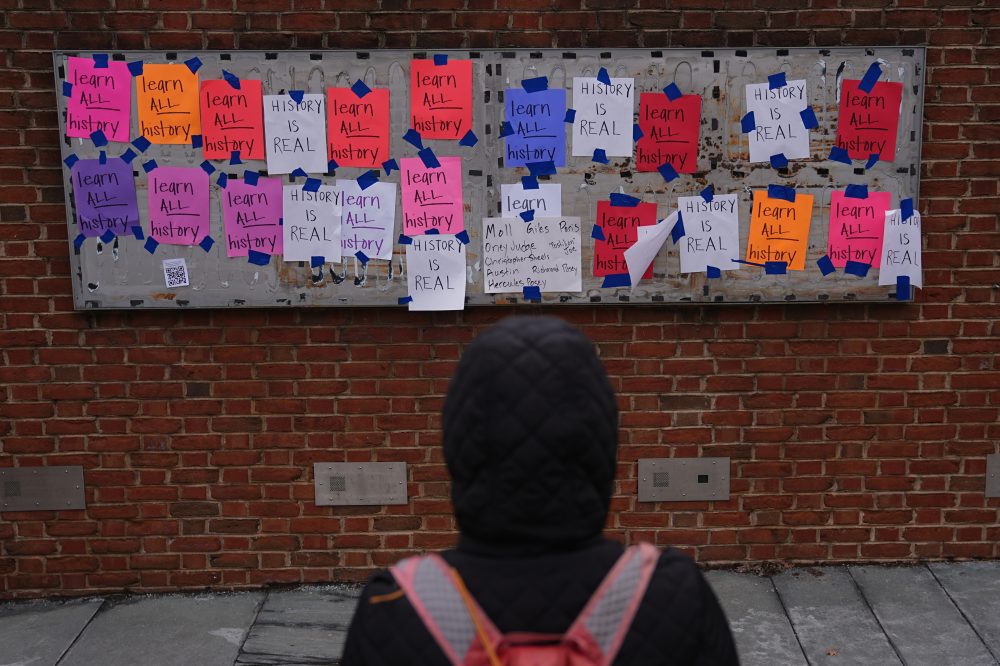
Six organizations dedicated to park conservation, historical preservation, and scientific education launched legal action Tuesday to halt the Trump administration’s efforts to eliminate informational materials from national parks and monuments, following the removal of displays addressing subjects including slavery and climate science.
The National Parks Conservation Association, American Association for State and Local History, and four additional organizations filed their federal court challenge in Boston, contending that the U.S. Department of the Interior is conducting a “sustained campaign to erase history and undermine science.”
According to the legal filing, the department is eliminating signage and displays from parks in direct violation of congressional directives that govern operations at more than 430 national park locations, implementing an unlawful policy without providing reasonable justification for the removals.
“Censoring science and erasing America’s history at national parks are direct threats to everything these amazing places, and our country, stand for,” stated Alan Spears, senior director of cultural resources at the National Parks Conservation Association.
The Interior Department has not provided a response to requests for comment.
This legal challenge represents one of two court cases filed Tuesday targeting modifications the department has made to national monuments and parks under its oversight as part of Trump’s broader policy agenda.
Multiple community organizations initiated separate litigation in New York, claiming the department illegally removed Pride flags from the Stonewall National Monument, which stands as the nation’s first national monument honoring the LGBTQ rights movement.
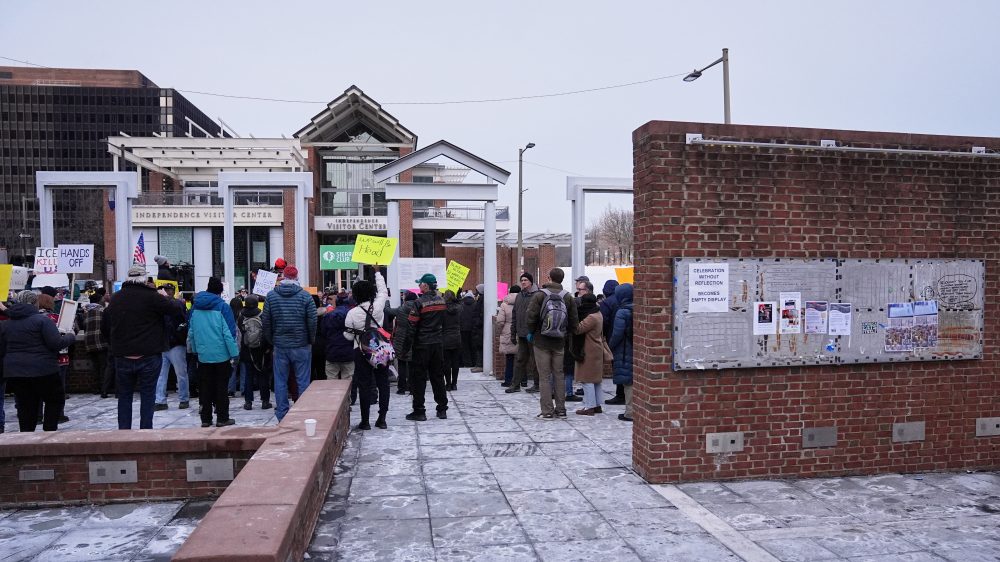
The Boston court filing came one day after a Pennsylvania federal judge mandated that the National Park Service restore a display that had been taken down from the President’s House Site at Independence National Historical Park in Philadelphia, which detailed the history of slavery and President George Washington’s ownership of enslaved individuals.
Tuesday’s legal action indicated that this particular exhibit was among multiple displays removed following Trump’s executive order signed in March 2025, which targeted what he described as a “revisionist movement” that depicted the United States as “inherently racist, sexist, oppressive, or otherwise irredeemably flawed.”
Trump’s directive instructed the Interior Department to restore parks, monuments, and memorials that had been altered or removed to combat what the White House characterized as a “false revision of history.”
The lawsuit states that after Interior Secretary Doug Burgum issued subsequent orders implementing Trump’s directive, the National Park Service identified hundreds of signs and materials that it has started removing from parks across the country.
These removals include signage at Maine’s Acadia National Park that explained climate change’s effects on the park and discussed the cultural importance of Cadillac Mountain to the Wabanaki people, who are native to that region.
WASHINGTON – Federal transportation officials have freed up an additional $77 million in previously frozen funding for the massive $16 billion Hudson Tunnel Project, New York Governor Kathy Hochul announced on Tuesday.
The funding release follows legal action taken by New York and New Jersey after the U.S. Department of Transportation withheld $205 million designated for the tunnel project starting October 1st. Combined with $30 million released last Friday, federal officials have now provided $107 million of the disputed funds.
Despite the partial funding restoration, work on the major infrastructure project remains at a standstill. The Gateway Development Commission, the agency managing the tunnel construction, stated Tuesday they are actively working to “get workers back on the job to resume some construction as soon as possible.”
NEW YORK — President Trump’s family business has submitted federal trademark applications seeking exclusive control over using his name on airports, though the company states it won’t charge fees for at least one proposed airport renaming in Florida.
The Trump Organization’s filings with the federal trademark office request sole rights to the president’s name on airports and numerous airport-related items, including passenger shuttle buses, umbrellas, luggage, and flight suits. These applications come as Florida lawmakers debate legislation to rename Palm Beach airport after Trump, while separate disputes involve funding for a New York-New Jersey tunnel linked to proposals naming both that project and Virginia’s Dulles International Airport after the president.
According to the Trump Organization, the Florida legislation prompted these trademark applications, with the company emphasizing it seeks no financial gain — only defense against “bad actors” since the Trump name represents the “most infringed trademark in the world.”
“To be clear, the President and his family will not receive any royalty, licensing fee, or financial consideration whatsoever from the proposed airport renaming,” the company stated, referencing what’s currently known as Palm Beach International Airport, located near Trump’s Mar-a-Lago resort.
When questioned about potential future royalty charges for Trump’s name at other airports or on merchandise covered in the filings, the company didn’t provide an immediate response.
Trademark attorney Josh Gerben, who discovered these filings over the weekend, described the applications as unprecedented in his experience.
“While presidents and public officials have had landmarks named in their honor, a sitting president’s private company has never in the history of the United States sought trademark rights in advance of such naming,” Gerben explained on his blog. “I should be very clear: these are trademark filings that are completely unprecedented.”
The applications submitted by DTTM Operations, a Trump family company division, to the U.S. Patent and Trademark Office cover three variations — President Donald J. Trump International Airport, Donald J. Trump International Airport and DJT.
Over the past year, the family has expanded their branding efforts, attaching the Trump name to towers, golf facilities and housing projects across Dubai, India, Saudi Arabia and Vietnam. The company has additionally marketed Trump-branded electric guitars, bibles and sneakers through the same DTTM division.
Addressing concerns about profiting from his presidency, Trump has maintained that his business operates under a trust managed by his sons, with no direct daily involvement from him.
A federal judge has blocked Immigration and Customs Enforcement from taking back into custody a Salvadoran man residing in Maryland, determining that the mandatory 90-day detention window has lapsed and federal officials lack a realistic deportation strategy.
Kilmar Abrego Garcia’s situation has emerged as a significant case in ongoing immigration discussions following his erroneous deportation to El Salvador in the previous year. Upon his return to the United States, he has been contesting efforts by Department of Homeland Security personnel to send him to multiple African nations.
U.S. District Judge Paula Xinis of Maryland criticized the government’s approach in her Tuesday ruling, stating they “made one empty threat after another to remove him to countries in Africa with no real chance of success.” She concluded that “there is no ‘good reason to believe’ removal is likely in the reasonably foreseeable future.”
The man maintains family ties in America through his wife and child and has established residence in Maryland over several years, though he originally entered the country without authorization as a minor. A 2019 immigration court decision determined he could not be sent back to El Salvador due to gang-related threats against his family there, yet he was incorrectly deported regardless.
Under mounting public criticism and judicial pressure, the Trump administration facilitated his return in June, though only after obtaining criminal charges against him for alleged human trafficking activities in Tennessee. He has entered a not guilty plea to these charges. Administration officials maintain he cannot remain in the United States permanently and have indicated plans to deport him to Uganda, Eswatini, Ghana, or Liberia according to court documents.
Judge Xinis highlighted in her decision that the government has “purposely—and for no reason—ignored the one country that has consistently offered to accept Abrego Garcia as a refugee, and to which he agrees to go,” referring to Costa Rica.
His legal representative, Simon Sandoval-Moshenberg, contended during proceedings that immigration detention should not function as punishment. He argued that immigrants may only be held to enable their removal and cannot be confined indefinitely without a realistic deportation strategy.
“Since Judge Xinis ordered Mr. Abrego Garcia released in mid-December, the government has tried one trick after another to try to get him re-detained,” Sandoval-Moshenberg stated in a Tuesday email. “In her decision today, she recognized that if the government were truly trying to remove Mr. Abrego Garcia from the United States, they would have sent him to Costa Rica long before today.”
Television host Stephen Colbert announced Monday evening that CBS legal representatives blocked the broadcast of his conversation with Texas Democratic State Representative James Talarico, who seeks his party’s U.S. Senate nomination.
During Monday’s episode of “The Late Show,” Colbert stated, “Donald Trump’s administration wants to silence anyone who says anything bad about Trump on TV, because all Trump does is watch TV.”
The Federal Communications Commission, now under Republican leadership, announced last month that daytime and evening talk programs no longer qualify as legitimate news shows exempt from equal opportunity regulations. These rules mandate that broadcasters provide comparable airtime to competing political candidates.
Colbert directed criticism toward FCC Chairman Brendan Carr and CBS attorneys, arguing they implemented Carr’s policy for “purely financial reasons.”
This explanation mirrors Paramount’s justification when announcing in July that Colbert’s show would conclude in May while the company pursues FCC approval for its $8.4 billion acquisition by Skydance Media.
News organizations reported earlier this month that the FCC launched an inquiry into whether ABC’s daytime program “The View” violated equal time regulations following Talarico’s guest appearance.
President Donald Trump has consistently urged Carr to challenge U.S. television networks and has denounced what he perceives as biased reporting.
The blocked interview appeared on the show’s YouTube channel, accumulating approximately one million views by 11 a.m. Eastern Time.
Before January, talk show programs qualified for equal opportunity exemptions as legitimate news interviews, following a 2006 FCC Media Bureau decision regarding Jay Leno’s “The Tonight Show” interview segments.
Television networks have used this precedent to justify recent candidate interviews.
Neither Carr, Paramount Skydance, nor CBS responded to comment requests regarding Colbert’s statements. The White House declined commentary.
Democratic FCC Commissioner Anna Gomez condemned CBS’s choice to withhold the interview, characterizing it as censorship. She emphasized that the FCC lacks legal power to pressure broadcasters for political motives and that CBS maintains free speech protections to broadcast the conversation.
“This represents another concerning instance of corporate surrender to this administration’s extensive effort to censor and manipulate speech,” Gomez stated. “While Paramount, CBS’s parent corporation, faces regulatory matters with the government, business interests cannot excuse withdrawing newsworthy programming.”
Paramount Skydance currently pursues the acquisition of Warner Bros Discovery.
Carr encountered bipartisan opposition after demanding broadcasters remove ABC late-night host Jimmy Kimmel in September, threatening penalties or license revocation, declaring “it’s time for them to step up.”
Two prominent broadcasters agreed to remove Kimmel, and Disney temporarily suspended his program before reinstatement. In December, Democratic Senator Tammy Baldwin of Wisconsin confronted Carr, stating “you used your position within the federal government to take Jimmy Kimmel off the air in a clear attempt to chill free speech.”
WASHINGTON — Federal prosecutors have delivered additional subpoenas as part of a Florida-based probe examining the government’s handling of Russian meddling in the 2016 presidential race, sources with knowledge of the investigation tell the Associated Press.
The initial round of subpoenas sent out in November sought documents connected to the creation of an intelligence community report that outlined Russia’s comprehensive campaign to assist Trump in defeating Hillary Clinton during the 2016 election.
While the earlier subpoenas focused on materials from around the January 2017 release of the intelligence report during the Obama administration’s final days, these newer legal demands are seeking any documentation from the years that followed, according to sources who requested anonymity when discussing the non-public investigative requests.
The Justice Department refused to provide comment on Tuesday.
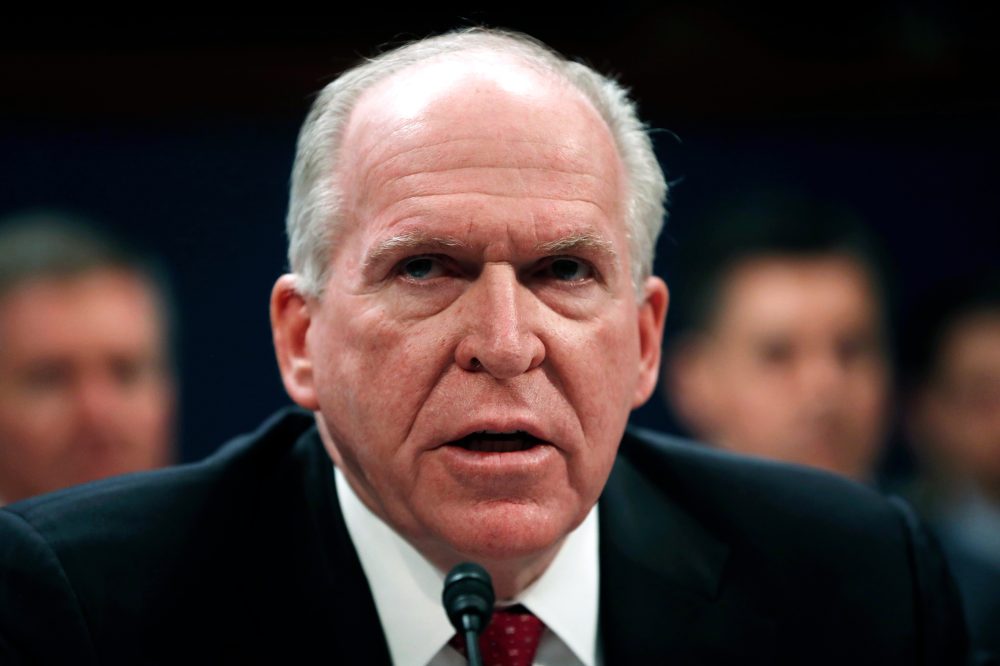
These subpoenas demonstrate ongoing investigative work in one of multiple criminal probes the Justice Department has launched targeting Trump’s political adversaries. Various former intelligence and law enforcement leaders have received subpoenas in this investigation. Legal representatives for former CIA Director John Brennan, who supervised the intelligence assessment’s creation and whom Trump has labeled “crooked as hell,” stated they’ve been notified he’s a target but haven’t been given any “legally justifiable basis for undertaking this investigation.”
The intelligence community report, released during the Obama administration’s closing days, determined that Russia had formed a “clear preference” for Trump in 2016 and that Vladimir Putin had directed an influence operation designed to weaken faith in American democratic processes and damage Clinton’s electoral prospects.
This finding, along with a separate probe into potential coordination between Trump’s 2016 campaign and Russia, have remained among the Republican president’s primary complaints, and he has promised payback against government officials who participated in these inquiries. The Trump administration’s Justice Department indicted former FBI Director James Comey last year on charges of making false statements and obstruction, though the case was subsequently dropped.
Several government investigations, including bipartisan congressional studies and former special counsel Robert Mueller’s criminal probe, have confirmed that Russia interfered to benefit Trump through hacking and releasing Democratic emails and conducting a hidden social media operation designed to create division and influence American voters. Mueller’s investigation concluded that Trump’s campaign eagerly accepted Russian assistance, but didn’t prove that Russian agents and Trump or his team conspired to manipulate the election outcome.
The Trump administration has recently reexamined the intelligence community assessment partly because a classified section included a summary of the “Steele dossier,” a collection of Democratic-funded opposition research compiled by former British intelligence officer Christopher Steele and subsequently provided to the FBI. This research into Trump’s possible Russian connections contained unverified claims and scandalous allegations, and Trump has consistently highlighted its flaws to undermine the entire Russia investigation.
A declassified CIA review commissioned by current Director John Ratcliffe and published last July criticizes Brennan’s supervision of the assessment.
The review doesn’t dispute the finding of Russian election meddling but criticizes Brennan for allowing the classified version to reference the Steele dossier.
Brennan told Congress, and also stated in his book, that he opposed including the dossier in the intelligence assessment because its content and sources hadn’t been verified, and he has maintained the dossier didn’t influence the assessment’s conclusions. He claims the FBI advocated for its inclusion.
The recent CIA review attempts to portray Brennan’s position differently, claiming he “showed a preference for narrative consistency over analytical soundness” and ignored dossier concerns because he felt it aligned “with existing theories.” It cites him, without providing context, as stating in writing that “my bottomline is that I believe that the information warrants inclusion in the report.”
In a December letter sent to the chief judge of the Southern District of Florida, where the investigation is headquartered, Brennan’s attorneys questioned the investigation’s foundation, asking what justification prosecutors had for launching the inquiry in Florida and noting they had received no explanation from prosecutors about what potential crimes were being examined.
“While it is mystifying how the prosecutors could possibly believe there is any legally justifiable basis for undertaking this investigation, they have done nothing to explain that mystery,” the lawyers said.
Television host Stephen Colbert disclosed that CBS network attorneys blocked his scheduled interview with Texas Democratic Senate hopeful James Talarico from appearing on Monday evening’s program due to concerns about violating federal broadcasting regulations regarding equal time for political candidates.
During his program “The Late Show with Stephen Colbert,” the host explained the situation to viewers. “He was supposed to be here, but we were told in no uncertain terms by our network’s lawyers, who called us directly, that we could not have him on the broadcast,” Colbert stated.
The comedian went on to reveal additional restrictions placed on the discussion. “Then I was told, in some uncertain terms, that not only could I not have him on, I could not mention me not having him on. And because my network clearly doesn’t want us to talk about this, let’s talk about this.”
The incident occurred just as early voting commenced in Texas primary elections, highlighting how media organizations are adapting to revised broadcasting regulations implemented during the Trump administration that govern political candidate interviews.
Talarico shared portions of the conversation on social media platforms, describing it as “the interview Donald Trump didn’t want you to see.”
While broadcasters have long been subject to equal time requirements for political candidates, these regulations historically did not extend to talk show programming. However, the Federal Communications Commission released updated guidance in January, alerting late-night and daytime television hosts that they must now provide equal access to political candidates. FCC Chairman Brendan Carr challenged the previous talk show exemption, suggesting hosts were acting with “partisan purposes.”
The FCC’s public notice stated: “The FCC has not been presented with any evidence that the interview portion of any late night or daytime television talk show program on air presently would qualify for the bona fide news exemption.”
Colbert pointed out that equal time rules apply only to traditional broadcast television, not streaming services. As a result, his approximately 15-minute conversation with Talarico appeared on his show’s YouTube channel instead, with the host specifically noting the segment would only be available online rather than on television.
On social media platform X, Talarico posted a brief excerpt from their discussion, writing: “This is the interview Donald Trump didn’t want you to see. His FCC refused to air my interview with Stephen Colbert. Trump is worried we’re about to flip Texas.”
Neither CBS nor the FCC provided immediate responses to requests for comment on Tuesday.
Texas voters began early voting Tuesday in races where Talarico and Representative Jasmine Crockett are among Democrats competing for the U.S. Senate position currently occupied by four-term Republican Senator John Cornyn. The primary election is scheduled for March 3.
Chairman Carr, whom Trump selected to head the agency last year, has frequently targeted network talk shows with criticism. He previously suggested that investigating ABC’s “The View” — whose hosts regularly critique Trump — regarding the exemption could be “worthwhile.”
Colbert’s tenure as host is approaching its end, following CBS’s decision last year to conclude his program in May due to financial considerations, ending a long-running television tradition amid an evolving media environment.
However, the timing of that cancellation announcement — occurring three days after Colbert criticized an agreement between Trump and Paramount Global, CBS’s parent company, concerning a “60 Minutes” report — prompted two U.S. senators to publicly question the decision’s motivations, as it removes one of Trump’s most vocal and consistent late-night television critics from the airwaves.
WASHINGTON — Multiple conservation and historical organizations filed a federal lawsuit Tuesday challenging National Park Service policies they claim are eliminating historical facts and scientific information from America’s national parks.
The Boston-filed legal action alleges that directives from President Donald Trump and Interior Secretary Doug Burgum have compelled park officials to eliminate or modify displays containing accurate historical information and scientific data, particularly regarding slavery and climate change.
These exhibit modifications followed a Trump executive directive aimed at “restoring truth and sanity to American history” throughout the nation’s museums, parks and historic sites. The order instructed the Interior Department to prevent these locations from featuring content that “inappropriately disparage Americans past or living.”
According to the plaintiff organizations, this review initiative has intensified recently, resulting in the elimination of multiple displays covering slavery history, civil rights, Indigenous peoples’ treatment, climate science, and other “core elements of the American experience.”
The legal challenge involves a coalition including the National Parks Conservation Association, American Association for State and Local History, Association of National Park Rangers and Union of Concerned Scientists. This lawsuit follows Monday’s federal court ruling requiring restoration of an exhibit about nine individuals enslaved by George Washington at his former Philadelphia residence.
Park officials eliminated informational displays last month from Independence National Historical Park, where George and Martha Washington resided with nine enslaved people during the 1790s when Philadelphia served as the temporary national capital. The judge mandated exhibit restoration by Presidents Day, the federal holiday celebrating Washington’s legacy.
Beyond the Philadelphia situation, park officials have identified civil rights movement interpretive materials for elimination, according to the organizations. At Alabama’s Selma to Montgomery National Historic Trail, approximately 80 items face removal.
Officials have targeted the permanent display at Kansas’s Brown v. Board of Education National Historical Park for mentioning “equity,” the lawsuit states. A Pride flag was eliminated from New York City’s Stonewall National Monument. Missing signage from Grand Canyon National Park previously described how settlers forced Native American tribes “off their land” for park establishment and “exploited” the terrain for mining and grazing.
“Censoring science and erasing America’s history at national parks are direct threats to everything these amazing places, and our country, stand for,” stated Alan Spears, senior director of cultural resources at the parks conservation association.
“National parks serve as living classrooms for our country, where science and history come to life for visitors,” Spears continued. “As Americans, we deserve national parks that tell stories of our country’s triumphs and heartbreaks alike. We can handle the truth.”
The Interior Department did not provide immediate comment.
U.S. District Judge Cynthia Rufe ordered Monday that all Philadelphia exhibit materials must return to their original state while legal proceedings continue regarding the removal’s legitimacy. She barred Trump officials from installing alternative displays explaining the history differently.
Rufe, appointed by Republican President George W. Bush, opened her written decision with a quote from George Orwell’s dystopian novel “1984” and drew comparisons between the Trump administration and the book’s authoritarian Ministry of Truth, which altered historical records to match its preferred narrative.
Delaware residents now have the opportunity to gain behind-the-scenes access to the state’s prison system through a new educational initiative launching this spring.
The Delaware Department of Correction is currently accepting applications for its Spring 2026 Citizens Academy, a comprehensive six-week educational program scheduled to commence Tuesday, April 14, in New Castle County.
This evening program will run for six consecutive weeks, providing participants with an in-depth understanding of how Delaware’s correctional facilities operate. The academy represents an effort by state corrections officials to increase transparency and community engagement with the prison system.
Delaware residents interested in learning more about the inner workings of the state’s correctional operations can apply for this unique educational opportunity that promises to provide insider access typically not available to the general public.
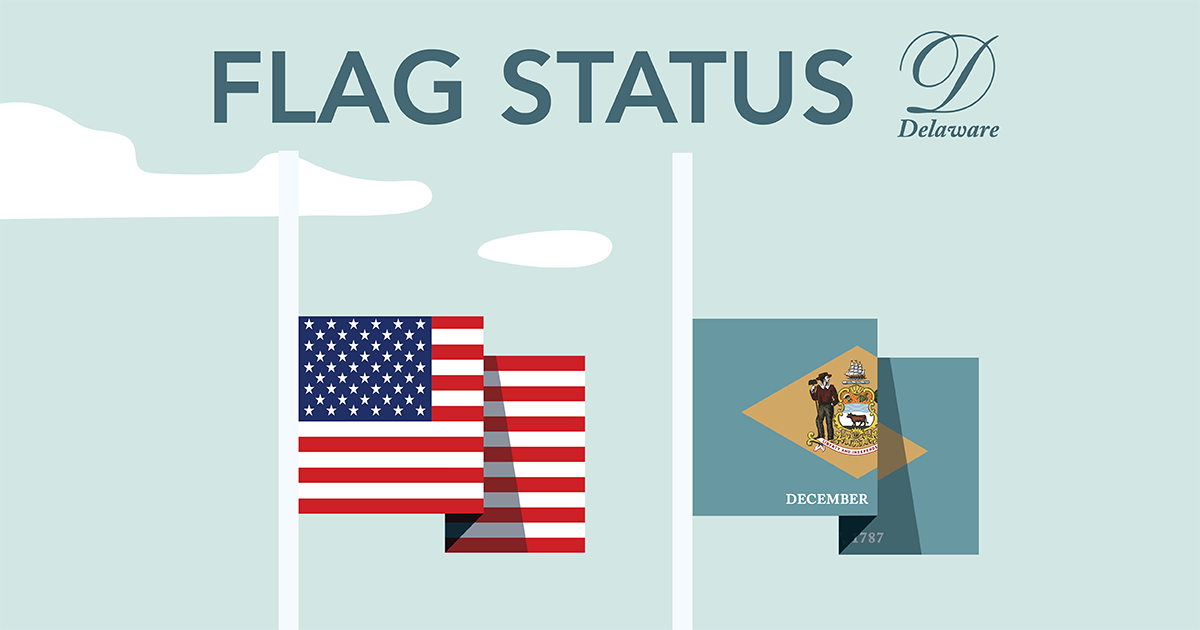
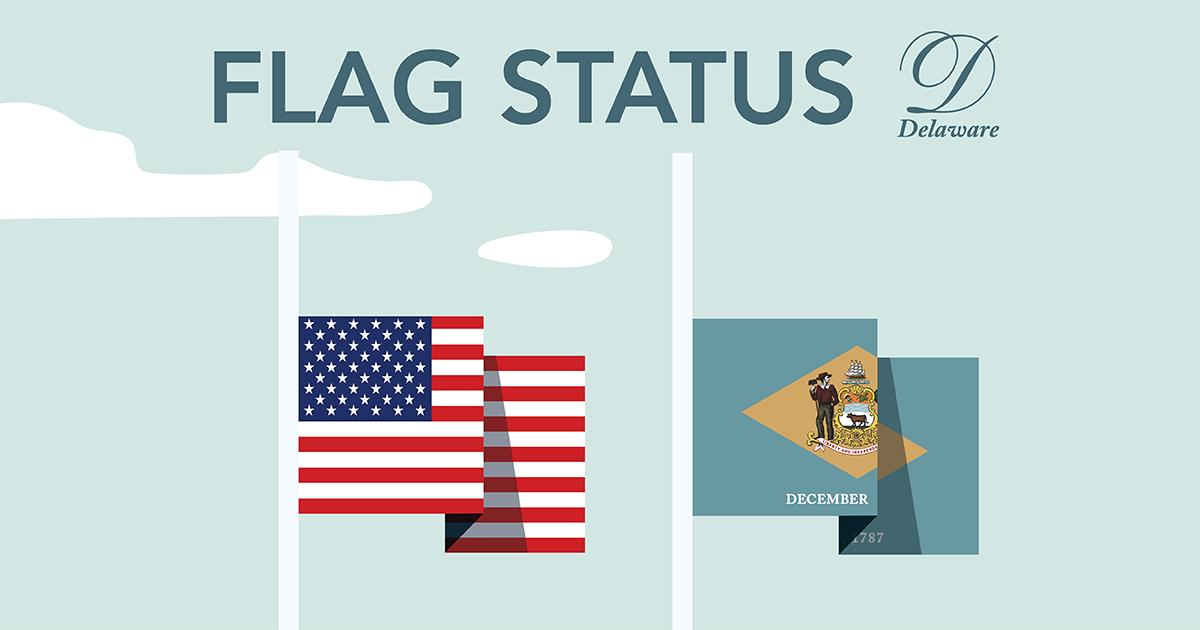
WILMINGTON — Delaware’s state flags will fly at half-staff at government buildings and facilities across the state following an order from Governor Matt Meyer to pay tribute to three prominent figures who recently passed away.
The governor’s directive honors two former Delaware state lawmakers, George Bunting and John Viola, who both died within the past week. The flag lowering also recognizes the life and legacy of Rev. Jesse Jackson.
State facilities throughout Delaware will participate in this gesture of remembrance for the former legislators, who served the people of Delaware during their time in the General Assembly.
WILMINGTON — Delaware Governor Matt Meyer has issued an order directing all state government buildings and facilities to lower their flags to half-staff this week in tribute to two former Delaware lawmakers who died recently.
The flag directive honors George Bunting and John Viola, both former members of the Delaware General Assembly who passed away within the past week. The governor’s order also calls for flags to be lowered in memory of Rev. Jesse Jackson, recognizing his lifetime of service and impact.
State facilities across Delaware will display flags at half-staff as a mark of respect for the three individuals and their contributions to public service and community leadership.
President Trump issued a statement commemorating civil rights pioneer Susan B. Anthony, describing the 19th-century activist as a champion of human rights and dignity. In his remarks, Trump praised the suffragette leader, stating she was “a true American giant and an unwavering advocate for the cause of human dignity. We recommit to the timeless truth she spent her life defending: that every human being is made in the holy image of God.”
Anthony, who entered the world as a member of the Quaker faith in 1820, dedicated her entire adult life to championing multiple social justice movements, most notably the fight to abolish slavery and secure voting rights for women. The historical figure became one of America’s most recognized voices in the struggle for civil liberties during the 1800s.
A yearly study released by National Right to Life shows that roughly two-thirds of abortion procedures across the United States now involve medication rather than surgical methods, with these pharmaceutical options available for delivery throughout the nation. The organization’s latest findings indicate that 25 states have taken steps to protect abortion access through legislation or constitutional amendments, while the remaining 25 states have implemented significant limitations on the procedure, with some states enacting near-total prohibitions.
The partial federal government shutdown affecting the Department of Homeland Security shows no signs of ending soon, as neither Congress nor the White House indicated any willingness to compromise during the holiday weekend. The shutdown started Saturday when Democratic lawmakers and President Trump’s administration couldn’t agree on funding legislation to keep DHS operational through September.
The political standoff centers on Democratic calls for immigration enforcement reforms following last month’s deadly shootings of two American citizens, Alex Pretti and Renee Good, by federal agents in Minneapolis.
This shutdown differs significantly from the lengthy 43-day closure that occurred last fall, as it only impacts DHS-related agencies. Affected departments include the Transportation Security Administration, Coast Guard, Immigration and Customs Enforcement, and Customs and Border Protection. However, ICE and CBP operations will largely continue thanks to billions in additional funding provided through Trump’s 2025 tax and spending legislation.
With Congress in recess until February 23, both political parties appear firmly entrenched in their respective positions. The funding dispute impacts multiple agencies including TSA, the Federal Emergency Management Agency, Coast Guard, Secret Service, ICE, and CBP.
Democratic leaders are pushing for comprehensive changes to immigration enforcement procedures following the fatal officer-involved shootings. Their demands include mandatory body cameras for immigration agents and requiring judicial warrants before making arrests on private property.
White House border czar Tom Homan stated the administration would not accept Democratic requirements for federal officers to clearly identify themselves, remove face coverings during operations, and wear unique identification numbers.
Despite the shutdown, ICE and CBP deportation activities continue without interruption due to the additional funding secured through Trump’s 2025 tax and spending legislation.
Each federal agency determines which employees are classified as “essential” or “excepted” – both terms meaning these workers must continue their duties during shutdowns, though they typically work without pay until funding resumes.
Essential personnel include military members, airport security staff, and law enforcement officers. The designation can cover various roles, from those critical to public safety to positions legally authorized to operate without new appropriations.
More than 270,000 DHS employees are considered essential, meaning they remain on duty during the shutdown. During the fall 2025 shutdown, over 258,000 DHS workers stayed on the job while approximately 22,000 – about 5% of the workforce – were furloughed.
The Secret Service and FEMA are also experiencing disruptions from the shutdown.
Most Secret Service and Coast Guard personnel will continue working, though they may miss paychecks if the shutdown extends. At FEMA, the closure hampers the agency’s ability to reimburse states for disaster relief expenses. Some FEMA workers face furloughs, reducing coordination capabilities with state and local partners. Training programs for first responders at Maryland’s National Disaster and Emergency Management University have been suspended.
The current situation developed because Trump agreed to Democratic requests to separate Homeland Security funding from a larger spending bill, allowing additional time to negotiate immigration enforcement changes including agent conduct standards and identification requirements. DHS received only temporary funding through Friday.
The remainder of federal government operations are funded through September 30, meaning most federal programs remain unaffected by this shutdown. Food assistance programs continue, and most federal workers and military personnel will receive their regular pay.
WILMINGTON — Delaware Governor Matt Meyer has directed that flags at all state properties be lowered to half-staff this week following the recent deaths of two former state lawmakers.
The flag directive honors George Bunting and John Viola, both former Delaware General Assembly members who died last week. The governor’s order also recognizes the life and contributions of Rev. Jesse Jackson.
State facilities throughout Delaware will display flags at half-staff as a mark of respect for the public service these individuals provided to the state and nation.
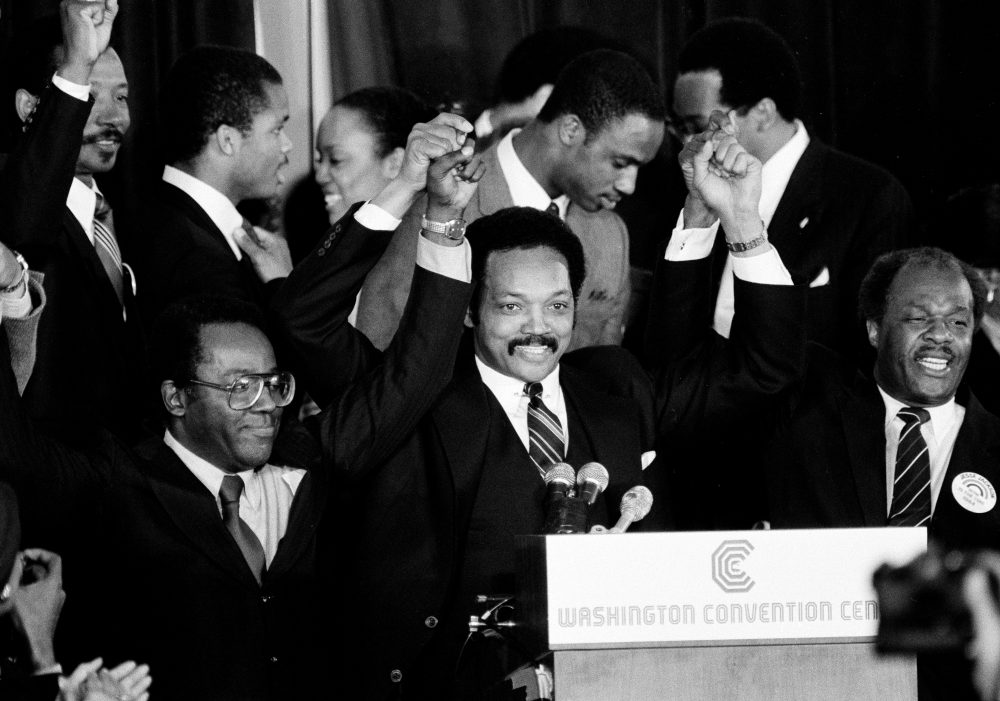
CHICAGO (AP) — Rev. Jesse Jackson received coverage from The Associated Press during his preparation for a groundbreaking 1984 presidential bid when he was 41 years old and actively involved in civil rights work. The AP is sharing that original story again, written by the late AP journalist Sharon Cohen, exactly as it ran on Aug. 7, 1983.
___
Jackson envisions himself walking the isolated, challenging path of religious prophets — someone called by divine purpose and sent forward like Jesus, Gandhi or Rev. Martin Luther King Jr. to guide others from difficult times.
“I’m very much driven by my religion to rise,” he says. “There’s a push that comes from religious duty. Gandhi couldn’t stop. Martin couldn’t stop. Jesus couldn’t stop.”
And according to his own words, Rev. Jesse L. Jackson cannot stop either.
“I’m in the prophetic ministry,” he says. “It’s the kind of ministry ancient prophets engaged in when they challenged the conduct of kings and queens.”
Jesse Louis Jackson — the 41-year-old Southern native, product of the civil rights era and potential 1984 black presidential contender — represents someone consumed, nearly fixated with his chosen calling.
Jackson carries a message of hope wherever he travels. His approach involves rhythm and rhyme. He excels at creating memorable phrases.
“If you are behind in a race, you CAN’T run equally,” he tells church audiences. “The race does not go to the fast or to the strong but to those who hold out.”
“If you pickle your brains with liquor, you CAN’T hold out. If you shoot cocaine in your membrane, you CAN’T hold out. If you put dope in your veins, rather than hope in your brains, you CAN’T hold out.”
His presentations captivate listeners. Before long the crowd responds with chants of “Preach, brother. Preach it.” And he continues.
“We’re not the result of accidents, we’re the result of providence. We’re not here because we’re lucky. We’re here because we’re blessed.”
Following his presentations, people surround him, taking photographs, requesting autographs and asking him to kiss their children. He accommodates everyone.
“My gift is a gift of the spirit,” he says.
This spiritual gift appears in various ways throughout the development of this multifaceted individual from an eager, impulsive aide to King into a charismatic — though sometimes disputed — political presence in his own capacity.
During the 1960s, he fought for civil rights, organizing restaurant protests and participating in open housing demonstrations.
The 1970s brought emphasis on dignity and economic fairness. Push-Excel emerged as a self-improvement initiative encouraging academic commitment. Corporate partnerships began ensuring equitable black participation.
Currently, his focus centers on leadership. He promotes voter registration throughout the South. He advocates for increased black representation in government. His ultimate goal involves electing a black president, potentially Jesse Jackson himself.
“It’s not enough to get in the mainstream and swim,” Jackson says. “You must get in the mainstream and redirect its course.”
Jackson has attempted to make his contribution for years through highly public methods, sometimes causing frustration and annoyance among others.
He has criticized inappropriate content in disco songs, intervened in local employment conflicts and organized boycotts against major corporations.
He has supported the rights of Haitians, Palestinians and Polish people.
He traveled to Panama to evaluate the canal agreement and addressed 20,000 South African blacks about apartheid.
Jewish Americans were disturbed when he embraced Yasser Arafat, the Palestine Liberation Organization leader. Alabama legislators welcomed his historic address as the first black speaker before their body this century.
Recently, Jackson has been considering a Democratic primary presidential campaign and increasingly sounds like someone seeking office, generating mixed responses from fellow black leaders who question the political wisdom of a black candidacy currently.
Polling data shows him performing better than some declared candidates. “God did not limit genius to white males,” says Jackson. “He distributed it all over town.”
Jackson has never sought elected office. His formal base remains Chicago’s Operation PUSH (People United to Serve Humanity), though he essentially embodies the organization. Jackson established the group in 1971, initially calling it the more ambitious People United to Save Humanity, after leaving the Southern Christian Leadership Conference. He has served as president continuously, currently earning $40,000 annually.
When supporters and critics discuss Jackson, they consistently mention identical characteristics — his self-regard, his ambition, his grand concepts, his organizational limitations, and his skillful media cultivation.
“He seems himself on a messianic mission,” says half-brother Noah Robinson. “What is it that motivates a person to grow? For Jesse, it’s his ego. God bless him for having that ego.”
“I always describe a visionary as someone who looks at cloudy skies and does not see the clouds, but sees the sun,” says Gary, Ind., Mayor Richard Hatcher, a friend and PUSH chairman of the board. “He’s able to do that.”
Mary Frances Berry, a member of the U.S. Civil Rights Commission, added though that “Jesse’s not really an organization man. His strong suit is not really running an organization.”
“The most pungent criticism is that he is constantly announcing campaigns and crusades that evaporate after the TV set is turned off,” says Don Rose, a political strategist who worked with Jackson in the 1960s civil rights movement.
Jackson, says Hatcher, “seems to have the ability to elicit from people either a very strong feeling of support … or a very strong feeling of dislike, and sometimes a feeling that borders almost on hatred.”
Several prominent black leaders indeed accuse Jackson of opportunism, claiming he exploits situations and takes credit for others’ achievements. However, virtually none have publicly opposed him.
Nobody questions Jackson’s commanding presence. Standing 6-foot-2 with an athletic build, he wears carefully fitted conservative suits that long ago replaced the flashy dashikis he favored in the 1960s, along with his prominent Afro hairstyle.
He maintains his Baptist minister’s speaking ability, avoids smoking and drinking, yet displays humor that leads friends to believe Jackson could have succeeded as an entertainer.
Constantly traveling, he still makes time to check with teachers about his son’s academic progress. Jesse Jr., 18, his oldest of five children, attends a private Episcopal school in Washington, D.C. “He wants us to be an example of what he preaches,” says Jesse Jr.
Though Jackson addresses many topics, one message remains constant throughout his words and life: an unwavering determination to achieve success.
“When you do less than your best, it’s a SIN,” he tells audiences. “To be black in America, you have to be superior to be equal.”
Jackson was born Oct. 8, 1941, in Greenville, S.C., and completed his education at North Carolina A&T, earning degrees in sociology and economics, and meeting Jacqueline Davis, his 1962 bride.
Following college, Jackson attended Chicago Theological Seminary and participated in King’s civil rights demonstrations.
King named him Operation Breadbasket director, the SCLC’s economic division, in 1967. Following King’s 1968 assassination, he created Operation PUSH four years later.
Jackson accompanied King on that fatal day in 1968 when he was killed in Memphis, Tenn. He appeared at a Chicago City Council session the next day wearing a shirt reportedly stained with the murdered civil rights leader’s blood.
Leading PUSH, Jackson has functioned as an urban motivational figure, encouraging and praising, persuading and challenging blacks to work diligently, succeed academically, and claim their rightful share of influence.
Jackson’s Operation PUSH reports securing over $1 billion in business agreements with Burger King, Coca-Cola, Heublein, and Seven-Up that establish additional distributorships and increased advertising in black-oriented publications.
Not every initiative has generated support.
When PUSH declared an Anheuser-Busch beer boycott last year, some St. Louis blacks, where the company operates, criticized him for targeting the wrong business.
Others claim Jackson’s programs benefit too few people.
Another Jackson creation, PUSH-EXCEL — Push for Excellence, a 1976 program promoting daily study time, teacher commitment and student discipline — has encountered additional challenges.
Seven Department of Education audit reports completed this year seek to disallow PUSH-EXCEL’s use of $736,000. They indicated the funds apparently supported items not covered under the organization’s federal grants and contracts.
Additionally, officials noted that approximately $1 million in expenditures has been questioned due to insufficient documentation. This money represents part of roughly $6 million granted to PUSH-EXCEL over three or four years.
The audits do not suggest criminal wrongdoing. Jackson states PUSH representatives are collaborating with auditors to address the issues.
As Jackson began discussing presidential matters like American re-industrialization, employment, or military spending, some critics challenged his credentials for addressing such national topics.
Jackson rejects this criticism.
“I wasn’t trained in auto mechanics and brick masonry,” he says. “I had a liberal arts education … So if on a given day Mr. Reagan can speak about agricultural policy and trade policy and international affairs and art and culture and science, who’s to suggest I should be less able to speak to a broad range of issues?”
Jackson indicates his Southern registration drive’s success, funding and organization will influence his decision about seeking the Democratic nomination. If he declines, he believes another black candidate should run.
The Democrats, he argues, “have in many ways made us like the Harlem Globetrotters. We can provide the thrills and excitement, but not participate in the other room where policy decisions are made.”
While supporters and black leaders remain split on a Jackson candidacy, some recognize advantages from considering the possibility.
“He’s made the party more cognizant of black voters,” says Georgia state Sen. Julian Bond. “It has made race — in a positive way — an agenda item in the campaign for the Democratic nomination.”
Federal immigration enforcement efforts in Maine are creating unexpected political hurdles for Republicans working to preserve their grip on Congress, with particular attention falling on GOP Senator Susan Collins.
The enforcement actions have thrust immigration policy into the spotlight as a defining issue in what could be a pivotal Senate race. Collins finds herself navigating the political fallout from President Trump’s immigration initiatives in her home state.
On January 21, Immigration and Customs Enforcement officials began a targeted operation dubbed “Operation Catch of the Day” in Maine, focusing on locating and detaining individuals without legal immigration status. The operation sparked immediate controversy and protests, including an anti-ICE demonstration in Lewiston on January 24.
The enforcement activities represent part of the broader Trump administration’s approach to immigration policy, but they’re creating complications for Republican lawmakers who must balance party loyalty with constituent concerns in their home districts.
Political observers note that immigration enforcement actions like those seen in Maine could influence voter sentiment in key Senate contests, potentially affecting the Republican Party’s ability to maintain control of the upper chamber of Congress.
Collaborative efforts between Immigration and Customs Enforcement and local police departments have seen dramatic growth during President Trump’s second administration, according to data examined by NPR.
The expansion of these federal-local partnerships marks a significant shift in how immigration enforcement is being carried out across the country. Under these arrangements, local law enforcement officers can work directly with federal immigration agents during operations.
While Washington D.C. does not participate in the formal 287(g) partnership program, the city’s Metropolitan Police Department can still coordinate with federal immigration enforcement agencies during joint operations, as demonstrated in recent traffic stops involving multiple agencies including the FBI, Homeland Security Investigations, and ICE officers.
The increased cooperation represents a notable change from previous years when such partnerships were less frequently utilized, highlighting the current administration’s emphasis on expanding immigration enforcement capabilities through local partnerships.
Republican officials in Minnesota are standing behind their decision to invite social media influencers to investigate alleged fraud within the state’s social services system, even as Democrats argue this move contributed to a subsequent increase in immigration enforcement actions.
The controversy centers around the GOP’s strategy of using online personalities to examine potential misconduct in social welfare programs. While Republicans maintain they were justified in pursuing these fraud allegations, Democratic leaders are placing responsibility on the Republican party for what they describe as creating conditions that led to heightened ICE operations in the area.
The dispute highlights ongoing tensions between the two parties over immigration policy and enforcement priorities, with each side attributing different causes and consequences to recent developments in Minnesota’s immigration landscape.
A war of words has erupted between President Donald Trump and Maryland Governor Wes Moore regarding the handling of a catastrophic sewage leak that has contaminated the Potomac River since January.
From his Florida residence during the holiday weekend, Trump criticized what he characterized as inadequate local leadership in addressing the environmental crisis. The president announced on social media that he was directing federal agencies to take charge of coordinating the cleanup effort.
“There is a massive Ecological Disaster unfolding in the Potomac River as a result of the Gross Mismanagement of Local Democrat Leaders, particularly, Governor Wes Moore, of Maryland,” Trump wrote in his post. He further stated he “cannot allow incompetent Local ‘Leadership’” to transform the Potomac “into a Disaster Zone.”
However, the damaged infrastructure falls under the authority of DC Water, a Washington-based utility that operates under federal oversight from the U.S. Environmental Protection Agency. The failed pipeline, known as the Potomac Interceptor, dates back to the 1960s.
Governor Moore’s spokesperson, Ammar Moussa, fired back at the president’s accusations, stating the administration has been avoiding its responsibilities regarding the cleanup of what University of Maryland scientists describe as among the most significant sewage disasters in American history.
“The President has his facts wrong — again,” Moussa declared. “Apparently the Trump administration hadn’t gotten the memo that they’re actually supposed to be in charge here.”
Moussa also noted that EPA representatives failed to attend a recent legislative session focused on the cleanup efforts, suggesting federal agencies were not fully engaged in the response.
DC Water’s top executive, David L. Gadis, confirmed Monday that his organization has maintained communication with the EPA since the pipeline failure occurred.
A White House representative, speaking without authorization to be named publicly, defended Trump’s criticism by claiming Maryland had been slow to work with federal authorities and had neglected necessary infrastructure improvements to the state’s water systems.
The president indicated that the Federal Emergency Management Agency would lead coordination efforts, while acknowledging that a funding freeze affecting the Department of Homeland Security could impact operations.
Congressional Democrats and the Trump administration failed to reach agreement on DHS funding legislation, resulting in a partial government shutdown that began Saturday. The funding gap affects multiple agencies including FEMA, the Coast Guard, TSA, Secret Service, ICE, and Customs and Border Protection.
White House spokesperson Karoline Leavitt used the sewage crisis to pressure Democrats, posting on social media: “Add this to the long list of reasons Democrats need to get serious and fund the Department of Homeland Security.”
The environmental disaster began January 19 when a massive 72-inch diameter sewage pipe collapsed, releasing millions of gallons of untreated wastewater into the river system northwest of the nation’s capital.
DC Water officials report that repair work has proven more challenging than initially anticipated. Recent pipeline inspections revealed a substantial blockage approximately 30 feet from the rupture site, described as “far more significant” than originally estimated. Engineers discovered a large rock formation blocking the line that must be cleared before permanent repairs can begin.
The utility estimates emergency repairs will require an additional four to six weeks to complete. The restoration work will address the immediate pipe damage as well as broader environmental remediation needs.
District of Columbia environmental officials have assured residents that drinking water supplies remain uncontaminated but have advised against direct contact with Potomac River water. Authorities recommend avoiding fishing in affected areas and keeping pets away from the waterway.
This latest dispute adds to ongoing tensions between Trump and Moore, a Democrat considered a potential presidential candidate in 2028. The two have clashed repeatedly since Trump returned to office.
Trump has announced he will exclude Moore and Colorado Governor Jared Polis from a White House governors’ dinner scheduled for Saturday during the National Governors Association gathering in Washington.
The administration has also criticized Moore regarding crime rates in Baltimore, with Trump threatening to deploy National Guard forces to the city. Moore and other Maryland Democratic leaders have countered that Baltimore homicides have dropped to historic lows, with sustained decreases beginning in 2023, and rejected the need for Guard deployment.
Additionally, the Trump administration has questioned Moore about diversity contracting policies and rising expenses related to rebuilding Baltimore’s Francis Scott Key Bridge, which collapsed in March 2024 after a container vessel collision.
Speaking to reporters during his return flight from Florida Monday evening, Trump cited both the bridge reconstruction and sewage spill response as reasons for excluding Moore from the governors’ dinner.
“He can’t fix anything,” Trump told the press corps.
Moore’s spokesman emphasized the state’s willingness to collaborate with federal officials on addressing the crisis.
“The Potomac isn’t a talking point, and the people of the region deserve serious leadership that meets the moment,” Moussa concluded.
New Mexico state legislators have unanimously authorized what officials describe as the first comprehensive investigation into activities at Jeffrey Epstein’s Zorro Ranch, where the deceased financier allegedly engaged in sex trafficking and sexual assault of girls and women.
The bipartisan commission will collect testimony from alleged abuse survivors at the property, situated approximately 30 miles south of Santa Fe, New Mexico’s capital. State lawmakers are also encouraging area residents to come forward with information.
Epstein passed away in 2019 in what authorities determined was suicide while in a New York detention facility awaiting trial on federal sex trafficking allegations.
The four-member truth commission will work to identify visitors to the ranch and state officials who potentially had knowledge of activities at the 7,600-acre estate, or participated in alleged sexual abuse occurring in its hacienda-style main residence and additional buildings.
This Democratic-sponsored investigation intensifies political pressure to expose Epstein’s criminal activities, creating challenges for President Donald Trump following the Justice Department’s recent release of millions of Epstein documents that revealed new details about ranch operations.
The released documents show connections between Epstein and two former Democratic New Mexico governors, as well as a former state attorney general.
The House of Representatives legislation, which received unanimous approval, could create exposure for additional politicians connected to Epstein in the Democratic-controlled state, along with scientists, investors and other prominent individuals who visited the property.
The investigation carries a $2.5 million budget and includes subpoena authority, seeking to address weaknesses in New Mexico law that potentially enabled Epstein’s operations within the state. Committee work begins Tuesday, with interim results expected in July and a complete report due by December.
“He was basically doing anything he wanted in this state without any accountability whatsoever,” stated New Mexico state Representative Andrea Romero, a Democrat who helped sponsor the legislation.
Romero indicated that committee testimony could support future criminal prosecutions.
Victim advocacy groups praised the decision, noting that Zorro Ranch had received less attention from federal investigations that concentrated on Epstein’s Caribbean island and New York residence.
“Many of the survivors had experiences in New Mexico, and as we’ve learned, you know, there were local politicians and other people that were aware of what was happening in New Mexico,” explained attorney Sigrid McCawley, whose firm has represented hundreds of Epstein survivors.
Among those survivors was the late Virginia Giuffre, who experienced abuse multiple times at the ranch, McCawley noted.
The U.S. Department of Justice referred comment requests to the FBI, which declined to provide a statement.
Multiple civil lawsuits allege Epstein sexually assaulted minors at Zorro Ranch, though he never faced criminal charges for these alleged incidents.
Romero stated there are no records of federal law enforcement conducting searches at what locals called “the playboy ranch,” where Epstein allegedly sexually abused a 16-year-old girl as early as 1996.
Former New Mexico Attorney General Hector Balderas initiated an investigation in 2019 but suspended it at federal prosecutors’ request to prevent “parallel investigation,” according to his statement.
Current New Mexico Attorney General Raul Torrez has designated a special agent to examine allegations that may emerge from the truth commission, according to spokesperson Lauren Rodriguez.
Democratic State Representative Marianna Anaya, a sexual assault survivor advocate who co-sponsored the legislation, is developing companion legislation to extend New Mexico’s statute of limitations for childhood sexual assault, which would enable civil lawsuits by Epstein’s alleged abuse survivors.
Epstein purchased the ranch in 1993 from Bruce King, a three-term New Mexico Democratic governor who died in 2009.
The financier transported guests and “masseuses” to the property and employed local massage therapists, ranch manager Brice Gordon informed the FBI in 2007, according to documents in the Epstein files.
In unsealed 2016 court testimony, Giuffre stated that Epstein’s associate Ghislaine Maxwell instructed her to provide a “massage” to the late former New Mexico Governor Bill Richardson at the ranch. According to Giuffre’s memoir, Maxwell’s “massage” instructions meant victims should engage in sexual encounters with abusers.
Richardson’s representative Madeleine Mahoney stated in 2019 that Giuffre’s claims were “completely false.”
Gordon informed the FBI that most masseuses Epstein employed at the ranch were recruited locally through Ten Thousand Waves spa, a Santa Fe establishment, or through referrals.
Spa spokesperson Sara Bean stated in a recent phone interview that Ten Thousand Waves neither supplied nor referred masseuses to Zorro Ranch.
In the documentary “Surviving Jeffrey Epstein,” former Santa Fe massage therapist Rachel Benavidez alleged that Epstein sexually abused her when she was hired to work at the ranch.
Investment consultant Joshua Ramo disclosed Sunday that he visited the ranch once for a 2014 lunch representing professors from the Massachusetts Institute of Technology and Harvard University, who attended the meeting. Ramo, who was then CEO of consulting firm Kissinger Associates, said he and Epstein met with business leaders and scientists approximately 14 times in New York between 2013 and 2016.
“I deferred to the due diligence of the institutions involved, assuming that his presence signaled he had been appropriately vetted,” Ramo said regarding the ranch visit. “I feel a deep sense of grief for the survivors of his crimes.”
Email correspondence shows Epstein contacted Ramo in 2015 about visiting Ten Thousand Waves, suggesting they meet for lunch in Santa Fe. Ramo replied, “I assumed we were meeting at the pink bottom ranch.” Ramo, currently CEO of consulting firm Sornay LLC, said he cannot recall that comment or whether they met that day.
Throughout the years, Epstein donated to New Mexico Democratic political campaigns, including those of Richardson and Gary King, Bruce King’s son and former New Mexico attorney general. When these contributions became public, both men promised to return the funds or donate them to charity.
Gary King traveled on an Epstein-chartered aircraft during his 2014 New Mexico gubernatorial campaign, according to emails in the Epstein files. Epstein agreed to cover approximately half of the $22,000 charter cost, with King paying the remainder. King did not respond to requests for comment.
A federal judge has mandated that the Trump administration must reinstall a display documenting nine individuals who were enslaved by George Washington at his former Philadelphia residence, after officials removed it last month on Presidents Day, the holiday celebrating Washington’s contributions to America.
Philadelphia city officials filed a lawsuit in January following the National Park Service’s decision to take down informational displays from Independence National Historical Park, the location where George and Martha Washington resided with nine enslaved individuals during the 1790s when Philadelphia served as the temporary national capital.
The exhibit’s removal followed a Trump executive order focused on “restoring truth and sanity to American history” at federal museums, parks and historical sites. The directive instructed the Interior Department to prevent these locations from showcasing content that “inappropriately disparage Americans past or living.”
U.S. District Judge Cynthia Rufe issued her decision Monday, requiring complete restoration of all original materials while legal proceedings continue regarding the removal’s constitutionality. Her order prevents Trump administration officials from substituting alternative displays that present the history from a different perspective.
Judge Rufe, nominated by Republican President George W. Bush, opened her written decision by referencing George Orwell’s authoritarian novel “1984” and drew parallels between the Trump administration and the book’s totalitarian Ministry of Truth, which altered historical documentation to match its preferred version of events.
“As if the Ministry of Truth in George Orwell’s 1984 now existed, with its motto ‘Ignorance is Strength,’ this Court is now asked to determine whether the federal government has the power it claims — to dissemble and disassemble historical truths when it has some domain over historical facts,” Rufe wrote. “It does not.”
During January court proceedings, she cautioned Justice Department attorneys that their arguments were “dangerous” and “horrifying” when they claimed Trump officials could select which aspects of American history to present at National Park Service locations.
The Interior Department has not yet responded to requests for comment regarding the decision, which was issued while government offices remained closed for the federal holiday.
Judge Rufe did not specify a deadline for the exhibit’s restoration. Federal authorities retain the option to appeal her ruling.
This historical location represents one of multiple sites where the administration has quietly eliminated content addressing the experiences of enslaved people, LGBTQ+ individuals, and Native Americans.
At Grand Canyon National Park, removed signage previously described how settlers forced Native American communities “off their land” to establish the park and “exploited” the natural environment through mining and livestock operations.
Last week, officials removed a rainbow flag from the Stonewall National Monument, where bar customers resisted a police raid and sparked the contemporary LGBTQ+ rights movement. The administration has also deleted references to transgender individuals from the monument’s website, despite transgender women of color playing pivotal roles in the historic uprising.
The Philadelphia display, developed twenty years ago through collaboration between city and federal representatives, featured biographical information about each of the nine people enslaved by the Washington family at the residence, including two who successfully escaped.
One escapee was Oney Judge, who was born into bondage at the family’s Mount Vernon, Virginia plantation and fled from their Philadelphia home in 1796. Judge traveled north to New Hampshire, a free state, while Washington declared her a fugitive and published notices seeking her capture and return.
Following Judge’s escape from the Philadelphia residence, the park service in 2022 endorsed the site’s participation in a national Underground Railroad network where visitors could learn about abolitionists and escaped enslaved people. Judge Rufe observed that materials concerning Judge were among those removed, which she stated “conceals crucial information linking the site to the Network to Freedom.”
After park service workers used crowbars to remove the informational plaques on January 22, only the names of Judge and eight other enslaved individuals remained carved into a concrete wall — Austin, Paris, Hercules, Richmond, Giles, Moll and Joe, who were known by single names, and Christopher Sheels.
Hercules also gained his freedom in 1797 after being transported to Mount Vernon, where the Washingtons held numerous other enslaved people. Despite being labeled a fugitive slave, he successfully reached New York City and adopted the name Hercules Posey.
Multiple local political figures and Black community leaders praised the court decision, which coincided with ongoing demonstrations at the site advocating for the exhibit’s return.
State Representative Malcolm Kenyatta, a Philadelphia Democrat, stated the community successfully resisted the Trump administration’s effort to “whitewash our history.”
“Philadelphians fought back, and I could not be more proud of how we stood together,” he said.
Five Delaware residents were honored last week with the state’s most prestigious civilian recognition during a ceremony in Dover.
Governor Matt Meyer bestowed the Order of the First State award upon Brooks Banta, Ellen Bartholomaus, Anand Panwalker, Mike Vincent, and Robert “Bob” for their exceptional contributions that have benefited communities throughout Delaware.
The recipients were acknowledged for their outstanding achievements and leadership across multiple fields including public service, healthcare, the arts, and sports.
Delaware’s Order of the First State represents the highest honor the state can give to civilians who have demonstrated extraordinary service and created a lasting positive impact on their communities.
The ceremony recognized these five individuals for their dedication to strengthening Delaware through their various professional and volunteer efforts over the years.