
Words like “dangerous,” “brazen,” and “unprecedented” are echoing across the media world after five New York Times journalists were served with federal subpoenas — a move critics say represents a dramatic escalation in the Trump administration’s campaign to control and intimidate independent news outlets.
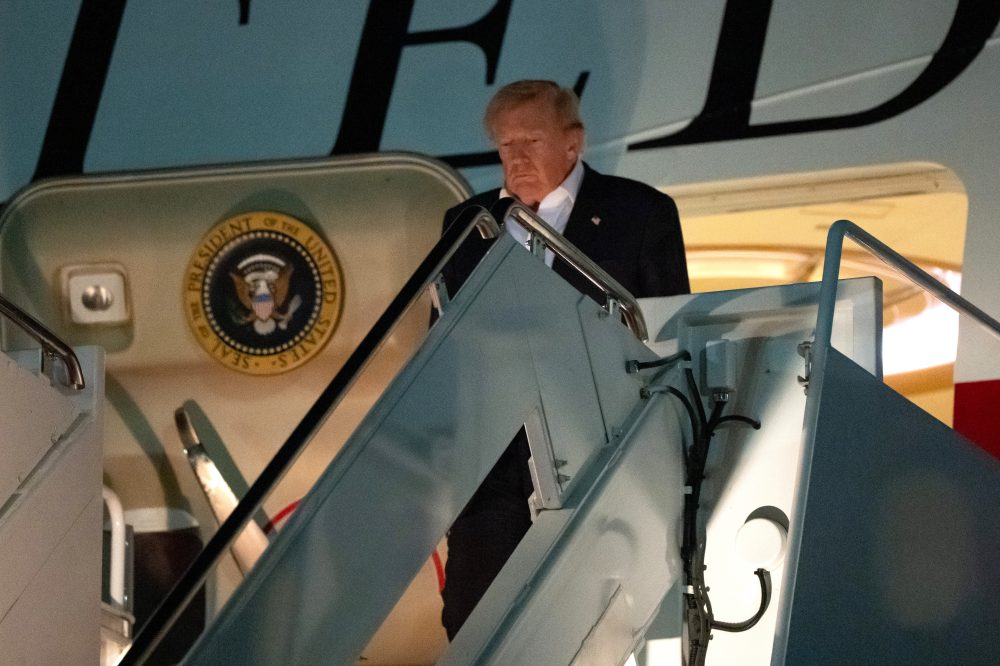
The subpoenas stem from the reporters’ coverage of security questions surrounding a new Air Force One jet, gifted to the U.S. by Qatar, that the administration spent $400 million to retrofit and upgrade. The plane entered service last week, but President Trump used an older model to depart a NATO summit in Turkey.
The Times, relying on anonymous sources, had reported that the Secret Service pushed for the switch because the newer aircraft lacked certain advanced security features of the older jet — including antimissile systems. Trump denied those security concerns on social media.
“The subpoenas are an extraordinary escalation in President Trump’s efforts to threaten and intimidate independent news organizations, and have a chilling effect on the work of journalists across the country,” said Jodie Ginsberg of the Committee to Protect Journalists.
Some of the subpoenas were delivered directly to reporters at their homes. They were sought by Jay Clayton, the U.S. Attorney in Manhattan, and would compel the journalists to testify before a federal grand jury in Manhattan this week.
According to a person familiar with the matter who spoke on condition of anonymity, the subpoenas were issued after FBI Director Kash Patel and other Justice Department officials met at the White House on Friday to discuss the situation — a meeting the Times says lasted roughly eight hours.
That White House coordination drew sharp criticism from media analysts. Frank Sesno, a former CNN White House bureau chief who now teaches media and public affairs at George Washington University, called the subpoenas “dangerous and uncharted territory, but merely an extension of what we have seen from this administration and president.”
“They have used the levers of power to intimidate and demonize professional journalists who report stories that are unfavorable to the administration’s desired narrative,” Sesno said.
He went on to describe a pattern of retaliation: “Don’t like a poll? Sue the Des Moines Register. Don’t like the way an interview is edited? Sue ’60 Minutes.’ Don’t like the coverage of the gifted Air Force One? Order the FBI to investigate and subpoena the journalists for what is, by the way, a story that is in the public interest.”
The National Press Club called on the Justice Department to immediately pull back the subpoenas and reaffirm the principle of a free press. Club president Mark Schoeff Jr. issued a stark warning: “Every American should understand what is at stake. When federal agents arrive at the homes of journalists with subpoenas, it is not ordinary law enforcement. It is an extraordinary assault on the freedom of the press that strikes at the heart of the First Amendment.”
This is not the first time the current administration has clashed with news organizations. Last month, the Justice Department issued — and then withdrew — subpoenas targeting reporters at The Washington Post and The Wall Street Journal. Earlier this year, the FBI searched the home of a Washington Post reporter and seized her electronic devices. The media world was stunned by the search of reporter Hannah Natanson, who had been covering the Trump administration’s transformation of the federal government.
The administration has also battled with The Associated Press over its refusal to adopt Trump’s executive order renaming the Gulf of Mexico, and with The Wall Street Journal over reporting about Jeffrey Epstein and his connections to the president — including an article describing a sexually suggestive letter the newspaper said bore Trump’s signature.
Other confrontations include an escalating dispute over reporters’ access to the Pentagon, with the Times filing two lawsuits over a policy requiring journalists to be escorted inside the military complex. The president has also threatened to revoke broadcast licenses and directed his FCC chairman to explore revoking an equal-time exemption for ABC’s “The View.”
The Times is now preparing to fight back. In an internal memo obtained by the AP, executive editor Joseph Kahn called the subpoenas a “brazen act” and expressed confidence in the paper’s legal position: “We expect to prevail. We have the best legal team in the business. … The law protects news gatherers from this sort of retaliatory abuse of prosecutorial power. It is essential that the courts reaffirm that protection and quash this overreach. We are confident they will in this case.”
Kahn also praised the five reporters named in the subpoenas — Tyler Pager, Eric Schmitt, Eric Lipton, Adam Goldman, and Julian Barnes — telling them that “all of us as their colleagues, and the full resources of The Times, are behind them and that we will fight this legal abuse together.”