
NEW YORK (AP) — The unexpected death of Sen. Lindsey Graham, a prominent ally of President Donald Trump and one of the most recognizable figures in Washington, has put fresh attention on the nation’s growing number of elderly lawmakers.
Graham had celebrated his 71st birthday just two days before he died on Saturday night — making him considerably younger than many of his Senate colleagues. He had appeared to be in good health prior to his death. A preliminary report from the medical examiner determined he suffered a tear in his aorta.
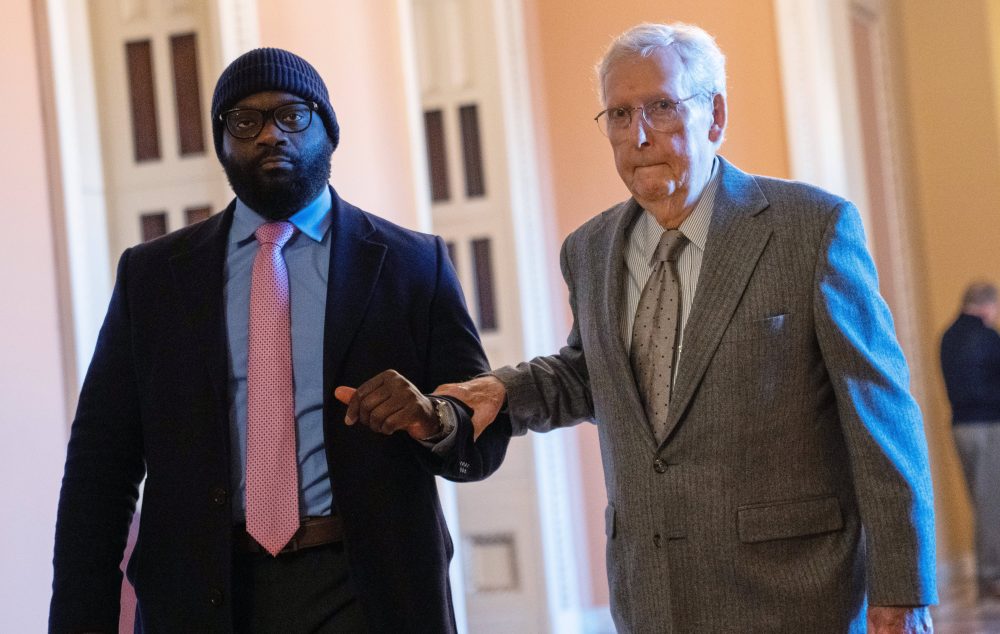
His passing marks the second time in less than a month that emergency responders were called to the home of a sitting U.S. senator. In early June, former Republican Senate leader Mitch McConnell was hospitalized, though the reason was not initially disclosed.
After weeks of mounting speculation about his condition, McConnell revealed on Sunday that he had fallen and developed mild pneumonia. He released a photograph of himself holding a copy of that day’s newspaper to confirm his status.
Both events have intensified an ongoing national debate about the age and fitness of the country’s top leaders — a conversation that began in earnest two years ago when a presidential debate raised widespread alarm about then-President Joe Biden’s mental sharpness and triggered accusations of a deliberate cover-up.
Some politicians have chosen to keep their health struggles private despite holding positions of public trust, a practice that has helped fuel conspiracy theories.
“I think we need some transparency,” Sen. John Cornyn of Texas said Monday. “I wish Sen. McConnell and his team would have done that earlier, I think it would have resolved a lot of questions.”
McConnell, who at 84 is only the third-oldest member of the Senate, was admitted to the hospital on June 14 with almost no explanation. His staff said he was “receiving excellent care” but gave no further details about what was wrong.
The lack of information quickly gave rise to wild speculation. Trump ally and conspiracy theorist Laura Loomer claimed on social media that a “high level source close to the White House” had told her McConnell was “officially brain dead.”
McConnell — who is set to leave Congress at the end of January after serving as the longest-tenured Senate leader in history — pushed back in a statement, saying he is recovering. He explained that a fall had led to his hospital stay, that he was “briefly unconscious,” and that he was treated for mild pneumonia.
“You all know how folks of my generation often hesitate to share the vulnerability that comes with growing older,” he said. “Even in the public eye, I feel that same instinct – I can’t help it.”
Even so, skeptics on social media refused to accept the photo his office released as proof — particularly because it showed the front page of the “Sports” section of The Washington Post rather than the full front page.
Sen. Rand Paul, who represents McConnell’s home state of Kentucky, called the conspiracy theories surrounding his colleague’s health “a symptom of our times” and urged people to “give him a break.”
“People think they have a right to know everyone’s medical problems,” Paul said, “but I don’t know, where does it begin and where does it end?”
The oldest person ever elected president has consistently offered only the most optimistic assessments of his own health. After his most recent physical in May, he boasted that “Everything checked out PERFECTLY” and claimed he had taken repeated cognitive tests designed to detect early dementia, saying he has “aced them all.”
His medical reports have drawn criticism for being short on detail, and some health professionals have questioned certain statistics included in them. When he first ran for president in 2016, he broke with longstanding tradition by refusing to release his health records, instead providing a four-paragraph letter from his physician declaring he would be “the healthiest individual ever elected to the presidency.” Rep. Ronny Jackson, who served as White House doctor during Trump’s first term, later made headlines by praising the president’s “incredibly good genes.”
When Trump contracted COVID-19 during his 2020 reelection campaign, his medical team and aides withheld key details about his treatment and attempted to minimize how serious his illness was. And following an assassination attempt at a Pennsylvania campaign rally, his team kept the public in the dark for days, refusing to discuss the extent of his injuries or release any medical documentation even while insisting he was “fine.”
The pattern of concealment is not limited to older politicians. New Jersey Republican Rep. Tom Kean Jr. was absent from Congress for four months without any explanation before finally disclosing late last month that he had been undergoing treatment for depression. In a brief speech on the House floor after returning, he said he had stayed quiet because he is a “private person by nature.”
Despite missing more than 100 House votes during his absence, Kean won an uncontested primary and is seeking reelection.
His approach was notably different from that of Sen. John Fetterman, a Pennsylvania Democrat, who publicly announced his hospitalization for clinical depression the day after he was admitted to Walter Reed National Military Medical Center. Fetterman had also suffered a stroke while campaigning for his Senate seat.
Biden’s visible physical decline — including a halting walk, frail appearance, and repeated verbal stumbles — ultimately derailed his 2024 reelection bid. After a debate in which he repeatedly lost his train of thought, he withdrew from the race, triggering an unprecedented reshuffling at the top of the Democratic ticket that ultimately helped clear the path for Trump’s return to the White House.
Other lawmakers have declined to step aside despite serious health concerns. California Democratic Sen. Dianne Feinstein died in office in 2023 at the age of 90 following years of declining health, including a bout of shingles. Though she came back to the Senate after her illness, she appeared disoriented and physically weakened at times. It later came out that her office had not disclosed in real time that she had also contracted encephalitis while recovering.
Longtime Republican Rep. Kay Granger of Texas spent the final months of her more than two decades in Congress dealing with “unforeseen health challenges” that made it difficult for her to travel to Washington. And Eleanor Holmes Norton, 88, the longtime House delegate for the District of Columbia, announced earlier this year that she would not seek reelection amid growing questions about her ability to serve.