
President Donald Trump on Monday signed proclamations shrinking two national monuments in Utah, stripping away protections that previous presidents had placed on lands considered sacred by many Native American tribes.
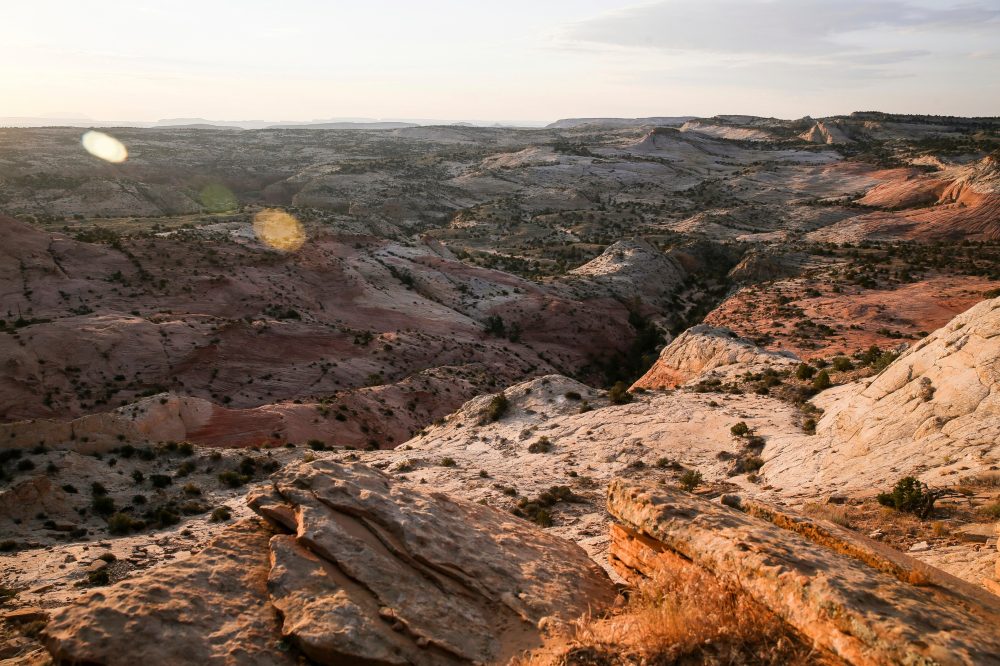
Bears Ears and Grand Staircase-Escalante national monuments, both located in southern Utah, feature ancient cliff dwellings, petroglyphs, and dramatic canyon landscapes. They also sit atop coal and uranium deposits that Utah state officials have long wanted opened up for commercial development.
Trump used authority granted under the Antiquities Act to reduce the footprint of both monuments. He pursued the same course of action during his first term in office, but President Joe Biden, a Democrat, reversed those changes after taking office.
The decision is part of a broader effort by Trump and fellow Republicans to overhaul how the federal government manages vast stretches of publicly owned land, most of it concentrated in Western states. The administration and Republican lawmakers have pushed to expand oil drilling, mining, and logging on federal land, while scaling back protections for endangered species and loosening conservation regulations.
Speaking at a White House signing event Monday, Trump defended the move. “They took the land from the people quite honestly,” he said. “We’re giving it back.”
Grand Staircase-Escalante was established in 1996 by President Bill Clinton, a Democrat, while President Barack Obama, also a Democrat, created Bears Ears in 2016. Both were designated under the Antiquities Act, a 1906 law that gives presidents the power to protect lands deemed historically, archaeologically, or culturally significant.
Davina Smith-Idjesa, a citizen of the Navajo Nation and co-chair of the Bears Ears Inter-Tribal Coalition, said tribal leaders had anticipated a reduction ever since Trump won a second term. She described Monday’s announcement as “heartbreaking” and accused federal officials of bypassing their legal duty to consult with the tribal nations that would be affected.
“From a Navajo perspective, Bears Ears is not simply a piece of federal public land,” Smith-Idjesa said. “This is a living cultural site that holds our histories, our ceremonies, our traditional foods and medicines and our ancestors’ footprints.”
Utah officials have opposed the monument designations for years, arguing that the state should control its own land. During his first term, Trump called the original designations a “massive land grab.” Together, the two monuments cover more than 3.2 million acres — an area roughly the size of Connecticut.
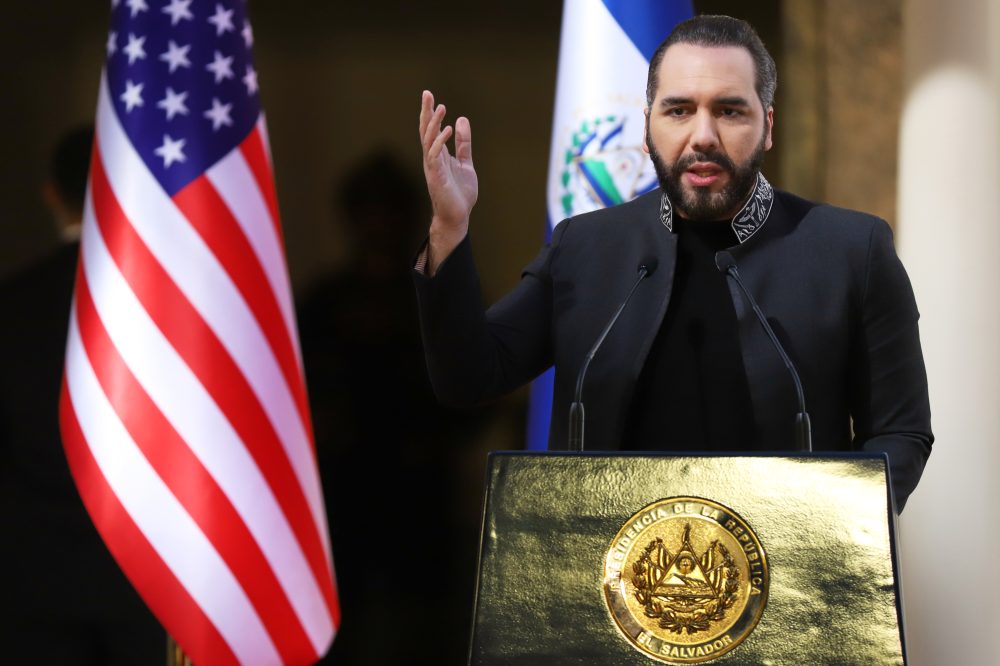
Utah Gov. Spencer Cox stood beside Trump at the White House and praised the action. “This is a big day for Utah,” he said. “These monument designations are supposed to be the smallest area as possible to protect the antiquities.”
Bears Ears holds a unique distinction as the first national monument protected at the formal request of tribal nations. The area contains ancestral villages, burial grounds, and ceremonial sites, and figures prominently in the creation and migration stories of several tribes. Its original designation recognized five tribes — the Navajo, Hopi, Zuni, Ute Mountain Ute, and Uintah-Ouray Ute. The monument is jointly managed through an agreement between those tribal nations and federal agencies and is home to hundreds of thousands of culturally and scientifically significant objects.
Grand Staircase-Escalante features a dramatic landscape of cliffs, canyons, natural arches, and archaeological sites including rock paintings. It holds significant coal reserves, while the Bears Ears region contains uranium deposits.
National monument status provides broad protections for both the notable geological features and artifacts within a monument and the surrounding landscape, prohibiting drilling, mining, and new construction. Supporters of the reduction argue the protected boundaries extend too far and block access to critical minerals.
During his time in office, Biden designated or expanded more than a dozen national monuments and set a goal of conserving at least 30% of U.S. lands and waters by 2030. Trump’s approach is essentially the opposite — he wants to unlock the natural resource potential of more than 100,000 square miles of federally controlled land, as well as offshore areas such as the Gulf of Mexico and waters off Alaska.
That stance has drawn fierce criticism from Democrats and environmental groups, who warn that treasured landscapes are being sacrificed for commercial interests.
Trump’s Interior Secretary Doug Burgum had previously signaled that the administration would review and potentially redraw monument boundaries as part of its push to increase domestic energy production.
Trump has also used proclamations in his current term to lift commercial fishing restrictions within large marine monuments in the Pacific and Atlantic oceans — areas protected under both Democratic and Republican administrations. That move, which has been challenged in court, represents a major shift in federal policy by putting commercial fishing interests ahead of efforts to allow fish populations to recover.
While the Supreme Court has upheld the president’s authority to establish national monuments, the question of whether a president can shrink or alter existing monument boundaries remains legally contested.
Some Republican lawmakers have pushed to sell or transfer federal lands to states or private entities, but those efforts have largely stalled. A House GOP proposal to sell public lands faced bipartisan resistance, and a separate proposal by a Utah senator to sell more than 3,200 square miles of federal land was stripped from Republicans’ major tax and spending legislation. The U.S. Supreme Court also rejected a lawsuit last year in which Utah officials sought to take control of large swaths of federal land within the state.