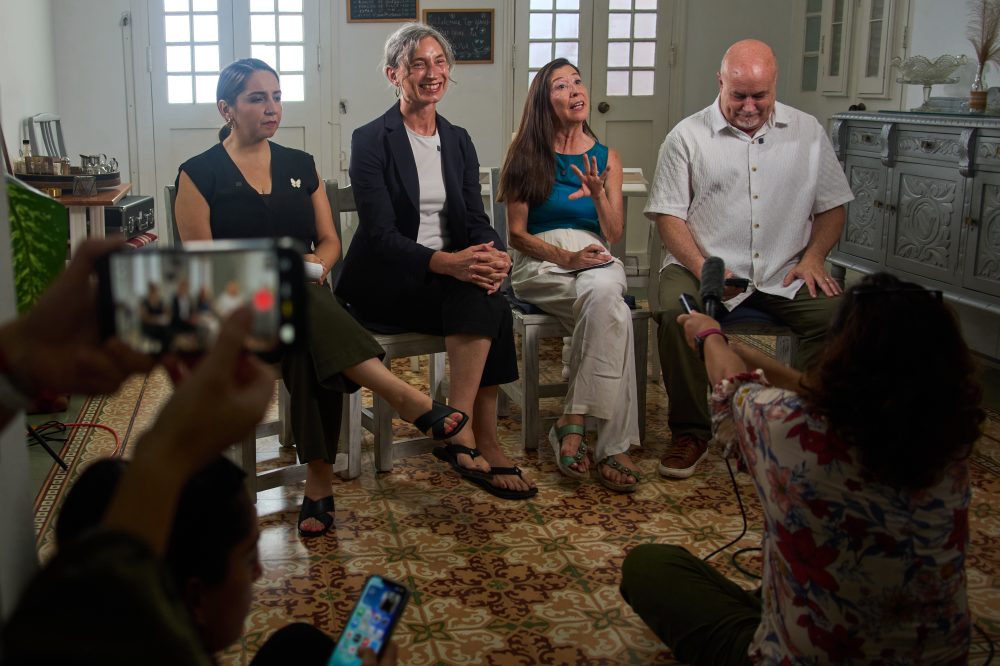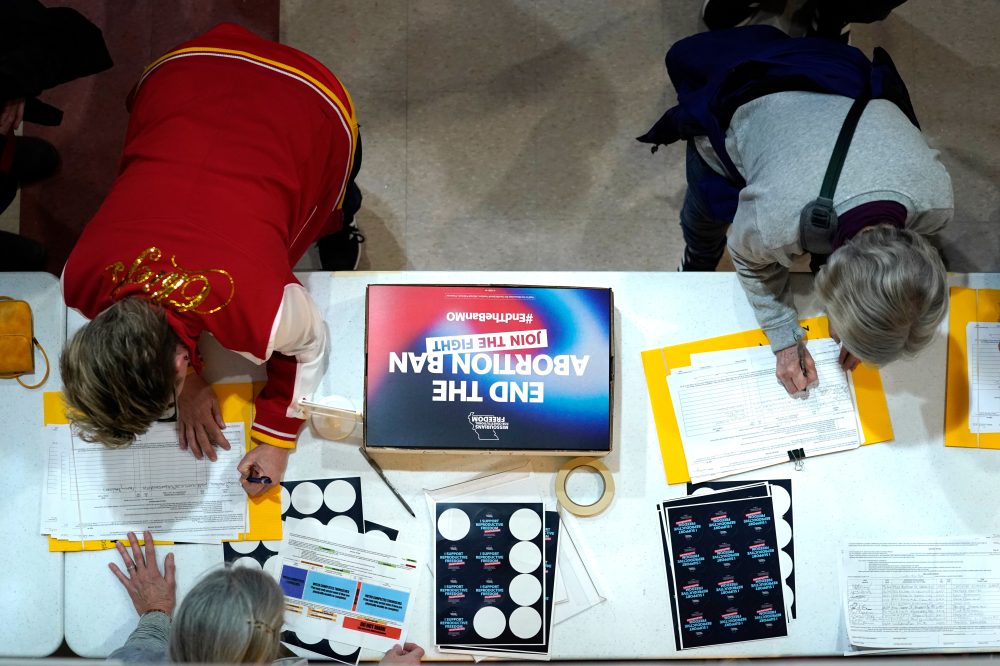

Four states will put abortion directly before voters this November, with Idaho joining Missouri, Virginia, and Nevada on the list after election officials confirmed an initiative qualified for the ballot.
Idaho’s secretary of state notified the group behind the effort in a letter Monday that the measure had met the requirements to appear on the November 3 ballot. The campaign, led by Idahoans United for Women and Families, shared that letter with The Associated Press.
If passed, the Idaho measure would permit abortion up until fetal viability — generally considered to occur sometime after 21 weeks of pregnancy, though no fixed point is established. The change would bring Idaho’s law closer to what existed before the Supreme Court’s 2022 decision overturning Roe v. Wade. Currently, Idaho is one of six states with a complete abortion ban that includes no exceptions for the health of the pregnant woman or girl. The ban does allow abortion to save a woman’s life or in cases of rape or incest. Idaho also made history in 2023 as the first state to criminalize helping a minor obtain an abortion without parental consent, a law that has largely held up in court despite legal challenges.
David Ripley, CEO of the anti-abortion organization Idaho Chooses Life, is gearing up to fight the measure. “This is going to have a profound impact on Idaho,” he said, “and will basically invalidate virtually every pro-life law that the legislature has enacted over the last 30 to 40 years.”
Missouri has its own unique history on the issue. It was the first state to begin enforcing a total abortion ban after Roe fell, and then in 2024, it became the first state to use a ballot measure to undo that ban. Even so, abortion access remained heavily restricted due to state regulations until a court ruling this past June blocked enforcement of many of those rules.
Now, in a state where Republicans hold dominant political power, voters are being asked to reverse the 2024 amendment and restore an abortion ban. The proposed ban would include exceptions for medical emergencies, fetal anomalies, and pregnancies resulting from rape or incest. Legal disputes over the ballot language have also played out in the state’s courts.
In Virginia and Nevada, voters are not deciding whether abortion will remain legal — it already is, through at least 24 weeks of pregnancy in both states. Instead, residents are being asked to enshrine abortion rights in their state constitutions. Supporters say the amendments could help drive voter turnout in competitive states where both parties have won statewide races in recent years.
Nevada voters already backed the amendment in 2024 by nearly a 2-to-1 margin, but the state constitution requires amendments to pass in two separate public votes before taking effect, which is why it appears on the ballot again.
Some abortion-rights advocates are pushing for laws that go further than Roe v. Wade by removing restrictions throughout pregnancy. In June, the National Abortion Federation — an organization of abortion providers — stated its opposition to “rigid legal cutoffs that ban or restrict abortion care at viability or arbitrary gestational lines.” The group does not fund political campaigns, but its stance may reflect the thinking of other organizations in the movement.
In 2024, South Dakota voters rejected a measure that would have banned third-trimester abortions, allowed some restrictions in the second trimester, and protected abortion rights in the first trimester. Most national abortion-rights organizations also declined to support it.
Since Roe was overturned, abortion-rights advocates have lost four statewide votes on reproductive rights and won 14 others.
Melanie Folwell, executive director of Idahoans United for Women and Families, had pointed words for national groups that choose to sit out certain ballot fights. “I would encourage them to get out of their bubbles of activism and actually begin to engage with the public on where folks are at,” she said.