
A federal appeals court on Thursday gave its stamp of approval to Illinois’ ban on semiautomatic weapons, keeping the controversial law intact after a lower court had previously thrown it out.
The U.S. Court of Appeals for the Seventh Circuit issued a 2-1 ruling finding that the Illinois law is consistent with the Second Amendment. The court wrote that the law’s restrictions align with what it described as “the principles that underpin our Nation’s tradition of firearm regulation.”
“Whether to adopt them is thus a decision reposed in our elected representatives, and we reverse,” the appeals court stated in its ruling.
The majority opinion also took aim at arguments from those challenging the law who claimed semiautomatic weapons are not responsible for mass shootings. The court countered that “the undisputed record evidence undercuts that claim, showing that the presence of assault weapons and large-capacity magazines is strongly correlated with the severity of the societal problem.”
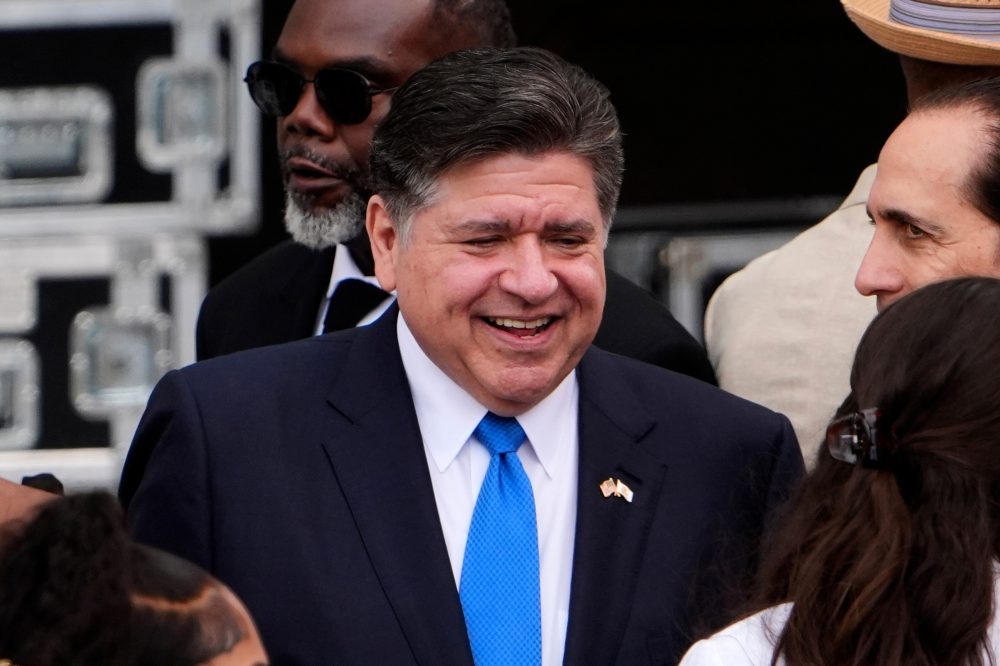
Democratic Gov. JB Pritzker celebrated the ruling on social media, calling it “a victory in the fight to end gun violence that helps keep our communities safe.”
The National Shooting Sports Foundation, the firearms industry trade group that had been fighting to block the ban, expressed disappointment with the outcome and announced it intends to petition the U.S. Supreme Court to take up the case.
The organization said it sides with Chief Judge Michael Brennan, who wrote a dissenting opinion arguing that the Constitution prohibits governments from banning “firearms commonly owned for self-defense.” The dissent went on to say that “because the people have overwhelmingly chosen the AR-15 rifle and its magazine as their weapon of choice, they are protected by the Second Amendment.”
The law at the center of the dispute, known as the Protect Illinois Communities Act, was signed in 2023. It bans AR-15 rifles and comparable firearms, large-capacity magazines, and a range of weapon attachments.
The legislation came about six months after a gunman climbed onto a rooftop in Highland Park — a suburb of Chicago — and opened fire on a Fourth of July parade in 2022, killing seven people and wounding more than three dozen others.
The law was met with swift resistance after it passed. Several county sheriffs declared they would not enforce it, calling it unconstitutional, while gun owners and advocacy groups filed lawsuits against it.
In 2024, a federal judge sided with those challengers and struck down the ban, relying on recent U.S. Supreme Court decisions that have taken a strict reading of Second Amendment rights. The ruling was set to go into effect 30 days later, but Illinois Attorney General Kwame Raoul filed an appeal the same day, which placed the ruling on hold.
Raoul said Thursday’s decision is a win for public safety. “We have seen the damage that assault weapons and large-capacity magazines can inflict, and these weapons of war have no place in our communities,” he said.
The issue is expected to reach the nation’s highest court regardless. Last month, the Supreme Court announced it would take up the question of whether bans on semiautomatic rifles violate the Second Amendment. This fall, the justices are expected to hear challenges to a similar ban in the Chicago area that predates the statewide law.