
WASHINGTON — Before President Trump dismissed the leaders of a key federal election agency last Thursday, White House officials had spent months quietly searching for ways to work around it entirely, four people with knowledge of the matter told Reuters.
Those officials grew frustrated with what they viewed as the Election Assistance Commission moving too slowly to update guidelines for states on voting machines, the sources said. Some also wanted the agency to add a proof-of-citizenship requirement to its national mail voter registration form and take action on other election-related priorities of the administration.
Trump dismissed the bipartisan agency’s two Democratic commissioners and allowed its sole Republican commissioner to step down. A fourth commissioner had already left the agency back in April.
With no quorum remaining, the agency cannot take up any new business — including changes to voting procedures or the national voter registration form. However, remaining staff can still test and certify equipment, publish research and reports, and distribute federal grant funding.
It remains unclear why Trump chose to act now, or whether replacements will be named.
When asked about discussions regarding sidestepping the commission, the White House issued a statement Friday saying: “The administration from the start has been working across all agencies and local partners to safeguard elections from fraud and abuse, and investing in a strong infrastructure to sustain that mission especially in the midterm elections.”
In a separate statement confirming the dismissals Thursday, the White House pointed to a Supreme Court ruling from June that expanded presidential authority to remove members of independent agencies. “(The president) reserves the right to remove individuals that may not be totally aligned with the important task of securing America’s elections,” the statement read.
Democratic lawmakers pushed back sharply. Senate Minority Leader Chuck Schumer, a Democrat from New York, called the firings a “brazen attempt to seize control of our elections before a single vote is cast” in the upcoming midterms. “He is gutting the independent agency that certifies voting systems and helps election officials run secure elections,” Schumer said.
According to the four sources, White House officials reviewed a proposal as far back as last fall from the Office of the Director of National Intelligence to declare a national emergency and establish a federal task force. That task force would have had the power to compel states to address vulnerabilities in voting systems — bypassing the elections commission altogether. The ODNI did not respond to a request for comment, and the recommendation was never acted upon.
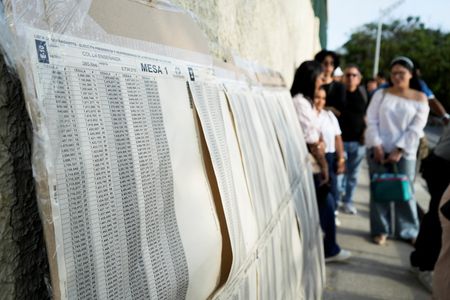
At the time, the agency was wrapping up an investigation into voting machines it had seized from Puerto Rico. ODNI officials concluded those machines had flaws they believed might exist elsewhere, two of the sources said. Election experts noted that Puerto Rico, which does not participate in presidential elections, has lagged behind the states in adopting the latest voting system standards.
During the same period, officials from the Department of Homeland Security, ODNI, and the White House met with commission leadership to voice concerns — including claims that flaws in voting systems may have contributed to irregularities in the 2020 election. Those claims have been widely debunked.
Trump and his allies have continued to push Congress for nationwide voting changes and have argued that some voting systems need upgrades. Trump has repeatedly and falsely claimed the 2020 election was stolen from him.
Election administration experts say the commission’s pace is deliberate, not negligent. “The voting system guidelines haven’t been updated too frequently because the process takes a long time,” said Matt Weil, vice president of governance at the Bipartisan Policy Center and a former commission staffer. “So yes, there is slowness, but that is not a bug, that’s a feature of the system.”
Congress approved $45 million for the commission in fiscal year 2026 to provide grants to states for improving election systems. Since 2018, the commission has distributed more than $1.4 billion for election administration, according to the Congressional Research Service.