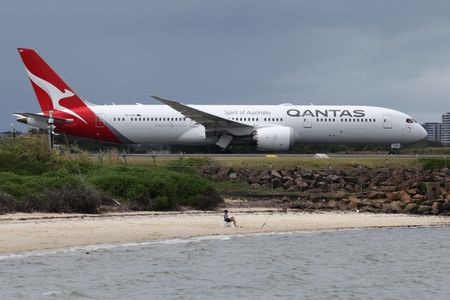

Australia’s flagship carrier Qantas Airways announced Tuesday that it has dramatically increased its fuel expense projections and postponed a planned stock repurchase program due to skyrocketing aviation fuel costs triggered by Middle Eastern conflicts that have disrupted global oil supplies.
The carrier revealed that aviation fuel costs have increased by more than 100%, pushing its projected fuel expenses for the latter half of fiscal year 2026 to between A$3.1 billion and A$3.3 billion ($2.20 billion to $2.34 billion), a substantial jump from its previous estimate of A$2.2 billion.
This dramatic increase highlights how rapidly international conflicts can impact airline operating expenses, as aviation fuel costs have skyrocketed due to refineries being compelled to reduce production following the disruption of crude oil supplies from Middle Eastern regions.
Although Qantas has implemented hedging strategies to protect against much of its crude oil price exposure, the company stated it remains substantially vulnerable to the sharp increase in jet fuel price spreads.
In response to escalating expenses, Qantas is implementing higher ticket prices and redirecting aircraft toward more profitable destinations like Europe, where passenger demand continues to hold steady, while simultaneously reducing domestic flight capacity by approximately 5 percentage points during the June quarter.
The airline indicated that revenue per available seat kilometer (RASK), a crucial indicator of pricing strength, is projected to increase between 4% and 6% for international services and approximately 5% for domestic routes in the six-month period ending in June, demonstrating the impact of increased fares, though noted that roughly half of fourth-quarter bookings were secured prior to the crisis.
“Qantas continues to see strong demand for international travel to Europe as customers seek alternative routes. In response, the Group has redeployed capacity from the U.S. and its domestic network to increase flights to Paris and Rome,” the company stated.
Despite these adjustments, the magnitude and rapid pace of the fuel price shock has led to a more conservative approach to capital allocation, with company leadership choosing to delay a previously announced A$150 million stock buyback program.