
Major luxury retailers are experiencing substantial revenue losses as the ongoing Middle East conflict enters its sixth week, forcing airport shutdowns and dramatically reducing international travel through the region.
High-end brands that depend heavily on duty-free sales at airports are seeing their most profitable sales channels severely impacted, creating additional pressure as these companies were already dealing with weakened demand in China and European markets.
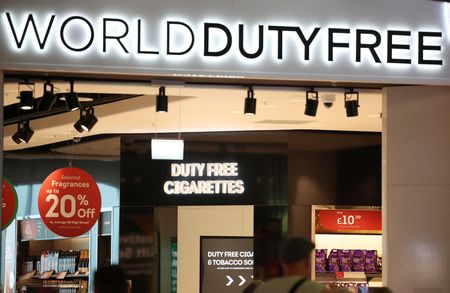
The travel retail sector, valued at $74 billion globally, faces mounting challenges as airlines cancel flights and airports reduce operations. International flight activity to and from the Middle East dropped sharply in early March, and while some recovery has occurred, operations remain significantly below normal levels.
Aviation data from Cirium shows flight cancellations in the Middle East peaked at 65% on March 3 before improving to 13% by March 27, though overall scheduled flights have also decreased substantially.
LVMH, the luxury conglomerate, reported that its DFS duty-free operations are reducing growth by two percentage points for its selective retailing division, which includes the Sephora beauty chain. Chief Financial Officer Cecile Cabanis explained to analysts this week that the conflict has cut at least 1% from overall company sales during the most recent quarter due to decreased spending in Gulf nations.
“What we see today is still that demand is very much down,” Cabanis stated.
Airport retail locations throughout the region have been forced to adjust operations significantly. Dubai International Airport, which houses luxury outlets including L’Oreal’s Aesop, Kering’s Gucci, and Estee Lauder’s Jo Malone brands, is operating with fewer terminals following a drone attack that temporarily shut down the facility. Kuwait International Airport has closed completely due to repeated drone strikes, halting all sales for retailers including Avolta and Boots.
Avolta, which generates 3% of its revenue from Middle Eastern operations, has responded by relocating merchandise from slower-performing locations to areas with higher customer traffic, according to CFO Yves Gerster. He noted that some partially closed airports have seen increased sales of food and other essentials for travelers who become stranded.
Kering’s CFO Armelle Poulou reported that travel retail performance has declined compared to the previous year, though she noted that “performance with local customers has been more resilient than tourism-related demand.” The conflict reduced Kering’s overall March sales by 3%, representing a 1% impact for the entire quarter, with similar effects specifically affecting the Gucci brand.
Industry observers are particularly focused on upcoming earnings from Estee Lauder, scheduled for May 1, as the company considers a $40 billion acquisition of Spanish rival Puig. Puig derives approximately 10% of its revenue from travel retail, making it among the beauty companies most vulnerable to fluctuations in airport shopping and international travel patterns.
L’Oreal, whose Asian travel retail operations represent less than 4% of the company’s $44 billion in 2025 sales, will announce quarterly results on April 22. While the company doesn’t disclose comprehensive travel retail figures, industry analysts indicate that Asia represents its largest travel retail market.
The current disruption highlights the vulnerability of luxury and beauty companies that have increasingly relied on high-margin airport retail and Gulf region hubs to compensate for weaker performance in other markets. Industry experts warn that extended disruptions to Middle East air travel could create additional strain on the travel retail sector, which is still working to recover from the impacts of the COVID-19 pandemic.