
Small business owners at popular U.S. vacation spots are reporting a noticeable uptick in visitors this summer, as more Americans choose to stay closer to home rather than board a plane for an overseas adventure. Rising travel costs appear to be driving the shift, with families swapping international vacations for road trips, shorter stays, and home-cooked meals to stretch their budgets.
While the reports from business owners are largely anecdotal, the trend aligns with broader economic pressures. Higher airfares and gasoline prices have made getting away more expensive, and events like the FIFA World Cup soccer tournament and the United States’ 250th birthday celebrations are giving Americans extra reasons to explore their own backyard this season.
Motor club federation AAA projected that 72.2 million Americans would travel at least 50 miles from home between June 27 and this Sunday — a 0.5% increase over last year’s July Fourth travel window. However, nearly all of that growth is attributed to people choosing cruises, buses, and trains, with AAA forecasting essentially no change in the number of people driving or flying.
Tarik Dogru, an associate professor at Florida State University’s Dedman College of Hospitality, said a meaningful drop in overseas travel could actually benefit locally rooted businesses. When fewer Americans fly abroad or across the country, more of their vacation dollars stay in their own region, he explained.
“The current economic and tourism dynamics are likely to redirect spending toward small businesses, such as regional restaurants, local attractions, Airbnb hosts, and roadside businesses along drive routes that serve budget-conscious and close-to-home travel,” Dogru said.
If this pattern continues through the rest of the year, it could help narrow a travel and tourism trade deficit the U.S. has carried since the COVID-19 pandemic. According to the National Travel and Tourism Office, Americans have spent more on foreign travel than international visitors have spent on U.S. travel-related goods and services every year since 2020.
Morgan Kain, a teacher from Baltimore, said her family is feeling the financial pinch firsthand. She, her husband, and their three children typically take several trips each summer, including a week at a Virginia lake house. Last year, the family spent six weeks traveling through Italy. This year, the plans are much more modest.
“This summer, we’re still doing a couple overnights and the lake house, but nothing else,” Kain said. “Things are crazy expensive, from travel costs to food costs to gas.”
Despite fuel prices running higher than a year ago, AAA noted that 85% of Independence Day week travelers were still expected to drive to their destinations, since road trips generally remain cheaper than flying.
Near Lake Tahoe, which sits along the California-Nevada border, multiple businesses said they’ve been seeing more visitors arriving by car from West Coast cities.
Ron Williams, owner of Tahoe Sports, admitted he was nervous heading into the season that economic worries might keep customers away from renting boats and Jet Skis. The price of boat fuel climbed during the Iran war, adding to his concerns. But so far, Williams said he is “pleasantly surprised with how well the business is doing across the board,” with future bookings running 10% ahead of where they stood at this time last year.
“I think people are probably sticking close to home, and being in Lake Tahoe, we have such a huge drive-up market,” Williams said.
Jerry Bindel, who manages three Lake Tahoe area rental properties for Pyramid Global Hospitality, said the summer rebound came as a relief after a slow ski season caused by an unusually warm winter with little snowfall. He also noticed a sign that visitors are watching their wallets — more guests are bypassing restaurants and instead cooking their own meals using the kitchens in their rental units or firing up the outdoor barbecue grills.
“We’re seeing a lot of additional use on those items this summer,” Bindel said.
In Asheville, North Carolina, small business owners have been working to rebuild tourism since Hurricane Helene and severe flooding devastated the city’s landscape, buildings, and infrastructure in September 2024.
Aubrey Anderson, who owns a river tubing business in Asheville, cut her summer staff from 100 employees down to 25 in the aftermath of Helene. But after reservations began picking up earlier this year and she started seeing “a lot of new people coming into town,” she felt confident enough to bring her workforce back up to 50 for Zen Tubing’s current season.
Many of those new faces are day-trippers driving in from South Carolina, Tennessee, and other parts of North Carolina to spend a few hours floating down the French Broad River for around $30 per person, Anderson said. After tubing, many visitors from across the region stop for a meal, visit a brewery, shop locally, or check out other attractions before heading home — which Anderson called “a win for Asheville as a whole.”
“We’re definitely seeing a lot of locals, so to speak,” Anderson said. “People are maybe skipping the long drive to the beach this year, and they’re kind of doing just something close by so that they can save a little money and still enjoy a family outing.”
In Asheville, factory tours at French Broad Chocolate have seen a surge this summer, according to Jael Skeffington, the chocolate maker’s CEO and co-founder. Visitors frequently stop in the on-site cafe for ice cream or coffee and pick up chocolates before leaving.
“So it’s good for business, but it also seems to be what people are looking for is something to do, not just something to eat — something to experience,” Skeffington said.
Meanwhile, soccer fans have been flocking to Kansas City, Missouri, along with other North American cities hosting FIFA World Cup matches.
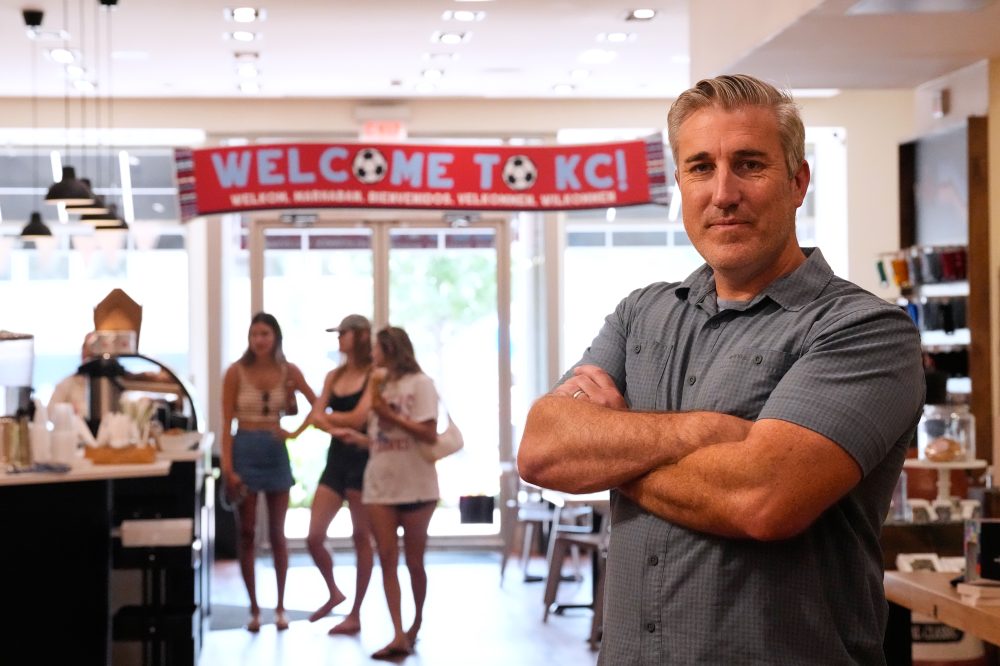
Made in KC, a chain of four cafes and 11 shops selling locally made sauces, Kansas City-themed gifts, and sports fan merchandise, has experienced “really noticeable spikes of traffic” at all its locations during the tournament, according to co-owner Keith Bradley. World Cup-related items, including $40 hats featuring the colors of competing teams, have been especially popular. Bradley also noted that American tourists from nearby Midwestern cities — Des Moines and Omaha are each within a three-hour drive — appear to outnumber visitors coming from farther away.
“We have a couple locations that are in tourist parts of Kansas City. … But then we also have little shops that are just in suburban neighborhoods in Kansas City, and those have also seen World Cup traffic of people going to watch parties, people coming in town to go to the games, and then tourists just exploring Kansas City on their own,” Bradley said.
Mollie Lothman, co-owner of McLain’s Bakery, a family-owned cafe with five locations, said she believes Kansas City’s relatively affordable food and lodging costs compared to larger or more well-known host cities have worked in the city’s favor.
“We’re one of the smaller markets who got the World Cup in Kansas City, but we’re also probably one of the least expensive markets, in terms of family budgeting, to try to come and experience the World Cup,” Lothman said. “So I think that’s been a huge draw for people.”