
South Korean chipmaker SK Hynix kicked off what is expected to be one of the world’s biggest stock offerings on Monday, launching an approximately $28 billion listing on the Nasdaq exchange, according to regulatory documents filed by the company.
The semiconductor giant plans to offer 17.79 million new shares through a depository receipt listing, a move that would place it among the most highly valued technology companies on the planet.
Each group of ten American Depositary Receipts will correspond to a single common share of the company. The price range for the offering was set to be announced Monday and will be tied to SK Hynix’s trading price on the Seoul stock exchange.
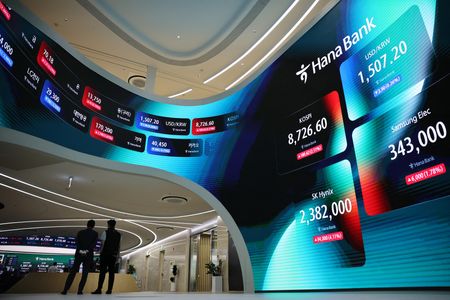
SK Hynix shares were up about 1% on Monday, and the stock has climbed roughly 273% so far this year — a dramatic rise fueled by booming investor appetite for companies tied to artificial intelligence. South Korea’s broader KOSPI index edged up 0.2% in early Monday trading.
The company has been one of the biggest winners of the global AI investment wave, outpacing major competitors including Samsung Electronics and Micron in recent performance.
According to regulatory filings, the final price for the New York listing will be determined on Thursday, with shares beginning to trade on Friday. Company executives are scheduled to meet with international investors during a roadshow throughout the week.
The offering is projected to rank as the second-largest share sale on record, trailing only last month’s record-breaking $85.7 billion initial public offering by SpaceX. It would surpass Saudi Aramco’s $25.6 billion IPO from 2019 and a similarly sized offering by Alibaba in 2014.
SK Hynix plays a critical role in the AI industry as a leading provider of high-bandwidth memory chips, supplying major technology companies including Nvidia and Google.
Last week, the company announced plans to invest 100 trillion won — equivalent to approximately $64.38 billion — in the construction of new semiconductor manufacturing facilities, including a plant dedicated to NAND flash memory. The investment is part of a large-scale South Korean initiative designed to distribute the economic benefits of the AI boom more broadly.