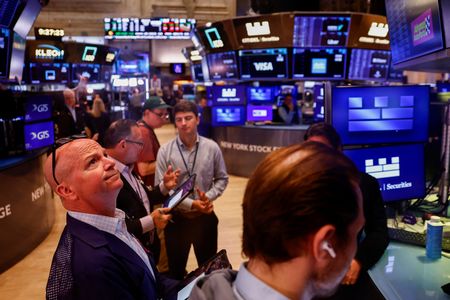
Wall Street’s biggest financial institutions have collected a substantial payday following their work on SK Hynix’s enormous share offering, pulling in close to $260 million in fees — a welcome windfall after earning a relatively slim cut from SpaceX’s historic stock market debut just weeks earlier.
According to filings from SK Hynix, the fees represented roughly 0.97% of the total amount raised in the deal. That percentage was actually higher than what bankers received for their work on SpaceX’s initial public offering, where advisors took home $500 million — or about 0.67% — of the $75 billion raised. SpaceX’s IPO broke the previous record set by Saudi Aramco back in 2019, and also surpassed SK Hynix’s own U.S. listing this week in total size.
Citigroup came out on top among the banks advising on the SK Hynix deal, earning more than $70 million — a figure that exceeded what other banks on the transaction received by about 20%, according to a source with direct knowledge of the matter. That source asked not to be identified because the information is confidential. Citigroup served as both a joint global coordinator and the depository bank for the offering. The bank declined to offer any comment on its fee earnings.
Bank of America, Goldman Sachs, and JPMorgan also served as global coordinators on the deal. JPMorgan declined to comment, while Bank of America and Goldman Sachs did not respond to requests for a statement.
South Korean chipmaker SK Hynix raised approximately $26.5 billion through the offering after setting its U.S. stock price at $149 per depository receipt. That price represented a 2.7% premium above the company’s average share price on the Seoul exchange over the prior three trading days.
Chinese gaming and internet giant Tencent is reportedly in discussions to take the top ownership stake in artificial intelligence startup Manus, according to two sources familiar with the situation who spoke on Friday.
The negotiations come after Chinese authorities ordered Meta to reverse its $2 billion purchase of the AI startup, prompting investors to search for other options.
The Financial Times was first to report on the Tencent discussions earlier that day.
According to one of the sources and a third individual who was briefed on the situation, Tencent — along with Manus’ original backers, including ZhenFund and HSG — are working on a plan to repurchase the company from Meta for a price of no less than $2 billion.
Tencent, Manus, Meta, and the two investment firms had not responded to requests for comment at the time of reporting.
Asian stock markets surged Friday morning, driven by gains in semiconductor and artificial intelligence companies, even as tit-for-tat military strikes between the United States and Iran continued to threaten oil flows through the vital Strait of Hormuz.
The ongoing back-and-forth attacks have further weakened a fragile ceasefire that was only about three weeks old, once again putting oil prices, inflation concerns, and the global interest rate outlook under the microscope.
Brent crude futures were on pace for a roughly 5% gain for the week — their strongest weekly performance since early May. However, at $76.03 per barrel, Brent has surrendered most of the price increases it accumulated since the conflict broke out at the end of February.
Nick Twidale, chief market strategist at ATFX Global in Sydney, acknowledged the troubling geopolitical picture but noted that investors appear unfazed. “I’m looking at updates from the Middle East and things don’t look good, but investors seem incredibly resilient to those risks at the moment, with tech again driving markets higher,” he said.
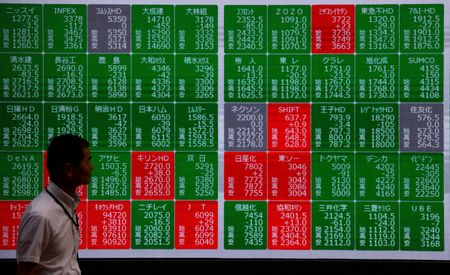
Japan’s Nikkei index climbed 1.8%, while South Korea’s KOSPI — considered the heart of the global AI stock rally — jumped 2.4% in early trading. Chip industry heavyweights SK Hynix and Samsung each gained about 3%. Markets in Taiwan were closed for the session.
The MSCI’s broadest measure of Asia-Pacific shares outside Japan rose 0.76%.
Twidale added a note of caution despite the upbeat start: “We will start on the front foot again in Asia, but I’m still very cautious that we are not pricing in enough event risk that the Strait of Hormuz may be closed again in the coming days.”
Throughout the week, investors have largely set aside concerns about the military escalation, choosing instead to focus on the AI investment theme that has pushed global stock markets to record levels — even as questions grow about whether the scorching rally can be sustained.
Overnight in the United States, the tech-dominated Nasdaq closed sharply higher after Micron Technology announced plans to invest more than $250 billion domestically through 2035, giving chip stocks a major boost. The Philadelphia SE Semiconductor index rose 3%.
Much of Friday’s attention will be focused on SK Hynix’s debut on U.S. markets. The South Korean chip maker priced its American Depositary Receipts at $149 on Thursday, raising approximately $26.5 billion — a sign of robust investor demand for exposure to the AI supply chain.
The massive offering, intended to fund new manufacturing facilities and equipment to keep up with soaring AI chip demand, is expected to rank as the world’s second-largest share sale ever, trailing only SpaceX’s record-breaking IPO last month.
Sam Konrad, investment manager for Asia Equity Income at Jupiter Asset Management, said the U.S. listing could result in the ADR trading at a premium over SK Hynix’s locally listed shares, but could also help boost the valuation of the Korean-listed stock. “If SK Hynix re-rates that should help support a re-rating in Samsung Electronics too, especially when they release details of their shareholder return plans,” said Konrad, who holds positions in both South Korean companies.
SK Hynix’s Korean shares have skyrocketed 238% so far this year, pushing the broader KOSPI benchmark to record highs and making it the world’s best-performing major stock market since the beginning of 2025.
Still, the AI frenzy has also produced sharp market swings in recent weeks as investors grow nervous about lofty valuations and question whether the companies can maintain their extraordinary profit growth.
In currency markets, the Japanese yen remained a focal point, hovering near its lowest point in 40 years as traders watched for potential intervention from Japanese authorities. The yen last traded at 162.18 per U.S. dollar, close to the 1986 low of 162.84 it reached last week.
The U.S. dollar was largely flat as investors waited for new signals on the direction of American interest rates. Traders are currently pricing in 34 basis points of rate hikes for the year, though that calculation could shift depending on how much inflationary pressure the ongoing conflict generates.
In commodities, gold was heading for a roughly 1% weekly loss and was last trading at $4,113 per ounce in early Friday trading.
Oil prices ticked down slightly during early trading on Friday, July 10, but both major benchmarks were still positioned to close out the week with significant gains, driven by continued military exchanges between the United States and Iran.
Brent crude futures dropped 6 cents, or 0.08%, to $76.24 per barrel as of 0125 GMT. U.S. West Texas Intermediate crude slipped 4 cents, or 0.06%, settling at $72.04 per barrel. Despite those modest daily declines, Brent was on pace for a 6% weekly gain, while WTI was heading toward a 5% weekly increase.
The price gains were largely tied to escalating tensions in the Middle East. Iranian armed forces launched strikes against U.S. military infrastructure located in Gulf states on Thursday, responding to earlier U.S. attacks on Iran’s southern coastal and eastern provinces. The exchange of strikes put further strain on a ceasefire that had only been in place for about three weeks. Separately, Iranian media outlets reported a series of explosions across southern Iran, including in Bushehr, the site of one of the country’s nuclear facilities.
The renewed hostilities occurred on the same day Iran held burial services for its Supreme Leader, Ayatollah Ali Khamenei, who was killed on February 28 — the first day of the war. His death had been followed by a week of large funeral processions and public rallies across the country.
The ongoing conflict has prevented the full reopening of the Strait of Hormuz, a critical shipping lane that, before the war began, carried roughly 20% of the world’s daily oil and natural gas supplies.
Daniel Hynes, senior commodity strategist for ANZ bank, offered some perspective on why markets weren’t more rattled. “Despite the U.S. ramping up attacks on military sites in Iran, the market drew some reassurance from the Trump administration’s decision to avoid targeting Iranian energy infrastructure,” he said. “This was aided by comments from President Trump, who said he doesn’t expect a return to a full-scale conflict.”
President Donald Trump had stated on Wednesday that he did not believe the war would reignite, adding that “anything that happens is going to be over very quickly.”
On the economic front, the number of Americans filing new unemployment claims fell last week, a sign that the U.S. labor market continues to operate in what analysts are calling a “slow-hire, slow-fire” environment.
Meanwhile, in China — the world’s second-largest economy — producer price inflation jumped to a four-year high in June, squeezing manufacturers’ profit margins as sluggish domestic demand limited their ability to raise prices. That inflationary pressure raised concerns about weaker energy demand from one of the globe’s top oil consumers.
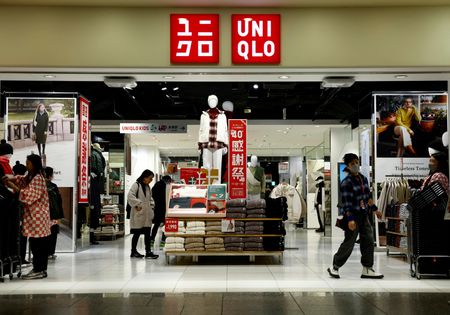
Shares of Fast Retailing, the Japanese company that owns the Uniqlo clothing brand, took a steep dive in Tokyo markets Friday, even after the firm announced an upgraded profit forecast — with investors spooked by a warning over the struggling yen.
The stock dropped as much as 5.1% during early trading in Tokyo. The sell-off came after the company announced Thursday, following the close of markets, that it was raising its full-year operating profit guidance to a record 730 billion yen, which equals approximately $4.50 billion U.S. dollars.
Despite the downward move Friday, Fast Retailing’s shares have performed remarkably well this year, climbing more than 42% in 2026.
Jun Kitazawa, Deputy Manager of the Investment Information Section at Miki Securities, offered some context for the decline. “The share price has risen over roughly the past three months, so a sense of the good news being priced in seems to have emerged, but bargain-hunting buying may eventually come in,” he said.
The company reported solid results for the nine-month period ending in May. However, Fast Retailing Chief Financial Officer Takeshi Okazaki flagged concerns about the Japanese yen, which has been hovering near a 40-year low. He cautioned that the currency’s continued weakness is expected to put pressure on both sales and profits in Japan during the company’s fourth quarter.
Okazaki warned that the yen’s decline “could potentially have a significant impact on our performance.”
At the time of reporting, one U.S. dollar was equal to approximately 162.31 yen.
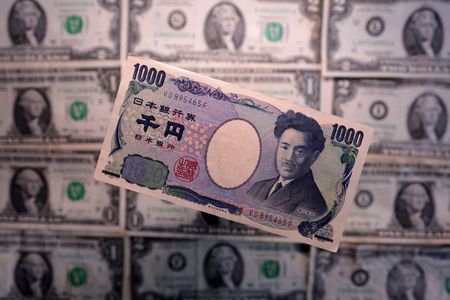
The Japanese yen remained under heavy pressure Friday, trading close to a 40-year low and heading toward a weekly decline, as traders kept a close watch for any potential move by Japanese officials to prop up the struggling currency.
Overnight, investors appeared to shrug off escalating tensions between the U.S. and Iran, with oil prices falling and stock markets climbing. However, the collapse of a fragile ceasefire between the two nations has once again raised concerns about energy prices and global inflation going forward.
“The specter of war still hangs over sentiment,” said Thierry Wizman, global FX and rates strategist at Macquarie Group.
“The question confronting traders is whether Iran is willing to return to large-scale kinetic war with the U.S. and its allies if necessary to strengthen its claim of control over the Strait of Hormuz,” Wizman added.
The U.S. dollar slipped slightly on Friday but was on track to close the week with little overall movement, as fresh safe-haven demand was counterbalanced by fading expectations of a Federal Reserve rate increase.
The dollar was trading at 162.36 yen — not far off a peak reached last week that marked the highest level in four decades — and was set to gain more than 0.5% against the yen for the week.
Currency traders have been watching closely for weeks as the yen has continued to weaken beyond 160 per dollar. A possible shift in how Japanese officials might intervene has made it more difficult to predict when action could come.
Analysts at Goldman Sachs weighed in on the situation, noting: “While intervention risks remain top-of-mind as a tactical consideration, we have argued that without a change in the fundamental macro backdrop — higher-for-longer U.S. yields, low recession risk, and lingering fiscal concerns in Japan — the yen will likely continue to steadily weaken in the months ahead.”
“This helps place the yen as a top funding candidate over longer horizons,” the Goldman Sachs analysts added.
The British pound was hovering near its strongest point against the yen since 2007 during early Asian trading Friday, after reaching a peak of 218.00 yen overnight. The euro was last buying 185.64 yen, up 0.6% on the week.
Japan’s Economy Minister Minoru Kiuchi stated Friday that the government would never reveal in advance its preferences regarding how the Bank of Japan should set interest rates.
Elsewhere in currency markets, the euro edged up 0.02% to $1.1433, while the British pound rose 0.03% to $1.3413 and was on pace for a weekly gain of 0.45%.
The Australian dollar was trading at $0.6939, and the New Zealand dollar climbed 0.08% to $0.5759.
The New Zealand dollar was headed for a weekly gain of more than 0.9%, following a rate hike by the Reserve Bank of New Zealand this week along with signals of further tightening to come.
Westpac is forecasting the Reserve Bank of New Zealand will raise rates by 25 basis points in both September and December, with the cash rate expected to peak at 4% in September 2027.
“The exact timing of the tightening profile is highly uncertain and even the tightening we forecast at the September 2026 meeting should not be regarded as a done deal,” said Kelly Eckhold, Westpac’s chief economist.
Australian data center operator NEXTDC announced Friday that it has secured new senior debt facilities worth A$2.3 billion — approximately $1.60 billion in U.S. currency — to help cover the costs of new customer contracts and continued development of its data center facilities.
The newly signed facilities represent an increase of A$500 million over the A$1.8 billion in commitments the company had previously disclosed in May.
NEXTDC described the expanded financing as a reflection of broad financial backing. “The upsize reflects continued strong support from a broad syndicate of domestic and international banks,” the company stated.
Once the deal reaches financial close, NEXTDC’s total available senior debt facilities are expected to grow from A$6.4 billion to A$8.7 billion.
Earlier this year, in April, NEXTDC reported that its pro-forma contracted utilization — meaning the total power capacity formally committed to by customers — surged by roughly 60% to 667 megawatts as of March 31, compared to figures from the end of December.
The company said it expects financial close on the new facilities to take place in mid-July.
Fidji Simo, who held the title of CEO of AGI deployment at OpenAI, announced Thursday that she will be leaving her full-time position at the company behind ChatGPT, transitioning instead to a part-time advisory role following an extended medical leave.
Simo shared the news publicly, explaining that a serious health setback had forced her to take stock of her situation. “Three months ago, I had to go on medical leave after a severe exacerbation of a chronic illness I’ve lived with for seven years. During that time, it became clear that the road to recovery would be much longer and more complex than I had anticipated—and that I needed to focus on it fully,” she wrote in a post on X.
Simo was one of three individuals who joined OpenAI’s board of directors in March 2024, following Sam Altman’s return to his role as CEO of the company.
Altman responded to the news with a heartfelt message of his own on X. “I am really sad about this and very grateful for all Fidji has done for OpenAI, and even grateful for her friendship and who she is as a person,” he wrote.
Global electric vehicle demand continued its upward trend in June, marking the fourth month in a row of growth, according to new data released Friday by consultancy Benchmark Mineral Intelligence.
Total registrations of battery-electric and plug-in hybrid vehicles reached 2 million units for the month, representing a 7% increase compared to June of last year. For the first half of the year overall, volumes were up 2%.
Europe was the standout performer, with EV registrations jumping 31% to approximately 530,000 units — a record high for the month of June. Benchmark Mineral Intelligence identified Europe as the primary driver of global EV growth.
Meanwhile, sales weakened in two of the world’s other major markets. In China, registrations dropped 11% to around 1 million vehicles. North America saw an even steeper decline, with registrations falling 13% following the elimination of U.S. electric vehicle tax credits.
Despite softer demand at home, Chinese automakers have continued to expand their presence in international markets.
NEW YORK — The former chief financial officer of The Epoch Times, a conservative multinational media company, made a last-minute decision Thursday to plead guilty to a conspiracy charge just as jury selection was getting underway in his money laundering trial.
Weidong “Bill” Guan, 63, of Secaucus, New Jersey, entered his guilty plea in Manhattan federal court. He admitted to taking part in what prosecutors described as a scheme to funnel fraudulently obtained unemployment benefits and other money through the New York-based media outlet’s bank accounts and affiliated entities — totaling approximately $67 million.
The conspiracy charge involving illegal financial transactions carries a maximum prison sentence of 10 years. Judge Victor Marrero did not immediately schedule a sentencing date. Guan was allowed to remain free on bail.
During the court proceedings, Guan acknowledged that he recognized there was “a high probability” that funds flowing through accounts he managed “were the proceeds of criminality.”
He went on to say that even with those suspicions, he “chose to accept” the explanations he received and “did not look deeper to verify my concerns.”
Addressing the judge directly, Guan said, “This was a tremendous lapse in judgment. It was wrong and I am very sorry for my actions.”
When the judge asked whether Guan knew his actions were wrong and illegal, Guan confirmed that he did. The exchange took a notable turn when the judge asked if he was pleading guilty and Guan replied, “I feel like I’m guilty.” Judge Marrero clarified that the question was not about feelings, but about guilt. Guan then stated plainly, “I’m guilty.”
Court documents reveal that members of the company’s “Make Money Online” team, which Guan oversaw, used cryptocurrency beginning in 2020 to “knowingly purchase tens of millions of dollars in crime proceeds.” That included money from fraudulently obtained unemployment benefits that had been loaded onto prepaid debit cards.
Prosecutors said stolen personal information was used to open accounts as part of the laundering operation. The funds were then moved through additional bank accounts held by the company, as well as through Guan’s personal bank and cryptocurrency accounts.
Authorities were clear that the charges have no connection to the media company’s journalism or news reporting activities.
Had the case gone to trial, prosecutors said testimony would have come from current and former employees of the company, along with cryptocurrency records and hundreds of emails and text messages. Some of those messages allegedly showed Guan providing misleading information to banks about the nature of the money moving through various accounts.
Federal prosecutors noted that the media company’s revenues surged roughly 410% once the laundering scheme began — climbing from approximately $15 million to around $62 million. Guan allegedly told banks that the spike in transactions was due to an increase in legitimate donations.
The Epoch Times has stated it will fully cooperate with prosecutors. The outlet has shifted toward a politically conservative editorial direction over the years and has been a supporter of President Donald Trump.
Following Guan’s arrest, the company released a statement saying, “The Epoch Times has a guiding principle that elevates integrity in its dealings above everything else.”
CCC Intelligent Solutions, a Chicago-based technology company, is looking into selling the business, according to three individuals with knowledge of the situation.
The company, which develops software and artificial intelligence tools for managing automotive insurance and repair workflows, has enlisted investment bank Morgan Stanley to oversee the potential sale. Outreach has already begun to prospective buyers, including private equity firms, the sources indicated.
Neither CCC nor Morgan Stanley offered a response to requests for comment.
CCC’s platform is used by auto insurers, collision repair shops, vehicle manufacturers, and parts suppliers to handle accident claims, repair management, and related business processes. According to the company, its system connects more than 35,000 businesses within the property-and-casualty insurance industry.
The company’s market value has taken a significant hit over the past year, falling from approximately $6.4 billion to around $3.3 billion. Investors have expressed concern over slowing revenue growth, reduced claims volumes across the industry, and slower-than-anticipated uptake of some of CCC’s newer software offerings. The company’s stock has lost roughly 44% of its value over the last 12 months.
This is not the first time CCC has considered a sale. Back in 2022, Reuters reported that the company was weighing strategic options — including a possible sale — after drawing interest from potential acquirers, though no deal ultimately came together.
A surge in microchip stocks gave U.S. investors something to cheer about Thursday, helping Wall Street push past mounting tensions in the Middle East and concerns that renewed hostilities could stoke inflation down the road.
Here are the major stories shaping markets right now:
Iran struck back overnight, hitting U.S. targets in Kuwait and Bahrain after President Donald Trump declared that an interim deal to end the conflict was finished. Pre-owned home sales in the U.S. dropped unexpectedly in June. Democratic Senate hopeful Graham Planter of Maine stepped back from his campaign after facing a sexual assault allegation. Meta plans to begin producing its own AI chip in September as part of an effort to grow its total computing capacity to 14 gigawatts by next year, according to an internal memo obtained by Reuters. South Korean chip manufacturer SK Hynix is looking to price its U.S.-listed shares at $149, a move that would raise roughly $26.5 billion. And Mexican President Claudia Sheinbaum announced her government intends to file criminal complaints in the United States over Mexican citizens who died while in immigration custody or during anti-immigration operations.
Thursday’s Market Snapshot
The Nasdaq led all major U.S. stock indexes upward, powered by the chip sector’s comeback, while Europe’s STOXX 600 snapped a three-session losing streak with a gain of its own. Seven of the 11 major S&P 500 sectors finished in positive territory, with technology shares out front and consumer staples bringing up the rear. Chip stocks overall climbed 3.1%. The U.S. dollar slipped amid steady jobs figures and rising U.S.-Iran tensions. Treasury bond yields declined as investors moved back into bonds following a recent selloff. On the energy front, front-month WTI crude settled down 2.0% and Brent crude fell 2.2%, while gold climbed more than 1%.
Key Themes to Watch
U.S. equity funding markets remain under pressure following a spike in short-term borrowing costs last month. Near-record stock valuations and heavy demand for popular technology shares are driving up the need for borrowed money. The concern is centered on the equity repo market — where investors pledge stock holdings in exchange for short-term cash. Around the end of the April-June quarter, the cost of financing those positions jumped 200 basis points above the federal funds rate on June 26, the highest level since December 2024, according to Morgan Stanley data.
The cancellation of a federal food security survey is raising alarms about the country’s ability to track hunger. The survey, which was ended last year, had most recently found that 13.7% of U.S. households were food insecure — a 10-year high. Without it, experts say it will be nearly impossible to gauge whether cuts to the food stamp program have worsened hunger, especially among children.
Despite President Trump’s push for peace, sources close to the Kremlin say Russian President Vladimir Putin is likely to escalate the war in Ukraine rather than negotiate. Ukraine’s recent drone attacks on Russian oil refineries and ports have reportedly hardened Putin’s position. Three sources, speaking anonymously, said there is a “high probability” of escalation in the months ahead — a stark contrast to Trump’s claim Monday that Putin wanted the war to end and that a resolution was “closer than people realize.”
What Could Move Markets Friday
Traders will be watching for any new developments in the Middle East, shifts in energy markets, and social media activity from President Trump. Economic data releases from several European countries — including Germany, France, Norway, Denmark, the Czech Republic, Italy, and Portugal — are also on the calendar, along with inflation figures from Brazil and Russia and Canada’s June employment report.
Wall Street powerhouse Goldman Sachs has told its employees they are no longer allowed to participate in prediction-market contracts connected to financial markets or political events, according to a source with knowledge of the situation who spoke on Thursday.
The firm issued an internal memo at some point in the past laying out the new policy, which is designed to prevent situations where staff trading activity could create actual or apparent conflicts of interest — whether with the bank itself, its clients, or the wider financial industry.
Bloomberg News, which broke the story first, reported that employees who repeatedly break the rule could face disciplinary consequences up to and including losing their jobs. Those workers may also be required to give back any financial gains earned through trades that violate the policy.
However, the ban does not extend to all prediction markets — contracts related to sports and entertainment remain fair game for employees, the source noted.
WASHINGTON — The Federal Reserve has revealed the names of prominent figures who will help guide recommended changes to how the nation’s central bank functions. Among those named Thursday are venture capitalist Marc Andreessen, economist Raj Chetty, and former Bank of England governor Mervyn King.
The three are among the co-leaders of five separate task forces that Fed Chair Kevin Warsh announced last month. The remaining leaders represent a mix of business executives and public officials.
Warsh had called for “regime change” at the Fed last year while he was being considered by the Trump administration to take over from former chair Jerome Powell. Since taking the helm, Warsh has signaled a desire to share less publicly about the Fed’s interest rate thinking and has expressed interest in trimming the central bank’s approximately $6.7 trillion in government bond holdings.
Still, it remains to be seen just how much impact these task forces will have. Most of the directors announced Thursday are respected names in economics and business — not longtime critics of the Fed. Those who follow the central bank closely say Warsh’s decision to use task forces suggests he’s looking to build consensus among fellow Fed officials rather than force through changes unilaterally.
“The U.S. economy has changed significantly over the last generation, and never more so than right now,” Warsh said in a written statement. “Each task force will carefully consider whether policymakers’ means and methods, analytical tools and policy approaches can be improved upon.”
Each of the five task forces will have three co-leaders and will receive support from Fed staff, according to the central bank.
One task force will zero in on how artificial intelligence and other emerging technologies could reshape productivity and the job market. Warsh has frequently stated his belief that AI will bring sweeping changes to the American economy.
Leading that effort will be Andreessen, a major investor in both AI technology and cryptocurrency firms. Joining him will be Asha Sharma, an executive vice president at Microsoft and CEO of its Xbox division, along with Charles Jones, a Stanford economist currently on leave with Anthropic.
Chetty, who teaches at Harvard, will co-lead a task force focused on the data sources the Fed relies on. He has built a reputation for using massive data sets to follow families’ financial trajectories across generations and identify which parts of the country have seen the greatest economic mobility.
Also co-leading that data task force are Doug McMillon, the former president and CEO of Walmart, and Kevin Murphy, an economics professor at the University of Chicago.
A third task force will take a hard look at the Fed’s balance sheet, which has grown substantially since the Great Recession of 2008-2009. Co-leading that group are Raghuram Rajan, a former head of the Reserve Bank of India; Harvard economist and former Treasury official Karen Dynan; and Jeremy Stein, a former Fed governor.
Greg Mankiw, who served as a top economist in the George W. Bush administration, and Thomas Sargent, a Nobel laureate at New York University, will co-lead a task force on inflation frameworks. Meanwhile, King, the former Bank of England governor, will be among the leaders of the task force focused on Fed communications.
Federal Reserve Chairman Kevin Warsh has chosen a diverse and intellectually varied roster of economists and former central banking officials to lead five task forces he is creating to examine how the U.S. central bank functions.
The review will cover a wide range of subjects, from technical matters such as how the Fed manages its balance sheet, to forward-looking concerns like the economic impact of artificial intelligence.
Warsh first announced the task forces at a press conference following his inaugural policy meeting as Fed chairman, held June 16-17. On Thursday, the central bank revealed the names of the people who will lead each group.
According to a Fed statement, the groups “will operate independently, with a mandate to follow the evidence, provide candid feedback, and produce rigorous findings for the Federal Open Market Committee.”
Among those chosen are Harvard University economics professor Raj Chetty, known for pioneering the use of alternative and real-time data to study how households and communities are doing — he will help lead a panel focused on data. Tech investor Marc Andreessen will serve as one of three co-leads on a panel examining productivity and jobs. Greg Mankiw, who previously chaired the Council of Economic Advisers during the George W. Bush administration, will co-lead a task force on inflation.
Warsh explained the reasoning behind the review in a statement: “The U.S. economy has changed significantly over the last generation, and never more so than right now. Each task force will carefully consider whether policymakers’ means and methods, analytical tools and policy approaches can be improved upon.” He added, “The goal is straightforward: to ensure the Fed is best positioned to achieve our objectives in this consequential time.”
Drivers across the country have been facing an unpredictable situation at the gas pump after the United States and Israel launched military action against Iran, setting off a chain of events that has sent fuel prices up and down with little warning.
The conflict disrupted shipping lanes through the Strait of Hormuz, a critical waterway for global oil transport, creating uncertainty in energy markets and making it difficult for everyday consumers to plan around fuel costs.
The back-and-forth swings in gas prices have left many households scrambling to adjust their budgets, with no clear end in sight to the volatility.
Financial experts suggest that drivers consider a few strategies to cope with the unpredictability, including filling up when prices dip rather than waiting, reducing unnecessary trips, and keeping an eye on fuel price tracking apps to find the best deals in their area.
For now, analysts say the situation in the Middle East will continue to play a major role in determining what Americans pay every time they pull up to a gas station.
IHeartMedia has reached an agreement with federal regulators to resolve an investigation into allegations that its radio stations pressured musical artists into performing at company-hosted concerts and festivals in return for more favorable airtime, the Federal Communications Commission announced Thursday.
The FCC identified IHeartMedia as the largest owner of radio stations in the country. Under the terms of a consent decree, the company must follow strict disclosure procedures governing the connection between song airplay and artist appearances at live events, with the goal of ensuring there are, in the agency’s words, “no prohibited pressure or relationships.”
Private credit firms in the United States raised more money than they have in two years during the second quarter — but they were far less willing to lend it out, according to new industry data.
North America-focused closed-end direct-lending funds brought in $16.25 billion during the quarter, a dramatic jump from just $1.3 billion raised in the first quarter, according to figures from Preqin. That marked the strongest fund-raising performance in two years for the sector.
Despite that influx of capital, actual lending activity moved in the opposite direction. U.S. direct-lending volume — a measure of how much money private credit funds are loaning directly to companies — dropped roughly 55% compared to the previous quarter. Total loan volume fell to $33.59 billion in the second quarter, down from $74.67 billion in the first quarter, according to PitchBook/LCD data. That represents the lowest level of direct lending since the second quarter of 2023. The number of deals also declined, dropping from 217 to 154.
Direct lenders are private credit funds that provide loans straight to companies — often to help finance buyouts, acquisitions, or debt refinancings — bypassing traditional banks and the broader loan market.
The gap between money raised and money deployed suggests that while investor interest in private credit remains strong, the firms managing those funds are becoming increasingly selective about which deals they will finance.
Jun Li, EY’s global and Americas wealth and asset management leader, attributed the slowdown to several factors, including weaker merger and buyout activity, delays by borrowers, growing competition from the broader syndicated loan market, and more cautious decision-making by private credit managers.
The steepest declines were seen in lending tied to private equity-backed deals, which have historically been a major driver of direct-lending demand. Buyout firms routinely use private credit loans to fund acquisitions, but that category of lending fell to $19.40 billion in the second quarter from $44.61 billion in the first, per PitchBook/LCD data. Lending connected to leveraged buyouts specifically dropped to $9.79 billion from $22.31 billion.
Part of the hesitation among lenders traces back to loans made during the 2021-2022 boom period, when interest rates were lower and lending terms were more relaxed. As rates climbed higher, many borrowers have struggled to keep up with payments, prompting lenders to push for better pricing and tighter protections on any new deals they consider.
Some firms are also dealing with stress in their existing loan portfolios. Bryant Riley, chairman and chief executive of B. Riley Financial, noted that older loans are showing signs of strain, leading some business development companies to hold onto cash in case troubled borrowers need additional support rather than deploying it into new lending.
Private business development companies have also faced requests from investors to pull their money out, while many publicly traded BDCs are seeing their shares trade below the actual value of their assets — making it harder for them to raise new equity capital.
Looking ahead, EY’s Li offered a longer-term perspective: “Over the long term, investors are likely to place greater value on underwriting quality and risk-adjusted returns than on deployment speed alone.”
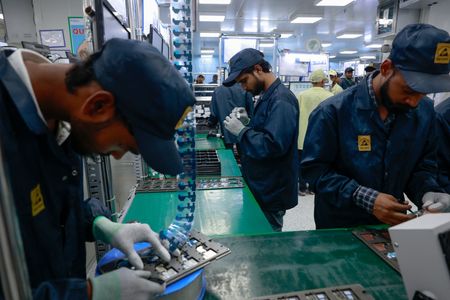
Dixon Technologies announced Thursday that the Indian government has approved its joint venture with Chinese smartphone manufacturer Vivo Mobile, opening the door for the two companies to establish a smartphone production operation within India.
Under the terms of the agreement, Dixon will hold a 51% majority stake in the venture, while Vivo Mobile India will own the remaining 49%.
The approval process was not routine. Indian regulations require senior government-level clearance for large investments made by companies from countries that share a land border with India — a rule that applies to Chinese firms — meaning the deal faced heightened scrutiny before receiving the go-ahead.
Once operational, the joint venture will function as an original equipment manufacturer, producing smartphones and other electronic devices. It will take on Vivo’s smartphone production orders as a primary focus.
Dixon also noted that the new venture will have the flexibility to manufacture electronic products for other brands beyond Vivo, potentially broadening its customer base within India’s growing electronics sector.
Prospective homebuyers are facing higher borrowing costs this week as the average 30-year fixed mortgage rate crept closer to 6.5%.
Mortgage buyer Freddie Mac reported Thursday that the benchmark 30-year rate rose to 6.49%, up from 6.43% the previous week. At this same point last year, that rate stood at 6.72%.
When mortgage rates climb, borrowers can end up paying hundreds of dollars more each month, which cuts into what they can afford to spend on a home.
Rates have stayed elevated after briefly dipping below 6% in February — the first time that had happened since late 2022. They then climbed again in May, reaching their highest point in nine months. That upward pressure has taken a toll on home sales throughout the year.
The cost of refinancing also ticked upward. The average rate on a 15-year fixed mortgage — a popular option for homeowners looking to refinance — rose to 5.82% from 5.79% last week. A year ago, that rate was 5.86%, Freddie Mac said.
Several forces shape where mortgage rates land, including the Federal Reserve’s interest rate decisions and how bond market investors read the economic and inflation outlook. Rates typically move in step with the 10-year Treasury yield, which lenders rely on when setting home loan prices.
Concerns about inflation heating up — driven in part by higher crude oil prices since the war with Iran began in late February — have pushed long-term bond yields upward, pulling mortgage rates along with them.
By midday Thursday, the 10-year Treasury yield sat at 4.55%, compared to 4.49% a week earlier. Back in late February, just before the war started, it was only 3.97%.
The current 30-year mortgage rate has essentially returned to where it was two weeks ago.
Even though average long-term rates are still lower than they were a year ago, the uncertainty created by the conflict with Iran has left many potential buyers hesitant to make a move.
Sales of previously owned homes across the U.S. fell during the first quarter of this year compared to the same period a year ago, continuing a housing slowdown that stretches back to 2022 when rates began rising from their pandemic-era lows.
Through the first six months of this year, seasonally adjusted existing home sales are up just 0.7% compared to the same stretch in 2025, according to the National Association of Realtors.
Overall, existing home sales continue to hover near a pace of 4 million annually — well short of the historical average closer to 5.2 million.
U.S. equity funding markets are still under strain following a sharp rise in short-term borrowing costs last month, as stock prices hover near record levels and intense demand for leveraged technology trades keeps the pressure on.
The concern is focused on the equity repurchase — or repo — market, where investors borrow short-term cash using their stock holdings as collateral. As the June quarter came to a close, the cost of that borrowing surged dramatically. According to data from Morgan Stanley, financing costs for equity positions climbed to roughly 200 basis points above the federal funds rate on June 26 — the highest level since December 2024.
Those costs have since dropped by more than half, now sitting around 89 basis points based on a metric with a quarterly maturity. But market insiders say the underlying conditions that pushed rates so high are still very much present — including a boom in leveraged exchange-traded funds that traders have been snapping up to bet on high-demand sectors like semiconductors.
That sustained appetite for leverage means another round of funding stress could be coming, particularly around future quarter-end periods, when banks typically pull back from lending to clean up their balance sheets for reporting purposes. That pullback makes short-term cash harder to get and more expensive, which can trigger a broader retreat from popular market positions.
“The risk of a funding spike may be with us for the foreseeable future,” said Martin Tobias, a U.S. rates strategist at Morgan Stanley in New York.
Multiple indicators suggest investors are leaning on borrowed money more than ever, Tobias said. Under normal circumstances, equity financing rates trade only a few basis points above benchmark rates like the federal funds rate or the Secured Overnight Financing Rate, known as SOFR. Because equity financing is backed by highly liquid collateral — unlike unsecured borrowing — the cost should stay only slightly above the risk-free rate, according to Kevin Muir, an independent proprietary trader based in Toronto.
Despite that collateral advantage, financing costs have stayed elevated. That coincides with primary dealers carrying near-record levels of equity financing exposure on their books, with borrowing heavily concentrated in a narrow group of stocks — mainly technology and semiconductor companies. Federal Reserve figures show dealers held approximately $211 billion in such exposure as of June 24.
“What these equity financing metrics are signaling is that the marginal buyer has become one that’s been increasingly reliant on leverage,” Tobias said, referring to the category of market participants — such as leveraged investors — who actually move prices.
Tobias noted that his measure of dealers’ equity repo exposure relative to the S&P 500’s free float adjusted market capitalization has climbed 50% over the past year, a sign that each dollar of investible equity is increasingly propped up by borrowed money.
The market’s leadership has also narrowed, with leverage appearing to concentrate in hot technology sectors. That makes the broader market more susceptible to a sharp reversal if investor sentiment turns.
“The next correction could very well be much larger than people expect because of the crazy amount of speculation that’s occurring,” said Muir, adding that the recent funding spike “signifies the monstrous amount of demand in equity markets.”
Muir pointed to the rapid expansion of leveraged exchange-traded funds as one key example. These products require banks and dealers to take on additional financing and hedging, leaving the market heavily positioned for just one outcome — rising stock prices. He compared the current climate to a crowded trade where optimism has become deeply embedded, warning that while a correction isn’t necessarily around the corner, any eventual pullback could be significantly more severe as a result.
Sam Earl, a U.S. rates strategist at Barclays, frames the situation as a basic supply-and-demand problem. Demand for equity financing has surged, but dealer balance sheet capacity has not kept up.
“When you have a massive run-up in equity prices so quickly, that’s just a ton of balance-sheet capacity that’s being used,” Earl said.
He estimates the equity financing market is approximately $10 trillion in size. A 10% increase in leveraged equity exposure can generate roughly $1 trillion in additional financing demand. Add in strong gains in overseas markets — particularly in Asia — and available capacity can be consumed quickly.
Earl said similar pressures are likely to return unless dealer balance sheets expand considerably or stock prices cool enough to ease financing demand. Neither of those outcomes looks likely anytime soon. U.S. stocks remain near record highs, though brief pullbacks tied to geopolitical developments — such as headlines around Iran — remain possible. Enthusiasm for technology and artificial intelligence trades continues to run strong, and demand for leverage shows little sign of letting up.
“It’s a very dangerous environment if this all unwinds. The potential for an accident is increasing,” Muir warned.
NEW YORK — A coalition of prominent news organizations, including The New York Times and the Daily News, is asking a federal judge in Manhattan to impose sanctions on OpenAI, intensifying a legal battle over artificial intelligence and copyright law that many say could determine the fate of the news industry.
The media companies allege that OpenAI — the company behind the popular ChatGPT chatbot — has been concealing evidence critical to what could become a landmark copyright infringement trial. At the heart of the case is how OpenAI and its business partner, Microsoft, used millions of news articles to develop their AI technologies. The broader question is whether AI chatbots are unfairly drawing users away from news websites, capturing web traffic without performing the reporting work that produced the content.
A court filing submitted Thursday in a Manhattan federal courthouse accuses OpenAI of choosing “obstruction” rather than turning over datasets and ChatGPT activity logs that could demonstrate how the AI system made use of copyrighted journalism. The news organizations are asking the judge to penalize OpenAI for what they describe as “discovery misconduct” that could distort the evidence in the case. They say a recent deposition of an OpenAI employee contradicts statements the company previously made.
Attorney Steven Lieberman, who represents the Daily News and seven of its affiliated newspapers, said OpenAI has spent two years making false claims about its capacity to search for copyrighted material in its AI training data and logs.
“This motion asks the court to punish OpenAI for hiding and destroying evidence showing how ChatGPT was trained on stolen journalism,” Lieberman said.
OpenAI did not respond to a request for comment by Thursday.
The New York Times originally filed suit against OpenAI and Microsoft in late 2023, roughly a year after ChatGPT launched and set off a wave of commercial AI development that began transforming how people look up information online. The danger to news outlets became even clearer in 2024, when Google began displaying AI-generated answer summaries at the top of search results — cutting into the advertising revenue that news sites depend on when readers click through to their stories.
Since then, additional news organizations have joined the legal effort, including MediaNews Group-owned outlets such as the Daily News and the Chicago Tribune, digital publisher Ziff Davis, and the nonprofit Center for Investigative Reporting.
OpenAI and other technology companies have maintained that training AI systems on digitized books, web articles, and other online text is permitted under the “fair use” provision of U.S. copyright law. That argument is now being tested across dozens of lawsuits brought by visual artists, authors, music labels, and other creative industries — with varying outcomes so far.
In the largest AI copyright settlement to date, OpenAI competitor Anthropic agreed to pay book authors $1.5 billion after its Claude chatbot was trained on pirated works. That figure, while substantial, represents only a small portion of Anthropic’s $965 billion market valuation as the company prepares to go public.
The New York Times is making a somewhat different legal argument than the book authors. In its original lawsuit and an updated complaint filed last month, the newspaper focused on unfair competition, arguing that AI companies are trying to “free-ride on The Times’s massive investment in its journalism by using it to build substitutive products without permission or payment.”
The Times has already spent more than $28 million fighting AI companies in court, according to disclosures filed with financial regulators. That total includes a separate lawsuit the paper filed against AI company Perplexity. Among the penalties the newspapers are seeking Thursday are attorney fees to cover the costs of trying to obtain evidence they say was improperly withheld.
These escalating legal costs come as a growing number of news organizations have instead chosen to sign licensing agreements with OpenAI and other AI companies — including Google and Facebook parent Meta — that pay outlets a fee to train AI systems on their content. The Associated Press was the first news organization to announce such an agreement with OpenAI, doing so in 2023.
The International Monetary Fund announced Thursday that it is eager to work alongside the U.S. Federal Reserve as the central bank conducts a planned review of how it communicates its monetary policy decisions, including its use of forward guidance.
IMF spokesperson Julie Kozack echoed comments made recently by other senior IMF officials, noting that forward guidance has proven to be a helpful tool for central banks — particularly during times when interest rates were hovering near zero. However, she said it is entirely reasonable for central banks to reconsider their strategies now that interest rates have moved significantly higher.
Kozack specifically addressed the Federal Reserve’s plans during a regularly scheduled briefing. “With respect to the Fed in particular, they have talked about setting up a task force to look at communications, and we very much look forward to engaging with them on the findings of the task force and on their thinking about how communications can be adapted,” she said.
Qiagen, a biotechnology company, appears to be on the radar of several major buyout firms as a potential acquisition target, Bloomberg News reported on Thursday.
According to Bloomberg, citing individuals with knowledge of the situation, the firms showing early interest in a possible takeover include EQT AB, Advent, and KKR.
Reuters, which initially reported on the Bloomberg story, noted that it was unable to immediately confirm the information independently.
Buying a home in America just got even harder. Sales of previously owned homes slowed in June, while a key measure of home prices reached a record high, piling more pressure on people hoping to enter the housing market.
According to the National Association of Realtors, existing home sales dropped 2.4% from May to June, landing at a seasonally adjusted annual rate of 4.09 million units. While that figure is 2.8% higher than June of last year, it fell short of the roughly 4.21 million pace that economists had anticipated, according to FactSet.
Home sales have been stuck near the 4-million annual mark going back to 2023 — well below the historic norm of around 5.2 million sales per year.
One big factor keeping buyers on the sidelines: mortgage rates. Rates have trended upward in recent months following the start of the conflict between the U.S. and Iran, which has driven crude oil prices higher and stoked inflation fears. Even so, rates are still lower than they were a year ago.
Despite the sluggish sales pace, home prices kept climbing. The national median sales price rose 1.8% in June compared to a year ago, reaching $440,600 — the highest level recorded since the data series began in 1999, according to the NAR. Home prices have now increased year-over-year for 36 consecutive months.
Lawrence Yun, the NAR’s chief economist, pointed to the need for more homes on the market. “Without a doubt, the affordability is a major challenge for people who want to become homeowners, which is the reason why we need more supply,” he said.
The U.S. housing market has been in a downturn since 2022, when mortgage rates began rising sharply from the low levels seen during the pandemic. Last year, sales of previously owned homes were essentially flat and stuck at a 30-year low.
So far in 2026, seasonally adjusted existing home sales are up just 0.7% compared to the first half of 2025.
Many of the homes that closed last month likely went under contract back in April and May, when the average rate on a 30-year mortgage hovered between 6.23% and 6.53% — the highest levels seen since late August, according to mortgage buyer Freddie Mac.
Home sales across the United States took an unexpected dip in June, as record-high prices and stubbornly elevated mortgage rates pushed many potential buyers out of the market.
According to the National Association of Realtors, sales of previously owned homes dropped 2.4% last month, settling at a seasonally adjusted annual rate of 4.09 million units. That figure came in well below what economists surveyed by Reuters had anticipated — a rate of 4.20 million units.
Regionally, sales ticked upward in the Northeast, while the Midwest, South, and West all saw declines.
Because existing home sales are recorded at the time a contract closes, last month’s figures likely reflect deals that were agreed upon back in April and May. While mortgage rates have eased somewhat after spiking in response to conflict in the Middle East, the average rate on a 30-year fixed mortgage is still roughly 45 basis points higher than it was before the conflict began, according to data from mortgage financing firm Freddie Mac.
Compared to the same time last year, home sales were actually up 2.8% in June.
Lawrence Yun, the chief economist for the National Association of Realtors, explained the mixed signals this way: “The back-and-forth in monthly home sales activity, driven by mild fluctuations in mortgage rates, shows how sensitive home buyers are to affordability conditions.”
The elevated mortgage rate environment is also keeping many current homeowners from putting their properties on the market. A large portion of homeowners locked in fixed mortgage rates below 5%, giving them little incentive to sell and take on a higher rate elsewhere. As a result, the inventory of previously owned homes available for sale slipped 0.6% to 1.56 million units — though that figure is still 1.3% higher than a year ago.
A significant housing shortage persists nationwide, especially when it comes to entry-level homes. The National Association of Home Builders estimates the country is short by roughly 1.2 million homes.
At the rate homes sold in June, it would take about 4.6 months to work through the current supply — the same pace as a year ago. That tight supply is a key reason home prices remain high.
Congress recently passed a bipartisan housing affordability bill that includes provisions to limit single-family home purchases by investment firms and to streamline or waive environmental reviews for new construction. However, President Donald Trump has said he will not sign the legislation until a separate bill related to voting is enacted.
The median price for an existing home last month climbed 1.8% from a year earlier, reaching a record $440,600.
First-time buyers made up 33% of all sales in June, an improvement from 30% a year ago — though experts say a 40% share is needed for a truly healthy housing market.
Homes sat on the market a median of 28 days, up slightly from 27 days the previous year. Distressed sales, which include foreclosures, fell to 2% of all transactions, down from 3% a year ago.
Some of the world’s largest hedge funds have recorded their worst trading stretch in close to a year, caught off guard by volatile markets and overcrowded investment positions, according to a new analysis from Goldman Sachs.
In a note released Wednesday, Goldman Sachs reported that systematic managers — commonly known as quant funds — which rely on computer algorithms to follow market trends, have surrendered about one-quarter of their gains for the year. That group’s returns now stand at 10.8% for the year, a notable drop from the 14.4% return recorded as recently as June 22.
The losses were largely tied to bets placed against some of the most heavily traded corners of the market, including U.S. equities, stocks in Asian developed markets, and — to a smaller degree — European markets, according to the Goldman Sachs note.
Trading conditions had already become difficult in late June and into early July due to sharp swings in chipmaker stocks. The situation was made worse by high levels of leverage among retail investors, particularly in Korean markets, which magnified stock price movements considerably.
Quant funds accounted for roughly 10% of the largest hedge funds in 2025, according to figures from S&P Global.
Financial regulators, including those at the Bank of England, the Bank of Japan, and the Bank for International Settlements, have been raising concerns for some time about elevated valuations — especially in the technology sector. Shares in companies such as Micron Technology, Intel, and Marvell Technology have climbed roughly 200% in 2026 alone. Regulators have also expressed worry that hedge funds’ growing influence in financial markets is contributing to increased volatility and risk.
Goldman Sachs also reported that fundamental managers — the stock-picking variety of hedge fund — fell 2.2% over the same stretch after getting tangled up in crowded technology trades. Still, that group remains up 15.5% on the year.
These stock-pickers have “aggressively” pulled back from trades tied to artificial intelligence, most of which had previously been big winners, Goldman Sachs said. That widespread exit has pushed hedge fund leverage to its lowest point in the past year, reflecting just how dramatically trading activity has shifted.
Cryptocurrency platform Coinbase announced Thursday that prediction markets trading has been restored after users found themselves unable to place any trades on the service.
The company confirmed to Reuters that trading had resumed normally, though it declined to provide any details about what triggered the technical problem.
Before the issue was resolved, Coinbase had posted a status update on its website indicating that the company was actively looking into the situation.
The number of Americans seeking unemployment benefits dropped slightly last week, with layoffs continuing to hold at historically low levels across the country.
According to a Thursday report from the Labor Department, applications for jobless aid totaled 215,000 for the week ending July 4 — a decrease of 2,000 from the prior week. That figure came in below what analysts surveyed by data firm FactSet had predicted, as forecasters had expected around 220,000 new filings.
Weekly unemployment applications are widely viewed as a near real-time snapshot of the U.S. labor market and serve as a reliable indicator of how frequently employers are letting workers go.
Last week’s broader June jobs report from the government showed that employers significantly pulled back on hiring last month, adding just 57,000 jobs — less than half of what was added the month before. That slowdown signals continued caution among businesses. The national unemployment rate did edge down to 4.2% from 4.3% in May, though analysts note the decline is largely because many discouraged workers stopped searching for jobs and were no longer counted in unemployment figures.
June’s sluggish hiring followed a stronger three-month stretch of job gains, which had helped ease worries that the conflict in Iran might further destabilize an already fragile labor market.
Weekly claims have generally held within a range of 200,000 to 250,000 since the economy recovered from the pandemic recession. However, hiring momentum began fading roughly two years ago and slowed even more in 2025, attributed in part to President Donald Trump’s tariff policies, reductions in the federal workforce, and the lasting impact of elevated interest rates used to fight inflation.
Several major corporations have reduced their headcounts in recent months, including Verizon, UPS, Amazon, Disney, Starbucks, and Walmart. Earlier this week, Microsoft announced it would eliminate 4,800 positions — approximately 2.1% of its worldwide workforce — with a significant portion of those cuts coming from its Xbox gaming division.
Thursday’s report also showed that the four-week moving average of jobless claims — a measure that smooths out weekly fluctuations — declined by 3,750 to 218,750. Meanwhile, the total number of people currently collecting unemployment benefits for the week ending June 27 climbed by 8,000 to 1.81 million, still considered a historically healthy level.
WASHINGTON — Fewer Americans filed new unemployment claims last week, offering fresh evidence that the nation’s job market is holding steady even as hiring slowed considerably in June.
The Labor Department reported Thursday that initial unemployment claims dropped by 2,000 to a seasonally adjusted 215,000 for the week ending July 4. Economists surveyed by Reuters had anticipated a reading of 218,000 for the same period.
Claims had climbed at the end of May and into early June, but economists largely brushed off that increase as a statistical quirk tied to challenges in adjusting the data around the end of the school year. In some states, non-teaching school employees are permitted to file for unemployment benefits during the extended summer break, which can distort the government’s model for removing seasonal patterns from the numbers.
Although job growth took a sharp dip in June and the payroll figures for April and May were revised downward, economists maintained that no significant change had taken place in the overall labor market. They described the current environment as a “slow hire, slow fire” situation — meaning employers are neither aggressively adding workers nor letting them go in large numbers.
Notes from the Federal Reserve’s June 16-17 meeting, released Wednesday, revealed that policymakers grew increasingly worried about inflation last month. Officials “generally expected labor market conditions to remain stable in the near term, with the unemployment rate staying close to current levels.”
However, the meeting notes also flagged a potential risk, stating that “several participants cited the possibility that uncertainty related to geopolitical developments or the broader economic outlook could lead firms to reduce hiring or begin implementing layoffs.”
At that June meeting, the Fed chose to hold its benchmark interest rate steady in the 3.50% to 3.75% range, though updated projections indicated growing support for a rate increase later this year.
A separate figure in Thursday’s report showed that the number of people continuing to collect unemployment benefits after their first week rose by 8,000 to a seasonally adjusted 1.814 million for the week ending June 27. Analysts noted that this uptick in so-called continuing claims is also being influenced by seasonal adjustment complications linked to school holidays.
Micron Technology announced Thursday that it intends to pour up to $3 billion into bolstering the United States semiconductor supply chain, as the memory chip maker works to lock in critical manufacturing materials amid rapidly growing demand fueled by artificial intelligence.
Following the announcement, Micron’s stock climbed more than 6% during premarket trading.
Among the key components of the plan, Micron will extend $500 million in strategic funding to support GlobalWafers’ 300 millimeter raw silicon wafer production facility located in Sherman, Texas.
The two companies have also agreed to a decade-long supply deal that will give Micron access to a substantial volume of raw silicon wafer capacity, helping to support the company’s long-term manufacturing goals, according to an official statement.
LONDON — Global financial messaging network Swift officially rolled out a blockchain-based shared ledger on Thursday, bringing together an initial group of 16 banks — including Citi and HSBC — in a major step toward enabling non-stop payments and taking on the rapidly expanding stablecoin sector.
Belgium-based Swift, which serves as the backbone of international bank-to-bank communications worldwide, said the new ledger would allow “tokenised” funds — digital assets that can be programmed for specific purposes — to move around the clock, seven days a week, even on weekends.
The effort represents one of the most ambitious attempts by the established banking sector to harness blockchain technology while still maintaining the compliance and oversight standards that regulators across the globe demand.
Other banks participating in the initiative include UBS, BNP Paribas, BNY, Standard Chartered, MUFG, ANZ, DBS, and Lloyds, among others. Swift described the level of participation as evidence of “strong global demand” for a system that would allow each bank’s internal tokenised payment infrastructure to work seamlessly with those of other financial institutions.
This launch marks the first real-world application of the shared ledger that Swift announced just last year. Longer term, the platform could open the door to innovations such as programmable money and so-called agentic commerce — a model in which automated systems handle payments and transactions on behalf of users without human involvement.
The move also signals a broader shift underway in global banking, as institutions prepare for a future where deposits, assets, and payments are increasingly handled through digital ledgers, all while remaining inside the regulated financial system.
Swift currently connects more than 11,500 banks and financial services firms across more than 200 countries. The organization estimates that the value of transactions flowing through its network equals the entire global GDP every two to three days.
The blockchain ledger arrives at a time of intensifying competition between traditional financial institutions and the $315 billion stablecoin industry. That market is dominated by issuers Tether and Circle, which offer a way to transfer funds directly between parties without relying on intermediaries like banks.
Citigroup has announced it successfully completed its first instant international dollar payment involving a partner bank, marking a significant step in cross-border financial transactions.
The transaction was carried out by Phillip Securities Thailand, a client of Thailand’s Siam Commercial Bank. The company moved funds instantly in U.S. dollars from a Citigroup account located in the United Kingdom to a Siam Commercial Bank account in Thailand — all during the U.S. July 4th holiday weekend, according to a statement from Citigroup.
Siam Commercial Bank is one of approximately 300 financial institutions that have been connected to Citi’s international instant payments network, which is designed to serve multinational clients through Citi’s Services division.
Debopama Sen, Citi’s Head of Payments, noted that she is seeing increased interest from clients in making instant international transfers between accounts held at different banks.
Within Citigroup’s own network, instant international transfers between company accounts already total around $1 billion every single day.
Meta Platforms is preparing to kick off production of its own artificial intelligence chip this coming September, according to an internal company memo obtained by Reuters. The chip is a key piece of the social media giant’s ambitious plan to grow its total computing capacity to 14 gigawatts by next year.
The chip, which carries the internal code name “Iris,” is the third generation in a four-chip roadmap under Meta’s in-house program called Meta Training and Inference Accelerators, or MTIA. Meta intends to design the chips itself, with the goal of enhancing the AI systems that run its Facebook and Instagram platforms.
According to the memo, testing of the Iris chip wrapped up in just six weeks and turned up no significant problems — a notably fast turnaround that suggests the company is making real headway on a project that struggled to gain traction for more than five years after it was first launched.
Meta worked with Broadcom on the chip’s design and has partnered with Taiwan Semiconductor Manufacturing Co. to handle production. The custom chip approach is expected to help the company reduce its enormous computing expenses and lessen its reliance on chips purchased from outside vendors such as Nvidia and Advanced Micro Devices.
The Iris chip is intended to work alongside the large numbers of graphics processing units, or GPUs, that Meta currently buys from those suppliers for its AI operations. However, the memo noted that rolling out the latest GPUs at a company of Meta’s scale “has been a heavy lift, and it has cost us time.”
Meta publicly introduced Iris by its technical designation back in March, alongside three other AI processors. The company plans to release a new chip roughly every six months through 2027 — a much faster pace than the year-or-more intervals that most technology firms follow for AI chip releases.
The memo indicates Meta plans to deploy seven gigawatts of computing infrastructure during the current year, then double that figure in 2027. Overall, the company expects to spend up to $145 billion on AI infrastructure this year alone, representing a substantial share of the more than $700 billion that major technology companies are projected to invest in AI collectively.
To support that expansion, Meta has locked in long-term, multi-year supply deals with several companies. Those agreements include contracts with Samsung Electronics for memory chips, Sandisk for flash storage, and Sumitomo Electric for fiber-optic equipment.
Such supply agreements have taken on added importance as a shortage of memory chips has pushed some companies, including Apple, to raise prices. Analysts at Morgan Stanley have noted that rapid and significant price increases across memory and other chip categories have made what they call “chipflation” a broader economic concern.
Sandisk declined to comment on the report. Samsung Electronics and Sumitomo Electric did not respond to requests for comment. Meta also declined to comment.
A major financial institution is sounding the alarm about a significant change in how the United States funds itself — and what it could mean for the value of the American dollar.
Deutsche Bank, in a note released Thursday, warned that the U.S. is now leaning more heavily on foreign investors buying shares in American companies than on purchases of U.S. government debt. According to the bank, this shift could make the dollar more unpredictable and riskier over time.
The bank pointed to two key forces driving the change: geopolitical tensions that are pushing investors away from U.S. Treasury bonds, and the artificial intelligence boom that is drawing massive amounts of capital into U.S. stock markets.
Deutsche Bank strategist Mallika Sachdeva explained the implications in the note to clients. “Demand for U.S. Treasuries has tended to be countercyclical, supporting the dollar in times of recession or risk asset correction. These diversification properties encouraged unhedged dollar exposure. A shift to more cyclical, retail-driven equity funding should make the dollar both more risky and more leveraged to AI,” she said.
The stakes are high. The U.S. carries a current account deficit of roughly $1.12 trillion in 2025 and a trade deficit of around $1 trillion, making the steady flow of foreign investment critical to the government’s ability to keep itself funded.
Sachdeva’s concerns align with those expressed earlier this year by Reserve Bank of Australia Deputy Governor Andrew Hauser, who said the move away from debt-based investment and toward equities signals a retreat from what he called the “exorbitant privilege” — the unique advantage the U.S. has long enjoyed because the dollar serves as the world’s primary reserve currency.
Despite these warnings, the dollar has shown surprising resilience in recent months. The currency dropped nearly 10% last year, weighed down by uncertainty surrounding U.S. trade and foreign policy and the country’s mounting debt load. However, the dollar has since clawed back nearly half of those 2025 losses, buoyed by tensions stemming from the U.S.-Israeli war on Iran, expectations that the Federal Reserve will raise interest rates in the near future, and a flood of investment into domestic markets tied to the AI sector.
Swedish electric vehicle manufacturer Polestar announced Thursday that its second-quarter sales volumes dropped 4%, coming just weeks after the company was handed a ban from the U.S. market beginning with the 2027 model year — a blow that adds to its continuing challenge of reaching profitability.
With global demand for electric vehicles remaining uncertain, Polestar has pivoted its strategy toward Europe, which represented 80% of the company’s total sales during the first six months of the year.
The trouble in the U.S. market stems from a decision made by the U.S. Commerce Department in June, which denied Polestar authorization under the Connected Vehicles Rule. That rule restricts vehicles equipped with connected-vehicle technology that has ties to China.
Because Polestar is majority-owned by China’s Geely Holding, the ruling effectively shuts the company out of the U.S. market from the 2027 model year onward. Notably, sister brand Volvo Cars was granted special authorization under the same rule about a month before Polestar’s denial.
Despite the upcoming ban, Polestar said it plans to continue selling its existing Polestar 3 and Polestar 4 inventory in the United States, keep its service network accessible to customers, and carry on with used car sales.
The ban also raises uncertainty about the future of the Polestar 3’s production, as it is the company’s only model currently manufactured in the U.S.
For the second quarter, Polestar sold 17,296 vehicles, a decline from the 18,026 cars it sold during the same three-month period last year.
Also on Thursday, competing automaker Porsche — known for its Macan and Taycan electric models — reported a drop in first-half deliveries, pointing to market pressure in China and the end of U.S. tax credits for electric vehicles as contributing factors.
Facing pressure from tariffs, Polestar has chosen to update its existing lineup rather than introduce brand-new vehicles. Back in February, the company announced refreshed versions of its top-selling Polestar 2 and Polestar 4 models, with those updates expected to roll out over the coming year.
The company had already reported a larger-than-expected first-quarter loss in May, as pricing pressures and U.S. tariffs canceled out gains from improved sales figures.
Polestar CEO Michael Lohscheller offered a note of optimism, stating: “The first customer deliveries of Polestar 5 are set to start and production of the Polestar 4 SUV has started, with first deliveries expected during the fourth quarter.”
PepsiCo turned in a stronger-than-anticipated second quarter, posting net revenue of $24.2 billion for the April through June period — a 6.4% increase that beat the $23.9 billion analysts surveyed by FactSet had predicted. The results came even as the company acknowledged that North American shoppers were watching their wallets more carefully due to economic uncertainty.
Earlier this year, ahead of the Super Bowl in February, PepsiCo cut prices on several of its most popular chip brands — Lay’s, Doritos, Cheetos, and Tostitos — by as much as 15%. The move was a direct response to growing frustration among consumers who had endured years of price increases. That strategy helped lift snack sales in North America during the first quarter.
The momentum didn’t carry into the second quarter, however. As gas prices climbed following the outbreak of war in Iran, North American snack sales volumes went flat, and beverage volumes dropped 4%. Consumer sentiment has improved modestly as pump prices pulled back, but the overall outlook among Americans remains largely pessimistic. Adding to the concern, renewed hostilities in Iran have pushed gas prices back up over the past two days.
International markets offered a brighter picture. PepsiCo’s global snack volumes climbed 3% and beverage volumes grew 2%. The company credited World Cup-themed merchandise, including limited-edition Lay’s flavors such as Portuguese Chorizo and Onion, with helping drive those overseas gains.
The Purchase, New York-based company said it plans to keep working on making its products more budget-friendly. PepsiCo is also responding to demand for healthier options — in March, it launched Gatorade Lower Sugar, a version of the sports drink that contains no artificial flavors or colors.
On the bottom line, net income more than doubled in the second quarter, reaching $2.98 billion. Excluding one-time items, earnings came in at $2.18 per share, just a penny below the $2.19 analysts had anticipated.
PepsiCo’s stock slipped less than 1% in premarket trading on Thursday following the announcement.
China’s passenger car exports saw a dramatic 80% increase in June compared to a year ago, with surging global demand for electric vehicles driving much of that growth — even as sales within the country fell by 26%.
For the first six months of this year, Chinese passenger vehicle exports climbed 72%, reaching more than 4.4 million units, according to data from the China Association of Automobile Manufacturers.
Despite the export boom, China’s home market remains larger overall. Domestic sales totaled nearly 8.3 million passenger cars from January through June, with roughly 1.5 million sold in June alone.
Last month, China shipped approximately 905,000 passenger cars to overseas buyers, an increase from the 809,000 exported in May.
The Chinese domestic auto market has been struggling under significant strain. Intense price competition among too many players, a prolonged downturn in the real estate sector squeezing household finances, and reduced government incentives for EV purchases have all combined to dampen consumer demand at home.
Consultancy AlixPartners has projected that sales of light vehicles — including passenger cars — in China will likely decline by around 10%. Part of the reason, analysts say, is that some potential buyers may be holding off, waiting for prices to drop even further before making a purchase.
Chinese automakers such as BYD have been aggressively expanding into international markets and establishing manufacturing facilities in key regions abroad. While this strategy can boost profitability, it has also created friction with trading partners.
Stephen Chan, an analyst at S&P Global Ratings, said China’s passenger car exports could grow anywhere from 30% to 50% for all of 2026 compared to the prior year. Auto industry analysts have also suggested that higher gasoline prices resulting from the Iran war could spark greater worldwide interest in electric vehicles.
AlixPartners recently projected that Chinese vehicle exports for 2026 could reach approximately 10 million units, up from around 7 million in 2025.
Chinese car brands are also making headway in Canada, which approved an annual import quota allowing 49,000 EVs from China to enter at a reduced tax rate. Industry watchers are now wondering whether that arrangement could open a path toward the U.S. market, where steep tariffs have largely shut out Chinese electric vehicles.
Last month, Sweden-based EV manufacturer Polestar — which is controlled by Chinese auto group Geely — announced that the U.S. Commerce Department has prohibited it from selling vehicles in the United States starting with the 2027 model year.
Wei Haigang, president of automaker GAC International, addressed the global push at an auto expo held in Hong Kong in June, saying that expanding beyond China’s borders has “become a necessity” for the country’s automakers. “In China’s highly competitive environment, companies that don’t venture overseas will face immense difficulties in surviving,” he said.
Hugo Boss is calling on its shareholders to reject a €2 billion — roughly $2.3 billion — takeover offer from Britain’s Frasers Group, with the German fashion label declaring the bid “financially inadequate.”
The offer, which comes in at €38 per share, represents only a 4.3% premium over the stock’s price when Frasers announced the bid. Hugo Boss says that price reflects the legally required minimum for Frasers to increase its ownership stake — not the true value or future potential of the brand.
“Hugo Boss has a well-defined strategy, a strong financial profile, and a compelling path to superior long-term value creation,” said CEO Daniel Grieder in an official statement.
Hugo Boss shares were relatively flat near the €38 mark as of around 1000 GMT on Thursday. The stock had briefly surged in early June when Frasers first made its move, but it still sits roughly 50% below where it traded in July 2023.
Felix Jonathan Dennl, an analyst at Frankfurt-based Metzler, described the offer as “highly tactical” and said it was “destined to face stiff resistance.” He noted that Hugo Boss management had the support of two independent financial institutions and a clear mandate to push back against the bid.
Grieder took the helm at Hugo Boss five years ago with ambitions to transform it into a top-tier global fashion brand. However, those expansion plans ran into headwinds when post-pandemic consumer spending slowed sharply as inflation climbed.
The company fell short of Grieder’s goal to return to pre-pandemic profit margins by 2025, and it reported a 1% decline in sales last year — a drop the company attributed to sluggish consumer demand in Britain and China.
Last December, Hugo Boss lowered its 2026 operating profit forecast and unveiled a new strategic roadmap stretching through 2028, which it has branded “Claim 5 Touchdown.” The plan focuses on improving store efficiency, growing faster-moving product lines like shoes and accessories, and expanding its presence in womenswear.
Frasers currently holds about 26% of Hugo Boss and launched the bid in an effort to push its stake above 30% — the threshold under German regulations that triggers a mandatory full takeover offer to all remaining shareholders.
Analysts at Citi described the offer price as “less a statement of valuation and more the mechanical extension of an accumulation strategy.”
Dennl also pointed out that Frasers’ low-premium approach keeps its options open, allowing the company to continue building its stake without setting off a new formal bid requirement.
“While Hugo Boss’ management successfully held the line today, the pressure has intensified on CEO Daniel Grieder to demonstrate that the ‘Claim 5 Touchdown’ strategy can restore both top- and bottom-line growth in an increasingly volatile retail environment,” Dennl said.
PepsiCo reported stronger-than-expected second-quarter revenue on Thursday, with growing consumer interest in salty snacks and zero-sugar soft drinks helping the beverage giant outpace analyst projections.
Despite the solid quarterly showing, the company acknowledged that rising inflationary pressures are tightening household budgets across North America, putting a damper on its overall growth momentum. PepsiCo chose to leave its annual forecasts in place.
“Results were tempered in the quarter as U.S. food and beverage category performance moderated with consumer budgets tightening due to rising inflationary pressures,” CEO Ramon Laguarta said in prepared remarks.
The company posted quarterly revenue of $24.18 billion, a 6.4% jump compared to the same period last year. Analysts had projected a 5.4% increase, putting expected revenue at $23.95 billion, according to figures compiled by LSEG.
Looking ahead, PepsiCo said it expects fiscal 2026 organic revenue growth to land somewhere between 2% and 4%. The company also projected that its fiscal 2026 core constant currency earnings per share would increase in the range of 4% to 6%.
U.S. aerospace supplier Honeywell Aerospace is expanding its lineup of defense products built without restricted American technologies, responding to growing European demand for components that won’t be held up by U.S. export rules.
NATO leaders gathered in Turkey this week, where they announced arms agreements worth tens of billions of dollars. The meetings came amid pressure from the United States for European nations to shoulder more of the burden for their own defense, as well as ongoing concerns stemming from Russia’s war in Ukraine.
Later this month, the world’s largest air show is expected to bring together European defense companies and North American suppliers to discuss the growing appetite for parts not subject to U.S. International Traffic in Arms Regulations, commonly known as ITAR.
Defense officials and industry executives say European nations are increasingly seeking ITAR-free systems out of concern that Washington could block the re-export of sensitive American components built into foreign-made weapons.
According to a source who spoke with Reuters, Honeywell Aerospace plans to unveil a new ITAR-free product aimed at the international defense market at the Farnborough Airshow in Britain later this month.
The Arizona-based company declined to comment on any upcoming announcement. However, CEO Jim Currier told Reuters in a late June interview that the company has assigned roughly 1,000 engineers across Poland and the Czech Republic specifically to design technologies free from ITAR restrictions.
Currier described the company’s approach to operating in Europe by saying, “Part of it is looking, acting, feeling and speaking like a European company.”
He added that the engineers at the company’s European subsidiary have a clear focus: “Their main mantra, and drive and edict is to design non-ITAR technology for … local strategy.”
This push comes as American companies, including drone manufacturers, have been growing their footprints across Europe. This week, the U.S. also floated plans for a new missile maintenance facility on the continent, and two defense contractors discussed the possibility of producing ATACMS ballistic missiles in Germany for the first time.
Honeywell Aerospace anticipates its defense business will see more of its revenue come from international sources. Defense currently makes up about 40% of the company’s total revenue and includes products such as navigation systems and missile actuators. International sales represented roughly 30% of its defense business last year, up significantly from around 18% in 2020.
Currier said the company is leveraging its global reach to expand ITAR-free navigation technology gained through its 2024 purchase of Italy’s Civitanavi. “That has been the playbook. We are developing non-ITAR technologies for use in the EU and overseas for our partners in the Asia-Pacific region, like Japan and Korea,” he said.
While European demand for ITAR-free components is not new, rising geopolitical tensions between the U.S. and its NATO allies have intensified calls for such technology.
Canada’s government said it became aware of heightened demand from European defense firms for North American suppliers free from U.S. ITAR restrictions during last year’s Paris Air Show. That demand has since pushed Canada to seek deeper integration into European defense supply chains.
Michael Iacovelli, CEO of Toronto-area aerospace and defense parts supplier Ben Machine Products, said more than half of his company’s work now requires ITAR-free status at the client’s request — a stark contrast to 2018, when none of its work carried that requirement.
European broadcaster MFE-MediaForEurope is preparing to combine its streaming operations into a single unified platform across all the countries where it does business, according to the company’s chief executive.
MFE has operated television networks in Italy and Spain for many years and last year took over German broadcaster ProSiebenSat.1 in a bid to expand its footprint across Europe.
At a press conference held at the company’s headquarters near Milan on Wednesday, Chief Executive Pier Silvio Berlusconi outlined the plan to merge the best elements of MFE’s existing streaming technology into one platform.
“The front end will be the Italian one, while the supporting technology will be the German one,” Berlusconi said, noting that the platform launch is scheduled to begin in January.
ProSiebenSat.1 currently operates an ad-supported streaming service called Joyn, while MFE has built its Infinity platform for use in Italy and Spain.
Despite the technical unification, Berlusconi stressed that content would still be tailored to local audiences in each country rather than following a one-size-fits-all model.
“We are not an international fast-food chain,” he said.
“We cook up live programmes designed for individual countries. We have to do that with products that are born on television and then move on to digital platforms,” said Berlusconi, who is the son of the late Italian Prime Minister Silvio Berlusconi.
The acquisition of ProSiebenSat.1 also gave MFE a presence in the Austrian and Swiss markets. The company additionally expanded into Portugal by acquiring a stake in media firm Impresa.
On the financial side, Berlusconi reported that MFE has already realized €160 million in integration benefits this year from the ProSiebenSat.1 deal, well ahead of pace toward the company’s four-year target of €261 million to €315 million set in 2025.
However, the CEO sounded a cautious note regarding advertising revenue, saying that ad sales in Italy — the company’s strongest-performing market — actually declined during the first half of the year, though he expressed hope for a rebound in the months ahead.
Berlusconi also said ProSiebenSat.1 will continue trimming its portfolio of digital businesses, particularly in e-commerce. The company has already sold six businesses in that space, though it plans to hold onto perfume retailer Flaconi, which he described as profitable and cash-generating.
He acknowledged the ongoing portfolio reduction would put some pressure on revenue this year but said it should help strengthen profit margins over time. He also ruled out any new acquisitions in the near term, saying the priority right now is executing the current strategy and completing the integration process.
PARIS — France’s competition authority announced Thursday that its investigation into semiconductor giant Nvidia Corp is approaching its final stages.
The agency has been examining the chipmaker over allegations that it engaged in practices designed to stifle competition in the market.
Umberto Berkani, the general rapporteur for the French competition authority, confirmed the development to reporters on Thursday. “We are nearing the end of the investigation,” he said.
An aviation attorney in Cleveland had to cancel her annual vacation last month — not because of travel troubles, but because she was swamped with paperwork. A flood of newly wealthy tech investors, flush with money from SpaceX and artificial intelligence startups, have been lining up to buy private aircraft, keeping her buried in purchase agreements.
The attorney, Amanda Applegate, says the rush stems from a series of major “liquidity events” in the technology world. SpaceX’s initial public offering raised a record $85.7 billion for the company — which also holds an ownership stake in AI firm xAI — creating enormous wealth for founders and employees. AI companies Anthropic and OpenAI are also being watched closely as potential candidates for major upcoming stock market debuts.
Venture capitalists, early employees, board members, and bankers tied to these anticipated IPOs are funneling their new fortunes into private aviation, making the industry one of the earliest winners of the AI wealth wave. Luxury travel companies have increasingly been targeting tech entrepreneurs, anticipating a fresh wave of billionaires emerging from the sector.
“I think there are many more people who can afford to travel privately, and that number seems to grow daily,” Applegate said. Her firm, Soar Aviation Law, which specializes in aircraft purchases and agreements, has seen business jump 25% so far this year.
For most people, private aviation begins with a membership or shared-ownership arrangement before they eventually move into owning an aircraft outright. According to data from aviation intelligence firm Jetnet, flights through shared-ownership programs increased 11.8% worldwide in the first five months of 2026 compared to the same stretch in 2025. Flights by private jet owners climbed even more — up 13.4% — as frustrations with commercial airline travel continue to grow.
Historically, major moments of wealth creation — whether stock market booms, mergers, or IPOs — have reliably pushed up demand for private aviation. During the dotcom boom, for example, business jet deliveries rose 24%, according to Jetnet. Analysts see a similar pattern playing out now, fueled by SpaceX’s roughly $2 trillion market valuation and the anticipation surrounding future tech IPOs.
Cleveland-based private aviation company Flexjet, which offers fractional jet ownership, leasing, and prepaid flight memberships, says it is seeing a younger customer base emerge. “Self-made first-generation wealth, like those set to benefit from these tech IPOs, is resulting in a Flexjet customer base that is younger,” said D.J. Hanlon, the company’s executive vice president of sales.
Even before these companies officially go public, many investors are already spending as if the money is in hand. “The past six to 10 months, I’ve had a handful of guys that are involved in SpaceX with money burning a hole in their pocket,” said a California-based aircraft broker who asked not to be named due to client confidentiality.
A decade ago, tech clients made up about one-fifth of that broker’s business. Now they account for roughly three-quarters of it — and they are moving quickly on scarce new luxury aircraft. “I have sold planes last year that I could sell for 10% to 15% more today,” the broker said.
San Francisco, home to both Anthropic and OpenAI, saw the fastest growth in business-jet traffic among major U.S. cities, with flights up about 11% year-over-year through June 14, according to WINGX, a Jetnet company. Near SpaceX’s launch site in Brownsville, Texas, business jet traffic spiked 177% — reaching 97 flights — during the company’s IPO window.
The boom is also reaching more entry-level private aviation products. Jet Linx, which provides aircraft management and jet-card memberships, reported its business was up 60% year-to-date through May. The company saw particularly strong growth in Texas, with jet-card membership sales rising sharply in San Antonio, Dallas, and Austin. Memberships start with either a one-time fee of $17,500 or an upfront deposit of $250,000.
“We frankly knew that we would do better year-over-year, but these numbers are far ahead of the expectations we had going into 2026,” said Jet Linx CEO Jamie Walker.
Charter company Mercury Jets also reported double-digit growth in demand from technology executives since the beginning of the year. After the SpaceX IPO, the company began receiving inquiries from first-time private flyers, according to Director of Charter Sales Ryan DeBruyne. Hourly charter rates range from about $1,500 to $18,500, while purchasing a jet outright can cost anywhere from $6 million to $70 million depending on the aircraft.
“People are starting to spend their money because they know it’s coming,” the California broker said. “I’ve had probably three clients related to SpaceX that are saying, ‘Let’s find something.’”
The U.S. stock market has been riding high in 2026, fueled by growing confidence in corporate profits. But as earnings season gets underway in the coming weeks, the central question is whether American companies can actually live up to the sky-high expectations that have been set for them.
Forecasts for 2026 earnings surged after a blockbuster first quarter, driven largely by enormous spending on artificial intelligence infrastructure and a generally healthy economy. While stronger earnings provide solid footing for the market, those elevated forecasts now create a higher hurdle for companies to clear — and any stumbles could rattle investors.
That dynamic may already be playing out. Strong earnings from Samsung Electronics this week were followed by a sharp selloff in the volatile semiconductor sector, suggesting the market’s tolerance for anything less than exceptional results is shrinking.
For the second quarter that just wrapped up, companies in the S&P 500 are projected to show aggregate earnings growth of 23.4% compared to the same period a year ago, according to LSEG IBES, which tracks analyst estimates. That figure is considerably higher than the 15.2% growth that had been anticipated at the start of the year. Forecasts for the remainder of 2026 have also climbed sharply.
Chris Fasciano, chief market strategist at Commonwealth Financial Network, put it simply: “Increased earnings and increased expectations are great for investors because it does drive the market higher.” But he added, “that certainly raises the bar.”
Earnings season officially kicks off next week, with major banks including JPMorgan Chase and Goldman Sachs among the first to report, along with other prominent names such as Netflix and Johnson & Johnson.
A key engine behind this year’s profit boom has been massive capital investment by large companies building out AI infrastructure. That spending has particularly benefited semiconductor firms, along with a wide range of technology, industrial, and other companies tied to the buildout. Consumer spending has also held up well, even amid energy price spikes that followed the Iran war, helping to sustain overall economic momentum.
One notable trend this year: earnings estimates are actually growing faster than the stock market itself. The S&P 500 has gained 9% so far in 2026, but forward earnings estimates have jumped 21% over the same stretch, according to LSEG Datastream.
“It’s very, very rare that you have this strong of a market, but earnings are even stronger,” said Mark Hackett, chief market strategist for Nationwide.
The stronger earnings outlook has also helped ease concerns about the market’s overall valuation. The forward price-to-earnings ratio for the S&P 500 recently stood at 20.1, down from 22.2 at the close of 2025, according to LSEG Datastream — a sign that stock prices haven’t run too far ahead of actual profits.
Still, investors acknowledge there is little margin for error heading into this reporting season. Joe Mazzola, head trading and derivatives strategist at Charles Schwab, said: “We’re going to be heading into Q2 with some higher expectations. It’s probably going to be a little bit more volatile in terms of the Q2 earnings just because of the fact that revisions have gone upwards.”
The first quarter offered a dramatic example of how expectations can be shattered — in a good way. Investors had already anticipated strong results, but actual performance blew past even those optimistic forecasts, producing the highest quarterly earnings growth in more than four years. S&P 500 earnings surged 29.4% in the first quarter, far exceeding the 14.4% growth that analysts had projected at the start of April.
Now, the concern on Wall Street is whether analysts have overcorrected by becoming too optimistic in their profit outlooks. “The risk is that Q1’s exceptionally strong results led (analysts) to raise their estimates for the remaining three quarters by too much,” Yardeni Research wrote in a note this week.
Within the S&P 500, the technology sector is expected to post profit growth of 65.5% for the quarter, per LSEG IBES data. Energy companies are projected to see earnings jump roughly 115% as oil prices spiked, while the materials sector is expected to show growth of about 32.5%.
Bruce Zaro, managing director at Granite Wealth Management in Plymouth, Massachusetts, cautioned: “I would not expect big moves in tech stocks and other stocks unless they beat by a wide mile. Those earnings bars … have been set at a higher level now.”
Looking at the full year, S&P 500 earnings are now projected to rise 26.4% in 2026 — which would mark the strongest annual profit performance since 2021. Analysts are also forecasting an additional 17.9% gain in 2027.
Hackett said he wants to see more clarity on whether the forces driving 2026’s strong profits — including AI-related gains and fiscal stimulus — can be sustained. “That to me is the biggest concern, is the one-time nature of some of these events that have happened this year that just aren’t sustainable,” he said.
Jack Ablin, founding partner and chief investment strategist at Cresset Capital, noted that forecasting earnings tied to an emerging technology like AI is particularly difficult. “That’s part of the reason that multiples are coming down because the visibility isn’t there,” he said. “That also puts so much more important emphasis on earnings season. We’ll get a better sense of where things are headed.”
Shares of Luxshare Precision Industry fell sharply during their Hong Kong stock market debut on Thursday, capping what turned out to be a lukewarm day for new listings as investors grew increasingly cautious about where to put their money.
Luxshare, one of Apple’s largest parts suppliers, raised HK$24.27 billion — roughly $3.10 billion — making it the biggest initial public offering in Hong Kong so far this year. Despite that milestone, its stock tumbled as much as 9.6%, hitting a low of HK$57.20 against its offer price of HK$63.28. By the time markets closed, shares had recovered slightly to HK$60.
The rocky start is part of a broader pattern. A flood of Chinese technology and advanced manufacturing companies have been rushing to list in Hong Kong, hoping to raise funds for expansion into overseas markets, semiconductor research, electronics development, and artificial intelligence. But that wave of offerings has collided with a tech-stock pullback, renewed geopolitical tensions, and a record number of lock-up expirations — the point when early investors are first allowed to sell their shares.
Knowledge Atlas Technology, also known as Zhipu AI, launched a roughly $4 billion Hong Kong share placement on Wednesday, with its stock climbing an additional 11.3% on Thursday. Chipmaker Nexchip Semiconductor also priced its Hong Kong listing this week, aiming to raise approximately HK$6.98 billion.
Of the six other companies that made their Hong Kong trading debuts Thursday, most received a cool reception. Electronic test equipment maker Rigol and circuit-board tool maker DTech both slipped below their offering prices. E-paper display maker DKE and ceramic electronic parts maker CCTC posted modest gains. Food company Qiyunshan Food was a standout, surging nearly three times its offering price to reach a high of HK$26 per share, while Rokae Robotics climbed 15.2%.
Chokwai Lee, a director at Morningstar, pointed to broader market conditions as a key factor.
Flying has never been more popular in the United States, with passenger numbers reaching record levels. But behind the scenes, the aviation industry is facing a growing problem — a wave of experienced mechanics is nearing retirement age, and there aren’t enough trained workers ready to take their place.
That workforce gap is creating an unusual situation for new aviation maintenance graduates: many are walking out of their programs with job offers already in hand, even before they receive their credentials.
A job forecast from Boeing projects that the aviation industry will need to bring on 123,000 maintenance technicians across North America between now and 2044. That’s a massive number of positions that will need to be filled over the coming two decades.
For young people considering a career path, the timing may be ideal. As one generation of skilled tradespeople prepares to leave the workforce, the industry is actively recruiting the next wave of talent — and willing to commit to new hires early.
A prediction markets platform that lets users place bets on everything from sports outcomes to election results and weather events is now pushing to bring a new type of financial product to a much wider range of markets.
Kalshi, which allows trading on various event outcomes, is working toward offering so-called perpetual futures — derivatives contracts that never expire — in areas such as metals, foreign exchange, and energy markets, according to a company executive.
Unlike traditional futures contracts, which have a set end date, perpetual futures allow investors to hold a position in an asset indefinitely without ever having to close it out or roll it over. These contracts, often called “perps,” also allow traders to borrow heavily — sometimes up to 50 times the value of the contract — to magnify their bets.
Kalshi made history in May when it launched the country’s first perpetual futures contracts for cryptocurrency trading, following a green light from the Commodity Futures Trading Commission, or CFTC. The company is now asking the same regulator for permission to extend those products into other financial categories.
“The other asset classes that we’re looking at are very much driven by the market, for instance, things like gold,” said Udesh Jha, chief risk officer at Kalshi.
Jha said the company is deep in conversations with regulators about expanding into foreign exchange and energy markets as well. “Gold is something that’s coming up because it’s retail friendly. Our participants skew towards the retail side, but also institutional,” he added.
The executive also said Kalshi has its eye on eventually offering perpetual futures tied to broad stock market indexes and individual company shares. Since the platform first introduced perpetual contracts, trading volume in those products has reached $16.1 billion.
“Most of those asset classes we have to figure out how to enter, but FX, metals, and energy are probably the ones that because of geopolitics and seasonality are the most in demand from investors,” Jha said. “If you look at the volumes that we have, a lot of that is coming primarily from institutional investors.”
Not everyone is enthusiastic about the growth of these products. Critics have raised alarms that perpetual futures are too complicated and too risky for everyday investors, who could face steep losses even when prices shift by only a small amount. The outgoing chief executive of CME, Terry Duffy, publicly blasted the CFTC in June for allowing perps to be listed, calling them a “disaster waiting to happen.”
CME has since filed a lawsuit against the CFTC and its chairman, Michael Selig, challenging the regulator’s decision to allow Kalshi and cryptocurrency exchange Coinbase to list perpetual futures. Many observers viewed the legal action as an effort by CME to protect its standing as the leading derivatives exchange in the United States.
The news rattled financial markets as well. After the CFTC initially approved perpetual futures, shares of major U.S. exchange operators — including CME, CBOE, Nasdaq, and Intercontinental Exchange, the parent company of the New York Stock Exchange — dropped sharply as investors worried about rising competition.
In June, Kalshi co-founder Tarek Mansour had signaled to Bloomberg that the company intended to grow its perpetual futures business but did not specify which markets it would target next.
The CFTC is currently gathering public feedback on whether to allow perpetual contracts tied to physical or storable energy products, such as crude oil, the agency announced in June.
If regulators approve trading in these new categories, the contracts would be available during standard market hours rather than around the clock, according to a source with knowledge of the discussions who was not authorized to speak publicly since the products are still being reviewed.
Until recently, perpetual futures were mostly traded on offshore platforms and existed in a murky regulatory space — not explicitly banned, but not officially sanctioned either. Kalshi has estimated that trading in perps on overseas exchanges ballooned to $90 trillion last year, more than three times the volume recorded in 2023.
HSBC has trimmed its outlook for gold prices in 2026 and 2027, with analysts pointing to a shift toward tighter U.S. monetary policy expectations and a rising dollar as the primary drivers behind the revision.
The bank now projects gold will average $4,560 per ounce in 2026, down from a prior estimate of $4,864. For 2027, the forecast was reduced to $4,925 from $5,000. HSBC also expects gold to trade in a range of $3,800 to $4,700 for the remainder of 2026, finishing the year around $4,750, while its year-end 2027 target stands at $5,025.
As of early Thursday trading, spot gold was hovering near $4,100 per ounce — more than 20% below the record high of $5,594.82 reached on January 29. That peak came as the Middle East conflict raised inflation fears and pushed the Federal Reserve toward a more hawkish monetary policy stance.
“Changing perceptions of U.S. monetary policy and the impact this had on the dollar are among the central reasons behind further gold liquidation and price declines,” HSBC stated.
The bank noted that central bank purchases of gold — which had been a key factor fueling the metal’s rise in recent years — have slowed. However, HSBC said long-term diversification strategies could still provide some support for prices going forward.
HSBC also pointed out that heavy outflows from exchange-traded funds during the first half of the year could partially reverse in the second half.
Even with the lowered forecasts, the bank suggested that significant further declines may be unlikely, as financial markets have already largely adapted to an environment of a stronger dollar and elevated interest rates.
HSBC also noted that several factors that had supported gold prices before the Middle East conflict — such as concerns over fiscal deficits, broader economic uncertainty, and growing sovereign debt burdens — remain relevant.
On the geopolitical front, the bank acknowledged the conflict still carries “the power to send gold lower, but we do not believe Iran-related declines by themselves would be long lasting,” HSBC said.
TAIPEI — The head of Taiwan’s central bank delivered a cautionary message Thursday, acknowledging that while the artificial intelligence boom is fueling genuine economic growth, it also carries serious bubble risks that must not be ignored.
Appearing before lawmakers at a parliamentary hearing, Governor Yang Chin-long described the AI surge as a significant engine for Taiwan’s economy — but stressed that regulators need to keep a close eye on speculative spending funded by heavy corporate debt in the technology sector.
“We do have concerns about the possibility of an AI bubble,” Yang told lawmakers. “AI is driven by real growth potential, but it’s the possibility of over-expansion via over-leveraging that concerns us.”
At the central bank’s quarterly board meeting in June, officials determined that inflation pressures tied to the AI boom were not strong enough to warrant raising interest rates, though the vote to keep rates unchanged was not unanimous. Governor Yang defended that call, noting that traditional industries have been lagging behind the high-flying tech sector, making a rate hike difficult to justify.
Taiwan occupies a critical position in the worldwide AI supply chain, serving major technology companies including Nvidia and Apple. That role is anchored largely by chipmaker Taiwan Semiconductor Manufacturing Co., known as TSMC, which has helped push Taiwanese stocks to record levels this year.
The outsized importance of Taiwan’s chip industry to AI development is underscored by the frequent high-profile visits to the island by Nvidia CEO Jensen Huang, including a major trip in June for events such as Computex and NVIDIA GTC Taipei.
TSMC, the world’s largest contract chip manufacturer producing the processors that power AI systems, reported last month that customer demand remains strong and that clients continue to hold an optimistic view of the AI market — even as the company keeps watch on the effects of rising component costs.
SINGAPORE — Top investment managers across Asia are proceeding with caution when it comes to artificial intelligence, increasingly placing their bets on businesses that can both profit from AI and survive the upheaval it brings to other industries.
While global markets have climbed to record levels on the strength of AI enthusiasm, some investors are now questioning whether the explosive profit growth can continue and whether the enormous sums being poured into AI infrastructure will deliver meaningful returns.
Those concerns were front and center at the Reuters NEXT Asia conference in Singapore, where executives overseeing large investment funds discussed the difficulties of building strong portfolios in an era defined by AI.
Rohit Sipahimalani, chief investment officer at Temasek, said the Singapore state investor wants to grow its AI holdings, but acknowledged the other side of that equation. “You want to ride that trend,” he said. “But the equally big issue is disruption because of AI to many other businesses… We’ve increased our exposure to businesses that are more around hard assets, which are likely to be less disrupted by AI.”
Temasek, which holds stakes in both Anthropic and OpenAI, announced Wednesday that it plans to significantly expand its AI investment — targeting an increase from 6% of its portfolio to as much as 15% over the next five years.
Sipahimalani stressed the importance of looking broadly at the investment landscape. “You’ve got to look at the entire value chain,” he said. “There are some areas where there’s froth, the other areas where there’s real cash flows. We try to play across the entire spectrum.”
Some investors are deliberately avoiding the flashier, higher-risk end of AI and instead focusing on the infrastructure that supports it. Stephanie Hui, who leads private and growth equity for the Asia-Pacific region at Goldman Sachs Asset Management, said her approach is more straightforward.
“I am not smart enough to tell you today which applications are going to be winning, it’s way too early,” Hui said during a panel discussion at the event. Her firm has invested in companies specializing in liquid cooling technology and data centers. “We are not going for the front end at this moment… We are going for the simple stuff that facilitates an end proxy for AI adoption,” she added.
Despite AI remaining the dominant theme in global markets, concern is growing about the sheer scale of investment and the risk of a bubble forming. Fred Hu, chairman of Primavera Capital Group in China, urged caution. “I’m a big believer in the AI revolution but as valuations keep going up, as more and more capital goes into AI… it begs the question, how much is enough,” he said.
Satoshi Ueyama of Bain Capital Japan acknowledged there are plenty of investment opportunities in the AI space, but warned that infrastructure spending only makes sense if there are enough end-users to justify it. His firm is focused on finding companies that are empowered by AI, particularly in services and consumer applications.
“AI is real but at the same time there’s no denying some parts of the markets are over-excited… Not all AI investment is going to be successful at this stage,” Ueyama said at the Singapore panel.
LONDON — American cybersecurity and data resilience firm Rubrik announced Thursday that it plans to pour more than $500 million into the United Kingdom over the coming five years, calling Britain one of its fastest-growing markets. As part of the commitment, the company will make London home to its European headquarters.
CEO and co-founder Bipul Sinha described the UK as a top-tier technology market with growing strategic value for the company. “The UK is one of the world’s leading technology markets, and has become increasingly important to Rubrik’s long-term growth,” Sinha said.
He added that the investment is designed to strengthen the company’s presence and help customers across Europe, the Middle East, and Africa address pressing concerns around data sovereignty, recovering from cyberattacks, and scaling artificial intelligence safely. “This investment strengthens our UK ecosystem, helping EMEA customers address the critical need for European data sovereignty, quickly recover from cyberattacks, and safely scale AI,” he said.
The day before the announcement, the New York-listed company revealed that its Rubrik Security Cloud platform would become available through AWS European Sovereign Cloud. The move is aimed at giving public sector agencies and heavily regulated private organizations access to cloud-based cyber resilience tools that meet European data standards.
Sinha, speaking in an interview, explained that Rubrik was founded 12 years ago with a specific mission: keeping businesses operational when hit by a cyberattack. The company went public in 2024 and now carries a market value of approximately $17.4 billion.
As more of Rubrik’s clients began using AI-powered agents to handle tasks like writing software code or managing customer service, Sinha said expanding into AI resilience became a logical next move for the company.
Rubrik rolled out its “Rubrik Agent Cloud” product in October and, just last month, extended its capabilities to work with Anthropic’s Claude Code and Claude Cowork platforms. The technology is designed to monitor AI agents, maintain control over their actions, and reverse any unintended outcomes.
“We are seeing significant interest and traction in this space,” Sinha said. “We not only are creating the real-time security guard rail for agents, we are also giving you agent rewind, so if the agent makes any mistake you can press the undo button, and that comes from our cyber recovery background.”
Fast Retailing, the Japanese parent company of clothing brand Uniqlo, announced Thursday that its third-quarter operating profit climbed 45.7%, even as the ongoing Iran war created headaches for its supply chains and shipping operations.
The company reported operating profit of 213.79 billion yen — roughly $1.32 billion — for the three-month period ending in May. That figure is up sharply from 146.74 billion yen during the same quarter a year ago, and it significantly exceeded the average analyst estimate of 177.73 billion yen, based on projections compiled by LSEG.
On the strength of those results, Fast Retailing boosted its full-year operating profit forecast to 730 billion yen, up from its previous target of 700 billion yen. The company is now on track for what would be its fifth consecutive year of record-breaking earnings.
Analysts closely watch Fast Retailing as an indicator of consumer spending trends in both Japan and mainland China, where the company operates nearly 900 stores.
The retailer traces its roots to a single shop in the western Japanese city of Hiroshima, which opened in 1984. Today, more than 2,500 Uniqlo locations operate around the world, offering affordable items like fleece jackets and cotton shirts manufactured primarily at factories across Asia.
In recent years, Fast Retailing has been pushing aggressively into European and North American markets as it seeks to diversify beyond China, which remains its biggest international market. Growth there has slowed as consumer confidence weakened, leading the company to close some stores and restructure operations.
Back home in Japan, sales have gotten a boost from a surge in tourism, fueled in part by a yen that has fallen to levels not seen in roughly 40 years.
Like other global fashion companies, Fast Retailing has had to navigate disruptions tied to the Middle East conflict, which has affected both supply lines and freight costs. The company’s CFO, Takeshi Okazaki, noted in April that the Iran war was making air freight from Southeast Asian production facilities more complicated, and that prolonged increases in oil prices could drive up the cost of synthetic fabrics.
Extreme heat has also been a factor for the industry more broadly. Intense heat waves across Europe and North America this year have prompted Swedish retailer H&M to announce changes to its product offerings and marketing schedule to better reflect longer, hotter summers.
Trading in U.S. stocks and exchange-traded funds on the Binance cryptocurrency platform has surpassed $3 billion since the feature was introduced approximately one month ago, according to the company’s co-chief executive.
Richard Teng, who serves as co-CEO of Binance, disclosed the figure during an interview at the Reuters NEXT Asia event held in Singapore on Thursday, July 9.
The milestone reflects strong early demand for the platform’s expansion into U.S.-listed assets, coming just weeks after the trading option became available to users.
Two major private equity firms — Blackstone and TPG — are reportedly seeking more than $4 billion for the surgical division of medical technology company Hologic, according to a report published Thursday by the Financial Times, which cited sources with knowledge of the situation.
According to the FT, the two firms have brought in advisers to help facilitate a sale of the division, which manufactures surgical tools used by gynecologists.
Blackstone and TPG previously announced the acquisition of Hologic for $18.3 billion, funded through a combination of cash and debt, in what ranked as one of the largest buyouts ever recorded for a medical device company. That deal officially closed in April 2026.
The Financial Times reported that the private equity firms are now looking to use proceeds from a potential sale to reduce the debt taken on during the Hologic acquisition and return capital to their investors.
The planned divestiture is unfolding at a time when stress in the private credit market is beginning to ripple into related private equity markets, pushing firms to find new ways to generate cash for investors.
Blackstone, which operates among the major private credit funds, has recently faced its own pressure from investors seeking to withdraw funds. The firm reportedly capped withdrawals at its flagship private credit fund last month after a surge in redemption requests.
Reuters was unable to independently confirm the Financial Times report. Blackstone, TPG, and Hologic did not provide comment to Reuters before business hours ended.
EDMONTON, Alberta — The company that owns Facebook and Instagram, Meta, announced Wednesday that it intends to spend more than US$9.1 billion to construct its first artificial intelligence data center on Canadian soil — and the largest such facility it has ever built outside the United States.
The massive complex will be located in Sturgeon County, Alberta, and will draw its power from a natural gas-fired plant currently under development by a group of partners that includes Calgary-based Pembina Pipeline Ltd.
Alberta’s Technology and Innovation Minister Nate Glubish described the investment as “a big deal for Alberta,” pointing out that the province had deliberately crafted a regulatory environment designed to draw in data center development.
Alberta has been actively pursuing so-called hyperscale data centers as the worldwide appetite for artificial intelligence infrastructure continues to grow. However, the explosive expansion of AI technology has raised serious questions about the enormous quantities of electricity and water these facilities consume, along with the pressure they place on power grids and surrounding communities.
Because Alberta’s electrical grid lacks the capacity to support several large-scale AI data centers at once, provincial officials are focusing on projects that generate or secure their own power supply — which is exactly what Meta intends to do.
Meta stated that the data center will rely on a closed-loop cooling system, meaning it will not pull water from local sources. The company has also committed to spending US$42 million on nearby infrastructure improvements, covering items such as roads and water systems.
The power project behind the data center came into focus last week, when Pembina Pipeline, Morgan Stanley Infrastructure Partners, and Kineticor Asset Management announced they would move forward with the Greenlight Electricity Center in Sturgeon County. Meta was confirmed Wednesday as the end customer for that facility. The 932-megawatt plant is projected to come online during the second half of 2030.
One of the most contentious banking takeover battles Europe has seen in years is moving closer to a resolution — and the outcome is looking increasingly like a win for Italy’s UniCredit.
The Milan-based bank, led by CEO Andrea Orcel since 2021, announced Wednesday that it now controls 48% of German lender Commerzbank’s shares. The disclosure came after UniCredit launched a below-market-value hostile takeover bid for Commerzbank in May, valuing the deal at roughly €45 billion — or about $51 billion.
UniCredit first acquired a stake in Commerzbank back in September 2024, setting off what has become nearly a two-year standoff between Italy’s and Germany’s second-largest banks.
Despite widespread German opposition to the deal, Orcel’s push appears to be gaining unstoppable momentum. Even critics are beginning to acknowledge that the question is no longer whether UniCredit will take control, but rather how and when it will happen.
Commerzbank fired back at Wednesday’s announcement, noting that fewer than 2% of retail and institutional investors had accepted the offer, with the majority of those coming from what it described as “banks and parties connected to UniCredit.” The German bank said this highlighted the deal’s “low attractiveness.”
Nevertheless, Boris Rhein, the premier of Hesse — the German state where Commerzbank is headquartered — called on both sides Wednesday to begin meaningful discussions.
“The priority now is to find common ground and engage in constructive dialogue at the highest levels of management,” Rhein said in an emailed statement.
So what does Orcel do next? His available moves include adjusting certain swap contracts UniCredit currently holds in order to push its ownership stake to 59%, purchasing additional shares on the open market once regulatory approvals are finalized next year, or entering direct negotiations with Commerzbank about a formal merger agreement.
Both banks say they are open to sitting down together, though they have yet to find any common ground. Orcel could potentially force a full merger if he secures 75% of shares, but with the German government still holding a 12% stake, he would face an uphill battle against Berlin and remaining minority shareholders.
Commerzbank’s leadership, which has spent months fighting to preserve the bank’s independence, is now shifting its message — pushing for a higher premium for shareholders. Some shareholders have indicated they would be willing to sell if the price were right.
Manfred Pointke, founder of investment firm MPPM and a Commerzbank investor, put it bluntly: “It’s inevitable that UniCredit will gain a majority stake here and that the whole thing will go through. It’s just a matter of time.”
Pointke said he has not yet sold his shares but would likely do so if the price reached €45 or €47, compared to UniCredit’s current offer of under €40 per share.
Orcel anticipates that the European Central Bank will soon determine that UniCredit effectively controls Commerzbank. Reaching that determination while UniCredit holds less than 50% would carry higher capital costs than if the bank had already crossed the majority threshold. Surpassing 50% ownership would also allow UniCredit to appoint half of Commerzbank’s supervisory board members, something Orcel has suggested the bank may pursue.
Analysts at Citi noted this week that “it is increasingly likely that UniCredit will now have to consolidate it post the tender offer and ECB approvals.”
Still, the path to the finish line is not without obstacles. One major complication is a wave of banking mergers and acquisitions happening in UniCredit’s home market of Italy, where competitors are combining forces. Committing fully to the Commerzbank deal could limit UniCredit’s ability to participate in those domestic deals, potentially weakening its standing at home.
German bureaucratic resistance also looms large. Former UniCredit employees who were involved in the bank’s acquisition of German lender HVB two decades ago warned that opposition from German authorities could bog the bank down in red tape.
Thorsten Beck, director of the Florence School of Banking and Finance, described Orcel’s aggressive approach as “a bit like the ‘elephant in the porcelain shop.’”
“Yes, there is indeed a big risk that this will not work out well for UniCredit. Then again, in finance, money often wins the day, and I can imagine senior management at Commerzbank falling in line once everything is done,” Beck said.
BEIJING — Chinese technology company Xiaomi has announced a new SUV lineup called Sky Nomad, marking its latest step in an expanding push into the automotive industry as growth in its core smartphone business continues to slow.
The new extended-range electric vehicle series, known in Chinese as Xiaomi Pengcheng, will feature SUVs described as “smart, versatile, spacious,” according to CEO Lei Jun, who shared the announcement along with a teaser image on his Weibo social media account.
Extended-range electric vehicles, or EREVs, occupy a middle ground between traditional gas-electric hybrids and fully battery-powered cars. They use a combustion engine strictly as a generator to give the battery additional driving range rather than directly powering the wheels.
The announcement marks a new chapter for Xiaomi’s vehicle lineup, which previously focused on battery-only sedans and crossovers. The EREV category has been popularized by other automakers, including Li Auto.
Over the past two years, Xiaomi’s electric vehicle division — anchored by its SU7 sedan and YU7 crossover — has grown into a significant source of revenue for the company. The firm originally entered the auto market looking for new income streams as global demand in the smartphone and home appliance sectors leveled off.
Despite its growth, the car business continues to be a financial challenge for Xiaomi due to the high costs of investment and thinner profit margins compared to electronics.
Xiaomi positions its vehicles as a high-tech Chinese alternative to Tesla, with its SU7 and YU7 models competing directly against Tesla’s Model 3 and Model Y.
According to data from auto information and trading platform DCar, Xiaomi had delivered 258,232 YU7 crossovers in China through the end of June, following the model’s launch earlier in June 2025. Over that same period, Tesla sold 471,207 Model Y vehicles in the country.
While Xiaomi has secured orders for its existing models, the company has not yet begun exporting vehicles, unlike many of its Chinese rivals. The company has announced plans to enter the European market next year.
Lei offered insight into the vision behind the new SUV series, saying car owners want more than transportation. “They want their car to be a second home. For them, a car is not merely a means of transport but another moving space,” he said.
Asian stock markets posted gains on Thursday, lifted by a rebound in semiconductor shares, even as surging oil prices — driven by a fresh outbreak of hostilities in the Gulf region — raised inflation concerns and pressured bond markets worldwide.
Crude oil prices advanced for a third consecutive session after President Donald Trump declared that an interim agreement with Iran to end the conflict was “over.” U.S. forces carried out new strikes on Iran for the second day in a row in an effort to reopen the Strait of Hormuz. Trump later indicated he did not anticipate a return to all-out war, which helped ease some investor anxiety.
Brent crude futures climbed 0.8% to $78.65 per barrel, putting oil up 9% on the week and pushing it above $80 a barrel for the first time since June 22. The spike rattled global bond markets and increased expectations that the Federal Reserve may need to raise interest rates this year to keep inflation in check. Fed funds futures now point to roughly 38 basis points of tightening in 2025 — back to levels seen just a week ago.
U.S. stock markets initially dropped following Trump’s remarks but recovered somewhat, with the Nasdaq finishing with a modest 0.2% gain. Chip manufacturer Nvidia jumped 3.6% after reports emerged that China is considering allowing its leading artificial intelligence companies to purchase a limited quantity of the company’s H200 chips.
The MSCI index tracking Asia-Pacific markets outside Japan gained 0.8%, while Japan’s Nikkei rose 2.3%, snapping a three-session losing streak. South Korea’s KOSPI surged 3.8%, powered by a 3.6% rise in Samsung shares and a 7.5% jump in SK Hynix, as investors moved to capitalize on the recent selloff in chipmakers.
U.S. stock futures were little changed during Asian trading hours, while European stock futures gained 0.9%.
Chris Weston, head of research at Pepperstone, offered this take on market sentiment: “At this stage, the market still appears skewed towards the view that the conflict ultimately de-escalates, and negotiations resume around the Memorandum of Understanding.”
He added a note of caution: “Nevertheless, traders understand the need to remain open-minded. The situation remains highly fluid, and conviction around timing is exceptionally difficult.”
Newly released minutes from the Federal Reserve revealed that some policymakers had already been making the case for a rate increase, citing growing inflation concerns, before the group ultimately agreed to hold rates steady at last month’s meeting.
The global bond market selloff extended into Asian trading. The yield on Japan’s 10-year government bond climbed 1.5 basis points to 2.880%, its highest level since September 1996. Australia’s equivalent yield rose 4 basis points to 4.924%, the highest point since early June. The benchmark U.S. 10-year Treasury yield added another 2 basis points to reach 4.5852% on Thursday, following a 4-basis-point rise the previous night, putting it up 10 basis points for the week.
Currency markets showed a more restrained reaction. The U.S. dollar slipped 0.2% against the Japanese yen to 162.38, not far from a 40-year high of 162.84, as traders remain cautious about the possibility of Japanese intervention. The euro edged up 0.1% to $1.1428, and the British pound also gained 0.1% to $1.3401, just below a three-week peak of $1.341.
Paramount has pushed back the expected closing date for its $110 billion takeover of Warner Bros. to no earlier than July 22, according to the office of Oregon Attorney General Dan Rayfield, announced Wednesday.
Rayfield’s office filed a request in Multnomah County court Wednesday asking a judge to compel Paramount to turn over records and halt the deal for 60 days while the state conducts its review.
The company had previously committed to Oregon that it would not finalize the deal before July 16. However, during a preliminary court hearing on the state’s request Wednesday, Paramount extended that deadline by an additional week, according to Rayfield’s office.
On a separate front, Paramount has proposed concessions to resolve competition concerns raised by the European Union. Among those remedies, sources told Reuters last week, is a plan to exit its film distribution joint venture with Universal Pictures — a move intended to help the media company secure approval from the European Commission.
Following Paramount’s proposed remedies, the European Commission pushed its decision deadline from July 7 to July 22 to allow additional time to evaluate the offer.
SEOUL — Investor appetite for SK Hynix’s U.S. share offering has proven extraordinarily strong, with demand surpassing the number of available shares by more than seven times, according to a person with knowledge of the situation.
The South Korean semiconductor manufacturer is looking to raise 43 trillion won — roughly $28 billion — in what would be considered one of the biggest new share sales anywhere in the world.
The source declined to provide their name, citing the confidential nature of the share sale details. SK Hynix itself chose not to comment on the matter.
A separate source had previously indicated that underwriters informed investors that pricing guidance would be released after the South Korean stock market closed on Thursday, with share allocations expected to be finalized later that same day in U.S. time. That source had also noted the sale had been oversubscribed several times over.
Bloomberg was first to report the specific figure of how many times the offering was oversubscribed, publishing the details earlier on Thursday.
The U.S. dollar held its ground against most major world currencies on Thursday, as fresh tensions in the Gulf region pushed investors toward safer assets and rising oil prices intensified expectations that the Federal Reserve could raise interest rates.
Against the Japanese yen, the dollar traded at 162.41, hovering near its strongest point since July 1. The euro and British pound saw little movement, trading at $1.1426 and $1.3392, respectively. The U.S. dollar index, which tracks the dollar against six other major currencies, was nearly unchanged at 100.96.
The New Zealand dollar continued to climb following a rate hike by its central bank the day before, rising 0.5% to $0.5725. The Australian dollar edged up 0.1% to $0.6936.
Kyle Rodda, a senior financial market analyst at Capital.com, described the situation bluntly: “A flare-up of Middle East tensions has rattled global markets again and jammed a war risk premium back into asset prices.”
Rodda also noted that the ripple effects of rising oil prices are significant when it comes to inflation and interest rates globally, warning that “a jump in oil prices could bring forward the timing of a Fed hike.”
The tension escalated after the U.S. military launched new strikes on Iran, coming just hours after President Donald Trump declared that an interim agreement to end the war was “over.” That announcement sent oil prices sharply higher.
The development served as what analysts called a “wake-up call” for investors regarding how energy prices can fuel inflation. U.S. Treasury yields on 10-year and 30-year bonds climbed to seven-week highs as markets began pricing in a greater chance of rate increases. According to CME FedWatch data, markets now place the implied probability of a rate hike this year at roughly 87%.
Minutes from the June Federal Open Market Committee meeting — the first held under Chair Kevin Warsh — also reflected a hawkish divide among policymakers, with growing concern over persistently high inflation.
On the oil front, Brent crude futures rose to $79.28 per barrel on Thursday, following a more than 5% gain on Wednesday that brought prices to $78.02 — the highest level in over two weeks.
The Japanese yen continued to face significant pressure. After briefly touching 162.71 overnight — near a 40-year low — the currency has given back most of the gains it made in an unexpected surge last week. Many market observers believe that rebound was the result of quiet intervention by Japanese authorities, though Tony Sycamore, an analyst at IG, noted that confirmation is unlikely to come until the end of the month when the Ministry of Finance releases its official intervention data.
Sycamore added that “whether it becomes a more meaningful medium-term high will ultimately depend on incoming U.S. data and, to some degree, developments in the Japanese government bond market.”
A major Chinese memory chip manufacturer is moving forward with a massive stock market debut in Shanghai, with plans to raise billions of dollars from investors.
Changxin Memory Technologies, known as CXMT, announced Thursday that it will kick off the book-building phase of its initial public offering on July 15. The company is targeting 29.5 billion yuan — the equivalent of approximately $4.34 billion — through the listing on the Shanghai exchange.
According to a filing with the exchange, CXMT will open investor subscriptions on July 16, the day after book-building begins.
The exchange rate used in the conversion was 6.8025 Chinese yuan per U.S. dollar.
Japan’s benchmark 10-year government bond yield surged to a three-decade high on Thursday, as climbing oil prices reignited worries about inflation and investors grew increasingly uneasy about the country’s fiscal condition.
The 10-year Japanese Government Bond (JGB) yield climbed 1.5 basis points to reach 2.880% — the highest it has been since September 1996. Bond yields and bond prices move in opposite directions.
The two-year yield, which is the most closely tied to Bank of Japan policy rates, edged up 1 basis point to 1.44%, while the five-year yield also rose 1 basis point to 1.995%.
Oil prices jumped after U.S. President Donald Trump stated he believed a tentative agreement to bring the war with Iran to an end had collapsed, sending U.S. Treasury yields to their highest point in several weeks.
Japan’s finance ministry is scheduled to auction approximately 2.5 trillion yen — roughly $15.38 billion — in five-year notes later Thursday. An analyst at SMBC Nikko Securities, Lisa Mochizuki, noted that elevated yields and indications of demand, evidenced by a sharp narrowing in the negative five-year swap spread since late last month, should help support the sale.
JGB yields have been on the rise since the Japanese government unveiled broad spending plans in its policy blueprint last month. That blueprint called on the Bank of Japan to bring its monetary policy in line with the government’s growth objectives, sparking fears that officials could pressure the central bank to hold interest rates down — potentially leaving it behind the curve as inflation pressures continue to build.
A draft document obtained by Reuters also showed the Japanese government is weighing changes to the language on monetary policy within that economic blueprint.
Ataru Okumura, chief rate strategist at SMBC Nikko Securities, addressed the situation in a written note: “In the recent JGB market, yields have been rising on fiscal factors, but one of the biggest problems with fiscal expansion is that it increases inflation risks.”
Australian insurance broker Steadfast announced Thursday that US-based Amwins Group and Dragoneer Investment have stood behind their takeover proposal, placing the company’s value at A$7.7 billion, or approximately $5.34 billion US dollars. The reaffirmation has led to a four-week extension of the exclusivity window for the deal.
The consortium’s offer remains at A$6 per share, which reflects an enterprise value of A$7.7 billion for the Sydney-headquartered firm. That price tag represents a 52% premium above the closing share price recorded before the original proposal was first put forward.
This latest offer is the third time the consortium has come to the table — and the highest bid yet. Two previous attempts, at A$5.50 and A$5.83 per share respectively, were unable to produce an agreement.
If the transaction moves forward, the deal would be structured so that Amwins, an insurance distributor, would take over Steadfast’s underwriting agency operations. Meanwhile, US-based Dragoneer Investment would assume control of the retail brokerage side of the business.
Steadfast shares edged up 0.4% to A$5.17 in early trading Thursday, even as the broader ASX 200 index slipped 0.8%.
(At time of reporting: $1 US = 1.4426 Australian dollars)
Michael Burry, the investor who became famous for predicting and cashing in on the collapse of the U.S. housing market in 2008, has made new moves in the sports betting sector — purchasing shares of Flutter Entertainment and DraftKings.
Burry announced Wednesday that he acquired Flutter shares at around $107 each and picked up DraftKings shares “in the low $26s.” Combined, the two investments form a full-sized position in his portfolio, weighted approximately 60% toward Flutter and 40% toward DraftKings, though he noted he may expand each into a full standalone position down the road.
In a post on his website, Burry identified prediction markets as the primary threat hanging over both companies. He explained that these platforms can offer event contracts across the entire country under the oversight of the Commodity Futures Trading Commission, all while sidestepping the state gaming taxes that traditional sports betting operators must pay.
Prediction markets work by allowing traders to purchase and sell contracts based on the outcome of various events — ranging from sporting contests and elections to economic data releases.
Burry argued that these platforms are essentially operating through a loophole, existing alongside a gambling industry that faces heavy regulation and taxation. “I believe that the political climate will not tolerate this,” he wrote, expressing his expectation that prediction markets will ultimately be subjected to the same regulatory and tax framework as traditional gambling.
Despite Flutter’s stock falling roughly 50% this year through last close, Burry said the company remains an attractive investment due to its strong fundamentals and significant scale, even after what he described as past capital misallocation. As for DraftKings, whose shares are off about 21%, Burry said the company is showing signs of improvement as an operating business.
Burry also disclosed that he added to his holdings in JD.com, purchasing additional shares at $27.58 and calling it one of his three top positions. He further stated his belief that Hong Kong and Chinese stocks stand to benefit as enthusiasm around artificial intelligence and memory chips begins to cool in South Korea and Japan.
Paramount has agreed to hold off on finalizing its $110 billion takeover of Warner Bros. until at least July 22, according to the Oregon attorney general’s office — extending the expected closing date by one additional week.
The office of Oregon Attorney General Dan Rayfield filed a request in Multnomah County court on Wednesday, asking a judge to compel the company to turn over documents and pause the deal for 60 days while the state conducts its review.
Paramount had previously indicated to Oregon officials that it would not finalize the acquisition before July 16. However, during a preliminary hearing on Wednesday regarding the state’s request, the company pushed that date back further, according to Rayfield’s office.
Some of the biggest names in American technology have made their presence felt at the Calgary Stampede this year, reflecting a surge of interest in Alberta from major U.S. tech companies looking to build large-scale data centers in Canada.
While oil and gas firms have traditionally dominated the annual energy gathering held alongside Calgary’s well-known rodeo, U.S. tech giants have carved out a noticeable footprint at this year’s event, according to sources who attended various functions.
Among the most visible participants was Alphabet’s Google, which sponsored the Stampede for the second consecutive year. The company held a private gathering on Sunday at the Corona Skydeck, an upscale rooftop venue overlooking the rodeo grounds that can accommodate up to 300 people. Federal and provincial politicians, along with government staff, were among those who attended, a Reuters source said.
A Google spokeswoman confirmed the company has a larger presence at the Calgary Stampede this year than it has ever had before.
Two separate sources indicated that Meta and Amazon have also been participating in events and holding meetings at the Stampede. Neither company responded when asked for comment.
Meta made a major announcement Wednesday, revealing plans to construct a large data center in central Alberta — its first facility of this kind in Canada. The project, which will be located in Sturgeon County, is designed to deliver one gigawatt of power capacity and carries a total price tag of C$13 billion, or approximately $9.17 billion U.S., according to Meta. The move is part of the company’s push to rapidly expand computing infrastructure to support the worldwide artificial intelligence boom.
Alberta has set an ambitious goal of attracting C$100 billion worth of data center investment, promoting its plentiful and low-cost natural gas supply as a key selling point. The province’s combination of affordable energy and cold weather — which helps cool data center equipment — could make it appealing to U.S. tech companies that are running into power shortages and community pushback at home.
The province’s technology minister previously told Reuters that Alberta is actively in discussions with several tech companies searching for locations where they can connect to the electrical grid without lengthy delays.
Alberta is also giving developers the option to build their own power generation facilities, helping them sidestep constraints on available grid capacity.
Although Alberta does not yet have any data centers operating at the so-called hyperscale level — which requires at least 50 megawatts of power — nearly 100 such projects have been proposed, and at least one large-scale facility is already set to begin construction.
Levi Strauss announced Wednesday that it is raising its annual sales forecast, expressing confidence that demand for its denim and clothing lines will hold up even as broader economic uncertainty continues to dampen consumer spending.
Despite the upgraded outlook, the company’s stock slipped roughly 5% in after-hours trading. Shares had already gained 17.5% earlier in the year.
The San Francisco-based company surpassed Wall Street’s expectations for second-quarter sales, buoyed by strong performance in denim and dressier casual styles — including baggy and loose-fitting fits — that have resonated especially well with Gen Z consumers.
Beyond its core denim line, Levi’s has broadened its product range to include dresses, skirts, and tops, while putting significant resources into its direct-to-consumer business, which carries higher profit margins. The company says these moves have helped reignite growth, with revenue climbing every quarter for the past two years.
Net revenue for the quarter ending May 31 climbed 8% to $1.56 billion, topping analyst projections of $1.52 billion. Adjusted earnings came in at 28 cents per share, beating the expected 24 cents.
Looking ahead, Levi’s now projects fiscal 2026 net revenue growth of 7.0% to 7.5%, up from its earlier estimate of 5.5% to 6.5%. Analysts had been forecasting an average increase of 6.6%, which would bring total revenue to roughly $6.70 billion, according to data from LSEG.
The company also revised its adjusted earnings per share forecast upward to a range of $1.46 to $1.52, compared with the previous estimate of $1.42 to $1.48.
CEO Michelle Gass described the ongoing sales momentum as “another proof point that our strategies are working and our team is executing.” She added: “Our evolution into a DTC-first, denim lifestyle company — with a much larger addressable market — is translating to faster growth and higher profitability.”
The iconic brand, which was founded in 1853 and returned to public markets in 2019 after more than 30 years as a privately held company, has leaned into high-profile marketing partnerships as part of its turnaround effort.
One recent campaign drew widespread attention after FIFA temporarily removed Levi’s branding from Levi’s Stadium during World Cup preparations. The company turned that moment into a global marketing push that racked up millions of views on social media, reflecting leadership’s push to keep the 173-year-old brand relevant with younger audiences.
Levi’s has also been shifting its supply chain away from China, Bangladesh, and Cambodia in an effort to ease the impact of tariffs.
In April, the company announced it is searching for a new chief financial officer after finance chief Harmit Singh said he would retire following roughly 13 years in the position. Singh is expected to remain with the company until a successor is named.
Singh noted earlier this year that the company’s Middle East operations make up less than 1% of total sales and are mainly distribution-focused, meaning current regional instability there is not expected to have a significant effect on the business.
The results stand in contrast to struggles seen elsewhere in the apparel sector. Retailers broadly have flagged cautious shoppers and inconsistent demand, particularly for clothing and other non-essential items. Gap and American Eagle Outfitters both pointed to softness in women’s apparel in May, with weaker sales of dresses and bottoms weighing on their overall growth.
By region, Levi’s saw its strongest gains in Asia, where sales jumped 10% during the quarter. Sales in the Americas — its largest market — rose 9%, while Europe posted a 4% increase.
A federal judge on Wednesday gave the green light to a settlement between Elon Musk and the U.S. Securities and Exchange Commission over his acquisition of Twitter shares — even as she voiced “significant misgivings” about the agreement and the “red flags” it presented.
U.S. District Judge Sparkle Sooknanan, sitting in Washington, D.C., acknowledged that her authority to evaluate the deal was narrow — confined to determining whether it cleared minimum thresholds of fairness and reasonableness. She added that it would ultimately fall to the public, through the ballot box, to decide whether the SEC had done enough to hold Musk accountable.
Under the terms of the settlement, a trust bearing Musk’s name must pay $1.5 million to settle SEC allegations that the world’s wealthiest individual waited 11 days longer than required — during March and April of 2022 — before disclosing his early share purchases in Twitter.
The SEC contends that the delayed disclosure allowed Musk to continue buying shares at lower prices before other investors became aware of his stake, resulting in approximately $150 million in improper gains.
Musk has maintained that the delay was unintentional. He went on to complete his full acquisition of Twitter for $44 billion in October 2022, later rebranding the platform as X.
The social media company is now part of his rocket and satellite enterprise SpaceX. Musk also serves as the head of electric vehicle manufacturer Tesla.
The farm-to-table movement has reshaped how many Americans think about what they eat — and now one Ohio entrepreneur wants to apply that same idea to what they wear.
The business owner is working to establish a regional textile economy, drawing inspiration from the decades-old farm-to-table model that revolutionized the food industry by connecting consumers more directly with local producers.
Just as farm-to-table dining emphasizes knowing where your food comes from, the concept would encourage consumers to consider the origins of their clothing — from the raw materials to the finished product — all sourced and manufactured closer to home.
A new type of savings account aimed at children — dubbed Trump Accounts — has launched, and parents across the country are weighing whether it makes sense for their families.
While the program includes a free $1,000 contribution from the federal government for eligible children, families whose kids don’t qualify for that benefit may still be able to take advantage of the accounts.
The accounts made their public debut on July 6, 2026, when President Donald Trump rang the opening bell of the New York Stock Exchange from the Oval Office to mark the first day of trading for the new program.
Before deciding whether to enroll your child, financial experts suggest there are four important things parents should think through carefully.
First, eligibility for the government’s free $1,000 starter contribution is not universal — not every child will qualify, so it’s worth checking whether your family meets the requirements before assuming that benefit applies to you.
Second, even without the government contribution, the accounts may still offer savings or investment advantages that could benefit families in other ways over the long term.
Third, as with any financial product, parents should review the terms, fees, and rules associated with the accounts before committing.
Fourth, families should consider how a Trump Account fits alongside any other savings tools they may already be using for their children’s futures.
An Irish-founded drone delivery startup is betting big on the American Southwest, announcing plans to bring autonomous drone delivery to the vast majority of Tulsa, Oklahoma within the next year.
Manna, which is headquartered in Ireland, says 90% of Tulsa residents will have access to drone delivery service within that timeframe. The company plans to begin flying orders for partners including DoorDash, McDonald’s, and Uber Eats within the next two months, and aims to operate out of 40 locations across Oklahoma’s second most populous city by mid-2027.
Executive chairman Kenny Jacobs spoke to Reuters at the launch of the company’s first full-scale U.S. operation, describing the region as a critical testing ground for the industry. “This part of the U.S., Oklahoma, Texas, states around here will really be the battleground for scaling up and proving all types of drone delivery globally,” Jacobs said.
Jacobs, a former Dublin Airport CEO and former marketing chief at Ryanair who joined Manna this week, said the company has moved past the technology hurdles. “The technology is proven. Now it’s about the commercial scalability and showing how quickly you can open up bases and deliver all types of things,” he added.
Manna faces competition from established players including Zipline, Alphabet’s Wing, Amazon’s Prime Air, and other startups. The company has logged more than 300,000 deliveries to date, primarily in Ireland, though it recently suspended operations there due to a lack of clear national planning regulations.
Jacobs said he expects no similar regulatory obstacles in the United States. He expressed confidence that Manna would expand into at least one additional U.S. city before the end of the year, pointing to other parts of Oklahoma, as well as Texas and Arizona, as likely candidates.
One advantage the company cites is its ability to grow quickly and affordably — each local launch site requires no more space than four parking spots, keeping capital costs per location low.
Manna secured $50 million in Series B funding earlier this year. The company is also eyeing an expansion into Britain by early 2028, with a potential push into the United Arab Emirates possibly coming even sooner, according to Jacobs.
WASHINGTON — Federal Reserve policymakers agreed to leave their benchmark interest rate unchanged at last month’s meeting, but sharp disagreements among officials about the future course of inflation were on full display in meeting minutes published Wednesday.
The documents, the first set of minutes released since Kevin Warsh took over as chair, showed that “many” of the 19 members participating in the rate-setting committee’s deliberations believed the Fed’s key rate — currently at 3.6% — would either stay the same or dip slightly lower by the end of the year. At the same time, “many” others anticipated the rate would actually be higher by year-end.
The central divide among officials centered on the future path of inflation. While policymakers broadly expected that easing gas prices and the fading impact of tariffs would bring inflation down, a significant number expressed concern that heavy spending on artificial intelligence infrastructure could keep prices elevated — particularly for semiconductors and other tech-related goods.
Warsh was tapped by President Donald Trump earlier this year to lead the Fed, taking over after Jerome Powell’s term as chair wrapped up in May. Trump had been a vocal critic of Powell, repeatedly arguing he was too slow to lower borrowing costs. So far, however, there is little indication that Warsh is moving toward rate cuts. Powell remains part of the Fed’s policymaking body, continuing to serve as a Fed governor with a term that runs through January 2028.
Abu Dhabi’s Etihad Airways appears to be on the verge of placing an order for 10 Boeing 787 widebody aircraft, according to industry insiders who spoke on Wednesday. The deal could be publicly announced at the upcoming Farnborough Airshow, scheduled for July 20-24 in Britain.
Both Etihad and Boeing declined to offer any comment on the reported negotiations.
However, sources familiar with the talks warned that nothing is finalized yet, as discussions are still ongoing ahead of the British aviation event.
Etihad’s CEO Antonoaldo Neves indicated to Reuters last month that the airline was weighing an order for a double-digit number of wide-body planes, though he did not provide any additional specifics at the time.
The airline has been working to rebuild its flight schedule after reducing operations in March, a move prompted by rising fuel costs tied to the U.S.-Israeli war on Iran.
European aircraft manufacturer Airbus noted earlier that airlines across the Middle East are bouncing back strongly following the region’s fragile ceasefire, with major Gulf aviation hubs seeing traffic levels return toward pre-conflict norms.
Bank of America has issued a $520 million credit line to OpenAI, representing the bank’s first-ever loan to the AI powerhouse as it gears up for an initial public offering, according to a person familiar with the matter who spoke with Reuters on Wednesday.
The credit arrangement places Bank of America among OpenAI’s largest lenders and strengthens the bank’s position as a major player in financing AI-related ventures, the source said. The source requested anonymity due to the sensitive nature of the information.
According to internal figures reviewed by Reuters, Bank of America has helped generate nearly $500 billion in capital for AI-related businesses since 2025, representing roughly 60% of such fundraising across investment-grade debt, leveraged finance, and equity capital markets.
A second source familiar with the situation said the bank — the second-largest lender in the United States — is also pursuing advisory roles on the anticipated IPOs of both OpenAI and Anthropic.
This latest move follows Bank of America’s involvement in a high-profile IPO, where it served as a joint bookrunner and led the U.S. retail distribution effort. That company, led by Elon Musk, made its public debut in June at a valuation surpassing $2 trillion, making it the world’s largest IPO on record.
OpenAI quietly filed paperwork for a U.S. IPO last month. Reuters has previously reported that the company behind ChatGPT is aiming for a valuation of more than $1 trillion, with a potential listing that could happen before the end of this year.
For major Wall Street banks, blockbuster IPOs like this can be enormously profitable, generating hundreds of millions of dollars in fees and creating opportunities for years of additional business.
OpenAI had not responded to a request for comment at the time of publication. Bloomberg was the first to report the credit line extension earlier Wednesday.
OpenAI was established in 2015 as a nonprofit focused on AI research. Four years later, it launched a for-profit division to help cover the rapidly growing costs of developing advanced AI systems.
A federal judge in Manhattan has turned down prediction markets company Kalshi’s request to prevent New York from applying its gambling laws to the platform, dealing a setback to the company in an escalating dispute between state and federal regulators over who controls the booming industry.
U.S. District Judge Analisa Torres issued her ruling Tuesday, finding that Kalshi did not meet the legal standard for a preliminary injunction. She determined that the federal Commodity Exchange Act does not override New York’s gambling statutes when it comes to Kalshi’s sports-event contracts.
Judge Torres further concluded that New York’s concerns — including combating gambling addiction, protecting the integrity of sports, and preventing an explosion of unregulated contracts — “heavily” outweigh Kalshi’s interests in asserting the supremacy of federal law and avoiding what the company described as “intractable” technology problems for its users.
“Kalshi has not, therefore, made a clear or substantial showing that it is likely to succeed on the merits,” Torres wrote in her decision, noting that other federal courts are split on the matter.
An attorney representing Kalshi declined to offer any comment following the ruling. The company quickly moved to appeal Torres’ decision to the federal appeals court in Manhattan.
New York Governor Kathy Hochul and Attorney General Letitia James issued a joint statement Wednesday expressing support for the outcome.
“New York’s gambling laws are designed to protect consumers,” they said. “We will continue to hold all gambling platforms accountable to the law — and that includes prediction markets.”
The U.S. Commodity Futures Trading Commission disagrees with New York’s position. CFTC Chairman Michael Selig has argued the agency holds “exclusive” jurisdiction over commodity derivatives markets, which he says includes prediction markets.
Prediction markets platforms like Kalshi and Polymarket allow users to place wagers on the outcomes of events ranging from sports competitions to elections. These platforms saw a dramatic rise in popularity following the 2024 U.S. presidential election, when their real-time odds outperformed traditional polling in forecasting Republican Donald Trump’s win over Democrat Kamala Harris.
Kalshi first took New York to court last October, after the state’s gaming commission directed the company to stop offering sports event contracts without a license. New York then went on offense on April 21, filing lawsuits against Coinbase Financial Markets and Gemini Titan, accusing both of facilitating gambling through their own event contracts.
The CFTC entered the fray three days after that, suing New York. The federal agency announced last month that it has also challenged similar state-level regulatory actions in Arizona, Connecticut, Illinois, Kentucky, Minnesota, New Mexico, Rhode Island, and Wisconsin.
Global investors received a jarring reminder Wednesday of just how fast the oil market can rattle financial markets, after U.S. President Donald Trump declared that a temporary deal with Iran aimed at ending the war “is over.”
The announcement sent oil prices surging nearly 6% to a two-week high, while assets sensitive to inflation — including bonds and gold — took a hit.
“It’s a big wake-up call for markets,” said Aneeka Gupta, director of macroeconomic research at Wisdomtree. The expectation had been “that we were likely to start to see the flow of oil coming back into the markets, and we saw inflation expectations being dialled down.”
Oil markets were the first to feel the shock, with prices climbing as much as 6% on Wednesday following Trump’s comments. Even so, Brent crude futures remain near $78 per barrel — well below the $100-plus levels seen for two months starting in mid-March, a period that had inflation gauges flashing red for policymakers.
Prices had dropped sharply after the United States and Iran signed an initial memorandum of understanding in June, which reopened the Strait of Hormuz. Oil from tankers previously stranded inside the Gulf then flooded the market, creating a temporary oversupply. Now, analysts are asking where prices will stabilize once that surplus clears — and whether the latest developments will discourage tankers from returning to the Gulf.
The market turbulence arrived at an already uncertain moment for stocks. Doubts are emerging about the artificial intelligence boom, as traders question whether companies that have collected billions in revenue from chips and AI products will continue to do so if supply constraints ease or demand falls short of projections.
Since the Nasdaq reached a record high on June 1, memory chip manufacturers have experienced a rough stretch. An exchange-traded fund tracking memory chip stocks has dropped nearly 8%, while the Philadelphia semiconductor index has declined 5%. Meanwhile, broader markets have performed better — the equal-weight S&P 500, which reduces the influence of the largest companies, has gained nearly 3%, and Europe’s STOXX 600 index is up 4%.
Bond markets also reacted strongly to Trump’s comments. Yields jumped as traders raised their inflation forecasts and began pricing in higher interest rates, reversing recent trends that had pointed toward fewer rate hikes. Contracts tracking eurozone inflation expectations one year out rose 14 basis points to 1.992%. Traders were pricing in roughly 35 basis points of additional tightening from the European Central Bank this year, up from 25 basis points the day before.
According to LSEG data, markets were also pricing in 36 basis points of tightening from the U.S. Federal Reserve and 32 basis points from the Bank of England. Despite the renewed inflation concerns, U.S. consumer inflation is still expected to come in around 2.15% in a year’s time — a significant drop from the 4.2% figure recorded in May.
Germany and Britain both saw their two-year bond yields jump 10 basis points to their highest levels in nearly a month. The reaction in the U.S. — which exports energy — was more muted, with two-year yields rising 5 basis points.
Market volatility, which had been largely calm for much of the past several months, picked up sharply on Wednesday. The VIX volatility index had returned to its pre-war levels by early June, aside from a brief spike tied to concerns about high-priced tech stocks. Similar patterns played out in volatility measures for bonds and currencies, which had seen a nearly unbroken decline in recent weeks before Wednesday’s jump. Equity markets with heavy chip exposure — such as those in South Korea and Taiwan — continue to see especially elevated volatility.
Gold, meanwhile, fell on the news. The precious metal is currently trading 23% below where it stood before the war began. Prior to the conflict, gold had enjoyed a six-month rally that lifted its price by 70%, driven by buying from central banks, institutional investors, and individual traders alike.
After a modest recovery since the start of July, gold gave back those gains Wednesday, falling 1.1% to $4,060 an ounce. Though gold is typically viewed as a safe-haven investment and a hedge against inflation, it initially rose when the Iran conflict began before quickly reversing course. A stronger dollar and rising expectations for central bank rate hikes have weighed heavily on the metal’s price.
Airbus delivered 351 aircraft during the first half of the year, a jump of roughly 15% compared to the 306 planes it handed over during the same period in 2025, the European planemaker announced Wednesday. The company turned over 89 jets in June alone.
According to analyst estimates, those numbers put Airbus broadly on course to hit its full-year delivery target of 870 aircraft. Earlier reporting indicated the world’s largest planemaker was growing more confident it could reach an informal goal of 900 deliveries, even while keeping its official guidance unchanged.
Despite the positive momentum, the company has not been without obstacles. Supply chain difficulties — including limited engine availability and delays on jets headed to China — weighed on Airbus’ performance in the first quarter, allowing U.S. competitor Boeing to pull ahead in deliveries during that period. Engine availability has since improved.
Historically, Airbus tends to see its delivery pace pick up during the second half of the year.
In its monthly report, the Toulouse, France-based company also disclosed that it recorded orders for 887 aircraft between January and June, or a net total of 822 planes once cancellations were factored in.
China is reportedly preparing to give its top artificial intelligence firms the green light to purchase a restricted quantity of Nvidia H200 chips, according to a report from the Information published Wednesday.
According to the report, Chinese government officials have reached out to Alibaba, ByteDance, and DeepSeek in recent weeks, indicating that those companies may soon be granted permission to acquire some of the H200 chips. The report was based on information from two people familiar with the discussions.
JPMorgan Chase is growing its investment banking footprint with the launch of a new small-cap banking division, and it has tapped a seasoned industry veteran to run it, according to an internal memo reviewed by Reuters on Wednesday.
Michael Flynn has joined the firm as head of small-cap investment banking. The new division broadens JPMorgan’s existing mid-cap business to take on clients in commercial and specialized industries whose enterprise values fall in the range of approximately $100 million to $500 million.
The hiring reflects a broader trend among the nation’s largest financial institutions, which are anticipating a robust dealmaking environment in 2026 and are investing in new teams and wider client coverage to capitalize on it.
Flynn brings more than 25 years of experience spanning investment banking, corporate development, and private equity. He previously served as a managing director at G2 Capital Advisors and will work out of New York in his new role.
Two additional hires round out the new team: Arash Farin, who comes aboard as a managing director in Los Angeles after leaving Centerstone Capital, and Jamie Eastham, who joins as executive director.
The small-cap investment banking unit will operate out of five cities — Atlanta, Chicago, Dallas, Los Angeles, and New York — and will initially concentrate on diversified industries, consumer and retail, and business services.
Jeff Bezos’ rocket company Blue Origin is seeking to raise $10 billion from outside investors for the very first time, according to a Wednesday report from the New York Times DealBook. The fundraising effort values the company at $130 billion before the new funds are counted.
The move comes at a time when investor enthusiasm for space companies has spiked, largely driven by the recent initial public offering from rival SpaceX, which reignited excitement across the aerospace sector and pushed up expectations for what privately held space firms are worth.
According to the report, major asset manager Coatue Management is expected to lead the investment round with a $4 billion commitment. Bezos himself is also expected to chip in an additional $2 billion of his own money.
Blue Origin did not respond to a request for comment on the report.
For context, SpaceX made its public market debut at a valuation of roughly $1.75 trillion after raising approximately $86 billion — a figure that made it the largest IPO in the world. That fundraising was used to advance Elon Musk’s ambitions in artificial intelligence and space exploration.
Blue Origin was founded by Bezos in September 2000, about a year and a half before Musk launched SpaceX in 2002. Until now, the company has been funded almost entirely by Bezos, who is also the founder of Amazon.
The company has secured multibillion-dollar contracts with NASA and the U.S. Space Force, including work tied to the Artemis lunar program and national security launch missions. Despite those wins, Blue Origin still lags significantly behind SpaceX in both launch frequency and revenue.
While SpaceX has built a major revenue stream through its Starlink satellite internet service, Blue Origin’s business is focused primarily on launch services, rocket engines, and government space contracts.
The company did face a significant setback earlier this year — its New Glenn rocket, which is comparable in size to SpaceX’s Starship, blew up during a ground test in May. Blue Origin has said it expects to return to launching rockets before the end of the year.
Chinese semiconductor company Nexchip Semiconductor announced Wednesday that it intends to raise roughly HK$6.98 billion — equivalent to about $890.37 million — through a share sale in Hong Kong, pricing the offering at the highest point of its range to take advantage of the city’s strengthening financial market.
According to the company’s prospectus, Nexchip is putting 216.2 million shares on the market at a price of HK$32.30 per share.
Of the money raised, the chipmaker plans to direct more than HK$3.5 billion toward research and development efforts. An additional HK$1.5 billion is earmarked for building out artificial intelligence-powered systems designed to connect and streamline the company’s research, development, and manufacturing operations.
The move is part of a broader push among Chinese chipmakers to boost investment in both manufacturing technology and AI, as China’s government works to reduce its reliance on foreign-made semiconductors.
Hong Kong’s stock market has seen a major surge in new listings, with data from LSEG showing that initial public offerings in the first half of 2026 jumped nearly 57% compared to the same period a year ago, reaching roughly $22.45 billion — the strongest start to a year the city has seen in five years.
Nexchip is among a wave of Chinese technology companies taking advantage of Hong Kong’s booming capital markets. Just one day earlier, Luxshare Precision Industry, a supplier to Apple, set the price on its own $3 billion Hong Kong share offering.
Nexchip, which is partially owned by the Chinese government, said it expects to release information on investor demand for its international offering on Thursday. Shares are scheduled to begin trading the following day.
Chevron announced Wednesday that it will allow competing oil producers to purchase a specialized chemical technology the company developed to squeeze more oil out of shale wells, framing the decision as part of a larger effort to grow U.S. energy output.
The announcement arrives at a challenging moment for the American shale industry, which upended global energy markets roughly two decades ago through the fracking revolution. Today, that industry faces shrinking well productivity, a problem experts say is forcing companies to either drill more wells or embrace new technologies just to keep production steady.
Under the arrangement, Chevron will license its chemical surfactants technology to chemicals manufacturer ZL Chemicals, which will handle the sales process to other oil producers.
According to Chevron, the licensed chemicals have increased output from newly drilled shale wells by as much as 20% during the first year of production. They have also slowed the rate of decline in existing wells by between 5% and 8%.
Chevron’s Chief Technology and Engineering Officer Ryder Booth explained the reasoning behind the decision. “With constraints on energy in the world today, there’s a call on oil and gas companies to get more energy to market,” Booth said. “This is a way that we can answer the call to help boost production.”
The move follows recent pressure from U.S. President Donald Trump, who called on oil companies — including Chevron and ExxonMobil — to increase production and help drive down gasoline prices during the U.S.-Israeli war with Iran.
Chemical surfactants work by limiting damage to shale formations caused by the fracturing process. Acting much like soap, they flush out particles that become trapped in cracks within the rock and block oil flow. The chemicals then help separate oil from the surrounding underground rock, making it easier for the oil to travel to the surface.
During a recent tour of a Chevron technology lab in Houston, Reuters reporters watched researchers demonstrate the process using glass vials. In one vial of plain crude oil, the oil clung to the sides of the bottle when shaken. In a second vial containing both crude oil and the chemical surfactants, the oil moved freely without sticking and eventually separated cleanly from the chemicals — a visual illustration of how the technology helps oil break free from shale rock.
Industry experts point out that shale oil recovery rates currently sit at just 10%, meaning roughly 90% of the oil remains trapped underground because existing technology cannot yet extract it from the dense, compacted rock.
Improving that recovery rate has become increasingly urgent as the most productive drilling areas have been depleted over time.
“We’re at the point where big gains are not there anymore,” said Bob Fryklund, chief upstream strategist at S&P Global Energy. He did note, however, that ongoing technological advances have helped the oil industry regularly outperform projections.
Beyond its own drilling operations, Chevron also holds royalty interests in certain wells in the Permian Basin that are run by other companies. By licensing what was previously proprietary technology, Chevron stands to benefit financially from increased production across the country’s leading oilfield.
“This helps unlock production at a bigger scale beyond just the Chevron-operated areas,” Booth said.
Booth added that the company plans to begin testing a newer version of the chemical technology during the third quarter of this year.
Brazilian cosmetics manufacturer Natura disclosed on Wednesday that its preliminary consolidated net revenue for the second quarter came in between 5.1 billion reais and 5.2 billion reais — approximately $1.01 billion — marking a decline of 9% to 10% compared to the same quarter a year ago.
Even with sales falling, the company expressed optimism about its profitability outlook, stating that it anticipates its reported EBITDA margin to climb higher than it was in the first quarter. The company credited the expected improvement to reduced severance costs and gains in efficiency stemming from a newly adopted operating model.
Natura noted that a more comprehensive breakdown of its quarterly financial performance will be made available on August 10.
The travel insurance arm of Allianz is preparing to eliminate as many as 1,800 jobs as the company leans further into artificial intelligence technology.
Tomas Kunzmann, CEO of Allianz Partners, confirmed the planned workforce reduction on Tuesday evening, backing up an earlier report on the matter.
The cuts reflect a broader trend of major corporations reducing headcount as AI tools take on tasks previously handled by human workers.
If you’re shopping for a used vehicle, the average price of a three-year-old car now tops $30,000 — a significant savings compared to buying new, but still a stretch for many budgets. The good news is that spending around half that amount can still land you a car with a solid mix of comfort, dependability, fuel efficiency, and up-to-date technology.
Automotive experts at Edmunds have put together a list of four compact sedans and one midsize sedan worth your attention. Each vehicle earned competitive scores from Edmunds, is widely available on the used car market, and holds a reliability rating of at least 4 out of 5 stars from RepairPal, an independent automotive reliability research service. The list also notes the most recent model years you can expect to find at national used car retailers like Carvana and CarMax while staying within the $15,000 budget.
Honda Civic
The Civic has long been a top pick in the compact sedan segment, and for good reason. It delivers strong fuel economy and lively acceleration, and its suspension finds an impressive sweet spot between smooth ride quality and sporty handling. The center touchscreen can be sluggish and frustrating at times, but the Civic more than makes up for it with a spacious rear seat and solid overall build quality.
What to look for: Older Civic models are easy to find within the $15,000 limit, but try to target a 2016 model if possible. That year marked a complete redesign, bringing updated styling, a larger interior, and an available turbocharged engine that balances power with strong fuel economy.
Kia Forte
The Forte was Kia’s compact sedan offering before the brand replaced it with the K4 a few years back. Despite its affordable price point, the Forte feels more upscale than expected, thanks to its sleek styling, hushed cabin, and generous list of available features. Fuel economy is solid, and the trunk is roomy and easy to load. The ride can feel stiff on rough roads, but it remains a smart used car buy overall.
What to look for: The Forte’s most recent generation launched with the 2019 model year. Models from 2019 through roughly 2021 should be readily available for under $15,000. Among the available trim levels, the EX stands out for its premium touches, including synthetic leather seats and heated and ventilated front seats.
Mazda 3
While many compact sedans either skip sporty performance altogether or simply look the part, the Mazda 3 actually delivers genuine driving fun. Even for buyers who aren’t focused on performance, that responsiveness can prove valuable in emergency situations on the road. The Mazda 3 also turns heads with its sharp exterior design, offers an interior that punches above its class, and earns high marks in crash safety testing.
What to look for: The third generation of the Mazda 3 ran from 2014 through 2018. Later model years from that production run are plentiful on the used market. The 2018 Touring trim is especially worth seeking out, as it includes a longer list of standard features and a more powerful engine compared to lower trim levels.
Toyota Corolla
A fixture in the compact sedan class for decades, the Toyota Corolla has built its reputation on no-frills, dependable transportation with low ownership costs. It earns high praise for ride comfort and a solid lineup of driver assistance technology. The interior isn’t the most spacious in its class, and acceleration is on the slower side, but the Corolla remains a sensible, reliable choice for budget-conscious shoppers.
What to look for: Toyota rolled out the 11th-generation Corolla in 2013. Models from 2015 to 2017 should be attainable for under $15,000. The 2017 edition is particularly notable for its refreshed front-end appearance, new LED headlights, and improved interior materials.
Chevrolet Malibu
Tracking down a used midsize sedan that’s less than a decade old and priced under $15,000 can be tough when it comes to popular options like the Honda Accord or Toyota Camry. That’s exactly where the Chevrolet Malibu steps in. As the only midsize on this list, it gives drivers more passenger room and cargo space than the compact options, while still offering proven reliability and strong value for the money.
What to look for: The current Malibu generation arrived for the 2016 model year, and any version from 2016 onward is a solid pick. If you can track one down, the 2019 Malibu is especially appealing thanks to a styling refresh and updated infotainment system.
These five vehicles prove that a tight budget doesn’t mean you have to sacrifice reliability or features. Whether your priorities are driving excitement, fuel savings, cargo space, or advanced safety tech, there’s a used sedan on this list that fits the bill — all for under $15,000.
Airbus has trimmed its industry-wide outlook for passenger jet demand over the next two decades, citing the ongoing Iran war and global trade tensions as forces that have stalled what had been a strong aviation rebound following the COVID-19 pandemic.
The world’s largest aircraft manufacturer, releasing its updated forecast on Wednesday, said it still anticipates solid demand for new jets — with Asia leading the way and expected to account for roughly half of all deliveries — but acknowledged that a series of crises have dampened earlier projections.
“That post-COVID recovery has effectively flattened,” said Antonio Da Costa, the company’s head of market analysis, speaking to reporters.
The revised forecast covers the entire commercial aviation industry, including aircraft produced by rival Boeing as well as China’s emerging manufacturers. Airbus now projects 42,060 total passenger jet deliveries between 2026 and 2045 — a 1% reduction from its previous rolling 20-year estimate.
Within that total, the forecast calls for 33,920 single-aisle jets — a category that includes the Airbus A320neo family and Boeing’s 737 MAX — along with 8,140 wide-body, long-haul aircraft. Both segments are down 1% compared to the prior forecast.
The numbers suggest that production plans already announced by Airbus and Boeing would largely fill projected demand, while still leaving room for China’s C919 jet to carve out a share of the market in the coming years. Industry analysts say this points to a gradual easing of the widespread aircraft shortages that have plagued airlines in recent years.
Airbus also updated its projections on fleet replacement, now expecting 47% of total deliveries to go toward swapping out older jets rather than growing fleet sizes — up from the previous estimate of 45%.
On passenger traffic growth, the European planemaker revised its headline annual growth figure upward to 3.9% from 3.6%. However, company executives noted that on a comparable basis, this actually represents a downgrade from a prior estimate of 4.1%. Airbus did not release any updated projections for cargo aircraft demand.
The lowered long-term growth outlook reflects a more cautious view of aviation’s future, as airlines pull back on capacity expansion plans in response to higher fuel costs driven by the Iran conflict.
One bright spot in the forecast is the Middle East. Despite an ongoing fragile ceasefire in the Iran conflict, Gulf aviation hubs have largely returned to normal traffic volumes, Airbus said.
India remains the world’s fastest-growing air travel market, with Airbus raising its annual domestic traffic growth forecast for the country to 9.1%, up from 8.9%. Meanwhile, the company lowered its growth projection for China’s domestic market to 4.7%, down from 5.4%.
Both Airbus and Boeing have long pointed to aviation’s resilience in the face of major disruptions — from the September 11 attacks to the global financial crisis and the COVID-19 pandemic. But Da Costa noted that as the industry matures, long-term growth rates are beginning to slow. Airlines are also extending the operational life of their existing jets, fitting more passengers into each flight, and could see further efficiency gains from artificial intelligence.
In its latest forecast edition, Airbus drew attention to the growing role of smaller cities as a driver of future demand, highlighting aircraft such as the A220 and the narrow-body A321XLR, which are capable of connecting passengers without routing them through major hub airports.
The shift marks a notable change in strategy. A decade ago, the company was emphasizing the importance of serving large “megacities” with its A380 superjumbo — the world’s biggest commercial airliner — a program that has since been discontinued due to insufficient demand.
Oil prices surged Wednesday following a new round of military strikes exchanged between the United States and Iran, representing the most significant flare-up in tensions since the two countries agreed to a ceasefire just last month. President Donald Trump declared that their memorandum of understanding was now “over.”
The U.S. launched strikes against Iranian targets on Tuesday in response to several oil tankers being struck by projectiles in the Strait of Hormuz over recent days. Iran responded with attacks on American military bases in the region.
Oil settled about 3% higher on Tuesday following the exchanges and after Washington announced it would revoke a sanctions waiver on Iranian oil, set to take effect July 17. By early Wednesday, Brent crude was trading above $78 per barrel following Trump’s comments about the MoU. Market analysts suggest traders may be unsettled, but many will likely interpret the situation as a temporary flare-up rather than a full-scale return to hostilities — and view the president’s statements as largely posturing.
Adding to the turbulence, a selloff in semiconductor stocks continued on Tuesday. The SOX chip index dropped nearly 5%, while the Nasdaq fell more than 1%. Elon Musk’s SpaceX was swept up in the downturn as well, losing nearly 7% on its first day as a member of the Nasdaq 100 index.
In Asia on Wednesday, South Korean chipmakers Samsung and SK Hynix saw their shares close lower again, even though Samsung had reported impressive earnings results the day before. European markets opened in negative territory, and Wall Street futures were pointing sharply downward ahead of the opening bell.
South Korea’s chip-heavy KOSPI stock index dropped more than 5% on Wednesday, putting it roughly 20% below a record closing high set in late June — officially placing it in bear market territory. Despite this, the index remains up more than 70% for the year.
In currency markets, New Zealand’s dollar strengthened after that country’s central bank raised interest rates by a quarter-point to 2.5%, citing the need to fight inflation, with policymakers signaling further tightening is “likely to be required.”
The rate hike serves as a reminder of the persistent threat of inflation worldwide — a concern that is only intensified by the renewed uncertainty hanging over energy supplies in the Middle East. Bond prices declined broadly on Wednesday.
On the domestic monetary policy front, the Federal Reserve is set to release minutes from its June policy meeting Wednesday, which may offer additional insight into how policymakers are thinking about the economy. Those minutes were written before the recent developments in the Strait of Hormuz, underscoring how quickly economic conditions can shift.
Key events to watch Wednesday include the release of the Fed’s June meeting minutes, a U.S. 10-year note auction scheduled for 6 p.m. EDT, and the second day of the NATO summit taking place in Ankara, Turkey.
AI chip startup SambaNova announced Wednesday that it has completed a late-stage fundraising round totaling $1 billion, with General Atlantic leading the effort. The deal places the company’s post-money valuation at $11 billion.
SambaNova develops custom chips, hardware systems, and cloud-based services designed specifically for inference — the technical process through which AI models generate responses to questions and requests from users.
The funding came through a Series F round that drew significant contributions from Seligman Ventures, T. Rowe Price Associates, and Capital Group. Additional participants — both new and returning investors — included A&E Investment, Assam Ventures, funds and accounts managed by BlackRock, Intel Capital, and the Qatar Investment Authority.
According to the company, the newly raised capital will be directed toward expanding capacity, scaling deployments on a global level, and continuing investment in chips, systems, software, and full-stack AI infrastructure for its customers.
SambaNova also disclosed that JPMorgan Chase has chosen the company as an inference infrastructure partner, deploying its SN40 and SN50 systems for AI inference operations.
Earlier this year in February, SambaNova raised $350 million to support expansion of its SN50 AI chip and entered into a partnership with Intel aimed at delivering cost-effective inference solutions for AI-focused companies. That partnership included a $35 million investment from Intel, which received U.S. antitrust clearance in May after discussions about a potential acquisition between the two companies fell through.
A Reuters review of corporate records from April revealed that Intel had also planned to invest an additional $15 million in SambaNova, a move that would bring Intel’s ownership stake in the company to 9%. SambaNova did not respond in time to a request for comment regarding the current size of Intel’s stake or its specific contribution to the Series F round.
The company’s most recent valuation marks a significant jump from April 2021, when SambaNova raised $676 million in a round led by SoftBank Group’s Vision Fund 2, which valued the company at more than $5 billion at that time.
A former data scientist who worked at Elon Musk’s aerospace company is sitting on roughly $3.5 million in SpaceX shares — and he’s been spending some of that windfall in unexpected ways.
The man, who goes by Chip and asked that only his first name be used when discussing his finances, recently purchased meteorites valued at $10,000 and a $5,000 fire truck. The 50-year-old space enthusiast isn’t entirely sure what he’ll do with the truck — perhaps use it as a novelty attraction at his 3-year-old child’s birthday party. His new wealth, tied to SpaceX’s initial public offering in June, has given him the freedom to splurge on what he calls “silly” things.
Chip has also been eyeing a TAG Heuer Carrera Calibre 1887 SpaceX Chronograph watch priced around $8,000. The timepiece draws inspiration from NASA astronaut John Glenn’s 1962 orbital mission.
Stories like Chip’s are becoming more common as an estimated 440,000 Americans became millionaires last year through stock market gains and, more recently, through public offerings from artificial intelligence companies. But whether that wealth will breathe new life into the struggling global luxury goods sector remains an open question.
“This industry is competing more and more with other industries and with other buckets of possible expenditures and purchases,” said Federica Levato, a partner at the consulting firm Bain & Company.
High-end fashion brands are hoping this tech millionaire surge can serve as a lifeline at a time when they’re dealing with ongoing weakness in China and shaky consumer confidence worldwide. The personal luxury goods market, valued at €358 billion (approximately $406 billion) in 2025, has actually shrunk over the past two years, according to a Bain study released last month.
Still, North America stood out as one of the fastest-growing regions for major luxury groups including LVMH, Richemont, Hermès, and Kering’s Gucci during the quarter ending March 31. Richemont’s CEO told analysts in May that a “high level of consumer confidence in America” was driving strong sales.
The challenge for luxury brands is that tech millionaires don’t always share the same tastes as traditional wealthy consumers. AI strategist Zack Kass, who ran the go-to-market division at ChatGPT creator OpenAI until 2023 and holds an undisclosed stake in SpaceX, put it bluntly: “I played volleyball in high school and college. I literally took my OpenAI winnings and bought a professional sports team” — referring to a volleyball franchise.
Tech workers tend to gravitate toward experiences and wellness, including smartwatches that monitor steps and calorie intake, according to Harrison Colcord, founder of Harrison Lifestyle Concierge.
A former SpaceX engineer named Robert — who also requested that only his first name be used — said his SpaceX shares are worth roughly $4 million. He and his wife recently upgraded to new Apple Watches as part of a renewed focus on fitness, while planning to reinvest most of their newfound wealth. The couple recently took a cruise around Alaska.
That said, traditional luxury watches from top names like Rolex and Richemont’s Cartier still hold appeal, partly because they can function as investments — their resale value often exceeds the original retail price. “You’re not wearing your smartwatch with your tux or your suit,” Colcord noted.
The United States was the top destination for Swiss watch exports in 2025, capturing 17% of global shipments despite disruptions caused by import tariffs, according to the Federation of the Swiss Watch Industry. Rolex declined to comment on the trend, and Richemont did not respond to a request for comment.
When it comes to clothing, newly wealthy tech workers spend about one-third less on upscale outfits and leather goods compared to those who inherited generational wealth, said Filippo Bianchi, who heads the global luxury team at Boston Consulting Group. Their top priorities tend to be durable assets like real estate, yachts, and cars.
Some brands do still resonate with affluent tech clients. A California-based stylist who works with tech executives said labels like Chanel and Hermès carry logos that wealthy clients are often happy to wear.
But Chip isn’t among them. He says he has no plans to revamp his wardrobe — unless he upgrades his outdoor gear. The last jacket he bought came from the thrift store Goodwill. “I’ve been in T-shirts and shorts for years,” he said. “That’s what I’m comfortable in — I don’t see that changing.”
Bayer appeared before a federal judge Thursday in an effort to dismantle a large block of consolidated lawsuits claiming its Roundup weedkiller causes cancer — a move the company says is justified by a recent win at the U.S. Supreme Court.
U.S. District Judge Vincent Chhabria held a status conference in San Francisco to decide how to move forward with nearly 4,000 cases after the Supreme Court ruled last month that plaintiffs cannot sue Bayer on the grounds that Roundup’s warning label failed to alert users to cancer risks. Bayer contends that ruling should result in the entire consolidated federal case being thrown out.
The company has also noted that the Supreme Court decision is unlikely to impact more than 60,000 similar lawsuits currently pending in state courts. Bayer is working to resolve most of those cases through a proposed $7.25 billion settlement that a Missouri judge is set to review in August.
Bayer acquired Roundup as part of its purchase of Monsanto in 2018. The company maintains that decades of scientific research have shown that glyphosate, Roundup’s primary active ingredient, is safe and does not cause cancer.
The status conference had originally been set for Tuesday, but Judge Chhabria pushed it back two days so both sides could provide more detailed information about how the Supreme Court ruling affects the pending cases.
The Supreme Court’s decision centered on the idea that plaintiffs cannot argue Roundup’s label was inadequate under state laws because the U.S. Environmental Protection Agency has already determined the label does not need to include a cancer warning.
In court filings, Bayer argued that so-called “failure to warn” claims are the foundation of the lawsuits, and that the consolidated federal litigation has “no reason to exist” in the wake of the ruling. Bayer further argued that other claims raised by plaintiffs — including negligence and design defect — are simply variations of the same core argument that Roundup was sold without proper warning.
Attorneys representing the plaintiffs pushed back, saying the Supreme Court’s ruling only addressed Roundup’s label and does not eliminate other types of claims commonly brought in Roundup personal injury cases, such as design defect and negligence.
Bayer’s Monsanto unit did not respond to requests for comment. Plaintiff attorney Robin Greenwald stated that the consolidated litigation should not be shut down.
In an order issued Monday, Judge Chhabria said both sides had given “unsatisfying” initial answers to his questions about how the cases should proceed. He indicated that both parties “should be prepared to plow ahead” on difficult legal questions, rather than assuming all cases would either be dismissed or allowed to continue.
The case is titled In Re: Roundup Products Liability Litigation, filed in the U.S. District Court for the Northern District of California, case number 16-md-02741. Plaintiffs are represented by Robin Greenwald and Robert Quigley of Weitz & Luxenberg, and David Dickens of The Miller Firm. Monsanto is represented by Brian Stekloff and Rakesh Kilaru of Wilkinson Stekloff.
NEW YORK (AP) — After spending four years locked out of the American market, the prediction market platform Polymarket has launched a well-funded effort to reintroduce itself to U.S. customers — and to convince them it’s a fundamentally different company than the one they may have heard about before.
The company is working on multiple fronts to win over policymakers, regulators, and everyday Americans. It has brought on social media influencers to generate viral content on TikTok and other platforms. Its account on X, formerly known as Twitter, now boasts millions of followers and posts regularly about current events. The company has also struck partnership deals with major sports teams, Major League Baseball, and news outlets including CNBC and CNN — all in support of its argument that its real-time markets offer a more accurate glimpse into the future than traditional polls or political commentary.
The campaign is essentially designed to reposition Polymarket as something different from what most people currently associate with the brand.
What Americans know as Polymarket has, technically speaking, been off-limits to them. In 2022, the company was forced to move its operations offshore after settling federal charges that it had run an unregistered derivatives market. Despite the prohibition, many Americans found workarounds to continue using the platform. That offshore operation drew criticism over allegations of insider trading and allowing bets connected to war and other acts of violence.
Polymarket re-entered the U.S. market at the end of 2025 by purchasing the derivatives exchange QCEX, which gave it the regulatory license needed to operate domestically. Company executives say the U.S. exchange is kept entirely separate from the international platform, and they have brought on a number of compliance, surveillance, and regulatory specialists in recent weeks to maintain that separation.
“Trust is the product we are building here,” said Dan Lee, head of U.S. operations at Polymarket, in an interview. Lee joined Polymarket in February, coming from Coinbase.
Among the new additions, the company brought on Megan McGrath from Robinhood to serve as its chief compliance officer. Lee and another executive, Natalie Oblazny, were both recruited from Coinbase. The company has also hired former officials from the Department of Justice and FBI to lead its enforcement and surveillance efforts. Lee said Polymarket’s ability to successfully reestablish itself in the U.S. depends almost entirely on whether it can persuade people that its American platform can be a trustworthy prediction market, and the new hires are central to making that case.
Both Polymarket International and Polymarket U.S. offer the same basic service — letting users trade on the probability of future events, from weather and sports to politics and breaking news. However, the two operate very differently under the hood. The international platform runs on blockchain technology and requires users to trade using cryptocurrency, while the U.S. version uses a more traditional, centralized structure regulated by the CFTC and funded with U.S. dollars.
For most users, the experience on either platform will feel similar, with the main difference being how they fund their accounts. Polymarket U.S. will also offer a much smaller selection of contracts and operate under stricter rules than the international version.
“Polymarket U.S. is supposed to comply with U.S. law and regulations. Polymarket international is where anything goes,” said Todd Phillips, who has written extensively on prediction markets at the Roosevelt Institute.
The stakes are enormous for Polymarket. In the years since it left the U.S. market and its return six months ago, the prediction market industry has expanded significantly in both size and popularity. Combined trading volume across Polymarket and its main competitor Kalshi now stands at $26.6 billion, according to blockchain analytics firm Dune — up from $9.75 billion in October of last year. Kalshi accounts for roughly two-thirds of that activity, driven largely by sports wagering, and was valued at $22 billion in its most recent funding round.
Both companies are also operating in a more favorable regulatory environment in Washington. The Trump Administration has generally been supportive of prediction markets, and the CFTC has gone to court against states to argue that federal law should override state-level regulations on the industry. Additionally, Donald Trump Jr., the president’s son, has invested in Polymarket through his venture capital firm, 1789 Capital.
Despite the momentum, Polymarket’s comeback has not been without stumbles. The Wall Street Journal uncovered evidence suggesting the company’s marketing campaigns used deceptive tactics, including hired influencers who appeared to be making real money on the platform when the trades shown were actually fake. Politico reported in June that a Polymarket executive paid at least 20 political content creators, many of whom never disclosed those financial relationships to their audiences. Both campaigns were part of Polymarket’s broader reintroduction effort in the U.S. The company says it is now investigating those marketing and promotional activities.
Questions also remain about whether Polymarket U.S. can truly distance itself from the controversies surrounding its international counterpart. Earlier this year, a U.S. Army sergeant was indicted in connection with bets placed on the capture of Venezuelan President Nicolás Maduro — bets made on Polymarket’s international platform. The Associated Press also reported in April that 50 brand-new accounts on the international platform placed significant bets on a U.S.-Iran ceasefire in the hours and even minutes before President Donald Trump announced the ceasefire on social media, raising serious concerns about insider trading.
Lee acknowledged those issues but expressed confidence that the steps being taken on the U.S. side will help establish its credibility over time.
“I think having the international business being the bulk of the volume, it often sorts of masks the progress we are making here in the U.S. to broaden Polymarket’s acceptance,” Lee said.
On Wednesday, the Federal Reserve is scheduled to release detailed notes from its first policy meeting under new Chairman Kevin Warsh — a document that could shed new light on what Warsh himself described as a “family fight” that played out over two days last month as officials debated the direction of interest rates.
One of the key questions surrounding the release of the minutes from the June 16-17 Federal Open Market Committee meeting is whether Warsh will reshape them the same way he overhauled the committee’s post-meeting statement — a document that was stripped of forward-looking guidance and trimmed down in its description of current economic conditions.
Fed policymakers voted unanimously at that meeting to keep the central bank’s benchmark interest rate unchanged, holding it in a range of 3.50% to 3.75%. Updated economic forecasts submitted by all members except Warsh revealed a committee that has moved away from the rate cuts it previously anticipated. Officials are now split between those who believe keeping rates where they are is the right move for the rest of the year and those who think at least one rate increase may be necessary, given that inflation has been pushed higher by the U.S.-Israeli war with Iran.
Inflation is currently running at approximately twice the Fed’s 2% target. Meanwhile, the labor market appears to have leveled off after showing signs of weakness through much of last year.
Warsh was chosen for the role by President Donald Trump, who has pushed for lower interest rates and publicly criticized the previous Fed chair for not cutting them quickly enough. However, Warsh took a notably hawkish stance at his first press conference, repeatedly stressing the Fed’s responsibility to bring inflation under control while giving little attention to its goal of maximizing employment. Financial markets now widely anticipate at least one rate increase before the year is out.
Since taking the helm, Warsh has pledged sweeping changes at the central bank. Following the June meeting, he announced the creation of five task forces charged with reviewing how the Fed operates — examining everything from how it communicates with the public to what economic data it relies on to gauge the health of the economy.
Given the changes already made to the post-meeting statement, the minutes could carry even more weight than usual for investors and analysts trying to understand where the Fed is headed — unless Warsh decides to limit how much detail about internal deliberations and economic data is made available.
Traditionally, the minutes describe the range of views expressed by officials and give a general sense of how many agreed or disagreed on key points. That kind of information can signal how likely future rate moves might be, or even lay the groundwork for eventual policy changes — which is precisely the type of forward guidance Warsh has said he wants to move away from.
That reality has led some analysts to predict the minutes will be shorter and more bare-bones than in the past. “Warsh explicitly avoided policy guidance in the statement and press conference, so it seems unlikely that he would permit such guidance via the minutes,” said Steve Englander, head of North American macro strategy at Standard Chartered. “His image of a ‘family fight’ to characterize vigorous policy discussion may also carry the connotation of secrecy that is often associated with family fights.”
Apple and Broadcom have finalized a major chip-supply agreement worth more than $30 billion, with both companies confirming the details on Wednesday.
Broadcom first announced Monday that it had locked in a long-term supply contract with the iPhone maker, set to run through 2031. Apple followed up Wednesday with specifics, revealing the deal centers on a type of radiofrequency component known as FBAR filters — specialized chips that allow Apple devices to connect wirelessly. The two companies have reportedly been collaborating on this technology since at least 2023.
Under the terms of the agreement, Broadcom will invest $1.5 billion to expand its manufacturing facility located in Fort Collins, Colorado. Apple noted the deal is expected to result in the production of at least 15 billion chips total, and that it fits into the company’s ongoing effort to increase domestic chip sourcing in line with priorities set by President Donald Trump’s administration.
Apple CEO Tim Cook issued a statement praising the partnership: “The cutting-edge components built in Fort Collins are essential to delivering the incredible performance and connectivity our customers expect, and we’re proud to deepen our investments in U.S.-based suppliers that share our commitment to excellence and innovation.”
Cook also extended thanks to the White House, adding, “We’re grateful to the president and his administration for supporting important projects like this.”
A GE Appliances manufacturing facility located in rural northwest Georgia found itself hundreds of workers short during the COVID-19 pandemic — but a creative staffing solution has helped turn things around.
The plant, which produces ovens and ranges, introduced a flexible work option that lets certain employees browse available shifts and sign up for the ones they want through a mobile app. The program gave workers more control over their schedules, something that proved attractive to people who may not have been able to commit to a traditional full-time manufacturing schedule.
The approach has helped ease what had been a serious labor shortage at the facility, offering a potential model for other manufacturers facing similar hiring challenges in the post-pandemic workforce landscape.
Mercedes-Benz reported Wednesday that its core vehicle sales continued a downward trend in the second quarter, dropping 8% compared to the same period a year ago, largely driven by fierce competition in the Chinese market.
The German automaker delivered 417,800 cars during the April through June period, according to a company statement released July 8.
China proved to be the biggest drag on performance, where sales plummeted 30% year-over-year. The company attributed the steep decline to “an intensifying competitive environment and the timing of the company’s current product ramp-ups.”
Not all regions struggled, however. Mercedes-Benz posted a 10% sales increase in the United States and a 4% gain across Europe during the same timeframe.
One bright spot in the report was battery-electric vehicles, which saw sales jump 50% to 63,000 units — a figure that includes both cars and vans.
The challenges Mercedes-Benz faces in China are not unique. European automakers broadly are caught in an aggressive price war with homegrown Chinese brands in what is considered the world’s largest automobile market.
The pressure in China has hit others in the industry as well. Rival automaker BMW recently slashed its 2026 core profit margin forecast to as low as 1%, also pointing to difficulties in the Chinese market.
Daimler Truck, among the largest truck manufacturers on the planet, announced Wednesday that its group vehicle sales for the second quarter rose 8%, fueled largely by a rebound in demand from its North American business segment.
The company reported selling 86,707 vehicles during the second quarter, up from 80,607 units sold during the same period one year ago.
Its Trucks North America division led the charge, posting an 8% sales increase to reach 41,687 units for the quarter.
The positive results come on the heels of comments from rival Volvo, which said in June that customer demand across North America had been strong throughout the quarter.
The farm-to-table movement has been a growing force in the food industry for many years, encouraging consumers to think about where their meals come from. Now, one Ohio entrepreneur is hoping to take that same idea and apply it to the clothes on your back.
The businessperson is working to establish a regional textile economy — a system that would connect clothing production to local and regional sources, much the way farm-to-table restaurants link diners directly to nearby farms and food producers.
If successful, the effort could reshape how people think about the origins of their clothing, bringing a new level of transparency and local investment to an industry that has long relied on distant, global supply chains.
A major European court dealt Apple a significant legal blow on Wednesday, dismissing the tech giant’s attempt to fight back against EU regulations that place tight restrictions on how it operates its digital platforms.
The Luxembourg-based General Court issued a clear ruling: “The General Court dismisses Apple’s actions regarding its designation as a gatekeeper in relation to the App Store and iOS.”
The court also determined that Apple’s legal challenge concerning its iMessage service could not be heard, declaring those claims inadmissible.
The dispute dates back to 2024, when the European Commission classified Apple’s five App Stores — available across iPhones, iPads, Mac computers, Apple TVs, and Apple Watches — as a single core platform service under the Digital Markets Act. That designation subjects Apple to a demanding set of obligations under the sweeping tech regulation.
Apple had also pushed back against the EU’s classification of its iOS operating system as a critical gateway through which businesses reach consumers. That designation requires Apple to allow competing services to work alongside its system.
Additionally, Apple had challenged the labeling of iMessage as a number-independent interpersonal communications service, a classification that could bring it under European telecommunications regulations.
The three cases before the court were identified as T-1079/23 Apple v Commission, T-1080/23 Apple v Commission, and T-214/24 Apple and Apple Distribution International v Commission.