
The economy and inflation have dominated the conversation over the past week, touching nearly every corner of American life. From trips to the grocery store to filling up at the gas pump, rising costs continue to weigh on families and shape decisions being made by both households and businesses alike.
Here is a look at the most significant economic data released over the past week and what it could mean for your wallet.
Americans are feeling marginally more optimistic about the economy this month, largely driven by a dip in gas prices — but the overall mood is still quite downbeat compared to historical norms.
The Conference Board announced Tuesday that its consumer confidence index ticked up 0.6 point to 91.2 in June. That number still trails the year-ago reading of 95.2. Consumer attitudes took a hit after the Iran war triggered a spike in oil and gas prices, accelerating inflation and shrinking Americans’ inflation-adjusted incomes. Before the pandemic, the same index routinely climbed above 120.
The data indicates that consumer confidence is bouncing back only gradually from the blow dealt by the Iran war.
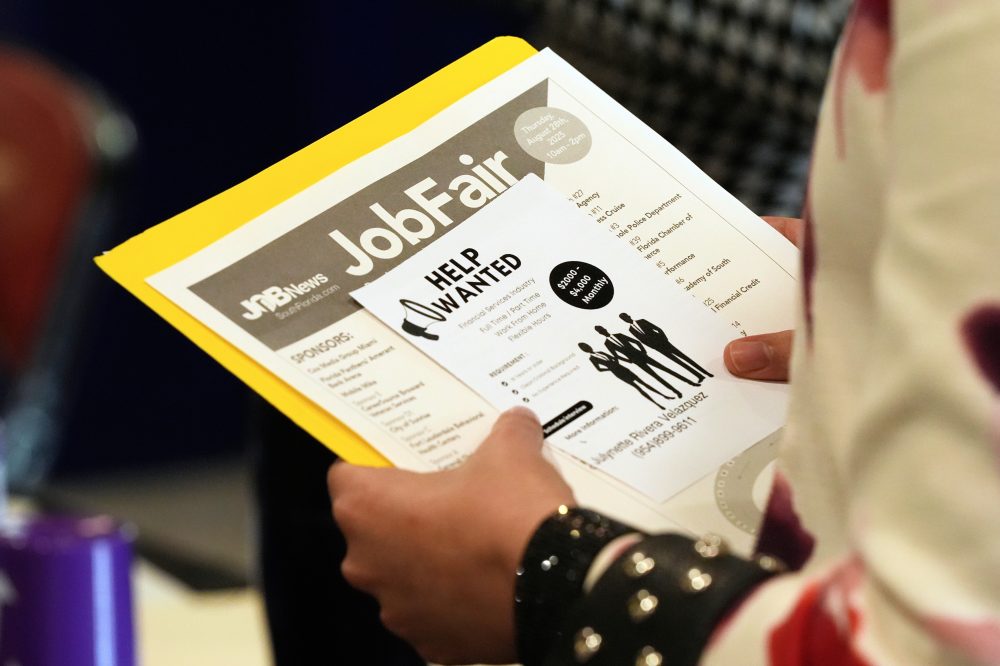
American employers significantly slowed their hiring pace last month, adding just 57,000 jobs — fewer than half the number added the month before — signaling that many companies remain cautious about the economic road ahead.
The Labor Department reported Thursday that the unemployment rate edged down to 4.2% from 4.3% in May. However, much of that decline happened because a large number of out-of-work Americans stopped searching for jobs and were therefore no longer counted as unemployed.
The numbers paint a picture of businesses still wary of the economy’s direction, with inflation sitting at a three-year high and consumer confidence hovering near post-pandemic lows. Job gains that had initially been reported for April and May were also revised downward.
On a brighter note, the number of Americans filing new unemployment claims declined slightly last week, with layoffs still at historically manageable levels.
For the week ending June 27, new unemployment benefit applications dropped by 1,000 to 215,000, according to the Labor Department’s Thursday report. That came in below the 225,000 new filings that analysts surveyed by the data firm FactSet had predicted.
Weekly unemployment filings are closely watched as a near real-time measure of layoff activity and overall job market health.
The four-week moving average of jobless claims, which smooths out week-to-week swings, fell by 2,500 to 222,000.
Prospective homebuyers got a bit of relief this week as the average long-term mortgage rate dropped to its lowest point since mid-May.
Mortgage buyer Freddie Mac reported Thursday that the benchmark 30-year fixed mortgage rate slipped to 6.43% from 6.49% the previous week. That same rate stood at 6.67% one year ago.
Since the conflict between the U.S. and Iran erupted in late February, mortgage rates have largely hovered around 6.5%. The war disrupted the flow of crude oil out of the Persian Gulf, pushing oil prices sharply higher and helping fuel inflation, bond yields, and borrowing costs for homebuyers.
Despite the economic headwinds, U.S. job openings held at a surprisingly resilient 7.6 million in May, topping forecasts that had called for just 7 million openings.
Still, the job market’s strength has its limits. Layoffs increased in May, and the number of workers voluntarily leaving their jobs — often seen as a sign of confidence in finding something better — rose only slightly, according to data released Tuesday by the Bureau of Labor Statistics.
Employers are posting openings but not doing much actual hiring. Total gross hiring fell to 5.17 million in May from 5.26 million in April. During the post-pandemic hiring boom that ran from mid-2021 to mid-2023, gross monthly hiring routinely exceeded 6 million.