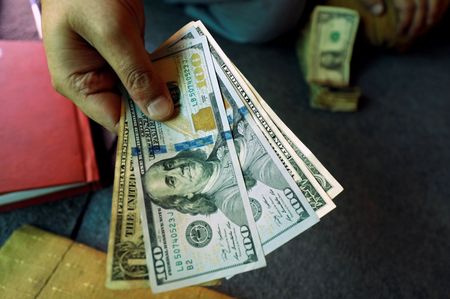

The U.S. dollar held steady near a two-week low on Monday as investors dialed back their expectations for a Federal Reserve interest rate hike this year. At the same time, Japan’s yen remained pinned close to a 40-year low, leaving markets anxious about what Japanese authorities might do in response.
The euro was trading at $1.1435, not far from its strongest point in two weeks, while the British pound was last changing hands at $1.3351. The dollar index, which tracks the U.S. currency against six others, sat at 100.9 during early trading.
Japan’s yen stood at 161.57 per U.S. dollar, just above the 1986 low of 162.84 it reached last week. Traders remain on alert for potential government intervention after a sudden burst of buying briefly pushed the currency higher on Thursday.
In South Korea, the won gained slightly on the first day of the country’s landmark 24-hour onshore spot dollar-won trading session, trading at 1,534 per dollar.
The dollar posted its largest weekly decline since April last week after the U.S. payrolls report revealed that job growth slowed significantly in June, reducing market expectations that the Fed would raise rates.
However, strategists at OCBC noted that a drop in the unemployment rate suggests the labor market is still tight, which could keep pressure on the Fed to maintain its tightening stance. “The broader USD outlook remains constructive,” they said, holding to their forecast of a moderate 2-3% rise in the dollar during the second half of 2026.
Falling oil prices have helped calm some inflation worries. Investor attention this week is focused on the minutes from the Fed’s June meeting, which could offer insight into how policymakers are thinking about future rate decisions.
Strategists at Commonwealth Bank of Australia cautioned that the minutes might be shorter or less informative than usual, given that Fed Chair Kevin Warsh has expressed the view that the central bank has offered too much forward guidance in the past.
Japan’s yen remains a central focus in currency markets, hovering near its lowest level in four decades. The possibility of official intervention is keeping traders nervous, even though many analysts doubt any such action would produce lasting results.
According to OCBC strategists, intervention risk is more likely to spark short-term volatility and temporary price corrections than any permanent reversal in the dollar-yen exchange rate. “Without a meaningful shift in underlying macro fundamentals, verbal warnings and outright intervention alone are unlikely to change the broader direction of the pair,” they said.
Investors are also paying close attention to signals that Japanese officials may be shifting away from their usual practice of openly warning markets, instead suggesting a more targeted effort to squeeze speculators and make it more costly to bet against the yen.
Marc Chandler, chief market strategist at Bannockburn Global Forex, weighed in on the situation. “The market knows it risks intervention,” he said. “We continue to see signs in the options market that some large pools of capital have bought short-dated dollar puts to protect long dollar positions in the case of intervention.”