The National Weather Service office in Mount Holly, New Jersey has issued a Rip Current Statement in effect from 12:25 PM through 8:00 PM EDT on Wednesday, June 18.
Rip currents are powerful, fast-moving channels of water that flow away from shore and can quickly pull swimmers out to sea. They are one of the leading hazards for beachgoers along the Atlantic coast.
Authorities urge anyone heading to the beach to be aware of current conditions and to swim only in areas monitored by lifeguards. If caught in a rip current, experts advise swimmers not to fight the current by swimming directly back to shore, but instead to swim parallel to the shoreline until free of the current, then make their way back to the beach.
The statement is in effect through the evening hours. Residents and visitors planning beach trips are encouraged to check the latest forecasts from the National Weather Service before heading out.
WASHINGTON — If you’ve been watching mortgage rates, there’s a bit of good news this week. The average rate on a 30-year fixed-rate home loan dropped to 6.47%, down from 6.52% the previous week, according to mortgage buyer Freddie Mac. That same rate stood at 6.81% just one year ago.
Shorter-term loans also saw some relief. The average rate on a 15-year fixed mortgage — a popular choice for homeowners looking to refinance — slipped to 5.81% from 5.84% last week. A year ago, that rate was at 5.96%.
The drop is being tied to falling U.S. Treasury yields, which eased after the United States and Iran reached a tentative deal to end their ongoing war. The yield on the 10-year Treasury note fell from 4.53% last week to 4.44% on Thursday. Before the conflict began in late February, that yield was just 3.97%.
Mortgage rates are shaped by a range of factors, including decisions by the Federal Reserve on interest rates and expectations among bond market investors about inflation and economic growth. Lenders typically use the 10-year Treasury yield as a guide when setting home loan prices.
The Fed held its benchmark interest rate steady on Wednesday, as inflation remains well above the central bank’s 2% target. It was the first meeting under new Fed Chair Kevin Warsh, who took over from Jerome Powell after Powell’s eight-year tenure leading the central bank. Several Fed policymakers indicated they would be open to raising interest rates at least once this year.
Mortgage rates had been climbing steadily since the U.S.-Iran conflict erupted in late February, which disrupted the flow of crude oil through the Persian Gulf and pushed energy prices sharply higher. That, in turn, fueled inflation and drove bond yields — and mortgage rates — upward. Two weeks ago, the 30-year rate hit 6.53%, its highest point since August 28.
The tentative peace deal reached earlier this week would allow Iran to reopen the Strait of Hormuz and resume selling its oil on the global market, helping ease those pressures.
As recently as late February, the 30-year mortgage rate had briefly dipped below 6% for the first time since late 2022. It has not fallen back below that mark since.
While rates are still lower than they were at this point last year, the mostly upward trend and uncertainty about where rates are headed have discouraged many would-be buyers from entering the housing market.
Sales of previously owned U.S. homes fell during the first three months of the year compared to the same period a year ago, continuing a housing slowdown that began in 2022 when rates started rising from pandemic-era lows. Sales were essentially flat in April, then picked up speed in May, reaching their fastest pace since December.
Even so, existing home sales continue to hover near a 4-million annual pace — well below the historical norm of around 5.2 million per year.
Mortgage applications declined in the most recent survey from the Mortgage Bankers Association, though the week before saw a significant jump of 10.8%. Pending home sales also rose last month, offering a hopeful signal for the housing market as it heads into the second half of the year after a slow spring buying season.
When players take the field at this year’s World Cup — being held across the United States, Canada and Mexico — their jerseys carry more than just team colors. Behind many of the designs are rich stories rooted in culture, history, and in some cases, controversy.
Cape Verde, the smallest nation by population at the tournament, is making its World Cup debut with jerseys that honor its roughly 525,000 residents living across 10 volcanic islands off the African coast. A geometric, triangular print on both the blue home and white away kits represents the web of flight routes linking those islands together. The message: the nation stands united behind its players. That unity was on display as Cape Verde held heavily favored Spain to a 0-0 draw in their opening match.
Belgium’s multicolor away shirt carries a message on its collar that reads, “This is not a jersey.” The Belgians haven’t lost it — it’s actually a tribute to the country’s surrealist artistic tradition, particularly the work of Belgian artist René Magritte. Throughout his career, Magritte explored the puzzling relationship between perception and reality, famously writing beneath his iconic pipe painting, “Ceci n’est pas une pipe (This is not a pipe).” The light-blue jersey incorporates pink patterns, black detailing, and soccer-inspired imagery like pitch lines and a ball. As the Belgian federation put it, “True to the surrealism theme, the kit sparks the imagination and invites conversation.”
Haiti, another first-time World Cup participant, ran into trouble with soccer’s governing body FIFA over its original jersey design. The kit had featured an image depicting the final battle of the Haitian War of Independence in 1803. Colombian sportswear company Saeta described it as a “tribute to the men and women who contribute every day to Haiti’s future.” FIFA rejected the design during its approval process, calling it too political. Haiti was forced to submit a revised blue kit without the battle imagery.
The defending World Cup champion is blending sporting tradition with artistic flair in its uniforms. The home kit — worn by Lionel Messi during his hat trick against Algeria on Tuesday — features three shades of blue in its stripes, a nod to the nation’s championship uniforms from 1978, 1986, and 2022. The dark blue away jersey draws inspiration from a traditional Buenos Aires painting style known as filete porteño, a decorative art form combining vivid swirling colors with distinctive lettering.
France brought an away jersey that pays tribute to one of the most famous gifts the country ever gave to the United States: the Statue of Liberty. The kit has a greenish tone resembling the oxidized appearance of the iconic statue, which was designed by Frenchman Frédéric-Auguste Bartholdi and presented to the United States in 1886 as a symbol of friendship between the two nations. A copper-colored logo — reflecting the statue’s original hue — appears on the jersey alongside the phrase “Nos différences nous unissent,” meaning “Our differences unite us.”
Iran’s home and away jerseys feature a striking image: an Asiatic cheetah stretching low across the front, with cheetah spots running up the sleeves to the shoulders. The Asiatic cheetah, a close relative of the African variety and equally fast, is critically endangered. Iran has long worked to protect the species. Once numbering as many as 400 in the 1990s, fewer than an estimated 70 are believed to remain in the country today.
Norway’s jerseys may be the most visually sharp at the tournament — in a literal sense. The font used for player names and numbers is inspired by runic writing, the angular characters found in several Germanic alphabets used across northern Europe before the Latin alphabet took over. The pointy, geometric lettering reflects the Norwegian team’s connection to its ancient heritage. Viking-style patterns in an Urnes design flank the large blue cross on the chest.
Colombia’s characteristically bright yellow jersey features a pattern of butterfly imagery on close inspection. The design pays homage to the country’s Nobel Prize-winning novelist Gabriel Garcia Marquez and his celebrated work “One Hundred Years of Solitude.” Marquez became literature’s most famous practitioner of magical realism — a genre blending everyday life with fantastical elements — including the image of a man followed by a cloud of yellow butterflies.
Mexico’s home jersey revives the Aztec calendar design that was a fan favorite in the 1990s. In the lead-up to the tournament, the team visited the National Museum of Anthropology in Mexico City and posed for photos in their uniforms in front of the Aztec “Piedra de Sol,” or Stone of the Sun — the artifact widely known as the Aztec calendar.
Saudi Arabia’s dark green home jersey is dotted with symmetrical lavender squares and diamond shapes, honoring the geometric, triangular decorative patterns commonly found on doorways of homes throughout the kingdom. Wild lavender flowers bloom across Saudi Arabia’s desert landscape each spring, making purple a cherished color in the nation and a recognized symbol of generosity.
Brazil’s navy blue-and-black away jersey, made by Nike, features a yellow “Jumpman” logo associated with Michael Jordan-branded sportswear. But the deeper cultural reference lies in the kit’s color scheme, which was inspired by the skin of the poison dart frog native to the Amazon rainforest — a nod to the threat posed by Brazil, the record five-time world champion.
HARARE, Zimbabwe — Zimbabwe’s lawmakers cast votes Thursday in favor of constitutional changes that would delay upcoming elections and stretch the current president’s time in office from five years to seven.
The move shines a light on a striking reality across Africa: some of the planet’s oldest leaders govern a continent whose population is among the youngest in the world.
The country’s National Assembly passed the constitutional amendments by a wide margin. The changes would push elections originally scheduled for 2028 back to 2030, adding two years to President Emmerson Mnangagwa’s term. The bill must still clear the Senate, where passage is also widely anticipated.
Should the legislation become law, Mnangagwa would join the ranks of some of Africa’s oldest and longest-serving heads of state. He first took power in 2017 following a military-led removal of the late Robert Mugabe, who was 93 at the time and held the distinction of being the world’s oldest sitting head of state. The bill also proposes changing how the president is chosen — moving from a direct public vote to selection by members of parliament.
A recent analysis from the Pew Research Center found that 16 of the world’s 186 national leaders are older than U.S. President Donald Trump, who celebrated his 80th birthday last week. Seven of the ten oldest leaders on the global stage are from Africa — a continent where the median age is roughly 20 and more than 60% of residents are under 30, according to United Nations data.
Blessing Vava, a researcher focused on democracy and governance, put it plainly: “The population in Africa is getting younger, but the average age of presidents is rising, and tenures are getting longer.”
Vava, who also serves as director of the Johannesburg-based Southern Africa Coalition for Democracy and Accountability, added that Zimbabwe’s situation is far from unique. “Zimbabwe is not an exception. It’s the continental norm. Zimbabwe is just one data point in a much broader story of constitutional erosion for political survival.”
Cameroon’s Paul Biya, 93, holds the title of the world’s oldest sitting head of state. He has governed since 1982 — a year after Ronald Reagan took office in the United States — in a country where roughly 70% of the population is under 35. The U.S. has cycled through seven presidents in the time Biya has held power.
In neighboring Equatorial Guinea, Teodoro Obiang Nguema Mbasogo has ruled for 47 years. At 84, he is Africa’s longest-serving leader and has gone so far as to name his own son as vice president.
Ivory Coast’s Alassane Ouattara, also 84, was sworn in for a fourth presidential term in December 2025 following an election that saw low voter participation and civil unrest.
Malawi returned Peter Mutharika, now 85, to the presidency last year. He previously served as the country’s leader from 2014 to 2020.
In Uganda, 81-year-old Yoweri Museveni — an American ally on regional security matters who has drawn criticism from opponents for authoritarian governance — took the oath of office for a seventh straight term in May, pushing his total time in power to four decades.
Mnangagwa, Museveni, Ouattara, Biya, and Obiang have each altered or done away with constitutional limits that were designed to restrict how long a leader could remain in office.
The Africa Center for Strategic Studies notes that leadership patterns across the continent’s 54 nations vary widely. Around 20 African countries actively maintain term limits, while others have eliminated or worked around them. Some nations are under military rule, with constitutional protections suspended entirely, allowing entrenched leaders to stay in power indefinitely.
That said, a younger generation of leaders has emerged in parts of the continent in recent years. Bassirou Diomaye Faye became one of Africa’s youngest elected leaders when he won Senegal’s 2024 presidential election at 44. Ethiopia’s Prime Minister Abiy Ahmed, 49, has held office since 2018. Some younger figures have come to power through military action — Mahamat Idriss Deby, 42, took control of Chad after his father was killed fighting rebels in 2021, then won a democratic election in 2024. In Burkina Faso, army captain Ibrahim Traoré seized power in a 2022 coup and, at 38, is currently Africa’s youngest ruler. Military takeovers have also brought younger leaders to power in Mali and Guinea.
Despite these examples, analysts warn that much of the continent’s political landscape is still dominated by older elites, leaving younger generations with few pathways to democratic leadership.
Vava summed up the imbalance: “So you get 25-year-olds making up the majority of a country’s population, but 75-year-olds decide the candidate or rule. Youth are mobilized for votes and not for power.”
Delaware’s Department of Natural Resources and Environmental Control has officially unveiled its new Delaware Environmental Laboratory, situated near Smyrna.
The facility is described as a state-of-the-art testing center capable of analyzing water quality, identifying chemical contaminants — including per- and polyfluoroalkyl substances, commonly known as PFAS — and conducting both molecular and microbiology research.
DNREC Secretary Greg Patterson presided over a ceremonial ribbon cutting to mark the occasion. He was joined by members of Delaware’s congressional delegation, state legislators, former DNREC cabinet secretaries, and representatives from various organizations that rely on the environmental lab for scientific analysis and data.
DAKAR, Senegal (AP) — An Ebola outbreak affecting Congo and Uganda has taken more than 200 lives in its first month, making it the worst-known outbreak at this point in its progression, according to Africa’s Centres for Disease Control and Prevention. Officials announced Thursday that as many as 35,000 suspected contacts may have been exposed.
With 894 confirmed cases recorded so far, the current outbreak is three times more severe than a 2000 Ugandan outbreak that had 281 cases at the same stage, according to Dr. Wessam Mankoula, a medical epidemiologist at Africa CDC.
The case count is thought to be even higher because the outbreak wasn’t officially confirmed until May 15 — weeks after it is believed to have started. Cases have grown by 38% compared to last week and now span 32 health zones in eastern Congo, Dr. Mankoula said.
This outbreak is driven by the rare Bundibugyo virus, for which there are no approved vaccines or treatments. The virus was not tested for in the early days of the outbreak. Most of Congo’s previous 16 Ebola outbreaks were caused by the more common Zaire strain, which does have an approved vaccine. Experimental therapies, including monoclonal antibodies, are currently being developed to treat Bundibugyo.
So far, 74 patients have recovered from the disease across eastern Congo and Uganda.
The hardest-hit area is Congo’s eastern Ituri province, which accounts for over 90% of all cases. Additional cases have been recorded in the North Kivu and South Kivu provinces, and the disease has crossed into Uganda, where 19 confirmed cases and two deaths have been reported.
Contact tracing — a critical tool for containing outbreaks — has been severely hampered by the remote terrain and ongoing violence in Ituri province, Dr. Mankoula noted.
“For those 800 confirmed cases, we should have between 17,000 to 35,000 contacts that should be in our contact list,” Mankoula said. Currently, only around 4,000 contacts — less than 15% of the expected total — have been identified and are being monitored.
“We are still far from controlling the situation of this outbreak,” Mankoula said.
According to the U.N. humanitarian office, nearly one million people have been displaced by years of conflict in Ituri, complicating contact tracing efforts as residents flee violence or move frequently through a vast region of dense forests, poor roads, and remote villages that can take days to reach. The large number of miners who routinely travel between remote sites in the mineral-rich region adds another layer of difficulty.
Funding shortfalls are also slowing the response. Of more than $900 million pledged to combat the outbreak, only $90 million has actually been released, according to Dr. Mankoula. Africa CDC estimates it needs 540 personnel to effectively fight the outbreak but currently has only 84.
“We’re keeping our fingers crossed those new pledges will be fast tracked, and we’ll be following up with different member states and different partners about their commitment to turn those pledges into actual money released to their affected countries or partners,” Mankoula said.
PARIS — What started as a lavish dinner hosted by French President Emmanuel Macron at the Palace of Versailles turned into an unexpected diplomatic moment, as President Donald Trump chose the historic setting to sign an initial agreement with Iran.
Trump made the announcement in a casual, offhand manner Wednesday as he was wrapping up three days of high-level diplomatic talks at a G7 summit in France. As he climbed into his vehicle to depart the country, he told reporters simply: “We signed in Versailles.”
Video footage shared on X by both Macron and a White House aide captured the moment — Trump seated at the dinner table, signing a printed copy of the agreement. He then passed the document and pen to Secretary of State Marco Rubio. Macron, seated beside Trump, offered his congratulations: “Good job. Bravo.” Those in attendance responded with applause.
French Finance Minister Roland Lescure, who was among the dinner guests, said Thursday that the signing caught him completely off guard. The original plan had called for a formal signing ceremony to take place Friday in Switzerland.
Lescure recalled watching Rubio slip away from the table — apparently to retrieve or print the memorandum of agreement — and then return to complete the signing. “We cleared the plates,” Lescure said, describing how the dinner setting was quickly adapted for the occasion.
When asked whether Macron had prior knowledge of the signing, Lescure suggested the French president may have been told shortly before it happened, noting that Trump and Macron arrived at the dinner together. “In any case, for us, ministers of the French government, it was a surprise,” he said.
A French official, speaking anonymously because they were not authorized to discuss the matter publicly, said Rubio and French Foreign Affairs Minister Jean-Noël Barrot reviewed the memorandum of understanding together before presenting it to Trump for his signature.
SACRAMENTO, Calif. — A California ballot initiative that would temporarily raise taxes on billionaires to help cushion the blow of federal cuts to low-income healthcare has gathered enough public support to go before voters this November, according to the state’s top elections official.
Secretary of State Shirley Weber, a Democrat, announced Wednesday evening that petition gatherers have surpassed the approximately 875,000 signatures required to place the measure on the ballot. The initiative is set to officially qualify on June 25, unless its supporters choose to withdraw it before then.
The proposal, which is backed by the Service Employees International Union Healthcare Workers West, would place a one-time 5% tax on individuals with a net worth above $1 billion who were living in California as of January 1, 2026. Supporters aim to raise $100 billion, with the bulk of that money going toward the state’s Medicaid program and the remainder directed to food assistance and education initiatives.
The debate comes as states across the country are wrestling with how to respond to major tax and spending cut legislation signed by President Donald Trump last year. The proposal has created a rift among Democrats and major labor unions and has already sparked a costly campaign to defeat it. Vermont Sen. Bernie Sanders is among the prominent progressive voices who have voiced support for the measure.
Opposition has been strong, particularly from Silicon Valley tech executives, Democratic Gov. Gavin Newsom, and influential Sacramento figures. The California Medical Association and California School Boards Association joined forces this week to form a committee aimed at defeating the measure. Newsom previously opposed a 2022 ballot measure that would have raised taxes on wealthy Californians to fund electric vehicle programs — a measure voters ultimately rejected.
Opponents of the current proposal argue that taxing the ultra-wealthy at this level would ultimately hurt state revenue by driving billionaires to relocate, taking their future income tax contributions with them. California currently depends on its top 1% of earners for nearly half of all personal income tax revenue, making such an exodus potentially devastating to the state’s finances.
The nonpartisan Legislative Analyst’s Office has projected that while the measure could generate tens of billions of dollars in its early years, income tax revenues could then fall by hundreds of millions of dollars each year afterward.
Since the initiative was first announced in October, Google co-founder Sergey Brin has contributed $82 million to a political committee called “Building a Better California,” which supports various efforts designed to undercut the billionaire tax proposal. That committee has now raised more than $118 million in total, drawing from fewer than a dozen donors.
Meanwhile, California state lawmakers passed budget legislation this week that would raise revenue through other means, including extending an existing tax on healthcare providers. Senate President pro Tempore Monique Limón confirmed that both Newsom and legislative leaders are aligned on this alternative approach.
“The budget, as approved by the Legislature and now being negotiated with the Governor, does not include the billionaire’s tax,” said Limón, a Democrat. “Instead, it reflects additional revenues to address our long-term structural deficit.”
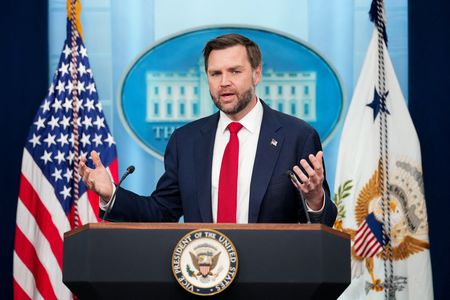
WASHINGTON — Vice President JD Vance announced Thursday that the U.S. Navy has cleared a path for more than a dozen ships to reach Iranian ports, effectively ending a naval blockade as part of a newly reached agreement to bring the war to a close.
Speaking at a White House press briefing, Vance said oil is once again flowing through the Strait of Hormuz. He noted that more than 12.5 million barrels passed through that critical shipping channel on Wednesday night alone.
“So we’re also honoring our end of the early part of the agreement on the military side,” Vance said, calling it an early and tangible benefit of the deal. He pushed back against critics who argue the agreement favors Iran.
Vance also revealed plans to travel to Switzerland for follow-up discussions on the Iran deal, though he was uncertain about the exact timing. He had previously been expected to lead negotiations focused on reducing Iran’s stockpile of highly enriched uranium and restoring oil traffic through the Strait of Hormuz.
Earlier in the week, on Tuesday, two oil tankers departed Iran and crossed through the U.S. military blockade without being intercepted. A merchant shipping tracking service reported the vessels were carrying a combined 3.8 million barrels of Iranian crude oil.
Iranian state media described shipping at the country’s southern ports as having returned to normal, though officials noted the Strait of Hormuz remains under the supervision and control of the Iranian military, with transit through the waterway still requiring coordination.
Maritime data firm Lloyd’s List Intelligence reported that major shipowners have begun routing vessels through the strait since the agreement was signed. Richard Meade, editor in chief of Lloyd’s List, said during a media briefing that for the first time in 110 days, ships belonging to major companies are moving through the strait after being effectively stranded there since February.
Among the companies with vessels now transiting the strait are Grimaldi Group, Cosco, Knutsen, and NYK. Lloyd’s List also reported that two crude oil tankers flagged under Iran and owned by the National Iranian Tanker Company — both under sanctions — have entered the strait.
However, Phillip Belcher, marine director of Intertanko, a trade organization representing independent tanker owners worldwide, cautioned that the main central route through the Strait of Hormuz remains closed, with an estimated 80 mines still needing to be cleared. Ships have instead been using a smaller Northern route through Iranian waters and a Southern route through Omani waters.
The agreement calls for a permanent halt to hostilities and opens a 60-day negotiating period to finalize a deal on Iran’s nuclear future, though the door has been left open to resume military action. Critics say the deal appears to hand Iran several early concessions while requiring little in return at this stage.
Under the terms, Iran’s highly enriched uranium stockpile — believed to be buried under rubble — must at minimum be diluted under international oversight. Iran also commits to not acquiring or developing nuclear weapons, a pledge it has made before. Beyond those points, the specifics of the nuclear program’s future remain to be negotiated.
Much of the agreement is aimed at restoring conditions that existed before the war, including a ceasefire, renewed diplomatic talks over Iran’s nuclear activities, and the reopening of the Strait of Hormuz — a vital passage for global oil and natural gas supplies whose closure triggered a significant worldwide energy crisis.
WASHINGTON — Federal energy regulators voted Thursday to make it easier for large power consumers, including artificial intelligence data centers, to gain faster access to the nation’s electric transmission network as demand for electricity continues to surge.
Energy Secretary Chris Wright had pushed the Federal Energy Regulatory Commission to act, arguing the move would help the United States stay ahead of China in the rapidly expanding AI industry. Technology companies and data center developers have welcomed the prospect of quicker connections to the power grid.
However, the plan drew pushback from utilities, state governments, and regional grid operators, who expressed concern that the Republican administration’s approach could strip away their authority to oversee the connection process. Clean energy supporters also raised alarms, arguing the agency should be strengthening — not weakening — state-level efforts to promote renewable energy sources.
The commission’s decision arrives as public frustration mounts over data centers, with many communities worried about climbing electricity bills, heavy water usage, pollution, and the strain these massive facilities place on local infrastructure and power supplies.
FERC members voted unanimously to ensure that AI data centers and other large power consumers are “able to connect to the transmission system in a timely and orderly manner.”
Laura Swett, a President Donald Trump appointee who chairs the commission, described the vote as a historic move to modernize the country’s electricity market while also shielding everyday ratepayers from bearing the costs of connecting major power users to the grid.
“I know that Americans across the country are concerned about affordability, and so are we,” Swett said, speaking on behalf of the five-member commission.
Swett also acknowledged growing public anxiety over large power loads: “Many Americans are increasingly concerned about the interconnection of large (power) loads, and data centers will increase their bills in that stress. As chairman, I am taking extremely seriously the mission that Congress has entrusted us to ensure that rates are reasonable and that Americans pay their fair share or less.”
Under the commission’s order, data centers would be required to cover the full cost of any grid upgrades necessary for their connection. Even so, the order does little to address the tightening energy supplies that are already pushing electricity bills higher in some regions and triggering warnings about potential blackouts, as data center construction outpaces the development of new power plants to support them.
The vote comes eight months after Wright asked the independent agency to take a stronger role in ensuring that the massive computing facilities needed to power AI are connected quickly to high-voltage transmission lines.
Tech giants are scrambling to secure enough power for their data centers and report that, in some locations, connecting to the electric grid could take years.
Beyond power shortages, the tech industry is facing growing resistance from local communities. Residents near proposed data centers have raised concerns about rising electricity costs, pollution, and water use, with protests erupting over the loss of open land, farmland, and rural character in affected areas.
By one estimate, more than 4,000 data centers are currently operating across the United States, with an additional 3,000 either planned or under construction. Some of these facilities consume more electricity than a small city, and their size has grown dramatically to meet the demands of AI technology.
President Trump has sought to downplay public concerns about AI, viewing the technology as essential for attracting foreign investment and maintaining the country’s economic and military strength. This month, Trump signed an executive order establishing a framework allowing the federal government to evaluate national security risks posed by the most advanced AI systems for up to a month before they are released to the public.
In December, FERC had already taken an earlier step to help data center operators access electricity more quickly, voting to allow tech companies to essentially connect a data center directly to a power plant.
Companies including xAI, Google, Microsoft, Meta, Oracle, OpenAI, and Amazon have signed Trump’s Ratepayer Protection Pledge, committing to build or purchase new power generation sources for their data centers and cover the costs of necessary infrastructure upgrades.
The companies also pledged to make backup power available during emergencies to help prevent blackouts and to hire locally during their data center construction efforts.
According to data from the Electric Power Research Institute, data centers currently account for roughly 5% of U.S. electricity demand — a figure that could triple by 2035. In Virginia alone, data centers represent more than 25% of total electricity demand and could climb above 40% by 2030.
Tech companies have continued to increase spending on data centers, but signs suggest construction is struggling to keep pace. A J.P. Morgan report released last month found that, based on satellite imagery, more than 60% of data center capacity scheduled for completion in 2027 has not yet broken ground, with another 7% facing delays. The report cited permitting issues and shortages of gas turbines, transformers, and skilled workers as the primary causes.
Pro Bowl defensive tackle Vita Vea is making his contract wishes known by conducting a so-called “hold-in” during the Tampa Bay Buccaneers’ mandatory minicamp this week.
The 31-year-old is heading into the last year of a four-year deal worth $71 million. He is scheduled to make $17 million in 2026, but none of that money is currently guaranteed.
Head coach Todd Bowles confirmed that Vea has been showing up to practices and watching from the sideline — a strategy that keeps him from facing fines for non-participation.
“It’s not concerning,” Bowles said Wednesday. “We’ve been through it before. It’s part of the business.”
Bowles also made clear that Vea is healthy and not dealing with any injury.
“We’re just bringing him in that late,” Bowles said. “He’s full-speed. He needs to go through training camp, but we don’t need to see him right now.”
Vea sat out the optional offseason workouts this spring and has been working out on his own alongside former Buccaneers teammate Ndamukong Suh in Portland, Oregon, according to ESPN.
Last season, Vea started all 17 games and recorded 34 tackles, 4.5 sacks, 13 quarterback hits, and one fumble recovery.
The two-time Pro Bowl selection and Super Bowl LV champion has put together an impressive career resume with 256 tackles, 35 sacks, 79 quarterback hits, three forced fumbles, and three fumble recoveries across 112 games and 107 starts since Tampa Bay selected him in the first round — 12th overall — in the 2018 NFL Draft.
WASHINGTON — Vice President JD Vance announced Thursday that the 60-day countdown established in a memorandum of understanding between the United States and Iran is now underway, following approval by President Donald Trump and Iranian leaders.
Speaking to reporters during a White House briefing, Vance confirmed the timeline had begun. “I would say the 60-day period officially started today,” he said.
Reporters also pressed Vance on what would happen to the Strait of Hormuz once the 60-day window closes. The waterway is a critical route for global oil and gas shipments, and Iran effectively shut it down during the war. Vance reiterated the U.S. position that the passage should remain open and free of any tolls.
“The final negotiations can set the terms of what comes afterwards,” Vance said when asked about the future governance of the strait.
The temporary agreement between the two nations pushed the most contentious and difficult issues into a future round of talks, offering no assurance that those disputes will ultimately be settled. Analysts who follow the region are largely doubtful that both sides will be able to hammer out a comprehensive final agreement before the 60-day deadline expires.
Cape Verde goalkeeper Vozinha’s mother will get to cheer her son on at the World Cup after all, following an emotional story that captured attention around the globe.
Ana Candida Evora has been approved to travel to the United States, allowing her to witness her son compete at soccer’s biggest stage. The news comes after Vozinha broke down while revealing that his mother missed his remarkable performance in Cape Verde’s opening match — a 0-0 draw against European champions Spain in Atlanta — because of visa complications.
The 40-year-old goalkeeper was named player of the match after stopping seven shots to help his team earn a stunning result against one of the tournament’s top contenders.
His tearful disclosure quickly spread across social media, prompting the U.S. State Department to get involved. Officials said their visa team in Praia reached out directly to Evora and provided the necessary assistance to get her approved for travel.
“Consistent with all policies, procedures, and standards, full steam ahead for travel for the game,” a State Department official told reporters.
Evora is now expected to be in the stands when Cape Verde takes on Uruguay in their second group stage match in Miami on Sunday.
The situation had been complicated by a requirement that citizens of Cape Verde and several other nations post bonds of up to $15,000 to enter the U.S. — a policy tied to President Donald Trump’s immigration enforcement efforts. That bond requirement was eventually lifted for World Cup ticket holders, but the financial uncertainty had already led Evora to abandon plans to travel to Atlanta for the Spain match.
Space companies are in preliminary discussions with insurance providers about coverage for data centers operating in Earth’s orbit — a sign that an experimental industry backed by some of the biggest names in tech is beginning to take shape.
The idea of placing data centers in space — partly to get around power limitations on Earth — has attracted increasing attention after Elon Musk described the concept as the future of AI development ahead of SpaceX’s record-setting public listing this month. Blue Origin, the space company founded by Jeff Bezos, along with several startups including Orbital, Starcloud, Lonestar Data Holdings, and Cowboy Space, have all indicated plans to launch space-based data centers.
Getting insurance coverage is considered a key hurdle for these companies. Without it, securing the debt financing necessary to grow such ventures would be extremely difficult.
Reuters spoke with four brokers and underwriters and three space companies, all of whom confirmed that conversations about orbital data center insurance have taken place — though those discussions are still in early stages.
Insurance broker Marsh confirmed that multiple companies have reached out to insurers to learn what coverage for orbital data centers might look like, though the firm declined to name those companies.
“We’re already starting to see companies that are focused on data centers and companies that are focused on digital infrastructure looking to the insurance community for support,” said Patton Kline, U.S. aviation and space practice leader at Marsh.
Lonestar said it recently hosted a briefing at Marsh’s offices for insurance marketplace Lloyd’s of London, with roughly 25 insurers in attendance.
SpaceX and Blue Origin did not respond when contacted for comment.
While insurers already have experience covering launch failures, satellite problems, orbital debris, and space weather — a global market that brings in about $500 million in annual premiums, according to industry executives and insurance firm Axa XL — orbital AI infrastructure is an entirely different matter.
“The conversations in the market are focused on whether the risk can be modeled, rather than what the premium should be,” said Kasey Roh, U.S. head of Upstage AI, a company that builds AI tools for insurers.
One major challenge involves placing a value on fast-evolving AI chips that could be exposed to extreme conditions in space, according to Orbital CEO Euwyn Poon.
David Wade, a space underwriter at Atrium, noted that most of the companies involved are still in early venture-capital-funded stages, and a significant insurance market won’t emerge until they grow further.
“Until we get past that early round of financing and start seeing some of these companies expand by raising debt, I think the insurance needs are very limited at the moment,” Wade said.
Portugal’s 2026 World Cup campaign began on a sour note Wednesday in Houston, where they were held to a 1-1 draw by the Democratic Republic of Congo — a result that raised serious questions about the team’s ability to compete for the championship.
The disappointing outcome is nothing new for Portugal at the World Cup. Since finishing fourth in Germany in 2006, the team has won just six of their 17 matches at the tournament, with victories coming against North Korea, Ghana (twice), Morocco, Uruguay, and Switzerland. Despite fielding rosters loaded with talented players, Portugal has failed to advance beyond the quarterfinals in that stretch, falling to Morocco at that stage in 2022, and suffering a shocking group-stage elimination in Brazil 12 years prior.
Portugal’s World Cup history before 2002 was limited to just two appearances — a third-place finish in 1966 led by Eusebio, and a group-stage exit in 1986. But after years of strong development, the team entered this year’s tournament with genuine hopes of claiming their first-ever World Cup title.
Coach Roberto Martinez had acknowledged before Wednesday’s match that a draw would be seen as a “disaster,” and while Portugal jumped out to a lead in the sixth minute, they faded from there and were largely second-best for the remainder of the game.
“I think it’s more the mentality of getting rid of the weight on the shoulders of the players of wanting to win the World Cup,” Martinez told reporters after the match. “Now we need to be calm, we need to assess, we need to highlight the good things that we did, and we did many good things. We need to improve the bad things and that’s what happens in a World Cup.”
Congo actually had more shots on goal throughout the contest, with Joao Neves’ headed goal standing as Portugal’s only shot on target during the entire match.
Martinez credited Congo for their performance, saying, “They were intense, confident. They played like a big final in a big tournament, and that shows incredible personality. We knew that Congo could do that. It wasn’t a surprise.”
What may be harder to explain is why Portugal failed to match that same level of intensity and determination — qualities they will certainly need when facing tougher competition down the road.
Portugal’s next match is Tuesday in Houston against Uzbekistan, a game that is quickly shaping up as a must-win for the team’s momentum and confidence. They are also scheduled to face Colombia on June 27.
The New Castle County Division of Police has issued a Gold Alert for a missing 17-year-old identified as Elias Del Valle, a resident of New Castle, Delaware.
Del Valle was last seen departing his home in the unit block of Kingston Road at around 8:57 a.m. on Tuesday, June 2, 2026. He is described as a black male.
Anyone with information on his whereabouts is urged to contact authorities immediately.
LIMA — Right-wing presidential candidate Keiko Fujimori appears poised to claim victory in Peru’s presidential race by a narrow but expanding margin, with just 0.6% of ballots still awaiting review as of Thursday. Her leftist opponent, Roberto Sanchez, responded by alleging irregularities at the electoral authority and calling on supporters to take to the streets in protest.
Fujimori, running for the presidency for the fourth time, currently holds a lead of 39,115 votes — a gap that has kept the South American nation in suspense since the June 7 runoff election.
As of Thursday morning, roughly 140,000 votes tied to challenged ballots remained under review. Approximately 60% of those contested votes originated from Lima and from Peruvians casting ballots from abroad — regions where Fujimori has historically performed stronger than Sanchez.
Gonzalo Marquez, who leads data consultancy Caleidos, said the remaining votes are unlikely to shift the outcome. “These are areas where Keiko Fujimori should have an advantage,” he said. “So there is no possibility, let’s say, that the result will change.”
The most recent figures from Peru’s elections office show Fujimori, the daughter of the late former President Alberto Fujimori, holding 50.11% of valid votes, compared to 49.89% for Sanchez, with 99.38% of ballots tallied.
If she prevails, Fujimori would make history as the first woman elected directly to Peru’s presidency. She has lost three previous runoffs, including a 2021 defeat at the hands of leftist Pedro Castillo by a margin of just 44,200 votes.
While the painstaking review of disputed ballots continued, Sanchez’s party submitted legal appeals aimed at invalidating votes counted in Fujimori’s favor and announced plans for demonstrations in Lima on Friday.
Election monitoring missions from both the Organization of American States and the European Union independently concluded that the voting process had unfolded normally. Both organizations called on the candidates and the Peruvian public to wait for the final official results before drawing conclusions.
SAO PAULO — Apple announced Thursday that developers in Brazil will now be permitted to distribute iOS apps through outside marketplaces and handle payment processing beyond Apple’s own platform, following a settlement reached with the country’s antitrust regulator, known as CADE.
The tech giant first agreed to implement these changes back in December, when it resolved a regulatory dispute that had originally been opened in 2022.
Under the new arrangement, developers selling apps through Brazil’s App Store will have the ability to offer customers alternative ways to pay within their apps, as well as the option to send users to external websites to complete purchases.
Apple described the significance of the update in a statement: “These updates create new options for developers to distribute apps on alternative app marketplaces and to process app payments for digital goods and services outside of Apple in-app purchases.”
The company said it plans to put several protective measures in place alongside these changes, including an app verification process called notarization, approval requirements for marketplace operators, and content safeguards aimed at shielding younger users from inappropriate material.
At the same time, Apple cautioned that opening up to third-party app stores and payment systems could expose users to greater risks, including malware, fraud, scams, and threats to personal privacy.
Developers were able to begin using the new capabilities on Thursday, rolled out as part of the iOS 26.5 update.
One of the earliest lessons in forestry education involves what’s known as the “4 W’s” — wood, water, wildlife, and recreation. While those four concepts offer a starting point for understanding why forests matter, they only scratch the surface. Forests clean the air, store carbon, protect water supplies, soften the blow of extreme weather events, and deliver a wide range of environmental, economic, and recreational benefits to communities and wildlife alike.
Right now, Delaware’s forests are under pressure from multiple directions. Urban and suburban development, a shifting climate, invasive species, and the threat of wildfire are all taking a toll on the health of forested land across the state. Tackling these challenges calls for hands-on management and sustained investment in forest restoration and conservation efforts.
Fortunately, land managers have a growing toolkit to work with. Prescribed burns can reduce the buildup of combustible materials and lower the chances of a devastating wildfire. Controlling invasive species opens the door for native plants and animals to flourish. Planting new trees — whether restoring previously forested land or establishing forests where none existed — can create diverse, native woodlands better suited to handle whatever environmental pressures lie ahead.
To help make that work possible, the Delaware Forest Service created the Forest Resiliency Fund, a program that offers financial assistance to landowners who carry out practices aimed at boosting forest health across Delaware. The program is open to landowners with fewer than 10,000 acres of forestland in the state, including private individuals, municipalities, county governments, and homeowners associations. Projects must cover at least three acres to qualify.
The Delaware Forest Service has now completed its first planting season through the Forest Resiliency Fund — a significant milestone for the young program. In that inaugural season, approximately 61,698 tree seedlings were put in the ground, resulting in around 142 acres of newly established forest throughout the state. Work was carried out on private properties as well as land belonging to Sussex County and the City of Lewes.
Key accomplishments from the first planting season include:
— 51 acres of mixed native hardwood forest planted on Sussex County property. — 23 acres of new forest established for two private landowners in Sussex County. — Nearly one mile of streamside buffer in Kent County converted from a single-species pine stand into a diverse native hardwood forest. — 11 acres of new forest added to City of Lewes property. — An additional 9 acres of new forest created for private landowners in Kent County.
The benefits from these projects are expected to last for generations. The newly planted forests will support wildlife habitat, improve water quality, capture more carbon from the atmosphere, and make Delaware’s natural landscapes more resilient overall. Perhaps most significantly, they represent a meaningful commitment to ensuring that future Delawareans can continue to depend on — and enjoy — healthy, thriving forests.
As the Forest Resiliency Fund expands, the Delaware Forest Service says it looks forward to working with additional landowners and communities to restore, protect, and grow Delaware’s forests, building a stronger and more resilient natural landscape for everyone across the state.
Scientists at MIT say they have pieced together the mechanics behind one of Russia’s most mysterious weapons — a nuclear-powered cruise missile that has raised serious concerns among defense analysts worldwide.
The missile, called Burevestnik in Russian and referred to by NATO as “Skyfall,” was captured on video being launched from a Russian island in the Arctic Circle on October 21, 2025. The footage, released by the Russian Ministry of Defense, showed the weapon in action for the first time in a widely seen format.
According to the MIT researchers, the missile is powered by a compact nuclear reactor — a propulsion concept that is as dangerous as it sounds. One analyst summed up the findings bluntly, saying the weapon is “almost certainly a terrible idea” — but then added a sobering caveat: “But it’s not an impossible idea.”
The concern surrounding Skyfall goes beyond its destructive potential as a weapon. A nuclear-powered missile would leave a trail of radioactive exhaust during flight, making it hazardous not just at the point of impact but along its entire flight path. That combination of long range and radioactive risk is what makes the weapon particularly alarming to weapons experts.
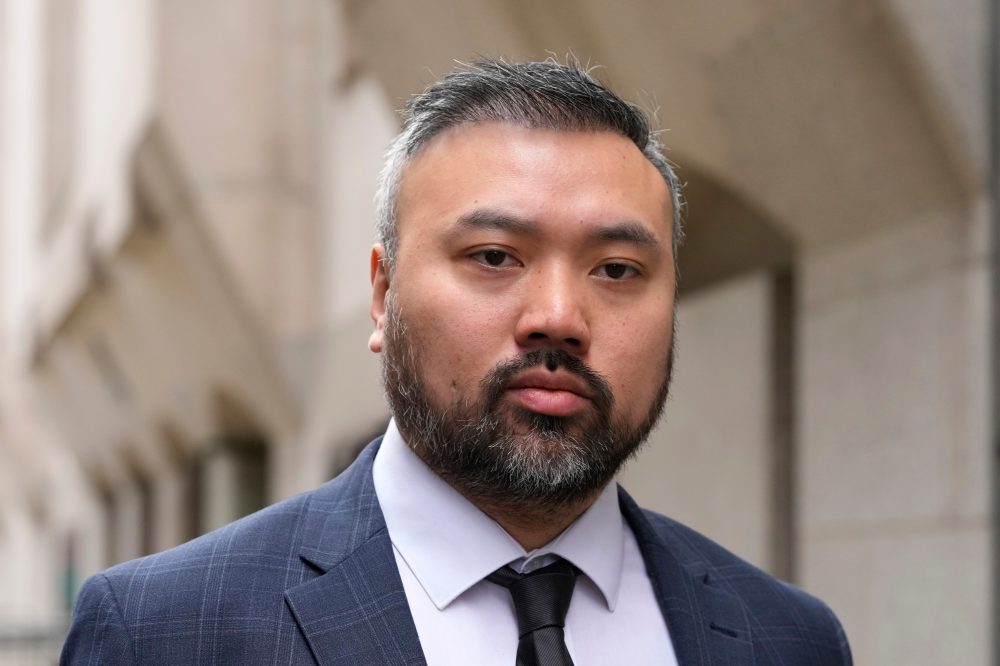
LONDON (AP) — A former U.K. border official and a retired Hong Kong police officer were handed prison sentences Thursday for carrying out espionage operations targeting dissidents and critics of Beijing who were living in Britain.
Prosecutors said Peter Wai, a Border Force officer, and Bill Yuen, a former superintendent with the Hong Kong Police, disguised themselves as law enforcement or intelligence personnel to surveil and collect information on Hong Kong dissidents and supporters of the pro-democracy movement.
Among those targeted was former Hong Kong lawmaker Nathan Law, as well as activists the pair referred to as “cockroaches” and British politicians who had spoken out against China, according to prosecutors.
Last month, a jury found both men — who hold Chinese-British citizenship — guilty of violating the National Security Act by aiding a foreign intelligence service. Wai faced an additional conviction of misconduct in a public office after investigators found he had used a government computer to look up individuals who were of interest to Hong Kong authorities.
At London’s Central Criminal Court, Judge Bobbie Cheema-Grubb sentenced Wai, 41, to 10 years behind bars and handed Yuen, 66, an eight-year prison term.
The judge described the pair’s actions as “deliberate, concerted, and serious,” noting that their conduct left the people they targeted living in fear and distress.
Before joining the U.K. Border Force, Wai had served as an officer with London’s Metropolitan Police. Yuen held the position of office manager at the Hong Kong Economic and Trade Office in London, which serves as the official overseas representative of Hong Kong’s government.
Helen Flanagan, commander for Counter Terrorism Policing London, described the conduct as deeply alarming. “The activity of Wai and Yuen was truly chilling,” she said.
“They were spying and targeting individuals in the U.K. who were pro-democracy campaigners and were simply protesting against the Hong Kong and Chinese government and authorities and seeking sanctuary in the U.K.,” Flanagan added.
Following last month’s convictions, Chinese Ambassador Zheng Zeguang was called in to the British Foreign Office. China’s Embassy in the U.K. responded by calling the case a political farce designed to support anti-China individuals who had fled to Britain.
The Hong Kong government, meanwhile, maintained that the allegations “are absolutely unrelated” to the government or the Economic and Trade Office, and accused British authorities of building the case on baseless accusations and manipulating legal proceedings to secure a guilty verdict.
What’s left of Tropical Storm Arthur continued causing problems Thursday, drenching parts of the southeastern United States with heavy rainfall and setting off flash flood and tornado warnings along the Gulf Coast.
At the same time, residents across parts of Illinois, Indiana, and northern Kentucky were dealing with the aftermath of a fierce storm system that swept through the region Wednesday, bringing what may have been tornadoes, destroying homes, and knocking down trees and power lines.
Arthur, which holds the distinction of being the Atlantic basin’s first tropical storm of the season, was knocked down to a low pressure system near the upper Texas coast Wednesday night. The National Hurricane Center in Miami said it will continue to lose strength as it pushes inland through Louisiana, Mississippi, Alabama, Georgia, and the Florida Panhandle — though it will still drop significant amounts of rain along the way.
The National Weather Service reported that southern Louisiana and Mississippi were receiving rainfall at a rate of 3 inches — about 8 centimeters — per hour in certain locations Thursday morning. Flooded streets were visible in television coverage and social media posts from the area. Multiple tornado warnings were issued Thursday morning across southern Louisiana and Mississippi, and tens of thousands of homes and businesses lost power.
The weather service warned that Arthur’s remnants could dump 4 to 8 inches — or 10 to 20 centimeters — of rain, and possibly more, across Gulf states through Thursday and Friday. Texas had already seen flash flooding Wednesday, on top of heavy rain that had already hit the region earlier in the week.
National Hurricane Center director Michael Brennan described the primary danger: “The main threat from Arthur is going to be a prolonged, multiday, heavy rainfall event that could produce dangerous to life-threatening flash flooding.”
In New Orleans, Mayor Helena Moreno said ahead of the storm’s arrival that police were getting boats ready and placing barricades in areas known to flood. Sandbag collection sites also appeared throughout Louisiana for residents to prepare.
One resident, Luke Barwick, explained why he stopped by a sandbag station in Covington, Louisiana, on Wednesday: “We both decided we got so much rain yesterday at our house that it was probably a good idea just to pick up a few bags.”
Back in the Midwest, there were many reports of tornado and wind damage, though no deaths or serious injuries were immediately confirmed. As of Thursday morning, more than 130,000 homes and businesses in Illinois, Indiana, Kentucky, and Ohio were without electricity, according to poweroutage.us.
A tornado touched down near Effingham, Illinois — roughly 90 miles, or 145 kilometers, southeast of Springfield — on Wednesday evening. A number of people were treated for minor injuries, officials confirmed.
Effingham Fire Chief Brant Yochum released a statement describing the scope of the destruction: “A tornado caused significant damage in areas north of the City of Effingham, impacting homes, roadways, utilities, and other property throughout portions of Effingham County.”
Yochum added that firefighters were kept busy responding to damaged and collapsed structures, vehicle accidents, downed power lines, gas leaks, and roads blocked by debris.
An automobile museum and auto parts complex in Effingham announced on Facebook that it suffered what it called “catastrophic” damage, though fortunately no injuries were reported.
The National Weather Service also noted that a tractor-trailer overturned on Interstate 57 north of Effingham, sending the driver to the hospital with injuries.
In Florence, Kentucky, near the Cincinnati area, local news footage and photos showed roofs and siding torn from buildings, along with downed trees and power lines, following reports of strong winds and a possible tornado.
Possible tornadoes were also reported Wednesday in southwestern Wisconsin and in Alabama. The weather service said it received a large number of wind damage reports spanning a broad area stretching from Iowa and Missouri all the way to Ohio and West Virginia.
The storm system was forecast to continue moving through the central Appalachians and into New England on Thursday, the weather service said.
A 21-year-old man is facing serious criminal charges, including a hate crime, after admitting he set a cross ablaze in a Chicago park earlier this month, according to police.
Merlin Lu publicly acknowledged to a television station this week that he was behind the cross burning at Grant Park on June 9. Despite the admission, Lu maintained that his actions were meant as a protest against President Donald Trump — not as a racial symbol targeting Black people.
According to a police statement released Wednesday night, Lu has been charged with four felonies and four misdemeanors. Those charges include a hate crime and burning a cross with intent to intimidate.
Before his arrest, Lu spoke with WMAQ-TV, saying, “I understand why it was interpreted that way, and I apologize for that, but no, the intent was not there.”
He also told the station, “I did know about this historical relevance beforehand. But I didn’t know the severity, how racially motivated it may seem from what I did. Cause my protest has nothing to do with race, nothing to do with gender.”
Lu explained that his demonstration was directed at what he called the “ruling class” and Christian nationalists who support Trump.
As of Thursday, it was unclear whether Lu had legal representation. He was set to appear before a judge for a detention hearing.
In the spot where the burning cross once stood in the park, someone placed a large, multicolored glass fiber heart bearing the word “resilient.”
According to Lu’s LinkedIn profile, he has attended college in both Indiana and Chicago and was pursuing studies in chemistry.
A major oil refinery in Moscow owned by Gazpromneft has been hit by a second drone attack in less than a week, with industry sources reporting that multiple processing units were damaged and several fires broke out across the facility.
Moscow Mayor Sergei Sobyanin announced Thursday via Telegram that the region had been targeted in what he described as a large-scale drone raid, with several of the unmanned aircraft striking the refinery. The same plant had already come under attack on June 16, which forced it to shut down operations.
According to industry sources, Thursday’s strike caused damage to the Euro+ combined oil refining unit, a facility that was brought online in 2020 as part of the refinery’s modernization effort. That unit includes a crude distillation section capable of processing roughly 140,000 barrels of oil per day — accounting for about 47% of the refinery’s total capacity — along with a catalytic reformer and a diesel hydrotreating unit.
Beyond the Euro+ unit, sources indicated that secondary processing units, pipelines connecting different parts of the plant, and other auxiliary equipment were also damaged. Storage tanks holding refined oil products were struck and caught fire.
Gazpromneft, the company that owns and operates the refinery, had not responded to a request for comment at the time of reporting.
The June 16 attack had already dealt a significant blow to the facility. During that earlier strike, one of the refinery’s two main crude distillation units — known as CDU-6, with a normal processing capacity of around 160,000 barrels per day, or 53% of the plant’s total output — was damaged and caught fire.
Sources said the refinery had been planning to bring the Euro+ unit back online midweek and operate at roughly half capacity while repairs were carried out on CDU-6. Thursday’s attack disrupted those plans.
The refinery sits in the southeastern section of Moscow and plays an important role in supplying fuel to the Russian capital. According to sources, the facility processed 11.6 million metric tons of crude oil in 2024 — equivalent to approximately 230,000 barrels per day — and produced 2.9 million tons of gasoline, 3.2 million tons of diesel, and 1.3 million tons of bitumen during that period.
HARARE — Zimbabwe’s lower house of parliament gave its approval Thursday to a bill that would lengthen presidential terms from five years to seven, a move that could keep President Emmerson Mnangagwa in power until 2030.
The legislation cleared the chamber with 216 votes in favor, surpassing the 187-vote threshold required for a two-thirds majority.
The bill now advances to the upper house of parliament, where it is widely expected to pass as well. Mnangagwa’s ruling ZANU-PF party maintains control of that chamber through traditional leaders and allied proxies who typically vote in line with the party.
Indications that Mnangagwa, who is 83 years old, was looking to remain in office beyond the conclusion of his second term in 2028 surfaced roughly two years ago. Supporters began chanting at ZANU-PF rallies that he needed additional time to finish his agenda. The party formally resolved last year to amend the constitution to extend presidential terms, and the proposal received cabinet approval in February.
Opponents of the bill argue it is simply a mechanism for Mnangagwa to cling to power longer than the current constitution allows. Supporters, however, contend the change will improve accountability and promote political stability.
Mnangagwa carries the nickname “the crocodile,” a creature depicted in Zimbabwean tradition as both cunning and merciless. He rose to the presidency following a military coup in 2017 that removed longtime ruler Robert Mugabe, who had governed the country since it gained independence in 1980. Prior to their falling out in the months before the coup, Mnangagwa had been among Mugabe’s closest allies, holding senior government roles including the position of vice president.
Legal challenges to the term extension were filed by some activists and veterans of Zimbabwe’s liberation war, but those cases were dismissed from the court roll earlier this week due to technical procedural issues.
Zimbabwe is not alone in this trend. Other African nations, including Cameroon and Uganda, have seen their leaders alter laws to extend their time in office — a pattern that has taken hold across a continent where some of the world’s oldest heads of state govern populations that skew among the youngest on Earth.
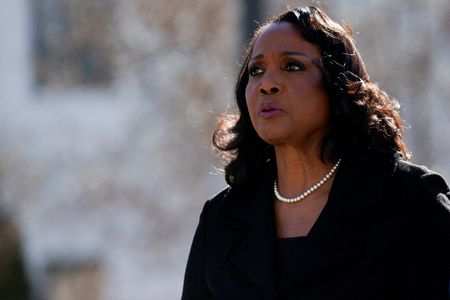
Federal Reserve Governor Lisa Cook revealed Thursday that she has spent close to $1.2 million on legal services as she battles President Donald Trump’s attempt to remove her from office. Trump has sought to fire Cook based on mortgage fraud allegations, which she says are false.
According to an updated annual financial disclosure filed with the U.S. Office of Government Ethics, the payments were split between two organizations — $696,346 went to the State Democracy Defenders Fund, while $477,951 was paid to Contina Impact.
The case has now reached the nation’s highest court, with the Supreme Court expected to issue a ruling before the end of June. Legal observers say the outcome could be critical to preserving the Federal Reserve’s ability to set monetary policy without political interference.
BMW’s supervisory board chairman said Thursday that the German automaker is headed in the right direction with its upcoming vehicle lineup, even as a recent profit warning continued to drag down the company’s stock price.
Speaking to reporters in Paris, chairman Nicolas Peter pointed to strong order numbers for BMW’s Neue Klasse vehicles, calling the demand “good news both for the manufacturer and for the suppliers involved in the project.” The Neue Klasse represents a sweeping lineup of new models designed to modernize BMW’s offerings amid growing pressure from Chinese rivals.
BMW’s shares dropped 5.3% by mid-afternoon Thursday, landing at their lowest point since November 2, 2020. The stock sat at the bottom of Germany’s blue-chip index after several major brokerages, including Citi and HSBC, slashed their target prices following the profit warning. Analysts pointed to prolonged softness in the Chinese market and the Iran conflict as key factors behind the guidance cut.
“The magnitude of this latest downgrade – the third predominantly China-driven downgrade in as many years – is greater than we had anticipated,” analysts at Berenberg wrote. They added: “This could prompt a more profound strategic reset under the incoming CEO,” referring to Milan Nedeljkovic, who stepped into the top role last month after longtime leader Oliver Zipse departed.
Industry analysts have suggested BMW may move to cut production capacity in Europe and speed up efforts to shift manufacturing closer to its key markets in North America and China.
Peter said BMW remains confident about the U.S. market, describing it as stable and significant, though he acknowledged the company is currently selling fewer vehicles in Europe than it produces there. He also noted that despite the fierce price competition among automakers in China — still the world’s largest auto market — there remains room for foreign manufacturers to compete alongside domestic brands.
MONTERREY/GUADALAJARA, Mexico — Long before the World Cup brought South Korean fans to Mexico’s streets, a cultural connection between the two nations had already taken deep root. President Claudia Sheinbaum has shared a balcony with K-pop supergroup BTS, and visiting South Korean fans have been welcomed with the chant: “Korean, my brother, you’re now Mexican.” But that warm embrace faces its biggest test yet as the two countries square off in a group stage World Cup match in Guadalajara on Thursday.
“Koreans and Mexicans are like brothers and sisters,” said Annie, a South Korean visiting Guadalajara from California for the game.
The relationship between the two nations is one of the more unusual cultural bonds in the world. Despite being separated by 12,000 kilometers, a 15-hour time difference, and entirely different languages, South Korean culture has found a firm footing in Mexico.
“K-pop is the gateway, but the end result is that many young people end up becoming interested in the language, education, and culture,” said Erika Garza, director of Asian Studies at the Autonomous University of Nuevo Leon.
The city of Monterrey, a major Mexican industrial hub, shows this influence most clearly. The arrival of Kia and other large South Korean companies over the past decade has brought thousands of South Korean residents to the area.
Nineteen-year-old student Yoona Jwa was part of that wave. Her family relocated from South Korea to Monterrey when she was 8 years old so her father could take a job there. She initially struggled to fit in, with soccer serving as one of the few early bridges between her and her new community. These days, though, the dynamic has flipped — her Mexican friends are the ones picking up pieces of her culture.
“Once I was driving with my friends and they were singing a song I didn’t recognize, and then I realized, they were singing in Korean!” she said.
Throughout downtown Monterrey, the signs of South Korean cultural influence are hard to miss. Store owners sell life-size cutouts of the South Korean boy band Stray Kids and pillows bearing the faces of BTS members.
Outside one K-pop shop, 18-year-old Mexican Christopher Elizondo admitted he has grown so fond of South Korean music — its rhythms and choreography especially — that he isn’t even certain which team he’ll be cheering for during Thursday’s match. He plans to watch from home, where the rest of his family will be firmly backing Mexico.
“It’s going to be a bit uncomfortable,” he said.
The two countries’ World Cup stories have crossed paths before. Back in 2018, Mexico and South Korea were also placed in the same group. Mexico appeared headed for elimination after a 3-0 loss to Sweden, but South Korea’s shocking last-minute victory over Germany rescued Mexico and sent them into the knockout round. Celebrating fans flooded the area outside South Korea’s embassy in Mexico City, where the consul came out wearing a Mexico soccer jersey to greet the crowd. A brewery based in Monterrey even sent a truckload of beer to the local Kia plant in celebration.
Heading into Thursday’s match, Mexico and South Korea sit first and second in their group, each with three points. Mexico is hoping the home crowd will give them an edge — even if a number of K-pop fans are seated in the stands.
Yoona Jwa says the World Cup has actually brought her even more warmth from Mexican strangers. At a Fanfest event in Monterrey on Sunday, she was lifted into the air by celebrating fans. Earlier this week, a woman at a market gave her family free tostadas and wished them luck ahead of Thursday’s game.
Still, the competitive spirit is building.
On Wednesday, at a Korean restaurant outside Monterrey, South Korean native Kevin Kim — who lives in Texas — sat down for lunch with his Mexican business partner, Humberto Osuna. The two have worked together for years in the technology and electronics sector.
“We are good friends,” Osuna said.
But he noted that could change the moment the referee blows the opening whistle.
The University of Delaware volleyball team now has its 2026 roadmap in place. Head coach Kim Lambert announced Thursday that the Fightin’ Blue Hens will compete in 26 regular-season matches throughout the upcoming campaign.
Delaware fans will have plenty of chances to cheer on their team in person, as 12 of those matches are set to be played at home inside the Bob Carpenter Center.
Three Blue Hens are heading to a national stage. University of Delaware field hockey players Ella Cellini, Katie Clarke, and Penelope Kousouris have been chosen to take part in the 2026 Senior Nexus Championship, USA Field Hockey revealed Wednesday.
The announcement was made in Virginia Beach, Virginia, marking a significant achievement for the trio of student-athletes from the University of Delaware program.
More than 500 women from across the United States gathered in Washington, D.C. for the 2026 ACE Summit — short for Advocate, Cultivate, Empower — an event organized by the American Farm Bureau Federation Women’s Leadership program. The conference took place in recognition of the International Year of the Woman Farmer, making it a particularly meaningful gathering for those who attended.
The opening session featured a panel of women in leadership roles who were part of the original group that launched the International Year of the Woman Farmer campaign more than a decade ago. Hearing the story behind how that global movement came together was described as a deeply inspiring experience.
Throughout the conference, attendees took part in breakout sessions designed to strengthen their advocacy and media communication skills. One session focused on how women in agriculture can speak clearly and confidently on behalf of the industry when engaging with media outlets. Another session encouraged participants to pursue their ambitions with purpose, offering practical tools to shift from a mindset of self-discipline toward one of self-devotion.
The summit wrapped up with a presentation of results from the National Women in Agriculture Study, which collected more than 4,000 responses. The survey painted a detailed picture of the wide range of responsibilities and skills that women in agriculture bring to the table. Among the standout findings: nine out of ten women surveyed said they feel confident speaking about agriculture at community meetings — a result that highlighted just how prepared women in the industry are to tell their own stories.
Following the summit, attendees participated in Women in Ag Day on Capitol Hill, where they had the opportunity to meet with members of both the U.S. House and Senate representing their home states. With the Farm Bill currently under review by the Senate Agriculture Committee, the timing made these conversations especially important for Delaware Farm Bureau members to be part of.
The experience left attendees energized and motivated to make a difference back home. Women are widely recognized as a cornerstone of the agriculture industry, and the summit served as a reminder of the strength that comes from community — whether within one’s own family or through the broader Farm Bureau network.
BOGOTA — A lawyer and businessman who had never held political office before last year has quickly become the leading candidate to become Colombia’s next president, riding a wave of support for his tough stance on crime, smaller government, and a return to oil exploration.
Abelardo De La Espriella, known among his supporters as “The Tiger,” has positioned himself as an outsider who can fix Colombia’s struggling economy and bring order to a nation troubled by illegal armed groups and drug trafficking.
“I will dare to do what needs to be done within the framework of the Constitution and the law to save and rebuild Colombia,” De La Espriella told Reuters in a February interview. “It requires character, passion, courage, and determination, and I am the tiger for that.”
De La Espriella built momentum throughout the early part of the year with his hardline rhetoric, winning the first round of voting in late May with 43.7% of the vote. He has led every major poll ahead of Sunday’s runoff election against leftist Senator Ivan Cepeda.
The two candidates represent sharply different visions for the country’s future. Cepeda has pledged to continue and expand the economic and social reforms of current leftist President Gustavo Petro, while also pursuing peace negotiations with armed groups that have waged conflict against the Colombian state for decades.
De La Espriella holds Petro responsible for Colombia’s economic troubles and security problems. He has promised to shrink the size of the government by 40%, expand the tax base, and lower corporate taxes in order to stimulate private-sector job creation.
He also wants to resume oil exploration and permit fracking, with the goal of nearly doubling oil output to 1.3 million barrels per day.
“Colombia is going through its darkest hours,” De La Espriella said to Reuters. “At the end of the day, it’s not a battle between (Petro’s) heir apparent Ivan Cepeda and me, it’s a battle between totalitarianism and democracy, between the past and the future, between statism and economic freedom.”
De La Espriella’s business interests span a wide range of industries, including wine, rum, clothing, and real estate. However, an investigation by the Colombian journalism outlet La Silla Vacia found that many of those businesses have been dissolved, carry debt, and lost money in 2024, with his law practice being his most financially successful venture.
The candidate says he is funding his campaign and his “Defenders of the Homeland” movement entirely on his own, without backing from political parties or business interests. Reuters was unable to independently confirm that claim.
De La Espriella, who is 47 years old, frequently uses a military-style salute at campaign events and in advertisements, despite having no military service record. He is often seen wearing luxury watches and designer sunglasses and sporting a carefully maintained beard — an image that has drawn comparisons to El Salvador’s President Nayib Bukele, who has famously called himself the “world’s coolest dictator.”
Bukele’s government implemented strict security crackdowns and built large-scale detention facilities, driving El Salvador’s crime rates to some of the lowest in Central America. More than 90,000 people have been detained under his policies, drawing sharp criticism from human rights organizations.
De La Espriella has denied he is copying Bukele’s approach, but he has proposed building 10 large-scale prisons in Colombia.
“In my government there will be no peace processes. Any bandit who does not surrender will be killed, as is the law,” he stated. “And if they do surrender, they will have to be imprisoned in a real jail.”
The candidate has also faced scrutiny over his legal career, including his past representation of Alex Saab, who faces charges in the United States alleging he laundered money on behalf of ousted Venezuelan President Nicolas Maduro. De La Espriella has also represented clients connected to corruption cases, financial crimes, and right-wing paramilitary groups. He maintains that his work as an attorney does not make him complicit in any wrongdoing.
A married father of four, De La Espriella grew up in the Caribbean city of Monteria and is known as an enthusiastic performer of vallenato, the traditional folk music of that region.
SALISBURY, Md. — The City of Salisbury has officially announced plans for the Naylor Mill Water Main Extension Project, with an outside contractor set to break ground on Monday, June 29, 2026. The project is expected to take about a year, with completion targeted for June 2027.
The goal of the project is to expand water service and deliver dependable, high-quality drinking water to the surrounding area. The work will span from Scenic Drive to Ed Taylor Road and is part of the city’s ongoing push to upgrade its water infrastructure and improve service reliability.
Drivers should be aware that while the road will stay open during construction, traffic will be managed under single-lane control. Motorists are asked to slow down, plan for potential delays, and pay close attention to posted signs and flagging crews working in the construction zone.
Work is scheduled to take place Monday through Friday, between 7 a.m. and 5 p.m.
The city is asking for the public’s patience as the project moves forward and says additional updates will be shared as construction progresses. Residents with questions can reach the Water Works Department at 410-548-3199.
The United States Supreme Court has handed down a ruling in favor of a marijuana user who had been barred from possessing firearms, determining that the law used to bring charges against him runs afoul of the Second Amendment.
In its decision, the court found that the federal statute used to prosecute the man was not only a violation of his constitutional right to bear arms, but also unconstitutionally vague in its application.
The ruling raises important questions about how federal gun laws interact with marijuana use, particularly as more states have moved to legalize or decriminalize cannabis in recent years.
For months, BYU’s AJ Dybantsa has been considered the likely top pick in the NBA Draft, and his performance this season did nothing to change that perception. The first-team Associated Press All-American headlines a talented group of forwards that also includes Duke freshman Cameron Boozer and North Carolina’s Caleb Wilson. Those three, paired with Kansas guard Darryn Peterson, make up the draft’s upper echelon heading into Tuesday night’s first round.
Here’s a closer look at the top forward prospects:
AJ Dybantsa, BYU
STRENGTHS: Dybantsa led the nation in scoring with 25.5 points per game, showcasing an elite ability to create his own shot and draw fouls. He also put up 6.8 rebounds and 3.7 assists per game while shooting 51% from the field — all from a 6-foot-9, 217-pound frame built for the next level.
He set a BYU freshman scoring record with 43 points against Utah and shattered Kevin Durant’s freshman Big 12 Tournament record by dropping 40 on Kansas State. He topped the country in free throws made (229) and attempted (296), reaching the line at least 10 times in 15 separate games. Analytics firm Synergy graded him “Excellent” as a pick-and-roll ball handler (87th percentile, 27% of possessions) and in post-up situations (94th percentile, 10.9%). Against top-10 opponents, he averaged 26.9 points across seven games, including 35 in a loss to Final Four-bound Arizona and a near triple-double — 29 points, 10 rebounds, and nine assists — in an upset win over sixth-ranked Iowa State.
CONCERNS: His three-point shooting needs work. He connected on just 33.1% from beyond the arc and struggled down the stretch, going 18-for-66 (27.3%) over the final month’s 12 games. Cutting down on turnovers — he averaged 3.1 per game — will also be a priority at the next level.
Cameron Boozer, Duke
STRENGTHS: The 6-foot-8, 253-pound son of former Duke and NBA player Carlos Boozer was a consistent force in the paint and became just the fifth freshman ever named AP men’s national player of the year. He averaged 22.5 points and 10.2 rebounds per game, regularly finishing through contact with 55.6% shooting from the field and 78.9% from the free throw line. Synergy rated him “Excellent” against man defense (94th percentile), on post-ups (86th), and on spot-up shots (95th). He also shot 39.1% from three. His passing ability — 4.1 assists per game — out of double teams proved valuable, including a key assist on Isaiah Evans’ late three-pointer that beat Florida.
CONCERNS: Boozer relies more on strength and positioning than explosiveness, and doesn’t play above the rim. His difficult outing in the Atlantic Coast Conference Tournament title game against Virginia’s elite rim protector Ugonna Onyenso — just 13 points on 3-for-17 shooting with four blocks — raised questions about how he’ll fare against bigger, longer defenders in the pros. His athleticism could also be tested when forced to guard quicker players on defensive switches.
Caleb Wilson, North Carolina
STRENGTHS: Wilson brings explosive athleticism, a relentless motor, a 7-foot wingspan, and a flair for the big moment. The 6-foot-9, 211-pound freshman averaged 19.8 points and 9.4 rebounds while excelling at the rim and in transition, earning second-team AP All-American honors. Against Kansas, he delivered 24 points, seven rebounds, four assists, and four steals, showing off a soft touch on fading turnaround shots. He also shined against rival Duke and fellow top prospect Cameron Boozer, scoring 17 of his 23 points before halftime to keep the Tar Heels in it before Seth Trimble’s buzzer-beating three sealed the win. Wilson was pacing the nation in dunks with 66 before suffering a broken left hand in mid-February. He then broke his right thumb in practice just as he was nearing a return in March.
CONCERNS: He’ll need to add muscle to handle the physical demands of the NBA and extend his shooting range — he connected on just 25.9% from three. Defensive consistency is another area to watch, even with averages of 1.4 blocks and 1.5 steals per game.
Other Notable Forwards
— YAXEL LENDEBORG: A first-team AP All-American who helped Michigan claim its first NCAA title since 1989. The 6-foot-9, 241-pound forward has a wingspan exceeding 7-foot-3 and shot 37.2% from three at a career-high volume after posting 34.9% over two seasons at UAB. He gutted through ankle and knee injuries during the Final Four and championship game. At 23, he’s older than most prospects but could contribute immediately as a potential lottery pick.
— MOREZ JOHNSON JR.: Another contributor from Michigan’s title run, the 6-foot-9, 251-pound sophomore averaged 13.1 points, 7.3 rebounds, and 1.1 blocks and could be selected in the late lottery. His wingspan — measured better than 7-foot-3, ninth among 75 players at the combine — and versatility allow him to play forward or small-ball center. He has excelled as a cutter, in post-ups, and finishing at the rim.
— KARIM LOPEZ: The 6-foot-8, 222-pound native of Mexico has spent two seasons in Australia’s National Basketball League’s “Next Stars” developmental program, the same pipeline that produced lottery picks LaMelo Ball, Josh Giddey, and Alex Sarr. He averaged 11.9 points and 6.1 rebounds last season and brings versatility, athleticism, and a nearly 7-foot wingspan.
— ALLEN GRAVES: The 6-foot-8, 226-pound Graves earned West Coast Conference freshman of the year honors for Santa Clara’s NCAA Tournament team. He averaged 11.8 points and 6.5 rebounds in just 22.6 minutes per game while shooting 41.3% from three and showing defensive upside with 0.9 blocks and 1.9 steals per game.
— KOA PEAT: The 6-foot-7, 245-pound Arizona freshman did most of his damage in transition, on post-ups, and as a roll man in pick-and-rolls. He tied for fifth at the combine in standing vertical leap at 34.5 inches, but showed little range — making just seven three-pointers — and Synergy rated his jumper “Below Average” at the 27th percentile.
— JOSHUA JEFFERSON: The second-team AP All-American from Iowa State brings a sturdy 6-foot-8, 246-pound frame. The senior averaged 16.4 points, 7.4 rebounds, and 4.8 assists per game, demonstrating the ability to both initiate offense and create open looks for teammates.
— ALEX KARABAN: The 6-foot-7, 225-pound redshirt senior from UConn could sneak into the late first round on the strength of his shooting (37.4% from three for his career) and length (6-foot-11 wingspan). A proven winner, Karaban was a full-time starter for UConn teams that won two NCAA championships and played for a third.
BRUSSELS — For the first time in 16 years, European Union leaders gathered in Brussels for a summit without Hungarian politician Viktor Orbán in the room.
Over the years, prime ministers, chancellors, and presidents have come and gone, but Orbán remained a constant presence in Brussels’ corridors of power. He became known for steering Europe toward the political right and championing a form of nationalist populism that has gained traction across the continent and earned admiration from the Make America Great Again movement in the United States.
But after losing a critical election in April, Orbán — now Hungary’s top opposition figure — finds himself watching from the outside for the first time in a generation. His successor, Péter Magyar, is now seated alongside leaders such as Spain’s Pedro Sanchez, France’s Emmanuel Macron, and Germany’s Friedrich Merz, advancing policies that are likely to conflict with Orbán’s worldview.
While the EU summit opened with discussions on increasing support for Ukraine and other matters, Orbán was across town participating in a Thursday gathering of his Patriots for Europe party group — a coalition of far-right parties from across the bloc that makes up the third-largest caucus in the European Parliament.
Despite the stinging election defeat — which many EU leaders welcomed with relief and many observers interpreted as a rejection of his confrontational stance toward the EU and his close relationship with Russia — Orbán has not wavered in his conviction that far-right movements across Europe are approaching a major turning point.
At a news conference in Brussels on Wednesday, Orbán said his loss at the polls had not slowed “the rise of patriotic political organizations, communities, and parties across Europe.”
“No one election loss can stop this historical process,” he said. “Anti-migration and sovereigntist political forces in Europe will continue to grow stronger in the coming months and years.”
Orbán envisions Patriots for Europe as a vehicle to reshape the EU according to his priorities — reducing the bloc’s authority over rule of law and democracy, taking a hardline stance on immigration, and fostering closer ties with Russia and China.
He had long been the primary obstacle to Ukraine’s path toward EU membership. However, Hungary’s new government, led by Magyar and his center-right Tisza party, has committed to working more cooperatively with the EU. Last week, Hungary dropped its veto on launching Ukraine’s accession process, following weeks of negotiations with Kyiv over restoring minority rights for ethnic Hungarians living in western Ukraine.
“Hungary obviously had issues that they were able to resolve to allow this to happen this week,” said Thomas Byrne, Minister for European Affairs for Ireland, which is set to take over the rotating EU presidency in July for a six-month term. During that period, accession talks for Ukraine and Moldova, among others, are expected to move forward more rapidly.
Europe’s far-right parties have indeed notched some recent wins. France’s National Rally, led by Marine Le Pen, made gains in municipal elections earlier this year, while Alternative for Germany, known as AfD, has been climbing in opinion polls. Orbán ally Andrej Babis, the populist leader of the Czech Republic, returned to the prime minister’s office last year and is currently the only Patriots for Europe member heading an EU-member nation.
The far right also helped push through a significant overhaul of the EU’s migration policy, made possible through an alliance with the center-right European People’s Party. Human rights organizations sharply criticized the changes, which expand the bloc’s surveillance capabilities, increase deportations of migrants, and establish detention facilities outside the EU known as “return hubs.” When the right-wing coalition passed the migration reform on Wednesday, far-right and center-right lawmakers erupted in cheers inside the European Parliament chamber in Strasbourg, France.
“Send them back,” they chanted.
Still, cracks have begun to show within Europe’s far-right coalition, driven by disagreements over the United States and Israel’s war in Iran and U.S. President Donald Trump’s threats to annex Greenland, a territory belonging to EU member Denmark.
And with Orbán no longer able to veto EU decisions — a strategy that had increasingly come to define his role at bloc summits — Ukraine’s biggest hurdle to beginning its EU membership process has been cleared.
WASHINGTON — The U.S. Supreme Court handed down a unanimous ruling Thursday in favor of a Texas marijuana user who challenged his right to legally possess a firearm, marking the latest in a growing series of decisions that have broadened gun rights across the country.
The justices ruled in favor of Ali Danial Hemani, who contended that a federal law prohibiting anyone who uses illegal drugs from owning a gun runs afoul of the Second Amendment. Hemani had not been accused of any other criminal activity, nor was he alleged to have handled the firearm while under the influence of marijuana.
The ruling is a setback for President Donald Trump’s Republican administration, which had defended the 1968 law even as it has pushed back against other firearms restrictions. That same law played a central role in the case against Hunter Biden, who was convicted in Wilmington, Delaware, of purchasing a firearm while addicted to cocaine in 2018. He was subsequently pardoned by his father, then-President Joe Biden, a Democrat.
Thursday’s decision is the most recent in a string of gun-related cases to reach the nation’s highest court following a landmark 2022 ruling that expanded Second Amendment protections and sparked a nationwide wave of legal challenges.
In the years since that 2022 ruling, the Supreme Court has upheld a law designed to shield domestic violence victims and maintained strict regulations on ghost gun kits, while striking down a prohibition on bump stocks — attachments that allow semi-automatic weapons to fire at a much faster rate. The court took up two separate firearms cases during this term alone.
The legal landscape surrounding marijuana has also undergone major changes in recent years. More than half of all U.S. states have now broadly legalized cannabis, and its use for medical purposes has become widespread. Nevertheless, recreational marijuana remains illegal at the federal level, even following the Trump administration’s move in April to reclassify medical marijuana as a less-dangerous substance.
Standalone criminal charges against individuals accused solely of possessing guns while using drugs are uncommon. In most cases, that charge is added on top of other alleged offenses.
The case drew some unexpected political alliances. Both the American Civil Liberties Union and the National Rifle Association filed in support of Hemani, as did cannabis legalization advocates including NORML. Opposing Hemani were gun safety organizations such as Everytown, which typically find themselves on the opposite side of the Trump administration when it comes to Second Amendment debates.
The early Chinese investors behind the artificial intelligence startup Manus are reportedly planning to purchase the company back from Meta, matching the $2 billion the Facebook parent company originally paid, according to a report published Thursday by The Information.
The publication cited two individuals with direct knowledge of the situation, saying the planned buyback is a direct response to an order from the Chinese government demanding the transaction be reversed.
The Archbishop of Canterbury, Sarah Mullally, delivered a formal apology Thursday on behalf of the Church of England for its part in a decades-long practice that resulted in 185,000 children being taken from unmarried mothers and placed for adoption in the years following World War Two.
During that era, Christian churches and the British government worked together within a system that shamed and pressured young women who had children outside of marriage into surrendering their babies, all in the name of conforming to the social expectations of the time.
The Church of England’s involvement centered on facilities known as “mother and baby homes,” where unmarried women — frequently sent there against their will — lived during and after their pregnancies before being separated from their newborns. A comparable program was operated in Ireland by the Catholic Church.
“We are profoundly sorry for the pain, trauma and stigma experienced — and still carried — by many people because of historical adoption practices in homes affiliated to the Church of England,” Mullally said in a statement released by the Church.
The British government is also anticipated to issue its own apology on behalf of the state. Ireland and Australia are among the other nations that have already made similar acknowledgments in recent years.
The Adult Adoptee Movement, an organization representing individuals who were forcibly adopted, pushed back against the Church’s statement, calling it “minimising, passive and distancing language” and saying the Church did not adequately recognize the specific harms that were inflicted.
A report released by the Church alongside Thursday’s apology estimated that as many as 200 of these mother and baby homes may have operated between 1949 and 1976. The report described daily life inside those homes — where some women were forced to stay for several years — as being “characterised by domestic work, prayer and penitence.”
A separate government report issued in March described the treatment of expectant mothers, many of whom were under 18 years old, during pregnancy and childbirth as “inhumane,” and noted that those who were adopted have faced lasting consequences from being separated from their birth mothers.
Mullally also acknowledged that women and girls in these homes were sometimes required to perform menial and physical labor as a form of so-called “correction.”
“Today, we say to each of you: the shame you were made to feel was wrong. You have nothing to be ashamed of. Rather, we are deeply ashamed that this happened to people in the care of Christian communities,” she stated.
New York’s LaGuardia Airport announced Thursday morning that a runway has been reopened following an overnight closure prompted by a pavement concern.
The airport revealed Wednesday that the runway would be taken out of service at 5 p.m. EDT after workers discovered a two-inch depression in the pavement next to the runway. The closure allowed crews to run additional tests, determine what caused the problem, and carry out any necessary stabilization work. By just after 6:30 a.m. EDT on Thursday, the airport confirmed the runway was back in operation.
This is the second time in under a month that LaGuardia has had to shut down a runway. Last month, a sinkhole on one of its runways forced a two-day closure at the heavily trafficked airport.
Wall Street’s three major stock indexes moved higher at Thursday’s opening bell, with technology companies driving much of the momentum as optimism over a potential Iran peace deal helped ease concerns about the Federal Reserve’s aggressive stance on interest rates.
The Dow Jones Industrial Average gained 79.3 points, or 0.15%, reaching 51,571.85. The S&P 500 climbed 67.3 points, or 0.91%, to 7,487.36, while the tech-heavy Nasdaq Composite surged 389.0 points, or 1.49%, to 26,410.623 as trading got underway.
The positive mood in markets came despite lingering unease over the hawkish tone expected from the Federal Reserve under new Chair Kevin Warsh, with investors weighing that uncertainty against the prospect of progress on a Middle East peace agreement.
BEIJING — China has formally named Cai Qi, the nation’s fifth-highest-ranking official, as the new leader of the Communist Party’s premier ideology and training institution, further strengthening his role as one of President Xi Jinping’s most trusted inner circle members.
Cai joined the party’s seven-member Politburo Standing Committee — the highest level of political authority in China, led by Xi — back in 2022. He also serves as director of the party’s General Office, a role that effectively makes him Xi’s chief of staff.
The appointment carries significant historical weight. Both of China’s two most recent top leaders, Xi and Hu Jintao, previously led the prestigious Central Party School before rising to the country’s top position.
At 70 years old, Cai now brings together the party’s organizational structure, ideological direction, and administrative operations under one Standing Committee member — a concentration of influence that is considered rare within China’s political system.
The human resources ministry announced Thursday that Cai has replaced Chen Xi, 72, as president of the National Academy of Governance. Founded in 1994, the academy has been jointly run with the Central Party School since 2018 as a single institution under party leadership. Its primary responsibilities include training senior Chinese government officials and guiding party ideology.
Thursday’s formal announcement came after state media reported earlier this month that Cai had already attended a spring semester graduation ceremony at the school and academy in his capacity as president.
Cai’s relationship with Xi goes back many years, rooted in overlapping careers in China’s Fujian and Zhejiang provinces. In 2017, as Xi began his second term leading the Communist Party, Cai was elevated to the then 25-member Politburo, the party’s second-highest decision-making body.
Rehoboth Beach is moving forward with a commercial zoning code overhaul, and city officials want the public to be part of the conversation. The city has joined forces with planning and design firm Dover Kohl & Partners to guide the update, which aims to address existing problems and strengthen the character and community life of Rehoboth Beach.
A key part of that effort is Charrette Week, a community-driven planning event set to take place July 13-17 at the Rehoboth Beach Convention Center. A charrette is a collaborative planning session where community members, stakeholders, and planners work together to identify challenges and develop solutions.
The week is designed to give residents, business owners, property owners, visitors, and anyone who cares about the city’s future a direct voice in the planning process. A range of activities will be offered throughout the week to make participation as accessible and engaging as possible.
Walking Tours will take participants through key streets and public spaces, encouraging them to take a closer look at the built environment — how buildings relate to the sidewalk, how safe and welcoming spaces feel, and how design decisions affect the overall character of a place. Participants will also have the chance to share stories about past issues and how they were handled.
Interactive Map Sessions will give attendees a chance to act as planners themselves. Large maps will be spread out and markers handed out so that participants can draw ideas, flag concerns, and mark opportunities directly on the map. All input will be recorded so nothing is overlooked.
Drop-In Studio Hours will allow anyone to stop by at their convenience to see the planning team at work — sketching concepts and visualizing early ideas based on feedback gathered throughout the week. Visitors can ask questions, share thoughts, or simply observe the process informally.
Focus Meetings will zero in on specific topics or groups, though all of these sessions are open to anyone who wishes to attend.
End-of-Week Summary — At the close of Charrette Week, the team will present a recap of what was heard and share some initial concepts that emerged from community input. This presentation will lay the groundwork and policy direction that will ultimately guide how the new zoning code is written.
The week gets underway on Monday, July 14, with a Kick-Off Meeting from 4:00 to 7:00 p.m. at the Convention Center. Attendees will have the chance to meet the Dover Kohl & Partners team, learn about the initiative, and provide hands-on feedback.
Sessions will continue Tuesday through Thursday, running as early as 8:00 a.m. and wrapping up by 6:00 p.m. At the conclusion of the week, Dover Kohl & Partners will deliver a Progress Presentation at 2:00 p.m. during the Mayor & Commissioners Meeting. That meeting is open to the public and will also be livestreamed and archived on the city’s YouTube channel for those who cannot attend in person.
A full schedule, along with additional information, videos, and frequently asked questions, is available on the city’s official website under the Zoning Code Changes section. Members of the media are welcome to attend all sessions.
For more information, contact Communications Director Brooke Thaler at 302-227-6181, ext. 522.
The number of Americans seeking jobless benefits edged lower last week, with new unemployment claims continuing to hover in a historically low range, according to a federal report released Thursday.
For the week ending June 13, applications for unemployment benefits totaled 226,000 — a decrease of 4,000 from the prior week, the Labor Department announced. That figure closely matched the 225,000 new claims that analysts surveyed by the data firm FactSet had anticipated.
Weekly unemployment filings are widely viewed as a reliable measure of layoff activity across the country and serve as a near real-time snapshot of overall job market health.
Even with concerns that the conflict in the Middle East could weigh on an already sluggish labor market, hiring has shown improvement in recent months. That follows a difficult stretch in 2025 when fewer than 200,000 jobs were added — a sharp contrast to the roughly 1.5 million positions created throughout 2024.
U.S. employers added a better-than-expected 172,000 jobs in May, and the economy has averaged 188,000 new positions per month over the three months since the Iran war began in late February. That marks the strongest three-month hiring stretch since early 2024. The national unemployment rate currently sits at a historically low 4.3%.
Job openings also climbed in April, with employers listing 7.6 million vacancies — up from 6.9 million in March and the highest total since May 2024.
Last week, the government revealed that rising gas prices — driven by the closure of the Strait of Hormuz along Iran’s southern border — pushed consumer inflation in May to 4.2%, the highest it has been in three years. Even with some recent easing, oil and gas prices remain high, putting a strain on household budgets and causing some businesses to hesitate on new hires.
Earlier this week, Iran and the United States reached an agreement to end the war and allow Iran to reopen the Strait of Hormuz and resume selling its oil without restrictions.
With inflation still well above the Federal Reserve’s 2% target, central bank officials chose to hold the benchmark interest rate steady on Wednesday. The meeting was the first presided over by new Fed Chair Kevin Warsh, who took over after Jerome Powell completed his eight-year tenure leading the central bank.
While lower interest rates typically encourage economic growth and hiring, they can also fuel inflation. As a result, several Fed policymakers have indicated they may actually support at least one interest rate increase this year in an effort to bring inflation down — though higher borrowing costs tend to make businesses more cautious about expanding their workforce.
The rapid growth of artificial intelligence has added another layer of uncertainty to the jobs outlook, given the significant investment the technology requires and the possibility that it could transform or eliminate certain positions.
Among the companies that have announced workforce reductions recently are Verizon, UPS, Amazon, Disney, Starbucks, and Walmart.
Since the U.S. economy recovered from the pandemic-era recession, weekly jobless claims have largely stayed within a range of 200,000 to 250,000. However, hiring began to slow roughly two years ago and weakened further in 2025, a trend attributed to President Donald Trump’s tariffs, reductions in the federal workforce, and the lingering impact of elevated interest rates aimed at curbing inflation.
Thursday’s Labor Department report also showed that the four-week moving average of jobless claims — which smooths out week-to-week swings — increased by 4,000 to reach 223,250.
The total number of people collecting unemployment benefits for the week ending June 6 climbed by 24,000 to 1.81 million, coming in slightly above what analysts had projected.
TYRE, Lebanon (AP) — Adnan Kaour made his way back to the coastal city of Tyre in southern Lebanon on Thursday, just one week after Israel ordered all residents to leave. Once celebrated as a beloved summer destination, the city now bears the scars of heavy bombardment.
Israel had followed those evacuation warnings with widespread airstrikes, which it said were aimed at the Lebanese militant group Hezbollah.
What Kaour discovered upon his return was devastating. The family apartment he cherished — with its view of the Mediterranean Sea — had been reduced to a pile of rubble and broken glass.
His visit home came the same day the United States and Iran announced a deal aimed at ending the broader Middle East conflict. The agreement also includes provisions calling for an end to the fighting between Israel and Hezbollah in Lebanon, though what that means on the ground remains uncertain.
Notably, neither Israel nor Hezbollah are parties to the agreement. Iran is demanding that Israel pull back from the large portion of southern Lebanon it currently occupies, but the interim deal’s language does not explicitly require that — it only guarantees Lebanon’s “territorial integrity.”
Israeli Prime Minister Benjamin Netanyahu had not yet responded publicly to the deal’s signing. Israel has pledged to maintain its military presence in Lebanon, while Hezbollah has declared its continued commitment to resisting Israeli forces. Clashes between the two sides were still being reported as recently as Wednesday in towns and villages across southern Lebanon, raising doubts about whether the deal will hold.
For the people of southern Lebanon, already worn down by years of crisis, cautious optimism is tempered by deep skepticism — too many ceasefire announcements have come and gone without stopping the violence.
Kaour, who lives in Germany but typically spends summers in Tyre, was abroad with his family when an Israeli strike hit their street without warning last month. When he returned Thursday, he found his building was still standing — a sweets shop and an electronics store occupy the ground floor — while the structures around it had been completely leveled.
Inside his apartment, however, the walls had been blown out and the windows shattered. He said he felt relief knowing his family had not been there. They all made it out safely.
“I’m hopeful for peace, and God willing this is the end of the war, and everyone can go back to their homes,” he said. “We are living abroad, but our minds are here in our country.”
Outside, neighbors quickly gathered to begin clearing away the debris.
One floor above Kaour’s apartment, his neighbor Samih Haidar had also just returned to find his door sealed shut with wooden boards. He tried kicking them down but couldn’t break through. He waited anxiously until two men working nearby came and unscrewed the bolts.
Haidar squeezed through the opening and stepped inside. He had rented the apartment to a family displaced from another part of the south — people connected to a trusted friend — and had no idea what to expect.
What he found stopped him cold: broken furniture, shattered glass, debris everywhere, and a burned-out kitchen. Neighbors told him the kitchen caught fire after a nearby strike. He walked slowly through each room, quietly recording the damage on his phone. He has no idea where the family went — like so many others, he assumes they fled Tyre.
Still, he said he wants to hold onto hope.
“We want things to work out and live in safety, so there can be stability for us and everyone else,” Haidar said.
Lebanon’s state-run National News Agency reported multiple Israeli drone strikes Thursday morning in the country’s south, including one that struck a vehicle in the town of Kfar Tebnit, killing one person and critically injuring another. Israel declined to comment on the strikes.
About 80 kilometers — roughly 50 miles — to the north, displaced families were camped along the waterfront in Beirut, Lebanon’s capital. Many have been living in tents for months, surviving day to day with no clear path forward. Others sleep on benches or mattresses laid out on the ground.
Many of those displaced say they have little confidence the US-Iran deal will last or that they will have anything to return to. In border communities near Israel, entire Lebanese villages have been nearly wiped out.
“I haven’t felt relieved at all,” said Mohammed Ashmar, who was displaced from the border village of Deir Seryan. Sitting near his tent with a cup of coffee in hand, he added: “Until I get back to my home … I won’t be convinced of anything.”
According to Lebanese officials, the war between Israel and Hezbollah has displaced more than one million people and claimed nearly 3,900 lives. Netanyahu’s office reports that approximately 30 Israeli soldiers and one defense contractor have been killed in or near southern Lebanon, while two civilians have died in northern Israel.
Lebanon’s Social Affairs Minister Haneen Sayed, speaking Thursday during a visit by foreign dignitaries, said the country faces both immediate humanitarian needs and the enormous challenge of planning for the return of displaced families and the rebuilding of devastated communities.
“The Lebanese people deserve peace,” she said. “They deserve to return safely to their homes, rebuild their communities, and look to the future with confidence and hope.”
BRUSSELS (AP) — The European Union has made tentative diplomatic contact with Moscow, hoping to establish a line of communication that would prevent Europe from being shut out of any future negotiations to end Russia’s ongoing war against Ukraine, officials confirmed Thursday.
The disclosure came on the same day Russian officials reported that Ukraine had carried out one of its most significant drone attacks since Russia launched its full-scale invasion more than four years ago. A major oil refinery near Moscow was struck for the second time in a single week, and commercial air traffic at Moscow-area airports was thrown into disarray.
Even as the fighting continues, the EU has been working behind the scenes to restore a diplomatic connection with Moscow while simultaneously maintaining its firm backing of Kyiv. Russian President Vladimir Putin, for his part, has been attempting to bypass both Europe and Ukraine entirely, pushing to negotiate Ukraine’s future directly with Washington.
“In the past few weeks, brief contacts were made at diplomatic level to open communication channels but nothing was discussed on substance,” said an EU official familiar with the effort, who spoke anonymously given the sensitivity of the matter. A second official, also speaking anonymously because they were not authorized to discuss the issue publicly, confirmed the outreach to Russia is underway but would not elaborate.
The first official went on to explain the reasoning: “In any future scenario, the EU has specific interests that will need to be defended, therefore it is important to have established diplomatic channels with Russia. The EU is not a mediator. It supports Ukraine in its efforts to achieve a just and lasting peace.”
The Kremlin had not responded to a request for comment at the time of publication. Putin has consistently argued that Europe has no role to play in resolving the conflict, though he has stopped short of saying he would refuse to speak with EU representatives altogether.
“We have never refused contacts with representatives of the European Union in any format,” Putin said earlier this month. “We are not rejecting contacts. If they want to talk, they know how to reach us. They can pick up the phone and call. If they want to come, they are welcome to do so. It is not Russia that is refusing engagement.”
Officials said European Council President Antonio Costa “has been coordinating closely with European leaders on possible engagement with Russia and the issues to be discussed when the right moment comes.”
The news broke just as EU leaders were arriving in Brussels for their summer summit, with Ukraine expected to dominate the discussions. Ukrainian President Volodymyr Zelenskyy is scheduled to speak before the bloc’s 27 member-state leaders, who are working to deepen their relationship with Kyiv.
Earlier this week, Ukraine formally began the process of applying for EU membership, a milestone that will require years of political reform even as the country continues to fight off the Russian invasion.
The developments also follow a gathering of the world’s seven major industrialized nations held this week in the French town of Evian-Les-Bains, where European leaders succeeded in getting Trump to join fellow G7 leaders in pledging “unwavering support for Ukraine.”
Zelenskyy said Ukraine secured important commitments of continued support from world leaders at the G7 summit in France, including from the United States.
President Donald Trump has reached an agreement with Iran that requires Tehran to reduce its stockpile of highly enriched uranium. In exchange, Washington is waiving U.S.-backed sanctions against the country — a significant concession that immediately allows Iran to sell its oil on the open market, according to details released by both nations.
Pakistani Prime Minister Shehbaz Sharif, who helped broker the agreement between the two sides, announced online that leaders from both countries had signed the deal and that it would take effect immediately.
The agreement calls for a permanent end to hostilities and launches a 60-day negotiating period aimed at reaching a final resolution on Iran’s nuclear future. However, Trump left open the possibility of resuming military action. Analysts note the deal appears to offer Iran several advantages upfront while requiring relatively little in return.
Despite the breakthrough, some confusion remains. A formal signing ceremony had been scheduled for Friday in Switzerland, but its status is now in question due to conflicting statements from the U.S., Iran, and Pakistan.
Trump, returning to Washington from the G7 summit in the early hours of Thursday morning, fired back at critics of the deal on social media. “These fools, who think I haven’t been tough enough on Iran, when the Stock Market Just Hit A RECORD HIGH, and Oil prices are ‘tumbling’ down, are either jealous, bad people, or stupid,” he wrote on Truth Social.
One notable side effect of the deal was felt at the gas pump. Average prices for a regular gallon of gasoline dropped below $4 overnight — the first time that’s happened since March. According to motor club AAA, the national average now sits at $3.999 per gallon. Regional differences remain significant, however, with California averaging $5.64 per gallon and South Carolina coming in at $3.58.
The agreement was reportedly signed during a surprise moment at a dinner held at the Palace of Versailles in France on Wednesday night. French President Emmanuel Macron had invited Trump to a private reception, show, and dinner celebrating America’s 250th birthday. The menu included lobster, caviar, and vanilla ice cream. Trump praised the venue, saying, “Versailles is not gold leaf — Versailles is the real deal.”
The dinner also had a practical diplomatic effect — it kept Trump from departing the Group of Seven summit early, as he had done the previous year. Trump told reporters he had originally planned to leave sooner but stayed after “a very nice man” extended the invitation.
Senior U.S. officials had briefed journalists on the contents of the memorandum of understanding on Wednesday, speaking anonymously ahead of any formal signing. Iranian state television later released text that largely matched what U.S. officials had described.
In other major news, Defense Secretary Pete Hegseth sharply criticized NATO allies on Thursday during a meeting in Brussels, announcing a six-month Pentagon review of U.S. military forces stationed in Europe. He said the review’s outcome would hinge on how quickly European nations step up to take primary responsibility for their own defense.
“This will be a real review. It will be designed to ensure that NATO is moving fast and irreversibly toward Europe leading, stepping up to take primary responsibility for the defense of Europe,” Hegseth told his NATO counterparts.
Hegseth also blasted several European allies for refusing to allow U.S. forces access to bases on their soil to conduct strikes against Iran, calling the decision “shameful.” “These allies, they put America’s sons and daughters, our sons and daughters, at risk by denying them the predictable access, basing and overflight that never should have been in question at all,” he said.
Also on Wednesday, the Trump administration announced it is purchasing back offshore wind leases from Chicago-based Invenergy, covering four projects that were in early stages of development. Invenergy will receive reimbursements totaling $765 million in lease fees and plans to redirect that investment into natural gas and geothermal projects. The buyback brings the total amount the administration has spent on such agreements to nearly $2.6 billion. The strategy emerged after federal courts blocked Trump’s earlier executive actions aimed at halting offshore wind development.
Meanwhile, parents of children with disabilities are raising alarms about changes to how civil rights complaints are handled at the federal level. Under a restructuring announced Tuesday, the Department of Justice will take over civil rights enforcement in schools, and the Department of Health and Human Services will assume oversight of special education — moves that fulfill Trump’s campaign pledge to dismantle the Education Department.
Nicole May, an Ohio mother, filed a complaint in spring 2024 with the department’s Office for Civil Rights, alleging her teenage daughter was being bullied over her hearing aids and was struggling in class because she couldn’t hear her teachers. More than two years later, the case remains unresolved. “It’s to the point I don’t even check in anymore with the attorney,” May said.
During the summer of 2020, a 16-year-old named Antonio Mays Jr. made a journey of a thousand miles to stand alongside a generation demanding racial justice. His destination was Seattle, Washington, where demonstrators had established what became known as the Capitol Hill Occupied Protest — or CHOP.
Within less than a week of his arrival, Antonio was shot and killed inside the protest zone. He was just 16 years old.
Years later, the case remains unsolved. No one has been held accountable for the death of the teenager who traveled so far to be part of a historic moment.
A Silicon Valley startup is making a bold move into the custom computer chip industry, announcing Thursday that it has secured $24 million in seed funding to develop AI-powered tools that could dramatically change how chips are designed.
The company, Architect Labs, is setting its sights on competing with chip industry giants Broadcom and Marvell, both of which currently help major cloud computing companies — including Amazon and Alphabet’s Google — design specialized chips for artificial intelligence and general computing. That custom chip business generates tens of billions of dollars in revenue and serves as an alternative to the powerful hardware made by Nvidia.
Right now, designing a custom chip is an expensive and time-consuming process, typically taking around two years and costing hundreds of millions of dollars in labor and research and development. Architect Labs wants to make that process faster and far less costly.
Co-founder Ebrahim Hussain told Reuters the company plans to work with both chip manufacturers looking to speed up their design workflows and software companies that might benefit from custom chips to make their applications run more efficiently.
“Their biggest problem today is not necessarily the backend execution or the layout,” Hussain said. “Their biggest thing is how can I take this workload that I want to deliver to the world, whether it be AI or robotics or anything like that, and how can I build the (chip) architecture.”
Hussain co-founded the company alongside Aaditya Subedi. The Palo Alto, California-based firm currently employs about 18 people, with staff divided between machine learning and hardware disciplines.
Subedi described the company’s broader vision as making chip design as widely accessible as Taiwan’s TSMC has made chip manufacturing.
The funding round was led by Kindred Ventures, with participation from TQ Ventures, Race Capital, and Together Fund. Google DeepMind Chief Scientist Jeff Dean, as well as executives from OpenAI and Nvidia, also contributed to the investment.
An Israeli AI-focused cybersecurity startup known as Dream has announced it raised $260 million through a private funding round, giving the company a total valuation of $3 billion.
The firm was co-founded by Shalev Hulio, who previously led spyware company NSO Group before stepping away in 2022. His departure came after NSO faced accusations from Meta of targeting WhatsApp and its users. Hulio had originally co-founded NSO back in 2010 and served as its chief executive. He launched Dream in 2023.
While NSO became known for licensing its Pegasus surveillance software to governments and law enforcement agencies for use against terrorism and serious crime, Dream operates with a different mission — defending governments and critical infrastructure, including water systems and oil and gas facilities, against cyber threats. The company unveiled its sovereign AI platform, called Atlas, on Wednesday.
Hulio told Reuters that Dream generated approximately $300 million in sales to governments across Europe, the Middle East — including Gulf nations — and Asia in the past year. “We managed to prevent huge cyber attacks from China, Russia, Iran and North Korea,” he said.
Dream currently operates offices in Tel Aviv, Abu Dhabi, and Vienna, employing a total of 350 people. The company intends to use the newly raised funds to speed up the rollout of its national cyber defense and sovereign AI platforms across Europe, the Middle East, Asia, and into the Americas.
Hulio emphasized the growing role of artificial intelligence in modern cyber warfare. “Everybody understands that the next cyber war is actually going to be AI versus AI,” he said. “We built an AI solution that knows how to prevent cyber attacks created by humans, but also cyberattacks created by AI.”
Former Austrian Chancellor Sebastian Kurz, who is also a co-founder of Dream, pointed to rising global tensions as a driver of demand. “Allies sometimes don’t know if they will be able to trust their allies forever, so there’s a big need for sovereignty and being more independent,” he said.
The funding round was jointly led by Bicycle Capital and Group 11, with additional investment from Antler, Bain Capital Ventures, Tru Arrow Partners, and other international investors.
Looking ahead, Hulio said the company has ambitions beyond private ownership. “Eventually we will go public,” he said. “Our goal is to become a big company, a successful company and a public company.”
Peru’s interim president Jose Balcazar announced Thursday that Pope Leo XIV is scheduled to travel to the Andean nation during the first half of November, according to an official statement released by the Lima government.
The announcement followed a meeting between Balcazar and the pope at Vatican City, where the two leaders discussed the upcoming visit to the South American country.
WARSAW — Poland’s Defense Minister Wladyslaw Kosiniak-Kamysz announced Thursday that the United States is receptive to the idea of establishing a permanent American military base in Poland.
The Polish minister made the statement following a face-to-face meeting with U.S. Secretary of War Pete Hegseth in Brussels, describing the U.S. Department of War as open to Poland’s proposal.
However, Kosiniak-Kamysz noted that no formal decision has been made at this point.
The Dover Police Department is currently investigating a shooting that took place late Wednesday night in the 400 block of Barrister Place, where both a home and a parked car were struck by gunfire.
Officers were called to the area around 11:31 p.m. on June 17th, 2026, following reports of shots fired. When they arrived, they discovered that an unoccupied vehicle had been hit by gunfire, and a nearby occupied residence had been struck two to three times.
At the time of the shooting, six people were inside the home. Fortunately, none of them were injured.
The investigation remains active and ongoing. Anyone who may have information about this incident is encouraged to reach out to the Dover Police Department at (302) 736-7145. Callers can choose to remain anonymous. Tips can also be submitted through Delaware Crime Stoppers by calling 800-TIP-3333 or by visiting www.delaware.crimestoppersweb.com online. A cash reward may be offered for any information that leads to an arrest.
A lane shift is currently in effect on Rogers Road between New Castle Avenue and South Heald Street, according to traffic officials.
The lane adjustment is expected to remain active until 4:00 PM. Drivers traveling through the area should use caution and be prepared for altered traffic patterns.
Motorists are encouraged to allow additional travel time or consider alternate routes if possible until the lane shift is lifted.
Travelers heading northbound on Route 13 should be aware of a right shoulder closure currently in effect between Voshells Mill Road and Willow Grove Road.
The lane restriction is the result of ongoing construction activity in the area. DelDOT reports the closure is expected to be lifted by 4:00 PM.
Motorists are advised to use caution when passing through the affected stretch and to expect possible delays during the closure window.
The recent detection of the New World screwworm in the United States has raised eyebrows among agriculture officials, but experts say residents in Virginia have little reason to worry.
Known scientifically as Cochliomyia hominivorax, the New World screwworm is a parasitic fly capable of infesting livestock, pets, wildlife, and occasionally birds. Since early June, twelve confirmed cases involving domestic animals have been reported across Texas and New Mexico.
Despite the detections, the chance of the screwworm reaching Virginia in the near future is “essentially zero,” according to John Currin, DVM, a clinical associate professor at the Virginia-Maryland College of Veterinary Medicine. “And long term, still incredibly close to zero,” he added.
The fly is typically found in South America and the Caribbean, but has been gradually moving northward through Central America since 2023. The insect is drawn to wounds and body openings, where it deposits eggs that develop into maggots. Those larvae then feed on living tissue, causing severe and potentially fatal injuries to the animals they infect.
Currin cautioned that the number of confirmed U.S. cases is likely just a fraction of the actual total. “We should not be surprised when a lot more U.S. cases are identified,” he said. “There’s more out there than what’s been reported. And it’s hard to monitor in wildlife.”
For now, only those transporting animals to or from Texas are being urged to exercise caution. “People need to be aware, if they’re traveling into that area, to prevent bringing it back,” Currin said. “There are products available for both NWS prevention and treatment for livestock, pets and people who may be traveling there.”
Anyone traveling with animals can speak with a local veterinarian to learn about available preventatives and treatments.
The U.S. Department of Agriculture and the Virginia Department of Agriculture and Consumer Services are actively monitoring the movement of animals across state lines to prevent the spread of infected animals into the region.
Virginia State Veterinarian Dr. Charlie Broaddus expressed confidence in the state’s preparedness while noting a key environmental factor working in Virginia’s favor. “If New World screwworm does find its way to Virginia, we are ready to respond and help protect the health of our animal populations,” he said. “We are fortunate that with NWS not surviving in sustained temperatures below 46 degrees, Virginia is not at risk for NWS to become established here long term.”
Consumers who purchase beef or other meat products can also rest easy, according to Tony Banks, senior assistant director of Virginia Farm Bureau Federation agriculture, development and innovation. “Though NWS is a legitimate problem for wildlife and livestock in southernmost states, there’s absolutely no food-safety risk to consumers,” he said.
Currin also pointed out that Virginia’s climate is generally inhospitable to the screwworm fly. “Hopefully we will be able to get this thing contained before it can even move this far north,” he said. “We’re at least a year away from the new USDA plant in Texas coming online that will produce sterile flies to truly get it under control.”
The screwworm is not a new threat to the United States. After infested cattle were shipped from the Southwest in 1933, the parasite triggered outbreaks across southeastern states. The USDA eventually wiped out the screwworm by 1966 using the Sterile Insect Technique, which involves releasing enormous numbers of sterilized male flies to cause local populations to collapse.
The USDA is currently leading a coordinated national response to the new detections. For more information, visit screwworm.gov or reach out to USDA staff at [email protected].
LONDON — A recently reached agreement between the United States and Iran to end their conflict has caused oil prices to drop, offering some breathing room for central bankers who have been worried that soaring energy costs could fuel broader inflation. Even so, the situation remains tense across the world’s major economies.
Four developed-nation central banks are already raising interest rates, and several others — including the U.S. Federal Reserve — signaled this week that they are prepared to act if inflation continues to climb. Here is a look at where each central bank in the Group of 10 developed economies currently stands, ordered from the highest policy rate to the lowest.
1. AUSTRALIA — 4.35%
Australia’s central bank has raised interest rates three separate times this year, bringing its rate to 4.35% — the highest among G10 nations. The moves were aimed at countering a global energy shock and fully reversed last year’s rate cuts. This week, the Reserve Bank of Australia chose to pause, noting that tighter financial conditions are slowing the country’s economy, though it left the door open for future increases. Markets currently place roughly a 50% probability on another hike later this year.
2. NORWAY — 4.25%
Norway’s central bank held its rate steady at 4.25% on Thursday, but made clear that inflation remains too elevated and that borrowing costs will likely need to rise again before the year ends. The Norges Bank had already raised its rate in May, and annual core inflation unexpectedly climbed to 3.4% that same month.
3. BRITAIN — 3.75%
The Bank of England has kept its interest rate on hold at 3.75% since the start of the U.S.-Iran war, citing uncertainty about how strong inflation pressures will ultimately become. At Thursday’s meeting, only two of the nine rate-setters voted to raise rates. The central bank cautioned it is too early to declare the inflation threat over, and it expects inflation to climb above 3.25% in the final quarter of this year — up from 2.8% in May — though that is a smaller jump than it had projected back in April under two of its three main scenarios. Markets anticipate at least one rate hike before the end of the year.
4. UNITED STATES
The start of Kevin Warsh’s tenure as Federal Reserve chair came with a surprise on Wednesday. The Fed kept rates unchanged, as widely expected, but new projections and remarks from Warsh caught markets off guard, prompting traders to price in the possibility of a rate increase within months. The Fed released a simplified monetary policy statement, and quarterly projections revealed that nine Fed officials now expect rates to rise by the end of 2026. Markets see a strong chance of a hike in September and consider a second increase before year’s end more likely than not. The news sent short-term bond yields and the value of the dollar sharply higher.
5. NEW ZEALAND — 2.25%
New Zealand’s central bank does not hold its next meeting until early July, when markets expect it to raise its current 2.25% rate, with additional increases anticipated later in the year. The bank faces a difficult situation: inflation is projected to climb well beyond its 1% to 3% target range, while the unemployment rate sits at a ten-year high.
6. CANADA — 2.25%
The Bank of Canada held its policy rate at 2.25% last week, pointing to limited evidence that higher energy costs are bleeding into broader inflation. The bank is expected to keep rates steady in the months ahead. Recent data showed inflation staying within its 1% to 3% target range.
7. EURO ZONE — 2.25%
The European Central Bank raised rates for the first time in nearly three years last week, hoping to get ahead of inflation before the energy cost surge tied to the Iran conflict spreads more widely through the euro zone economy. The widely anticipated move brought the benchmark deposit rate to 2.25%. Traders are pricing in one additional quarter-point hike by the end of the year.
8. SWEDEN — 1.75%
Sweden’s central bank left its policy rate unchanged at 1.75% on Wednesday, in line with expectations. The Riksbank noted that the likelihood of a rate hike later this year has grown as the Middle East conflict has increased inflationary pressure, but added that underlying inflation remains low.
9. JAPAN — 1.0%
Japan’s central bank raised its rate to 1% on Tuesday — a 31-year high — marking a significant step in its effort to normalize monetary policy. The Bank of Japan also signaled it is ready to tighten further to keep price pressures in check. Higher rates could help bolster the weakened yen, though Japanese rates still remain low compared to most other G10 nations.
10. SWITZERLAND — 0%
Switzerland holds the lowest policy rate in the G10 at 0%, and the Swiss National Bank left it unchanged on Thursday. Policymakers said medium-term price pressures have barely shifted despite a recent uptick in inflation driven by higher fuel costs. Swiss officials have been contending with the strength of their currency, but are reluctant to return to negative interest rates. They say they stand ready to step into currency markets to ease pressure on the Swiss franc if necessary.
The National Milk Producers Federation is welcoming a new policy clarification from the Trump administration that spells out how dairy farms can take advantage of the H-2A agricultural guest worker program.
NMPF President and CEO Gregg Doud released a statement expressing the industry’s support for the move, saying: “Dairy farmers appreciate the new clarification released by the Trump administration outlining how dairy operations may use the H-2A agricultural worker program. The dairy industry has long sought access to the H-2A program, and this guidance will help open the door for dairies to begin using this program. We applaud secretaries Rollins and Mullin and acting Secretary Sonderling for their proactive leadership on this issue and look forward to learning more about these important new changes.”
The federation also committed to pushing for lasting solutions, with Doud adding: “NMPF pledges to work with both Congress and the administration to secure long-term certainty for the dairy workforce, including solutions to transition to H-2A, which will ensure that dairies across the nation are set up to thrive, boosting rural communities and providing Americans and the world with high-quality, nutritious products.”
Polish authorities announced Thursday that they have arrested a man suspected of carrying out the fatal shooting of a Russian activist who had been a vocal critic of President Vladimir Putin.
The suspect, a 36-year-old man traveling on a passport from the former Soviet republic of Georgia, was identified by Interior Minister Marcin Kierwiński during a press conference held in Warsaw.
The victim, Robert Kuzovkov — who went by the pseudonym Semyon Skrepetsky — was shot at close range on Monday in the eastern Polish city of Biala Podlaska, located near the border with Belarus. The shooting occurred in the middle of the day, close to where Kuzovkov lived.
Polish Prime Minister Donald Tusk addressed the incident Wednesday, stating that the circumstances surrounding the death point strongly toward a deliberate political killing.
“Everything points to this being a political murder,” Tusk said. “But we must wait for evidence or more concrete indications. Because if that was the case — if it was ordered by Russia — then it is an extremely serious matter internationally. It would constitute state terrorism.”
SUFFOLK, Va. — While the vast majority of T-shirts sold in America are made abroad, one Virginia farming family is proving it doesn’t have to be that way — growing cotton and turning it into finished clothing entirely within the United States.
Bosselman Farms, based in Suffolk, has teamed up with an Ohio garment manufacturer to build a completely domestic supply chain under the brand Old Myrtle Cotton Co. The venture is also in step with the U.S. Department of Agriculture’s newly unveiled Great American Cotton Plan, a federal initiative designed to boost profits for cotton growers, rebuild the country’s textile manufacturing base, and grow demand for American-grown cotton.
This fall, volunteers at the State Fair of Virginia will wear Old Myrtle Cotton Co. T-shirts — a walking symbol of what a fully homegrown cotton supply chain can look like, supported by Virginia farmers and the state’s Farm Bureau.
Whitney Perkins, executive director of the Virginia Foundation for Agriculture, Innovation and Rural Sustainability, described what fair attendees can expect. “They’re going to be a natural, undyed cotton with the Virginia Farm Bureau Federation centennial logo,” she said. “And there will be a state fair display following the journey of Virginia cotton to T-shirts, with an opportunity for guests to order their own shirts from Old Myrtle!”
Perkins worked alongside fourth-generation farmer David Bosselman to secure value-added grant opportunities that helped launch the T-shirt company.
Bosselman says the proof of how unusual this model is can be found right in your own closet. He encourages people to flip over their shirt and check the tag.
“Honduras, Vietnam, China, Taiwan and all over Indonesia,” he said, rattling off the typical countries of origin.
The USDA’s “Plant Not Plastic” initiative echoes that message, urging shoppers to look for clothing made from natural American cotton rather than synthetic, plastic-based materials.
Bosselman acknowledges that keeping production entirely in the U.S. comes at a higher price point, but he believes it’s worth it. “You can buy a shirt like that a dime a dozen,” he said. “Even though it costs a little bit more to be 100% American made, I think that our quality is far better than what we’re getting from overseas.”
Old Myrtle’s natural line features undyed cotton shirts that keep their organic off-white color throughout the manufacturing process. The longer cotton fibers used give the fabric added durability. “The twisting process with longer fibers makes the material a little bit stronger,” Bosselman explained. “It even has those tiny specks of seed trash in there like nothing’s been done to it.”
Beyond the natural line, Old Myrtle also offers soft, dyed shirts using the Pantone Matching Color System. A special garment-dyeing process gives those shirts a comfortable, worn-in feel and a vintage, faded appearance right from the start.
“You can touch it and the quality speaks for itself,” Perkins said.
A display tracing the journey of Virginia cotton into finished shirts will be on view in the Meadow Pavilion at the State Fair of Virginia, which runs September 25 through October 4 at The Meadow Event Park in Caroline County.
RICHMOND — Advocates for Virginia’s farming community were active throughout the 2026 General Assembly session, pushing for legislation that touches on everything from food labeling to pest control to worker pay.
Several of those new laws will affect not just farmers, but everyday Virginians who buy food and hire landscapers. Key measures from the session address how alternative proteins must be labeled, how property owners must be informed about invasive plants, how deer damage permits are handled, and how the state’s minimum wage will change.
Gov. Abigail Spanberger signed a bill requiring alternative- and manufactured-protein food products to carry labels clearly identifying their ingredients and origin. Under the new law, a food item would be considered misbranded if it is marketed as a meat or poultry product but actually contains a manufactured-protein ingredient — unless the label prominently includes a qualifying term like “plant-based,” “cell-cultured,” “lab-grown,” or “vegan.”
Katelyn Jordan, assistant director of governmental relations for the Virginia Farm Bureau Federation, emphasized why the labeling change matters: “Clear and accurate labeling is not just a consumer transparency issue — it’s about fairness, integrity and protecting the livelihoods of Virginia’s livestock farmers.”
Spanberger also signed a separate measure establishing escalating civil fines for retailers, landscapers, and contractors who fail to give written notice to property owners when recommending or installing plants that the Virginia Department of Conservation and Recreation has identified as invasive species. Fines start at no more than $250 for a first offense, rise to $500 for a second, and reach $1,000 for each additional violation.
Invasive plants can move beyond private yards into natural areas and farmland, causing ecological and economic harm. Jordan noted the importance of keeping buyers informed: “Invasive species threaten our farms by damaging crops, increasing costs and disrupting operations. An informed consumer is critical to stopping their spread and protecting our farmland from future infestations.”
Virginia farmers have long dealt with deer causing significant damage to crops and agricultural operations, sometimes resulting in thousands of dollars in losses. New legislation simplifies the process for obtaining deer kill permits by making it easier to renew them and eliminating the requirement to maintain a shooter list. The bill also clarifies that there is no limit on the number of antlerless deer that can be culled under a permit when they are causing agricultural damage.
“This bill cuts unnecessary red tape by streamlining the kill permit process, giving farmers faster, more efficient tools to protect their operations while maintaining proper oversight,” Jordan said.
Minimum wage was another major topic this session. Spanberger signed legislation that will raise Virginia’s minimum wage in two steps — climbing to $13.75 per hour on January 1, 2027, and then reaching $15 per hour by January 1, 2028.
Jordan cautioned that the wage increases carry broad consequences for the agricultural sector: “Changes to the minimum wage have ripple effects all the way up and down the supply chain. We need to do everything we can to keep our small farmers farming.”
MOSCOW (AP) — Russian President Vladimir Putin on Thursday praised his country’s relationship with the Association of Southeast Asian Nations as he hosted a gathering in Kazan designed to deepen economic and political cooperation with the regional bloc.
Leaders attending the Kazan summit agreed to further build upon the “strategic partnership” between Russia and ASEAN member nations, which include Brunei, Cambodia, Indonesia, Laos, Malaysia, Myanmar, the Philippines, Singapore, Thailand, East Timor, and Vietnam.
“It is a strategic partnership that serves as an essential stabilizing factor in the Asia-Pacific amidst geopolitical turbulence, contributing to the formation of a balanced security architecture and equitable mutually beneficial cooperation,” Putin said during the summit, which celebrated the 35th anniversary of Russia-ASEAN relations.
The summit’s agenda covered an exchange of views on global and regional matters, a review of progress in Russia-ASEAN relations, and discussions about future areas of cooperation.
Putin pointed out that Russia and ASEAN have “expanded the scope of practical cooperation in such areas as combating new security challenges and threats, as well as trade and investment, energy, agriculture, digitalization, science and technology, tourism, and humanitarian contacts.”
A declaration signed by summit participants reaffirmed a shared commitment to a “just multipolar world as guided by international law and the principles of the U.N. Charter to promote mutual benefit and respect for all states.”
The leaders described the Kazan summit as a “significant milestone” in Russia-ASEAN relations and pledged to maintain high-level contact between Russia and the bloc in order to advance their “strategic partnership.”
In addition to the main summit sessions, Putin held one-on-one meetings with several ASEAN leaders. The summit was co-chaired by Putin and Philippine President Ferdinand Marcos Jr., whose nation currently holds the association’s rotating presidency.
ASEAN’s membership is diverse in its global alignments — some countries, including the Philippines, are considered close to the United States, while others maintain strong trade and security relationships with China and Russia.
Several ASEAN members, including the Philippines, Indonesia, Thailand, and Vietnam, have either purchased Russian crude oil or signaled interest in doing so after global fuel prices surged in the aftermath of the war in Iran.
American drivers are seeing a slight break at the gas pump, with the national average price for a regular gallon of gas falling to $3.999 — just barely under the $4 threshold — as of Thursday. According to motor club AAA, it marks the first time since March that prices have dipped to this level.
The drop came overnight after President Donald Trump signed an agreement with Iran. The deal requires Tehran to dilute its stockpile of highly enriched uranium and lifts U.S.-backed sanctions against the country.
The agreement calls for a permanent end to hostilities and sets a 60-day negotiating window to hammer out a final deal on Iran’s nuclear future, though Trump left open the possibility of resuming military action. Analysts note the deal appears to offer Iran several immediate benefits while requiring relatively little in return.
Gas prices continue to vary widely across the country. Californians are paying an average of $5.64 per gallon, while drivers in South Carolina are seeing prices as low as $3.58 per gallon.
Oil prices have also dropped significantly. U.S. crude fell to around $80 per barrel on Monday — down sharply from the more than $120 per barrel seen during the height of the conflict, and also below the $67 per barrel price that existed before the war began. Overall, the price of a barrel of U.S. crude has dropped 14% this month alone.
However, experts caution that relief at the pump won’t happen overnight. It could take weeks or even months before oil begins flowing freely again through the Strait of Hormuz, a critical passage that previously carried one-fifth of the world’s crude oil supply. Hundreds of ships remain trapped in the Persian Gulf, Gulf oil producers that cut back output will need time to ramp up again, and ship captains may wait to confirm the threat of attack has truly passed.
There’s also a timing issue with refineries, which typically purchase crude oil a month or more ahead of time — meaning even as oil prices fall, they won’t immediately be working with cheaper supplies.
Beyond fuel, the disruption to the Strait of Hormuz has rippled through supply chains for fertilizer, food, and consumer goods like footwear. Businesses are bracing for elevated costs to stick around, and consumers may feel that pressure as well.
SANTA FE, N.M. — As the United States reaches its 250th anniversary, Native Americans are grappling with a milestone that carries a unique mix of grief, pride, and complicated patriotism — one rooted in centuries of struggle and survival.
The westward push of the 1800s brought devastating consequences for Indigenous peoples across the continent. Forced relocations, broken treaties, and aggressive policies aimed at erasing Native cultures left communities fractured and populations in steep decline. Survival itself was uncertain.
Yet amid that pressure, Lakota women — celebrated for their extraordinary beadwork — found a way to push back. By weaving American patriotic symbols into their creations, they were doing far more than adopting the imagery of the nation that was dismantling their way of life. It was a quiet form of defiance, a method of preserving their values when federal policies were tearing their communities apart.
Now, as the nation celebrates its semiquincentennial, museum exhibitions featuring that intricate beadwork are opening a window into that painful past. Alongside them, works by contemporary Native artists offer sharp commentary on political struggles that continue to this day.
Curators and tribal scholars argue that the Native American experience must be front and center in any honest accounting of U.S. history.
“The United States could not exist without Native history having been here first,” said Aaron Carapella, who is of Cherokee descent and creates maps of Indigenous territories. “There’s so many influences that Native people embedded into the fabric of what we call America.”
Carapella, a student of history, believes the Founding Fathers likely never anticipated that tribal nations would endure as sovereign entities. The expectation was that Indigenous peoples would be absorbed into the broader American population.
Instead, laws like the 1830 Indian Removal Act, signed by President Andrew Jackson, and the 1887 Dawes Act, enacted by President Grover Cleveland, drove forced relocations through brutal passages like the Trail of Tears. Millions of acres of tribal land were broken up and seized. Bounties were placed on Native people in Minnesota and the Southwest, while militias in California further stripped away tribal territories. Then came the boarding schools, where Native children were taken and stripped of their languages, cultures, and religious traditions.
Tribal leaders are clear: this is not distant history. Their communities are still living with the consequences of those policies today.
Currently, 575 tribes hold inherent sovereignty recognized by the U.S. government, with the Lumbee Tribe of North Carolina added to that list in December. The government-to-government relationships between tribes and the United States are unlike arrangements most other nations have with their Indigenous populations.
N. Bruce Duthu, chair of Native American and Indigenous Studies at Dartmouth College and a member of the United Houma Nation, has spoken with Indigenous leaders around the world. He said leaders in places like Bolivia are often stunned to learn how much political power tribes in the U.S. have managed to build over the past half-century — influencing environmental policy and pushing through landmark legislation to hold non-tribal citizens accountable for crimes committed in Indian Country.
“The U.S. is routinely at the top of the heap in terms of a country that, despite all the flaws, at least now in the last 50 years or so, seems to have gotten it right,” Duthu said.
Native contributions to American identity run deep — from concepts of democracy shared with the Founding Fathers to the fierce warrior tradition that drove tribal nations to defend their lands against other tribes, foreign powers, and the federal government alike. That spirit of service endures: Native Americans serve in the U.S. military at one of the highest per-capita rates in the country.
At the heart of the “Stars, Stripes and First Americans” exhibit at New Mexico’s Museum of Indian Arts and Culture hangs a painting by Kee Yazzie called Diné Code Talker, honoring the Navajo Code Talkers whose language-based code proved unbreakable and helped turn the tide in critical World War II battles.
Danyelle Means, the museum’s executive director and a member of the Oglala Lakota Nation, noted that other tribes also contributed code talkers, including the Choctaw Nation and Comanche, Kiowa, Hopi, Muscogee, Sioux, and Seminole recruits.
“Veterans are a huge part of celebration and ceremony within Native communities and are often revered and have their own societies within these communities,” Means said. “So it is something — that aspect of the U.S. and being a warrior for this country — that is very deep-seated in so many Native communities.”
In Washington, D.C., the Smithsonian’s National Museum of the American Indian is marking the 250th anniversary with an installation featuring two dresses that speak to Native heritage and the service of Native American women in the military. One is a Lakota beaded dress, likely made for a Fourth of July celebration roughly a century ago. The other is a modern jingle dress worn by members of the Native American Women Warriors, bearing a patch honoring Lori Piestewa — believed to be the first Native woman killed in combat on foreign soil. The Hopi soldier died from injuries after an ambush in Iraq in 2003.
Those military operations followed the September 11, 2001, attacks — a moment that Navajo artist Pauline Thomas described as frightening, knowing that more Native soldiers would soon be heading into harm’s way. The 73-year-old created a weaving after 9/11 that is now part of the New Mexico exhibition. For Thomas, her weavings capture moments in time while keeping Navajo traditions alive. Her 12-year-old granddaughter is already earning blue ribbons for her own weavings.
“I think it’s very, very important,” Thomas said from her hometown of Naschitti on the Navajo Nation. “I don’t want my people to lose their culture. I want them to learn more about their ancestors, where they came from.”
Jami Powell, curator of Indigenous art at Dartmouth College’s Hood Museum of Art and a citizen of the Osage Nation, uses the phrase “colonial entanglements” to describe the layered complexity of the relationship between the U.S. and tribal nations. She tells her students that the history rarely fits into neat categories of right and wrong.
“And it is OK to have feelings of ambivalence around these issues and the difficult histories that led to this current moment,” Powell said.
The Hood Museum is featuring Native artists’ work as part of its own 250th commemoration. Powell said the pieces are intentionally provocative, designed to push visitors to think not just about the past but about what the next two centuries might hold.
Making sure Native youth have a voice in shaping that future is the mission driving Tracy Canard Goodluck, executive director of the Center for Native American Youth. A member of the Oneida Nation of Wisconsin and of Mvskoke Creek heritage, Goodluck said the depth of young Native voices was on full display in essays submitted for a recent competition centered on the 250th anniversary — essays touching on sovereignty, self-determination, and the bonds between people, land, and culture.
“They know who they are, where they come from, their identity, their culture, their history,” Goodluck said. “And we need to create pathways for them to be able to share that with everyone.”
SOUTHAMPTON, N.Y. — The opening round of the U.S. Open got off to an unexpected start Thursday at Shinnecock Hills, when dense fog forced officials to halt play just 30 minutes after competition began.
Only 14 golfers managed to finish any holes before the horn sounded, signaling a stoppage due to low visibility. Not a single birdie was recorded among those early scores. Players were held on the course for 15 minutes while officials waited to see if conditions would improve — but when they didn’t, everyone was called back inside.
The fog was apparent from the very beginning. James Nicholas, who was scheduled to hit the tournament’s first tee shot, walked over to the starter with a concern before play even kicked off.
“I just wanted to make sure,” Nicholas said. “I can’t see the fairway.”
While the fairways at Shinnecock Hills are notably wide — averaging 48 yards across this year — the problem came when the par-3 11th green and several landing areas became nearly impossible to see. At that point, officials had little choice but to stop play.
World No. 1 Scottie Scheffler, who is chasing a career Grand Slam with a U.S. Open victory, and Rory McIlroy were both on the practice range warming up ahead of their scheduled morning tee times when the delay was announced.
The last time fog pushed back the U.S. Open’s first round was in 2021, when play at Torrey Pines in San Diego — a course well known for its “June Gloom” weather pattern — was delayed for 90 minutes.
The USGA had prepared the course with strong wind in mind, with gusts potentially nearing 40 mph expected. Ironically, Thursday morning’s winds weren’t powerful enough to clear out the fog that caused all the trouble.
WASHINGTON — A piece of legislation that top lawmakers and college athletics leaders have called the best opportunity to bring stability to college sports is heading into a pivotal moment Thursday, as the senators behind it unveil an updated version shaped by weeks of feedback from schools, athletic conferences, and athletes.
The bipartisan Protect College Sports Act would establish rules around payments to college athletes, cap players at one transfer without penalty over the course of their careers, and put restrictions in place to prevent coaches from leaving their teams mid-season. The Senate Commerce Committee is scheduled to debate the revised bill Thursday and may vote on whether to move it forward to the full Senate.
The bill is the result of months of back-and-forth negotiations between Republican Sen. Ted Cruz of Texas and Democratic Sen. Maria Cantwell of Washington — the two leading members of the Senate Commerce Committee. It comes at a time when lawmakers in both the House and Senate are wrestling with whether Congress needs to step in and regulate college athletics.
A number of athletic conferences have thrown their support behind the Senate bill, as have the NFL, its players’ union, and the United States Olympic & Paralympic Committee. However, two of the most influential conferences in college sports — the Southeastern Conference, headquartered in Birmingham, Alabama, and the Big Ten Conference, based in Rosemont, Illinois — have yet to endorse it.
The Olympic and Paralympic Committee’s backing comes alongside expectations that the revised bill will include stronger protections for women’s sports and Olympic sports. Sarah Hirshland, the committee’s CEO, wrote to Sens. Cruz and Cantwell this week expressing her enthusiasm for Thursday’s committee action and urging lawmakers to move the bill forward without delay.
Support for the legislation doesn’t break cleanly along party lines, a reflection of how widely SEC and Big Ten schools are spread across the country and the broader divisions that exist within Congress. While President Donald Trump has expressed support for the bill, some of his fellow Republicans have pushed back against it.
Alabama Sen. Tommy Tuberville, a Republican and former Auburn football coach, has come out against the measure. “If we get involved in it, if you look at everything else we do, it doesn’t work,” he said. Tuberville has put forward his own separate bill on the subject.
Senate Democrats have largely stayed quiet on the issue. As of the eve of Thursday’s committee hearing, several Democratic members of the Senate Commerce Committee had not yet committed to supporting the bill, and further changes remain possible as amendments are expected to be considered during the session.
“I have not made up my mind,” said Illinois Sen. Tammy Duckworth.
Democratic Sen. Gary Peters of Michigan said he is also “still up in the air” on the legislation. Michigan is home to two major Big Ten schools — the University of Michigan and Michigan State University — and Peters noted he has been in communication with the conference. “We still are trying to get some changes that the Big Ten would like to see,” Peters told the Associated Press.
Travelers passing through the intersection of Jupiter Drive and Venus Drive should be aware of intermittent lane closures currently in effect due to construction work in the area.
According to traffic officials, the lane restriction is expected to remain active until 4 p.m. Drivers are encouraged to use caution when passing through the work zone and to budget additional time for their commute if their route takes them through that area.
No further details about the nature of the construction work were immediately available. Motorists should stay alert for flaggers or signage directing traffic through the area.
BOGOTA — Colombian senator Ivan Cepeda, a 63-year-old leftist activist whose early life was defined by political exile and the murder of his father, is making a bid for the country’s presidency, pledging to build on and expand the progressive reforms of his predecessor.
Cepeda held the lead in surveys heading into the first-round vote in late May, but ultimately came in second place behind right-wing candidate Abelardo De La Espriella, who is now considered the frontrunner heading into Sunday’s deciding vote.
The two candidates offer dramatically different paths for Colombia. Cepeda has pledged to continue and intensify the economic and social agenda of President Gustavo Petro — the nation’s first leftist president and a former guerrilla. De La Espriella, meanwhile, has promised a tougher stance on crime and fewer restrictions on business and industry.
Investors, conservative voters, and the business sector have largely aligned with De La Espriella. Cepeda has drawn support from coastal and Amazonian regions, the traditional political left, and voters in Bogota. He argues that the country’s entrenched inequality demands what he describes as “social capitalism” — a framework centered on poverty reduction.
Among his policy proposals: higher taxes on Colombia’s wealthiest citizens, opening state contracts to community organizations, distributing 1 million hectares of land to victims of the country’s armed conflict, and expanding financial support for low-income individuals and the elderly.
“It is a program that proposes social reforms that I want not only to be deepened and consolidated, but also to be radicalized in some cases,” Cepeda told Reuters in an interview last week.
Cepeda served as a facilitator in negotiations that produced a 2016 peace deal between the Colombian government and the former FARC guerrilla organization. He has vowed to press forward with Petro’s contentious efforts to broker peace with other illegal armed groups that have been in conflict with the state for decades.
Following the first round, Cepeda has moderated certain positions, expressing a desire for broader political consensus on reforms and stepping back from earlier plans to pursue a new national constitution.
“I am a democrat, I am going to run a government strictly adhering to the Constitution and the law,” he said.
Cepeda’s academic background spans philosophy, law, and political science, studied across Bulgaria, France, and Colombia. He rose to greater national prominence after former President Alvaro Uribe was sentenced to 12 years of house arrest on fraud and bribery charges — a case in which Cepeda was recognized as one of several victims.
Cepeda has been connected to left-wing politics since childhood. Both of his parents were communist leaders, and the family endured two separate periods of political exile — first in Havana and later in the former Czechoslovakia.
His father, Manuel Cepeda, was shot and killed in 1994 while traveling by car in Bogota. The younger Cepeda has recounted that he was riding a bus to university when he spotted his father’s body at what he initially assumed was a traffic accident. In 2010, the Inter-American Court of Human Rights ruled that the Colombian state bore responsibility for Manuel Cepeda’s killing, which was carried out by military and paramilitary forces.
Cepeda is married to Pilar Rueda, who recently stepped down from her role as an advisor to the special tribunal established to investigate and prosecute human rights abuses connected to Colombia’s ongoing internal conflict.
His political opponents have alleged that he maintains close connections to former FARC leadership — accusations he has firmly denied.
The most recent polling shows Cepeda trailing with 44.8% support compared to De La Espriella’s 52.6% ahead of Sunday’s runoff.
UniCredit, one of Italy’s largest banks, turned to a familiar face when it needed help selling off its Russian operations — the brother of its own chief executive.
Riccardo Orcel, who previously held a senior position at VTB Group, a Russian bank backed by the state, helped arrange a recent agreement to offload the Italian bank’s Russian business. His brother, Andrea Orcel, serves as CEO of UniCredit. VTB Group is now subject to Western sanctions.
This marks the first time Riccardo Orcel’s role in the transaction has been publicly reported. His background as a former prominent Western banker in Moscow gave him unique experience to navigate the complex deal.
UniCredit addressed his involvement directly in a statement provided to Reuters: “UniCredit confirmed that Riccardo Orcel presented a proposal regarding their Russian business and was appointed as an independent adviser by UniCredit’s Board in connection with the execution of that process. The transaction announced last month was the successful outcome of that work.”
Riccardo Orcel did not respond to requests for comment from Reuters.
UniCredit had maintained one of the largest Western banking presences in Russia, continuing to operate there even as the war in Ukraine prompted regulators to push Western financial institutions out of the country.
In May, UniCredit announced it had reached a non-binding agreement to sell portions of its Russian banking operations to a “well-established private investor” located in the United Arab Emirates. The bank said it plans to keep only its payments operations in Russia.
The identity of the buyer and those backing the purchase remain largely unknown, apart from the fact that they are based in the UAE. Dubai has emerged as a key hub for conducting business with Russia, as Western sanctions have effectively shut down traditional financial centers that once served that purpose, such as Vienna.
The U.S. Department of Justice has launched an investigation into how Iran’s Supreme Leader Mojtaba Khamenei built a global investment portfolio that reportedly has ties to major Wall Street financial institutions, according to a Bloomberg News report published Thursday citing officials with knowledge of the matter.
The investigation is part of a wider inquiry into alleged money laundering and corruption. Authorities are also examining financial transactions connected to companies under Khamenei’s oversight, the report indicated.
Federal investigators are looking closely at the involvement of American banks in those transactions. Bloomberg News, citing sources familiar with the probe, identified JPMorgan Chase and Citigroup as two of the financial institutions being scrutinized.
When contacted for comment, JPMorgan and the Department of Justice did not provide a response to media inquiries. Citigroup chose not to comment on the matter.
Bloomberg News noted that the existence of an investigation does not automatically mean criminal charges will be brought against anyone. The report emphasized that Khamenei himself remains the central focus of the probe.
Khamenei rose to become Iran’s supreme leader following the death of his father, Ayatollah Ali Khamenei, who was killed in a U.S.-Israeli airstrike. As supreme leader, Mojtaba Khamenei holds ultimate authority over the country’s most critical decisions, including its foreign policy direction and nuclear program.
European Union leaders convened in Brussels on Thursday to discuss potential new and stronger steps to address the bloc’s rapidly growing trade imbalance with China, as well as the EU’s deep dependence on the world’s second-largest economy for rare earth minerals and other essential supplies.
EU diplomats indicate that all 27 member nations are increasingly aligned in recognizing the severity of the trade deficit problem with China, which has now reached roughly €1 billion — about $1.15 billion — every single day. The concern is heightened by the fact that U.S. tariffs have already reduced European access to the American market.
One EU diplomat captured the urgency of the moment bluntly: “We live in a world of wolves now. We no longer live in a world of pink ponies and rainbows.”
The numbers underscore the concern. China’s goods trade surplus with the EU reached €360.6 billion in 2025, a 15% jump compared to 2024. That gap has continued widening, growing another 10% in just the first four months of this year, as Chinese companies have ramped up exports to Europe while buying less from it.
Adding to the tension, Beijing moved in April 2025 to restrict exports of rare earth minerals — a sector where China holds dominant processing power — as a countermove to tariffs imposed by U.S. President Donald Trump. Those restrictions have also dealt a blow to European companies.
EU UNITY ON THE PROBLEM, BUT NOT THE SOLUTION
The European Union has taken steps to reduce its trade dependency, striking new mineral partnership agreements and free trade deals with Australia, India, and Indonesia over the past year. But diplomats say leaders at this week’s summit are expected to call for even more action.
Leaders are anticipated to direct the European Commission — the body that manages the EU’s trade policy — to engage in dialogue with China while simultaneously strengthening European trade defenses.
However, agreement on the specific approach remains elusive. France is pushing for a harder stance against China, while Germany, the EU’s largest exporter, and Spain, which has become an increasingly popular destination for Chinese investment, are urging more caution.
“There is a certain convergence of views and a shared analysis, but nuances come in when it comes to how to respond to this,” a second diplomat explained. “We need to get it right, because otherwise we are stuck with our industry being stuck with the second-largest economy in the world.”
The divisions became public last month when France, Italy, the Netherlands, and Lithuania jointly released a paper calling on the EU to consider a new mechanism to reduce over-dependence on any single foreign country, potentially including additional duties or quotas to shield domestic producers. Spain had originally been listed as a co-signer of that document but later publicly withdrew its support.
The EU has already been directing its trade enforcement tools heavily toward China. Of 21 newly launched anti-dumping and anti-subsidy investigations, 18 are aimed at Chinese producers. Since 2024, the bloc has also levied extra tariffs on electric vehicles imported from China — a move that prompted Beijing to retaliate with measures targeting European dairy products and brandy.
Critics argue the EU must accelerate its investigations and set clearer priorities rather than processing cases purely in the order they are received. They also contend that current cases are too limited in scope and that Chinese manufacturers frequently find ways to work around the tariffs.
The European Commission acknowledged that Chinese electric vehicle imports did decline after the tariffs took effect, but noted that Chinese producers responded by increasing shipments of hybrid vehicles instead. EV imports have also begun climbing again in the first quarter of this year.
The Commission is scheduled to carry out a sweeping review of its trade defense tools in the third quarter of this year. Among the options being considered are new measures to address manufacturing overcapacity and excessive reliance on single suppliers — with China specifically in mind. In sensitive industries, EU companies could potentially be required to maintain at least three separate supply sources.
Westbound travelers on East Newport Pike in Newark are facing a right lane closure this afternoon due to construction activity in the area.
The lane restriction is located between Cedar Street and North Walnut Street. Drivers using that stretch of road should expect some congestion and may want to consider an alternate route.
The closure is expected to remain in place until 5 PM, at which point the lane is scheduled to reopen. DelDOT is the source of the traffic alert.
WASHINGTON (AP) — Federal health advisers gathered Thursday to debate a groundbreaking new flu vaccine — the first of its kind to use mRNA technology, the same platform that played a central role in combating the COVID-19 pandemic.
The pharmaceutical company Moderna is asking the Food and Drug Administration to approve its new influenza shot, known as mFlusiva, as an option for adults 50 years of age and older. Thursday’s advisory committee meeting is an important step toward a final regulatory decision before the upcoming winter flu season.
Influenza kills tens of thousands of Americans each year, with older adults facing some of the greatest risk. Several flu vaccines are already on the market in the United States, including three that are specifically recommended for people 65 and older. However, vaccines developed using Nobel Prize-winning mRNA technology can be produced more quickly than traditional options — an advantage experts say could prove critical if the flu virus mutates rapidly and new doses need to be manufactured on short notice.
A study involving 40,000 participants aged 50 and older found that Moderna’s mRNA flu shot reduced influenza cases by roughly 27% compared to another commonly used flu vaccine brand. Prior to the panel meeting, the FDA released a favorable assessment of that data and reported no safety concerns.
Moderna is pursuing full approval for the vaccine in the 50-to-64 age group, while also seeking authorization for use in those 65 and older as additional testing continues.
Earlier this year, Moderna’s application became the focus of a highly unusual public dispute when a then-top FDA official moved to block the company’s submission for the novel shot. Dr. Vinay Prasad, who served as the agency’s vaccine chief at the time, argued that Moderna should have measured its vaccine against a high-dose flu shot recommended for seniors, rather than a standard-dose product. The disagreement was seen as a reflection of heightened vaccine scrutiny at the FDA under Health Secretary Robert F. Kennedy Jr.
Moderna pushed back on that decision, pointing out that FDA staff had previously signed off on the study’s design and referencing a separate, smaller study in which the mRNA vaccine was compared directly to a high-dose senior flu shot. Within days of that dispute, the FDA agreed to accept Moderna’s application.
The advisory panel is also reviewing that smaller study, which showed Moderna’s vaccine produced flu-fighting antibodies at levels comparable to the high-dose senior vaccine. The FDA’s preliminary review did note that the new vaccine has limited data for very frail elderly individuals and those with compromised immune systems.
Armed attackers struck the primary airport in Niamey, Niger’s capital, in the early hours of Thursday morning, setting off an exchange of gunfire and explosions, according to witnesses and a security official familiar with the situation.
After the gunmen broke through the airport’s security perimeter, military and security forces were dispatched to push them back, said the official, who was not authorized to speak on the record about the incident. Who carried out the attack remained unclear in the immediate aftermath.
A journalist with the Associated Press on the scene reported that soldiers were stopping and searching people along the road leading to the airport following the shooting.
This marks the second assault on Diori Hamani International Airport in Niamey this year. In January, the Islamic State group claimed responsibility for a comparable attack that specifically targeted Niger’s drone military assets.
Niger has been governed by a military junta since a coup in 2023 and has faced ongoing difficulties in curbing deadly extremist violence sweeping through Africa’s Sahel region. Neighboring countries Burkina Faso and Mali, also under military rule, have faced similar threats.
The airport holds significant strategic importance, serving as the home of a Nigerien air force base and the headquarters of a joint military force involving Niger, Burkina Faso, and Mali.
Despite increased security measures put in place after the January attack, analysts warn that jihadist groups in Niger and throughout the broader region remain a serious and persistent danger.
Beverly Ochieng, a senior security analyst at Control Risks, explained the airport’s appeal as a target: “The symbolism of the airport as headquarters for AES will drive intent by militants to target it,” referring to the regional Alliance of Sahel States.
LONDON (AP) — The Bank of England opted to keep its benchmark interest rate unchanged at 3.75% on Thursday, as inflation pressures facing the British economy have begun to ease following an agreement between the United States and Iran to bring their conflict to an end.
The decision came as little surprise to observers after new data revealed that inflation in May did not climb as forecasted, instead remaining flat at 2.8%.
While that figure still exceeds the bank’s 2% target, it sparked optimism that the surge in oil and gas prices — which followed the outbreak of the Iran war on February 28 — may not have pushed inflation as high as many had feared.
Economic analysts believe the bank’s rate-setters will likely hold off on any rate increases in the months ahead, provided that the recent drop in energy costs continues.
Andrew Bailey, the bank’s governor, described the recent decline in oil prices as “encouraging,” though he acknowledged they remain elevated compared to pre-war levels.
“Whatever happens in the future, the higher energy prices of the past four months mean there’s already some inflationary pressure in the pipeline,” Bailey said. “The Bank’s job is to make sure that doesn’t turn into sustained inflation above our 2% target.”
Despite the decision to hold rates steady, the vote was not unanimous. Two of the nine members of the Monetary Policy Committee expressed enough concern about those lingering pipeline pressures that they cast votes in favor of a quarter-point rate increase.
LONDON — The Church of England issued a formal apology Thursday for its role in forced adoptions that occurred as recently as the mid-1970s, recognizing the suffering endured by unmarried women who were sent to church-affiliated mother and baby homes across the United Kingdom.
Archbishop of Canterbury Sarah Mullally — the first woman to serve in that role and the recognized spiritual leader of the global Anglican Communion — delivered the apology alongside the release of a report examining conditions at those homes during the period from 1949 to 1976.
The report revealed that many women and girls were required to perform menial labor as a form of punishment for having children outside of marriage. In some cases, their babies were described in terms that likened them to goods available to satisfy the demand for adoptions.
“We are profoundly sorry for the pain, trauma and stigma experienced — and still carried — by many people because of historical adoption practices in homes affiliated to the Church of England,” Mullally stated. “We have heard firsthand the accounts of mothers who were separated from their babies in circumstances where they had very few meaningful choices.”
Researchers found that during the time period covered by the report, approximately 185,000 children born to unmarried mothers were placed for adoption in England and Wales. The era was defined by what the report described as a “culture of shame, stigma and secrecy” surrounding unmarried mothers and their children, even as broader societal views on sex and marriage were beginning to shift.
Although church policies at the time stated that unmarried women had the right to keep their children — and that children had a right to remain with their mothers — staff at these homes frequently disregarded that guidance and worked in close coordination with adoption agencies, according to researchers.
The report noted that the official guidance “sat alongside language which expressed dehumanizing and dismissive attitudes, falling short of what would be expected towards anyone in the church’s care, not least people who were rendered especially vulnerable by their circumstances.”
Russian officials confirmed Thursday that Ukraine carried out one of its most significant drone offensives since Russia launched its full-scale invasion more than four years ago, striking a major oil refinery in Moscow for the second time in just seven days.
The assault took place just hours after Ukrainian President Volodymyr Zelenskyy announced he had completed what he described as “an important coordination call” with the presidents of the United States and France, and had secured key commitments of continued support from the G7 summit taking place that week.
Zelenskyy was also scheduled to travel to Brussels later Thursday to meet with NATO and European Union leaders. Among the topics on the agenda was the potential construction of a continent-wide defense system capable of intercepting ballistic missiles — the type of weapon Russia has repeatedly used against Ukraine and which current air defenses have difficulty stopping.
Striking Russian oil infrastructure has been a deliberate Ukrainian strategy, designed to drain Moscow’s war funding and bring the consequences of the conflict home to Russian citizens. Fuel shortages have already been reported in some areas.
Ukrainian Foreign Minister Andrii Sybiha took to X to address Russian citizens directly, writing: “One of the most popular questions asked by Muscovites this morning is ‘What is going on?’ I can answer. Your country started a war of aggression against ours. For years, it has been killing our people. Now that you know what’s going on, ask Putin when he is planning to end it.”
Russian media released images and video showing enormous fires burning at the Moscow Oil Refinery, which sits roughly 15 kilometers — about 9 miles — from the Kremlin. Towering black clouds of smoke billowed across the city skyline.
According to the refinery’s official website, it ranks among Russia’s largest and supplies more than a third of the fuel used in the Moscow region. Ukrainian drones had already targeted the facility on Tuesday, sparking a fire that officials said was quickly extinguished.
Aviation and transportation authorities reported that flights at four Moscow-area airports were temporarily grounded as a result of the attack.
In the Moscow region — which surrounds but is separate from the capital — a drone struck a residential building in the town of Zhukovsky, prompting an evacuation, according to regional Gov. Andrei Vorobyov. Vorobyov also reported that drone debris damaged other structures throughout the region, injuring 16 people, among them two children.
Russia’s Defense Ministry stated that overnight, its air defense systems intercepted 555 Ukrainian drones across multiple regions, with nearly 200 of those shot down as they approached Moscow. That figure was approximately double the number of drones Russia itself launched toward Ukraine during the same period, according to the Ukrainian air force.
The strike added to a string of embarrassments for Russian President Vladimir Putin. Earlier this month, a Ukrainian drone attack struck his hometown of St. Petersburg at the very moment he was hosting a high-profile economic forum attended by foreign dignitaries.
On Thursday, Putin was in Kazan, located about 700 kilometers — roughly 430 miles — east of Moscow, where he was hosting leaders from the Association of Southeast Asian Nations as Russia works to strengthen economic and political ties with member countries of that regional bloc.
Zelenskyy framed the Moscow attack as part of Ukraine’s broader effort to compel Putin to come to the negotiating table. The Ukrainian president has agreed to an unconditional ceasefire as called for by Trump, but Putin has declined, and U.S.-led peace initiatives have largely stalled.
“If Putin does not want to end this war and wants to continue it, we will not sit quietly — we will respond,” Zelenskyy said in a voice message sent to a journalists’ group chat.
Beyond diplomatic pledges made at the G7 summit, Western officials and analysts say Ukraine has recently gained ground against Russia’s larger military force, largely due to its advanced drone capabilities. Long-distance drone strikes are increasingly choking off Russian supply lines in occupied Ukrainian territories, while also disrupting oil production inside Russia.
French President Macron described the G7 gathering as “very important for Ukraine” because its allies — notably the United States — reaffirmed their commitment to supporting the country, though he offered no specific details. Under the current U.S. administration, American aid to Ukraine has been reduced, leaving European nations as the primary providers of military and financial support. The relationship between Trump and Zelenskyy has at times been tense.
“America is with us on Ukraine, that is very important,” Macron told reporters as he and Trump departed the Palace of Versailles near Paris.
BRASILIA — Brazilian Federal Police have reportedly targeted Senator Jaques Wagner, one of President Luiz Inacio Lula da Silva’s closest political allies and the government’s floor leader in the Senate, as part of a probe connected to lender Banco Master, according to two sources who spoke with Reuters on Thursday.
CNN Brasil was the first outlet to break the story, and two individuals with knowledge of the investigation later confirmed the details to Reuters. Representatives for Wagner had not yet issued any response to requests for comment at the time of the report.
CHICAGO — A massive crowd of guests gathered at a lakefront park in Chicago on Thursday for the grand opening dedication of the Obama Presidential Center, a sweeping campus combining architecture, nature, and art intended to serve as a gathering place for civic life and culture in honor of the nation’s 44th president.
Former President Barack Obama and former first lady Michelle Obama were on hand to lead the ceremonial opening of the $850 million complex, which local historians describe as the largest single investment made in Chicago’s long-overlooked South Side in more than 100 years.
Funding for the project came entirely from private donations raised through the Obamas’ Chicago-based nonprofit, the Obama Foundation. The center opens its doors to the general public on Friday — which coincides with Juneteenth, the federal holiday marking the end of slavery in the United States.
The star-studded dedication ceremony featured performances from a lineup of major recording artists including Stevie Wonder, Bruce Springsteen, Jennifer Hudson, John Legend, Common, Christina Aguilera, Eddie Vedder, Bono, and the Roots.
While dignitaries and invited guests attended the formal dedication, additional ticketed attendees watched the proceedings on a large outdoor screen at a nearby park. The ceremony was also broadcast via a worldwide livestream.
The Obama Center spans 19.3 acres within the historic Jackson Park along the shores of Lake Michigan. The campus includes a playground, gardens, a concert hall, and a basketball court built to NBA specifications.
Much of the center highlights milestones in the civil rights movement and recognizes Obama’s historic role as the first Black politician elected president of the United States. The opening comes as his immediate successor, President Donald Trump, has moved to roll back civil liberties protections and diversity initiatives.
Valerie Jarrett, the longest-serving senior White House adviser during the Obama administration and the chief executive of the Obama Foundation, reflected on the significance of the moment. “At a time when there’s so much toxicity in the air, this kind of breathes new hope,” she said. “You can come here and be inspired and hope again.”
The word “hope” — a defining theme of Obama’s 2008 presidential campaign — is prominently featured in a sculpture near the entrance to the main building, a clear signal of the legacy the Obamas hope the center will represent.
Organizers anticipate the center, most of which will be free to the public, will attract between 750,000 and one million visitors each year.
The focal point of the campus is an eight-story museum dedicated to Obama’s personal journey and his two terms in the White House, from 2009 to 2017. The museum’s irregularly shaped granite tower has received mixed reactions from architecture critics in a city celebrated for its bold building designs. The structure has already picked up the nickname “the Obamalisk,” though others say it resembles four hands joining together and reaching skyward.
A passage from what Obama has called his favorite speech — delivered in Selma, Alabama, on the 50th anniversary of the “Bloody Sunday” civil rights march across the Edmund Pettus Bridge — is inscribed in large block text wrapping around an upper section of the building’s exterior.
Other features of the campus include a Great Lawn designed for summer picnics and winter sledding; a new branch of the Chicago Public Library; a fruit and vegetable garden named for Eleanor Roosevelt, wife of 32nd U.S. President Franklin D. Roosevelt and a significant Democratic Party figure in her own right; an outdoor plaza honoring the late civil rights leader and U.S. lawmaker John Lewis, who led the original “Bloody Sunday” march; an athletic facility called Home Court; and a multimedia event space known as the Forum.
The campus also showcases 28 original works of art, along with a network of walkways and green spaces featuring 900 native trees that connect to surrounding parkland.
The site is built upon the framework of Jackson Park, originally designed by renowned landscape architects Frederick Law Olmsted and Calvert Vaux in 1871 and later used as the grounds for the 1893 World’s Fair.
The architectural firm behind the Obama Center was led by Billie Tsien and Tod Williams, New York-based designers known for projects such as the Barnes Foundation in Philadelphia and the Logan Center for the Arts at the University of Chicago.
TORONTO — Dressed head to toe in Canadian soccer gear, complete with a red cowboy hat and a maple leaf painted on her face, Catherine Paternal looked every bit the proud Canadian fan. But when it comes to sharing the world’s biggest soccer stage with the United States, her enthusiasm fades fast.
The political relationship between Canada and the U.S. has grown increasingly tense in recent weeks, with U.S. President Donald Trump renewing threats to absorb Canada as the 51st American state and suggesting he may walk away from the trilateral trade deal that binds the U.S., Canada, and Mexico — the three nations jointly hosting this year’s World Cup.
“The World Cup is about bringing countries together. I don’t feel like the U.S. is a good example of bringing people together right now,” said Paternal, a 44-year-old from Mississauga, a city just outside Toronto.
The tensions go beyond rhetoric. The U.S. president has levied tariffs on Canadian steel, aluminum, and automobiles, accused Ottawa of exploiting the United States, and has repeatedly referred to Prime Minister Mark Carney using the term “governor.” In response, Canadians have spent more than a year boycotting American products and avoiding travel to the U.S.
Nearly every Canadian who spoke with Reuters said they had no intention of setting those grievances aside for the sake of the tournament.
“Absolutely not,” said Linda Anson, 68, bluntly, when asked whether she would travel to the United States to watch any World Cup matches. She pointed directly to Trump’s comments about Canada as her reason, adding that she would have preferred the tournament to be held solely in Canada and Mexico. “We are a sovereign nation,” her husband Bruce added.
Another fan, Liam Delaney, rushed straight from work to Toronto Stadium to catch Canada’s opening World Cup match against Bosnia and Herzegovina on Friday. He had sharp words about the U.S. president. “I think he is ruining the world of football for North Americans. He is making us look really bad,” Delaney said.
Polling data underscores the widespread discontent. A survey from Abacus Data conducted this month found that 80% of Canadians believe the United States is headed in the wrong direction. A separate poll from Nanos showed that 53% of Canadians felt that boycotting U.S. goods and steering clear of American travel had helped strengthen Canada’s standing in its dispute with the U.S.
Still, not everyone wants to mix politics with soccer. Mauricio Gonzalez, a Mexican Canadian, urged fans to take a breather from the conflict. “Just put that aside … just enjoy soccer for a month, and we can resume everything else after,” he said.
On the official side, Canadian authorities say the co-hosting arrangement has gone smoothly. Bahoz Dara Aziz, spokeswoman for Canada’s secretary of state for sports, said Canada has worked closely with the U.S. and Mexico throughout the process and that cooperation among the three host nations has been positive. White House spokesman Davis Ingle noted that the World Cup required extensive coordination between U.S. partners and FIFA, though he did not address the co-hosting nations directly.
The tournament is being played across 16 cities in Canada, Mexico, and the United States. The three countries were selected as joint hosts back in 2018, during Trump’s first term in office. Canada’s next match is against Qatar in Vancouver on Thursday.
For some fans, the current climate is a stark contrast to the optimism that surrounded the original World Cup bid. “When we started with this World Cup thing, the U.S. and Canada were still friends,” said Catherine Thomas, a resident of Oshawa. “I don’t feel that way towards the U.S. now.”
Even former Prime Minister Justin Trudeau drew scrutiny from Canadian fans after he skipped Canada’s opening home match in favor of attending the U.S. opener in Los Angeles, where he was photographed in the stands alongside pop star Katy Perry — his girlfriend — who had performed at the U.S. opening ceremony. Trudeau addressed the criticism on social media, writing: “Sometimes supportive boyfriend duties call. But you know who I’m rooting for to take the Cup.”
NEW YORK — New York City is gearing up for what could be a record-breaking celebration on Thursday, as a ticker-tape parade winds through Lower Manhattan honoring the NBA champion New York Knicks — a franchise that had not won a title in over half a century.
The Knicks put together a remarkable postseason run, winning 15 of their final 16 playoff games before defeating the San Antonio Spurs 94-90 in Game 5 of the NBA Finals last Saturday. The victory ended a 53-year championship drought for the team, sending fans pouring into the streets across all five boroughs of the city in spontaneous celebration.
The parade is set to kick off at 10 a.m. near the southern tip of Manhattan, making its way to City Hall. Mayor Zohran Mamdani, who predicted the event could draw the largest crowd in the city’s parade history, said he will present the team with symbolic keys to the city at the conclusion of the route.
Security will be heavy. Police Commissioner Jessica Tisch, estimating attendance could reach into the millions, has deployed 10,000 officers to Lower Manhattan. The organized event stands in contrast to the unruly celebrations that erupted Saturday night, when a 17-year-old was shot in the foot and a World Cup shuttle bus was set ablaze.
Knicks owner James Dolan announced that singer-songwriter Alicia Keys will perform for the crowds. After Saturday’s clinching win, viral videos captured fans flooding the streets and singing her 2009 hit “Empire State of Mind,” which she recorded with fellow New Yorker Jay-Z and has become an unofficial anthem for the city.
“For more than 50 years, New Yorkers have waited for this moment. Through near misses, heartbreak and a hope that every year could be our year, this city never stopped believing in the Knicks,” Mayor Mamdani said in a statement released Saturday.
New York’s ticker-tape parade tradition stretches back 140 years, beginning spontaneously in 1886 when office workers in the Financial District tossed stock ticker tape from their windows to mark the unveiling of the Statue of Liberty. Today, confetti has replaced the old paper tape.
The Downtown Alliance, a nonprofit organization dedicated to improving Lower Manhattan, has distributed 2,500 pounds — roughly 1,134 kilograms — of shredded paper to 22 buildings along the parade route. Building tenants will shower the passing players and coaches with confetti from above.
Andrew Breslau, senior vice president for communications at the Downtown Alliance, offered some practical advice: “We advise not to throw it in big clumps and meter it out for the whole parade.”
Mayor Mamdani has also directed that city-owned buildings be lit up in the Knicks’ signature orange-and-blue colors on parade day. The subway station at Madison Square Garden has already been repainted in those colors, and even the city’s fiscal watchdog incorporated the team’s colors into charts in its most recent financial report.
Meanwhile, hundreds of New Yorkers have signed petitions asking officials to postpone citywide science exams scheduled for Thursday, so students can attend the parade. “A Knicks championship is history in the making,” one petition stated. “Our children, who are the heartbeat of this city’s future and its biggest fans, deserve to be part of that history.”
Drivers heading westbound on East Main Street should be aware of an active lane restriction currently in place due to construction activity.
The left shoulder on East Main Street westbound, between Tyre Avenue and Washington Street, is closed as crews work in the area. The closure is scheduled to remain in effect until 3 PM.
Motorists are advised to slow down and use caution when passing through the affected stretch of roadway. Drivers may want to consider alternate routes to avoid potential delays.
SRN News brings listeners a daily feature called “Global Landscape” — a compact, two-minute audio segment designed to keep audiences informed on the most important religion-focused news stories happening around the world.
The feature covers a wide range of topics, from significant faith-based developments to cultural shifts and key events where religion and global affairs come together. Each edition is crafted to give listeners a timely and informative snapshot of what’s happening in the world of faith.
For the full audio segment, visit SRN News online.
A federal judge has thrown out a lawsuit claiming the Equal Employment Opportunity Commission is illegally failing to protect transgender workers on the job. Chief Maryland District Judge George Russell ruled that the court does not have the authority to hear the case and that the plaintiff — a Maryland LGBT advocacy organization — does not have legal standing to bring the suit. Under Chair Andrea Lucas, the EEOC has moved quickly to align with President Trump’s 2025 executive order recognizing only two biological sexes that cannot be changed. The agency has significantly reduced legal actions taken against employers on behalf of individuals living as the opposite sex.
In Idaho, a judge has decided that men will not face criminal prosecution for entering women’s restrooms, at least for now. U.S. District Judge Amanda Brailsford issued a ruling that temporarily blocks enforcement of major parts of a law that was scheduled to go into effect July 1st. The Idaho law goes beyond similar measures in other states by prohibiting men from using women’s restrooms in both publicly and privately owned facilities. Idaho Attorney General Raul Labrador announced plans to appeal, saying the ruling “misapplied the law, confused the issues, and misrepresented the position of the State. Biological sex is not vague, and neither is this law.”
A new study from the Barna Group, conducted alongside Gloo, shows that the overwhelming majority of pastors are already incorporating artificial intelligence into their work — only 13 percent report never using it. However, the same survey found that 71 percent of pastors describe themselves as cautious about AI, while 40 percent say they feel torn about the technology. Barna spokesman Daniel Copeland explained that “Pastors are predominantly using AI for behind-the-scenes work. They’re using it to prepare for ministry, not to replace what happens when they’re actually with people.” The study also found that a large share of pastors are concerned that AI could begin to substitute for a personal relationship with God.
As the United States approaches its 250th anniversary, a new AP-NORC poll is taking stock of how Americans feel about their constitutional rights. Roughly 90 percent of adults say freedom of speech is central to the nation’s identity, and about 80 percent feel the same way about religious freedom. Despite that, nearly half of those surveyed believe free speech is currently facing a major threat, and around three in ten say the same about religious liberty. An overwhelming majority of respondents view voting rights as critically important, and two-thirds believe those rights are also under threat.
Conservative political parties in New Zealand have put forward a new bill that would establish firm legal definitions for the words ‘man’ and ‘woman.’ The legislation successfully passed its first parliamentary vote in May and is now in a public comment period that runs through the end of this month.
The push comes as nations around the world are stepping back from earlier transgender policies. Public concern has been mounting over issues such as biological males using women’s restrooms and locker rooms, as well as boys competing on girls’ sports teams.
New Zealand’s move is part of a wider global conversation as governments reconsider how gender identity intersects with existing laws and public accommodations.
A legal showdown may be on the horizon in Texas after Rockwall County officials erected a monument displaying the Ten Commandments outside their courthouse last month.
The Freedom From Religion Foundation is demanding the monument be removed, warning that it will pursue a lawsuit if county officials refuse to comply. Despite the pressure, Rockwall County is holding its ground and has no plans to take the display down.
The county is being represented by First Liberty Institute, which points out that the monument is nearly identical to a Ten Commandments display at the state capital in Austin — one that was previously upheld by the U.S. Supreme Court.
A European court has delivered a significant victory for religious freedom after striking down a Bulgarian law that banned door-to-door evangelism. The law had prohibited people of faith from going door to door to share their beliefs, even as political canvassers were permitted to do exactly that.
The European Court of Human Rights ruled that the Bulgarian ban violates the European Convention on Human Rights, determining that believers must be afforded the same rights of expression as any other group.
Nicholas Bauer of the European Center for Law and Justice spoke with EWTN about the ruling, stating: “The court ruling reaffirms a basic requirement of religious freedom for believers: the right to the same freedom of expression as everyone else.”
Two major United Nations food agencies are urgently requesting $202 million to help shield 8.8 million people across 22 high-risk nations from the growing threat of an El Niño weather event. The appeal was made Thursday by the UN’s Food and Agriculture Organization and the World Food Programme.
The two agencies warn that strong El Niño conditions expected during the second half of 2026 could significantly increase the chances of drought, flooding, and powerful storms across regions of Africa, Asia, the Pacific, and Latin America and the Caribbean.
The 22 countries identified as most vulnerable include Cameroon, Ethiopia, Kenya, Madagascar, Malawi, Mozambique, Nigeria, Somalia, South Sudan, Sudan, Uganda, and Zimbabwe on the African continent. In the Asia-Pacific region, Afghanistan, Pakistan, the Philippines, and East Timor are listed among those at greatest risk. Rounding out the list are Colombia, El Salvador, Guatemala, Haiti, Honduras, and Venezuela in Latin America and the Caribbean.
The agencies noted that securing the requested funding would allow them to expand their reach beyond the 1.2 million people already being targeted for assistance. Planned aid measures include cash transfers, seeds designed to withstand climate stress, protection for livestock, and flood control efforts.
El Niño is a naturally occurring weather phenomenon caused by a warming of sea surface temperatures in the eastern Pacific Ocean, triggered by a weakening of trade winds. It typically occurs every two to seven years and generally lasts between nine and twelve months.
The U.S. National Oceanic and Atmospheric Administration officially declared El Niño’s arrival last week, adding that conditions are likely to grow stronger. The agency placed the probability of a very strong or so-called ‘super El Niño’ developing heading into 2027 at 63%.
A newly released survey from the Cultural Research Center at Arizona Christian University is shedding light on how Americans think about the value of human life — and the results may surprise you.
According to the poll, 57% of the general population believes that human beings are created in God’s image and likeness, are morally fallen, and are in need of redemption. However, when it comes to the sanctity of life, the numbers tell a different story.
Just 27% of those surveyed believe that human life is sacred — the same percentage as those who say human life holds no intrinsic value at all. That means an equal share of Americans see life as sacred as those who believe it has no inherent worth.
Perhaps most striking is the finding among people who identify as born-again Christians. Despite their faith background, only 44% of that group said they believe human life is sacred.
BRATISLAVA, Slovakia — The government of Slovakia is scheduled to undergo a parliamentary confidence vote on Thursday, prompted by the country’s national debt climbing beyond limits established in its Constitution.
The vote was set in motion after the nation’s Constitutional Court — its highest legal authority — ruled on Wednesday that the government must seek a confidence vote without delay.
Prime Minister Robert Fico, a populist leader, said he would respect the court’s decision and proceeded to call for the vote.
Fico’s coalition government controls 78 of the 150 seats in the Slovak parliament, known as the National Council, giving it a majority and making it the strong favorite to survive the vote. Coalition members moved to cap the debate at 12 and a half hours.
Fico noted that his government had originally intended to tie the confidence vote to a separate vote on next year’s state budget, which was expected to take place later this year.
The opposition brought the matter before the court in November, following a determination by Eurostat — the European Union’s official statistics body — that Slovak debt had reached 59.7% of gross national product the prior month. That figure has since climbed to 61.4%, according to the Slovak Statistics Office. Despite the increase, Slovakia’s debt level remains below the average across EU member nations.
The constitutional threshold that triggers a mandatory confidence vote in Slovakia is set at 50% of gross national product.
Like many European nations, Slovakia ramped up government spending in response to the economic disruptions caused by the COVID-19 pandemic and Russia’s ongoing war against Ukraine, which sent energy costs surging.
Slovakia’s Supreme Audit Office reported Tuesday that the country’s economy expanded by just 0.8% in 2025 — the weakest growth rate in three years — while government expenditures continued to rise at a faster pace, adding pressure to the country’s debt levels.
Fico has remained a controversial figure since reclaiming power in 2023. His pro-Russian positions and various policy decisions have sparked repeated protests across the country.
NEW YORK (AP) — Jaelyn Chester is willing to do just about anything — wait tables, stock shelves, wash dishes, even scrub toilets. All she wants is for someone to give her a shot.
“I’ve been looking everywhere,” says the 17-year-old, who maintains straight A’s, plays varsity basketball and dreams of becoming an engineer. She has submitted dozens of applications throughout her community. “I’m not unemployed because I’m incompetent. I’m unemployed because nobody’s hiring.”
For generations of American young people, landing a summer job was practically a given. These days, it’s anything but.
Federal data shows that only about one in three teenagers between the ages of 16 and 19 held a job last summer — a steep decline from a peak of roughly 60% back in the late 1970s. Gloomy forecasts from labor experts, combined with frustration pouring in from young people across the country, paint a bleak picture for this summer’s job market.
“The opportunities for workers at the start of the career ladder started to dry up,” says Nicole Bachaud, an economist with ZipRecruiter, noting that teens rank among the labor market’s “most marginalized groups.”
For Chester, being jobless isn’t just inconvenient — it threatens her entire summer. She’s worried about affording gas, missing out on concerts and potentially having to cancel a college-visit road trip to North Carolina with friends. So she keeps pushing.
She stashes copies of her resume in her car and has a tight 30-second pitch ready whenever she walks into a restaurant or store hoping to speak with a manager. She and her friends coach each other before heading out on job hunts, swapping advice and borrowing professional-looking outfits. Jobs that once seemed unappealing, like dishwashing, now look attractive.
“At this point,” says the teen from Lake Mary, Florida, “it would be hard to say no to anything.”
An analysis of U.S. Bureau of Labor Statistics data by the outplacement firm Challenger, Gray and Christmas found that the number of jobs teens landed fell 25% last summer compared to the year before. The firm predicts that inflation, rising oil prices and cautious hiring practices will push that number even lower this year — potentially to the lowest teen summer employment total since the federal government started keeping track in 1948.
Teens most often find work in food service and retail, according to federal labor data. But Jaune Little, director of recruiting services at the human resources firm Insperity, says many entry-level positions have simply disappeared, and those that remain attract more experienced candidates.
“A lot of the entry-level roles that once existed simply do not any longer,” Little says. “Those that do exist are on leaner teams that have less ability and desire to develop and train someone. In many instances, they are prioritizing more skilled workers even if they are overqualified.”
Max Stephenson began her job search after graduating high school last year. The entire summer passed without a single offer. Once she enrolled at the University of Arkansas-Pulaski Technical College, she landed a work-study position in the school cafeteria while continuing to search for something more stable.
Now that school is out again, the 19-year-old from Little Rock, Arkansas, finds herself back at square one.
She has lost count of how many applications she has sent out — somewhere between 50 and 100 — and can’t shake the feeling that her generation has it harder than those who came before.
“I thought it would be much easier than it’s been,” Stephenson says. “Old people say, ‘Just walk in there and give them a firm handshake.’ That doesn’t work so well now.”
A 2022 report from the Pew Research Center found that teen summer employment began falling during the early 2000s dot-com bubble and dropped further during and after the Great Recession of 2007 to 2009. The report also found that white teens are more likely to be employed than teens of any other racial group.
Across all backgrounds, teens are voicing their frustrations on platforms like Reddit and TikTok, complaining about job listings that lead nowhere, managers who never respond and applications that disappear into a void.
Connor Vukelich knows that experience well. After turning 16, he applied to every employer he could find within 30 miles of his home near Vancouver, Washington. No one called back, and his friends were striking out too.
“There’s all these ‘We’re Hiring’ signs but no one’s actually hiring,” Vukelich says. “What’s going on? Why can’t any of us find jobs?”
With no offers coming in, Vukelich ended up helping out on his family’s lavender farm. That frustrating experience eventually inspired him — now 20 and studying at Embry-Riddle Aeronautical University — to create Poppin’ Jobs, a job search website launched this year and designed specifically for teens and young adults in their 20s.
Vukelich believes artificial intelligence is taking away some jobs that teens might otherwise have filled, and that minimum wage increases in certain states have put first-time job seekers in direct competition with more seasoned workers.
“They don’t see the value in hiring someone without any experience,” he says of employers. “They’re not as willing to give someone that shot.”
Some teens do eventually break through after a long and discouraging search. Demie Njea, a 16-year-old from Lexington, Kentucky, began applying for jobs as soon as she turned 14 — the legal working age in her state. She started with fast food and retail applications, then expanded her search to include janitorial work, daycare positions and more.
Her first summer turned up nothing. Neither did her second. She estimates she submitted more than 100 applications in total and began to wonder if a first job would ever come.
Then, finally, an offer arrived. Njea landed a position at Sonic and couldn’t be happier. But when a friend who had just turned 15 started her own job search, Njea felt she had to be straight with her.
“I had to calmly put her down and say, ‘You’re not going to get it,’” Njea says. “It’s just not going to happen.”
Millions of Americans say they want to volunteer, and countless nonprofits are desperately searching for help. The challenge, according to the nonprofit organization Points of Light, is getting those two groups together effectively.
Points of Light — the organization established by former President George H.W. Bush to promote community service — is preparing to announce a sweeping new plan at its annual conference in Washington on June 22.
Jennifer Sirangelo, president and CEO of Points of Light, told The Associated Press that the group’s National Volunteer Strategy initiative marks the first phase of a $100 million effort to double the total number of volunteers in the United States to 150 million people by the year 2035.
“We believe that volunteering changes everything,” Sirangelo said. “It changes the people who serve. It uplifts the community. And we know that collectively it can change our society.”
She described the National Volunteer Strategy as Points of Light’s way of “building bridges, deepening empathy, and putting us on a path for having a more civil society where we can get along in a pluralistic environment.”
The rollout comes at a challenging moment for the volunteer sector. President Donald Trump’s administration eliminated much of AmeriCorps, the federal agency dedicated to national service and volunteerism, in 2025, wiping out thousands of jobs and forcing nonprofits to scramble for replacement workers and funding.
Those federal cuts compounded a drop in volunteerism that began during the COVID-19 pandemic, leaving many charities short-staffed even as demand for their services grew. While volunteers started returning in 2023 — the most recent year with available U.S. Census Bureau data — the 28% of the population that gave their time is still below pre-pandemic levels.
Sirangelo said the ongoing recovery in volunteerism signals that now is the right moment to launch a bold new initiative. “So many people in the industry have applauded the effort and said, ‘I’ve been waiting for this for years,’” she said. “There has been enthusiastic engagement.”
Cathy Scott, vice president for social impact at The UPS Foundation, expressed enthusiasm for the initiative, pointing to her own organization’s track record. In 2011, The UPS Foundation set a goal for company employees to collectively volunteer 30 million hours by 2030 — a target they hit in April, a full four years early.
Through its partnership with Points of Light, UPS was able to measure how volunteering boosted employee retention and workplace pride. “We know that volunteerism increases well-being,” Scott said. “And we know that doing good is good for business.”
Scott added that volunteering is proving to be a powerful antidote to isolation among workers. “We’re finding that (volunteerism) is bringing employees out of loneliness,” she said. “It’s creating additional professional networks. It is increasing skill development and talent development. It’s giving them a purpose… And people want to be part of a purpose and also find their own purpose.”
Points of Light developed its National Volunteer Strategy after a year-long listening process that included two national surveys, 23 roundtables with leaders from corporate, cultural, faith, and government sectors, and guidance from a 40-member advisory council.
What emerged from that process, Sirangelo said, was a clear picture: interest in volunteering is strong, but the infrastructure connecting willing volunteers to the organizations that need them is weak. To address that gap, Points of Light plans to invest in the millions of volunteer managers working at nonprofits across the country.
“We will invest in them and their continued growth with tools and resources that help them be effective at building those transformative volunteer experiences,” she said, noting that these managers are critical to addressing needs in areas like hunger relief, youth development, and environmental work.
Part of the strategy also involves establishing a shared set of expectations — a kind of common framework — so that both volunteers and nonprofits have a clearer understanding of what they can expect from one another.
Sirangelo was careful to note that the National Volunteer Strategy is a starting point, not an endpoint. One area still under development is how to better reach and engage Gen Z and younger generations, who have not embraced traditional volunteering at the same rates as older generations.
Alex Edgar, youth engagement manager at the history education nonprofit Made by Us and a member of the Points of Light board of directors, said young people often don’t receive credit for the volunteer work they do. Edgar, 22, is also co-founder of Youth250 at Made By Us, an initiative connecting young Americans to the country’s upcoming 250th anniversary.
“There is a hunger for (nonprofits) to have more youth-focused things, but oftentimes these local volunteer action centers don’t have the staff or resources or best practices honestly to do that well,” Edgar said. “There is interest, there is energy around bringing young people in, in part, because people see how disconnected they are, how much they distrust our institutions.”
Edgar said he hopes Points of Light can help build a framework that shows young people the career opportunities available in the nonprofit world. “It is going to be incredibly beneficial for young people who are interested in service, but may not really see much of an ecosystem out there right now, especially given the changes in funding,” he said.
While experts acknowledge that economic and cultural hurdles still stand in the way of greater youth participation, Edgar remains optimistic. “For so many young people, we’re not 100% there yet in terms of showing them, ‘This is for you. This is something that we can do with you,’” he said. “But we have to start somewhere.”
Major U.S. banks are making one final formal appeal to the Federal Reserve on Thursday, urging the central bank to make additional adjustments to proposed rules that determine how much money financial institutions must hold in reserve to cover potential losses.
According to five industry insiders who spoke on the condition of anonymity, the banks’ top priorities include reducing capital requirements tied to Wall Street trading operations, eliminating a proposed requirement to hold funds against unused credit card lines, and adjusting a financial penalty applied to the world’s most interconnected banks.
Back in March, federal regulators — led by the Federal Reserve — released a revised and more lenient version of sweeping capital rules. Officials estimated the updated proposal would cut the amount of loss-absorbing capital large banks must hold by roughly 4.8%, arguing that the existing requirements have been dragging on the broader economy. These regulations, commonly referred to as the “Basel” rules, reshape how banks calculate risk and, by extension, how much capital they are required to maintain.
The banking industry has largely welcomed the revised proposal as a significant improvement over the Fed’s original 2023 plan, which was crafted under Democratic leadership and would have required banks to increase their capital buffers by around 20% — a response to a wave of regional bank failures at the time.
Still, after combing through hundreds of pages of technical proposals, lenders have pinpointed a number of remaining concerns they want addressed before the rules are finalized.
Thursday marks the deadline for banks to submit their official written comments. A spokesperson for the Federal Reserve did not respond to a request for comment.
Matthew Bisanz, a partner at Mayer Brown who focuses on financial regulation, noted the urgency surrounding the process. “There’s a really big push to get it wrapped up in the next six months because there are other items on the regulatory agenda,” he said.
Not everyone supports loosening the rules. Critics warn that reducing capital requirements leaves banks more exposed to financial shocks and could ultimately harm the broader economy if lenders struggle and pull back on loans.
Last month, Phillip Basil, director of Economic Growth and Financial Stability for Better Markets, argued in a public statement that “strong capital standards are the foundation” of a stable banking system, because “they ensure that banks — not taxpayers, workers, or small businesses — absorb losses when risks materialize.”
On the trading side, banks plan to argue that regulators have been overly cautious in assigning capital to trading activities — particularly given that the Fed already evaluates individual banks’ risk exposure each year through its “stress test” process. Industry groups may propose changes significant enough to dramatically reduce or even eliminate the additional trading capital the Fed has outlined.
Banks are also expected to challenge a provision that would require them to hold capital equal to 10% of unused credit lines — known as “unconditionally cancelable commitments” — the most common example being unused credit card balances. Currently, these lines carry no capital requirement because banks can cancel them at any time. However, regulators contend that in practice, banks are unlikely to cancel these lines during economic downturns due to customer relationships and risk management considerations.
A group of the nation’s largest banks will also renew their push to soften a financial “surcharge” the Fed applies to globally significant U.S. banks — known as GSIBs — a measure that has been in place since the 2008 financial crisis. The Fed has proposed a one-time adjustment to reflect economic growth going back to around 2019, along with automatic future updates. But banks are pressing for the adjustment to stretch back further, to 2015, when the surcharge was first introduced.
Despite their concerns, banks are not expected to mount the kind of aggressive opposition they launched in 2023. Multiple executives said the industry has narrowed its focus to the most pressing issues. One industry group reportedly identified close to 100 problems with the proposal but plans to formally argue only a few dozen of them.
Fed Vice Chair for Supervision Michelle Bowman, who is overseeing the rule-writing process, has reportedly signaled to banks that they should keep their feedback measured. Industry executives say they are eager to move past a regulatory battle that has consumed years of time and resources.
A key advisory panel to the U.S. Food and Drug Administration is preparing to cast a vote on whether the benefits of Moderna’s new flu vaccine outweigh its potential risks in older adults — a review that follows a notable reversal by regulators who had initially moved to reject the drugmaker’s application.
Moderna is pursuing two different types of approval for the vaccine, known as mFlusiva. The company is seeking standard approval for adults between 50 and 64 years old, and a conditional, accelerated approval for adults 65 and older — a pathway that would require Moderna to carry out additional studies confirming the vaccine actually works. The company has agreed to conduct that follow-up research and provide more data for the older age group if it receives approval.
The advisory committee review is taking place against a backdrop of recent turmoil at the FDA. Both the agency’s commissioner, Marty Makary, and its vaccine chief, Vinay Prasad, recently left the agency following a string of controversies surrounding vaccine and rare-disease drug reviews — including the handling of Moderna’s flu shot application. Senior FDA officials had previously stated that Moderna put patients at risk by not using the preferred higher-dose flu vaccine as the comparison treatment in its clinical trial for adults 65 and older.
Acting Commissioner Kyle Diamantas has been working to steady the agency and rebuild its relationship with the biotechnology industry following months of disruption.
In briefing materials released ahead of the advisory meeting, FDA staff reviewers indicated that immune response data from Moderna’s flu shot could support a finding of effectiveness in adults 65 and older. However, those same documents raised concerns about the vaccine’s performance in people with weakened immune systems and very frail elderly individuals, both of whom were left out of the clinical trials.
Moderna’s own submission stated that its vaccine performed better than standard-dose flu shots among adults aged 50 to 64. A separate, smaller study also showed the vaccine produced a strong immune response when compared with a high-dose flu vaccine in adults 65 and older.
Paul Offit, director of the Vaccine Education Center at the Children’s Hospital of Philadelphia, offered perspective on the review process. “Every year when we approve flu vaccines, we don’t have efficacy data. So I think the question will be whether or not they thought that the immunogenicity study was big enough,” he said.
If the FDA grants approval, mFlusiva would become the first seasonal flu vaccine in the United States developed using mRNA technology — the same faster-production platform behind some COVID-19 vaccines. It would enter a competitive market alongside flu vaccines from Sanofi, GSK, CSL Seqirus, and AstraZeneca.
One key difference from conventional flu vaccines is that mFlusiva does not use chicken eggs in its production process. Moderna says this allows manufacturers to more closely match the vaccine to flu strains currently circulating and reduces the time between selecting the strain and making the vaccine available.
The FDA is expected to issue its final decision on the vaccine by August 5. One analyst at Jefferies, Andrew Tsai, does not anticipate Moderna generating flu vaccine revenue until 2027, but projects $750 million in combined U.S. flu and COVID-flu combo vaccine sales by 2030.
A flesh-eating parasite known as the screwworm has made its way back into the U.S. Southwest for the first time in roughly five decades, raising serious concerns for the livestock industry, wildlife, and household pets alike.
What exactly is a screwworm?
The screwworm is a parasitic fly that targets warm-blooded animals. Female flies deposit their eggs inside open wounds, and once those eggs hatch, hundreds of larvae use sharp mouthparts to burrow through living tissue. Without treatment, the infestation can be fatal to the host animal. The parasite primarily spreads when infested animals are moved from one location to another. Experts note it poses no risk to food safety and rarely affects humans. Animals that receive prompt care — including maggot removal, wound cleaning, and antibiotics — typically survive.
In June, a dog in New Mexico was confirmed to have a screwworm infestation, highlighting the real danger to pets as the pest has spread northward from endemic areas in Central America and into Mexico.
What warning signs should pet owners watch for?
Veterinarians say owners should be on alert for wounds that swell, ooze pus, or refuse to heal. Other red flags include signs of pain such as excessive licking or chewing at a wound, unusual tiredness, and loss of appetite. One of the most distinctive indicators is the odor of rotting flesh coming from a wound.
Experts advise taking a pet to the veterinarian at the first sign of any of these symptoms — even if maggots or eggs are not visibly present.
Stray cats and dogs may be especially vulnerable to screwworm and could potentially pass the parasite on to household pets. Residents are encouraged to monitor strays closely and notify local animal control if they observe any suspicious wounds.
Dr. Pancho Hubert, a veterinarian in Corpus Christi, Texas, and president of the Texas Veterinary Medical Association, emphasized the importance of acting quickly. “The consequences of missing one or two cases is so great that if the public sees anything suspicious, take it into your vet,” he said. “It might not be anything, but these wounds carry so much significance.”
Can pet owners prevent an infestation?
Monthly parasite prevention medications already used for ticks and fleas may also offer protection against screwworm. Chewable treatments like Credelio and Simparica work by entering the animal’s bloodstream and killing parasites that feed on it, and experts say they may work similarly against screwworm.
How is screwworm treated?
A veterinarian will examine the wound, remove larvae and eggs, and send samples to animal health authorities for identification. The vet will then clean and disinfect the wound, administer an oral insecticide, and likely prescribe pain medication and antibiotics. The U.S. Department of Agriculture has approved approximately a dozen drugs for treating screwworm infestations.
Experts strongly caution against pet owners attempting to treat screwworm on their own. DIY treatment risks missing larvae that will continue burrowing deeper, and accidentally dropping maggots on the ground could allow them to mature into flies and spread the infestation further.
Can pets recover?
With early detection and proper veterinary treatment, animals typically make a full recovery. However, screwworm infestations are deadly if left untreated.
What are authorities doing to combat the outbreak?
The U.S. Department of Agriculture has ramped up surveillance, put movement restrictions in place, and invested in the production of sterile flies, which are used to interrupt screwworm reproduction. Two new sterile fly production facilities are currently under construction, but experts say current output falls well short of what is needed to get the outbreak under control.
Reuters previously reported that hundreds of veterinarians, support staff, and lab workers at the USDA’s animal health division departed after the Trump administration sought resignations, leaving fewer disease response specialists on hand. Agriculture Secretary Brooke Rollins stated that screwworm had been projected to enter the U.S. last year, and credited the Trump administration’s actions with delaying that entry and giving the USDA time to mount a rapid response.
Governments around the world are taking aim at social media companies in an effort to protect children from potential harms online, with a growing list of nations either passing new laws or actively working toward restrictions.
Australia led the way, becoming the first country on Earth to ban social media for children under 16. The landmark legislation took effect December 10, 2025, blocking minors from platforms such as TikTok, YouTube and Instagram and Facebook. Companies that fail to comply could face fines as steep as A$49.5 million — roughly $34.9 million U.S. dollars.
In Britain, Prime Minister Keir Starmer announced on June 15 that a ban on social media for children under 16 is expected to be approved by Christmas, with the measure taking effect around Spring 2027. Starmer also said on June 8 that major tech companies must take action to stop children from sharing nude images on their devices, or face legislation requiring them to do so. Under those plans, companies like Apple and Google would need to build or activate tools on smartphones and tablets to detect and block such images for minors, while adults could still access that type of content through an age verification process.
China has already implemented what it calls a “minor mode” program, which places device-level restrictions and app-specific rules on screen time based on a child’s age.
Denmark announced in November it would ban social media for children under 15, though parents could grant access to certain platforms for children as young as 13.
France’s National Assembly approved legislation in January to ban children under 15 from social media, citing concerns about online bullying and mental health. The bill still needs to clear the Senate before a final vote in the lower house.
In Germany, children between 13 and 16 may use social media only with parental approval, though child protection advocates argue those controls do not go far enough.
Greece is reportedly very close to announcing a social media ban for children under 15, according to a senior government source who spoke to Reuters on February 3.
India’s chief economic adviser called for age restrictions on social media platforms in January, referring to them as “predatory” in how they keep young users hooked. That came just two days after the tourist state of Goa said it was considering restrictions similar to Australia’s.
In Italy, children under 14 must have parental consent to create a social media account, while no such consent is needed for those 14 and older.
Malaysia began blocking those under 16 from registering on social media platforms, its communications regulator announced on June 1.
Norway proposed in 2024 raising the age at which children can consent to social media terms of service from 13 to 15, while still allowing parents to give permission for younger children. The government has also started work on legislation to set a firm minimum age of 15.
Poland’s ruling party announced on February 27 that it is preparing legislation to ban social media for children under 15 and to make platforms responsible for verifying users’ ages.
Slovenia is drafting a law that would bar children under 15 from accessing social media, Deputy Prime Minister Matej Arcon announced on February 6.
Spain plans to move forward with rules making social networks and artificial intelligence safer despite pushback from the tech industry, according to Digital Transformation Minister Oscar Lopez, who spoke to Reuters in May. Prime Minister Pedro Sanchez had previously stated in February that Spain would ban social media access for minors under 16, with age verification required of platforms.
A government-appointed commission in Sweden recommended on June 2 that the country set a minimum age of 15 for social media use. Investigator Lisa Englund Krafft, speaking at a news conference alongside Social Affairs and Public Health Minister Jakob Forssmed, said a ban could be structured so that platforms themselves bear responsibility for verifying ages.
Turkey’s parliament passed legislation on April 24 banning social media use for children under 15 and introducing new rules for digital platforms, including companies that make game software.
The United Arab Emirates approved a resolution on June 18 setting the minimum age for social media use at 15, according to the government’s media office. The UAE became the first Arab nation to introduce such a measure. The resolution bars children under 15 from creating or using personal social media accounts and limits their access to platform features.
In the United States, legislation aimed at pushing social media companies to better protect young users cleared a significant hurdle after Republican Senator Ted Cruz announced on May 12 that he would support the bill. Cruz said he would back the Kids Online Safety Act, which would require social media companies to “exercise reasonable care” when designing features that could cause harm to minors. That bill is separate from the long-standing Children’s Online Privacy Protection Act, which prohibits companies from collecting personal data from children under 13 without parental consent. Several states have already passed laws requiring parental consent for minors to use social media, though those laws have faced legal challenges on free speech grounds.
At the European Union level, Commission President Ursula von der Leyen said on May 12 that the EU would pursue stronger protections for children from harmful social media features. She said the Commission would target what she called “addictive and harmful design practices” through its planned Digital Fairness Act, expected to be proposed later this year. The European Parliament also agreed in November on a resolution calling for an EU-wide ban on social media access for children under 16 without parental consent, and an outright ban for those younger than 13.
Meanwhile, major social media platforms including TikTok, Facebook and Snapchat say users must be at least 13 years old to sign up. Child protection advocates say those self-imposed rules are not enough, and official data from several European countries shows that large numbers of children under 13 already have social media accounts.
Israeli Foreign Minister Gideon Saar declared Thursday that he is ending all communication with the European Union’s top foreign policy official, Kaja Kallas, citing statements she reportedly made likening Israel to the racist apartheid system that once governed South Africa.
Saar took to social media to announce the move, stating that Kallas had allegedly “compared Israel to the racist apartheid regime” during a trip to Mexico. He said contact would remain severed unless she walked back her remarks.
No statement from Kallas’ office was released in the immediate aftermath of the announcement.
In follow-up posts on X, Saar referenced a June 12 report published by the European news outlet Euractiv, which cited unnamed officials and diplomats. According to that report, Kallas made the comparison during a visit to Mexico the previous month, suggesting that Israel’s treatment of Palestinians in the West Bank and Gaza resembled the policies of apartheid South Africa — a system of legally enforced racial segregation.
The European Union has long criticized Israel’s expansion of Jewish settlements in the West Bank, a practice widely considered illegal under international law and seen as a barrier to peace between Israelis and Palestinians and the creation of a Palestinian state.
Earlier this year in May, the EU imposed sanctions on three individuals and four organizations it held responsible for what it described as “serious and systematic human rights abuses against Palestinians in the West Bank.” At the time, Saar responded by firmly rejecting the EU’s decision on behalf of Israel.
While the EU has also spoken out against Israel’s military conduct in the Gaza conflict, it has simultaneously affirmed Israel’s right to defend itself. The bloc’s 27 member nations remain divided on the issue, with some taking a strongly critical stance toward Israel while others maintain close diplomatic relationships with the country.
On Thursday, Saar went further in his criticism, accusing Kallas of “acting obsessively and with blatant unfairness toward the State of Israel.”