
WASHINGTON — Federal energy regulators voted Thursday to make it easier for large power consumers, including artificial intelligence data centers, to gain faster access to the nation’s electric transmission network as demand for electricity continues to surge.
Energy Secretary Chris Wright had pushed the Federal Energy Regulatory Commission to act, arguing the move would help the United States stay ahead of China in the rapidly expanding AI industry. Technology companies and data center developers have welcomed the prospect of quicker connections to the power grid.
However, the plan drew pushback from utilities, state governments, and regional grid operators, who expressed concern that the Republican administration’s approach could strip away their authority to oversee the connection process. Clean energy supporters also raised alarms, arguing the agency should be strengthening — not weakening — state-level efforts to promote renewable energy sources.
The commission’s decision arrives as public frustration mounts over data centers, with many communities worried about climbing electricity bills, heavy water usage, pollution, and the strain these massive facilities place on local infrastructure and power supplies.
FERC members voted unanimously to ensure that AI data centers and other large power consumers are “able to connect to the transmission system in a timely and orderly manner.”
Laura Swett, a President Donald Trump appointee who chairs the commission, described the vote as a historic move to modernize the country’s electricity market while also shielding everyday ratepayers from bearing the costs of connecting major power users to the grid.
“I know that Americans across the country are concerned about affordability, and so are we,” Swett said, speaking on behalf of the five-member commission.
Swett also acknowledged growing public anxiety over large power loads: “Many Americans are increasingly concerned about the interconnection of large (power) loads, and data centers will increase their bills in that stress. As chairman, I am taking extremely seriously the mission that Congress has entrusted us to ensure that rates are reasonable and that Americans pay their fair share or less.”
Under the commission’s order, data centers would be required to cover the full cost of any grid upgrades necessary for their connection. Even so, the order does little to address the tightening energy supplies that are already pushing electricity bills higher in some regions and triggering warnings about potential blackouts, as data center construction outpaces the development of new power plants to support them.
The vote comes eight months after Wright asked the independent agency to take a stronger role in ensuring that the massive computing facilities needed to power AI are connected quickly to high-voltage transmission lines.
Tech giants are scrambling to secure enough power for their data centers and report that, in some locations, connecting to the electric grid could take years.
Beyond power shortages, the tech industry is facing growing resistance from local communities. Residents near proposed data centers have raised concerns about rising electricity costs, pollution, and water use, with protests erupting over the loss of open land, farmland, and rural character in affected areas.
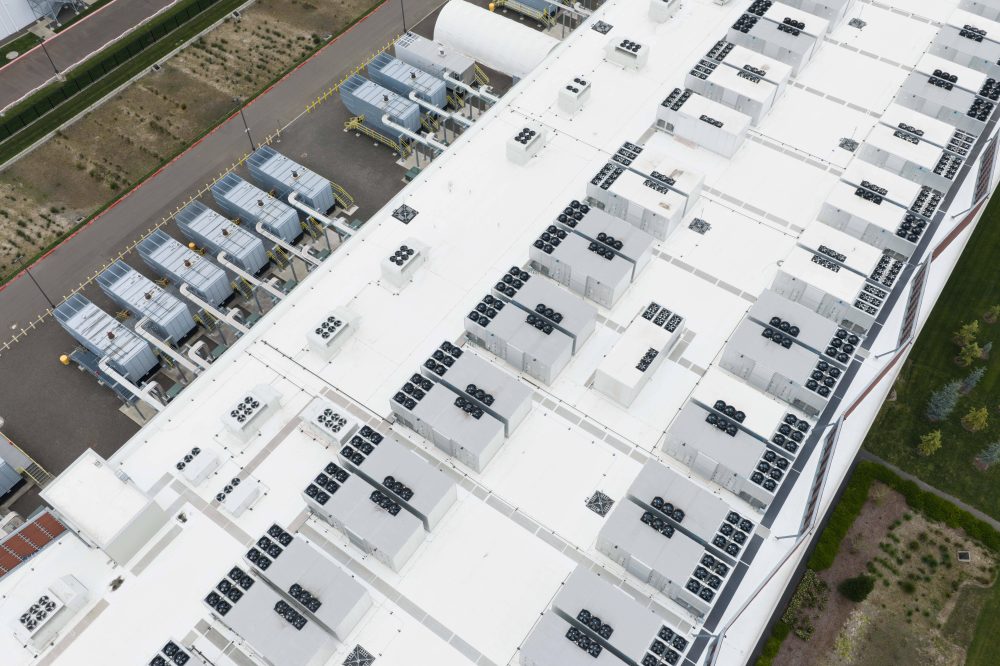
By one estimate, more than 4,000 data centers are currently operating across the United States, with an additional 3,000 either planned or under construction. Some of these facilities consume more electricity than a small city, and their size has grown dramatically to meet the demands of AI technology.
President Trump has sought to downplay public concerns about AI, viewing the technology as essential for attracting foreign investment and maintaining the country’s economic and military strength. This month, Trump signed an executive order establishing a framework allowing the federal government to evaluate national security risks posed by the most advanced AI systems for up to a month before they are released to the public.
In December, FERC had already taken an earlier step to help data center operators access electricity more quickly, voting to allow tech companies to essentially connect a data center directly to a power plant.
Companies including xAI, Google, Microsoft, Meta, Oracle, OpenAI, and Amazon have signed Trump’s Ratepayer Protection Pledge, committing to build or purchase new power generation sources for their data centers and cover the costs of necessary infrastructure upgrades.
The companies also pledged to make backup power available during emergencies to help prevent blackouts and to hire locally during their data center construction efforts.
According to data from the Electric Power Research Institute, data centers currently account for roughly 5% of U.S. electricity demand — a figure that could triple by 2035. In Virginia alone, data centers represent more than 25% of total electricity demand and could climb above 40% by 2030.
Tech companies have continued to increase spending on data centers, but signs suggest construction is struggling to keep pace. A J.P. Morgan report released last month found that, based on satellite imagery, more than 60% of data center capacity scheduled for completion in 2027 has not yet broken ground, with another 7% facing delays. The report cited permitting issues and shortages of gas turbines, transformers, and skilled workers as the primary causes.