
NEW YORK (AP) — Jaelyn Chester is willing to do just about anything — wait tables, stock shelves, wash dishes, even scrub toilets. All she wants is for someone to give her a shot.
“I’ve been looking everywhere,” says the 17-year-old, who maintains straight A’s, plays varsity basketball and dreams of becoming an engineer. She has submitted dozens of applications throughout her community. “I’m not unemployed because I’m incompetent. I’m unemployed because nobody’s hiring.”
For generations of American young people, landing a summer job was practically a given. These days, it’s anything but.
Federal data shows that only about one in three teenagers between the ages of 16 and 19 held a job last summer — a steep decline from a peak of roughly 60% back in the late 1970s. Gloomy forecasts from labor experts, combined with frustration pouring in from young people across the country, paint a bleak picture for this summer’s job market.
“The opportunities for workers at the start of the career ladder started to dry up,” says Nicole Bachaud, an economist with ZipRecruiter, noting that teens rank among the labor market’s “most marginalized groups.”
For Chester, being jobless isn’t just inconvenient — it threatens her entire summer. She’s worried about affording gas, missing out on concerts and potentially having to cancel a college-visit road trip to North Carolina with friends. So she keeps pushing.
She stashes copies of her resume in her car and has a tight 30-second pitch ready whenever she walks into a restaurant or store hoping to speak with a manager. She and her friends coach each other before heading out on job hunts, swapping advice and borrowing professional-looking outfits. Jobs that once seemed unappealing, like dishwashing, now look attractive.
“At this point,” says the teen from Lake Mary, Florida, “it would be hard to say no to anything.”
An analysis of U.S. Bureau of Labor Statistics data by the outplacement firm Challenger, Gray and Christmas found that the number of jobs teens landed fell 25% last summer compared to the year before. The firm predicts that inflation, rising oil prices and cautious hiring practices will push that number even lower this year — potentially to the lowest teen summer employment total since the federal government started keeping track in 1948.
Teens most often find work in food service and retail, according to federal labor data. But Jaune Little, director of recruiting services at the human resources firm Insperity, says many entry-level positions have simply disappeared, and those that remain attract more experienced candidates.
“A lot of the entry-level roles that once existed simply do not any longer,” Little says. “Those that do exist are on leaner teams that have less ability and desire to develop and train someone. In many instances, they are prioritizing more skilled workers even if they are overqualified.”
Max Stephenson began her job search after graduating high school last year. The entire summer passed without a single offer. Once she enrolled at the University of Arkansas-Pulaski Technical College, she landed a work-study position in the school cafeteria while continuing to search for something more stable.
Now that school is out again, the 19-year-old from Little Rock, Arkansas, finds herself back at square one.
She has lost count of how many applications she has sent out — somewhere between 50 and 100 — and can’t shake the feeling that her generation has it harder than those who came before.
“I thought it would be much easier than it’s been,” Stephenson says. “Old people say, ‘Just walk in there and give them a firm handshake.’ That doesn’t work so well now.”
A 2022 report from the Pew Research Center found that teen summer employment began falling during the early 2000s dot-com bubble and dropped further during and after the Great Recession of 2007 to 2009. The report also found that white teens are more likely to be employed than teens of any other racial group.
Across all backgrounds, teens are voicing their frustrations on platforms like Reddit and TikTok, complaining about job listings that lead nowhere, managers who never respond and applications that disappear into a void.
Connor Vukelich knows that experience well. After turning 16, he applied to every employer he could find within 30 miles of his home near Vancouver, Washington. No one called back, and his friends were striking out too.
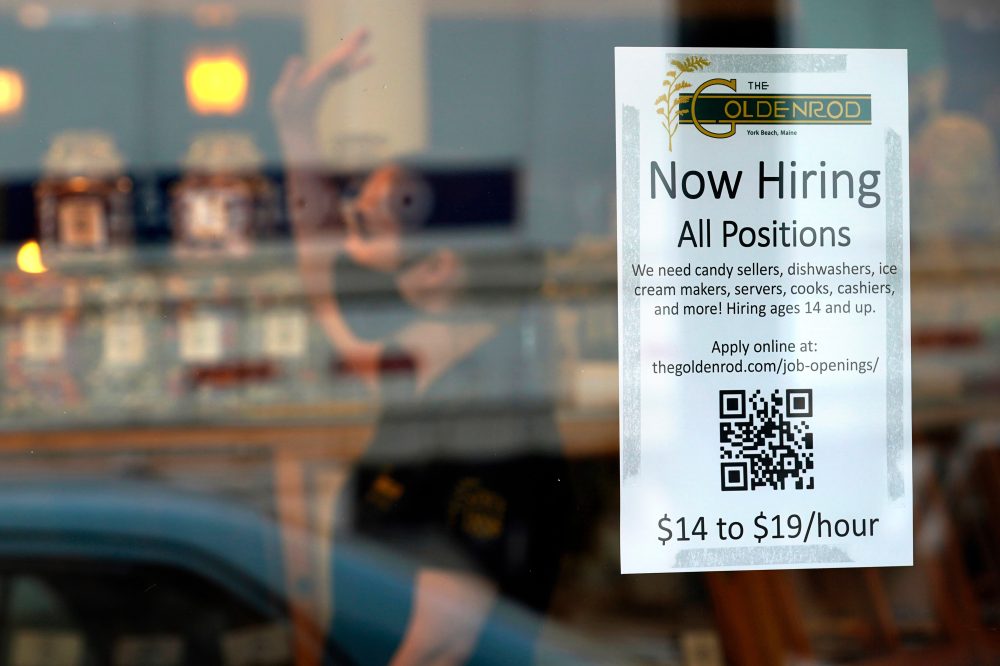
“There’s all these ‘We’re Hiring’ signs but no one’s actually hiring,” Vukelich says. “What’s going on? Why can’t any of us find jobs?”
With no offers coming in, Vukelich ended up helping out on his family’s lavender farm. That frustrating experience eventually inspired him — now 20 and studying at Embry-Riddle Aeronautical University — to create Poppin’ Jobs, a job search website launched this year and designed specifically for teens and young adults in their 20s.
Vukelich believes artificial intelligence is taking away some jobs that teens might otherwise have filled, and that minimum wage increases in certain states have put first-time job seekers in direct competition with more seasoned workers.
“They don’t see the value in hiring someone without any experience,” he says of employers. “They’re not as willing to give someone that shot.”
Some teens do eventually break through after a long and discouraging search. Demie Njea, a 16-year-old from Lexington, Kentucky, began applying for jobs as soon as she turned 14 — the legal working age in her state. She started with fast food and retail applications, then expanded her search to include janitorial work, daycare positions and more.
Her first summer turned up nothing. Neither did her second. She estimates she submitted more than 100 applications in total and began to wonder if a first job would ever come.
Then, finally, an offer arrived. Njea landed a position at Sonic and couldn’t be happier. But when a friend who had just turned 15 started her own job search, Njea felt she had to be straight with her.
“I had to calmly put her down and say, ‘You’re not going to get it,’” Njea says. “It’s just not going to happen.”