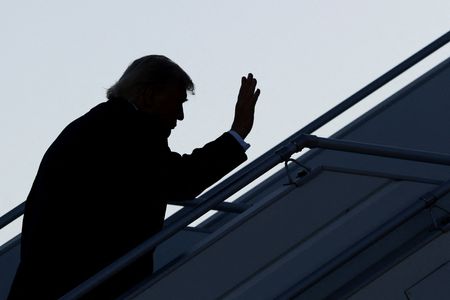
WASHINGTON (AP) — Taiwan’s highest-ranking diplomat in the United States says the island must be able to buy American weapons to protect itself, as the threat from Beijing continues to grow. He also said he has seen no shift in Washington’s stance toward Taiwan, the self-governing island that China insists belongs to it.
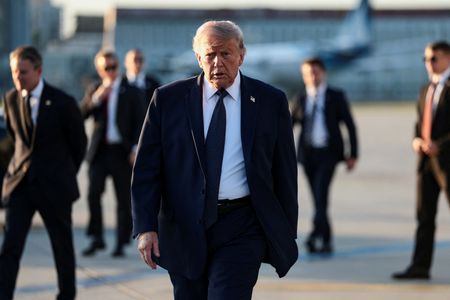
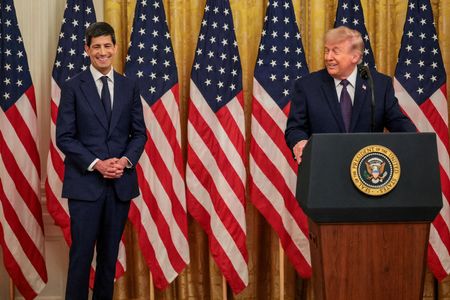
A proposed $14 billion arms sale to Taiwan remains on hold after President Donald Trump returned from Beijing in May and revealed he had discussed the package “in great detail” with Chinese leader Xi Jinping — a disclosure that rattled officials in Taiwan and sparked concern among members of Congress.
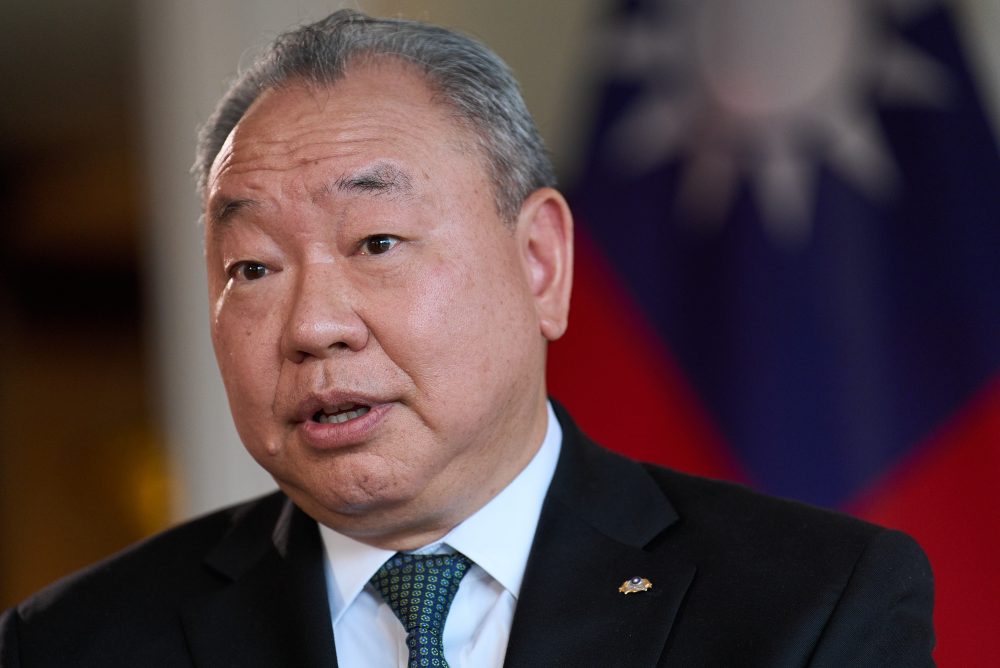
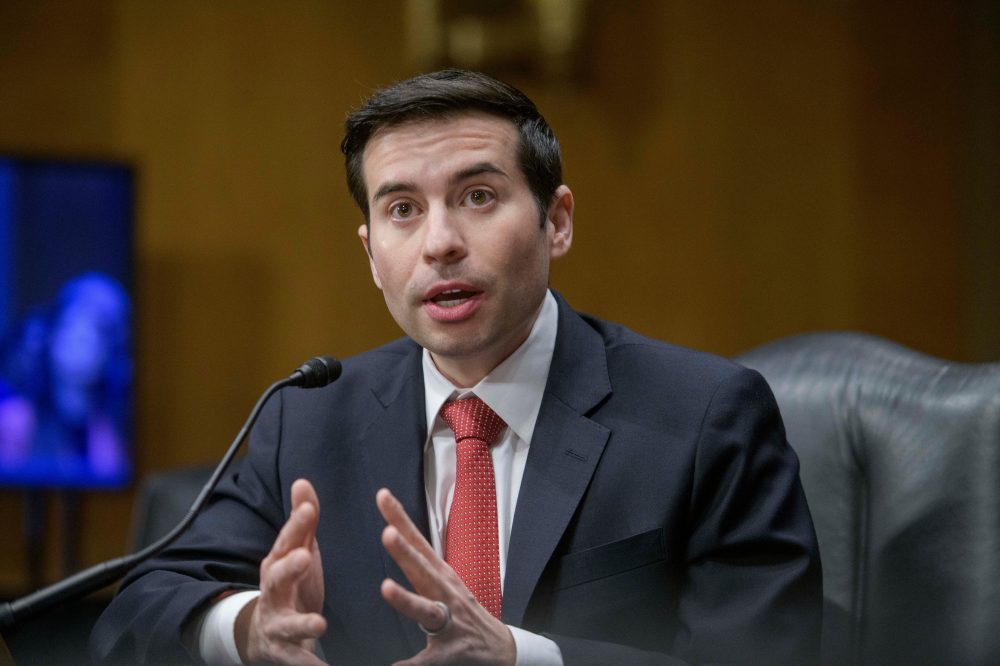
“We need those arms for defensive purposes,” said Alexander Yui Tah-ray, who leads the Taipei Economic and Cultural Representative Office in the United States, during a Wednesday interview in Washington with The Associated Press. “We’re trying to increase our defense expenditure. We try to increase our ability to defend ourselves better and survive times of crisis.”
Despite receiving approval from senior lawmakers earlier this year, the Trump administration has not moved ahead with the $14 billion weapons proposal. Trump himself has referred to the sale as a “very good negotiating chip” in dealings with China.
Under U.S. law, Washington is required to supply Taiwan with enough military equipment to deter Chinese aggression. China claims sovereignty over Taiwan and has vowed to take control of the island by force if needed, calling it part of an unfinished unification process. Beijing has consistently opposed American weapons sales to Taiwan, which has never been governed by China’s communist leadership.
Yui made clear that Taiwan understands it bears the primary responsibility for its own defense.
“This is our responsibility, so we will not wait and depend for the U.S. cavalry to come and save us,” he said. “That’s why we’re willing to acquire, to buy U.S. equipment and arms to make ourselves stronger.”
He added that any weapons transfers must be “commensurate” with the threat level, which he described as “actually pretty high” coming from China.
“First and foremost, we’re not the aggressors. It is the People’s Republic of China who is sending all the planes and ships,” Yui said. “They’re the ones huffing and puffing. They are the ones who’s trying to annihilate our freedom and democracy in Taiwan.”
Chinese warships and military aircraft approach Taiwan on nearly a daily basis, and Beijing has staged large-scale military exercises around the island in recent years. China views Taiwan as a core national interest and has blamed advocates of Taiwanese independence for stirring up instability in the Taiwan Strait. The Chinese Embassy in Washington had not responded to a request for comment at the time of publication.
Yui emphasized that the U.S. position on Taiwan has not changed and said Taiwan’s government respects the Trump administration’s pace in making policy announcements.
The proposed arms sale enjoys strong backing in Congress. Lawmakers raised the issue with Secretary of State Marco Rubio at a recent hearing this month. Rubio confirmed that U.S. policy on Taiwan remains unchanged and stated that Washington does not “consult with the Chinese on these arms deals.”
“We’re aware of their position. They talk about it all the time,” Rubio said of Beijing. “They are not negotiated, and they are not consulted.”
Rubio characterized the arms package not as blocked, but as under review, noting that other factors must be considered — including the current state of American weapons stockpiles, which have been reduced during the Iran war. “We have to balance that with our own procurement process,” he said.
Separately, the administration did approve an $11 billion arms sale to Taiwan in December, which included high-mobility artillery rocket systems, known as HIMARS, as well as howitzers.
Yui came to Washington in late 2023 during the Biden administration. Former President Biden had stated on multiple occasions that he would deploy U.S. troops to Taiwan’s defense if China launched an attack.
Yui is now working within the more unpredictable environment of the second Trump administration, which has taken a softer tone toward Beijing following a heated trade conflict defined by escalating tariffs on both sides.
While Trump drew attention by setting aside a Reagan-era commitment against prior consultation with Beijing on Taiwan arms sales, he also suggested he could place a direct call to Taiwan’s President Lai Ching-te — something no sitting U.S. president has done, breaking a longstanding diplomatic tradition.
The Pentagon’s national defense strategy, released in January, stated that the U.S. aims to deter China through strength rather than confrontation. It outlined plans to maintain a strong defensive presence along a chain of strategic islands — including Taiwan — to prevent China from extending its reach into the broader Pacific.
Yui attributed what might appear to be contradictory signals to Trump’s unconventional approach, while voicing confidence in the overall Taiwan-U.S. relationship.
“It’s important to look at the actions, what is happening, not just the rhetoric,” Yui said. “The big stick is still there.”
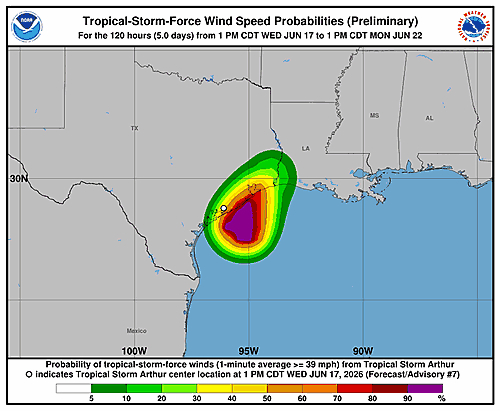
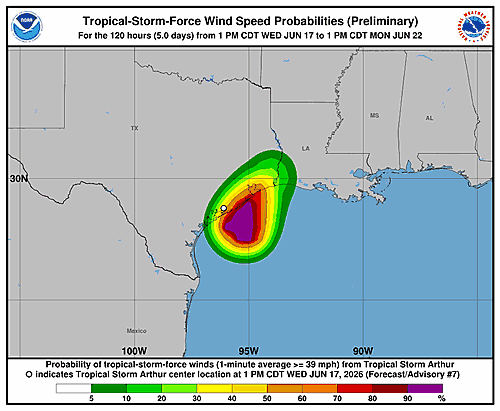
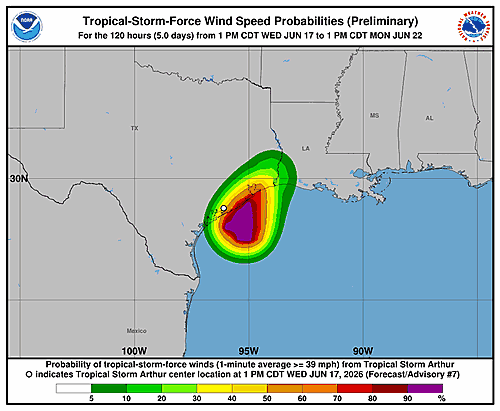
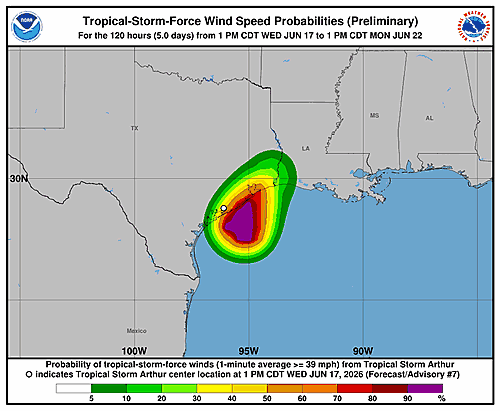
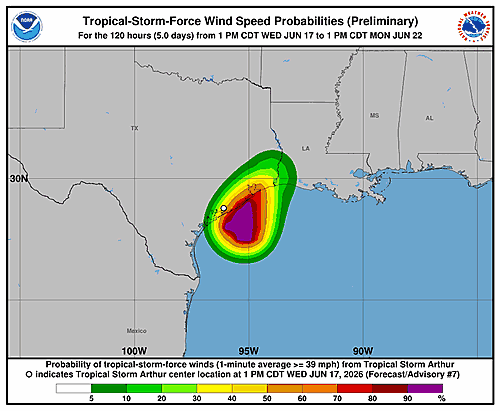
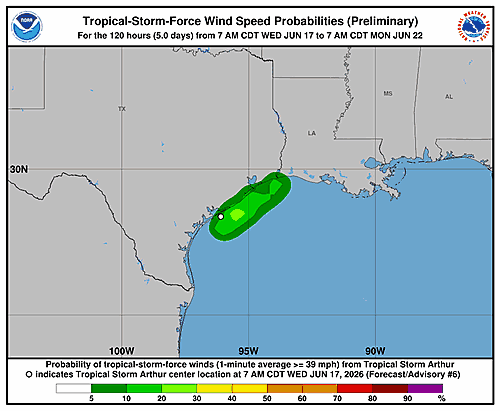
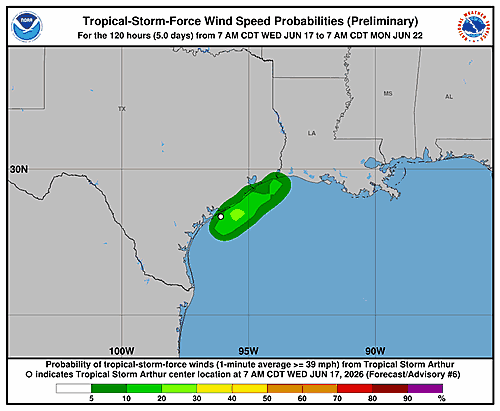
The National Hurricane Center has issued updated wind speed probability graphics for Tropical Storm Arthur, the first named storm of the Atlantic hurricane season.
The graphics, which were last updated on Wednesday, June 17, 2026, at 9:26 p.m. GMT, display the probability of 34-knot wind speeds occurring over a 120-hour forecast window.
Forecasters are urging residents in potentially affected coastal areas to stay informed and continue monitoring official updates from the National Hurricane Center as the storm develops.
Asian financial markets held steady Thursday while oil prices slipped after the leaders of the United States and Iran put pen to paper on an interim peace agreement, offering cautious hope for an end to the conflict in the Middle East — though significant uncertainty remains.
Both governments released the full text of the deal, which had already been widely circulating before its official publication. The agreement extends a ceasefire that was first announced in April by an additional 60 days, giving both nations time to work toward a permanent truce.
Despite the diplomatic progress, U.S. President Donald Trump issued a stern warning, threatening to resume military strikes and target Iranian officials if Iran fails to follow through on its obligations under the deal.
Kyle Rodda, a senior financial market analyst at Capital.com, offered this assessment: “Major geopolitical risk persists and will also remain a major driver of market action.”
On the markets, MSCI’s broadest measure of Asia-Pacific shares outside Japan was essentially unchanged. Japan’s Nikkei average climbed to a new record, crossing the 71,000 mark for the first time ever, driven by strong performance in semiconductor and artificial intelligence-related stocks. South Korean shares rose 0.9%. U.S. stock futures tied to the S&P 500 were up 0.81%, sitting at 7,484.8.
The yield on Japan’s benchmark 10-year government bond ticked up 2 basis points to 2.620%, approaching its highest closing level since June 16 after briefly touching 2.63% earlier in the session.
Oil markets moved lower, with U.S. crude falling 1.25% to $75.83 per barrel and Brent crude dropping 1.4% to $78.41 per barrel.
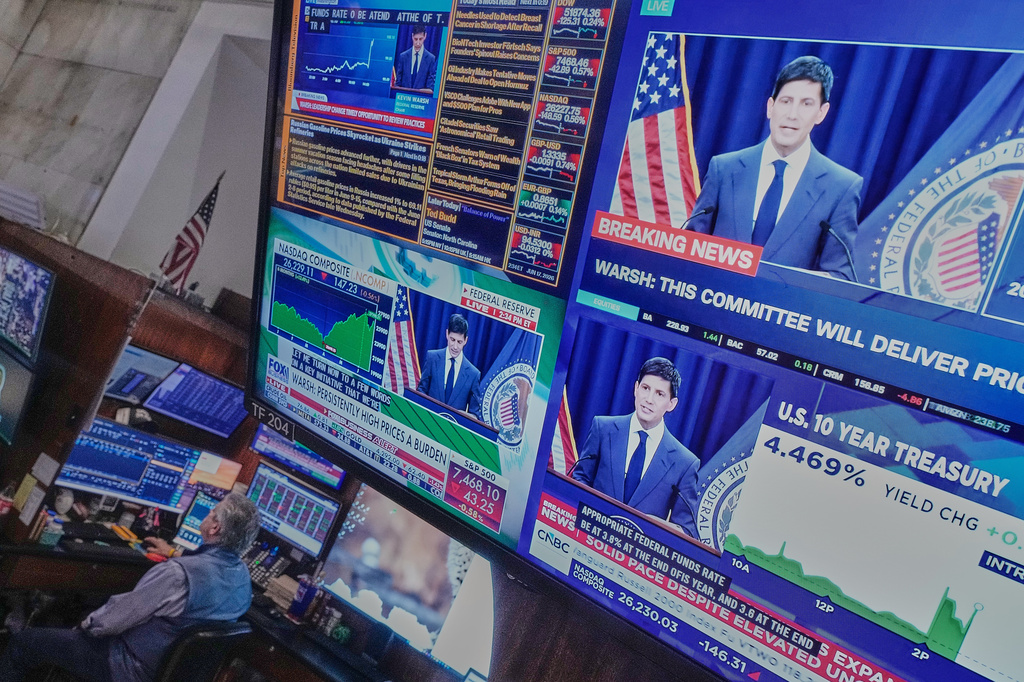
On Wall Street overnight, all three major stock indexes declined by close to or more than 1%. Traders grew increasingly convinced that the Federal Reserve’s next move would be a rate increase, after new Fed Chair Kevin Warsh emphasized the importance of bringing inflation under control and other policymakers signaled expectations for higher rates later this year.
The Dow Jones Industrial Average shed 507.12 points, or 0.98%, closing at 51,492.55. The S&P 500 dropped 91.25 points, or 1.21%, to finish at 7,420.10. The Nasdaq Composite lost 354.69 points, or 1.34%, ending the session at 26,021.66.
The yield on the 10-year U.S. Treasury note rose to 4.471%, up slightly from its Wednesday close of 4.463%. The 2-year Treasury yield, which reflects trader expectations for Federal Reserve rate moves, reached 4.1759%, compared to Wednesday’s close of 4.163%.
The Bank of England is also meeting Thursday, and similar to the Fed, no rate change is anticipated. Attention will be focused on the tone of officials’ remarks following the decision.
The U.S. dollar edged up 0.01% against the Japanese yen to 160.65, after briefly touching 160.79 overnight — its strongest level against the yen since July 2024. The dollar index, which tracks the greenback against a group of major currencies, slipped 0.03% to 100.32. The euro gained 0.1%, trading at $1.1511 against the dollar.
The recent slide in oil prices has helped ease some anxiety about an economic slowdown, particularly in energy-importing European nations. The International Energy Agency said Wednesday that the global oil market is expected to shift into a substantial supply surplus by 2027, following a recovery from the closure of the Strait of Hormuz.
Gold was trading at $4,309.75 per ounce. In the cryptocurrency market, bitcoin gained 0.16% to $64,464.75, while ethereum climbed 0.37% to $1,752.54.
The U.S. dollar held firm near a more than two-month high on Thursday as investors ramped up expectations for Federal Reserve interest rate increases, putting mounting pressure on the Japanese yen and pushing it closer to levels that could prompt official intervention.
The Federal Reserve kept its benchmark interest rate steady within a 3.50% to 3.75% range as new chair Kevin Warsh launched a wide-ranging policy review to open his tenure. Despite the hold, nearly half of all Fed policymakers now anticipate at least one rate increase before the year is out, driven by growing concerns over inflation.
According to CME FedWatch data, futures markets are now pricing in an 83% probability of Fed tightening by December. A stronger-than-expected retail sales report added further fuel to those hawkish expectations.
Ongoing uncertainty in the Gulf region continued to weigh on investor risk appetite. U.S. President Donald Trump warned he could resume military strikes if Iran breaks the terms of a ceasefire agreement, a statement that kept oil prices elevated and lent additional support to the dollar. Iran’s leadership offered no public response to the new threats.
The euro edged slightly higher to $1.1511, while the British pound climbed to $1.3318 — both currencies having touched two-month lows earlier in the session. The Australian dollar and New Zealand dollar each gained roughly 0.2%, trading at $0.7025 and $0.5780, respectively.
The dollar index, which tracks the greenback against a group of major currencies including the yen and euro, was little changed at 100.31. The index had surged 0.85% in the prior session — its biggest single-day jump since March 2 — reaching its strongest level since March 31.
“The dollar is up making some sizable gains… this is going to take a little while to shrug off,” said Gavin Friend, senior markets strategist at NAB, speaking on a podcast. “It looks like we could be pushing into new territory here for the dollar.”
The Japanese yen slipped as far as 160.760 against the dollar after hitting its weakest point since 2024 overnight. The currency has been hovering around the 160 level, a threshold widely viewed by markets as a potential trigger for official government intervention.
Meanwhile, the Bank of England appeared on track to hold its own interest rates steady at 3.75% later Thursday as it evaluates what a fragile ceasefire in the Iran conflict means for inflation in the United Kingdom.
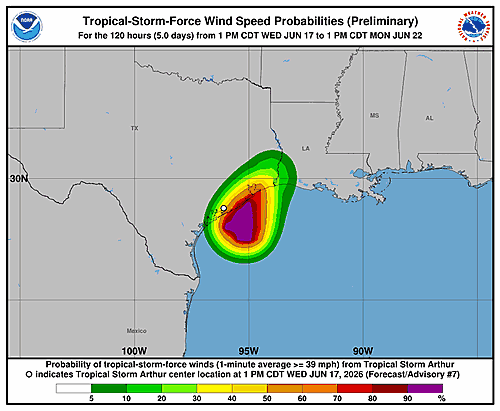
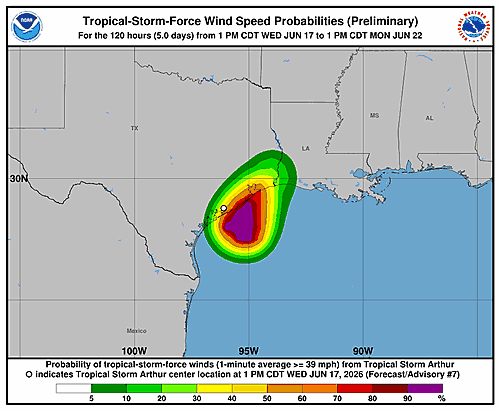
The National Hurricane Center has released updated wind speed probability graphics for Tropical Storm Arthur, providing a visual look at where the storm’s winds could have an impact.
The graphics illustrate the probability of 34-knot wind speeds reaching different areas over a 120-hour forecast window, helping residents and emergency managers gauge potential risk zones.
According to the National Hurricane Center, the wind speed probability data was last updated on Wednesday, June 17, 2026, at 9:26 p.m. GMT. Residents in potentially affected areas are encouraged to monitor the latest updates from official weather sources as the storm continues to develop.
Demonstrations have broken out in Israel as ultra-Orthodox Jewish community members rally against government efforts to conscript them into military service.
Photographs from the protests show large gatherings of ultra-Orthodox Jews expressing their opposition to mandatory military service, a requirement that has long been a source of conflict between this religious community and Israeli authorities.
The issue of military conscription for ultra-Orthodox men has been a deeply divisive topic in Israel, with many in the community arguing that their religious studies and way of life should exempt them from mandatory service in the armed forces.
The demonstrations highlight the ongoing struggle over how Israel balances national defense needs with the religious and cultural practices of its ultra-Orthodox population.
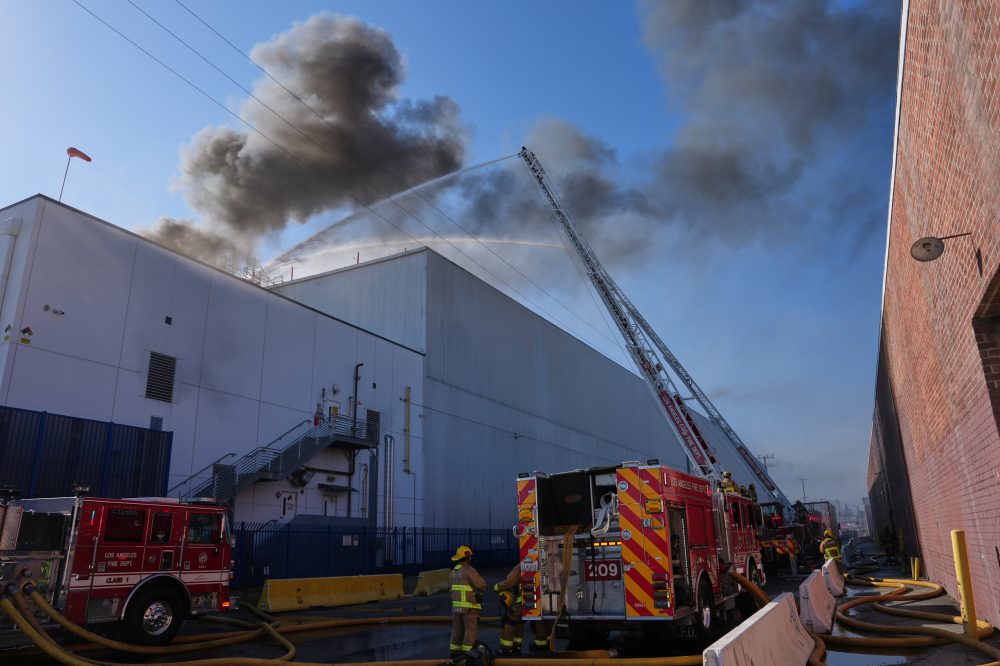
A massive warehouse near downtown Los Angeles went up in flames Wednesday afternoon, darkening the skies over the area and forcing officials to issue shelter-in-place orders because of dangerous air quality concerns.
Crews from the Los Angeles Fire Department arrived at the scene around 2:30 p.m., where thick, dark smoke was rising over the Boyle Heights neighborhood. Video from local television stations captured flames consuming the roof of the large structure, which was outfitted with solar panels.
Shortly after the fire broke out, officials sent an emergency alert to the surrounding community warning of “hazardous materials nearby.” Residents were directed to shut all windows, doors, and vents, switch off air conditioning systems, and move themselves and their pets to an interior room of their home.
Los Angeles Fire Department spokesperson Jennifer Middleton addressed concerns about the fire potentially burning through an ammonia line, saying that risk had “dissipated.” By late afternoon, the fire on the roof had been put out and crews were moving inside the building to evaluate conditions, according to Middleton.
The warehouse is identified online as a cold storage facility owned by Lineage Logistics, used for storing frozen and other temperature-sensitive products. The property spans 491,000 square feet — roughly 45,600 square meters — according to the company’s website. Lineage Logistics had not responded to a request for comment as of the time of this report.
Oil prices dipped during early Thursday trading after the United States and Iran reached an interim agreement that would bring the Iran war to a close, reopen the Strait of Hormuz, and remove American sanctions on Iranian oil exports — a development being described as a resolution to the most significant energy supply disruption the world has ever seen.
Brent crude futures dropped 89 cents, or 1.12%, settling at $78.66 per barrel as of 0005 GMT. Meanwhile, U.S. West Texas Intermediate crude slid 98 cents, or 1.28%, to $75.81 per barrel.
Both benchmarks resumed a downward trend after briefly climbing Wednesday, when U.S. President Donald Trump warned he could restart his bombing campaign if Iran’s leaders “don’t behave.”
IG market analyst Tony Sycamore explained the continued price drop in a written note: “The sell-off extended as energy markets continued to aggressively price in a faster-than-expected return of Iranian barrels following the recent U.S.-Iran memorandum of understanding.”
The agreement, which spans 14 points, launches a 60-day period of negotiations. During that time, Iran has agreed to allow ships to pass through the Strait of Hormuz — a vital corridor for oil and natural gas shipments — without charging tolls. Under the terms of the deal, full shipping capacity through the strait must be restored within 30 days.
However, the preliminary accord leaves some of the thorniest issues unresolved, including Iran’s nuclear program. It also requires the U.S. and its partners to develop a $300 billion plan to help fund Iran’s recovery.
The International Energy Agency cautioned Wednesday that if the deal holds and the strait is fully reopened, the current supply crisis could reverse course dramatically — potentially creating a supply glut of 5.05 million barrels per day in 2027 as Middle Eastern oil flows back into global markets.
Adding another layer of complexity, the U.S. Federal Reserve is weighing whether it may need to raise interest rates later this year to combat inflation. Higher rates could slow economic growth and reduce demand for oil. Wednesday projections revealed that nine of 19 Fed policymakers now believe a rate hike will be necessary — a sharp shift from three months ago, when none of them held that position.
A fire ripped across the roof of an enormous warehouse in downtown Los Angeles on Wednesday, spreading rapidly over the building’s solar panels and releasing heavy plumes of smoke and ammonia gas into the surrounding area.
The fire broke out at approximately 2:30 p.m. local time (2130 GMT) at a 500,000-square-foot Lineage company warehouse located in the city’s historic Boyle Heights neighborhood. Los Angeles Fire Department Chief Jaime Moore said the flames breached a pressurized ammonia line but were largely confined to the roof of the structure.
Everyone inside the burning building and neighboring structures was safely evacuated. Chief Moore confirmed that no injuries were reported as a result of the fire.
Firefighters who had initially climbed the building and entered the facility were ordered to pull back after the ammonia line was breached. Moore told reporters that ground crews also struggled to reach the burning rooftop using water streams from below.
In an uncommon decision, fire commanders brought in water-dropping helicopters, which made multiple aerial passes over the blaze and ultimately brought the fire under control, according to Moore.
The warehouse sits next to a major downtown freeway. Local authorities responded by issuing a shelter-in-place order, directing residents of nearby homes to remain indoors with their windows and doors shut and air conditioning turned off to reduce the risk of exposure to smoke and ammonia fumes.
Chief Moore noted that the smoke and ammonia gas were not considered dangerous to most people “unless they have respiratory issues or in direct contact with it.” He added that air quality monitoring downwind of the fire and checks on water runoff indicated no serious threat to the surrounding communities.
A high-ranking Google executive who helps lead the company’s flagship artificial intelligence program is heading to a competing firm.
Noam Shazeer, a vice president of engineering at Google and one of the co-leads of its Gemini AI models, announced on Wednesday that he will be departing the tech giant to take a position at OpenAI.
Australian Clinical Labs disclosed Thursday that a cybersecurity breach at a third-party technology vendor connected to its SunDoctors division allowed hackers to gain unauthorized access to a limited segment of systems, resulting in some data being stolen.
According to the pathological services company, an internal investigation by SunDoctors determined that the majority of the compromised data consisted of basic contact information along with some health-related details, most of which were connected to skin cancer examinations and testing. The company stated there is currently no indication that any of the stolen information has been posted or shared online.
The security incident originated at an external IT service provider that SunDoctors relies on, and Australian Clinical Labs had initially flagged the issue back in April.
Because investigators were unable to determine exactly which individuals had their data accessed, SunDoctors opted to take a broader approach and is notifying approximately 280,000 people that their personal information may have been compromised.
Australian Clinical Labs emphasized that the breach was limited to a portion of SunDoctors’ systems and did not affect the company’s wider pathology and laboratory operations.
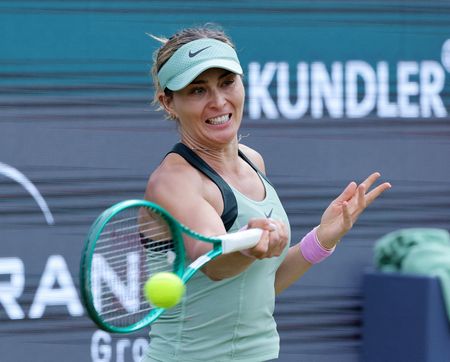
In one of the bigger upsets of the week on the women’s tennis tour, Spain’s Paula Badosa — currently ranked 142nd in the world — knocked out No. 5 seed Coco Gauff at the Berlin Tennis Open on Wednesday, winning 1-6, 6-3, 6-2 to punch her ticket to the quarterfinals.
Gauff, who holds the world No. 7 ranking, held a commanding 12-4 edge in aces throughout the match. However, Badosa made the most of her opportunities in the final two sets, converting four of five break point chances while Gauff managed just one of two. Badosa, who was once ranked as high as No. 2 on the tour back in 2022, now holds a 5-3 all-time record against Gauff.
Elsewhere in the WTA 500 event, top-seeded Aryna Sabalenka of Belarus and No. 3 seed Jessica Pegula both advanced with straight-set victories. Sabalenka defeated Russia’s Ekaterina Alexandrova 6-4, 6-4, while Pegula handled Czechia’s Katerina Siniakova 6-2, 6-4.
Unseeded Czech player Nikola Bartunkova also reached the quarterfinals, eliminating Belgium’s Elise Mertens 6-1, 6-4. She will face Sabalenka in the next round. The Philippines’ Alexandra Eala picked up a first-round win over Croatia’s Donna Vekic by a score of 7-5, 6-4.
At the Lexus Nottingham Open, a WTA 250 event held in the United Kingdom, third-seeded Emma Navarro grinded out a 6-4, 6-7 (3), 6-4 victory over Ukraine’s Yuliia Starodubtseva in a match that lasted just under three hours.
Navarro will next face Spain’s Jessica Bouzos Maneiro in the quarterfinals. Bouzos Maneiro reached that stage after leading Katie Volynets 7-5, 1-0 when Volynets was forced to retire from the match. It’s worth noting that Navarro suffered a lopsided 6-1, 6-0 defeat to Bouzos Maneiro in the opening round of the 2025 French Open.
Germany’s Tatjana Maria rolled past Ukraine’s Dayana Yastremska 6-1, 6-2, and Australia’s Talia Gibson edged China’s Zheng Qinwen 6-3, 7-6 (10) in other Nottingham results.
Motorists traveling southbound on Interstate 495 should be aware of an overnight ramp closure currently in effect due to construction activity.
The ramp from Exit 5A-B connecting to southbound Interstate 95 is closed as crews carry out construction work in the area. The closure is expected to remain in place until 5:00 AM.
Drivers are encouraged to allow extra travel time and consider using alternate routes to avoid delays during the closure.
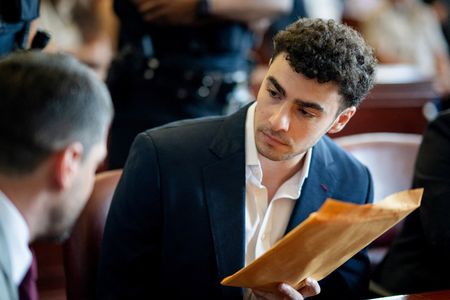
Legal experts say the man accused of killing a major health insurance company’s top executive will have a tough road ahead if he tries to convince a jury that he suffered a mental health breakdown when the crime occurred.
Luigi Mangione stands accused of gunning down UnitedHealthcare CEO Brian Thompson in front of a Midtown hotel in December 2024. His defense attorneys signaled Wednesday that they intend to pursue what is known as an “extreme emotional disturbance” defense — a legal strategy that, if successful, could allow jurors to reduce a murder charge down to manslaughter.
However, former Manhattan state prosecutor Gary Galperin says the alleged level of planning involved in the shooting — and the five-day manhunt during which Mangione reportedly concealed his identity — works directly against the idea that he lost control of himself.
“This is a strategic choice on his part to limit his exposure on conviction, and while legally viable, I think factually he has a high hurdle to convince a jury,” said Galperin, who now teaches at Cardozo School of Law.
Both Mangione’s legal team and the Manhattan District Attorney’s office declined to offer any comment on the case.
Mangione has entered a not guilty plea to state charges of murder, weapons violations, and forgery. His trial is currently set to begin in September.
The killing drew widespread condemnation from public officials but also sparked a broader national conversation about frustration with rising healthcare expenses and insurance company practices.
Under New York law, the extreme emotional disturbance defense differs from a traditional insanity defense. An insanity defense requires a formal psychiatric diagnosis and evidence that the defendant was unaware their actions were wrong. The emotional disturbance defense, by contrast, does not require the defendant to admit they committed the crime.
New York courts have accepted this defense in cases where defendants were overwhelmed by intense emotions like rage or grief, or where they responded to severe trauma. Courts have rejected it, however, when evidence shows that a defendant planned their actions and remained composed and deliberate throughout.
The judge overseeing the case will determine, before jury instructions are given, whether Mangione has presented enough evidence to allow jurors to consider the lesser manslaughter charge. A manslaughter conviction could spare Mangione from a potential life sentence.
Mangione reportedly struggled with chronic back pain, according to people who knew him and his social media activity. Prosecutors say they recovered a notebook in which he criticized the health insurance industry and wrote about killing an executive.
New York Law School professor Anna Cominsky noted that Mangione’s attorneys might try to frame the period surrounding the alleged shooting as a prolonged mental health crisis that was completely out of character for him.
“They could argue this isn’t normally what he did: sit around and talk about how corrupt the insurance industry is,” Cominsky said.
To succeed with this defense, Mangione would need to demonstrate not only that he was in a state of extreme emotional disturbance, but also that there was a “reasonable explanation or excuse” behind that disturbance.
Experts noted that widespread public resentment toward health insurance companies — particularly over claim denials — could make certain jurors more sympathetic to Mangione’s position. Still, they cautioned that bridging the gap between frustration with insurers and a full-blown homicidal breakdown may be too much to ask of a jury.
“Almost any one of us can relate to struggling with a health insurance company — who can’t cite an example?” Galperin said. “But then the question becomes: would it be reasonable for you to lose self-control and go out and do what he’s charged with doing?”
NEW YORK (AP) — The New York Knicks continued their championship celebration Wednesday evening when players Jalen Brunson and Josh Hart stepped onto the field at Yankee Stadium to throw out ceremonial first pitches ahead of the Yankees’ game against the Chicago White Sox.
As the two players walked out to a video montage of highlights from their title run, the crowd greeted them with a standing ovation and thunderous cheering.
Dressed in Yankees pinstripes and standing in front of the mound, Brunson delivered his pitch to backup catcher J.C. Escarra, while Hart threw to utilityman Max Schuemann.
Yankees manager Aaron Boone had plenty of praise for the Knicks and their fanbase. “Oh, I think it’s been awesome,” Boone said. “What a fun team to get behind and just the story of that team and how it’s kind of come together over the last couple of years and just a lot of grit, a lot of mental fortitude and to see the fanbase and then some galvanized around that club has been a lot of fun to witness.”
The Yankee Stadium appearance came after the Knicks spent Monday making the rounds on national television, with appearances on NBC’s “The Today Show” and “Late Night with Jimmy Fallon.” Brunson, Hart, and starters Karl-Anthony Towns, Mikal Bridges, and OG Anunoby also stopped by ABC’s “Good Morning America” that same day.
Wednesday’s ceremony took place just one night before the Knicks are set to be honored with a massive ticker-tape parade through lower Manhattan. Mayor Zohran Mamdani predicted Thursday’s event could turn out to be “the largest parade in New York City history.”
The parade will mark a first for the franchise, which previously won NBA championships in 1970 and 1973. Following those earlier titles, then-Mayor John Lindsay held celebrations for the team at the mayoral mansion and City Hall.
For Brunson, Wednesday’s first pitch was actually his second since joining the Knicks. He previously threw one out before a Mets-Yankees game in July 2024, shortly after agreeing to a four-year, $156.5 million contract extension to remain with the team.
Brunson was a dominant force throughout the NBA Finals, averaging 32.6 points per game as New York defeated the San Antonio Spurs in five games to claim the title. He earned Finals MVP honors and scored 45 points in the clinching Game 5, a 94-90 Knicks victory.
Hart also has a special connection to Yankee Stadium — he is a great-nephew of former Yankees catcher Elston Howard, whose No. 32 jersey has been retired by the team. Howard is additionally memorialized with a plaque in Monument Park.
The Knicks wrapped up the postseason with a 16-3 record, an .842 winning percentage that tied the 2024 Boston Celtics for second-best since the NBA moved to best-of-seven series in all playoff rounds starting in 2003. Only the 2017 Golden State Warriors, who went 16-1, had a better mark.
New York also rattled off 13 consecutive postseason wins — second only to Golden State’s 15-game winning streak in 2017 — and set records with nine straight road victories and a plus-283 point differential against playoff opponents.
Boone reflected on what the Knicks’ run means in a broader context. “It’s just been a captivating run that they’ve been on and with a group that’s now been together for a couple of years and then on top of the 53 years since a championship, it’s been a great story and a fan base that has come to know several of these guys as they’ve kind of climbed that ladder to ultimately winning a championship,” he said. “So I think it’ll be one of the historic teams that we talk about when it comes to the NBA.”
NEW YORK (AP) — An 18-year-old is dead after a horse pulling a carriage in New York City’s Central Park broke free from its driver and sent passengers tumbling to the ground on Wednesday, according to police.
The young man was one of four passengers riding in the horse-drawn carriage when the incident occurred just before 3 in the afternoon, according to the New York Police Department. He was rushed to the hospital in critical condition, while the three other passengers declined medical attention.
A representative from the Transport Workers Union, which represents workers in the carriage industry, revealed that the horse involved had only been working in the park for six weeks. According to Alexander Kemp, the administrative vice president of the union’s local chapter, the driver had gotten off the carriage to snap a photo of the passengers when the horse bolted.
“A driver is not supposed to leave the carriage to take photos — ever,” Kemp stated. “We support a full investigation.”
Video footage captured the horse racing through the park while two people appeared to leap from the moving four-wheeled carriage. A second video shows the cab tipping over after its wheels made contact with another carriage on the park’s heavily trafficked loop road.
The tragedy comes at a particularly sensitive time for Central Park’s horse-drawn carriage industry, which has operated for roughly 150 years but now faces increasing pressure from critics who argue the rides are cruel to animals and pose a risk to the public.
Wednesday’s fatal incident follows a separate horse-related tragedy just last week, when a horse collapsed and died in the same park.
The Central Park Conservancy, the nonprofit organization that manages the park and publicly backed a carriage ban last summer, is now calling for the industry to be shut down entirely in light of the two back-to-back incidents.
“That this frightening situation is just days after the previous one underscores the dangers posed by horse carriages to Park visitors, carriage drivers, and the horses themselves,” the group said in a written statement. “We hope today’s injuries are the last we ever see.”
The New York Knicks will be heading to the White House after their historic championship run, according to team owner James Dolan.
Dolan confirmed Wednesday that the organization received and accepted an official invitation following last week’s title victory. Speaking on WFAN Sports Radio, he said, “We just did receive an invitation from the White House, which we accepted. We still have to figure out the details.”
The White House had not responded to media requests for comment at the time of the report.
Dolan, who had previously invited U.S. President Donald Trump to attend Game 3 of the NBA Finals earlier this month and referred to Trump as a personal friend, made the announcement during the radio appearance.
The Knicks clinched their first NBA championship since 1973 on Saturday, defeating the San Antonio Spurs 94-90.
A presidential White House visit following a major sports championship is a longstanding tradition. Throughout Trump’s two terms in office, most championship teams have honored the tradition, though some have chosen to decline.
Last year, several Philadelphia Eagles players — including quarterback Jalen Hurts — sat out the White House ceremony after the NFL team won the Super Bowl.
It remains to be seen whether the entire Knicks roster will participate in the upcoming visit. However, point guard Jose Alvarado made clear he plans to be there. “If there’s a chance, I’m going wherever my teammate goes,” Alvarado told TMZ.
ATLANTA — World soccer’s governing body, FIFA, convened a special forum in Atlanta on Wednesday, bringing together athletes, government officials, and technology professionals to explore ways to combat hate speech in the sport.
The event was co-hosted with TikTok and the City of Atlanta and was held at the National Center for Civil and Human Rights — just one day before the International Day for Countering Hate Speech. It also took place ahead of a World Cup 2026 match between the Czech Republic and South Africa.
A major focus of the gathering was FIFA’s Social Media Protection Service, a tool designed to identify and remove harmful content online. Since its launch, the service has reviewed more than 250 million posts and flagged over 30 million as harmful. Since June 11 alone, it has taken down 388,000 harmful posts connected to World Cup 2026 — already exceeding the 287,000 posts removed during the entire 2022 tournament.
Law enforcement action has also followed. Eleven individuals across seven countries were reported to authorities in 2025 for abuse during FIFA competitions, with one case referred to Interpol, according to previous reporting.
Among the panelists at Wednesday’s event was George Weah, the former president of Liberia and the 1995 FIFA World Player of the Year, who serves as honorary captain of FIFA’s Players’ Voice Panel. Former Nigerian international Mercy Akide also participated in the discussion.
Weah spoke passionately about the unifying power of the sport. “Football is not just a game of chance, it’s a game of unity,” he said.
SEOUL — South Korean semiconductor company SK Hynix announced Thursday that it has begun delivering samples of its newest high-bandwidth memory chips to key customers, a move aimed at solidifying its foothold in the rapidly expanding artificial intelligence chip market.
The company’s latest product, a 12-layer chip called the HBM4E, is capable of reaching speeds up to 16 gigabits per second per pin. SK Hynix says the chip also delivers more than 20% greater power efficiency compared to earlier generations.
High-bandwidth memory chips play a critical role in AI computing, serving as essential components inside the processors used to train AI systems. These chips help manage the enormous volumes of data that modern AI applications require to function.
SK Hynix currently holds the position of primary HBM supplier to Nvidia, one of the world’s leading makers of AI processors. The South Korean firm faces ongoing competition in this space from rivals Samsung and Micron.
The Cleveland Guardians have put rookie outfielder Chase DeLauter on the 10-day injured list after he suffered a ribcage fracture, and the team has called up outfielder Kahlil Watson from Triple-A Columbus to take his place on the roster.
The injured list placement was backdated to Sunday. DeLauter sustained the injury the day before when he collided with the outfield wall during a game Saturday.
DeLauter, who made his major league debut during last year’s postseason, has put together a solid first full season, hitting .263 with seven home runs and 34 RBIs across 66 games.
Watson, 23, will be stepping onto a major league field for the first time after posting a .255 batting average with 12 home runs and 35 RBIs in 56 games at the Triple-A level this season. This will be his sixth year in the minor leagues. He was originally selected by the Miami Marlins with the 16th overall pick in the first round of the 2021 draft.
Morocco’s standout showing against Brazil and Cape Verde’s surprising draw with Spain during the opening weekend of the World Cup both share a common thread: both teams were built largely on players born and developed outside their home countries.
When Morocco took the field, all 11 starters had been born abroad and came up through European club systems — with the lone exception being goalkeeper Yassine Bounou, who was born in Canada but developed within Morocco’s own football structure.
Over the past two decades, many African nations have increasingly looked to migrant communities in Europe to bolster their rosters. Cape Verde stands as one of the most striking examples. With a population of only around 600,000, the small island nation has leaned heavily on players born or raised in Europe to achieve World Cup qualification — a feat that would have seemed unimaginable just over 20 years ago, when the country wasn’t even entering the qualifying rounds.
This shift has been driven by a combination of global migration patterns, aggressive recruitment of diaspora talent, and significant changes to FIFA’s eligibility rules.
What the Rules Actually Say
Every player at the World Cup must hold citizenship in the country they represent, and officials conduct physical passport checks to verify this. To prevent nations from simply handing out passports to foreign players as a way to stack their rosters, FIFA requires that a player must have either lived in that country for at least five years or have a parent or grandparent born there.
How the Rules Evolved
In the early years of the World Cup, there were no eligibility restrictions at all. Luis Monti famously played for Argentina in the inaugural 1930 tournament, then switched to represent Italy four years later after relocating there to join Juventus. FIFA eventually cracked down with a strict rule: once a player appeared in an official international match at any level, they were permanently tied to that nation.
North African football federations were among the first to push back against that policy. Mohamed Raouraoua, the former president of the Algerian football federation and a key architect of the eventual rule change, explained the motivation behind the push: “We didn’t think it was fair that players (of African origin) were being selected for junior teams of European countries and then never getting a chance to play at full international level. Our proposal was to give liberty and freedom to these players to have a right to choose.”
He also noted the broader benefit: “Having these players is a huge benefit for many African teams. It improves the whole football product.”
FIFA updated its rules in 2003, allowing players to switch international allegiances provided they could demonstrate dual nationality eligibility and had not yet appeared at the full senior international level. An initial age cap of 21 was later lifted, opening the door for players of any age to make the switch with FIFA’s approval.
The First to Benefit
Defender Antar Yahia was the first player to take advantage of the new rule. He made his debut for Algeria’s Under-23 team in an Olympic qualifying match in January 2004, with his senior debut following just two weeks later. Prior to the switch, he had represented France at the Under-20 level. All such switches require a formal application and FIFA approval.
Notable Examples
Pierre-Emerick Aubameyang and Frederic Kanoute both started out as French junior internationals before changing their international allegiance and going on to be named African Footballer of the Year. Senegal captain Kalidou Koulibaly has earned more than 100 caps for the West African nation after choosing Senegal over France, where he had played at the Under-20 level. The impact has extended beyond Africa as well — Declan Rice, who was capped at all levels by Ireland, later switched to England and became a key figure in their midfield.
The Scale of the Impact Today
At this year’s World Cup, held across Canada, Mexico, and the United States, a remarkable 289 players — nearly 25% of all participants — are representing nations other than the ones where they were born. Many made formal nationality switches to get there. One vivid example is teenager Ibrahim Mbaye, who scored for Senegal against France on Tuesday, less than a year after he last suited up for French junior teams.
The National Hurricane Center has issued updated wind speed probability graphics for Tropical Storm Arthur, providing forecasters and the public with a visual look at where dangerous winds may develop over the coming days.
The graphics depict the probability of 34-knot wind speeds occurring across affected areas within a 120-hour forecast window. These types of visuals help residents and emergency managers assess potential storm impacts and plan accordingly.
The wind speed probability information was last updated on Wednesday, June 17, 2026, at 9:26 PM GMT. Residents in potentially affected coastal areas are encouraged to monitor the latest updates from the National Hurricane Center as the storm continues to develop.
Tropical Storm Arthur has re-formed near Galveston, Texas, and is now tracking toward the northeast, bringing with it the threat of life-threatening flooding across portions of the southeastern United States.
According to the National Hurricane Center, as of 7:00 PM Central Daylight Time on Wednesday, June 17, the center of the storm was positioned near coordinates 29.4 degrees north, 94.9 degrees west. Arthur was moving to the northeast at approximately 8 miles per hour.
The storm’s minimum central pressure was recorded at 1000 millibars, with maximum sustained winds of around 40 miles per hour.
Forecasters are urging residents across the affected southeastern states to take the flooding threat seriously, as conditions could become dangerous. Residents in the storm’s path should monitor updates from local emergency management officials and the National Hurricane Center.
The National Hurricane Center has released updated wind speed probability graphics for Tropical Storm Arthur, providing forecasters and the public with a look at where tropical-storm-force winds may develop over the coming days.
The graphics illustrate the probability of 34-knot winds — the threshold for tropical storm conditions — affecting different areas within a 120-hour forecast window.
According to the National Hurricane Center, the wind speed probability data was last updated Wednesday, June 17, 2026, at approximately 9:26 p.m. GMT.
Residents in coastal areas are encouraged to monitor the latest updates from the National Hurricane Center as the storm continues to develop.
Chinese automakers are rapidly expanding into right-hand-drive markets stretching from Australia to Southeast Asia, taking direct aim at Japanese car companies that have dominated those regions for decades — and they’re doing it with high-end electric vehicles designed to attract wealthy buyers.
The Hong Kong auto show, which kicks off Thursday, will serve as a showcase for brands including BYD, Zeekr, Hongqi, and MG as they unveil new products and lay out their international strategies. The focus is on well-heeled consumers in markets long controlled by Japanese manufacturers such as Toyota.
For many years, Japanese vehicles ruled Hong Kong’s roads. The Toyota Crown Comfort was the backbone of the city’s taxi industry, and the Toyota Alphard was the go-to ride for celebrities and the wealthy. But that landscape is shifting fast.
Electric vehicles now make up more than 80% of all newly registered private cars in Hong Kong during the first four months of the year, according to data from the Hong Kong Transport Department. Chinese brands — including BYD, GAC Aion, Zeekr, and Denza — are now outpacing their Japanese rivals in both fleet and luxury categories.
BYD has carved out a notable presence in Hong Kong’s taxi fleets, replacing some Toyota models in the process. Meanwhile, combined sales of the Zeekr 009 and Denza D9 have surpassed the Alphard in the first four months of the year, making them the preferred vehicles among the city’s upper class, according to Hong Kong government figures.
A UBS analyst weighed in on the broader trend, noting that fuel costs have played a key role: “High oil costs since March have rejuvenated China’s EV sector, sparking fresh global interest and creating opportunities for Chinese automakers,” said UBS analyst Paul Gong.
Oil prices climbed sharply following the start of the U.S.-Israeli war on Iran in late February, though they have softened this week as reports emerged of a potential interim agreement to end that conflict.
Data from the China Passenger Car Association shows Toyota’s market share slipped by 1.4% in Southeast Asia and 4.1% in Oceania during the first four months of the year. Over that same stretch, Chinese brands picked up ground — Chery grew its share by 1.7% in Southeast Asia, while BYD grabbed an additional 2.5% of the Oceania market.
According to PwC, light vehicle sales across the six largest ASEAN nations totaled 3.28 million in 2024. The firm noted that “Chinese automakers are aggressively challenging Japanese dominance” in those markets.
Having secured a strong foothold in the mass-market EV space, Chinese brands are now setting their sights on the premium and luxury tier abroad. FAW’s Hongqi — a marque historically associated with China’s elite — will make its right-hand-drive debut at the Hong Kong show with its flagship electric SUV, the E-HS9, alongside a new luxury SUV model.
Geely’s upscale brand Zeekr will also be in the spotlight, unveiling its flagship 009 Glory and 9X models under what the company is calling a “luxury, new prologue” strategy aimed at consumers around the world.
Private equity firm KKR has revealed a major new investment in the aircraft leasing industry, committing $1.4 billion alongside partner Altavair as supply constraints at both Airbus and Boeing continue to limit the number of planes available to airlines.
The announcement, made Wednesday, reflects a growing trend of leasing companies and private equity investors stepping in to help fund aircraft purchases. Airlines are grappling with rising operating costs and a rebound in travel demand while facing a shortage of available aircraft.
Today, roughly half of all commercial aircraft worldwide are leased rather than owned outright by airlines. KKR has now poured more than $12 billion into the aviation sector since 2015.
Altavair specializes in buying both new and pre-owned commercial aircraft and renting them to passenger and cargo airlines around the globe.
According to a source familiar with the deal, the bulk of the $1.4 billion has yet to be deployed and will be invested gradually over the next four years.
KKR intends to acquire aircraft from airlines looking to convert their fleets into cash, directly from manufacturers Airbus and Boeing, and through secondary market purchases. These arrangements typically involve buying a plane and then leasing it back to the original carrier under a multi-year agreement — giving airlines an infusion of cash while allowing them to keep flying their planes.
The firm is targeting stable, long-term lease agreements with well-established airlines and cargo operators, deliberately steering clear of distressed situations or bankruptcy cases. The source pointed to Spirit Airlines as an example of what KKR is avoiding — the carrier shut down in May after failing to secure backing for a government rescue plan.
Since joining forces in 2018, KKR and Altavair have purchased 188 aircraft and engine assets and leased them to 67 airline and cargo customers around the world.
The source noted that fluctuating fuel prices and global geopolitical tensions pose limited risk to these types of investments, since leases generally span five to ten years and generate steady, predictable returns.
KKR has a track record in this space, including a 2020 transaction with Etihad Airways in which it purchased Boeing 777 and Airbus A330 jets and leased them back to the airline as part of that carrier’s fleet overhaul strategy.
A team of archaeologists has revealed the discovery of a structure near Stonehenge in southern England that may have functioned as a kind of “prototype” for the world-famous prehistoric monument, which is estimated to be around 5,000 years old.
Researchers from the British firm Wessex Archaeology announced Thursday that the ancient structure would have featured two wooden poles positioned 120 meters — about 394 feet — apart. Crucially, the alignment of those poles would have pointed directly toward the rising sun on the summer solstice and the setting sun on the winter solstice, mirroring the same solar alignment that makes Stonehenge so remarkable.
Scientists believe this newly found structure predates Stonehenge by approximately 500 years, making it an even older example of ancient people tracking the movements of the sun.
The excavation was led by archaeologist Phil Harding, a 76-year-old who became widely recognized in the United Kingdom through his long-running work on the Channel 4 television series “Time Team.” Harding described the dig site as likely a gathering place for significant religious ceremonies. In addition to the structural evidence, the team also recovered pottery, animal bones, and a rare disc-shaped knife.
Harding reflected on the significance of the find, saying, “Opportunities like this probably only come once in a career, in a lifetime. I’m probably towards the end of my career now, but thank God I’m still in archaeology long enough to be part of this discovery, because it’s certainly the highlight of my career.”
The announcement was timed to coincide with the upcoming summer solstice, which falls this Sunday — the longest day of the year in the Northern Hemisphere. Each year, thousands of people make their way to Stonehenge to mark the occasion.
Stonehenge itself stands as one of Britain’s most recognized cultural landmarks and a major tourist destination. The World Heritage Site sits on the flat expanse of Salisbury Plain and was constructed in stages beginning about 5,000 years ago. The distinctive stone circle was erected during the late Neolithic period, around 2,500 B.C.
Scholars have long debated the purpose of Stonehenge. The most widely accepted theory holds that it served as a sun-aligned temple. However, English Heritage notes that other proposed explanations include it being a coronation site for Danish kings, a druid temple, a healing center, or even an ancient astronomical tool used to predict eclipses and solar events.
The dig that led to this discovery took place at Bulford, roughly 3.1 miles from Stonehenge’s stone circle. The excavation was conducted as part of archaeological work tied to the British defense ministry’s efforts to house troops who had been relocated from Germany, where the military maintained a large presence for many years. The land surrounding Stonehenge includes one of the largest military training areas in the United Kingdom, and Bulford is home to a military barracks.
The original fieldwork was carried out between 2015 and 2017, but the results required several more years of analysis and testing before they could be formally released.
As thousands prepare to gather at Stonehenge on Sunday — many dressed as druids and pagans — Harding offered a striking reflection on the connection between past and present: “What few will realize is that 5,000 years ago on a nearby hillside overlooking modern day Bulford, people were doing the exact same thing — revering and celebrating the sunrise on Midsummer’s Day.”
Jackson Lahmeyer, an Oklahoma megachurch pastor who founded the faith-based group Pastors for Trump, has dropped out of a Republican runoff race for a U.S. House seat after news broke that he sent romantic text messages to a woman who was not his wife.
Just one day after securing a spot in the August runoff, Lahmeyer released a statement on Wednesday saying he had made the “difficult decision” to suspend his campaign “after prayerful consideration with my wife, Kendra, and my team over the last twenty four hours.”
“I do not want to be a distraction to my family, my church, and the great people of Oklahoma’s 1st Congressional District, who deserve a strong conservative voice representing them in Washington,” Lahmeyer said in the statement.
The announcement landed in email inboxes just minutes after President Donald Trump threw his support behind Lahmeyer’s runoff rival, Mark Tedford. In his endorsement, Trump wrote, “I greatly appreciate Jackson Lahmeyer’s hard work under difficult circumstances,” and described Tedford — a state representative in Oklahoma — as “Pro Trump and MAGA all the way!”
The timing was notable: just the day before Oklahoma’s primary, Trump had publicly reaffirmed his backing of Lahmeyer, whom he had first endorsed the previous month. Trump credited Lahmeyer with founding Pastors for Trump, a national coalition of faith leaders that played a role in boosting Trump’s 2024 presidential campaign.
The controversy began when The Daily Mail reported Sunday that Lahmeyer had exchanged thousands of romantic messages with a woman who served as a fundraiser on his campaign. Several news outlets then reported that Lahmeyer had acknowledged the behavior in a social media post that has since been deleted, writing that the situation “was already dealt with privately” and admitting to “crossing a boundary line through text messaging.”
Lahmeyer’s campaign did not respond to questions about whether he had spoken with Trump prior to ending his campaign, or why his social media accounts had been removed.
Lahmeyer serves as pastor of Sheridan Church, a congregation based in Tulsa. The church’s website lists him as a participant in an upcoming event called Remnant Rising. Among the other scheduled speakers is Gen. Michael Flynn, who served as Trump’s national security adviser during his first term. Flynn pleaded guilty to lying to the FBI about conversations he had with a senior Russian diplomat and was later pardoned by Trump.
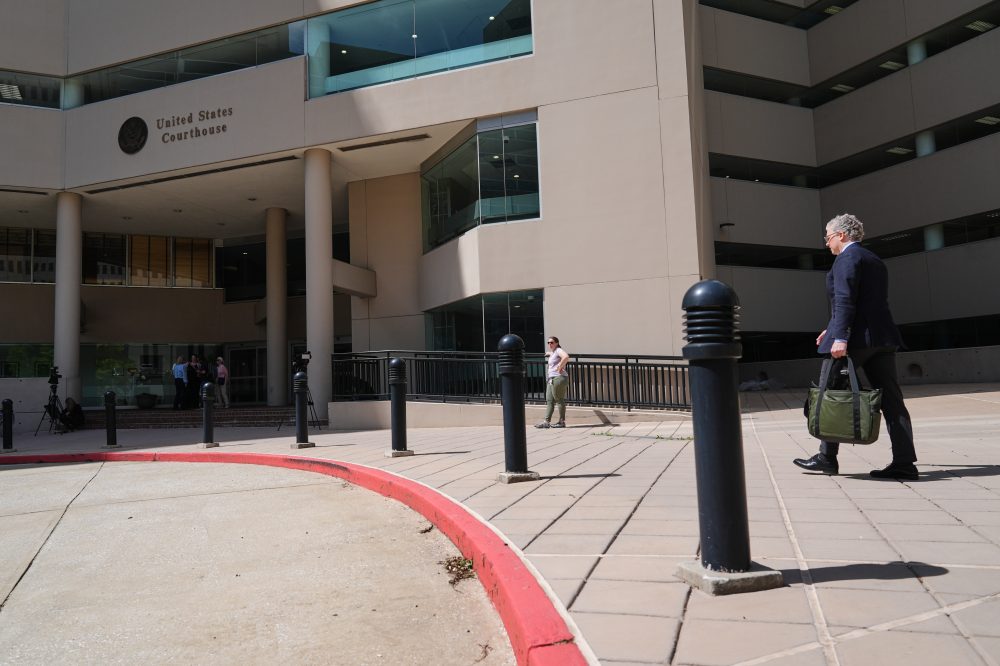
BALTIMORE — Federal prosecutors have brought a criminal charge against the chief engineer of the cargo ship at the center of the deadly 2024 collapse of Baltimore’s Francis Scott Key Bridge, alleging he failed to report dangerous conditions on the vessel to the U.S. Coast Guard.
Karthikeyan Deenadayalan was charged Monday in U.S. District Court in Maryland with a single count of violating the federal Port and Waterways Safety Act. Attorneys representing Deenadayalan had not responded to a request for comment as of the time of this report.
Along with the criminal charge, prosecutors submitted notice of a “deferred prosecution agreement” to the court, though no details about the terms of the deal were released. Such agreements are commonly used when a defendant agrees to fulfill specific conditions — such as cooperating with investigators or paying restitution — in return for having the charges against them eventually dismissed.
According to court documents, Deenadayalan served as chief engineer of the container ship while it was docked at the Port of Baltimore in the days leading up to the fatal bridge strike. Prosecutors allege he knowingly failed to inform the U.S. Coast Guard that an improper fuel pump, lacking a backup system, was being used to run two of the ship’s generators.
The vessel, the Dali, was headed for Sri Lanka when it lost power twice within a four-minute window while departing the Port of Baltimore. That loss of power led to a steering failure, and the ship slammed into the Francis Scott Key Bridge in the early morning hours of March 26, 2024. Investigators determined that a loose wire in a switchboard most likely triggered the initial power failure.
After the ship briefly regained power, trouble struck again. Prosecutors say the fuel pump powering the two generators was not designed to automatically restart following a blackout, which caused a second power loss. The Dali then collided with a support column of the bridge, killing six construction workers who were filling potholes on the structure at the time. The bridge, which first opened in 1977, carried millions of vehicles annually.
In May, the Singapore-based company that operated the ship and a former employee were indicted on criminal charges. Synergy Marine Pte Ltd., along with Chennai, India-based Synergy Maritime Pte Ltd. and former technical superintendent Radhakrishnan Karthik Nair, 47, face charges including conspiracy, misconduct causing death, failure to promptly notify the U.S. Coast Guard of a hazardous condition, obstruction of the National Transportation Safety Board, and making false statements. A trial in that case has been set for October 2027.
Following the indictment, Synergy Marine expressed disappointment and accused the U.S. Justice Department of treating what it called an accident as a criminal matter. Nair’s attorney, David Gerger, offered a similar reaction in May, stating that his client “thinks about this accident every day, but he certainly did not cause it.”
In April, Maryland, Synergy Marine, and Grace Ocean Private Limited — the Singapore-based owner of the Dali — reached a $2.25 billion settlement. Grace Ocean has not faced any criminal charges in connection with the collapse.
Earlier this month, a federal judge agreed to delay a civil trial related to the disaster after a series of last-minute settlements resolved the majority of the remaining claims, including all pending claims tied to the deaths of the six construction workers. The unresolved claims that remain are largely focused on economic losses suffered by businesses and local governments, and none of the parties still involved had sought to proceed with the trial as originally scheduled.
CME Group chief Terry Duffy announced in a CNBC interview that the major exchange operator plans to take the Commodity Futures Trading Commission to court over the agency’s decision to approve perpetual futures contracts.
Duffy, who recently revealed he will be leaving his CEO role next year, has been an outspoken critic of so-called “perps” — a type of listed derivative that has no expiration date. Unlike traditional futures contracts, perpetual futures allow traders to hold their positions indefinitely without ever needing to roll them over.
“I’m always up for a good battle. I’ve never shied away from one,” Duffy told CNBC, confirming the lawsuit would be filed Thursday. CME Group followed up with an emailed statement to Reuters confirming the legal action. The CFTC did not respond to a request for comment.
The controversy stems from a recent CFTC decision that gave cryptocurrency exchange Coinbase and prediction market platform Kalshi the green light last month to launch perpetual crypto futures. The move marks the first time U.S. investors will have access to such instruments through regulated domestic exchanges.
Beyond having no end date, perpetual futures can carry extremely high leverage — sometimes as much as 50-to-1 — which means investors can dramatically magnify their exposure to market swings.
Earlier this month, Duffy warned at an industry conference that this level of leverage, combined with the automatic liquidation systems commonly used in the sector, creates serious risks for everyday retail investors who may not fully understand how funding rate costs can eat into their positions over time.
He also took aim at how the CFTC handled the approval, arguing the agency skipped the standard “full review” process typically required for what it itself described as a “novel and complex” financial product.
The news rattled financial markets. Shares of CME Group, Cboe Global Markets, and Intercontinental Exchange — the parent company of the New York Stock Exchange — all declined following the CFTC’s approval, as investors grew concerned the decision could create a long-term competitive threat to established exchanges.
Separately, CME Group announced earlier Thursday that Duffy, who took on the CEO role roughly a decade ago, will be succeeded by insider Lynne Fitzpatrick, who will become the company’s first female chief executive.
TORONTO — Enthusiastic supporters of both Ghana and Panama flooded the streets of Toronto on their way to the stadium for a FIFA World Cup Group L matchup, dressed in traditional clothing and carrying national flags despite steep ticket prices and dreary weather.
Wisdom Atakuma arrived in festive fashion, sporting an elaborate headdress decorated with beads and feathers. He described the moment as the fulfillment of a long-held dream — watching Ghana compete on the world’s biggest soccer stage.
“No African country has won it (World Cup) before and… I pray that maybe God will bring it to Ghana,” he said. Atakuma also carried a poster taking a playful jab at Ghanaian President John Mahama, who was accused of promising fans free tickets to the match.
Not every Ghana supporter was able to secure a ticket, but that wasn’t stopping Black Stars fan Ahosua Addowaa from celebrating. “I will just stand outside (the stadium) and support. Look at us, we are here,” she said with enthusiasm.
For Los Canaleros supporter Ramon Diaz, who has lived in Canada for four years, the day carried deep emotional weight. He anticipated being moved to tears when Panama’s national anthem echoed through the stadium. “Historic day, I don’t think I have ever seen these many Panamanians outside of Panama,” he said.
On the field, Antoine Semenyo is set to lead Ghana’s attack, while Panama’s key midfielder Adalberto Carrasquilla will start the game from the bench. Both teams are competing in Group L alongside England and Croatia.
U.S. President Donald Trump and Iranian President Masoud Pezeshkian have signed a memorandum of understanding on Wednesday with the goal of ending the ongoing conflict with Iran, a U.S. official confirmed to Reuters.
According to the official, the document had already been signed digitally on Sunday by Vice President JD Vance and Iran’s lead negotiator Mohammad Baqer Qalibaf, with President Trump serving as a witness to that earlier signing before both heads of state formally signed on Wednesday.
Ukrainian President Volodymyr Zelenskiy announced late Wednesday evening that he had a joint phone conversation with U.S. President Donald Trump and French President Emmanuel Macron following the conclusion of the G7 summit in Evian.
Zelenskiy described the call as highly significant, writing on Telegram: “This was an important coordinating conversation which could change a great deal.”
In the same post, he expressed appreciation to both leaders, stating: “I am grateful to President Trump for his attention to Ukraine and for his readiness to help bring peace closer. I am grateful to Emmanuel for the excellent organisation of the summit and the consistently strong joint work.”
In a follow-up message on Telegram, Zelenskiy revealed he had also sat down with NATO Secretary General Mark Rutte in Brussels to go over the results of the Evian summit. He noted that securing U.S. licenses to manufacture air defense systems was among the top priorities discussed, writing: “The main thing is working on strengthening our defence and getting U.S. licences to produce air defence systems.”
Zelenskiy thanked Rutte for his continued backing and committed to making the upcoming NATO summit in Ankara productive for Ukraine’s defense efforts next month.
The Ukrainian president also highlighted the importance of a Thursday gathering of the Ramstein group — a coalition of more than 50 nations that provides both financial and military support to Kyiv. European Union leaders are also set to convene separately on Thursday.
Ukrainian Defence Minister Mykhail Fedorov stated Wednesday that Ukraine is requesting an additional $20 billion in military assistance from its allies. A Ukrainian defense source had previously told Reuters last week that the request would be formally presented at the Ramstein group meeting.
Russian forces launched a missile strike against Kyiv, Ukraine’s capital city, in the early morning hours of Thursday, according to Tymur Tkachenko, the official leading the capital’s military administration, who announced the attack via the Telegram messaging app.
A Reuters reporter on the ground in Kyiv confirmed hearing explosions, and air raid sirens and alerts were activated across the majority of Ukrainian territory in response to the assault.
The latest attack follows a devastating strike earlier this week, on Monday, in which Russia targeted a monastery estimated to be 1,000 years old — a site considered a cornerstone of Ukraine’s spiritual and cultural identity. That attack left 10 people dead across the country and left the ancient landmark heavily damaged.
Speaking at a wide-ranging press conference during the G7 summit in Évian-les-Bains, France on Wednesday, President Donald Trump went to bat for an emerging agreement between the United States and Iran, saying it would block Tehran from ever getting a nuclear weapon — and making clear that military force remains on the table if Iran breaks its word.
The deal, structured as a memorandum of understanding, is expected to receive a formal signature in Switzerland on Friday. According to US officials, the agreement was already signed electronically over the weekend, though the exact timing and format of the final signing were still being worked out as of Wednesday. The framework is designed to extend the ceasefire between the two countries, reopen the Strait of Hormuz to maritime traffic, and set the stage for further talks on Iran’s nuclear program and broader regional concerns.
“On Sunday, we reached an agreement with Iran that achieves everything we set out to accomplish — everything, and much more — ending the current conflict, reopening the Strait of Hormuz, and preventing Iran from ever obtaining a nuclear weapon,” Trump said.
Throughout the press conference, the president kept coming back to what he described as the deal’s most critical element: stopping Iran from acquiring nuclear weapons.
“Iran cannot have a nuclear weapon. They can’t develop it, buy it. They can never have a nuclear weapon,” he insisted.
Senior US officials read the text of the memorandum to reporters on Wednesday ahead of the anticipated Friday signing. The document includes language explicitly stating that Iran will not produce or acquire nuclear weapons.
Trump drew a sharp contrast between this agreement and the nuclear deal struck during the Obama administration, which he scrapped during his first term and continued to attack throughout Wednesday’s press conference.
“The Obama deal was a road to a nuclear weapon,” he argued. “The Trump deal was a wall for a nuclear weapon that the nuclear weapon could not get through.”
While Trump indicated the deal could be finalized within days, he made equally clear that Iran’s compliance would be the deciding factor in whether it holds.
“If it doesn’t get done in 60 days, that’s all right. We go back to bombing,” he said.
The president returned to that warning several times, leaving no doubt that he views the threat of renewed military action as the key enforcement mechanism.
“If they don’t honor the agreement, we’ll probably go back to bombing them until they honor it,” Trump said.
When reporters pressed him on whether the deal contains formal enforcement provisions, Trump was blunt: “I let them know. I said, look, if you don’t adhere to the agreement, I don’t want to do that, but we’re going to bomb the hell out of you.”
He brushed aside concerns about the absence of formal enforcement mechanisms, saying the threat of military action is deterrent enough. “Doesn’t have to be,” he said. “They don’t want to get bombed. They don’t want to get hit.”
Trump also addressed criticism that the agreement allows Iran to keep some conventional missile capabilities. He defended that position, saying ballistic missiles are not the primary focus of the deal.
“We’ll be working on a parallel effort with the Gulf nations to address non-nuclear issues, such as the conventional ballistic missiles,” he said.
That stance puts Trump at odds with Israeli Prime Minister Benjamin Netanyahu, who has repeatedly called for any deal to also address Iran’s ballistic missile program. In February, Netanyahu told reporters after returning from Washington that an agreement should cover “not only the issue of nuclear weapons but also ballistic missiles and Iranian proxies in the region.”
Trump pushed back on the idea of banning Iran from missiles entirely. “What am I going to do? Am I going to let Saudi Arabia have missiles, but they can’t have them? It doesn’t work that way,” he said, adding that nuclear weapons — not conventional missiles — represent the real existential threat. “Missiles aren’t the problem. Missiles are — they hurt a little location, but they don’t blow up the planet.”
He also claimed that US military strikes had already dealt a major blow to Iran’s missile arsenal. “We knocked out probably 84%, 85% of their missiles,” he said.
Trump spent considerable time at the podium discussing his relationship with Netanyahu, offering a mix of praise and criticism. He called the Israeli prime minister “a good man” and described their partnership as “amazing,” but also expressed frustration with Israeli military operations in Lebanon.
“In all fairness to Bibi Netanyahu, who happens to be a good man, gets a little excited sometimes. But he happens to be a very good man. We’ve had an amazing partnership,” Trump said.
He acknowledged a rift with Netanyahu over the situation in Lebanon, where Israel has been striking Hezbollah targets. “We have a little dispute over Lebanon. I say, you can do a little softer touch, Bibi. You don’t have to knock down a building every time somebody walks into it that’s from Hezbollah,” Trump said.
Referring to a specific recent strike, Trump added: “That was a big hit. That was unnecessary in my book.” He said Israel has the right to defend itself, but added: “They could behave better.”
Trump said he had shared the agreement with Israel and argued it addresses the country’s most pressing security concern. “I told Bibi, Bibi, your biggest risk was that they’d drop a nuclear weapon into the middle of Israel. They’d only need one, and there would be no more Israel,” he said. “Think of it, Bibi. You got the best — the most important thing that you were asking for is that.”
Trump also made an economic case for the deal, arguing that continuing the conflict would have caused serious damage to global energy markets. He pointed to the reopening of the Strait of Hormuz as a key benefit.
“If we didn’t do this deal, we could have dropped more bombs for another three weeks, two weeks, four weeks, two years,” he said. “You would never have the Hormuz Strait open.”
“Maritime traffic through the Strait of Hormuz has already increased very substantially, and the normal flow of energy will resume in the coming days,” Trump said, adding that without the deal, the world risked sliding toward economic depression.
He also defended the military campaign that preceded the agreement, including strikes on Iranian nuclear facilities, saying that without the use of B-2 bombers, Iran would have succeeded in building a nuclear weapon.
“If we didn’t hit that with the B-2 bombers, they would have had a nuclear weapon,” he said.
On the international stage more broadly, Trump praised mediation efforts by Qatar and Pakistan, thanked China and President Xi Jinping for remaining neutral during the conflict, and expressed hope that the deal could lead to wider regional normalization and an expansion of the Abraham Accords. He also touched on the war in Ukraine, Ebola in Africa, artificial intelligence, energy policy, and immigration during the wide-ranging session.
Through it all, Trump kept returning to the Iran agreement as the summit’s defining achievement, calling the nuclear prohibition “the most important clause” in the deal.
“This agreement now provides Iran with a historic opportunity,” the president said. “If they follow the path of cooperation, we’ll have opened for them. Their country will have a chance to survive.”
GUADALAJARA, MEXICO — Mexican military personnel shot down an unregistered drone that was detected flying near South Korea’s national soccer team training facility in Guadalajara, where the squad is gearing up for its first World Cup game against Mexico, a federal official confirmed to The Associated Press on Wednesday.
Using specialized detection equipment, military forces identified the unauthorized drone approaching the South Korean camp and took action to bring it down, according to a Mexican federal agent who spoke anonymously because they lacked official authorization to comment on the matter.
The drone interception was carried out as part of a broader security operation involving both military and local law enforcement deployed for the ongoing soccer tournament. The competition began last week in Mexico City and runs through July 19 across venues in Mexico, the United States, and Canada.
The official declined to specify when exactly the incident took place or whether anyone was taken into custody. The agent did note, however, that multiple drones had been neutralized over recent days after they attempted to breach security perimeters around stadiums in Mexico City, Guadalajara, and Monterrey — the three Mexican host cities — along with team training camps and fan event areas.
Back in March, Mexican authorities unveiled a World Cup security initiative called “Plan Kukulkán,” which mobilizes roughly 100,000 personnel drawn from federal and local military and police agencies. The plan encompasses early warning detection systems, security measures at stadiums, airports, roadways and hotels, and dedicated protection protocols for teams, officials, and fans attending the tournament.
North of the border in Canada, authorities have implemented a ban on unauthorized drone flights over World Cup stadiums and a number of training locations in Vancouver and Toronto. Those flight restrictions are set to remain in place through July 7.
The drone incident brings to mind a controversy from 2024, when Canada’s women’s national soccer team was accused of deploying a drone to spy on New Zealand’s practice sessions in the days before their opening match at the Paris Olympics. The scandal triggered serious consequences, including the suspension of two coaching staff members and head coach Bev Priestman, who was later let go by Canada Soccer. The Canadian women’s team — defending champions from the Tokyo Games — also had six points deducted from their group stage standings in France.
A subsequent review by Canada Soccer concluded that the spying incident was not a one-time mistake, but rather reflected a broader pattern of inadequate oversight within the national team program.
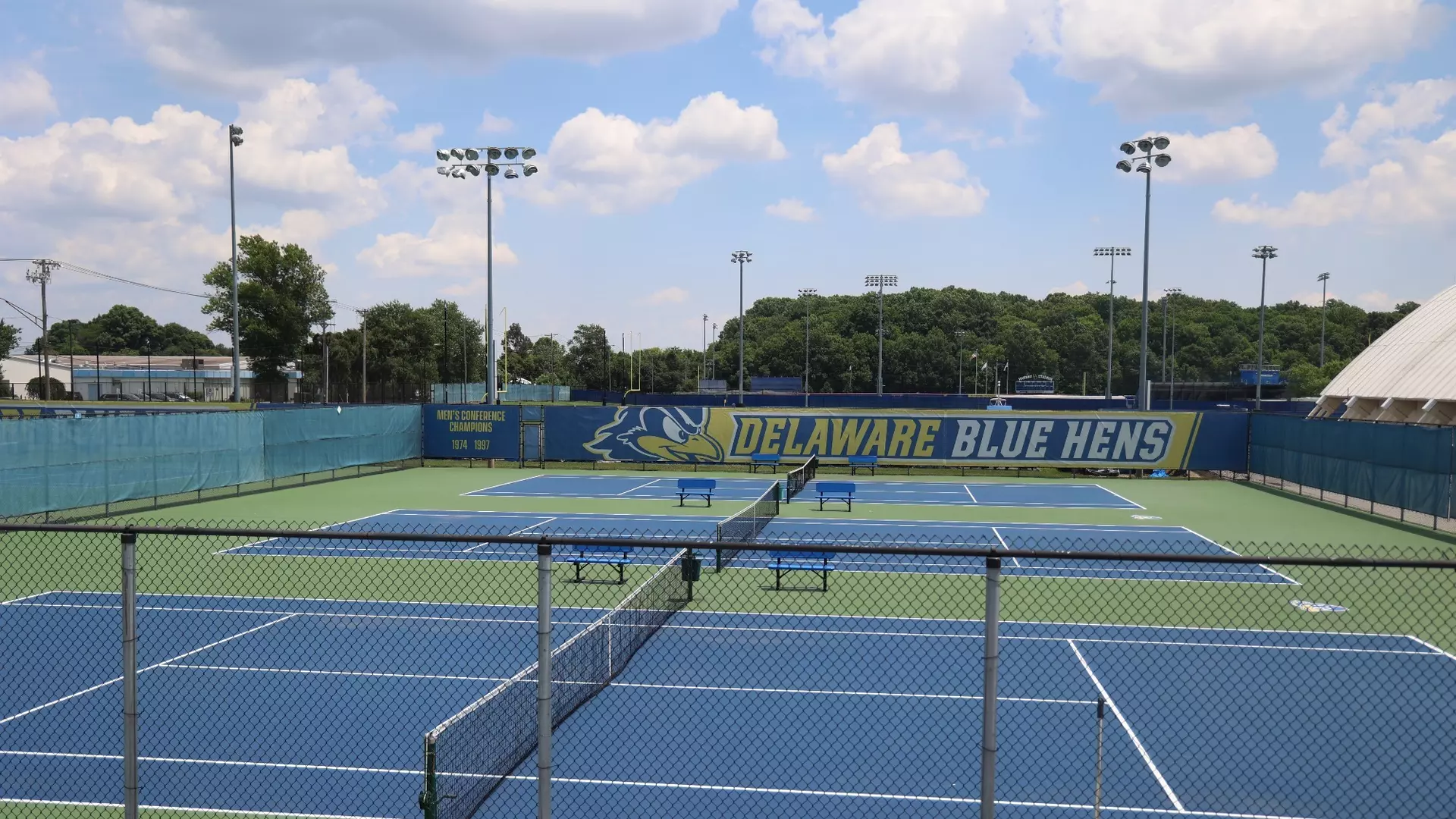
The University of Delaware women’s tennis program is bringing in one of the top recruiting classes in the country for 2026, earning recognition as the best in Conference USA.
According to tennisrecruiting.net, the Blue Hens landed the 18th-ranked mid-major recruiting class in the nation, topping all other programs in CUSA. The announcement was made this week.
A formal Memorandum of Understanding (MoU) between the United States and Iran has been made public, laying out a 14-point framework aimed at ending the current conflict, reining in Iran’s nuclear ambitions, and setting the stage for a broader final agreement.
The document opens by calling for an immediate and permanent halt to military operations on all fronts — including in Lebanon — by both nations and their respective allies. Both sides pledge not to initiate future military action against one another and commit to respecting Lebanon’s territorial integrity and sovereignty.
Under the terms of the agreement, both countries commit to reaching a final deal within 60 days, a timeline that can be extended if both parties agree. The United States would begin lifting its naval blockade immediately upon signing, with a full end to the blockade within 30 days. American forces would also be withdrawn from the vicinity of Iran within 30 days of a final deal being reached.
Iran, for its part, agrees to facilitate safe passage for commercial vessels through the Strait of Hormuz at no charge for a period of 60 days. Demining and the removal of military obstacles would be completed within 30 days. Iran also agrees to engage with the Sultanate of Oman regarding future maritime administration of the Strait, in coordination with other Persian Gulf coastal nations.
A significant economic component of the agreement calls on the United States, working alongside regional partners, to develop a reconstruction and economic development plan for Iran valued at a minimum of $300 billion. The implementation details would be finalized as part of the final deal.
On the sanctions front, the United States commits to ending all forms of sanctions against Iran — including United Nations Security Council resolutions, International Atomic Energy Agency (IAEA) Board of Governors resolutions, and all unilateral U.S. sanctions — according to a schedule to be agreed upon in the final deal.
Regarding nuclear issues, Iran reaffirms that it will not develop or acquire nuclear weapons. The two countries agree to work out a mutually acceptable plan for dealing with Iran’s stockpile of enriched uranium, with the minimum approach being on-site blending down under IAEA supervision. Both sides acknowledge the urgency of resolving nuclear-related questions and express their intent to address them immediately in negotiations.
While negotiations toward a final deal are ongoing, both nations agree to maintain the current status quo — meaning Iran will not advance its nuclear program further, and the United States will not impose new sanctions or deploy additional forces to the region.
The U.S. Treasury Department would issue waivers immediately upon signing to allow the export of Iranian crude oil, petroleum products, and related services such as banking, insurance, and transportation. Additionally, frozen or restricted Iranian funds and assets would be made fully accessible upon implementation of the MoU, with procedures for releasing those funds to be agreed upon during negotiations.
The agreement also establishes an oversight mechanism to monitor compliance with both the MoU and any eventual final deal. Formal negotiations on remaining provisions would begin only after key initial steps — including the ceasefire, naval blockade removal, Strait of Hormuz access, oil export waivers, and asset releases — are put into motion.
The memorandum concludes by stating that the final deal will be formally endorsed through a binding United Nations Security Council resolution.
United Nations Secretary-General Antonio Guterres issued a stark warning Wednesday that Israeli settler groups could find themselves added to a worldwide blacklist for serious violations committed against children, as he expressed deep concern over what he called a “staggering” increase in harm done to Palestinian children.
The UN’s yearly report on Children and Armed Conflict documented 38,558 “grave violations” around the world in 2025, impacting 24,174 children — the highest number of affected children recorded since the program’s mandate was established in 1996.
According to the data, 14,224 children were killed or seriously injured, with the number of children killed climbing 34% compared to 2024, reaching 6,266. The UN verified that 2,668 Palestinian children were killed in Gaza and another 57 in the West Bank.
The conflict in Gaza traces back to October 7, 2023, when Hamas-led fighters launched an attack on southern Israel, killing approximately 1,200 people based on Israeli figures. Israel then launched a major military campaign that has since resulted in the deaths of tens of thousands of Palestinians.
A senior UN official told reporters during a briefing on the report that “countries with the highest levels of violations in 2025 were the Occupied Palestinian Territory and Israel, Democratic Republic of the Congo, Nigeria, Myanmar, and Somalia.”
While Israel already appears in what is commonly referred to as the report’s “list of shame” for alleged violations, this year’s edition marks the first time Israeli settler groups have been flagged as a potential future addition to that list.
“I am appalled by the magnitude of grave violations against children in the Occupied Palestinian Territory and Israel, notably by the widespread use of explosive weapons in populated areas,” Guterres wrote in the report.
He went on to say: “I am deeply alarmed at the staggering rise in attacks carried out by Israeli settlers resulting in grave violations against Palestinian children.”
Guterres stated that Israeli settler groups should be formally listed if similarly high numbers of violations occur again in 2026.
The report attributed 9,465 grave violations to Israeli forces and 326 to Israeli settlers. Grave violations are defined to include killing and injuring children, sexual violence, and attacks targeting schools and hospitals.
Israel’s UN mission did not respond to a request for comment.
Hamas’s armed wing and affiliated factions remain on the blacklist for killing and maiming children and for abductions. Palestinian armed groups were attributed 2,806 violations in the report.
This latest report arrives just weeks after Guterres angered Israel by placing it on a separate UN blacklist of countries and parties suspected of committing sexual violence during conflict. That decision prompted Israel’s foreign ministry to announce it was cutting off all ties with him.
Guterres also raised concern about the high number of children detained by Israel, citing reports of serious physical abuse and poor conditions, saying these situations “may constitute inhuman or degrading treatment or punishment.”
Being placed on the blacklist does not automatically trigger sanctions, but it carries significant reputational consequences and requires negotiating action plans in order to be removed from the list.
President Donald Trump signed a memorandum of understanding on Wednesday with the goal of ending the war with Iran, according to a White House official who confirmed the news to Reuters.
The official disclosed the signing but provided limited additional details about the agreement or what steps would follow.
Angel City FC has let go of head coach Alexander Straus, the club announced Wednesday, as the team struggles through a difficult stretch of the season.
The team’s recent form tells the story: just one win, six losses, and one draw over its last eight outings, leaving Angel City in 12th place among the 16 clubs in the National Women’s Soccer League.
The downturn is a stark contrast to how the season began. Angel City opened with three straight victories before things unraveled, leaving the club with an overall record of 4-6-1 and 13 points.
Taking over on an interim basis is senior assistant coach Leif Gunnar Smerud, a 49-year-old Norwegian coaching veteran who will guide the team through the rest of the season.
Club sporting director Mark Parsons issued a statement reflecting on Straus’s time with the organization. “Alex brought real energy and passion to Angel City, developing our style of play and overseeing the important development of our players,” Parsons said. “He guided one of the youngest rosters in NWSL history through a pivotal period of growth.”
Parsons added, “We are deeply grateful for Alex’s leadership and the progress made during his tenure, and we wish him nothing but success in his next chapter.”
Straus, 50, had taken over as Angel City’s head coach on June 1, 2025, finishing out last season with a 3-9-4 record in the second half of the campaign. Prior to joining the club, the Norwegian coach had spent his career working overseas since 2010.
In addition to the coaching change, Angel City made a roster move Wednesday, trading 19-year-old midfielder Kennedy Fuller to Bay FC in exchange for $520,000 in total funds.
The team’s next match won’t come immediately, as the league is currently on a break for several reasons, including the men’s World Cup being played across the United States, Canada, and Mexico. Smerud’s first game in charge is scheduled for July 3 when the Orlando Pride come to town.
President Trump expressed measured confidence in Federal Reserve Chairman Kevin Warsh on Wednesday after the new central bank chief wrapped up his first rate-setting meeting with a decision to keep interest rates where they are. Fed projections released alongside the decision showed that nearly half of the central bank’s policymakers believe a rate increase will be necessary at some point this year.
When asked about the Fed’s choice to hold rates steady while speaking from France, Trump kept his response brief. “It’s all right. Whatever,” the president said.
The low-key reaction was a stark departure from Trump’s treatment of Warsh’s predecessor, Jerome Powell, whom the president repeatedly attacked with insults — calling him a moron and a knucklehead, among other things — for declining to cut rates. Trump has long argued that the central bank should lower borrowing costs to support the housing market, strengthen the broader economy, and bring down the cost of government borrowing.
Trump had no such harsh words for Warsh, whom he has previously praised as looking like he came straight out of central casting for the role.
When reporters raised the possibility of a rate hike, Trump acknowledged it could happen but expressed trust in his new Fed chief. “It could happen,” he said. “It’s hard to believe. It just keeps the country down and it’s so, it’s so, unusual. But we have a very good guy over there right now so I’m guided by what he wants.”
At a press conference following the rate decision, Warsh avoided offering any guidance on where interest rates might be headed. He also sidestepped a question about whether he had spoken directly with the president since taking the top job at the Fed last month.
Warsh did, however, acknowledge meeting multiple times with Treasury Secretary Scott Bessent. “So on the president, I don’t have anything for you,” Warsh said. “With respect to the Treasury secretary, he has been posting pictures of our breakfast, so … I don’t think I can deny that the long tradition at the central bank is that the Fed chairman and the Treasury secretary meet weekly. I think we’ve pulled off three of those so far. Believe he’s overseas this week, so this will be the exception of the rule.”
During his Senate confirmation hearing, Warsh had told lawmakers he intended to work closely with the administration on matters outside of monetary policy.
Tropical Storm Arthur is posing a serious threat to communities across the southeastern United States, with forecasters warning of life-threatening flooding in the region.
As of 4:00 PM CDT on Wednesday, June 17, the center of Arthur was positioned near coordinates 28.9 degrees north latitude and 96.1 degrees west longitude. The storm was tracking in a north-northeast direction at a forward speed of 7 miles per hour.
Meteorologists recorded a minimum central pressure of 1,001 millibars, with maximum sustained winds reaching approximately 45 miles per hour.
A Tropical Storm Warning continues to be in place for sections of the Texas and Louisiana coastlines. Residents in those areas are urged to take the flooding threat seriously and follow guidance from local emergency officials.
Westbound travelers on Christiana Road, also known as Route 273, are facing a right lane closure between Harmony Road and Cedarwood Road.
The lane restriction is expected to remain in place until 3 PM. Drivers in the area should allow extra travel time or consider using an alternate route to avoid delays.
No additional details regarding the cause of the closure have been provided at this time. Motorists are encouraged to stay alert and follow any posted traffic control signs in the work zone.
A major new landmark has opened its doors in Chicago this week — the Obama Presidential Center. The facility is now welcoming visitors, but there is an important distinction to note: it does not hold the status of an official presidential library.
Despite sharing some similarities with traditional presidential libraries, the Obama Presidential Center stands apart in how it is classified. The opening marks a significant moment tied to the legacy of the former president.
Tens of thousands of American military veterans — more than 30,000 in total — are currently living without a home, and the people who work to help them are wrestling with a difficult question: what happens when government policy works against the very people it claims to protect?
The Trump Administration has put forward promises of new housing opportunities for veterans experiencing homelessness. However, at the same time, one of the president’s executive orders takes aim at homeless people more broadly — creating a tension that outreach workers say puts vulnerable veterans in a complicated position.
Those who work on the front lines of homeless veteran outreach are now weighing the potential consequences of policies that could force individuals to accept assistance rather than allowing them to seek help voluntarily.
A Coastal Flood Advisory is in effect for New Castle County, Delaware, with minor tidal flooding expected in the overnight hours.
The National Weather Service out of Mount Holly, New Jersey has issued the advisory, which runs from midnight tonight through 4 a.m. Thursday. Forecasters say up to half a foot of inundation above ground level is possible in low-lying areas near shorelines and tidal waterways.
The biggest concern? Your morning commute. Flooding is expected to impact the most vulnerable roads along tidal waterways, and some partial or full road closures are possible.
Authorities are urging residents to take precautions before the flooding begins. Do not leave your vehicle parked in areas prone to tidal flooding overnight. If you do encounter standing water on the road, turn around — do not attempt to drive through it. Water can be deeper than it appears, putting you and your vehicle at serious risk.
The advisory expires at 4 a.m. Thursday. Residents can monitor updated water level information and local tide gauge data through the National Water Prediction Service at water.noaa.gov.
Stay with TV Delmarva for any updates to this advisory overnight.
The National Hurricane Center has issued updated wind speed probability graphics for Tropical Storm Arthur, providing the latest look at where potentially dangerous winds could develop over the next five days.
The graphics, which track the probability of 34-knot wind speeds, were last updated on Wednesday, June 17, 2026, at 9:26 PM GMT. These probability maps help forecasters and residents understand the likelihood of tropical storm-force winds reaching specific areas.
Residents in potentially affected coastal regions are encouraged to monitor the latest updates from the National Hurricane Center as the storm continues to develop.
More than three months after the United States and Israel launched military operations against Iran, the financial toll and long-term consequences of that conflict are being felt in countries around the world.
The war’s impact has extended well beyond the battlefield, with effects touching economies, trade, and daily life on a global scale. Analysts and observers continue to assess just how deep and lasting those repercussions will be.
As wildfires begin breaking out across the western part of the country, the U.S. Forest Service is asserting that it has a complete seasonal firefighting workforce in place for the summer ahead.
Despite the agency’s assurances about staffing levels, there are lingering concerns among observers about whether the government has done enough to be ready if major wildfires grow beyond control.
The declaration of full staffing marks a notable moment heading into what is traditionally the most dangerous time of year for wildfires in the western United States.
The National Weather Service office out of Mount Holly, New Jersey has put a Coastal Flood Advisory into effect starting at 5:23 PM EDT on June 17, with the alert set to expire at 4:00 AM EDT on June 18.
A Coastal Flood Advisory indicates that minor flooding is possible in low-lying areas near the coast during high tide cycles. Residents living near coastal zones are encouraged to take precautions and avoid unnecessary travel through areas prone to standing water.
The advisory was issued by the NWS Mount Holly office, which covers portions of the region including coastal communities. People should monitor updated forecasts from the National Weather Service for the latest information as conditions develop overnight.
Major League Baseball’s efforts to celebrate LGBTQ+ inclusivity during Pride Month are running into resistance from some players, and the league’s response to that pushback is drawing fire from prominent Republican figures.
During the San Francisco Giants’ Pride Night on June 12, several pitchers added Bible verses to their rainbow-themed caps during a 5-1 home loss to the Chicago Cubs. A few days before that, two Los Angeles Dodgers players also chose not to wear the rainbow-accented caps alongside their teammates.
Giants starters and relievers Landen Roupp, JT Brubaker, and Ryan Walker each wrote scripture references on their caps. Roupp, who is from North Carolina, used a silver marker to write “Gen 9:12-16” on the front of the black cap, which featured the team’s classic “SF” logo filled in with rainbow colors — a longstanding symbol of the LGBTQ+ community.
That passage from Genesis reads, in part: “I have set my rainbow in the clouds, and it will be the sign of the covenant between me and the earth,” according to the New International Version of the Bible.
After the game, Roupp explained his reasoning to reporters. “It’s just about God’s covenant and a promise he makes to us and his faithfulness and his mercy,” he said. “Just kind of something I believe in and I stand firm in that and thankfully we live in a country where you know, we have freedom to believe what we want, yeah, and express what we want.”
Giants reliever Sam Hentges went a different route, skipping the Pride-themed cap entirely and wearing the team’s standard black cap with the orange “SF” logo instead.
MLB responded with two separate statements. The first put players on notice that writing on caps violates league rules. A follow-up statement issued Tuesday clarified that the “routine verbal warning” was not directed at the religious nature of the messages, but simply at the act of altering a uniform.
“We have given the same warning numerous times in the past to players for messages such as, ‘Dad’, ‘Happy Mother’s Day, I Love Mom,’ and names of family members,” the league stated.
The controversy quickly caught the attention of national political figures. Vice President JD Vance shared a post about the MLB warning on social media, writing, “Trump won we don’t have to do this anymore.” President Donald Trump’s second administration has taken a notably aggressive stance toward the LGBTQ+ community, particularly targeting transgender individuals.
Missouri Sen. Josh Hawley sent a letter to MLB Commissioner Rob Manfred on Tuesday saying he had “grave concern” about the warning issued to the players. Hawley described the warning as “dubious,” arguing that MLB is already taking a political position by requiring Pride-themed uniforms in the first place. He asked the commissioner to respond to several questions, including a request for a full list of all uniform violation fines handed down over the past five years.
First-year Giants manager Tony Vitello, whose club entered Wednesday with the second-worst record in the National League, said he’s been too focused on the field to follow the political fallout.
“I didn’t know about the vice president, it hasn’t been in my world,” Vitello said. “My world’s kind of been, ‘How do we find a way to beat the Braves?’ And then if we can beat them, try and beat them again. So hopefully our guys are focused on what they’ve got to do and handling their business the right way.”
This isn’t the first time Pride Night has sparked controversy in baseball. Back in 2022, several Tampa Bay Rays players declined to wear rainbow logos during their team’s Pride Night. Reliever Jason Adam, who now plays for the San Diego Padres, described it as a faith-driven choice at the time.
“It’s just what we believe the lifestyle he’s (Jesus) encouraged us to live for our good, not to withhold,” Adam told the Tampa Bay Times in 2022. “But we love these men and women, we care about them and we want them to feel safe and welcome here.”
MLB finds itself in a unique position among the four major North American professional sports leagues because part of its regular season falls in June, which is widely recognized as Pride Month. All but one MLB team — the Texas Rangers — holds a Pride Night in June.
Other leagues, including the NBA and NHL, also see a majority of their teams host Pride-themed events during their respective seasons. The NHL dealt with its own string of high-profile controversies surrounding Pride Nights during the 2022-23 season, when multiple players refused to wear Pride-themed pregame jerseys and at least two teams — the New York Rangers and Minnesota Wild — quietly canceled their Pride Nights after initially announcing them, without providing any explanation.
Joshua Baer called himself an “Austinpreneur” — a nod to the Texas capital city and his passion for helping people launch businesses. His LinkedIn profile showed him in a black T-shirt, pointing to the words “I help people quit jobs,” a message he also used as an email handle.
Baer, 50, founded Capital Factory, an Austin-based venture capital firm that has grown into a significant force backing technology startups across a wide range of industries, including robotics and autonomous ships.
He summed up his personal philosophy simply: “Plant lots of seeds. Water everyone’s. Repeat.” Those who worked alongside him in Austin’s business community said that motto reflected exactly how he operated. In 2023, the city’s mayor presented him with a key to the city in recognition of his civic contributions.
Baer was on board a business jet Tuesday when it went down on a highway near Laredo, Texas. The pilots had reported mechanical trouble and asked to divert to a nearby airport for an emergency landing before the crash occurred.
Thom Singer, CEO of the Austin Technology Council, spoke to the impact of Baer’s passing. “Whether you’re in technology or not, there’s a hole in the heart of Austin today,” Singer said.
Bryan Chambers, co-founder and president of Capital Factory, remembered his business partner as a “true super connector.”
Baer’s path to becoming a central figure in Austin’s tech world began after he graduated from Carnegie Mellon University in Pittsburgh, where he had already started an email marketing company. He relocated to Austin in 1996 to work as a software developer at Trilogy Inc. He launched Capital Factory in 2009 and made a habit of meeting with aspiring entrepreneurs over coffee.
In a 2012 interview with the Austin American-Statesman, Baer described his mindset: “My hobby is startups. I don’t watch sports or anything like that. So this is what I do. … I want to be an investor in every great tech company that comes out of Austin. That’s probably unrealistic, but I’m going to try anyway.”
Beyond the business world, Baer frequently spoke to high school students and held the title of “entrepreneur in residence” at the University of Texas.
Singer reflected on what drove Baer: “He was passionate that technology could change the world and make people’s lives efficient and better. And if entrepreneurs did it right, they could make money and help their communities. He believed in those two things.”
U.S. Sen. Ted Cruz, R-Texas, expressed grief over the loss. “Josh has been one of the most significant figures driving innovation and entrepreneurship across America. In Texas, he made our state a global leader,” Cruz said.
KINGSTON, Jamaica — Jamaica is in active negotiations with the United States to accept migrants who were deported from countries other than Jamaica, making the island nation the latest in a string of Caribbean nations aligning with the Trump administration’s immigration enforcement efforts.
Jamaica’s National Security Minister Dr. Horace Chang confirmed on Tuesday that the country has already signed a memorandum of understanding with the U.S. Department of Homeland Security. Under the agreement, Jamaica would receive as many as 25 individuals from non-Jamaican nations every two weeks.
Chang indicated that the incoming deportees would not be placed in detention facilities, though the specifics of their housing arrangements have not yet been determined. Negotiations over financial compensation for accepting the migrants are also still ongoing.
Should the agreement be fully finalized, Jamaica would join Mexico, El Salvador, Uganda, and several other countries that have already agreed to take in third-country migrants removed from the United States.
The proposal has already drawn strong opposition from the People’s National Party, known as the PNP, which accused the Jamaican government of conducting the negotiations behind closed doors, away from public scrutiny.
The PNP argued that taking in these migrants puts Jamaica’s domestic security, international reputation, and already-strained social infrastructure at serious risk.
Opposition spokesperson Donna Scott Mottley issued a statement saying, “Jamaicans deserve to know whether discussions have taken place and whether any commitments or understandings have been reached.”
Minister Chang pushed back on those concerns, drawing a clear distinction between accepting Jamaican citizens back home and processing foreign nationals through the country. “Jamaica, like other sovereign nations, is obligated under international laws to accept the return of its own citizens,” he said. “However, this new arrangement does not mean third-country nationals are being dumped on our shores. This is a structured, managed process to transit individuals through Jamaica to their final destination.”
The U.S. Department of Homeland Security did not respond to a request for comment.
As part of its broader immigration enforcement push, the Trump administration has used a series of largely secretive agreements to deport more than 19,000 people to third countries, according to the organization Third Country Deportation Watch. Some of those individuals have ended up in nations they had never even heard of before.
The majority of deportees have been sent to Mexico, but more than 1,500 others have been distributed across more than 20 additional countries — many of them lower-income nations in Latin America and Africa that are seeking to maintain good standing with Washington.
The debate unfolding in Jamaica reflects a wider divide across the Caribbean, where multiple governments have quietly entered into various arrangements with the U.S. in order to avoid damaging travel restrictions or economic consequences.
The Dominican Republic signed a non-binding agreement to temporarily house a limited number of non-criminal third-country nationals, while specifically excluding unaccompanied minors and nationals from neighboring Haiti — a deal that also faced heavy criticism.
Dominica’s Prime Minister Roosevelt Skerrit called a similar deal a “pragmatic step” to protect important ties with Washington, though he noted that violent offenders would not be accepted.
Antigua and Barbuda took a more cautious approach, with Prime Minister Gaston Browne confirming a framework that caps total acceptances at no more than 10 non-criminal individuals, evaluated on a case-by-case basis.
Guyana, meanwhile, is using the negotiations to address a massive labor shortage driven by its oil boom, exploring a U.S.-funded framework to bring in skilled, non-criminal migrants to help fill an estimated gap of 80,000 workers.
Human rights advocates point to the case of Orville Etoria as a stark example of the dangers these third-country deportation agreements can pose. Etoria, a Jamaican citizen who arrived in the United States as a child in 1976 and lived there for nearly 50 years, had his green card revoked after a criminal conviction. Rather than being sent back to Jamaica, he was deported to Eswatini in July 2025.
Upon arriving in Eswatini, Etoria and four other third-country nationals were stripped of due process rights and held indefinitely at the Matsapha Correctional Complex, a maximum-security prison. After two months of sustained diplomatic pressure from the Jamaican government, Etoria was finally returned to Jamaica.
A U.S. federal district court ultimately ruled the third-country removal policy unlawful in February 2026, finding that the U.S. cannot send migrants to undesignated countries without proper notice. However, the policy continues to be enforced while the case moves through the appeals process.
RIO DE JANEIRO — Brazilian President Luiz Inácio Lula da Silva issued a sharp warning to U.S. President Donald Trump on Wednesday, telling him to keep his hands off Brazil’s October presidential election after Trump once again criticized Brazil over court actions targeting Lula’s political opponents.
The exchange highlights the growing strain between the two countries. The Trump administration has proposed additional tariffs on Brazil and recently designated two of the country’s major drug-trafficking organizations as foreign terrorist groups — both decisions that Lula has pushed back against.
Lula has repeatedly defended his country’s independence since Trump first imposed tariffs on Brazil last year, citing what Trump called a “witch-hunt trial” against former President Jair Bolsonaro, a Trump ally. Lula has also objected to U.S. sanctions placed on Brazilian Supreme Court Justice Alexandre de Moraes, whom the Trump administration accused of pursuing politically motivated charges against Bolsonaro. Bolsonaro was convicted of attempting a coup after losing the 2022 presidential election to Lula.
On Wednesday, Trump said Brazil had turned “dangerous politically” and that the government was trying to arrest “Bolsonaro junior,” who was “doing well in the polls.”
Brazil’s Supreme Court had convicted one of Bolsonaro’s sons, former lawmaker Eduardo Bolsonaro, on Tuesday. He was found guilty of coercion connected to his father’s coup trial and sentenced to four years and two months behind bars. The court determined he had illegally tried to influence the proceedings by lobbying U.S. officials to pressure Brazilian authorities into halting the case.
However, Trump’s mention of someone doing well in the polls suggested he may have also been referring to Bolsonaro’s eldest son, Sen. Flávio Bolsonaro, who is currently running against Lula in the upcoming presidential race. Flávio Bolsonaro has not been arrested.
A reporter shared Trump’s comments with Lula during a press conference held after the G7 summit in France’s Evian-les-Bains, which Lula attended. The Brazilian president responded by saying Trump “doesn’t know Brazil well.”
“If he knows Brazil through his relations with the Bolsonaro family, he doesn’t know Brazil,” Lula said. “He can go on liking Bolsonaro — the father, the son, the grandson — that’s not my problem, it’s his. (…) But don’t interfere in Brazil’s elections, because Brazil’s elections are Brazil’s business.”
Both Eduardo and Flávio Bolsonaro had recently traveled to Washington to meet with U.S. officials, including Trump. Shortly after those meetings, the Trump administration labeled Brazil’s two largest drug-trafficking organizations — First Command Capital and Red Command — as foreign terrorist organizations. Lula pushed back on that classification Wednesday, arguing that while the groups terrorize communities, they are motivated by profit rather than political goals and should not be labeled as terrorist organizations.
The U.S. government has also proposed a 25% tariff on Brazilian imports, accusing the world’s 10th-largest economy of engaging in unfair trade practices. The proposal came even after Lula had traveled to Washington in an effort to convince Trump to hold off on further tariffs.
Lula made clear his frustration over the tariff decision once more on Wednesday. “I think what he did was disrespectful toward Brazil. He knows that. That’s why I said he still behaves like an emperor. We were negotiating an agreement.”
The National Hurricane Center has issued updated graphical information for Tropical Storm Arthur, providing a visual look at the probability of tropical storm-force winds reaching certain areas.
The graphics specifically display the chances of 34-knot wind speeds occurring within a 120-hour forecast window, giving forecasters and the public a clearer picture of where the storm’s impacts could be felt.
According to the National Hurricane Center, the wind speed probability data was last updated on Wednesday, June 17, 2026, at 9:00 PM GMT. Residents in potentially affected areas are encouraged to monitor the latest updates from official weather sources as the storm continues to develop.
Wall Street took a turn for the worse on Thursday after the U.S. Federal Reserve held its key interest rate steady but indicated that a rate hike could be on the horizon before the end of the year. Stocks fell sharply, the dollar continued climbing, and Treasury yields moved modestly higher in the wake of the decision.
The Fed’s move was widely anticipated, but the accompanying policy statement caught markets off guard. Officials removed language that had previously suggested a leaning toward lower rates. New quarterly projections revealed that nine Fed policymakers now expect a rate increase before 2025 is over.
Updated economic forecasts show that Fed officials have become increasingly worried about inflation. Policymakers now project year-end PCE inflation — a key measure of price growth — will reach 3.6% by the time 2027 arrives, a significant jump from the 2.7% forecast issued back in March.
On the market front, U.S. retail receipts rose 0.7% in May, outpacing analyst expectations. Meanwhile, pending home sales climbed unexpectedly to a six-month high in June, offering some brighter news on the housing front.
In corporate news, CME Group announced that insider Lynne Fitzpatrick will take over as its next chief executive, succeeding Terry Duffy. Fitzpatrick becomes the first woman to lead the exchange.
Across the Atlantic, British inflation held steady at 2.8% in May — a 13-month low — with the Bank of England expected to leave its own interest rates unchanged. In Asia, the National Stock Exchange of India, recognized as the world’s most active derivatives exchange, filed paperwork for an initial public offering after years of regulatory setbacks.
On the global stage, leaders of the G7 nations wrapped up their summit with a unified show of support for Ukraine. They also welcomed progress toward a final resolution of the conflict involving Iran and called for a ceasefire in Lebanon. Discussions shifted to securing mineral supply chains and reducing dependence on China.
Regarding the U.S.-Iran framework agreement, the deal includes a private $300 billion fund aimed at stimulating investment, with half of that amount already committed. Israel responded by launching new airstrikes on Lebanon, though the prospects for Israeli Prime Minister Benjamin Netanyahu to retain power after elections this autumn have reportedly dimmed, as the deal could bring an end to the Lebanon and Iran conflicts before Israel achieved its stated objectives.
Looking ahead, traders will be watching for developments in the Middle East, energy market movements, social media posts from former President Trump, and a slate of economic data including U.S. weekly jobless claims and the Philadelphia Fed Business Index for June. Several central bank policy decisions — from the Bank of England, the Swiss National Bank, and Norges Bank — are also on the calendar.
VIENNA — As the United States and Iran prepare for nuclear negotiations, Saudi Arabia’s Foreign Minister Prince Faisal bin Farhan says the single most important factor will be how Iran’s nuclear activities are monitored and enforced going forward.
The foreign minister made his remarks Wednesday at a conference held in Vienna, organized by the Brussels-based think-tank the European Council on Foreign Relations.
Washington and Tehran have announced they reached an agreement to end their conflict and open broader discussions, including on Iran’s nuclear program. A senior U.S. official read the text of a memorandum of understanding aloud but noted that either side could still walk away before a binding agreement is finalized.
Prince Faisal said he had not yet reviewed the final version of the memorandum and declined to comment on its specifics, but offered a broader warning: “The detail will matter.”
Saudi Arabia, a U.S. ally and long-standing rival of Iran, has closely watched Iran’s nuclear program for years. Iran maintains its nuclear activities are entirely peaceful.
“It will be most important to see the verification mechanisms that are in place beyond the actual commitments on enrichment, the actual commitment on the removal or downblending of nuclear materials,” Prince Faisal said.
U.S. President Donald Trump has stated his goal of eliminating Iran’s most highly enriched uranium, which sits just one step below weapons-grade material. A senior Iranian official told reporters on Sunday that Iran had agreed in principle to dilute, or downblend, that stockpile.
A major 2015 agreement between Iran and several world powers had placed tight restrictions on Iran’s nuclear program. Iran complied with those terms until Trump withdrew the United States from the deal in 2018. Iran then responded by dramatically expanding its nuclear activities well beyond what the agreement had allowed.
That earlier agreement had also given the United Nations nuclear watchdog additional oversight authority, including the ability to conduct surprise inspections at sites that had not been officially declared. Iran revoked those powers as the deal collapsed.
Prince Faisal stressed that a durable monitoring system is essential for restoring confidence globally and across the region. “How we will have a long-term, sustainable verification regime is what will matter the most, and that is what will give the international community but also the regional countries the most confidence and the ability to look towards a better future,” he said.
When World Cup players take the field in Miami, they may find themselves fighting two opponents at once — the team across from them and the brutal South Florida heat.
Dr. Jason Kostrna, an assistant professor and graduate kinesiology program leader at Florida International University, is raising alarms about the dangerous combination of heat and humidity that could threaten player health and performance. Kinesiology is the scientific study of movement, exercise, and physical performance.
“Unfortunately here in Miami, it’s very humid and so when you go and exercise, you start dripping sweat,” Kostrna told Reuters. “That means that you are not evaporating it. It’s just rolling off you and you are not getting that heat loss.”
When the body can’t cool itself through sweat evaporation, the heart kicks into overdrive, pumping blood toward the skin in a last-ditch effort to shed heat — a process that largely fails in Miami’s thick, sticky air.
“Then when it can’t, it starts to really try and increase that heart rate,” Kostrna explained.
Beyond the physical toll, Kostrna noted that heat stress piles on top of the mental pressure players already feel when representing their country on the world stage.
“You’ll start to see the pace of play maybe drop a little, you’ll start seeing that decision-making becomes a little more conservative. Whether that’s consciously or unconsciously, depends on the athlete,” he said.
Temperatures Could Approach 120 Degrees Fahrenheit
Temperatures across World Cup host cities are already running several degrees above their historical norms. But when measured using the Wet Bulb Globe Temperature — a scale that accounts for humidity, sunlight, and wind speed in addition to air temperature — the numbers become even more alarming.
“Our wet bulb globe temperature for some of these games could be close to 120 degrees Fahrenheit (48.8°C) when you factor in radiative heat, humidity, the ambient temperature and throw in a little bit of the plastic or concrete jungle effect,” Kostrna said. “If we do not actively work to take care of everybody, that is enough to cause major heat illness.”
Miami-Dade County has announced that Miami Stadium will have cooling stations, water trailers, hydration zones, and misting areas set up for fans and workers throughout the tournament.
Hydration Breaks Only Go So Far
Three-minute hydration breaks have been added to all matches, giving players a chance to take in fluids during games. But Kostrna cautioned that those breaks won’t solve the problem if players haven’t been properly hydrating in the days leading up to a match.
“If you’re behind on hydration, this is not magically going to fix it,” he said. “For the athletes, it can help bring their heart rate down, get some hydration. (The hydration breaks) can be a little bit longer, that would probably be better.”
His strongest recommendation for competing teams is simple: get to Miami early and let your body adjust.
“My hope is that there are not any teams that are truly just showing up off the plane and they’re experiencing this for the first time,” Kostrna said. “Hopefully they have been in town for weeks and have been practising in this (heat). That should be enough even if you are somebody who is coming from one of these colder regions, your body will adapt over those weeks.”
Mexico City police took a 24-year-old man into custody Wednesday after he allegedly tried to rent out his official World Cup credential through social media, which would have allowed someone else to gain unauthorized access to stadium venues, according to local authorities.
Officers apprehended the suspect near the Azteca Stadium after he attempted to reactivate his accreditation pass, the city’s Citizen Security Secretariat announced in an official statement.
Authorities were tipped off when a legal representative for World Cup organizers spotted the posts online and notified police. The amount the man was allegedly asking for the rental was not disclosed by authorities.
Mexico City is one of the host cities for the expanded 48-team World Cup tournament, with several matches scheduled there, including group-stage games involving Mexico. Also on Wednesday, first-time World Cup participants Uzbekistan were set to take on Colombia in a Group K contest in the capital.
The suspect, whose name was not released, has been transferred to the public prosecutor’s office, which will decide how to proceed with his case, the statement noted.
The National Weather Service office out of Mount Holly, New Jersey has put a Coastal Flood Advisory into effect for the area, running from the evening of June 17 through 4:00 AM Eastern time on June 18.
The advisory, which was issued at 4:51 PM Eastern time on June 17, signals that minor coastal flooding is possible during this timeframe. Residents who live in low-lying areas near the coast should take precautions and remain alert to changing water conditions overnight.
Coastal flood advisories are typically issued when water levels are expected to rise enough to cause minor flooding in vulnerable areas, such as low-lying roads, parking lots, and properties near the shoreline. While this level of advisory does not indicate a severe threat, it does warrant attention from those living or traveling near coastal zones.
Residents are encouraged to monitor updates from the National Weather Service and avoid any flood-prone areas during the advisory period.
The National Hurricane Center in Miami issued Forecast Advisory Number 7 for Tropical Storm Arthur at 9:00 p.m. UTC on Wednesday, June 17, 2026.
At the time of the advisory, the storm’s center was positioned near 28.9 degrees North latitude and 96.1 degrees West longitude, with that position accurate to within 30 nautical miles. The storm was moving toward the north-northeast at approximately 6 knots, on a heading of about 15 degrees.
Arthur was packing maximum sustained winds of 40 knots — roughly 46 miles per hour — with gusts reaching up to 50 knots. The storm’s estimated minimum central pressure stood at 1001 millibars. Tropical storm-force winds of 34 knots extended up to 150 nautical miles to the southeast of the center.
According to the forecast, Arthur is expected to weaken significantly overnight. By 6:00 a.m. UTC Thursday, June 18, the storm is projected to have degraded into a post-tropical remnant low near 30.8 degrees North and 94.6 degrees West, with maximum winds dropping to around 30 knots and gusts near 40 knots.
The National Hurricane Center forecasts that Arthur will have fully dissipated by 6:00 p.m. UTC on Thursday, June 18.
Ships within 300 nautical miles of the storm’s center have been asked to submit reports every three hours. Forecaster Reinhart issued the advisory, with the next update scheduled for 3:00 a.m. UTC Thursday.
The National Hurricane Center confirmed Wednesday afternoon that Tropical Storm Arthur came ashore over Matagorda County, Texas, earlier in the day, based on satellite imagery and ground-level weather observations.
Despite making landfall, Arthur’s circulation center has become increasingly disorganized and harder to pinpoint over the past several hours. A broad area of heavy thunderstorm activity continues over the northwestern Gulf of America, but powerful westerly wind shear has pushed that storm activity far away from the actual center of circulation.
Data gathered by NOAA Hurricane Hunter aircraft and marine weather stations show that tropical-storm-force winds — including strong gusts — are still occurring within that convection, located well to the east and southeast of the storm’s center. Based on a combination of aircraft data and surface observations, the storm’s current maximum sustained winds are estimated at 40 knots, or about 45 miles per hour.
The storm’s center tracked farther north than forecasters initially anticipated, moving north-northeastward at roughly 6 knots. Most computer forecast models indicate the circulation will fall apart within the next 6 to 12 hours. Wednesday’s updated track forecast shifted the projected path farther inland compared to earlier predictions, though forecasters note that has little practical impact since the most dangerous conditions are occurring well east of the center.
With Arthur now over land and battling strong wind shear along with drier air moving in from the west, further weakening is expected. Forecast models suggest the storm’s associated thunderstorm activity will largely collapse overnight Wednesday. The 12-hour forecast designates Arthur as a remnant low, though forecasters say it could dissipate even sooner than that.
Some weather models — specifically the European and Canadian models — hint at the possibility of a new area of low pressure developing over the western Atlantic later this week or into the weekend, as leftover energy from Arthur moves off the southeastern U.S. coastline. Forecasters say it is unclear how tropical that system might become, and they will continue watching model data closely.
Forecasters are stressing that heavy rainfall and life-threatening flash flooding remain the top hazard from this storm — and that this danger extends far beyond the storm’s center, even after Arthur fully dissipates.
The National Hurricane Center issued three key messages with this forecast discussion:
First, potentially life-threatening flash flooding and urban flooding are expected to continue through Friday across southern Louisiana, southern Mississippi, southern Alabama, southwestern Georgia, and the Florida Panhandle. Some rivers could see isolated moderate to major flooding, and ongoing heavy rain could keep the flood threat going through the weekend.
Second, tropical-storm-force winds, particularly in gusts, are expected along the Upper Texas and Louisiana coastlines over the next several hours, where a Tropical Storm Warning remains in effect.
Third, minor to moderate coastal flooding is anticipated along portions of the Upper Texas and Louisiana shorelines through Wednesday.
Arthur is forecast to be fully dissipated by Thursday evening. This discussion was prepared by Forecaster Reinhart at the National Hurricane Center.
The National Hurricane Center in Miami issued its seventh wind speed probability update for Tropical Storm Arthur at 9 p.m. UTC on Wednesday, June 17, 2026.
At the time of the advisory, the center of Tropical Storm Arthur was positioned near latitude 28.9 North and longitude 96.1 West, with maximum sustained winds of approximately 40 knots — equivalent to 45 mph or 75 km/h.
Forecasters calculated the probability of locations experiencing sustained tropical-storm-force winds of at least 39 mph over the next five days. The data shows the highest cumulative probabilities concentrated along the upper Texas coast.
Freeport, Texas faces a 90 percent cumulative chance of encountering tropical-storm-force winds during the forecast period, while Galveston, Texas carries an 82 percent cumulative probability. High Island, Texas sits at 66 percent, and Matagorda, Texas has a 38 percent cumulative chance.
Further inland and along the Louisiana border, Port Arthur, Texas has a 32 percent cumulative probability of tropical-storm-force winds. Kountze, Texas stands at 22 percent, while Port O’Connor, Texas is at 11 percent.
Communities in southwest Louisiana, including Lake Charles and Cameron, each carry an 8 percent cumulative probability of tropical-storm-force winds. Fort Polk, Louisiana sits at 3 percent. Houston, Texas and Jasper, Texas each show a 7 to 8 percent cumulative probability.
No locations in the forecast area currently show significant probabilities of winds reaching 58 mph or higher during the five-day outlook period.
The advisory was prepared by Forecaster Reinhart at the National Hurricane Center.
The National Hurricane Center has issued updated wind speed probability graphics for Tropical Storm Arthur, the first named Atlantic storm of the 2026 hurricane season.
The latest imagery, released Wednesday, June 17, 2026, depicts the probability of 34-knot wind speeds associated with the storm over a 120-hour forecast period.
Residents in potentially affected coastal areas are encouraged to monitor updates from the National Hurricane Center as the storm continues to develop.
NEW YORK (AP) — American stock markets took a significant hit Wednesday as investors grew anxious over the possibility that the Federal Reserve could raise interest rates before the year is out. Higher interest rates are a tool used to slow rising prices, but they also put the brakes on economic growth and can drag down investment values.
The S&P 500 index lost 1.2%, wiping out an earlier small gain after the Fed published projections showing that nine of its 18 policymakers believe the central bank’s main interest rate should be raised at least once this year. The Dow Jones Industrial Average swung dramatically — from a morning gain of 280 points to an afternoon decline of 507 points, or 1%. The Nasdaq composite fell 1.3%.
Notably absent from the Fed’s rate projections was Chairman Kevin Warsh himself, who did not submit a forecast for where the federal funds rate might stand by the end of 2026. In his first press conference leading the nation’s central bank, Warsh also signaled he is weighing changes to how the Fed shares information with financial markets, households, and businesses.
Among his early actions, Warsh has already eliminated what’s known as “forward guidance” — the practice of including hints in Fed statements about the likely direction of interest rates down the road.
Warsh expressed a desire for Wall Street to respond to economic reports on inflation, employment, and other data based on what those figures actually mean for stocks, bonds, and other investments — rather than simply guessing how the Fed will respond to that data.
Along those same lines, Warsh indicated the Fed may revisit its practice of releasing quarterly projections that outline where officials expect interest rates, inflation, and the broader economy to head.
Markets reacted with uncertainty to the latest batch of projections, even as Warsh cautioned that he “didn’t hear tons of conviction” behind them. Stock prices zigzagged repeatedly after the projections were released. The Fed also announced it would leave the federal funds rate unchanged at this meeting, consistent with its stance throughout the year so far.
In the bond market, yields moved higher. The 10-year Treasury yield — which shapes mortgage rates and other borrowing costs for households and businesses — climbed to 4.49% from 4.43% the prior day. The two-year Treasury yield, which tends to reflect expectations for Fed policy, jumped more sharply, rising to 4.21% from 4.05%.
Traders significantly raised their bets on a rate hike happening this year, with the probability now sitting at 84%, up from 59.5% just one day earlier, according to data from CME Group.
Elevated bond yields worldwide — driven by persistent inflation fears — have already been putting pressure on economies and weighing on investment values across the board.
In individual stock moves, SpaceX gave back an early gain and ended the day down 4.9%, marking its first loss since making its highly anticipated debut on U.S. stock markets last week. Microsoft fell 3.8%, Amazon dropped 3.5%, and Nvidia slipped 1.3% — three of the biggest drags on the S&P 500.
Those declines overshadowed a strong day for La-Z-Boy, whose shares surged 14.8% after the company reported better-than-expected profit and revenue for its most recent quarter. The furniture maker credited newly opened stores for a boost in revenue, though Chief Financial Officer Taylor Luebke noted the company still holds “a measured view” of the overall sales environment.
When the closing bell rang, the S&P 500 had fallen 91.25 points to finish at 7,420.10. The Dow Jones Industrial Average closed down 507.12 points at 51,492.55, and the Nasdaq composite dropped 354.69 points to 26,021.66.
A report out Wednesday showed that retail sales across the country grew faster than economists anticipated in May, offering a positive sign that consumer spending could help prop up the economy. However, persistent inflation continues to weigh on shoppers’ confidence in their own financial situations.
Oil prices stabilized Wednesday after falling earlier in the week, buoyed by optimism surrounding a tentative agreement between the U.S. and Iran. Under the deal, Iran is expected to reopen the Strait of Hormuz after the agreement is signed, which would allow oil tankers to resume deliveries of crude from the Persian Gulf and potentially ease inflationary pressure on energy costs. A barrel of Brent crude rose 0.7% to $79.55 — still above the roughly $70 price seen before the conflict began, but well below the $100-plus levels reached just weeks ago.
Overseas, stock markets showed mixed results across Europe and Asia. South Korea’s Kospi index gained 1.6%, while Hong Kong’s Hang Seng fell 0.7%, among the larger moves seen globally.
SEATTLE — When the United States men’s national soccer team takes the field against Australia this Friday, the match will carry meaning well beyond a spot in the World Cup knockout round. The game falls on Juneteenth, a federal holiday since 2021 that commemorates the emancipation of enslaved Black Americans, and co-host city Seattle is planning a series of events to mark the occasion.
Girmay Zahilay, the executive of King County, where Seattle is located, said Wednesday that the timing of the match and the arrival of fans from around the world create “a rare opportunity to celebrate a really deeply important part of our nation’s history.” He added, “This wouldn’t be the first time that sports and social justice or social awareness have combined.”
Marcus Green, a member of Seattle’s Juneteenth Matchday Advisory Committee, offered historical context for the holiday. He explained that Juneteenth marks the day in 1865 — more than two years after the Emancipation Proclamation — when a group of enslaved African Americans finally learned they were free.
“That gap between the word and the world is what Juneteenth asks us to hold,” Green said. “This is the uncomfortable, essential American truth: that freedom is not a single moment. It is a practice, a project and unfinished and that is why Juneteenth matters.”
The match takes place as the current U.S. presidential administration pushes to eliminate diversity, equity and inclusion programs — efforts that are currently being contested in court. Still, former U.S. men’s national team player Tony Sanneh, who was part of the squad’s memorable run to the quarterfinals at the 2002 World Cup, said the current roster’s diversity is something to be proud of.
“For me personally, it’s heartwarming,” Sanneh told Reuters. “If you look at the players on the team, very international, very representative of our country, so we can celebrate the team and celebrate this holiday together.”
Sanneh went on to say the team’s makeup sends a broader message about American identity. “I think it could be representative of what we hope that every community and city is like in America: it doesn’t really matter where you were born, it doesn’t really matter where your parents were born. It matters where you are and you joining up with your teammates to make it better so that you all win together.”
DAKAR, Senegal — Every member of Equatorial Guinea’s Cabinet has stepped down after the government failed to meet the overwhelming majority of its stated goals, according to Vice President Teodoro Nguema Obiang Mangue.
The vice president, who is also the son of President Teodoro Obiang Nguema Mbasogo, announced Tuesday that Prime Minister Manuel Osa Nsue Nsuga had formally submitted the Cabinet’s resignation following a dramatic shortfall in government performance. According to the vice president, just 10% of the government’s targets were met, though he did not explain how those targets were defined or measured.
“The degree of execution achieved is clearly insufficient in relation to the expectations and commitments undertaken,” the vice president wrote in a statement published on X.
The ruling Democratic Party of Equatorial Guinea, known as the PDGE, stated that President Obiang was deeply dissatisfied with how the government had performed, pointing to widespread corruption, delays in development projects, and an inability to broaden the country’s economic base beyond oil.
Officials indicated that a new government would likely be put in place within the next several days.
Despite the sweeping Cabinet shake-up, analysts do not expect the change to meaningfully shift how power is distributed in Equatorial Guinea. President Obiang has held power since 1979, making him Africa’s longest-serving head of state. He controls the country’s political system and personally selects government members.
In this oil-rich Central African nation, dissenting voices are virtually nonexistent. Human rights organizations and the U.S. State Department have accused the country’s authorities of detaining, torturing, and even killing individuals who speak out against the government.
Equatorial Guinea is also among ten African nations that have signed widely criticized agreements with the Trump administration to accept deportees from third countries.
EVIAN-LES-BAINS, France — Despite mounting tensions between the United States and India, President Donald Trump made a point of showering Indian Prime Minister Narendra Modi with praise during their meeting at the G7 summit Wednesday, calling him a loyal friend even as the two nations navigate disagreements over trade, oil sanctions, and a recent American military strike that took the lives of three Indian sailors.
The face-to-face meeting took place just one week after those three Indian mariners were killed when a tanker was struck in the Gulf of Oman during a U.S. blockade aimed at cutting off oil shipments through the Strait of Hormuz. India’s Foreign Ministry has filed a formal protest over the incident.
The two leaders sat down together on the sidelines of the G7 gathering, where Modi was among a group of leaders attending as a guest of French President Emmanuel Macron, who is hosting the summit.
Trump repeatedly brushed aside any notion of friction between Washington and New Delhi, piling on compliments for Modi and calling him a tough negotiator.
“We have the best relationship. We cannot be closer than we are. Would you say that, sir? I don’t think we can be any closer,” Trump said, reaching over to take Modi’s hand. “Both him and I, and our nations. But it really starts with the two of us.”
When Modi addressed reporters, he brought up the deadly strike directly. He pointed out that hundreds of thousands of Indian citizens work aboard vessels around the world, including in the Strait of Hormuz. “Their safety is of utmost importance to us,” Modi said. He also thanked Trump for his role in brokering an end to the conflict with Iran, saying, “You made tremendous efforts towards reaching this understanding and this agreement, and I’m confident that the issue of seafarers will receive the highest priority during the implementation of this agreement.”
When a reporter asked Trump to offer words of condolence to the families of the killed mariners, he responded: “It’s a tough profession. There’s no question about it. And we work together on it.” He added, “We love all of those people. They’re great people.”
Trump and Modi built a notably warm bond during Trump’s first term in office. In 2020, Trump visited India for two days and was impressed by a massive rally Modi organized in his honor at a cricket stadium. Earlier that year, Trump had joined Modi at the “Howdy Modi” rally in Houston, which drew a large turnout from the Texas Indian community.
This time around, however, the relationship has been complicated by Russia’s war in Ukraine and ongoing trade friction. The Trump administration imposed heavy tariffs on Indian goods last year, in part due to India’s continued purchases of Russian oil. While the two countries reached a temporary trade agreement, negotiations on a more comprehensive deal are still underway.
On Wednesday, Trump said a new trade deal is “very close” and described Modi in colorful terms as a formidable negotiator. “He’s the most beautiful looking man. He looks so nice. He’s like an angel. But actually, he’s as tough as — he’s a killer,” Trump said.
WASHINGTON — As artificial intelligence companies surge toward trillion-dollar valuations and reshape the broader economy, Vermont Sen. Bernie Sanders is pushing legislation that would transfer significant wealth and corporate power directly to the American public.
The bill, first shared with the Associated Press, would establish a sovereign wealth fund managed by an independent commission. It would be funded through a one-time 50% tax on the stock holdings of the largest AI companies — not a cash payment, but an actual transfer of shares. Sanders estimates that arrangement would create a fund worth nearly $7 trillion.
“The benefits cannot simply go to the handful of wealthy corporations. They will be shared by the American people,” the independent Vermont senator said in a Wednesday interview.
The tax would apply to AI companies that bring in at least $200 million in annual AI-related sales. Any future company that hits that threshold would also be subject to the same requirement.
A seven-member independent commission, nominated by the president and confirmed by the Senate, would oversee the fund. Its mandate would be to use its voting shares to “block decisions that hurt the American people and to push for policies that help them,” according to a summary of the bill obtained by the AP.
Sanders proposes that a 5% annual dividend from the fund would deliver direct payments of more than $1,000 to every American. As AI companies grow in value, those gains would be directed toward public programs covering education, housing, and health care.
“We’re not going to lose any money, even if there is a bust in the bubble,” Sanders said, arguing that taxpayers would not be on the hook if AI company valuations drop.
“The public has got to have a significant seat at the table to make sure that terrible things do not happen to ordinary people, and that in fact, AI benefits ordinary people, not hurts them,” he added.
The concept of giving the public a financial stake in AI development has drawn attention from across the political spectrum. President Donald Trump has mused about the government holding a stake in AI companies, describing it as “something very interesting” that could become “a partnership with the American public.” Trump recently signed an order allowing new AI models to be voluntarily reviewed by the government, and on Wednesday he attended an AI-focused session at the G7 summit in France alongside top industry figures.
OpenAI proposed in April to “create a public wealth fund that provides every citizen — including those not invested in financial markets — with a stake in AI-driven economic growth.” Anthropic, one of OpenAI’s leading competitors and recently valued at $965 billion, has also shown openness to similar ideas, with its CEO writing that “universal basic income could be financed through taxes on relevant companies.”
However, Sanders’ proposal is considerably more aggressive than any of these approaches. In a meeting between Sanders and OpenAI’s CEO, the two remained far apart on how large of a public stake would be appropriate, according to people present in the room.
“I think people like Sam Altman and Trump (who) may be sympathetic to this are saying: ‘Okay, look, we’re making zillions of dollars so we’re going to be nice guys and maybe we’ll buy off the public. We will give 5% of our profits back into the government,’” Sanders said. “That’s not what we’re talking about. What we’re talking about are two very different things.”
Sanders acknowledged the proposal is a starting point, not a final answer. “We think this is the best that we could do at the moment, and it’s certainly a major, major, major step forward from giving unilateral and total power to a handful of multi-billionaires,” he said.
Sanders plans to make AI ownership a central theme going forward. His “Fighting Oligarchy” tour drew large crowds across the country last year alongside high-profile lawmakers, including Rep. Alexandria Ocasio-Cortez, D-N.Y. When asked if AI wealth inequality would be part of that message, Sanders answered simply: “Absolutely.”
Other candidates are also leaning into the issue ahead of the midterm elections. A Michigan Democratic Senate candidate has unveiled a plan to “protect workers in the age of AI,” while a New York Democratic House candidate has also made AI regulation a campaign issue.
Public anxiety about the technology is widespread. Data center projects across the country have faced pushback from communities worried about electricity use, water consumption, and environmental effects. Some states that once aggressively courted those facilities, including Ohio and Virginia, have begun reconsidering the tax incentives they offered.
On college campuses, commencement speakers have been booed for mentioning artificial intelligence. A 2025 poll by the Institute of Politics at the Harvard Kennedy School found that roughly 70% of college students view AI as a threat to their job prospects.
“Workers will be thrown out of their jobs while billionaires, multi-billionaires become even richer,” Sanders said. “The American people are aware of that and don’t want to see it happen.”
MIAMI — Every person being held at a remote immigration detention center in the Florida Everglades — widely known as “Alligator Alcatraz” — has been moved to other facilities, according to the U.S. Department of Homeland Security. The agency pointed to concerns about the ongoing hurricane season as the reason for the relocations.
The South Florida Detention Center had drawn sharply divided reactions since it opened 11 months ago. President Donald Trump publicly praised the facility, while lawyers, families, and human rights organizations repeatedly condemned what they described as the mistreatment of those held there.
DHS confirmed that all detainees at the Florida state-run facility had been transferred, but the agency did not disclose how many people were moved, where they were sent, or whether the facility would be shut down for good or only temporarily.
“For the safety of the illegal alien detainees, we transferred them to other facilities,” department spokesperson Lauren Bis said in a written statement.
Hurricane season runs from June through November. The detention facility originally opened on July 3, 2025 — a full month after the start of that year’s hurricane season — and continued operating through a season that ended without any storms hitting Florida. Shortly after the federal immigration agency’s announcement, the National Hurricane Center reported Wednesday that the first tropical storm of the 2026 hurricane season had developed off the coast of Texas.
People held at the facility described a range of troubling conditions, including difficulty reaching attorneys, worms found in food, toilets that failed to flush, floors flooded with sewage, and insects throughout the tents.
The facility was constructed by Florida Gov. Ron DeSantis’ administration in just a matter of days, surrounded by alligator-infested swampland in the Everglades. Trump visited the site on July 1, 2025, two days before it officially opened.
The Florida Division of Emergency Management, the primary state agency overseeing the facility’s operations, had not responded to a media request for comment as of Wednesday.
Advocacy groups had argued from the start that the tent-based facility was never a safe or humane place to hold people.
“Transferring people out of this cruel facility is an important step, but it does not erase the harm that has already been done,” said Amy Godshall, an attorney with the American Civil Liberties Union who filed a lawsuit against both the state and federal government over detainees’ lack of access to legal representation. “The state and federal government must permanently close this facility and commit to never detaining people there again.”
DeSantis stated in May that the South Florida Detention Facility was always intended to be a temporary operation. He said the facility had processed and deported 22,000 detainees since it first opened.
Immigration advocates and attorneys said they began noticing an uptick in transfers over the past two weeks, during which time they lost contact with dozens of clients.
Katie Blankenship, an immigration attorney at Sanctuary of the South, said all 50 clients that she and fellow attorneys had been advising free of charge had been moved from “Alligator Alcatraz” to other facilities located in South Florida, California, Arizona, Louisiana, and Texas.
“They are all gone,” Blankenship said. She added that she received no official notification about the moves — instead, she pieced together what happened after clients failed to appear at scheduled hearings or missed phone calls. Using an official detainee search tool, she was able to track down her clients and confirm they had been relocated to other facilities.
The Federal Trade Commission has taken legal action against the World Professional Association for Transgender Health, filing a lawsuit Wednesday alongside four states as part of the Trump administration’s ongoing effort to restrict gender-affirming care for transgender minors.
The lawsuit, which includes Alaska, Iowa, Nebraska, and Texas as co-plaintiffs, claims that WPATH made misleading statements about gender-affirming care provided to minors and that its members financially benefited from those claims.
FTC Chairman Andrew Ferguson addressed the lawsuit on X, stating: “Parents have a right to make informed decisions about their children’s health. The FTC will not allow parents and children to be deceived by medical organizations and providers who are prioritizing profit over children’s health and safety.”
In response, WPATH released a statement defending its approach, saying its guidelines are designed to provide care tailored to each individual patient rather than applying a single standard to everyone.
This lawsuit follows a prior FTC investigation into WPATH, which the organization challenged in court, arguing the probe violated its First Amendment rights. A federal judge ruled in WPATH’s favor in May, temporarily halting the investigation.
The FTC has also opened investigations into the American Academy of Pediatrics and the Endocrine Society regarding their own guidelines on gender-affirming care. Both organizations have responded by filing lawsuits against the agency.
According to its website, WPATH has been developing widely accepted medical standards for gender-affirming care for more than 50 years, grounding its guidelines in “established scientific standards, expert consensus and patient-centered values.”
WPATH pointed to the earlier court ruling as evidence of its strong legal footing, and vowed to fight the new lawsuit. “WPATH is in a strong position to prove that the FTC is acting out of pure retaliation as part of the federal government’s relentless and targeted campaign to undermine gender-affirming care by attacking the First Amendment rights and the independence of professional medical organizations,” the organization said. “We expect the same result when we oppose this latest attack on WPATH and its mission to promote evidence-informed care and guidance for doctors and their patients.”
Cybersecurity firm Fortinet announced Wednesday that it has become aware of an active campaign in which hackers are attempting to steal login credentials from its firewall and virtual private network (VPN) devices.
According to a company statement, the attackers are pulling information from “previous incidents” and using a technique known as “bruteforcing” — a method where hackers repeatedly try different password combinations in an attempt to break into a targeted network or device.
Fortinet was clear that the malicious activity is “not related to any recent incident or advisory,” suggesting it is not tied to any newly discovered vulnerability or recently disclosed security event.
BRUSSELS — The European Parliament voted Wednesday to approve a sweeping overhaul of the European Union’s migration policy, a move that would allow member nations to establish detention facilities in other countries and accelerate the removal of migrants who have no legal right to remain.
The legislation, which still requires a final formal vote of approval from all 27 EU member governments, reflects a dramatic tightening of migration rules that has been building since more than one million refugees and migrants arrived in Europe between 2015 and 2016.
European Commission President Ursula von der Leyen voiced support for the changes ahead of a gathering of EU leaders in Brussels, writing in a letter to member states on Tuesday: “The Return Regulation will provide the necessary tools to make returns more efficient, with faster and more effective procedures.”
EU nations have long complained that they cannot effectively enforce the departure of people whose asylum applications have been denied or who have overstayed their visas.
The shift in policy reflects the growing influence of anti-immigration sentiment across the EU over the past decade, a trend that has fueled support for far-right political parties throughout the bloc.
Opponents of the new rules contend that EU migration policy has swung too far toward punishment and removal, while ignoring the underlying reasons people flee their home countries — including war, poverty, and political persecution.
Volker Turk, the United Nations’ top human rights official, addressed the UN Human Rights Council on Monday with pointed criticism: “The dehumanization of migrants and refugees, including in the UK, US, and many EU countries, is appalling, often leading also to the denial of their rights.”
He added: “The European Union’s new rules on returning migrants risk expanding the use of detention, establishing offshore return hubs, and weakening safeguards against refoulement.”
In a separate and controversial development, the European Commission last month extended an invitation to Taliban officials to visit Brussels to discuss the deportation of Afghan migrants. Human rights organizations warned that such a meeting could put Afghan nationals at risk and undermine core EU principles.
Both the Commission and the Swedish government, which is co-hosting the visit, maintained that the meeting is purely technical in nature and does not amount to formal recognition of Taliban authority.
According to a letter reviewed by Reuters and addressed to Abdul Qaher Balkhi, a Taliban foreign ministry spokesman, the visit was scheduled for June 22 to 23 and would center on “the return and readmission of Afghan nationals without a right to stay in the European Union.”
A spokesperson for the Belgian foreign minister confirmed Wednesday that Belgium had received visa applications from five members of the Taliban delegation, though the spokesperson said it was not yet clear when the visas would be granted or when the meeting would take place. The delegation is also subject to security screening.
The spokesperson made clear that Belgian Foreign Minister Maxime Prevot opposes the invitation entirely. “He does not approve of the choice to invite representatives of the Taliban regime to Brussels. He would never accept that the Belgian government, in its own name, invite these individuals for discussions in Belgium,” the spokesperson said.
The Commission stated last month that any deportations resulting from such talks would be limited to individuals “who pose a security risk.” Neither the Commission nor the Swedish migration minister confirmed the specific date of the meeting.
Western governments have refused to grant the Taliban official recognition since the hardline Islamist movement seized control of Afghanistan in 2021, ousting a government that had been backed by the United States and NATO.
A court-ordered inventory has revealed that the National Park Service quietly pulled at least 51 exhibits from 38 locations across the country as part of President Donald Trump’s executive order aimed at eliminating displays that “inappropriately disparage Americans past or living.”
The list was submitted by the Trump administration in a court filing on Wednesday, shedding light on the scope of the removals. Among the affected sites is Philadelphia’s Independence National Historical Park, where an exhibit detailing George Washington’s ownership of enslaved people was taken down.
The filing came at the direction of Boston-based U.S. District Judge Angel Kelley, who ruled Friday that the federal government was engaged in an illegal effort to “rewrite the nation’s history with a white-out pen.” Her ruling followed a legal challenge brought by groups representing national park conservationists, historians, and scientists, who argued the administration had broken laws governing how the National Park Service operates.
In a separate filing, the administration described the judge’s order to have the exhibits reinstalled by July 3 — the day before the country marks the 250th anniversary of its founding — as a “herculean and unmanageable task.” Officials asked that the order be put on hold while they appeal the decision, which blocked Interior Secretary Doug Burgum from carrying out Trump’s March 2025 directive.
Trump’s order took aim at what he described as a “revisionist movement” that portrayed the United States as “inherently racist, sexist, oppressive or otherwise irredeemably flawed,” and instructed the Interior Department to make changes at national parks across the nation. Critics have charged that Trump is attempting to erase parts of American history to support false narratives about the country.
The inventory filed with the court also listed Fort Sumter in South Carolina, the Jamaica Bay Wildlife Refuge at the Gateway National Recreation Area in New York, and Acadia National Park in Maine as sites where materials were removed. At each of those three parks, exhibits related to climate change were taken down. According to the court ruling, those items were discarded because officials deemed them unrelated to the “beauty, abundance, and grandeur of the natural landscape.”
A National Park Service official acknowledged in an accompanying court filing that the submitted list was likely incomplete and that not every item flagged for removal had actually been taken down yet.
Judge Kelley, who was appointed by Trump’s Democratic predecessor Joe Biden, noted in her ruling that an internal National Park Service database — leaked by anonymous civil servants in March — had identified more than 500 items under review for potential removal.
The agency also noted that, in the interest of transparency, the filed list included six additional items removed from a 39th national park under a separate Trump executive order. Attorneys representing the plaintiffs had not responded to requests for comment as of the time of reporting.
Boston bars are bracing for another massive surge in beer consumption as Scotland’s passionate Tartan Army of soccer supporters prepares for its second weekend in the city — after fans came dangerously close to emptying several pubs dry during their first round of World Cup celebrations.
When Scotland defeated Haiti 1-0 on Saturday in the country’s first World Cup appearance since 1998, bar workers were forced to rush emergency supplies to venues packed with tens of thousands of notoriously enthusiastic Scottish fans.
Billy DeCain, general manager of the Sam Adams Tap Room in downtown Boston, said the experience was unlike anything he had seen in three decades in the industry. “I’ve been in this business for over 30 years, and I’ve never seen anything like this,” he said.
At one point during that first weekend, the bar had to arrange a special delivery truck directly from a Sam Adams brewery just to keep up with the relentless demand. Even with that emergency shipment, DeCain said he was worried they might be forced to sell only canned beer.
“We just about made it through. If we didn’t have those emergency deliveries it would have been a tall task,” DeCain said on Wednesday, as fans nursed pints while waiting for Friday’s upcoming match against Morocco.
Both the Haiti game and the Morocco match are being held at the large stadium in the suburban town of Foxborough — the home of the New England Patriots American football team.
DeCain offered an American frame of reference for understanding the level of excitement the Scottish fans brought with them, comparing it to what it would feel like if a beloved American football team made it to the Super Bowl for the very first time.
“You’re on adrenaline all weekend, and you could definitely see that,” he said of the Scots and their first World Cup adventure in nearly 30 years. “Do they ever sleep? Do they ever get tired? They were back at it the next day at 11 a.m.”
The Tartan Army’s enthusiasm extended well beyond the bars. On Sunday, fans marched through the streets to the sound of massed bagpipes, making their way to Fenway Park, the home stadium of the Boston Red Sox baseball team.
Boston Mayor Michelle Wu said local residents immediately connected with the visiting fans’ deep passion for their sport. Wearing a blue Scotland shirt on the steps of Boston City Hall, Wu told reporters: “We count ourselves as among the most passionate and crazy sports fans anywhere. So, to see that same level of commitment and dedication, that brings true respect.”
Wu went on to heap further praise on the visiting supporters. “The Scottish fans are the absolute best. They have been incredibly warm, they’ve been supporting our businesses, they have been getting to know our community and treating Boston as if it were another home away from home for them. So, I hope that the Tartan Army will keep coming back to Boston.”
After Friday’s Morocco match, Scotland’s World Cup journey moves to Miami for a game against Brazil. Meanwhile, Boston will shift its focus to welcoming Scotland’s historic rival England, along with England’s own large contingent of traveling fans, ahead of England’s match against Ghana at Foxborough the following Tuesday.
Speaking to reporters in Paris on Wednesday, U.S. President Donald Trump made a surprising statement regarding Iran’s military capabilities, arguing that denying the country ballistic missiles while other nations possess them is inequitable.
“I’m saying that if other countries have them, it’s a little bit unfair for them not to have some,” Trump said during the Paris press appearance.
Trump went further, suggesting that Iran having missiles on par with neighboring countries would be acceptable. “If Saudi Arabia and Qatar, and they all have some, I would say in relative proportion, I think it’s okay,” he added.
The president also addressed the ongoing U.S. military presence in the Gulf region, saying American forces would remain there “for a while” following an agreement between Washington and Tehran that brought an end to nearly four months of conflict in the region.
A lane shift is currently in effect on Savannah Road between Parker Run Road and Wescoats Road as crews carry out work in the area.
The lane shift is expected to remain active until 6:00 PM. Drivers are encouraged to slow down and proceed with caution through the work zone.
No additional details about the nature of the work were provided. Motorists should plan ahead and allow extra travel time if their route takes them through this stretch of road.
Fishing conditions across Maryland are looking good this week, with striped bass action reported throughout the Chesapeake Bay, solid freshwater opportunities, and exciting catches along the Ocean City coast.
With the first day of summer arriving Sunday, June 21 — the longest day of the year — anglers have more daylight to enjoy the water. However, the Maryland Department of Natural Resources is urging fishermen to be mindful of rising water temperatures and their impact on fish survival during catch-and-release fishing.
The Department of Natural Resources is running its Striped Bass Summer Fishing Advisory Forecast, a campaign designed to reduce striped bass deaths from catch-and-release fishing during hot weather. The agency monitors temperature forecasts and issues daily recommendations for the week ahead.
Forecast Summary: June 17 – June 23
Main Bay surface and river mouth water temperatures have climbed into the mid to upper 70s and are expected to keep rising throughout the week. Bottom waters are currently cooler and offer better conditions for striped bass. Smaller rivers and streams have also warmed to the upper 70s. As waters heat up, oxygen levels at the bottom are beginning to drop. Adequate oxygen is present in most Bay bottom waters, with the exception of the area near Quantico to Colonial Beach in the Potomac River, and from Swan Point down to the Bay Bridge area.
Most Maryland rivers and streams are running below average flow levels. Water clarity throughout the Bay and its rivers is expected to be near average. Strong tidal currents are anticipated from Saturday through Tuesday due to the new moon on Monday, June 15.
Upper Chesapeake Bay
At the Conowingo Dam pool, anglers are making long casts toward the turbine wash where striped bass are holding. Topwater lures and paddletails have been effective during morning and evening hours, while cut bait is drawing striped bass, blue catfish, and flathead catfish throughout the day. In the lower Susquehanna, striped bass are being found along grass flat edges during low-light hours, with poppers and paddletails among the top lure choices.
Blue catfish fishing has been solid near the mouths of the Susquehanna and Elk rivers, even as many of the larger females are in spawning mode. The upper Bay and its tidal rivers also hold blue catfish populations.
Striped bass fishing has been strong this month in the upper Bay. Live-lining spot has become the go-to technique now that spot are widely available. The 30-foot outside edge of Swan Point, the area near Pooles Island, and the Love Point rocks are all producing well. Spot are also being located on the shallow west side of the Bay Bridge, at Podickory Point, near the mouth of the Magothy River, and in the Chester River near Hail Point. White perch and small croaker occasionally show up in the same areas, though white perch fishing in the tidal rivers and creeks of the upper Bay is currently rated fair to poor.
Middle Bay
The Bay Bridge remains a popular destination this week. Anglers are drifting live spot and other baits along the east side of the bridge near the 30-foot drop-off, targeting striped bass around the pier bases. Soft plastic jigs cast close to the piers are also producing results. On the shallower west side, spot, croaker, and white perch are being caught.
Live-lining spot along channel edges has been very popular. Good reports are coming in from the channel edge off Kent Island between the Brick House Bar area and Bloody Point. A few boats are trolling umbrella rigs, but live-lining remains the most popular approach, with jigging a close second. Action is also picking up along the edge from Buoy 84A south to Stone Rock, the Clay Banks, and the False Channel. The Kent Narrows area is also worth fishing for striped bass. Bluefish are in the mix this week, and Thomas Point on the western shore is worth checking. Anglers are reminded to use proper release techniques as warming water temperatures make fish more vulnerable.
Shallow-water striped bass fishing along Bay shores and in the lower sections of tidal rivers continues to be productive, though a higher percentage of smaller fish is expected. The best action is happening during the early morning and late evening hours. Poppers, skipping bugs, paddletails, and jerkbaits are all working well. Speckled trout are occasionally showing up, and cownose rays are stirring up the shallows at times.
White perch fishing in the tidal rivers and creeks of the middle Bay is rated fair to good. Anglers are targeting deep-water docks, piers, submerged rocks, and oyster reefs using bottom rigs baited with grass shrimp, peeler crab, or bloodworm pieces. Casting spin-jigs, small spinnerbaits, and spinners along promising shorelines during morning and evening hours is a fun way to target larger white perch.
Lower Bay
Higher salinity and clearer water — a result of the current drought in Maryland — may bring Spanish mackerel and cobia to the lower Bay earlier than usual and keep them around longer. The 2026 Maryland cobia season opened June 15. The minimum size is 43 inches total length, with a limit of one cobia per angler per day and two per vessel when two or more anglers are aboard. The minimum length for Spanish mackerel is 14 inches with a daily creel limit of 15 fish. The bluefish daily limit is five fish.
Striped bass fishing is good this week across a variety of locations and depths in the lower Bay. As water temperatures push past the mid-70s, larger slot-size striped bass are moving to deeper, cooler water during the day, while shallower areas produce action during the early morning and late evening hours.
The lower Potomac and Patuxent rivers are productive spots for live-lining spot or jigging along channel edges, with the 30-foot depth range being especially productive. Artificial reef sites are also worth checking with depth finders. Early morning and late evening hours offer good shallow-water striped bass fishing at the St. Marys River, Cedar Point, Tangier Sound, and the cuts through Hoopers Island. Paddletails, soft plastic jigs, and poppers are all effective. Speckled trout may also be in the mix.
For trolling, umbrella rigs, tandem-rigged bucktails, and swim shads remain popular. Drone spoons are now being added to trolling spreads as bluefish move into the lower Bay and Spanish mackerel become a possibility. The outside channel edges from Buoy 68 north past the Southwest and Northwest Middle Grounds to Buoy 72 have been productive for both trolling and jigging.
Spot and croaker can be found in several lower Bay locations, including the Cobb Island area, the mouths of the Wicomico and St. Marys rivers, Cornfield Harbor in the lower Potomac, the mouth of the Patuxent, Tangier Sound, and the mouth of the Honga River. Most croaker are running slightly under the required 9-inch minimum. White perch occasionally mix in.
Large red drum are providing exciting catch-and-release action near the Target Ship and Point Lookout areas, where anglers are jigging, trolling, and dropping soft crab baits. Cobia are also expected to be roaming these same areas this week.
Blue Crabs
Recreational crabbers are seeing fair to good catches in the middle and lower Bay this week. The best hauls are coming from the southern region on the eastern side of the Bay. Larger crabs are being found in 10 to 12 feet of water, while smaller crabs are showing up in shallower areas under 8 feet.
Freshwater Fishing
At Deep Creek Lake, smallmouth and largemouth bass are settling into their summer routines. Early morning finds them on main lake points and grass edges, while later in the day they seek shade under floating docks, fallen treetops, and submerged stumps. Bluegills are near docks, and trout are holding deep along the dam face.
Trout fishing in the Group II Delayed Harvest areas has been good since those sections opened June 15. Sections of the North Branch of the Potomac, the Casselman, and the Youghiogheny are now open to trout harvest. Anglers should confirm which specific sections are open before fishing — details are available on the DNR website or on page 25 of the Maryland Fishing and Crabbing Guide.
The upper Potomac is running low and clear. Long casts and light lines are essential. Smallmouth bass fishing is good with crawfish crankbaits and topwater lures in the early morning. Deeper-holding smallmouth and walleye can be targeted with ring worms, paddletails, and tubes.
Water levels are low in central region reservoirs, but fishing for largemouth and smallmouth bass remains good. The best action is during early morning and late evening near grass beds and shoreline structure. Spinnerbaits, paddletails, poppers, and soft plastics are all productive choices. Largemouth bass are transitioning to a summer pattern, feeding mostly at night and in low-light conditions. Targeting floating grass mats with wacky-rigged stick worms, flipping under docks and fallen treetops, or working deep structure are all solid tactics. Chesapeake Channa (snakeheads) are holding in grass beds of the tidal rivers and can be targeted with frogs, buzzbaits, or chatterbaits.
Atlantic Ocean and Coastal Bays
Surf anglers near Ocean City are pulling in kingfish along with a mix of flounder, blowfish, and bluefish. Bloodworms and artificial bloodworm baits are the top choice for kingfish; squid works well for flounder and blowfish; and cut mullet or finger mullet is the go-to for bluefish.
At the inlet and Route 50 Bridge area, striped bass are being caught during morning and evening hours near jetty rocks and bridge and dock piers. Soft plastic jigs and paddletails are popular lures. After dark, anglers are catching striped bass and bluefish by drifting cut bait. Sheepshead are being caught near the jetty rocks and bulkheads using sand fleas.
Flounder fishing has been good in the channels leading from the inlet and in some back bay channel areas. Drifting in front of the airport is reported to be a productive spot for flounder. Striped bass are still being caught during early morning and late evening hours at the Verrazzano and Route 90 bridge piers, with soft plastic jigs and paddletails as the top lure choices.
Black sea bass fishing remains solid at offshore wreck and reef sites. Flounder are also being found at those same locations and on shoals and lumps outside the inlet. At the canyon areas, the first white marlin release of the season has been reported, and some yellowfin tuna and golden tilefish have been brought to the docks.
The Maryland Fishing Report is written and compiled by Keith Lockwood, a fisheries biologist with the Maryland Department of Natural Resources. The Forecast Summary is written by Tidewater Ecosystem Assessment Director Tom Parham. Maryland anglers are encouraged to participate in DNR’s Volunteer Angler Surveys to help scientists monitor and manage important fish species.
The National Hurricane Center has issued updated wind speed probability graphics for Tropical Storm Arthur, providing forecasters and the public with the latest outlook on the storm’s potential impact.
The graphics display the probability of 34-knot wind speeds affecting different regions over a 120-hour forecast window. These probability maps are a standard tool used by meteorologists to communicate the range of possible storm impacts.
According to the National Hurricane Center, the wind speed probability data was last updated on Wednesday, June 17, 2026, at 4:33 PM GMT.
Residents in potentially affected coastal areas are encouraged to monitor the latest updates from the National Hurricane Center as the storm continues to develop.
Luigi Mangione is set to return to court Wednesday for a critical pretrial hearing as his state case moves forward.
Mangione is facing charges at both the state and federal levels stemming from the 2024 murder of an insurance company executive. Wednesday’s hearing is considered a key milestone in the state court proceedings ahead of what is expected to be a full trial.
Drivers traveling along Papermill Road should be aware of lane shifts affecting both eastbound and westbound traffic this afternoon.
The lane adjustments are in place between Limestone Road and Willow Creek Lane as a result of construction activity in the area.
The lane shifts are expected to remain in effect until 5 p.m. Motorists are encouraged to allow extra travel time or consider alternate routes if possible.
Quarterback Brendan Sorsby is making moves toward a professional football career, with plans to hold a workout for NFL scouts on July 10 at a Dallas-area high school ahead of the league’s supplemental draft.
A person with knowledge of the situation shared the information with The Associated Press on Wednesday, though they requested anonymity because the supplemental draft process had not yet been finalized.
The deadline to apply for the supplemental draft falls on Monday, but lingering procedural questions remain tied to a temporary injunction issued by a Texas district court. That court order had previously cleared the way for Sorsby to play for Texas Tech this coming fall season.
In order to be eligible for the NFL’s supplemental draft — a rarely used process that would wrap up at least a week before the first training camp opens in late July — Sorsby must first be considered ineligible for NCAA competition. That means the temporary injunction, handed down June 8 by a Lubbock County court, would need to be lifted.
The NCAA originally declared Sorsby permanently ineligible after he acknowledged placing thousands of bets totaling at least $90,000 during his time at three college programs. He began his college career at Indiana, then spent two seasons at Cincinnati before transferring in January to Texas Tech, the reigning Big 12 Conference champion.
Among the bets he admitted to were at least 40 wagers placed on Indiana games during his freshman year in 2022, though none of those bets involved a game in which he personally took the field for the Hoosiers.
Sorsby, who is originally from the Dallas area, had been engaged in what was described as an unprecedented legal effort to restore his college eligibility before ultimately deciding to pursue a path to the NFL instead.
CAIRO (AP) — A former Egyptian doctor who went public on social media with accounts of obstetric violence and mistreatment of women at an Alexandria university hospital has been arrested and released on bail.
Authorities descended on the home of Omnia Swaydan in Damanhour, Beheira province, at approximately 6 p.m. local time Tuesday evening. According to lawyer Asmaa Naeim, who is following the case, Swaydan was home alone when officers arrived, ordered her to power down her phone, and then took her into custody.
Swaydan was brought to the prosecutor’s office in Alexandria on Wednesday afternoon for questioning, Naeim confirmed to The Associated Press.
Lawyer Mohamed Ramadan, who was present during her interrogation, said she faced charges of spreading false information and improperly using social media platforms. Later Wednesday afternoon, Ramadan announced on Facebook that Swaydan had been freed after posting bail of 20,000 Egyptian pounds, equivalent to approximately $401.
Ramadan did not immediately respond when contacted for additional comment. Naeim cautioned that the legal proceedings are not over — Swaydan could be summoned for further questioning at any time and may yet face formal charges that could result in a trial and possible imprisonment.
The arrest followed a post Swaydan published on Monday describing disturbing incidents she witnessed while training as a medical resident in the Obstetrics and Gynecology Department at al-Shatabi Hospital, a university-affiliated facility in Alexandria. Her account detailed cases involving sexual assault, physical violence, verbal abuse, and deliberate medical negligence by hospital staff.
On Tuesday, prior to her arrest, Swaydan updated her post to clarify that she had shared her experiences in hopes of prompting a serious examination of working conditions and medical practices in the ward, while also calling for stronger protections for women, patients, and junior medical staff.
The Doctors’ Syndicate responded to Swaydan’s post on Tuesday, stating it had received no formal complaints about the incidents she described and encouraging anyone with grievances to file official reports with the syndicate, relevant oversight bodies, the hospital administration, Alexandria University, or the public prosecutor. The following day, the syndicate’s Alexandria branch announced it was closely watching how the situation at al-Shatabi Hospital unfolds.
Alexandria University also issued a statement indicating it has launched a review and investigation into the misconduct allegations at the affiliated hospital.
Egyptian human rights organizations, including the Egyptian Initiative for Personal Rights, spoke out against Swaydan’s detention. Lobna Darwish, who leads the group’s women’s rights and gender program, told The Associated Press that the problems Swaydan described are not limited to al-Shatabi Hospital. She said obstetric violence has long been widespread at facilities offering free or reduced-cost care, and even at some private hospitals.
WARSAW, Poland — Poland’s deputy defense minister announced Wednesday that the United States has signaled interest in potentially setting up a permanent American military base on Polish soil.
Cezary Tomczyk spoke with The Associated Press one day after the Polish government passed a resolution clearing the way for such a permanent U.S. base in Poland, located on NATO’s eastern flank. He described Tuesday’s government resolution as a formal invitation extended to the Americans.
“The Americans are interested in the Polish offer to place a permanent base here,” Tomczyk said during an interview at the Defense Ministry in Warsaw, noting that the base would be jointly funded by both nations.
When reporters asked U.S. Defense Department officials in Washington about those comments, they said they had nothing new to announce.
Polish Defense Minister Władysław Kosiniak-Kamysz said Poland is doing everything it can to make a permanent base a reality, but acknowledged that “the decision will always be on the side of the Americans.”
Currently, roughly 10,000 U.S. troops are stationed in Poland, with most serving on a rotational rather than permanent basis. The Polish government is pushing for thousands of those troops to be stationed there on a permanent footing, especially as the United States reconsiders its overall military presence across Europe — both in terms of personnel and equipment.
The issue gained urgency in May, when the U.S. abruptly stopped the deployment of 4,000 soldiers to Poland, even though the Trump administration had previously called Poland a “model ally” for meeting its NATO defense spending targets.
U.S. President Donald Trump had also previously threatened to withdraw troops from Germany — a move linked to German Chancellor Friedrich Merz’s criticism of U.S. policy on Iran. The pullback in Poland, however, created widespread confusion on both sides of the Atlantic.
Tomczyk was part of a Polish delegation quickly sent to Washington for emergency talks. While he was still in the U.S. capital, Trump posted on social media that the U.S. would send an additional 5,000 troops to Poland.
Since then, the U.S. has confirmed it is reorganizing its troop presence in Europe but has offered no specific details about troop movements. Still, multiple statements from Polish defense officials suggest they believe their country has a real opportunity to see an increase in permanently stationed American forces.
“Sometimes a rotating model can change into a permanent model and this is always much better,” Defense Minister Kosiniak-Kamysz said in mid-May.
When asked whether the Polish resolution was prompted by clear signals from the U.S. side, Tomczyk said the two countries are “in a working dialogue” and that “the next step, after the two sides confirmed they are interested in this, is the official offer from the Polish state.”
“We can’t tell fortune from tea leaves,” Tomczyk added. “But we are a serious state which is presenting a serious offer to the Americans, in connection with the dialogue we are having with the Americans.”
A London jury delivered not-guilty verdicts Wednesday against former Nigerian oil minister Diezani Alison-Madueke, clearing her of five counts of accepting bribes and one count of conspiracy to commit bribery — a major defeat for British law enforcement after more than ten years of investigation.
Alison-Madueke, 65, made history as the first woman to serve as Nigeria’s minister for petroleum resources, holding that position from 2010 to 2015 under then-President Goodluck Jonathan. She also briefly served as president of the Organization of the Petroleum Exporting Countries.
Prosecutors had argued that Alison-Madueke was provided with “a life of luxury” in London by oil and gas industry figures who were looking to secure profitable contracts in Nigeria. The former minister denied ever accepting bribes and maintained she had no real power over how contracts were awarded.
Her legal team contended that the expenditures highlighted by prosecutors were either reimbursed by the Nigerian government for official duties or paid out of her own pocket for personal matters. She testified that she was known as “Madame Due Process.”
After more than 46 hours of jury deliberations following a trial that started in January at Southwark Crown Court, Alison-Madueke was acquitted. She described the outcome as the end of her “nightmare.”
“For 11 long, gruelling years this case has hung over my head and has tormented me and my family,” Alison-Madueke said in a statement released through her spokesperson. “But today, the past decade of relentless and unjust vilification, condemnation and scrutiny has finally come to an end.”
Britain’s National Crime Agency responded briefly, with a spokesperson stating: “We respect the decision of the jury.”
Zainab Saleem of the campaign group Spotlight on Corruption noted the broader implications of the outcome. “This case has exposed just how tough it is to investigate and prosecute alleged corruption involving political elites,” she said.
Alison-Madueke had weathered numerous scandals and investigations involving Nigeria’s state-owned petroleum corporation before leaving government when Jonathan lost the presidency in 2015. She was also a target of U.S. authorities, who alleged that proceeds from improperly awarded contracts were laundered through the United States.
While British prosecutors focused only on whether it was “improper” for her to accept benefits — not whether she had awarded contracts to undeserving parties — the U.S. Department of Justice stated in 2017 that Alison-Madueke “used her influence to steer lucrative oil contracts” to senior executives who had paid her bribes.
Two other defendants were also cleared in the case. Oil industry executive Olatimbo Ayinde, 54, was acquitted of one bribery count related to Alison-Madueke and a separate count of bribing a foreign public official. Alison-Madueke’s brother, Doye Agama, 69, was acquitted of conspiracy to commit bribery charges tied to payments made to his church.
The trial came close to collapsing on more than one occasion. Ayinde’s claim that she had acted as a whistleblower — reporting corruption to Bola Tinubu, who became Nigeria’s president in 2023 — caused a lengthy delay that nearly ended proceedings. In March, Nigeria’s attorney general sent a letter confirming that Ayinde had indeed made a report to Nigerian authorities. Despite Ayinde’s effort to have one of the charges against her dismissed, the judge ruled against her, though the jury ultimately acquitted her on both counts.
Alison-Madueke had previously attempted to have the entire case thrown out, arguing that Nigerian investigators were corrupt and that British prosecutors had failed to pursue all relevant leads. Those arguments were rejected before the trial began.
NORTHBOROUGH, Mass. — For the second year in a row, head coach Jim Nestor and his women’s lacrosse coaching staff have been named the Chesapeake Region Coaching Staff of the Year by the Intercollegiate Women’s Lacrosse Coaches Association (IWLCA).
The association made the announcement Wednesday afternoon, recognizing Nestor along with assistant coaches Allie Hynson, Liz Marr, Kellan McAleer, Mary Hanzsche, and Katelin Talbert for their outstanding work in the region.
The back-to-back honor highlights the continued excellence of the coaching staff, which has now earned the prestigious regional recognition in consecutive seasons.
The latest figures from a national broiler hatchery report show a slight uptick in poultry production activity across the United States.
According to the report, the number of broiler-type eggs set in the country increased by 1 percent during the most recent reporting period. At the same time, broiler-type chicks placed nationwide rose by 2 percent.
These numbers reflect ongoing trends in the U.S. broiler chicken industry, which plays a significant role in the nation’s overall poultry and meat supply chain.
NEW YORK — The Federal Reserve left its key interest rate unchanged Wednesday, but policymakers signaled that borrowing costs could rise later this year as concerns mount over inflation running above the central bank’s 2% target.
Updated quarterly projections revealed that nine Fed officials now anticipate a rate increase before the end of 2026. The Fed also stripped language from its policy statement that had previously hinted at the possibility of additional rate cuts in 2026.
With U.S. job growth remaining strong, unemployment holding at a relatively low 4.3%, and inflation continuing to exceed the Fed’s 2% goal, most analysts had already expected the central bank to leave rates where they are.
Kevin Warsh, who is now leading the Fed as its new chair, addressed reporters Wednesday afternoon and quickly pivoted to explaining why the central bank is changing how it talks to the public — including modifications to the so-called dot plot, which tracks economic projections from individual Fed officials. Warsh noted that those submissions are made in pencil “that have big erasers,” and that policymakers “don’t feel bound by their dots.”
MARKET REACTION:
STOCKS: Major indexes turned mixed after spending most of the day in negative territory. The S&P 500 slipped 0.1% after Warsh began speaking, while the Dow industrials were essentially flat and the Nasdaq Composite edged up 0.1%.
BONDS: The yield on the benchmark 10-year U.S. Treasury note climbed 1 basis point to 4.453%, while the 2-year note yield jumped 9 basis points to 4.14%.
FOREX: The U.S. dollar index gained 0.4%, reaching 99.91.
ANALYST REACTIONS:
Michael Pearce, chief U.S. economist at Oxford Economics in New York, said the Fed’s message was clear despite a leaner-than-usual communication: “In a dramatically slimmed-down communication from the Federal Reserve, the key message was that roughly half the committee are now projecting a rate hike this year, reflecting persistent inflation concerns. Our inflation projections for this year and next are far lower than the median projection, which is why we expect the next move will still be a cut. In his first meeting as chair, Kevin Warsh took an axe to the policy statement, which now offers next to no guidance beyond a factual summary of the economic situation. He also appears to have declined to offer economic projections, with 17 of 18 participants submitting rate forecasts for this year and next. The committee is divided roughly in half, with nine participants seeing a hike or a few hikes this year, while a similar number expect cuts by end-2027. Some participants also raised their estimates of long-run neutral rates.”
Michele Raneri, vice president and head of U.S. research and consulting at TransUnion in Chicago, said the hold should bring near-term stability to consumer credit markets: “The Federal Reserve’s decision today to keep interest rates unchanged should support near-term stability across most consumer credit markets. Recent inflation data adds complexity to the outlook, however, as headline inflation rose above 4% for the first time in three years, driven largely by increasing energy costs, while core CPI advanced a more modest and better-than-expected 0.2% in April. This divergence reinforces expectations that the Fed will likely remain on hold rather than pursue additional rate hikes or cuts in the near term.”
Brian Storey, head of multi-asset strategies at Orion in Omaha, Nebraska, noted the unanimous vote and the shift in the economic outlook: “As the market was expecting, the FOMC left the fed funds rate unchanged at a target range of 3.5% to 3.75%. As opposed to multiple dissenters in the past several meetings, this vote to keep the policy rate unchanged was unanimous. Overall, the Fed struck a slightly less upbeat tone on the economy; the updated Statement of Economic Projections showed a slightly lower forecast for GDP growth in 2026 and a notably higher forecast for inflation, with core PCE projected to be 3.3% in 2026 vs. the March forecast of 2.7%. The updated ‘dot plot’ removed the prior outlook for one rate cut in 2026 with a shift to a median outlook of one rate hike by year-end. As it relates to financial markets, the fairly close alignment between the Fed’s ‘dot plot’ and the message from the markets via fed funds futures reduces the likelihood of monetary policy upending equity markets as we move into the back half of the year.”
Kay Haigh, global head of fixed income and liquidity solutions at Goldman Sachs Asset Management in New York, said the meeting confirmed the Fed’s hawkish lean goes beyond just energy prices: “Today’s meeting confirms that the Fed’s recent hawkish shift was not just about higher energy prices. Despite the recent pullback in oil, half of the members of the FOMC expect rate hikes as soon as this year, reflecting strong labor market and inflation data. Our base case remains that the Fed can just about avoid hikes, but the path is narrow and there will be a high premium on the incoming inflation data.”
Stephen Coltman, head of macro at 21Shares in London, pointed to growing hawkish influence within the committee: “The committee remains divided, but the hawks have clearly gained ground since the previous meeting, and the committee is perhaps feeling some pressure in the wake of hikes by the Bank of Japan and the ECB. Warsh’s priority will be to achieve as smooth a handover from Powell as possible, and the recent collapse in oil prices will have been most welcome in this regard. Despite the hawkish tilt in the statement, the Iran deal does ease the pressure on the Fed and provides breathing space for Warsh to establish himself with the media in a calmer environment.”
Phil Blancato, chief market strategist at Osaic in New York, described the moment as a challenging debut for the new Fed leader: “Kevin Warsh is making his debut as chairman of the Fed in a tough moment for the Fed, when inflation is once again on the rise. Inflation is above the Fed’s 2% target, with it being 4.2% at the end of May, its highest level in three years. The labor market remains strong, meaning there is no need for a cut. I’d anticipate the Fed to hold rates here for the foreseeable future. Christopher Waller stated they should remove ‘easing bias’ language from Fed Policy. This is a bearish interest rate move, suggesting that the next move for rates does not have to be down. There is a 98% chance of a hold right now and markets will be more tuned into the Fed’s comments.”
Tom Graff, chief investment officer at Facet in Phoenix, Maryland, highlighted the significance of the dot plot shift: “While the Fed officially made no changes to their rate target today, there has clearly been a big shift. The most notable was the dot plot, where half of FOMC members penciled in at least one hike for the remainder of 2026, while only one member favored a cut. That’s a marked change from the last dot plot where the median forecast was for cuts. We also got our first taste of how Kevin Warsh will handle communication. The post-meeting statement was much more concise, and included only a cursory discussion of the economy. In terms of future rate decisions, the statement only said that ‘The Committee will deliver price stability.’ Overall, this is clearly a bit more hawkish than the market was expecting.”
Brian Jacobsen, chief economic strategist at Annex Wealth Management in Brookfield, Wisconsin, warned that Warsh’s communication overhaul could have unintended consequences: “Warsh turned the table over in the Eccles Building with a radical simplification of the Fed’s policy announcement. By doing this, he’s actually inviting more Fed-speak, not less. Now every Fed President will fill the gap left by the punchy policy announcement. This may backfire on Warsh.”
Ryan Detrick, chief market strategist at Carson Group in Omaha, Nebraska, said Warsh avoided rocking the boat too much in his opening act: “It doesn’t look like Warsh rocked the boat too much with his first meeting in charge. The realization is inflation has clearly been heating up, but the other side is the economy has been fairly firm as well. The chances are, as was widely expected, that there’s probably not going to be a rate cut this year. This further confirms that. Now the question becomes, will we really see a hike or is the Fed on pause the rest of this year?”
Matthias Scheiber, head of the multi-asset team at Allspring Global Investments in London, said consumers have held up better than expected but inflation remains a concern: “The consumer has surprised to the upside, maintaining robust growth of around 2% quarter over quarter but with a falling savings rate. Growth expectations have begun to reprice higher, with investment and consumption both balanced nicely. Inflation, on the other hand, has proved stubborn and is likely to continue to pick up from here. Tariff uncertainty remains, including a small left tail risk that a ‘resolution’ in the geopolitical backdrop could open a flood of demand. The Fed’s balance sheet remains a central question and will increasingly be in focus over the next few Fed meetings. Markets will continue to watch the chair as he implements his vision for the FOMC, which may see subtle shifts in the communications process and provisioning of data. The market will be keenly looking for these signals.”
Karl Schamotta, chief market strategist at Corpay in Toronto, described the statement overhaul as swift and striking: “This Fed decision was short, but not sweet. Kevin Warsh moved swiftly to put his stamp on the central bank’s communication strategy by executing a dramatic revision to the official statement, wiping out anything resembling forward guidance and editing out the bulk of the contextual information typically parsed most closely in financial markets. The committee turned sharply hawkish, with the median participant yanking inflation projections much higher — suggesting that officials don’t expect this weekend’s US-Iran deal to result in a serious easing in price pressures — and penciling in at least one hike this year, marking a stark contrast with the cut previously expected.”
Mark Hackett, chief market strategist at Nationwide Investment Management in Philadelphia, said the outcome largely matched expectations: “So far, as expected — incrementally hawkish with a less detailed statement. Initial market reaction has not meant much in the past several years. We will need to wait for the press conference. They telegraphed the significant changes to the statement, and dropping the easing bias was expected. It’s interesting that gold is having the most significant reaction to what should not have been a surprise.”
SAO PAULO — Brazilian President Luiz Inacio Lula da Silva fired back at U.S. President Donald Trump on Wednesday, acknowledging that Trump has every right to hold a personal preference when it comes to Brazilian politics, but drawing a firm line by telling the American president to “stay out” of Brazil’s upcoming elections.
Lula, who is planning to seek reelection in October’s vote, made his remarks shortly after Trump spoke to reporters, describing Brazil as having become “a little rough” and “dangerous politically.”
“They play pretty tough, but nobody plays tougher than the United States,” Trump told reporters.
The exchange represents the latest chapter in the complicated and often contentious relationship between the two world leaders, who were both present in Switzerland on Wednesday for the final day of the G7 summit.
Lula’s top rival heading into the October election is Senator Flavio Bolsonaro, the son of Trump ally and former Brazilian President Jair Bolsonaro. The elder Bolsonaro is currently serving house arrest following a conviction last year for allegedly plotting a coup in the wake of the 2022 election.
Trump met with Senator Bolsonaro last month, along with his brother Eduardo Bolsonaro, a former lawmaker who currently resides in the United States. That meeting came just weeks after Trump had also sat down with Lula.
Eduardo Bolsonaro, who has been actively seeking international backing for his family, was found guilty on Tuesday by Brazil’s Supreme Court of attempting to solicit interference from the Trump administration in his father’s trial last year — a charge he denies.
A spokesperson for the U.S. State Department responded to the conviction, calling it part of a “pattern of persecution and lawfare by the Brazilian courts against their political opposition.”
The spokesperson went on to say that “political debates should be settled by democratic elections, not by convictions.”
Federal officials have announced the release of $123.6 million in disaster relief funding aimed at helping fishing communities devastated by a series of fishery collapses across Alaska, Oregon, California, and the Squaxin Island Tribe.
NOAA made the announcement, saying the money was appropriated by Congress through the American Relief Act, 2025. The funding is intended to address fishery resource disasters that were declared between 2019 and 2023.
“Fishery resource disasters have devastating effects on local communities and our economy,” said NOAA administrator Neil Jacobs, Ph.D. “This disaster funding provides much needed assistance to our fishing industry, and we will work with the affected communities to help them recover. This action demonstrates our continued commitment to hardworking American fishermen and to the president’s vision to uphold the United States as the world’s dominant seafood leader.”
The funding covers several previously declared disasters, including the 2023/2024 Bering Sea snow crab fishery in Alaska, the 2023 Oregon ocean commercial salmon fishery, the 2022 Chignik salmon fishery in Alaska, the 2023 Upper Cook Inlet East Side Setnet salmon fishery in Alaska, the 2024 Sacramento River Fall Chinook and Klamath River Fall Chinook ocean and inland salmon fisheries in California, and the 2023 Squaxin Island Tribe Puget Sound Fall Chum salmon fishery in Washington.
NOAA Fisheries calculated how to divide the money among the affected disasters based on commercial revenue loss data.
“These fishery resource disasters are of great concern for the fishing industry and the people and communities that depend on these fisheries to support their local economies,” said Eugenio Piñeiro Soler, assistant administrator for NOAA Fisheries. “NOAA will continue to provide guidance and resources to boost recovery and support more resilient fishing communities in the future.”
The relief money is designed to strengthen the long-term economic and environmental health of the affected fisheries. Eligible uses for the funds include infrastructure improvements, habitat restoration, vessel and fishing permit buyback programs run by states, and job retraining programs. Commercial fishermen, recreational fishermen, charter boat businesses, shore-side operations, and subsistence users may all qualify for assistance. Some fishing-related businesses may also be able to seek additional help through the Small Business Administration.
NOAA Fisheries, acting under authority delegated by the secretary of commerce, will oversee the distribution of the funds. The agency will coordinate with the states of Alaska, California, and Oregon, as well as the Squaxin Island Tribe. Fishing community members and individuals affected by these disasters are encouraged to reach out to their state or tribal representatives for guidance on how to access the assistance.
WASHINGTON (AP) — After days of keeping the details under wraps, senior U.S. officials sat down with reporters Wednesday — including those from Townhall — and read aloud the draft memorandum of understanding reached with Iran. Speaking on the condition that their names not be used, the officials walked journalists through the document, which Iran has not publicly released.
Iran has floated the idea that the agreement could ultimately be signed by both presidents — Donald Trump and Masoud Pezeshkian. Such a ceremony would carry enormous historical weight, given that the two nations severed diplomatic ties in 1980 following the U.S. Embassy hostage crisis in Tehran. The memorandum itself is scheduled to be formally signed this Friday in Switzerland.
Below is a detailed breakdown of the 14-point draft agreement, as described by a senior official and quoted as closely as possible:
Point 1 — Ceasefire: Both the United States and the Islamic Republic of Iran, along with their respective allies in the current conflict, agree upon signing this memorandum to an immediate and permanent halt to military operations on all fronts, including in Lebanon. Both sides commit to not initiating any future war or military action against one another, and to refraining from threats or use of force. The agreement also affirms Lebanon’s territorial integrity and sovereignty. A final deal will confirm these terms.
Point 2 — Mutual Respect: Both nations pledge to honor each other’s sovereignty and territorial integrity and to stay out of each other’s internal affairs.
Point 3 — Timeline for Final Deal: The U.S. and Iran commit to negotiating and completing a final agreement within a maximum of 60 days, with the option to extend that window by mutual agreement.
Point 4 — Naval Blockade: Immediately upon signing, the United States will begin lifting its naval blockade and removing any other impediments affecting Iran. The blockade is to be fully lifted within 30 days. During that period, vessel traffic will be gradually restored to pre-war levels. The U.S. also agrees to withdraw its forces from the vicinity of Iran within 30 days after the final deal is reached.
Point 5 — Strait of Hormuz and Persian Gulf Passage: Iran will use its best efforts to ensure safe passage for commercial vessels through the Persian Gulf to the Sea of Oman — and back — at no charge, for 60 days. Commercial traffic is to resume promptly, while Iran works to remove technical and military obstacles, including de-mining efforts beginning within 30 days. Iran will also enter into discussions with the Sultanate of Oman and other Persian Gulf states regarding the future administration and maritime services in the Strait of Hormuz, consistent with international law and the sovereign rights of coastal nations.
Point 6 — Reconstruction Fund: The United States, working with regional partners, commits to developing a mutually agreed-upon reconstruction and economic development plan for Iran worth at least $300 billion. The details of how the plan will be carried out are to be finalized within 60 days as part of the final deal. All necessary financial licenses, waivers, and permissions will be granted by the U.S.
Point 7 — Sanctions Relief: The U.S. agrees to lift all categories of sanctions against Iran, including United Nations Security Council resolutions, IAEA Board of Governors resolutions, and all unilateral U.S. sanctions — both primary and secondary — according to a schedule to be set in the final deal.
Point 8 — Nuclear Commitments: Iran reaffirms that it will not pursue or develop nuclear weapons. Both countries have agreed to work out what happens to Iran’s existing stockpile of enriched material through a mutually agreed mechanism. At a minimum, the material would be down-blended on-site under IAEA supervision. The two sides also agreed to discuss enrichment levels and other nuclear-related matters within the framework of the final deal. Both governments acknowledge the urgency of resolving nuclear issues and express their intent to address them immediately in negotiations.
Point 9 — Status Quo in the Interim: Until a final deal is reached, both sides agree to maintain the current status quo. Iran will keep its nuclear program at its present state, and the U.S. will not impose new sanctions or deploy additional forces to the region.
Point 10 — Oil Export Waivers: Immediately upon signing, the U.S. Treasury Department will issue waivers allowing the export of Iranian crude oil, petroleum products, and related services — including banking, insurance, and transportation — until sanctions are fully lifted.
Point 11 — Frozen Assets: The U.S. commits to making Iran’s frozen or restricted funds and assets fully available for use upon implementation of the memorandum. Procedures for releasing those funds will be agreed upon during negotiations. The funds — wherever they are held — may be used for payments to any recipient designated by Iran’s Central Bank, and the U.S. will issue all necessary licenses and authorizations to make that happen.
Point 12 — Oversight Mechanism: Both countries agree to establish an executive body to monitor compliance with the memorandum and the eventual final deal.
Point 13 — Sequencing of Negotiations: Once the memorandum is signed and specific provisions — including those covering the ceasefire, naval blockade, Strait of Hormuz passage, oil waivers, and frozen assets — begin to be implemented, the two sides will then open negotiations exclusively focused on the remaining points of the final deal.
Point 14 — UN Endorsement: The final deal will be backed by a binding United Nations Security Council resolution.
NEWARK, Del. — The University of Delaware’s ice hockey program is gearing up for its second season, with head coach Allison Coomey announcing the full 2026-27 schedule on Wednesday.
The Fightin’ Blue Hens are set to take the ice for 34 games during the upcoming campaign. Fans in Newark will have plenty of opportunities to cheer on the team in person, as 15 of those matchups are scheduled to be played at Fred Rust Ice Arena.
Delaware families who meet eligibility requirements now have access to a summer food assistance program called SUN Bucks, officially known as the Summer Electronic Benefits Transfer program, or Summer EBT.
The program launched this month and is designed to help parents and guardians afford nutritious groceries for their school-age children during the summer, when kids no longer have access to school meals.
Each eligible child receives $120 in grocery benefits through the program, giving families a meaningful boost in purchasing power for healthy food options during the summer months.
The U.S. Department of Labor issued a stern warning to all 50 states Wednesday, demanding they take swift steps to address fraud, waste, and abuse within their unemployment insurance programs — and threatening to cut off administrative funding for those that refuse to act.
Letters were sent directly to the governor of every state, marking the latest move by President Donald Trump’s administration to target fraud and misuse in state-managed programs that receive federal dollars. As has been the pattern with similar announcements, the administration drew attention to states where Democrats hold power.
Acting Labor Secretary Keith Sonderling made the administration’s position clear in a statement Wednesday. “We are officially putting governors on notice,” he said. “The American people will no longer tolerate the blatant waste, fraud, and abuse of their hard-earned tax dollars — no state should allow it either. If states allow it, they will suffer the consequences.”
The Labor Department pointed to a combination of poor oversight, aging technology, weak identity verification, and loose controls as factors that have “allowed unprecedented fraud to flourish.”
The department specifically highlighted California, Illinois, and New York — all states with Democratic-controlled governments — as examples of where problems have occurred.
California’s governor’s office pushed back hard against the announcement, pointing the finger at “lax regulations and rushed distribution” of unemployment benefits during the COVID-19 pandemic under the first Trump administration. A spokesperson for the California governor said in a statement, “Meanwhile California outperforms other states in addressing fraud.”
The Associated Press reached out to the federal Labor Department for more details about the specific fraud allegations, but did not receive an immediate response.
According to an estimate from the nonpartisan Government Accountability Office, fraud made up between 11% and 15% of all unemployment insurance payments distributed from April 2020 through May 2023, the period when the country was operating under a public health emergency due to the pandemic.
That window covered the final months of Trump’s first term in office as well as more than half of former President Joe Biden’s presidency. During that time, eligibility rules were loosened to get money out quickly, and the government identified problems as the funds were being distributed.
The new letter to states noted that the fallout from pandemic-era fraud “are still playing out.”
The Labor Department added that states should expect additional directives in the weeks ahead.
Vice President JD Vance is heading up an anti-fraud task force examining potential misuse of social programs across the country.
This effort is part of a broader pattern of federal pressure on states. The Department of Health and Human Services attempted to withhold funding for child care subsidies and other social services from five Democratic-led states, though a court has blocked that move. That department has also announced it is deploying artificial intelligence to monitor how states and other federal funding recipients are conducting program audits.
Separately, the Department of Agriculture has threatened to pull administrative funds from states that do not share data on participants in the Supplemental Nutrition Assistance Program, including information about their immigration status.
Police in South Africa turned to rubber bullets and stun grenades Wednesday to disperse migrants who clashed with officers near a community hall in Durban, where thousands of people are being processed for deportation.
The violence unfolded against a backdrop of rising anti-immigration tensions in Africa’s wealthiest nation, which has seen a wave of anti-migrant demonstrations and reported attacks on foreign nationals in recent weeks.
Authorities say the majority of those gathered near the hall are Malawian citizens who first arrived at the location more than a week ago, hoping to board government-provided buses back to their homeland voluntarily. The premier of KwaZulu-Natal Province, where Durban is located, said nearly 10,000 Malawians have been waiting in a park beside the hall for a chance to go home.
However, delays in getting people out of the country prompted South African officials to set up an immigration court at the hall and begin what the Ministry of Home Affairs described as “formal deportation processes.”
Footage aired by South African television stations captured groups of protesters hurling rocks, sticks, and logs at officers in the surrounding streets, while police responded with stun grenades and rubber bullets. Local media reported that the confrontations broke out among small groups of migrants who were frustrated by how long the process was taking.
The Home Affairs Ministry confirmed that at least 1,876 individuals among those at the site have been found to be in South Africa without valid documentation and will be deported. Verification of others’ immigration status is still underway, and the mayor of Durban indicated that more than 6,000 Malawians could ultimately face deportation.
Malawi is among at least five African nations that have moved to bring their citizens home from South Africa, pointing to threats and violent attacks against them as the reason. Hundreds of Malawian nationals have already been transported home by bus. Nigeria, Ghana, Mozambique, and Zimbabwe have also arranged flights or buses to help their citizens leave the country.
South Africa’s government has spoken out against a series of attacks on foreign nationals, which have been fueled by a recent surge in anti-migrant sentiment among certain groups.
As the continent’s most developed economy, South Africa has been ramping up immigration enforcement. Over the past two years, the Home Affairs Ministry says more than 100,000 people living in the country illegally have been deported. During that same period, more than 500,000 additional individuals were turned away at the border after being caught attempting to enter South Africa without authorization.
SPOKANE, Wash. — Strong winds pushed a rapidly spreading wildfire into a residential neighborhood in eastern Washington on Tuesday, forcing approximately 1,500 people to flee their homes and leaving some houses engulfed in flames, fire officials announced Wednesday.
The exact number of homes destroyed in the Spokane area had not yet been confirmed. Fire officials were still working Wednesday to assess the full scope of the damage, according to Matthew Vinci, fire chief for Spokane County Fire District 9, who confirmed Tuesday that some structures had been consumed by the flames.
As of Wednesday, the evacuation order covering those 1,500 residents remained active, said Chandra Fox, deputy director for Spokane County Emergency Management.
“Our concern is for increased winds Wednesday afternoon,” Fox said.
The fire broke out shortly after noon on Tuesday and rapidly climbed a hillside before shifting winds redirected the flames toward a nearby neighborhood, according to fire district spokesman Robert Gray.
Firefighting crews from both Washington state and Idaho worked to battle the blaze on the ground and from the air, but the fire quickly expanded to 225 acres — roughly a third of a square mile. By Wednesday morning, it was reported at just 10% containment, according to the National Interagency Fire Center.
Nationally, more than 32,000 wildfires have scorched over 3,900 square miles across the United States so far this year, according to the fire center, which coordinates large-scale firefighting resources. That figure is considerably higher than the 10-year average of nearly 24,000 fires burning around 2,200 square miles by early June — even as fire activity has been relatively subdued in recent weeks.
Looking ahead, weather and fuel models tracked by the National Interagency Fire Center indicate elevated wildfire danger in several parts of the country in the coming weeks. Areas flagged as having critical conditions include parts of California, the Southwest, the Great Basin, and the Rocky Mountain region.
The National Hurricane Center has released updated wind speed probability graphics for Tropical Storm Arthur, providing forecasters and residents with the latest outlook on the storm’s potential impact.
The graphics illustrate the probability of 34-knot wind speeds affecting different areas over a 120-hour forecast period. These probability maps help communities assess their level of risk as the storm develops.
The wind speed probability data was last updated on Wednesday, June 17, 2026, at 4:33 PM GMT. Residents in potentially affected areas are encouraged to monitor the latest updates from the National Hurricane Center as the storm continues to be tracked.
Speaking to reporters in Evian-les-Bains, France on Wednesday, U.S. President Donald Trump indicated that economic sanctions placed on Iran would eventually be lifted — but only after the country changes its behavior.
“As far as sanctions are concerned, at some point, you know, we have sanctions which will never let them rebuild. They would have no money, they would be in poverty, the 91 million people would starve, so something will happen as soon as they behave. When they behave, we’re going to let that go. We’re going to have to. I put sanctions on a lot of people, and then I let them go,” Trump told reporters.
Beyond the sanctions themselves, Trump also floated the possibility that frozen Iranian assets could eventually be returned to the country.
“We have taken their money, it’s not our money, it’s their money, and we froze it. At a certain point in time I guess we’re going to have to give it back,” Trump said. “If we didn’t give it back, nobody would ever invest in the dollar again.”