Author: Admin

  • Mangione Drops Mental Health Defense Plan Ahead of NYC CEO Murder Trial

    Mangione Drops Mental Health Defense Plan Ahead of NYC CEO Murder Trial

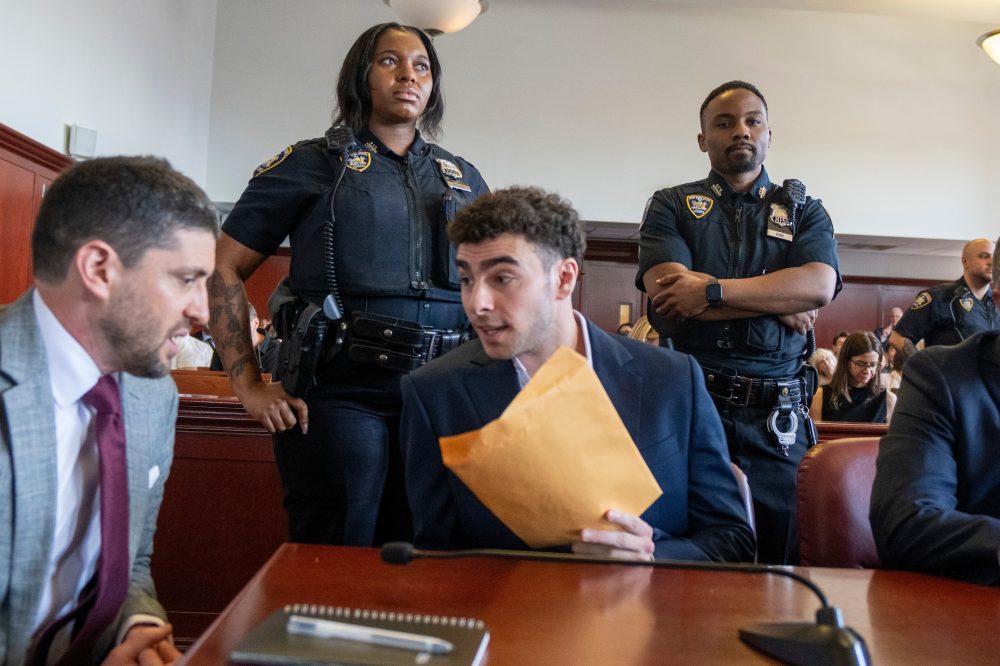
    Luigi Mangione, the 28-year-old charged with killing a health insurance executive on a New York City sidewalk, has for now abandoned plans to argue at trial that he was in the grip of a severe mental health crisis when the alleged shooting took place. The move was revealed in a court filing submitted Friday.

    Mangione stands accused of fatally shooting UnitedHealthcare CEO Brian Thompson in December 2024 outside a Midtown Manhattan hotel in the early morning hours. Thompson was leading UnitedHealth Group’s insurance division at the time. The killing drew widespread condemnation from public officials, yet also became a symbol of public anger over rising healthcare costs and the practices of the health insurance industry. The graphic nature of the crime and a five-day manhunt for the suspect turned the case into a major media story and social media phenomenon. Mangione was ultimately taken into custody in Pennsylvania.

    In December 2024, Mangione entered a not guilty plea to state-level murder, weapons, and forgery charges filed by Manhattan District Attorney Alvin Bragg. His state trial is scheduled for September before Justice Gregory Carro in Manhattan.

    In a letter addressed to Justice Carro on Friday, Mangione’s defense attorneys stated they were withdrawing — “at this time” — their intention to argue that Mangione had lost control of his behavior as a result of an extreme mental health episode. His legal team declined to offer any further comment.

    New York law allows defendants in murder cases to present what is known as an “extreme emotional disturbance” defense, which can persuade a jury to view the defendant’s actions with greater leniency. If successful, such a defense can result in a murder charge being reduced to manslaughter — a lesser offense that does not carry the possibility of a life sentence. Justice Carro would have the final say at trial on whether there was sufficient evidence to allow for that reduction.

    Legal analysts noted that the defense would have faced an uphill battle given evidence suggesting the killing was carefully premeditated and that Mangione took deliberate steps to avoid capture afterward.

    On the federal side, Mangione entered a not guilty plea in April 2025 to murder, weapons, and stalking charges brought by federal prosecutors in Manhattan. In a surprising January ruling, a judge dismissed the murder and weapons charges on legal technicalities, eliminating any possibility of the death penalty. However, Mangione could still face life in prison without the possibility of parole if convicted on the stalking charge. Jury selection in that federal case is set for September, with opening statements planned for November.

  • Dali Engineer Avoids Prosecution in Key Bridge Collapse Case

    Dali Engineer Avoids Prosecution in Key Bridge Collapse Case

    The chief engineer aboard the cargo ship Dali — the vessel that struck and destroyed Baltimore’s Francis Scott Key Bridge in March 2024 — has entered into a deferred prosecution agreement with the federal government, the Justice Department announced Thursday.

    Karthikeyan Deenadayalan, a citizen of India, admitted that he knowingly failed to report a hazardous condition to the U.S. Coast Guard. Specifically, he was aware that the 984-foot ship was relying on an unsafe fuel supply pump but did not disclose that information to authorities. Under the terms of the agreement, Deenadayalan will serve 36 months of probation. If he fulfills all requirements, he will not face criminal prosecution.

    The collapse of the bridge killed six construction workers and, according to the Justice Department, caused at least $5 billion in damage as well as significant harm to the environment.

    Last month, federal prosecutors indicted two foreign operators and a shoreside superintendent in connection with the disaster. The Dali’s operators — Synergy Marine Pte Ltd, headquartered in Singapore, and Synergy Maritime Pte Ltd, based in Chennai, India — along with Radhakrishnan Karthik Nair, 47, an Indian national who served as technical superintendent for the vessel at both companies, were all charged. Prosecutors believe Nair is currently in India.

    In a statement, the two Synergy companies said they intend to fight the charges. Synergy Marine expressed concern that the Justice Department has kept the Dali’s crew members in the United States for more than two years, calling it unjust given what it described as “evidence that their actions were timely and reasonable under the circumstances.”

    Prosecutors allege that the defendants used a flushing pump — not designed to automatically restart after a blackout — to supply fuel to two of the ship’s four generators. Without a functioning fuel supply, the generators could not operate. The indictment claims that had proper fuel supply pumps been in use, the ship would have recovered power in time to safely pass under the bridge.

    The National Transportation Safety Board previously determined that a single loose wire in the ship’s electrical system caused a circuit breaker to trip unexpectedly, setting off a chain of events that led to two blackouts and the vessel losing both propulsion and steering.

    Maryland reached a $2.25 billion settlement last month with Grace Ocean Private Limited and Synergy Marine Pte Ltd, the owner and operator of the Dali. However, the state has not yet resolved its claims against the ship’s builder, Hyundai Heavy Industries.

  • Phillies Outfielder Adolis Garcia Out for Season After Lat Surgery

    Phillies Outfielder Adolis Garcia Out for Season After Lat Surgery

    The Philadelphia Phillies announced Thursday that outfielder Adolis Garcia will need surgery on his right latissimus dorsi muscle, ending his season before it can go any further.

    Garcia is scheduled to go under the knife next Wednesday. Doctors expect the recovery process to take between six and eight months, meaning he should be ready to play when the 2027 season gets underway.

    His last appearance on the field came June 10, when he had to leave a game against the Toronto Blue Jays after making a throw to home plate from right field.

    The 33-year-old was having a difficult season at the plate, hitting just .195 with seven home runs and 21 RBIs across 67 games. Philadelphia brought him aboard this past offseason on a one-year contract worth $10 million.

    Before joining the Phillies, Garcia spent six years with the Rangers and became a postseason legend when Texas charged through the 2023 playoffs to claim the World Series title. He batted .323 and posted a .726 slugging percentage over 15 postseason games, finishing with eight home runs and 22 RBIs.

    Garcia earned American League Championship Series MVP honors after clubbing five home runs and driving in 15 runs. In the clinching Game 7 against the Houston Astros, he went 4-for-5 with two home runs, five RBIs, and three runs scored. He also connected for a home run in the World Series against the Arizona Diamondbacks.

    A two-time All-Star, Garcia surpassed 30 home runs twice and drove in more than 100 runs twice during his time in Texas. He also had a brief stint with the St. Louis Cardinals back in 2018.

    For his career, Garcia carries a .234 batting average with 148 home runs and 480 RBIs in 833 games.

    In related roster news, the Phillies called up right-handed pitchers Seth Johnson and Bryse Wilson from Triple-A Lehigh Valley. At the same time, left-hander Tanner Banks and right-hander Andrew Painter were optioned down to that same affiliate.

    Johnson, 27, posted a 7.36 ERA in three outings for Philadelphia earlier this year. Wilson, 28, brings a career record of 20-23 with a 4.82 ERA spanning 163 appearances — including 57 starts — over eight major league seasons with four different teams.

    Banks, 34, went 0-4 with a 5.86 ERA in 26 appearances for the Phillies this season. Painter, 23, finished with a 1-8 record and a 7.06 ERA across 14 appearances, 12 of which were starts.

  • Crash Closes Northbound Lanes on DuPont Pkwy at St. Georges Bridge

    Crash Closes Northbound Lanes on DuPont Pkwy at St. Georges Bridge

    Northbound lanes on DuPont Parkway at the St. Georges Bridge are currently closed following a crash, according to traffic officials.

    Motorists traveling through the area are advised to use caution and consider alternate routes to avoid delays. The closure remains in effect as crews work at the scene.

    No further details regarding the crash, including the number of vehicles involved or any injuries, have been made available at this time. Drivers should monitor traffic conditions and allow extra travel time.

  • Crash Closes Two Right Lanes on I-95 South Near Frawley Stadium

    A crash on Interstate 95 southbound near Frawley Stadium has resulted in the closure of two right lanes, according to traffic officials.

    Motorists traveling in that area are advised to expect slowdowns and consider alternate routes until the lanes are reopened. No additional details about the crash have been released at this time.

    Drivers are urged to use caution and allow extra travel time if heading through that corridor.

  • Puerto Rico’s Political Crisis Deepens as Governor’s Chief of Staff Faces Scrutiny

    Puerto Rico’s Political Crisis Deepens as Governor’s Chief of Staff Faces Scrutiny

    SAN JUAN, Puerto Rico — A deepening political crisis is gripping the administration of Puerto Rico Gov. Jenniffer González, as fresh allegations of public corruption, government interference, and conflicts of interest continue to surface.

    The latest figure caught up in the controversy is the governor’s chief of staff, Francisco Domenech, who is now the subject of a high-profile investigation. His situation follows the resignation last month of the island’s economic development chief, Sebastián Negrón, who publicly accused the administration of meddling in his agency’s operations. More than ten other officials from that agency — including its general counsel and finance chief — also stepped down, leaving the agency struggling in its mission to attract new investors to an island already burdened by chronic power outages and other persistent challenges.

    Domenech holds a prominent role in the administration and also serves as executive director of Puerto Rico’s Fiscal Agency and Financial Advisory Authority.

    On Wednesday, Domenech filed sworn statements with Puerto Rico’s Department of Justice and its Office of Government Ethics, accusing Negrón of corruption and conflicts of interest. The following day, he defended those actions in an interview with WIPR, a government-run television station.

    Domenech explained that he waited until this week to act because he needed time to gather what he describes as evidence against Negrón — the same official the governor had previously praised as “a star” when she expressed regret over his departure in late May.

    The allegations targeting Domenech are being examined by an independent state agency, and the matter has now reached the halls of the U.S. Congress. Federal lawmakers questioned the governor directly about the situation during a committee hearing Wednesday.

    “How can Congress be assured that federal funds sent to Puerto Rico aren’t being misused or misplaced?” asked Republican Sen. Mike Lee of Utah during the hearing.

    Gov. González responded by saying there is rigorous oversight in place for federal funds and insisted the allegations against Domenech are untrue. When Sen. Lee pressed her on why Negrón would make such accusations, she replied, “I don’t know what political motivations he may have.”

    The controversy has also stirred tensions within the governor’s own party. Puerto Rico Senate President Thomas Rivera Schatz, who belongs to the same pro-statehood party as González, called for Domenech’s resignation on Wednesday. Then on Thursday, Rivera Schatz offered legislative immunity to Domenech and anyone else “if they confess their crimes and produce results that eradicate corruption.”

    Domenech’s interview with WIPR marked the first time he had spoken publicly since Negrón accused him of irregularities tied to contract processing and improper government interference. Negrón had also referred to the Justice Department and the Office of Government Ethics the findings of an internal investigation involving two government officials accused of meddling in the bidding process for a contract that included federal funds.

    Domenech filed his sworn statements after alleged private text messages between him and Negrón became public earlier this week, sending shockwaves through the U.S. territory. Some of those alleged messages appear to show pressure being applied to find positions within the economic development agency for loyal supporters of González who had worked on her campaign. Domenech also claimed that Negrón was already aware he was under investigation.

    In a statement released Thursday, Negrón flatly denied Domenech’s accusations against him.

    “The most troubling aspect of what happened today is not the attack against me personally, but the message it sends to every public servant who witnesses irregularities and decides to report them,” Negrón said.

    He also warned that businesses that have invested in Puerto Rico are being pulled into the scandal as collateral damage.

    “Puerto Rico needs to strengthen the confidence of those who invest, produce, and generate opportunities, not turn them into collateral damage in personal or political disputes or vendettas,” Negrón said.

  • Road Closure Alert: Philadelphia Pike EB Shut Down at Edgemoor Rd After Crash

    Road Closure Alert: Philadelphia Pike EB Shut Down at Edgemoor Rd After Crash

    Eastbound Philadelphia Pike is closed at Edgemoor Road as a result of a crash, according to traffic officials.

    Motorists traveling in the area are advised to avoid the roadway and plan for alternate routes until the road is reopened. Details surrounding the crash have not been released at this time.

    Drivers should use caution in the surrounding area and allow for extra travel time as crews work to clear the scene.

  • Trump Awards Medal of Honor to 3 Veterans for Bravery in Vietnam and Afghanistan

    Trump Awards Medal of Honor to 3 Veterans for Bravery in Vietnam and Afghanistan

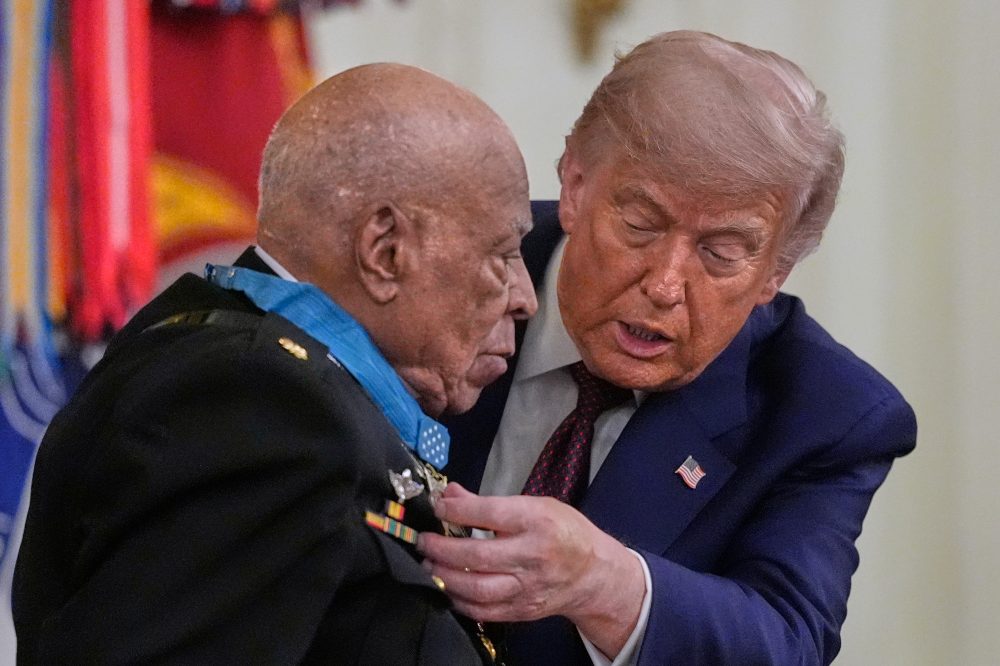
    WASHINGTON — President Donald Trump on Thursday presented the Medal of Honor to three military veterans, recognizing their remarkable acts of bravery that saved lives and drove back enemy forces during combat in Vietnam and Afghanistan.

    The nation’s highest military honor was awarded to Marine Corps Maj. James Capers Jr. and Army Maj. Nicholas Dockery. A third medal was presented posthumously to Marine Corps Col. John W. Ripley, who passed away in 2008.

    “These are great men, great people,” Trump said during the ceremony. “We thank you and we will never, ever forget you.”

    Capers, now 88 years old, earned the honor for putting his own life at risk to protect fellow Marines after their unit was ambushed during a mission in Vietnam in 1967. What began as a reconnaissance operation to locate a suspected North Vietnamese base camp quickly turned into days of brutal combat in thick jungle terrain, according to his official citation.

    On the fourth day of fighting, enemy forces ambushed his team, and Capers suffered a broken leg and serious abdominal wounds from a mine explosion.

    “After a shot of morphine, Jim asserted command of the firefight,” Trump said, recounting the events. “He took over like nobody’s ever seen before.”

    Despite his injuries, Capers coordinated air support to push back the attack. When a rescue helicopter finally arrived, he made sure every wounded Marine was loaded onto the aircraft before boarding himself.

    Trump shared a personal moment with Capers at the ceremony, carefully pinning the medal around the veteran’s neck and adjusting it by the shoulders to ensure it hung properly. Capers had held a stoic expression throughout, but broke into a wide smile when Trump grinned at him.

    Col. Ripley was honored for a daring solo effort to stop the advance of North Vietnamese forces by destroying a critical bridge in 1972. According to his citation, a force of more than 30,000 enemy soldiers and 200 tanks was closing in on a bridge in the village of Dong Ha when Ripley single-handedly positioned 500 pounds of explosives to bring the structure down.

    The effort took five hours, during which Ripley repeatedly climbed along the bridge’s steel beams while exposed to enemy fire to place the explosive charges.

    “John completed not one, not two, but five such trips,” Trump said, describing Ripley as a “very strong guy.”

    After saying a prayer, Ripley detonated the bridge, collapsing it into the water and stopping the North Vietnamese advance, Trump recounted. Ripley’s three sons and other family members were present at the ceremony to accept the honor on his behalf.

    Maj. Dockery’s medal recognized his actions in 2012, when his platoon was guarding a compound in Afghanistan’s Kapisa Province and came under attack by an estimated 150 Taliban fighters. Dockery sprinted across open ground to regroup his scattered soldiers and then went searching for missing members of his unit, according to his citation.

    After carrying a wounded soldier out of the line of fire, Dockery spotted two enemy combatants moving toward another injured American soldier in an alley. He eliminated both threats before performing CPR on the wounded soldier to restore his breathing. Dockery then called in mortar support and used his own body to shield the injured soldier from the blasts.

    After hours of close-quarters urban combat, Dockery used smoke grenades to mark enemy positions for American gunships overhead. He refused to leave until every wounded soldier had been safely evacuated.

    “You were the last man to depart the battlefield that day,” Trump told Dockery, “and you left it a legend and a hero.”

  • Mississippi Toddler Fatally Shot by Police During Shoplifting Response

    Mississippi Toddler Fatally Shot by Police During Shoplifting Response

    JACKSON, Miss. — The fatal shooting of a 1-year-old boy by a police officer responding to a shoplifting call has reignited long-standing tensions between law enforcement and Black residents in Senatobia, Mississippi, a town of roughly 8,000 people.

    The child, Kohen Wiley, was killed Sunday after Senatobia officers were dispatched to a local Walmart regarding a shoplifting complaint. According to the Mississippi Bureau of Investigation, officers located two women and a child leaving the store, entering a vehicle, and driving away. The agency’s statement says officers tried to stop the car, but the driver allegedly steered toward the officers, nearly striking one of them. An officer then fired their weapon, and the vehicle fled the scene.

    Kohen’s mother, Vellesiya Wiley, told a different story. In a video shared on social media Wednesday by civil rights attorney Ben Crump, she said her friend was not driving toward the officers, stating that the officers were “all on the right side and she was driving towards the left.” Wiley also disputed the shoplifting allegation, saying she believes her friend had paid for the diapers in question.

    Kohen’s death has drawn widespread outrage, including from Bernice King, daughter of civil rights icon Martin Luther King, Jr. In a statement posted to Instagram on Wednesday, King said: “We are treating items on a shelf as more valuable than a child. That is not just bad policing; it is a moral collapse.”

    Policing expert Ian Adams, who teaches criminal justice at the University of South Carolina, said the officer should not have opened fire on the vehicle under any circumstances. “Modern policing knows that shooting into a moving vehicle is a very bad idea and one to be avoided at almost all costs,” Adams said, adding that “vehicles have other occupants, which is obviously a concern here in the current case.”

    The shooting has drawn comparisons to the 2023 death of Ta’Kiya Young, a pregnant Black woman who was shot by police in a Columbus, Ohio, suburb following a shoplifting accusation. Authorities said Young accelerated her vehicle toward the officer who fired through her windshield, killing both her and her unborn daughter. The officer in that case was acquitted of criminal charges and cleared by a review board.

    Civil rights advocates have also linked Kohen’s death to a broader pattern of Black Americans losing their lives in police encounters stemming from minor alleged offenses — including the 2020 murder of George Floyd, who died after police were called because he allegedly used a counterfeit $20 bill at a Minneapolis grocery store.

    King wrote on Instagram: “In the name of ‘law and order,’ a child was killed and a family was shattered over items that could be restocked, written off, and replaced. Our charge is clear: until the sacredness of human life is the starting point of every police encounter, we must demand changes in training and work unrelentingly to reform policies around police accountability.”

    Marquell Bridges, president and founder of the Building Bridges Coalition, has been assisting the Wiley family and said Kohen’s death was “just the breaking point” after years of what he described as troubling interactions between Black residents and local police.

    Bridges pointed to a prior incident in which an officer threatened a woman named Breshari Faulkner with a Taser, pulled her from her vehicle, and arrested her during a dispute over a handicapped parking space in the same Walmart parking lot where Kohen was shot. Two years before that, in 2023, a Senatobia officer was fired for his role in the arrest of a 10-year-old Black boy who had urinated in a different parking lot. The boy’s family settled a federal lawsuit with the city earlier this year.

    Civil rights attorney Carlos Moore, who has represented the 10-year-old boy and others accusing the department of misconduct, said: “There is a culture there that they are above the law — just because they wear a uniform.”

    Senatobia police did not respond to requests for comment. The mayor and city aldermen also did not reply to messages seeking comment.

    According to 2020 Census data, approximately 40% of the city’s population of around 8,300 is Black. The department did not respond to questions about its own racial makeup, but the mayor and a majority of the Board of Aldermen are white. According to the Tate Record, a local newspaper, the city has elected only three Black aldermen since it became a municipality in 1860.

    The officer who fired the shot has been placed on administrative leave — a standard procedure — while the Mississippi Bureau of Investigation conducts its review. Investigators have said they will release video footage of the shooting once the inquiry is complete.

    Kohen’s grandmother, Veronica Roberson, was present when he was born and frequently cared for him. She remembered him as a joyful child with “the prettiest smile you could ever imagine,” adding: “He just loved on me, and I loved on him. We loved each other.”

    One of his favorite toys was a small lawnmower that blew bubbles when pushed. Roberson recalled sitting outside watching him play with it. “He really thought he was mowing my yard,” she said, laughing softly at the memory. “That baby was my world.”

  • Rape Charge Against Former BYU Star Receiver Parker Kingston Dismissed, Prosecutors Plan to Refile

    Rape Charge Against Former BYU Star Receiver Parker Kingston Dismissed, Prosecutors Plan to Refile

    A judge on Thursday threw out a first-degree felony rape charge against former Brigham Young University standout wide receiver Parker Kingston — but prosecutors from the Washington County Attorney’s Office say they are not done with the case and plan to bring it back to court.

    The trial had been set for July, but state prosecutors sought a postponement. When the court denied that request, it dismissed the case without prejudice, which means the state retains the ability to refile the charge at a future date. The Washington County Attorney’s Office confirmed it intends to do exactly that.

    Kingston’s attorney, Cara Tangaro, declined to offer any comment on the ruling.

    Kingston had been BYU’s top receiver last season before he was charged with rape in February in St. George, Utah, following a yearlong investigation. He entered a not guilty plea.

    Prosecutors sought the delay because of the alleged victim’s health, saying her documented medical condition currently prevents her from taking part in trial proceedings. Deputy Washington County Attorney Jerry Jaeger made the state’s position clear in a filing dated June 16, writing: “The State cannot proceed without the victim. The State will not jeopardize the victim’s health.”

    An attorney representing the alleged victim also filed a joint request, asking the court to push back the jury trial so the victim could “fully recover from her medical issues.”

    Kingston’s legal team pushed back against any delay, arguing that a similar postponement request had already been denied and that further waiting would violate Kingston’s right to a speedy trial. His attorneys contended he had endured significant stress from what they called a false accusation and that the charge had prevented him from finishing his college degree.

    “Those harms deepen with every month of delay,” Tangaro wrote in a June 17 response to the court.

    According to prosecutors, a 20-year-old woman told officers that Kingston assaulted her at her home in February 2025. Kingston told St. George police that “all sexual activity” with the woman was “consensual,” according to an affidavit. The woman told investigators she had made it clear to Kingston before he arrived at her home that she did not want to have sex, and that she told him to stop multiple times after he initiated contact, the affidavit states.

    The alleged victim’s family released a statement expressing deep disappointment over the dismissal. “Our hearts are with our daughter, who showed tremendous courage in coming forward and placing her trust in the justice system,” the statement read. “Today, that trust was shattered when the Court prioritized getting an athlete back on the field over justice.”

  • Zelenskiy Pushes EU Leaders for Fast-Track Membership for Ukraine

    Zelenskiy Pushes EU Leaders for Fast-Track Membership for Ukraine

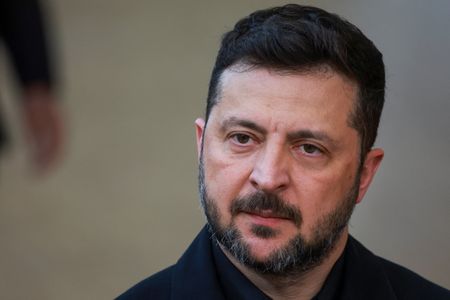
    Ukrainian President Volodymyr Zelenskiy stood before an EU summit on Thursday and made a direct appeal: the fastest way to protect Europe’s future is to put Ukraine on an accelerated path into the European Union.

    In remarks posted to X as a video, Zelenskiy told summit leaders that the defense of Ukraine is actively shaping the continent’s direction. He argued that every democratic nation in Europe belongs in the EU, and declared that “Ukraine merits this because it has paid more than any other country for its right to be free, independent and…European.”

    “The future of Europe – free, united and of course in peace – is being decided in our defence. That shows how unique our situation is,” Zelenskiy said.

    While acknowledging that not every EU member nation would embrace a speeded-up process, he pressed forward with the idea. “The most important such step – I know that not everyone loves this – could be a fast-track path for Ukraine to join the EU,” he said.

    The push comes after EU ambassadors agreed last week to move membership talks forward for both Ukraine and the former Soviet republic of Moldova. Those discussions are now underway on the first of six policy “clusters” designed to align each country’s laws and standards with those of the EU bloc.

    Following the summit, the European Council released a statement welcoming the start of those accession talks and saying it “looks forward to the opening of the other clusters, in line with the merit-based approach.”

    Zelenskiy also tied European security directly to continued financial support for Ukraine’s military. He said the EU and a “coalition of willing” nations backing Ukraine have the ability to build the financial tools needed to keep that support going.

    In an audio message released after the summit and a separate gathering of the “Ramstein” group focused on military aid for Ukraine, Zelenskiy reiterated that his country remains open to peace negotiations with Russian President Vladimir Putin. However, he urged European nations not to ease pressure on Moscow.

    “Europe has to be engaged for us to have a strong position, to commit fully on sanctions without loopholes, on confiscation without exceptions and on funding Ukraine,” he said.

  • UFC Freedom 250 at White House Draws 7 Million US Viewers on Paramount+

    UFC Freedom 250 at White House Draws 7 Million US Viewers on Paramount+

    Paramount Skydance announced Thursday that “UFC Freedom 250,” a mixed martial arts event staged at the White House, brought in an average audience of 7 million viewers across the United States.

    The company described the live event as the biggest in Paramount+ streaming history. When combined with Latin American viewership, the total audience reached 17 million — a figure that includes people who tuned in for at least a portion of the fights.

    Paramount noted that the U.S. audience numbers were sourced from Nielsen data, while viewership from Latin America was measured using Adobe Analytics.

    The event took place June 14 on the South Lawn of the White House. It was organized to mark President Donald Trump’s 80th birthday and to help launch celebrations surrounding the country’s 250th anniversary.

    One of the night’s biggest moments came when Justin Gaethje pulled off an upset victory over Ilia Topuria, capturing the undisputed lightweight championship. The event also set a UFC milestone, becoming the first in the organization’s history where every single bout ended by knockout or technical knockout.

    Paramount said viewership figures from outside the U.S. and Latin America will be released next week. The event streamed exclusively on Paramount+ in both the U.S. and Latin American markets.

  • Republican Senators and Trump Allies Push Back on Iran Ceasefire Deal

    Republican Senators and Trump Allies Push Back on Iran Ceasefire Deal

    WASHINGTON (AP) — A number of Republican leaders on Capitol Hill, including key figures on national security, are speaking out against the Trump administration’s deal to stop the conflict with Iran — with some offering outright condemnation of its terms.

    President Donald Trump signed a memorandum of understanding that kicks off a 60-day countdown to negotiate a permanent agreement on Iran’s nuclear future. While some Trump allies point out the deal isn’t finalized, the removal of economic sanctions on Iranian oil sales and a proposed $300 billion fund to rebuild Iran’s economy have sparked backlash from Republican lawmakers and conservative voices — including some who have previously been among Trump’s staunchest supporters.

    Mississippi Sen. Roger Wicker, who chairs the Senate Armed Services Committee and has previously urged Trump to maintain pressure on Iran, expressed his unease. “President Trump has pursued peace through strength. I hope the intermediaries working on this deal are not undermining that objective,” he said.

    Wicker also took aim at the reconstruction fund, saying, “The $300 billion fund for the reconstruction and economic development of Iran — though not funded by U.S. taxpayers — would make Iran’s payoff under President Obama’s 2015 deal look like a pittance by comparison.” He was referring to the Democratic administration’s Iran agreement that Trump walked away from during his first term in office.

    The pushback from within Trump’s own party — while not universal — comes as the president is working to wrap up an unpopular war with midterm elections fewer than five months away, a period when Republicans are already facing challenges in protecting their slim congressional majorities.

    Several of Wicker’s Senate colleagues, many of whom backed the war when it started, echoed his concerns. Texas Sen. Ted Cruz, a strong supporter of the war effort, put it bluntly: “History demonstrates giving billions of dollars to the theocratic lunatics who want to kill you is an exceptionally bad idea. And so I hope we don’t do that.”

    Trump fired back on Truth Social, labeling his critics “fools” and calling the notion that the United States would pay $300 billion to Iran “fake news.” The interim agreement does include a $300 billion postwar reconstruction fund, though the source of that money remains unclear. Trump echoed Wicker’s point that American taxpayers would not be footing the bill. “All there is for the U.S. is Success, Lower Oil Prices, and Victory,” Trump posted.

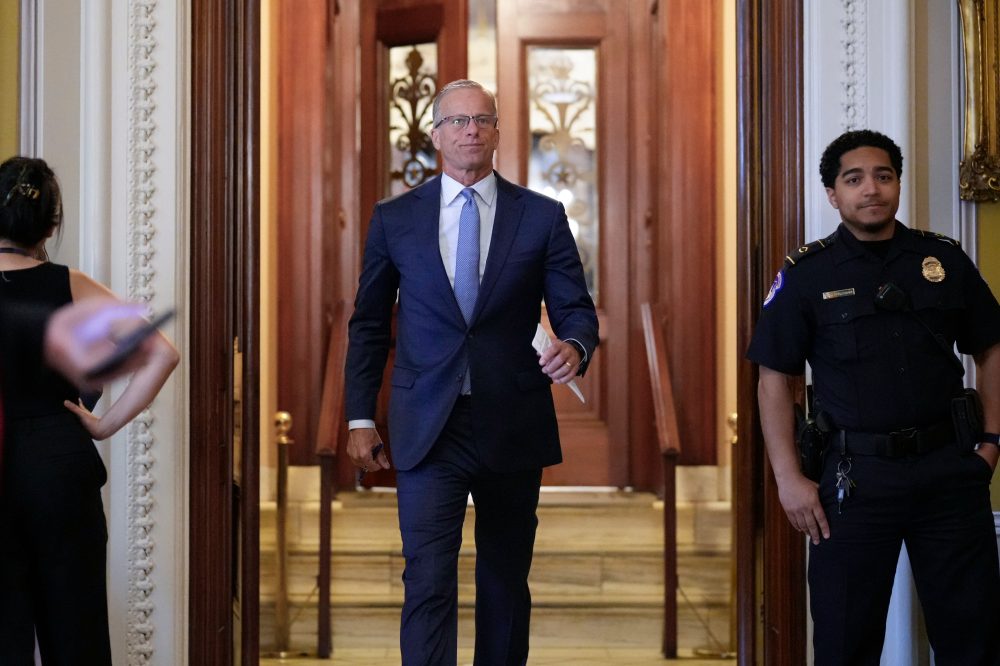
    As the memorandum was formally transmitted to Congress on Thursday, multiple Republican senators said it raised more questions than it answered, particularly around its financial terms. Senate Majority Leader John Thune and his South Dakota colleague Sen. Mike Rounds said they were looking for answers on how financial incentives to Iran would be enforced and how conditions against funding terrorism would be upheld, because “right now, a lot of money’s going to go to Iran,” Rounds noted.

    Not all Republicans were critical. Some who align more closely with Trump’s America First approach were willing to give the president room to work. Sen. Roger Marshall of Kansas highlighted what he called a crucial provision in the memorandum, writing on social media that it “lays out a key commitment that strengthens regional security and ensures that Iran can never have a nuclear weapon.”

    Louisiana GOP Senate candidate John Fleming, who is courting Trump’s most loyal base ahead of a June 27 Republican primary runoff, argued that the deal carries an implicit warning. He said Trump has signaled the U.S. would strike Iran again if it fails to honor the agreement. “The criticism may be worthy if there isn’t follow-through,” Fleming said. “He’s using the speak-softly-and-carry-a-big-stick in offering them plenty of help, but at the same time he’s got that stick ready if they don’t live up to their agreements.”

    Even some of Trump’s most devoted supporters in conservative media have sounded the alarm. Conservative radio host Mark Levin suggested the administration should slow things down and wait until after the midterms before finalizing anything with Iran. “We should consider slow-walking the enemy, building up our munitions, our oil reserves, get the price of gasoline down, get through the midterms, then knock them out,” he wrote on social media. He argued the current approach appeared to be “rushing to a deal, building up their oil industry” while agreeing to transfer billions of dollars to the Iranian government.

    Right-wing social media influencer Laura Loomer, a long-time Trump supporter who has also promoted conspiracy theories, was even more pointed in her criticism, posting on X: “Who is giving the President tainted, pro-Islamic intel?”

    Despite their varying relationships with Trump, the critics share a fundamental distrust of the Iranian regime. Former Vice President Mike Pence, whose bond with Trump was severely damaged following the January 6, 2021 attack on the U.S. Capitol, weighed in as well. “It does smack of the kind of appeasement,” Pence said. “Bottom line. I don’t trust the Iranians.”

  • Luigi Mangione Drops Psychiatric Defense One Day After Announcing It

    Luigi Mangione Drops Psychiatric Defense One Day After Announcing It

    In a dramatic change of direction, the legal team representing Luigi Mangione notified a New York judge Thursday that they are dropping their plans to pursue a psychiatric defense at his state murder trial in connection with the killing of UnitedHealthcare CEO Brian Thompson.

    The reversal came just one day after Mangione’s attorneys told Judge Gregory Carro they intended to argue that the 28-year-old Ivy League graduate was experiencing extreme emotional disturbance at the time of the December 4, 2024, shooting. A message requesting comment was left with a spokesperson for the defense team. The Manhattan district attorney’s office, which is handling the state prosecution, declined to respond.

    Thursday was also the deadline for the defense to hand over supporting information to prosecutors backing the emotional disturbance claim. Additionally, a transcript from a closed-door hearing held June 3 on the matter was made public Thursday after Judge Carro ordered it unsealed.

    Had Mangione followed through with the extreme emotional disturbance defense strategy, it would have amounted to an admission that he carried out the killing — while arguing that mitigating circumstances were at play. Such a defense would not have cleared him of responsibility but could have resulted in a reduced prison sentence.

    Under New York law, if a jury accepts an extreme emotional disturbance defense, it must return a manslaughter conviction rather than a murder conviction. Manslaughter carries a maximum sentence of 25 years in prison, while a murder conviction can result in a life sentence.

    In a letter sent to Judge Carro on Thursday, defense attorney Karen Friedman Agnifilo stated that the defense “respectfully withdraws” its notice filed under New York’s psychiatric defense statute.

    Mangione, 28, has entered not guilty pleas to both state and federal charges. His state trial is set to begin September 8, while his federal trial — which involves stalking charges — is scheduled to get underway October 13.

    At Wednesday’s court hearing, Friedman Agnifilo objected to Carro’s decision to unseal materials connected to the psychiatric defense, warning it would be “prejudicial to his defense to the exact same facts” in the federal case, where an extreme emotional disturbance defense is not a permitted legal strategy.

    It is important to note that an extreme emotional disturbance defense differs from a not guilty by reason of insanity plea. An insanity defense, if successful, could result in a defendant being sent to a psychiatric facility rather than prison.

    Thompson, 50, was fatally shot as he approached a Manhattan hotel where UnitedHealth Group was holding its annual investor conference. Surveillance footage captured a masked gunman shooting him from behind. Investigators say the words “delay,” “deny,” and “depose” were found on the ammunition — a phrase associated with tactics insurers use to avoid paying out claims.

    Mangione, who comes from a wealthy Maryland family and attended an Ivy League university, was taken into custody five days after the shooting at a McDonald’s restaurant in Altoona, Pennsylvania, roughly 230 miles west of Manhattan.

    At a hearing last month, Judge Carro ruled that a firearm and a notebook — both of which prosecutors say connect Mangione to the killing — will be admissible as evidence. The weapon, a 3D-printed pistol, is said by prosecutors to match the gun used in the shooting. The notebook reportedly contains references to wanting to “wack” a health insurance executive and describes a rebellion against “the deadly, greed fueled health insurance cartel.”

  • Senator Warns FAA: Don’t Let Trump Rush Triumphal Arch Past Safety Checks

    Senator Warns FAA: Don’t Let Trump Rush Triumphal Arch Past Safety Checks

    Sen. Tammy Duckworth fired off a letter Thursday to the head of the Federal Aviation Administration, asking the agency to hold the line against any potential pressure from President Donald Trump to greenlight his proposed triumphal arch without fully weighing aviation safety risks.

    Duckworth, an Illinois Democrat who serves as the top Democrat on the Senate’s aviation subcommittee, is raising alarms about Trump’s plan for a 250-foot (76-meter) arch in the nation’s capital. The structure, which Trump wants built to mark the country’s 250th anniversary, would stand more than twice the height of the Lincoln Memorial.

    In her letter, Duckworth expressed concern that the FAA’s early review of the arch appeared to have been rushed. She questioned whether Trump or members of his White House staff are “already improperly pressuring FAA to prioritize rubberstamping Trump’s vanity arch over public safety.”

    A National Park Service preliminary report, which Duckworth referenced in her letter to FAA Administrator Bryan Bedford, indicated that officials are aiming to finish the massive structure within three years. That timeline could require construction crews to work up to 20 hours a day, with cranes reaching as high as 320 feet (106 meters).

    The FAA said it plans to respond to Duckworth directly.

    A central concern in the letter is the arch’s location near the congested airspace surrounding Ronald Reagan Washington National Airport — the same airport where a U.S. Army helicopter and a commercial airliner collided last year, claiming 67 lives.

    That disaster “underscores the consequences of inadequate coordination and the need for extreme caution when evaluating any new obstruction in this environment,” Duckworth wrote. She added that the FAA must be “firm in rejecting any improper or irresponsible pressure” from Trump regarding the project.

    The FAA had previously stated that an early feasibility review found “no adverse impacts to operations” at the nearby airport, though it noted the top of the arch would require red obstruction lighting, which it described as “a common safety tool.” The agency said a more thorough study, conducted in partnership with the National Park Service, would follow.

    Duckworth also raised a cultural concern, arguing that the arch would cut across the historic visual corridor between the Lincoln Memorial and Arlington National Cemetery, which she said would “offensively desecrate the hallowed symbolism” of that view.

  • Maryland NRP Spring Enforcement Roundup: Illegal Hunting, Rescues, and More

    Maryland Natural Resources Police officers were busy this spring, taking action on a variety of criminal and natural resource law violations from March through May. Charges ranged from illegal hunting and fishing to weapons offenses and illegal dumping. Officers also conducted several successful search and rescue operations during the same period.

    Two Cited For Gillnetting Striped Bass On Patapsco River

    On May 25, NRP officers patrolling the Middle Branch section of the Patapsco River spotted individuals dropping gill nets from a recreational boat and moved in to stop the vessel. Aboard, officers discovered the boat was lacking required safety gear, including life jackets and a sound-producing device. Two striped bass were found and confiscated since they came from a catch-and-release-only zone. Inspecting the gill nets uncovered 20 additional striped bass. A 43-year-old man from Greenbelt and a 35-year-old man from Silver Spring were each cited for illegal possession of striped bass, using gill nets to catch fish, and failing to have life jackets on board.

    Pennsylvania Man Charged For Falsifying Records, Failure to Report Turkey Kills

    During a routine compliance check on May 22 in Carroll County, officers encountered a 33-year-old man from Hanover, Pa., who was actively turkey hunting. The man admitted that he had purchased resident hunting licenses even though he no longer lived in Maryland, and that he had harvested turkeys in the state in both 2025 and 2026 without reporting them. He was cited for failing to report two turkey kills, making false statements to obtain a license in each of those two seasons, and failing to carry a second form of identification. A guilty verdict could result in fines totaling up to $7,500.

    Coordinated Effort Rescues Two Hikers From Appalachian Trail

    Also on May 22, officers were sent to the Appalachian Trail near Pen Mark Park after a father and son failed to arrive at their scheduled pick-up location. The Washington County Sheriff’s Office, Washington County Fire Department, and Maryland Park Service all joined the search. After roughly six hours, responders learned that another hiker had come across the missing pair, who were suffering from dehydration and hypothermia and required emergency medical attention. Officers helped bring them to EMS personnel, who transported them to a nearby medical center. Both individuals made full recoveries.

    Officers Rescue Two Boaters After Vessel Sinks Near Fort Smallwood State Park

    On May 12, officers on routine patrol near Fort Smallwood State Park spotted two people in life jackets floating next to a submerged boat. Officers quickly responded by patrol vessel and pulled two adult males from the water. The men said their boat had capsized after being struck by a wake from a passing vessel and that they had been in the water for around 30 minutes. After being brought ashore, both were evaluated by EMS and released.

    Two Charged After Illegal Turkey Hunt In Patapsco Valley State Park

    On May 11, officers patrolling the Mercer/Norbeck area of Patapsco Valley State Park in Woodbine spotted two men dressed in camouflage and armed, appearing to be hunting turkeys in an area closed to that activity. The Mercer/Norbeck area is only open to public hunting during white-tailed deer season, which begins with archery on September 11. Officers intercepted the hunters and recovered a loaded 20-gauge pump-action shotgun with TSS shells — ammunition commonly associated with turkey hunting. Neither man could produce a hunting license, and both claimed not to know the area was off-limits for turkey hunting. A 19-year-old from Finksburg and a 20-year-old from Hanover, Pa., were both cited for hunting in a prohibited area, violating the public hunting permit, failing to provide a hunting license, and failing to carry identification. The 20-year-old also faced a charge of possessing a weapon in a state park, and the shotgun was seized. Each could face up to $4,000 in fines if convicted.

    White Marsh Man Charged With Illegal Firearm Possession At Indian Springs WMA

    On May 10, officers on routine patrol of the Indian Springs Wildlife Management Area near Blair’s Valley Road in Clear Spring noticed an unoccupied truck in a designated parking area. They then made contact with two individuals returning from turkey hunting, both carrying shotguns. A check of their hunting licenses revealed that one of the men — a 47-year-old from White Marsh — was legally barred from possessing firearms due to a prior disqualifying conviction. Two 12-gauge shotguns and six rounds of ammunition were seized. The man was subsequently charged with possessing a rifle with a felony conviction, possessing firearms while disqualified, and illegally possessing ammunition. A conviction on all charges could bring up to 19 years in prison and/or up to $2,000 in fines.

    Cumberland Man Charged For Hunting Turkeys Over Bait In Oldtown

    On May 10 in Allegany County, officers surveilling a suspected baited property on private land observed two people calling turkeys near a pop-up blind. The area had previously been flagged for baiting. A 67-year-old man from Cumberland admitted to both hunting turkeys and placing the bait on the property. He was cited for hunting turkeys with the aid of bait and for helping a juvenile hunter commit the same offense. If found guilty, he could face up to $3,000 in fines.

    Boonsboro Man Charged After Dumping Garbage In Greenbrier State Park

    On May 9, officers responded to a complaint about household trash bags found near a parking area at Greenbrier State Park in Washington County. Twelve bags of household garbage were discovered, and one contained an address to a Smithsburg residence. Officers visited that address and learned the homeowner had paid a local 18-year-old to haul away the trash. The young man instead dumped it near the Mountain Laurel Road parking lot at the park. The 18-year-old from Boonsboro was issued a criminal citation for dumping more than 100 pounds of trash, which carries a maximum penalty of $12,500 and/or one year in jail.

    Virginia Man Caught Running Unlicensed Tree Cutting Business in Harford County

    On May 8, officers received a tip about potentially unlicensed tree-cutting operators going door to door for business in Joppa. Arriving on scene, officers found workers trimming branches on a tree more than 20 feet tall — work that requires a licensed tree expert certification through the Maryland Forest Service. The business had no tree expert license number displayed and was not listed in the DNR’s tree service database. The owner and operator, a 58-year-old from Danville, Va., was cited for running a tree expert business without a license. Because it was a second offense, he faces up to $1,000 in fines or one year in prison.

    Delaware Man Caught Baiting Turkeys in Dorchester County

    On April 29, officers conducting surveillance of a suspected baited property in Dorchester County found several hunters near a field edge in an elevated blind. The group was hunting close to an area baited with grain and seeds and admitted to shooting at a turkey. A 51-year-old man from Dagsboro, Delaware, was cited for failure to provide a hunting license, hunting turkeys over bait, and aiding and abetting the same offense. A 12-gauge Beretta autoloading shotgun was seized as evidence. If convicted, the man faces up to $4,500 in fines.

    New Jersey Man Busted After Hunting Turkeys Near Corn Feeders in Princess Anne

    On April 25, officers surveilling a suspected baited property in Somerset County spotted a person hunting from an elevated blind near an active corn feeder. Additional feeders programmed to dispense whole kernel corn were also found on the property, along with clear signs of turkey activity. A 58-year-old man from Rutherford, N.J., was cited for hunting turkeys over bait, which carries a maximum fine of $1,500.

    Illegal Turkey Hunt at Morgan Run NEA Results In Seized Turkey, Citations

    On April 19, officers reviewing turkey harvest check-ins from Opening Day of Maryland’s spring turkey season noticed a turkey had been checked in from Morgan Run Natural Environment Area — a location only open to deer hunting during Maryland’s fall season. Officers tracked down the person who submitted the check-in, a 21-year-old man from Westminster, and informed him that turkey hunting there is prohibited under the Maryland public hunting permit. The turkey was retrieved from a nearby taxidermist, and the man was issued one citation for violating the public hunting permit, punishable by a maximum $1,000 fine.

    Opening Day Surveillance Catches Multiple Turkey Baiting Violations Statewide

    On April 18 — Opening Day of Maryland’s spring turkey hunting season — NRP officers conducted surveillance on suspected baited properties across the state. Among the violations found:

    In Somerset County, two hunters in ground blinds were found near feeders, bird seed, game cameras, and turkey decoys. A 44-year-old man from Lansdowne and a 39-year-old man from Glen Burnie were each cited for hunting turkeys with the aid of bait, punishable by up to $1,500 in fines.

    Also in Somerset County in Princess Anne, an individual in a pop-up tent blind was found near a feeder, cellular trail cameras, and grain while actively calling turkeys. A 56-year-old man from Pasadena was cited for hunting turkeys with the aid of bait, also punishable by up to $1,500 in fines.

    In Dorchester County, officers found multiple hunters on a property under surveillance, with freshly baited areas containing attractant grain near a ground blind, feeder, and trail cameras. The landowner — a 41-year-old man from Cambridge — was among those hunting and admitted to placing the bait. He received one citation for hunting turkeys over bait and three additional citations for helping others commit the same offense. If convicted, he faces up to $6,000 in fines.

    In Washington County, two men were found hunting on a property where bait had been observed within the previous 10 days, making it legally off-limits for turkey hunting. A feeder, whole corn kernels, and soybeans were found on site. A 42-year-old from Greencastle, Pa., and a 37-year-old from Enola, Pa., were each cited for hunting turkeys over bait, punishable by a maximum $1,500 fine.

    On private land bordering Sideling Hill Creek and Sideling Hill Wildlife Management Area in Washington County, three hunters were found at three separate baited locations. Each spot contained a combination of shelled corn, bird seed, sunflower seeds, and soybeans. One hunter admitted to placing the bait. A 55-year-old from Worton, a 67-year-old from Joppatowne, and a 23-year-old from Joppatowne were all cited for hunting turkeys over bait, each facing a maximum $1,500 fine.

    Boater Rescued in Deal Island WMA After Running Aground Without Oxygen Supply

    On April 17, officers responded to a distress call from a boater stranded in the Deal Island Wildlife Management Area near Fishing Creek in Somerset County. The man had run his jon boat aground and was unable to free it. NRP officers and Somerset County EMS deployed a patrol vessel and reached the individual within 45 minutes. Upon arrival, responders discovered the 72-year-old relied on supplemental oxygen and had run out of his supply. Maryland State Police Aviation was called in to assist with transport, and the man was flown to TidalHealth Peninsula Regional in Salisbury for precautionary evaluation.

    Frederick Man Cited For Baiting Turkeys During Youth Hunt

    On April 11, officers surveilling a suspected baited property in Frederick County found a group hunting from a ground blind about 10 yards from a recently discovered bait pile. Two turkey decoys were positioned in front of the blind, and leftover corn kernels from the illegal bait were found nearby. A 23-year-old man from Frederick was cited for hunting turkeys over bait, punishable by up to $1,500 in fines. Two juveniles were present with him at the time.

    After-Hours Fishing At Gunpowder Falls State Park Results In Multiple Charges

    On March 26, officers on routine patrol of Gunpowder Falls State Park in Harford County came across a group using lights to fish in a trout closure area after hours. The individuals were illegally fishing in closed waters, trespassing on park property after closing time, and had been drinking alcohol in a prohibited area. A 39-year-old man from Baltimore was charged with possession of alcohol in a state park and was also arrested on an unrelated active warrant. A 32-year-old and another 39-year-old, both from Baltimore, were cited for fishing in a put-and-take trout stream during the closed season, which carries a maximum fine of $1,000.

    Virginia Man Cited After Abandoning Sunken Boat in Potomac River

    On March 17, officers were alerted to an abandoned vessel sitting in about three feet of water in the Potomac River in Charles County, near Marshall Hall. Using the boat’s expired Maryland registration, officers tracked down the owner, who said the boat had been intentionally run aground while en route to Colonial Beach for removal. After 30 days with no action taken to move the vessel, it was officially deemed abandoned and subject to the state’s Abandoned Boat Removal process. On May 10, a 44-year-old man from Colonial Beach, Va., was cited for abandoning a boat in state waters, punishable by up to $1,000 in fines and/or six months in jail, plus the cost of removing the vessel.

    Two Anglers Caught Exceeding Daily Trout Limit on Patapsco River

    On March 14, officers patrolling Patapsco Valley State Park near the Daniels Dam area observed a group fishing for trout and storing their catch in a nearby vehicle. Two men in the group — a 20-year-old from Millersville and a 28-year-old from Brooklyn — admitted to catching and keeping a combined 10 trout. The daily limit in that stretch of the Patapsco River is two fish per person per day. Both were cited for exceeding the creel limit, punishable by up to $1,000 for a first offense. The seized trout were donated to Frisky’s Wildlife Rehabilitation Center.

  • LIV Golf Surviving on Loans as It Scrambles to Complete 2026 Season

    LIV Golf Surviving on Loans as It Scrambles to Complete 2026 Season

    LIV Golf’s financial situation is growing more precarious, with a new report revealing the league is running on loans rather than fresh investment capital as it tries to wrap up the 2026 season.

    The Money in Sport newsletter reported Thursday, citing recent company filings, that Saudi Arabia’s Public Investment Fund has set up a lending arrangement to keep the league afloat while LIV leadership hunts for new financial backers. The PIF announced back in April that it would only fund LIV through the end of the 2026 season, and Front Office Sports reported earlier this month that even that support could be cut short. In total, the PIF has put more than $6 billion into LIV since 2022.

    The report pointed to company filings in the United Kingdom and Jersey, which included a debenture agreement from June that names the PIF as LIV’s lender. The specific dollar amounts and terms of those loans have not been disclosed.

    This lending shift came after a $66 million capital increase was not matched by a corresponding increase in share capital from the parent company, LIV Golf Investments Ltd.

    LIV still has four events left on its 2026 calendar: LIV Golf UK (July 23-26), LIV Golf New York (Aug. 6-9), LIV Golf Indianapolis (Aug. 20-23), and the $40 million LIV Team Championship Michigan (Aug. 27-30).

    The league’s financial troubles have already caused disruptions. In June, LIV called off a planned tournament in New Orleans, blaming summer heat. Louisiana had committed roughly $7 million to bring the event to the state and had already paid $3.2 million under contract before the cancellation was announced. That decision left a 47-day gap with no events on LIV’s schedule.

    When CEO Scott O’Neil was pressed about whether the remaining four tournaments would actually take place, he sidestepped a direct answer. “What I can guarantee is a heck of a return if you come invest in this business,” O’Neil said on CNBC on June 9.

    According to Front Office Sports, LIV has brought on two independent board directors and hired U.S.-based Ducera Partners as an investment banking adviser as part of its effort to attract outside money. The league has reportedly contacted hundreds of potential investors, with more virtual meetings planned over the coming weeks.

    “We continue to see strong momentum both on and off the course,” O’Neil said in a statement to Front Office Sports. “We’ve begun sharing our business plan with prospective partners who recognize the opportunity in team golf on a global scale.”

    Reports suggest LIV is working toward a leaner business model with a greater emphasis on team-based competitions. A pitch document circulated to potential investors reportedly outlines a proposed 2027 schedule of 10 events — five “team majors” in proven markets and five primarily U.S.-based “team signature events” scheduled around individual major championships.

    Prize money is also expected to drop sharply from the $32.3 million purses the league has been paying out this season.

    Bryson DeChambeau and Jon Rahm remain the league’s top draws as LIV works through its uncertain future. DeChambeau’s contract runs out after this season, and he has indicated he may choose not to commit to any tour full-time, instead focusing his efforts on golf’s four major championships.

    Adding to the league’s challenges, back-to-back Masters champion Rory McIlroy, speaking ahead of this week’s U.S. Open, said he believes LIV Golf created a “false economy” by offering outsized prize money.

  • Intel Names Semiconductor Veteran Seok-Hee Lee to Head Foundry Packaging Division

    Intel Names Semiconductor Veteran Seok-Hee Lee to Head Foundry Packaging Division

    Intel announced Thursday that it has chosen Seok-Hee Lee to serve as executive vice president of its contract chip-manufacturing division, as the company doubles down on its advanced packaging operations.

    The U.S.-based chipmaker has been working to breathe new life into its manufacturing arm under CEO Lip-Bu Tan after failing to capitalize on the surge in artificial intelligence demand.

    The hiring was announced on the same day President Donald Trump revealed that Apple had agreed to collaborate with Intel to design and produce chips domestically — a development seen as a significant boost to Intel’s contract manufacturing business.

    Advanced packaging has grown in strategic importance across the semiconductor industry, as companies look to boost performance by combining multiple chips into a single unified package.

    According to an Intel statement, Lee will report directly to CEO Lip-Bu Tan and will oversee all advanced packaging, system integration, back-end technology development, and back-end manufacturing operations.

    Lee brings deep experience in the semiconductor field, having previously served as CEO of both SK On and SK Hynix.

    With Lee stepping into his new role, Naga Chandrasekaran — who serves as executive vice president of Intel Foundry — will shift his attention to front-end technology development and manufacturing, as Intel pushes to accelerate the rollout of its 18A, Intel 14A, and future technology platforms.

    The appointment is the latest in a series of high-profile hires at Intel. In April, the company brought on Samsung foundry veteran Shawn Han to support its contract manufacturing efforts. That same month, Tesla was announced as the first major customer for Intel’s next-generation 14A manufacturing process, which is expected to reach mass production in 2029.

  • NYC Mayor Pushes to Make World Cup Accessible with Free Public Screenings

    NYC Mayor Pushes to Make World Cup Accessible with Free Public Screenings

    NEW YORK — New York City Mayor Zohran Mamdani is moving forward with plans to broadcast World Cup soccer matches on hundreds of digital screens positioned on street corners throughout the city’s five boroughs, as part of his commitment to making sports more accessible to everyday residents.

    The 55-inch LinkNYC digital kiosks, which typically display advertisements or public service announcements, will be used to air a selection of tournament matches. Mamdani previously used the same screens to broadcast two NBA Finals games this month, giving New Yorkers without cable or streaming services a chance to watch the Knicks end a 53-year championship drought.

    “Whatever infrastructure we have, we should be using it to make it easier to be a part of the game,” Mamdani told Reuters on Thursday.

    “We are going to be broadcasting a few games to hundreds of kiosks across the five boroughs. And it is going to be an opportunity for New Yorkers to really lose themselves in the World Cup, much of the way that we’ve all lost ourselves in this incredible run from the Knicks,” he added.

    Politico had previously reported that plans for the public screenings were quietly being put together.

    Attending World Cup games in person has become increasingly out of reach for many fans. The United States is co-hosting the tournament alongside Canada and Mexico, and dynamic ticket pricing has driven entry-level prices for games at the New York/New Jersey and Miami venues close to $1,000 ahead of the tournament’s start.

    Mamdani, a 34-year-old Democrat who defied the political establishment and energized younger voters during his campaign, partnered with the New York New Jersey Host Committee to make 1,000 World Cup tickets available to New Yorkers at just $50 each, with free round-trip bus service included.

    “If we allow sports to become a luxury commodity, we also allow it to become divorced from its roots as also an expression for working people, and not just something to participate in, but also something to be a part of,” said Mamdani, who joined the Knicks’ tickertape parade in downtown Manhattan on Thursday.

    “It’s time to actually ensure that we don’t leave any New Yorkers behind as we talk about sports, and we should talk about it in the same breath as we talk about the things that people also build their lives around,” he said.

    Earlier this month, the mayor’s office unveiled a line of New York City-themed soccer jerseys timed to the World Cup. Made in Brooklyn, the jerseys were sold at cost — roughly $50 each, according to GQ magazine — a significant difference from the $130 price tag on USA jerseys sold at World Cup stadium kiosks. A spokesperson for the mayor’s office confirmed that the first batch of 1,500 jerseys sold out and that a second run is being planned.

    Mamdani wore one of the jerseys to the first World Cup match held at the New York/New Jersey stadium and shared a photo from the affordable seating section, captioning it: “1,000 New Yorkers won our lottery for affordable tickets to the World Cup. Today, we celebrated in the stands for the first NY/NJ game of the tournament. The beautiful game belongs to everyone.”

    “We want these tournaments, we want these moments to be things that are also within reach for working people and not just something that they’re trying to figure out how they can stream,” said Mamdani, who is a longtime supporter of English Premier League champions Arsenal.

    Not everyone has been on board with the mayor’s approach. Knicks owner James Dolan publicly criticized Mamdani and local officials over security arrangements outside Madison Square Garden during the NBA Finals. Dolan argued that the security perimeter — where a watch party had originally been planned — turned the surrounding streets into “a police state.”

    Still, with six additional World Cup games still scheduled at the New York/New Jersey venue and the U.S. Open golf major getting underway Thursday in nearby Southampton, analysts say the mayor’s sports accessibility push is likely to connect with a broad swath of the public.

    “Sports traditionally weren’t regarded as something serious,” said Lee Igel, a clinical professor at NYU’s Tisch Institute for Global Sport. “So if you’re in a political position or elected office and started talking about that, come on, it’s the rent, right? It’s the food on the table.”

    Igel added that Mamdani “understands the platform, the power of sport” and noted that “anywhere in the world, sports matter to people.”

  • NCAA Bans Former Iona Guard Adam Njie Jr. for Life Over Point-Shaving Scheme

    NCAA Bans Former Iona Guard Adam Njie Jr. for Life Over Point-Shaving Scheme

    The NCAA handed down a permanent ineligibility ruling Thursday against former Iona basketball guard Adam Njie Jr., finding that he committed sports betting violations by passing along game-related information to individuals known to be placing bets.

    Njie acknowledged the violations, which took place during his freshman year in the 2024-25 season. After transferring to Dayton ahead of last season, he never took the court there after the school was notified of a potential eligibility concern. He subsequently entered the transfer portal and had signed with Hampton in May.

    Documents released by a Division I Committee on Infractions panel revealed that Njie admitted to informing a bettor that he intended to throw the first half of Iona’s December 1, 2024 matchup against Rice. The Mississippi Gaming Commission reported that two bettors placed a combined three wagers totaling $15,500 on Rice to cover the first-half point spread.

    Njie later told investigators he did not carry out the plan. However, according to the NCAA, one of the bettors responded to losing the wagers by threatening Njie with physical harm. In response, Njie allegedly told the bettor he would throw the first half of Iona’s next game against Sacred Heart — a promise he also claims he did not keep.

    The NCAA addressed the distinction between sharing information and actually altering game outcomes in its Thursday announcement: “The act of sharing information with a bettor is prohibited by NCAA legislation and is treated the same as point shaving from an NCAA enforcement perspective, regardless of whether the student-athlete goes through with throwing the game.”

    During his freshman campaign, Njie appeared in 33 games, starting 28 of them. He put up averages of 12.4 points, 4.2 assists, 2.8 rebounds, 1.7 steals, and 29.3 minutes per contest for Iona.

    His performance that season earned him spots on both the 2024-25 Metro Atlantic Athletic Conference All-Freshman team and the 2025 All-MAAC Tournament team.

  • Right Shoulder Closed on Rt. 13 Between Big Woods Rd and Cathleen Dr Until 3 PM

    Right Shoulder Closed on Rt. 13 Between Big Woods Rd and Cathleen Dr Until 3 PM

    Drivers traveling along S. Dupont Boulevard, also known as Route 13, should be aware of a right shoulder closure currently in effect between Big Woods Road and Cathleen Drive.

    The closure is the result of ongoing construction activity in the area. Authorities expect the shoulder to remain closed until 3 PM.

    Motorists are encouraged to remain alert and allow extra time when passing through the affected stretch of roadway.

  • Mississippi Police Shooting in Parking Lot Kills 1-Year-Old Child

    Mississippi Police Shooting in Parking Lot Kills 1-Year-Old Child

    Investigators in Mississippi are looking into a police shooting that claimed the life of a one-year-old child and left an adult with serious injuries after officers fired on a vehicle in a parking lot.

    The shooting took place during what authorities described as a shoplifting call. Officials have not yet released further details about the events leading up to the gunfire or the identities of those involved.

    The incident is currently under investigation.

  • Alphonso Davies Benched as Canada Faces Qatar in World Cup Group B Showdown

    Alphonso Davies Benched as Canada Faces Qatar in World Cup Group B Showdown

    VANCOUVER — Canadian soccer standout Alphonso Davies will not be in the starting lineup when Canada squares off against Qatar in their second World Cup Group B contest at BC Place in Vancouver on Thursday.

    Davies has been nursing a hamstring injury in recent weeks, though coach Jesse Marsch confirmed on Wednesday that the player has been cleared as fit to participate.

    On the other side, Qatar coach Julen Lopetegui opted to keep his squad identical to the one that battled Switzerland to a 1-1 tie, once again leaving record goalscorer Almoez Ali out of the starting eleven.

    For Canada, Cyle Larin earns a starting spot after coming off the bench to net the equalizer in the team’s 1-1 draw with Bosnia and Herzegovina. Tani Oluwaseyi and Liam Millar have both been moved to the bench to make room for Larin and Ali Ahmed in the starting lineup.

    Qatar will be led by captain Boualem Khoukhi, who found the back of the net against Switzerland in the team’s previous match.

    Starting Lineups:

    Canada: Maxime Crepeau; Alistair Johnston, Luc De Fougerolles, Derek Cornelius, Richie Laryea; Stephen Eustaquio, Ismael Kone, Ali Ahmed; Tajon Buchanan, Jonathan David, Cyle Larin.

    Qatar: Mahmoud Abunada; Pedro Miguel, Issa Laye, Jassem Gaber, Edmilson Junior; Akram Afif, Ayoub Aloui, Homam Ahmed, Yusuf Abdurisag; Boualem Khoukhi, Assim Madibo.

  • Delaware Tourism Office and 1440 Film Co. Earn Silver Telly Award

    Delaware Tourism Office and 1440 Film Co. Earn Silver Telly Award

    Delaware’s tourism promotion efforts have earned national recognition, with the Delaware Tourism Office and 1440 Film Co. announcing they have received a Silver Telly Award for their “Back of House” video series.

    The award was presented in the Campaign: Food & Beverage category, honoring the collaborative video project that has drawn widespread praise since its release.

  • Stocks Surge, Oil Drops as Strait of Hormuz Reopens After U.S.-Iran Peace Deal

    Stocks Surge, Oil Drops as Strait of Hormuz Reopens After U.S.-Iran Peace Deal

    U.S. stock markets surged Thursday, driven by strength in the technology sector, while crude oil prices tumbled after supertankers began moving through the Strait of Hormuz again — just hours after President Donald Trump signed a peace agreement with Iran.

    With markets set to close Friday in honor of Juneteenth, Wall Street’s three major indexes still managed to post gains for the shortened trading week as investors weighed developments in the Middle East and a more hawkish tone from the Federal Reserve under its new leadership.

    Here are the major stories shaping markets right now:

    Three Saudi-flagged supertankers moved through the Strait of Hormuz shortly after the U.S.-Iran peace deal was finalized. Meanwhile, Ukrainian drones managed to bypass Russian air defenses and struck an oil refinery near Moscow for the second time in three days. Israel released a map outlining an expanded military control zone in Lebanon, raising questions about compliance with the terms of the U.S.-Iran agreement. The Bank of England voted 7-2 to keep borrowing costs unchanged as it continues watching inflation. U.S. weekly unemployment claims declined last week, though the broader trend points upward, hinting at a slowdown in job growth. And space startups are in talks with insurance companies about coverage for AI data centers in orbit.

    Key Market Snapshot

    U.S. stock indexes finished higher, with the Nasdaq jumping 1.9%, while Europe’s STOXX 600 edged lower. Semiconductor stocks led the way, while energy and aerospace and defense shares lagged behind. The U.S. dollar climbed to a one-year high on expectations of interest rate increases, and Japanese officials issued warnings about weakness in the yen. U.S. Treasury yields pulled back slightly, one day after the Federal Reserve’s new chairman made his debut. Both Brent and WTI crude oil prices fell to their lowest levels since before the Iran conflict began, and gold prices also declined.

    Fed Under New Leadership Raises Uncertainty

    Investors are preparing for a less predictable Federal Reserve now that Kevin Warsh is at the helm. Although the Fed left its benchmark interest rate unchanged Wednesday — a widely expected move — markets were caught off guard by new projections and comments from Warsh suggesting the central bank will stop telegraphing future rate decisions in advance. Warsh also announced he is launching a review of the Fed’s overall operations.

    Central Banks Respond to Post-War Inflation

    Central banks around the globe are increasingly unable to overlook the inflation surge tied to the Iran conflict, with many either raising interest rates or signaling they plan to. Analysts expect the process of bringing energy prices back to normal levels to stretch well into next year. The Bank of England joined the Fed in hinting at future rate hikes, while the European Central Bank and the Bank of Japan have already moved to raise rates.

    Political Friction: Trump and Senate Republicans Clash

    Tensions between President Trump and Senate Republicans are growing, with just months to go before midterm elections. After Senate Republicans refused to advance the SAVE America Act — legislation that would have imposed strict voter documentation rules and eliminated the filibuster — Trump retaliated by derailing a Senate effort to pass a key national security bill. The move was widely seen as an attempt to shield his controversial pick of loyalist Bill Pulte for the role of acting U.S. spy chief.

    What Could Move Markets Tomorrow

    Traders will be watching for further developments in the Middle East, shifts in energy markets, and social media posts from President Trump. On the data front, markets will also track Germany’s producer prices for May, UK retail sales for May, Canada’s retail sales for April, Poland’s industrial output for May, and Moody’s credit rating reviews for Canada and Slovakia.

  • Wisconsin Mosque Leader Freed from ICE Custody After Federal Judge’s Order

    Wisconsin Mosque Leader Freed from ICE Custody After Federal Judge’s Order

    Salah Sarsour, the president of the Islamic Society of Milwaukee — Wisconsin’s largest mosque — has been released from U.S. Immigration and Customs Enforcement custody after a federal judge intervened on Thursday.

    U.S. District Court Judge James Patrick Hanlon ordered Sarsour’s release, writing in his ruling that Sarsour had raised a claim worthy of serious consideration. “Mr. Sarsour has raised a ‘substantial’ First Amendment (free speech) retaliation claim, which could render his detention unlawful,” the judge wrote. Judge Hanlon was appointed to the bench by President Donald Trump during his first term in office.

    The Islamic Society of Milwaukee describes Sarsour, 53, as a legal permanent resident who has lived in the United States for more than 30 years. He grew up in the Israeli-occupied West Bank.

    The mosque had previously stated that Sarsour was “being targeted on the basis of his Palestinian and Muslim background, and his advocacy for Palestinian rights.”

    Following his release, Sarsour spoke out defiantly. “I will never stop speaking for Palestine and humanity, wherever I am,” he said. “I am so relieved to be with my family.”

    Sarsour’s legal team reported that he has type 2 diabetes and lost more than 30 pounds while in detention. He has no criminal record in the United States. Before immigrating, he was convicted as a teenager in an Israeli military court.

    Israeli human rights organization B’Tselem has noted that military courts in the West Bank — where Palestinians face trial for alleged offenses — carry a 96% conviction rate and have a documented history of obtaining confessions through torture.

    The Department of Homeland Security, which oversees ICE, cited that past conviction, stating Sarsour was found guilty of throwing Molotov cocktails at the homes of Israeli armed forces members. “There is no First Amendment right to fund terror organizations and lie on immigration forms,” DHS said Thursday. Sarsour has denied any support for extremist groups.

    As part of the ruling, the judge ordered Sarsour to remain in Wisconsin while his case continues. The Council on American-Islamic Relations, one of several groups that had called for his release, praised the court’s decision.

    The ruling comes as the Trump administration has taken an aggressive stance against pro-Palestinian voices in the U.S., pursuing deportations of foreign protesters, threatening to cut funding to universities where demonstrations occurred, and directing officials to review immigrants’ social media activity. Those efforts have repeatedly run into legal challenges in the courts.

    President Trump has characterized pro-Palestinian advocacy as antisemitic and linked to extremism. However, advocates — including some Jewish organizations — argue the administration is wrongly treating criticism of Israel’s military actions in Gaza as antisemitism and equating support for Palestinian rights with backing for terrorism.

  • Rip Current Warning in Effect for Coastal Areas Until 8 PM Tonight

    Rip Current Warning in Effect for Coastal Areas Until 8 PM Tonight

    The National Weather Service office in Mount Holly, New Jersey has issued a Rip Current Statement effective the evening of June 18, lasting until 8:00 PM EDT.

    The alert was put in place at 5:25 PM EDT, giving beachgoers and coastal visitors a heads-up about the potential for dangerous rip currents along the shoreline during those hours.

    Rip currents are powerful, fast-moving channels of water that can pull swimmers away from shore quickly. Even strong swimmers can be caught off guard by these conditions.

    Authorities advise anyone at the beach to swim only in areas monitored by lifeguards, and to stay out of the water if rip current conditions are present. If caught in a rip current, experts recommend swimming parallel to the shore rather than fighting the current head-on.

    Residents and visitors planning to spend time at the beach this evening should remain aware of current conditions and heed any posted warnings or instructions from lifeguards and beach patrol personnel.

  • Greece’s Parthenon Restored to a Look Unseen for Over Two Centuries

    Greece’s Parthenon Restored to a Look Unseen for Over Two Centuries

    ATHENS, Greece — For the first time in approximately 220 years, visitors arriving at the Acropolis in Athens are getting a view of the Parthenon’s western side that appears whole and complete.

    The restoration milestone was officially revealed Thursday, as workers had carefully fitted two newly crafted marble blocks into spaces that had sat empty for generations along the upper portion of the temple’s western end — the very face that greets visitors as they enter the ancient site.

    The 2,500-year-old structure towers over the Greek capital and drew roughly 4.6 million visitors last year alone. Ongoing restoration work has focused on repairing the toll taken by centuries of war, weather, and looting — including the long-fractured appearance of the western facade.

    Greece’s Culture Minister Lina Mendoni offered a glowing assessment of the completed work, calling the result “truly stunning.”

    She explained that the two newly placed stones carry significance beyond simply closing a gap in the structure.

    “They allow the unique proportions and the geometric perfection of the Parthenon’s western face to be seen once again,” she said.

    Funding for this phase of the project came through a European Union program. The work is one piece of a much larger restoration initiative that first launched in 1975.

  • 14 UD Ice Hockey Players Earn AHA Academic Honors

    14 UD Ice Hockey Players Earn AHA Academic Honors

    BOSTON – Fourteen University of Delaware women’s ice hockey players have earned spots on the Atlantic Hockey America (AHA) 2025-26 Women’s League All-Academic Team, the conference announced Thursday.

    The AHA All-Academic Team recognizes student-athletes who achieved a grade point average of 3.0 or better across both semesters of the 2024-25 academic year.

  • Cuba Approves Historic Free-Market Reforms Amid U.S. Pressure

    Cuba Approves Historic Free-Market Reforms Amid U.S. Pressure

    HAVANA (AP) — Cuba’s Communist Party has given the green light to an emergency economic package that includes free-market measures unlike anything previously seen on the island, as the country faces growing pressure from the United States.

    Although the full policy document has yet to be made public, Cuban President Miguel Díaz-Canel and other officials have outlined several key components of the plan.

    The reforms are designed to further loosen the grip of Cuba’s centrally controlled economy, where the government has traditionally dictated what gets produced, who produces it, how goods are priced, and how national resources are distributed.

    At present, only government agencies and banks are authorized to exchange currencies, though a large portion of the population turns to informal markets to do so.

    New legislation has been introduced that would trim the number of government ministries from 27 down to 21 in a bid to improve efficiency.

    Local municipalities would gain new powers under the proposed measures, including the ability to approve businesses operating in their areas and to manage relationships with various economic players — from state-run enterprises to cooperatives and private companies. Municipalities would also be permitted to conduct their own imports and exports and handle their own foreign-currency earnings. Cuba is home to 168 municipalities spread across 15 provinces.

    Individual companies would gain greater flexibility as well, including the ability to build their own pay structures, use and distribute profits with fewer government restrictions, conduct foreign trade, and form partnerships with private businesses and cooperatives.

    The scope of activities that state-owned companies are allowed to pursue would also be expanded. Cuba currently has around 2,000 state-owned enterprises.

    Small and medium-sized businesses would be allowed to handle their own imports and exports directly, bypassing the state-run entities that currently manage that process and collect fees.

    The package also includes incentives aimed at encouraging the import of raw materials and other inputs needed for production.

    Cuba’s long-standing post-revolution rationing system, which has provided access to basic goods at government-controlled low prices, is set to be gradually phased out. Food and other products would eventually shift to market-based pricing.

    Recent U.S. sanctions targeting Cuba’s business conglomerate Gaesa have led major hotel chains such as Meliá and Iberostar to suspend agreements with their Cuban partners. The new measures seek to find alternative ways to make use of the island’s largely idle infrastructure.

    Díaz-Canel has indicated that both the emergency plan and the policy document drafted by the Communist Party’s Central Committee drew on lessons from China and Vietnam — two communist-governed nations that have introduced market-style economic reforms while keeping one-party political systems in place.

    The rollout of these economic measures follows months of escalating U.S. pressure and diplomatic discussions between the two nations, which have involved former President Raúl Castro’s grandson, Raúl Guillermo Rodríguez Castro.

    For decades, the United States has imposed trade and travel restrictions on Cuba, pushing for the release of all political prisoners, an end to political and religious repression, and the opening of Cuba’s economy to private American investment.

    The Trump administration has intensified that pressure in recent months, enacting a fuel embargo against the island and filing charges against Raúl Castro in connection with the 1996 shooting down of two civilian aircraft flown by Miami-based Cuban exiles.

  • Brazilian Senator and Lula Ally Targeted in Major Bank Fraud Investigation

    Brazilian Senator and Lula Ally Targeted in Major Bank Fraud Investigation

    RIO DE JANEIRO — Brazilian federal police carried out search and seizure operations Thursday targeting a prominent senator and personal friend of President Luiz Inácio Lula da Silva, as investigators dig deeper into a wide-ranging corruption and fraud case that has already swept up multiple politicians ahead of October’s national elections.

    Authorities are scrutinizing suspicious financial transactions involving Sen. Jaques Wagner, who serves as the leader of Lula’s Workers’ Party in the Senate. The inquiry is connected to the now-defunct Banco Master and its disgraced former chief executive, Daniel Vorcaro.

    Wagner marks the first high-profile ally of President Lula to be drawn into the expanding scandal, which has already caught up with presidential hopeful Sen. Flávio Bolsonaro, among others. The controversy is anticipated to be a defining issue in the approaching elections.

    Without identifying specific suspects, police announced they were carrying out 18 search and seizure warrants across the states of Bahia and São Paulo, as well as the Federal District, in connection with alleged crimes that could include passive corruption, active corruption, and money laundering.

    Court documents signed by Supreme Court Justice André Mendonça on Wednesday — and obtained by The Associated Press on Thursday — named the suspects and authorized the searches to proceed.

    According to those court documents, investigators uncovered indications that the senator may have received improper financial benefits, among them the purchase of a high-end apartment in Salvador valued at roughly 2.45 million reais, or about $470,000.

    The documents also reveal that investigators are looking into whether Wagner leveraged his congressional position to advance matters favorable to Banco Master, particularly relating to payroll lending and deposit insurance regulations.

    During Thursday’s operation, police seized around $50,000 in cash in Brasilia. Brazilian media reported that the money was found at a location or locations connected to Wagner.

    When asked about the seized funds during an interview with Brazilian broadcaster Band on Thursday, Wagner maintained he had nothing to conceal and flatly denied ever receiving money from anyone connected to Banco Master.

    The senator also pushed back against any meaningful connection to Vorcaro, the former Banco Master head who is currently behind bars. “My relationship with Daniel Vorcaro is practically nonexistent… I met Daniel only twice,” Wagner stated.

    Later Thursday, Wagner’s press team issued a statement denying that the senator had ever acted on Banco Master’s behalf, asserting that the confiscated cash was obtained through legitimate means and that the Salvador apartment was never part of the senator’s personal assets.

    Brazil’s Central Bank moved to shut down Banco Master — which had assets exceeding $16 billion — back in November.

    Vorcaro, who sits at the heart of the investigation, was taken into custody in March and has since been attempting to negotiate a plea agreement with prosecutors.

    Brazil’s federal police have estimated the total scope of the bank’s fraudulent activity at approximately 12 billion reais, equivalent to around $2.3 billion. Both the federal police and the Supreme Court continue to investigate the case.

  • Trump Administration Cuts Student Loan Interest Rates — But Not for Everyone

    Trump Administration Cuts Student Loan Interest Rates — But Not for Everyone

    WASHINGTON — The U.S. Education Department announced Thursday that it will lower interest rates on certain federal student loans, calling the move part of a broader effort to make higher education more affordable.

    With millions of borrowers falling behind on payments, the Trump administration is offering a temporary 1% interest rate cut as a way to ease the burden for those struggling to keep up. Education Undersecretary Nicholas Kent described the change as a step toward “making student loan repayment easier than ever” and improving “the overall health of the federal student loan portfolio.”

    However, the reduction comes with conditions — not every borrower will qualify, and those who want to take advantage of it will need to meet specific eligibility requirements.

    Here is a breakdown of what the plan actually involves:

    What the department announced: The official news release was headlined: “U.S. Department of Education Announces Student Loan Interest Rate Reduction.”

    Who it actually applies to: The rate cut only covers a portion of borrowers — specifically those with federal Direct Loans issued after July 1, 2012, who are either already signed up for automatic payments or who enroll in them going forward.

    Many borrowers will not see any immediate relief. To be eligible, they must first complete several steps, which may include signing up for auto pay and, in some cases, consolidating their loans.

    Right now, only 40% of borrowers are enrolled in automatic payments. The department is hoping the interest rate reduction will encourage more people to sign up.

    Close to 9 million student loan borrowers are currently in default — meaning they have gone at least nine months without making a payment. For those individuals to become eligible for the rate cut, they must first return to good standing, typically by consolidating their loans and then enrolling in a new repayment plan.

    What the savings actually look like: Officials said borrowers enrolled in auto pay will be eligible for the 1% reduction starting July 1. But for those already using automatic payments, the real savings will be smaller. Those borrowers currently receive a 0.25% discount, so the new reduction only adds an additional 0.75% in savings.

    The interest rate reduction is not permanent. It is set to expire on June 30, 2028.

    The federal student loan portfolio has grown to nearly $1.7 trillion, with a large number of borrowers struggling to stay current. The rate cut is part of the administration’s effort to address rising delinquency and default rates.

    As the Trump administration winds down repayment options introduced under the previous administration, the Education Department is rolling out its own alternatives, including an income-driven repayment plan. Officials noted that enrolling in automatic payments can also help borrowers stay eligible for those plans by reducing the risk of missed payments.

  • Man Freed From Life Sentence by Noem Charged in Teen Niece’s Death

    Man Freed From Life Sentence by Noem Charged in Teen Niece’s Death

    Two men are facing federal charges in the death of a 14-year-old South Dakota girl — including one whose life prison sentence was cut short by then-Gov. Kristi Noem just two years ago.

    McKenna Wendel was reported missing on March 13. She was last seen alive in her hometown of Sioux Falls in the early hours of March 14. Five days later, on March 19, her body was discovered in a rural area outside Brookings — about an hour’s drive north of Sioux Falls.

    Wendel’s uncle, Mark Milk, 51, also from Sioux Falls, now faces five criminal counts connected to her death. Milk had been serving a life sentence on a manslaughter conviction for nearly three decades when Noem commuted his sentence in February 2023.

    According to her obituary, Wendel was raised by her grandparents, had a deep love for animals, and was remembered for her “vibrant personality and a zest for life.” She and her grandparents were members of the Rosebud Sioux Tribe and frequently attended powwows together.

    “She loved the singing and the beautiful sounds of the drums,” her obituary read.

    Authorities announced the charges at a news conference held Thursday in Sioux City, Iowa, but kept many details under wraps to avoid compromising their ongoing investigation.

    Among the charges Milk faces is possession with intent to deliver cocaine that caused Wendel’s death. He is also charged with transporting a minor with the intent to engage in criminal sexual activity, court documents show.

    A second man, Jon Rogness, 38, of Brookings, is charged with conspiracy and acting as an accessory in what prosecutors allege was an effort to conceal the crimes. U.S. Attorney for northern Iowa Leif Olson explained at the news conference that the charges filed were the “most serious, readily provable” ones available, and that all of them originated in Iowa.

    “This is a horrific case,” said FBI Special Agent Gene Kowel. “There are no cases that we investigate that are more heart-wrenching and more tragic than the ones that involve children or the death of a child.”

    Neither man had legal representation listed in court records at the time of the announcement.

    Court records show that Noem commuted Milk’s life sentence for a manslaughter conviction stemming from an October 1993 stabbing death in the city of Winner. Milk, who was 19 at the time, had been involved in a series of confrontations that ended with the death of Shawn Peneaux.

    When Wendel’s body was found, Milk was already behind bars on unrelated allegations of driving under the influence and eluding police. His name surfaced publicly in connection with the case almost immediately, but prosecutors — who wrapped up their investigation in late May — did not formally link him to Wendel’s death until filing charges on Wednesday.

    South Dakota Attorney General Marty Jackley stated at a late March news conference that the decision to commute Milk’s sentence was entirely Noem’s call.

    “It is fairly often that you see law enforcement oppose commutations,” Jackley said, declining to comment further on Noem’s decision. He also noted that the commutation documents were sealed and that even he had not been allowed to review them.

    The Associated Press attempted to reach Noem for comment Thursday through NovaRed Mining, a Canadian company she recently joined in a “strategic advisory role.”

    Noem, 54, is a Republican who served as South Dakota’s sole member of Congress from 2011 to 2019 and as governor from 2019 to 2025. She went on to serve as Homeland Security secretary before being fired in March by President Donald Trump amid criticism over her management of the administration’s immigration enforcement efforts and disaster response. Trump later praised her and named her special envoy for “The Shield of the Americas,” a new organization of Western Hemisphere nations focused on democracy and regional security.

  • New Book Reveals Trump’s Second-Term Power Plays, Bedroom Decor and Venezuela Ambitions

    New Book Reveals Trump’s Second-Term Power Plays, Bedroom Decor and Venezuela Ambitions

    WASHINGTON — When President Donald Trump unveiled tall new flagpoles he had installed on both the North and South Lawns of the White House last summer, he offered reporters a candid reflection on how much things had changed since his first time in office.

    “You guys were after me,” he told members of the press. “I was the hunted. And now I’m the hunter.”

    That moment serves as the centerpiece of a new book called “Regime Change,” written by New York Times journalists Maggie Haberman and Jonathan Swan. The book chronicles the first year of Trump’s second term and argues that his time out of the White House actually made him a more forceful president upon his return in 2025.

    The book’s central argument — one Trump himself embraces — is that losing the 2020 election ultimately strengthened his second term. Had he won then, he might have faced significant resistance from within his own administration, the lingering effects of the coronavirus pandemic, the inflation that followed, and a Congress controlled by Democrats. None of those obstacles have stood in his way this time around.

    Trump continues to falsely assert that he won the 2020 election.

    Among the book’s more intriguing revelations is that Trump has repeatedly asked aides whether Vice President JD Vance or Secretary of State Marco Rubio would be the better person to succeed him. Some donors favored Rubio, and certain aides felt that Trump and Rubio had stronger personal chemistry. But Trump also expressed admiration for Vance’s sharpness in television interviews, especially difficult ones.

    Trump is described as being impressed by Rubio’s heritage as the son of Cuban immigrants. In one telling anecdote, after Trump filled the Oval Office with gold decorations, someone asked whether a future president might reverse all those changes. Trump’s reply: “Cubans love gold.”

    Despite the competition between Rubio and Vance for Trump’s favor, the two men are reportedly friends. One example the authors provide: Rubio sent Vance a text message offering to campaign alongside him after Vance’s remarks about “childless cat ladies” generated controversy. Rubio wanted to show public solidarity.

    Even as both men position themselves ahead of a potential 2028 presidential run, Trump shows little sign of stepping aside. He frequently references the two and a half years remaining in his term — a timeline that runs to Inauguration Day 2029 — signaling that he has no intention of letting potential successors steal his spotlight.

    That dynamic played out vividly during an Oval Office meeting that included Trump, Vance, Senate Democratic Leader Chuck Schumer, and House Democratic Leader Hakeem Jeffries. According to the book, Trump produced “Trump 2028” baseball caps, prompting Jeffries to gesture toward Vance and ask, “How does he feel about that?” Trump replied, “Ah, he’s fine. He doesn’t care,” before adding, “We’re giving him a little more training.” Vance’s response was simply: “No comment.”

    The book also reveals the level of alarm inside the White House over the release of files related to disgraced financier Jeffrey Epstein. White House Chief of Staff Susie Wiles called a crisis response meeting in the Situation Room. Vance reportedly suggested having friendly interviewer Tucker Carlson conduct a sit-down with Ghislaine Maxwell, Epstein’s former girlfriend who remains imprisoned. The disclosure of what was discussed in that secure setting has since raised questions about whether audio recordings were made inside a classified area of the White House.

    On a more personal note, Haberman and Swan reveal that Trump and first lady Melania Trump sleep in separate bedrooms — making them the first presidential couple to do so since Richard and Pat Nixon. The authors note that Bill and Hillary Clinton briefly slept apart when his affair with Monica Lewinsky became public. Melania sleeps in the Executive Residence’s traditional master bedroom, known as Room 219, while the president occupies Room 220, located next to the Yellow Oval on the second floor.

    Trump reportedly decorated his bedroom with gold accents and other personal touches, carrying some items in himself from a hallway where Melania had previously chosen the decor during his first term. Because the first lady was not in Washington frequently at the start of the second term, she was not around to intervene. One item relocated was a gold-leaf-framed mirror from the Queen’s Bedroom redesign — it ended up outside on the Colonnade near the Oval Office, where it is now used for selfies.

    Melania had overseen a renovation of the Rose Garden during the first term and resisted Trump’s desire to pave it over and replace it with a patio resembling his Mar-a-Lago estate in Florida. The president ultimately backed down on the roses, though surrounding grass was covered. She lost a bigger fight, however: the East Wing was torn down to make room for a $400 million ballroom Trump is constructing.

    While Trump began his second term making public statements about acquiring Greenland and turning Canada into the 51st state, the book says he was privately more focused on Venezuela. He even floated the idea of Venezuela becoming a U.S. state where he could appoint the governor.

    Trump initially allowed special envoy Ric Grenell to lead negotiations with Venezuelan President Nicolás Maduro. But Rubio eventually argued that Maduro was simply running out the clock, hoping to outlast the Trump administration until 2029. Grenell was sidelined as a result.

    Rubio told White House officials that Maduro’s vice president, Delcy Rodríguez, was corrupt but capable of maintaining order. On the night U.S. forces entered Venezuela and removed Maduro from power, Rubio spoke directly with Rodríguez, telling her she needed to stabilize the country and prevent mass migration and violence. Rodríguez has since remained in charge of Venezuela following Maduro’s ouster.

    In a March 2026 interview with the authors, Trump described having a “love affair” with Venezuela, tracing it back to his years running the Miss Universe pageant and the country’s frequent representation by beautiful contestants. That affection did not extend to Ukraine, which Trump said he did not like — except for its women, who he noted had won Miss Universe multiple times.

    The book closes with Trump recounting a story about a historian — introduced to him by golfer Gary Player — who reportedly told the president he was the most powerful person the world had ever seen, surpassing even Alexander the Great, William the Conqueror, and Napoleon. Trump promoted the story himself on social media but admitted during the interview that he could not remember the historian’s name. A White House staffer later told the authors the truth: the person Gary Player had actually been speaking about was his longtime caddy.

  • SpaceX Earns Investment-Grade Credit Ratings from All Three Major Agencies

    SpaceX Earns Investment-Grade Credit Ratings from All Three Major Agencies

    Three of the world’s top credit rating agencies have given SpaceX their investment-grade stamp of approval, each attaching a “stable” outlook to the Elon Musk-led aerospace company following its widely watched initial public offering.

    Moody’s assigned SpaceX a “Baa1” rating, Fitch came in with a “BBB+,” and S&P Global Ratings issued a “BBB.” All three designations place SpaceX’s debt in investment-grade territory, which generally means the company carries moderate credit risk and has enough financial capacity to meet its obligations.

    The uniform positive assessments reflect widespread confidence in SpaceX’s financial footing as it pursues an aggressive and expensive expansion into artificial intelligence amid stiff competition in that sector.

    Despite the favorable ratings news, SpaceX shares dipped 1.1% in after-hours trading Thursday, following a nearly 4% decline during the regular trading session.

    The company’s market valuation climbed above $2 trillion after its blockbuster debut on the Nasdaq exchange last week. Shares surged during the first two days of trading before pulling back as investors began weighing whether the company’s lofty valuation holds up against the heavy costs tied to its AI ambitions.

    S&P noted that while it views SpaceX’s space and connectivity operations as strong performers, the AI division introduces uncertainty given its significant capital requirements and the crowded competitive landscape it faces.

  • Shelton vs. Fritz Rematch Set for Halle Quarterfinals on Grass

    Shelton vs. Fritz Rematch Set for Halle Quarterfinals on Grass

    American tennis stars Ben Shelton and Taylor Fritz are headed for another showdown, this time on the grass courts of the Terra Wortman Open in Halle, Germany — just days after facing off in the Stuttgart final.

    Shelton, seeded third in the tournament, took down fellow American Ethan Quinn on Thursday with a 6-4, 5-7, 6-4 victory. Meanwhile, fifth-seeded Fritz dominated Hungary’s Fabian Marozsan 6-2, 6-4 to punch his own ticket to the quarterfinals. The two will clash again on Friday, with Shelton looking to build on his three-set win over Fritz last Sunday — a victory that gave him his third title of the year.

    The win over Quinn extended Shelton’s winning streak to six consecutive matches across two events. Fritz, for his part, was nearly untouchable on his first serve against Marozsan, winning an impressive 93.8 percent of those points — converting 30 of 32.

    French Open champion and top seed Alexander Zverev of Germany also moved through the draw, defeating his countryman Yannick Hanfmann 6-3, 7-6 (4). Belgium’s Raphael Collignon also reached the quarterfinals after rallying past Italy’s Mattia Bellucci 4-6, 6-4, 6-3.

    At the HSBC Championships on the grass at Queen’s Club in London, Australian qualifier Rinky Hijikata pulled off an upset, defeating second-seeded Jiri Lehecka of the Czech Republic 4-6, 7-5, 7-6 (7). Hijikata navigated eight break point opportunities — saving five of them — and capitalized on 41 unforced errors by Lehecka before closing out the match on his fourth match point.

    Eighth-seeded Tommy Paul also advanced at Queen’s Club, beating the Netherlands’ Botic van de Zandschulp 7-6 (5), 6-3. The win pushed Paul’s winning streak at the event to seven straight matches. Paul claimed the tournament title in 2024 but was unable to defend it last year due to injury.

    Fourth-seeded Alejandro Davidovich Fokina of Spain moved on with a 6-4, 6-3 win over France’s Corentin Moutet. Elsewhere, the match between Serbia’s Hamad Medjedovic and France’s Ugo Humbert was suspended due to darkness with each player having won one set.

  • Ebola Cases in Congo Climb to 896 With Week-Over-Week Surge

    Ebola Cases in Congo Climb to 896 With Week-Over-Week Surge

    Government data released late Thursday shows the Ebola outbreak in the Democratic Republic of Congo has grown to 896 confirmed cases, with 232 of those resulting in death.

    The figures reflect the situation as of Wednesday and were detailed in an official situation report that logged 21 newly confirmed cases and six additional deaths within a single 24-hour period.

    Health officials noted in the report that confirmed case counts have been climbing on a week-over-week basis, a sign that the virus continues to spread from person to person within communities.

    Authorities issued a stark warning alongside the data, cautioning that if public health measures are not put in place quickly, the outbreak has the potential to move rapidly into areas that have not yet been affected.

  • Paint Already Peeling at Lincoln Memorial Reflecting Pool After $14.7M Renovation

    Paint Already Peeling at Lincoln Memorial Reflecting Pool After $14.7M Renovation

    WASHINGTON — The newly refinished Lincoln Memorial Reflecting Pool is showing troubling signs of failure, with paint peeling away from the pool’s bottom and drifting into algae-tinted water — and it’s been less than two weeks since President Donald Trump declared the project done.

    Trump announced on June 6 that renovation work on the historic pool was complete. But by Tuesday, workers were already pouring hydrogen peroxide into the water to fight an algae bloom that had turned the pool an unexpected shade of green rather than the intended dark blue. Now, peeling paint has added to the growing list of problems at the site.

    The pool’s makeover was part of a sweeping Trump administration effort to redesign the nation’s capital. The renovation was carried out under a $14.7 million no-bid contract. The broader initiative also includes plans to tear down the East Wing of the White House to make room for a new ballroom and to construct a large arch near Arlington National Cemetery.

    The National Park Service, which manages the National Mall where the pool is located, did not respond to a request for comment. Atlantic Industrial Coatings, the Virginia-based company that performed the renovation work, also had not responded as of the time of reporting.

    People visiting the pool on Thursday were not shy about sharing their disappointment. Robert Dale, who traveled from Edwards, Colorado, told Reuters what he thought as he surveyed the scene: “I want my money back after seeing this. I think our resources could be used a lot better elsewhere. I think this reflecting pool was beautiful before, before all this attention.”

    The Trump administration has faced pushback for bypassing traditional planning and preservation processes in its capital renovation efforts. Administration officials have brushed off that criticism as politically motivated, pointing instead to the president’s background as a real estate developer as a reason to trust his design judgment.

    Separately, lawmakers have raised concerns about Trump’s decision to accept a $400 million aircraft from Qatar intended to serve as Air Force One. National security experts have cautioned that making the plane safe for presidential use would require significant upgrades — including measures to prevent eavesdropping, new communications systems, and missile-defense technology — all of which would demand considerable time and expense.

  • Foreign Investors Poured $103 Billion Into U.S. Securities in April

    Foreign Investors Poured $103 Billion Into U.S. Securities in April

    The U.S. Treasury Department revealed Thursday that foreign investors snapped up an estimated $103 billion worth of American long-term securities in April, while also increasing their Treasury holdings by $4 billion. The figures were released as part of the agency’s monthly Treasury International Capital report.

    Japan remained one of the top holders of U.S. Treasury securities, growing its stake to $1.21 trillion in April, up from $1.19 trillion the month before. The United Kingdom also expanded its holdings, climbing to $938 billion from $927 billion in February. China, meanwhile, saw a slight decline, with its holdings slipping to $651 billion from $652 billion.

    When combined, total foreign Treasury holdings reached $9.353 trillion in April — an improvement over March’s figure, though still below the record high of $9.49 trillion set in February.

    Looking at the broader picture, all net foreign acquisitions in April resulted in a total TIC inflow of $26.1 billion. Within that figure, net foreign private outflows came to $23.1 billion, while net foreign official inflows totaled $49.2 billion.

    Foreign residents also stepped up their overall purchases of long-term U.S. securities, with net buys reaching $206 billion for the month. Private foreign investors accounted for $164.4 billion of that total, while foreign official institutions contributed $41.6 billion.

    The report is drawing extra attention from market watchers at a time when investors are carefully monitoring foreign demand for U.S. debt. Factors including the Federal Reserve’s continued fight against inflation and a surging bull market in artificial intelligence-related stocks are adding to that scrutiny.

    Adding to the day’s financial activity, a U.S. auction of 5-year Treasury Inflation-Protected Securities on Thursday was well received by buyers, partly reflecting a recent uptick in inflation-adjusted “real rates” within the TIPS market.

  • DOJ Offers $1B+ in Police Grants — But Departments Must Aid Immigration Enforcement

    DOJ Offers $1B+ in Police Grants — But Departments Must Aid Immigration Enforcement

    Local police departments and cities across the country could be in line for a share of more than a billion dollars in federal grant money — but accepting those funds comes with a significant condition.

    The U.S. Department of Justice is distributing the grants to law enforcement agencies nationwide, with one key requirement attached: any agency that receives the money must work alongside federal immigration enforcement authorities.

    The move ties federal financial support for local policing directly to cooperation with immigration operations, a condition that could put some departments in a difficult position, particularly in communities that have adopted policies limiting local involvement in federal immigration matters.

  • Delaware Leaders Launch Period Product Drive at Legislative Hall

    Delaware Leaders Launch Period Product Drive at Legislative Hall

    DOVER — As the 153rd General Assembly nears its end, three Delaware state leaders are coming together to launch a drive aimed at collecting period products for women and girls across the state who are in need.

    Rep. Alonna Berry, Sen. Elizabeth “Tizzy” Lockman, and Lt. Governor Kyle Evans Gay are spearheading the effort, which will be formally unveiled at a press conference at Legislative Hall in Dover.

    Members of the public and media are welcome to attend the event, which marks the official launch of the initiative.

  • Two Philadelphia Teens Arrested After High-Speed Chase in Kent County

    Two Philadelphia Teens Arrested After High-Speed Chase in Kent County

    Delaware State Police have taken two Philadelphia, Pennsylvania residents into custody — 19-year-old Aveion Edwards-Thomas and a 16-year-old male — after a dangerous pursuit involving a stolen vehicle in Kent County on Wednesday evening.

    Around 8:30 p.m. on June 17, 2026, troopers spotted a Nissan Altima that had been reported stolen out of Pennsylvania heading southbound on South Dupont Highway near Walnut Shade Road. When officers attempted to stop the vehicle, the driver accelerated and fled. The chase that followed took the car through the Canterbury Crossing community, where it slammed into a Delaware State Police Tahoe before continuing to speed recklessly across multiple Kent County roads. The pursuit came to an end after troopers deployed stop sticks, causing the Altima to strike the wire rope guardrail in the median of Route 1 near Twin Willows Road. Neither Edwards-Thomas, who was behind the wheel, nor his 16-year-old passenger sustained injuries, and both were taken into custody without resistance.

    Edwards-Thomas was transported to Troop 3, where he was processed and arraigned before the Justice of the Peace. He faces the following charges: Receiving Stolen Property over $1,500 (Felony), Disregarding a Police Officer’s Signal (Felony), Conspiracy 2nd Degree (Felony), Malicious Mischief by a Motor Vehicle, and multiple traffic violations. He was subsequently committed to the Department of Correction on a $2,900 cash bond.

    The 16-year-old was also brought to Troop 3 and arraigned before the Justice of the Peace. He was charged with Receiving Stolen Property over $1,500 (Felony) and Conspiracy 2nd Degree (Felony), then released to a parent or guardian on a $2,000 unsecured bond.

  • Full Text Released: Trump and Iran Sign Preliminary Peace Agreement

    A memorandum of understanding aimed at ending hostilities between the United States and Iran was signed on Wednesday by President Trump and Iranian President Masoud Pezeshkian. Pakistan’s prime minister also put his signature on the document.

    The signing took place as President Trump was attending a gala dinner at the Palace of Versailles in France, according to the White House.

    The full text of the preliminary agreement has been released, offering a detailed look at the terms both nations have agreed to as a starting point for resolving their long-standing conflict.

  • Democrats Accuse Trump of Using Tax Bill Funds for White House Ballroom

    Democrats Accuse Trump of Using Tax Bill Funds for White House Ballroom

    WASHINGTON — Over $350 million drawn from President Donald Trump’s sweeping tax and spending cuts legislation has been quietly funneled toward White House security — and Democrats are charging that the money is being used to help pay for the president’s new ballroom project, despite his repeated promises that taxpayers wouldn’t foot the bill.

    The funds were directed by the White House’s Office of Management and Budget late on a Friday, pulled from two accounts originally set aside to give the U.S. Secret Service additional resources for hiring and training following last year’s assassination attempts on the president. That’s according to Democrats on the Senate Budget Committee. The move came just days after Congress rejected a $1 billion White House funding request that had been attached to a Homeland Security bill Trump signed into law, and as the ballroom project faces ongoing legal challenges.

    Senate Judiciary Committee Chairman Chuck Grassley, whose committee originally drafted the security funding language, said Thursday he had no knowledge of where the money was being directed.

    “The president said that it was all going to be paid for with private money,” said Grassley, R-Iowa. “And that’s what the country expects.”

    Sen. Jeff Merkley of Oregon, the leading Democrat on the Senate Budget Committee, went further, calling Trump’s actions potentially illegal.

    “After repeatedly telling the American people that zero taxpayer dollars would be spent on his gold-plated ballroom boondoggle, now Trump appears to be using a smoke and mirrors tactic,” Merkley said in a statement.

    “Trump has proven that he can’t be trusted to follow the law,” Merkley added. “He only cares about wasting taxpayer money on his vanity projects.”

    The president has run into obstacles in his effort to construct the ballroom on White House grounds, which required demolishing the historic East Wing to make room for it. During a visit to the construction site last month, Trump described the development as a “gift” to the American people, maintaining it would be covered entirely through private donations — a claim that has itself drawn scrutiny from ethics watchdogs who have raised concerns about potential corruption and conflicts of interest.

    Congress shot down the administration’s $1 billion funding request for the project last month after attempts to attach it to a Homeland Security spending bill were rejected by both Republican and Democratic lawmakers. The request became a political liability at a time when many Americans are struggling with the high cost of living.

    The Washington Post reported earlier this week that the total cost of the project has grown to $600 million, according to a summary prepared by the contractor, with taxpayers covering more than half of that amount. Roll Call was the first to report on the newly redirected security funds.

    At the heart of the dispute is a disagreement over what portion of the White House project is truly about security — including underground bomb shelters and a medical facility — versus what portion is tied to the president’s promised 999-seat ballroom above ground.

    A White House spokesman pushed back on the criticism, saying Trump and private donors are contributing roughly $400 million toward the ballroom, and that the involvement of the Secret Service had been disclosed from the start of the project.

    “The East Wing Modernization Project is inextricably tied to the security of the President, the White House grounds and the certain security infrastructure assets,” White House spokesman Davis R. Ingle said in a statement.

    Ingle also pointed to events from the past weekend — including an alleged plot targeting the UFC Freedom 250 event held at the White House — as evidence of why the project is necessary.

    “President Trump and generous American patriots are funding the ballroom to the tune of approximately $400 million, which will be a secure and appropriate venue for Presidents for generations to come,” he said.

    Government lawyers have argued in court that the project incorporates critical security measures designed to defend against threats including drones and missiles. Court documents filed by the White House describe the East Wing project as “heavily fortified,” featuring bomb shelters, military installations, and a medical facility beneath the ballroom. The Secret Service told senators last month that $220 million of the original $1 billion request would go toward hardening the ballroom addition with bulletproof glass, drone detection systems, and chemical protection technology.

    The remaining funds, according to a document shared with Senate Republicans, would cover other security upgrades — including $180 million for a new, “long overdue” visitor screening facility at the White House.

    The redirection of these funds is expected to intensify an ongoing debate in Congress over the separation of powers and whether the president is appropriately using money that lawmakers designated for specific purposes.

    The funds originate from Trump’s major tax cuts and spending reductions bill, which the president signed into law last summer. That legislation included more than $1 billion earmarked for Secret Service resources, covering “personnel, training facilities, programming, and technology; and performance, retention, and signing bonuses.”

    That provision drew no opposition at the time it was written — even though Democrats voted against the broader bill. Democrats acknowledged they did not attempt to strip out or challenge that particular section of the legislation.

    Under the U.S. Constitution, the authority to allocate federal funds rests exclusively with Congress, covering operations across the executive and judicial branches. While the president can sign or veto spending bills, once funding is enacted into law, it is largely required to be used as Congress intended.

  • Uber Driver Shot, One Killed in Series of Kansas City Shootings During World Cup

    Uber Driver Shot, One Killed in Series of Kansas City Shootings During World Cup

    An Uber driver who was transporting fans of Argentina’s soccer team to a World Cup game is among four people wounded in a string of shootings that swept through Kansas City, Missouri on Tuesday evening — attacks that also claimed one man’s life, according to police.

    Authorities say a 22-year-old male suspect believed to be armed and dangerous had not been apprehended as of Thursday.

    All five shootings took place between 6 p.m. and 6:30 p.m. on Tuesday, spread across a 5-mile corridor of the city. Three of those incidents happened on Interstates 70 and 670 as those highways pass through downtown Kansas City. Each of the shooting locations was at least 4 miles from Arrowhead Stadium, where Argentina defeated Algeria in its opening match.

    Two Argentina supporters recounted the attack to the Argentine publication La Nación, saying a vehicle pulled up alongside their Uber and fired two shots, striking their driver in the leg. The passengers initially thought a tire had blown out before realizing the driver had been shot.

    Following the incident, the two fans were taken to a police station to give their accounts of what happened. Officers then transported them to the stadium in patrol cars. Police Captain Jacob Becchina confirmed the Uber driver’s injuries were not life-threatening.

    That shooting, along with two others on the interstates, happened as vehicles were heading eastbound — one originating from neighboring Kansas, police said. Additional shootings took place further east along Truman Road, a major city thoroughfare.

    According to Becchina, three adults and one teenager were injured and all were taken to hospitals. Only one adult was reported to have life-threatening injuries.

    Around 6:30 p.m., officers responded to a report of a car that had crashed into a utility pole along Truman Road, east of the other shooting scenes. Hospital staff treating the driver discovered what appeared to be a gunshot wound. He later died from his injuries.

    “Victims all indicated they were driving down the highway or roadway when one or more shots were fired into their vehicles,” Becchina said in a written statement.

    Becchina added that investigators believe the non-fatal shootings took place “in close succession,” moving from west to east, and are linked to a single suspect.

    Police traced the suspect to a home in the suburb of Independence, roughly 2 miles east of where the fatal shooting victim was discovered, leading to a standoff. However, when officers entered the residence around 8 a.m. Wednesday, the suspect was gone.

    Authorities in Kansas City, Kansas, across the state line, also have an outstanding warrant for the suspect related to an illegal firearm discharge that occurred on June 11, according to Nancy Chartrand, a spokesperson for that city’s police department.

  • Brazil Senator Bolsonaro Unveils Tough Crime Plan in Presidential Race

    Brazil Senator Bolsonaro Unveils Tough Crime Plan in Presidential Race

    SAO PAULO — Brazilian Senator Flavio Bolsonaro is counting on a tough-on-crime platform to attract undecided voters and strengthen his political base as he works to close the gap with incumbent President Luiz Inacio Lula da Silva before October’s presidential election.

    On Thursday, the senator unveiled a public safety agenda in Sao Paulo built around 12 key proposals. Among the most notable is a push to classify Brazil’s criminal organizations as terrorist groups — an idea that gained traction in Washington just last month.

    “They will be hunted down with force and intelligence,” Bolsonaro declared at the Thursday event. “Any armed criminal carrying a rifle will be taken down by our security forces,” he continued.

    Flavio Bolsonaro is the son of former President Jair Bolsonaro, who entered office in 2019 with a similarly hardline stance on crime. Brazil’s homicide rate dropped considerably during the elder Bolsonaro’s time in office, though that downward trend had already been underway before he was elected.

    Crime continues to be a major concern for Brazilian voters, many of whom are fed up with widespread street violence across the country’s cities.

    The senator’s plan specifically takes aim at Brazil’s two most dominant criminal organizations — Comando Vermelho and Primeiro Comando da Capital — which together hold sway over criminal activity across large portions of the country.

    The proposal builds on recent diplomatic efforts in Washington, where Bolsonaro successfully lobbied President Donald Trump last month to designate both organizations as foreign terrorist groups, lending the initiative considerable international credibility.

    President Lula pushed back against that Washington designation, describing it as unwanted interference in Brazil’s domestic affairs. Legal analysts have also cautioned that the designation could create complications for companies doing business in Brazil.

    Beyond the terrorism classification, Bolsonaro has pledged to lower the minimum age for criminal prosecution from 18 to 16, send elite military units to patrol the nation’s borders, and construct five new maximum-security prisons modeled after a program implemented in El Salvador.

    Brazil already has one of the largest prison populations on the planet, with facilities long suffering from severe overcrowding and deteriorating conditions.

    “This is about taking fear away from citizens and placing it in the hands of criminals, and these prisons will be called Treva — which in Portuguese means darkness,” the senator said.

    Bolsonaro’s standing in public opinion polls has slipped in recent weeks following a controversy in which he acknowledged receiving funds from a now-imprisoned banker to help finance a film about his father, former President Jair Bolsonaro.

    He currently lags behind Lula in a potential October runoff matchup, with the incumbent holding a 49.3% to 36.8% lead, according to a CNT/MDA poll published earlier this week.

  • Salisbury City Offices Closing July 3 for Independence Day Weekend

    Salisbury City Offices Closing July 3 for Independence Day Weekend

    SALISBURY, Md. — City of Salisbury government offices will be closed on Friday, July 3, 2026, as the city marks Independence Day. However, the Salisbury Zoo will stay open and continue welcoming guests throughout the holiday weekend.

    Salisbury residents and visitors will have a full slate of activities to enjoy as part of the nation’s 250th anniversary celebrations. On Saturday, July 4, the city is teaming up with the longtime organizers of Red, White & Boom for a free event at James M. Bennett High School. The festivities run from 5 to 9 p.m. and will include food, music, games, and family-friendly activities, with the annual fireworks show kicking off at approximately 9:15 p.m.

    The following day, Sunday, July 5, Poplar Hill Mansion will host an America250 Potluck Picnic from 1 to 4 p.m. Community members are encouraged to bring a cherished family recipe, a dish reflecting their cultural background, or a local tradition — though simply showing up to enjoy the gathering is equally welcome. Admission to the event is free, and it is part of the broader national America250 celebration.

    On the sanitation side, residents should be aware that Friday’s regularly scheduled trash and recycling pickup will be bumped to Saturday, July 4. Containers should be placed at the curb no later than 6 a.m.

    The City of Salisbury extended its wishes for a safe and enjoyable Independence Day weekend to everyone in the community.

  • Over 50 Drones Seized Near World Cup Venues, DHS Reports

    Over 50 Drones Seized Near World Cup Venues, DHS Reports

    Federal authorities have intercepted more than 50 unauthorized drones near FIFA World Cup 2026 venues since the tournament kicked off last week, Homeland Security Secretary Markwayne Mullin announced Thursday.

    On Wednesday alone, a joint federal and city counter-drone team in Kansas City stopped eight drones during World Cup events at Kansas City’s Arrowhead Stadium and the FIFA Fan Festival. The Federal Aviation Administration has placed a strict ban on drone flights over World Cup matches and related fan gatherings throughout the United States.

    According to the Homeland Security Department, there have been more than 150 separate instances of drones entering restricted airspace across the eight game locations involved in the tournament. Atlanta has seen the highest concentration of violations, recording roughly three dozen incidents on its own.

    The rules are clear: on match days, all aircraft — including drones — are prohibited within three nautical miles and up to 3,000 feet above ground level around stadiums, unless specifically cleared by air traffic controllers. For fan events held around the country, drones are banned within a one-nautical-mile radius and up to 1,000 feet above the ground.

    The FAA has warned that drone operators who fly into restricted airspace without authorization could face fines as high as $100,000, as well as criminal prosecution and permanent seizure of their drone.

    The FBI has also deployed drone mitigation teams that will be positioned around World Cup stadium locations throughout the tournament.

    These enforcement efforts come after a string of similar incidents at other major events. A man pleaded guilty last year after being charged with flying a drone over a restricted NFL AFC playoff game in Baltimore in January 2025. In another case, a Massachusetts man was charged with unlawfully piloting a drone near the finish line of the April 2024 Boston Marathon, leading law enforcement to seize the device while it was still airborne.

  • Welsh Tract Rd. Closed Between Rt. 896 and Whittaker Rd. Due to Tree Down in Wires

    Welsh Tract Rd. Closed Between Rt. 896 and Whittaker Rd. Due to Tree Down in Wires

    Welsh Tract Road is completely shut down between Route 896 and Whittaker Road after a tree fell into overhead wires, blocking all lanes of travel.

    Drivers in the area should expect delays and plan for alternate routes while crews work to clear the hazard and restore safe conditions on the roadway.

    No timeline for reopening has been announced at this time. Motorists are urged to use caution and avoid the affected stretch of Welsh Tract Road until further notice.

  • Sean Sweeney Officially Introduced as Orlando Magic’s New Head Coach

    Sean Sweeney Officially Introduced as Orlando Magic’s New Head Coach

    ORLANDO, Fla. — After interviewing for multiple NBA head coaching positions over the past several years, Sean Sweeney says his conversations with the Orlando Magic felt unlike any of the others.

    Sweeney was officially welcomed Thursday as Orlando’s new head coach — clear evidence he impressed the organization during the hiring process. But he said the Magic also left a strong impression on him through the way they conducted the interview.

    “The Magic were the most thorough and they did the best job of asking questions and asking follow-ups to get to layers underneath the first answer,” Sweeney said. “Some interviews that I’ve had in the past, I did not get that same level of detail. And given how I am and how I want to coach, that stood out.”

    The two sides reached an agreement approximately three weeks ago, though Thursday’s formal introduction was delayed because Sweeney had been occupied in his role as associate head coach of the San Antonio Spurs during their run to the NBA Finals. Even as the interview process began during the Spurs’ postseason, Sweeney remained focused on his duties in San Antonio. Once the Finals concluded, he moved quickly to get to Orlando and begin his new role.

    “When we finally did get in front of him, it was a long day and he had a lot going on,” Magic President Jeff Weltman said. “It was during the playoffs and not only was he able to kind of compartmentalize his work with the Spurs and present well to us, but he really knocked our socks off. In Sean Sweeney, we have somebody who, in our minds, has the potential to be one of the elite coaches in this league.”

    Sweeney said he has no doubt this opportunity is the right one for him.

    Unlike some first-time head coaches who inherit struggling rosters, Sweeney steps into a situation with an established young core. Led by Paolo Banchero and Franz Wagner, the Magic have reached the playoffs in three straight seasons — but three consecutive first-round exits prompted the organization to make a change. Former coach Jamahl Mosley, who has since moved on to the New Orleans job, was let go following a successful five-year tenure, and Sweeney emerged as the top target to replace him.

    “I was fortunate this summer to have some different things to look at,” Sweeney said. “But this is the only one I wanted to look at.”

    Sweeney, who turned 42 earlier this month, has spent roughly half his life working as a basketball assistant at various levels. His career began at Anoka-Ramsey Community College and the Academy of Art University before he entered the NBA as a video coordinator with the then-New Jersey Nets. He went on to serve as an assistant with the Nets, Milwaukee, Detroit, Dallas, and San Antonio. He credits a wide range of coaches who shaped his philosophy, including Bob Knight, Tim Grgurich, Rick Majerus, Jason Kidd, Chuck Daly, and his most recent boss with the Spurs, Mitch Johnson.

    He also spent the past year with an office right next to Gregg Popovich — the NBA’s all-time leader in coaching victories.

    “Coach Pop’s office was right next to mine and I was very fortunate,” Sweeney said. “When you’re next to a guy who’s the greatest coach of all time daily, the fact that he even said hello and knew my name meant something to me. So yeah, Coach Pop, he built that program and guys like me are fortunate to be part of it. I’m very grateful and that’s part of the reason why I’m here now.”

    Known for his directness and intensity, Sweeney wasted no time sending a message to the Magic players who attended Thursday’s press conference. It was equal parts motivational and cautionary.

    “I’m going to listen to you guys as much as I talk to you,” Sweeney said. “Now, how I talk to you may be different than how I listen.”

  • U.S. Cattle on Feed Numbers Rise 2 Percent

    U.S. Cattle on Feed Numbers Rise 2 Percent

    The number of cattle currently on feed across the United States has climbed 2 percent, according to the latest figures released by the U.S. Department of Agriculture’s National Agricultural Statistics Service.

    The agency’s cattle on feed report tracks the number of livestock being held in feedlots and similar operations as they are prepared for market. A rise in cattle on feed numbers can reflect shifts in production trends within the beef industry.

    The USDA regularly releases this data as part of its ongoing effort to monitor agricultural conditions and supply levels nationwide.

  • Peanut Prices Tick Upward for Farmers in Latest USDA Report

    Peanut Prices Tick Upward for Farmers in Latest USDA Report

    Farmers selling peanuts saw a modest bump in prices during the most recent reporting period, according to the latest figures released by the federal government.

    For the week ending June 13, the average price received by farmers for all farmer stock peanuts came in at 22.5 cents per pound. That marks an increase of 0.5 cent compared to the prior week.

  • U.S. Potato Stocks Drop 2% Compared to Last Year

    U.S. Potato Stocks Drop 2% Compared to Last Year

    The United States is sitting on a smaller supply of potatoes compared to this time last year, according to newly released figures from the federal government.

    Data published by the USDA’s National Agricultural Statistics Service shows that potato stocks have declined 2 percent as of June 1, 2025, when measured against the same point in the previous year.

    The report tracks how much of the potato supply remains in storage, a key indicator for both agricultural producers and the broader food supply chain. A drop in stored stocks can influence prices and availability for consumers and food processors alike.

    Officials and industry observers will be watching future reports closely to see whether the downward trend continues through the remainder of the growing and harvest season.

  • Shoulder Closure on Rt. 14 in Milford Between Canterbury Rd and Church Hill Rd

    Shoulder Closure on Rt. 14 in Milford Between Canterbury Rd and Church Hill Rd

    A shoulder closure is currently in effect along Route 14, also known as Harrington Highway, in Milford, Delaware.

    The affected stretch runs between Canterbury Road and Church Hill Road. The closure is the result of construction activity taking place in that corridor.

    The shoulder is expected to remain closed until 5 p.m. Drivers passing through the area should slow down and stay alert for workers and equipment near the roadway.

  • MLB Owners Push to Ban High School Signings and Create International Draft

    MLB Owners Push to Ban High School Signings and Create International Draft

    NEW YORK (AP) — Major League Baseball owners dropped a major proposal on the table Thursday, calling for an end to high school players signing directly with big league clubs, a higher minimum age for international amateur signings, and a sharp reduction in signing bonus money — all part of ongoing negotiations for a new collective bargaining agreement.

    Under the plan presented during a bargaining session with the players’ association, the amateur draft covering players from the U.S., Canada and Puerto Rico would shrink from 20 rounds down to 12 rounds, starting in 2027. MLB also proposed launching an equivalent 12-round draft for international prospects — a concept the union has turned down before.

    Beginning in 2028, any player entering the amateur draft would need to be at least 20 years old by September 1 of the year they sign and must be at least two years past their high school graduation year. That requirement would also block players who had only completed one year of junior college.

    Since the amateur draft launched in 1965, high school players have been allowed to participate alongside college players who are in or have just completed their junior year.

    Pushing back the signing age would likely mean players are older by the time they become free agents, a status that currently requires six years of major league service time.

    MLB pointed to rising revenue in college baseball as one of its main reasons for the proposal. The league also noted that 75% of high school players signed between 2012 and 2019 never made it to the majors.

    In a statement, MLB said: “Expanded scholarships, NIL opportunities, revenue sharing and significant investments in facilities and player development have made college baseball an increasingly important pathway that is producing major league-ready talent at an accelerated rate. By creating a draft system centered around college-aged players and making most college players eligible one year earlier, more players will benefit from both a college education and an elite development environment while reaching professional baseball — and ultimately the major leagues — more quickly.”

    MLB also stated it will not seek to reduce the 120 minor league teams operating across the top four levels when it renegotiates professional development licenses in 2030, replacing deals set to expire after a decade.

    For international amateur players, the minimum signing age would climb to 18 by September 1 of their signing year, up from the current threshold of 17.

    Each of the two separate drafts would have a $200 million signing pool in 2027, with hard caps in place for both.

    Teams would be permitted to trade draft picks under the proposal, though a club could not trade its first-round pick in back-to-back drafts. Teams also could not pick up more than three additional selections within the first three rounds.

    Signing bonuses paid out to players eligible for the 2025 amateur draft came to roughly $402 million, and signing bonus pools for 2026 went up by 2.5%.

    The proposal would give every team the same amount to spend — a significant departure from the current system, which awards larger pools to teams that finished with worse records the previous season. Under the current setup, Pittsburgh holds just over $19 million this year while the World Series champion Los Angeles Dodgers have slightly under $4 million. Teams currently have the option to exceed their pool limits and frequently do so by as much as 5%.

    Teams have spent approximately $193 million in signing bonuses for international amateurs in 2026. The current international signing period runs from January 15 to December 15 each year, but the first international draft under the new proposal would take place no earlier than September 2027 and no later than March 2028.

    MLB’s proposal also calls for eliminating competitive balance round picks that were introduced in 2023 and scaling back the draft lottery — also launched in 2023 — from the top six picks to just four.

    Formal bargaining between the two sides began on May 13, with initial proposals exchanged two weeks later. Among management’s early proposals was a salary cap — the first time that idea has been floated since 1994, when it triggered a 7.5-month player strike and resulted in the first World Series cancellation in 90 years.

  • Vance Blasts Israeli Cabinet Members Over Criticism of U.S.-Iran Deal

    Vance Blasts Israeli Cabinet Members Over Criticism of U.S.-Iran Deal

    TEL AVIV, Israel — U.S. Vice President JD Vance took aim at members of Israel’s government Thursday, asserting that the country is deeply isolated on the world stage and that its leaders have not shown adequate appreciation for American diplomatic and military backing.

    The sharp remarks widened a growing crack in the relationship between the two allied nations, coming in the wake of an interim agreement reached between the United States and Iran to bring their conflict to a close.

    Speaking at a White House news briefing, Vance said, “Donald J. Trump is the only head of state in the entire world who is sympathetic to the nation of Israel at this moment in time. The problem for Israel is not Donald J. Trump, and anybody in Israel who thinks their biggest problem is the president of the United States needs to wake up and smell the reality of the situation that country is in.”

    The United States and Israel launched a joint military campaign against Iran on February 28, working in close coordination throughout the operation, which lasted more than a month.

    Tensions began surfacing after a preliminary ceasefire was announced on April 8. Israeli Prime Minister Benjamin Netanyahu pushed to keep the military campaign going, while Trump moved to end a war that had grown unpopular domestically and was unsettling global markets.

    Although Netanyahu has avoided openly criticizing the ceasefire deal reached this week, some members of his Cabinet have not held back. National Security Minister Itamar Ben-Gvir, who leads a small ultranationalist political party, declared that Israel is not “bound” by Trump’s agreement and said the country would not yield to international pressure.

    Vance acknowledged that Netanyahu himself has not publicly spoken against Trump, but he accused unnamed Cabinet members of showing ingratitude. He pointed out that Israel has very few allies internationally and has relied heavily on large amounts of U.S.-funded weapons for its defense.

    Netanyahu’s office did not respond with a comment on Vance’s statements.

    In recent days, Trump has voiced frustration with Netanyahu, claimed credit for Israel’s continued existence, and referred to the Israeli leader as “crazy.” Trump kept Israel out of the Iran negotiations entirely and also took issue with Israeli airstrikes carried out in Beirut.

    In his first public remarks on the newly signed memorandum of understanding, Netanyahu said Thursday that Israeli forces would remain in a zone of territory they currently occupy in southern Lebanon “as long as Israel’s security needs require it.” Those comments raised concerns that the deal could be undermined, as it calls for all fighting to stop and for Lebanon’s territorial integrity to be respected.

    Still, Netanyahu acknowledged the importance of maintaining ties with Washington, saying it was important “to maintain the important relationship with our American friends who fought shoulder to shoulder with us, and we greatly appreciate that.”

  • Mother Challenges Dominican Republic Abortion Ban After Daughter’s Cancer Death

    Mother Challenges Dominican Republic Abortion Ban After Daughter’s Cancer Death

    SAN JUAN, Puerto Rico — The mother of a teenage girl who passed away after medical professionals in the Dominican Republic postponed her cancer treatment because she was pregnant has taken legal action against the nation’s sweeping abortion prohibition.

    The challenge was filed Wednesday in the country’s Constitutional Court and is backed by several civil society groups, including a Christian organization. Together, they argue the ban infringes on the rights to life, health, dignity, and equality — protections they say must also apply to pregnant girls and women.

    The Dominican Republic enforces one of the harshest abortion bans in the entire region, making the procedure illegal under all circumstances with no exceptions. Women who undergo an abortion can face up to two years behind bars, while medical professionals or midwives involved could be sentenced to anywhere from five to 20 years in prison.

    Rosa Herminia Hernández, the mother at the center of the case, spoke out in a statement: “My daughter died because she was denied the medical care she needed. No other mother should have to go through this.”

    Her daughter, Rosaura Almonte, was just 16 years old when she died in 2012 from leukemia. At the time of her death, she was three weeks pregnant, according to the court filing.

    The legal challenge is asking the court to permit abortions in cases involving rape or incest, situations where the life or health of a woman or girl is at risk, and pregnancies where the fetus has a condition incompatible with survival.

    Attorney Patricia Santana Nina described the goal of the action in a statement: “This action seeks something very simple: that no woman or girl should have to choose between her life, her health and the law.”

    Government data shows that at least 67,455 abortions were recorded in the public health sector between 2019 and late 2024, though those figures did not distinguish between spontaneous and induced procedures.

    Separately, prosecutors filed 62 criminal cases related to abortion and 16 cases for attempted abortion between June 2017 and October 2022. The Prosecutor General’s Office stopped releasing that data after November 2022.

    The court filing directly questioned the current policy, asking: “Is it legitimate to maintain a permanent criminal threat against women in medical emergencies solely to legally express a moral stance?”

    The challenge also highlighted a 2023 case involving a woman with three children — one of whom was the result of a rape — who suffered an incomplete spontaneous abortion. Authorities detained her for 10 days in what the filing described as inhumane conditions, and she reportedly did not receive adequate medical attention. “The woman went to a health center seeking care and ended up being deprived of her freedom,” the filing stated.

    Human rights advocates say it is frequently health care workers themselves who report women to law enforcement.

    There are no dependable statistics available on how many women in the Dominican Republic have died as a result of clandestine abortions.

    According to government figures, at least 585 girls between the ages of 11 and 14 gave birth in 2024. Additionally, at least 681 rapes were reported between January and July 2025, with activists pointing out that the true number is likely far higher due to underreporting.

    The filing also argued that the ban deepens existing social inequalities. Women with financial means can access private medical care — either within the country or abroad — while those living in poverty face greater health dangers and a higher risk of criminal prosecution. “The women who are persecuted often share conditions of socioeconomic vulnerability, job insecurity, low educational level, or migratory status,” the challenge stated.

  • Georgia Set to Keep QR Code Voting System Through November Midterms

    Georgia Set to Keep QR Code Voting System Through November Midterms

    ATLANTA — Just one day after shelving plans to redraw the state’s congressional and legislative district maps, Georgia lawmakers moved Thursday toward delaying any action on the state’s controversial vote-counting system as well.

    The result would leave Georgia’s current ballot-tallying method — one that depends on a QR code printed on paper ballots — in place heading into the November election. Some advocates for voting rights said they actually preferred that outcome, worried that last-minute changes could create confusion at polling locations.

    Republican Governor Brian Kemp had placed both redistricting and the election system on the agenda for a special legislative session. On Wednesday, the first day of that session, lawmakers shot down his push for redistricting ahead of the 2028 election. Their concern: acting too hastily following a U.S. Supreme Court ruling that weakened federal Voting Rights Act protections for minority voters.

    On Thursday, the focus shifted to the QR code voting system. Legislators moved forward with a bill that would extend a looming deadline rather than replace the system outright.

    The QR code system has been a flashpoint in recent years. President Donald Trump claimed — without providing evidence — that Georgia’s voting machines deleted or switched votes during the 2020 election, which he narrowly lost to Democrat Joe Biden in the state.

    Two years ago, the legislature passed a law banning the use of QR codes for the official vote count after July 1 of this year. However, no alternative vote-counting method was ever put in place. Instead of developing a new system during the special session, lawmakers now appear ready to simply push the deadline back.

    The bill advanced by state senators Thursday would move the July 1 cutoff to January 1, 2028. It would also establish a committee charged with developing recommendations for “specifications, standards, and requirements” for a new voting system.

    Republican state Sen. Max Burns, who co-authored the bill, explained the reasoning to fellow lawmakers: “We feel that this gets us into a position to clarify and provide certainty to our election officials and to our electorate.”

    County election officials across Georgia have been receiving conflicting guidance about how to handle vote counting if the legislature failed to act on the deadline or introduce a replacement system.

    Burns said the governor’s office and House leadership had both agreed to the Senate’s approach. The bill cleared two committees Thursday, with a full Senate vote scheduled for Saturday.

    Georgia’s voting machines have long been the target of conspiracy theories. Manufacturer Dominion Voting Systems has fought those claims aggressively in court. At the same time, election integrity advocates have raised separate concerns, arguing the machines could be vulnerable to hacking and that voters have no way to verify their choices are accurately recorded since QR codes cannot be read by the human eye.

    President Trump singled out these machines — which are also used in at least some counties across more than a dozen other states — in his first executive order on elections after beginning his second term in January 2025. That order has since been blocked by multiple courts and is currently not being enforced.

    Under the proposed legislation, the newly created committee would have until January 31, 2027, to submit its recommendations. State lawmakers would then be responsible for securing funding, purchasing, and putting a new system into operation in time for the 2028 election cycle.

    The nine-member committee would include three people appointed by the governor, three members from the Senate, and three from the House.

  • Bridgeville Man Nabbed with Stolen Gun and Heroin After Camden Traffic Stop

    Bridgeville Man Nabbed with Stolen Gun and Heroin After Camden Traffic Stop

    A 26-year-old Bridgeville man is facing a string of felony charges after Delaware State Police found a stolen firearm and drugs inside his vehicle during a Tuesday evening traffic stop in Camden.

    At around 5:00 p.m. on June 16, 2026, detectives with the Delaware State Police Kent County Special Investigations Unit were on patrol along Berrytown Road near Willow Grove Road when they spotted a Dodge Durango commit a traffic violation. Officers conducted a stop and spoke with the driver, who was identified as Kurtrell Wynder. With Wynder’s consent, detectives searched the vehicle and discovered the following:

    • A loaded 9mm handgun
    • Approximately 3.9 grams of heroin, packaged in roughly 130 bags
    • Approximately .02 grams of cocaine
    • Drug paraphernalia

    A records check on the handgun revealed it had been previously reported stolen to the Virginia Beach Police Department.

    Wynder was transported to Troop 3, where he was formally charged and arraigned before a Justice of the Peace. He was then turned over to the Department of Correction and held on a $33,601 secured bond.

    Wynder faces the following charges:

    • Possession of a Firearm During the Commission of a Felony (Felony)
    • Possess, Purchase, Own, or Control a Deadly Weapon, Semi Auto or Auto, by a Person Prohibited who also Possesses Controlled Substance (Felony)
    • Carrying a Concealed Deadly Weapon – Firearm (Felony)
    • Receiving a Stolen Firearm (Felony)
    • Possession with Intent to Deliver a Controlled Substance, Tier 2 Quantity (Felony)
    • Possession of a Controlled Substance, Tier 2 Quantity (Felony)
    • Possess or Consume a Controlled or Counterfeit Substance without a Prescription
    • Possession of Drug Paraphernalia
    • Failure to Signal
  • NJ Rep. Tom Kean Jr. to Return to Congress June 30 After Months Away

    NJ Rep. Tom Kean Jr. to Return to Congress June 30 After Months Away

    New Jersey Republican Congressman Tom Kean Jr. is scheduled to make his return to Capitol Hill on June 30, following a months-long absence tied to an unspecified medical condition. A political consultant for Kean confirmed the date on Thursday.

    Since his last House vote on March 5, Kean has been absent from both Washington and his home district, missing over 100 votes and generating widespread speculation about his condition and political future. His district is considered a key battleground seat heading into this November’s midterm elections.

    Harrison Neely, a political consultant for the congressman, shared the news in a text message: “Congressman Kean is eager to return to in person work on June 30 and resume a full schedule. He plans to be fully transparent regarding the nature of his health issue and you should expect to hear from him in person June 30th.”

    Kean’s office has confirmed he intends to seek reelection and will face Democratic Navy veteran Rebecca Bennett in what is expected to be one of the state’s most closely contested races this fall. The seat has changed party hands in each of the last two midterm cycles — Kean won it in 2022 over Democrat Tom Malinowski, who had previously taken it from Republican Leonard Lance in 2018.

    Back in April, Kean’s social media account acknowledged he had been dealing with a personal medical matter, with his doctors expecting a full recovery. He has not publicly disclosed what the condition is. On Primary Day earlier this month, President Donald Trump threw his support behind Kean’s reelection bid, making no mention of the congressman’s extended absence. That same day, Kean released a statement saying he anticipated returning to work within a few weeks.

    Kean carries a deep legacy of public service. His family’s political roots stretch back roughly 250 years to the founding of the country, when one of his ancestors became New Jersey’s first leader following independence. His great-grandfather served as a senator, his grandfather was a congressman, and his father, Tom Kean Sr., served two terms as governor of New Jersey.

  • GPS Jamming by Military Preceded Fatal Medical Plane Crash in New Mexico

    GPS Jamming by Military Preceded Fatal Medical Plane Crash in New Mexico

    Federal investigators say military GPS jamming was active across the region when a small medical transport plane slammed into a New Mexico mountainside last month — and while pilots had been warned in advance about the interference, four people lost their lives in the crash.

    The pre-dawn accident occurred on May 14 in the rugged Capitan Mountains near Ruidoso. The impact triggered a wildfire that scorched the heavily forested area for weeks before it was fully contained on June 12, having burned 48.4 square miles — or 125.4 square kilometers — of terrain.

    The National Transportation Safety Board issued a preliminary report on the incident Wednesday, outlining the GPS difficulties the crew experienced. However, investigators say the definitive cause of the crash won’t be established until their final report is completed sometime next year.

    Aviation professionals say the pilots had other options available to them and should have been able to land safely without GPS, either by using ground-based navigation systems or by flying visually. Still, GPS has become the go-to tool for pilots because of its exceptional precision.

    Retired airline pilot John Cox, who now serves as CEO of Safety Operating Systems, said the GPS failure alone shouldn’t have been fatal. “The loss of GPS should not result in the loss of an airplane, so there’s got to be more to it than that,” he said.

    According to the NTSB, when the crew of the plane — operated by Trans Aero MedEvac — began experiencing navigation difficulties, air traffic controllers stepped in and gave them directional headings to help align them for an approach using the airport’s instrument landing system. At least three other aircraft in the area reported similar GPS issues around the same time.

    At one point, controllers even reached out to the military and had the jamming temporarily suspended. But shortly before the crash, the pilots radioed that they could see the airport and intended to land visually. Controllers then gave the military clearance to resume jamming.

    Cox questioned why the crew flew into the mountain if they had visual contact with the runway. “If you can see the runway, you can see the mountain. Why would you fly into it?” he asked, noting that even with the new details, many questions remain unanswered.

    The Federal Aviation Administration had published a Notice to Airmen ahead of time alerting pilots to the planned GPS signal jamming in the area. Aviation safety expert Steve Arroyo said the medevac crew should therefore have been ready to navigate using alternative systems.

    Arroyo, a longtime former pilot for United Airlines, acknowledged why pilots prefer GPS in challenging terrain. “GPS can bring you in precisely with a margin of safety that’s required and bring you down for landing. But if you don’t have GPS, you can’t make that approach within those margins and you may drift outside using conventional navigation,” he explained.

    He added that once the pilots chose to attempt a visual approach, they assumed full responsibility for avoiding any obstacles between them and the runway.

    The NTSB reported that the aircraft descended to 9,400 feet — about 2,865 meters — as it neared the airport, then climbed several hundred feet before striking a mountainside at 9,950 feet, or roughly 3,000 meters. The point of impact was approximately 230 feet below the Capitan Mountains Summit Radio Facility.

    Trans Aero MedEvac has been serving southeastern New Mexico and west Texas since 1966. The four victims were identified as pilots Keelan Clark and Ali Kawsara, both with Generation Jets, and flight nurses Jamie Novick and Sarah Clark, both with Trans Aero MedEvac. The plane had been traveling from Roswell Air Center to Sierra Blanca Regional Airport when it went down.

    Ruidoso, a mountain community with a year-round population of under 8,000, sits at the foot of south-central New Mexico’s Sierra Blanca range, surrounded by Lincoln National Forest and remote, forested landscape.

  • Iran Deal Raises Big Questions: What It Means for Nuclear Talks, Oil, and Sanctions

    Iran Deal Raises Big Questions: What It Means for Nuclear Talks, Oil, and Sanctions

    A new agreement between the United States and Iran is designed to bring an end to their conflict, reopen a critical global shipping lane, ease economic sanctions on the Islamic Republic, and restart nuclear negotiations — with a 60-day deadline to work out the details.

    The document was signed by U.S. President Donald Trump and Iranian President Masoud Pezeshkian, but experts say it leaves a number of major issues unresolved following the three-month regional conflict that rattled the global economy. U.S. officials say those outstanding matters will be addressed during the 60-day window.

    Here is a look at the key questions surrounding the deal and the best answers available right now.

    Trump has stated that one of the primary goals of the war was to stop Iran from obtaining a nuclear weapon — something Iran has consistently denied pursuing. The surprise military strike launched jointly by the U.S. and Israel on February 28 came while Iran was already engaged in nuclear discussions. Those talks are now set to resume under the new agreement.

    Reaching a comprehensive nuclear agreement before the 60-day deadline — which could potentially be extended — will be an enormous challenge. The 2015 nuclear deal, which Trump walked away from during his first term in office, required more than 18 months of negotiations and involved highly technical discussions among nuclear specialists.

    Iran has long maintained its right to enrich uranium. The current agreement does not specify what level of enrichment would be permitted — whether the lower levels used for power generation or the significantly higher levels Iran had reached before the war, which left its uranium just one technical step away from weapons-grade material.

    Iran’s stockpile of highly enriched uranium is believed to have been largely destroyed in U.S. airstrikes last year. The agreement states that whatever remains will at minimum be diluted in place under United Nations supervision, though it provides no further detail. Trump has repeatedly called for the stockpile to be removed from Iranian soil entirely.

    Iran’s blockade of the Strait of Hormuz — a narrow waterway through which one-fifth of the world’s oil and gas flowed before the conflict — triggered a massive global fuel crisis, sending prices soaring for everything from gasoline and groceries to fertilizer and airline tickets.

    Maritime data firm Lloyd’s List Intelligence reported Thursday that major shipping companies have begun moving vessels through the strait once again.

    The agreement calls for the waterway to be fully reopened, with Iran required to clear mines within 30 days. Commercial ships will not face any charges during the 60-day period outlined in the deal.

    Prior to the war, passage through the strait was free of charge. Iran began imposing tolls during the fighting and has indicated it intends to keep collecting fees. Legal experts say such charges would violate international maritime law, and the U.S. has firmly rejected the idea. The fees could also conflict with existing sanctions on Iran, creating complications for shipping companies.

    Even with the strait reopened, analysts warn it could take weeks or months before oil and gas flows return to normal levels. Ship captains and insurance companies will need to assess whether it is truly safe to transit the waterway. Hundreds of vessels that have been stranded in the Persian Gulf for months will need to pass through the narrow, curved passage. Even a brief exchange of fire — which occurred multiple times following a ceasefire declared in April — could bring traffic to a halt again.

    Major energy producers in the Gulf region, including Kuwait, Qatar, and the United Arab Emirates, will also need time to repair infrastructure that was damaged by Iranian missile and drone attacks.

    The U.S. says it has lifted its naval blockade as part of the agreement. The deal also includes sanctions waivers that will allow Iran to export oil again, which should help stabilize Iran’s damaged economy and likely push global fuel prices lower. The U.S. has also committed to releasing frozen Iranian funds held in accounts abroad.

    A broader set of international sanctions tied to Iran’s nuclear activities, its support for militant organizations, and human rights concerns are also slated to be lifted — but only as part of a final nuclear agreement. U.S. Vice President JD Vance indicated that any sanctions relief would be “performance-based.”

    The agreement calls for the United States and its regional allies to establish a $300 billion reconstruction fund for Iran, but it does not identify who would actually provide the money. Trump has said the U.S. will not contribute, and Vance has suggested wealthy Gulf nations should foot the bill. However, those countries are unlikely to be enthusiastic about funding Iran when their own economies are struggling from the war’s impact and their own infrastructure has been damaged in Iranian attacks.

    The deal calls for an immediate end to military operations “on all fronts, including in Lebanon,” where Israel has been engaged in fighting against the Iran-backed Hezbollah militant group. It also calls for protecting Lebanon’s “territorial integrity and sovereignty.”

    What the agreement does not address is whether Israel would pull back from the large portions of southern Lebanon it has occupied since Hezbollah entered the conflict early on by firing rockets and drones at northern Israel. Israeli Prime Minister Benjamin Netanyahu, who is facing elections later this year, has refused to withdraw, insisting Israeli forces will stay until the threat from Hezbollah is eliminated. Hezbollah has said it will not stop its own attacks while Israeli forces remain on Lebanese soil, and Iran has demanded that Lebanon be included in any ceasefire arrangement. Ongoing fighting in Lebanon could potentially collapse the entire deal if either Iran or the U.S. concludes the other side has broken it.

    The agreement is silent on both Iran’s missile arsenal and its network of militant allies. Trump suggested this week that Iran should be permitted to maintain some ballistic missiles in proportion to what its neighboring countries possess. Iran still holds missiles capable of striking Israel and has long provided support to groups including Hezbollah, Hamas in Gaza, Houthi rebels in Yemen, and militias operating in Iraq. Dismantling Iran’s missile capabilities and weakening its network of allied militant groups had been stated objectives of the U.S. war effort. Any sanctions relief Iran receives could potentially free up money to continue funding those groups, though Iran will need to weigh that against its urgent economic and reconstruction needs.

  • DC Democratic Primary Won by Candidate Who Vowed to Defy Trump

    DC Democratic Primary Won by Candidate Who Vowed to Defy Trump

    WASHINGTON (AP) — Janeese Lewis George claimed victory Tuesday in Washington, D.C.’s Democratic mayoral primary, setting the stage for a likely confrontation with the Trump administration over its ongoing efforts to limit the city’s self-governance.

    Because Washington is a heavily Democratic city, Lewis George is considered the strong favorite heading into November’s general election. Her win means she will succeed moderate Muriel Bowser, who chose not to seek a fourth term.

    Lewis George will not be alone in facing off against federal pressure. Robert White Jr., who won the Democratic primary for the district’s congressional delegate seat, is also expected to take a tougher stance against the Trump administration than his predecessor. Both candidates campaigned on promises to more forcefully resist federal moves affecting the city, including the ongoing deployment of the National Guard in what has been described as an open-ended crime-fighting mission.

    Speaking to a crowd of enthusiastic supporters Tuesday night, Lewis George made her intentions clear: “As mayor, I will work with anyone who makes D.C. safer, but I will also stand up to Trump.”

    Washington operates under limited autonomy, with federal officials retaining considerable authority over local matters — including the right to approve the city’s budget and laws passed by the D.C. Council.

    President Donald Trump moved further into that space last year, briefly taking control of the city’s police force and launching a law enforcement surge that included National Guard troops. His efforts to shrink the federal government also hit the capital region hard, eliminating thousands of jobs. Trump has also been leaving his mark on the city’s physical landscape, renovating well-known landmarks and attaching his name and image to buildings.

    Lewis George, a member of the D.C. Council who describes herself as a democratic socialist, was already on Trump’s radar before the primary results came in. Last week, the president threatened to place the district under direct federal control if she won the race.

    “Maybe we’d take back Washington, run it on the federal basis,” Trump said.

    Her main challenger, former D.C. Council member Kenyan McDuffie, formally conceded the race Thursday and confirmed he had reached out to Lewis George to congratulate her.

    “While the final certification process will continue, it is clear that the voters have chosen a different path,” McDuffie said in a written statement. He extended his best wishes to Lewis George for the general election and encouraged his own supporters to stay engaged.

    “The campaign may be over, but the work of building a safer, more affordable, more prosperous city continues,” he said.

    Lewis George, 38, is a third-generation Washington native. She has promised to overturn an executive order issued by the city’s police chief that allows local law enforcement to work alongside Immigration and Customs Enforcement agents, arguing the order “hurt the trust of our community.”

    She has also pledged to use every tool available under the city’s home rule agreement to push back against what she characterized as authoritarian interference in local governance.

    “We have legal tools we can use to fight back,” she told The Associated Press ahead of the vote. “And we know that when we have gone to court, we’ve won.”

    Outgoing Mayor Bowser faced ongoing criticism from residents who felt she was too accommodating toward the Trump administration. Meanwhile, Eleanor Holmes Norton — the district’s 18-term, 89-year-old congressional delegate — also drew criticism from those who believed she was not doing enough to counter the administration’s actions against the city.

    Beyond the federal fight, Lewis George has made the cost of living a central issue. Her platform includes rent assistance, eliminating below-minimum-wage pay for tipped workers, and reining in high utility costs.

    Tuesday’s primary was notable for several reasons: it was the first time in a generation that D.C. voters chose both a new mayor and a new congressional delegate in the same election. It was also the city’s first election conducted using ranked choice voting.

  • Arizona Drops Fake Elector Case But Plans to Seek New Indictment

    Arizona Drops Fake Elector Case But Plans to Seek New Indictment

    PHOENIX (AP) — Arizona Attorney General Kris Mayes announced Thursday that she is dropping a wide-ranging criminal case that accused former White House Chief of Staff Mark Meadows, former New York City Mayor Rudy Giuliani, and others of attempting to reverse President Donald Trump’s 2020 election defeat in the state.

    This marks the third fake elector case brought by a state to be dismissed. However, the Democratic attorney general says she intends to bring the matter before a new grand jury in an effort to obtain a fresh indictment.

    The dismissal is a calculated legal move designed to sidestep a Friday deadline for initiating new grand jury proceedings. That deadline came about after Mayes lost an appeal earlier this month — an appeal that was triggered when defense attorneys successfully argued that the original grand jury was never shown the relevant portions of the law governing how presidential election results are officially certified.

    Courts have also thrown out similar cases in Michigan and Georgia. A special prosecutor additionally dropped a federal case in late 2024 that had charged Trump with conspiring to undo the 2020 election results. Those cases collapsed following Trump’s 2024 victory over Democratic Vice President Kamala Harris. Fake elector-related cases are still active in Nevada and Wisconsin.

    In Nevada, charges were dismissed in 2024 after a judge determined that Clark County — the state’s most populated county and home to Las Vegas — was the wrong location to try the case. The case was later refiled in Carson City, Nevada’s capital.

    The Arizona case had been largely at a standstill for more than a year while the attorney general pursued the failed appeal.

    Defense attorneys in Arizona argued that the law permitted multiple slates of electors to be submitted to Congress when results were under dispute. Federal law was updated in 2022 to clarify that each state may only submit one slate of electors and that the state’s governor must sign off on the submission.

    Joe Biden carried Arizona in 2020 by a margin of 10,457 votes.

    The attorney general has faced significant obstacles in pursuing the case. It was filed nearly three and a half years after the 2020 election and involves complex conspiracy charges against 18 defendants. A dozen motions to dismiss filed by defense attorneys have repeatedly slowed the proceedings.

    The original judge assigned to the case stepped aside in late 2024 after an email emerged showing he had encouraged fellow judges to publicly push back against criticism of Harris’ presidential campaign. The judge who took over then ordered the case returned to a grand jury.

    Among the 18 Arizona defendants, two were former Trump administration aides, five were attorneys who worked for Trump, and 11 were Republicans who signed a document falsely claiming Trump had won Arizona.

    Three of the defendants have already resolved their legal situations, including one who entered a guilty plea to a misdemeanor charge. The remaining defendants pleaded not guilty. Some have stated they signed the certificate believing it might be needed if Trump prevailed in ongoing court challenges before Congress’ January 6 deadline to count electoral votes.

    The case has also become an issue in Arizona’s attorney general election, with both Republican candidates challenging Mayes publicly stating they would drop the charges if elected to the position.

  • Senior US Diplomats Exit Latin America Post Amid Tensions With Trump-Appointed Ambassador

    Senior US Diplomats Exit Latin America Post Amid Tensions With Trump-Appointed Ambassador

    WASHINGTON — Several top-ranking U.S. diplomats assigned to the Organization of American States have either resigned or been let go following disputes with the Trump-appointed ambassador overseeing the mission, according to six sources with knowledge of the situation.

    The OAS, founded in 1948, serves as the Western Hemisphere’s primary multilateral forum, addressing regional security, human rights, democracy, and economic development. The Washington-based organization has played a key role in resolving disputed elections across Latin America and has frequently united U.S. allies in speaking out against human rights abuses in authoritarian nations such as Cuba and Nicaragua.

    In recent months, the U.S. mission to the OAS has experienced a significant wave of departures. According to the sources, who spoke on condition of anonymity to discuss personnel matters, those who have left include the deputy chief of mission, the chief of staff, a senior political counselor, and at least one additional foreign service officer.

    Together, those individuals represented the bulk of the mission’s senior leadership. The U.S. mission typically operates with only a small number of full-time foreign service officers, meaning the departures effectively eliminated its entire experienced upper tier.

    The shake-up is the latest sign of how the Trump administration is remaking the U.S. diplomatic workforce, frequently by pushing out veteran career diplomats. It also highlights the administration’s broader skepticism toward multilateral institutions, even in strategically significant areas like Latin America, where the White House has been directing increased attention and resources.

    Sources say a number of the departing diplomats had conflicts with the current ambassador, Leandro Rizzuto Jr., a personal friend of President Donald Trump. Many career officials described his management approach as confrontational and unpredictable. Earlier this year, Rizzuto reportedly referred to staff members who raised concerns directly with State Department leadership as “rats,” according to two of the sources.

    In a conversation with Reuters, Rizzuto disputed characterizations of his leadership style, though he confirmed that several senior diplomats had recently left — some fired, some voluntarily. He said his goal is to redirect the OAS away from its traditional emphasis on human rights and democracy and toward economic matters, a shift he acknowledged has caused friction with some State Department personnel. He did not address the “rats” remark in a follow-up email.

    “I’m a business guy, so the bottom line is I want results, and without making it personal, if you can’t do the job, I’d rather you have another job,” Rizzuto told Reuters.

    The State Department did not reply to a detailed list of questions submitted by Reuters. The senior diplomats who departed either could not be reached, did not reply to requests for comment, or declined to speak when contacted.

    Rizzuto maintained that those who left have been replaced by strong performers.

    Trump officials have publicly questioned whether the OAS remains relevant, as they have with most multilateral bodies. At the same time, they have indicated the organization could demonstrate its value by taking on a larger role in hemispheric security and law enforcement.

    Since returning to the White House, Trump has moved aggressively to reassert U.S. influence in Latin America, most notably through a military operation that resulted in the capture of Venezuela’s president and helped install more U.S.-friendly leadership in the region.

    Rizzuto, the billionaire heir to a cosmetics fortune, was previously nominated during Trump’s first term to serve as ambassador to Barbados and two other Caribbean nations. That nomination collapsed after it emerged that he had reposted conspiracy theories online, including a false claim that Republican Senator Ted Cruz’s wife was involved in a secret plan to merge the governments of the United States, Mexico, and Canada. He was subsequently appointed to the top diplomatic role in Bermuda — a post that does not require Senate confirmation.

    During Trump’s second term, Rizzuto was confirmed as ambassador without major controversy and assumed the position late last year.

    After taking the post, Rizzuto arranged for a large oil painting of himself to be hung in the main entrance of the U.S. mission to the OAS, according to three of the sources. Rizzuto did not respond to an inquiry about the painting.

    In the interview, Rizzuto said he personally removed his deputy chief of mission and chief of staff, while his political counselor chose to resign. He described himself as “the fairest guy” and said he champions employees who put in genuine effort.

    The sources, however, rejected the notion that the departing State Department staff were underperforming or indifferent.

    The State Department’s workforce has been dramatically reshaped under the Trump administration, a transformation that critics argue has come at the expense of experienced career public servants. Several hundred officers were let go in mass layoffs last year, and in December the administration removed nearly 30 career ambassadors, leaving many of those positions unfilled.

  • Philadelphia Police Use Body Cams to Translate 50 Languages for World Cup

    Philadelphia Police Use Body Cams to Translate 50 Languages for World Cup

    Philadelphia police officers have a powerful new tool at their disposal — body cameras that can translate 50 different languages on the spot, as the city prepares to host international visitors for the upcoming World Cup.

    The technology is designed to eliminate the delays that once came with bridging language gaps during police encounters, which previously required bringing in specialized personnel or connecting to a language assistance service.

    Philadelphia’s Police Commissioner described the advancement as a “game changer” for the department’s efficiency, especially with powerhouse national teams like Brazil, France, and Croatia scheduled to play group stage matches in the city.

    “For an officer to have someone, particularly if they speak no English, we either have a police officer — if we understand the language that they speak — to potentially come to the scene or call into our language line,” the commissioner told Reuters. “That can take a very delayed process. So part of our journey was to now have a tool… A body-worn camera that, using the technology, will be able to translate in the moment. That was significant.”

    The commissioner made clear the benefits extend well beyond the World Cup itself. “It’s not just about FIFA (World Cup). We serve a large community who do not speak English as their first language. So this is a tool that, even though we’re launching it now, will live well beyond the (World Cup) and the 250th (anniversary of American independence) celebration,” he said.

    Officers will also be encouraged to take a more proactive approach when engaging with foreign language speakers, including fans from countries where English is not widely spoken. “We’re bringing people from all over the world to come into our city,” the commissioner added. “They know they can come up to a police officer, engage them and they’ll be able to fully understand what they’re saying. That’s a home run and we’ll take it every day.”

    Despite the enthusiasm, the technology does come with legal limitations. If a police encounter escalates into a criminal matter, the AI-generated translations cannot be used alone as courtroom evidence — certified human translators are still required.

    “When it moves into the criminal process, that still will require someone who’s certified to make sure, because that transcript now is going into the courtroom. We cannot just solely rely on the AI technology,” the commissioner explained.

    Another challenge is that the cameras pick up all surrounding conversation, not just the intended exchange. “So you have to go through it and make sure that everything that’s being said in the conversation, particularly if it’s part of a criminal matter, has been certified,” he said. “We have to be very intentional about making sure that transcript is accurate, that it didn’t pick up any other conversations in that transcript before we present it as evidence in a trial.”

  • Insiders Reveal How the US-Iran Preliminary Deal Almost Fell Apart

    Insiders Reveal How the US-Iran Preliminary Deal Almost Fell Apart

    It took weeks of late-night phone calls, competing document drafts, and a critical last-minute push from Qatar to produce this week’s preliminary agreement between the United States and Iran — and sources familiar with the talks say the toughest negotiations are still ahead.

    Pakistani mediators were central to brokering the interim deal, but four Pakistani sources familiar with the process said the path was filled with obstacles that sometimes shifted within days. Sticking points ranged from proposed fees in the Strait of Hormuz — through which roughly one-fifth of the world’s oil and liquefied natural gas travels — to the ongoing conflict in Lebanon.

    In the early morning hours of Monday, Pakistani Prime Minister Shehbaz Sharif announced a 14-point memorandum designed to end the war and competing blockades of the strait. Speaking to parliament later that day, Sharif acknowledged just how close things came to breaking down. “There were many moments during the negotiations when it looked as if the process would grind to a halt,” he said.

    Five Pakistani sources, who spoke anonymously due to the sensitivity of the discussions, said the announcement came only after talks nearly collapsed on multiple occasions — including during the final night of negotiations. Two of those sources, along with a diplomat briefed on the process, said Qatar’s intervention was essential to securing the framework agreement.

    At one point, disagreements came down to a single word choice. A diplomat described a 45-minute debate in late May over whether the text should use the word “including” or the abbreviation “etc.” — though the diplomat did not specify which part of the document was being discussed.

    Analysts warn that achieving a final settlement will be even more difficult, given the need to address sanctions relief, management of the strait, and limits on Iran’s nuclear activities — all against a backdrop of deep mutual suspicion between Washington and Tehran.

    “Washington and Tehran appear to have different interpretations of the same text,” said Alex Vatanka of the Middle East Institute in Washington. “Iran will try to turn ambiguity into leverage, while the U.S. will try to preserve pressure until nuclear concessions are secured. Mediation will therefore remain central, but difficult.”

    Pakistan and Qatar’s foreign ministries, Iran’s permanent mission to the United Nations, and the White House did not respond to requests for comment.

    Qatar’s role grew significantly after talks stalled for roughly 10 days in mid-May and the risk of military escalation appeared to be rising. According to the diplomat, Doha had initially been reluctant to formally join the process but agreed to become more directly involved on the condition that a ceasefire held and Qatar itself was not targeted. A Qatari team then made five quiet trips to Tehran — often traveling through Turkey — to work through gaps in the Pakistani draft documents.

    On May 19, after leaving Tehran with what they believed was a promising opening, the Qatari team traveled to Washington, met with senior U.S. officials, and made edits to the text while simultaneously calling Iranian counterparts from inside the White House, according to one source.

    One Pakistani source who was directly involved in the negotiations described how precarious the final night truly was. By around 11 p.m. Sunday in Pakistan, with officials gathered at the prime minister’s residence and in a situation room, the talks were again unraveling after Israel launched strikes on Lebanon. “Things were very fluid,” the source said, adding that army chief Field Marshal Asim Munir relayed messages between the two sides throughout the night. Hours later, the agreement was finalized.

    Four Pakistani sources said that U.S. President Donald Trump’s changing public statements repeatedly complicated the effort, as did Iran’s slow responses to time-sensitive proposals. Those delays were partly attributed to Iran’s decision-making becoming unusually fragmented after U.S. strikes weakened its leadership structure.

    An international source familiar with the negotiations noted that Iranian officials were extremely cautious about information security. “Messages get passed through many hands, and then come back days later,” the source said.

    The Pakistani source involved in the talks said communication improved after a representative of Supreme Leader Ayatollah Mojtaba Khamenei traveled to Islamabad, enabling army chief Munir and his team to “get more direct communications running.”

    The international source described the frustration of dealing with both parties. “With the Americans, you never really knew what their position was, and it could change. And with the Iranians, you often didn’t get a clear answer for days and days,” the source said.

    Both countries have now signed the interim agreement, but the diplomat cautioned that the situation remains fragile — particularly because Israeli strikes in Lebanon and retaliatory action by Hezbollah could still unravel the deal. “I don’t think I’ve ever been close to a process which involves less trust than this one,” the international source said.

  • FDA Advisers Unanimously Back Moderna’s New Flu Shot for Adults 50 and Older

    FDA Advisers Unanimously Back Moderna’s New Flu Shot for Adults 50 and Older

    A panel of advisers to the U.S. Food and Drug Administration has unanimously recommended approval of a new flu vaccine developed by Moderna, specifically for adults who are 50 years of age or older.

    The vote took place on Thursday, with all nine panel members agreeing that the vaccine’s benefits outweigh its potential risks. The advisory board supported the use of the shot across two age groups — adults ranging from 50 to 64 years old, as well as those aged 65 and above.

  • Texas A&M Lands Five-Star LB Kaden Henderson, Boosting Nation’s Top 2027 Class

    Texas A&M Lands Five-Star LB Kaden Henderson, Boosting Nation’s Top 2027 Class

    Texas A&M continued to build what is shaping up to be an historic recruiting class, securing the commitment of five-star linebacker Kaden Henderson on Thursday.

    Henderson becomes the third player in the Aggies’ Class of 2027 to be ranked No. 1 at his position, adding another elite name to a class already sitting atop the national rankings.

    According to the 247Sports composite, Henderson checks in as the No. 22 overall prospect in the 2027 cycle. The 6-foot-2, 218-pound linebacker plays his high school ball at Tampa Jesuit in Florida, and he made his college decision public live on “The Pat McAfee Show,” choosing Texas A&M over LSU and Notre Dame.

    The commitment gives Texas A&M six five-star prospects in the 2027 class. Joining Henderson are offensive tackles Mark Matthews and Kennedy Brown, safeties Kamarui Dorsey and JayQuan Snell, and cornerback Raylaun Henry. Matthews and Dorsey, like Henderson, are also ranked No. 1 at their respective positions.

    Overall, the Aggies now hold 23 commitments in the class, with ten of those players ranked inside the top 60 nationally by the 247Sports composite. For comparison, Texas A&M’s 2026 class finished ranked No. 10 in the country.

    The class draws talent from across the country. Matthews, like Henderson, hails from Florida. Brown and Snell are from Texas, Dorsey comes out of Georgia, and Henry plays in Baltimore.

    Despite missing roughly half of Tampa Jesuit’s games during his junior season due to injuries, Henderson still put up impressive numbers. According to On3, he recorded 49 tackles — including 13 for loss — along with nine sacks and two forced fumbles.

  • Brewers’ Misiorowski Rewrites MLB History With Blazing Speed and Dominant Results

    Brewers’ Misiorowski Rewrites MLB History With Blazing Speed and Dominant Results

    MILWAUKEE — Milwaukee Brewers right-hander Jacob Misiorowski isn’t satisfied with simply being the fastest-throwing starting pitcher in the sport. He has his sights set on being the very best — and there’s a strong argument he’s already reached that level.

    At just 24 years old, Misiorowski is reaching pitch velocities that have never been recorded for a starting pitcher since Major League Baseball began tracking such data in 2008. Over the past month, his dominance on the mound has been unmatched by any pitcher in more than 100 years.

    Heading into his Friday start against the Atlanta Braves, Misiorowski had surrendered just a single run across his previous eight outings. He says there wasn’t one defining moment that flipped the switch for him.

    “It’s more that it finally clicked,” said Misiorowski, who carries an 8-2 record with a 1.34 ERA and 131 strikeouts — both MLB-leading figures. “Everything started settling in and feeling good.”

    The fact that he used the word “finally” to describe a breakout in his very first full big-league season speaks volumes about how high he sets the bar for himself.

    Brewers manager Pat Murphy has compared Misiorowski to Forrest Gump, a nod that prompted the pitcher to post a photo on social media with his own face placed over the famous Tom Hanks movie character.

    “It’s for sure meant to be a compliment for a guy who didn’t put in limits on himself and his naiveté,” Murphy said. “It was a factor in a positive way, where he went out and achieved whatever he set his mind to, and didn’t let the outside forces, weren’t even aware of the outside forces, and didn’t let anything hold him back.”

    Misiorowski earned an All-Star selection last season after only five starts. He hit some rough patches late in the year before posting a 1.50 ERA during Milwaukee’s run to the NL Championship Series. Now he’s widely considered a frontrunner for the Cy Young Award.

    The numbers that grab attention most immediately come from the radar gun. During a 6-0 Brewers win over the Philadelphia Phillies on Friday, Misiorowski hit 104.5 mph — the highest velocity ever recorded for a starting pitcher in the pitch-tracking era — and crossed the 100 mph threshold on a record 58 pitches in that single game.

    He has now thrown 460 pitches at or above 100 mph this season, already eclipsing the previous record for a starter set by Cincinnati’s Hunter Greene, who threw 337 such pitches back in 2022.

    But the truly staggering numbers go beyond raw speed.

    According to MLB.com, Misiorowski’s 0.17 ERA since May 1 is the lowest ever recorded over any eight-start span since earned runs became an official statistic in 1913. Against Philadelphia, he became just the third pitcher since 1900 to throw a complete-game shutout with 15 strikeouts while allowing no more than one baserunner total.

    Opposing hitters are batting just .140 against him this season. According to SportRadar, no starting pitcher has held opponents to a batting average of .166 or lower over a full non-pandemic season since at least 1910. Boston’s Pedro Martinez held opponents to a .167 average in 2000, and Cleveland’s Luis Tiant held them to .168 back in 1968.

    Those who know Misiorowski’s background say his development into a polished, complete pitcher shouldn’t come as a shock. The pitchers he looked up to growing up offer a revealing glimpse into his pitching philosophy.

    His list of childhood idols includes Adam Wainwright, Zack Greinke, Clayton Kershaw, and Chris Sale. While Sale and Kershaw relied heavily on velocity, Wainwright and Greinke built their success on craft and consistency rather than overpowering stuff.

    “Every game, you felt like they could trust them to get a win,” Misiorowski said. “That was the big thing. You looked at those guys and they were going out there and going to perform for seven or eight innings to secure the team a win.”

    Off the mound, Misiorowski is equally passionate about baseball history. He maintains a baseball card collection numbering in the thousands — though he admits his Pokemon card collection may actually be even larger.

    “Since I was a kid, my dad got me into it,” he said of collecting baseball cards. “It’s huge right now. I think I need to downsize it a little bit, but it’s fun.”

    That same enthusiasm carries over to his preparation. During the offseason, he focused heavily on building leg strength to handle the physical demands of a full major league season, and the payoff has shown up in his stamina and command.

    “He could rest on his laurels. ‘Hey, I was an All-Star in my first year. I pitched in the playoffs. I pitched well. I can do it. I’m fine. I’ll be all right,’” Murphy said. “Or you can say, ‘I’m going home. I’m going to get stronger. I’m going to do whatever I can do to come back and dominate.’ That’s what he’s done.”

    Misiorowski’s excellence has helped the Brewers weather a wave of pitching injuries and build a solid lead in the NL Central. With Misiorowski and Kyle Harrison — who is 8-1 with a 2.47 ERA — anchoring the rotation, Milwaukee ranks fourth in the majors in ERA.

    Over his last eight starts, Misiorowski has struck out 80 batters while issuing just nine walks and giving up 14 hits across 54 1/3 innings. The lone extra-base hit allowed over his last nine starts was a double by Houston’s Isaac Paredes on May 31.

    The improved command is particularly notable given that control was a persistent issue during his rookie campaign. He walked 31 batters in 66 innings last season, but this year he regularly gets ahead in the count and stays there.

    “He’s winning the 0-0 and the 1-1 (counts) a lot,” pitching coach Chris Hook said. “When he doesn’t, it stands out to be like, ‘Oh, God, he didn’t win the 0-0. He didn’t win the 1-1.’ Like that’s weird, for him to go to a two-ball count.”

    Once a hitter falls behind, their chances of success drop dramatically.

    New York Yankees slugger and three-time MVP Aaron Judge faced Misiorowski for the first time last month and observed that “he’s almost basically releasing it in the catcher’s glove” because of the extension Misiorowski generates with his 6-foot-7 frame.

    MLB Network analyst and two-time All-Star pitcher Ryan Dempster compared Misiorowski to Hall of Fame lefty Randy Johnson — who stood 6-foot-10 — saying both pitchers appear to be releasing the ball right in front of the plate from a hitter’s perspective.

    “You can tell yourself to swing, but your brain doesn’t quite compute until it’s out of the hand,” Dempster said. “By the time it’s out of his hand, it’s already on you. I haven’t seen a fastball like this since Kerry Wood.”

    Wood’s career was ultimately cut short by arm injuries, raising familiar concerns about whether hard throwers are more vulnerable to serious arm damage. Dempster pointed out that Misiorowski benefits from pitching in an era of lower pitch counts, and also noted that he generates elite velocity without appearing to overthrow.

    “He sure is repeating his delivery, and when you repeat your delivery, you tend to stay healthy,” Dempster said. “Guys who don’t repeat deliveries and get out of whack and something’s a little off, they struggle with that. I really think he will stay healthy, just me personally.”

  • Peru’s President Says Pope Leo XIV Will Visit in November

    Peru’s President Says Pope Leo XIV Will Visit in November

    LIMA, Peru — Peruvian President José María Balcázar announced Thursday that Pope Leo XIV is expected to travel to Peru during the first half of November.

    Following a meeting with the pontiff at the Vatican, Balcázar said the Pope’s itinerary would include stops in Puno, Iquitos, Cusco, Pucallpa, Piura, and Chiclayo — the city where Leo spent nearly a decade carrying out his pastoral ministry. The Chicago-born pope previously resided in Trujillo, along Peru’s northwestern coast, and became a Peruvian citizen in 2015.

    Speaking to local radio station RPP, the Peruvian president explained that specific details of the schedule would be disclosed at a later date, citing “religious policy and security reasons.”

    While the Vatican has yet to officially confirm any upcoming travel plans, a visit to Peru — with possible stops in other South American nations — has been widely discussed. Pope Leo himself has spoken publicly about his desire to make such a journey.

    “Argentina and Uruguay are awaiting the Pope’s visit. I believe Peru would also welcome me with open arms, and if I go to Peru, I would also visit many neighboring countries, but the plan is not yet finalized,” the pontiff told reporters in December upon returning from Lebanon.

    Chiclayo, located roughly 14 kilometers (9 miles) from the Pacific Ocean, is a city of more than 800,000 residents and serves as a key commercial center along Peru’s northern coast. The city also grapples with significant social challenges, with approximately 20% of its population living in poverty.

    Leo lived and worked in Chiclayo for nearly a decade before departing for Rome in 2023, when then-Pope Francis asked him to take over the presidency of the Pontifical Commission for Latin America.

    When Leo XIV delivered his first public words as pope to the jubilant crowd gathered in St. Peter’s Square, he spoke in Spanish and made a direct reference to the city: “My beloved diocese of Chiclayo, in Peru, where a faithful people have accompanied their bishop and shared their faith.” The people of Chiclayo responded with tremendous joy and celebration.

  • Federal Appeals Court Allows Trump Admin to Replace Philadelphia Slavery Exhibit

    Federal Appeals Court Allows Trump Admin to Replace Philadelphia Slavery Exhibit

    PHILADELPHIA — A federal appeals court ruled Thursday that the Trump administration has the right to replace a slavery exhibit located at George Washington’s historic residence in Philadelphia, overturning an earlier court order that had required the National Park Service to put the display back in place.

    The three-judge panel of the 3rd U.S. Circuit Court of Appeals issued its unanimous decision, finding that a lower court judge had incorrectly interpreted contract claims made by the city of Philadelphia involving Independence National Historical Park. The panel noted that Philadelphia having the legal standing to bring a lawsuit did not automatically mean its arguments were valid. The appeals court also offered praise for the planned replacement installation, describing it as being “full of historical context” — a characterization that stands in contrast to concerns raised by historians and city officials who say the new content appears to downplay or whitewash the history of slavery.

    The ruling arrives approximately one week after a federal judge in Massachusetts ordered the Trump administration to restore historical sites that had been altered under a presidential executive order. That order directed the nation’s museums, parks, and landmarks to remove elements that “inappropriately disparage Americans past or living.” The federal government has requested a pause on the Massachusetts ruling while it pursues an appeal.

    It remained unclear Thursday how the Massachusetts decision might affect the situation at the President’s House Site in Philadelphia. Work to restore roughly half of the large outdoor exhibit panels had been completed before coming to a halt in February.

    Attorneys representing Philadelphia, as well as spokespeople for the Department of Interior and the National Park Service, had not responded to requests for comment as of early Thursday.

    Philadelphia filed its lawsuit in January after the National Park Service removed the explanatory panels from the President’s House Site. That location is where George and Martha Washington lived alongside nine enslaved people during the 1790s, a period when Philadelphia briefly served as the nation’s capital. The removal was carried out in response to President Donald Trump’s executive order.

    The city had collaborated with the federal government, historians, and private partners in the early 2000s to develop the exhibit as part of a long-running cooperation agreement governing the downtown historical park. Philadelphia contributed $1.5 million toward the exhibit’s creation.

    City officials argued that the federal government was obligated to consult with Philadelphia before making any changes to the President’s House Site. Attorneys for the Justice Department countered that the administration holds sole authority over what stories are told at National Park Service properties.

    In Thursday’s ruling, the appeals panel determined that the maintenance section of the agreement between the city and the federal government could not be read as a guarantee that the exhibit would stay unchanged indefinitely.

    “The duty to ‘maintain’ is better understood as a general management obligation that accompanies ownership, not a promise that the exhibits will forever remain in place regardless of the owner’s wishes,” the court’s opinion stated.

  • Guyana’s UN Secretary-General Candidate Calls Upkeep of World Body a ‘Collective Responsibility’

    Guyana’s UN Secretary-General Candidate Calls Upkeep of World Body a ‘Collective Responsibility’

    Guyana’s contender for the top post at the United Nations told a candidacy hearing Thursday that the world shares a duty to ensure the global body remains a positive force, while also pushing for reforms to make it more nimble and efficient.

    Carolyn Rodrigues-Birkett, who once worked as a schoolteacher and now serves as Guyana’s ambassador to the UN — a role she took on after previously serving as the country’s foreign minister — is one of six people vying to take over from Antonio Guterres when his term concludes at the end of this year.

    Whoever succeeds Guterres will inherit a massive challenge: reviving an institution that has lost standing on the world stage and faces mounting calls to overhaul its large and expensive bureaucracy while eliminating redundancy across its numerous agencies.

    “I believe in the United Nations. It is indispensable, it is incomparable, and it is a force for global good,” Rodrigues-Birkett said during her hearing.

    “While it is important to highlight the U.N.’s shortcomings, we must also recognize the profound difference it has made in the lives of all of our peoples. Our collective responsibility is to make sure it continues to do so,” she added.

    Echoing other candidates in the race, she called for ongoing reform efforts aimed at building “a more agile and effective organization.”

    The remaining five candidates include Maria Fernanda Espinosa, who previously served as both foreign affairs minister and defense minister of Ecuador; Rebeca Grynspan, a former vice president of Costa Rica; Michelle Bachelet, the former president of Chile; Macky Sall, a former president of Senegal; and Rafael Grossi of Argentina, who currently heads the International Atomic Energy Agency.

    A vote is expected later this year. Notably, no woman has ever held the position of UN secretary-general.

    By tradition, the secretary-general is not drawn from any of the five permanent members of the Security Council — Britain, China, France, Russia, and the United States — though the support of those major powers remains essential in what is a complex and lengthy selection process.

  • Slovakia’s Government Survives Confidence Vote Amid Mounting Debt Concerns

    Slovakia’s Government Survives Confidence Vote Amid Mounting Debt Concerns

    Slovakia’s three-party coalition government cleared a confidence vote in parliament on Thursday, a vote that was required after the nation’s debt surpassed its legally established limits — though the outcome did little to quiet growing concerns about the country’s fiscal direction.

    Prime Minister Robert Fico’s governing coalition secured 78 votes in favor in the 150-seat legislature.

    Under Slovak law, a constitutional measure on budget responsibility requires increasingly strict actions as national debt climbs. Those steps range from freezing ministerial salaries and cutting spending to, at the most severe level, holding a confidence vote in parliament.

    The debt threshold that triggers a confidence vote has been gradually lowered over time, dropping from 60% of gross domestic product down to 52% for 2025, the most recent year for which data is available.

    However, exemptions built into the law for newly formed or caretaker governments have repeatedly allowed administrations to sidestep the harshest consequences even as debt continued to grow.

    The final exemption lapsed in late 2025, but the government put off holding the vote until Slovakia’s Constitutional Court issued a ruling on Wednesday demanding immediate action.

    Following the court’s order, Prime Minister Fico called the vote right away, characterizing it as little more than a routine procedural step.

    Official figures show Slovakia’s debt was at 57.9% of GDP in 2024 before climbing to 61.4% in 2025. Opposition lawmakers argued that the higher debt level should have prompted a confidence vote as early as last year.

    The country’s current budget is targeting a deficit of 4.3% of GDP this year, with only a modest improvement to 4.2% projected by 2027. Meanwhile, national debt is expected to climb further, potentially reaching 65.1% of GDP next year.

    Slovakia’s independent fiscal watchdog pushed back against the government’s low-key handling of the vote, issuing a statement ahead of the vote that read: “Before the confidence vote, fundamental questions should be heard: Do we know when and how the growth in debt should stop? Are proposed measures sufficient to lower debt?”

    The country’s Finance Ministry did not respond when asked for comment.

  • Iran’s Supreme Leader Approves US-Iran Agreement Despite Personal Reservations

    Iran’s Supreme Leader Approves US-Iran Agreement Despite Personal Reservations

    Iran’s Supreme Leader Mojtaba Khamenei announced Thursday that he authorized a memorandum of understanding jointly signed by the Iranian and U.S. presidents — a decision he made despite holding personal reservations about the agreement.

    In a written statement addressed to the Iranian people, Khamenei explained that he moved forward after President Masoud Pezeshkian and other high-ranking Iranian officials gave him assurances that the deal would protect Iran’s rights and the interests of what he referred to as the “Resistance Front.”

    Khamenei noted that Pezeshkian, serving in his role as head of the Supreme National Security Council, personally accepted responsibility for making sure the agreement safeguards Iran’s interests. The president also pledged to stand firm if the United States put forward what Khamenei characterized as excessive demands.

    The Supreme Leader further emphasized that any future in-person negotiations with the United States should not be interpreted as Iran giving in to what he called “the enemy’s position.”

  • Clover Hill Dairy Expands Cheese Recall Over Listeria Contamination Risk

    Clover Hill Dairy Expands Cheese Recall Over Listeria Contamination Risk

    Clover Hill Dairy, based in Mechanicsville, Maryland, has announced an expansion of an existing recall to now cover all cheese products sold under the Clover Hill Dairy brand name.

    The recall was broadened due to the potential that the cheese may be contaminated with Listeria monocytogenes, a harmful organism capable of causing serious and sometimes deadly infections. Young children are among those most vulnerable to severe illness from this type of contamination.

    The announcement was made on June 18, 2026. Anyone who has purchased Clover Hill Dairy brand cheese is urged to take precautions and watch for any further guidance from health officials regarding this recall.

  • Maryland Approves $1.2M for Parks, Trails, and Accessible Play Boards in Three Counties

    Maryland Approves $1.2M for Parks, Trails, and Accessible Play Boards in Three Counties

    Maryland’s Board of Public Works has signed off on more than $1.2 million in grants from the state Department of Natural Resources, directing the money toward parkland acquisition, trail improvements, and new recreational communication boards in Prince George’s, Somerset, and St. Mary’s counties.

    The funding, distributed through the Program Open Space – Local program, covers two main projects. One involves purchasing 8 acres of new parkland to expand Prince George’s County’s Patuxent River Park. The other focuses on trail improvements and kayak launch sites on Smith Island in Somerset County.

    An additional $8,760 was approved to install recreational communication boards at three locations in St. Mary’s County: Cecil Park, St. Clements Shores, and Leonard Hall Childcare Center. The boards use photos, symbols, and illustrations to help people with limited language skills communicate while using play areas, improving overall accessibility.

    Beyond the local grants, the board also approved six Program Open Space – Stateside projects totaling $9.73 million to acquire and protect approximately 1,146 acres across the state. Those projects include:

    Adding 18.86 acres to Chesapeake Forest Lands in Worcester County, to be managed as working forestland; acquiring a 367.73-acre conservation easement in Talbot County’s Lower Choptank River watershed, which will include public trail access; and adding 204.43 acres to the Warrior Mountain Wildlife Management Area in Allegany County to expand public recreation opportunities.

    Additional acquisitions include a 144-acre property near Assateague State Park in Worcester County for passive recreation; a 20.6-acre forest near St. Mary’s River State Park to protect bird habitat; and 390.43 acres in St. Mary’s County to be managed by the Maryland Forest Service as working forestland with public recreation access.

    The three-member Board of Public Works consists of Governor Wes Moore, Treasurer Dereck E. Davis, and Comptroller Brooke E. Lierman.

    Program Open Space – Local has been in operation since 1969 and is funded through a property transfer tax. It provides money to county and municipal governments for planning, acquiring, and developing recreational land and facilities, with each county receiving an annual allocation.

  • NHL Clears Mike Babcock to Coach Edmonton After Columbus Investigation

    NHL Clears Mike Babcock to Coach Edmonton After Columbus Investigation

    NEW YORK (AP) — The NHL announced Thursday that it has wrapped up its investigation into Mike Babcock’s stint with the Columbus Blue Jackets and determined he is eligible to be hired by the Edmonton Oilers.

    The league opened the review at the request of the NHL Players’ Association after Edmonton expressed interest in bringing Babcock back to the bench. In an official statement, the NHL said that even when viewing the circumstances in the least favorable way possible, there was no justification for preventing him from being employed.

    Whether Edmonton will formally announce Babcock as their new head coach — and when that might happen — remains to be seen. The team has been searching for a new coach after parting ways with Kris Knoblauch following a first-round playoff elimination, which came on the heels of two consecutive trips to the Stanley Cup Final.

    Babcock, 63, has been away from NHL coaching since 2019, when Toronto let him go 23 games into his fifth season leading the team. He returned to the league when the Blue Jackets brought him on board on July 1, 2023, but he stepped down that September after controversy erupted over his practice of asking players to share personal photos with him as a way to get acquainted — a move widely criticized as an invasion of their privacy.

    The NHLPA issued a statement describing the original allegations as “very concerning” and added, “Moving forward, we expect that Mr. Babcock will uphold the high standards required of NHL head coaches.”

    The NHL had initially shelved its investigation when Babcock resigned from Columbus. The inquiry was revived this week after the Stanley Cup Final concluded.

    Babcock’s coaching resume includes leading Detroit to a Stanley Cup championship in 2008 and two additional trips to the final. He also guided Canada to Olympic gold medals in both 2010 and 2014.

  • South Africa Opens Second Deportation Site as Thousands of Malawians Await Return Home

    South Africa Opens Second Deportation Site as Thousands of Malawians Await Return Home

    JOHANNESBURG — South Africa broke ground Thursday on a second temporary facility designed to process the return of Malawian nationals to their home country. The move comes after thousands of people took to the streets earlier this year in Johannesburg and other South African cities to protest illegal immigration — unrest that has stoked tensions between South African residents and foreign nationals living in the country.

    At the same time, thousands more Malawian citizens continued arriving at the first deportation processing site, located in the Sherwood area of the city of Durban. Roughly 10,000 people have been camped at that location for more than a week, waiting for transportation back to Malawi.

    On Wednesday, the situation at the Sherwood site turned violent. Police deployed rubber bullets and stun grenades against migrants who were throwing rocks, sticks, and logs at officers. Local media in South Africa attributed the clashes to growing frustration over how long the deportation process was taking.

    The second facility is intended to ease conditions at the overcrowded Sherwood site, where women and young children have been packed in alongside thousands of men. South African officials reported that at least 12 women had given birth at the site since Malawians began gathering there.

    Authorities from both South Africa and Malawi have spent recent weeks working together to organize the large-scale return of Malawian citizens who say they left due to fears of anti-migrant hostility and potential violence.

    South African officials explained that the deportation process requires Malawians to appear before a court, since they were in the country without legal status. The pace of returns has also been slowed by a shortage of buses provided by the Malawian government, which has also appealed for donations to help cover the cost of transporting people home.

  • Student Loan Borrowers to Get Interest Rate Break for Signing Up for Auto Pay

    If you have federal student loans, signing up for automatic payments could soon save you money on interest.

    Starting July 1, borrowers who enroll in — or who are already enrolled in — auto pay will receive a one percentage point cut on their interest rate. The discount is set to last for two years.

    The move comes as the Trump administration looks to encourage more borrowers to get back on track with repayment. Total federal student loan debt in the United States is now approaching $2 trillion.

    Borrowers who have been putting off repayment may want to look into whether auto pay enrollment could help reduce what they owe in interest over time.

  • Macron’s G7 Diplomacy Moves Trump Closer to European Position on Ukraine and Iran

    Macron’s G7 Diplomacy Moves Trump Closer to European Position on Ukraine and Iran

    PARIS (AP) — It could stand as one of Emmanuel Macron’s final major foreign policy achievements as France’s leader: drawing U.S. President Donald Trump to a historic evening at the Palace of Versailles, where Trump signed an initial agreement to bring the Iran war to an end.

    But that dramatic moment was just one highlight from a G7 summit where Macron’s nearly decade-long experience on the world stage and the relationships he has cultivated paid off in significant ways.

    Among the most notable accomplishments was persuading Trump to take a stronger stance in support of Ukraine’s fight against Russia — a significant victory for European leaders and Ukrainian President Volodymyr Zelenskyy, coming after a diplomatic stumble at the White House back in March 2025.

    “Bravo,” Macron said following Trump’s signing of the Iran agreement. The signing caught most of the officials and guests at the Versailles Palace dinner off guard, and the room responded with applause.

    Macron had framed the dinner as a celebration of the friendship between France and the United States. The unplanned signing ceremony turned it into a symbolic capstone to Macron’s week-long effort to bring Trump into greater alignment with European positions — potentially among his last significant achievements before his term concludes next spring.

    Macron had described Versailles as an “instrument of influence” and suggested the exclusive invitation could help keep Trump engaged through the close of the G7 summit held in Evian. Trump had departed last year’s summit in Canada before it wrapped up.

    The Palace of Versailles — which Trump praised as “not gold leaf” — has served as a venue for French leaders to welcome distinguished guests for more than three centuries.

    Following the signing, Macron praised the Iran agreement as one that “allows for putting an end to the conflict, that allows peace, that allows the reopening of the Strait of Hormuz” and said it would likely lead to lower oil prices.

    Macron was not part of the Iran war negotiations and cannot take credit for Trump’s decision to sign the deal. However, he secured the historic setting, helping to place Europe back into the spotlight of a conflict that the U.S. and Israel launched together without consulting their Western allies.

    French Economy Minister Roland Lescure, who was present at the dinner, said the signing was largely unplanned and improvised.

    Lescure said Trump announced during his remarks that he intended to sign the agreement. When asked whether Macron had prior knowledge, Lescure said he believed Trump had told the French president shortly before the moment arrived.

    “But for us, ministers in the French government, it was a surprise,” Lescure told French radio RTL.

    Trump arrived in France under domestic pressure over Iran, including criticism from some of his own allies about how he had handled the conflict and the deal taking shape. Sen. Lindsey Graham, one of Trump’s closest supporters and a longtime hardliner on Iran, had voiced skepticism about the agreement.

    As negotiations with Iran moved forward, Trump sought support from G7 leaders, according to a European diplomat familiar with the discussions who spoke anonymously because they were not authorized to comment publicly. The G7 includes the United States, France, the United Kingdom, Italy, Germany, Canada, and Japan.

    “We certainly gave him some reassurance on the Middle East,” the European diplomat said. “And President Trump, for his part, delivered for us on Ukraine.”

    The G7’s statement on geopolitical matters described a “breakthrough” in the Middle East and mentioned Trump by name three times, praising what it called his “strong leadership.”

    Trump has had tensions with Macron, British Prime Minister Keir Starmer, German Chancellor Friedrich Merz, and Italian Prime Minister Giorgia Meloni over his failure to consult them before deciding to go to war. He has also pushed back on those four NATO members for not supporting the U.S. in the conflict.

    Macron, whose relationship with Trump has been bumpy since an unusually prolonged handshake nearly a decade ago, spent months preparing for the G7 summit through regular phone calls centered on both Iran and Ukraine.

    On the sidelines of the summit, Trump met with Zelenskyy, who showed him photographs documenting the destruction caused by Russian bombing of the Dormition Cathedral in Kyiv.

    Macron has at times expressed wariness about Trump’s shifting stances, particularly when it comes to Russia and President Vladimir Putin. But European officials argued that the written commitments made this week carry more lasting weight because Trump himself approved the language.

    “America is with us on Ukraine. That is very important,” Macron said after Trump joined a three-way phone call with Zelenskyy from Versailles.

    G7 leaders agreed in a joint statement to step up deliveries of air-defense systems and long-range weapons to Ukraine. They also committed to ramping up pressure on Russia through tougher sanctions, including measures aimed at the country’s oil and gas industries.

    Macron also used the summit as an opportunity to raise the issue of Lebanon’s future with Trump. France has deep historical ties to Lebanon and has worked to keep international attention focused on Lebanese sovereignty. During discussions in Evian, Trump repeatedly expressed sympathy toward Lebanon while criticizing Israel and describing friction with Prime Minister Benjamin Netanyahu.

  • NYC Mayor, Officials Demand End to Horse Carriage Rides After Teen’s Fatal Accident

    NYC Mayor, Officials Demand End to Horse Carriage Rides After Teen’s Fatal Accident

    A family trip to New York City to celebrate a teenager’s high school graduation ended in tragedy when an 18-year-old from India was killed during a Central Park carriage ride after the horse bolted from its driver.

    Romanch Mahajan jumped from the carriage after his mother fell out, striking his head on the ground. His father, Deepak Mahajan, recounted the harrowing moments to The New York Times, saying his son was calling out for his mother just before the fatal fall. Mahajan said he, his wife, and their younger son suffered only minor injuries, though the carriage struck another horse-drawn vehicle before tipping over.

    The family had arrived in New York from India on Monday — the same day Romanch learned he had been accepted to a university in Jaipur. After spending the day touring the city’s well-known attractions, they boarded a carriage ride to relax. The driver stepped off the carriage to take photos of the family when the accident happened moments later.

    “This incident should be taken very seriously,” the father said. “It took my son’s dream away.”

    The company that owned the carriage involved has suspended the driver indefinitely, and the horse will be permanently removed from service, according to the union that represents the industry.

    Alexander Kemp, a vice president with Transport Workers Union Local 100, which represents carriage drivers and owners, expressed shock at the outcome. “We’re absolutely gutted and stunned by this tragedy. We’ve never had a fatal accident like this before,” he said. “We have shuttered the stables and ceased operations today while we have extensive internal discussions of safety protocols and how they can be improved.”

    The Central Park Conservancy, which oversees the 850-acre park, confirmed that Romanch’s death is believed to be the first human fatality tied to a horse carriage in the park’s more than 150-year history of offering such rides. The organization called for the industry to be suspended until stronger safety measures could be established, pointing out that eight horse-related incidents have occurred in Central Park over the past 13 months.

    “If any other activity in the Park posed a comparable risk to visitors, it would be suspended immediately while steps were taken to address those dangers,” the conservancy said in a statement Thursday.

    The conservancy had already entered the debate last year when it backed a long-standing bill that would ban horse carriages and help drivers transition to other employment. It argued the carriages pose a public safety risk in the increasingly crowded park, and noted that other major U.S. cities — including Chicago and San Antonio — have recently eliminated similar carriage operations.

    New York City leaders responded swiftly to the teen’s death. City Council leaders announced they would hold a hearing next month on Ryder’s Law, the legislation backed by the conservancy.

    “The time to act is now,” Council Speaker Julie Menin wrote on the social platform X.

    Mayor Zohran Mamdani reaffirmed his commitment to ending the industry — a stance he took during his campaign last year — saying he would collaborate with the council, the industry, and animal welfare advocates to “deliver a just transition that protects workers while ending horse-drawn carriages in Central Park once and for all.”

    Horse carriages, which run approximately $72 for the first 20 minutes, were not operating in the park Thursday. The Transport Workers Union, which has previously resisted efforts to phase out the industry, announced Thursday that it now supports newly introduced legislation that would create hitching posts throughout the park, allowing drivers to safely secure their horses — including at popular spots where tourists stop for photos.

    The carriage industry has long been considered a charming piece of New York’s past, offering tourists a nostalgic experience while supporting hundreds of jobs for drivers and providing work opportunities for farm and racing horses. Critics, however, have argued the rides are both cruel to animals and hazardous to the public.

  • Cuba’s Communist Party Backs Emergency Plan to Open Economy to Private Business

    Cuba’s Communist Party Backs Emergency Plan to Open Economy to Private Business

    HAVANA (AP) — Cuba’s Communist Party, known as the PCC, gave its approval Thursday to an emergency economic package that includes unprecedented free-market measures designed to breathe new life into the country’s struggling economy at a time of intensifying pressure from the United States.

    The plan, which has not yet been released to the public, is set to be submitted Thursday to Cuba’s National Assembly. Among its key elements are expanded opportunities for private businesses, greater independence for local municipalities and state-run companies, and steps to draw in more foreign investment — including money from Cubans living overseas.

    The announcement follows a wave of unrest on the island, where residents in multiple Havana neighborhoods took to the streets in recent days, banging pots and pans in protest as electricity blackouts continued to spread across Cuba.

    In the closing address of the Communist Party session late Wednesday — a speech that was released publicly on Thursday — President Miguel Díaz-Canel defended the island’s resilience while condemning outside pressure. “Cuba resists heroically and creatively, but has endured for too long a barbaric, undeserved and unbearable punishment, to which is now added the threat of military aggression,” he said.

    Díaz-Canel noted that the emergency plan and the accompanying policy document, drafted by the Communist Party’s Central Committee, were modeled in part on the economic experiences of China and Vietnam — two communist-led nations that have introduced market-style reforms while keeping one-party political control intact.

    The policy document will head to the National Assembly for debate during a special session. Like the recent party meeting itself, that session was called without any advance public announcement.

    The move comes after months of escalating tensions with the U.S. and high-level conversations between the two countries that have included Raúl Castro’s grandson, Raúl Guillermo Rodríguez Castro. Washington has imposed numerous sanctions on Cuba and has indicted Raúl Castro in connection with the 1996 shooting down of two civilian aircraft operated by Cuban exiles based in Miami.

    U.S. Vice President JD Vance addressed the situation at a White House press briefing, saying the administration is closely monitoring Cuba’s next moves. “We’re going to see what they do. And obviously, if they do one thing, we’re going to do something,” Vance said. “If they make smart decisions, we’re going to have a much better relationship with that island.”

  • McDuffie Concedes DC Mayoral Primary to Janeese Lewis George

    McDuffie Concedes DC Mayoral Primary to Janeese Lewis George

    Washington D.C. mayoral candidate Kenyan McDuffie formally stepped aside Thursday, conceding the Democratic primary contest to Janeese Lewis George.

    Even as official vote certification remains ongoing, McDuffie released a statement acknowledging that “it is clear that the voters have chosen a different path.” The former D.C. Council member said he reached out personally to Lewis George to offer his congratulations. He also thanked those who supported his campaign and encouraged them to keep fighting for the city’s future.

    “The campaign may be over, but the work of building a safer, more affordable, more prosperous city continues,” McDuffie said.

    The Associated Press has not yet officially called the race. As of Thursday morning, Lewis George held just under 53% of the vote — only a few points above the 50% mark required to sidestep the ranked choice voting process.

    The city is set to release preliminary ranked choice voting tallies on Sunday. The AP says it may call the race before that date if it becomes evident that ranked choice voting will not be needed.

    Lewis George has made it clear she intends to take a firm stance against federal interference in Washington D.C.’s local affairs, potentially putting her on a collision course with President Donald Trump, whose administration has moved to challenge the city’s limited self-governance.

    Should the current results hold, Lewis George is widely expected to win November’s general election in the heavily Democratic city. The winner would succeed Muriel Bowser, who opted not to seek a fourth term.

    Lewis George would join Robert White Jr. — who captured the Democratic primary for the district’s congressional delegate seat — as top local figures expected to push back against federal ambitions for the city. Both candidates campaigned on taking a tougher stance than their predecessors against the Trump administration’s moves in the district, including its deployment of the National Guard on an open-ended crime-fighting mission.

    “As mayor, I will work with anyone who makes D.C. safer,” Lewis George told cheering supporters Tuesday night, “but I will also stand up to Trump.”

    Washington operates under limited autonomy, with federal leaders holding significant sway over local matters — including the authority to approve the city’s budget and legislation passed by the D.C. Council.

    Trump has pushed further into that space, briefly placing the city’s police force under federal control and launching an ongoing law enforcement surge that included the National Guard. His efforts to shrink the federal government also rattled the capital region, leaving thousands of people without jobs. He has also been reshaping the city’s landscape by renovating well-known landmarks and attaching his name or likeness to buildings.

    Lewis George, who describes herself as a democratic socialist and currently serves on the D.C. Council, has already drawn Trump’s attention. Last week, Trump threatened to place the city under full federal control if she won the race.

    “Maybe we’d take back Washington, run it on the federal basis,” Trump said.

    Lewis George, 38, is a third-generation Washingtonian. She has vowed to overturn an executive order issued by the city’s police chief that allows local law enforcement to work alongside Immigration and Customs Enforcement agents, arguing the order “hurt the trust of our community.”

    She has also pledged to use every tool available under the city’s home rule compact to resist what she described as authoritarian encroachments on local governance.

    “We have legal tools we can use to fight back,” she told the AP before the vote. “And we know that when we have gone to court, we’ve won.”

    Outgoing Mayor Bowser had been navigating a delicate balance between maintaining a working relationship with Trump while addressing the concerns of residents who felt she had not pushed back firmly enough on his actions. Meanwhile, Eleanor Holmes Norton — the 18-term, 89-year-old congressional delegate — faced growing criticism from those who said she had not been forceful enough in opposing the Trump administration’s moves against the district.

  • Stranded Ships Begin Moving Through Strait of Hormuz After U.S.-Iran Deal

    Stranded Ships Begin Moving Through Strait of Hormuz After U.S.-Iran Deal

    Major shipping companies have started moving their vessels through the Strait of Hormuz following a U.S.-Iran interim agreement to end hostilities, according to maritime data firm Lloyd’s List Intelligence, which announced the development Thursday.

    During a media briefing, Lloyd’s List editor in chief Richard Meade noted that for the first time in 110 days, ships belonging to major companies were crossing the strait. The vessels had essentially been stranded there since February.

    The strait serves as one of the world’s most vital shipping corridors for oil and natural gas. Prior to the war, the waterway — located off Iran’s coast — carried roughly one-fifth of the globe’s crude oil supply. Its closure during the conflict triggered a historic energy crisis.

    Lloyd’s List did not disclose exactly how many ships had made the crossing as of Thursday, but confirmed that tankers operated by major shipowners Grimaldi Group, Cosco, Knutsen, and NYK had successfully passed through. Additionally, two sanctioned crude oil tankers flying the Iranian flag and owned by the National Iranian Tanker Company also entered the strait, according to the firm.

    U.S. Vice President JD Vance announced Thursday that the U.S. Navy had lifted its blockade of the strait, allowing certain vessels access to Iranian ports.

    Italian Foreign Minister Antonio Tajani posted on X that an Italian merchant vessel belonging to the Grimaldi Group was among the first ships to make the transit following the signing of the agreement.

    Separate maritime tracking company Kpler reported observing six confirmed ship crossings on Wednesday, followed by 11 more on Thursday.

    Phillip Belcher, marine director of Intertanko — a trade organization representing independent tanker owners worldwide — explained that the strait’s main central route remains closed and contains an estimated 80 mines awaiting clearance. Ships have instead been using a smaller northern route through Iranian waters and a southern route through Omani waters.

    “Those two routes now seem to be fully open,” Belcher said.

    Still, a complete reopening of the strait could take weeks or even months, and the two alternate routes lack the capacity of the main central passage.

    “This is like a highway where the road in the middle is closed and you’re using that hard shoulder,” Belcher said. “That’s now being used as the main route. We need to get back to having the highway open.”

    Lloyd’s List estimates that approximately 550 merchant ships will need to prepare to exit the Persian Gulf, a group that includes around 160 tankers, 200 bulk carriers, 60 container ships, and 10 vehicle carriers.

  • DSU Hosts Career and Workforce Readiness Event for Students and Community

    DSU Hosts Career and Workforce Readiness Event for Students and Community

    Delaware State University recently served as the host for a Community Thrive event centered on career readiness and workforce development.

    The gathering drew together a diverse group of participants, including current students, alumni, employers, and members of the surrounding community, all coming together to explore opportunities for professional growth and development.

    The event was designed to connect attendees with resources and experiences aimed at preparing them for success in today’s workforce.

  • U.S.-Iran Deal Reshapes Middle East Power Balance, Alarming Regional Rivals

    U.S.-Iran Deal Reshapes Middle East Power Balance, Alarming Regional Rivals

    A historic agreement between the United States and Iran — the first deal signed by leaders of both nations since Iran’s Islamic Revolution in 1979 — is drawing sharply divided reactions across the Middle East.

    U.S. President Donald Trump and Iranian President Masoud Pezeshkian signed the interim accord on Wednesday, bringing a formal end to a three-month war. Trump chose the Palace of Versailles, on the sidelines of the G7 summit, as the location to formalize the agreement — a venue widely interpreted as symbolizing a reshaping of the international order following the conflict.

    The 14-point deal extends an existing ceasefire by 60 days, including in Lebanon, to allow time for negotiations toward a permanent settlement and to address unresolved issues including Iran’s nuclear program.

    Supporters are calling it a transformational moment. Lebanese commentator Sarkis Naoum described it as nothing short of a grand bargain. “For Washington and Tehran, this is a grand bargain — the deal of the century, with no turning back,” he said. “The probability of success outweighs the risk of failure. Iran cannot endure further economic pain under sanctions, and Trump has no incentive to start a new war.”

    But for Iran’s adversaries — including Israel, Gulf states, and factions in Lebanon — the agreement looks far more troubling. Israeli analyst Danny Citrinowicz called it a strategic “catastrophe,” arguing that what had been framed as a joint U.S.-Israeli effort to weaken or even bring down the Islamic Republic has instead resulted in American recognition of Iran’s government.

    “We went to topple the regime with U.S. backing and ended with Washington effectively giving legitimacy and strengthening the same regime we wanted to bring down,” said Citrinowicz, a senior Iran researcher at Israel’s Institute for National Security Studies.

    He contends the deal delivers none of Israel’s core demands: there are no restrictions placed on Iran’s missile program or its regional proxy forces, and no clear roadmap for dismantling its nuclear facilities. Even Israel’s military operations in Lebanon have been constrained by the ceasefire framework, which was included at Iran’s insistence.

    Citrinowicz warned that Iran has gained significant room to maneuver, and that the deal risks cementing its regional position while leaving Israel increasingly isolated. “Everything is bad,” he said bluntly. “And it’s only going to get worse.”

    If the agreement holds, Iran appears to come out ahead: the war ends, sanctions relief is phased in, oil exports resume, and massive reconstruction funding becomes possible — all alongside an implicit acceptance of Iran’s political system by the West.

    The United States and Israel launched the war on February 28, beginning with the assassination of 86-year-old Supreme Leader Ayatollah Ali Khamenei and other senior Iranian figures in the opening days of the conflict. The war escalated rapidly, killing more than 7,000 people — mostly in Iran and Lebanon — while driving up global energy prices and raising fears of a food crisis in developing nations.

    In Lebanon, the deal is seen as tilting the balance toward Iran, reinforcing the role of Tehran-backed Hezbollah and drawing the country into a broader U.S.-Iran diplomatic framework while sidelining direct talks between Beirut and Israel.

    Lebanese President Joseph Aoun cautioned last week that Iran does not have the authority to negotiate on Lebanon’s behalf on matters such as the ceasefire terms and the withdrawal of Israeli forces from southern Lebanese territory.

    However, sources close to Hezbollah argue the opposite — that the U.S.-Iran track actually strengthens Lebanon’s standing by elevating its situation into a higher-level negotiation, with both Washington and Tehran able to pressure their respective allies toward a settlement.

    Concern is running highest in the Gulf, where Iranian attacks during the conflict rattled confidence in long-standing security arrangements. Gulf states have emerged as the war’s biggest losers — left on the sidelines as decisions reshaped their security environment, and now facing the consequences.

    Gulf sources say the deal is already changing strategic calculations in the region: eroding trust in U.S. security guarantees, entrenching Iran as a permanent regional force, and pushing countries toward accommodation rather than confrontation with Tehran.

    Iran expert Alex Vatanka offered a different perspective, arguing the deal represents the least damaging outcome available after years of failed attempts to pressure Iran through force. “They tried to take Iran down militarily. They couldn’t. The alternative would have been catastrophic — a wider war could have devastated the Gulf for decades,” said Vatanka, a senior fellow at the Middle East Institute in Washington.

    He cautioned that the real challenges are still ahead — in carrying out the terms of the deal, resolving the nuclear question, and managing the regional fallout. “It’s big, but it’s not the end of it. It’s just the beginning,” he said.

    Some analysts point to Israel as the most unpredictable factor going forward. While few believe Israel would directly derail a process backed by Trump, risks remain — particularly in Lebanon. “Israel has been isolated, after this war, both in the region and in the world,” said one Iranian official, who asked not to be identified.

    A second Iranian official added: “Iran got what it wanted… We did not abandon our friends, such as Hezbollah, rather, we were even prepared to go to the extent of walking away from the table and returning to war because of them.”

  • SpaceX Stock Slides Nearly 9% as Post-IPO Excitement Cools

    SpaceX Stock Slides Nearly 9% as Post-IPO Excitement Cools

    Shares of Elon Musk’s aerospace and artificial intelligence company SpaceX tumbled nearly 9% on Thursday, as the wave of enthusiasm that followed its initial public offering appeared to be running out of steam.

    The stock was last trading down 8.8%, settling at $174.80 per share. That came on top of a nearly 5% drop from the previous session. Even with those back-to-back losses, the stock continues to trade more than 29% higher than its IPO offering price of $135.

    Just earlier this week, SpaceX’s total market value had climbed past that of Amazon and even briefly surpassed Microsoft, placing it among the five most valuable companies on the planet.

    Adding to the company’s busy week of headlines, Bloomberg News reported Thursday that SpaceX’s banking team was gearing up for a bond sale of at least $20 billion. The company also announced earlier this week that it plans to acquire Anysphere — the startup behind the widely used AI coding tool known as Cursor — in an all-stock transaction valued at $60 billion.

  • Boston Bruins to Retire Patrice Bergeron’s No. 37 Next Season

    Boston Bruins to Retire Patrice Bergeron’s No. 37 Next Season

    The Boston Bruins are set to permanently honor their former captain, Patrice Bergeron, by raising his No. 37 to the rafters next season.

    The franchise announced Thursday that the specific date and time for the number retirement ceremony will be revealed at a future point.

    Bergeron, now 40 years old, spent his whole career — 19 seasons — in a Bruins uniform, suiting up from 2003-04 and then 2005 through 2023. During that time, he captured the Stanley Cup in 2011 and earned the Selke Trophy six times, an award given annually to the NHL’s top defensive forward.

    Bruins owner and governor Jeremy M. Jacobs spoke to the significance of the occasion. “Patrice was the kind of rare, generational talent that every team wanted,” Jacobs said. “He was a deftly skilled playmaker and the undeniable greatest defensive forward in the NHL’s history. But it was the leadership he provided on the ice and in the locker room that made him truly stand apart and an all-time legend of the Boston Bruins.”

    Beyond his Selke honors, the Quebec native also took home the 2012-13 King Clancy Memorial Trophy, which recognizes leadership and humanitarian contributions, as well as the 2020-21 Mark Messier Leadership Award.

    In terms of franchise records, Bergeron sits third in Bruins history in games played (1,294), total points (1,040), and goals (427), while ranking fourth in assists (613). Boston selected him in the second round of the 2003 NHL Draft.

    Bergeron expressed deep gratitude upon learning of the honor. “To have my number retired by the Boston Bruins is an honor that is difficult to put into words,” he said. “When I arrived in Boston as an 18-year-old, I could never have imagined receiving this recognition one day. I have always believed that any success I had was only possible because of the people around me. I was fortunate to play alongside incredible teammates, learn from outstanding coaches and staff and be supported by an organization that believed in me from the very beginning.”

    He continued: “I am especially grateful to my family for the sacrifices they made that allowed me to pursue my dream. This honor belongs to all of them as much as it belongs to me. To Bruins fans across New England, thank you for welcoming a young French Canadian and making this place feel like home. Every time I stepped onto the ice, I felt the privilege and responsibility that comes with wearing the Spoked-B, and I always tried to represent this organization and community the right way. I am deeply humbled and grateful to be connected to the history of the Boston Bruins. To know that No. 37 will forever be part of that history is something I will cherish for the rest of my life.”

    No. 37 will become the 14th number officially retired by the Bruins organization.

    Bruins CEO Charlie Jacobs also weighed in on the announcement. “Throughout his 20 years with the Boston Bruins, Patrice Bergeron was the ultimate professional, demonstrating a unique blend of leadership, integrity, humility and class,” Jacobs said. “Patrice consistently set the standard on and off the ice, becoming one of the best players in the game while demonstrating for the next generation what it meant to be a Bruin. As one of the greatest to ever wear the Black and Gold, it is only fitting that his No. 37 makes its way to the Garden rafters.”

  • Iran Sanctions Explained: What’s in Place and What Could Change

    Iran Sanctions Explained: What’s in Place and What Could Change

    An interim deal to end the conflict with Iran includes a waiver allowing some sanctioned oil sales to proceed, but the country continues to operate under an extensive and complicated set of international restrictions on its trade and activities.

    For decades, Iran has faced sanctions, trade embargoes, and asset freezes imposed by the United Nations, the United States, the European Union, and other nations. These measures were put in place over concerns about Iran’s nuclear program, its human rights record, and its backing of various groups throughout the region.

    Iran is now looking to secure additional relief from those restrictions through ongoing negotiations over its nuclear program, as the next stage of the interim agreement takes shape.

    Here is a breakdown of the key sanctions currently in place against Iran, which range from sweeping trade prohibitions to targeted measures against specific individuals and organizations.

    UNITED NATIONS SANCTIONS

    The U.N.’s sanctions against Iran are directly connected to its nuclear program and alleged failures to meet its obligations under the nuclear Non-Proliferation Treaty.

    The U.N. Security Council passed resolutions imposing sanctions in 2006, 2007, 2008, and 2010. Those measures included an arms embargo, restrictions on the supply of certain nuclear-related materials and technology, and asset freezes targeting specific companies and individuals.

    The resolutions also prohibited Iran from conducting any activities related to developing ballistic missiles capable of carrying nuclear warheads.

    While the funds and assets of the Islamic Revolutionary Guard Corps and Iran’s state-owned shipping company were frozen, the resolutions did not block Iranian oil exports.

    Following the 2015 Joint Comprehensive Plan of Action — commonly known as the JCPOA — the Security Council established a timeline for lifting its sanctions against Iran. However, U.S. President Donald Trump withdrew from the agreement in 2018, and Iran subsequently stopped honoring some of its commitments under the deal. The U.N. sanctions were then reinstated through what is known as a “snapback” mechanism last year.

    UNITED STATES SANCTIONS

    The United States first imposed sanctions on Iran in 1979, after revolutionary students stormed the U.S. embassy in Tehran and took diplomats hostage. Many additional layers of sanctions have been added over the years, targeting Iran’s support for groups the U.S. considers terrorist organizations, as well as its nuclear activities.

    A major complicating factor is that the Islamic Revolutionary Guard Corps — the most powerful single entity in Iran and deeply intertwined with its economy — has been designated by Washington as a terrorist organization.

    The U.S. Treasury Department administers the sanctions, but because they were enacted through different legal authorities and mechanisms, there is no simple or swift way to remove all of them at once.

    The legal authority to impose sanctions stems from two laws passed in the 1970s that give presidents emergency powers requiring annual renewal, as well as from legislation passed in 1996 and 2017 that specifically targets Iran and certain other countries.

    Sanctions that the president put in place through executive orders can be reversed by Trump with a single signature. Those include freezes on billions of dollars in Iranian assets, an arms embargo, a prohibition on all trade with or investment in Iran, and a ban on purchasing Iranian oil.

    More difficult to undo are the sanctions enacted by Congress, which did not include exceptions or waivers tied to Iran’s behavior regarding human rights or its support for groups Washington considers terrorist organizations.

    Numerous companies, individuals, and government entities have been specifically designated under these sanctions, and removing each designation could be a lengthy process.

    EUROPEAN UNION SANCTIONS

    In 2012, the EU imposed embargoes on Iranian oil exports, froze assets held by Iran’s Central Bank, and halted trade in precious metals and petrochemicals with Iran.

    The bloc also placed restrictions on foreign trade, financial services, and the energy and technology sectors.

    That same year, some Iranian banks were cut off from the SWIFT international payments system under EU directives, effectively severing large portions of Iran’s financial network from the rest of the world.

    While certain sanctions were lifted under the JCPOA, they were later reinstated. Additional sanctions have since been aimed at specific individuals and particular components used in missiles and drones.

    The EU has also sanctioned the Islamic Revolutionary Guard Corps and imposed new measures this year in response to Iran’s blocking of the Strait of Hormuz.

    WHERE ARE IRAN’S FROZEN ASSETS?

    Iran has tens of billions of dollars sitting in foreign banks — money earned primarily from oil and gas exports — that it is unable to access due to the various sanctions targeting its banking and energy sectors.

    Countries where Iran has had billions of dollars from oil sales locked in inaccessible bank accounts include South Korea, China, Japan, Luxembourg, and Iraq.

  • Rip Current Warning in Effect for Local Beaches Through Wednesday Evening

    Rip Current Warning in Effect for Local Beaches Through Wednesday Evening

    The National Weather Service office in Mount Holly, New Jersey has issued a Rip Current Statement in effect from 12:25 PM through 8:00 PM EDT on Wednesday, June 18.

    Rip currents are powerful, fast-moving channels of water that flow away from shore and can quickly pull swimmers out to sea. They are one of the leading hazards for beachgoers along the Atlantic coast.

    Authorities urge anyone heading to the beach to be aware of current conditions and to swim only in areas monitored by lifeguards. If caught in a rip current, experts advise swimmers not to fight the current by swimming directly back to shore, but instead to swim parallel to the shoreline until free of the current, then make their way back to the beach.

    The statement is in effect through the evening hours. Residents and visitors planning beach trips are encouraged to check the latest forecasts from the National Weather Service before heading out.

  • 30-Year Mortgage Rate Drops to 6.47% as Iran War Deal Cools Bond Market

    30-Year Mortgage Rate Drops to 6.47% as Iran War Deal Cools Bond Market

    WASHINGTON — If you’ve been watching mortgage rates, there’s a bit of good news this week. The average rate on a 30-year fixed-rate home loan dropped to 6.47%, down from 6.52% the previous week, according to mortgage buyer Freddie Mac. That same rate stood at 6.81% just one year ago.

    Shorter-term loans also saw some relief. The average rate on a 15-year fixed mortgage — a popular choice for homeowners looking to refinance — slipped to 5.81% from 5.84% last week. A year ago, that rate was at 5.96%.

    The drop is being tied to falling U.S. Treasury yields, which eased after the United States and Iran reached a tentative deal to end their ongoing war. The yield on the 10-year Treasury note fell from 4.53% last week to 4.44% on Thursday. Before the conflict began in late February, that yield was just 3.97%.

    Mortgage rates are shaped by a range of factors, including decisions by the Federal Reserve on interest rates and expectations among bond market investors about inflation and economic growth. Lenders typically use the 10-year Treasury yield as a guide when setting home loan prices.

    The Fed held its benchmark interest rate steady on Wednesday, as inflation remains well above the central bank’s 2% target. It was the first meeting under new Fed Chair Kevin Warsh, who took over from Jerome Powell after Powell’s eight-year tenure leading the central bank. Several Fed policymakers indicated they would be open to raising interest rates at least once this year.

    Mortgage rates had been climbing steadily since the U.S.-Iran conflict erupted in late February, which disrupted the flow of crude oil through the Persian Gulf and pushed energy prices sharply higher. That, in turn, fueled inflation and drove bond yields — and mortgage rates — upward. Two weeks ago, the 30-year rate hit 6.53%, its highest point since August 28.

    The tentative peace deal reached earlier this week would allow Iran to reopen the Strait of Hormuz and resume selling its oil on the global market, helping ease those pressures.

    As recently as late February, the 30-year mortgage rate had briefly dipped below 6% for the first time since late 2022. It has not fallen back below that mark since.

    While rates are still lower than they were at this point last year, the mostly upward trend and uncertainty about where rates are headed have discouraged many would-be buyers from entering the housing market.

    Sales of previously owned U.S. homes fell during the first three months of the year compared to the same period a year ago, continuing a housing slowdown that began in 2022 when rates started rising from pandemic-era lows. Sales were essentially flat in April, then picked up speed in May, reaching their fastest pace since December.

    Even so, existing home sales continue to hover near a 4-million annual pace — well below the historical norm of around 5.2 million per year.

    Mortgage applications declined in the most recent survey from the Mortgage Bankers Association, though the week before saw a significant jump of 10.8%. Pending home sales also rose last month, offering a hopeful signal for the housing market as it heads into the second half of the year after a slow spring buying season.

  • World Cup Jerseys Tell Stories of Culture, History and Controversy

    World Cup Jerseys Tell Stories of Culture, History and Controversy

    When players take the field at this year’s World Cup — being held across the United States, Canada and Mexico — their jerseys carry more than just team colors. Behind many of the designs are rich stories rooted in culture, history, and in some cases, controversy.

    Cape Verde, the smallest nation by population at the tournament, is making its World Cup debut with jerseys that honor its roughly 525,000 residents living across 10 volcanic islands off the African coast. A geometric, triangular print on both the blue home and white away kits represents the web of flight routes linking those islands together. The message: the nation stands united behind its players. That unity was on display as Cape Verde held heavily favored Spain to a 0-0 draw in their opening match.

    Belgium’s multicolor away shirt carries a message on its collar that reads, “This is not a jersey.” The Belgians haven’t lost it — it’s actually a tribute to the country’s surrealist artistic tradition, particularly the work of Belgian artist René Magritte. Throughout his career, Magritte explored the puzzling relationship between perception and reality, famously writing beneath his iconic pipe painting, “Ceci n’est pas une pipe (This is not a pipe).” The light-blue jersey incorporates pink patterns, black detailing, and soccer-inspired imagery like pitch lines and a ball. As the Belgian federation put it, “True to the surrealism theme, the kit sparks the imagination and invites conversation.”

    Haiti, another first-time World Cup participant, ran into trouble with soccer’s governing body FIFA over its original jersey design. The kit had featured an image depicting the final battle of the Haitian War of Independence in 1803. Colombian sportswear company Saeta described it as a “tribute to the men and women who contribute every day to Haiti’s future.” FIFA rejected the design during its approval process, calling it too political. Haiti was forced to submit a revised blue kit without the battle imagery.

    The defending World Cup champion is blending sporting tradition with artistic flair in its uniforms. The home kit — worn by Lionel Messi during his hat trick against Algeria on Tuesday — features three shades of blue in its stripes, a nod to the nation’s championship uniforms from 1978, 1986, and 2022. The dark blue away jersey draws inspiration from a traditional Buenos Aires painting style known as filete porteño, a decorative art form combining vivid swirling colors with distinctive lettering.

    France brought an away jersey that pays tribute to one of the most famous gifts the country ever gave to the United States: the Statue of Liberty. The kit has a greenish tone resembling the oxidized appearance of the iconic statue, which was designed by Frenchman Frédéric-Auguste Bartholdi and presented to the United States in 1886 as a symbol of friendship between the two nations. A copper-colored logo — reflecting the statue’s original hue — appears on the jersey alongside the phrase “Nos différences nous unissent,” meaning “Our differences unite us.”

    Iran’s home and away jerseys feature a striking image: an Asiatic cheetah stretching low across the front, with cheetah spots running up the sleeves to the shoulders. The Asiatic cheetah, a close relative of the African variety and equally fast, is critically endangered. Iran has long worked to protect the species. Once numbering as many as 400 in the 1990s, fewer than an estimated 70 are believed to remain in the country today.

    Norway’s jerseys may be the most visually sharp at the tournament — in a literal sense. The font used for player names and numbers is inspired by runic writing, the angular characters found in several Germanic alphabets used across northern Europe before the Latin alphabet took over. The pointy, geometric lettering reflects the Norwegian team’s connection to its ancient heritage. Viking-style patterns in an Urnes design flank the large blue cross on the chest.

    Colombia’s characteristically bright yellow jersey features a pattern of butterfly imagery on close inspection. The design pays homage to the country’s Nobel Prize-winning novelist Gabriel Garcia Marquez and his celebrated work “One Hundred Years of Solitude.” Marquez became literature’s most famous practitioner of magical realism — a genre blending everyday life with fantastical elements — including the image of a man followed by a cloud of yellow butterflies.

    Mexico’s home jersey revives the Aztec calendar design that was a fan favorite in the 1990s. In the lead-up to the tournament, the team visited the National Museum of Anthropology in Mexico City and posed for photos in their uniforms in front of the Aztec “Piedra de Sol,” or Stone of the Sun — the artifact widely known as the Aztec calendar.

    Saudi Arabia’s dark green home jersey is dotted with symmetrical lavender squares and diamond shapes, honoring the geometric, triangular decorative patterns commonly found on doorways of homes throughout the kingdom. Wild lavender flowers bloom across Saudi Arabia’s desert landscape each spring, making purple a cherished color in the nation and a recognized symbol of generosity.

    Brazil’s navy blue-and-black away jersey, made by Nike, features a yellow “Jumpman” logo associated with Michael Jordan-branded sportswear. But the deeper cultural reference lies in the kit’s color scheme, which was inspired by the skin of the poison dart frog native to the Amazon rainforest — a nod to the threat posed by Brazil, the record five-time world champion.

  • Zimbabwe Votes to Extend Aging President’s Term, Highlighting Africa’s Older Leadership Trend

    Zimbabwe Votes to Extend Aging President’s Term, Highlighting Africa’s Older Leadership Trend

    HARARE, Zimbabwe — Zimbabwe’s lawmakers cast votes Thursday in favor of constitutional changes that would delay upcoming elections and stretch the current president’s time in office from five years to seven.

    The move shines a light on a striking reality across Africa: some of the planet’s oldest leaders govern a continent whose population is among the youngest in the world.

    The country’s National Assembly passed the constitutional amendments by a wide margin. The changes would push elections originally scheduled for 2028 back to 2030, adding two years to President Emmerson Mnangagwa’s term. The bill must still clear the Senate, where passage is also widely anticipated.

    Should the legislation become law, Mnangagwa would join the ranks of some of Africa’s oldest and longest-serving heads of state. He first took power in 2017 following a military-led removal of the late Robert Mugabe, who was 93 at the time and held the distinction of being the world’s oldest sitting head of state. The bill also proposes changing how the president is chosen — moving from a direct public vote to selection by members of parliament.

    A recent analysis from the Pew Research Center found that 16 of the world’s 186 national leaders are older than U.S. President Donald Trump, who celebrated his 80th birthday last week. Seven of the ten oldest leaders on the global stage are from Africa — a continent where the median age is roughly 20 and more than 60% of residents are under 30, according to United Nations data.

    Blessing Vava, a researcher focused on democracy and governance, put it plainly: “The population in Africa is getting younger, but the average age of presidents is rising, and tenures are getting longer.”

    Vava, who also serves as director of the Johannesburg-based Southern Africa Coalition for Democracy and Accountability, added that Zimbabwe’s situation is far from unique. “Zimbabwe is not an exception. It’s the continental norm. Zimbabwe is just one data point in a much broader story of constitutional erosion for political survival.”

    Cameroon’s Paul Biya, 93, holds the title of the world’s oldest sitting head of state. He has governed since 1982 — a year after Ronald Reagan took office in the United States — in a country where roughly 70% of the population is under 35. The U.S. has cycled through seven presidents in the time Biya has held power.

    In neighboring Equatorial Guinea, Teodoro Obiang Nguema Mbasogo has ruled for 47 years. At 84, he is Africa’s longest-serving leader and has gone so far as to name his own son as vice president.

    Ivory Coast’s Alassane Ouattara, also 84, was sworn in for a fourth presidential term in December 2025 following an election that saw low voter participation and civil unrest.

    Malawi returned Peter Mutharika, now 85, to the presidency last year. He previously served as the country’s leader from 2014 to 2020.

    In Uganda, 81-year-old Yoweri Museveni — an American ally on regional security matters who has drawn criticism from opponents for authoritarian governance — took the oath of office for a seventh straight term in May, pushing his total time in power to four decades.

    Mnangagwa, Museveni, Ouattara, Biya, and Obiang have each altered or done away with constitutional limits that were designed to restrict how long a leader could remain in office.

    The Africa Center for Strategic Studies notes that leadership patterns across the continent’s 54 nations vary widely. Around 20 African countries actively maintain term limits, while others have eliminated or worked around them. Some nations are under military rule, with constitutional protections suspended entirely, allowing entrenched leaders to stay in power indefinitely.

    That said, a younger generation of leaders has emerged in parts of the continent in recent years. Bassirou Diomaye Faye became one of Africa’s youngest elected leaders when he won Senegal’s 2024 presidential election at 44. Ethiopia’s Prime Minister Abiy Ahmed, 49, has held office since 2018. Some younger figures have come to power through military action — Mahamat Idriss Deby, 42, took control of Chad after his father was killed fighting rebels in 2021, then won a democratic election in 2024. In Burkina Faso, army captain Ibrahim Traoré seized power in a 2022 coup and, at 38, is currently Africa’s youngest ruler. Military takeovers have also brought younger leaders to power in Mali and Guinea.

    Despite these examples, analysts warn that much of the continent’s political landscape is still dominated by older elites, leaving younger generations with few pathways to democratic leadership.

    Vava summed up the imbalance: “So you get 25-year-olds making up the majority of a country’s population, but 75-year-olds decide the candidate or rule. Youth are mobilized for votes and not for power.”

  • DNREC Cuts Ribbon on New State Environmental Lab Near Smyrna

    DNREC Cuts Ribbon on New State Environmental Lab Near Smyrna

    Delaware’s Department of Natural Resources and Environmental Control has officially unveiled its new Delaware Environmental Laboratory, situated near Smyrna.

    The facility is described as a state-of-the-art testing center capable of analyzing water quality, identifying chemical contaminants — including per- and polyfluoroalkyl substances, commonly known as PFAS — and conducting both molecular and microbiology research.

    DNREC Secretary Greg Patterson presided over a ceremonial ribbon cutting to mark the occasion. He was joined by members of Delaware’s congressional delegation, state legislators, former DNREC cabinet secretaries, and representatives from various organizations that rely on the environmental lab for scientific analysis and data.

  • Ebola Outbreak Surges 38% in One Week as Death Toll Tops 200

    Ebola Outbreak Surges 38% in One Week as Death Toll Tops 200

    DAKAR, Senegal (AP) — An Ebola outbreak affecting Congo and Uganda has taken more than 200 lives in its first month, making it the worst-known outbreak at this point in its progression, according to Africa’s Centres for Disease Control and Prevention. Officials announced Thursday that as many as 35,000 suspected contacts may have been exposed.

    With 894 confirmed cases recorded so far, the current outbreak is three times more severe than a 2000 Ugandan outbreak that had 281 cases at the same stage, according to Dr. Wessam Mankoula, a medical epidemiologist at Africa CDC.

    The case count is thought to be even higher because the outbreak wasn’t officially confirmed until May 15 — weeks after it is believed to have started. Cases have grown by 38% compared to last week and now span 32 health zones in eastern Congo, Dr. Mankoula said.

    This outbreak is driven by the rare Bundibugyo virus, for which there are no approved vaccines or treatments. The virus was not tested for in the early days of the outbreak. Most of Congo’s previous 16 Ebola outbreaks were caused by the more common Zaire strain, which does have an approved vaccine. Experimental therapies, including monoclonal antibodies, are currently being developed to treat Bundibugyo.

    So far, 74 patients have recovered from the disease across eastern Congo and Uganda.

    The hardest-hit area is Congo’s eastern Ituri province, which accounts for over 90% of all cases. Additional cases have been recorded in the North Kivu and South Kivu provinces, and the disease has crossed into Uganda, where 19 confirmed cases and two deaths have been reported.

    Contact tracing — a critical tool for containing outbreaks — has been severely hampered by the remote terrain and ongoing violence in Ituri province, Dr. Mankoula noted.

    “For those 800 confirmed cases, we should have between 17,000 to 35,000 contacts that should be in our contact list,” Mankoula said. Currently, only around 4,000 contacts — less than 15% of the expected total — have been identified and are being monitored.

    “We are still far from controlling the situation of this outbreak,” Mankoula said.

    According to the U.N. humanitarian office, nearly one million people have been displaced by years of conflict in Ituri, complicating contact tracing efforts as residents flee violence or move frequently through a vast region of dense forests, poor roads, and remote villages that can take days to reach. The large number of miners who routinely travel between remote sites in the mineral-rich region adds another layer of difficulty.

    Funding shortfalls are also slowing the response. Of more than $900 million pledged to combat the outbreak, only $90 million has actually been released, according to Dr. Mankoula. Africa CDC estimates it needs 540 personnel to effectively fight the outbreak but currently has only 84.

    “We’re keeping our fingers crossed those new pledges will be fast tracked, and we’ll be following up with different member states and different partners about their commitment to turn those pledges into actual money released to their affected countries or partners,” Mankoula said.

  • Trump Quietly Signs Iran Deal at Versailles Dinner, Surprising French Officials

    Trump Quietly Signs Iran Deal at Versailles Dinner, Surprising French Officials

    PARIS — What started as a lavish dinner hosted by French President Emmanuel Macron at the Palace of Versailles turned into an unexpected diplomatic moment, as President Donald Trump chose the historic setting to sign an initial agreement with Iran.

    Trump made the announcement in a casual, offhand manner Wednesday as he was wrapping up three days of high-level diplomatic talks at a G7 summit in France. As he climbed into his vehicle to depart the country, he told reporters simply: “We signed in Versailles.”

    Video footage shared on X by both Macron and a White House aide captured the moment — Trump seated at the dinner table, signing a printed copy of the agreement. He then passed the document and pen to Secretary of State Marco Rubio. Macron, seated beside Trump, offered his congratulations: “Good job. Bravo.” Those in attendance responded with applause.

    French Finance Minister Roland Lescure, who was among the dinner guests, said Thursday that the signing caught him completely off guard. The original plan had called for a formal signing ceremony to take place Friday in Switzerland.

    Lescure recalled watching Rubio slip away from the table — apparently to retrieve or print the memorandum of agreement — and then return to complete the signing. “We cleared the plates,” Lescure said, describing how the dinner setting was quickly adapted for the occasion.

    When asked whether Macron had prior knowledge of the signing, Lescure suggested the French president may have been told shortly before it happened, noting that Trump and Macron arrived at the dinner together. “In any case, for us, ministers of the French government, it was a surprise,” he said.

    A French official, speaking anonymously because they were not authorized to discuss the matter publicly, said Rubio and French Foreign Affairs Minister Jean-Noël Barrot reviewed the memorandum of understanding together before presenting it to Trump for his signature.

  • California Billionaire Tax Proposal Gathers Enough Signatures for November Ballot

    California Billionaire Tax Proposal Gathers Enough Signatures for November Ballot

    SACRAMENTO, Calif. — A California ballot initiative that would temporarily raise taxes on billionaires to help cushion the blow of federal cuts to low-income healthcare has gathered enough public support to go before voters this November, according to the state’s top elections official.

    Secretary of State Shirley Weber, a Democrat, announced Wednesday evening that petition gatherers have surpassed the approximately 875,000 signatures required to place the measure on the ballot. The initiative is set to officially qualify on June 25, unless its supporters choose to withdraw it before then.

    The proposal, which is backed by the Service Employees International Union Healthcare Workers West, would place a one-time 5% tax on individuals with a net worth above $1 billion who were living in California as of January 1, 2026. Supporters aim to raise $100 billion, with the bulk of that money going toward the state’s Medicaid program and the remainder directed to food assistance and education initiatives.

    The debate comes as states across the country are wrestling with how to respond to major tax and spending cut legislation signed by President Donald Trump last year. The proposal has created a rift among Democrats and major labor unions and has already sparked a costly campaign to defeat it. Vermont Sen. Bernie Sanders is among the prominent progressive voices who have voiced support for the measure.

    Opposition has been strong, particularly from Silicon Valley tech executives, Democratic Gov. Gavin Newsom, and influential Sacramento figures. The California Medical Association and California School Boards Association joined forces this week to form a committee aimed at defeating the measure. Newsom previously opposed a 2022 ballot measure that would have raised taxes on wealthy Californians to fund electric vehicle programs — a measure voters ultimately rejected.

    Opponents of the current proposal argue that taxing the ultra-wealthy at this level would ultimately hurt state revenue by driving billionaires to relocate, taking their future income tax contributions with them. California currently depends on its top 1% of earners for nearly half of all personal income tax revenue, making such an exodus potentially devastating to the state’s finances.

    The nonpartisan Legislative Analyst’s Office has projected that while the measure could generate tens of billions of dollars in its early years, income tax revenues could then fall by hundreds of millions of dollars each year afterward.

    Since the initiative was first announced in October, Google co-founder Sergey Brin has contributed $82 million to a political committee called “Building a Better California,” which supports various efforts designed to undercut the billionaire tax proposal. That committee has now raised more than $118 million in total, drawing from fewer than a dozen donors.

    Meanwhile, California state lawmakers passed budget legislation this week that would raise revenue through other means, including extending an existing tax on healthcare providers. Senate President pro Tempore Monique Limón confirmed that both Newsom and legislative leaders are aligned on this alternative approach.

    “The budget, as approved by the Legislature and now being negotiated with the Governor, does not include the billionaire’s tax,” said Limón, a Democrat. “Instead, it reflects additional revenues to address our long-term structural deficit.”

  • Vance: U.S. Navy Lifts Iran Blockade, Over a Dozen Ships Cleared to Port

    Vance: U.S. Navy Lifts Iran Blockade, Over a Dozen Ships Cleared to Port

    WASHINGTON — Vice President JD Vance announced Thursday that the U.S. Navy has cleared a path for more than a dozen ships to reach Iranian ports, effectively ending a naval blockade as part of a newly reached agreement to bring the war to a close.

    Speaking at a White House press briefing, Vance said oil is once again flowing through the Strait of Hormuz. He noted that more than 12.5 million barrels passed through that critical shipping channel on Wednesday night alone.

    “So we’re also honoring our end of the early part of the agreement on the military side,” Vance said, calling it an early and tangible benefit of the deal. He pushed back against critics who argue the agreement favors Iran.

    Vance also revealed plans to travel to Switzerland for follow-up discussions on the Iran deal, though he was uncertain about the exact timing. He had previously been expected to lead negotiations focused on reducing Iran’s stockpile of highly enriched uranium and restoring oil traffic through the Strait of Hormuz.

    Earlier in the week, on Tuesday, two oil tankers departed Iran and crossed through the U.S. military blockade without being intercepted. A merchant shipping tracking service reported the vessels were carrying a combined 3.8 million barrels of Iranian crude oil.

    Iranian state media described shipping at the country’s southern ports as having returned to normal, though officials noted the Strait of Hormuz remains under the supervision and control of the Iranian military, with transit through the waterway still requiring coordination.

    Maritime data firm Lloyd’s List Intelligence reported that major shipowners have begun routing vessels through the strait since the agreement was signed. Richard Meade, editor in chief of Lloyd’s List, said during a media briefing that for the first time in 110 days, ships belonging to major companies are moving through the strait after being effectively stranded there since February.

    Among the companies with vessels now transiting the strait are Grimaldi Group, Cosco, Knutsen, and NYK. Lloyd’s List also reported that two crude oil tankers flagged under Iran and owned by the National Iranian Tanker Company — both under sanctions — have entered the strait.

    However, Phillip Belcher, marine director of Intertanko, a trade organization representing independent tanker owners worldwide, cautioned that the main central route through the Strait of Hormuz remains closed, with an estimated 80 mines still needing to be cleared. Ships have instead been using a smaller Northern route through Iranian waters and a Southern route through Omani waters.

    The agreement calls for a permanent halt to hostilities and opens a 60-day negotiating period to finalize a deal on Iran’s nuclear future, though the door has been left open to resume military action. Critics say the deal appears to hand Iran several early concessions while requiring little in return at this stage.

    Under the terms, Iran’s highly enriched uranium stockpile — believed to be buried under rubble — must at minimum be diluted under international oversight. Iran also commits to not acquiring or developing nuclear weapons, a pledge it has made before. Beyond those points, the specifics of the nuclear program’s future remain to be negotiated.

    Much of the agreement is aimed at restoring conditions that existed before the war, including a ceasefire, renewed diplomatic talks over Iran’s nuclear activities, and the reopening of the Strait of Hormuz — a vital passage for global oil and natural gas supplies whose closure triggered a significant worldwide energy crisis.

  • Federal Regulators Approve Plan to Fast-Track Power for AI Data Centers

    Federal Regulators Approve Plan to Fast-Track Power for AI Data Centers

    WASHINGTON — Federal energy regulators voted Thursday to make it easier for large power consumers, including artificial intelligence data centers, to gain faster access to the nation’s electric transmission network as demand for electricity continues to surge.

    Energy Secretary Chris Wright had pushed the Federal Energy Regulatory Commission to act, arguing the move would help the United States stay ahead of China in the rapidly expanding AI industry. Technology companies and data center developers have welcomed the prospect of quicker connections to the power grid.

    However, the plan drew pushback from utilities, state governments, and regional grid operators, who expressed concern that the Republican administration’s approach could strip away their authority to oversee the connection process. Clean energy supporters also raised alarms, arguing the agency should be strengthening — not weakening — state-level efforts to promote renewable energy sources.

    The commission’s decision arrives as public frustration mounts over data centers, with many communities worried about climbing electricity bills, heavy water usage, pollution, and the strain these massive facilities place on local infrastructure and power supplies.

    FERC members voted unanimously to ensure that AI data centers and other large power consumers are “able to connect to the transmission system in a timely and orderly manner.”

    Laura Swett, a President Donald Trump appointee who chairs the commission, described the vote as a historic move to modernize the country’s electricity market while also shielding everyday ratepayers from bearing the costs of connecting major power users to the grid.

    “I know that Americans across the country are concerned about affordability, and so are we,” Swett said, speaking on behalf of the five-member commission.

    Swett also acknowledged growing public anxiety over large power loads: “Many Americans are increasingly concerned about the interconnection of large (power) loads, and data centers will increase their bills in that stress. As chairman, I am taking extremely seriously the mission that Congress has entrusted us to ensure that rates are reasonable and that Americans pay their fair share or less.”

    Under the commission’s order, data centers would be required to cover the full cost of any grid upgrades necessary for their connection. Even so, the order does little to address the tightening energy supplies that are already pushing electricity bills higher in some regions and triggering warnings about potential blackouts, as data center construction outpaces the development of new power plants to support them.

    The vote comes eight months after Wright asked the independent agency to take a stronger role in ensuring that the massive computing facilities needed to power AI are connected quickly to high-voltage transmission lines.

    Tech giants are scrambling to secure enough power for their data centers and report that, in some locations, connecting to the electric grid could take years.

    Beyond power shortages, the tech industry is facing growing resistance from local communities. Residents near proposed data centers have raised concerns about rising electricity costs, pollution, and water use, with protests erupting over the loss of open land, farmland, and rural character in affected areas.

    By one estimate, more than 4,000 data centers are currently operating across the United States, with an additional 3,000 either planned or under construction. Some of these facilities consume more electricity than a small city, and their size has grown dramatically to meet the demands of AI technology.

    President Trump has sought to downplay public concerns about AI, viewing the technology as essential for attracting foreign investment and maintaining the country’s economic and military strength. This month, Trump signed an executive order establishing a framework allowing the federal government to evaluate national security risks posed by the most advanced AI systems for up to a month before they are released to the public.

    In December, FERC had already taken an earlier step to help data center operators access electricity more quickly, voting to allow tech companies to essentially connect a data center directly to a power plant.

    Companies including xAI, Google, Microsoft, Meta, Oracle, OpenAI, and Amazon have signed Trump’s Ratepayer Protection Pledge, committing to build or purchase new power generation sources for their data centers and cover the costs of necessary infrastructure upgrades.

    The companies also pledged to make backup power available during emergencies to help prevent blackouts and to hire locally during their data center construction efforts.

    According to data from the Electric Power Research Institute, data centers currently account for roughly 5% of U.S. electricity demand — a figure that could triple by 2035. In Virginia alone, data centers represent more than 25% of total electricity demand and could climb above 40% by 2030.

    Tech companies have continued to increase spending on data centers, but signs suggest construction is struggling to keep pace. A J.P. Morgan report released last month found that, based on satellite imagery, more than 60% of data center capacity scheduled for completion in 2027 has not yet broken ground, with another 7% facing delays. The report cited permitting issues and shortages of gas turbines, transformers, and skilled workers as the primary causes.