
What’s left of Tropical Storm Arthur continued causing problems Thursday, drenching parts of the southeastern United States with heavy rainfall and setting off flash flood and tornado warnings along the Gulf Coast.
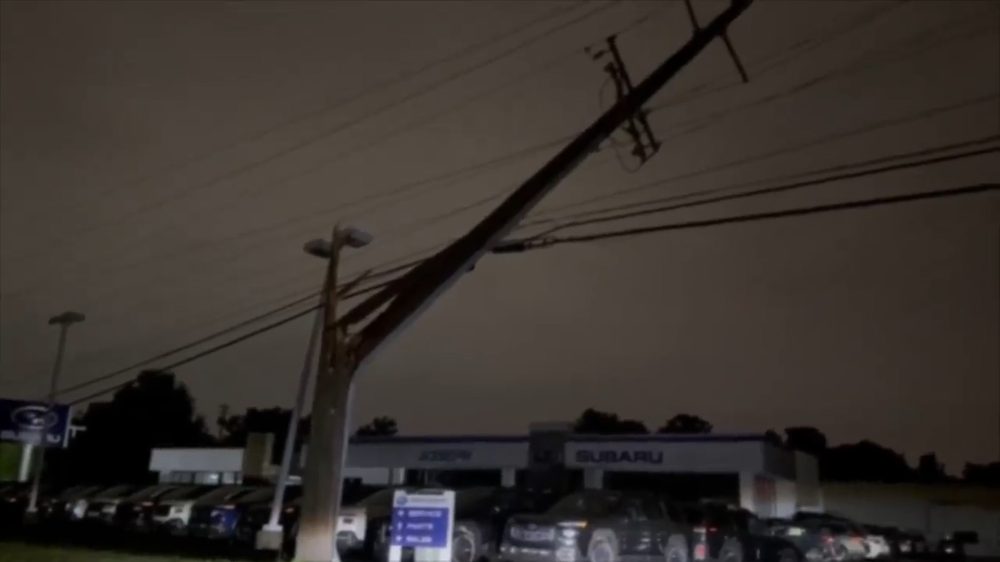
At the same time, residents across parts of Illinois, Indiana, and northern Kentucky were dealing with the aftermath of a fierce storm system that swept through the region Wednesday, bringing what may have been tornadoes, destroying homes, and knocking down trees and power lines.
Arthur, which holds the distinction of being the Atlantic basin’s first tropical storm of the season, was knocked down to a low pressure system near the upper Texas coast Wednesday night. The National Hurricane Center in Miami said it will continue to lose strength as it pushes inland through Louisiana, Mississippi, Alabama, Georgia, and the Florida Panhandle — though it will still drop significant amounts of rain along the way.
The National Weather Service reported that southern Louisiana and Mississippi were receiving rainfall at a rate of 3 inches — about 8 centimeters — per hour in certain locations Thursday morning. Flooded streets were visible in television coverage and social media posts from the area. Multiple tornado warnings were issued Thursday morning across southern Louisiana and Mississippi, and tens of thousands of homes and businesses lost power.
The weather service warned that Arthur’s remnants could dump 4 to 8 inches — or 10 to 20 centimeters — of rain, and possibly more, across Gulf states through Thursday and Friday. Texas had already seen flash flooding Wednesday, on top of heavy rain that had already hit the region earlier in the week.
National Hurricane Center director Michael Brennan described the primary danger: “The main threat from Arthur is going to be a prolonged, multiday, heavy rainfall event that could produce dangerous to life-threatening flash flooding.”
In New Orleans, Mayor Helena Moreno said ahead of the storm’s arrival that police were getting boats ready and placing barricades in areas known to flood. Sandbag collection sites also appeared throughout Louisiana for residents to prepare.
One resident, Luke Barwick, explained why he stopped by a sandbag station in Covington, Louisiana, on Wednesday: “We both decided we got so much rain yesterday at our house that it was probably a good idea just to pick up a few bags.”
Back in the Midwest, there were many reports of tornado and wind damage, though no deaths or serious injuries were immediately confirmed. As of Thursday morning, more than 130,000 homes and businesses in Illinois, Indiana, Kentucky, and Ohio were without electricity, according to poweroutage.us.
A tornado touched down near Effingham, Illinois — roughly 90 miles, or 145 kilometers, southeast of Springfield — on Wednesday evening. A number of people were treated for minor injuries, officials confirmed.
Effingham Fire Chief Brant Yochum released a statement describing the scope of the destruction: “A tornado caused significant damage in areas north of the City of Effingham, impacting homes, roadways, utilities, and other property throughout portions of Effingham County.”
Yochum added that firefighters were kept busy responding to damaged and collapsed structures, vehicle accidents, downed power lines, gas leaks, and roads blocked by debris.
An automobile museum and auto parts complex in Effingham announced on Facebook that it suffered what it called “catastrophic” damage, though fortunately no injuries were reported.
The National Weather Service also noted that a tractor-trailer overturned on Interstate 57 north of Effingham, sending the driver to the hospital with injuries.
In Florence, Kentucky, near the Cincinnati area, local news footage and photos showed roofs and siding torn from buildings, along with downed trees and power lines, following reports of strong winds and a possible tornado.
Possible tornadoes were also reported Wednesday in southwestern Wisconsin and in Alabama. The weather service said it received a large number of wind damage reports spanning a broad area stretching from Iowa and Missouri all the way to Ohio and West Virginia.
The storm system was forecast to continue moving through the central Appalachians and into New England on Thursday, the weather service said.