PORTSMOUTH, Va. — A prominent Virginia state senator who has championed cannabis reform throughout her political career now finds herself at the center of a federal investigation after law enforcement raided her marijuana business this week.
Senator L. Louise Lucas, known for her passionate advocacy on cannabis legalization, has built much of her legislative agenda around reforming drug laws that she believes unfairly target African American communities. Her commitment to the cause led her not only to author legalization legislation but also to establish her own cannabis retail operation.
Federal agents conducted a court-authorized search at Lucas’s business on Wednesday, though the FBI has not disclosed the specific focus of their investigation. The raid has thrust the longtime politician’s three-decade career back into the spotlight.
Lucas made history in 2019 when she became Virginia’s first Black woman to serve as Senate president pro tempore following the Democratic takeover of the chamber.
Her political journey has not been without controversy. In 2020, she faced felony accusations related to her participation in a demonstration against a Confederate memorial, though a judge ultimately threw out those charges.
A Portsmouth native, Lucas broke barriers early in her career as the first woman to work as a ship fitter at Norfolk Naval Shipyard, according to state library records. She currently leads a Portsmouth company that provides housing, daily programming, and transportation services for adults with intellectual disabilities.
Lucas launched The Cannabis Outlet in her hometown of Portsmouth in 2021, selling legally permitted hemp and CBD merchandise.
“Let’s talk about pot,” Lucas wrote on social media platform X in 2022. “Yes, we legalized it and I even opened the Cannabis Outlet after we did! But the job isn’t done. People are still in jail for something that is legal today.”
Witnesses reported seeing an armored FBI vehicle and multiple federal agents at Lucas’s cannabis shop on Wednesday. The FBI confirmed only that agents were executing a court-approved search warrant in Portsmouth.
The nation’s chicken industry is showing signs of growth, with new federal statistics revealing a 3 percent increase in broiler-type egg production across the United States.
According to data from the U.S. Department of Agriculture’s National Agricultural Statistics Service, the placement of broiler-type chicks also climbed by 3 percent during the same period.
This upward trend in both egg setting and chick placement suggests strengthening demand in the poultry sector, which represents a significant portion of American agriculture.
The statistics reflect the ongoing activity in commercial chicken operations nationwide, where broiler chickens are raised specifically for meat production rather than egg laying.
Cheese manufacturing across the United States showed strong growth in recent months, according to new federal agriculture data released this week.
Production figures reveal that cheese makers produced 1.26 billion pounds of cheese products during the reporting period, not including cottage cheese varieties. This represents a 1.2 percent increase compared to March 2025 figures and a substantial 8.1 percent jump from February 2026 levels.
The statistics come from the National Agricultural Statistics Service, which tracks dairy production trends nationwide as part of its regular industry monitoring efforts.
The production increases suggest continued strength in America’s dairy sector, with cheese manufacturing showing particular resilience and growth during the measured timeframe.
More than 500 religious leaders from over 35 states descended on the nation’s capital this week for a coordinated advocacy effort supporting Israel and addressing growing concerns about antisemitism.
The interfaith delegation, comprised of rabbis, pastors, and other faith community leaders, conducted 115 separate meetings with lawmakers and senior congressional staff from both sides of the political aisle during Israel Advocacy Day.
Four organizations collaborated to coordinate the effort: Eagles’ Wings, American Christian Leaders for Israel, the International Christian Embassy Jerusalem USA, and the Israel Allies Foundation. Event organizers emphasized the unique approach of pairing Jewish and Christian leaders together for their Capitol Hill visits.
The religious coalition concentrated their advocacy efforts around three main priorities: bolstering bipartisan congressional support for Israel, tackling the rise of antisemitic incidents both domestically and internationally, and securing enhanced safety measures for houses of worship and religious institutions facing security concerns.
The day’s activities wrapped up with addresses from Rep. Don Bacon, Israeli Ambassador to the United States Yechiel Leiter, and senior staff representatives from both House Republican and Democratic offices.
Robert Stearns, who founded and leads Eagles’ Wings, emphasized the importance of moving beyond symbolic gestures. “This moment calls on faith leaders and elected officials to transform words into meaningful action,” Stearns stated. “For years, many have stood with Israel in sentiment. This initiative is about translating that support into tangible engagement- meeting with policymakers, building relationships, and advancing solutions that can be seen, measured, and felt.”
The advocacy day also featured an evening gala that brought together Jewish and Christian leaders from across the United States. The event included presentations by Eric Fingerhut, who serves as president and CEO of the Jewish Federations of North America, and Rabbi Pini Dunner from the Beverly Hills Synagogue.
During the gala ceremony, Dr. Susan Michael and Bishop Robert Stearns were honored with the White Rose Society Award, a recognition given to non-Jewish individuals who have demonstrated exceptional support for Jewish communities during times of increasing antisemitism.
Dr. Susan Michael, who leads ICEJ USA, highlighted the power of interfaith cooperation in their advocacy efforts. “Our advocacy has much greater impact when we speak with one voice and stand in unity for truth, justice, and goodness,” Michael explained. “We demonstrate that support for Israel is not just a Jewish issue – it is important to Christians and to tens of millions of Americans.”
A Pakistani journalist and content creator has been placed behind bars in Lahore following counterterrorism charges that accuse him of supporting al-Qaida and holding forbidden materials – claims that his family, coworkers, and several experts are vigorously challenging.
Muhammad Saad bin Riaz, who works as both a journalist and YouTuber, was ordered to remain in custody by judicial authorities after the terrorism-related accusations were filed against him.
Those defending Riaz argue that the charges are inconsistent with his professional background as a researcher and journalist who specializes in covering regional warfare and information campaigns.
This detention has sparked broader discussions throughout Pakistan about whether government officials are addressing a legitimate extremist danger or are misusing extensive counterterrorism authority in ways that could damage public confidence, media freedoms, and the trustworthiness of intelligence-based law enforcement.
The controversy highlights ongoing tensions between national security concerns and journalistic independence in Pakistan’s media landscape.
Media visionary Ted Turner, the audacious entrepreneur who established CNN and revolutionized television journalism with continuous news coverage, passed away Wednesday at age 87, marking the end of an era for a man whose bold ventures transformed broadcasting, athletics, charitable giving, and how global audiences witnessed history as it happened. In 2018, Turner revealed he was battling Lewy body dementia.
Robert Edward Turner III was born November 19, 1938, in Cincinnati and constructed one of the most influential media legacies of the late 1900s after inheriting his family’s advertising billboard company. Following his father’s passing, Turner assumed leadership of the business, ventured into television broadcasting, and pioneered the “superstation” concept by beaming an Atlanta television station via satellite to cable providers nationwide. This strategic decision transformed a regional broadcaster into a nationwide media powerhouse.
Turner’s most significant risk occurred in 1980 when he established the Cable News Network. During that period, the concept of a television station delivering news around the clock was broadly rejected as costly, unrealistic, and somewhat crazy. Turner, who appeared to use doubt as motivation, forged ahead regardless. CNN emerged as the inaugural 24-hour cable news service and eventually became one of the globe’s most identifiable news organizations.
For Middle Eastern viewers, CNN’s defining achievement occurred during the 1991 Gulf War, when the channel’s live broadcasts from Baghdad transformed warfare into an ongoing worldwide transmission. CNN’s Iraq coverage demonstrated the strength of satellite journalism and altered how political leaders, armed forces, and audiences comprehended immediate conflict reporting. The conflict also elevated CNN to international recognition beyond America and stimulated satellite news expansion throughout the Arab region.
While Middle Eastern affairs weren’t central to Turner’s professional focus, he became involved in a significant Israel-related dispute in 2002. During a Guardian newspaper interview, he implied that both Israelis and Palestinians participated in terrorist activities, prompting harsh criticism from Israeli authorities and Jewish groups. Turner subsequently retracted his statements, expressing regret for any suggestion that Israel’s protective measures equaled terrorism and acknowledging a “fundamental distinction” between Israeli government actions and Palestinian violence.
Outside CNN, Turner developed an extensive media conglomerate encompassing Turner Broadcasting System, TNT, Cartoon Network, Turner Classic Movies, and additional channels. He also possessed the Atlanta Braves and Atlanta Hawks, captured the 1977 America’s Cup sailing championship, and established the Goodwill Games, a Cold War-period athletic competition designed to promote international rivalry beyond Olympic boycotts of that time.
Turner ranked among America’s most prominent billionaire charitable donors. In 1997, he committed $1 billion toward United Nations initiatives, a contribution that resulted in establishing the United Nations Foundation. He subsequently helped launch the Nuclear Threat Initiative alongside former US Senator Sam Nunn, concentrating on diminishing nuclear, chemical, and biological dangers. His environmental activities encompassed significant land preservation projects, bison recovery efforts, and backing climate-focused causes.
He gained recognition for his confidence, outspoken nature, bold personality, and readiness to express thoughts that more reserved executives would never voice publicly. Known as the “Mouth of the South,” Turner could display brilliance one moment and volatility the next. He wed three times, notably to actress Jane Fonda, and fathered five children.
Turner’s influence remains complex, much like the individual himself. He contributed to establishing global television news infrastructure while simultaneously creating the continuous news environment that later faced criticism for haste, drama, and perpetual emergency atmosphere. He promoted worldwide cooperation, yet his own statements occasionally sparked the exact disputes he claimed communication could resolve.
Nevertheless, the essential truth persists: before Turner, television news appeared at scheduled times. Following Turner, news broadcasting became constant. For positive and negative outcomes—and throughout the Middle East, frequently during periods of conflict, uprising, terrorism, negotiations, and catastrophe—the world adapted to observing history unfold in real time.
Tensions erupted Tuesday evening outside a Manhattan synagogue when approximately 100 protesters confronted New York City police during a demonstration against an Israeli real estate event taking place inside Park East Synagogue on the Upper East Side.
Video footage captured demonstrators waving Palestinian flags and using drums while positioned about half a block from the synagogue. The crowd voiced chants including “Palestine will never die” and “Stop the sale of stolen land.”
Other slogans heard throughout the evening included: “We don’t want no two states, we want all of it,” “End the settler Zionist state,” “Death to the IDF,” and “There is only one solution, intifada revolution.” Participants also called out in Arabic “From the water to the water, Palestine is Arab” as they marched to drum rhythms.
Recorded footage revealed physical altercations between demonstrators and NYPD officers when protesters tried to break through police barriers that had been set up around the area.
During the demonstration, one participant was observed hitting a photograph of Rabbi Menachem Mendel Schneerson, the deceased spiritual leader of the Chabad Hasidic movement, while other protesters made triangle hand gestures linked to Hamas imagery.
A smaller opposing group assembled in the vicinity, displaying placards that read “Antizionism is a hate movement” and “Antizionism gets Jews killed.” Several counter-demonstrators performed “Hatikva,” Israel’s national anthem.
The anti-Zionist protesters directed hostile language toward the counter-demonstrators, calling them “Nazis,” “pedophiles,” and “baby killers,” and telling them “Go kill yourself.”
The activist organization Pal-Awda NY/NJ coordinated Tuesday’s demonstration. This same group previously organized a protest at the identical synagogue location in November during an event sponsored by Nefesh B’Nefesh, which helps facilitate Jewish relocation from America to Israel.
Reports indicate that the November demonstration drew approximately 200 participants who harassed attendees as they entered the synagogue for that event.
Mayor Zohran Mamdani, who has been characterized as critical of Israel, had not issued any public statements regarding Tuesday evening’s protest.
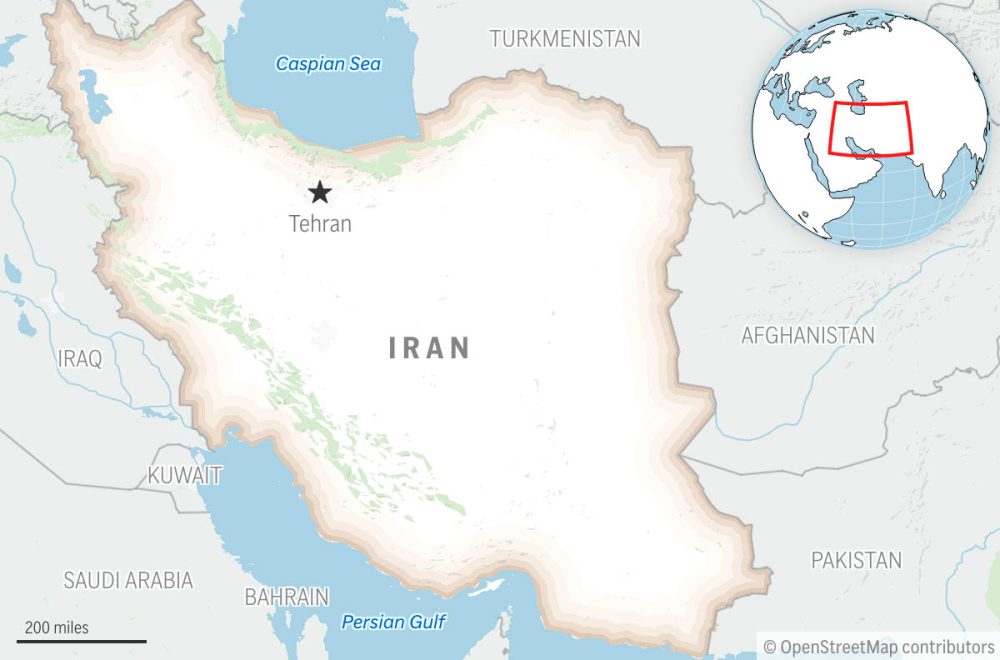
Iranian leadership is currently examining a comprehensive 14-point framework proposal delivered by the United States designed to halt ongoing regional conflicts and reopen discussions about Tehran’s nuclear activities, according to statements made by an Iranian foreign ministry representative to CNBC. The spokesperson emphasized that Iran will only agree to conditions deemed “fair” by their government.
The U.S. administration anticipates receiving Iran’s response on key elements of the proposal within the coming 48 hours. Though no final deal has been secured, sources referenced by Axios indicate these current discussions mark the most promising progress toward an agreement since hostilities commenced on February 28.
American representatives Steve Witkoff and Jared Kushner are conducting negotiations on this single-page agreement framework with Iranian leadership through both face-to-face meetings and third-party mediators.
The draft memorandum would create a month-long negotiation window concentrating on restoring ship passage through the Strait of Hormuz, placing restrictions on Iran’s nuclear development, and reducing American economic sanctions.
According to the terms being considered, Iran would agree to halt nuclear enrichment activities, while the United States would unfreeze billions in Iranian assets and remove existing sanctions. The framework also incorporates mutual agreements regarding shipping limitations through the Strait of Hormuz.
Before news of the 14-point framework emerged, President Donald Trump declared on Tuesday that Operation “Project Freedom,” which controls vessel movement through the Strait of Hormuz, would be temporarily suspended.
Trump stated that the wider American blockade would continue during ongoing negotiations.
In his Truth Social message, Trump stated: “While the Blockade will remain in full force and effect, Project Freedom (The Movement of Ships through the Strait of Hormuz) will be paused for a short period of time to see whether or not the Agreement can be finalized and signed.”
The president explained his decision came after appeals from Pakistan and other nations, while noting advancement in communications with Iran.
Israel’s Health Ministry is moving to eliminate smoking medical cannabis within the next three years, even as the nation faces unprecedented levels of post-traumatic stress disorder and record numbers of licensed cannabis users.
A special ministry committee delivered its recommendations on Sunday to phase out smoked cannabis forms, citing emerging research that questions whether the treatment helps or harms PTSD patients. The proposal comes as approximately 140,000 Israelis currently possess medical cannabis permits, a dramatic increase from 33,000 just a few years earlier.
The timing coincides with alarming statistics showing roughly one-third of Israel’s population – about three million people – are experiencing PTSD symptoms, according to separate reports from the State Comptroller and independent researchers.
Dr. Shaul Lev-Ran, who co-founded and serves as academic director of the Israel Center on Addiction, emphasized that the recommendations focus on medical standards rather than personal freedoms. He stressed the need to evaluate cannabis like any other medical treatment, examining who prescribes it, which conditions warrant its use, and how to properly assess risks versus benefits.
“The medical cannabis industry in Israel has become a much larger operation than originally intended,” Lev-Ran explained. He noted this marks the first time the Health Ministry is implementing better screening tools to identify patients at risk for cannabis addiction or adverse effects.
Current data reveals that 98% of licensed purchases involve smoked cannabis, while 88% of permits are for high-THC products with greater addiction potential. Smoking inherently increases risks for heart and lung disease, according to Lev-Ran.
“Early signs of problematic use kind of define what the red flags are and establish criteria for either tapering or discontinuing your treatment,” Lev-Ran stated.
He referenced a recent JAMA Psychiatry study demonstrating that medical cannabis failed to improve PTSD and actually worsened long-term patient outcomes. The medical system must weigh immediate relief against future consequences, he argued.
“We definitely want to be compassionate, but I think what the report is trying to do is balance compassion and concern,” he said. “So, compassion for the short-term effects and to alleviate them, but concern that people may get stuck with medical cannabis, and they may actually be worse off in the long term.”
Cannabis users are responding negatively to the committee’s findings. M., a 50-year-old Tel Aviv area resident who requested anonymity, said he felt “jolted to hear of the recommendation by the committee.”
He criticized the ministry for not warning current patients through their psychiatrists before releasing the report, noting that sudden anxiety often triggers PTSD symptoms.
“Many of us who have PTSD have been smoking cannabis to assist us for many years,” M. explained. “It’s something we’ve been used to relying on.”
M. said alternative forms like oils and capsules proved less effective for his condition. He questioned why officials would issue such recommendations when PTSD cases are climbing and adequate treatment options remain limited.
However, Lev-Ran pointed out that the United States Veterans Association already advises against prescribing medical cannabis to veterans with PTSD due to harmful long-term effects.
The most comprehensive medicinal cannabis review, published in The Lancet this year, concluded that cannabis fails to effectively treat anxiety, depression, or PTSD despite user claims. The analysis examined 54 randomized controlled trials spanning 45 years from 1980 to 2025, finding increased risks for psychosis and addiction while potentially delaying proven treatments.
A 2025 Centers for Disease Control report found 19% of Americans – approximately 52.5 million people – used illegal cannabis at least once in 2021. Medical cannabis remains legal in 47 states, three territories, and Washington D.C. Research from 2021 indicated around three million Americans were using cannabis medicinally.
Those numbers have likely grown significantly. Recent data shows about 27% of Americans and Canadians aged 16-65 report medical cannabis use, with half citing mental health management. The American Medical Association has expressed similar concerns to Israel’s Health Ministry regarding limited regulation and uncertain effectiveness.
Under the committee’s plan, medical cannabis prescribing will transfer to Israel’s four health funds within one year. These organizations will collaborate with research groups to monitor and evaluate cannabis treatment outcomes.
The recommendations also call for promoting new technologies, potentially including Israel’s SyqeAir inhaler system. The company markets its device as “the most innovative and safest route of administration of medical cannabis” compared to smoking, vaping, or oils. It represents the world’s first metered-dose cannabis inhaler, designed for consistent treatment while reducing overdose risks and side effects.
While the report doesn’t specifically mention SyqeAir, it states that new treatments will begin with extracts and precision inhalers, gradually replacing smoked forms with alternative delivery methods.
“I think when you look at cannabis, a lot of countries are realizing the limitations of medical cannabis, realizing the burden that it poses on the medical system,” Lev-Ran added. He noted that medical systems rely on research and precise dosing, both difficult to achieve with smoked cannabis.
Lev-Ran compared cannabis to other alternative treatments like forest therapy, where studies suggest benefits “and it’s really hard to think about severe risks. So the risk-benefit ratio leans a lot towards the benefits.”
He contrasted this with treatments like psychedelic-assisted therapy or ketamine, where patients don’t receive take-home prescriptions.
“Let’s say I’m receiving ketamine in a ketamine clinic,” Lev-Ran explained. “I’m not getting doses to take home, so that, for example, substantially reduces the risk of addiction.”
He noted that MDMA treatment for trauma in Israel involves structured protocols with three sessions and 16 therapy meetings, rather than simply providing medication without supervision.
Despite current recommendations, Lev-Ran expressed confidence that the Health Ministry would reconsider its position if future research supports cannabis use, including smoking forms.
Maryland officials have greenlit more than $1.8 million in state grants to enhance parks, develop trails, and preserve natural areas across eight counties, including Cecil and Queen Anne’s counties on the Eastern Shore.
The Maryland Board of Public Works authorized the funding distribution from the Department of Natural Resources to support local government initiatives in Allegany, Baltimore, Calvert, Cecil, Dorchester, Montgomery, Queen Anne’s, and Washington counties.
Local park improvements received the largest share, with over $1.35 million allocated through the Program Open Space – Local initiative. These funds will finance nine separate projects, including upgraded field lighting at Allegany County’s Cresaptown Sports Complex, LED lighting improvements at Baltimore County’s Reisterstown Regional Park, and construction of a new 2-mile recreational trail connecting Rock Creek Regional Park and North Branch Stream Valley Park in Montgomery County.
Conservation efforts received $271,000 through the Rural Legacy program to secure a permanent conservation easement in Cecil County’s Fair Hill Rural Legacy Area. The Cecil Land Trust will protect a 65-acre agricultural property featuring 1,200 feet of wooded stream buffers along a Little North East Creek tributary.
An additional $213,000 was designated for a Conservation Reserve Enhancement Program easement covering 35 acres in Queen Anne’s County. This protection will safeguard scenic Wye River views and establish over 4,000 feet of forested stream buffers. The wooded area also provides critical nesting habitat for Forest Interior Dwelling Species of birds, which need extensive undisturbed areas for successful reproduction.
State officials also approved $399,750 in Program Open Space – Stateside funding for two major acquisitions: a Forest Legacy easement protecting 53 forested acres in Cecil County and a 195-acre addition to Wills Mountain State Park in Allegany County. The Cecil County project will help maintain water quality in the Lower Elk River watershed while providing fish and wildlife habitat. The Allegany County expansion will increase public recreation access and create additional forest cover for bird populations.
The Wills Mountain State Park expansion supports the facility’s planned opening in late 2026.
Complete details about these initiatives and additional items appear in the Board of Public Works May 6, 2026 meeting agenda.
Governor Wes Moore, Treasurer Dereck E. Davis, and Comptroller Brooke E. Lierman comprise the three-member Board of Public Works.
The Program Open Space – Stateside initiative protects natural areas statewide for public recreation and environmental conservation through property purchases and easement agreements. Properties acquired through direct purchase become state parks, forests, and wildlife management areas under department oversight.
Program Open Space – Local, established in 1969 under the Department of Natural Resources, distributes annual funding to all counties and Baltimore City for recreational land planning, acquisition, and facility development. Local governments determine specific project selections. The program operates through property transfer tax revenue and represents Maryland’s ongoing commitment to natural resource conservation and public recreation access.
The Rural Legacy Program, launched in 1997, protects large working landscapes across 36 designated areas throughout Maryland. Both the Rural Legacy Program and the Maryland Agricultural Land Preservation Foundation recently received national recognition from the American Farmland Trust.
Maryland’s Conservation Reserve Enhancement Program permanent easement option, active since 2009, acquires conservation easements from voluntary participants that maintain Conservation Reserve Program practices beyond federal contract expiration dates.
Delaware drivers are feeling the pain at the pump as gasoline prices have surged dramatically due to the ongoing conflict with Iran. According to AAA, the average cost for a gallon of regular gasoline reached $4.54 on Wednesday, representing a sharp 31-cent increase over just seven days.
This current price point marks a staggering 52% increase compared to what Americans were paying before hostilities with Iran commenced. The primary culprit behind these escalating fuel costs is Iran’s effective blockade of the Strait of Hormuz, a critical maritime corridor that typically handles one-fifth of global crude oil shipments.
The strategic waterway off Iran’s coastline has become a chokepoint for oil tankers, creating significant supply constraints that have driven crude oil prices higher over the past two months. Since crude oil serves as gasoline’s primary component, these increases directly impact what consumers pay at gas stations.
There was a brief period of relief in mid-April when fuel prices dropped consistently for nearly two weeks as diplomatic efforts suggested the conflict might be de-escalating.
“After the announcement of the initial ceasefire, there was kind of optimism that this really could be the beginning of the end of the conflict,” explained Rob Smith, who serves as director of global fuel retail at S&P Global Energy. “And so crude prices came down correspondingly, gasoline spot prices followed, and so on … the retailers lowered prices as well.”
However, that optimistic trend reversed course as tensions escalated once again around the strait, keeping oil supplies severely limited and prices climbing.
“There’s a fundamental shortfall that will exist globally or fundamental struggle to meet that demand that will drive up price,” Smith noted. “No matter what a government says or what any market person thinks, there is a true kind of upward pressure that’s being exerted on prices every day the Strait of Hormuz is constrained. And it is still severely constrained.”
While individual gas station operators determine their pricing, multiple factors influence their decisions. According to the Energy Information Administration, crude oil costs account for approximately 51% of gasoline’s price in the United States during 2025.
This direct correlation means that when oil becomes more expensive, gasoline prices typically follow suit. Reduced oil availability in global markets creates upward pressure on both commodities.
The International Energy Agency has characterized Iran’s closure of the Strait of Hormuz as the most significant supply disruption in oil market history. This crisis pushed crude oil prices to peak at $112 per barrel during early April.
Recent diplomatic developments showed some promise, with oil prices dropping below $100 per barrel Wednesday as the United States and Iran appeared to make progress toward a preliminary agreement to end hostilities. If this trend continues, gasoline prices could potentially decline as well.
Bob Kleinberg, an adjunct senior research scholar at Columbia University’s Center on Global Energy Policy, analyzed the relationship between gasoline prices and WTI crude oil benchmarks over recent weeks, finding their movements closely aligned.
“Not much of a mystery here,” Kleinberg observed. “It’s not exactly proportional but the shape of the curves follows the same pattern, and really with very little delay.”
Beyond crude oil costs, federal and state taxes represent about 17% of gasoline’s price, while refining expenses and profits contribute 14%, and distribution plus marketing add another 17%, according to EIA data. States like California experience even higher prices due to increased taxes and refining costs.
A significant escalation occurred in April when the United States imposed blockades on Iranian ports to prevent the country’s oil exports.
“Iran had been moving an unusually high amount of oil to global markets, so that was helping moderate prices,” said Jim Krane, an energy research fellow at Rice University’s Baker Institute. “The Trump administration decides they’re going to punish Iran, and try to put more pressure on Iran by blocking their exports, so of course that does put pressure on Iran, but also puts pressure on global oil prices and forces them up. That was probably a big factor.”
Oil markets demonstrate extreme sensitivity to breaking news about Persian Gulf shipping attacks or stalled diplomatic negotiations. “The oil market is exquisitely sensitive to what’s coming out of the White House,” Kleinberg emphasized.
When the Iran conflict first erupted in early March, gasoline prices jumped 48 cents within a single week. For comparison, the largest weekly increase occurred in March 2022, when prices rose 60 cents following Russia’s invasion of Ukraine, according to AAA data.
Predicting future gasoline price peaks remains impossible. Current prices exceed those from early May 2022, and during that period, costs continued climbing through Memorial Day weekend, AAA reported.
Smith warned that prolonged disruptions to Strait of Hormuz oil flows will result in higher prices and extended recovery periods.
“Even if there was a true and lasting resolution of the conflict, both sides agree to play nice and truly do commit to keeping Hormuz open, it will still take months to get back to what it was pre-war, if not even longer,” Smith explained. “There will still be within the industry a risk premium associated with going through that region. Not that it was ever a perfectly safe journey, but the past few months have shown that it’ll be hard to convince shippers and insurance companies that the risk level will be similar to what it was in February. It’ll be a long time before anyone can be convinced of that.”
NEW YORK — Philadelphia 76ers star center Joel Embiid has been ruled out for Wednesday evening’s Game 2 matchup against the New York Knicks due to a sprained right ankle and right hip soreness.
Initially, the 76ers had designated their All-Star center as probable for the contest, noting only the ankle issue. However, team officials later included the hip concern and declared him unavailable on their injury report roughly six hours before the Eastern Conference semifinals game.
During the Knicks’ dominant 137-98 victory in the series opener, Embiid endured a difficult performance, managing just 14 points while shooting 3-of-11 from the field across 25 minutes before Philadelphia’s starters were pulled due to the lopsided score.
Prior to that first game, Embiid had been designated as probable with a bruised right hip before receiving medical clearance. New York’s defense consistently exploited his limited movement to generate scoring opportunities.
The center made his return during Game 4 of Philadelphia’s opening-round matchup against Boston following a late-season appendectomy, contributing to the 76ers’ remarkable comeback from a 3-1 series deficit. Through five playoff contests, he has posted an average of 25.2 points per game.
Medical staff has not confirmed whether his current hip discomfort relates to the recent appendectomy. During the first game, Embiid appeared to grimace and clutch his midsection following a collision with Knicks guard Mikal Bridges during a first-half screen.
Following that incident, Embiid questioned the nature of the contact.
“Obviously based on what’s been going on I guess I’ve got to protect it more,” Embiid said. “I don’t know if it was dirty or not, so I guess I’ve got to do a better job of protecting, especially that part.”
Without their franchise player, Philadelphia faces the challenge of containing Knicks All-Star center Karl-Anthony Towns while likely requiring an enhanced performance from point guard Tyrese Maxey. The dynamic guard also struggled in the opener, converting just 3-of-9 field goal attempts for 13 points after posting 26.9 points per game during the first round.
Nevertheless, the 76ers have grown accustomed to competing without Embiid’s presence. The former league MVP has dealt with health concerns for several seasons.
BANGUI, Central African Republic — A prominent opposition leader and former prime minister in the Central African Republic has condemned authorities for taking his diplomatic passport, calling it a misuse of government power.
Anicet Georges Dologuélé, who held the prime minister position from 1999 to 2001, was prevented from boarding his scheduled flight to attend an African Union conference in Addis Ababa on Wednesday.
“It was at the airport that I learned I was forbidden from leaving the country after being declared stateless in my own country,” Dologuélé stated during a press briefing held in the nation’s capital, Bangui.
Since 2018, Dologuélé has served as a board member for the African Union Peace Fund.
Last year, Dologuélé gave up his French citizenship to comply with constitutional requirements when he challenged President Faustin-Archange Touadéra, who sought a third term in office.
Dologuélé has called the previous year’s election “very far from the truth” and frequently voices opposition to Touadéra’s leadership. Official election results showed he received 13.1% of the vote.
Since then, he has relied on his diplomatic passport, which he received as a former prime minister, after alleging that government officials have declined to provide him with a new standard passport.
CASABLANCA, Morocco — An intensive multinational rescue operation involving more than 600 military personnel continues along Morocco’s Atlantic shoreline as teams search for two missing American Army soldiers, military officials announced Wednesday.
The extensive search effort has now stretched into its fifth day as the large-scale African Lion military training exercises approach their scheduled conclusion.
According to Moroccan military authorities, both U.S. Army personnel disappeared last week in the vicinity of the Cap Draa training zone near Tan-Tan, a coastal community in Morocco’s southwestern region. Officials believe the soldiers were engaged in recreational hiking activities when they potentially fell into ocean waters.
A U.S. defense official, speaking anonymously due to authorization restrictions, confirmed that search teams from America, Morocco, and other participating nations have systematically covered more than 45 square kilometers of coastal waters and open Atlantic areas.
“Our two soldiers and their families remain our absolute priority,” the official stated.
The missing personnel had been participating in African Lion 26, a major American-led training operation that began in April spanning Morocco, Tunisia, Ghana, and Senegal. The exercise, featuring over 7,000 military members from more than 30 nations, represents America’s largest joint military training initiative on the African continent since its inception in 2004 and is scheduled to conclude Friday.
Video footage released Wednesday by Morocco’s Navy documented military divers investigating underwater cave systems, aircraft conducting ocean surface reconnaissance, and coordinated teams of uniformed personnel with search dogs methodically examining the rugged coastline. Multiple Moroccan military divisions have joined the rescue efforts.
Naval assets originally assigned to the exercise’s maritime training operations have been redirected to support search activities, including a Moroccan European multi-mission frigate and a French multipurpose supply ship. A U.S. logistics vessel continues dual responsibilities, maintaining exercise support while contributing to rescue operations, according to the defense official.
Aerial search capabilities include deployment of a U.S. UC-35 Citation aircraft, a U.S. Army C-12 Huron plane, and Moroccan Puma and Super Puma helicopter units.
Technology companies participating in the military exercise have contributed unmanned aerial surveillance systems to enhance monitoring of the designated search zones, the official added.
BOSTON – Federal authorities announced Wednesday that they have filed criminal charges against 30 individuals in connection with a widespread insider trading conspiracy that allegedly used confidential merger information obtained from prominent law firms.
The defendants include corporate attorneys and financial industry professionals who are accused of participating in the illegal scheme. According to federal prosecutors in Boston, 19 suspects have been taken into custody and are scheduled to appear before federal judges in multiple states including California, Florida, and New York.
Two additional defendants located in Russia and Israel remain at large and are currently considered fugitives by authorities.
Golf’s top-ranked player Scottie Scheffler has announced his participation in the Genesis Scottish Open, using the tournament as preparation for defending his title at The Open Championship.
The 29-year-old golfer is skipping this week’s Truist Championship before the PGA Championship, but has committed to competing in Scotland the week prior to the major championship.
“I always enjoy coming to the Genesis Scottish Open and taking on the challenge of links-style golf as part of an exciting couple of weeks in the UK,” Scheffler said. “The tournament always has a strong field and the Scottish fans help to make it a fun week.”
Last year’s Scottish Open saw Scheffler finish in a tie for eighth place, while Chris Gotterup claimed victory. World number two Rory McIlroy, who came up two strokes short of Gotterup alongside England’s Marco Penge in last year’s tournament, has also committed to this year’s competition. Scotland’s own Robert MacIntyre will round out the notable field.
The tournament runs from July 9-12 and carries dual sanctioning from both the DP World Tour and PGA Tour, offering valuable points for both the Race to Dubai and FedEx Cup standings.
Following the Scottish Open, The Open Championship will take place July 16-19 at Royal Birkdale, marking the year’s final major championship.
Professional golfer Jake Knapp has pulled out of the Truist Championship, marking the second major tournament in a row he’s had to skip because of an ongoing thumb injury.
Austin Smotherman will take Knapp’s place at Quail Hollow this week. Smotherman was originally scheduled to play in the Myrtle Beach Classic.
The 31-year-old golfer also had to bow out of the previous week’s Cadillac Championship. Both tournaments are major events featuring $20 million prize pools, guaranteed payouts with no elimination cuts, and enhanced FedEx Cup points — exactly the kind of high-stakes competitions Knapp has been striving to reach.
Last month, Knapp secured one of the final spots to compete in the Masters tournament, where he achieved an impressive 11th place finish. But his performance dipped at the RBC Heritage, another premier event, where he tied for 74th place before having to withdraw from the next two tournaments.
Despite these recent setbacks, Knapp maintains his career-high 36th position in the Official World Golf Ranking and sits 14th in FedEx Cup standings. This gives him breathing room to heal from his thumb injury, thanks to an exceptional early season that featured five straight tournaments finishing tied for 11th or better, including a tied-for-fifth showing at the Farmers Insurance Open.
This season, Knapp has posted seven top-11 results across nine tournament appearances, with his only missed cut occurring at The Players Championship. He remains scheduled to compete in next week’s PGA Championship.
The South Korean technology giant Samsung Electronics announced Wednesday it will halt sales of certain consumer products in mainland China as the company struggles against fierce local competition.
“The company will make every effort to minimize any impact on customers resulting from this decision, and is reviewing various support measures for business partners,” Samsung stated following initial reports from South Korean news outlets about the withdrawal of TV and home appliance sales from China.
The decision comes as Samsung’s consumer electronics face increasing pressure from Chinese competitors both domestically and internationally, even as the company’s memory chip division experiences strong profits driven by artificial intelligence demand.
Earlier this week on Monday, Samsung announced a leadership change in its television division, replacing the department head for the first time in over two years.
The company’s struggles became evident last December when Chinese manufacturer TCL temporarily surpassed Samsung as the world’s leading TV seller, according to research firm Counterpoint. TCL has since formed a strategic alliance with Japan’s Sony.
Samsung’s television and home appliance operations recorded losses totaling 200 billion won, equivalent to $138.31 million, during the previous year due to competitive pressures and tariffs imposed by the United States.
The global smartphone market’s second-largest player has also seen its Chinese market position weaken against Apple and domestic competitors, while simultaneously facing new challenges from emerging rivals like ChangXin Memory Technologies in the semiconductor sector.
Despite these withdrawals, Samsung plans to maintain its mobile phone and chip sales operations in China.
BUENOS AIRES, Argentina — Argentine health authorities are working urgently to trace whether their nation is the origin point of a fatal hantavirus outbreak that has claimed lives aboard an Atlantic cruise vessel.
This health crisis at sea coincides with Argentina experiencing a dramatic spike in hantavirus infections, which local medical researchers link to accelerating climate change impacts. The World Health Organization consistently ranks Argentina as having Latin America’s highest rates of this rare, rodent-transmitted illness, and the Antarctic cruise departed from Argentine shores.
Warming temperatures expand where the virus can spread because changing ecosystems allow hantavirus-carrying rodents to survive in new areas, according to medical experts. Humans typically become infected through contact with rodent waste, urine or saliva.
“Argentina has become more tropical because of climate change, and that has brought disruptions, like dengue and yellow fever, but also new tropical plants that produce seeds for mice to proliferate,” explained Hugo Pizzi, a leading Argentine infectious disease expert. “There is no doubt that as time goes by, the hantavirus is spreading more and more.”
Argentina’s Health Ministry reported Tuesday that 101 people have contracted hantavirus since June 2025, nearly twice the number of infections documented during the same timeframe last year.
The South American strain, known as the Andes virus, triggers a serious and frequently deadly respiratory condition called hantavirus pulmonary syndrome. This illness proved fatal in almost one-third of cases over the past year, according to Argentina’s Health Ministry, significantly higher than the 15% average death rate recorded in the five preceding years.
Officials confirmed that passengers aboard the MV Hondius vessel tested positive for the Andes virus strain.
Argentine investigators are working to determine where infected passengers visited within the country before they boarded the Dutch-registered cruise ship in Ushuaia, a southern Argentine city nicknamed “the end of the world.” After mapping their travel routes, authorities plan to track down contacts, quarantine those at risk and conduct active surveillance to halt additional transmission.
The World Health Organization reports that the initial fatality aboard the ship occurred April 11, when a 70-year-old Dutch passenger died. His 69-year-old wife, also from the Netherlands, passed away April 26. A German woman became the third victim on May 2.
The virus can remain dormant for one to eight weeks, making it difficult to determine whether passengers became infected before departing Argentina for Antarctica on April 1, during a planned stop at a remote South Atlantic island, or while aboard the vessel.
Tierra del Fuego province, where the ship docked for weeks before sailing, has never recorded a hantavirus case. Prior to boarding, the Dutch couple toured Ushuaia and visited other locations in Argentina and Chile, WHO officials said.
Argentine government investigators believe the couple most likely contracted the virus during a bird-watching excursion in Ushuaia, according to two researchers who requested anonymity because they lack authorization to speak publicly while examining incomplete evidence. Officials are also retracing the Dutch tourists’ movements through Patagonia’s forested mountains in southern Argentina, where some infections have been concentrated.
Early symptoms mirror flu-like fever and chills, making diagnosis challenging. “Tourists might think they just have a cold and not take it seriously. That makes it particularly dangerous,” said Raul González Ittig, a genetics professor at the National University of Córdoba and researcher with the state science organization CONICET.
The mountain resort community of Bariloche, Patagonia’s primary northern gateway, documented its first human hantavirus infection of 2026 on Tuesday, announced the Río Negro Province government. The patient was admitted to the hospital Wednesday.
Argentina recently suffered through a devastating drought while also experiencing periods of unusually heavy rainfall, reflecting broader extreme weather patterns that scientists connect to climate change.
This weather volatility has generated conditions allowing hantavirus to spread, experts explain. Drought forces animals from their normal territories as they seek food and water. Heavy rains promote plant growth, dispersing seeds that draw leaf-eating rodents.
“When precipitation increases, food availability increases, rodent populations grow, and if there are infected rodents, the chance of transmission between rodents — and eventually to humans — also increases,” Ittig explained.
While hantavirus infections were once confined to Patagonia’s southern regions, the Health Ministry now reports that 83% of cases occur in Argentina’s northern areas. In January, the ministry issued warnings about multiple deadly hantavirus outbreaks, including in Buenos Aires, the country’s most populated province.
“With the climate changing, the epidemiological picture has completely changed,” Pizzi noted. “The ship may be an isolated case. But this virus isn’t going anywhere.”
NEW YORK — Maritime companies continue facing enormous challenges as more than 1,550 vessels carrying approximately 22,500 crew members remain trapped in the Persian Gulf, with no clear timeline for when the Strait of Hormuz will fully reopen following two months of conflict with Iran.
President Donald Trump launched “Project Freedom” on Sunday as a U.S.-led initiative to escort ships through the strategic waterway. While two vessels successfully made the journey, Trump suspended the program by Tuesday to provide space for potential diplomatic negotiations to resolve the conflict.
The dangers for maritime traffic persist despite these efforts. A container vessel operated by CMA CGM Group sustained damage during an attack while trying to navigate the strait, the French shipping company reported Wednesday. Concerns about Iranian speedboats and unmanned aircraft continue prompting major shipping operators to declare the passage too hazardous for regular transit.
“Ultimately, it’s still going to come back to the primary issues of risk and safety,” maritime lawyer Sean Pribyl from Holland & Knight in Washington, D.C. explained regarding shipping companies’ calculations. “It seems as though we’re not anywhere near to returning to a free flow of traffic and navigation through the strait,” Pribyl noted.
Prior to the Iranian conflict, between 100 and 135 ships traveled through the Strait of Hormuz each day, data from Lloyd’s List Intelligence shows. That volume has dropped dramatically as Iran requires vessels to undergo approval procedures managed by the Islamic Revolutionary Guards Corps, including routing near Iranian waters, providing crew and cargo details, and in some instances making payments. However, any transactions with the IRGC could violate U.S. and European Union sanctions, as both have classified the organization as a terrorist group.
The stranded cargo encompasses oil and petroleum-based products like fertilizer, along with thousands of maritime workers. Air Force General Dan Caine, who chairs the Joint Chiefs of Staff, confirmed Tuesday that over 1,550 ships with roughly 22,500 sailors aboard remain stuck inside the Persian Gulf.
As part of its pressure campaign against Iran, the U.S. Navy has established a blockade of Iranian ports, maintaining enforcement positions outside the strait in the Gulf of Oman and Arabian Sea.
According to Holland & Knight’s Pribyl, shipping companies and their insurers continue evaluating the strait’s conditions. Vessels typically maintain two primary insurance types: protection and indemnity coverage for property and third-party responsibilities, plus war risk policies during conflicts that address combat-related damage and losses.
Insurance expenses for regional vessels have surged dramatically due to attack risks, climbing from under 1% of cargo value to between 3% and 10% during the current crisis, explained Ed Anderson, who teaches supply chain and operations management at the University of Texas McCombs School of Business. Despite insurance availability, most shipping companies consider the crossing too dangerous to attempt.
“Ferrying out a couple of ships has not really affected the shipping industry in any way whatsoever,” Anderson observed.
Hapag-Lloyd AG, among the globe’s largest container shipping operations, reports the Hormuz crisis costs the company $60 million weekly, primarily through skyrocketing fuel and insurance expenses. With a 301-ship fleet including four vessels stranded in the Persian Gulf, the company has suspended certain transportation services while seeking alternative routes through safe ports or overland options. “These options are however limited in capacity and cannot completely replace the regular maritime routes through the region,” the company stated.
Maersk confirmed its U.S.-flagged Alliance Fairfax vehicle carrier successfully departed the Persian Gulf through the Strait of Hormuz “accompanied by U.S. military assets” Monday. “The transit was completed without incident, and all crew members are safe and unharmed,” the company announced.
Oil markets and shipping operations will likely remain unstable until attack risks in the Strait of Hormuz clearly diminish, warned Kaho Yu, who leads energy and resources analysis at risk intelligence firm Verisk Maplecroft.
“Even with diplomatic engagement continuing, energy markets are unlikely to return quickly to pre-crisis assumptions,” Yu stated. “Refiners, shippers, and commodity traders will remain cautious until there is clearer evidence that Hormuz disruptions will not re-escalate.”
Wednesday’s diplomatic discussions between Iranian and Chinese officials focused on reducing tensions. However, “Hormuz remains the real metric that will be watched,” Yu emphasized. “Tanker traffic and energy flows over the coming weeks and months are likely to matter more than diplomatic language in assessing whether Beijing can translate influence with Tehran into practical stability.”
Even if ceasefires hold and ships gradually resume Strait of Hormuz passages, shipping operations won’t “snap back overnight,” cautioned Razat Gaurav, CEO of supply chain management firm Kinaxis.
“Even when conditions improve, carriers, insurers, and shippers need confidence that stability will hold before capacity and routes fully normalize,” Gaurav explained. “Air cargo can recover relatively quickly, but ocean shipping typically takes weeks or months because of longer lead times and contractual constraints.”
Gaurav predicted shipments of specific commodities like liquid natural gas and sulfur, where Middle Eastern sources dominate supply chains, may resume more rapidly as backlogs clear. However, “most shippers will remain cautious until stability proves durable,” he concluded.
Media visionary Ted Turner, the bold entrepreneur who revolutionized television journalism by creating CNN and establishing the round-the-clock news format, passed away Wednesday at 87 years old.
According to Turner Enterprises, which manages his extensive business portfolio, Turner died with family members by his side.
The Atlanta-based mogul built a media empire while pursuing diverse interests including professional sports ownership, competitive yacht racing, and massive land conservation efforts. Turner’s colorful character earned him memorable monikers including “Captain Outrageous” and “The Mouth of the South,” and he was known for his three marriages, including a high-profile union with actress Jane Fonda.
“If only I had a little humility, I’d be perfect,” he once boasted.
Turner’s health declined in recent years due to Lewy body dementia. After stepping away from media operations, he focused his energy on charitable giving.
Despite his flamboyant public persona often grabbing headlines, Turner possessed shrewd business instincts and appetite for risk. When he sold Turner Broadcasting System to Time Warner Inc. in 1996, he had transformed his inherited billboard operation into a worldwide media giant encompassing seven cable channels, three sports franchises, and successful film studios.
Former President Donald Trump responded to news of Turner’s passing by describing him as “one of the Greats of All Time.”
Turner’s most significant contribution to media was launching the Cable News Network in 1980, establishing the first continuous news channel. His own annoyance with limited news availability sparked the concept – he frequently worked beyond 8 p.m. when traditional network evening broadcasts had concluded.
He launched the venture during cable television’s infancy, even residing in an apartment above CNN’s Atlanta headquarters.
The network’s defining moment arrived during the 1991 Gulf War with Iraq. While other news organizations evacuated Baghdad, CNN remained to broadcast compelling footage of the conflict’s beginning.
Following his company’s sale to Time Warner, Turner expected to maintain influence over CNN but found himself gradually excluded, causing lasting disappointment.
“The mistake I made was losing control of the company,” he reflected later.
Born Robert Edward Turner III on November 19, 1938, in Cincinnati, Turner relocated with his family to Savannah, Georgia, at age 9. After Brown University dismissed him, Turner moved to Atlanta to join his demanding father’s billboard enterprise, Turner Advertising.
Following his father’s 1963 suicide, Turner assumed company leadership. In 1970, he purchased a struggling UHF television station with limited Atlanta-area coverage.
On December 17, 1976, he started broadcasting the station nationwide through satellite transmission to cable providers, creating the TBS SuperStation.
TBS featured an eclectic mix of classic films and syndicated comedies, enhanced by Turner’s purchase of the Atlanta Braves baseball team. The consistently struggling Braves gradually developed a national following through superstation broadcasts.
During the 1980s, Turner accumulated substantial debt acquiring MGM, a decision that drew widespread doubt. However, the purchase provided his company with an extensive classic movie collection that later became the foundation for TNT and Turner Classic Movies channels.
He described his youthful aspirations this way: “I used to tell people I wanted to become the world’s greatest sailor, businessman and lover all at the same time.”
The athletic, mustached Turner maintained a reputation as a socialite who pursued relationships with prominent women throughout much of his life, marrying three times. His marriage to Fonda lasted from 1991 to 2001, ending when she grew weary of his infidelity, though they maintained their friendship afterward.
Turner’s deepest passion may have been land ownership. He accumulated millions of acres in ranch properties featuring roaming buffalo herds and became Nebraska’s largest individual landowner. Texas A&M University researchers recognized his 2005 donation of several bulls for helping expand genetic diversity among the remaining southern Plains bison population.
His wealth reached $2.5 billion in 2023, though he fell from Forbes magazine’s list of America’s 400 wealthiest individuals in 2021.
“See, my life is more an adventure than a quest to make money,” Turner explained.
Turner’s direct speaking style frequently caused offense. After becoming atheist following his sister’s lupus death at 17, he labeled Christians as “losers” and “Jesus freaks,” subsequently apologizing for both comments.
The father of five children established himself as a major philanthropic leader with his September 18, 1997, announcement pledging $1 billion to United Nations charitable organizations.
He championed numerous humanitarian initiatives. Turner partnered with former U.S. Senator Sam Nunn to establish the Nuclear Threat Initiative, an American nonprofit organization working to minimize dangers from nuclear, biological and chemical weapons.
While contributing millions to international nonprofits, Turner also enjoyed smaller acts of generosity. He once donated $500 to volunteer firefighters who helped extinguish a blaze at one of his properties.
WASHINGTON — A Florida activist voluntarily ended his five-day demonstration Wednesday morning after camping on top of a Washington D.C. bridge to protest artificial intelligence and Iran military action.
Guido Reichstadter descended from the Frederick Douglass Memorial Bridge where he had been stationed since May 1st, creating intermittent traffic delays as D.C. police shut down lanes while attempting to negotiate his surrender.
Photos posted to Reichstadter’s social media account documented his time living in a tent positioned on one of the bridge’s arches. On Tuesday, he announced his intention to surrender and anticipated his arrest.
“I hope that this action has offered something to motivate and inspire you, and that it can serve as fuel for greater commitment and action in the cause of peace and in the fight for our future,” he wrote.
D.C. police arrested Reichstadter on charges including crowding, obstructing, or incommoding, unlawful entry and failure to obey an officer.
This marks Reichstadter’s second protest on the identical bridge structure, having previously demonstrated there in 2022 opposing a Supreme Court ruling.
WASHINGTON – Former President Donald Trump announced Wednesday that Iranian officials are eager to enter negotiations and reach an agreement with the United States, describing the current diplomatic situation as progressing well.
Speaking during a White House event, Trump expressed optimism about the diplomatic efforts. “We’re doing very well in Iran. It’s going very smoothly, and we’ll see what happens. They want to make a deal, they want to negotiate,” the former president stated.
Trump further emphasized Iran’s apparent willingness to engage in talks. “We’re dealing with people that want to make a deal very much, and we’ll see whether or not they can make a deal that’s satisfactory to us,” he added.
Meanwhile, Iranian officials confirmed Wednesday they are examining a fresh proposal from the United States. According to sources familiar with the matter, both Washington and Tehran are working toward finalizing a brief memorandum aimed at resolving Gulf region conflicts, though complex matters including Iran’s nuclear activities would be addressed in future discussions.
Motorists traveling through the area should plan for potential delays as construction crews have temporarily shut down the right lane of westbound Commerce Street.
The lane restriction affects the stretch of roadway between Brown Street and Farmington Road and is scheduled to remain in place until 4 PM today.
Drivers are advised to use caution when passing through the work zone and consider alternate routes if possible to avoid congestion during the closure period.
DENVER — While Nathan MacKinnon has built his reputation on lightning speed and prolific scoring, the Colorado Avalanche star showed Tuesday night he can also punish opponents with bone-jarring hits.
The dynamic forward leveled Minnesota’s Quinn Hughes and Matt Boldy during the third period, capping off an outstanding performance that included one goal and two assists in Colorado’s 5-2 victory. The win puts the Avalanche ahead 2-0 in their second-round playoff matchup against the Wild.
MacKinnon, who led the NHL with 53 regular-season goals, remained humble when discussing both his physical play and offensive contributions after the Tuesday night triumph.
“Just excited to play,” MacKinnon said. “Playoff hockey, obviously, the best the time of year. Just excited and just trying to have a good start.”
With his latest three-point effort, MacKinnon achieved a rare milestone by recording his third consecutive playoff game with three or more points. According to NHL statistics, only five other players have accomplished this feat in the past four decades: Leon Draisaitl (2022), Mikko Rantanen (2025), Joe Pavelski (2010), Joe Sakic (1997), and Dennis Maruk (1986).
Avalanche head coach Jared Bednar praised MacKinnon’s complete two-way performance.
“He was unbelievable tonight on both sides of the puck,” Bednar said. “The physicality, the defending details, the hunger to check pucks back in all three zones, and the speed and pace that he played with early in the game — it was like he was shot out of a cannon.”
Team captain Gabriel Landeskog echoed his coach’s sentiments about MacKinnon’s impact.
“Having Nate makes my job a lot easier, for sure,” Landeskog said. “He’s our driving force offensively and tonight, really since the playoffs started, defensively, he’s been a beast as well.”
MacKinnon was officially credited with two hits during the contest — one that sent Hughes crashing to the ice and another that sent Boldy hard into the boards. Despite the effectiveness of his physical play, MacKinnon downplayed the contact.
“It wasn’t that big of a hit,” MacKinnon said regarding his collision with Hughes. “He’s one of the best players in the world and he’s so hard to contain and you’re just trying to do the best that you can. He’s going to create a lot of stuff. I think everyone’s being more physical. The whole team is trying to ramp that up.”
Minnesota now returns home for Saturday’s Game 3, desperately seeking solutions to slow down Colorado’s explosive offense. The Wild made a goaltending change for Game 2, starting Filip Gustavsson instead of Jesper Wallstedt, but still surrendered five goals. Combined with their nine-goal outburst in the series opener, the Avalanche have netted 14 goals through two games — the highest total for the first two contests of a playoff series since Calgary scored 15 against Los Angeles in 1988.
Wild forward Matt Boldy acknowledged the challenge his team faces against Colorado’s high-powered attack.
“They’re a great team. They play super-fast, super-dynamic,” Boldy said. “Obviously, they have some incredible players. The biggest thing is just staying above them and not giving them those odd-man rushes, because obviously they’re pretty special players make special plays.”
HOUSTON — Houston Astros infielder Carlos Correa announced Wednesday that he will undergo season-ending surgery after suffering a torn tendon in his left ankle.
The injury occurred Tuesday during batting practice before Houston’s matchup with the Los Angeles Dodgers. Correa was taking routine swings in the batting cage when the injury happened.
“I was hitting in the cage, normal day, feeling great,” he said. “I went through my whole routine, took a swing and just felt a pop. It just completely snapped on me and then I fell to the ground and couldn’t put weight on it.”
The 31-year-old was seen Wednesday morning at the stadium using crutches and wearing a walking boot after consulting with a foot specialist. Correa indicated he plans to get additional medical opinions before moving forward with the surgical procedure.
According to Correa, the injury involves a “complete tear” and doctors expect his rehabilitation to last between six and eight months.
The setback adds to Houston’s lengthy injury list this season, which most recently included catcher Yainer Diaz being placed on the injured list Tuesday due to an oblique strain.
Correa returned to the Astros organization following a major trade from Minnesota last summer. While he primarily played third base during his first season back with Jeremy Peña handling shortstop duties, Correa has been filling in at shortstop recently due to Peña’s hamstring injury.
This season, Correa has posted a .279 batting average along with three home runs and 16 RBIs.
WASHINGTON — A new Federal Reserve study reveals that America’s poorest families bore the brunt of March’s gas price surge, dramatically cutting their fuel usage while still facing higher costs at the pump, according to research published Wednesday.
The New York Federal Reserve Bank report shows wealthy families took a completely different approach, maintaining nearly the same driving patterns while significantly increasing their gasoline expenditures. Families with moderate incomes landed somewhere between these two extremes.
These economic divisions proved more pronounced than during 2022’s fuel price crisis following Russia’s Ukraine invasion, researchers discovered. Four years ago, affluent households reduced their gas usage more substantially than they did this past March, while lower-earning families received greater assistance from federal stimulus initiatives in 2022.
The data highlights what economists describe as a “K-shaped economy” — a pattern where wealthy Americans continue thriving while working-class families struggle financially. This economic split helps explain why many Americans remain pessimistic about the economy despite strong employment numbers and steady growth.
“We find that households had very different experiences with gasoline spending,” the New York Fed researchers stated. “With the sharp increases in gasoline prices in March, a K-shaped pattern in gasoline consumption emerged—showing faster consumption growth for high income households relative to low-income households.”
Following the Iran conflict that started February 28, fuel costs jumped approximately 25 percent in March based on federal consumer pricing information. National gasoline usage dropped 3 percent overall during this period, the Federal Reserve reported.
Families earning under $40,000 annually slashed their fuel consumption by 7 percent but still faced 12 percent higher gas expenses in March, the study found. Wealthy households making $125,000 or more yearly boosted their gasoline spending by 19 percent in March while decreasing actual fuel usage by only 1 percent. The research did not provide specific data for middle-income earners.
A New Jersey university has pulled back its invitation to a business executive who was scheduled to address graduates next month after students objected to his social media posts critical of Israel.
Rami Elghandour, who leads biotech firm Arcellx and graduated from Rutgers University, was originally chosen to deliver the May 15 commencement address at the university’s School of Engineering.
The university reversed course after discovering that “some graduating students would not attend their graduation ceremony due to concerns about the invited speaker’s social media posts,” according to a statement from a Rutgers representative.
While the university representative would not identify the specific posts in question, they confirmed the content centered on Israel. Elghandour has not responded to requests for comment.
On his social media accounts, Elghandour regularly posts news stories and video footage showing violence in Gaza and the West Bank, accompanied by his own commentary that accuses Israel of war crimes and maintaining an apartheid system.
Elghandour also worked as executive producer on “The Voice of Hind Rajab,” a documentary telling the story of a 5-year-old Palestinian girl killed by Israeli Defense Forces.
This withdrawal adds to growing tensions surrounding graduation ceremonies this spring, as debates over Gaza war protests continue to disrupt college campuses nationwide, resulting in cancelled addresses and ceremony interruptions.
Just days ago, the University of Michigan distanced itself from remarks made by history professor Derek R. Peterson during commencement, where he briefly praised pro-Palestinian student demonstrators.
Peterson’s comments prompted Republican lawmakers and donors to threaten funding cuts, claiming the remarks fostered hostility toward Jewish students. The university president’s subsequent apology has faced criticism from free speech advocates and academic organizations.
On Tuesday, Elghandour posted a video excerpt of Peterson’s Michigan speech on X, writing: “Most people choose convenience. Professor Peterson chose principle. True leadership. Much respect.”
PRINCETON, NJ — Delaware State University’s men’s and women’s outdoor track and field teams completed their final regular season competition at the prestigious Princeton Larry Ellis Invitational, with standout performances setting the stage for upcoming conference championships.
The Hornets used the elite New Jersey meet as their last tune-up before traveling to Norfolk, Virginia for the 2026 Outdoor MEAC Championships. The competition provided valuable experience against top-level competition as the team prepares for the conference’s premier track and field event.
Sims Jr.’s victory highlighted the team’s strong showing at the invitational, demonstrating the program’s readiness for the challenges ahead at the MEAC Championships. The performance caps off what has been a successful regular season for the Delaware State track and field program.
BUDAPEST, Hungary — Ukraine has recovered an $82 million shipment of cash and gold that Hungarian authorities confiscated earlier this year, Ukrainian President Volodymyr Zelenskyy announced Wednesday.
Hungarian counter-terrorism officials had intercepted the valuable cargo on March 5 as two armored vehicles attempted to transport it through the country. The seizure sparked anger in Ukraine, with government officials condemning Hungary’s pro-Russian leadership for what they called illegal actions and claiming the confiscation was being used as a political weapon in Prime Minister Viktor Orbán’s anti-Ukraine election strategy.
The two nations were already locked in a heated dispute over Hungary’s access to Russian petroleum via a pipeline running through Ukrainian soil.
However, Zelenskyy took to social media Wednesday to describe the asset recovery as “an important step in relations with Hungary” following Orbán’s overwhelming electoral loss last month, which has sparked optimism that the new administration will adopt a less hostile stance toward Kyiv.
“I am grateful to Hungary for its constructive approach and civilized step,” Zelenskyy wrote. “I thank everyone on Ukraine’s team who fought for a fair decision and defended the interests of our state and our people.”
When the confiscation occurred, Hungarian officials cited suspected money laundering activities, prompting Orbán to authorize holding the cargo — containing $40 million and 35 million euros in currency plus 9 kilograms (19.8 pounds) of gold — for as long as 60 days while the nation’s tax agency conducted an investigation.
Hungary’s tax authority has not yet provided a response to requests for comment.
Hungarian authorities detained the Ukrainian bank personnel accompanying the shipment for more than 24 hours before expelling them from Hungarian territory.
Ukrainian leaders characterized the shipment as a standard asset transfer between government banks and alleged that Orbán’s administration was using extortion tactics against Kyiv to force restoration of halted Russian oil deliveries through the Druzhba pipeline, which had sustained damage from a Russian drone attack.
Orbán directed the tax agency to investigate the shipment’s origins, destination and purpose, along with identifying the seven expelled Ukrainians “and their possible links to criminal or terrorist organizations.”
Without offering proof, Orbán also insinuated the shipment might have been meant to finance his main political rival, the center-right Tisza party, which eventually secured a two-thirds parliamentary majority in last month’s election.
Orbán’s administration had previously blocked a massive 90-billion euro ($106-billion) European Union loan package to Ukraine due to the Russian oil pipeline disruption. However, after oil flows resumed following Orbán’s election loss, Hungary removed its opposition and permitted the loan to proceed.
France has repositioned its nuclear-powered aircraft carrier strike group into the Red Sea, moving closer to the Strait of Hormuz as European nations prepare for a possible mission to reopen the vital shipping lane, French military officials announced Wednesday.
The strategic relocation brings Europe’s most formidable naval vessel within striking distance of the waterway whose blockade has become symbolic of the ongoing conflict with Iran, cutting off one-fifth of global oil supplies and creating what the International Energy Agency describes as the most significant supply shortage in oil market history.
The Charles de Gaulle carrier and its accompanying vessels have been moved south of the Suez Canal as part of a Middle Eastern deployment that French President Emmanuel Macron first revealed during a March 3 television broadcast, just one day before Iran sealed off the strait.
This repositioning marks the first time France’s sole aircraft carrier — the only nuclear-powered carrier beyond those operated by the U.S. Navy — has been positioned this close to the Persian Gulf’s critical chokepoint since hostilities commenced.
“Going south of Suez is new for us,” Col. Guillaume Vernet, spokesman for the French armed forces chief of staff, told The Associated Press. “Geographically, it’s closer to the Strait of Hormuz and will therefore enable us to react faster, once the conditions are met.”
“Planning has been done and is ready to go,” he said.
However, Vernet emphasized that the broader Hormuz coalition — organized by France, Britain and more than 50 countries — will not commence operations until two key conditions are satisfied: shipping threats must decrease, and the maritime sector must gain sufficient confidence to utilize the strait.
Additionally, he noted that any military action would need approval from regional governments.
“Today the Strait of Hormuz is stuck because of the threat, and the insurance premiums are so high. Not a single ship will jeopardize their trip or go there,” he said.
This European initiative operates independently from the U.S. “Project Freedom” operation, which President Donald Trump launched on Sunday but suspended Tuesday night.
The United States has remained outside the French-British coordination efforts, which analysts compare to the European “coalition of the willing” that Macron and British Prime Minister Keir Starmer previously organized to aid Ukraine.
Unlike the American approach, the Franco-British alliance emphasizes a measured and protective strategy.
“The French position is the same since the beginning — defensive posture, respecting international law,” Vernet said.
Vernet explained that the proposal originated in early March, following Iran’s March 4 closure of the strait in response to combined U.S. and Israeli attacks that began February 28 and resulted in the death of Iranian Supreme Leader Ayatollah Ali Khamenei.
He stated that France sought a multinational approach to restore navigational freedom in the strait from the start of March.
“Right after that, we had the opportunity to build things with different countries,” including the U.K., Italy, the Netherlands and others, he said.
Macron and Starmer welcomed representatives from dozens of nations to a Paris conference on April 17, while military strategists from over 30 countries completed operational planning at Britain’s Permanent Joint Headquarters in Northwood during April 22-23.
Maritime war-risk insurance costs for strait passages have increased four to five times beyond pre-conflict rates, according to industry assessments, with approximately 2,000 vessels currently trapped in the Gulf.
Macron’s March 3 announcement ordered the Charles de Gaulle from the Baltic region to the eastern Mediterranean in what French officials called an “unprecedented” mobilization that also involves eight frigates and two Mistral-class amphibious assault vessels.
French Rafale aircraft stationed at Al Dhafra airbase in the United Arab Emirates have been engaging Iranian drones and missiles over the Gulf nation since fighting began February 28, operating under a longstanding defense agreement with Abu Dhabi that maintains approximately 900 French military personnel on the Gulf’s southern coast.
The carrier group’s southern deployment positions French aviation assets — including 20 Rafale fighters and E-2C Hawkeye early-warning planes — within operational range of the Strait of Hormuz while avoiding entry into the Gulf, where U.S. Navy forces have maintained a blockade of Iranian ports since April 13.
Vernet declined to provide a specific timeline for the French-British mission, explaining that the carrier was being positioned strategically to respond quickly should circumstances permit action.
WASHINGTON — The White House revealed Wednesday that President Donald Trump has approved a new counterterrorism strategy placing the elimination of drug cartels throughout the Western Hemisphere at the forefront of national security priorities.
This strategic document follows the administration’s previously released national security framework that identified the hemisphere as America’s primary area of focus.
The Trump administration has taken bold steps to transform the region, including efforts to remove Nicolás Maduro from Venezuela’s presidency, conducting numerous military operations against suspected cartel vessels, and applying fresh pressure on Cuba’s communist leadership.
Sebastian Gorka, the White House’s counterterrorism czar who led the development of this new approach, explained that the priority shift reflects a stark reality: drug cartels have caused more American deaths through illicit narcotics than the number of U.S. military personnel killed in overseas conflicts since World War II.
“Whether it is strangling their illicit funds, whether it is tracking their drug boats, we will not permit them to kill Americans on a massive scale,” Gorka said in a telephone call with reporters to announce the strategy.
This initiative represents another demonstration of the administration’s dedication to concentrating U.S. foreign policy efforts on the Western Hemisphere while simultaneously managing global challenges.
Since early September, the Republican administration’s campaign of destroying suspected drug-trafficking boats in Latin American waters has continued, resulting in at least 191 total fatalities.
Simultaneously, Trump has worked to encourage regional leaders to collaborate more extensively with the United States in combating cartels and conducting their own military operations against drug traffickers and international gangs that he characterizes as an “unacceptable threat” to hemispheric security.
According to Gorka, the administration’s additional counterterrorism objectives include targeting and eliminating Islamic military organizations capable of conducting operations against the United States; identifying and neutralizing violent secular political groups with anti-American, “radically pro-gender,” or anarchist ideologies; and strengthening efforts to prevent non-state actors from acquiring weapons of mass destruction.
Gorka indicated that administration officials plan to meet with allies later this week to explore ways they can strengthen their counterterrorism approaches.
“As the president made very clear, we will measure your seriousness as a partner and ally by how much you bring to the table,” he said. “So we expect more — from our partners in the Middle East, as well as elsewhere.”
Federal agents executed a search warrant at the district office of Virginia Senate President L. Louise Lucas on Wednesday as part of an ongoing corruption investigation, according to a source with knowledge of the situation.
The Portsmouth office belongs to the Democratic state senator, who played a prominent role in Virginia’s recent redistricting efforts.
Federal Bureau of Investigation officials confirmed they were executing a court-approved search warrant in Portsmouth but provided no additional details. The source who verified the search of Lucas’s office requested anonymity because they were not permitted to publicly discuss the active investigation.
Delaware taxpayers who received penalties from the Internal Revenue Service during the COVID-19 pandemic may be entitled to get their money back, but time is running out to file a claim.
Millions of Americans who were hit with fines for late tax filings or missed payments between January 2020 and July 11, 2023, could qualify for refunds or penalty cancellations following a recent federal court decision. The relief isn’t handed out automatically, though – most people must submit paperwork by July 10 to recover their funds.
An independent IRS watchdog, the national taxpayer advocate, is sounding the alarm about the approaching deadline after a court ruled late last year that taxpayers weren’t obligated to meet standard filing deadlines during the coronavirus crisis.
The tax agency imposed over 120 million penalties on tens of millions of people for submitting late returns, missing payment deadlines, or skipping required estimated tax payments throughout the pandemic period.
The legal case, known as Kwong v. U.S., determined that COVID-19 emergency legislation pushed back filing requirements and that the IRS must return penalty money to taxpayers. Legal proceedings in the case continue.
The taxpayer advocate describes the situation as “widespread and not limited to a small or specialized group of taxpayers.”
Ken Kies, assistant secretary at the Treasury Department, shared with The Associated Press that President Donald Trump’s Republican administration considers Kwong “was wrongly decided because it is a misreading of the plain language of the statute.”
“We will continue to defend the statutory language as written,” he stated.
Despite the administration’s position, taxpayers should complete the necessary paperwork to protect their interests, according to Alyssa Maloof Whatley, a director at Frost Law, a tax firm operating nationwide.
“Either it holds up or it doesn’t,” she observed regarding the court decision. “So by preserving your claim, you’re actually preserving your right to that money.”
Those who may receive refunds or penalty eliminations include individuals who submitted tax returns after deadlines between Jan. 20, 2020, and July 11, 2023; paid fines for late filing or payment during that timeframe; face outstanding IRS penalties whether paid or not; or filed international information returns past their due dates.
Through multiple blog entries on its website, the taxpayer advocate offers guidance – including suggestions that people examine their IRS tax account records through online portals – to verify penalty charges from those time periods.
“Many taxpayers affected by this issue have low and moderate incomes,” the taxpayer advocate noted. “These taxpayers are less likely to have professional representation and to learn about complex legal developments like this one. As a result, they face a greater risk of missing the opportunity to claim refunds to which they may be entitled.”
Maloof Whatley explained that individuals must complete Form 843, available on the IRS website, and mail it through postal service.
The IRS states that people who received pandemic-era penalties must send the form to the service center where they would normally file their current tax returns.
Given the approaching July 10 cutoff, “taxpayers should not delay reviewing their situation and considering potential claims for refund and abatement,” the taxpayer advocate urged.
Residents of Spain’s Canary Islands are expressing anxiety as a cruise vessel affected by a hantavirus outbreak prepares to arrive this weekend, bringing back memories of the COVID-19 quarantine measures they endured.
The cruise ship MV Hondius, with 150 individuals on board, is scheduled to arrive at Tenerife on Saturday. Spain has agreed to accept the vessel following requests from the World Health Organization, despite objections from local authorities.
The island chain was among Europe’s earliest locations to implement quarantine protocols during the pandemic’s initial phase. In February 2020, more than 700 tourists were confined to a Tenerife hotel for two weeks when officials sealed the facility to contain virus transmission, occurring weeks before the disease spread throughout Europe.
The archipelago has previously dealt with other health crises, including a 2014 Ebola outbreak, which have impacted the tourism-dependent economy. Local officials have also expressed frustration about handling migration pressures from Western Africa.
“We are a community that’s already quite flexible when it comes to helping others and being accommodating to people, but I think this is excessive,” said local resident Margarita Maria, 62. “People are scared, people are worried. Spain is a huge country with plenty of ports where the cruise ship could go.”
According to the World Health Organization, public risk remains minimal, and the strain identified among passengers can only transmit between people through extended, close contact.
However, an unnamed nurse reported that news of the ship’s arrival has sparked concerns about potential lockdowns of medical facilities and hospitals on Tenerife.
“It will be just like Covid … People are worried about their children, elderly relatives and the vulnerable,” the nurse said, adding that the islands’ quarantine protocol for viruses, if one was declared, would affect schools and healthcare centres.
Spanish Health Minister Monica Garcia announced Wednesday that all remaining passengers aboard the vessel showed no disease symptoms and would return to their home countries. The 14 Spanish nationals on board will be transported to a Madrid hospital for quarantine.
Some locals criticized that the Canaries’ reputation as a secure destination means it consistently bears responsibilities that other tourist areas avoid.
“Tourist destinations competing with the Canary Islands in the international market, such as Morocco, have not been taken into account, and the decision has been made to bring the cruise ship to the Canary Islands – there must be a reason for that,” said Jorge Marichal, president of Tenerife’s hotels association, Ashotel.
Regional tourism minister Lope Afonso stated that Madrid has not clearly communicated expectations for the archipelago, making it challenging to reassure the tourism sector.
Some islanders expressed worry about potential impacts on Pope Leo’s planned June visit to the Canaries.
“Can you imagine the Pope with hantavirus? That’s a headline we don’t want,” local comedian Omayra Cazorla said on Instagram.
Investment management firm Apollo Global Management achieved a significant milestone Wednesday, reaching $1 trillion in assets under management while exceeding analyst expectations for first-quarter earnings.
The company reported record quarterly fee-related earnings, marking success for CEO Marc Rowan’s ambitious strategy launched in 2021. Rowan had established an aggressive five-year goal to double Apollo’s managed assets to $1 trillion through expanded retirement services and credit operations.
With this achievement, Apollo is now closing the gap with industry frontrunner Blackstone, which manages $1.3 trillion. The company has set its sights even higher, targeting $1.5 trillion in assets under management by 2029.
Apollo’s adjusted net income climbed 8% to $1.21 billion, translating to $1.94 per share compared to the same quarter last year. This growth was fueled by a 30% surge in earnings from asset management and debt and equity transaction arrangements.
Wall Street analysts had projected earnings of $1.93 per share, according to LSEG data compilation.
The company did face some challenges, with its asset-backed finance portfolio recording a 1% decline due to reduced contributions from its Atlas SP division. This unit had provided financing to UK mortgage lender Market Financial Solutions, which collapsed in February, raising questions about lending practices across banks and credit funds. HSBC reported unexpected losses Tuesday, which sources indicated were connected to Atlas lending and MFS financing.
Apollo stock showed modest gains during volatile morning trading. While shares have recovered 30% from their March 52-week low, they remain approximately 9% lower for 2024, compared to a 5% decline in the S&P 500 Financials sector index.
The company and its competitors have faced pressure over concerns about lending standards, growth prospects, and private capital’s vulnerability to artificial intelligence disruption in the software sector.
Despite these headwinds, Apollo saw strong capital inflows totaling $115 billion during the quarter. This influx was partially driven by acquiring UK insurer Pensions Insurance Corporation through Athora, Apollo’s European subsidiary. Wealthy individual investors contributed $4 billion to the inflows.
On an unadjusted basis, Apollo recorded a net loss of $1.9 billion, contrasting with $418 million in net income from the previous year. This loss stemmed from a $2.1 billion unrealized loss on insurance unit investments.
The company’s direct lending funds, which have faced increased scrutiny recently, generated modest 0.5% returns in the first quarter, compared to 8.5% over the past year. Competitors Blue Owl and KKR also reported negative performance in this sector during the same timeframe.
Apollo’s main private equity fund posted a 0.3% loss, while its hybrid value strategy, which CEO Rowan has highlighted as a key growth area, delivered 4% returns.
Marriott International has upgraded its annual revenue projections following a surge in travel demand that’s driving bookings at hotels nationwide, the company announced Wednesday.
The hospitality giant’s optimistic outlook reflects a broader recovery in the U.S. travel industry after a difficult period marked by inflation concerns and economic uncertainty that previously strained consumer spending habits.
The hotel chain expressed continued confidence in international tourism growth, particularly with the FIFA World Cup providing additional momentum that’s expected to extend through the third quarter.
Marriott now projects its 2026 revenue per available room – a critical industry benchmark measuring pricing strength – will increase between 2% and 3%. This represents an improvement from the company’s previous forecast of 1.5% to 2.5% growth. Following the announcement, Marriott shares climbed approximately 2%.
According to CEO Anthony Capuano, consumers across all income levels continue prioritizing travel and experiences over purchasing physical goods, with this trend evident even among lower-income families.
The company saw its budget hotel segment bounce back during the first quarter, while luxury properties in the United States and Canada maintained strong performance thanks to continued spending by wealthy travelers.
Marriott exceeded Wall Street expectations with adjusted earnings of $2.72 per share, surpassing analyst predictions of $2.55 according to LSEG data.
However, ongoing Middle East tensions present challenges that could potentially increase consumer costs and reduce travel spending. While Marriott has factored these continued impacts into its projections, competitors including Hilton and Booking Holdings have also noted effects from the regional conflict.
Truist analyst Patrick Scholes noted that Marriott faces the highest Middle East exposure among major U.S. hotel corporations at approximately 4%.
The company reported a 1.9% decline in room revenue for the Middle East and Africa region during the first quarter, with occupancy rates dropping 5.4%.
New Chief Financial Officer Jen Mason indicated that booking patterns are showing improvement since hitting lows in March. “We are back to kind of pre-conflict trends in terms of domestic versus international travel bookings from the U.S.,” Mason stated.
An Indian entertainment company has filed a major lawsuit against the country’s largest media conglomerate, claiming millions in damages over alleged music copyright violations.
Zee Entertainment launched legal action against JioStar, the joint venture created from Disney and Reliance’s $8.5 billion merger, demanding $3 million for what it calls unauthorized use of its copyrighted music catalog.
According to court documents filed in New Delhi on April 14, Zee claims the Disney-Reliance partnership used its music at least 50 times after licensing deals expired in 2024 and 2025. The companies failed to renew these agreements due to disputes over payment terms.
“The illegal exploitation thereof amounted to copyright infringement,” Zee stated in its 1,800-page court filing, requesting the court order an immediate halt to any ongoing violations of its music rights.
The lawsuit represents the latest battle between Zee and the entertainment giant led by Indian billionaire Mukesh Ambani’s Reliance Industries. The two companies are already engaged in separate arbitration proceedings in London, where Reliance is pursuing $1 billion in damages from Zee for allegedly abandoning a cricket broadcasting agreement in 2024.
Both Zee and JioStar representatives declined to provide statements regarding the music copyright case.
JioStar operates an extensive entertainment empire, controlling thousands of television programs and broadcasting rights for major sporting events across multiple TV networks and its JioHotstar streaming service, which serves approximately 500 million monthly users throughout India.
Zee, established as one of India’s pioneering media companies, operates numerous television channels and its own streaming platform while maintaining ownership of more than 19,450 songs across 17 different languages.
During a brief court session on Tuesday, the presiding judge instructed JioStar to prevent any continued infringement of Zee’s musical works on its platforms and ordered compliance within 15 days, according to a source familiar with the proceedings. The case is scheduled to resume on July 23.
This legal action forms part of Zee’s broader campaign to protect its music library from unauthorized usage. The company recently filed a separate lawsuit against beauty and fashion retailer Nykaa, alleging the company used Zee’s copyrighted songs in Instagram promotional videos and seeking $210,000 in compensation.
Court records reveal that Zee claims its music was improperly used in various music and dance programs broadcast on JioStar’s television networks and streaming platform.
Documentation shows both companies have engaged in months of negotiations, exchanging multiple letters and legal warnings regarding the disputed music usage.
In December, JioStar informed Zee it had “taken extensive steps to remove any infringing content across its portfolio,” including older programming content.
However, JioStar argued that maintaining archived content in passive storage did not constitute infringement or illegal distribution, a stance that Zee strongly contests.
In a March 16 correspondence, JioStar “categorically rejects” what it termed “coercive demands” for financial damages, while expressing willingness to pursue “an amicable and commercially sensible solution.”
A billionaire Indiana University graduate played a crucial role in the Hoosiers’ historic College Football Playoff championship victory, according to a new report.
Mark Cuban, the former Dallas Mavericks owner worth an estimated $6 billion, provided the final funding needed to bring quarterback Fernando Mendoza to Indiana, he revealed in an interview with Front Office Sports for their Portfolio Players series.
The financial commitment came about during a December 2024 conversation between Cuban, Indiana Athletic Director Scott Dolson, and university President Pam Whitten at the school’s playoff opener against Notre Dame.
According to Cuban’s account, Dolson approached him about a quarterback prospect who would fit perfectly in coach Curt Cignetti’s offensive scheme, but the program needed additional resources to complete the deal.
“[Dolson]’s like, we’ve got this quarterback that we really, really like that we think would be great in (coach Curt Cignetti) Cig’s system, we just need a litttttle bit more,” Cuban explained. “I’m like, ‘How much is a little bit?’ And so he told me, and I’m like, ‘OK, you know, we’re on a roll, I’ll put up the money to get this quarterback.’”
Despite losing that initial playoff game to Notre Dame 27-17, Indiana bounced back the following season. The Hoosiers completed a perfect campaign by defeating Miami 27-21 in the championship game.
Cuban’s connection to the program extended beyond his alma mater loyalty. The 67-year-old businessman had previous ties to Cignetti and knew Mendoza’s brother Alberto, who also plays for Indiana and would chat with Cuban during Heat-Mavericks games as a Miami fan.
The additional funding helped Indiana outbid Cal for Mendoza’s services. While he earned $1.6 million at California, his Indiana contract was worth $2.6 million, according to Yahoo Sports reporting.
Mendoza’s performance justified the investment. He captured the Heisman Trophy and was subsequently selected first overall by the Las Vegas Raiders in April’s NFL Draft.
While Cuban had previously donated to Indiana’s academic programs, his recent athletic department contributions mark his first venture into university sports funding. The entrepreneur maintains a hands-off approach with athletic director Dolson, a fellow Indiana alumnus.
“I just give Scott money, and it’s up to him,” Cuban stated. “We talk a lot, we talk about approach, understanding how to put together a team. Because I did it for 20-something years. So it’s not like I have to direct him to something specific. I understand how they’re approaching things.”
Cuban declined to specify his total athletic department investment, telling Front Office Sports only that university officials are “happier this year than last year.”
CAMDEN, DE – Amateur photographers across Delaware now have the opportunity to showcase their skills through the Delaware Farm Bureau’s 2026 Annual Photo Contest, announced by the organization’s Promotion and Engagement Committee.
The competition welcomes photography enthusiasts of all skill levels and ages who want to document the state’s agricultural heritage through their camera lens.
Submission period runs from May 1 through October 31, 2026, giving photographers plenty of time to capture Delaware’s farming community in action.
Contest winners will be revealed at the Delaware Farm Bureau’s Annual Banquet in December 2026. The four top photographers will earn cash awards and see their work featured at both the Farm Bureau’s Camden headquarters and the Delaware Agriculture Museum in Dover. Six additional participants will be recognized with honorable mention certificates.
Delaware Farm Bureau President Bill Powers will also choose his personal favorite for the President’s Pick award, which comes with Farm Bureau merchandise for the winning photographer.
“We look forward to seeing how photographers capture the creativity, dedication, and tradition behind Delaware agriculture,” said P&E Member Casey Collier-Betts. “It’s always inspiring to see our industry through other perspectives.”
The Delaware Farm Bureau’s Promotion and Engagement Committee works alongside local farming families to build connections with consumers and neighbors while promoting agriculture as Delaware’s leading industry and providing educational opportunities for both farmers and the general public.
Complete contest regulations, submission requirements, and further information can be found at www.defb.org/promotion-and-education/photo-contest/. Contest inquiries should be sent to DEFB Assistant Executive Director and Marketing Coordinator Mikayla Paul at [email protected].
The ownership team behind the Cleveland Browns has made a substantial financial commitment to advancing blood cancer treatment, contributing $12.5 million to support research efforts.
Dee and Jimmy Haslam structured their philanthropic gift to support two key initiatives. The largest portion, $10 million, will support the Oxford-Harrington Rare Disease Centre in England, specifically targeting research and medication development for chronic lymphocytic leukemia and other uncommon blood cancers. The remaining $2.5 million will benefit Cleveland’s University Hospitals Seidman Cancer Center, where it will create a permanent research position focused on CLL studies and establish a fund to advance patient care innovations.
The charitable contribution stems from personal experience, as Dee Haslam received a CLL diagnosis in 2021. “I am extremely grateful that I am living a full, healthy life after being diagnosed with CLL in 2021,” Dee Haslam said in a statement. “Together with UH Seidman Cancer Center and the Oxford-Harrington Centre, we hope to increase knowledge of CLL, generate new treatments and give others the confidence and information they need to navigate the disease. Ideally, cures for other blood disorders will be discovered in the process.”
Chronic lymphocytic leukemia represents the most prevalent type of leukemia affecting adult patients. While medical professionals have yet to develop a cure, current treatment approaches have transformed the condition into one that patients can manage long-term.
The Harrington Discovery Institute began operations in 2021 and has achieved significant milestones in its brief history. The organization currently oversees 227 potential medications in development, provides support to 75 medical institutions, has helped launch 47 companies, advanced 24 treatments to clinical trials, and secured 15 pharmaceutical licensing agreements.
Beyond their NFL ownership, the Haslam family maintains majority ownership stakes in the Milwaukee Bucks basketball team, Major League Soccer’s Columbus Crew, and a Columbus-based NWSL expansion franchise.
A decade ago, Ryan Gosling and Russell Crowe’s detective comedy faced a brutal theatrical release, squeezed between superhero blockbusters and defeated by animated birds at the box office. Today, that same film has transformed into one of the most cherished comedies of recent years.
“The Nice Guys,” which marks its 10th anniversary this month, suffered a disappointing debut when it hit theaters in 2016. Released between major franchise films like “Captain America: Civil War” and “X-Men: Apocalypse,” the Shane Black-directed comedy couldn’t compete with its opening weekend rival. “They’re just so angry,” Gosling once remarked about the cartoon birds that overshadowed their film.
Despite its initial commercial failure, the 1970s Los Angeles crime caper has found remarkable success in the streaming era. The film consistently ranks among Netflix’s most-watched content whenever it appears on the platform, introducing new audiences to Gosling’s comedic abilities that would later shine in “Barbie.”
“There’s a lot of interest in ‘The Nice Guys’ today that wasn’t there when it opened. And the box office will attest to that,” Black noted in a recent conversation. “But people find these things. I think there’s kind of a joy of finding a movie on streaming or rental and then suddenly kind of realizing: How did I miss this? And ‘The Nice Guys’ was easy to miss.”
Black, who created the “Lethal Weapon” franchise, has experienced both box office triumphs and cult classics. He’s grown to appreciate his commercially unsuccessful projects, including “Kiss Kiss Bang Bang,” which helped revitalize Robert Downey Jr.’s career a year before “The Nice Guys.”
“There’s something to being the king of the midnight movie,” Black explained. “It’s not the most lucrative thing in the world.”
The film’s theatrical struggles reflected broader industry changes. During the early 2000s, comedies dominated multiplexes with stars like Will Ferrell, Judd Apatow productions, and hits such as “The Hangover” and “Bridesmaids.” However, as franchise films gained prominence and international markets became crucial, studios abandoned theatrical comedies around the time Warner Bros. released “The Nice Guys” with its $50 million budget, earning approximately $71 million globally.
Recent years have seen comedies migrate primarily to streaming platforms, with Netflix’s Adam Sandler partnership representing an early strategic shift. Horror films largely replaced comedy as the preferred genre for theatrical releases.
Black developed the screenplay with Anthony Bagarozzi, drawing inspiration from classic detective fiction by authors like William Campbell Gault and Brett Halliday. His extensive reading in the genre has become almost supernatural in scope.
“I thought: There’s so much joy here,” Black reflected. “There’s so much fun in plot and twists and capers. You light a fuse and these guys go on this wild caper, and in the end, it’s just these two guys that are important. You can’t really remember the caper but it was there to service the idea, the shape of: These guys are at it again.”
The story pairs Gosling’s Holland March, a private investigator with an unusual handicap (he cannot smell), with Crowe’s Jackson Healy, an enforcer. Their partnership develops around a missing person case set against Los Angeles’s adult entertainment industry, with March’s perceptive young daughter Holly (Angourie Rice) joining the adventure.
The ensemble cast featured Kim Basinger, Keith David, and Margaret Qualley in an early significant role. However, the central dynamic between Gosling and Crowe drove the film’s success. Neither actor was particularly recognized for comedy at the time, with Crowe coming off the serious biblical drama “Noah.”
Black trusted his instincts about their partnership, following the comedy philosophy of writers Lowell Ganz and Babaloo Mandel from films like “Splash” and “Parenthood.”
“The thing is, Ryan is just a good actor,” Black observed. “He’s funny in everything he does. But he didn’t do a lot of outright comedies. For this, the character was not like a ‘Talladega Nights’ or ‘Step Brothers.’ It’s not that kind of comedy where everything is pushed. It was a story that an actor could do and basically play a real character.”
Black emphasizes character-driven comedy similar to “Midnight Run,” which successfully paired Robert De Niro and Charles Grodin. This approach contrasted with the high-concept comedies that dominated the few studio releases during that period.
“The Nice Guys” showcased Gosling’s physical comedy talents through elaborate pratfalls and slapstick sequences. One memorable scene features him attempting to balance multiple tasks while trapped in a bathroom stall, creating what Black describes as choreography worthy of Buster Keaton.
“My favorite that he walked in with one day was where he said, ‘I saw this movie last night with Abbott and Costello where they meet Frankenstein,’” Black remembered. “He said, ‘I’d like to maybe give that type of energy a try.’ When he said that, what he really meant was: I’m going to do a pitch-perfect Lou Costello impression sitting next to a tree for 60 seconds.”
Both leading actors embraced appearing foolish, cowardly, or incompetent on screen. “They wanted to be antiheroes,” Black noted. Crowe has praised the experience, particularly crediting Gosling as the only co-star who consistently made him break character during filming.
The inevitable sequel question frequently arises in Black’s interviews, though he acknowledges the challenging reality.
“It’s one of the most common questions I get,” Black admitted. “The answer, unfortunately, is nebulous.”
“You’re saying to a studio: Hey, we want to get these two big stars. It’s going to cost even more this time. You’re going to spend maybe twice the money on a sequel to a movie that didn’t get you what you wanted back,” he explained. “It’s a tough sell to take a movie that bombed and make a sequel.”
Despite these obstacles, Black remains enthusiastic about the possibility.
“Of course,” he responded when asked about his interest in a sequel. “This was designed for that. Like I said, it’s a caper. There’s these two and they get in a bunch of trouble and here they go again. You want to see them do it again. There’s a whole bunch of mystery capers you could throw at these guys. You could make a grounded, potentially very interesting, touching movie set not in the ’70s but perhaps in the ’80s.”
At the 2016 London premiere, Gosling playfully compared the event to cinema history.
“I wasn’t at the premiere of ‘The Godfather’ or ‘Apocalypse Now,’ but I got a feeling it felt pretty much the same as it does today,” Gosling declared. “You’re looking down the barrel of cinematic history.”
While Gosling spoke in jest, the film’s growing cultural impact suggests his prediction may not have been entirely wrong.
Delaware State University senior Alonzo Sims Jr. has received recognition as the Men’s Track Athlete of the Week, according to an announcement made Tuesday from Norfolk, Virginia.
The conference also awarded Men’s Field Athlete of the Week recognition to Howard University sophomore Tarike Lavine.
The weekly honors recognize outstanding performances by student-athletes in collegiate track and field competition.
Writers across Delaware have a new opportunity to hone their craft in a scenic coastal setting as the state’s arts division opens applications for its annual retreat program.
The Delaware Division of the Arts announced Monday it is now seeking participants for the 2026 Delaware Writers Retreat, scheduled to take place at the Biden Environmental Center located within Cape Henlopen State Park.
The residential program spans four days and welcomes creative writers specializing in fiction, creative nonfiction, and poetry. Participants will have the chance to develop their writing skills while surrounded by the natural beauty of one of Delaware’s premier state parks.
The retreat represents part of the state’s ongoing commitment to supporting local artists and fostering creative expression throughout Delaware’s literary community.
The family of Nobel Peace Prize winner Narges Mohammadi is desperately pleading for Iranian authorities to allow her transfer to a Tehran medical facility, warning that her life hangs in the balance without proper treatment.
The 53-year-old women’s rights advocate underwent her second government-ordered medical evaluation on Wednesday since being rushed to a local hospital in Zanjan, a northwestern Iranian city, after losing consciousness in her prison cell last Friday.
Mohammadi’s brother, Hamidreza Mohammadi, speaking from his base in Oslo, expressed hope that this latest examination might finally convince authorities to approve her relocation to the capital, where superior medical care is available. However, he revealed that security forces have repeatedly blocked such transfers despite medical recommendations.
“The problem is that somewhere in the system, the intelligence agency has the upper hand and they are the ones who are controlling everything,” he explained to The Associated Press. “But if it doesn’t happen, it means they are really intent on killing Narges.”
The women’s rights champion, who received the Nobel Prize in 2023 while behind bars, has faced repeated imprisonments throughout her activism career. Her current detention started in December following her arrest in Mashhad, a city in northeastern Iran.
According to her family, Mohammadi’s physical condition has steadily worsened during her incarceration, partly due to severe injuries sustained during her arrest. She experienced a heart attack in March and continues to battle a dangerous lung blood clot that existed before her imprisonment, requiring blood-thinning medication and constant medical supervision. Family members and legal representatives claim prison officials have consistently refused to provide adequate healthcare.
Since arriving at Zanjan hospital’s cardiac unit, Mohammadi has experienced dangerous blood pressure fluctuations and requires oxygen assistance while being unable to speak, her brother reported. Communication difficulties caused by internet restrictions implemented during the ongoing conflict have forced him to rely on sporadic text messages from family members in Iran.
Medical professionals worry the blood clot could migrate into her circulatory system. A neurosurgeon at the facility warned that her unstable blood pressure could damage both her heart and brain, according to her brother’s account.
“It is a really bad condition for Narges now,” he stated, emphasizing that the Zanjan facility lacks the capabilities to address her complex medical needs.
Hamidreza Mohammadi suggested that while global attention focuses on regional conflicts involving the U.S., Israel, and Iran, Iranian leadership is using the distraction to “focus on eliminating the opposition.”
Chirinne Ardakani, Mohammadi’s legal counsel based in France, issued a stark warning Tuesday that Iranian officials are attempting to “slowly kill her.” Ardakani characterized the Islamic Republic’s “relentless pursuit against Narges” as “a signal of terror to the entire civilian population.”
The Nobel Committee issued an urgent appeal Saturday, demanding Iranian authorities “immediately transfer (Mohammadi) to her dedicated medical team in Tehran. Without such treatment, her life remains at risk.”
On Wednesday, medical transport brought Mohammadi from the Zanjan hospital to judicial medical examiners, with family members accompanying her.
The ongoing uncertainty has created tremendous stress for her brother, her spouse, and their children residing in Paris, he explained.
Mohammadi’s 19-year-old twins, Kiana and Ali, have been separated from their mother for more than a decade.
“They are devastated. They have experienced a lot of hard times. This time they are just afraid they would not hear their mother’s voice again,” Hamidreza Mohammadi shared.
As he continues waiting for updates from Iran, he reflected on the emotional toll: “My body and brain say no, but I know it might be the last chance I have.”
BRUSSELS — Financial watchdogs in Europe announced Wednesday they cannot properly monitor how member nations are distributing billions of dollars from a massive economic recovery program launched during the coronavirus pandemic.
The Recovery and Resilience Facility emerged in 2020 when the 27-nation European Union faced border closures, widespread lockdowns and a scramble for vaccines as the deadly virus spread. The trading bloc experienced its worst economic downturn in history during this period.
The fund has distributed approximately 577 billion euros, equivalent to $679 billion, through January of this year.
However, the European Court of Auditors revealed in their latest assessment that tracking fund distribution across countries proves challenging. Numerous funding recipients, including major corporations and large business partnerships, remain unidentified in official records.
“Without this information, we cannot assess whether funds are fairly distributed, whether risks of concentration exist, whether EU money delivers value for citizens,” stated Ivana Maletić, who oversaw the financial review.
“Transparency is not a technical issue. It is a core condition for trust and accountability,” Maletić explained to the press.
The European Commission secured funding through capital market borrowing and allocated resources for initiatives aimed at strengthening economies through sustainability, environmental improvements and digital advancement.
Financial assistance was distributed only after recipients satisfied specific requirements. This marked a departure from previous procedures where funding typically depended on projected project expenses. Current regulations require national governments to publicly disclose their top 100 funding recipients.
Investigators examined 10 EU nations and discovered the largest beneficiaries consisted almost entirely of government ministries, agencies and regional authorities. Private sector recipients remain largely hidden from public view.
Maletić noted that European legislators investigating potential fund misuse frequently seek details “about transfers and money going to different companies, big companies, consortia and so on. This is something that we don’t see.”
Auditors faced particular difficulties obtaining recipient information from France. French officials cited administrative burden as the reason for withholding details about final recipients and payment amounts, according to the assessment.
“You can imagine in France we have thousands and thousands of recipients,” Maletić explained.
Previous misuse incidents have already surfaced. Law enforcement in Italy, Austria, Romania and Slovakia arrested 22 individuals two years ago during an investigation into suspected theft of 600 million euros in pandemic relief funding.
The European Commission disputed the auditors’ conclusions. The EU’s executive leadership argued their authority was limited by regulations established by all 27 member nations.
Commission officials defended their milestone-based payment system and achievement requirements for fund distribution.
The commission maintained that their process of payment requests, progress monitoring and detailed analysis of funding decisions, combined with ongoing member nation collaboration to “address inconsistencies,” functions effectively.
Auditors expressed concern that European support for milestone-based joint funding approaches could expand to the EU’s upcoming long-term budget for agricultural subsidies and infrastructure assistance, representing major portions of the seven-year spending plan.
Maletić described the milestone system as “not clear” and essentially “just a number of people getting different amounts. It’s really a model which cannot be applied to traditional policies.” The 2028-2034 budget could reach approximately 2 trillion euros, or $2.4 trillion.
Commission representatives dismissed these concerns, stating that “the design of future legislative proposals” remains the responsibility of member countries and the European Parliament.
Swedish authorities have seized an oil tanker believed to be operating as part of Russia’s covert shipping network, according to the nation’s civil defense minister.
Coast guard officials boarded and impounded the vessel Jin Hui on Sunday after discovering it was allegedly operating under fraudulent documentation while navigating through Swedish territorial waters.
The tanker was traveling through Baltic Sea waters displaying a Syrian flag when intercepted, coast guard officials announced in their statement. Authorities also expressed safety concerns about the ship’s operational condition.
As of Monday, the Jin Hui remained at anchor near Trelleborg and appears on sanctions lists maintained by the European Union, United Kingdom, and Ukraine, Civil Defense Minister Carl-Oskar Bohlin posted on X.
Swedish prosecutors announced Monday that they have taken the ship’s captain, a Chinese national, into custody on charges including suspected use of fraudulent documentation and additional violations.
This marks the fifth vessel that Sweden’s coast guard has impounded in recent weeks.
“Ships with suspected deficiencies in their seaworthiness continue to sail in Swedish waters,” Daniel Stenling, deputy chief of operations at the coast guard, said. “This is not acceptable. We have intervened before, now we are intervening again.”
Russia’s diplomatic mission in Sweden had not provided a response to requests for comment as of Wednesday.
Last year, Sweden announced enhanced insurance verification procedures for international vessels as part of efforts to strengthen oversight of Russian ships suspected of hauling oil and gas or transporting grain stolen from Ukraine.
WASHINGTON — Federal prosecutors revealed disturbing details about a gunman who exchanged fire with law enforcement officers close to the Washington Monument earlier this week, including offensive statements he made about the White House following his arrest.
U.S. Attorney Jeanine Pirro disclosed in a Tuesday evening ABC News interview that the individual will face federal charges for assaulting a federal officer and using a firearm during a violent offense.
After being wounded several times in Monday’s shootout, the gunman made crude remarks while being transported for medical treatment, stating “‘F the White House,’ and ‘Kill me, kill me, kill me’ — three times,” according to Pirro’s account.
ABC News reported that a teenage bystander sustained non-life-threatening injuries in the incident and has since been discharged from the hospital. Law enforcement officials have not yet determined if the suspect had specific targets in mind.
Secret Service Deputy Director Matt Quinn explained during Monday’s press briefing that undercover agents initially noticed the individual near the White House grounds and observed what appeared to be a concealed weapon. The agents tracked him briefly before alerting uniformed personnel.
When Secret Service officers moved to confront him, the suspect attempted to escape, Quinn explained. According to Quinn, the man opened fire on the officers, prompting them to shoot back in response.
The shooting occurred while President Donald Trump was conducting a small business gathering at the White House, resulting in a temporary security lockdown while authorities responded to the situation.
Quinn informed media representatives that he was uncertain whether the incident specifically targeted Trump “but we will find out.”
This incident follows another security breach from just over a week earlier, when California resident Cole Tomas Allen attempted to force his way into the White House Correspondents’ Association dinner while carrying firearms and bladed weapons. Allen faces charges of attempting to assassinate the president and shooting at a Secret Service agent.
NEW YORK (AP) — Media mogul Ted Turner, the bold television innovator who created CNN and revolutionized round-the-clock news broadcasting, passed away Wednesday at his home surrounded by family members. He was 87 years old.
Turner Enterprises, which manages his extensive business holdings and investments, confirmed his death.
The Atlanta-based businessman built a media empire that included yacht racing, vast land ownership across the American West, and the launch of the first 24-hour news network that forever changed how people consume information. Turner owned multiple Atlanta sports franchises, successfully defended yachting’s America’s Cup in 1977, and made headlines with a remarkable $1 billion contribution to United Nations charitable organizations.
His personal life attracted equal attention through three marriages, most notably to actress Jane Fonda, earning him colorful monikers including “Captain Outrageous” and “The Mouth of the South.”
“If only I had a little humility, I’d be perfect,” he once boasted.
In his final years, Turner battled Lewy body dementia and stepped away from television operations to focus on charitable work and managing his extensive property holdings spanning over 2 million acres, home to the country’s largest buffalo population.
Despite his flamboyant public persona, Turner possessed sharp business instincts and an appetite for calculated risks. When he sold Turner Broadcasting System to Time Warner Inc. in 1996’s massive media merger, he had transformed his deceased father’s advertising company into an international powerhouse encompassing seven major cable channels, three professional sports organizations, and two successful film studios.
Former President Donald Trump honored Turner’s passing, describing him as “one of the Greats of All Time.”
“Whenever I needed him, he was there, always willing to fight for a good cause!” Trump wrote on social media.
Turner’s most significant contribution was establishing CNN, America’s first continuous news television channel in 1980. In today’s era of instant digital information access, it’s difficult to imagine how groundbreaking the concept of viewer-controlled news consumption once was.
Turner’s personal frustration with traditional news schedules partly inspired the venture. His work often extended beyond 8 p.m., after major network evening broadcasts concluded, and he retired before local 11 p.m. newscasts began.
He gambled on launching what critics initially mocked as the “chicken noodle network” during cable television’s infancy, even living in an apartment above CNN’s Atlanta headquarters.
“I was going to have to hit hard and move incredibly fast and that’s what we did — move so fast that the (broadcast) networks wouldn’t have the time to respond, because they should have done this, not me,” Turner explained in a 2016 Academy of Achievement interview. “But they didn’t have the imagination.”
CNN’s defining moment arrived during 1991’s Gulf War with Iraq. While most television reporters evacuated Baghdad ahead of anticipated American strikes, CNN remained, broadcasting compelling footage of warfare’s beginning, including anti-aircraft fire streaking across nighttime skies and correspondents reacting to nearby bomb explosions.
Although Turner received assurances of continued CNN involvement following his company’s $7.3 billion stock sale to Time Warner, he was eventually sidelined, causing lasting disappointment.
“I made a mistake,” he later reflected. “The mistake I made was losing control of the company.”
That same year witnessed Fox News Channel’s debut and Rupert Murdoch’s emergence as cable news’s new dominant figure. Political commentary became the primary focus for networks like Fox News and MSNBC.
Robert Edward Turner III entered the world November 19, 1938, in Cincinnati. His family relocated to Savannah, Georgia, when he was nine. After Brown University expelled him for bringing a female student to his dormitory, Turner moved to Atlanta to work as an account representative for his demanding father’s billboard business, Turner Advertising.
Following his father’s 1963 suicide, Turner assumed company leadership. In 1970, he purchased an independent UHF television station with poor signal strength that barely reached Atlanta.
On December 17, 1976, he began satellite transmission of the station to cable systems nationwide, creating the TBS SuperStation. “It was the start of something bigger than we ever imagined,” Turner said in 1996.
TBS’s eclectic programming of vintage films and “The Andy Griffith Show” reruns gained strength through Turner’s acquisition of baseball’s Atlanta Braves. The historically unsuccessful team gradually built a national following through superstation exposure and began calling themselves “America’s Team” during the 1980s.
Turner, who once wore a uniform and managed a single game, helped initiate baseball’s free-agent spending escalation by signing pitcher Andy Messersmith.
During the 1980s, Turner accumulated substantial debt purchasing MGM, another decision that faced widespread doubt.
However, the acquisition provided his company with an extensive collection of classic films that eventually became the foundation for TNT and Turner Classic Movies networks. His dedication to older cinema earned Turner a Hollywood Walk of Fame star in 2004. He faced criticism for colorizing classic films like “Casablanca,” which he defended as making them more attractive to younger viewers.
TBS also obtained the Hanna-Barbera animation collection, leading to Cartoon Network’s creation.
“He sees the obvious before most people do,” Bob Wright, former NBC president and CEO, told The New Yorker in 2001. “We all look at the same picture, but Ted sees what you don’t see. And after he sees it, it becomes obvious to everybody.”
He shared his youthful aspirations: “I used to tell people I wanted to become the world’s greatest sailor, businessman and lover all at the same time.”
When asked about his success formula, he replied: “Early to bed, early to rise, work like hell and advertise.”
Throughout much of his life a charismatic socialite who attracted beautiful women with roguish appeal, the slim, mustached sportsman married three times. His union with Fonda lasted from 1991 to 2001. She abandoned acting during their marriage but grew weary of his infidelity and divorced him, though they maintained friendship.
“He was sexy. He was brilliant. He had 2 million acres by the time I left. It would have been easy to stay,” Fonda said about her relationship with Turner.
Turner developed an unlikely friendship with Cuban leader Fidel Castro, connecting through hunting expeditions and political debates over rum and cigars. Once a fierce adversary who compared Fox’s Murdoch to Adolf Hitler, they later reconciled over shared environmental concerns.
Turner constructed a sports empire, simultaneously owning professional baseball, basketball and hockey franchises in Atlanta. He gained particular recognition leading the Atlanta Braves, transforming the struggling team into playoff contenders by the 1990s. Their stadium, constructed for the 1996 Olympics, bore the name Ted Turner Field. The Braves moved to a newer facility north of Atlanta in 2016.
Perhaps Turner’s greatest passion involved land ownership. He accumulated millions of acres in ranches populated with roaming buffalo and became Nebraska’s largest private landowner. He frequently discussed restoring the West’s bison populations, and in 2002 launched a restaurant chain featuring bison burgers, Ted’s Montana Grill. Texas A&M University researchers credited his 2005 donation of several bulls with enhancing the genetic diversity of the final southern Plains bison herd.
His net worth reached $2.5 billion in 2023, though he disappeared from Forbes magazine’s 400 wealthiest Americans list in 2021.
During a stock market collapse, Turner’s wealth plummeted from nearly $10 billion to approximately $2 billion over two-and-a-half years.
“To put this in perspective, I lost nearly $8 billion in 30 months,” he wrote in his 2008 autobiography, “Call Me Ted.” “That means that, on average, my net worth dropped by about $67 million per week, or nearly $10 million per day, every day, for two and a half years.”
He retained sufficient time and resources to pursue ambitious objectives like advancing world peace and environmental protection.
“See, my life is more an adventure than a quest to make money. Adventure is going out and doing something for the pure hell of it,” Turner once explained. “You just want to see if you can do it, period. There’s no thought of gain other than your own satisfaction.”
Over the years, Turner’s controversial behavior occasionally overshadowed his business achievements.
Following his yacht “Courageous” to America’s Cup victory in 1977, television cameras captured an extremely intoxicated Turner sprawled on the floor during celebration festivities.
Turner frequently offended people with his unfiltered speaking style. An atheist since his sister’s death from lupus at age 17, he labeled Christians “losers” and “Jesus-freaks,” later apologizing for both statements.
He once proposed during a speech that unemployed Black people transport mobile missiles with ropes “like the Egyptians building the pyramids.” Following demands for an apology from civil rights leaders, he claimed he was joking.
Other times, his wit rescued him from potentially uncomfortable situations, such as addressing a Berlin audience in 1999. “You know, you Germans had a bad century,” Turner said, according to The New Yorker. “You were on the wrong side of two wars. You were the losers. I know what that’s like. When I bought the Atlanta Braves, we couldn’t win, either. You guys can turn it around. You can start making the right choices. If the Atlanta Braves could do it, then Germany can do it.”
Turner, father of five children, assumed a leadership position in American philanthropy with his September 18, 1997, commitment to donate $1 billion, or $100 million annually for 10 years, to United Nations charities. Even as Turner’s fortune decreased following the AOL Time Warner merger, he continued supporting the U.N., describing it as humanity’s best hope for peace.

He championed various humanitarian initiatives. Turner partnered with former U.S. Senator Sam Nunn to establish the Nuclear Threat Initiative, an American nonprofit organization dedicated to reducing nuclear, biological and chemical weapon dangers. Turner publicly expressed concern about global challenges.

“If I had to predict, the way things are going, I’d say the chances are about 50-50 that humanity will be extinct in 50 years,” Turner said in 2003. “Weapons of mass destruction, disease, I mean this global warming is scaring the living daylights out of me.”
While investing millions in international nonprofits, Turner also enjoyed sharing his wealth through smaller gestures. He once contributed $500 to a volunteer fire department that helped extinguish a blaze on one of his ranches. Another time he loaned personal artwork for a Bozeman, Montana, museum exhibition.
BENGALURU, India – Digital payment company Paytm announced Wednesday that it achieved profitability during the fourth quarter, driven by strong performance in its financial services distribution operations and payment processing divisions.
The Indian fintech company recorded consolidated net earnings of 1.84 billion rupees (equivalent to $19.45 million) for the three-month period ending March 31. This represents a dramatic turnaround from the same quarter last year, when the company reported losses of 5.4 billion rupees.
The previous year’s financial results were impacted by a one-time cost related to CEO Vijay Shekhar Sharma’s decision to relinquish his employee stock options.
The U.S. Treasury Department announced Wednesday that bond and note auction amounts will remain at current levels for multiple upcoming quarters, meeting market predictions as officials outlined a $125 billion refinancing strategy spanning May through July 2026.
The financing plan will generate $41.7 billion in fresh capital from private investors.
Treasury officials stated they will maintain existing coupon and floating rate note auction amounts for at least the “next several quarters.”
Documentation from the Treasury Borrowing Advisory Committee (TBAC), also released Wednesday, revealed that primary dealers broadly anticipate nominal coupon auction increases to begin early next year. These dealers expect Treasury officials to modify their forward guidance multiple quarters before implementing the anticipated changes.
Next week’s auction schedule includes $58 billion in three-year U.S. notes, $42 billion in 10-year notes, and $25 billion in 30-year bonds, maintaining the same amounts established during February’s refinancing.
Zachary Griffiths, who leads investment grade and macro strategy at CreditSights in Charlotte, North Carolina, stated that Treasury’s choice to preserve its forward guidance — indicating that coupon issuance will stay consistent for at least multiple upcoming quarters — “matched our expectations…to tread lightly given the recent selloff in nominal Treasuries and widening of inflation expectations.”
Griffiths noted that the department continues showing willingness to depend significantly on Treasury bills, especially given ongoing Federal Reserve purchase support.
Treasury officials indicated they plan to expand auction amounts for shorter-term benchmark bills during late May weeks, and expect to release a short-term cash management bill to address anticipated peak liquidity requirements at May’s end related to maturing coupon securities.
Due to projected revenue from mid-month corporate and non-withheld tax collections, Treasury expects to slightly decrease short-term bill auction amounts in June.
For July, Treasury projects minor bill auction size increases across all timeframes.
“As always, Treasury will continue to evaluate near-term borrowing needs and assess additional adjustments to bill auction sizes as appropriate,” officials stated.
Treasury is projecting a $900 billion cash balance at June’s end, according to financing estimates released Monday. Current refunding quarter projections show the Treasury General Account (TGA) — the department’s cash balance maintained at the Fed — could reach $1 trillion, plus or minus $50 billion, in late July.
This amount, Treasury explained, aligns with established cash balance policies and reflects substantial outflows expected during that period.
In a separate announcement, Treasury revealed modifications to settlement timing for 20-year bond reopening auctions. Starting with the June 16 reopening, these auctions will settle on auction week Fridays, while new issues will continue settling at month-end.
Typically, U.S. 20-year bond reopenings settle at month-end rather than the week following the auction like other coupon auctions.
The modification reflects “feedback provided by a variety of market participants, including the primary dealers,” according to Treasury officials.
Global supply chain disruptions reached their most severe level in nearly two years during April, according to new data released Wednesday by the Federal Reserve Bank of New York.
The bank’s Global Supply Chain Pressures index jumped dramatically to 1.82 in April, up from 0.68 in March. This represents the highest reading since July 2022, when the index reached 1.86. The month-to-month increase was the steepest recorded since March 2020, when the coronavirus pandemic first disrupted the world economy.
While the New York Fed didn’t elaborate on specific causes behind the surge, the escalation comes amid ongoing Middle East conflicts that have severely hampered global shipping routes. The war has particularly affected trade through the Strait of Hormuz, bringing commerce through this critical waterway nearly to a halt and pushing energy costs higher worldwide.
The trade disruptions continue without resolution, keeping shipping lanes blocked and commerce restricted.
New York Fed President John Williams addressed the situation Monday, describing “notable” supply chain pressures that have started to intensify. Recent information, he noted, “echoes the severe shortages and supply disruptions that the world economy experienced in 2021 as it emerged from the pandemic.”
Those earlier supply chain problems, combined with pandemic-related government policies, ultimately triggered the worst inflation surge in decades. Even today, with the health crisis behind us, inflation remains above the Federal Reserve’s 2% goal.
Current inflation data already reflects mounting price pressures from increased import taxes and elevated energy costs related to the conflict. Economic experts warn that inflation could worsen significantly unless war-related disruptions end soon.
This situation creates a challenging position for Federal Reserve policymakers. Officials have stepped back from earlier expectations of interest rate cuts this year and are increasingly anticipating stable rates for the near term, with potential rate increases if high inflation continues.
Economists at Evercore ISI project that core inflation, measured by the personal consumption expenditures index, will likely approach 3% in the fourth quarter. They estimate that “roughly 50 basis points of that comes from tariffs, oil and supply chain disruptions, plus another 20 basis points from AI cost spillovers.”
Media pioneer Ted Turner, whose death was reported by CNN on Wednesday, built a reputation for bold statements that earned him the moniker “The Mouth of the South.” The outspoken businessman left behind a collection of memorable quotes that captured his unconventional approach to life and business.
Turner was known for his self-deprecating humor, once declaring, “If I only had a little humility, I’d be perfect.”
His patriotic yet critical view of America came through in contrasting statements: “This is America. You can do anything here,” he said, while also noting, “The United States has got some of the dumbest people in the world.”
When launching CNN, Turner made a bold promise about the network’s commitment: “We won’t be signing off until the world ends. We’ll be on and we will cover the end of the world, live, and that will be our last event.”
During his CNN years, Turner expressed conflicted feelings about profiting from conflict coverage: “War has been good to me from a financial standpoint but I don’t want to make money that way. I don’t want blood money.”
The media mogul had a unique perspective on wealth, stating, “Life is a game. Money is how we keep score.” He also spoke about his philanthropy: “Over a three-year period, I gave away half of what I had. To be honest, my hands shook as I signed it away.”
Turner wasn’t afraid to admit his mistakes, particularly regarding controversial religious comments: “That was probably my most unfortunate comment. I apologized for it. I apologized for a lot of things that I’ve said,” he said after calling Christianity a “religion for losers.”
His views on gender and leadership were equally provocative: “Men should be barred from public office for 100 years in every part of the world… It would be a much kinder, gentler, more intelligently run world. The men have had millions of years where we’ve been running things. We’ve screwed it up hopelessly. Let’s give it to the women.”
Even in considering his own mortality, Turner maintained his characteristic wit: “I know what I’m having ’em put on my tombstone: ‘I have nothing more to say.’”
Ted Turner, the bold entrepreneur who revolutionized television news by creating CNN, has passed away at age 87, according to a statement from Turner Enterprises released Wednesday.
Officials did not specify what caused Turner’s death. The media mogul had publicly disclosed in September 2018 that he was battling Lewy body dementia, a progressive neurological condition.
Turner earned several colorful monikers throughout his career, including “Mouth of the South,” “Captain Outrageous,” and “Terrible Ted” – nicknames that reflected his larger-than-life personality and willingness to speak his mind.
Born Robert Edward Turner III in Cincinnati on November 19, 1938, he transformed his father’s billboard advertising company into a media dynasty worth billions. His journey began when he took control of the family business at just 24 years old following his father’s suicide.
Turner’s media ventures started in 1970 when he purchased a struggling Atlanta UHF station for $2.5 million, despite advisors urging against the deal. That station, now known as WTBS, became profitable through innovative 24-hour programming and eventually became America’s first “superstation” when satellite technology allowed cable systems nationwide to carry its signal.
His most significant achievement came in 1980 with the launch of CNN from Atlanta. Turner positioned the network as an alternative to what he called “sleazy” coverage by established networks CBS, NBC, and ABC. Despite initial mockery and the derisive nickname “Chicken Noodle Network,” CNN became the world’s first 24-hour news service and set new standards for global news coverage.
“Barring satellite problems, we won’t be signing off until the world ends,” Turner stated in a 2013 CNN interview. However, by 2018, he admitted he rarely watched the network anymore, feeling it had become too focused on politics during President Trump’s administration.
Time magazine recognized Turner as “Man of the Year” in 1991, calling him a “televisionary” for “influencing the dynamic of events and turning viewers in 150 countries into instant witnesses of history.”
Turner’s business empire expanded to include sports teams, with ownership of the Atlanta Braves baseball team and Atlanta Hawks basketball franchise. In a memorable moment in 1977, he appointed himself manager of the Braves for one game, resulting in a 2-1 loss to Pittsburgh before baseball officials forced him to step down.
The entrepreneur also made his mark in sailing, captaining the yacht Courageous to victory in the America’s Cup during the 1970s. His personal life drew attention as well, particularly his decade-long marriage to Academy Award-winning actress Jane Fonda, which ended in 2001.
In 1996, Turner sold his Turner Broadcasting System to Time Warner for $7.5 billion, creating what was then the world’s largest communications company. However, he struggled to adapt to corporate structure after years of independent operation and eventually lost control of his networks following Time Warner’s merger with AOL in 2001.
Beyond media, Turner became a prominent environmental advocate and philanthropist. His most notable charitable act was a historic $1 billion pledge to the United Nations in 1997, which he later called “the best investment I’ve ever made” upon completing the final payment in 2017.
Turner accumulated vast land holdings, becoming one of America’s largest private landowners with more than 1.9 million acres across six states, primarily in Montana. He maintained a herd of approximately 50,000 bison, which supplied his restaurant chain Ted’s Montana Grill, founded in 2002.
Known for his unfiltered comments, Turner once told The New Yorker: “I don’t have any idea what I’m going to say. I say what comes to my mind.” This approach sometimes created controversy, including conflicts with the Catholic Church and a long-standing feud with media rival Rupert Murdoch that began with a yacht collision in 1983 and escalated when Murdoch launched Fox News as a conservative competitor to CNN.
Turner also demonstrated self-awareness about his personality, once remarking: “If I only had a little humility, I’d be perfect.”
According to Forbes, Turner’s wealth was estimated at $2.8 billion. He was married three times and had five children. Throughout his later years, he battled depression and, according to his biographer, frequently discussed thoughts of suicide.
Turner’s legacy includes transforming how the world receives news, pioneering satellite television, and demonstrating how media can shape global events while maintaining a commitment to environmental causes and international cooperation.
SALISBURY, Md. – Salisbury University’s baseball program dominated the Coast-to-Coast Athletic Conference postseason honors announced Wednesday, with the seventh-ranked Sea Gulls capturing four major awards and earning six all-conference selections.
Leading the charge was outfielder Nathan Tondreault, who made conference history by becoming the first player in two decades to simultaneously earn both Player of the Year and Rookie of the Year recognition in the C2C.
The Sea Gulls’ success extended beyond Tondreault’s historic achievement. Right-handed pitcher Aidan Brinsfield claimed C2C Pitcher of the Year honors, while fellow right-hander Cole Williams was recognized as the conference’s Scholar-Athlete of the Year.
Four Salisbury players earned spots on the All-C2C First Team: Tondreault, Brinsfield, Williams, and third baseman Jackson Inman. Additionally, relief pitchers Jack Rucker and Bryce Sterling both received All-C2C Honorable Mention recognition.
The impressive haul of individual honors reflects the strong season for the Sea Gulls baseball program as they head into the postseason.
A financial advisory organization representing union pension funds has called on federal securities regulators to carefully examine SpaceX’s financial disclosures as the space exploration company prepares for what could become the largest stock market debut ever recorded.
The SOC Investment Group sent a letter Wednesday to Securities and Exchange Commission officials, including Chairman Paul Atkins and Commissioners Hester Peirce and Mark Uyeda, expressing concerns about the rocket manufacturer’s upcoming public offering.
SpaceX plans to go public this year with an estimated company worth of $1.75 trillion and expects to raise approximately $75 billion through the stock sale. If successful, this would break all previous records for initial public offerings and could potentially make CEO Elon Musk the world’s first trillionaire.
The investment group’s letter highlighted worries about potential regulatory conflicts stemming from Musk’s recent position within President Donald Trump’s Department of Government Efficiency.
“We are specifically concerned that SpaceX’s IPO will expose numerous investors – many unwillingly – to a company whose value may decline once its financial disclosures can be independently assessed and verified,” the organization stated in their correspondence.
SOC Investment Group represents affiliates with pension plan assets exceeding $250 billion and has previously challenged corporate governance at various companies, including Musk’s electric vehicle manufacturer Tesla. The group currently holds no ownership stake in SpaceX.
Their specific concerns regarding the space company include questions about auditor independence, financial dealings between Musk’s various business enterprises, revenue recognition practices, and goodwill impairment issues.
The organization also questioned whether former Department of Government Efficiency personnel continue to have contact with SEC staff or if any ex-DOGE employees now work at the securities agency. They requested information about safeguards ensuring staff can review SpaceX’s documents independently and “without fear of political retribution.”
The group urged the SEC to “ensure that review of SpaceX’s registration statement does not involve members of staff with ties to SpaceX control persons.”
An SEC representative declined to provide comments about any specific company. SpaceX and Musk have not yet responded to requests for comment regarding the letter.
The SOC Investment Group indicated they are awaiting the public release of SpaceX’s registration statement, which remains confidential at this time, though Reuters has reviewed portions of the document.
A mining operation that promised economic revival for the struggling Bosnian town of Vares has instead sparked a health crisis, with more than 300 residents showing lead contamination in their bloodstreams.
The mountainous central Bosnia community had welcomed the new silver, lead and barite mining facility when it began operations in 2024, bringing fresh investment, infrastructure improvements, and an influx of workers to reverse years of economic stagnation.
However, recent blood testing has uncovered widespread lead exposure among townspeople living near the mining site, with some showing dangerous concentration levels that have residents demanding accountability.
Four environmental organizations took action Wednesday by filing criminal complaints against Dundee Precious Metals, the Toronto-based Canadian corporation that assumed control of the operation in September after purchasing UK company Adriatic Metals. The charges were submitted to prosecutors in the Zenica-Doboj canton.
Miroslav Pejcinovic, who leads the environmental group Opstanak (Survival) Vares, expressed urgency about the situation. “We think that the situation is ripe to declare an emergency situation,” Pejcinovic stated to Reuters. “Somebody needs to take responsibility.”
While Dundee Precious Metals disputes culpability for the contamination, the company acknowledges the severity of the health concerns and funded blood testing initiatives in December.
Initial testing revealed that 17 out of 44 individuals residing closest to the mine’s processing facilities and waste storage areas showed concerning lead concentrations. Follow-up examinations conducted by health institutions in Zenica and Sarajevo expanded the scope, finding lead presence in over 300 people throughout the broader Vares area.
Medical experts warn that elevated lead exposure can cause neurological damage, brain impairment, and developmental problems in children. While no immediate health effects have been documented among residents, physicians emphasize that any detectable lead level poses potential risks.
A March assessment from the Vares health center concluded that test findings suggested chronic exposure to various low-level environmental sources rather than acute poisoning incidents.
Data from the Zenica Institute for Health and Food Safety showed concerning patterns among 238 blood samples: 23% exceeded the 2.8 micrograms per decilitre danger threshold, while 13% surpassed 5 micrograms per decilitre.
Local authorities note that comprehensive blood testing had never been conducted previously in the area, making it impossible to determine whether contamination stems from the recent mining operations or decades of earlier extraction activities in the metal-rich region.
Dundee Precious Metals has joined a collaborative working group established by municipal officials and medical professionals following December’s initial test results. The partnership has launched comprehensive testing of soil, water sources, agricultural products, and airborne particles around the processing plant and waste facilities.
In a statement to Reuters, the company emphasized its commitment to health and environmental protection. “We believe that issues relating to the environment and public health should be assessed on the basis of expert analysis, verified data and through the appropriate institutional procedures, without prejudging responsibility before the relevant processes have been concluded,” the company said.
The environmental groups also filed charges Wednesday against cantonal and regional government officials, alleging inadequate protection of public health. These charges await review and potential court proceedings.
The government of Bosnia’s Bosniak-Croat Federation, which encompasses Vares, has announced plans to establish an expert committee to address the crisis.
Federation Prime Minister Nermin Niksic addressed the situation Monday, stating: “We need to monitor the situation and take appropriate measures when it escalates. The peoples’ health cannot be endangered because of someone’s negligence, or someone’s investment or someone’s interest.”
The contamination has devastated families like the Ahmedovics, who remained loyal to Vares through economic hardships, investing in livestock and agriculture while others departed for better opportunities.
Now the entire family, including two children, has tested positive for lead exposure. Contamination detected in their farmland has forced them to suspend planting wheat, vegetables, and fruit crops, threatening their livelihood.
“I am not even sure if there is lead in this hay,” said Enisa Ahmedovic while tending to cattle on her property. “Life with lead is not easy.”
The family is now considering leaving Vares, joining the exodus they once resisted.
Community members are demanding transparency and accountability as uncertainty grips the town.
“We don’t know who is to blame,” said Emina Veljovic, an environmental law specialist at the Aarhus centre in Bosnia. She emphasized that authorities must identify “who poisons children, who poisons our citizens.”
Four Goldey-Beacom Lightning baseball players have earned recognition from the Central Atlantic Collegiate Conference as the team prepares for championship weekend competition.
The Lightning dominated the all-conference selections with senior pitchers Connor Blence from Downingtown, PA and Kory Williams from Pennsauken, NJ both earning spots on the first team all-league roster.
Additionally, two Delaware natives received second team honors. Sophomore outfielder Roman Keith from Selbyville and sophomore catcher/first baseman Jake Macey from Smyrna were both selected for the second team all-conference squad.
The recognition highlights the strong season for Goldey-Beacom as they enter the CACC Championship weekend with momentum from their individual player achievements.
The Motor City will welcome professional women’s hockey as the Professional Women’s Hockey League announced Wednesday that Detroit has been selected as the first expansion location for the upcoming season.
The choice of Detroit stems from the strong partnership the PWHL maintains with the Ilitch family, who own the Red Wings, and demonstrates the league’s success from hosting four neutral-site contests at the NHL team’s venue.
“I think from the get-go, we have really felt the passion that this city and state have for hockey and the PWHL,” executive vice president of business operations Amy Scheer told The Associated Press. “I think it’s the perfect place for us to grow.”
During the league’s debut season in 2024, Detroit served as host for the PWHL’s inaugural neutral-site contest, which Scheer said sparked the organization’s multicity “Takeover Tour” over the past two seasons. The quartet of matches at Little Caesar’s Arena, which will become the franchise’s home venue, drew a total of 53,626 spectators, with 15,938 attending the March game that marked the PWHL’s first nationally televised broadcast in the United States.
Additionally, the PWHL revealed that Detroit will serve as host for the league’s draft and awards ceremony in mid-June. The June 17 draft will showcase a highly anticipated group of prospects rich with American talent, including Olympic gold medalists Caroline Harvey and Laila Edwards, who made history as the first Black female athlete to compete for Team USA.
With Detroit’s inclusion, the PWHL expands to nine franchises, following last year’s addition of teams in Seattle and Vancouver. More growth is expected this spring, as the league previously indicated plans to add between two and four new markets.
While Scheer declined to specify how additional teams will be announced, expectations point to four new franchises being revealed in the coming weeks.
Denver appears to be a leading candidate, with the PWHL targeting the city after a January 2025 Takeover Tour game drew 14,018 fans who chanted “We want a team!” Las Vegas also emerges as a contender, with the NHL’s Golden Knights advocating for a franchise over the past two years.
Hamilton, Ontario represents another possibility, which would establish three PWHL teams in Ontario alongside Toronto and Ottawa. Located one hour west of Toronto, the PWHL believes Hamilton’s population of 570,000 is sufficient to avoid drawing supporters away from the Sceptres.
The league has also shown interest in Washington, D.C., Dallas, Alberta cities Calgary and Edmonton, Quebec City, and Halifax, Nova Scotia. However, Washington and Calgary face challenges regarding arena availability and space constraints that complicate adding another team.
Detroit satisfies multiple key PWHL expansion requirements, featuring an arena with an attached training facility while geographically bridging the travel distance between Toronto and Minnesota.
The city boasts a substantial corporate presence, including current league partners Ally Financial and Meijer grocery stores.
Detroit also maintains a strong tradition of girls’ developmental hockey programs. Among American states, Michigan ranks second only to Minnesota in developing PWHL talent.
The PWHL can claim success in bringing women’s hockey to the state ahead of its colleges. Michigan currently lacks a Division I women’s hockey program, though the University of Michigan is exploring establishing one.
“I hope it follows, right? I hope we can be a catalyst to continue to grow the game here,” PWHL executive vice president of hockey operations Jayna Hefford said. “We’re excited about the impact we’re going to be able to have here in Detroit on hockey in general, but certainly on women’s hockey.”
The unnamed franchise will sport black and silver as primary colors, with red accents honoring the Red Wings. The uniforms will also display an Ally Financial sponsorship patch.
“Bringing a PWHL team to Little Caesars Arena is an exciting next step for our city and for the continued momentum of women’s hockey,” said Chris Ilitch, CEO of Ilitch Companies, which also owns baseball’s Detroit Tigers. “This moment also reflects our broader vision of using sports as a catalyst for Detroit’s revitalization.”
This expansion wave occurs during the Walter Cup playoffs and follows the league experiencing significant growth after the Milan Cortina Olympics.
The PWHL’s 120-game regular season drew over 1.1 million fans, representing a 28% increase from the previous year and marking the first time the league surpassed 1 million attendees in a single season. Online merchandise sales jumped more than 50% compared to last season, including a 190% spike following the Olympics versus the same timeframe a year earlier.
The league’s YouTube channel viewership rose 77% this year and now reaches 154 countries.
Incorporating three American markets with its four current U.S. cities — including Newark, New Jersey, and Boston — would strengthen the PWHL’s position to secure a national U.S. broadcast deal.
This season, Scripps Sports agreed to televise various games, including playoffs, on ION, which reaches 126 million American households. Both league and Scripps representatives have expressed interest in establishing a more permanent partnership for next season.
The PWHL operates under central control with private backing from Los Angeles Dodgers owner Mark Walter and his wife Kimbra, who have invested hundreds of millions of dollars.
Scheer noted this expansion round before Season 4 aligns with the Walters’ vision of building a sustainable league.
“While it might be fast in terms of the way other leagues have done things, for us it’s measured and calculated,” Scheer said. “So we feel good at the pace that we’re moving, and feel confident in the way we’re growing. We’ll be here for a while.”
OKLAHOMA CITY — A defensive play gone wrong left Los Angeles Lakers forward Jarred Vanderbilt with a horrifying finger injury during Tuesday evening’s Western Conference semifinal opener against the Oklahoma City Thunder.
The incident occurred when Vanderbilt reached from behind to swat away a dunk attempt by Thunder center Chet Holmgren, causing his finger to strike the backboard. The impact was so severe that multiple Thunder players on the sideline immediately turned their heads away.
“I mean, it just — it looked pretty gruesome in my opinion,” Thunder guard Jared McCain said. “I don’t even know, to be honest, what I was looking at. It looked pretty bad, though. So prayers for him. Sending him love.”
Despite the defensive effort, Holmgren completed the slam dunk, extending Oklahoma City’s lead to 48-39 with 5:57 remaining in the second quarter. Vanderbilt immediately doubled over, clutching his injured hand before exiting the contest.
Lakers head coach JJ Redick witnessed the severity of the situation firsthand.
“I went to go check on him because it just looked bad,” Lakers coach JJ Redick said. “He was audibly screaming. Knew he had done something. We’re obviously disappointed. But, that happened, and it’s just a freak injury.”
The injury forced Los Angeles to reduce their rotation from nine players to eight for the remainder of the game. Vanderbilt had contributed two points in just six minutes of action before departing.
Oklahoma City maintained their halftime advantage at 61-53 and cruised to a commanding 108-90 victory in the series opener.
PRAIA, Cape Verde (AP) — Medical authorities evacuated three individuals Wednesday from a cruise vessel experiencing a fatal hantavirus outbreak, transporting them by air to the Netherlands as the ship carrying approximately 150 passengers makes preparations to sail toward Spain’s Canary Islands.
The outbreak has claimed three lives, with the World Health Organization confirming eight total cases have been documented.
Those aboard the Dutch vessel MV Hondius remain confined to their quarters while the ship stays positioned near the Cape Verde islands off West Africa’s coast. The vessel departed Argentina on April 1 for what was planned as a multi-week polar expedition.
This uncommon virus typically transmits when individuals breathe in contaminated particles from rodent waste. While person-to-person transmission can occur, the WHO notes such instances are uncommon.
WHO Director-General Tedros Adhanom Ghebreyesus stated that “the overall public health risk remains low.”
Oceanwide Expeditions reports the three individuals are being transported via specially outfitted aircraft to “locations able to provide specialized care and appropriate medical screening.”
A Dutch medical facility has confirmed it will receive one patient, while German officials say they are making arrangements to collect a second person from the Netherlands.
The Dutch cruise operator indicates two of those medically evacuated “remain in a serious condition.” The third shows no symptoms but had “closely associated” with a passenger who passed away May 2.
The company also announces it is “expanding medical care on board with two infectious disease physicians, arriving today by plane from the Netherlands.”
Leiden University Medical Center confirms the department receiving the patient is fully prepared.
In a website statement, the hospital declared, “In addition to isolation rooms for patients, all protective equipment for our staff is available. Treatment takes place in strict isolation, following the applicable protocols. The LUMC has specialized isolation facilities.”
The facility also seeks to calm concerns among other hospital visitors, noting patients or visitors “run no risk of infection. You do not need to take any special measures. You can continue to visit as usual.”
In Germany, Düsseldorf University Clinic announced that one of the three evacuated passengers who had contact with a hantavirus case aboard the vessel would arrive at the hospital for testing later Wednesday.
The clinic stated the individual would be transported to Düsseldorf from an undisclosed Dutch airport with assistance from the city’s fire department specialists.
Hospital officials emphasized the patient shows no symptoms and testing serves as a precautionary measure.
The vessel’s arrival “won’t represent any risk for the public,” Spanish Health Minister Mónica García announced.
She explained the ship will dock at a secondary port on Tenerife island, positioned 10 minutes from an airport. From that location, approximately 140 passengers will return to their respective countries.
García noted the European Union’s civil protection program will oversee the operation to send passengers and crew members home.
The 14 Spanish citizens aboard will travel by military aircraft to the mainland, where they will enter quarantine if deemed necessary.
Fernando Clavijo, regional president of Spain’s Canary Islands, said Wednesday the Hondius had requested authorization to dock at Tenerife on May 9.
Clavijo expressed surprise that passengers were being required “to travel for three days” rather than flying home from Praia’s airport.
He also criticized that central Madrid authorities had not briefed him on vessel circumstances, limiting local health officials’ preparation capabilities.
“We still don’t know the status of all the passengers,” he stated. “There is no protocol for this.”
Oceanwide Expeditions announced Tuesday evening that two specialized aircraft were traveling to Cape Verde to evacuate two individuals requiring urgent medical attention and one person who had traveled with a German woman who died aboard Saturday. They were scheduled for transport to the Netherlands, though exact timing remained unclear.
Following the medical evacuation, the vessel plans to navigate to the Canary Islands, either Gran Canaria or Tenerife, requiring approximately three days, the company stated, adding that “discussions are ongoing with relevant authorities.”
Spanish health officials had indicated in an earlier announcement they were monitoring and that “the most appropriate port of call will be decided. Until then, the Ministry of Health will not adopt any decision, as we have informed the World Health Organization.”
The World Health Organization reported the ship’s itinerary included stops throughout the South Atlantic Ocean, encompassing mainland Antarctica and remote islands including South Georgia, Nightingale Island, Tristan da Cunha, St. Helena and Ascension.
The cruise operator has disclosed limited details about two stops: at St. Helena, where the body of a Dutch man suspected as the initial hantavirus case was removed from the vessel. His wife also departed at St. Helena and flew to South Africa, where she died.
The company reported a British man was subsequently evacuated at Ascension Island and taken to South Africa, where he remains in intensive care.
The company has not disclosed whether other individuals left the cruise vessel at those or additional locations.
Spanish authorities will welcome the cruise ship to Spain’s Canary Islands, as the vessel remained off West Africa’s coast for a third day Wednesday awaiting evacuation of ill passengers.
Fernando Clavijo, regional president of Spain’s Canary Islands, expressed Wednesday his concern the ship’s arrival could endanger the local population and demanded an urgent meeting with Spanish Prime Minister Pedro Sánchez.
“Neither the populace nor the government of the Canary Islands can rest assured because it is clear that the danger to the population is real,” Clavijo told Onda Cero radio.
South African health authorities confirmed they identified the Andes strain of hantavirus in two passengers from the vessel, and Swiss authorities reported identifying the same virus in their affected patient.
The World Health Organization states the Andes virus, a specific hantavirus species, occurs in South America, mainly in Argentina and Chile.
The Andes virus can transmit between people, though this is uncommon and disease spread typically remains contained because transmission occurs only through close contact, such as sharing sleeping quarters or food, experts explain.
The South African Department of Health said results came from testing performed on passengers after their removal from the ship and transport to South Africa.
One passenger, a British man, remains in intensive care at a South African hospital. Testing was conducted on the other passenger after her death in South Africa.
The New York Times has reached a milestone of 13.1 million subscribers during the first quarter, as Americans increasingly turn to trusted news sources amid ongoing global conflicts and domestic political uncertainty.
The media giant gained 310,000 new digital subscribers between January and March, surpassing Wall Street predictions of approximately 270,500 new sign-ups, according to data from Visible Alpha. This growth puts the publication on track toward its ambitious target of 15 million subscribers by 2027’s end.
International conflicts and changing domestic policies have sparked increased appetite for news consumption, with more Americans flocking to The Times’ online platforms for coverage and analysis.
In recent years, the newspaper has expanded beyond traditional reporting by offering subscribers access to puzzles, athletic coverage, and lifestyle articles as part of subscription packages designed to attract diverse audiences and keep readers engaged longer.
The subscriber milestone follows The Times’ recent recognition with three Pulitzer Prize awards, including honors for investigative reporting on the previous Trump administration.
Media organizations worldwide face challenges as search engines increasingly provide AI-generated answers to user questions, reducing traffic to news websites that traditionally relied on search referrals.
However, The Times has countered this trend by expanding video content on its main mobile application. CEO Meredith Kopit Levien noted the company’s progress, stating: “We’re continuing to scale output here and more than doubled production of reporter video.”
Revenue per digital subscriber increased 2.4% to $9.77, reflecting customers moving from promotional pricing to standard rates, along with recent subscription price adjustments, according to Chief Financial Officer William Bardeen.
Digital subscription income rose 16.1% during the quarter, exceeding Visible Alpha projections of 15% growth.
The company reported total quarterly revenue of $712.2 million, beating analyst expectations of $699.9 million from LSEG data. Adjusted earnings reached 61 cents per share, well above the predicted 47 cents.
Looking ahead to the second quarter, The Times anticipates digital subscription revenue growth between 14% and 17%, while analysts had projected 13.8% according to Visible Alpha forecasts.
WASHINGTON – April brought the strongest private sector job growth the nation has seen in more than a year, with companies adding 109,000 positions according to a new employment report released Wednesday.
The monthly job gains represent the most robust hiring activity since January 2023, surpassing economist predictions of 99,000 new positions. March’s employment figures were also revised downward to show 61,000 jobs added, compared to the initially reported 62,000.
Economic experts describe the current employment landscape as maintaining a “low-hire, low-fire” pattern, where companies aren’t aggressively expanding their workforce but also aren’t conducting significant layoffs.
“The labor market has been on solid but precarious footing for some time, not exactly growing but also not significantly deteriorating,” explained Elizabeth Renter, who serves as senior economist at NerdWallet. “Amid ongoing global conflict, the fallout of a continuing oil shock and continued economic policy uncertainty, it would take more than one strong report on the labor market to signal we’re facing a different labor environment.”
Education and healthcare sectors drove much of April’s employment expansion, contributing 61,000 new positions. Construction companies also showed growth with 10,000 additional jobs, while professional business services contracted by 8,000 positions.
The employment data comes from ADP’s national jobs report, created in partnership with Stanford Digital Economy Lab. However, analysts caution that ADP’s figures don’t always align with official government statistics.
“Actual private payrolls figures have generally been lower than what ADP predicts,” noted Carl Weinberg, chief economist at High Frequency Economics.
Despite ongoing Middle East conflicts disrupting shipping routes and driving up commodity costs, mass layoffs haven’t materialized. Recent government data indicates job availability remains steady, with 0.95 openings available for each unemployed person in March, up from 0.91 in February.
Looking ahead to Friday’s comprehensive employment report from the Bureau of Labor Statistics, economists anticipate overall nonfarm payrolls will show 62,000 new jobs in April, following March’s rebound of 178,000 positions. Private sector growth is projected at 75,000 jobs, while unemployment rates are expected to hold at 4.3%.
Consumer sentiment about job availability also improved in April, with fewer people describing employment as “hard to get” while the percentage viewing jobs as “plentiful” remained relatively unchanged, according to a recent Conference Board survey.
The Federal Reserve maintained its benchmark interest rate between 3.50% and 3.75% last week, citing concerns about rising inflation pressures. Financial markets interpret the stable employment data as supporting expectations that interest rates will remain unchanged through 2027.
Technology services firm Kyndryl announced Wednesday it will eliminate positions as part of a comprehensive cost-reduction strategy, while projecting annual earnings that fall short of Wall Street expectations.
The company’s stock price dropped more than 12% during early market hours following the announcement.
Since becoming independent from IBM in 2021, Kyndryl has been working to overhaul numerous unprofitable contracts it took over from the technology giant in an effort to boost its financial performance.
The workforce reduction initiative is designed to slash yearly operational expenses by approximately $400 million to $500 million by fiscal year 2028, according to company officials.
Kyndryl anticipates recording roughly $200 million in associated costs, primarily for employee severance packages and benefit payments.
These job eliminations follow a series of corporate challenges, including a delayed quarterly filing for the October-December period, several executive leadership changes, and an internal accounting investigation into potential control system weaknesses.
As of March 31, 2025, the company employed approximately 73,000 workers worldwide. Company representatives did not reveal the specific number of positions that will be eliminated.
For fiscal 2027, Kyndryl projects adjusted earnings before taxes ranging from $600 million to $700 million, factoring in workforce restructuring expenses. The middle point of this projection falls below the analyst consensus of $672.7 million compiled by LSEG.
However, the company continues to see strong market demand for its services. Businesses have maintained spending on critical software and information technology services despite economic uncertainties related to President Donald Trump’s international trade policy discussions.
This market trend has provided protection for companies like Kyndryl, whose offerings support essential daily business functions and help organizations implement artificial intelligence solutions throughout their technology infrastructure.
The company’s fourth-quarter revenue reached $3.77 billion, surpassing analyst projections of $3.75 billion. However, adjusted earnings per share dropped significantly to 18 cents, well below the anticipated 45 cents.
A French robotics company has introduced breakthrough technology that could revolutionize how robots operate in industrial settings, showcasing both an advanced AI system and a remarkably human-like robotic hand.
Genesis AI, which launched earlier this year with backing from former Google CEO Eric Schmidt and telecommunications mogul Xavier Niel, announced Wednesday the debut of its GENE-26.5 artificial intelligence model. The system is engineered to enhance robot flexibility and can operate machines manufactured by different companies.

The startup was established by Theophile Gervet, previously a researcher at Mistral, and has entered serious discussions with prospective clients across France, Germany, and Italy.
The technology debut coincides with Europe’s efforts to rebuild its manufacturing sector and reduce dependency on Asian production facilities. Industrial robotics demand continues climbing, with Germany’s Schaeffler projecting robotics orders worth hundreds of millions of euros by 2030.

Genesis AI secured $105 million in its first funding round, representing one of France’s most substantial initial investments and equaling the record seed funding achieved by Mistral AI, Europe’s premier artificial intelligence firm. The French state investment bank Bpifrance also participated in the funding.
Company co-founder Gervet explained to Reuters that Genesis AI is concentrating on European markets.
“There were two big reasons. The first one was the talent base,” he said. “The second reason was the industrial base as a market for us.”
The company is focusing on automotive, electronics, pharmaceutical, and logistics industries, where traditional robots face challenges with precise or changing tasks like wire harnessing, which requires bundling and securing cables.
While Genesis AI reports signing customers, the company has not disclosed their identities. According to Vivian Sun, vice president of commercial and strategy, client partnerships typically span three to five years based on individual requirements.
The firm is collaborating with partners to develop robotics information databases, including gathering practical data from tens of thousands of industrial employees using sensor-equipped gloves.
Genesis AI’s robotic hand represents a significant advancement over conventional grippers by more accurately replicating human hand structure, allowing for better translation of human movements to mechanical operations.
Reuters viewed demonstration footage showing the robotic hand slicing tomatoes, breaking eggs, completing a Rubik’s Cube, and performing piano pieces.
This technology introduction positions Genesis AI as a competitor to China’s Linkerbot, which Reuters previously reported is seeking a $6 billion valuation amid growing demand for highly skilled robotic hands.
Both organizations are creating equipment to enable more human-like handling capabilities in industrial environments.
Genesis AI anticipates securing additional funding but considers a public stock offering too early at this stage.
Major U.S. stock markets began trading Wednesday with solid gains, building on recent positive performance driven by diplomatic optimism and continued investor excitement about artificial intelligence technologies.
At the opening bell, the Dow Jones Industrial Average climbed 143.9 points, representing a 0.29% increase to reach 49,442.19. The broader S&P 500 index gained 34.9 points, up 0.48% to 7,294.14, while the technology-heavy Nasdaq Composite jumped 169.0 points, rising 0.67% to 25,495.166.
Market analysts point to two key factors driving investor confidence: emerging possibilities for a peace deal between the United States and Iran in the Middle East, and persistent bullish sentiment surrounding artificial intelligence sector investments.
National Public Radio is reaching out to individuals across the country who have been affected by modifications to the Supplemental Nutrition Assistance Program, commonly known as food stamps.
The news organization is specifically looking for personal experiences from people who have either already lost their benefits or are concerned about potential loss of assistance under the program.
SNAP represents the nation’s most extensive program designed to combat hunger, providing food assistance to roughly one out of every eight Americans who are living at or slightly above poverty thresholds.
Those interested in sharing their experiences with NPR can provide details about how changes to the program have impacted their daily lives and food security.
WOODS HOLE, Mass. — Inside a laboratory chamber bathed in red light, tiny green seaweed cells spin through bubbling water, driven by rotating blades. These microscopic organisms, known as gametophytes, represent the early stages of specially engineered kelp that could someday fuel aircraft and maritime vessels without using a drop of petroleum.
While electric power from renewable sources can operate automobiles, aviation and shipping industries continue depending on liquid fuels containing significant amounts of oil and gasoline. Burning these traditional fuels releases carbon dioxide, contributing to climate change. Scientists believe biofuel created from organic materials like plants or algae offers an alternative solution.
Kelp presents one promising biofuel source. Using a technique called hydrothermal liquefaction, which applies heat and pressure to convert organic matter into fuel, this marine plant could potentially power transportation without petroleum products.
“We need other sources of energy that are sustainable, we can’t just rely on petroleum,” explained Scott Lindell, a marine scientist at the Woods Hole Oceanographic Institution, located roughly 90 minutes south of Boston. “There’s hardly anything simpler, or anything that grows quite as fast and as sustainably, as seaweed.”
Current biofuels like corn-based ethanol mainly serve as gasoline supplements. Corn cultivation demands farmland, freshwater, and chemical pesticides, while kelp grows in ocean environments requiring minimal additional resources.
Though burning any bioethanol releases harmful compounds like acetaldehyde, these fuels generate fewer overall greenhouse gas emissions than petroleum alternatives.
Scientists including Lindell have developed kelp strains that sometimes yield three times more biomass than natural varieties. However, energy corporations remain cautious about investing in large-scale ocean farming without proven market demand, while farmers hesitate to expand operations without guaranteed purchasers, creating a stalemate that hampers industry growth.
Current aquaculture operations stay small, providing kelp mainly to restaurants, cosmetics manufacturers, and fertilizer companies. Hauke Kite-Powell, an engineer and economic analyst at Woods Hole, believes expanding kelp production for biofuel would require consistent government backing beyond private investment alone.
Although oil price fluctuations, partly caused by international conflicts like the war in Iran, periodically spark renewed interest in energy independence, U.S. government support for biofuel alternatives varies. In 2016, the Department of Energy launched a program to create tools for kelp-based biofuel development.
This initiative, called MARINER — Macroalgae Research Inspiring Novel Energy Resources — included projects from developing heat-tolerant kelp varieties for warming oceans to studying seaweed genetics. The Department of Energy typically funds exploratory, high-risk projects with potentially high rewards, and MARINER researchers reported making advances like boosting kelp production.
The program resembled an earlier feasibility study from the 1970s that ended abruptly when oil prices stabilized. Lindell’s laboratory, supported by MARINER funding, concentrated on improving harvest yields by selectively breeding kelp with beneficial traits — including sterile characteristics to prevent crossbreeding with wild populations — enabling future large-scale farming operations.
Lindell’s MARINER support continued for six years, concluding in 2024. Since then, federal research funding has become scarcer and delayed. However, the pressing need for sustainable energy persists, he noted. “I don’t think things have changed incredibly since the first oil crisis.”
Farmers describe challenges finding reliable kelp customers. Oliver Dixon, a shellfish farmer from Point Judith, Rhode Island, cultivates kelp to supplement his oyster operation during winter months. This month, he anticipates harvesting approximately 10,000 pounds of kelp, selling most to nearby restaurants and seafood vendors.
“The buyers come in and out, it’s pretty discouraging,” Dixon stated. His 9-acre operation is hundreds of times smaller than what biofuel production would require, and without demonstrated energy sector demand, he has no expansion plans.
Bren Smith, an ocean farmer and GreenWave nonprofit co-founder who supports marine farmers, contends the problem isn’t insufficient demand but rather economic viability: Kelp currently works better in cosmetics or food products rather than fuel, which remains among its lowest-value applications.
“We’ve made this mistake before, right?” Smith remarked, referencing previous large-scale kelp research investments focused on fuel production instead of the seaweed’s numerous other applications. “Competing with the most technically advanced, subsidized industry on the globe, the fossil fuel industry.”
Even with guaranteed buyers, expanding kelp farming would encounter regulatory obstacles, according to Kite-Powell. In America, coastal waters primarily serve recreation, fishing, and conservation purposes, making permits for major aquaculture projects difficult to obtain. Meanwhile, Asian countries often prioritize extensive seaweed farms that sometimes cover entire bays.
Currently, most U.S. operations remain small and near shorelines. Dixon explained he cannot secure permits to maintain his farm equipment year-round, forcing him to remove lines and anchors each spring and reinstall them in fall.
Relocating farms to deeper waters could enable larger operations but introduces engineering and environmental complications, including risks of entangling marine animals and potential competition between farmed kelp and other sea life for nutrients.
“We don’t yet have a full understanding of what all the ecological side effects of very large-scale ocean farming might be,” Kite-Powell observed.
Despite obstacles, scientists like Lindell remain optimistic their research will eventually support a biofuel industry. Surrounding Lindell’s laboratory are glass containers holding over 2,600 sugar kelp strains collected throughout New England, which he continues studying and selectively breeding while hoping the energy sector transitions to renewable sources. Volatile fuel costs and limited resources like oil suggest inevitable change to him.
“We’ll come to the realization that things have shifted in the marketplace,” Lindell predicted, “and we can’t squeeze any more oil out of the earth in 30 years’ time.”
Former President Donald Trump has demonstrated his continued influence within the Republican Party after his endorsed candidates successfully defeated nearly all Indiana state senators who had previously opposed his redistricting agenda five months earlier.
The primary election outcomes are expected to strengthen Trump’s position as he prepares for additional Republican contests where he aims to remove more sitting officials, including Louisiana Senator Bill Cassidy and Kentucky Representative Thomas Massie.
Tuesday’s Indiana results also increase pressure on GOP legislators in other states to aggressively pursue congressional redistricting before November’s general election. Special legislative sessions have already commenced in Alabama and Tennessee that could reduce Black voter influence in districts that typically lean Democratic, while Trump supporters in South Carolina are pushing for similar actions.
Indiana State Senator Linda Rogers, who cast a vote against redistricting and subsequently lost her position on Tuesday, warned the results “will probably discourage others in other states.”
“If someone is going to ask you to take a tough vote, you may think twice about your conscience and what’s best for your community and instead what’s best for you and your career,” Rogers explained.
While redistricting initiatives launched last year when Trump identified a chance to provide Republicans with additional advantages, they gained momentum following last week’s Supreme Court decision that eliminated a key Voting Rights Act provision affecting how political boundaries are established.
Trump’s Indiana success, supported by over $8.3 million in campaign funding for races that typically receive minimal financial investment, reinforced the former president’s ongoing dominance within the Republican Party he has controlled for ten years, even as he faces declining approval ratings and approaches lame-duck status.
“Historic night for Indiana as Republicans stood with me and President Trump to nominate some great America First conservatives,” Indiana Governor Mike Braun posted on social media. “I look forward to winning big in November and serving Hoosiers with this team in the statehouse!”
The former president supported primary opponents against seven Republican state senators who had rejected his December redistricting proposal. Five of Trump’s chosen candidates secured victories, while one contest remained undecided.
Trump maintained a measured approach on social media regarding the election results. He posted several images celebrating his endorsed candidates’ wins in both Indiana and Ohio, which also conducted primaries Tuesday, but refrained from additional boasting or renewed criticism of Massie or Cassidy.
Massie has frustrated the president by advocating for the release of Jeffrey Epstein case documents. Cassidy joined other Republican senators in voting to convict Trump during his 2021 impeachment trial following the January 6 Capitol riot.
James Blair, a senior Trump political advisor, took a more direct approach by sharing a “Gladiator” movie image showing Russell Crowe’s character Maximus celebrating after a combat victory.
Rogers faced nearly $670,000 in television advertisements opposing her candidacy, financed by political action committees linked to Braun and Indiana Senator Jim Banks.
She expressed no regret about her redistricting vote.
“It would have been easy for me to hit that ‘yes’ button,” Rogers stated. “To hear the number of people who asked me not to, then the number of people who thanked me, would mean I wasn’t representing them.”
Louisiana’s primary featuring Trump’s endorsement of Representative Julie Letlow against Cassidy is scheduled for May 16. Kentucky will hold its primary May 19, where Trump has backed retired Navy SEAL Ed Gallrein to challenge Massie.
President Donald Trump issued a stark warning on social media Wednesday, threatening intensified military action against Iran unless the country accepts terms of a potential peace deal that could conclude their ongoing conflict.
“If they don’t agree, the bombing starts, and it will be, sadly, at a much higher level and intensity than it was before,” Trump’s post said.
According to Axios reporting, the White House is close to finalizing a brief, one-page agreement with Iran that would bring the war to an end. The proposed deal reportedly contains several key elements: halting Iranian uranium enrichment activities, removing U.S. economic sanctions, releasing frozen Iranian assets, and reopening the Strait of Hormuz to maritime traffic.
In his social media statement, Trump suggested that energy shipments of oil and natural gas could resume if Iran agrees to the undisclosed terms. However, he acknowledged uncertainty about Iran’s willingness to accept the proposal.
Trump wrote that it was “perhaps a big assumption” that Iran would agree to the terms being offered by the United States.
White House officials declined to provide additional details or respond to inquiries about the reported negotiations.
Meanwhile, Commerce Secretary Howard Lutnick faced questioning Wednesday before a House panel investigating Jeffrey Epstein. Lawmakers are examining Lutnick’s interactions with the convicted sex offender following 2008. Despite providing conflicting accounts of his relationship with Epstein, Lutnick maintains his innocence and expressed willingness to participate in the private congressional interview.
Tuesday’s electoral results across Indiana, Ohio, and Michigan painted a familiar political landscape heading into November’s midterm contests. Trump continues to wield significant influence within Republican circles, though Democratic candidates appear to be gaining ground.
In Indiana specifically, Trump successfully backed five candidates in primary races, supported by over $8.3 million in campaign spending. The president targeted seven Republican state senators who had opposed his congressional redistricting proposal, with five of his endorsed challengers emerging victorious.
Trump has also renewed his public disagreements with Pope Leo XIV, the first American-born pontiff, potentially creating diplomatic complications for Secretary of State Marco Rubio’s planned Vatican visit this week. In a recent interview, Trump criticized the Pope’s stance on Iran and immigration policies, claiming the religious leader’s positions make the world less secure.
Chinese Foreign Minister Wang Yi expressed his nation’s concern about the U.S.-Iran conflict during meetings with Iranian Foreign Minister Abbas Araghchi in Beijing. This marked Araghchi’s first visit to China since hostilities began on February 28. The Trump administration is encouraging China to leverage its economic and political relationships with Tehran to pressure Iran into reopening the Strait of Hormuz.
Recent polling data from AP-NORC reveals that approximately one-third of American adults report knowing someone whose life has been affected by immigration enforcement measures over the past year. Hispanic Americans are particularly impacted, with more than half reporting personal connections to individuals who have altered their daily routines, travel plans, or documentation practices due to immigration concerns.
Democratic candidates have demonstrated unexpected strength in recent special elections nationwide, winning in traditionally challenging districts and narrowing margins even in losses. While higher midterm turnout could change these dynamics, the trend has energized Democratic supporters and concerned Republicans about maintaining their congressional control.
Delaware Transit Corporation announced that major modifications to DART’s statewide bus operations will take effect on Sunday, May 17, 2026.
The transit agency made adjustments to their initial plan after collecting input from passengers and community members during two public workshops conducted in February. Additional feedback was also gathered through the agency’s website.
Following a comprehensive analysis of all public comments received, officials decided to revise their original service change proposal before implementation.
The updated service modifications reflect the concerns and suggestions raised by Delaware residents who depend on public transportation throughout the state.
Navigation technology company Trimble announced Wednesday it has increased its full-year financial projections after delivering better-than-expected first-quarter results, driven by robust demand for its integrated software and hardware solutions in construction and transportation markets.
The Westminster, Colorado-based firm has successfully combined its traditional navigation hardware with advanced software platforms that collect and analyze data, offering customers valuable insights to improve their operational efficiency.
Trimble now projects total revenue between $3.84 billion and $3.92 billion for 2026, up from its earlier estimate of $3.81 billion to $3.91 billion. The company also increased its annual adjusted earnings per share forecast to a range of $3.47 to $3.64, compared to the previous projection of $3.42 to $3.62.
The technology company has been transforming its business model, moving away from primarily hardware sales toward a service-oriented software approach.
For the quarter ending March 31, Trimble reported revenue of $939.9 million, surpassing Wall Street analysts’ average prediction of $905.6 million according to LSEG data. The company’s adjusted earnings reached $0.79 per share, beating analyst estimates of $0.72 per share.
Trimble has capitalized on what it calls a “connect-to-scale” business approach, which integrates hardware devices, software applications, and cloud-based solutions across construction, geospatial, and transportation industries.
Looking ahead to the second quarter, the company anticipates revenue ranging from $938 million to $963 million, with the midpoint exceeding analysts’ projections of approximately $946 million. Trimble expects adjusted earnings per share between $0.78 and $0.82 for the upcoming quarter, with the midpoint matching analyst estimates of $0.80.
Brazilian President Luiz Inacio Lula da Silva is scheduled to meet with President Donald Trump in Washington Thursday to address trade issues and collaborative efforts against organized crime, according to Brazil’s Finance Minister Dario Durigan.
Speaking to state broadcaster EBC on Wednesday, Durigan expressed confidence about the upcoming discussions. “We are preparing to engage with Trump in a constructive manner,” Durigan stated. “I’m very optimistic about this conversation.”
The meeting comes after Trump previously implemented significant tariffs on Brazilian imports to the United States, though he later removed most of those trade restrictions.
Additionally, the U.S. initiated an investigation in 2025 examining various Brazilian policies, including the country’s widely-used instant payment platform Pix, access to ethanol markets, and concerns over illegal forest clearing.
Durigan indicated Brazil is prepared to clarify any concerns the Trump administration may have regarding both the Pix payment system and deforestation statistics.
“We need to push back against any undue lobbying that may exist regarding Pix,” the minister explained.
SALISBURY, Md. – The latest weekly athletic rankings released Wednesday highlighted several Salisbury University programs earning national recognition as the spring season continues.
The Sea Gulls’ women’s and men’s lacrosse teams both secured positions in NCAA Tournament seeding and selection discussions, marking significant achievements for the university’s lacrosse programs.
Additionally, Salisbury’s baseball team and men’s track and field squad earned spots in their respective coaches’ polls, demonstrating the breadth of athletic excellence across multiple sports at the Maryland institution.
The rankings update, issued for the first Wednesday of May, reflects the ongoing success of Salisbury University’s athletic programs as they compete at the national level during the spring sports season.
The Walt Disney Company surpassed analyst predictions for its second quarter, with robust streaming services and domestic theme park performance helping to balance out a decrease in international tourist visits.
Back in February, Disney had warned investors that its Experiences segment, encompassing theme parks and resorts, would likely experience only modest profit increases during the second quarter, partly due to declining international visitor numbers to American destinations.
The reduction in foreign tourism to the United States has been linked to multiple factors, including Donald Trump’s presidency, trade tariffs, stricter immigration policies, and his controversial statements about potentially acquiring Canada and Greenland.
Disney’s Experiences segment, covering its six worldwide theme parks, cruise operations, merchandise sales, and video game licensing deals, saw operating profits increase 5% to $2.62 billion with revenues reaching $9.49 billion for the quarter. Domestic park operations saw a 5% boost in operating income, while international parks and experiences showed a more modest 1% increase.
Despite strong financial performance, U.S. park attendance dropped 1% compared to the previous year, primarily due to reduced international visitor numbers.
Company officials stated Wednesday that domestic parks and resort facilities continue performing well, though they acknowledge customers are dealing with inflation pressures and rising energy costs. Disney anticipates improved year-over-year attendance at its American parks during the current quarter.
For the quarter ending March 28, Disney reported earnings of $2.25 billion, equivalent to $1.27 per share. This compared to $3.28 billion, or $1.81 per share, during the same period last year.
When accounting for one-time items, adjusted earnings reached $1.57 per share, surpassing Wall Street’s anticipated $1.49 according to Zacks Investment Research analyst surveys.
The Burbank, California-based entertainment giant posted revenues of $25.17 billion, slightly exceeding market projections.
Disney Entertainment, encompassing film studios and streaming platforms, saw revenue grow 10%, while the Experiences division achieved 7% revenue growth.
The company is gearing up for upcoming film releases including “The Mandalorian & Grogu,” “Toy Story 5,” and a live-action “Moana” adaptation.
“Franchise films like these strengthen our most strategic asset – our intellectual property – and help fuel our streaming, consumer products, experiences, and games businesses over years and generations,” CEO Josh D’Amaro and Chief Financial Officer Hugh Johnston said in a statement.
D’Amaro was selected to replace Bob Iger as Disney’s chief executive in February, becoming the company’s ninth CEO in its century-plus history. Since 2020, he has managed the corporation’s theme park, cruise, and resort operations.
Disney continues to project double-digit growth for adjusted earnings per share in fiscal 2027, not including the impact of an additional week in that reporting period.
Disney stock prices climbed more than 4% in pre-market trading.
BEIRUT — In an unexpected gesture of support, Pope Leo XIV made a surprise appearance during a virtual meeting with 13 Catholic and Maronite priests from Lebanon’s volatile southern border region on Wednesday, offering them prayers and words of encouragement.
The clergy members had been invited to participate in an online morning session with Archbishop Paolo Borgia, the Vatican’s diplomatic representative to Lebanon. During the call, Borgia revealed that the Pope was also participating and wished to address them directly.
The priests, who serve communities in southern villages and towns such as Rmeich, Ain Ebel, Debel, and Marjayoun, were caught off guard by the papal appearance.
Father Najib al-Amil, who leads the parish in Rmeich and participated in the virtual gathering, shared his reaction with The Associated Press. “(The pope) gave us peace and his blessings,” al-Amil explained. “His words were reassuring, particularly as we live in constant worry over here.”
While Christian communities near the Israeli border have largely avoided the heavy bombardment that has devastated other areas of southern Lebanon, where Shiite populations predominate, tensions persist despite a ceasefire implemented on April 17. Both Israeli forces and Hezbollah militants have continued hostile actions even after the truce took effect.
According to al-Amil, the Pope addressed the group in French during the brief exchange, which lasted approximately one minute, and encouraged the priests to remain in their communities.
“Pray with me so that peace prevails. God willing, peace is near,” al-Amil recalled the Pope saying.
Vatican officials did not immediately provide confirmation or additional details about the call when contacted. While the Holy See confirmed that Pope Leo XIV had scheduled a meeting with Lebanon’s ambassador on Wednesday, the Vatican typically does not release specifics about such encounters.
This approach mirrors the Vatican’s handling of Pope Francis’s regular evening calls to Gaza’s parish priest during Israeli military operations against the Palestinian territory. Officials consistently declined to elaborate on those conversations, characterizing them as personal pastoral outreach by the pontiff.
The papal outreach occurred just days after Israeli forces destroyed a Catholic convent in the border community of Yaroun, according to local authorities.
Israeli military officials maintain they do not deliberately target religious facilities. In a Saturday statement, they acknowledged damaging a structure without religious markings while eliminating Hezbollah infrastructure in Yaroun, claiming they were unaware the building served religious purposes.
The Israeli military described the Yaroun structure as part of a facility previously used by Hezbollah fighters to launch rocket attacks against Israel, and provided photographs showing an undamaged building at the location.
However, two Yaroun officials and a nun familiar with the convent disputed this account, telling the AP that the Israeli photographs depicted a separate structure housing a clinic and archbishopric, while the actual convent had been bulldozed by Israeli forces.
Lebanon’s official news service also confirmed the convent’s destruction.
The demolition followed closely after images surfaced showing an Israeli soldier using an ax against a fallen crucifix statue in Debel village, prompting widespread criticism.
Christians comprise approximately one-third of Lebanon’s 5 million residents, making the small Mediterranean nation home to the Middle East’s highest concentration of Christians.
Pope Leo XIV visited Lebanon in November during his inaugural international trip since his election in May of the previous year, traveling there from Turkey. The pontiff recently disclosed that he keeps a photograph of a young Lebanese Muslim boy who had displayed a welcome sign during the papal visit. The child was later killed during the recent conflict between Israel and Hezbollah.
Maronite Catholics represent Lebanon’s largest Christian denomination, and the nation’s power-sharing arrangement ensures the presidency is always held by a Maronite.
The current conflict between Israel and Hezbollah erupted on March 2, when the militant group launched rockets into northern Israel, occurring two days after the United States and Israel initiated military action against Hezbollah’s primary supporter, Iran.
Since then, Israel has conducted numerous aerial bombardments and begun a ground offensive in southern Lebanon, seizing control of multiple border towns and villages.
THE HAGUE, Netherlands — Venezuelan officials declared before the United Nations’ top court on Wednesday that a resource-abundant area of Guyana was illegally seized through colonial-era deception, claiming a 1966 treaty rather than international judges should determine who controls the contested land.
The International Court of Justice conducted hearings this week between the neighboring South American countries, both claiming ownership of the Essequibo territory. This jungle region contains substantial gold, diamond and timber wealth and sits near enormous ocean-based oil reserves.
Border lines were established in 1899 when arbitrators from Britain, Russia and the United States drew boundaries along the Essequibo River that primarily favored Guyana. Because Venezuela had severed diplomatic ties with Britain, American officials represented Venezuelan interests. Venezuela now alleges the Americans and Europeans collaborated to illegally strip the nation of territory that rightfully belonged to them.
Since Spanish colonial times, Venezuela has claimed Essequibo fell within its borders when the forested territory was part of its domain. Venezuelan officials maintain that a 1966 Geneva accord designed to settle the conflict effectively canceled the 19th-century arbitration decision.
“Guyana presents itself as the true, legitimate heir to British and Dutch territories, but the reality is that it is the beneficiary of colonial dispossession, formalized through fraudulent arbitration. The Geneva Agreement seeks to correct this century-old injustice,” Venezuela’s representative Samuel Reinaldo Moncada Acosta told the world court.
Acosta stated that Caracas disputes the court’s authority, which he said was “erroneously imposed” through a 2020 ruling, and argued the 1966 accord “establishes a framework” for reaching a negotiated settlement.
When proceedings began Monday, Guyana’s Foreign Minister Hugh Hilton Todd informed the international judicial panel that this conflict “has been a blight on our existence as a sovereign state from the very beginning.” Todd emphasized that 70% of Guyana’s total land area remains in question.
The Hague-based tribunal will likely require several months before issuing its final and legally enforceable decision in this territorial dispute.
Iran’s Revolutionary Guard has announced that maritime vessels will be granted secure transit through the Strait of Hormuz, following President Trump’s decision to suspend American military operations that had been guiding commercial ships through the vital shipping corridor.
The declaration from Iran’s elite military force comes as tensions in the region continue to impact one of the world’s most critical maritime passages for global commerce and energy transportation.
Trump’s announcement to halt the U.S.-led naval escort mission marks a significant shift in American military involvement in protecting merchant vessel traffic through the strategically important waterway.
ROME — The Vatican announced Wednesday that Pope Leo XIV will dedicate the massive central spire of Barcelona’s renowned Sagrada Familia cathedral during a seven-day journey to Spain next month that will also include meetings with migrants at reception facilities in the Canary Islands.
The papal visit from June 6-12 will begin in Madrid, where Leo will conduct official meetings with government leaders, Parliament members, and Spanish monarchs King Felipe VI and Queen Letizia. The pope will also lead a prayer service with youth, marking the first papal visit to Spain since Pope Benedict XVI attended World Youth Day in Madrid in 2011.
During his time in Barcelona, Leo will commemorate the centennial of Catalan architect Antoni Gaudí’s death on June 10. Gaudí created the design for Sagrada Familia, which now stands as the world’s tallest religious structure. The pope will conduct an evening worship service inside the cathedral and officially dedicate the Tower of Jesus Christ, the towering centerpiece that workers positioned in February.
This new tower has brought Sagrada Familia to its full planned height of 172.5 meters (566 feet) overlooking Barcelona, though construction work continues on other portions of the building. While Benedict consecrated the cathedral during his 2010 visit, and Gaudí remains under consideration for possible sainthood, Spanish bishops confirmed Wednesday that the architect will not receive canonization during Leo’s upcoming trip.
The papal journey fulfills intentions previously expressed by Pope Francis, Leo’s immediate predecessor, particularly regarding the Canary Islands visit. These Spanish islands off northwest Africa serve as the primary entry point for African migrants seeking to reach Spain.
Francis made migrant and refugee advocacy a central focus of his leadership, and Leo has continued this emphasis by calling for humane treatment of migrants, particularly in his home country of the United States during recent immigration enforcement efforts.
Spain’s current government, led by Socialist Prime Minister Pedro Sánchez, has promoted legal immigration policies while many other European nations work to reduce migrant arrivals and increase deportations.
Spanish officials are currently implementing a migrant legalization program designed to provide legal status to approximately 500,000 individuals whom the government estimates are currently residing in Spain without proper documentation.
Opposition political parties have voiced criticism of this approach, particularly the far-right Vox party, which has characterized the legalization effort as an “attack on our identity.”
However, Spain’s left-leaning administration states that the policy enjoys backing from a diverse alliance including the Catholic Church and numerous Spanish business organizations. With Spain’s aging population, Sánchez has consistently argued that the country requires additional workers to sustain economic growth and support social security systems.
Foreign-born residents now comprise approximately 10 million of Spain’s population — representing one in every five inhabitants. Many originate from Latin American and African countries.
In Las Palmas, Canary Islands, Leo will conduct meetings with organizations that assist migrants. The subsequent day will include encounters with migrants at a Tenerife reception facility and separate meetings with Spanish groups providing migrant services.
The Canary Islands sit roughly 65 miles (105 kilometers) from Africa’s nearest coastline, but many migrants undertake much longer sea journeys lasting days or weeks to evade security patrols.
For decades, these islands have served as a transit point for migrants traveling from West Africa and Morocco toward Europe. Migration arrivals reached their highest level in 2024 with nearly 47,000 people according to Spain’s Interior Ministry data. Following diplomatic pressure and agreements between the European Union, Spain, and the governments of Morocco, Mauritania, Senegal and Gambia, arrivals have dropped significantly with just over 2,000 migrants reaching the Canaries during the first four months of 2026.
Several weeks following Leo’s Canary Islands visit, the first American-born pope in history will journey to Lampedusa, Sicily — Europe’s main migrant entry point — on July 4 to meet with migrants there. This date coincides with the United States’ celebration of its 250th independence anniversary.
Chinese officials are intensifying their diplomatic outreach regarding the ongoing Iran conflict, with high-level discussions taking place just ahead of an anticipated meeting between President Trump and Chinese leader Xi Jinping.
The diplomatic activity gained momentum this week when China’s Foreign Minister Wang Yi hosted Iranian Foreign Minister Abbas Araghchi in Beijing on Wednesday. During their talks, Wang pushed for a “comprehensive ceasefire” and expressed Beijing’s deep concern about the ongoing hostilities.
China has increasingly positioned itself as a global diplomatic mediator in recent years, moving beyond its traditional reluctance to engage in distant conflicts. While Beijing doesn’t serve as an official mediator in the Iran situation, officials from Washington and Tehran acknowledge China’s significant influence in de-escalation efforts.
The Trump administration has been urging China to leverage its relationship with Iran to help reopen the strategically vital Strait of Hormuz, which remains under Iranian control.
“The international community shares a common concern for restoring normal and safe passage through the Strait, and China hopes the relevant parties will respond as quickly as possible to the strong calls from the international community,” Wang stated, according to China’s official Xinhua news agency.
The timing of these diplomatic discussions is particularly noteworthy, as Trump and Xi are expected to meet in Beijing next week with the Iran conflict likely featuring prominently in their agenda. On Tuesday, Secretary of State Marco Rubio urged Chinese leaders to use Araghchi’s Beijing visit as an opportunity to pressure Tehran into releasing its grip on the crucial shipping lane.
Araghchi, making his first trip to Beijing since hostilities began on February 28, expressed optimism about potential progress. “Currently, it is possible to resolve the issue of reopening the Strait of Hormuz as soon as possible,” he told Chinese media.
Wang also praised Iran’s commitment to avoiding nuclear weapons development while recognizing Tehran’s rights to peaceful nuclear energy use.
Atlantic Council’s Global China Hub nonresident fellow Tuvia Gering emphasized the significance of the meeting’s timing, suggesting it demonstrates coordinated messaging between Beijing and Tehran while highlighting China’s ambition to participate in future regional agreements.
“However, unless China implements a concrete initiative, I would not consider this a significant shift in China’s role,” Gering cautioned.
Nanyang Technological University professor Hoo Tiang Boon noted that Iran’s foreign minister came to Beijing at China’s invitation, describing it as “China exercising their leverage… to summon the Iranian foreign minister.”
“By holding the talks with the Iranians, you can’t fault for them not putting in any effort,” Hoo observed.
Experts point to China’s unique position as a major economic partner to many nations involved in conflict mediation, including Pakistan and Gulf Arab states. Beijing can offer post-conflict reconstruction investments and commercial incentives that few other powers can match.
Asia Group consultancy partner George Chen described China’s role as irreplaceable, noting Beijing’s status as Iran’s largest oil purchaser gives its counsel significant weight. China also stands among the few nations showing sympathy for Iran at the United Nations, he added.
The relationship extends beyond diplomacy, as Iran’s ballistic missile capabilities were developed using Chinese technology, and China continues supplying dual-use industrial components that can support missile manufacturing, according to U.S. government assessments.
China scored a major diplomatic victory in 2023 by helping facilitate renewed dialogue between Saudi Arabia and Iran, widely viewed as a significant geopolitical achievement that reduced regional conflict risks.
Center of Economic and Law Studies researcher Muhammad Zulfikar Rakhmat characterized this as a breakthrough that lowered the possibility of direct confrontations and proxy wars. However, he noted China’s selective approach to mediation, observing that Saudi Arabia and Iran already had reasons to resume diplomatic contact.
“Its mediation tends to be opportunistic and low-risk, often occurring when conditions are already conducive to agreement,” Rakhmat explained.
Beijing has also engaged in recent Southeast Asian disputes, hosting multiple sessions between Thailand and Cambodia and participating in initial ceasefire negotiations alongside the United States in Malaysia. When fighting resumed in December, both China and the U.S. helped arrange another ceasefire.
China has additionally proposed peace initiatives for the Ukraine conflict, even hosting Ukraine’s foreign minister despite maintaining what it calls a “no-limits” friendship with Russia.
According to experts, Beijing’s diplomatic approach follows consistent patterns, typically emphasizing respect for U.N. principles and national sovereignty.
Regarding the Iran situation, Xi recently advocated for “upholding the principles of peaceful coexistence, upholding national sovereignty, upholding the rule of international law, and coordinating development and security.”
“A lot of the points are remarkably consistent,” Hoo noted.
Chulalongkorn University international relations professor Thitinan Pongsudhirak suggested that in distant conflicts, Beijing faces minimal risks while potentially gaining substantial benefits as the world adjusts to the Trump administration’s negotiation style.
“What the U.S. is doing is deeply damaging, and everyone suffers from it… and China is displaying global leadership and exerting its global role by speaking to the rules-based international system,” he said. “It’s an inescapable contrast.”
WASHINGTON — Commerce Secretary Howard Lutnick faced questioning Wednesday during a House committee session focused on convicted sex offender Jeffrey Epstein, as congressional members demanded explanations for Lutnick’s interactions with Epstein following his 2008 guilty plea for soliciting prostitution from a minor.
The Cabinet member under President Donald Trump represents the most recent high-profile political figure to testify before the House Oversight Committee. Despite providing conflicting accounts regarding his connection to Epstein, Lutnick maintains his innocence and expressed willingness to participate in the private legislative session.
The recorded testimony served as an examination of congressional willingness to hold accountable influential individuals who maintained associations with Epstein despite public knowledge of his conviction for soliciting prostitution from a minor. Trump’s Republican leadership has attempted without success to distance itself from this matter for over twelve months.
Among Trump administration officials beyond the president himself, Lutnick holds the highest position mentioned in Epstein case documentation. Trump has repeatedly denied awareness of Epstein’s criminal activities and stated their association ended years prior.
Multiple Democratic lawmakers have demanded Lutnick’s resignation, while certain Republicans, including South Carolina Representative Nancy Mace, have insisted he should provide testimony to the Oversight committee.
Lutnick has minimized his connections to Epstein, who previously lived in his New York City neighborhood. During Democratic questioning at an unrelated hearing this year, he characterized their interaction as limited email exchanges and two meetings during 2011 and 2012.
However, this acknowledgment contradicted his earlier podcast statement from last year, where he claimed deciding to avoid being alone with Epstein after a 2005 visit to Epstein’s residence that upset both Lutnick and his spouse.
Epstein entered a guilty plea in 2008 to Florida state sex crime charges, including soliciting prostitution from a minor.
“I did not have any relationship with him. I barely had anything to do with him,” Lutnick stated to senators in February during questioning about Epstein at a Senate Appropriations subcommittee session.
Yet Lutnick, formerly leading the Cantor Fitzgerald brokerage and investment firm, actually spent an hour at Epstein’s residence in 2011. His family subsequently visited Epstein’s notorious private island for lunch in 2012.
Released federal case documents revealed ongoing email correspondence between the two men. In 2018, Lutnick contacted Epstein regarding a proposed museum expansion in their shared neighborhood that would have obstructed views from their properties. Epstein contributed $50,000 to a 2017 dinner celebrating Lutnick, while Lutnick extended an invitation to Epstein for a 2015 Hillary Clinton fundraising event. Both men invested in identical business opportunities in 2013.
White House officials continue backing Lutnick, who championed Trump’s comprehensive tariff policies. He has maintained a lengthy relationship with Trump and assisted with fundraising efforts for both 2020 and 2024 campaigns.
The House Oversight Committee plans to receive testimony on May 29 from Pam Bondi, who departed her attorney general position last month.
Epstein died in a New York detention facility in 2019 while awaiting trial on sex trafficking allegations.
NEW YORK — Antisemitic incidents across the United States experienced their first significant decline in five years during 2025, according to new data released Wednesday by the Anti-Defamation League, with much of the reduction stemming from fewer occurrences on university campuses.
College campuses saw a dramatic 66% reduction in antisemitic incidents, dropping from 1,694 cases in 2024 to 583 in 2025. The 2024 surge had been largely fueled by pro-Palestinian and anti-Zionist demonstrations that spread across universities following the Israel-Hamas conflict in Gaza. Many higher education institutions implemented measures to limit such protests under pressure from the Trump administration.
The campus reduction contributed significantly to an overall 33% decrease in antisemitic incidents nationwide, with the ADL documenting 6,274 total cases of assault, harassment and vandalism in 2025, compared to a record 9,354 incidents the previous year.
New York led the nation with 1,160 reported incidents, followed by California with 817 and New Jersey with 687, according to the organization’s annual assessment.
The ADL’s counting methods have sparked ongoing controversy within Jewish communities and beyond, with debates centering on whether harsh criticism of Israeli government actions and Zionist ideology should be classified as antisemitic behavior. Some observers argue the organization’s standards are overly inclusive.
Jonathan Greenblatt, the ADL’s national director and CEO, emphasized that despite fewer total incidents, 2025 represented “one of the most violent years for American Jews,” with physical assaults reaching an unprecedented 203 cases.
“Numbers that would have shocked us five years ago are now our floor,” Greenblatt stated. “People are being murdered because of antisemitism on American soil, and thousands more are threatened.”
Greenblatt referenced the May 21 fatal shooting of two Jewish individuals outside Washington D.C.’s Capital Jewish Museum, along with the death of an 82-year-old Jewish woman from injuries suffered in a June 1 firebombing during a Boulder, Colorado event focused on Israeli hostages in Gaza.
The 2024 report marked a historic milestone, with Israel or Zionism-related antisemitic incidents comprising 58% of all cases for the first time since tracking began in 1979. This shift reflected widespread opposition to Israel’s extensive Gaza military campaign following the October 7, 2023 Hamas-led assault on southern Israel.
In 2025, incidents connected to Israel or Zionism decreased to 45% of the total. Anti-Israel demonstrations featuring “extreme anti-Israel rhetoric that crossed the line into antisemitism” declined by 67% overall and 83% on university campuses, the ADL reported.
Beginning in 2024, the organization introduced a Campus Antisemitism Report Card system, evaluating how colleges handle antisemitic incidents and whether they implement ADL-endorsed policies. The organization has filed multiple lawsuits and, working with two other Jewish groups, secured a settlement in a complaint against Pomona College to increase pressure on institutions.
“We welcome any decrease in antisemitic incidents on college campuses or in other settings. It is indisputably a good thing, and we hope this is just the beginning of a downward trend,” Greenblatt told The Associated Press via email.
“Yet, let me be very clear: this is not a moment for relief or complacency. Yes, ADL recorded a 66% decline of antisemitic incidents on college campuses in 2025. But here is the critical context: campus incidents in 2025 are still nearly four times higher than they were in 2021.”
The ADL maintains it is “careful to not conflate general criticism of Israel or anti-Israel activism with antisemitism,” though gray areas remain. The organization considers attacks on Zionism — the movement supporting a Jewish state in Israel — as antisemitic, despite some Jews being among Zionism’s critics, including critics of the ADL itself.
Antisemitism expert Aryeh Tuchman explained that the ADL’s methodology “emerges from their genuine concern that anti-Zionism is a genuine threat to the safety and security of American Jews.” He added, “There are a lot of people who would disagree with that. … It’s important that there be room for multiple approaches.”
Tuchman previously headed the ADL’s Center on Extremism, which produces the annual assessment, and currently directs the Nexus Center for Antisemitism at the Nexus Project, an organization promoting more nuanced antisemitism definitions than those used by the ADL.
In response to pressure from the ADL and Trump administration on universities, the Council on American-Islamic Relations initiated an “Unhostile Campus Campaign” designed to protect free speech and academic freedom for pro-Palestinian students, faculty and staff while preventing penalties for their political positions.
CAIR’s most recent evaluation labeled Columbia University, the City University of New York, and the University of Michigan as the “most hostile” institutions.
The ADL findings emerge as antisemitism concerns intensify globally.
British Prime Minister Keir Starmer called for stronger action against individuals chanting specific phrases at pro-Palestinian demonstrations, following growing safety concerns for British Jews after two Jewish men were stabbed in London.
These stabbings followed other incidents, including recent arson attacks targeting synagogues and Jewish facilities in London. Britain’s top police official stated that British Jews face their greatest threat ever, attributing social media for making antisemitism more widespread.
In Australia, a comprehensive inquiry examining antisemitism following a Hanukkah celebration massacre heard testimony this week from Jewish community members describing how escalating hatred has created fear and vulnerability. Two gunmen killed 15 people during the December celebration on Bondi Beach. The Commission reports a sharp increase in nationwide antisemitic incidents since the October 7, 2023 start of the Israel-Hamas war.
A recent Tel Aviv University study found that 20 deaths across Australia, Britain and the United States made 2025 the deadliest year for antisemitic attacks since 1994, when a Jewish community center bombing in Argentina claimed 85 lives.
FORT COLLINS, Colo. (AP) — An unexpected spring snowstorm battered Colorado on Wednesday, forcing educational institutions to cancel classes, grounding flights, and creating treacherous driving conditions across the region.
The weather system moved through the Rocky Mountains and onto the High Plains starting Tuesday, with forecasters predicting it would diminish by Wednesday evening after depositing heavy, moisture-laden snow at higher altitudes.
Weather officials issued winter storm warnings lasting through the afternoon, forecasting an additional 2 to 4 inches of accumulation for Fort Collins, Boulder, Denver metropolitan region, and Castle Rock, according to the National Weather Service.
“We expect roads to be slick during heavier snow showers, but for the lower elevations, any road accumulations will melt quickly as snow showers subside,” the weather service office in Denver posted online Wednesday.
The mountain community of Jamestown, Colorado, located near Boulder, measured 16.3 inches of snow by early Wednesday morning, weather officials reported. Estes Park, situated close to Rocky Mountain National Park, documented 17 inches of accumulation by Tuesday evening.
Boulder municipal authorities, after receiving nearly 6 inches of snow by Tuesday’s end, warned residents about fallen trees and limbs, urging people to stay away from areas with heavy snow-laden branches.
The Mile High City confronted what could become its heaviest snowfall this season. Denver International Airport, which experienced delays and flight cancellations early Wednesday, measured 3.7 inches of snow by 2 a.m., meteorologists confirmed.
Cold temperatures also dropped dramatically. Denver, experiencing temperatures in the low 30s Wednesday morning, implemented its emergency cold weather shelter protocols.
Milder conditions are anticipated to return Thursday, forecasters indicated.
Denver Public Schools, the state’s most extensive educational district, along with other major regional school systems and universities, suspended Wednesday instruction because of dangerous weather conditions.
The threatening weather predictions didn’t prevent thousands from attending David Guetta’s performance at Red Rocks Amphitheatre Tuesday evening, though event organizers moved the starting time earlier by one hour hoping to get attendees home before conditions worsened.
Concert attendees wrapped themselves in heavy winter jackets and knit caps while queuing to enter the open-air venue.
The weather system forced the Colorado Rockies to postpone two matchups against the New York Mets. However, such rescheduling occurs frequently during Denver’s spring baseball calendar, including four occasions in 2015, MLB records show.
May snowfall isn’t unusual for Colorado. Such weather happens even more frequently in Cheyenne, Wyoming’s capital, which sits almost 1,000 feet higher than Denver and maintains cooler year-round temperatures. Wyoming also experiences stronger winds than Colorado, creating snow drifts requiring repeated plowing when gusts continue.
April brought warmer than typical temperatures and limited moisture, with Denver receiving an inch less rain and 2.8 inches less snow last month compared to average conditions.
For certain agricultural producers dealing with Colorado’s persistent drought conditions, the snowfall presented an opportunity.
Adam Jones, who operates Unsung Family Farms in Longmont, told KMGH-TV that he had planted carrot seeds several days earlier to capitalize on the incoming precipitation.
“You can’t get as even distribution with driplines or sprinklers,” he said. “There’s nothing like starting seeds with snow or water.”
Jones needed to relocate his more temperature-sensitive plants indoors, using heating equipment to maintain proper growing conditions.
The unstable weather patterns extend beyond the Rocky Mountain region.
Dangerous thunderstorms with tornado potential threatened the Southeast on Wednesday.
The most intense storms were anticipated from Arkansas extending through Georgia.
Dover police are investigating a deadly single-vehicle accident that claimed the life of a young Delaware woman in the early morning hours Wednesday.
Emergency responders were called to the unit block of South New Street, near West Division Street, around 12:44 a.m. following reports of a vehicle collision. When officers arrived at the scene, they discovered a 2013 Nissan Murano had collided with a tree along the eastern edge of the road.
The driver, 26-year-old Aalyah Casson from Felton, Delaware, was found inside the vehicle with severe injuries. Despite immediate medical assistance from officers and paramedics, Casson died from her injuries.
According to the initial police investigation, Casson had been driving west on West Division Street before making a left turn onto South New Street while traveling at an excessive speed. The vehicle then veered off the roadway and crashed into the tree. Police determined that Casson was not using a seatbelt during the collision.
The Dover Police Department continues to investigate the circumstances surrounding the crash. Authorities are requesting anyone with information about the incident to contact them at (302) 736-7111. Those who call can choose to remain anonymous.
The case has been assigned incident number 50-26-14980. Lieutenant Mark Hoffman serves as the Public Information Officer for the Dover Police Department and can be reached at [email protected].
A catastrophic landslide in an Alaskan fjord last summer generated what scientists now confirm was the second-tallest tsunami in recorded history, with waves soaring to an astounding 1,578 feet – exceeding the height of New York’s Empire State Building.
The massive wave struck Tracy Arm Fjord in southeastern Alaska on August 10, 2025, at 5:30 a.m., according to new research published Wednesday in the journal Science. The remote waterway, located within the Tongass National Forest about 50 miles south of Juneau, is known for its dramatic landscape of granite cliffs, cascading waterfalls, and glaciers.
Fortunately, the early morning timing meant no cruise ships or recreational vessels were present in the popular tourist destination, preventing any injuries or fatalities.
University of Calgary geomorphologist Dan Shugar, who led the research team, emphasized the fortunate timing of the disaster. “The fact that the landslide occurred this early in the morning was unbelievably lucky. Next time – and there will be a next time – we may not be so lucky,” Shugar stated.
The research team attributes the landslide directly to climate change impacts. Rising temperatures caused a glacier that had been supporting the mountainside to retreat, ultimately leaving the rock formation without adequate support.
Without any photographic or video evidence of the event, scientists pieced together what happened using post-disaster aerial photography, satellite imagery, seismic readings, on-site investigations, and witness accounts from people in the vicinity.
The fjord measures approximately 25 miles in length and just over half a mile in width, flanked by towering cliffs that rise more than 3,280 feet. Researchers calculated the wave’s extraordinary height by examining where vegetation had been completely stripped away, creating stark scars on the rocky walls.
“The clearcut vegetation, like a bathtub ring around the fjord, is probably the most striking difference in how the fjord looks now versus last year, unless you were scuba diving and could see the massive deposit (of rock) on the ocean floor,” Shugar explained.
He described the aftermath as resembling “two different worlds,” with “a very sharp line, below which there is only rock and sediment and some tree stumps, and above which is virgin forest, standing as it did on August 9 before the tsunami.”
The scale of the collapse was enormous – approximately 83 million cubic yards of rock tumbled down in roughly one minute. University College London geophysicist Stephen Hicks, a study co-author, noted this volume equals 24 times that of the Great Pyramid of Giza.
“This collapse triggered a seismic wave observed around the globe,” Hicks reported.
The confined space of the fjord trapped some waves, creating a phenomenon called a seiche – essentially water sloshing back and forth that continued for several days and produced distinctive seismic signatures. A comparable landslide tsunami at Greenland’s Dickson Fjord in 2023 generated a 650-foot wave and similar sloshing effects.
Giant waves known as tsunamis typically result from underwater earthquakes, volcanic activity, or landslides. The record-holding tsunami – reaching about 1,700 feet – also occurred in Alaska at Lituya Bay in 1958 following a landslide.
While localized tsunamis like these can reach extreme heights, open-ocean tsunamis pose greater threats to human life despite being shorter. The devastating 2004 Indian Ocean tsunami, which claimed approximately 230,000 lives, reached 167 feet in Sumatra. Japan’s 2011 tsunami, responsible for over 15,000 deaths, peaked at about 131 feet.
“Tsunamis due to large earthquakes occur because a fault in the crust ruptures the seafloor, causing the vertical displacement of water above it. In the case of landslide events, it is the collapse of material from above the water and into the water that creates the wave,” Hicks explained.
The research revealed promising developments for future disaster prevention. Seismic data showed approximately one week of minor earthquakes preceded the Tracy Arm landslide, indicating fracturing within the eventual slide zone.
“With the benefit of hindsight, we have found that the landslide was preceded by about a week of tiny earthquakes indicating fracturing in the eventual landslide mass. This gives us possible hope of developing warning and forecasting systems, in tandem with other observations,” Hicks said.
For Mohammed, being gay in Lebanon’s conservative southern region presented daily struggles, but when Israeli airstrikes devastated his community in March, he faced an impossible situation that forced him to seek refuge at an unusual sanctuary in Beirut designed specifically for LGBT individuals.
While over one million Lebanese have been forced from their homes during the conflict between Israel and Hezbollah, most have found shelter with family members or secured rental housing. An additional 124,000 have turned to official government facilities, with the most desperate living on the streets.
However, Lebanon’s LGBT population faces unique barriers to these typical refuge options, often experiencing family rejection, official discrimination, and economic hardship that leaves them with nowhere to turn.
Despite Lebanon’s reputation as a relatively accepting Middle Eastern nation for LGBT individuals, recent events like the violent disruption of a 2023 drag performance by hostile crowds have created an atmosphere of fear within the community, according to local advocates.
The conflict reached Mohammed’s doorstep when Israeli bombardment destroyed the building he shared with his brother near Sidon, just two weeks after hostilities began on March 2.
Speaking to Reuters while requesting anonymity for his surname, Mohammed described how his family had consistently rejected his identity and prohibited him from receiving guests at home.
Following the destruction of his residence, he traveled to Lebanon’s capital, where he now occupies shared quarters at a facility operated jointly by LGBT advocacy organizations Helem and Mosaic.
“It was like a safe place. I even felt a sense of psychological relief when I arrived,” Mohammed said.
According to Doumit Azzi, who coordinates communications for Helem, official government facilities typically accommodate traditional family structures while systematically turning away those who don’t fit conventional definitions.
This exclusionary practice makes the Helem-Mosaic facility often the sole option available to Lebanon’s displaced LGBT population.
The shelter operates with donated furniture, including stacked sleeping arrangements to maximize capacity, while a community member living elsewhere provides daily hot meals for residents.
Staff maintain strict secrecy about the facility’s whereabouts to prevent potential attacks from conservative elements within Lebanese society.
Though Mohammed acknowledges his stay is temporary, he values the opportunity to express his true identity without fear.
“I’m Mohammed, that’s it. Just the way I want to be, not the way others want me to be.”
The ongoing warfare has intensified existing dangers for LGBT individuals, shelter workers report. Even after a ceasefire was declared on April 16, continued violence has prevented many from returning to their communities.
Samar, a Mosaic social worker who also requested surname anonymity, reports their crisis helpline receives approximately 100 daily calls from people seeking assistance.
“In normal times and without war, there are many risks to LGBTQ people, especially related to protection. What if there’s a war?” she said.
She explained to Reuters that emergency situations typically worsen existing gaps in Lebanon’s social safety net while intensifying prejudice against LGBT citizens.
Transgender individuals face particularly severe challenges due to difficulties obtaining official documentation that reflects their gender identity.
The shelter also houses an Egyptian resident known as Mina for safety purposes, who arrived in January after fleeing persecution in Egypt for being a transgender man.
Even in Beirut, he continues encountering discrimination and harassment.
During a recent document check at what appeared to be an official checkpoint, his identification listed him as female, creating a dangerous situation.
“I am a trans man, they were looking at the document and then at me, and things were said that shouldn’t be said” because of how offensive they were, Mina said.
Within the shelter’s peaceful corridors, he experiences security and acceptance.
“We try to treat each other in a cooperative way, we help each other and we try to be friends,” he said. “If one of us needs help, the other stands by him.”
A coalition of shareholders has delivered sharp criticism to Magnum Ice Cream Company regarding its management of the Ben & Jerry’s brand and its commitment to social causes, according to a shareholder letter obtained by Reuters.
The investment group, which controls approximately 1.3% of Magnum shares while overseeing billions in assets, is demanding the company clarify its plans for preserving Ben & Jerry’s board autonomy and release separate financial performance data for the brand.
This shareholder pushback highlights the ongoing difficulties Magnum faces with Ben & Jerry’s, a brand known for its outspoken political positions. The ice cream company became independent when it separated from consumer products conglomerate Unilever and went public in December.
Throughout its history under Unilever ownership, Ben & Jerry’s leadership and founders frequently disagreed with corporate executives over the brand’s political and social positions. Since the spinoff, Magnum has moved to diminish the authority of Ben & Jerry’s autonomous board, shrinking it to only two people. Previous board members are now fighting back against these changes.
The May 1st correspondence, delivered to Magnum’s leadership before their May 7th shareholder meeting, was spearheaded by NorthStar Asset Management and voiced serious worries about Magnum’s stewardship of Ben & Jerry’s, warning it could harm both business performance and company worth.
“They’ve dismantled the brand’s social mission which, for us as investors, is the brand equity,” Whitney Nguyen, director of impact research at NorthStar, told Reuters.
When Unilever purchased Ben & Jerry’s in 2000, the acquisition terms provided the Vermont-based brand with unusual independence, including its own governing board, while protecting its social activism and philanthropic activities. Unilever maintains a 19.9% ownership stake in Magnum today.
“While we respectfully disagree with the characterisation presented by NorthStar, we are always happy to engage with shareholders and look forward to doing so,” Magnum, which also owns brands like Wall’s and Cornetto, said in a statement.
“We remain committed to having a Board, led by an Independent Director, to continue its role of helping guide the social mission and brand integrity, alongside the CEO.”
Unilever representatives chose not to provide comment on the matter.
The tensions between Ben & Jerry’s and its corporate parent escalated in 2021 when the Vermont company, known for flavors ranging from Caramel Chew Chew to Bohemian Raspberry, announced it would cease sales in Israeli-occupied West Bank territories.
As the corporate separation neared completion, Magnum declared that the chairperson of Ben & Jerry’s independent board was unsuitable for the position, subsequently alleging serious professional misconduct.
The investor coalition is seeking detailed explanations of how Magnum intends to respect the Ben & Jerry’s independent board arrangement, requesting complete disclosure of legal obligations and pending court cases.
“We are concerned that this independent board agreement has been consistently and systematically disregarded,” stated the investor correspondence, which also received backing from the influential Dutch Association of Investors for Sustainable Development (VBDO).
NorthStar, which focuses on socially conscious investments, warned that Magnum’s approach to Ben & Jerry’s could make other brands hesitant about potential acquisitions by either Magnum or Unilever.
“The acquisition agreement has been systematically violated — from overriding board decisions, firing the chair and members who disagreed, to censoring the very social mission they were contractually obligated to protect,” Nguyen said.
“This is a significant governance failure that erodes shareholder trust and sets a deeply concerning precedent for every brand within the Magnum and Unilever portfolio.”
Motorists traveling on Indiantown Road should expect delays as construction crews conduct a mobile operation in the area today.
The work is taking place along the stretch of Indiantown Road that runs between Revel Road and Hickory Hill Road. Traffic control personnel are stationed throughout the work zone to guide vehicles safely around the construction activity.
The operation is scheduled to continue until 6 PM today, according to DelDOT traffic advisories. Drivers are advised to allow extra travel time and follow the directions of flagging personnel in the area.
Delaware Department of Transportation crews are performing landscape maintenance along South DuPont Parkway near the POW/MIA Memorial site today.
The grass cutting operations began earlier and are expected to wrap up by 1 PM this afternoon. Motorists traveling on Route 13 in the area may encounter delays or lane restrictions while the work is underway.
DelDOT regularly conducts routine maintenance activities to keep roadside areas clear and well-maintained for safety and aesthetic purposes.
Drivers traveling on Janice Road should expect delays today as construction crews have temporarily shut down one southbound lane.
The Delaware Department of Transportation reports that the lane closure affects the stretch of Janice Road running from Nassau Commons Boulevard to Siham Road. Work crews are expected to complete their activities and reopen the lane by 5 PM this afternoon.
Motorists are advised to plan alternate routes or allow extra travel time when passing through the construction zone.
Motorists traveling on Doncaster Road should plan for potential delays as construction crews continue work that requires intermittent lane restrictions at the intersection with East Edinburgh Drive.
According to DelDOT officials, the temporary lane closures will remain in place until 6 PM today as workers complete necessary construction activities in the area.
Drivers are advised to use alternate routes when possible or allow extra travel time if they must use this section of roadway during the closure period.
Motorists using southbound North DuPont Highway should expect delays this afternoon as construction crews have blocked off the right travel lane near Hessler Boulevard.
The Delaware Department of Transportation reports that the lane restriction on Route 13 southbound is part of ongoing construction activities in the area. Traffic is being directed around the work zone using the remaining open lanes.
Officials indicate the lane closure will stay in place until 3 PM today. Drivers are advised to allow extra travel time and use caution when passing through the construction zone.
The state transportation department continues to monitor traffic conditions and will reopen the lane once construction work is completed for the day.
iPhone users across the country are set to receive cash payments ranging from $25 to $95 each after Apple agreed Tuesday to pay $250 million to settle a major class-action lawsuit over misleading artificial intelligence advertising.
The legal dispute centers on Apple’s promotion of enhanced AI capabilities for Siri when the tech giant launched the iPhone 16 in 2024, marketing these features as part of new software called “Apple Intelligence.”
However, the California-based company has struggled to deliver on its AI promises while competing with other technology companies during the current artificial intelligence surge, and the promised Siri improvements remain unavailable two years after the initial announcement.
The federal lawsuit, filed in San Francisco’s Northern District of California court on behalf of American consumers, accused Apple of misleading customers through marketing campaigns that highlighted non-existent features, convincing people to purchase devices under false pretenses.
Legal representatives for iPhone purchasers have submitted the proposed $250 million settlement agreement to the court for preliminary approval, which would rank among Apple’s largest settlements if a judge gives the green light.
The agreement encompasses approximately 37 million devices sold in the United States from June 10, 2024, through March 29, 2025, covering all iPhone 16 versions plus the iPhone 15 Pro and iPhone 15 Pro Max models.
Device owners qualify for a minimum $25 payment per phone, with potential increases up to $95 based on the total number of submitted claims “and other factors,” according to court documents.
Eligible customers will receive email or postal notifications with instructions for submitting claims through a designated settlement website.
The Cupertino-based technology company reportedly underestimated consumer enthusiasm for the Siri AI enhancements. Purchasers expressed frustration upon learning the advertised features would arrive much later than anticipated, court filings revealed.
Customers “would not have purchased the Eligible Devices or would have paid significantly less, had they known Enhanced Siri features were not available,” the legal filing stated.
While competitors Google and Samsung continue expanding AI technology across their product lines, Apple’s artificial intelligence features remain under development. Industry observers expect the company to reveal its Siri upgrade sometime this year, likely during its annual developer conference scheduled for next month.
Motor vehicle accidents represent the primary cause of fatalities and injuries among teenagers between 13 and 19 years old, according to data from the Centers for Disease Control and Prevention. Young drivers face challenges including lack of experience, tendency toward risky behavior, and susceptibility to distractions while operating vehicles.
Families can reduce these dangers through professional driver education, demonstrating responsible driving habits, and selecting the most secure vehicle within their price range. To assist budget-conscious parents in identifying the safest options, Edmunds has researched and identified five top-rated used SUVs available for under $20,000.
The recommended vehicles featured below have all received Top Safety Pick recognition from the Insurance Institute for Highway Safety along with five-star overall ratings from the National Highway Traffic Safety Administration. Buyers can locate well-maintained examples with fewer than 60,000 miles within the $20,000 budget. While these crossovers vary in size and features, they share excellent crash test performance. The selections are presented alphabetically.
Chevrolet’s newest Trailblazer offers compact dimensions paired with distinctive character. Despite its smaller footprint, the vehicle provides unexpected interior space and practicality, while delivering reasonable fuel economy. The recommended model years lack standard blind-spot monitoring with rear cross-traffic alert, which Edmunds considers valuable for young drivers, so buyers should seek examples equipped with this optional feature. All Trailblazer models include Teen Driver technology, allowing parents to track their child’s driving behavior remotely.
Hyundai completely revamped its midsize SUV beginning with the 2019 model year, incorporating extensive standard driver assistance technologies designed to enhance teen driver safety. Additionally, active subscribers to Hyundai’s Bluelink communication system can establish alerts for vehicle speed limits, curfew violations, and travel outside predetermined geographic boundaries. The standard four-cylinder engine provides adequate performance without the optional turbocharged powerplant that might encourage aggressive driving.
Mazda introduced a redesigned CX-5 compact crossover SUV for 2017, but 2018 marked the addition of standard blind-spot monitoring and rear cross-traffic alert systems. That model year also achieved the first perfect ratings from both IIHS and NHTSA testing. Regardless of the chosen model year, buyers should verify the CX-5 includes the i-Activsense package, which became standard equipment in 2020 and provides comprehensive driver assistance features. Parents will appreciate the infotainment system’s automatic 911 emergency assistance capability that alerts first responders during collisions.
For families seeking a compact SUV with excellent visibility, standard all-wheel drive, and elevated ground clearance suitable for outdoor activities, the Subaru Forester represents an ideal choice. This small crossover underwent redesign in 2019, gaining numerous standard driver assistance features, including alerts when stopped traffic begins moving. However, blind-spot monitoring and rear cross-traffic alert were not available on base trim levels, so buyers should locate used Foresters with these safety features within their budget.
Families considering electric vehicles should examine the Volkswagen ID.4 as a secure option for teen drivers. This compact crossover offers rear-wheel or all-wheel drive configurations and achieves EPA-estimated ranges between 209-275 miles per charge depending on the selected version. Active Car-Net Safe & Secure subscriptions provide emergency assistance and automatic crash notification services, while the electric Volkswagen includes comprehensive standard safety equipment. The Emergency Assist feature can safely stop the ID.4 if it detects an unresponsive driver.
A $20,000 budget allows families to secure safe, well-maintained used SUVs for teenage drivers. These recommended models offer collision protection while incorporating modern technologies designed to prevent accidents. However, these represent only a sample of suitable options. Families should prioritize crash test ratings during their research, along with standard and available driver assistance features.
Twenty-five-year-old Shula Jassell from Southern California feels self-conscious about her chin size and has thought about getting filler injections to enhance it.
However, when she considers the reality of repeating the cosmetic treatment annually — since the effects wear off after about a year — she contemplates whether a surgical implant might be more sensible, despite her fear of going under the knife.
“I just try to remember self-love, you know? Beauty is in the eye of the beholder,” she says while working through her internal conflict and deciding against any procedures for the time being.
Recent technological progress has made different types of body modification more available to the general public — and unavoidable on social media feeds.
With treatments like Botox injections, plastic surgery procedures, and weight-loss drugs such as Ozempic becoming more widespread, individuals — predominantly but not solely women — are wrestling with the moral and philosophical questions surrounding these interventions in their endless pursuit of attractiveness, youthfulness, and social acceptance.
“We need to have a wider conversation about how to think about this in a way where we’re not putting the burden squarely on women, while also not taking away their moral agency,” said Natalie Carnes, a feminist theologian at Duke Divinity School. “Beauty is something that’s good. And beauty is something that is good to pursue. Botox and Ozempic and face-lifts, they’re all ways of really narrowing the cultural ideals of beauty.”
Major religious institutions have provided minimal formal guidance or clear restrictions regarding these procedures. However, an increasing number of theologians, philosophers, and bioethicists are advocating for more discussions about these treatments and operations.
This past March, the Vatican issued a statement on Christian anthropology condemning the “cult of the body.” “Once modified, often with relentless frenzy, the body becomes a body-object in which the person-subject mirrors themselves, creating a relationship in which the person is no longer his or her body but ‘owns’ a body,” it said.
Interest in aesthetic surgery throughout the United States has grown recently among people of all ages and ethnic groups, according to Dr. C. Bob Basu, president of the American Society of Plastic Surgeons. “Forty years ago, perhaps people would think, ‘Cosmetic surgery is for the superrich or the celebrity elite. It’s not for regular folk.’ That’s not the case anymore.”
Among the most significant trends he’s observed is younger individuals choosing these interventions.
“They’re being proactive and thinking about preventive measures, whether it be baby Botox at a younger age to prevent wrinkles from starting or maybe considering a deep plane face-and-neck-lift in the late 30s or early 40s, rather than waiting until you’re in your 60s,” he said.
Despite becoming increasingly common, many bioethicists report that plastic surgery receives little attention during their education.
“If you’re getting into bioethics and you rotate to learn about medicine, you go to the ICU, you go to places where the palliative care is for dying people, you’re looking at transplants. Nobody rotates to plastic surgery,” said Arthur Caplan, founding head of the Division of Medical Ethics at New York University Grossman School of Medicine.
Consequently, plastic surgeons frequently must establish their own ethical guidelines for acceptable procedures without extensive specialized moral training.
Numerous faiths discourage vanity while encouraging humility, which can shape perspectives on cosmetic procedures.
Dr. Jerry Chidester, a member of The Church of Jesus Christ of Latter-day Saints, observes varied viewpoints on plastic surgery within his religious community. While some conservative interpretations might discourage such interventions, Chidester notes this perspective conflicts with the general cultural environment of Salt Lake City, where he practices. Multiple research studies indicate the region has an unusually high concentration of plastic surgeons and procedures relative to population.
When patients struggle with surgical decisions, Chidester advises them to ignore others’ opinions.
“I’m like, ‘Look, if you want to do this or not, it’s up to you,’” he said. “It’s literally your body. Who cares if they think you’re doing it for vanity or for function or whatever? It is none of their business.”
Dr. Sheila Nazarian, a Jewish board-certified plastic surgeon, draws upon her understanding of Torah passages when considering appropriate circumstances for body modification.
“If it’s bringing distress, then it’s OK,” she said. “My patient population, they’re all pretty well adjusted, happy, successful, intelligent people. But they need help with one little thing that they’d just rather not think about anymore.”
Dr. Michael Obeng, a Christian practitioner, has witnessed a remarkable change in how people view cosmetic procedures during his nearly two decades of practice.
“Now people are not even hiding it. They show their plastic surgery as a badge of honor, like somebody wearing their expensive bag,” he said. “We are aging slower and of course we are working much longer than our moms and grandmothers worked. In the marketplace, we have to look presentable.”
Obeng, a board-certified surgeon practicing in Beverly Hills, performs various operations from abdominoplasties and Brazilian butt lifts to rib removal procedures. He reports rarely experiencing conflict between his religious beliefs and professional duties. This changed in 2018 when he reached a “crossroads” while considering his willingness to perform certain gender transition surgeries.
He consulted multiple pastors and religious leaders for guidance. “Nobody could give me an answer,” he recalled.
His faith eventually guided him to restrict his practice to certain gender-related procedures like breast augmentation while avoiding genital gender-affirming surgeries, which he considers more difficult to reverse.
Ivory Kellogg, a 29-year-old actress in Los Angeles, struggles with conflicting feelings as a woman considering cosmetic treatments.
“There’s this expectation that once you hit 35, you think about doing a mini face-lift. That’s a lot of pressure,” she said. “At the same time, I do want women to feel like they’re allowed to do whatever they want. Like if you want to have a face-lift, that’s your prerogative.”
While choosing these procedures is frequently presented as an individual choice, many specialists argue the situation is far more complex.
“It’s important to think about how those choices are constrained and to think about the social pressures,” said Abigail Saguy, a sociologist at the University of California, Los Angeles. “This is a social issue. It is a collective problem. But it’s continually treated as an individual issue and what individual people should do.”
Sometimes, as with medications like Ozempic, these treatments can provide genuine health advantages. However, as their application extends beyond medical necessity, concerns emerge about healthcare resource allocation.
Dr. Aasim Padela, who researches bioethics and Islamic philosophy at the Medical College of Wisconsin, believes broader discussions are essential. His main concerns involve how the medical profession suffers and how resources become misallocated when society prioritizes cosmetic surgery.
“The profession is supposed to be about restoring health or preventing loss of health,” he said. “Certain types of procedures, body modifications, interventions — whatever you want to call them — may not meet those goals or even be aimed at those goals.”
VENICE, Italy — Feminist activists disrupted the opening of Russia’s pavilion at the Venice Biennale art exhibition Wednesday, with members of Pussy Riot and Ukrainian group FEMEN staging a dramatic protest against the country’s participation.
The demonstrators stormed the venue in the Giardini exhibition space while shouting slogans including “Russia’s art is blood” and “Disobey,” creating a spectacle with pink, blue and yellow smoke while wearing pink face coverings. Italian authorities intervened to secure the entrance as protesters successfully prevented access to the Russian exhibit for approximately half an hour.
Nadya Tolokonnikova, who founded Pussy Riot, argued that authentic Russian artistic expression should come from political prisoners facing imprisonment on what she called “mostly ridiculous charges.”
“Those people make art, and I want that art to represent Russia, because they represent the real face of Russia,” she stated.
The decision to include Russia in this year’s Biennale — the first since Moscow’s comprehensive military assault on Ukraine began in 2022 — has resulted in significant financial consequences, with the European Union withdrawing 2 million euros ($2.5 million) in support for the contemporary art festival.
In a dramatic show of opposition last week, the panel responsible for selecting Golden Lion award recipients stepped down rather than participate in judging countries facing International Criminal Court investigations for human rights violations, effectively targeting both Russia and Israel.
The Russian exhibition, which showcases musical performances in a lower-level space, will only remain accessible during the preview week leading up to the Biennale’s official May 9 launch date.
Tolokonnikova revealed that attempts to communicate with festival leadership were unsuccessful, forcing her to use false identification to gain entry to the Giardini complex.
While Biennale officials have justified Russia’s inclusion by citing their policy of welcoming any nation maintaining diplomatic ties with Italy, the Italian government in Rome has publicly criticized this stance despite recognizing the festival’s autonomous decision-making authority.
WARSAW, Poland — Russian intelligence operations across Europe are evolving from amateur online recruits to sophisticated criminal networks, according to a new assessment from Poland’s Internal Security Agency released Wednesday.
The ABW intelligence service detailed how Moscow has transformed its sabotage strategy, moving beyond disposable agents recruited through internet platforms to establish what officials describe as “complex sabotage cells” embedded within organized crime structures.
This shift represents a significant escalation in what European authorities characterize as Russia’s hybrid warfare campaign against the continent, which encompasses arson, vandalism, and covert influence operations. Western officials have connected more than 150 such incidents to Moscow since Ukraine’s invasion began, according to Associated Press tracking.
Poland’s counterintelligence efforts have intensified dramatically, with the ABW conducting 69 espionage investigations during 2024 and 2025 alone — matching the total number pursued between 1991 and 2023. This surge has resulted in 62 arrests over the past two years.
“The long-term goal of the Russian Federation remains the disintegration of Euro-Atlantic structures, the isolation of specific countries and their internal socio-political and economic destabilization,” the intelligence report stated.
The ABW characterizes these activities as part of Russia’s “undeclared war with the Western world,” noting that “Russian intelligence is increasingly using methods typical of special forces (reconnaissance and sabotage).”
Initially, Russian services relied heavily on temporary operatives recruited randomly through online channels, particularly after Western European nations expelled Moscow’s intelligence officers following the 2022 Ukraine invasion. However, the current approach emphasizes recruiting experienced personnel from law enforcement backgrounds.
“Russians prefer individuals with experience in law enforcement (e.g., former soldiers, police officers, mercenaries from the Wagner Group),” the assessment revealed.
The report also highlighted intensified training programs conducted within Russian territory, specifically designed for “professionally preparing agents for terrorist activities.”
While Russia primarily targets Poland, the ABW noted that Belarusian intelligence services, operating in “close cooperation” with Moscow, along with Chinese operatives, also conduct espionage activities in the country.
Polish authorities describe these extensive surveillance operations as groundwork for future sabotage acts, which they consider their “most serious challenge.” The report warns that Russian intelligence services are escalating their Polish operations while accepting the potential for “occurrence of fatalities.”
This assessment follows what Prime Minister Donald Tusk termed an “unprecedented act of sabotage” in November 2025, when explosions and equipment failures disrupted railway lines used for Ukrainian supply deliveries, affecting two trains including a passenger service. No injuries occurred in that incident.
CALHOUN, Ga. — Beginning in the 1970s, textile manufacturers in northwest Georgia used chemicals called PFAS to make carpets stain-resistant. The chemicals that weren’t absorbed were discharged through the multibillion-dollar industry’s wastewater into municipal sewer systems and ultimately into area rivers.
Years later, these invisible, odorless chemicals have contaminated the entire region, including people’s bloodstreams. Researchers have issued warnings about potential health dangers to both humans and animals.
Although federal authorities haven’t established mandatory PFAS limits, states possess the power to safeguard public health and environmental quality. However, Georgia’s Environmental Protection Division failed to address the contamination problem despite being aware of it for many years, according to a joint investigation by The Atlanta Journal-Constitution, The Associated Press and FRONTLINE (PBS).
Here are the main findings from this continuing investigation into the harmful environmental impact of the South’s carpet manufacturing industry.
Residents throughout northwest Georgia know individuals suffering from health issues, including specific cancers, potentially linked to PFAS exposure. This public health emergency could have been prevented.
University of Georgia research conducted in 2008 warned both industry leaders and state officials that the local Conasauga River, which provides the area’s drinking water, contained “staggeringly high” concentrations of PFAS — short for perfluoroalkyl and polyfluoroalkyl substances, nicknamed forever chemicals due to their persistence in human bodies and their ability to remain in the environment for decades or longer. Georgia’s own laboratory results from 2012 and 2016 validated the university’s findings. Federal monitoring continued to detect PFAS in 2019, the same year major carpet producers claimed they discontinued using these chemicals.
PFAS contaminate household tap water because municipal water systems lack the sophisticated and expensive equipment needed to filter them from river water sources.
Georgia’s Environmental Protection Division never issued fish consumption warnings or water safety alerts to residents, even as scientists and federal officials expressed growing alarm about PFAS health risks. Currently, Georgia still has no PFAS regulations, unlike other states that have spent tens of millions on environmental cleanup and filed lawsuits against polluting companies to recover expenses.
Anna Truszczynski, Deputy Director of Georgia’s EPD, explained that her department relied on federal guidance and waited for researchers to develop better understanding of PFAS dangers. She noted that her agency assisted contamination-affected cities by providing laboratory testing, connecting them with potential funding opportunities, and recommending filtration systems.
“We believe that there can be a good balance between environment and economy,” Truszczynski said. “We don’t have to sacrifice one for the other.”
Jake Murphy, a spokesperson for the U.S. Environmental Protection Agency, stated in an email that federal officials are working to provide technical assistance and financial support to the affected region.
During 2008, Georgia’s EPD director held a closed-door meeting with carpet industry executives and representatives from their trade organization, the Carpet and Rug Institute, based on testimony records from company lawsuits.
Werner Braun, who served as the carpet institute’s director at that time, subsequently briefed his board about the discussion with then-Director Carol Couch, reporting that EPD “has no plans to initiate regulatory action” regarding PFAS, according to court deposition documents. Braun informed his board that Couch also suggested EPD “would probably look at the issue again in five years.”
The meeting with Couch was so successful that one carpet company executive expressed gratitude to participants for “gaining this good outcome,” the transcripts show.
When contacted for comment via text message, Couch stated that PFAS were merely an “emerging concern” during that period and EPA had not yet established drinking water standards. EPA’s initial PFAS guidance was released in 2009.
“To the Carpet and Rug Institute I offered no respite from state regulation of PFAS,” Couch wrote to the AJC and AP. She explained that the five-year timeline was standard for new water regulations and that in 2008, EPD “had neither the sufficient science, expertise nor resources to undertake action independent of USEPA.”
A carpet institute spokesperson declined to provide comments. Braun did not respond to interview requests.
The nation’s two largest carpet manufacturers, Shaw Industries and Mohawk Industries Inc., both headquartered in the area, attribute the contamination to their chemical suppliers, claiming these companies concealed PFAS dangers for years. The carpet manufacturers said they complied with regulatory guidance and emphasized that no mandatory chemical limits currently exist.
In legal documents, chemical suppliers 3M and DuPont argued that carpet companies, not chemical manufacturers, were responsible for releasing PFAS into northwest Georgia’s waterways.
All four companies declined to comment for this investigation.
When PFAS appeared in Alabama’s drinking water during 2016, local water authority officials contacted Georgia seeking explanations.
Eastern Alabama and northwest Georgia share a river network that begins in the Blue Ridge Mountains and flows through both states toward Mobile Bay. This watershed supplies the area’s carpet factories, which consume enormous quantities of water, particularly during fabric dyeing operations. It also serves as the drinking water source for hundreds of thousands of downstream residents.
Following tests that revealed PFAS concentrations above EPA’s voluntary health recommendations at that time, Alabama’s environmental authorities notified federal officials and requested Georgia’s EPD assistance in locating the contamination source.
Georgia had been aware for years that waters flowing from Dalton, the center of the state’s major carpet industry located more than 100 miles (160 kilometers) upstream, contained elevated PFAS levels.
Despite Alabama’s emergency request, Georgia’s environmental officials failed to respond appropriately, according to interviews and internal agency documents.
“EPD was very defensive,” said Jim Giattina, former director of EPA’s Water Protection Division who facilitated a conference call between both states for coordination purposes. “There was certainly no commitment on their part to do any more monitoring.”
EPD’s Truszczynski, who joined the department in 2016, said she could find no documentation of Georgia’s response.
“We’re always very happy to work with our friends in Alabama,” she said.
Alabama’s Department of Environmental Management did not respond to repeated interview and comment requests.
Across the United States, PFAS have been produced and incorporated into numerous products, including non-stick cookware, waterproof sunscreen, firefighting foam, dental floss and microwave popcorn packaging.
This widespread use has created contamination hotspots in other locations.
Several other states are implementing much more aggressive strategies than Georgia.
Wisconsin, Michigan and Maine have each allocated millions of dollars for environmental cleanup, established comprehensive testing programs and filed lawsuits to hold polluters and manufacturers responsible.
A bipartisan coalition of Wisconsin legislators approved $133 million for PFAS cleanup earlier this year. This decision concluded a lengthy effort by Jill Billings, a Democratic state assembly member. In 2019, a community in her district discovered contaminated drinking water. Residents have relied on state-provided bottled water since 2021.
Billings emphasized that state-level action becomes increasingly crucial as federal environmental regulations, including PFAS oversight, face rollbacks. While EPA has not yet implemented enforceable forever chemical limits, the agency’s proposed restrictions include the two chemicals most commonly used by carpet manufacturers. These limits are scheduled to take effect in 2031.
“I think it’s up to us to solve the problems of regular folks because the federal government seems to be struggling,” Billings said in an interview. “That’s fine. We’re ready.”
Elon Musk’s space exploration company has submitted documentation for a massive $55 billion semiconductor production plant in Texas, according to public filings released Wednesday.
The proposed manufacturing complex, dubbed Terafab, represents a partnership between SpaceX and Tesla as Musk works to establish internal control over advanced microchip supply chains. Industry experts suggest the ambitious scope outlined would likely demand significantly higher investment levels than initially proposed.
SpaceX is simultaneously preparing for a June public stock offering that could establish the company’s worth at approximately $1.75 trillion.
Musk has been consolidating artificial intelligence operations throughout his business empire, with SpaceX purchasing his xAI startup earlier this year in a transaction focused on developing orbital data processing centers. The merged organization received a $1.25 trillion valuation.
The Terafab initiative would create a multi-stage semiconductor production and computing hub designed to strengthen America’s domestic chip manufacturing capabilities. SpaceX projects total spending could reach $119 billion should all planned construction phases move forward.
The manufacturing site is proposed for Grimes County within a recently established reinvestment district, where local leaders are scheduled to review a property tax reduction agreement during their June session.
The planned complex could decrease dependence on outside vendors including Samsung and Taiwan Semiconductor Manufacturing Co.
SpaceX outlined intentions to “manufacture our own GPUs” within “substantial capital expenditures” detailed in its S-1 registration documents, according to portions examined by Reuters.
The documentation also noted supply chain vulnerabilities, acknowledging the company currently operates without long-term agreements with numerous direct chip vendors and will maintain significant reliance on external partners. SpaceX cautioned there are no guarantees it will achieve Terafab goals within projected timeframes, if at all.
The strategy supports broader American initiatives to expand domestic semiconductor production amid international tensions and supply chain vulnerabilities.
Demonstrating efforts to attract outside manufacturing knowledge, Musk announced during Tesla’s first-quarter earnings presentation last month that Terafab will utilize Intel’s 14A manufacturing process for chip production.
The complex is designed to provide semiconductors for Tesla’s autonomous driving technology, robotic systems and artificial intelligence processing centers, illustrating the extensive computing requirements across Musk’s various enterprises as he increases investment in comprehensive computing infrastructure.
Online grocery delivery platform Instacart surpassed Wall Street projections for its latest quarterly performance and issued an upbeat outlook for the coming months, driven by robust consumer demand across income levels.
The delivery service, officially called Maplebear, reported that customer demand has remained consistent from both cost-conscious shoppers and affluent households looking for affordable essentials and rapid delivery options.
Chief Executive Chris Rogers told Reuters the company was “seeing strength with the consumer” and hasn’t observed anything “materially change” in consumer spending habits despite ongoing economic uncertainties, including international conflicts.
“Things like higher oil prices can flow through the system, whether that’s transportation, packaging, or eventually food costs,” Rogers explained, noting this reinforces the company’s emphasis on keeping prices affordable.
Looking ahead to the second quarter, Instacart projected its gross transaction value—a critical measure representing the total worth of merchandise sold through its platform—will reach between $10.10 billion and $10.25 billion. This outlook exceeds the average analyst prediction of $10.07 billion compiled by LSEG.
The company also anticipated adjusted earnings before interest, taxes, depreciation and amortization will fall between $290 million and $300 million, which aligns closely with analyst expectations of $298.8 million.
During the first quarter, gross transaction value jumped 13% to reach $10.29 billion, surpassing projections of $10.2 billion. Meanwhile, adjusted core earnings increased 23% to $300 million, exceeding analyst forecasts of $287.4 million.
The company’s advertising division experienced 16% growth, generating $286 million in the quarter that concluded March 31, an improvement from the 14% growth recorded in the same period last year.
However, total orders increased by 10%, representing a slowdown compared to the 16% growth seen in the previous year.