AI startup Reflection AI announced Monday it has reached an agreement with SpaceX for access to expanded computing resources at the Elon Musk-led company’s Colossus 2 data center.
According to a CNBC report citing materials it reviewed, the open-source AI startup will receive immediate access to Nvidia GB300 chips — advanced processors used to develop and operate AI models. Under the terms of the deal, Reflection has agreed to pay SpaceX $150 million each month starting July 1, 2026, with payments continuing through 2029.
CNBC reported the total payments could reach approximately $6.3 billion if the contract runs its full course. Either party has the option to exit the agreement with 90 days’ notice, but only after the first three months of the deal.
Neither SpaceX nor Reflection responded to requests for comment from Reuters regarding the agreement. However, the Nvidia-backed startup posted a brief statement on LinkedIn, saying: “More compute gives us more room to push the frontier on open models,” without elaborating further.
The Reflection agreement is one of several recent commercial deals for SpaceX. The company has also secured contracts with technology giant Google and AI startup Anthropic. Earlier this month, SpaceX announced that Google would pay the company $920 million per month from October of this year through June 2029, with a reduced fee during a ramp-up period running through September.
SpaceX shares fell roughly 10.6% in afternoon trading on Monday.
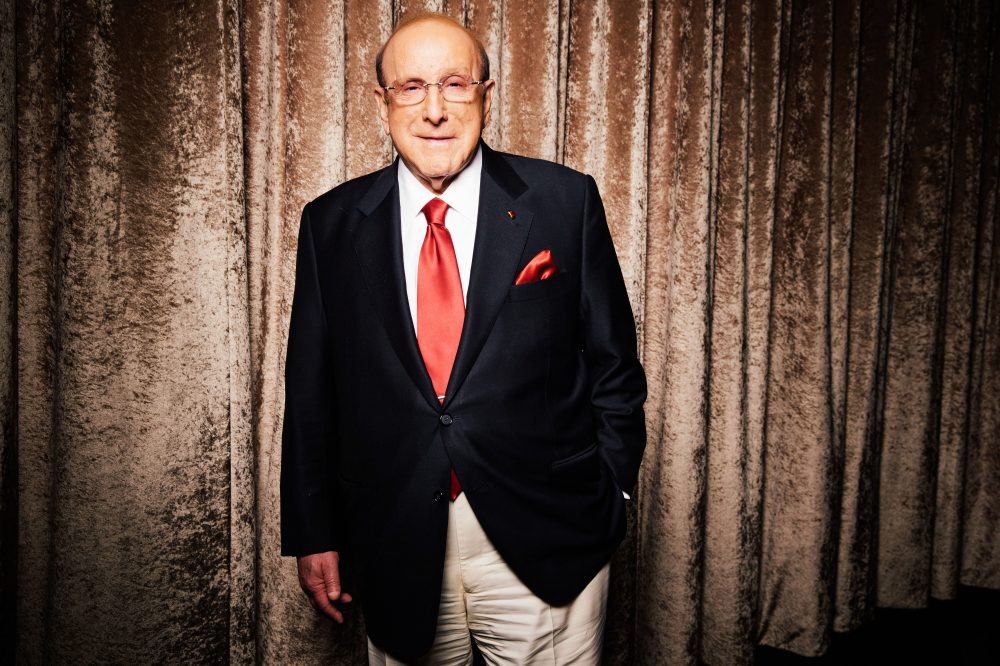
Clive Davis, a former corporate attorney who transformed himself into one of the most powerful forces in American music — helping launch and shape the careers of Bob Dylan, Whitney Houston, Bruce Springsteen, and dozens of other iconic artists — has passed away at 94, according to a statement from his family released Monday.
Davis, widely known throughout the industry as “the man with the golden ear” for his remarkable ability to spot a hit song, died at his home in Manhattan. The New York Times reported he had recently been hospitalized due to respiratory problems.
His family shared a heartfelt tribute on Facebook. “To the world, our father was the iconic music legend whose vision, instincts, and relentless pursuit of excellence shaped the soundtrack of countless lives,” the statement read. “To his family, Clive was Dad and Granddaddy, the steady presence at the center of our lives, the source of wisdom, strength, encouragement, and unconditional love.”
Throughout his career, Davis proved himself uniquely capable of crossing musical genres and generational boundaries well into his 80s. He discovered Janis Joplin during the 1960s rock era, mentored Sean “P. Diddy” Combs in the hip-hop world of the 1990s, and guided Kelly Clarkson through the pop landscape of the 2000s.
Davis earned four Grammy Awards for producing recordings by Clarkson, Carlos Santana, and Jennifer Hudson, along with a fifth Grammy recognizing his overall contributions to music. His work with Santana produced an album that swept the 2000 Grammy Awards with nine wins. He also helped revive the careers of Rod Stewart, Aretha Franklin, and Dionne Warwick.
Davis was born in the Brooklyn borough of New York City on April 4, 1932. As a child, he listened to the radio but felt no particular passion for music and didn’t even collect records the way his friends did.
After earning degrees from New York University and Harvard Law School, Davis worked at private law practices before joining the legal department at Columbia Records — a division of CBS — in the early 1960s. He made an immediate impact by successfully arguing to keep Dylan under contract when the singer’s management attempted to void the deal.
In 1966, Davis was elevated to head of the record label, which had largely been overlooking the growing rock music market, with only a handful of acts like Dylan, Simon and Garfunkel, and the Byrds catering to younger audiences.
His career took a decisive turn when record producer Lou Adler brought him to the Monterey Pop Festival in California in 1967. Davis later described the experience as “the creative turning point in my life.” Captivated by Janis Joplin’s performance, he immediately signed her and her band, Big Brother and the Holding Company.
In the years that followed, Davis built Columbia’s roster into a powerhouse by signing Chicago, Aerosmith, Pink Floyd, Blood Sweat and Tears, Springsteen, Santana, Billy Joel, Sly and the Family Stone, and Boz Scaggs — all of whom went on to become major stars.
Davis was deeply involved in every aspect of his artists’ work, from studio production to marketing strategy and song selection. When he suggested that Springsteen’s debut album “Greetings From Asbury Park, N.J.” needed a radio-friendly track, Springsteen responded by writing “Spirit in the Night” and “Blinded by the Light,” both of which became signatures of his live performances.
“Talent comes to me because they believe I’ve established a creative haven in which they can flourish,” Davis told Newsweek in an interview. “And talent attracts talent.”
Davis embraced the spotlight that came with his success, and even acknowledged it fed his ego. A well-known joke in music circles held that Davis believed the “CD” format was named after his own initials.
By 1973, however, trouble was brewing at CBS’s record division. According to the book “Hit Men: Power Brokers and Fast Money Inside the Music Business,” reports surfaced of inappropriate conduct at company gatherings, payments to secure radio airplay, and a Davis subordinate linked to fraud involving a heroin trafficker. Davis himself faced scrutiny over the use of company funds to pay for his son’s bar mitzvah. CBS fired him that year and pursued a $94,000 expense-account lawsuit, which was eventually settled out of court. Davis later pleaded guilty to failing to pay taxes on work-related expenses and was ordered to pay a $10,000 fine.
The setback did little to slow him down. By 1974, he had secured funding to launch his own label, which he called Arista. Barry Manilow was among the first artists signed, delivering a run of hit records for the new venture.
At Arista, Davis built a specialty in reviving the careers of artists like Franklin, Warwick, Lou Reed, and the Kinks, who had seen their commercial momentum stall. New talent and comeback acts alike generated strong revenues, Grammy Awards, and gold records for the label.
Not every decision was driven by commercial potential. He signed Patti Smith — widely regarded as the godmother of punk rock — despite her limited mainstream appeal. Smith, who inducted Davis into the Rock and Roll Hall of Fame in 2000, later told the Associated Press: “I really felt Clive, whatever his mainstream reputation … does love artists.”
Perhaps his most celebrated move at Arista came in 1983, when he discovered a teenage Whitney Houston and guided her to record-shattering success with a series of No. 1 hits. Davis played a hands-on producer role in Houston’s recording of “I Will Always Love You” — featured in her film “The Bodyguard” with Kevin Costner — which spent 14 weeks at No. 1 and became one of the best-selling singles in history.
Davis and Houston developed a deep personal bond, and she considered him family. Her descent into drug addiction and her fatal overdose in 2012 left him devastated.
“It rips your heart out, is what it does,” Davis said in a 2013 interview with CNN. “We knew there was no one like her and it is very, very painful that this tragic, tragic talent so prematurely came to an early demise, really.”
Davis also signed saxophonist Kenny G at Arista, helping him become one of the top-selling instrumental artists in music history. He expanded the label’s reach by launching a Nashville division that became home to country music stars Alan Jackson, Brooks and Dunn, and Brad Paisley.
Additionally, Davis helped proteges L.A. Reid and Kenneth “Babyface” Edmonds establish a label that produced R&B stars including Usher, TLC, and Outkast, and he brought future music mogul Combs in as a partner on a rap label.
Despite all of that success, Arista’s parent company, BMG Entertainment, pushed Davis out in 2000. Undaunted, he founded J Records, where he achieved major success with Alicia Keys, Luther Vandross, and an “American Songbook” series of classic 1930s and 1940s pop standards that helped reignite Rod Stewart’s career.
J Records was eventually absorbed through a series of corporate mergers, and in 2008 Davis was appointed chief creative officer of Sony Music Entertainment.
In his 2013 memoir, “The Soundtrack of My Life,” Davis — who had been married and divorced twice and had four children — publicly revealed that he was bisexual. He disclosed that he had maintained a 13-year relationship with a male doctor and was, at the time of writing, in another long-term relationship with a man.
The Trump administration rolled out a set of proposed rule changes on Monday that would significantly loosen requirements for oil and gas companies operating on federal lands, including a sharp reduction in the financial guarantees drillers must set aside for abandoned wells.
The proposals align with President Donald Trump’s broader push to scale back business regulations and boost domestic fossil fuel production.
Interior Secretary Doug Burgum defended the changes in an official statement, saying, “These targeted updates cut through the red tape that has historically deterred investment, ensuring our public lands remain a reliable engine for economic growth and innovation.”
One of the most significant changes involves statewide bonding requirements — financial guarantees used to cover the cost of sealing off abandoned oil and gas wells if a company goes under. The Department of the Interior is proposing to drop that bond amount from $500,000, a figure set during the Biden administration, down to just $25,000 per state.
To put that in perspective, a 2021 analysis by the non-profit organization Resources for the Future estimated that plugging a single abandoned well costs roughly $20,000.
The agency is also proposing to dramatically shorten the public comment period for oil and gas drilling permits — cutting it from 90 days down to just 10 days.
Additionally, the Interior Department wants to walk back certain regulations designed to limit methane leaks from drilling sites and pipelines. Methane is a powerful greenhouse gas that commonly escapes from those locations. The agency says rolling back those rules would reduce compliance costs for the industry by nearly $17 million annually.
GAZA CITY — As temperatures climb across the Gaza Strip, displaced Palestinians are abandoning their stifling tents and heading to the Mediterranean shoreline to bathe and wash their clothing — even though the water is thick with sewage and waste.
Nearly the entire population of Gaza has been uprooted over two years of fighting between Israel and Hamas. Most people are now packed into a narrow coastal corridor, living in makeshift tents or damaged buildings with little access to basic necessities.
“The only outlet in the Gaza Strip, from north to south, is the sea,” said Wadie al-Ras, a 36-year-old displaced Palestinian standing along the Gaza City shoreline. “The tents we have been staying in since the war are a torment.”
Before the war erupted in October 2023, Gaza City’s sandy beach was a popular gathering place for residents. Today, it serves as the only escape from cramped, bug-infested shelters where disease runs rampant.
Morning temperatures in Gaza hover between 28 and 31 degrees Celsius, and inside the tents, conditions feel far more extreme.
But the sea provides little real relief. The water is heavily contaminated with sewage and garbage, a direct consequence of the collapse of the infrastructure that once supported a population of more than two million people.
“The seawater is not clean. There’s sewage in it, filled with dirt,” said Shehab al-Suwaireki, a 36-year-old displaced father of six.
With no reliable access to fresh water, however, families feel they have no real alternative.
“We go in and wash (clothes) and bathe then we get out,” Suwaireki added. “In any case, germs are getting to our bodies.”
Husni Muhanna, a spokesperson for the Gaza municipality, explained that Israeli bombardment has knocked out many water pumps, while sewage stations, pumping facilities, and water treatment plants have all sustained severe damage.
“Residents resort to the beach despite all the dangers,” Muhanna said.
The conflict began when Hamas-led militants launched an attack on Israel from Gaza on October 7, killing 1,200 people and taking 251 hostages. Israel responded with a sweeping military offensive that has killed at least 73,000 Palestinians, according to health officials in the Hamas-governed territory.
Despite a truce reached in October 2025, Israel has continued conducting deadly strikes in Gaza, saying the operations are aimed at preventing imminent attacks by Hamas and other armed groups. Hamas has so far rejected demands to disarm in exchange for an Israeli troop withdrawal.
Aid and basic supplies remain critically scarce throughout the territory.
Nahed Hamouda, a 56-year-old father of four who was displaced from Jabalia, north of Gaza City, described the tents as feeling “like an oven.”
“There’s no electricity, no fan, no water, even the food is inedible,” he said, fanning himself with a piece of cardboard as he spoke.
Drivers traveling along Cherry Road between Ivy Lane and Airport Road should be aware of intermittent lane closures currently in effect.
According to traffic officials, the lane restrictions are expected to remain in place until 5:30 PM. The cause of the closures was not specified in the notice.
Motorists in the area are encouraged to allow extra travel time or consider using alternate routes until the closures are lifted.
The National Weather Service office in Mount Holly, New Jersey has issued a Severe Thunderstorm Watch that went into effect at 2:09 PM EDT on June 22 and is set to expire at 9:00 PM EDT the same evening.
A Severe Thunderstorm Watch means that conditions are favorable for severe thunderstorms to develop in and around the watch area. Residents should remain alert and be ready to take shelter quickly if a Severe Thunderstorm Warning is issued for their location.
Meteorologists urge people to stay tuned to local weather updates throughout the afternoon and evening hours as the situation continues to develop. Have a safety plan ready and avoid unnecessary outdoor activities until the watch has expired or been cancelled.
Micron Technology announced Monday that it has reached an agreement with Anthropic covering the supply of memory and storage products, along with a strategic investment in the AI company’s most recent funding round.
AI developers are in a race to lock down essential hardware components as the cost of building out data centers continues to climb. Meanwhile, memory manufacturers are eager to capitalize on surging demand for high-bandwidth memory and storage products used in developing and operating advanced AI systems.
Tom Brown, Anthropic’s co-founder and chief compute officer, explained the importance of the partnership: “Our compute strategy depends on getting every layer of the stack right, and memory and storage are central to how efficiently we can train and serve Claude.”
Anthropic has been busy over recent months securing computing capacity through a series of major partnerships, including agreements with CoreWeave, Broadcom, and SpaceX.
As part of the new deal, Micron said it will collaborate with Anthropic to evaluate how memory and storage systems perform across various AI workloads and how they interact with the broader technology infrastructure.
Micron noted that it has already put Anthropic’s Claude models to work internally, using them for coding and automated task applications across engineering, manufacturing, and enterprise operations, with plans to broaden those deployments going forward.
The financial details of both the supply agreement and Micron’s Series H investment in Anthropic were not made public.
Anthropic, the company behind the widely used coding assistant Claude Code, announced on June 1 that it had confidentially filed for a U.S. initial public offering. That filing came after the company raised $65 billion in its Series H funding round, which placed its valuation at $965 billion.
A 32-year-old Wilmington man is now in custody after Smyrna police wrapped up an armed robbery investigation tied to a local smoke shop.
The Smyrna Police Department arrested Isaiah Council, of Wilmington, Delaware, in connection with a robbery that took place on Friday, May 22, 2026, at around 3:05 in the afternoon.
Officers were called to Smokiez Smoke Shop, located at 239 N. Dupont Highway, after receiving a report that an armed robbery had just occurred at the business.
According to investigators, Council entered the store wearing a disguise and walked up to an employee to request cigars. The investigation continued from that point, ultimately leading authorities to identify and arrest Council as the suspect responsible for the incident.
Milford police are investigating a fatal single-vehicle crash that took place in the early morning hours of Saturday, June 20, 2026.
According to authorities, at approximately 2:14 a.m., a 2010 Toyota Tacoma was traveling eastbound on Shawn when the crash occurred. The incident proved fatal, and investigators are working to determine the full circumstances of what happened.
The Milford Police Department has not released additional details at this time. The investigation remains ongoing.
It weighs more than 50 tons and is recognized by the Library of Congress as the single largest communal art project ever created — and it was sewn together from grief, love, and the urgent need to be seen.
The AIDS Memorial Quilt grew out of one of the darkest chapters in modern American history. As an epidemic spread and claimed lives, fear and misunderstanding gripped both the public and the government. The communities hit hardest in those early years — men who had sex with men, Haitians, and people living with hemophilia, a rare blood disorder — faced deep stigma and were largely ignored.
The virus did not stay contained. It reached wives and children, crossing every boundary that people imagined might protect them.
As advocates demanded action and patients deteriorated in hospital rooms from infections their weakened immune systems could not fight off, a new kind of memorial took shape. Panel by panel, stitched by hand in the hundreds and eventually the thousands, the quilt began to record the names and lives of those who had been lost.
Activist Cleve Jones came up with the idea, though not everyone was supportive at first. As he once told the BBC, “Everybody told me it was the stupidest thing they’d ever heard of, but I ignored them and kept going and found people who shared the vision.” Jones drew on the tradition of quilts as objects made from scraps and leftovers, transformed into something warm and meaningful. He saw an AIDS quilt as a form of healing.
The dimensions of each panel were deliberate. At three feet by six feet, Jones noted, each one is “the approximate size of a grave.”
The panels are deeply personal. They carry portraits, nicknames, military titles, scraps of clothing, and handwritten words of love and loss: “Friends for life.” “I miss you constantly.” “Brothers. Beloved sons.” Many are decorated with hearts, rainbows, and flowers.
The quilt first appeared publicly on the National Mall in Washington in 1987, six years after AIDS was formally identified. At that point it included nearly 2,000 panels and stretched beyond the length of a football field. People walked through it quietly, many rendered speechless by what they saw.
The mid-1980s were a time of large-scale collective action — “We Are the World,” Hands Across America, “Do They Know It’s Christmas?”, Farm Aid, and a wave of benefit concerts. The quilt offered a quieter but equally powerful statement.
Its last full display on the National Mall came in 1996. According to the Smithsonian, the quilt stretched an entire mile — from the Capitol building to the Washington Monument — across a lawn that has witnessed generations of American activism. At that time, the quilt held 40,000 panels. Today, that number has grown to nearly 50,000.
The National AIDS Memorial continues to encourage people to create new panels. The effort is also a reminder of an unfinished fight: there is still no cure for AIDS, and recent reductions in U.S. foreign aid have raised new fears about the return of AIDS wards in vulnerable regions such as southern Africa.
Mexican President Claudia Sheinbaum announced Monday that her country intends to resume oil shipments to Cuba in the near future, a development that could offer significant relief to the island nation as its ongoing crises worsen due to a severe shortage of petroleum.
Sheinbaum said her administration plans to route the oil through commercial and privately owned companies, departing from the previous approach of using state-owned enterprises to handle such shipments.
Mexico had stepped up as a critical fuel supplier to Cuba after the United States took action against Venezuela in early January, cutting off vital oil shipments to the island. Those shipments had already been scaled back before being halted entirely after U.S. President Donald Trump threatened tariffs against any nation that supplies or sells oil to Cuba.
In the wake of the disruption involving Venezuela, only a single oil delivery has made it to Cuba — a Russian tanker carrying 730,000 barrels of oil, a supply that lasted just one month.
The fuel shortage has intensified an already serious energy crisis on the island. Cuba produces only 40% of the petroleum it requires, and the shortfall has triggered widespread power outages, shortened work schedules, water supply problems, canceled surgeries, and food spoilage.
Sheinbaum said she hopes to take advantage of a set of free-market reforms recently approved by the Cuban government, working through Mexican business owners who are already operating on the island.
“The mechanism would be through private companies that have permits to transport fuel to Cuba,” she said, though she offered no additional specifics. “We hope that commercial transport can resume soon,” she added, without giving a timeline for when that might occur.
The Mexican president also confirmed that her country would continue providing humanitarian assistance to Cuba alongside any resumed fuel deliveries.
The family of a 1-year-old boy who was killed when police opened fire on a moving vehicle in a Mississippi Walmart parking lot is calling on authorities to make all video footage of the incident public. They want the recordings to show whether officers were actually at risk of being struck before one of them pulled the trigger.
Kohen Wiley was in the car with his mother and another woman on June 14 when Senatobia police arrived to respond to a shoplifting call. The family contends they were simply driving away from the scene, while officers claim the vehicle was moving directly toward them.
“I watched my baby take his first breath, and I watched my baby take his last breath,” Kohen’s mother, Vellesiya Wiley, said at a news conference Monday.
The shooting has ignited anger throughout the small city of Senatobia, where residents say it reflects a troubling pattern of encounters between police and Black community members. The Mississippi Bureau of Investigation has taken over the inquiry into the child’s death.
Civil rights attorney Ben Crump appeared alongside Kohen’s parents and grandparents at a local church Monday, telling reporters that releasing body camera footage, dash camera recordings, and Walmart security video is the only way to establish the truth about whether officers faced any real danger.
“If that is the truth, then show us that,” Crump said. “The longer you delay releasing the video, the more distrustful we become.”
The Mississippi Bureau of Investigation declined to say what video evidence investigators have obtained or whether any of it would be made public. Agency spokesperson Bailey Martin said Monday in an emailed statement: “This case has been made a top priority, and we currently have multiple agents working tirelessly to ensure every aspect of the investigation is thoroughly examined.”
Senatobia Police Chief Harold Vanderford did not respond to a phone message left seeking comment Monday.
State investigators released an initial account of the shooting last week, saying officers arrived at the Walmart to find two women and a child getting into a car and leaving. According to the bureau’s statement, “Officers attempted to stop the vehicle, but the driver drove in the direction of the officers, almost striking one. An officer then discharged their weapon and the vehicle fled the scene.”
Kohen’s mother has said the shoplifting call stemmed from a box of diapers that her friend had been carrying — and that she believes her friend had actually paid for them. State investigators declined to address those details.
Crump challenged why officers did not simply let the car leave and record the license plate number instead of escalating the situation.
“They were called over a box of diapers and a family now has to bury their baby,” Crump said. “You cannot put those two things next to each other and call it reasonable policing.”
Crump also announced that the family intends to have an independent autopsy conducted. He noted that while it is not disputed that Kohen was struck by a police bullet, details about the trajectory of the shot could help determine whether the officer fired from directly in front of the vehicle or from the side — which would be key in assessing whether that officer was genuinely in harm’s way.
Policing expert Ian Adams, who teaches criminal justice at the University of South Carolina, told the Associated Press last week that officers need to understand that “shooting into a moving vehicle is a very bad idea and one to be avoided at almost all costs,” pointing to the serious risk posed to passengers and bystanders.
A federal judge has put a stop to the Trump administration’s push to subpoena Minnesota Gov. Tim Walz and several other state officials, determining that the Justice Department was abusing its investigative authority to punish those who refused to help crack down on illegal immigration.
In a ruling made public Monday, U.S. District Judge Patrick Schiltz concluded that the primary purpose of the subpoenas was to pressure Minnesota officials into helping enforce federal immigration law and to punish them for declining to do so. The judge found the connection between the information being sought and any actual criminal activity to be “extremely weak to nonexistent.”
Tensions between the Trump administration and Minnesota’s Democratic leadership had been building since January, when federal immigration officers clashed with protesters in the Minneapolis-St. Paul area — particularly following the fatal shootings of Renee Good and Alex Pretti by federal officers.
President Donald Trump had threatened to invoke the Insurrection Act to suppress the protests and accused Walz — who served as Democratic presidential nominee Kamala Harris’ running mate in 2024 — along with other officials, of encouraging demonstrators to interfere with Immigration and Customs Enforcement operations.
The subpoenas, issued in January, were part of a probe into whether Walz and other officials had obstructed or interfered with law enforcement. They were directed at the offices of Walz, Attorney General Keith Ellison, Minneapolis Mayor Jacob Frey, St. Paul Mayor Kaohly Her, and officials in Ramsey and Hennepin counties.
Judge Schiltz wrote that the materials sought in the subpoenas “largely if not entirely relate to constitutionally protected conduct,” and noted that Minnesota has every legal right to decline using its resources to enforce federal immigration law. He concluded that the Justice Department “is not conducting a criminal investigation” but is instead misusing the grand jury process for unlawful purposes.
The judge added that the evidence pointing to an unlawful motive was overwhelming, saying the Justice Department “has struggled — without success — to identify a single plausible investigatory justification” for the subpoenas. The Justice Department did not respond to a request for comment.
In a statement following the ruling, Walz called it “a victory for the rule of law and our democracy.” He went on to say, “The U.S. Justice Department is pursuing criminal investigations into the President’s political opponents. This case was just one example of that, but we are seeing daily reminders of this administration’s lawlessness — in Minnesota and around the country. We all must continue to seek justice and uphold the rule of law.”
Attorney General Ellison said “it should disturb every American that Donald Trump is weaponizing the criminal justice system against people he disagrees with.”
Mayor Her described the subpoenas as “a politically motivated retaliation against our city for lawfully standing up to ICE and fighting for our residents.”
Mayor Frey said the investigation was “never about justice, law, and order, but the absence of it,” adding that “subpoenaing political opponents because they spoke on behalf of their constituents violates the core tenets of our democracy and human decency.” He also pointed out that criticizing government action is not a crime, saying, “One of the defining strengths of our democracy is the ability to challenge those in power without fear of retribution. Elected officials have both the right and the responsibility to speak honestly about how government decisions affect the people they serve.”
This ruling is part of a broader pattern of federal courts pushing back against the Justice Department’s efforts to aggressively advance the Trump administration’s agenda. Over the past year, judges have dismissed indictments against two high-profile Trump critics — former FBI Director James Comey and New York Attorney General Letitia James — and grand juries have repeatedly declined to return indictments the Justice Department sought.
Critics argue these developments reflect growing concerns that the Justice Department, which is supposed to operate independently of the White House, has been politicized under the current administration.
Separately, Vice President JD Vance has called on the Justice Department to investigate Walz and Ellison over allegations that they failed to prevent widespread social services fraud. The department has not indicated whether it will open such an investigation. Both Walz and Ellison have dismissed those allegations as politically motivated and defended their anti-fraud efforts in Minnesota.
Legal battles connected to the immigration surge continue on other fronts as well. The federal government has argued that Minnesota prosecutors lack jurisdiction to investigate federal officers. Hennepin County Attorney Mary Moriarty filed a lawsuit in March seeking access to evidence in the Good and Pretti killings, accusing the administration of withholding materials from state investigators. Moriarty has also pursued criminal charges against ICE officers in two other incidents, including the nonfatal shooting of a Venezuelan man, and has indicated her office is looking into several additional cases.
Lionel Messi etched his name further into soccer history on Monday, claiming the title of all-time top scorer in men’s World Cup play after finding the net for the 17th time in tournament competition during Argentina’s Group J clash against Austria.
The record-breaking tally moved the Argentina captain past Germany striker Miroslav Klose, who previously held the men’s record. Messi’s 17th goal also pulled him level with Brazilian legend Marta, whose 17 goals in women’s World Cup play had long stood as the overall record across both tournaments.
The historic moment unfolded in Dallas, where Messi helped orchestrate a fluid Argentina attacking move before slipping into the penalty area unmarked. He calmly finished a low cross from Facundo Medina into the bottom corner on his first touch to put Argentina in front.
The strike gave Argentina the lead in their second Group J outing. The South American powerhouse entered the match riding high after a dominant 3-0 opening win over Algeria, with a spot in the knockout round firmly in their sights.
The Lincoln Memorial Reflecting Pool on Washington’s National Mall is being prepared to be drained once more — just weeks after a $14.7 million renovation project was completed — as President Donald Trump issues stern warnings to those accused of vandalizing the historic landmark.
According to Washington-based WTOP Radio, the DC Water authority has issued a permit to drain the 2,000-foot-long rectangular pool. The company that performed the renovation work says it will address the needed repairs under its warranty obligations.
Neither the National Park Service nor DC Water responded to requests for comment.
Peeling paint and algae growth became noticeable in the pool shortly after President Trump announced the renovation complete on June 6. Questions have been raised about the no-bid contract used to recoat the pool ahead of the nation’s 250th anniversary celebrations scheduled for next month, along with concerns about the ducks that inhabit the water.
Trump has attributed the pool’s deteriorating condition to vandals, though he has not offered evidence to support that claim. On Monday, he reinforced a weekend threat made by U.S. Attorney Jeanine Pirro to pursue criminal charges against those accused of attempting to damage the pool.
“Please remember that there is a 10-year prison sentence for the destruction, or even the attempted destruction, of such things — Which will be fully enforced!” Trump stated in a social media post.
Trump indicated that multiple arrests have already taken place. Media reports citing an administration official say at least five individuals have been arrested — including a former Olympian who has publicly denied the accusations — while five others received citations. The U.S. Park Police did not immediately respond to a request for comment.
Virginia-based Atlantic Industrial Coatings, the firm responsible for the renovation, released a statement Sunday saying the sections requiring repair represent “a very small part of the massive 7-acre project, and do not indicate a failure of the liner.”
A federal judge in Washington, D.C. has put a stop to the Trump administration’s plan to use a redesigned immigration database to check the accuracy of voter registration records across the country, delivering a setback to President Donald Trump’s push to expand federal involvement in elections before the November midterms.
The Department of Homeland Security had reworked one of its systems — known as SAVE — last year following a Trump executive order directing state and local governments to be able to verify the immigration and citizenship status of voters. The overhaul allowed users to conduct bulk searches of records, a significant change from how the system previously operated.
U.S. District Judge Sparkle Sooknanan issued a 75-page ruling Monday, ruling in favor of voting rights and privacy groups who contended that the changes to SAVE made it less reliable and put eligible voters at risk of being wrongly removed from the rolls. Judge Sooknanan was appointed by Democratic President Joe Biden.
The ruling arrives at a politically charged moment, with Trump’s Republican Party fighting hard to hold onto control of both chambers of Congress in the November 3 midterm elections.
Trump and his supporters have repeatedly claimed that states are failing to stop voter fraud — a claim that state-level audits and academic research have consistently found to be unsupported, given how rarely fraud actually occurs. Trump has also continued to falsely claim that fraudulent activity cost him the 2020 presidential election.
Opponents of the voter roll verification push argue that the effort is less about protecting election integrity and more about political strategy — specifically, reducing the number of voters in ways that could disadvantage Democratic-leaning citizens.
California has taken the U.S. Environmental Protection Agency to court, filing a lawsuit Monday after the federal agency sent several of the state’s landmark vehicle emissions waivers to the Republican-controlled Congress earlier this month, opening the door to their potential repeal.
The EPA argued that California’s environmental regulation waivers — approved under previous Democratic administrations through the Clean Air Act — were required to be submitted to lawmakers under the Congressional Review Act. California pushed back hard, calling the move unlawful and asking the U.S. District Court for the District of Columbia to put a stop to it.
State officials said the EPA was essentially trying to redefine what a waiver is, accusing the agency of attempting to “wave a magic wand” and reclassify the waiver as a rule subject to congressional action.
California Attorney General Rob Bonta condemned the EPA’s decision in strong terms. “These latest illegal actions would mean more pollution, poorer air quality, more market uncertainty, and greater health risks for communities already overburdened by emissions,” Bonta said. He noted that California has received more than 75 such waivers for various environmental measures over the years.
The EPA had not offered any comment in response to the lawsuit as of Monday.
The current administration has pursued multiple strategies to strip California of its authority to mandate cleaner vehicles and push for greater electric vehicle adoption. The EPA has also moved to make it easier for automakers to sell more gasoline-powered vehicles while increasing the financial burden on consumers purchasing electric vehicles.
The four waivers now under congressional scrutiny gave California the power to set its own emissions standards for passenger vehicles, trucks, and lawn and garden equipment. Those standards have pushed manufacturers to develop cleaner, electric alternatives in order to reduce overall emissions.
California’s current vehicle emissions framework was approved in 2022 during the Biden administration. The standards require automakers to progressively increase the share of electric vehicles they sell while meeting tighter restrictions on tailpipe pollution — rules that are considerably more stringent than current federal standards.
The current administration has signaled plans to roll back federal fuel economy requirements. Legislation signed last year overturned California’s goal of phasing out the sale of new gasoline-powered cars by 2035. California maintains that the long-term fuel savings for consumers under its rules far outweigh the higher upfront cost of electric vehicles.
Congress moved to cancel California’s authority to ban new gas-powered vehicles after 2035 following lobbying efforts by major automakers including Toyota and GM, who sought relief from the state’s strict emissions rules. That action came after the EPA had already submitted that particular waiver to Congress for review. Many Democratic lawmakers have argued that such waivers are not eligible for review under the Congressional Review Act, and California has separately challenged that waiver submission as well.
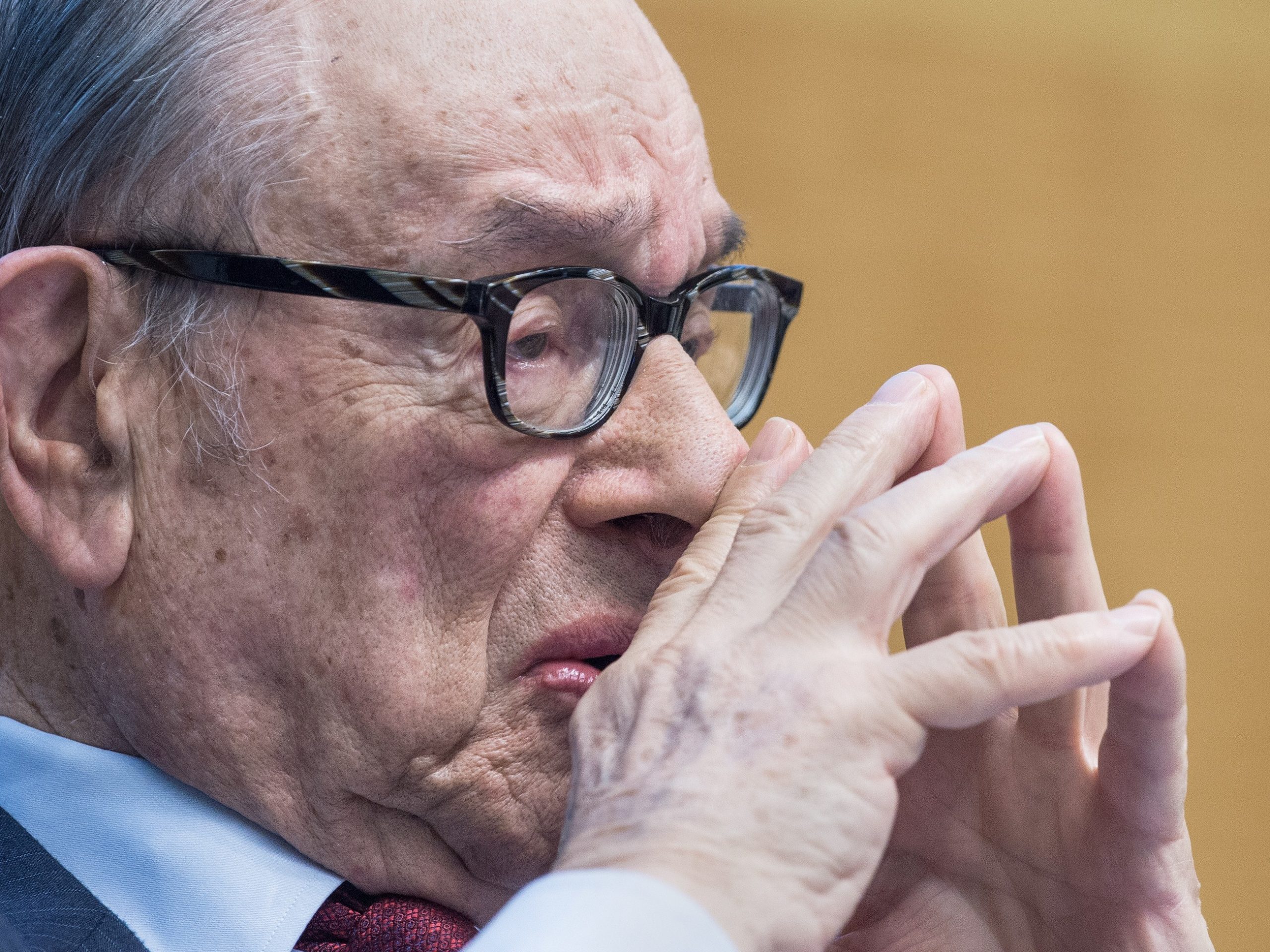
WASHINGTON — The late former Federal Reserve Chairman Alan Greenspan, who passed away Monday, left behind a legacy that is already shaping the direction of the nation’s central bank under its newest leader, Kevin Warsh.
Warsh, who referenced Greenspan four times during his White House swearing-in ceremony exactly one month ago, appears to be adopting many of the same central banking philosophies that defined Greenspan’s tenure — along with some of the potential pitfalls that came with them.
Greenspan, who led the Federal Reserve for more than 18 years, was known for keeping his public statements vague and trusting financial markets to work things out on their own. That approach helped keep inflation low and economic growth steady for much of his time in office — a period so stable it became known as the “Great Moderation.”
However, that same philosophy led Greenspan to dismiss warning signs of a growing housing bubble, believing that the most sophisticated financial institutions would not systematically misjudge asset values or ignore major risks. When the U.S. subprime mortgage crisis triggered a global financial meltdown shortly after he left office, Greenspan acknowledged during congressional testimony that there was “a flaw” in his belief in rational and efficient markets.
Greenspan, who died at home from complications of Parkinson’s disease at age 100, had a gift for finding meaning in obscure economic data, according to Brookings Institution Senior Fellow Donald Kohn, a longtime top Fed staffer under Greenspan who later became Fed vice chair. In a tribute published Monday, Kohn wrote that Greenspan could “dazzle and puzzle” by “finding insight in often obscure pieces of data, occasionally combining these series in wondrous ways.”
But Kohn also noted that despite recognizing rapid price increases in certain local housing markets, Greenspan “doubted a national bubble across these markets, and he did little with his soapbox or powers over bank regulation to preemptively build resilience.”
In the aftermath of the 2007-2009 financial crisis, sweeping regulatory reforms — known as Dodd-Frank — required banks to hold larger financial cushions, develop contingency plans, and operate under tighter federal oversight, all to ensure no institution would ever be considered too large to be allowed to fail and require a taxpayer-funded rescue.
Some of those regulations are now being rolled back under Fed Vice Chair for Supervision Michelle Bowman, and Warsh has stated that reducing the Fed’s overall footprint is among his goals.
Warsh has made no secret of Greenspan’s influence on him, referencing him repeatedly during his May 22 swearing-in and connecting several of his own views on the economy and the Fed’s proper role to positions Greenspan was known for.
One area of alignment is communication. Greenspan was famously guarded and deliberately vague in his public statements, believing that keeping his options open made him better able to respond to unexpected developments. Warsh has similarly expressed concern that the Fed’s current habit of extensive public explanation risks restricting policymakers’ flexibility.
The first policy statement released under Warsh’s leadership last week was noticeably shorter and removed any explicit direction about where interest rates might be headed.
Still, Warsh has shown a willingness to speak about the future when he believes it matters. Before taking office, he pointed to how Greenspan in the mid-1990s correctly identified that rising worker productivity would help hold down inflation — and used that insight to push back against colleagues who favored raising interest rates.
Warsh believes a comparable situation may be unfolding today because of the rapid spread of artificial intelligence, and has directed one of five task forces he created at the start of his chairmanship to study productivity trends.
Broadly, the reforms Warsh is pursuing reflect an idea Greenspan would likely support: that the central bank should stay in its lane, keep its role as limited as possible, and allow households, businesses, and investors to handle the rest.
As Warsh works to scale back policies that grew out of the financial crisis — including the Fed’s large balance sheet and its expanded approach to public communications — he must ultimately decide how far to go in the one area where Greenspan himself admitted he was wrong.
At his first press conference as chairman, Warsh explained his thinking on market communication: “Financial markets perform best when they react to incoming data. I think the financial markets work less efficiently when they ask a question. How will the Federal Reserve react to that incoming information?” He added, “When all the financial markets are doing is reflecting back what we’ve said, then we’re taking the most important source of information and we’re being blind to it. I’d like us to create a system where those blinders come off, where markets are following data that they efficiently think is reliable.”
Delaware State Police have released the identity of the woman who lost her life in a fatal e-bike crash that occurred late Saturday morning in Rehoboth Beach. The victim has been identified as 66-year-old Stephanie Lewis, a resident of Potomac, Maryland.
The Delaware State Police Collision Reconstruction Unit is actively working to piece together the circumstances surrounding the crash. Authorities are urging anyone who may have witnessed the incident to reach out to Sergeant A. Mitchell at (302) 703-3269. Tips can also be submitted by sending a private message to the Delaware State Police on Facebook, or by calling Delaware Crime Stoppers at 1-800-847-3333.
Anyone who has been impacted by a crime, witnessed a crime, or has suffered the sudden loss of a loved one and is in need of support can contact the Delaware State Police Victim Services Unit and the Delaware Victim Center. Help is available around the clock through a toll-free hotline at 1-800-VICTIM-1 (1-800-842-8461). You may also reach the Victim Services Unit by email at [email protected].
Wilmington police made an arrest in connection with a burglary in the Woodcrest neighborhood after members of the public stepped forward with information that helped crack the case.
Officers were called to the 600 block of Boxwood Road at around 8:40 p.m. on Sunday, June 7, 2026, following a report of a burglary that had just taken place.
Investigators determined that the victim had recently finished riding an electric bicycle, commonly known as an e-bike, and had placed it inside an open garage when the theft occurred.
The arrest was ultimately made possible through tips and assistance provided by members of the community, who played a direct role in moving the investigation forward.
Northwestern center Jackson Carsello will be able to suit up for college football in 2026, thanks to a court injunction handed down Monday by a Cook County, Illinois judge.
The NCAA had denied Carsello’s request for a waiver that would have granted him a sixth year of eligibility. The organization’s position was that Carsello should have used his redshirt year back in 2021. During that season, he practiced but never appeared in a game due to an ankle injury. Carsello, however, considered 2022 his redshirt year — a season in which he appeared in four games.
Over the past three seasons, Carsello played in 32 games total, including 13 starts in 2025.
Cook County Circuit Judge Neil Cohen ruled in Carsello’s favor, pointing out that the injury was beyond the player’s control.
“Mr. Carsello didn’t impose a high-ankle sprain on himself in order to dodge the rules of the NCAA,” Cohen stated in his ruling. “… You have his own coach saying, ‘I wouldn’t put him in, he was damaged, it would be unhealthy, it would be a violation,’ — my terms, not his — ‘of the whole purpose of the NCAA, which is to guarantee the safety and health of a student-athlete.’”
The judge also had pointed words for the NCAA, though he stopped short of accusing the organization of acting in bad faith.
“I admire the NCAA, and I thank them for the process they went through, but they got it wrong in this case. I imply no bad faith in their getting it wrong, but they got it really wrong,” Cohen said.
Carsello joins a growing list of college football players who have turned to the courts to secure their eligibility. Ole Miss quarterback Trinidad Chambliss and Oklahoma linebacker Owen Heinecke have also received similar injunctions ahead of the upcoming season.
Texas Tech quarterback Brendan Sorsby received an injunction as well following an NCAA suspension tied to gambling on his own team and other college football programs, though he has since pursued entry into the NFL’s supplemental draft — a route that had also been available to Carsello if the court had not ruled in his favor.
Wide receiver Brandon Aiyuk appears to be making it crystal clear where he wants to play next. The San Francisco 49ers pass-catcher took to Instagram on Sunday night to publicly root for the Washington Commanders, shouting in his story, “Go Commanders! Go Commanders! Go Commanders! Raise Hail! Take Command!”
Aiyuk also shared a photo of Washington quarterback Mark Rypien hoisting the Lombardi Trophy following Washington’s Super Bowl XXVI championship victory.
The 28-year-old receiver has been in an uncertain situation this offseason after 49ers general manager John Lynch stated in January that “it’s safe to say that he’s played his last snap with the Niners.” Despite that declaration, San Francisco has neither released Aiyuk nor found a team willing to take him in a trade.
Aiyuk missed the entire 2024 season after suffering tears to his ACL, MCL, and meniscus in October of that year. Since then, he has used his social media platforms to express his frustration with the organization. Earlier this month, he described the team as “dumb” and “stupid” for continuing to pay him, and suggested the franchise was afraid of how effectively he might perform against them if he landed elsewhere.
Part of his interest in Washington may stem from a personal connection — Aiyuk shares a close bond with Commanders quarterback Jayden Daniels, the two having been teammates at Arizona State.
Aiyuk had signed a four-year, $120 million contract back in August 2024. However, the 49ers voided the guaranteed money remaining on the deal last summer and eventually placed him on the reserve/left team list after he stopped reporting to the team facility to rehabilitate his right knee.
Before his injury, Aiyuk was one of the top performers in San Francisco, leading the team with 1,342 receiving yards and seven touchdown receptions in 2023. Across five NFL seasons, the former first-round pick from the 2020 draft has recorded 294 catches for 4,305 yards and 25 touchdowns with the 49ers.
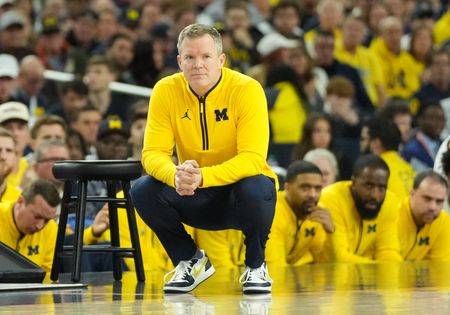
ANN ARBOR, Mich. — Fresh off a national championship, the University of Michigan basketball program finds itself in an unexpected coaching search.
Dusty May is heading to the NBA, with the 49-year-old coach and the Dallas Mavericks in the final stages of completing a contract agreement, according to a source familiar with the situation who spoke to the Associated Press on Monday. The source requested anonymity since the deal had not yet been officially finalized.
May guided the Wolverines to a national title with a victory over UConn in Indianapolis, delivering Michigan its first championship since 1989.
Just days after the celebration, athletic director Warde Manuel announced he had locked May into a long-term contract extension during a victory rally back in Ann Arbor. Two months later, May is on his way out the door.
He will take over a Dallas squad that includes reigning Rookie of the Year Cooper Flagg and nine-time All-Star Kyrie Irving. May steps into the role previously held by Jason Kidd, who was dismissed two weeks after Masai Ujiri came aboard as president of basketball operations and alternate governor.
Whether any of May’s current coaching staff will follow him to Dallas remains unknown at this time.
Manuel could look internally, potentially promoting assistant coach Mike Boynton — a former head coach at Oklahoma State — to lead the program. Two-time national champion coach Billy Donovan has also been mentioned as a possible candidate should he choose to return to the college game. The former Florida head coach stepped down from his position with the Chicago Bulls in April after six seasons there, which followed a five-year stint with the Oklahoma City Thunder.
The coaching departure isn’t the only challenge facing Michigan heading into next season. The program is also expected to lose three players who are projected to be selected in the first round of Tuesday night’s NBA draft.
Manuel had brought May over from Florida Atlantic in 2024, and the coach wasted no time turning around a struggling program. Just two years earlier, Michigan had lost a school-record 24 games — a stretch that ultimately cost former Fab Five player Juwan Howard his job.
May made effective use of the transfer portal during both of his seasons, specifically targeting players who excelled at passing, believing that quality passers tend to be strong teammates. His offensive philosophy centered on floor spacing, while his defensive approach was aggressive and relentless.
Transfers Yaxel Lendeborg, Aday Mara, and Morez Johnson Jr. all chose Michigan last season, and the trio helped the Wolverines win a school-record 37 games and claim the program’s second national title, all while boosting their own NBA draft prospects.
May had already been building toward next season, bringing in nine new players — including three from the portal — but those recruits and current roster members will now have the option to seek transfers following his exit.
Manuel had moved quickly to extend May’s contract after the season partly to fend off interest from other programs, including North Carolina, which parted ways with its own coach and hired a former NBA head coach. Keeping May away from an NBA opportunity, however, was likely never a realistic possibility.
France is enduring a brutal heat wave this week, with daytime temperatures climbing above 40 degrees Celsius — that’s 104 degrees Fahrenheit — and nighttime temperatures offering little relief to a population largely without air conditioning.
The country’s national weather service, Meteo France, warned that most of France — the largest nation in the European Union — would be stuck in these oppressive conditions through at least Friday.
Meteo France described the heat wave as exceptionally intense, drawing comparisons to the devastating August 2003 heat wave, though officials noted its duration remains uncertain. That 2003 event prompted France to create a heat watch warning system after the highest temperatures recorded in more than 50 years led to an estimated 15,000 deaths, many of them elderly people living in apartments and care homes without air conditioning.
According to the European Union’s Copernicus Climate Change Service, Europe is the world’s fastest-warming continent, with temperatures rising at twice the global average pace since the 1980s. Scientists link human-caused climate change to the increasing frequency of extreme weather events, and projections from the United Nations climate agency suggest the next five years will break even more heat records.
Several communities across France hit their all-time temperature highs on Monday. Paris endured its hottest June night on record, with temperatures never dipping below 24.2 degrees Celsius (75.5 degrees Fahrenheit). The French capital also set a new June daytime record of 37.7 degrees Celsius (99.9 degrees Fahrenheit) Monday afternoon.
“This will continue through the end of the week, with heat levels never before recorded across more than three-quarters of the country on Wednesday and Thursday,” Meteo France stated.
The intense heat also worsened air quality in Paris, triggering the formation of ozone that traps pollution. The air quality monitoring agency serving the Paris region warned that pollutant levels were expected to surpass recommended safety thresholds.
With air conditioning uncommon across much of France, residents scrambled to cope. Education minister Edouard Geffray announced that 1,352 schools were shut down Monday because of the heat, while several thousand others adjusted their schedules — releasing students earlier and moving classes into air-conditioned spaces.
More than half of France’s regions were placed under a “red alert” for heat by Monday, covering areas forecast to see highs above 40 degrees Celsius with overnight lows staying above 20 degrees Celsius.
Announcements on the Paris public transit network urged riders to stay hydrated. Medical professionals warned about the dangerous combination of alcohol consumption in extreme heat, and authorities moved to restrict public drinking.
Multiple drowning incidents were also reported as people attempted to cool off in rivers, despite warnings about dangerous currents and other hazards.
Tragically, two young children — ages 2 and 4 — died Monday after being discovered unconscious inside their family’s car in the southern town of Carpentras. According to a statement from the public prosecutor, initial findings indicate the children had locked themselves inside the vehicle. An investigation has been launched under an involuntary manslaughter charge. Government officials urged parents never to leave children unattended in vehicles.
Neighboring United Kingdom also braced for dangerous heat. The British weather office issued a rare “red” weather warning for Wednesday and Thursday, cautioning that temperatures could top 37 degrees Celsius (99 degrees Fahrenheit) in the shade and potentially reach 40 degrees Celsius in parts of England and Wales. Officials there also warned that extreme temperatures could cause heat-sensitive infrastructure to fail, including power and mobile phone services.
The World Health Organization’s Europe office reported this month that more than 200,000 people across Europe died from heat-related causes over the past four years — and that most of those deaths were preventable. Extreme heat can lead to heat exhaustion and life-threatening heat stroke.
The EU’s monitoring agency found that 2024 was the hottest year ever recorded both in Europe and globally, with the continent seeing its second-highest number of “heat stress” days on record.
Scientists continue to warn that climate change is making heat waves and drought more frequent and more intense — particularly in southeastern Europe — raising the risk of health crises and wildfires. The burning of fossil fuels such as gasoline, oil, and coal, along with deforestation, wildfires, and industrial emissions, releases heat-trapping gases that drive climate change.
MEXICO CITY — A duck dressed in Mexico’s green national soccer jersey and sporting a FIFA tie waddled into a presidential press conference Monday and quickly became the biggest star in the room — upstaging President Claudia Sheinbaum herself.
The duck, named Merlín, has become Mexico’s unofficial mascot for the World Cup. He arrived ahead of the president, settled in facing the gathered reporters, and let his owner do all the talking.
Carla Gómez, who makes her living as a street vendor selling water and soft drinks, spoke on Merlín’s behalf. She introduced her family with evident pride, describing them as a reflection of the countless working-class families across Mexico. “We are the working part” of Mexico, she told those in attendance.
Seated next to the lectern with Merlín front and center were Gómez’s two sons — Carlos, 22, and Cristian, 14. She described Cristian as someone who “doesn’t rest after school” and pitches in daily by selling items and hauling packages.
Carlos described Merlín’s role in their small operation: “He’s the boss of our little business. He’s the one who follows behind us, making sure we’re working and doing things the right way.”
The family takes Merlín’s diet seriously, feeding him small fish and crickets throughout the week, with a special treat of a meat taco reserved for Sundays.
Gómez said she was deeply touched by the outpouring of affection World Cup fans have shown toward Merlín. “It has been the best thing that has happened to us in this life,” she said. She also noted that other ducks the family has raised became well-known in Mexico City’s historic center, including one named Bruna, who was known for wearing tennis shoes.
Gómez believes the family’s story resonated with so many people online because viewers recognized them as “a hard-working family, a family that gets up every day to make ends meet.”
President Sheinbaum eventually had to redirect the briefing back to its original agenda, but not before she attempted to pet Merlín and posed for a photograph alongside the Gómez family.
A federal judge in Washington has turned down a request to remove senior Justice Department officials from the case against a man charged with attempting to kill President Donald Trump at the White House Correspondents’ Association dinner.
Cole Tomas Allen had argued that having Acting Attorney General Todd Blanche and District of Columbia U.S. Attorney Jeanine Pirro involved in his prosecution posed a conflict of interest, since both were among the administration officials attending the April dinner. Allen’s legal team also pointed to the close personal friendship between Pirro, a former Fox News commentator, and the president as a reason for concern.
U.S. District Judge Trevor McFadden rejected those arguments, ruling that neither the officials’ presence at the dinner nor Pirro’s relationship with the president was sufficient grounds to remove them from the case. McFadden pointed out that Allen is not accused of targeting Blanche or Pirro specifically, and there is no indication he even knew they would be at the event.
“They are unlikely to be trial witnesses, nor do they meet the legal definition of victims,” McFadden wrote in his ruling. McFadden himself was nominated to the federal bench by Trump.
Allen faces a range of serious charges, including assaulting a federal official with a deadly weapon and attempted assassination of the president. He has entered a not guilty plea. If convicted on the attempted assassination charge alone, he could face a maximum sentence of life in prison.
Prosecutors also allege that Allen fired a shotgun at a Secret Service agent during the incident, which brought an abrupt and early end to one of Washington’s most prominent annual gatherings. A Secret Service officer who was struck once in a bullet-resistant vest returned fire five times but did not hit anyone. Allen, who is from Torrance, California, was injured during the confrontation but was not shot.
BERLIN — Despite ongoing headwinds in key markets around the world, Porsche is holding firm on its financial targets for the year, according to a speech prepared by the company’s top executive.
The text of a speech by Porsche CEO Michael Leiters, published online Monday, reveals what he plans to tell shareholders at the company’s annual general meeting on Tuesday. The remarks acknowledge significant shifts in both the U.S. and Chinese markets, which have created pressure on the 911 sports car manufacturer.
“In the short term, we will not see a return to the targeted margins we have seen in the past,” Leiters is expected to say, according to the published speech text.
Even so, Leiters confirmed that the Volkswagen subsidiary is sticking with its forecast of an operating margin between 5.5% and 7.5% for the current year — and that the company is pressing ahead “despite the environment remaining very challenging.”
KANSAS CITY, Missouri — The spirit of Diego Maradona is everywhere as Argentina’s players, coaches, and fans gear up for their second World Cup Group J showdown against Austria in Dallas on Monday.
The timing carries deep significance. Monday falls exactly 40 years after one of the most talked-about performances in soccer history — Maradona’s two-goal display in Argentina’s 2-1 victory over England during the 1986 World Cup quarter-finals at Mexico City’s Azteca Stadium.
On June 22, 1986, Maradona scored both the notorious “Hand of God” goal and the breathtaking “Goal of the Century,” weaving past defender after defender on the English side. In Argentina, that date is officially honored as the Day of the Argentine Footballer.
Even more than five years after his passing, Maradona remains a towering presence among Argentine supporters — the only figure who comes close to rivaling Lionel Messi in terms of devotion and reverence.
When fans gathered last week in Kansas City, which has served as Argentina’s home base during the tournament, massive flags referencing Maradona were on full display throughout the crowd. One banner placed him alongside Messi with just a single word: “simbiosis” — Spanish for symbiosis.
As the team traveled south to Texas, supporters continued the tribute, chanting that “Maradona is greater than Pele” — a pointed jab aimed at their longtime Brazilian rivals.
At a pre-match press conference, Argentina head coach Lionel Scaloni shared a personal memory of watching that historic 1986 match as a child.
“I think I was at home, at my grandmother’s house, because we all lived there. There were I don’t know how many of us living there, we didn’t have our own home. It was a very small TV,” Scaloni recalled. He was eight years old at the time.
“Emotional. I didn’t know tomorrow was the anniversary of that great goal, so let’s enjoy it. We will see it everywhere tomorrow. We’ll cry a little too,” Scaloni told reporters on Sunday.
Monday’s opponents, Austria, also hold a notable place in Maradona’s story. He delivered his only international hat-trick against them in a 5-1 Argentine victory back in 1980, and the two nations met again in 1990 — both times with Argentina holding the title of reigning world champions.
Maradona passed away on November 25, 2020, at the age of 60, following a heart attack while he was recovering from brain surgery to remove a blood clot.
Shares of the biggest names in U.S. technology took a sharp dive Monday, with SpaceX extending its losing streak to three straight sessions and major cloud computing companies Alphabet and Amazon on track to shed hundreds of billions of dollars in combined market value — all fueled by growing investor anxiety over the enormous costs of building out artificial intelligence infrastructure.
SpaceX dropped more than 10% following a sharp rally in the days after its initial public offering. The company, led by Elon Musk, announced Monday that it is launching a notes offering.
Alphabet fell 6% — its steepest single-day decline since May 2025 — and appeared set to wipe out more than $256 billion in market capitalization. Adding to the pressure, John Jumper, a senior research scientist at Google DeepMind and a Nobel laureate, announced his departure to join AI startup Anthropic, marking another prominent exit from the company.
David Wagner, head of equity and portfolio manager at Aptus Capital Advisors, described the situation as a broader retreat across the sector. “This is more of a broader sector pullback on ongoing anxiety over tech companies’ massive capital spend on the AI infrastructure,” he said.
Amazon fell 4.8%, while Meta Platforms and Microsoft each slipped roughly 3%. Combined, those three companies were on pace to lose more than $248 billion in market value.
Large cloud and technology firms have poured billions of dollars into expanding their AI capabilities, but investors remain skeptical as clear proof that those investments will generate meaningful returns has yet to materialize.
On the other side of the ledger, most chip-related stocks moved higher. Memory chipmaker Micron Technology led the gains with a 5.8% jump, reaching record highs. Micron also announced a new strategic partnership with Anthropic aimed at advancing next-generation AI infrastructure.
Wagner drew a clear line between the winners and losers in the current market environment. “There’s a distinguishing aspect of this market between those who are receiving the checks, like memory names and those who are writing the checks,” he said.
Micron, along with data storage companies SanDisk and Western Digital, rank among the top performers on the S&P 500 so far this year, emerging as the primary beneficiaries of Wall Street’s optimism around AI-driven demand.
The Edmonton Oilers are set to retain veteran defenseman Connor Murphy, with TSN reporting Monday that the two sides have agreed on a five-year contract extension valued at $20.4 million.
Murphy, who is 33 years old, came to Edmonton via a March 2 trade with Chicago and posted four points across 20 games with his new club. For the full 2025-26 season, he combined for 17 points — five goals and 12 assists — in 80 games split between the two organizations.
Over the course of his NHL career, Murphy has appeared in 825 games, accumulating 177 points (48 goals and 129 assists) along with 560 penalty minutes. His career stops have included the Phoenix/Arizona Coyotes from 2013 to 2017, the Blackhawks from 2017 to 2026, and now the Oilers.
The announcement comes just a day after Edmonton also locked up forward Jason Dickinson on a five-year deal worth $20 million, signaling a busy stretch of roster-building for the organization.
A federal judge has struck down the Trump administration’s attempt to compel several Minnesota officials — including the state’s Democratic governor — to turn over information tied to a Justice Department immigration investigation, according to a court order released publicly on Monday.
U.S. District Judge Patrick Schiltz, based in Minnesota, issued the ruling, dealing a significant blow to a federal probe that was launched in January at the peak of the Trump administration’s immigration enforcement operation in Minneapolis.
The Justice Department had issued subpoenas to various state and local government offices in an effort to determine whether Democratic officials had broken the law by publicly opposing and resisting the administration’s large-scale immigration enforcement effort, which involved deploying thousands of agents to detain migrants accused of being in the country illegally.
The investigation centered on whether that public opposition crossed a legal line and amounted to criminal interference with federal immigration enforcement activities.
Active-duty military service members and their families have the opportunity to visit participating museums throughout the United States free of charge this summer through a program called Blue Star Museums.
The program is scheduled to run from May 16 through September 9, 2026, giving military families several months to take advantage of the benefit.
Blue Star Museums is an initiative organized jointly by the National Endowment for the Arts and Blue Star Families, working in collaboration with additional partners to make the program possible.
Military families interested in participating can look for museums that are part of the program to enjoy free admission during the designated summer period.
Delaware State Parks is marking a major milestone with a new fundraising event open to everyone. The agency has launched a Virtual 5K Fundraiser in honor of its 75th anniversary.
The event invites participants to walk, run, or roll along trails located within Delaware’s state parks. Participants have until December 1 to complete their 5K at any state park trail of their choosing.
SALISBURY, Md. — The City of Salisbury is keeping the public informed about the ongoing cleanup at 317–325 Lake Street, a property that has been formally designated as a Brownfield by both the United States Environmental Protection Agency (USEPA) and the Maryland Department of the Environment.
A Brownfield is defined as a property where the potential presence of hazardous substances, pollutants, or contaminants may complicate efforts to expand, redevelop, or reuse the land. At this particular site, petroleum contamination was found in both the soil and groundwater. The main chemical concern is Total Petroleum Hydrocarbons, or TPH — compounds that can be carcinogenic, contribute to neurological disorders, and cause respiratory or reproductive health problems. To address the contamination, the City of Salisbury was awarded $1,791,543.00 in federal funding from the USEPA to bring the property up to federal environmental standards.
A Long History of Industrial Use
The two parcels — 317 Lake Street and 325 Lake Street — have a complicated past. From the late 1930s through the mid-1980s, the site functioned as a fuel tank farm, housing 15 aboveground storage tanks of various sizes along with two underground storage tanks. The land sat abandoned until 1990, when 317 Lake Street reopened as a waste oil processing facility. That same year, an aboveground storage tank spilled roughly 12,000 gallons of No. 6 fuel oil, with an estimated 4,000 gallons flowing into the Wicomico River. The facility went dormant again in 1992 and remained inactive until 2008, when the property owner removed all aboveground storage tanks.
The City of Salisbury purchased both parcels in 2020. In 2023, all remaining structures on the site were demolished down to their foundations. Following a thorough review of cleanup options, city officials selected a plan involving the excavation and removal of two feet of contaminated soil, replacement with a two-foot soil mitigation cap, and then placement of eight inches of clean soil on top to support future plantings.
Public Input Opportunity
The City of Salisbury Department of Infrastructure and Development is inviting community members to attend a public meeting to share their thoughts on the project’s progress. The meeting will be held on Thursday, July 9th, 2026, from 5:30 p.m. to 7:30 p.m. at the Government Office Building, located at 125 N. Division Street, Room #306, Salisbury, MD 21801.
SALISBURY, Md. — Cyclists traveling eastbound on West College Avenue in Salisbury will need to find an alternate route next week. The bike lane along that stretch will be closed on Wednesday, June 24, 2026, from 9 a.m. to 4 p.m., affecting the section between Smith Street and Lorecrop Drive while scheduled work takes place in the area.
Riders who normally travel through that corridor will be redirected during the closure. Officials say detour signs will be placed along the route, and cyclists are encouraged to follow those posted directions carefully and remain alert while passing through the work zone.
The bike lane is expected to reopen once the work has been completed and conditions are deemed safe for cyclists to return.
Anyone with questions or who needs more information is encouraged to reach out directly to the City of Salisbury.
World Cup tickets are already a major expense. Add in flights, hotel rooms, and then the cost of a stadium beer — and the bill can really start to add up.
Across the North American venues hosting this summer’s World Cup, fans are encountering some truly unique — and at times eye-watering — food and drink options. In Miami, a tray of so-called “Fancy AF Tots” will set you back $75, while a massive five-pound empanada goes for $40. Over in Guadalajara, Mexico, rib-eye tacos are a comparatively modest $8. And in Los Angeles, a $22 item called a “Twinkie cheeseburger” — which has nothing to do with the snack cake — is turning heads.
For American fans accustomed to NFL or college football concession prices, none of this may come as much of a surprise. But for international visitors, the pricing has been a rude awakening — especially when it comes to beer, which can cost more than $20 at some venues.
“It’s unfair. It’s not right. It’s wrong,” said Thomas Schüller, an engineer from Germany who was in Toronto to watch his national team play. He was holding a beer that cost him 24.25 Canadian dollars — roughly $17 or 15 euros. “It’s three times the cost of what I pay in my country.”
That said, the price tag wasn’t enough to stop him from buying it. “Well, no,” Schüller admitted.
The sticker shock is understandable for many European visitors, where a beer at a typical venue might run just 4 or 5 euros — the equivalent of about $5 to $6 in U.S. dollars.
“Never seen anything like it,” said Janine Arbetter, a fan from Austria, as she waited in line for a hot dog, chips, and soda combo in Miami last week. The pre-tip price came to $19.35 — about 17 euros — though that did include a discount for paying with Visa. “It’s a lot of food for a little snack,” she added.
Reactions on social media have been mixed. Some Argentina fans proudly shared photos of their $34 lobster rolls from a match in Kansas City. Meanwhile, a brisket sandwich with chips and a bottled soda in Toronto — priced at nearly 40 Canadian dollars, or about $28 — prompted online commenters to call it “robbery.”
German fan Daniel Feldmann offered a more measured take after watching a match in Vancouver last week: “It’s OK, more or less, for the World Cup.”
FIFA, the organization that governs the sport and runs the tournament, has detailed rules covering nearly every aspect of World Cup operations — and that includes guidelines for food vendors. However, pricing and menu offerings can differ from city to city, meaning the concession experience in one stadium may look and taste completely different from another.
Those $75 “Fancy AF Tots” in Miami? They’re not actually tater tots. The dish consists of three deep-fried hash brown patties topped with caviar, creme fraiche, and chives. For fans who want just the caviar, that option is available for $70. The Los Angeles “Twinkie cheeseburger,” meanwhile, is a burger topped with what’s known as a Texas Twinkie — a bacon-wrapped jalapeño stuffed with brisket and cream cheese.
Many stadiums are also offering locally inspired menu items. In Vancouver, fans can try short rib poutine — a classic Canadian dish of fries topped with beef gravy, pulled short rib, and cheese curds — as well as a maple bacon smokie, a smoked sausage topped with bacon onion jam made with Canadian maple syrup.
Miami’s signature offerings lean into the city’s Cuban heritage, featuring pan con lechon — a Cuban-style sandwich with citrus mojo-marinated pork on a toasted Cuban loaf — along with the “Empanada Mundial,” a five-pound handmade chicken-and-cheese empanada named in honor of the World Cup.
Both Vancouver and Miami are working with Sodexo Live as their food and beverage provider, and standard game-day menus at both stadiums were adjusted to appeal to a soccer-focused crowd.
“We want it to feel like Miami when you’re here,” said Zach Williams, the stadium’s vice president of operations. “Everything we do around the Miami Stadium, we want to make sure everybody understands that when they come here, they’re getting a Miami experience.”
The situation in Mexico City presents a particularly stark contrast. The daily minimum wage there is 315.04 pesos — roughly $18. Yet some beers at Mexico City Stadium were being sold for between 299 and 310 pesos, which is about double what fans would normally pay at that same stadium outside of World Cup events.
On the other end of the spectrum is Atlanta, where the stadium’s owner has long championed affordable concession pricing — and made good on that promise for the World Cup. Pizza slices were available for $3, 32-ounce sodas for $4, cheeseburgers for $5, chicken tenders with fries for $6, and beers starting at just $8.
Jonathan Arango, a 33-year-old from Greenville, South Carolina, attended a match in Atlanta with his wife, daughter, and father. “In total for what we got — three orders of tacos, a slice of pizza, two waters and a Coke — we spent like $50,” he said. “Compared to what we’ve paid at other events … it’s nice after you paid a lot for a ticket.”
Despite the grumbling over prices, Schüller kept things in perspective. The World Cup only comes around every four years, he noted, and it still carries the feeling of a once-in-a-lifetime event. “The entire football world is having fun,” he said. “So cheers to that.”
NAIROBI, Kenya — A Kenyan court ruled Monday that Health Minister Aden Duale is in contempt for allowing construction to continue on an Ebola quarantine facility backed by the United States, in direct defiance of existing court orders to stop the work.
The High Court summoned Duale to appear Tuesday to face sentencing. Earlier this month, the minister had publicly supported the project, stating that the facility at Laikipia Air Base would serve both Kenyan citizens and international partners.
The court had previously ordered the government to suspend all construction while a legal challenge brought by the Law Society of Kenya and the Katiba Institute — a constitutional watchdog organization — was being heard. Those filing the lawsuit argued that Kenya’s healthcare system is already under severe strain and may not be equipped to safely manage foreign Ebola patients.
People living in communities near Laikipia Air Base reported seeing U.S. military aircraft arriving at the base even after the court issued its suspension order on May 29.
President William Ruto has stood behind the project, pointing to a long-standing partnership between the U.S. and Kenya on health and security issues. He noted that the Laikipia site is one of 24 preparedness centers created to respond to potential Ebola outbreaks.
Opposition to the facility grew sharply after the U.S. announced it would not bring American Ebola patients back home, opting instead to quarantine them overseas. The United States has committed roughly $13 million to the partnership.
The controversy has sparked widespread protests throughout Kenya, with some demonstrations becoming violent. At least three people were reportedly shot and killed during the unrest.
The U.S. embassy in Kenya stated that the quarantine center posed no danger to local residents, adding that the U.S. was “aware of the court action” and was “actively working with the Kenyan government to resolve any objections.”
NEW YORK (AP) — Clive Davis, the attorney-turned-record executive who became one of the most influential forces in the music business, has passed away at age 94. His family confirmed the news to the New York Times. Davis was known for discovering or reigniting the careers of legendary artists including Janis Joplin, Whitney Houston, Carlos Santana, and Alicia Keys.
Davis had been hospitalized earlier this year after experiencing an upper respiratory illness, though he was discharged within a few days. He passed away at his apartment in Manhattan, the Times reported. Attempts to reach representatives for Davis on Monday were not immediately successful.
While many record industry heavyweights saw their power diminish with age, Davis seemed to only grow more influential as the decades passed. His career stretched across more than 50 years, crossing multiple musical genres and record labels. Well into his 80s, he was still steering the careers of artists ranging from Barry Manilow to “American Idol” champions Carrie Underwood and Kelly Clarkson.
Among his greatest accomplishments — and most heartbreaking stories — was his relationship with Whitney Houston. Davis signed her to his Arista Records label when she was still a teenager, transforming her into one of America’s most celebrated pop stars. She accumulated numerous No. 1 hits and became one of the best-selling recording artists in history, before substance abuse issues derailed her career. Houston died in a Los Angeles hotel room in 2012, just hours before she was scheduled to appear at Davis’s annual pre-Grammy Awards party. Davis had believed she was getting her life back on track.
“Maybe I should have been more skeptical,” Davis wrote in his 2013 memoir, “The Soundtrack of My Life,” “but I’ve always been optimistic, and I felt hopeful. It felt like old times.”
Davis also helped launch the career of multiplatinum, Grammy-winning artist Alicia Keys, and took pride in having signed other legendary names including Joplin, Billy Joel, Blood Sweat & Tears, and others he frequently called “all-timers.”
“I signed Patti Smith, the great Renaissance woman … I signed Lou Reed … I signed the Grateful Dead,” he said proudly during a 1999 interview with The Associated Press.
Davis had a gift not only for spotting fresh talent but also for keeping established artists relevant long after their peak years. Aretha Franklin, who built her legend at Atlantic Records, found continued success later in her career at Arista Records. Similarly, Luther Vandross recorded his final albums for another Davis-run label, J Records.
Davis was also the creative force behind the 1999 album “Supernatural,” which brought guitar legend Santana together with some of that era’s most popular artists. The album tied a record by winning eight Grammy Awards and gave Santana a level of commercial success that surpassed anything he had achieved in his long career.
He also convinced veteran rock star Rod Stewart to step away from his classic rock catalog and record standards from “The Great American Songbook.” That album, released in 2003, sold millions of copies and was so well received that it led to four volumes in total.
Davis was not without missteps. He passed on the opportunity to sign Meatloaf, a decision he later acknowledged. He also clashed with producer David Foster over the musical arrangement for Houston’s iconic cover of Dolly Parton’s “I Will Always Love You,” which went on to become one of the best-selling singles of all time. Manilow, meanwhile, strongly resisted recording “I Write the Songs” — a track written by Bruce Johnston, not Manilow himself — before it became one of his signature hits. Manilow went on to enjoy similar late-career success drawing from music of the 1950s, ’60s, and ’70s.
“He’s just brilliant at picking ideas he thinks the public will connect,” Manilow said of Davis, having worked with him since his early days as a singer at Columbia Records.
Davis’s career was not without controversy. He joined Columbia Records in 1960 as a lawyer and rose to become its president in 1967. But by 1973, he was fired following accusations of financial mismanagement. Although Davis maintained he was later cleared, his troubles continued — he was later indicted on tax evasion charges, pleaded guilty to one count, and paid a $10,000 fine.
Davis ultimately claimed a measure of vindication: he said Columbia provided him with the funding to launch Arista Records as part of a settlement, and the new label became a major success with artists including country stars Brooks & Dunn, R&B group TLC, Babyface, Houston, Franklin, and many others.
Arista scored an immediate hit with its debut act, Milli Vanilli — but the duo became one of the music industry’s biggest scandals when it was revealed, after they had already won a Grammy, that they had not actually performed the vocals on their recordings. Davis attributed the situation to the label’s European division, which he said was responsible for signing them. The group was ultimately stripped of their best new artist Grammy.
In 1999, as Arista marked its 25th anniversary, Davis faced a new challenge: the label’s parent company at the time, BMG Entertainment — a division of the German media giant Bertelsmann — wanted him to retire, as most of its executives were pushed out around age 60, and Davis was in his mid-60s.
In 2000, despite vocal support from his high-profile roster of artists, the company removed Davis and replaced him with producer and songwriter Antonio “L.A.” Reid, who later became chairman of Island/Def Jam.
Rather than cutting ties entirely, BMG helped Davis establish J Records in what the company described as the largest record label startup ever undertaken. Vandross was among his first signings, along with other acts including the boy band O-Town.
J Records quickly proved successful, and its standing grew considerably with the signing of a young artist named Alicia Keys — a singer, songwriter, and pianist whose powerful voice and compelling R&B material drove her albums to multi-million sales figures and multiple Grammy wins.
Davis’s reach expanded further when he was chosen to lead BMG’s U.S. division. He became a major force behind the careers of “American Idol” winners, guiding many of their albums to platinum status through a partnership between Sony BMG and 19 Recordings Unlimited, the label run by “Idol” creator Simon Fuller.
In 2007, Davis clashed with Clarkson over the direction of her album “My December,” and she publicly voiced her frustration with him. The album underperformed commercially, and Clarkson later apologized.
In 2008, Sony BMG transitioned Davis out of his role as chairman and chief executive officer of the BMG label group, giving him the title of chief creative officer instead.
Davis was born on April 4, 1932, and is survived by four children. In his memoir, he confirmed longstanding speculation that he was bisexual and had been in a relationship with a man in his later years.
“Do I feel I could have been similarly attracted to a woman?” Davis wrote. “The answer is yes.”
BERLIN — British Prime Minister Keir Starmer stepped down Monday following a sharp drop in his approval ratings, but leaders across Europe were quick to offer kind words for a leader many had found far more cooperative than those who came before him.
Starmer made history as the first non-Conservative prime minister since Britain’s vote to leave the European Union. While he firmly ruled out any possibility of the UK rejoining the 27-nation bloc, he worked actively to repair the strained relationship that followed the painful Brexit process.
He also kept Britain firmly committed to supporting Ukraine, working alongside fellow “E3” partners French President Emmanuel Macron and German Chancellor Friedrich Merz throughout his tenure.
European Commission President Ursula von der Leyen took to the social media platform X to honor his service. “It can take many leaders years to grow into the statesman you became in just two years,” she wrote. “European and Ukrainian security is stronger because of you. Thank you, dear Keir.”
Starmer first took office in 2024, defeating a deeply unpopular government that had overseen a struggling economy and a country still fractured by the divisive Brexit debate. But much like other European leaders of his era, he found himself unable to hold onto voters who had grown frustrated with mainstream political parties and were increasingly turning to anti-establishment movements promising dramatic change.
While critics at home often described him as lacking charisma and conviction, those qualities seemed to weigh less heavily on the international stage, where he was seen as a steady and dependable partner.
Irish Prime Minister Micheál Martin issued a formal statement praising Starmer’s diplomatic efforts. “I want to acknowledge the significant role Keir played in resetting the Irish-British relationship as well as relations between the UK and the European Union during his time as prime minister,” Martin said.
Starmer continued the strong pro-Ukraine stance established by Conservative predecessors, including Boris Johnson, who threw Britain’s support behind Ukrainian President Volodymyr Zelenskiy following Russia’s attack on Kyiv in 2022.
Zelenskiy personally thanked Starmer on X, saying he was grateful “for always being in touch, always engaged, and always striving to do what is needed.” He added that their conversations had always been “filled with real substance” and extended an open invitation: “Keir, you are always a welcome guest in Ukraine.”
A spokesperson for the German government described Starmer as “a reliable and close partner,” though German Chancellor Merz — himself dealing with record-low approval ratings and growing speculation about his political future — did not issue a personal statement.
The reaction from across the Atlantic was far less generous. U.S. President Donald Trump had actually announced Starmer’s departure a day before it was made official, and said the outgoing prime minister had “failed badly” on immigration and energy — two areas where Trump has sharply disagreed with British policy.
Russia, which views Britain as one of its chief adversaries largely due to its backing of Ukraine, went even further. A post on X from Russian President Vladimir Putin’s special envoy Kirill Dmitriev claimed responsibility for Starmer’s exit. “We did this jointly,” the post read, “by exposing Starmer’s warmongering and consistently wrong policies on immigration, crime, energy and economy.”
The Utah Mammoth made a series of coaching commitments on Monday, inking head coach Andre Tourigny and assistant coach Blaine Forsythe to new multi-year contracts.
The organization also announced the addition of two-time Stanley Cup champion defenseman Adam Foote, who signed a multi-year deal to join the coaching staff as an assistant. The financial details of all three agreements were kept private.
Tourigny is coming off his second season leading the Mammoth, during which the team posted a 43-33-6 record and earned a playoff berth in 2025-26. The run ended in the first round when Utah fell to the Vegas Golden Knights in six games.
General manager Bill Armstrong praised all three additions. “Andre and Blaine have both been instrumental in building the foundation for our organization and will be critical in our continued success and leadership moving forward,” Armstrong said. “Andre is an excellent leader, communicator, and person, who is extremely well respected by our players and our staff. Blaine’s an experienced, knowledgeable, and Stanley Cup-winning coach who has a strong body of work running the power play.”
Armstrong also expressed enthusiasm about landing Foote. “We are also thrilled to have Adam, a two-time Stanley Cup champion and 2002 Olympic gold medalist right here in Salt Lake, join the organization and bring a fresh perspective to our room backed by years of experience as both a player and coach. This is another exciting day for the organization.”
Tourigny, 52, has compiled an overall head coaching record of 170-195-45, dating back to his time with the then-Arizona Coyotes from 2021 to 2024 before moving with the franchise to Utah.
The coach expressed gratitude for the renewed commitment. “I am grateful to the organization and feel fortunate to work alongside such an exceptional coaching staff and dedicated group of players, whose collective hard work and commitment to each other have fostered a culture we can be proud of,” Tourigny said. “My family and I love being in Utah and look forward to deepening our roots here.”
Forsythe earned a Stanley Cup ring in 2018 as an assistant with the Washington Capitals and came aboard with the Coyotes organization in July 2023.
Foote spent 17 of his 19 NHL seasons with the Colorado Avalanche, capturing Stanley Cup titles in 1996 and 2001. Most recently, he served as head coach of the Vancouver Canucks, going 25-49-8 last season.
Indian technology manufacturer Tata Electronics has acknowledged a recent cybersecurity breach after security researchers revealed that a ransomware group known as World Leaks published what appear to be confidential component designs and specification documents belonging to Apple and Tesla — both of whom are customers of the Indian company.
The ransomware group has made more than 200,000 files available on the dark web, according to security researchers who spoke with Reuters.
In a statement, Tata Electronics said: “A few weeks ago, Tata Electronics identified a cybersecurity incident on some of our systems. Our response protocols were deployed immediately, and the incident has had no impact on our operations across businesses, which remain unaffected.”
A source with knowledge of the situation told Reuters that Apple is currently looking into the breach and that a “full analysis was going on.” The same source confirmed that Tata had received a ransom demand tied to the incident. Apple did not respond to media requests for comment, and Tata Electronics declined to address questions about the ransom demand.
This breach adds to a series of difficulties facing Apple’s supply chain operations in India, where Tata has also faced scrutiny over alleged contamination of farmland near one of its iPhone component factories. Tata has been growing into one of Apple’s most significant manufacturing partners outside of China — a development that aligns with Indian Prime Minister Narendra Modi’s goal of turning India into a global hub for electronics manufacturing.
This is not the first time Tata has been targeted by cybercriminals. The company’s British Jaguar Land Rover division was hit by a cyberattack last year, which caused a six-week halt in production. India’s Computer Emergency Response Team, which operates under the country’s IT ministry and monitors cyber incidents, did not immediately reply to requests for comment.
World Leaks, which has previously claimed involvement in a breach of Nike, announced on its dark web site that it was releasing stolen data from Tata Electronics. Reuters was unable to independently confirm the authenticity of the data or reach World Leaks for a response.
According to the World Leaks website, the Tata data includes more than 200,000 files totaling over 630 gigabytes. The site’s database displays numerous purported Apple files and folders, some labeled “com.apple.factorydata,” along with documents referencing “material specification.”
Indian cybersecurity researcher Rajshekhar Rajaharia, who examined the Tata files on World Leaks on behalf of Reuters, said the data also contains emails, event logs going back several years, and passport copies of employees — including foreign nationals. Rajaharia has previously assisted Indian law enforcement on cyber-related cases.
The dark web site is not accessible through standard search engines and requires special software to reach. A second security researcher, Rakesh Krishnan, told Reuters the data has been available on the dark web since at least June 10.
Tata also manufactures parts for Tesla, according to industry sources. One folder in the World Leaks database was labeled “NV36 Chargeport Controller — North America,” apparently referring to components used in an upgraded version of Tesla’s Model Y SUV. Another document from 2023, marked “TRADE SECRET,” contained drawings tied to Tesla’s internal project called Highland — a publicly known codename for a redesigned version of the Model 3 sedan. Tesla did not respond to requests for comment.
Rajaharia also provided a screen recording of his file review. It showed that searching for “Apple” returned 181 files and folders, while a search for “Tesla” brought up files that appeared to include manufacturing specifications and an assembly document dated May 2025.
Some of the published files carried footers stating, “This document contains proprietary and confidential information of Apple Inc.” and “information contained herein is deemed confidential, proprietary, and a trade secret of Tesla Inc.”
Among the leaked materials was a 52-page document bearing Apple’s proprietary markings, which reportedly details quality inspection standards for iPhone circuit board parts. Additionally, 33 files and folders were associated with the search term “Hosur” — the location of Tata’s primary iPhone assembly facility in Tamil Nadu state.
Tata notified certain employees at its iPhone assembly operations about the data breach last week, a second industry source confirmed. The company currently handles approximately one-third of Apple’s iPhone production in India, with the remainder produced by Foxconn.
Disney-owned ABC announced Monday that it is rolling out an on-air campaign asking viewers to stand with the network as it navigates two separate disputes with the U.S. government.
The Federal Communications Commission moved in April to require ABC to undergo an early review of the broadcast licenses for its eight company-owned television stations. That action came after President Donald Trump pushed the regulatory agency to act against the network.
In a separate matter, the FCC has also opened an investigation into ABC’s daytime talk program “The View,” after determining that the show falls under federal equal time rules that apply to political candidates.
The Dallas Mavericks are close to finalizing an agreement to bring in Michigan head coach Dusty May as their next head coach, according to reports published Monday by ESPN and The Athletic.
May, 49, wrapped up a remarkable second season with the Wolverines in 2025-26, steering the program to a 37-3 record and an NCAA Tournament championship — a stunning turnaround for a program that had struggled before his arrival.
He steps into the role left vacant by Jason Kidd, who parted ways with Dallas on May 19 following five seasons as head coach. The Mavericks finished last season with a 26-56 record, their worst performance since the 2017-18 campaign.
May has no prior NBA coaching experience but will take the reins of a Dallas squad that features Cooper Flagg, the league’s reigning Rookie of the Year.
By leaving Michigan, May walks away from a program he had built into a powerhouse. His 2026 recruiting class was ranked second in the country by 247Sports, featuring five-star point guard Brandon McCoy Jr. along with four four-star prospects — forwards Quinn Costello, Malachi Brown, and Lincoln Cosby, and guard Joseph Hartman. The Wolverines had also added three transfer players: center Moustapha Thiam from Cincinnati, forward Jalen Reed from LSU, and forward J.P. Estrella from Tennessee.
According to ESPN, May becomes the first college head coach to make the jump to an NBA job since former Michigan coach John Beilein took over the Cleveland Cavaliers back in 2019. The last coach to move directly from winning an NCAA title to an NBA head coaching position was Larry Brown of Kansas, who became head coach of the San Antonio Spurs in 1988.
One of May’s first tasks in Dallas will be the NBA draft, which gets underway Tuesday. The Mavericks hold the 9th and 30th picks in the first round.
May’s impact at Michigan was immediate. In two seasons, he went 64-13 with the Wolverines after inheriting a program that had gone just 8-24 the year before he arrived. Shortly after Michigan defeated UConn 69-63 in the national title game on April 6, May agreed to a contract extension with the university.
Prior to his time in Ann Arbor, May spent six seasons at Florida Atlantic from 2018 to 2024, compiling a 126-69 record and making national headlines with an unexpected run to the Final Four in 2023. He left Florida Atlantic to replace Juwan Howard at Michigan.
As for the man he’s replacing, Jason Kidd had a mixed tenure in Dallas. He led the team to 50 or more wins on two occasions and guided the Mavericks to a Western Conference title in 2023-24, though that run ended in a five-game NBA Finals loss to the Boston Celtics. He also endured three losing seasons during his time there.
Kidd, 53, finished his Dallas tenure with a 205-205 regular season record and a 22-18 playoff mark. His overall head coaching record stands at 388-395, with a 31-33 record in the postseason.
DALLAS — The Dallas Mavericks are putting the finishing touches on an agreement to bring college basketball’s hottest coach to the NBA, according to a source familiar with the situation who spoke to the Associated Press on Monday. The source requested anonymity since the deal had not yet been officially completed.
The coach in question is Dusty May, who just guided Michigan to an NCAA national title — the program’s first since 1989 — with a 69-63 win over UConn in April, capping a remarkable 34-3 season. The Wolverines also made history at the start of that NCAA Tournament run by becoming the first team ever to score 90 or more points in five straight tournament games.
May’s rise to national prominence actually began a few years earlier, when he took Florida Atlantic to its only Final Four appearance. The Owls returned to the NCAA Tournament in 2024 before May departed for Michigan.
Now 49 years old, May steps into the role vacated by Jason Kidd, who was dismissed two weeks after Masai Ujiri came on board as president of basketball operations and alternate governor of the Mavericks.
The opportunity ahead of May is significant. He’ll have the chance to develop Cooper Flagg, the No. 1 overall pick in the 2025 NBA Draft and reigning Rookie of the Year. Veteran guard Kyrie Irving is also on the roster, though he missed the entire 2025-26 season after tearing his ACL in March of last year.
May’s coaching journey began as a college assistant at Murray State in 2005-06. He went on to work on staffs at UAB, Louisiana Tech, and Florida before landing his first head coaching position at Florida Atlantic.
His tenure at FAU peaked during the 2022-23 season, when the Owls went 35-4 and made their magical Final Four run — only to fall 72-71 to San Diego State when Lamont Butler hit a buzzer-beater in the national semifinals.
At last month’s NBA draft combine, Michigan forward Yaxel Lendeborg — who played under May and is projected to be a lottery pick in Thursday night’s first round — spoke glowingly about his former coach.
Shohei Ohtani has already collected four MVP awards throughout his career, and now he’s mounting a serious push for an honor that has never been his: the Cy Young Award. But the competition in the National League this season may be too fierce to overcome.
Through 12 starts with the Los Angeles Dodgers — who are approaching the midpoint of their schedule — Ohtani sits at 7-2 with a sparkling 1.47 ERA across 73 2/3 innings pitched. His career bests in both categories came back in 2022, when he made 28 starts and threw 166 innings for the Los Angeles Angels, going 15-9 with a 2.33 ERA and finishing fourth in the American League Cy Young voting.
Ohtani’s bat has historically been more consistent than his arm from season to season. He didn’t take the mound at all in 2019 or 2024, and his teams have carefully managed how much he pitches. He’s currently a few innings short of officially qualifying for the ERA title, but with a mark well under 2.00, there’s no question he ranks among the best starters in the game right now.
Despite those impressive numbers, oddsmakers still view him as an unlikely Cy Young winner. Milwaukee’s Jacob Misiorowski leads the pack at 8-3 with a 1.45 ERA over 15 starts, while Philadelphia’s Cristopher Sánchez is close behind at 9-3 with a 1.80 ERA — and he recently wrapped up a stretch of 50 2/3 consecutive scoreless innings.
On the offensive side, Ohtani remains the overwhelming favorite to take home yet another MVP. His home run and stolen base totals aren’t at the jaw-dropping levels he’s reached before, but he tops the National League in on-base percentage. When you add in his contributions on the pitching side, it’s difficult to argue that anyone else deserves the award.
A bit of Dodgers history: the very first Cy Young Award was handed to a Brooklyn Dodger. In 1956, when the award covered both leagues under a single honor, Don Newcombe claimed it. Since the franchise relocated to Los Angeles, seven Dodgers pitchers have taken home the Cy Young — Sandy Koufax three times, Clayton Kershaw three times, Don Drysdale, Mike Marshall, Fernando Valenzuela, Orel Hershiser, and Eric Gagne.
The 2026 baseball season has already produced two hitting for the cycle moments. Pete Crow-Armstrong of the Chicago Cubs completed the single-double-triple-home run sequence on Monday during a victory over Colorado. Then, this past Saturday, Philadelphia Phillies star Bryce Harper accomplished the same feat during a lopsided win over the New York Mets. One small footnote: Crow-Armstrong was picked off first base right after the single that completed his cycle, giving Harper a slight edge in the comparison.
Worth noting alongside Harper’s big day: teammate Kyle Schwarber launched three home runs in that same game. The last time two players on the same team each hit for the cycle or went deep multiple times in one game was June 3, 1932, when Lou Gehrig of the New York Yankees slugged four home runs while Tony Lazzeri hit for the cycle. The Yankees topped the Philadelphia Athletics 20-13 that afternoon.
Friday night brought one of the more stunning comebacks of the season, as the Athletics rallied from a seven-run deficit in the sixth inning to defeat the Los Angeles Angels 12-11 in 10 innings. The A’s had jumped out to a 4-0 lead before allowing 11 straight runs. By the bottom of the seventh inning, Baseball Savant had the Angels’ win probability sitting at 99 percent.
The rally started a frame earlier when Zack Gelof singled home a run to trim the gap to 11-5. Then, with two outs in the seventh, Tyler Soderstrom drew a walk and Jacob Wilson followed with a two-run homer to make it 11-7. Max Muncy added a two-run shot in the eighth to pull the A’s within two. With their last out looming in the ninth, Jonah Heim connected on a tying two-run homer to force extra innings. In the 10th, Muncy — playing third base — threw out a runner at the plate, and the Athletics ultimately won when Nick Kurtz worked a bases-loaded walk in the bottom half.
Despite now carrying the worst run differential in the American League at minus-54, the Athletics stand at 38-40 and trail first place in the AL West by just one and a half games.
BERLIN (AP) — A German journalist whose fate had been a mystery for months following her detention in Syria is now free, according to her lawyer, who made the announcement Monday.
Eva Maria Michelmann walked out of a Damascus prison on Friday and made it back to Berlin that same day, her attorney Roland Meister confirmed in a written statement.
“She’s doing as well as can be expected under the circumstances,” Meister said, while cautioning that “this cautious wording is not an all-clear as to the physical and psychological consequences of her detention.”
The 36-year-old journalist, along with a Kurdish-Turkish colleague, was taken into custody by Syrian government forces back in January. The arrests came during the takeover of Raqqa, following military operations against the Kurdish-led Syrian Democratic Forces.
For a period of time, no one knew where Michelmann was being held. It wasn’t until the Syrian government confirmed her detention that her situation became clearer. The Committee to Protect Journalists called for her release in April, and international pressure on her behalf continued to grow.
Her colleague, Kurdish-Turkish reporter Ahmet Polad, has not been released, and his current whereabouts remain unknown.
Meister called on authorities to immediately and unconditionally free Polad, and also demanded that doctors, lawyers, and his family be given unrestricted access to him.
Michelmann, who grew up in the western German city of Cologne, had been working as a reporter in Syria since 2022. She and Polad both worked for the Istanbul-based Etkin News Agency ETHA and Özgür TV, a broadcaster with operations across multiple European cities, according to the Committee to Protect Journalists.
Her lawyer expressed gratitude toward staff at the German Foreign Ministry and the German embassies in Damascus and Beirut for their role in securing her release.
Martin Giese, a spokesperson for the German Foreign Office, told reporters: “The federal government is, of course, very relieved that Ms. Michelmann has been released. From the very first day we learned of her arrest, we have worked very, very hard to secure her release.”
Her family responded with great relief. Her brother, Antonius Michelmann, said: “I am immensely relieved that my sister is now free. This was only possible because of the tremendous solidarity shown to Eva and Ahmet and to both our families.”
He also made clear that the fight isn’t over: “It is now high time for Ahmet to be released as well.”
WASHINGTON — For decades, the Federal Reserve gradually evolved from a secretive government institution into a more open one, willing to explain its decision-making process and share its economic outlook with the public. Now, that trend appears to be going into reverse.
During his first press conference last Wednesday, new Fed Chair Kevin Warsh began rolling back some of that transparency. Like a number of economists, Warsh believes financial markets have grown overly reliant on the Fed’s guidance, and that such direction works best during financial emergencies or economic slumps.
The communications changes Warsh is making echo the more guarded style of former chair Alan Greenspan, who passed away at the age of 100 on Monday. Greenspan was the only former Fed chair Warsh singled out for praise at his swearing-in ceremony last month.
Since taking over, Warsh has moved quickly to trim the Fed’s communications footprint. He significantly shortened the statement the central bank releases after its policy meetings and made clear at his press conference that the Fed will no longer offer the kind of forward-looking interest rate signals it once routinely provided to markets. Analysts caution, however, that this approach could lead to sharper swings in stock and bond prices — and ultimately higher borrowing costs for everyday consumers and businesses.
Elon Musk’s social media platform X bounced back Monday after a widespread outage left tens of thousands of users unable to access the service, according to outage-tracking site Downdetector.com.
The trouble started at approximately 9:00 a.m. Eastern Time, with reports of problems surging to more than 25,000 in the United States at its worst point. By the time the platform had largely recovered, U.S. reports had dropped to around 620, according to Downdetector, which compiles outage data from user-submitted reports across multiple sources.
Users in other countries were also affected. In Canada, problem reports climbed above 3,400 before falling to roughly 30, while the United Kingdom saw reports exceed 9,000 earlier in the day before those numbers also came down significantly.
It’s worth noting that the figures from Downdetector reflect user-submitted reports, so the true number of people impacted by the outage could be different from what the data shows.
SpaceX, which owns X, had not responded to a request for comment regarding the cause of the outage at the time of reporting.
U.S. Secretary of State Marco Rubio is embarking on a diplomatic tour of the Middle East this week, visiting the United Arab Emirates, Kuwait, and Bahrain from Tuesday through Thursday to make the case for the Trump administration’s preliminary agreement with Iran directly to Gulf Arab leaders.
While in Bahrain, Rubio is also scheduled to meet with the Gulf Cooperation Council — known as the GCC — a bloc of six Sunni-led monarchies that also includes Saudi Arabia, Qatar, and Oman. State Department spokesperson Tommy Pigott confirmed the trip on Monday.
Although GCC member nations have generally backed efforts to end the U.S.-Israeli conflict with Iran, many of those same leaders are uneasy about the specifics of the memorandum of understanding that President Donald Trump signed last week.
A major sticking point for regional officials is a provision that could establish a $300 billion reconstruction fund for Tehran. Gulf leaders fear Iran would use that money to rebuild its military and continue bankrolling proxy groups throughout the region. Adding to their anxiety is the deal’s silence on Iran’s ballistic missile program — a particularly sensitive issue for nations that have faced Iranian missile and drone attacks in recent months.
The UAE, Saudi Arabia, Kuwait, Bahrain, and Qatar all host American military installations, which form the foundation of U.S. military presence in the Middle East. Any shift — even a minor one — in how those countries approach their security relationship with Washington could carry significant consequences for U.S. strategy in the region.
Rubio’s visit is part of a broader wave of Iran-focused diplomacy. Trump signed the Iran memorandum of understanding on Wednesday during a visit with French President Emmanuel Macron at Versailles. The agreement starts a 60-day countdown for the United States and Iran to finalize a more comprehensive deal.
Over the weekend, a U.S. negotiating team led by Vice President JD Vance participated in talks in Switzerland, facilitated by Qatari and Pakistani mediators. The first phase of those discussions wrapped up Monday, with technical-level negotiations set to continue throughout the week.
The specific schedule for Rubio’s stops in each country, along with the full list of officials he plans to meet, had not been released as of Monday. In his statement, Pigott said Rubio — who also serves as the White House national security advisor — would “discuss a range of regional priorities including the memorandum of understanding with Iran, efforts to secure full and free safe transit through the Strait of Hormuz, and the importance of peace and stability in the region.”
BOSTON, Massachusetts — The Boston Red Sox are singing the praises of Scotland’s famous traveling supporters, known as the Tartan Army, after their remarkable visit to Fenway Park during the FIFA World Cup.
Thousands of Scotland supporters, in Boston for the tournament, took a break from football on June 14 to march through the city to the iconic baseball stadium, where the Red Sox were hosting the Texas Rangers that evening.
The march was accompanied by the sounds of more than a dozen bagpipers, with fans dressed in kilts and waving Scottish flags making their way to the ballpark just one day after Scotland celebrated their first World Cup victory since 1990 — a 1-0 defeat of Haiti.
Once at Fenway Park, the Scottish supporters belted out rousing songs, including the national team’s beloved anthem “Flower of Scotland,” for Red Sox fans gathered both outside and inside the stadium, before joining the crowd to watch the baseball game.
Red Sox President Sam Kennedy captured the excitement in a letter addressed to the Scottish FA. “What happened at Fenway Park on June 14th was something none of us will forget. We knew the Tartan Army was coming. We did not fully understand what that meant until we saw it,” Kennedy wrote.
Kennedy went on to describe the scene in vivid detail. “Hundreds of Scotland supporters gathered at the foot of a statue of Robert Burns in the Back Bay and marched all the way to Lansdowne Street to the sound of bagpipes. Kilts and Scottish flags filled our ballpark with a spirit that has no equivalent in American sport,” he wrote. “The Tartan Army treated our home like their own, and we are better for it.”
Beyond the ballpark, Scotland’s fans have become one of the most talked-about feel-good stories of this World Cup, taking over bars, restaurants, pubs, and public parks throughout Boston. Their celebrations stretched on for days, and reports indicate the festivities even strained the city’s beer supplies as Scotland played their first two group stage matches there.
Scotland’s next challenge comes Wednesday in Miami, where they face Brazil in a group match that could clinch their spot in the next round of the tournament.
The United States Supreme Court moved Monday to reinstate the 2017 murder conviction of Pedro Hernandez, the man found guilty of kidnapping and killing 6-year-old Etan Patz, whose 1979 disappearance in New York City became one of the most haunting missing-child cases in American history.
By a 6-3 vote, the court’s conservative majority sided with Manhattan District Attorney Alvin Bragg, reversing a lower appellate court’s decision that had thrown out the jury’s guilty verdict against Hernandez, a former worker at a local delicatessen in New York’s Soho neighborhood.
The ruling was unsigned and spanned 10 pages. The three liberal justices on the court voted against the decision.
District Attorney Bragg released a statement following the ruling: “Today the Supreme Court agreed with the findings of multiple lower courts and upheld the trial conviction of Pedro Hernandez for the horrific murder of Etan Patz, which changed a generation of New Yorkers. This office has remained steadfast in its pursuit of justice for Etan and the Patz family, and will continue to stand by this important conviction.”
Young Etan vanished in 1979 while walking alone for the very first time to a school bus stop in Manhattan’s Soho neighborhood. He was never found. His case gained national attention and helped give rise to the now-iconic practice of printing missing children’s photographs on the sides of milk cartons in an effort to generate public tips.
Hernandez was not arrested until 2012, when investigators received information that he had confessed to the crime years earlier during a church group gathering. After his arrest, Hernandez admitted to police that he lured Patz into the basement of the Soho deli where he was employed, strangled him, and disposed of his body in a nearby alley.
His defense attorneys have maintained that Hernandez suffers from mental illness and that his confession was obtained through police coercion. The defense also attempted to shift blame onto Jose Ramos, a man who had been romantically involved with a babysitter for the Patz family and was long considered the primary suspect in the case. Ramos, who passed away in March of this year, had previously served a lengthy prison sentence after being convicted of sexually abusing boys.
Hernandez, now in his mid-60s, faced his first trial in 2015, which ended without a verdict after a single juror refused to convict due to doubts about his guilt. At a second trial two years later, in 2017, a jury found him guilty of both kidnapping and murder. He was sentenced to 25 years to life in prison.
That conviction was later overturned in 2025 by the Manhattan-based 2nd U.S. Circuit Court of Appeals, which determined that the trial judge had given the jury improper instructions that unfairly influenced the outcome against Hernandez.
The Supreme Court ruled Monday that the 2nd Circuit’s decision violated a 1996 federal law that restricts the ability of federal courts to provide relief to individuals convicted in state courts.
The legal dispute centered on how the jury was instructed regarding Hernandez’s confessions. He initially admitted to the crime before being read his Miranda rights — the legal protections that inform suspects of their right to remain silent and to have an attorney present. After being informed of those rights and agreeing to waive them, Hernandez was recorded on video making two additional confessions.
During deliberations at the 2017 trial, jurors sent a note to Justice Maxwell Wiley, the presiding judge, asking whether they were required to disregard the two videotaped confessions if they found the original, un-Mirandized admission to be involuntary. The judge responded simply: “The answer is, no” — a response the 2nd Circuit later called improper and “manifestly prejudicial.”
The anniversary of Etan Patz’s disappearance, May 25, continues to be observed nationally as National Missing Children’s Day.
A Maryland Department of Natural Resources initiative focused on climate adaptation along the Eastern Shore has approved seven grants worth more than $4.5 million to safeguard large areas of saltmarsh habitat through living shoreline construction.
The funded projects are designed to shield coastal areas and islands from shoreline erosion, creating a protective buffer for nearby communities while preserving habitat for migratory birds such as the saltmarsh sparrow and other vulnerable wildlife. Among the projects, one will specifically help protect an important roadway, and another will support an outdoor space dedicated to veterans.
Together, these efforts contribute to the Roots for Resilience program’s goal of protecting 400 acres of high-quality marsh habitat by 2029.
A living shoreline relies on nature-based methods — including marsh plantings, coir logs, sills, and breakwaters — to hold shorelines in place while keeping natural coastal processes intact. This approach helps reduce flooding and erosion, shields infrastructure, lowers long-term costs, supports working waterfronts, and strengthens communities against rising sea levels.
DNR Secretary Josh Kurtz highlighted the importance of the work: “These projects are ideally suited for the Roots for Resilience initiative, designed for the vulnerable communities of the Eastern Shore. The shared goals of protecting people and habitats are vitally connected. These living shoreline projects demonstrate how solutions work best when we work with nature to benefit local communities.”
Roots for Resilience launched in May 2026 and is backed by $42.5 million in federal grant funding. The program channels that money into nature-based climate solutions such as tree plantings, sustainable forest management, coastal wetland restoration, and living shoreline projects.
Funding comes through a Climate Pollution Reduction Grant from the U.S. Environmental Protection Agency, awarded to the Atlantic Conservation Coalition — a group made up of The Nature Conservancy and agencies from four coastal states, including DNR and the Maryland Department of the Environment.
Eastern Shore saltmarshes face growing threats from rising sea levels and gradual land sinking, putting these low-lying coastal wetlands at serious risk of being swallowed by open water. These habitats serve a vital role by filtering pollutants, storing carbon in plant roots and soil, and protecting shorelines from erosion and storm surges.
Grant recipients include Maryland counties and nonprofit organizations, chosen through a formal Request for Proposals process. One project is already cleared for construction, while six others will receive funding to complete their designs before becoming eligible for construction money. The total funding available through this program for living shoreline restoration is approximately $17 million.
All projects will take place in Dorchester and Somerset counties between 2026 and 2029, with additional funds and in-kind contributions coming from project partners. The seven project locations are as follows:
Wroten Island — Green Trust Alliance received a grant for a shovel-ready, permitted living shoreline at Wroten Island that will reduce erosion and protect more than 150 acres of marsh habitat. Construction is expected to get underway in fall 2026.
Pocomoke Sound — The Lower Shore Land Trust will use its grant to design a living shoreline on conservation-easement property along the Pocomoke Sound shoreline, aiming to protect more than 200 acres of healthy salt marsh for sensitive species including the eastern diamondback terrapin and saltmarsh sparrow.
Smith Island — Ducks Unlimited will design a living shoreline within the Martin National Wildlife Refuge on Smith Island, protecting 118 acres of marsh habitat that migrating waterfowl depend on.
Deal Island — The Alliance for the Chesapeake Bay will design a living shoreline within the Deal Island Wildlife Management Area at Little Deal Island, protecting 78 acres of marsh by curbing erosion along the island’s southwestern side.
Franks Island — Somerset County received a grant to design a living shoreline that will protect 72 acres of marsh from erosion, strengthen Franks Island’s ability to withstand storm impacts, and shield the Deal Island Causeway.
Fishing Bay — Dorchester County will use its grant to design a living shoreline at the Fishing Bay Wildlife Management Area, reducing erosion and protecting 116 acres of marsh that supports a variety of birds and aquatic species.
Taylors Island — The Military Bowl Foundation received funding to design a living shoreline at Patriot Point, an outdoor retreat for veterans. The project aims to protect 100 acres of marsh habitat along migratory routes used by birds and other wildlife.
In addition to the living shoreline grants, DNR is currently reviewing applications from nonprofits that will partner with county governments to conduct community outreach on enhanced forestry management and help identify contractors to meet the program’s forest management goals. Additional funding opportunities are listed on the Roots for Resilience open solicitations website.
BOSTON (AP) — Which wine goes best with Shark Week? Can a pinot noir hold up against the mud and sweat of a Tough Mudder obstacle race? And is a wine simply called SEX too bold — or not bold enough?
As strange as those questions might seem, they reflect the very real challenges facing wine marketers today. Sales are down, younger drinkers are harder to reach, and an industry long associated with snobbery and stuffiness is scrambling to reinvent itself for 2026 and beyond.
“That self-important way that wine can refer to itself — we’re really trying to tip that on its head,” said Helen Kurtz, chief of marketing for The Wine Group, which is hoping its easy-drinking Cupcake Vineyards line can appeal to a generation raised on Frappuccinos and gas station BuzzBallz. “It’s about being less serious about ourselves, because that’s what this consumer is demanding,” she added.
That philosophy has led The Wine Group to tie its MD 20/20 brand to World Wrestling Entertainment events under the tagline “Mad Dog Enters the Ring,” and to launch Fuel by Franzia — a boxed wine line aimed squarely at NASCAR fans under the slogan “Full Throttle Flavor.”
The broader picture is one of declining alcohol consumption across the board, a trend that picked up speed after the pandemic. An aging Baby Boomer generation is gravitating toward healthier lifestyles, Gen Z drinkers are reaching for low- and no-alcohol options, and marijuana has become a more widely available alternative. The U.S. alcohol industry, valued at roughly $560 billion, is responding in different ways — hard liquor, for instance, has found a growth area in ready-to-drink canned cocktails. But wine faces a particularly steep climb.
“You’ve got a bunch of things, what you might call friction points, with wine, that are particularly salient to younger consumers,” including cost and drinkability, said Christian Miller, director of research for the Wine Market Council.
Wine has long carried an air of pretension — from the flowery language used to describe it (“notes of asphalt and barnyard,” anyone?) to the price tags that come with many bottles. Styles have historically skewed toward high-alcohol, high-tannin options that don’t exactly appeal to someone used to sipping a hard seltzer. And according to a trends report by the British household products company Lakeland, fewer than a third of Gen Z households even own a corkscrew.
A growing number of wineries are pushing back against all of that, trading the formal façade for a more approachable, even irreverent personality. Price still matters — the sweet spot appears to be between $8 and $20 a bottle — but the message matters more.
“My mantra is always to communicate the language of wine to everyone because not everyone speaks wine. The wine should be a reflection of the consumer who is going to buy it,” said Charles Smith, founder of House of Smith, the company behind brands like Kung Fu Girl Riesling and SEX Rosé.
Bogle Family Wine Collection has taken a similarly bold approach with its Juggernaut Wines line. The bottles feature striking labels depicting powerful predators — a shark, a grizzly bear, an orca, a lion, and an aggressive bird of prey — a sharp contrast to the pastoral scenes and elegant imagery that dominate most wine shelves.
The strategy also involves placing those bottles in unexpected settings, said Jessica LaBounty, the company’s marketing director. For two years, Juggernaut has sponsored Tough Mudder obstacle races under the slogan “Adventure awaits.” The brand has also appeared at zoo events where attendees can name dead rodents and insects after former romantic partners before feeding them to the animals.
This year, Juggernaut has partnered with Discovery network’s Shark Week. Its chardonnay label features a particularly fierce great white shark and the tagline “just the right amount of bite.”
“The viewer base of Shark Week lines up really, really nicely with who we know our consumer to be,” LaBounty said. “It’s another way to meet them where they are already versus kind of asking them to come to us.”
The goal is to close a generational gap that wine largely missed. Younger drinkers simply don’t talk about wine the way their older counterparts do. A popular social media meme illustrates the divide perfectly: a Millennial marketing team pitches wine by discussing terroir and full-bodied flavors at length, while the Gen Z version cuts straight to the point — “it’s giving… yummy.”
Bread & Butter Wines has leaned fully into that casual mindset with its tagline, “Don’t overthink it.” The brand suggests pairing its red blend with a candy charcuterie board, its pinot noir with a Thanksgiving leftovers sandwich, and its prosecco with french fries.
“The No. 1 goal is to disrupt the shelf because it is so crowded,” said Caitlin Ward, the brand’s digital and marketing director. “Sassiness is a way to do that.”
Motorists traveling northbound on B Street should be aware of a left shoulder closure currently in effect between Newcastle Avenue, also known as Route 9, and Townsend Street.
The closure is the result of ongoing construction activity in the area. Drivers are advised to use caution as they pass through the affected stretch of roadway.
The left shoulder is expected to remain closed until 3:00 PM. No further details about the nature of the construction were provided.
Delaware Route 24 westbound is currently closed at Mulberry Knoll Road following a crash, according to state transportation officials.
Motorists traveling in the area are advised to avoid the roadway and plan for alternate routes until the road is reopened. No further details regarding the crash have been made available at this time.
Drivers should use caution in the surrounding area and allow for extra travel time. Updates are expected as more information becomes available.
Israeli Prime Minister Benjamin Netanyahu has asserted that Iran would have developed a nuclear weapon and deployed it against Israel had it not been for two recent military campaigns — but that claim is not backed by any publicly available evidence and contradicts findings from U.S. intelligence agencies and the United Nations nuclear watchdog.
Netanyahu has spent decades warning about the dangers of Iran’s disputed nuclear program, most notably during dramatic presentations at the United Nations. His rhetoric has intensified following a recent interim peace deal reached between the U.S. and Iran, and with Israeli elections scheduled later this year.
Iran has consistently maintained that its nuclear activities are intended for peaceful purposes, even as it has enriched uranium to near-weapons-grade levels well beyond what civilian energy programs require. The United States and other nations say Iran operated a nuclear weapons program until 2003, when it was reportedly abandoned.
Even before the recent conflicts damaged Iran’s nuclear capabilities, the country was still months or years away from producing a functional atomic weapon — and there was no evidence it had made the decision to build one. Israel itself is widely believed to possess nuclear weapons.
Speaking Sunday at the JNS International Policy Summit, Netanyahu delivered remarks in English: “We have prevented Iran from carrying out a plan to annihilate us, and today they would have had a nuclear weapon, an atomic bomb to do so. Had we not acted in Operation Rising Lion and then in Operation Roaring Lion, Iran would have had atomic bombs. And let me tell you something, they would have used them.”
Iran and Israel have been bitter adversaries since Iran’s 1979 Islamic Revolution. Iranian leaders have repeatedly called for Israel’s destruction, while Netanyahu has made confronting Iran’s nuclear ambitions a defining mission since the 1990s, consistently warning that Tehran was on the verge of obtaining a bomb.
When U.S. President Donald Trump withdrew from the 2015 nuclear agreement — a deal Netanyahu had long opposed — the United States reimposed and expanded severe economic sanctions on Iran that had been eased under the accord. Iran reacted by ramping up uranium enrichment to 60%, which is technically just one step below weapons-grade.
The International Atomic Energy Agency, the U.N.’s nuclear oversight body, has pointed out that Iran is the only country without nuclear weapons that enriches uranium to that level. The IAEA’s director-general, Rafael Mariano Grossi, has said Iran’s stockpile of highly enriched uranium could potentially be used to construct as many as 10 nuclear bombs, if Iran chose to pursue that path.
Despite this, there is no publicly available evidence that Iran has maintained an active nuclear weapons program since 2003, when the IAEA, the U.S., and others say Tehran shut down the effort as U.S. forces invaded Iraq. IAEA inspections, though increasingly restricted in recent years, have not uncovered any evidence of a weapons program.
To produce a deployable weapon, Iran would need to enrich uranium to 90% purity, construct an actual bomb, and likely miniaturize it for use on a ballistic missile. That entire process would require months or years and would carry a significant risk of detection by Israeli or American intelligence.
A 2025 report from the Office of the Director of National Intelligence, which coordinates all U.S. intelligence agencies, stated plainly: “We continue to assess Iran is not building a nuclear weapon.”
Israel launched a 12-day military campaign against Iran in June 2025, known as Operation Rising Lion. During that conflict, the United States struck Iranian nuclear facilities, destroying centrifuges and halting uranium enrichment. That enrichment activity has not been known to resume, and the bombing is believed to have buried Iran’s stockpile of highly enriched uranium underground. Iran has since prevented IAEA inspectors from accessing the bombed locations.
Following that conflict, Netanyahu boasted that Israel had sent Iran’s nuclear program “to oblivion.” The U.S. and Israel then carried out a surprise military operation on February 28, which Israel has named Operation Roaring Lion.
The initial strikes in that operation killed Iran’s longtime supreme leader, Ayatollah Ali Khamenei, who held ultimate authority over the country’s nuclear decisions. Iranian diplomats say he had issued a fatwa, or religious ruling, prohibiting nuclear weapons.
His son and successor, Ayatollah Mojtaba Khamenei, is believed to have been wounded in those strikes and has not made any public appearances since assuming leadership. He is regarded as a more hardline figure than his father and has not issued any statements regarding Iran’s nuclear intentions.
Some other Iranian officials have suggested the country should consider pursuing nuclear weapons if its survival is at stake.
MILAN (AP) — As the world grapples with economic uncertainty and geopolitical tensions, Milan’s fashion designers responded by stripping things down — at least in terms of silhouette, if not always in fabric choice.
During a sweltering Milan Fashion Week, designers largely opted for cleaner lines and simplified looks ahead of next summer’s season. Prada set the tone early, with co-creative directors Miuccia Prada and Raf Simons championing simplicity and familiar wardrobe staples reimagined through new proportions and fabrication choices.
That said, dressing for warm weather was far from simple on Milan’s runways. Leather and knitwear featured prominently in the Spring-Summer 2027 collections, raising the question of whether fashion’s elite will need air-conditioned spaces, mountain retreats, or cooler climates to pull off some of these looks.
The menswear collections, which concluded Monday, highlighted several key trends: a love of luxury materials, creative approaches to ventilation, and more relaxed tailoring — though a handful of designers threw restraint out the window entirely in favor of full-on glamour.
One of the season’s most unexpected themes was the staying power of leather. Prada drew inspiration from the everyday appeal of denim, creating slim five-pocket trousers paired with cropped, flat-pocketed jackets worn in place of shirts. Other houses used woven and perforated leather techniques to add breathability, even as the heat outside continued to rise.
After several seasons dominated by oversized, boxy fits, menswear appears to be moving back toward the body. Designers widely agreed that the well-dressed man still reaches for a suit — the question was simply how to make one wearable in the heat.
The answer, for many, was ventilation. Dress shirts were left unbuttoned, made sheer, or eliminated altogether. Long trousers stayed dominant, but cuts moved closer to the body. Dolce & Gabbana pushed this idea to the extreme with microshorts that put muscular legs on full display, while other brands left torsos uncovered.
Tailoring remained a cornerstone of the Milan collections, though it appeared in softer, more relaxed forms. Designers loosened construction, opened up necklines, and explored fabrics that allowed for better airflow. The overall effect was formal dressing adapted for a warming world.
The message was unmistakable: the suit isn’t disappearing, but it is evolving.
Not everyone got the memo on minimalism, however. Philipp Plein unveiled a crystal-covered denim outfit that requires days of painstaking handwork to produce. Dolce & Gabbana also leaned into decoration, incorporating beaded details reminiscent of coral.
Where Prada offered reduction, these designers delivered unapologetic excess and spectacle.
A less crowded Milan schedule gave newer designers room to shine alongside established powerhouses. Martin Quad made his Milan debut, bringing the inventive tailoring techniques that first earned him recognition in his home city of Copenhagen. Domenico Orefice presented a co-ed collection rooted in leather and richly textured woven fabrics.
Japanese designer Shinya Kozuka also made his Milan debut with what many considered one of the season’s most poetic and warm-weather-appropriate collections, highlighted by a bare-chested model in a flowing sheer teal coat styled over baggy white trousers.
LONDON (AP) — British Prime Minister Keir Starmer announced Monday that he is resigning, making him the sixth leader in ten years to deliver a farewell address outside 10 Downing Street — a remarkable streak of political instability in the United Kingdom.
Starmer rode into office in 2024 on a sweeping Labour Party election victory, promising to bring order after years of Conservative-led turmoil, grow the economy, and deliver on a pledge to “rebuild Britain.” Less than two years into his tenure, his approval ratings collapsed and his government fell short of those ambitious goals, ultimately forcing him out.
Here is a look at how six prime ministers have cycled through Britain’s top office since 2016:
Cameron won a parliamentary majority in 2015, but resigned in June 2016 — the day after British voters chose to leave the European Union in a historic referendum that he had strongly opposed. Ironically, it was Cameron himself who called the referendum, hoping to put to rest long-running divisions within his party over Britain’s ties to Europe.
May governed from 2016 until May 2019, spending three largely unsuccessful years trying to steer Britain through its departure from the EU. She managed to reach a withdrawal agreement with the bloc, but her own Conservative colleagues repeatedly blocked it. Parliament rejected the deal three times — opposed by pro-EU lawmakers on one side and Brexit-hardliners on the other, who felt the agreement kept Britain too tightly linked to Europe. “I have done my best,” she said upon her exit.
Johnson, a polarizing and larger-than-life figure, guided Britain through its formal EU exit and led the country during the COVID-19 pandemic. But a mounting pile of ethics controversies ultimately ended his time in office. Accusations included being too cozy with party donors, shielding allies from misconduct allegations, and misleading Parliament about social gatherings held at government offices during pandemic lockdowns. After dozens of officials and close supporters walked away from his administration, Johnson had no choice but to go.
Truss holds the record as Britain’s shortest-serving prime minister, stepping down in October 2022 after just six weeks on the job. She came in promising to shake up the economy with bold free-market reforms, but her sweeping tax cut plan triggered financial and political chaos, gutting her support within the Conservative Party almost immediately.
Sunak took over from Truss in 2022 after earning the backing of his Conservative colleagues. He pledged to bring down inflation, clear a massive backlog in the public healthcare system, and crack down on illegal migration. Despite those promises, he was unable to reverse his party’s sliding poll numbers, and in 2024 he led the Conservatives to their worst electoral defeat in two hundred years of party history.
Starmer arrived at Downing Street in 2024 as the first Labour prime minister in 14 years, promising to repair the economy, restore crumbling public services, and renew public confidence in government. But close to two years later, he acknowledged that members of his own party no longer believe he is “best placed to lead us into the next general election” — and announced he would step aside.
LONDON (AP) — Jeffrey Donaldson, the former leader of Northern Ireland’s largest unionist political party, was found guilty Monday of rape and sexual abuse charges stemming from crimes committed against two girls over the course of several decades.
The 63-year-old was convicted at Newry Crown Court on one count of rape, four counts of gross indecency, and 13 counts of indecent assault. The offenses involved two girls and took place between 1985 and 2008.
Donaldson’s arrest two years ago effectively ended his prominent political career, during which he had been one of the most recognizable voices in Northern Ireland advocating for maintaining close ties with the United Kingdom. Following his arrest, he stepped down as leader of the conservative Democratic Unionist Party, known as the DUP, and relinquished his seat in the U.K. Parliament.
During the trial, Donaldson took the stand over two days and denied every allegation brought against him. At times visibly emotional, he insisted he was “crystal clear” that he had not raped one of the girls when she was a child. “It just didn’t happen, I am absolutely crystal clear about that,” he testified. “It is not something I would ever have done, it is just simply not true.”
Donaldson’s wife, Eleanor Donaldson, was determined to have aided and abetted her husband by witnessing the abuse and failing to intervene. However, due to mental health concerns, she underwent only a fact-finding hearing, a process that does not allow for a criminal conviction.
The two victims, who testified that the abuse began when they were around primary school age, described being groped by Donaldson. The older of the two, referred to throughout the proceedings as Complainant B, stated that he raped her.
Complainant B also recalled a meeting that took place in the 1990s at a Christian center, where she had been staying while dealing with drug-related issues. She said that during that encounter, Donaldson apologized “for what had happened in the past.” Donaldson, however, claimed the apology was only for making her feel uncomfortable at the meeting itself.
In a separate written communication, Donaldson sent a letter to Complainant A in 2020 expressing regret for “hurt, pain and distress” he said he had caused. He maintained the letter had nothing to do with sexual abuse allegations and referred instead to other conduct. In the letter, he wrote, “I know how deep the wounds are caused by my sinful and selfish actions,” and expressed hope that God would “lift a sinner out of the deep pit of sin.”
WASHINGTON — The United States Supreme Court has restored the murder conviction of the man found guilty in connection with the 1979 disappearance of 6-year-old Etan Patz, the New York City boy whose case helped launch the nationwide missing children’s awareness movement.
In a 6-3 decision handed down Monday, the justices sided with New York prosecutors who had asked the high court to reverse a federal appeals ruling that had thrown out the conviction. The court’s three liberal justices voted in dissent.
The defendant, Pedro Hernandez, had already been tried twice. His first trial in 2015 ended without a verdict after jurors deadlocked. A second jury convicted him in 2017. That conviction was later overturned by a unanimous panel of the U.S. Court of Appeals for the Second Circuit, which found fault with how the trial judge responded to a question from deliberating jurors. Prosecutors had been gearing up for a third trial before Monday’s ruling.
During the 2017 deliberations, jurors posed a complex question to the judge: if they determined that Hernandez had not confessed voluntarily before being read his rights, were they required to throw out his other confessions as well? The judge’s response was brief — simply, “the answer is no” — and the jury proceeded to convict. The appeals court later ruled that jurors deserved a more thorough explanation, one that included the option of disregarding all of the confessions.
The Supreme Court disagreed with that reasoning. In an unsigned opinion, the justices said federal courts should not override state court decisions under a 1996 federal law specifically designed to limit federal oversight of state criminal proceedings. “The Second Circuit exceeded its authority in holding that Hernandez is entitled to relief,” the court wrote.
Manhattan’s top prosecutor had previously criticized the basis for overturning the conviction as “a slender reed” that effectively dismissed a five-month trial involving 66 witnesses.
Hernandez admitted to the crime during police questioning, though his attorneys have long argued the confession was false, the product of a mental illness that at times caused him to experience hallucinations. Defense lawyers also pointed out that officers questioned him for roughly seven hours before advising him of his rights and recording the interview. Hernandez then repeated his confession on tape at least two more times.
Etan disappeared on May 25, 1979, while making his way to a downtown Manhattan school bus stop. Hernandez, who lived in Maple Shade, New Jersey, was working at a nearby convenience store at the time but did not come under suspicion until 2012.
Etan Patz was among the very first missing children to have his face printed on milk cartons, and the date of his disappearance has since been recognized as National Missing Children’s Day.
Hernandez, now 64 years old, remains in prison serving a sentence of 25 years to life.
At least 15 people — most of them students — lost their lives Monday when a fire broke out at an animation training center in the city of Lucknow in northern India, according to authorities.
The blaze ignited in the Aliganj neighborhood of Lucknow, which serves as the capital of Uttar Pradesh, India’s most populous state, according to local media reports.
Video footage from the scene showed uniformed personnel carrying bodies away from the building while onlookers gathered in the area.
Police said approximately 21 students were inside the facility when the fire started. Two of those students suffered serious injuries, while four others were reported to be in stable condition.
The facility provided animation training to its students, according to the state’s Deputy Chief Minister Brajesh Pathak, who spoke with reporters at the scene. He said investigators are working to determine what caused the fire.
The deadly incident comes weeks after a hotel fire in Delhi on June 3 claimed the lives of more than 20 people, including roughly a dozen foreign nationals. That earlier tragedy had already sparked widespread concern about fire safety standards in India’s national capital.
BUDAPEST — Hungarian Prime Minister Peter Magyar stood before parliament on Monday and announced that his government would pursue a constitutional amendment to remove the country’s president from office, while also unveiling a sweeping package of anti-corruption reforms.
Magyar told lawmakers that his administration would take wide-ranging economic, political, and legal steps to address corruption in Hungary, including the establishment of a new National Asset Protection and Recovery Office.
Magyar has labeled the reform package “Operation Purgatory.” Here are the key elements of the plan:
The government intends to amend 47 laws to build the legal framework for the new National Asset Protection and Recovery Office, which would investigate suspected misuse of public funds going back two decades.
Magyar claims that corruption has drained between 8% and 10% of Hungary’s gross domestic product in recent years.
A constitutional amendment would be used to remove President Tamas Sulyok from office. Magyar has accused Sulyok — described as one of Hungary’s least popular politicians — of helping to sustain the influence of right-wing former leader Viktor Orban. Sulyok has denied having any political agenda, saying he simply provided necessary checks and balances.
If Sulyok is removed, parliament would elect a new president to serve a term of up to five years.
Lawmaker Gergely Gulyas, a member of the previous ruling party Fidesz, sharply criticized Magyar’s address, calling it “slanderous and appalling.”
A wide-ranging constitutional review, including public consultations, is scheduled to begin in the fall. Any new constitution would be put to a public referendum.
Proposed legal changes would set a mandatory retirement age of 70 for judges on the Constitutional Court, which holds the power to block certain legislation. Under that rule, Orban ally Peter Polt would be required to step down as head judge.
Additional reforms would allow two-thirds of judges to initiate the removal of the heads of the Kuria — Hungary’s supreme court — and the National Judicial Office, provided two-thirds of lawmakers also approve.
The plan also calls for limiting lawmakers’ terms in office to a maximum of 12 years.
Jeffrey Donaldson, the former leader of Northern Ireland’s largest unionist party, was convicted Monday of historic sexual offenses committed against two women when they were children — marking one of the most high-profile criminal cases the British-run region has seen in recent memory.
A jury at Newry Crown Court found Donaldson guilty on one count of rape, 13 counts of indecent assault, and four counts of gross indecency. The offenses were committed against two victims at various times between 1985 and 2008. Donaldson had denied every charge brought against him.
At 63 years old, Donaldson was among the most recognizable political figures in Northern Ireland when authorities arrested and charged him in March 2024. He immediately resigned as head of the Democratic Unionist Party — a party founded by Protestant clergyman Ian Paisley during three decades of sectarian violence that came to an end with a peace agreement in 1998.
Donaldson held the distinction of being Northern Ireland’s longest-serving member of the British parliament, having first won election in 1997. Just two months before his arrest, he had negotiated an agreement with the British government over post-Brexit trade arrangements, which enabled the Democratic Unionist Party to end its boycott of Northern Ireland’s power-sharing government.
In 2016, he was knighted by the late Queen Elizabeth in recognition of his contributions to public service.
The same jury also determined that Donaldson’s wife, Eleanor, had aided and abetted her husband in the offenses. She too had denied the charges against her.
Last month, the court ruled Eleanor Donaldson unfit to stand trial because of mental health concerns, which meant she could not be found criminally guilty in the traditional sense. Instead, she faced what is known as a trial of the facts — a separate concurrent proceeding in which jurors were asked only to determine whether she committed the acts, not whether she was legally guilty or not guilty.
Former Wimbledon women’s champion Marketa Vondrousova has been suspended from professional tennis for four years after refusing to take an anti-doping test, the International Tennis Integrity Agency announced Monday.
The ban will expire on June 21, 2030, at which point the Czech Republic native and two-time Grand Slam finalist will be 30 years old.
According to an ITIA statement, Vondrousova declined to provide a sample when a doping control officer arrived at her home for an out-of-competition test on the evening of December 3, around 8 p.m.
At a hearing, Vondrousova explained that her decision was influenced by stress, poor mental health, and worries about her personal safety at the time of the test request.
Despite her explanation, the tribunal determined that the evidence presented offered “no compelling justification” for refusing the test, the ITIA stated.
The former world number six had already been sidelined since withdrawing from the Adelaide International in January due to a shoulder injury.
Artificial intelligence networking company Upscale AI announced Monday that it has closed a $190 million extension to its early funding round, pushing its total valuation to $2 billion.
The fresh capital brings Upscale AI’s cumulative funding to $500 million. Premji Invest, the investment arm of Indian billionaire Azim Premji, took the lead role in the funding extension.
Several new investors came aboard for this round, including technology giant Nvidia, Salesforce Ventures, Seligman Ventures, and Temasek, a state-owned investment firm based in Singapore.
A number of existing backers also took part, among them Maverick Silicon, Mayfield, Prosperity7 Ventures, StepStone Group, and Tiger Global.
Upscale AI specializes in developing the hardware, software, and systems that link AI chips, memory, and storage together through a single high-speed network. The technology is designed to help large AI models operate and train more effectively while cutting down on processing delays.
The company stated it plans to put the new funding toward growing its operations and accelerating the rollout of its AI-native networking technology.
This latest round follows a $200 million Series A raise completed in January, which was led by Tiger Global, Premji Invest, and Xora Innovation.
Two of Virginia’s most beloved agricultural traditions are finding common ground in a sweet and spirited collaboration, as local honey producers and bourbon craftspeople join forces to create something truly unique.
The partnership brings together the world of beekeeping and barrel-aged spirits, with Virginia honey playing a central role in the bourbon-making process. The result is a product that reflects the rich agricultural landscape of the region.
This growing trend highlights how farmers and artisan producers across Virginia are looking for innovative ways to add value to their goods and connect with consumers who appreciate locally crafted products.
The collaboration between hive and barrel represents a broader movement in Virginia agriculture, where traditional farming practices are being reimagined through creative partnerships and craft production.
Joanne Jones of Appomattox, Virginia, has built a reputation that extends well beyond her own fields. As both a working farmer and a resource leader, she has dedicated herself to helping others navigate the challenges that come with agricultural life.
Jones’s efforts in her community demonstrate how individual farmers can take on larger roles to support and guide those around them. Her work serves as an example of the kind of grassroots leadership that strengthens rural farming communities.
A video profile highlighting Jones and her contributions has been shared by the Virginia Farm Bureau, offering a closer look at the impact she has made in Appomattox and the broader farming community she serves.
Drivers heading southbound on Route 13 should be aware of a right shoulder closure currently in effect between Carter Road and Brenford Road.
The closure is expected to remain in place until 3:00 PM. Travelers passing through this stretch of roadway are encouraged to remain alert and allow extra space while navigating the area.
No additional details regarding the cause of the closure were provided. TV Delmarva will continue to monitor the situation and provide updates as they become available.
A Goldey-Beacom College baseball player has made history for the program with a top national defensive honor.
Junior center fielder Trey Mason, who hails from Germantown, Maryland, has been named to the America Baseball Coaches Association Rawlings Gold Glove Team — a first for the Goldey-Beacom program.
Mason’s outstanding defensive play throughout the season earned him the recognition, making him the first Lightning player ever to be selected for the prestigious award.
The U.S. Supreme Court has decided to leave in place a lower court ruling that strikes down a significant enforcement tool under the Voting Rights Act — one that had been used to protect voters with disabilities or those who are unable to read or write.
The decision affects seven states and removes a mechanism that had long been relied upon to uphold voting protections for minority voters who face literacy or disability-related barriers at the polls.
By allowing the lower court’s ruling to stand, the Supreme Court has effectively ended the use of this particular legal tool in those states, marking a notable shift in how federal voting rights protections can be enforced.
A special series dedicated to exploring the relationship between faith and freedom in America is underway, marking the nation’s 250th birthday celebration.
The series, titled “Faith and Freedom,” is being produced to honor the milestone anniversary of the United States. This installment marks the tenth part of the ongoing audio series.
The series examines the role that religious faith has played throughout American history as the country reflects on two and a half centuries since its founding.
Motorists in the area are being advised of a road closure on Churchtown Road that is expected to last well into next year.
According to transportation officials, Churchtown Road is currently closed to through traffic between Summit Bridge Road (Route 71) and Dickerson Lane due to ongoing construction work.
The closure is expected to remain in effect until June 26, 2026. Drivers are encouraged to seek alternate routes and plan extra travel time accordingly.
A devastating fire ripped through a commercial building in the northern Indian city of Lucknow on Monday, leaving at least 14 people dead — most of them students — according to officials.
The fire ignited in the Aliganj neighborhood. The building housed a pet shop and veterinary clinic on its lower levels, while a study center and an animation studio occupied the upper floors.
Uttar Pradesh Deputy Chief Minister Brajesh Pathak confirmed that 14 bodies had been recovered from the scene. Officials also reported that at least 10 survivors were pulled from the building and transported to a hospital for medical care.
Investigators had not yet determined what caused the fire.
Videos circulating on social media captured people climbing out of shattered windows in a desperate attempt to escape the flames. One clip appeared to show a man plunging from an upper floor during his escape attempt. Local media outlets reported that he survived and was taken to the hospital.
Firefighters were forced to break through a rear wall to gain entry to the building after thick smoke blocked their access. Officials said exhaust fans were deployed to help clear the smoke while emergency crews methodically searched rooms and restrooms for anyone still trapped inside.
Mohammad Asin, who worked at the animation studio, described the terrifying moments after the fire broke out. He and his coworkers had just come back from their lunch break when they were warned about the fire.
“At first we thought it was a small fire. By the time we tried to leave, smoke had filled the rooms and passageways,” he said.
Fatal fires occur with troubling frequency across India, where building codes and safety regulations are routinely ignored by both developers and occupants.
When Tom and Diane Peterman relocated to their retirement home on the shores of Black Lake in Michigan 14 years ago, they tried to purchase flood insurance — only to be told it wasn’t an option. John Solum’s family had been assured their 1940s cabin in the same area wasn’t situated in a flood zone when they bought it.
Then this spring, historic flooding swept across northern Michigan — striking some areas harder than anyone could recall — submerging homes, pushing dams dangerously close to failure, and destroying roadways. Dozens of counties were placed under a state of emergency.
Water levels at Black Lake rose so dramatically that chunks of floating ice tore apart decks and smashed through windows.
“We’ve never seen anything like that. Never,” said Solum, who noted he had dealt with flooding frequently while living in Houston. Knee-deep floodwater forced his family to gut the interior of their cabin, removing flooring, drywall, furniture, bedding, and appliances.
Across the state, thousands of residents were left financially exposed after record-breaking April rainfall compounded an already record-setting March snowfall. Adding to the hardship, many people had no idea they were at risk — even as precipitation levels in the region had been climbing for years.
Experts say what happened in Michigan reflects a vulnerability that exists throughout the country: flood plain maps simply don’t cover every area. Furthermore, the federal government’s approach to mapping is widely considered outdated and fails to account for the true risks posed by climate change and increasingly extreme weather.
The Federal Emergency Management Agency is responsible for developing and maintaining maps that identify flood plains, determine who must carry flood insurance, and help communities with planning. However, FEMA has not created maps for many less-populated regions — including some Michigan counties that saw flooding unlike anything in recorded history.
Black Lake, for instance, sits across two counties. Cheboygan County has a FEMA flood plain map from 2012, while most of Presque Isle County has never been mapped at all. The area is a popular destination for summer visitors and retirees, dotted with small cabins and larger homes.
There’s another significant problem: FEMA’s maps focus on the risk of rivers, streams, and other waterways overflowing their banks. They don’t account for flooding caused purely by heavy rainfall overwhelming stormwater systems in cities or inundating rural communities where water has nowhere to drain.
First Street, a company that studies the financial consequences of climate change, found more than twice as many properties nationwide face significant flood risk when rainfall data is factored in and when the entire country — including smaller waterways FEMA doesn’t map — is included in the analysis. In Michigan alone, that figure jumped to four times the number identified by FEMA.
“I couldn’t believe it when we first started building our model how different we were from FEMA,” said Jeremy Porter, chief economist at First Street, who argues that federal maps are “missing a whole source of flooding.”
While FEMA does use additional rainfall data to help calculate insurance rates, it remains unclear whether the agency plans to incorporate that data into its actual flood plain maps, experts said.
A federal watchdog agency, the General Accounting Office, raised concerns five years ago that FEMA’s flood hazard maps failed to reflect the best available climate science or account for heavy rainfall events.
FEMA declined a request for an interview but issued a statement saying that 95% of the U.S. population lives in areas that have been mapped, and that those maps are “snapshots in time.” The agency did not address whether this year’s flooding makes mapping rural areas more urgent, or whether it is revising its mapping methods.
Michigan’s flooding this spring was “truly a monumental flood” that in many locations surpassed what is known as a 100-year flood event — meaning it has a 1% chance of happening in any given year — according to Matthew Occhipinti, the state’s National Flood Insurance Program coordinator.
But experts caution this was no random anomaly. A warmer atmosphere retains more moisture for extended periods, which can unleash heavy rain or snow when conditions align. This spring, an “extraordinarily warm” Gulf of Mexico set the conditions for both heavy snow and rain across the upper Midwest, explained Richard Rood, a climate scientist at the University of Michigan.
A major March snowstorm dropped between two and four feet of snow across northern Michigan. Then record April rains created more runoff than rivers, dams, and drainage systems could manage.
“We call these storms historic; that is only true compared to the past,” said Rood, noting that Michigan and neighboring Wisconsin recorded their wettest March 1 through April 15 period ever. “I think it is more appropriate to consider it typical of the climate of the future.”
That’s exactly why updating flood maps and improving community preparedness is so critical, experts said.
“You should never be lulled into complacency that, ‘Oh geez we just had the big flood so we’re good for another 100 years or another 500 years,’” said Chad Berginnis, executive director of the Association of State Floodplain Managers. “Mother Nature does not obey statistical averages.”
FEMA has been working to update older flood plain maps — some of which are decades old — but has made little headway in creating new ones for rural areas where development may occur, despite a congressional mandate passed in 2012, Berginnis said. The agency has historically focused on the most populated and highest-risk areas, which is understandable given budget limitations, but the result is that roughly two-thirds of the country’s streams, rivers, and coastlines remain unmapped.
His organization estimates it would cost between $4 billion and $12 billion to comprehensively map the entire nation, but FEMA has never received sufficient funding to accomplish that goal.
Flood plain managers are now worried the agency could fall even further behind because of significant staffing cuts under the Trump administration. FEMA lost close to 20% of its total workforce in 2025, according to a General Accounting Office report — including roughly 25% of its most experienced permanent staff, said Christopher Currie, who conducts audits of FEMA for the GAO.
“We’re very concerned,” said Currie, who noted that FEMA was already chronically understaffed before the current administration’s second term began. The agency would now have to pull resources away from programs like mapping in order to respond to multiple disasters simultaneously.
Even beyond the mapping gaps, getting accurate flood risk information to communities remains a significant challenge. Communities must enroll in the National Flood Insurance Program before their residents can purchase policies backed by FEMA and sold through private insurers. But many communities — including several hundred in Michigan, according to Occhipinti — have never joined the program.
Communities can participate even without a flood plain map, but experts say those that haven’t enrolled may never have experienced serious flooding before, or simply don’t understand how the insurance program works. They may also not realize their flood risk is elevated if they rely on FEMA’s National Risk Index, a separate tool that assigns a single score for a community’s overall natural disaster risk. That index assumes there is no flood risk if no flood plain map exists for the area, Berginnis explained.
That means a community with a seemingly low risk score could actually face significant flood danger — a situation that “gives people the absolute wrong sense of security,” he said.
Even participating in the insurance program doesn’t guarantee homeowners receive accurate guidance. Diane Peterman, who had to evacuate when floodwater filled her crawlspace, said she attempted to buy flood insurance on three separate occasions but was turned away each time — despite her township’s participation in the National Flood Insurance Program.
“They said, ‘You’re not in a flood zone’ and I said, ‘But I live on a lake,’” Peterman recalled. She later discovered that her neighbor did have flood insurance.
In Michigan, an average flood insurance policy runs about $1,000 for $250,000 in coverage, though rates vary considerably depending on factors like home value and location, Occhipinti said. Private flood insurance is available from some companies, though it remains uncommon.
Berginnis urged homeowners and communities to look beyond what FEMA provides when assessing their flood risk.
“FEMA flood maps should always be the beginning of the journey and not the end,” he said. “Maybe states and communities need to step up and lead a little bit more.”
Vice President JD Vance announced Monday that peace negotiations with Iran have laid what he called a “good foundation for a successful final deal” to bring an end to the war that erupted at the close of February.
Vance made the remarks after he and Iran’s parliamentary speaker Mohammad Bagher Qalibaf concluded an extensive opening round of discussions in Switzerland, with the goal of reaching a permanent end to hostilities between the two nations.
“The final deal is the house,” Vance told reporters. “We set the foundation. We haven’t built the house, but we’ve laid a successful foundation to get to a good place for the American people.”
The vice president outlined four areas where the two sides had made headway during the initial Switzerland talks: establishing a system to keep the Strait of Hormuz open, coordinating a ceasefire between Israel and Hezbollah in Lebanon, reaching an agreement on International Atomic Energy Agency inspections, and setting up a framework for the technical negotiations still ahead.
Vance also pushed back on the idea that the United States was forcing a deal on the region, even though the negotiations touch on the conflict between Israel and Hezbollah — without representatives from Israel or Lebanon at the table.
“This is a deal that the region has desperately asked the United States to put in place,” Vance said. “This region has been a basket case for a very long time.”
The vice president said he was heading back to Washington, but noted that American and Iranian “technical teams” would carry the talks forward. He said proper political oversight would be maintained from Washington as negotiators tackled complex issues, including how to monitor and handle nuclear material inside Iran.
“As much as this place is very beautiful, I can’t stay here for the next 60 days,” Vance told reporters.
Vance touted that Iran had agreed to welcome International Atomic Energy Agency inspectors back into the country. However, Iran did not confirm that claim, and it was not immediately clear how significant a development it would be. Since the 12-day war between Israel and Iran in 2025, inspectors have visited the country, but Tehran has denied them access to the enrichment sites that were bombed by the U.S. — locations where highly enriched uranium is believed to remain buried.
Vance acknowledged that Iranian negotiators “did threaten to walk out” at one point during the talks, a reaction he linked to social media posts by President Donald Trump that had offended Iranian officials. Vance defended the president’s online remarks.
“What we told the Iranians yesterday is when you guys engage in what us millennials might call ‘trash talk,’ you can’t expect the president of the United States not to respond and not to correct the record,” Vance said.
He noted that Iran’s delegation ultimately stayed at the table, with their technical experts remaining in Switzerland.
“So, yes, there was a little bit of threatening, there was a little bit of whining,” Vance said. “But at the end of the day, the talks continued and we made great progress.”
Vance also said that Jared Kushner, Trump’s son-in-law and one of the lead U.S. negotiators, developed a proposal with Qatari officials under which Qatar would oversee a process where Iranian funds freed up through sanctions relief “would actually go to buy American soy, American corn and American wheat for the benefit of the Iranian people.” Iran has not confirmed this arrangement and does not currently have demand for U.S. agricultural products.
Vance added that U.S. negotiators had remained in constant communication with Israeli Prime Minister Netanyahu and other regional leaders throughout the Switzerland talks. Some hardline members of Israel’s government have criticized Netanyahu for being left on the sidelines of the negotiations.
Separately, President Trump on Saturday escalated a public dispute with Italian Prime Minister Giorgia Meloni, claiming she asked “over and over” for a photo with him at the recent Group of Seven summit and accusing Italy of failing to cooperate during the Iran war. The comments deepened a clash that began earlier in the week when Trump claimed in an interview with an Italian broadcaster that Meloni had “begged” for the photo at the G7 meeting in France — a claim Meloni called “completely fabricated.” The fallout led Italy’s foreign minister to cancel a planned visit to the United States.
“Italian Prime Minister Gigiorgia Meloni asked, over and over, for a picture with me during the G-7 meeting in France,” Trump wrote on his social media platform from Camp David, misspelling her first name in his initial post before later correcting it.
Meloni fired back, stating that “these constant, unprovoked attacks are senseless.”
Meanwhile, the Switzerland-based mediation effort, which also included officials from Qatar and Pakistan, got off to a rocky start Sunday before producing some agreements. Mediators from Qatar and Pakistan described the outcome as “encouraging progress,” pointing to the creation of a “de-confliction cell” to address the fighting in Lebanon and steps to keep the Strait of Hormuz — a critical route for global energy supplies — open and secure.
On the evening of January 7, 2025, Matt Blea faced a frightening choice. A fire had broken out just a few miles from his Altadena, California, home — and he had to decide whether to stay or get out fast.
A friend who worked in mountain rescue pointed him toward a free app called Watch Duty. Through it, Blea could see exactly where the fire’s perimeter was, check evacuation orders, and follow real-time updates from emergency responders. “It influenced me to leave the home sooner than later,” he said. Blea packed up his wife and son and left that evening — before the Eaton Fire burned their home to the ground.
Blea was among more than 2.5 million people who turned to Watch Duty during the devastating fires that swept through Los Angeles County that week. Behind the app, roughly two dozen staff members and more than 100 volunteers worked around the clock, sifting through emergency radio traffic, aircraft reports, and communications from local agencies to gather and verify information.
David Hertz, a Malibu resident who serves as captain of his community’s fire brigade, said the service was critical — particularly in areas where residents received little to no advance warning about the Eaton and Palisades fires, which together killed 31 people. “It’s like a democratization of data that empowers people,” he said.
Now, Watch Duty is taking on a new threat. This month, the app began helping users track flooding — another deadly and increasingly destructive hazard. The move comes as the peak flash flood season gets underway in the U.S., nearly a year after last July’s catastrophic floods in Texas, which killed more than 130 people and sparked widespread criticism over the lack of timely warnings reaching residents and visitors in the Texas Hill Country.
“This is painful that this keeps happening,” said John Mills, the CEO and co-founder of the donor-supported nonprofit that operates the app. “We’re not spreading enough information fast enough on as many channels as humanly possible.”
Mills launched Watch Duty in 2021 after he himself failed to receive official alerts or evacuation instructions when a fire threatened his Northern California home. He recognized a problem that has shown up repeatedly in recent disasters: the U.S. does have systems in place to send emergency alerts by text, radio, and other channels, but issuing a specific warning or evacuation order can get bogged down in bureaucracy and requires humans to make high-stakes calls under enormous pressure.
The information people need to assess their own risk is often out there, Mills said — it’s just scattered and hard to access. “The systems are really struggling to meet people where they are,” he said.
During fire emergencies, Mills noticed he was relying on volunteer radio operators who would listen to scanners and post updates on social media. Those posts were helpful, but social media came with serious drawbacks — misinformation and unrelated content could easily bury the critical updates people needed most.
A software engineer and entrepreneur by background, Mills brought together some of those volunteers and fellow engineers to build something better. He structured Watch Duty as a nonprofit, a decision that has helped earn the trust of its more than 20 million users. In 2025, the organization received nearly $6 million in grants and donations.
Today, Watch Duty relies on around 300 volunteer “reporters” who gather and verify information from radio scanners, cameras, satellites, user-generated content, and official public announcements. The app delivers that information in five languages through maps, text feeds, and push notifications — ones that can cut through even when a phone is set to silent.
“You’re not going to have to go to multiple other entities, to the weather service, emergency management website, county website,” said Watch Duty meteorologist Pete Curran. “It’s in one place, in plain language, and it’s going to wake you up if you’re asleep.”
Curran, a retired firefighter, noted that Watch Duty can sometimes get information out faster than local agencies because its reporters have a singular focus. “Our only responsibility is to watch and listen. We’re not in charge of the incident,” he said.
The nonprofit chose to expand into flood monitoring because of how broadly flooding affects communities. “We are seeing crazy rainfall in places that it’s not normal for them,” said Dr. Lori Moore-Merrell, a longtime data scientist and Watch Duty board member who previously served as U.S. Fire Administrator. “Maybe it’s never happened before, but it’s happening now, so you need to be aware.”
The app draws on weather modeling and data from the National Weather Service, the National Oceanic and Atmospheric Administration, and the U.S. Geological Survey. Users can view flood warnings and watches, check river gauge levels, and receive alerts about potential dam or levee failures. They can also see whether their property falls within a FEMA-designated flood zone, understand what river gauge readings signal danger, and set customized notifications tied to specific gauge thresholds.
But experts caution that even the best app has its limits. “I love seeing products like this come out, but one thing we know to be true in the Texas floods, is a warning is only as good as the knowledge to do something about it,” said Chad Berginnis, executive director of the Association of State Floodplain Managers.
Berginnis said his organization recommends that people not only have an emergency plan — but actually practice it. “One of the massive failures is not knowing what to do,” he said.
He also raised concerns about the broader emergency alert infrastructure, which faces risks from past and proposed funding cuts to federal agencies and local warning systems. “At the end of the day, if you want eyes and ears out there, you’ve got to pay for it,” Berginnis said.
Mills is clear that Watch Duty is not designed to replace government weather or emergency services. “We need National Weather Service, we need fire service, we need all this infrastructure to operate,” he said, urging users to also sign up for their local alert systems.
And like any app, Watch Duty only works for those who have downloaded it — and who have cell service when they need it most. Berginnis recommended building in backup options, such as an inexpensive NOAA weather radio. “You have to have redundancy,” he said. “Sometimes we get so focused on tech, we forget the easy stuff.”
The Professional Women’s Hockey League has reached a new landmark in its rapid growth, bringing on two well-known North American sports ownership groups as its first-ever outside investors — a move league officials say underscores the bright future of women’s hockey.
The league announced Monday that Detroit-based Ilitch Companies and Toronto-based Kilmer Sports Ventures, backed by Larry Tanenbaum, are joining as strategic partners.
Both groups have extensive experience owning and operating multiple professional sports franchises, and their involvement brings significant financial resources, business relationships, and industry influence to a league that has grown from six teams to twelve since its founding in June 2023.
PWHL advisory board member Stan Kasten called the development a powerful statement to the broader sports world. “This is the clearest signal of validation to the marketplace, to the players, to other owners, to media companies that we are cementing our reputation as one of the fastest-growing sports properties in the world,” he told The Associated Press.
Kasten added that the significance goes beyond the money itself. “These are serious, long-time experienced sports investors, and they are telling the world what they think about us. And that says much more than just them writing a check.”
The league’s existing leadership structure will remain unchanged. Founder and primary financial backer Mark Walter, along with co-founder Kimbra Walter and the PWHL’s advisory board, will continue running operations. The new partners will contribute expertise, connections, and perspective.
“Kimbra and I are incredibly proud of what the PWHL has accomplished in a short time, and are excited about what it can achieve moving forward,” said Walter, whose portfolio of sports holdings includes a Major League Baseball team and an NBA franchise.
Kasten noted that bringing on investors is happening sooner than originally planned, and said the timing is ideal heading into Season 4, particularly given the surge in interest following the Milan Cortina Games. U.S. viewership numbers climbed sharply after Team USA, led by Hilary Knight, captured a gold medal in February. The league also expanded last month by adding four new franchises in Detroit, Las Vegas, San Jose, and Hamilton, Ontario.
“I want to hear the case for going slower, but I can’t imagine it,” Kasten said. “The reception of fans, of sponsors and other willing partners has allowed us to go faster.”
The Ilitch family’s sports holdings include NHL and MLB franchises. Their involvement with the PWHL was already visible last week, when the league held its awards ceremony and draft in Detroit with broad participation from Ilitch Companies staff.
“The PWHL’s rise has been one of the most compelling stories in professional sports, and we are proud to be part of that story,” said company CEO Chris Ilitch. “Investing in the PWHL means an opportunity to broaden the game’s reach, connect with new fans, and create pathways for athletes for generations to come.”
Tanenbaum serves as chairman emeritus and holds a personal stake in a sports and entertainment company whose properties include NHL and NBA teams. His Kilmer Sports group owns a WNBA franchise in Toronto and a professional soccer club in France.
“What Mark Walter and PWHL senior leadership have built so quickly is incredible, and we’re honored to be part of this league and everything it stands for,” Tanenbaum said.
Despite the new investment, players should not expect immediate pay increases. Kasten explained that the league has not yet turned a profit on the hundreds of millions of dollars already poured in by Walter.
“When we are making money, that would be a great day for me and for the players,” Kasten said. “We’re not there yet. I hope this gets us closer.”
The PWHL made history by becoming the first professional women’s league to launch with a collective bargaining agreement already in place, which runs through 2031. Last season, ten of the league’s 194 players earned more than $100,000, while the minimum salary stood at just over $37,000, according to the PWHL Players Association.
The league launched on January 1, 2024, with Toronto hosting the opening game at a 2,500-seat arena. Within five months, the Toronto franchise had moved to a venue with more than 8,500 seats — and had already sold out a regular-season game at a 19,200-capacity arena. Average attendance last season reached 9,304, a 28% increase over the prior year. The league’s corporate partnership roster also grew to 81 companies, up from just over 50 the previous season.
With twelve teams now in place, the PWHL is considered better positioned to land a U.S. national broadcast deal. Last season, games aired on ION through Scripps Sports, reaching approximately 126 million American households. The league is also expected to pursue improved broadcast arrangements in Canada once its current deals expire after next season, with one possibility being an enhanced agreement with CBC.
When asked about future broadcast plans, Kasten simply said, “stay tuned.”
Reflecting on how far the league has come, Kasten recalled the uncertainty at the start. “We didn’t know what we had. We didn’t have venues. We didn’t have cities. We didn’t have logos,” he said. “We felt deeply that if we provided the environment for the greatest women’s hockey players in the world to do what they do, that there would be a market for them. And that has been demonstrated in countless ways over and over.”
Construction activity is causing intermittent lane closures along Strawberry Lane and Wilson Street in Maryland, affecting the corridor between Levels Road (Route 15) and Main Street (Route 282).
The lane restrictions are expected to remain in place until 3 p.m. Drivers traveling through the area should anticipate possible delays and consider using alternate routes to avoid the construction zone.
No additional details about the nature of the construction work were provided. Motorists are encouraged to stay alert and follow any posted traffic control signs in the area.
Former Federal Reserve Chair Alan Greenspan Dies at 100
Alan Greenspan, who once led the United States Federal Reserve, has passed away at the age of 100. He died Monday due to complications from Parkinson’s Disease, according to his wife of 29 years, NBC News correspondent Andrea Mitchell. During his nearly 18 and a half years leading the Fed, Greenspan oversaw a long period of American economic growth and prosperity — though that era came to a painful end in 2008, two years after he stepped down from the central bank. By the time he left in 2006, Greenspan had earned widespread admiration and was commonly referred to as the “Oracle” and “Maestro.”
New Fed Chair’s Approach Could Mean Wilder Markets and Higher Rates
For decades, the Federal Reserve has gradually shifted from being a secretive government body to a more open institution that explains its decision-making process to the public. New Fed Chair Kevin Warsh has begun walking back some of that transparency, arguing that telegraphing the Fed’s intentions locks it into specific positions on interest rates. However, analysts warn this approach could trigger more dramatic swings in stock and bond markets, and could ultimately push interest rates higher for everyday consumers and businesses.
British Prime Minister Keir Starmer Announces Resignation
United Kingdom Prime Minister Keir Starmer has stepped down, pushed out by his own party following a significant drop in voter support. He will serve in a caretaker role while the Labour Party selects a new leader. Former Manchester Mayor Andy Burnham confirmed via social media that he intends to run to replace Starmer. Burnham’s recent win in a special parliamentary election is said to have triggered Starmer’s decision to resign. Starmer faced criticism for failing to deliver on economic promises and for appointing officials with scandal-linked backgrounds. While he earned international recognition for backing Ukraine, U.S. President Donald Trump publicly criticized his immigration and energy policies. His departure comes as Britain marks the tenth anniversary of the Brexit referendum.
Ten Years After Brexit: A Vote That Still Divides Britain
A decade has passed since British voters chose to leave the European Union — and that decision continues to shape political identities across the country. On June 23, 2016, 52% of voters, totaling more than 17 million people, chose to exit the EU. Though the margin was relatively narrow, the outcome triggered the most sweeping transformation of the U.K.’s economy and society since World War II. The actual process of leaving, however, was far from quick, taking nearly five years to complete.
How Starmer Fell From Landslide Victory to Political Downfall
Keir Starmer was elected Britain’s prime minister in 2024 with a commanding majority, seen as a steady hand who could bring stability after years of Conservative-led turmoil. Yet his tenure lasted less than two years, undone by political missteps, internal party conflict, and a major lapse in judgment that indirectly connected him to the scandals surrounding Jeffrey Epstein. Starmer himself never met Epstein and was not involved in his crimes. What ultimately cost him his position was his decision to appoint Peter Mandelson as the U.K.’s ambassador to the United States. In 2003, Mandelson had described himself as Epstein’s “best pal.” The final nail came after Labour suffered a poor showing in local elections in May.
Watch Duty App Expands from Fire Tracking to Flood Monitoring Nationwide
Watch Duty, a free smartphone application that gained widespread use during the 2025 Los Angeles fires, is now expanding its reach to track dangerous flooding across all 50 states. The nonprofit app gathers data from satellites, radio scanners, and other sources, then uses artificial intelligence to sort through the information and deliver real-time, color-coded map updates and live feeds to users. Founder John Mills developed the app after he failed to receive timely fire alerts near his own home. While experts praise the tool, they also emphasize that relying on multiple alert systems and maintaining personal emergency preparedness remains essential.
Toy Story 5 Scores Biggest Box Office Opening of the Year
The latest chapter in the beloved Pixar franchise has proven moviegoers still have a soft spot for Woody and Buzz. “Toy Story 5” opened with $160 million in domestic ticket sales, setting both a new franchise record and the largest opening weekend of 2025. The film arrives 31 years after the original hit theaters and easily topped the previous franchise record of $120 million set by “Toy Story 4” in 2019. Internationally, the film pulled in another $152 million, bringing its worldwide opening haul to $312 million. Steven Spielberg’s “Disclosure Day” dropped to second place, earning $17 million in its second weekend.
Australia and Canada Ink $1.75 Billion Radar Deal
Australia and Canada have finalized a $1.75 billion agreement to construct an Australian-designed long-range radar system on Canadian soil. Australian Defense Minister Richard Marles and Canadian Secretary of State for Defense Procurement Stephen Fuhr signed the first phase of the deal Monday. The radar system is intended to provide early warning coverage from the Canada-United States border up into the Arctic. Canadian Prime Minister Mark Carney had announced his preference for the Australian system over comparable American technology shortly after taking office. Marles described the agreement as adding an important strategic dimension to the relationship between the two countries.
Germany to Take 40% Stake in Leopard Tank Manufacturer KNDS
The German government has announced plans to acquire a 40% ownership stake in defense company KNDS, the maker of Leopard and Leclerc tanks, as part of broader efforts to strengthen European military production alongside NATO partner France. France already holds a 50% stake in KNDS, which was formed in 2015 through the merger of Germany’s Krauss-Maffei Wegmann and France’s Nexter. The remaining ownership is held by the German family behind Krauss-Maffei Wegmann. The move reflects a wider push across Europe to boost defense spending and military readiness amid Russia’s ongoing war in Ukraine and growing uncertainty about U.S. commitments to the region.
SpaceX announced Monday that it is moving forward with an offering of senior unsecured notes, while also revealing the company had approximately $100.8 billion in cash and cash equivalents on hand as of June 19.
The rockets-to-artificial intelligence company, led by Elon Musk, made its debut on the Nasdaq stock exchange on June 12 following a landmark $75 billion initial public offering — a record-setting figure that has positioned SpaceX as one of the most valuable companies on the planet.
WASHINGTON (AP) — Alan Greenspan, the former chairman of the U.S. Federal Reserve, has passed away at the age of 100.
Greenspan died Monday after suffering complications from Parkinson’s Disease, according to his wife of 29 years, NBC News correspondent Andrea Mitchell.
Mitchell shared a heartfelt tribute to her late husband, saying: “To me he was my husband, who shaped my life from our very first date in 1984. He had ‘irrational exuberance’ for baseball, the Washington Commanders, tennis, golf, and music, especially jazz. He will be remembered for his brilliance and his kindness. Being his life partner was the joy of my life.”
During his roughly 18 and a half years leading the Fed, Greenspan oversaw a remarkable period of American economic growth and prosperity — though that era came to a catastrophic end in 2008, two years after he had already departed the central bank.
At the height of his influence, Greenspan was revered worldwide. By the time he stepped down in 2006, he had earned the nicknames “Oracle” and “Maestro” — titles that reflected the near-mythical status he held among investors, policymakers, and economists alike.
His reputation, however, took a severe hit when the U.S. housing market collapsed, triggering a global financial crisis that pushed the American banking system to the brink and plunged the country into its worst economic downturn since the 1930s. Many critics pointed to Greenspan’s loose monetary policies and his strong belief in minimally regulated financial markets as key factors that allowed the crisis to develop.
Greenspan himself eventually conceded his error. “I made a mistake,” he admitted, acknowledging that he had wrongly assumed the nation’s banks — whose health is foundational to the entire financial system — were capable of policing themselves.
Before the crisis tarnished his legacy, Greenspan had been celebrated for presiding over a 10-year economic expansion that began in March 1991 — at the time, the longest sustained boom in American history. During that stretch, the national unemployment rate briefly dipped below 4% for the first time since 1970, and inflation remained surprisingly tame despite the economy’s rapid growth.
Greenspan’s every word was scrutinized for hints about the direction of interest rates and the economy. That intense focus on his communications even spawned what became known as the “Briefcase Indicator” — the idea that a bulging briefcase heading into a Fed meeting signaled potential policy changes, since Greenspan would bring charts and research to make his case.
In one of his most memorable moments, Greenspan rattled global financial markets on December 5, 1996, with just two words — “irrational exuberance” — suggesting that soaring stock prices had climbed dangerously high.
Aware of his enormous influence on markets, Greenspan often spoke in deliberately vague terms. He once quipped to a puzzled congressional committee: “I know you believe you understand what you think I said, but I am not sure you realize that what you heard is not what I meant.”
Greenspan was born in the Washington Heights section of Manhattan, where as a young child he was known as a math prodigy whom his mother would show off to guests. “I was a prop at parties,” he recalled in a 2007 interview with PBS NewsHour.
He briefly attended the Juilliard School before dropping out to work as a professional musician in his teens, playing clarinet and saxophone alongside future jazz legend Stan Getz. That experience, he later said, convinced him to pursue a different career path.
Greenspan went on to study economics at New York University, eventually earning his doctorate there. For nearly three decades, he operated an economic consulting firm. In the 1950s, he became a follower of libertarian philosopher Ayn Rand, who gave him the nickname “Undertaker” because of his dark wardrobe and reserved demeanor. When Greenspan was sworn in as President Gerald Ford’s chief economic adviser in 1974, Rand was present at the ceremony.
President Ronald Reagan chose Greenspan to lead the Federal Reserve in 1987, and he faced an immediate test. Just two months into his tenure, on October 19, 1987 — a day that became known as “Black Monday” — the stock market suffered the worst single-day percentage drop in U.S. history, with the Dow Jones Industrial Average losing 22.6% of its value.
Greenspan responded by assuring Wall Street that the Fed would inject as much money into the financial system as necessary to restore stability. The markets recovered, and the broader economy came through the crash without lasting damage.
His crisis management was tested again in 1997 and 1998, when a financial meltdown in Asia threatened to drag down economies around the world. Under his leadership, the Fed arranged emergency loans to Thailand and worked to persuade U.S. banks to extend short-term loans to a struggling South Korea.
On the personal side, Greenspan made headlines for his romantic life as well. He had dated television journalist Barbara Walters while serving as an adviser to President Gerald Ford. He later married Andrea Mitchell of NBC News following a 12-year courtship. The couple had no children.
According to a biography of Greenspan titled “The Man Who Knew” by Sebastian Mallaby, when President Ford came across a newspaper item about Greenspan and Walters, he cut it out and sent it to his chief of staff, Dick Cheney, with a note reading: “I don’t believe it.”
Throughout his career, Greenspan remained a firm believer that financial markets could largely oversee themselves. Working alongside officials from President Bill Clinton’s White House, he helped block efforts by Brooksley Born — the nation’s top commodities regulator — to impose federal oversight on the largely unregulated market for over-the-counter derivatives in the late 1990s. Those financial instruments allowed speculators to place bets on everything from oil prices to high-risk mortgages.
History ultimately sided with Born. The low interest rates Greenspan had maintained helped inflate a dangerous housing bubble, while the financial deregulation he championed allowed banks and financial firms to accumulate enormous hidden risks. Reckless bets on derivatives helped bring down insurance giant American International Group, which ultimately required a $180 billion taxpayer bailout.
The Financial Crisis Inquiry Commission, tasked by Congress with examining the collapse, concluded: “More than 30 years of deregulation and reliance on self-regulation by financial institutions, championed by former Federal Reserve chairman Alan Greenspan and others … had stripped away key safeguards, which could have helped avoid catastrophe.”
After stepping down as Fed chairman in 2006 — just a few months before his 80th birthday — Greenspan remained active. He launched his own consulting firm, Greenspan Associates, advising Wall Street clients and commanding significant speaking fees. He authored his memoir and two additional books on economics, and continued to appear on television news programs to share his views on current economic conditions well into his 90s.
In January 2026, Greenspan added his name to a statement criticizing the Trump administration’s investigation of Fed Chair Jerome Powell, calling it “an unprecedented attempt to use prosecutorial attacks to undermine” the Federal Reserve’s independence. The statement, also signed by two other former Fed chairs and five former Treasury secretaries, warned the investigation would carry “highly negative consequences for inflation.”
Greenspan’s time leading the Federal Reserve — from August 1987 through January 2006 — fell just five months short of the longest chairmanship in the institution’s history, a record held by William McChesney Martin, who served from 1951 until early 1970.
In his 2013 book “The Map and the Territory,” Greenspan pushed back against critics who held him largely responsible for the 2008 financial meltdown, arguing that conventional economic forecasting tools were simply not equipped to anticipate the kind of irrational risk-taking that fuels catastrophic market bubbles.
“Bubbles go up very slowly as euphoria builds,” he told The Associated Press in a 2013 interview. “Then fear hits, and it comes down very sharply. When I started to look at that, I was sort of intellectually shocked.”
CAIRO — Libyan warlord Ossama Anjiem, better known as Ossama al-Masri, has been found guilty of human rights abuses carried out at a detention center in western Libya, authorities announced Sunday.
Al-Masri, who headed the Tripoli branch of the Reform and Rehabilitation Institution, received a sentence of seven years and four months behind bars. Libya’s attorney general’s office stated he was convicted of “violating the rights of inmates” who came forward with accounts of “torture, cruelty and degrading treatment.”
The detention center where the abuses reportedly occurred is one of several facilities operated by the government-backed Special Defense Force, or SDF — a military police unit charged with addressing crimes including kidnappings, murders, and illegal migration. Despite that mandate, the SDF has been linked to serious atrocities during Libya’s ongoing civil war. The institution did not respond when asked for comment.
Back in January 2025, the International Criminal Court had issued an arrest warrant for al-Masri, alleging “crimes against humanity and war crimes, including murder, torture, rape and sexual violence, allegedly committed in Libya from February 2015 onwards.”
Al-Masri was taken into custody in Turin after arriving in Italy from Germany to attend a soccer match — the day after he crossed into the country. Italy, however, set him free on a technicality and then expelled him back to Libya, a move that infuriated human rights advocates and triggered an ICC investigation into why Italy chose not to transfer him to The Hague.
Italian Justice Minister Carlo Nordio defended the release at the time, arguing that the ICC’s arrest warrant was contradictory and legally flawed.
In addition to the prison term handed down Sunday, the Tripoli Criminal Court ordered that al-Masri be stripped of his legal capacity and civil rights for the duration of his sentence and for one additional year following his release.
Libya has been mired in instability since a NATO-backed revolt overthrew and killed longtime leader Moammar Gadhafi in 2011. Since then, rival governments — one in the country’s east and one in the west — have competed for control, each supported by various armed factions and foreign powers.
At present, Prime Minister Abdul Hamid Dbeibah leads the internationally recognized government based in Tripoli in the west, while Prime Minister Ossama Hammad governs the eastern administration. Military commander Khalifa Hifter, who leads the Libyan National Army, also holds significant influence in the east.
Libya continues to serve as a key transit route for migrants from across Africa and the Middle East who risk dangerous sea crossings in hopes of reaching Europe, fleeing conflict and economic hardship.
LONDON (AP) — British Prime Minister Keir Starmer admitted Monday that he no longer has the backing of his own Labour Party members in Parliament, announcing he will leave office once a new party leader is selected — potentially as early as mid-July.
The announcement was set in motion by Andy Burnham, the former mayor of Greater Manchester, whose overwhelming win in a special U.K. by-election last Thursday triggered Starmer’s departure. Burnham has since confirmed he intends to run for the Labour leadership.
Burnham is widely viewed as the leading candidate to take over, largely because his Thursday victory in the Makerfield constituency in northwest England was so commanding that it demonstrated broad appeal across the political spectrum.
Even as Labour struggled with poor poll numbers and significant losses in local elections back in May, Burnham bucked the trend. He fended off the candidate from the anti-immigration Reform UK party and pulled in votes from other left-leaning parties as well, pushing Labour’s share of the vote to nearly 55%. Analysts say a similar performance nationally in the next general election would likely keep Labour in power.
While Starmer did not refer to Burnham by name in his resignation statement delivered outside the prime minister’s residence at 10 Downing Street, he acknowledged “with good grace” that he was not the right person to lead Labour into the next national election.
That next general election does not need to take place until 2029. Under British political rules, parties are permitted to change leaders during a term without triggering a general election.
Here is a look at how the coming weeks could play out:
Burnham, who is 56 years old, arrived in London on Monday and was sworn in as a member of Parliament — his return to the role after nearly ten years away, during which he served as the popular mayor of Greater Manchester.
Shortly after Starmer made his statement, Burnham confirmed he would seek the Labour leadership. He described Starmer’s exit as the start of a transition period and stressed the importance of handling it responsibly. “The country expects stability, seriousness and a continued focus on the issues that matter most and that is what it will get,” Burnham stated.
Starmer said he will remain in his role as prime minister until a successor is in place. He indicated that Labour’s national executive committee will open the nomination process on July 9.
If Burnham turns out to be the only candidate, he could be confirmed as party leader within a week or two after that. However, a contested race would likely push the outcome into September.
Burnham has already gained the support of Wes Streeting, who stepped down as health secretary last month and had previously suggested he might run himself. Streeting threw his support behind Burnham, saying “he can win the fight of our lives against the forces of nationalism” — a reference to the anti-immigration Reform UK party led by Nigel Farage, which has surpassed Labour in opinion polls since the July 2024 general election. “We could spend the summer exaggerating small differences, or we can roll up our sleeves and help him to deliver the change our party and our country needs,” Streeting added.
Other potential candidates have not yet responded publicly to Starmer’s announcement. Those names include Starmer’s former deputy Angela Rayner, who stepped down last September over an unpaid property tax issue, and Al Carns, who resigned last week from his position as armed forces minister over disagreements with Starmer’s defense funding plans.
Many within Labour are hoping no one challenges Burnham, which would allow him to move into 10 Downing Street before the party’s autumn conference. Burnham himself was noncommittal when asked whether he would prefer an uncontested path to the leadership as he boarded a train from Manchester to London.
To enter the leadership race, candidates must secure support from at least one-fifth of Labour’s House of Commons lawmakers — that equals 81 members. Candidates who clear that bar must then win backing from either 5% of local constituency parties or at least three party affiliates, such as trade unions and cooperative societies.
Eligible party members and affiliates would then cast ranked-choice votes, with the winner being the first candidate to surpass 50% support. King Charles III would then formally invite the winner to become prime minister and form a new government.
PRAGUE (AP) — Employees at Czech public radio, including journalists and other staff members, formed a human chain around the broadcaster’s Prague headquarters on Monday as part of a 24-hour warning strike aimed at pushing back against a government proposal to restructure how public media is funded.
The proposal, put forward by the government of populist Prime Minister Andrej Babiš, has sparked widespread concern about the potential erosion of media independence in the country.
Under the plan, which the government approved last week, public radio and television would no longer be supported through fees collected from individuals, households, and businesses. Instead, both broadcasters would receive their funding directly from the state budget beginning next year.
Opponents of the change argue it would hand the three-party coalition government significant leverage over public media outlets. They point to similar situations in neighboring countries, drawing comparisons to the influence populist governments have exerted over media in Slovakia under Prime Minister Robert Fico and in Hungary under former Prime Minister Viktor Orbán.
The financial impact would also be considerable. According to the proposal, public broadcasters would see their funding cut by roughly 15% this year. The heads of both public radio and television warned that such a reduction would force them to lay off hundreds of employees, scale back production, and cancel programming.
Protesters dressed in black as they stood shoulder to shoulder outside the radio station’s building, symbolically forming a barrier to defend its independence. Some broadcasts were delayed by a minute during the action, and the station’s online and social media activity was scaled back as part of the demonstration.
Strike organizers indicated that additional actions are being planned, though they did not provide specific details about what those next steps might involve.
LOS ANGELES — The head of Los Angeles public schools has stepped down, four months after being placed on paid leave while federal investigators looked into the district, the Board of Education announced Monday.
Alberto Carvalho had previously denied any wrongdoing and had pushed to be reinstated to lead the district, which enrolls more than 500,000 students.
On February 25, FBI agents executed search warrants at Carvalho’s home and at LA Unified School District headquarters. Just two days after those searches, the Board of Education voted unanimously to place him on administrative leave while the investigation continued.
In a statement released early Monday morning, the Board confirmed it had received Carvalho’s letter of resignation, which took effect as of Sunday.
“The Board remains steadfast in its commitment to ensuring stability, continuity, and continued progress through strong leadership. Our focus remains unchanged: providing every student with a high-quality education, supporting our dedicated workforce, and maintaining the trust of the communities we serve,” the board said in its statement.
The board also noted that Andrés Chait, who has been serving as acting superintendent, will continue in that role until a permanent decision is reached.
Federal authorities have not disclosed what specifically is being investigated, nor have they charged Carvalho with any crimes.
In addition to the two LA-area locations, the FBI also searched a third site near Miami. The Miami Herald reported that the Florida property belonged to Debra Kerr, who had previously worked with AllHere, an education technology company that held a contract with the Los Angeles school district before going under. AllHere’s founder was later indicted on fraud charges.
Back in 2024, Carvalho was a vocal champion of a deal with AllHere for an artificial intelligence chatbot called “Ed,” which was intended to assist students. However, roughly three months after the technology was unveiled and the district had paid the company $3 million, LA Unified cut ties with AllHere, which subsequently filed for bankruptcy. Months later, founder Joanna Smith-Griffin was charged with securities fraud, wire fraud, and identity theft.
At the time, Carvalho denied having any personal role in choosing AllHere, according to the Los Angeles Times.
His legal team at Holland & Knight released a statement saying: “Mr. Carvalho respects the rule of law and the investigative process and has always acted in the best interests of students and within the bounds of the law. While the government’s investigation remains ongoing, no evidence has been presented by prosecutors supporting any allegation that Mr. Carvalho violated federal law.”
A message seeking further comment was sent to the law firm on Monday.
Following the search of district headquarters, LA Unified had said it was cooperating with investigators and had no additional information to share.
Carvalho took over as superintendent of the Los Angeles district in 2022, having previously led the public school system in Miami.
A Russian drone strike targeting the city of Sumy in northeastern Ukraine has killed three people from the same family, including a teenage boy, a regional official announced Monday.
According to Oleh Hryhorov, the head of the regional military administration, the attack struck a residential home and claimed the lives of a 36-year-old man, his 13-year-old son, and a 73-year-old woman who was the mother of the man’s partner. The man’s partner and their 10-year-old son survived but were wounded in the attack.
Russia has relentlessly targeted civilian areas across Ukraine with drones and missiles since launching its full-scale invasion more than four years ago. The United Nations reports that more than 16,000 civilians have died in the conflict, and U.S.-led peace negotiations have so far been unable to halt the fighting.
The U.N. Human Rights Monitoring Mission in Ukraine reports that civilian casualties have been rising sharply in recent weeks as Russian forces struggle to make meaningful gains on the battlefield. In May alone, at least 274 civilians were killed and 1,763 were injured — the highest monthly death toll since April 2022. The monitoring mission noted that most of those casualties occurred in cities located far from the front lines.
In a separate overnight attack, a Russian drone strike on the southeastern Ukrainian city of Zaporizhzhia killed one woman and left three others injured, including an 11-year-old boy, according to regional head Ivan Fedorov.
Ukraine’s air force reported that Russia launched a total of 88 long-range attack drones and one ballistic missile overnight. Air defense systems managed to shoot down or electronically jam 79 of those drones.
Ukraine also launched a significant drone campaign of its own, with Russia’s Defense Ministry reporting that its forces intercepted 301 Ukrainian drones overnight across multiple Russian regions, the illegally annexed Crimea peninsula, and over the Azov and Black seas.
Moscow Mayor Sergei Sobyanin confirmed that 84 Ukrainian drones aimed at the Russian capital were brought down. He did not address whether any damage occurred, but all four of Moscow’s airports temporarily suspended flights following the attack. Residential buildings in Russia’s Vladimir region, east of Moscow, and the Tula region to the south were also evacuated as a precaution, local Russian authorities reported.
New York State has announced plans to form an exploratory committee to examine the possibility of Lake Placid and New York City teaming up to host a future Winter Olympics.
The announcement came Monday from Gov. Kathy Hochul’s office, which pointed to a dual-city hosting model similar to the arrangement used at this year’s Games in Milan and Cortina as inspiration for the potential bid.
No specific Olympic year was identified in the announcement. With the 2034 Winter Games already awarded to Salt Lake City and Switzerland named as the front-runner for 2038, the earliest New York could realistically step in as host would be 2042.
“The time is now to return the Olympic flame back to New York,” Hochul said.
Lake Placid has a storied Olympic history, having hosted the Winter Games in both 1932 and 1980. The 1980 Games are especially memorable as the site of the famous “Miracle on Ice,” when the United States men’s hockey team — heavy underdogs — defeated the Soviet Union on home ice. More recently, Lake Placid served as a potential emergency backup venue for sliding sports at this year’s Olympics after construction delays plagued the facility in Cortina.
The newly formed committee is expected to take roughly one year to complete its review. Officials emphasized that forming the committee does not mean New York has officially entered any bid process. Ashley Walden, president and CEO of the Olympic Regional Development Authority, will serve as chair of the committee.
Lake Placid’s prospects are bolstered by a recent climate change study, which identified it as one of the few former Olympic host cities likely to have dependable enough winter weather conditions to support the Games through 2050.
Meanwhile, the 2030 Winter Olympics are set to be held in the French Alps.
A road closure is in effect for the connector road running between Marsh Road and Clay Road, with the roadway expected to remain shut down until 5:00 PM.
Motorists traveling through the area are advised to seek alternate routes until the closure is lifted. No information regarding the reason for the closure was included in the traffic alert.
Drivers should allow extra time and use caution near the affected area. Updates will be provided as more information becomes available.
Former Federal Reserve Chairman Alan Greenspan, who passed away Monday at the age of 100, was one of the most influential figures in American economic history. But there was far more to the man than interest rates and monetary policy.
Before turning to economics, Greenspan was a devoted fan of Benny Goodman and spent two years studying clarinet at New York’s Juilliard School. He also played saxophone with a touring jazz band before eventually shifting his focus to finance.
On the personal side, Greenspan and NBC News correspondent Andrea Mitchell had a lengthy courtship — the two dated for 12 years before finally tying the knot in 1997.
Greenspan became well known for his deliberately vague way of speaking. He once acknowledged his own style with a wry warning: “I guess I should warn you, if I turn out to be particularly clear, you’ve probably misunderstood what I said.”
His first wife introduced him to novelist Ayn Rand, the author of “Atlas Shrugged” and champion of individualist philosophy. The two developed a close friendship that lasted for years.
Perhaps his most unusual habit was treating his bathtub as a second office. Greenspan said his best thinking happened during his morning baths, which could stretch on for as long as two hours. He used the time to read reports and draft speeches. As he wrote in his memoir, “Immersed in my bath, I’m as happy as Archimedes as I contemplate the world.”
After stepping down from the Federal Reserve, Greenspan landed a remarkable book deal — Penguin Press paid $8.5 million for his memoir, which ranked as the second-largest advance ever paid for a non-fiction book at the time.
In his final year leading the Fed, Greenspan earned a salary of approximately $180,000.
The United States continues to hold an overall advantage in biotechnology innovation, but China is quickly catching up — and some industry leaders say the gap is narrowing faster than many realize, according to a newly released survey of senior U.S. figures in the biotech industry and higher education.
The poll, carried out by the Cure Innovation Index, evaluated both countries across six key areas of the biotech sector. China came out on top in two of those categories: clinical drug development and supply chain operations. The United States led in technology transfer, access to capital, commercialization, and talent. In the area of scientific discovery, the two nations were considered essentially equal.
“The U.S. is still leading, but confidence is eroding. Most said they see China as an existential threat,” said Seema Kumar, CEO at Cure, which operates as an affiliate of the investment firm Deerfield Management.
The survey results were shared publicly on Monday in San Diego at the annual gathering of the Biotechnology Innovation Organization.
In recent years, major pharmaceutical companies around the world have increasingly turned to drug candidates developed in China, drawn by lower costs, a more streamlined regulatory environment, and what some describe as an uneven playing field created by government subsidies.
Data from a Georgetown University study shows how dramatically the landscape has shifted. By 2024, the United States’ share of early-stage drug development had fallen to roughly 37%, down from 48% in 2015. Over that same period, China’s share of global drug development climbed from just 8% to more than 32%.
Pharmaceutical companies are now licensing drug compounds from China at an increasing rate, hoping to transform upfront investments of as little as $80 million into treatments worth billions of dollars.
The shift has raised alarms within the U.S. government. A December report from the National Security Commission on Emerging Biotechnology cautioned that “China has systematically built a vertically integrated biotechnology ecosystem that is now in prime position to challenge U.S. leadership.”
In response, the Biosecure Act — signed into law by President Donald Trump late last year — now restricts federal agencies from doing business with biotechnology companies based outside the United States.
Kumar outlined the contrasting strengths of each country: “China has speed, scale, manufacturing, development, execution, and the U.S. is better at scientific quality, talent, some work on the tech transfer, and most important of all, it has the access to the world’s most valuable healthcare market. Commercialization is America’s superpower. … The buyer is in the U.S.”
That market advantage is significant. According to data from Iqvia, the U.S. accounted for 53% of the global pharmaceutical market in 2025, up from 49% in 2021. Europe’s share held steady at 24%, while the Asia-Pacific region’s portion dipped slightly from 13% to 11%.
Perhaps the most striking finding from the Cure survey, Kumar noted, is that many respondents ranked potential cuts to U.S. research funding as a more pressing concern than competition from China.
“The U.S. has all of the right ingredients, but the way we have been funding probably needs to change,” Kumar said. She called for stronger financial support for the National Institutes of Health and for modernizing the country’s clinical development infrastructure — an area she noted has not been meaningfully updated since the passage of the nearly 50-year-old Bayh-Dole Act.
Drivers traveling along Atlanta Road between Tull Drive and Delaware Route 20 should be aware of an active lane shift currently in place.
According to DelDOT, the lane shift is expected to remain in effect until 5 p.m. Motorists in the area are encouraged to use caution, slow down, and follow all posted signs and traffic control measures.
No additional details regarding the cause of the lane shift were provided. Drivers are advised to consider alternate routes if possible to avoid delays.
Digital infrastructure company ITG announced Monday that it plans to raise up to $429.3 million through an initial public offering in the United States.
The company, headquartered in Hendersonville, Tennessee, intends to put 19.5 million shares on the market, with each share priced somewhere between $19 and $22.
ITG is backed by investment firm Oaktree Capital Management, which acquired the company in partnership with ITG’s own management team back in 2021.
Several major financial institutions are serving as joint bookrunners for the offering, including Morgan Stanley, Citigroup, UBS Investment Bank, and Stifel. Once listed, ITG’s shares will trade on the Nasdaq stock exchange under the ticker symbol “ITG.”
Pharmaceutical company AbbVie announced Monday that it has reached an agreement to purchase biotech firm Apogee Therapeutics in an all-cash deal valued at $10.9 billion.
The acquisition is aimed at expanding AbbVie’s lineup of next-generation immunology treatments, according to the companies.
Southbound travelers on Foulk Road at Perth Drive are facing a right lane closure as construction crews work in the area.
The lane restriction is expected to remain in place until 3 p.m., according to traffic officials. Drivers in the area should allow extra travel time or consider using an alternate route to avoid delays.
Alan Greenspan, the former chair of the Federal Reserve who was once regarded by many as perhaps the finest central banker the world had ever seen, has died at the age of 100.
During his time leading the nation’s central bank, Greenspan earned widespread praise and an almost legendary reputation in financial circles. Many observers considered him to be among the most skilled and effective central bankers in history.
However, his standing was later significantly damaged in the wake of the worst financial collapse the country had experienced since the Great Depression, which cast a long shadow over his earlier achievements and raised questions about the policies he had championed during his tenure.
Last month, a commander from Sudan’s Rapid Support Forces paramilitary group known as Ali Rizkallah arrived in the capital city of Khartoum, was outfitted in a military uniform, and assigned a rank within the very armed forces he had been battling for roughly three years.
The military-backed government celebrated his switch of sides — the most recent in a string of high-profile defections that have been shifting Sudan’s wartime alliances and strengthening the army’s position in one of the most devastating conflicts of this century.
However, the sight of Rizkallah and other former RSF figures walking freely and holding press conferences has provoked deep anger among many people who fear these men will never face justice for crimes allegedly committed under their command.
“These RSF soldiers, even if they seek God’s forgiveness, I can’t forgive them because of what I saw face to face,” said Halima Ismail, a woman living in western Darfur, in an interview with Reuters. She described how forces under Rizkallah’s command fired weapons into the air during a 2024 attack on a village where she had taken shelter.
Sudan’s civil war is estimated to have claimed hundreds of thousands of lives, uprooted millions of people, and triggered widespread famine and disease since the RSF and the army turned against each other and began fighting in April 2023.
Some of the most severe violence has taken place in Darfur, the RSF’s stronghold where Rizkallah — commonly referred to by his nickname “al-Savannah” — served as a military commander. The RSF faced accusations of committing atrocities during its assault on the city of al-Fashir last October, which was the subject of a Reuters documentary.
Another senior commander from North Darfur, al-Nour Guba, also crossed over to the military side in April. Speaking to Reuters, Guba rejected the notion that he defected to avoid legal consequences, and stated that any former RSF commanders who carried out crimes should be brought to justice.
“If anyone from the Sudanese people has anything against us, I swear we are ready,” he said.
Rizkallah, who did not respond to requests for comment, has previously stated publicly that he would turn himself in if formally accused of wrongdoing. Neither Sudan’s military-affiliated government nor the RSF — which has denied committing atrocities in Darfur — responded to requests for comment.
Ismail, now taking refuge in the Darfur village of Tawila, said she had been forced to flee her home multiple times as RSF fighters raided communities surrounding al-Fashir. She recounted witnessing women being raped and said she herself was whipped by RSF fighters.
“You can see the scars on my arms, all the way down my legs,” she said.
In the neighboring Kordofan region, resentment runs equally deep. A merchant in the town of al-Nuhud told Reuters he intends to file a private lawsuit against Rizkallah under Sudan’s sharia law framework, alleging that one of Rizkallah’s units looted peanuts and gum arabic from his storage facilities.
“What happened is the responsibility of Savannah, the RSF, and the army that did not protect us,” said the trader, who spoke anonymously out of concern for his personal safety.
Mohamed Salaheldin, a member of the executive board of Emergency Lawyers, an activist organization, said such individual lawsuits were unlikely to move forward given the chaos of wartime. “This issue can’t be dealt with piecemeal — it needs transitional justice,” he said.
This stands in stark contrast to 243 cases tracked by Emergency Lawyers that have gone to trial against individuals accused of collaborating with the RSF, on charges that include providing intelligence and cooking meals for RSF fighters during their occupation of various areas.
Analysts say the army is deliberately encouraging these defections to exploit ethnic divisions within the RSF. Emadeddin Badi, a senior fellow at the Global Initiative Against Transnational Organized Crime, explained that many top RSF commanders belong to the Arab Rizeigat tribe, which has experienced growing internal tensions between its clans — particularly after an RSF raid earlier this year on the hometown of army-aligned figure Musa Hilal.
Hilal is a member of the Mahamid clan, as is Rizkallah. In his Reuters interview, Guba pointed to these internal dynamics, describing the RSF as being “based on a racist, tribal” structure that primarily served the interests of RSF commander Mohamed Hamdan Dagalo, known as Hemedti.
The army is hoping that these internal fractures could produce results similar to what happened in the central state of El Gezira, where the defection of militia commander Abuagla Keikal — who had been aligned with the RSF — helped turn the tide of battle in 2024, according to Badi.
“There’s a military rationale, but the social repercussions are probably underappreciated by the armed forces,” he added.
A newly released Gallup poll is shedding light on just how differently Republicans and Democrats view morality in America — and the results show a striking divide between the two parties.
When it comes to abortion, 73% of Democrats consider it morally acceptable, while only 18% of Republicans feel the same way. That’s a gap of 55 percentage points between the two parties on that single issue alone.
The divide is similarly wide when Americans were asked about sex outside of marriage. A large majority of Democrats — 83% — said they see nothing wrong with it morally. Among Republicans, that number drops to just 46%.
Perhaps the widest gap emerged on the topic of transgenderism. Six in ten Democrats, or 60%, said they view it as morally acceptable. On the Republican side, only 5% said the same — a difference of 55 percentage points.
The Gallup survey underscores just how far apart the two major political parties have drifted when it comes to social and moral values across a range of issues.
An Oregon counselor has emerged victorious after the state’s Board of Licensed Professional Counselors and Therapists agreed to drop a fine of nearly $90,000 that had been levied against him.
The board had originally imposed the fine on counselor Frank Canepa after he declined to personally affirm a client’s homosexual relationship. The Alliance Defending Freedom, a Christian legal organization, took up his case and fought on his behalf.
Following the legal group’s involvement, the board agreed to rescind the fine entirely. ADF spokesman Jonathan Scruggs weighed in on the outcome, stating, “The government can’t force people to say things that go against their core convictions.”